

Quick Read
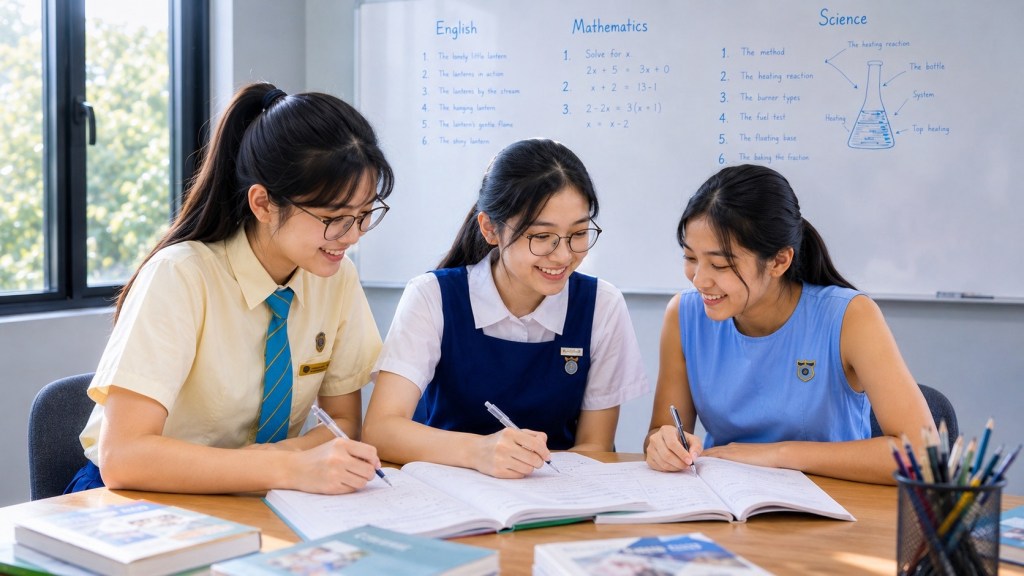
A Tutorial is easy to mistake for a period of time: ninety minutes, a worksheet, an explanation, a teacher and three students in a room.
But time passing is not the educational job.
A strong Tutorial receives a learner in a real present state. It identifies what this learning event is actually trying to change. It checks the dependencies that the next step requires. It supplies enough explanation, representation, practice and feedback to make progress possible. It then does something equally important: it reduces support and watches what the learner can carry independently.
The Cape Canaveral Series asks: how should a bounded learning environment prepare capability for independent motion, and how do we know when control can legitimately begin moving back to the learner?
Cape Canaveral gives this question a powerful systems analogy. A launch site is not the spacecraft, the astronaut, the mission destination or the whole space programme. It is a place engineered for a transition. Hardware arrives. Systems are checked. Interfaces are integrated. Teams rehearse. Conditions are reviewed. Problems can produce a hold. Support remains attached while it is needed. Then, if the evidence and conditions justify it, the mission is released into a different operating phase.
Education is not aerospace engineering, and children are not rockets. The analogy is useful only when we keep that boundary visible. NASA history and operations give us a systems vocabulary. Learning science, developmental evidence and the observed learner must still determine educational decisions.
The One-Sentence Answer
A good Tutorial is a bounded learning environment that prepares, tests and then deliberately reduces support so the learner can leave with more independently usable capability than they brought in.
Why Cape Canaveral?
The place matters because it prevents us from collapsing the whole educational system into one actor.
Cape Canaveral and the neighbouring Kennedy Space Center are historically connected but not identical. Early United States missile and human-spaceflight launches used Cape facilities; NASA’s Launch Operations Center was established on adjacent Merritt Island in 1962 and renamed the John F. Kennedy Space Center in 1963. Mercury and Gemini are strongly associated with Cape launch complexes, while the great Saturn V Apollo launches used Kennedy’s Launch Complex 39. Readers who want the institutional history can begin with NASA’s Kennedy Space Center history.
For this educational series, Cape Canaveral is used as a reader-friendly name for the wider launch ecosystem: processing facilities, ground systems, launch complexes, control rooms, range constraints, rehearsals, countdowns and the handover into flight operations.
That ecosystem has one particularly useful educational property: it is built around a transition in control.
Before launch, the mission depends intensely on external infrastructure. After release, the appropriate controllers, responsibilities and information flows change. The ground system was necessary. Its success is not measured by remaining permanently attached.
Cape Is Not Tutorial
This distinction is permanent.
- Cape Canaveral = calibration lens. It gives us a systems model for receiving, integrating, rehearsing, holding, releasing and handing over.
- Tutorial = educational object. It is the bounded learning event in which a learner acts, receives teaching or feedback, produces evidence and leaves in a new state.
- Tutor = learner-facing interface. Tutor determines what the learner should see, receive, try or be asked next.
- Curie = instrumentation. Curie asks what the evidence actually supports, what is inferred and what remains unknown.
- Voyage = developmental position. Voyage asks where the learner is travelling and what the surrounding educational demands are becoming.
- Darwin = adaptation. Darwin asks what must change when an old method no longer fits the present environment.
Cape therefore does not replace Tutorial. It deepens one part of Tutorial: the engineering of a safe transition from external support toward independent operation.
The Tutorial Launch Sequence
A useful educational sequence emerges when we translate the launch environment carefully:
Mission → Arrival State → Configure → Check Dependencies → Integrate → Teach and Practise → Rehearse → Readiness Review → HOLD / RECYCLE or COMMIT → Reduce Support → Independent Attempt → Receipt → Handover.
This sequence does not require every Tutorial to feel formal. With a young child, several steps may happen invisibly inside play and conversation. With an older student, the sequence may become explicit. With an adult, the person may run much of the sequence personally.
1. Mission: What Change Would Make This Tutorial Worth Having?
A lesson title is not yet a mission.
“Fractions” is a topic. “Algebra” is a topic. “Comprehension” is a topic.
A mission is more precise: by the end of this event, what should the learner be able to recognise, represent, explain, retrieve, choose, execute, check or recover that was not sufficiently available at entry?
For example, a Primary 5 Mathematics Tutorial may not need to “finish percentage”. Its useful mission may be narrower: the learner can recognise percentage as a multiplicative relationship and choose an appropriate representation without waiting for the Tutor to name the method.
A clear mission protects the Tutorial from confusing coverage with change.
2. Arrival State: What Has Actually Arrived?
The planned lesson meets a real human.
The learner may arrive with the expected prerequisite secure, partly retrievable, fragile under load, confused with a neighbouring idea, dependent on prompts, or simply tired after a long school day. The same worksheet can therefore be a reasonable next step for one learner and an expensive mistake for another.
This is where the Marie Curie Series matters. We separate observed evidence from inference and unknowns. We do not turn “hesitated for twenty seconds” into “does not understand” without another discriminating observation.
3. Configure: Build the Right Learning Environment for This Attempt
Configuration includes more than choosing a question.
- Which representation should be visible?
- How much language should the task carry?
- Should the learner see a worked example?
- Which prior capability must be available?
- How much independent time should be protected before intervention?
- Which tool is useful, and which tool would hide the skill we are trying to observe?
- What amount of challenge is productive rather than merely overwhelming?
The same learner may need different configurations for different missions. Age helps us understand the developmental environment, but age alone does not determine support.
4. Integration: Correct Parts Are Not Yet a Working System
A learner can possess several individual pieces and still fail when those pieces must operate together.
A Secondary Mathematics student may know expansion, factorisation and equation solving separately but struggle when a new problem requires recognising which object is present and moving among the techniques. A Science learner may know vocabulary but fail to connect observation, mechanism and evidence. An English learner may understand an argument but lose control when evidence, structure, grammar and audience must be coordinated in one piece of writing.
Integration is therefore a Tutorial job in its own right.
5. Rehearsal: Practise More Than the Perfect Case
NASA launch teams rehearse nominal operations and practise responses to inserted problems. The educational translation is not “make every lesson stressful”. It is that readiness should eventually include changed conditions, not only a clean copy of the demonstration.
A Tutorial can vary numbers, wording, representation, order, context, delay, available support or the combination of topics. The goal is to discover whether the relationship survives harmless surface change.
This is consistent with learning research on retrieval, varied practice and transfer: successful immediate repetition is useful evidence, but it is not identical to durable or transferable learning.
6. Readiness Review: Ready for What?
One of the strongest lessons from the launch analogy is that readiness is never simply a personality trait.
The useful question is not “Is this student ready?” It is:
Ready to do what, under which conditions, with which support removed, and based on what evidence?
A learner can be ready to practise independently but not yet ready for delayed retrieval. Ready for a familiar representation but not yet ready to switch representations. Ready for untimed work but not yet ready for examination load.
This keeps readiness narrow, testable and kind.
7. HOLD Is a Legitimate Educational State
Countdowns can hold. Launches can be scrubbed. A schedule does not make an unsafe or unresolved condition disappear.
The educational equivalent is important. If the prerequisite is not available, the representation is causing unnecessary overload, or an error pattern has not yet been understood, continuing the original lesson plan may manufacture activity while weakening learning.
A Tutorial Hold can mean: repair one prerequisite, simplify one representation, reduce the number load, ask one smaller discriminating question, allow a pause, or return to an earlier step.
HOLD describes the present condition of the planned move. It never becomes an identity label for the learner.
8. Umbilicals: Good Support Must Eventually Be Able to Disconnect
Ground systems supply power, communications, access and other support before launch. Educational support can play an equally legitimate role.
- a worked example;
- a formula reminder;
- a diagram;
- a highlighted keyword;
- a first-step prompt;
- the Tutor naming the topic;
- immediate checking;
- a calculator or software tool.
The question is not whether support exists. The question is what happens when it is reduced.
Scaffolding research describes effective support through contingency, fading and transfer of responsibility. Cognitive-load research also shows why novices may benefit from strong guidance while more knowledgeable learners need increasing opportunities to solve without redundant support.
A support is not fully successful merely because performance is good while the support remains attached.
9. Tower Clear: The Moment Control Begins to Transfer
Human spaceflight history gives us a useful handover image. Launch operations and mission operations are different phases with different controllers. Once the vehicle leaves the launch phase, responsibility moves.
In a Tutorial, Tower Clear is the moment at which some external control is deliberately removed and the learner owns the next action.
For a six-year-old, Tower Clear may be one addition question completed without the adult selecting the operation. For a Secondary 4 learner, it may be a mixed paper in which the Tutor does not identify the topic. For a university student, it may be deciding whether a proof approach is valid before asking for specialist review. For an adult, it may be identifying which quantitative claim requires checking and finding an appropriate source independently.
Tower Clear does not mean permanent mastery. It means this amount of control can be transferred for this capability under these conditions.
10. The Launch Is Not the Receipt
A beautiful lesson can produce a beautiful immediate performance.
That still does not tell us what survives tomorrow.
The Tutorial therefore needs a return path: a delayed attempt, a changed representation, an unfamiliar problem, an explanation, an error-recovery task, later school performance, or real-world use. The appropriate receipt depends on the claim we are trying to make.
Curie determines how cautiously the receipt should be interpreted. Tutor determines what the learner should see next. Darwin may tell us that the learning method needs to adapt. Voyage tells us how the surrounding demands are changing.
The Control Trajectory from Year 0 to Adulthood
| Life stage | Who configures most of the Tutorial? | What gradually transfers? |
|---|---|---|
| Year 0–5 | Adult and environment | Attention, action, choice, representation and simple checking |
| Kindergarten | Adult with growing child participation | Group routines, symbols, explanations and intentional attempts |
| Primary | Tutor/adult with increasing learner control | Starting, method choice, representation, checking and recovery |
| Secondary | Shared | Diagnosis, route selection, self-correction, load management |
| JC / University | Increasingly learner | Mission framing, resource choice, specialist calls, verification |
| Career | Mission and learner | Just-in-time learning, consequence-aware checking, expert coordination |
| Adulthood | Individual | Self-created Tutorials and deliberate use of external expertise |
This is a direction, not a rigid age rule. A professional entering an unfamiliar field may temporarily need strong external scaffolding. A Primary child may independently operate a familiar routine. Development sets the general trajectory; present evidence determines the local configuration.
Cape, Curie, Tutor, Tutorial and Engineer
| Object | Question |
|---|---|
| Curie | What can we responsibly know from the evidence? |
| Tutor | What should the learner see or receive next? |
| Tutorial | What bounded learning event should happen? |
| Cape Canaveral | How do we prepare, test, release and hand over without leaving support attached forever? |
| Voyage | Where is the learner travelling? |
| Darwin | What must adapt as the environment changes? |
What Cape Canaveral Does Not Prove About Education
- NASA launch procedures do not prove that children should be taught like rockets are processed.
- A GO/HOLD decision applies to a bounded task or condition, never to a learner’s worth or identity.
- “Tower Clear” is an analogy for bounded transfer of control, not evidence of permanent mastery.
- Engineering redundancy, risk and safety do not map one-to-one onto ordinary classroom decisions.
- The aerospace history supplies systems concepts; educational claims require educational evidence.
This boundary makes the series stronger. A useful analogy is one that knows where it stops.
The RFE of the Cape Canaveral Series
Design the bounded learning environment so that the learner receives enough support to build and integrate the required capability, enough evidence is gathered to justify the next move, and control is deliberately handed back as soon as the learner can carry it.
Start Here
- The Spaceport — the learning environment as part of the system.
- Mission Definition — define the change the Tutorial is trying to produce.
- The Launch Window — capability and conditions together.
- Arrival State — what has actually arrived at the Tutorial.
- Checkout — what must be checked before building further.
- Assembly and Configuration — putting the right supports around the learner.
- Interface Verification — whether the parts can work together.
- Functional and Performance Test — whether the learning can do its intended job.
- End-to-End Test — whether the whole route can work.
- Flight Readiness Review — readiness for independent operation.
- Launch Commit Criteria — what must be true before proceeding.
- GO / HOLD — proceeding as a bounded learning decision.
- Simulation — rehearsing before the stakes rise.
- Wet Dress Rehearsal — a full practice before independent performance.
- Anomaly — when learning behaves differently than expected.
- HOLD, Scrub and Recycle — pause, repair and re-enter without losing the mission.
- Ground Support — help that should make independence more possible.
- Umbilicals — supports that must eventually be tested for disconnection.
- Countdown — final preparation before release.
- Release — letting the learner carry the next move.
- Independent Attempt — what the learner can carry without hidden help.
- Tower Clear — the moment control begins to transfer.
- Receipt — what comes back after the Tutorial.
- Handover — the Tutorial ends and the learner carries the mission forward.
- Tutorial | The Learning Room — the higher-level educational object.
- Marie Curie Series — evidence and uncertainty.
- Voyage Series — developmental position and the longer journey.
Frequently Asked Questions
Is Cape Canaveral a new teaching method?
No. It is a calibration lens for thinking about a Tutorial. The actual teaching method still depends on learner state, subject, developmental stage, evidence and purpose.
Does every lesson need a formal countdown?
No. The architecture can remain invisible. A good teacher may move through mission, checking, support, practice and release naturally without using aerospace vocabulary with the learner.
Why use a launch site rather than a famous astronaut?
Because Tutorial is an environment and event, not a heroic individual. The place reminds us that systems, conditions, interfaces, rehearsals and handovers matter.
What is the mature endpoint?
Not a person who never needs help. It is a person who can recognise a learning mission, call the right support, test what changed and resume independent motion without surrendering judgement.
eduKate Sengkang | English • Mathematics • Primary Science • Additional Mathematics | Small groups of up to 3 | 1.5-hour tutorials
Properly Taught Kids Shine a Bright Light Into the Future.
More useful readiness and handover guides
- Ground support: The help that makes independent learning possible
- Remove support deliberately: The supports that must eventually disconnect
- Test the intended job: Can the learning perform the function it was built for?
- Test the whole route: Can capability work from start to finish?
- Rehearse before release: Use a full rehearsal before independent performance
- Review readiness: Ready for what, under which conditions, with which support removed?
- Try it alone: See what the learner can carry without hidden help
- Hand over control: Let the Tutorial end while the learner carries the mission forward
