
Quick Read
A lesson is not merely a time slot.
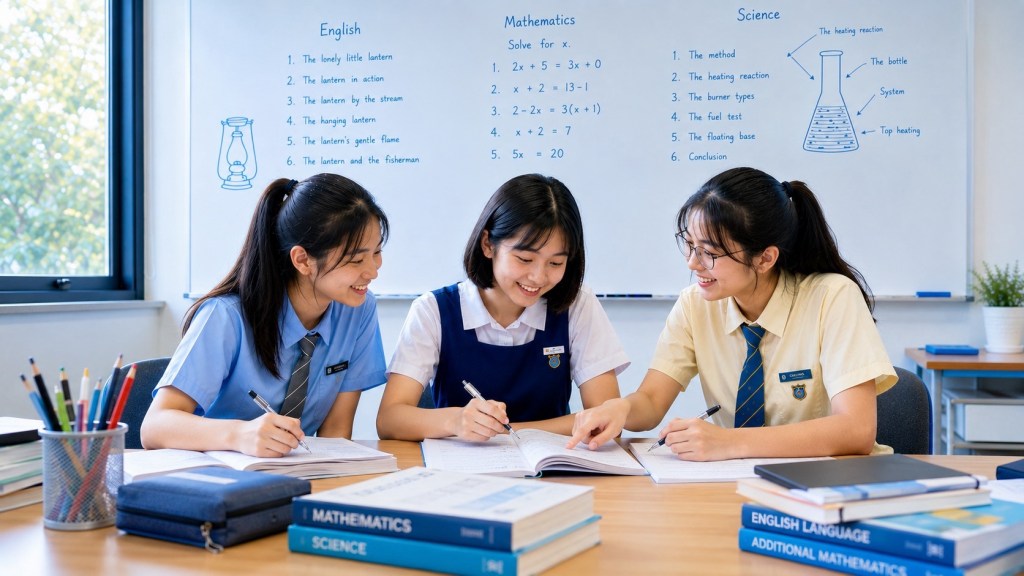
It is a bounded environment in which a learner meets material, a teacher, other students, difficulty, feedback, correction and their own present capability.
At eduKate, we call that environment a Tutorial.
A Tutorial should create conditions in which learning can happen and enough evidence to tell us what actually changed.
The One-Sentence Answer
Tutorial is the learning place and teaching event where a learner enters with a current state, works under designed conditions, produces evidence, and leaves with a capability that should be more stable, more transferable or more independent than before.
Why Tutorial Occupies the Substrate Position
The other major parts of the eduKate Sengkang architecture describe agency or interpretation.
- Voyage gives position and direction.
- Marie Curie gives the instrumentation principle.
- Darwin gives adaptation.
- Tutor gives the learner a dashboard and next move.
Tutorial is different.
It is the place where those ideas meet reality.
The learner arrives. The work exists. The teacher makes decisions. Other students influence the room. Time passes. Attempts are made. Mistakes appear. Explanations land or fail to land. Practice creates load. The learner responds.
That is why the building metaphor fits Tutorial more naturally than another historical person would.
People provide agency. Tutorial provides the field in which educational action becomes observable.
The Learning Room Is Not the Learner’s Finished Building
eduKate Sengkang already has a reflective article called The Tutor Is in The Construction Business. In that essay, the student’s developing capability is compared with a building: foundations, upper floors, scaffolding, weak structures and eventual handover.
We keep that analogy intact.
So in the Curie architecture:
The learner’s capability is what is being built. The Tutorial is the construction site, workshop, classroom or laboratory in which that building is inspected, repaired and extended.
This distinction prevents two different metaphors from competing for the same job.
The Four-Part Tutorial
A useful Tutorial can be understood through four moments.
1. Entry State
What does the learner bring into the room?
- prior knowledge;
- misconceptions;
- recent errors;
- current confidence;
- habits;
- methods that once worked;
- questions;
- unfinished work;
- and the amount of independence presently available.
Two students sitting beside one another can therefore enter the same Tutorial with completely different educational states.
2. Interaction
This is the visible lesson: explanation, questioning, worked examples, attempts, discussion, correction, independent work and feedback.
But interaction also contains invisible education. Students watch how mistakes are treated, whether questions are welcomed, whether checking is normal, whether speed is valued more than thought, and whether the teacher admits uncertainty honestly.
That is why the room itself teaches even when the teacher is not talking.
3. Evidence
Evidence appears when the learner has to do something that exposes the present structure.
- begin without a prompt;
- explain why a method works;
- solve a changed-context question;
- notice an error;
- compare two approaches;
- reconstruct a Science mechanism;
- support an English inference with evidence;
- or continue independently after the teacher moves to another student.
The evidence does not need to be dramatic. Sometimes needing two fewer prompts is meaningful. Sometimes the most useful evidence is the exact point where the learner stops.
4. Exit State
What is now different?
The learner may understand a concept that was previously missing. A procedure may be more reliable. A misconception may have been identified but not yet repaired. A transfer problem may have become visible. A student may now need less prompting. Or the lesson may have shown that our first explanation of the problem was wrong.
All of those are useful exits because they improve the next decision.
A Lesson Is an Event; Capability Is What Remains
A Tutorial may last ninety minutes.
But educational success cannot be defined by ninety minutes having elapsed.
Nor by how many pages were completed.
Our reflective article A Good Lesson Should Leave Evidence makes the distinction clearly: understanding with support and operating after support disappears can look almost identical while the lesson is happening.
The Tutorial must therefore create some space in which the learner owns the problem.
If every difficulty is immediately removed by the teacher, the room may produce smooth performance while destroying the measurement we most need.
Why Three Students Make the Tutorial Interesting
eduKate’s small-group model is not simply a smaller version of a large classroom.
With up to three students, the Tutorial can alternate between attention and diagnostic space.
While the teacher works with one learner, another has to begin independently. That moment can reveal what survives without immediate support. One student’s error may expose a misconception another had not articulated. One explanation can offer an alternative representation. One careful question can teach the other two that uncertainty is acceptable.
Information therefore moves in more than one direction:
Teacher ↔ Student A ↔ Student B ↔ Student C
The teacher still carries responsibility for the educational environment, but the group itself becomes part of the learning field.
The Tutorial Must Not Become Performance Theatre
A class can look impressive.
Fast answers. Many worksheets. Beautiful notes. A teacher constantly talking. Students constantly writing.
None of those is automatically bad.
But activity is not the same as capability.
A strong Tutorial therefore protects moments where the student must:
- orient independently;
- select rather than copy;
- attempt before rescue;
- explain;
- check;
- recover;
- and show what remains when scaffolding is reduced.
The room is not trying to make the teacher look competent. It is trying to discover what the learner can increasingly carry.
Marie Curie Gives the Tutorial Its Instrumentation Discipline
The Marie Curie Series reminds us that consequential processes can remain hidden from ordinary view.
So a Tutorial should not rely only on the teacher’s feeling that the lesson went well.
It needs returns from reality.
- Can the student reproduce the idea?
- Can it survive a delay?
- Can the wording change?
- Can the representation change?
- Can support be reduced?
- Can the learner explain the limit of the method?
These are not surveillance devices. They are educational tests of what has actually been installed.
Tutor Gives the Tutorial Continuity
A Tutorial ends.
The learner does not.
That is why Tutor matters between classes.
Before the Tutorial, Tutor can narrow the current concern. During the Tutorial, evidence is produced. After the Tutorial, Tutor carries forward what changed, what remains uncertain, what to practise and what should be brought back.
Tutor gives the learning state continuity. Tutorial gives the learning state a place to change.
Voyage and Darwin Change What Happens in the Room
The same lesson design is not appropriate at every developmental stage.
Voyage tells us what kind of independence and abstraction should be emerging now.
Darwin tells us when a previously useful method has reached its limit.
A P1 Tutorial may need more concrete representation, oral language and immediate feedback. A P6 Tutorial increasingly needs integration, transfer and examination control. A Secondary Tutorial must create more space for route selection, abstraction and self-correction.
The room therefore changes because the learner’s educational environment changes.
What a Tutorial Is Trying to Expose in Each Subject
English
Can the learner extract meaning, infer, select evidence, control language, organise ideas and communicate without the teacher silently carrying the difficult parts?
Mathematics
Can the learner identify the structure, choose a representation, select a method, execute accurately, verify the result and adapt when the first route fails?
Science
Can the learner move from observation to evidence to mechanism and explanation rather than merely reproduce remembered phrases?
Additional Mathematics
Can the learner sustain symbolic control, recognise functions and relationships, choose an appropriate mathematical route and carry earlier algebra into increasingly abstract work?
A Tutorial Should Leave Receipts
“Receipt” does not mean a complicated report after every lesson.
It means some observable trace of what changed.
- A student who needed five prompts now needs one.
- A recurring sign error has disappeared across changed examples.
- An inference is now supported with evidence without prompting.
- A Science explanation now links cause and effect rather than naming isolated facts.
- A learner can return after a week and still begin independently.
- Or, equally valuable, the lesson reveals that the supposed weakness was not the real weak link.
The receipt lets the next decision begin from reality instead of memory or optimism.
What Tutorial Is Not
- Not a content dump: more explanation is not automatically more learning.
- Not a worksheet factory: volume without diagnosis can preserve the wrong habit.
- Not constant rescue: some diagnostic space is necessary to see what the learner owns.
- Not a performance stage: teacher activity is not the outcome.
- Not a sealed environment: the learner brings school, home, habits, confidence and prior history into the room.
- Not the whole education: a Tutorial is one high-resolution event inside a much longer life-course.
The RFE of Tutorial
Create a learning environment in which the right capability can be taught, the learner has enough ownership to reveal what is real, and the lesson leaves evidence that improves the next decision.
The Parent Question After a Tutorial
Instead of asking only:
“What chapter did you cover?”
add:
“What can you do now that you could not do reliably before?”
Sometimes the answer will be small. That is fine. Small, real change is better information than large, vague reassurance.
Frequently Asked Questions
Is Tutorial just another word for tuition?
No. Tuition is the service relationship. Tutorial is the class, session and learning event inside that service.
Why describe Tutorial as a place if online learning exists?
“Place” here means a bounded learning environment, not necessarily a physical room. A tutorial can be physical, virtual or hybrid if it still provides the conditions for interaction, practice, feedback and evidence.
Does every lesson need a formal assessment?
No. Evidence can come from ordinary learning activity. The aim is not to test constantly; it is to remain able to tell whether the capability is actually changing.
Marie Curie Series · Tutor · Evidence Loop · Voyage · Darwin
eduKate Sengkang | Small groups of up to 3 | 1.5-hour tutorials | Properly Taught Kids Shine a Bright Light Into the Future.
Cape Canaveral Deepens the Tutorial Handover
The Cape Canaveral Series is now the Tutorial calibration for preparation, integration, rehearsal, readiness, HOLD, support fading, independent release and handover. It does not replace this Tutorial definition or Marie Curie’s evidence discipline; it gives the bounded learning event a deeper model of how control can move safely back toward the learner.
Curie asks what the evidence justifies. Tutorial is the learning event. Cape asks how that event prepares capability for independent motion.
