
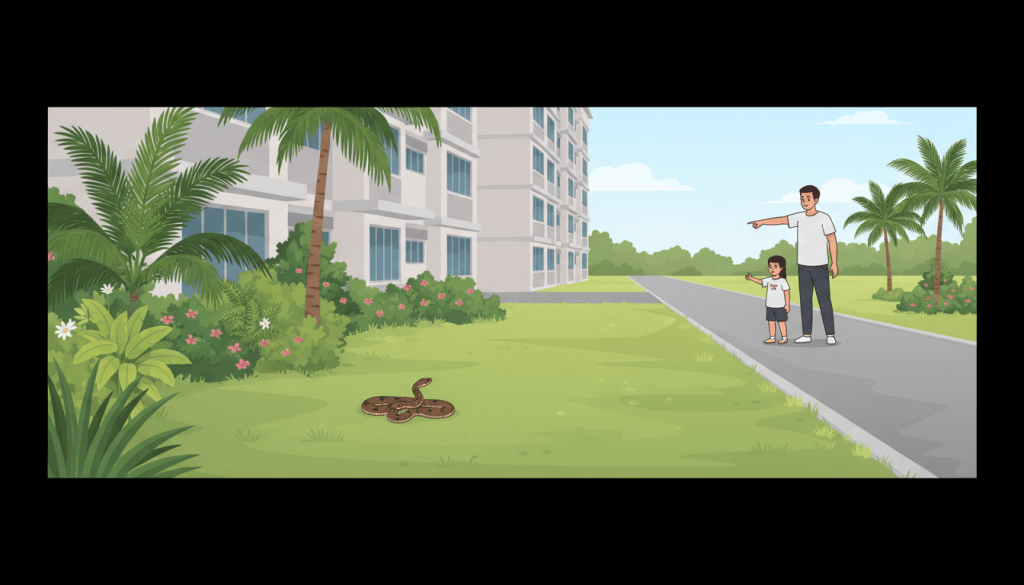
Found a snake in your Sengkang flat, a wild animal near your block, or injured wildlife on a park connector? Keep a safe distance, move children and pets away, and do not chase, corner, feed, handle or attempt to capture the animal. Contact the National Parks Board’s Animal and Veterinary Service (AVS) 24-hour Animal Response Centre on 1800 476 1600 if an animal is trapped, injured, distressed, has entered your home or is creating a safety concern.
For wildlife rescue you can also call ACRES at 9783 7782. Its published hotline hours are 7.00am to 1.00am daily. If someone has been bitten by a snake, seek medical attention immediately; call 995 for serious injury, breathing difficulty, collapse or another medical emergency. Do not postpone medical care to identify or photograph the animal.
Quick contacts: AVS 1800 476 1600 (24 hours) for animal response; ACRES 9783 7782 (7am–1am) for wildlife rescue; 995 for emergency medical care; 999 for a separate urgent Police matter. Most wildlife sightings alone are not medical or Police emergencies.
Immediate checklist: when you see a snake or wild animal
- Stop and create distance. Do not step closer to get a better picture or try to identify the species.
- Keep children and pets away. If your pet is leashed, keep it close rather than allowing it to investigate.
- Do not corner the animal. Leave an escape route where safely possible; avoid sudden movements and loud noise.
- If the animal is in your home, move people to another safe area. Do not try to catch it with household tools.
- Call AVS at 1800 476 1600 for a snake indoors, a trapped or injured wild animal or a situation needing trained response.
- Consider ACRES for wildlife rescue. Call 9783 7782 during its published hours; urgent calls are more direct than delayed messaging.
- If someone has been bitten or attacked, seek medical assessment promptly. Call 995 if severe symptoms or life-threatening injury occurs.
Who to call for wildlife issues in Sengkang
- 1800 476 1600 — AVS Animal Response Centre: a 24-hour contact for urgent animal-related matters. AVS official contact page.
- 9783 7782 — ACRES Wildlife Rescue Hotline: 7.00am–1.00am daily for injured, trapped and displaced wild animals in Singapore. ACRES rescue hotline.
- 995 — SCDF: for a life-threatening bite, severe allergic reaction, serious injury or another urgent medical emergency.
- Veterinarian or pet-care provider: for injury to a domestic pet, with professional advice appropriate to the pet’s condition. ACRES focuses on wildlife rather than routine pet rescue.
- NParks AVS or the relevant managing authority: for reports about recurrent animal encounters, unsafe wildlife interactions or an animal that cannot safely move out of a shared residential space.
If you see a snake on a Sengkang footpath
Singapore has native snakes that may be encountered in vegetation, beside park connectors or occasionally in residential areas. Do not determine a snake’s risk by its size, colour, head shape or how slowly it moves. A photograph taken from a long safe distance may help trained staff, but you should not move toward the animal to obtain one.
The Animal and Veterinary Service’s snake guidance is straightforward: stay calm, back away slowly, give the snake room to retreat, avoid touching or cornering it, and keep pets on a short leash. Snakes may bite in self-defence when frightened or trapped.
If the animal is in its natural habitat and is not distressed or creating a safety problem, the safer choice is often simply to leave it alone. If it is trapped, injured, repeatedly staying in an unsuitable area or has entered a flat, call the AVS response centre.
If a snake enters your HDB flat or service yard
Move household members and pets away from the room. If the snake is contained in an area where you can keep a safe distance, leave it undisturbed and contact AVS at 1800 476 1600. Do not push furniture around, reach into dark corners or attempt to pin the snake with a broom.
AVS says that for snakes entering a house, people should keep their distance and, where safely possible, leave doors and windows leading outside open so the animal can exit. Do not open a route that would put someone in danger or force you to approach the snake. A professional can advise on the specific situation.
Make a note of the room, last sighting and possible hiding place. If you cannot see the animal any longer, do not assume it has left or begin searching under beds and cupboards by hand.
What if a person is bitten by a snake?
Seek medical attention immediately. AVS explicitly advises urgent medical assessment after a snake bite. Do not decide whether the bite was harmless based on the animal’s apparent size or whether marks look small. Some effects may not be obvious at first.
- Move away from the animal without running back toward it or trying to capture it.
- Keep the injured person as calm and still as possible while arranging urgent medical assessment.
- Call 995 if there is serious distress, difficulty breathing, collapse or another medical emergency; follow the dispatcher’s directions.
- Do not attempt improvised treatments, cut the wound, suck out venom or delay for a closer photograph.
- Report what happened, the approximate time and where the animal was seen. A description is useful, but it must not delay care.
Tell the healthcare team if you have already received first aid or if the person has an allergy, medicines or conditions that may matter to treatment. A professional will decide the necessary monitoring and care.
If you encounter monkeys near food or a residential area
Long-tailed macaques may approach places where they have learned that food is available. AVS advises remaining calm and quiet, avoiding direct eye contact, backing away slowly and not feeding or cornering them. Plastic bags can attract macaques because they may associate them with food.
If carrying groceries, keep them out of sight without making sudden threatening gestures. Teach children not to run toward a macaque, tease it or offer food. If an animal enters a home and occupants cannot manage the situation safely, contact AVS and follow its guidance.
A macaque taking food is not a reason to chase or strike it. The focus is to reduce opportunities for human–wildlife conflict: proper food disposal, securing access points and keeping food hidden.
If you encounter otters near Sengkang waterways
Otters may travel along waterways, park connectors and urban green spaces. The AVS otter advice is to observe from a distance, never touch or feed otters, and avoid approaching their young. A group with pups may respond defensively if people or dogs move too close.
Keep dogs on a tight leash, especially where otters are present. Avoid flash photography, crowds around a den or trying to separate adults from pups. If an otter is trapped, injured or in distress, call AVS. If a person is bitten or attacked, seek medical attention immediately.
If you see a wild boar near greenery
Wild boars are strong animals and can be unpredictable if threatened. The AVS warns against approaching a wild boar, particularly a female with piglets. Do not feed, chase or corner the animal, and avoid loud noises or flash photography.
Back away calmly and keep pets close. If a boar is injured, trapped, sick or dead, report it to AVS; do not touch or pick it up. If someone is injured in a boar incident, seek medical assessment, and call 995 for severe injury.
A wild boar crossing a road can also create a vehicle hazard. Drivers should not attempt a sudden close approach to photograph the animal. Follow ordinary road safety rules and avoid causing a second accident.
What if the wildlife is injured rather than dangerous?
It is natural to want to help an injured bird, trapped snake or exhausted wild animal, but handling can worsen an injury and expose both animal and rescuer to harm. ACRES specifically advises calling its rescue hotline first so trained staff can assess what is needed.
When calling, give the exact location, the type of animal if you know, its condition and whether it is still visible. Stay nearby only if it is safe and you can help rescuers find the location without disturbing the animal.
Do not transport wildlife to a rescue centre without prior professional guidance. A well-intentioned rescue can involve legal or animal-welfare issues and may put the animal under unnecessary stress.
If a child or family pet has been scratched or bitten
Move away from the animal and check for injuries. The AVS says that animal bites and scratches should be washed promptly and thoroughly with soap and water, and medical assessment may be necessary. Its rabies guidance stresses urgent hospital assessment where rabies exposure is a concern.
A pet injured by a wild animal should be assessed by a veterinarian. Do not try to handle an aggressive or trapped wild animal to obtain proof of the attack. Report relevant circumstances to AVS from a safe location.
If the person develops severe symptoms, heavy bleeding, collapse or breathing difficulty, call 995. Do not treat the animal response hotline as a substitute for human medical care.
What information helps AVS or ACRES?
- Location: Sengkang block number, street, nearest park entrance or park-connector landmark.
- Animal: general description or species if confidently known; do not guess a species to make the call sound more urgent.
- Condition: injured, trapped, in a home, repeatedly present in an unsafe place or simply passing through.
- Movement: whether the animal is still there and the last direction it moved.
- People: whether children, pets or passers-by may be at immediate risk.
- Photographs: only if taken from a safe distance; never approach for a better angle.
- Callback: a reliable contact number and safe meeting point for a responding team.
Common Sengkang scenarios
A snake is spotted under a planter outside an HDB block
Back away, keep children and pets clear and avoid moving the planter. If the animal is causing concern or cannot safely leave, call AVS at 1800 476 1600. Do not poke the plant or try to drive the snake out.
An injured bird cannot move from the pavement
Keep people from crowding it and call ACRES 9783 7782 during hotline hours or AVS for professional advice. Do not feed or pick it up unless a trained responder directs you.
A group of otters is crossing a park connector
Stand back and allow them to pass. Keep dogs leashed, especially if young otters are present. A normal sighting does not automatically require a rescue call.
A child has been bitten by an unidentified animal
Move the child away, wash the wound promptly, seek medical advice and report the incident where relevant. Call 995 if there are serious symptoms. Do not chase the animal in an attempt to identify it.
Reduce recurring wildlife conflict
- Dispose of food waste properly and keep bins secure.
- Do not feed wild animals or leave food at parks and waterways.
- Keep pets on leashes and supervise children near wildlife.
- Keep living-space access points and storage areas maintained without trapping or harming animals.
- Give animals a route to move away instead of forcing them into corners.
- Use official AVS species-specific guides rather than viral advice or unverified animal-handling demonstrations.
Frequently asked questions
What is the 24-hour wildlife response number in Singapore?
AVS’s Animal Response Centre answers animal-related matters at 1800 476 1600, 24 hours a day.
Is ACRES open all night?
ACRES lists rescue hotline hours of 7.00am to 1.00am daily on 9783 7782, not a full 24 hours. Outside those hours, AVS’s 24-hour Animal Response Centre is an appropriate contact.
Should I kill a snake in a flat?
No. Move away and call AVS for trained assistance. Attempting to catch or harm a snake raises the risk of a defensive bite.
Are otters safe to approach for photographs?
No. AVS advises observing from a distance and avoiding close contact, especially around pups. A calm-looking animal may still respond if cornered.
When should I call 995 instead of a wildlife rescue line?
Call 995 for a human medical or rescue emergency, such as severe injury, collapse or breathing difficulty. The animal response line handles animal rescue and management.
Related Sengkang emergency guides
- Medical emergencies and ambulance 995
- Road accidents and pedestrian injuries
- Fallen trees and dangerous branches
- Heavy rain and lightning safety
Official sources and review information
- Animal and Veterinary Service — Animal Response Centre (24 hours)
- Animal and Veterinary Service — Snakes in Singapore
- Animal and Veterinary Service — Wild Boars
- Animal and Veterinary Service — Macaques
- Animal and Veterinary Service — Otters
- ACRES — Wildlife Rescue Hotline and Opening Hours
Reviewed 4 November 2026. This guide is for safe initial response, not species identification or wildlife-handling instruction. Keep your distance, seek medical care after bites and follow directions from AVS, ACRES and emergency services.
