
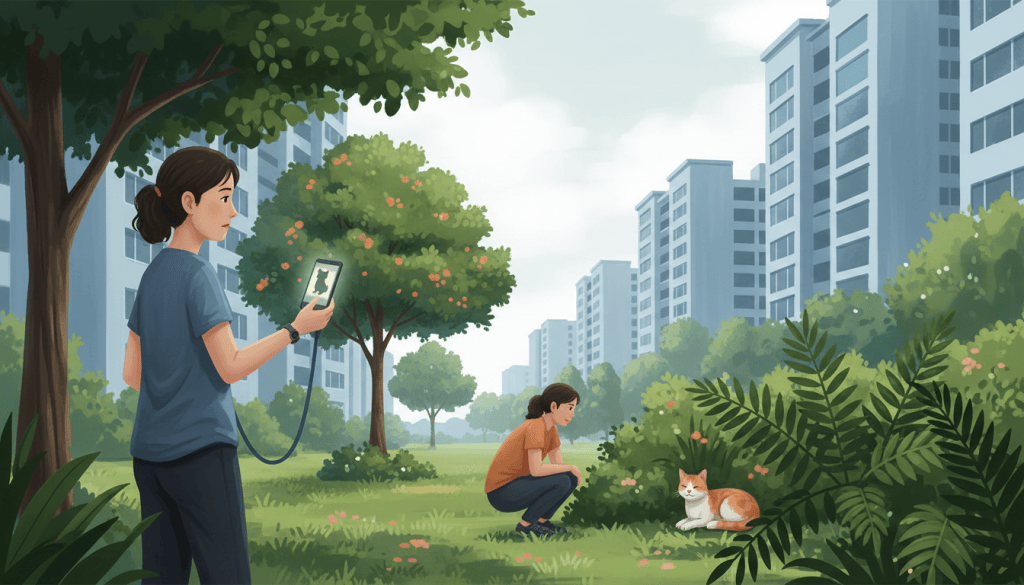
Your dog has escaped, your cat has gone missing or you found an injured pet near an HDB block in Sengkang? Act promptly but safely. For a missing dog or cat, file the Animal and Veterinary Service (AVS) Lost Pet Report and call the 24-hour AVS Animal Response Centre at 1800 476 1600. You can also contact the SPCA at 6287 5355; for injured, abandoned or distressed animals, its dedicated 24/7 emergency option is extension 9.
If it is your own injured pet, contact your veterinarian or an emergency animal hospital immediately. The AVS states that a pet’s medical emergency requires veterinary attention, not an SCDF human ambulance. If a free-roaming community cat or dog has serious injuries or is unconscious, notify AVS at 1800 476 1600. Do not chase a frightened animal into a road, put your hand near an aggressive animal’s mouth or attempt a hazardous canal rescue.
Quick routing: missing pet — AVS lost-pet form + 1800 476 1600; SPCA missing and found service — 6287 5355; injured or abandoned animal needing urgent rescue — SPCA 6287 5355, extension 9, 24/7, or AVS; your injured dog or cat — veterinarian or emergency animal hospital; a person attacked or seriously injured — 995 for a human medical emergency.
First ten minutes after a dog or cat disappears
- Check the last confirmed location. Do not assume the pet left the estate just because it cannot be seen in the flat, corridor or balcony.
- Check safe likely hiding places. For a cat, this could include quiet sheltered areas; for a dog, paths connected to the last escape point. Never climb into drains or enter live traffic.
- File the AVS lost-pet report. Use go.gov.sg/lostpet with the animal’s appearance, microchip information and last-seen details.
- Call AVS’s 24-hour Animal Response Centre, 1800 476 1600. Tell the officer where and when the pet was last seen.
- Notify SPCA at 6287 5355. If the pet is injured or was lost very recently, SPCA advises calling its emergency extension 9 promptly.
- Alert trusted neighbours and local staff. Provide one current photograph and a safe callback number, but keep private identification details off public posts.
- Look for official found-pet reports. Check AVS’s lost pets gallery and follow any instructions to claim a pet found by the authorities.
Who to call for pets in Sengkang
- 1800 476 1600 — AVS Animal Response Centre: 24-hour animal welfare and response enquiries, including missing pets and urgent injured community animals. AVS contact page.
- 6287 5355 — SPCA: general lost, found and welfare contact. For urgent injured, distressed or abandoned animals, use extension 9, which SPCA describes as a 24/7 emergency channel. SPCA Lost & Found.
- Emergency veterinarian or animal hospital: for an owned pet with breathing difficulty, severe injury, inability to stand, suspected poisoning or another critical condition. AVS veterinary emergency advice.
- 995 — SCDF: for a human medical or rescue emergency, such as a person struck by a vehicle or severely injured during an animal incident. It is not the normal veterinary ambulance service.
- 999 — Police: for an immediate crime or security threat involving people, not an ordinary pet that has wandered away.
AVS lost-pet report: what you need
AVS’s November 2026 missing-pet guidance asks for the postal code, time and date last seen, accessories such as a collar or tag, the animal’s name, microchip number, breed, age, sex and colour, and distinguishing markings. You do not need to invent missing information to submit a report.
A clear recent photo helps more than a vague description such as ‘small brown dog’. Show the animal’s full body and any distinctive markings, rather than an image in which the animal occupies only a tiny area. If you have several pets that look similar, note details such as a white patch, a collar colour or the microchip record.
If the pet’s last known place was a multi-storey HDB car park, identify the block and deck. If it disappeared near a park connector, give the nearest entrance, bridge or road. Sengkang is too large an area for a single neighbourhood name to pinpoint the search.
What the official AVS lost pets gallery does
AVS maintains a public gallery of some lost pets under its care. A match may be claimed through AVS using the prescribed identification and collection procedure. Not every missing pet is automatically on the gallery, and a missing pet not listed there may still be elsewhere.
AVS says impounded animals are collected from the Animal Management Centre at 57 Sungei Tengah Road, by appointment. Call 1800 476 1600 before travelling. Collection and boarding fees may apply, depending on circumstances; verify current amounts directly with AVS.
Never drive to the Animal Management Centre solely because someone on a chat group claims your pet has been found there. Confirm the report and appointment through the official service.
What if you find a dog or cat that seems lost?
- Observe the animal from a safe distance and note the exact location.
- Approach only if it is calm, safe and you can do so without putting the animal into traffic or cornering it.
- Contact AVS at 1800 476 1600 with a description, collar or tag details, time and postal code.
- Notify SPCA or another appropriate animal welfare group with the factual information.
- If safe and suitable, have a veterinary clinic scan for a microchip. AVS can trace the registered owner if the chip record is properly registered.
- Share a cautious found-pet notice that does not disclose private owner information or encourage unsafe handling.
- Arrange reunification through AVS or a trusted veterinary or animal-welfare process.
These steps follow AVS’s September 2026 found-pet guidance. A bystander should not forcefully capture a terrified pet or transport an animal in a way that could injure it.
A microchip helps only when the registration is current
A microchip contains an identifier, not an always-on GPS tracker. Veterinary clinics and authorities can scan it and cross-reference a registration database. A chip registered to an old address or wrong phone number makes reunification harder.
AVS encourages owners to keep their pets microchipped, licensed or registered as required, and to keep contact details current. Pet dogs and cats are subject to licensing rules in Singapore. A collar tag with a safe callback number can also help someone who finds the animal contact the owner quickly.
If you recently moved to Sengkang, verify that the pet’s registered address and phone number were updated, rather than assuming the move is automatically reflected in AVS records.
When is an injured pet a medical emergency?
- Difficulty breathing, collapse, unconsciousness or a severe seizure.
- Major bleeding, significant trauma or inability to stand after a collision.
- Suspected poisoning, ingestion of a dangerous substance or a serious burn.
- Severe abdominal swelling, persistent retching or other rapidly worsening illness.
- A serious wound or loss of mobility that needs urgent veterinary evaluation.
- Prolonged entrapment where removing the animal without specialist assistance would cause harm.
An owned pet with these signs needs prompt contact with a veterinarian or emergency animal hospital. AVS’s pet-rescue guidance directs owners to veterinarians for medical emergencies. Do not delay veterinary contact while waiting for a general lost-pet report to be processed.
If you find an injured community cat or free-roaming dog
AVS’s injured community-animal guidance says to call its 24-hour Animal Response Centre promptly for serious injury, an unconscious animal or another life-threatening animal welfare and public-safety concern. The SPCA also provides a 24/7 rescue channel at 6287 5355 extension 9 for relevant urgent cases.
If an animal is hurt but otherwise calm and it is safe to handle, an appropriate veterinary clinic may be able to provide medical care. Do not handle an unfamiliar animal that is frightened, aggressive or potentially infectious without competent advice.
Avoid crowding the animal. Give responders its precise location and current condition, and keep traffic or curious passers-by from worsening the hazard if this can be done safely.
Do not chase a frightened dog through Sengkang traffic
A dog that has escaped may be frightened by loud voices, running crowds or repeated attempts to grab its collar. A chase can drive it toward a road, waterway or inaccessible area. If the dog is still visible, keep a safe distance and use calm, familiar cues if it is your own pet.
Ask neighbours to report sightings with time and location rather than racing toward the animal. A small number of calm searchers with a coordinated plan may be more helpful than a large crowd.
If the dog crosses a busy road, do not follow it into traffic. Report the last seen direction to AVS and seek specialised assistance where appropriate. Human road safety takes priority.
A missing cat may be closer than you think
Some missing cats hide quietly in sheltered places rather than travelling far immediately. Search likely hiding areas safely, particularly during quieter hours, without entering another person’s flat or a locked service area. A torchlight may help when looking from an accessible public path.
Leave familiar scents or food according to a safe plan only where appropriate; do not attract wildlife, create a nuisance or place food where it might be unsafe for other animals. Check relevant estate regulations and building boundaries.
Do not assume a sighted cat is yours based solely on colour. Confirm markings or microchip information through a trusted process.
How to create a useful missing-pet notice
- Clear photo: recent full-body picture and a distinctive feature.
- Animal: name, species, approximate size and colour.
- Last seen: exact Sengkang block, road or park-connector landmark, with date and time.
- Behaviour: whether the pet may be frightened, should not be chased, and whom to contact.
- Phone: a safe callback number accessible to the owner.
- Privacy: avoid posting full NRIC, private home access details or microchip identifiers publicly.
- Update: mark the notice ‘found’ after reunion and remove outdated public appeals.
Scammers sometimes exploit people seeking lost animals. Do not transfer a ‘verification fee’ or reveal a banking one-time password to a stranger who says they found the pet. Ask for a verifiable photo or another safe confirmation and coordinate through the proper channel.
What to do if the pet is trapped near water
A dog in a canal or a cat in a high or narrow place may need a specialist response. AVS advises evaluating whether the animal is actually trapped and avoiding forceful pulling. If the location threatens the safety of a human rescuer, do not attempt improvised climbing or water entry.
An animal welfare or qualified animal-management professional can advise on safe rescue. If a human becomes trapped, injured or faces a life-threatening water emergency, call 995 for the human rescue aspect.
What if the missing animal is a bird?
AVS recommends not chasing an escaped pet bird, as pursuit may send it farther away. Where safe, place its familiar cage with food or water in an appropriate location and use familiar sounds to encourage its return.
Do not climb high trees or access live electrical equipment to retrieve a bird. If it is trapped or injured, seek professional advice from AVS, SPCA or a suitable animal rescue service.
Is an animal cruelty report the same as a lost-pet report?
No. A missing pet is not automatically evidence of neglect or abandonment. For suspected animal cruelty, the AVS receives reports through its contact channels, and SPCA has separate cruelty-reporting procedures.
Tell the agency what you personally observed. Do not post identifiable accusations against a neighbour based only on an animal being unattended in a common area. If there is an immediate animal welfare concern, use the correct emergency welfare channel.
Sengkang scenarios
A dog escapes when the lift door opens
Avoid a chaotic chase. Record the last sighting and direction, alert family, file the AVS lost-pet report and call the Animal Response Centre. Ask neighbours for time-stamped sightings.
A cat is found injured beside an HDB car park
Stay clear of moving vehicles and do not grab a distressed cat. Call AVS 1800 476 1600 or SPCA 6287 5355 extension 9 for a serious or urgent animal welfare issue.
A missing dog appears on the AVS gallery
Call AVS to verify the listing and arrange collection by appointment with the required records and carrier. Do not assume the gallery itself completes a claim.
An owned pet collapses at home
Contact your veterinarian or an emergency animal hospital immediately and follow its instructions for transport or first aid. The human ambulance service 995 is not the normal animal emergency route.
How to prevent future escapes
- Keep AVS microchip and licensing records accurate and up to date.
- Use suitable carriers and secure gates, windows and doors.
- Check harness fit and leash condition before walks.
- Supervise pets around lifts, park connectors and roads.
- Teach household members how to coordinate an escape response calmly.
- Keep the pet’s recent photographs and veterinary contact available.
- Review pet-proofing after moving home or changing furniture and window arrangements.
Frequently asked questions
What is the 24-hour AVS number?
The AVS Animal Response Centre can be contacted on 1800 476 1600, including for relevant lost-pet and injured-animal reports.
Does SPCA have a 24-hour rescue option?
SPCA lists 6287 5355 extension 9 as its 24/7 emergency channel for injured, abandoned or distressed animals.
Do I call SCDF 995 for my pet’s medical emergency?
No, ordinarily contact your veterinarian or an emergency animal hospital. Call 995 if a human has a medical or rescue emergency.
Can I identify my found pet through a microchip?
Yes. A suitable vet or animal organisation can scan the chip, and AVS can trace its registered owner when records are current.
Does every pet found outside need to be captured?
No. Handling an unfamiliar or frightened animal may be dangerous. Observe from a safe distance and seek AVS or SPCA guidance as appropriate.
More Sengkang emergency guides
- Snake encounters and wildlife rescue
- Road accidents and traffic injuries
- Fallen trees and dangerous park paths
- Medical emergencies and SCDF 995
Continue through the Sengkang emergency series: Earthquake tremors and building safety · Falling windows and broken glass · Sinkholes, open manholes and traffic-light faults.
Official sources and review date
- AVS — What to Do if Your Pet Goes Missing (Updated November 2026)
- AVS — What to Do if You Find a Missing Pet
- AVS — Lost Pets Gallery
- AVS — 24-Hour Animal Response Centre
- SPCA — Lost and Found, 24/7 Emergency Rescue Extension
- AVS — Injured Community Animal
- AVS — Rescuing a Pet and Veterinary Emergencies
Reviewed 6 November 2026. This guide is for pet welfare and reporting, not veterinary diagnosis. An owned pet with severe illness needs urgent veterinary attention. Keep people safe and use AVS and SPCA channels for missing or injured animals.
