
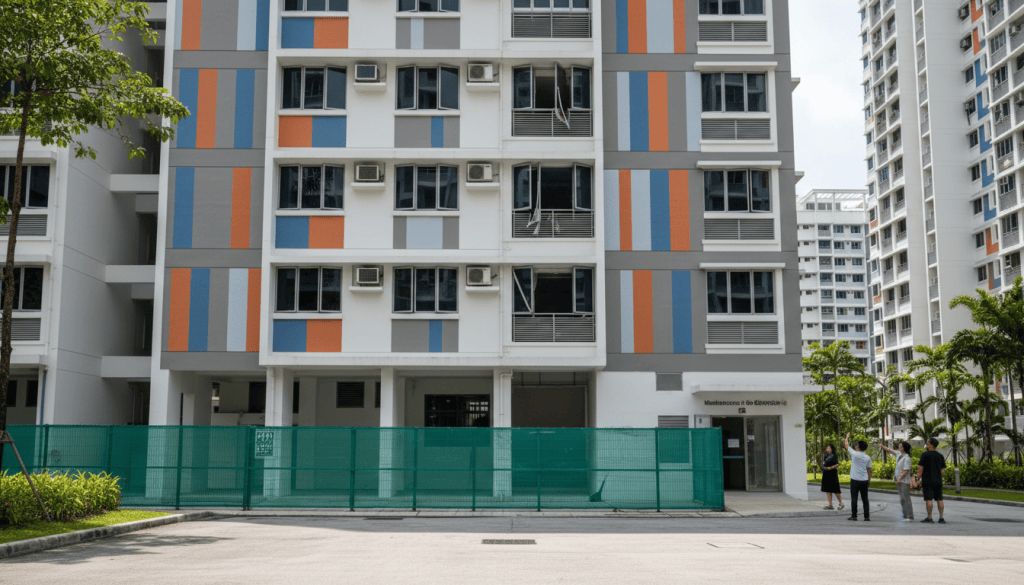
A window pane, window frame or glass fragment is falling, hanging loose or has just detached from a Sengkang HDB flat? Move people away from the area below the window immediately. Do not stand directly underneath to film, do not try to catch the falling panel, and do not reach out from a high-floor window to pull it back. If someone has been struck, trapped or seriously injured, call 995 for SCDF medical and rescue assistance. For a dangerous common walkway or HDB estate area managed by Sengkang Town Council, call its 24-hour EMSU at 6590 9777 and give the precise block and location.
If the loose window is part of your own flat, stop using it and arrange an approved window contractor promptly. HDB states that its owners are responsible for checking and maintaining flat windows. Installation, repair, retrofitting or replacement of HDB windows must be carried out by trained BCA-approved window contractors listed with HDB. Do not DIY a hinge repair or replace window rivets with unverified hardware on a high floor.
Quick routing: serious injury or imminent rescue danger — 995; dangerous common estate access — SKTC EMSU 6590 9777; unsafe or loose flat windows — HDB-listed BCA-approved window contractor; external window or facade safety concern — BCA’s official feedback channel and the relevant building owner. Keep the fall zone clear while trained staff determine what is safe.
First 60 seconds: what to do when a window is dangerous
- Stay away from the fall path. Glass, frames and hinges can fall unpredictably from a high floor, even if they still appear partially attached.
- Warn nearby people. Keep children, pedestrians and pets clear without stepping beneath the panel yourself.
- Call 995 if someone is seriously hurt or trapped. Report bleeding, collapse, head injury or another medical or rescue emergency.
- Identify the exact block and side. A building may have several frontages; specify the road-facing wall, courtyard, lift lobby or nearest entrance.
- Contact building maintenance. For SKTC-managed HDB common areas, use the EMSU; for a private building use its managing agent or MCST.
- Do not try to repair it from a ladder or by leaning out. Safe access and equipment are essential for high-rise window work.
- Leave technical decisions to approved contractors. A loose glass pane can require isolation and professional replacement, not a household adhesive fix.
Who to call in Sengkang
- 995 — SCDF: emergency ambulance and rescue if there is serious injury, entrapment or another immediate danger. SCDF emergency contacts.
- 6590 9777 — Sengkang Town Council EMSU: urgent common-property safety and maintenance issues in estates it manages. SKTC official EMSU.
- Owner or managing agent: the first practical contact for a private flat’s window or a private building’s facade. The right property team depends on where the fixture is located.
- BCA window safety: BCA’s window safety page and official feedback channel for concerns about unsafe windows and relevant standards.
- BCA-approved window contractor: HDB’s approved window contractor directory and guidance; do not assume any general handyman is licensed for window work.
Why a loose window is a different problem from falling concrete
A detached window or glass pane is a high-risk falling object with its own hardware and maintenance requirements. The problem may involve rusted fasteners, worn friction stays, loose glass, missing safety stoppers or damaged frame components. These defects require window-specific assessment rather than treating the incident as spalling concrete.
The Building and Construction Authority’s May 2026 window safety guidance explains that weather and wear can gradually weaken components. HDB owners are expected to maintain windows in good condition, using approved contractors for repair and replacement.
A cracked wall beside a window may also indicate a separate building issue. Report what you actually see: a loose casement sash, broken glass, a bent stay or cracking around the frame. Avoid declaring the entire building structurally unsafe without a professional assessment.
Casement, sliding and louvred windows: what can fail?
Casement windows are hinged panels that usually swing outward. Hinges, friction stays, screws and rivets hold the panel. Rust, loose fasteners or worn hardware may allow the panel to shift or detach. Never force a stiff or crooked casement window open.
Sliding windows move along horizontal tracks. They need suitable safety stoppers and angle strips to keep panels correctly positioned. A sliding panel that lifts out of place or feels unusually loose should not be treated as a normal maintenance annoyance.
Adjustable louvred windows rely on secure glass panes, brackets and functioning levers or locks. Cracked glass or loose louvres can present a falling-object hazard, especially above a public route. Keep people out of danger and arrange appropriate assessment.
What BCA says about six-monthly window checks
BCA advises occupants and owners to check windows at least once every six months. Its approach is often summarised as check, clean and change: check for worn or loose parts, clean and maintain working mechanisms, and replace defective components with suitable approved parts and contractors.
For casement windows, check whether rivets and screws are rusty or loose and whether friction stays are bent or insecure. For sliding windows, inspect safety stoppers, angle strips and smooth sliding. For louvred windows, look for cracked or insecure glass and malfunctioning locks.
These checks should be made from a safe indoor position. Do not climb out of a window, lean far beyond the ledge, or remove screws yourself to ‘see whether they are loose’. If the window cannot be inspected safely, BCA advises engaging an approved contractor.
Why HDB requires approved window contractors
A window exposed to wind and weather at height needs proper fasteners and installation details. HDB requires a BCA-approved contractor listed with HDB for installation, replacement and relevant work on flat windows. The appropriate trained installer must follow the prescribed technical requirements.
HDB’s renovation guidelines for window work specify the materials and technical requirements for casement, sliding and louvred windows, including stainless steel components in specified applications. An unapproved shortcut may appear to work temporarily but fail when loaded.
Owners should obtain the contractor’s proper documentation and confirm the required HDB permit and report steps. HDB’s window home-care guide explains that approved contractors are responsible for the relevant window works and reporting.
If a window is hanging outside your own flat
Do not pull on the pane or open the window to see what is holding it. Close the room door if doing so is safe and keep household members away from the opening and the area directly beneath. Do not try to attach tape, rope or improvised brackets from the high-floor exterior.
Notify the property manager or town council where the hazard may threaten common spaces, and contact an HDB-listed approved window contractor promptly. If a person below may be exposed to an immediate falling hazard, alert those nearby from a safe position and seek urgent assistance from the responsible authority.
If the window has already detached and someone is injured, call 995. Do not rush out of the flat to retrieve fragments before the landing site has been assessed.
If the glass falls into a footpath or playground
Broken glass and sharp metal may be scattered farther than the obvious frame impact point. Keep pedestrians and children away and alert building management. Do not sweep glass with bare hands, especially near passing vehicles or an area where more panes may fall.
If a public path is blocked or the building still has a loose window overhead, the maintenance response may need barriers and a wider exclusion area. Let trained personnel decide how the remaining glass or frame can be made safe.
For an HDB common area under SKTC management, give the block and route when calling 6590 9777. For a privately managed shopping centre or condominium, contact its facility team.
If a falling window strikes someone
Check for life-threatening bleeding, loss of consciousness, head or neck injury and breathing difficulties. Call 995 for serious injuries and keep the casualty away from additional falling debris if it is safe to do so.
Apply firm pressure to a heavily bleeding accessible wound if appropriate and safe, but do not remove large embedded fragments. Follow the emergency dispatcher. The Sengkang severe bleeding guide explains the distinction between direct pressure and embedded objects.
Do not drag a seriously injured person over broken glass without considering the danger and dispatcher instructions. Tell the emergency crew if more glass or metal remains overhead.
What if a window safety barrier is involved?
Some floor-to-ceiling windows incorporate a structural safety barrier designed to prevent a person falling from height. The BCA states that replacing or reinstating safety barriers integrated with windows may require a Professional Engineer’s design and structural submission, unless standardised prescribed designs are adopted where allowed.
This is not ordinary glazing or cosmetic work. Do not remove the barrier to enlarge an opening or attempt a DIY modification. Use appropriately authorised contractors and the BCA requirements.
The difference between a storm-damaged window and a tremor-damaged window
Heavy rain, wind and wear can expose weakened fittings. A tremor may also make a hanging item visibly move, but does not by itself prove that a window is unsafe. Inspect from a safe position after the event and report actual damage.
If other structural defects appear after shaking, the Sengkang earthquake tremor guide covers SCDF’s advice for checking new cracks and contacting estate EMSU or BCA.
How to describe the fault to the contractor
- Window type: casement, sliding, louvred or full-height glazed panel.
- Visible problem: loose hinge, cracked glass, rust, missing stopper, misalignment or a pane hanging outside.
- Location: HDB block, unit, floor, room and whether the exterior faces a public route.
- Immediate risk: anyone below, sharp glass, a blocked walkway or a panel that is still shifting.
- Previous work: dates or records of recent replacement if known.
- Photographs: only from a safe indoor position, never by leaning out.
- Access: availability of occupants or an authorised representative for professional inspection.
Three Sengkang examples
A casement window begins sagging at the hinge
Stop opening or closing it and keep others away. Arrange an approved window contractor and notify the manager if the panel threatens a common walkway. Do not tighten random screws while leaning outside.
A glass pane drops into a void deck
Warn residents away, report the location to the managing town council and obtain urgent help for any injury. Do not assume every pane has already fallen; more loose glass may remain.
A sliding window has a missing stopper
Stop using the affected panel until it is assessed. BCA identifies safety stoppers and angle strips as important safeguards. Arrange approved repairs rather than allowing the window to continue sliding out of alignment.
Household prevention checklist
- Inspect window condition at least every six months from a safe position.
- Check for corroded screws, worn friction stays and damaged locks.
- Have defective aluminium rivets and components replaced appropriately by an approved contractor.
- Keep children from leaning or playing at open high-rise windows.
- Do not hang heavy items on window panels or use them as supports.
- Check windows after significant wind or weather if safe, especially where hardware was already loose.
- Keep the contact details of an HDB-listed approved contractor and property manager accessible.
Frequently asked questions
Who pays to repair a private HDB flat window?
HDB says owners are responsible for regular window maintenance and must engage appropriate approved contractors for window work. Exact liability for a particular incident depends on circumstances.
Can an ordinary handyman repair an HDB casement window?
Window repair and replacement must use approved contractors and trained installers as required by HDB and BCA. Do not assume a generic handyman meets those requirements.
How often should windows be checked?
BCA recommends checks at least once every six months, plus attention when defects are noticed.
Should I call 995 for a loose window with nobody injured?
Use the responsible building manager and approved contractor for urgent hazard control. Call 995 for a genuine medical or rescue emergency, including serious injury or imminent life danger.
Is a loose window the same as spalling concrete?
No. Windows have separate hardware, installation and safety requirements. Both can create falling-object hazards, but repairs involve different professionals.
Related Sengkang emergency guides
- Falling concrete and structural defects
- Earthquake tremors and shaking buildings
- Severe bleeding and first aid
- HDB fire, smoke and evacuation
Continue through the Sengkang emergency series: Earthquake tremors and building safety · Missing pets and animal rescue · Sinkholes, open manholes and traffic-light faults.
Official sources and review date
- BCA — Windows Safety (Updated May 2026)
- BCA — Well-Maintained Windows Keep Communities Safe
- HDB — Maintenance for Windows
- HDB — Renovation Guidelines for Window Works
- HDB — Keeping Windows in Good Condition
- BCA — Feedback on Building Safety
- Sengkang Town Council — EMSU
Reviewed 6 November 2026. Public safety guidance, not permission for DIY high-rise window repair. Use an approved window contractor and follow BCA/HDB requirements. Call 995 for serious injury or urgent rescue.
