
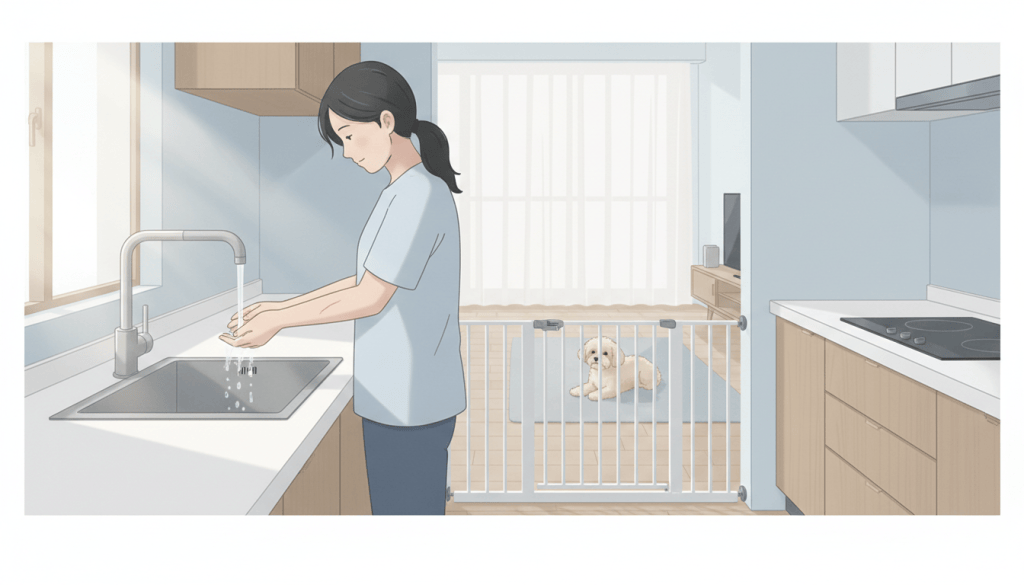
Bitten by a dog, scratched by a cat, or injured by an unfamiliar animal in Sengkang? First move away from the animal and prevent another bite. Wash the wound promptly and thoroughly with running water and soap, then apply a clean dressing. Seek medical assessment for animal bites and deep puncture wounds, even if the skin opening looks small, because infection and tetanus protection may require treatment. Call 995 for uncontrolled bleeding, collapse, serious injury, severe allergic symptoms or another life-threatening emergency.
For a potentially rabid animal or another serious animal-welfare/public-safety concern, contact the Animal and Veterinary Service (AVS) 24-hour Animal Response Centre at 1800 476 1600. Singapore has been officially rabies-free since 1953, but the virus remains in the wider region, and a suspicious animal should be assessed by the appropriate authorities rather than dismissed. Do not chase, trap or confront an aggressive dog to obtain identification.
Quick routing: severe human injury — 995; wound assessment and tetanus review — doctor or suitable urgent-care clinic; suspicious animal or bite by an animal showing signs suggestive of rabies — AVS 1800 476 1600; an active violent or criminal public-safety threat — Police 999 when genuinely required. An animal-response hotline does not replace medical care for a person.
First five minutes: what to do after an animal bite
- Get clear of the animal. Move to a safe place without running into traffic, a waterway or another hazard. Keep children and other pets away.
- Wash the skin thoroughly. Use running water and soap; flush a scratch or puncture as well as practical without aggressively scrubbing damaged tissue.
- Control bleeding. Apply gentle firm pressure with clean gauze or cloth for an accessible wound; call 995 for severe or uncontrolled blood loss.
- Cover the wound. Use a clean suitable dressing. Avoid household oils, toothpaste or unknown chemicals on damaged skin.
- Arrange medical assessment. Animal bites and deep punctures can require cleaning, antibiotics or tetanus prevention depending on the clinical findings.
- Record the circumstances safely. Note species, location, owner if known, last direction and whether the animal displayed unusual behaviour, but do not approach it for a photo.
- Report an animal of concern. Call AVS on 1800 476 1600 if there are signs suggestive of rabies, an ongoing animal danger or a serious welfare issue.
Who to call in Sengkang
- 995 — Singapore Civil Defence Force: serious bleeding, collapse, a major injury, dangerous breathing difficulty or another urgent human medical emergency. SCDF emergency medical services.
- 1800 476 1600 — AVS Animal Response Centre: 24-hour contact for animal safety and welfare concerns, including animals with signs suggestive of rabies. AVS rabies guidance.
- Doctor, GP or Emergency Department: assessment of bites, punctures, wounds and infection risk, including appropriate tetanus prevention.
- 999 — Singapore Police Force: an immediate Police emergency, such as a separate violent crime. It is not the ordinary substitute for a pet medical or animal-response hotline.
- Veterinarian: if your own dog or cat is injured or unwell. Do not use the human ambulance hotline for veterinary treatment.
Singapore is rabies-free: what that does and does not mean
AVS’s rabies page, updated 17 September 2026 states that Singapore has been rabies-free since 1953. Import controls, licensing, surveillance and precautionary vaccination in relevant animal populations help protect that status. This is reassuring, but it is not a reason to ignore wounds or unusual animal behaviour.
Rabies remains present in surrounding countries. Exposure to an animal with unexplained aggressive behaviour, paralysis, difficulty swallowing, unusual salivation or other possible rabies signs warrants prompt AVS notification. The AVS asks people to call 1800 476 1600 if an animal displays suspected rabies symptoms.
If a human has been bitten by an animal suspected of rabies, AVS says the person should be urgently referred to a public hospital for medical assessment; post-exposure prevention may be needed if a clinician determines the exposure warrants it. Do not attempt to decide from a bite photograph whether rabies vaccine is required.
Why an animal bite needs assessment even without rabies
Dogs and cats have bacteria in their mouths. Punctures can carry organisms beneath the surface, and hand, foot, joint or tendon injuries may become infected even when the opening looks small. HealthHub’s wound-care guidance lists animal bites and deep punctures among wounds that warrant a healthcare professional’s assessment.
A clinician may determine whether further irrigation, wound closure, antibiotics, tetanus vaccination or specialist evaluation is appropriate. Treatment depends on the animal, wound site, timing, severity and patient’s health. A small scratch from a known pet is different from a deep bite through a finger.
Children, older adults and people with diabetes or impaired immunity may have additional risks. Tell the healthcare professional if the injured person has such a condition.
The correct way to wash an animal bite
Use clean running tap water and soap promptly. AVS explicitly advises immediately and thoroughly washing animal wounds and scratches with soap and water. Do not apply alcohol directly into a deep wound or use harsh scrubbing to force debris out of tissue.
If bleeding is significant, controlling serious blood loss and emergency help take priority. Once safe, a healthcare professional can assess whether any dirt, saliva or foreign material remains and whether further cleaning is needed.
For a scratch or bite near an eye, nose or mouth, seek appropriate clinical advice urgently. AVS says mucous-membrane exposure should be washed thoroughly with water. Do not use an unprescribed chemical solution in the eye.
What about tetanus after a dog or cat bite?
Tetanus is caused by bacterial contamination of wounds and can affect the nerves and muscles. It is not caused by rusty metal alone. HealthHub’s tetanus-vaccine guidance identifies saliva-contaminated and puncture wounds, including animal bites, as potentially tetanus-prone.
Tell the doctor when the injured person last received a tetanus vaccination, if known. The need for a booster or other preventive treatment depends on the wound category, vaccination history and clinical judgement. Do not assume a person is fully protected because they were vaccinated as a child.
What if a child is bitten near a Sengkang playground?
Move the child away from the animal and calm them before washing the wound. Check for severe bleeding, head injury, facial injuries or difficulty breathing. Call 995 for serious medical emergencies; otherwise arrange prompt clinician assessment of an animal bite.
Tell the treating team the species, exact location, whether it was a pet or free-roaming animal, and whether an owner can be contacted safely. Do not send the child to chase the dog for a photograph or demand they identify the breed.
If other children are at immediate risk from an uncontrolled animal, notify AVS and appropriate premises staff so the area can be managed safely.
A cat scratch versus a dog puncture wound
A scratch may be superficial, while a bite from the same animal may be deep. Infection symptoms include spreading redness, increasing warmth or swelling, pus, fever and worsening pain. Such signs require medical evaluation even if the wound seemed minor at first.
Cat bites in particular can create narrow punctures that are difficult to clean thoroughly at home. Do not glue or tightly seal an animal-bite puncture without medical advice. Let a clinician decide how it should be dressed or closed.
If the animal owner is present
Ask calmly for contact information and relevant pet details when safe. Do not confront or threaten the owner. The priority is treatment of the injured person, then factual documentation. If a person is escalating into violence, move to safety and call Police for an immediate criminal threat.
Avoid publishing the owner’s full name, address or identifying photographs in a residents’ group before the facts are established. Provide useful details to AVS or relevant authorities through official channels.
What if an animal is behaving aggressively?
Back away slowly when safe; avoid cornering the animal or provoking it. Do not approach to check for salivation, bite marks or apparent illness. Unusual aggression, incoordination and paralysis are among signs AVS identifies as potentially concerning for rabies, but they are not diagnostic by themselves.
Call AVS with the exact location and observations. If the animal moves toward a busy road, do not chase it into traffic. An authorised response team can advise on management.
What should you tell the doctor?
- When and where: date, time, Sengkang block or park location.
- Animal: dog, cat or other mammal, and whether owned or unknown.
- Wound: scratch, puncture, crush, bleeding or loss of normal function.
- Health: vaccination history, allergies and diabetes or other conditions if relevant.
- Exposure history: whether the incident occurred outside Singapore, if applicable.
- First aid: when and how the wound was washed, and what dressing was applied.
- Animal behaviour: any factual unusual signs that may matter to AVS.
If an animal bite happened overseas but you are now in Sengkang
Do not assume Singapore’s rabies-free status applies to the place where an exposure occurred. If a bite or scratch occurred in a region with possible rabies exposure, seek urgent medical advice, even if the incident happened before returning home. Provide the country, date, animal and any treatment already received.
The Communicable Diseases Agency’s rabies information and AVS guidance provide the public-health context. A clinician determines whether post-exposure prevention or further testing is needed.
Four realistic Sengkang situations
A dog bites an adult on a shared walkway
Move away, wash thoroughly, use a clean dressing and seek medical assessment. Report a continuing animal safety problem to AVS. Call 995 if bleeding or other injuries are severe.
A frightened cat scratches a child’s hand
Wash the wound and check depth. Seek medical advice if skin is broken, especially with swelling, hand involvement or infection signs. Avoid grabbing the frightened cat again.
A free-roaming animal appears disoriented and aggressive
Keep clear, protect other people from approaching and call AVS on 1800 476 1600. Do not attempt to confirm rabies yourself.
A resident was bitten abroad and has now returned to Singapore
Arrange urgent assessment through a public hospital or appropriate doctor, reporting the country and exact exposure. Singapore’s rabies-free status is not a reason to ignore an overseas risk.
Prevention for families and pet owners
- Teach children not to approach unfamiliar dogs or cats without an owner’s permission.
- Avoid cornering an injured or frightened animal.
- Keep pets supervised and appropriately leashed in public where required.
- Maintain veterinary care and AVS registration or licensing as applicable.
- Wash animal bites and scratches promptly and seek medical advice when needed.
- Use veterinary professionals for an animal that shows unusual behaviour or illness.
- Know the AVS 24-hour response number and your home address for emergencies.
Frequently asked questions
Is there rabies in Singapore?
AVS reports that Singapore has been rabies-free since 1953. Vigilance remains necessary because rabies exists elsewhere in the region.
Do I need a doctor for a small dog bite?
Animal bites warrant clinical assessment because punctures and infections can be more serious than their appearance suggests.
Can I catch the dog and bring it to a clinic?
Do not chase or trap an unfamiliar animal, particularly if it appears distressed or aggressive. Report to AVS with the location and observation.
What is the AVS emergency animal number?
AVS’s 24-hour Animal Response Centre is 1800 476 1600.
When should I call 995?
For a human life-threatening medical emergency such as major bleeding, collapse or severe breathing difficulty.
Related Sengkang emergency guides
- Snakes, animal bites and wildlife rescue
- Lost dogs, missing cats and injured pets
- Severe bleeding, deep cuts and wound care
- Medical emergency and ambulance 995
More Sengkang emergency guides: Bees, wasps, hornet nests and stings · Discarded needles and needlestick injuries · School bus accidents and missing pickups.
Official sources and review
- AVS — Rabies, Prevention and Bite Reporting (17 September 2026)
- HealthHub — Wound Care, Animal Bites and Infection Signs
- HealthHub — Tetanus Vaccine and Animal Bite Punctures
- CDA — Rabies and Exposure Management
- SCDF — Emergency Medical Services
Reviewed 7 November 2026. This guide is public information, not an individual rabies-risk assessment. Promptly wash wounds and seek medical care after an animal bite. For severe medical emergencies call 995.
