
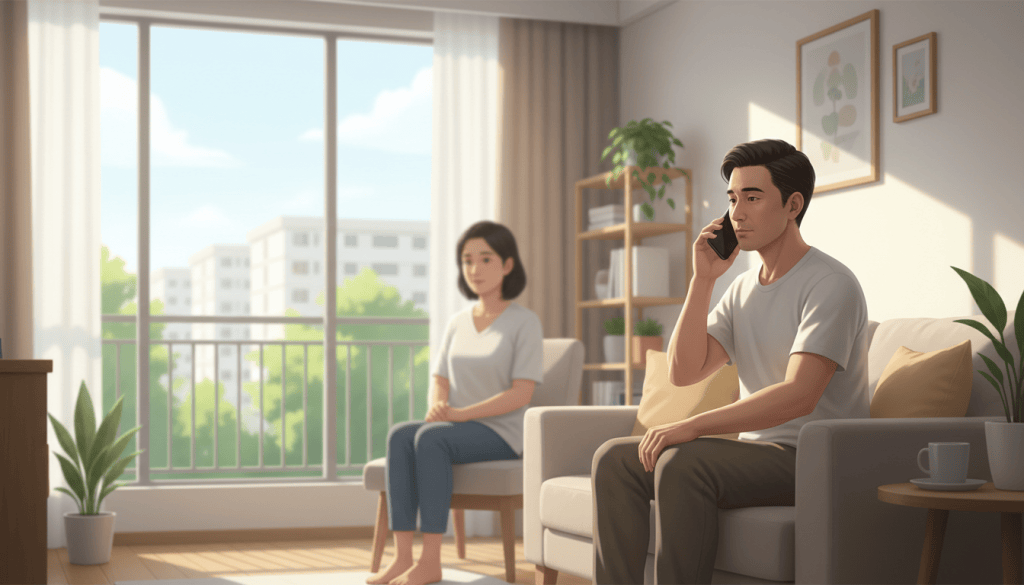
Someone in Sengkang is at immediate risk of harming themselves, has already seriously hurt themselves, or is unresponsive? Call 995 for an emergency ambulance. If there is an immediate security danger or someone may act in a way that puts others at risk, call 999. Tell the operator what is happening and give the full location, such as the HDB block, unit and floor. An urgent safety situation takes priority over finishing this article.
For emotional distress, suicidal thoughts or other mental-health difficulties that need conversation and assessment but are not an immediate physical emergency, Singapore has two 24-hour contacts: national mindline 1771 and Samaritans of Singapore (SOS) 1767. National mindline also offers WhatsApp at 6669 1771; SOS CareText uses WhatsApp at 9151 1767. These services can help people find the next step rather than manage an emergency alone.
- Immediate danger, serious self-injury or collapse: 995; Police 999 for urgent safety threats.
- 24-hour mental-health support and referral: national mindline 1771, WhatsApp 6669 1771.
- 24-hour suicide-crisis support: Samaritans of Singapore 1767, WhatsApp CareText 9151 1767.
- Urgent in-person assessment: seek a hospital emergency department; use emergency transport if the situation is life-threatening.
- Supporting someone: listen, ask directly whether they feel unsafe, avoid arguments and arrange a safe handover to professional help.
The first five minutes: what to do when risk is immediate
- Notice immediate danger. Is the person unconscious, seriously injured, in severe distress or about to act in a way that could injure themselves? If so, call 995 now.
- Do not leave a person in imminent danger alone if staying is safe for you. Ask another trusted person to help call or meet responders.
- Make the immediate surroundings safer where possible. Reduce access to hazards only if doing so does not require confrontation, physical struggle or exposure to danger.
- Speak simply and respectfully. You do not have to solve their underlying problems during the emergency. Say you are concerned and want to help them reach someone trained.
- Give responders accurate facts. State what the person said or did, current injuries or symptoms, whether they are conscious and the exact address.
- Follow dispatcher instructions. Keep your phone accessible; alert 995 promptly if breathing or consciousness changes.
- After immediate safety is secured, arrange continuing support. A crisis call is a first step, not the end of care.
Who to call for a mental-health crisis in Sengkang
- 995 — SCDF emergency ambulance: for serious injury, unresponsiveness, imminent life-threatening self-harm or another medical emergency. SCDF emergency medical guidance.
- 999 — Police emergency: if there is an immediate safety or security threat. Use 70999 emergency SMS when it is unsafe to speak.
- 1771 — national mindline: 24/7 mental-health conversation, assessment, triage and referral. WhatsApp 6669 1771. Ministry of Health mental-health services.
- 1767 — Samaritans of Singapore: 24-hour suicide prevention and emotional-crisis hotline. WhatsApp CareText 9151 1767. MOH’s SOS guidance.
- Hospital emergency department: for severe or urgent psychiatric and medical assessment. Sengkang General Hospital emergency visit guidance.
How to decide whether the situation is an emergency
A person can be deeply distressed without having a life-threatening medical emergency, and someone can also be at severe risk even when they are speaking quietly. The deciding issue is immediate safety, not whether the feelings sound dramatic. Inability to remain safe, serious self-injury, collapse, dangerous intoxication or a clear imminent threat requires emergency assessment.
When a person is able to stay safe but needs urgent conversation about anxiety, depressed mood, suicidal thoughts, relationship difficulties or workplace stress, 1771 and 1767 are appropriate ways to start. They can help the person consider professional care and the next safe step. You do not need a mental-health diagnosis to call.
If symptoms include severe chest pain, severe breathing difficulty or collapse, do not label them as ‘just panic’ without medical assessment. Call 995 for possible medical emergencies and describe what is happening.
What to say to a person who might be suicidal
Use calm, ordinary language. A person telling you they do not want to live may be asking for help, and dismissing the statement as attention-seeking can end a useful conversation. Ask whether they are thinking about harming themselves and whether they can remain safe right now. Asking directly can help identify urgent risk; it does not mean you are placing an idea into their mind.
Avoid debating whether their reasons are justified, comparing their problems with other people’s suffering or demanding an immediate promise that everything will improve. Instead, focus on what matters in the next minutes: their current safety, whether anyone else can help, and how to connect them to a trained service.
If the person describes an immediate intention or you believe serious harm may be imminent, call 995. If they are not in immediate danger, offer to sit with them while they call national mindline 1771 or SOS 1767. Do not promise complete secrecy when emergency assistance may be necessary.
A short script that can make the first call easier
You can describe the facts without trying to make a diagnosis: ‘I am in Sengkang. My family member is very distressed and has said they might hurt themselves. They are with me now. I need to know how to keep them safe and obtain urgent help.’ If serious danger is present, say this to the 995 operator and give the exact address. Otherwise, 1771 or 1767 can guide the conversation.
When calling for another person, explain whether they know about the call, whether they are willing to speak and what support they have right now. Do not claim they are safe if you cannot verify it. When services ask follow-up questions, separate what you saw from what you are worried might happen.
What if the person refuses to speak to a counsellor?
It may take time for someone to trust a support service. If they are not in immediate danger, you can suggest contacting 1771 by voice or WhatsApp rather than insisting they talk to a stranger in a room full of relatives. A trusted person can also call for advice about how to respond to a loved one’s distress.
However, imminent harm is not a situation to resolve solely by persuasion. If a person cannot remain safe, has made a serious attempt or is medically unstable, contact 995. Let the professionals assess the appropriate response.
If a teenager or student is in crisis
A teenager may experience overwhelming distress in response to relationships, bullying, family conflict or other issues. Adults should avoid assuming that grades, school attendance or a quiet appearance proves safety. Listen to the teenager’s actual words and check whether immediate danger exists.
For life-threatening situations, call 995. For urgent mental-health support without immediate physical danger, national mindline 1771 and SOS 1767 are available. A school counsellor, trusted teacher, parent or caregiver may be able to help connect the young person to appropriate care. Where the home itself is unsafe, seek an alternative trusted professional or emergency service.
Avoid broadcasting a student’s disclosures in class groups or online chats. Share only the information needed with people responsible for safeguarding and care.
If an older person seems suddenly confused or distressed
New confusion, sudden behavioural change or unusual agitation may have a medical cause as well as a psychological cause. Do not assume it is a psychiatric condition. If the person is suddenly disoriented, unresponsive, severely unwell or unsafe, seek urgent medical assessment and call 995 when appropriate.
When the person is physically stable but experiencing persistent anxiety, loss or low mood, 1771 can help with support and referral pathways. Explain any hearing, language or cognitive difficulties to the service so staff can advise on an appropriate way to communicate.
Using WhatsApp support safely
The Ministry of Health states that national mindline 1771 provides 24-hour contact through voice, WhatsApp and webchat. Its WhatsApp number is 6669 1771. SOS CareText uses WhatsApp number 9151 1767. Written messages can be useful when it is hard to speak, but a text conversation is not a replacement for calling 995 in immediate medical danger.
Check numbers against official websites rather than clicking unsolicited links. No legitimate crisis support contact should need your online banking password or one-time passcode. If someone is impersonating a help service and asks for money or confidential account access, end that interaction and verify independently.
What happens after the first conversation
There is rarely one appointment that resolves every mental-health difficulty. A support service may recommend self-help resources, further counselling, community mental-health support, a GP or more specialised clinical assessment, depending on urgency and need. The Ministry of Health describes a tiered model intended to match support to the situation.
If a person has already been seen in an emergency department, ask the treating team about the follow-up plan, who to contact if symptoms recur and whether family involvement would be helpful. Do not assume that being discharged means all risk has disappeared.
A useful handover includes the next appointment, practical access to care, a safe contact person and the specific signs that should trigger an urgent reassessment. Keep the plan realistic and agreed with the person and professionals wherever possible.
Helping someone who calls you late at night
- Ask where they are and whether they are physically safe.
- Listen without arguing or minimising their account.
- Ask directly whether there is immediate danger of self-harm or serious injury.
- If there is, call 995 and give the exact location; arrange immediate help.
- If immediate danger is not present, offer to help contact SOS 1767 or national mindline 1771.
- Check whether they have a safe person nearby and whether they can keep contact while arranging support.
- Make a specific follow-up plan rather than ending with a vague ‘call me anytime’ promise.
Situations residents may recognise
A parent hears a teenager say they cannot continue living
Take the statement seriously, ask about immediate safety and stay calm. If there is imminent danger, call 995. Otherwise, offer direct support through 1771 or 1767 and arrange prompt professional assessment.
An older relative suddenly becomes disoriented
Treat sudden confusion as a possible medical issue, especially alongside weakness, speech problems, breathing difficulty or collapse. Seek emergency medical help rather than concluding it is solely an emotional crisis.
A neighbour is upset but appears physically safe
Do not attempt to diagnose a stranger. If you can safely offer help, ask whether they need assistance contacting someone. For emotional distress without imminent danger, share 1771 or 1767. If there is imminent danger to anyone, contact emergency services.
Someone has left hospital after a crisis but feels unsafe again
Follow the clinical discharge plan and urgently contact the treating service where applicable. If an immediate medical danger has returned, call 995. For emotional-crisis support, SOS and national mindline operate around the clock.
Prepare a practical support plan before another crisis
- Keep 995, 1771 and 1767 accessible to household members.
- Identify a trusted person who can be reached without creating conflict or extra danger.
- Know the name of the treating clinic or professional, if the person already receives care.
- Make a plan for urgent transport and access to a hospital if medically indicated.
- Respect the person’s dignity and privacy while sharing essential facts with carers or responders.
- Check whether follow-up care was arranged and what to do if risk increases.
Frequently asked questions
Is 1771 available 24 hours?
Yes. National mindline 1771 is the 24/7 national mental-health support service. Its WhatsApp contact is 6669 1771.
Is SOS 1767 a suicide-crisis hotline?
Yes. Samaritans of Singapore operates the 24-hour hotline 1767 and CareText on WhatsApp at 9151 1767.
Should I call 995 for every panic attack?
Not automatically. But severe breathing trouble, chest pain, collapse or an uncertain dangerous medical condition needs urgent assessment. When you cannot tell whether symptoms are life-threatening, explain them to 995 and follow triage instructions.
Can I call a mental-health helpline about someone else?
You may seek guidance about how to support someone, while understanding that the service cannot necessarily disclose private information about another person. Report immediate danger directly to emergency services.
What if I am unsure which service is right?
For immediate danger use 995, or 999 for urgent Police safety matters. For emotional distress or mental-health support when the person can remain safe, 1771 is a suitable first contact.
Related Sengkang emergency guides
More Sengkang emergency guides (5 November 2026): Family violence, child and elder protection · Choking, infant first aid and CPR-AED · Accidental poisoning and medicine overdose.
Official sources and review information
- Ministry of Health — Mental Health Services and Crisis Help
- Ministry of Health — National Mindline 1771 Launch
- Ministry of Health — November 2026 Mindline Update
- MSF Family Assist — Helplines and Resources
- SCDF — Emergency Medical Services
Reviewed 5 November 2026. This is public information and cannot assess a particular person’s immediate risk or substitute for clinical treatment. Call 995 for immediate medical danger. National mindline 1771 and SOS 1767 are available 24 hours.
