
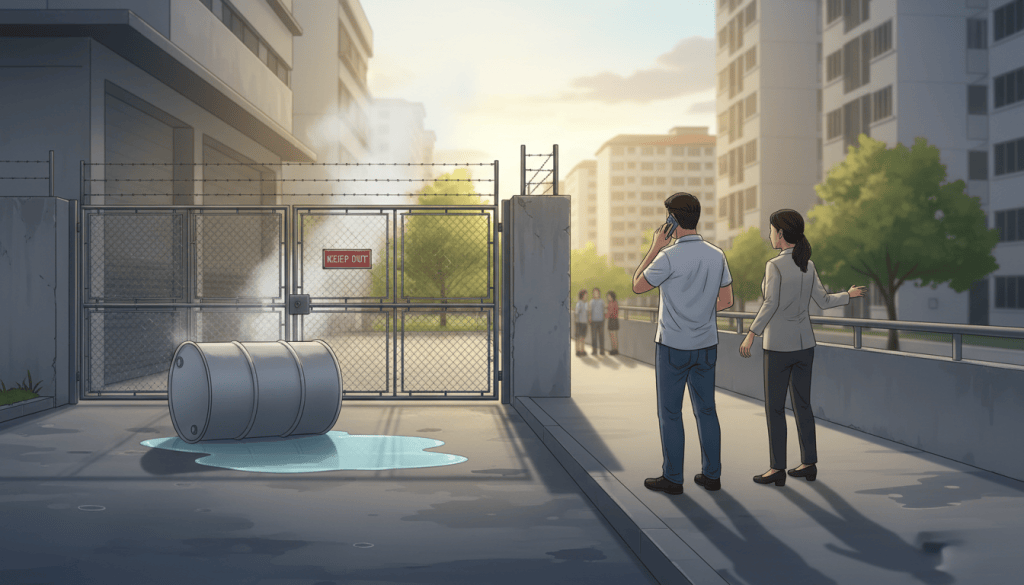
Unidentified chemical fumes, a leaking industrial container or a hazardous spill near a Sengkang HDB block, shop, service yard or workplace? Move away from the affected area without crossing the spill or vapour, keep others from entering, and call 995 for SCDF hazardous-materials assistance. Tell the dispatcher exactly where the suspected release is and whether anyone is coughing, has burning eyes, struggles to breathe or has collapsed. Do not approach to smell, touch, taste, dilute or clean up an unknown substance.
Indoor and outdoor releases may need different protective actions. SCDF’s 2026 Civil Defence Emergency Handbook advises leaving an indoor chemical-release area by a route that does not pass through contamination. For an outdoor release, moving away from the affected area and seeking suitable shelter may be safer. Follow actual SCDF instructions on evacuation or in-place protection, because the direction of airborne fumes, weather and chemical involved can change the safest route. A cloth or mask alone cannot guarantee protection from toxic gas.
Quick routing: active dangerous chemical release, people unwell or suspected hazardous-material emergency — SCDF 995; suspected deliberate attack or immediate criminal threat — Police 999 as well; routine small spill of a known household product with no danger — follow its label and consult responsible management or competent cleaning personnel; workplace or industrial incident — activate the site’s emergency response plan and notify the proper authorities under applicable requirements.
First 60 seconds: a suspected chemical release
- Move yourself to safety. Do not stay beside an unknown spill, cloud or leaking drum to establish the exact chemical.
- Warn others from a safe position. Keep children, workers and bystanders out; do not form a crowd around the scene.
- Call 995. Describe the location, suspected substance if known, leak or vapour and whether people have breathing, eye or skin symptoms.
- Avoid walking through contamination. For an indoor release, leave through a safe route that does not cross the affected area. If the release is outdoors, follow the safer shelter/evacuation instructions for the specific scene.
- Do not touch or neutralise the substance. Household detergents, acids and alkalis can react dangerously when mixed.
- Do not enter to rescue a collapsed person. An unprotected rescuer can become another casualty. Tell SCDF exactly where the person was last seen.
- Wait for professional instructions. Follow SCDF and the responsible premises’ instructions on decontamination, ventilation, evacuation and when it is safe to return.
Who to call in Sengkang
- 995 — SCDF Fire, Rescue and Hazardous Materials: immediate response to hazardous chemical incidents or urgent medical distress. SCDF emergency services.
- 999 — Singapore Police Force: when the release is associated with a suspected deliberate crime or an active threat requiring Police attendance. SPF contact numbers.
- Worksite or building emergency team: notify trained personnel and identify the substance or safety data sheet if safely available. Do not delay the 995 call for management approval.
- NEA hazardous substances regulatory information: NEA guidance on emergency response for hazardous substances transport explains the duties of licensed transporters and response plans.
- Hospital or medical team: for exposed individuals after the immediate scene is safe; advise the treating staff that chemical exposure is possible.
- Town council or property manager: for later repair, clean-up coordination or common-area access after SCDF has controlled the hazard.
How to recognise a possible hazardous chemical event
Chemical releases can occur through an accident in a workplace, an overturned container, a transport incident, a mixing reaction or a deliberate act. A spill does not have to involve an explosion to be hazardous. Some chemicals can cause eye or throat irritation; others can affect breathing, skin or consciousness without obvious flame or smoke.
SCDF’s 2026 Emergency Handbook, Chemical Threats identifies possible warning signs including several people in one place developing watery eyes, headaches, dizziness, shortness of breath, coughing, severe skin irritation, vomiting, muscle twitching or collapse.
Those symptoms are not a definitive chemical test. Asthma, infection and other conditions can produce some of them. The important issue is the shared environment, observed vapour or leak, and the need to get people away while trained responders investigate.
Do not sniff an unknown chemical to identify it
Smell is an unreliable and sometimes dangerous identification tool. Some substances have strong odours at low concentrations; others can be hazardous despite having little smell. A person who moves closer to ‘check whether it is chlorine or petrol’ may inhale a more concentrated portion of the release.
If a label can be read from a safe distance or a trained worker already knows the product, report the name. Otherwise simply describe the external container, colour or visible vapour without speculating. SCDF can deploy specialist hazardous-materials equipment and detectors to assess the incident.
Indoor chemical release: how to leave safely
If a dangerous release occurs in a room or building, SCDF recommends leaving quickly without passing through contaminated areas. Do not walk through a cloud of irritating gas to reach a familiar exit when another safe exit exists. Alert other occupants and take children or people who can walk safely with you.
If the only visible route is contaminated or dangerous, do not force your way into unknown fumes. Retreat to a safer space if possible, close a door between you and the source, call 995 and tell responders your precise location. The operator can help direct the next safe action.
Avoid operating electrical switches or engines near a spill that might be flammable; do not assume unknown vapours cannot ignite. Workers trained for specific chemical processes should follow their facility’s approved emergency plan.
Outdoor chemical release: shelter versus evacuation
For an outdoor release, SCDF’s handbook advises moving away from the affected area, avoiding the airborne plume and seeking shelter in an appropriate building. The safest direction depends on wind, terrain and the actual chemical; do not simply walk into a visible cloud to cross a road faster.
Where authorities order in-place protection, remain indoors, close windows and doors, and follow instructions for ventilation systems. Where authorities direct evacuation, use the specified safe route. A general article cannot replace those site-specific instructions, and residents should not assume the same action is correct for every gas.
A wet cloth placed over the nose may reduce some dust or irritation but does not reliably remove poisonous gas. Do not stay in a contaminated area because you have a mask or towel.
If several people are coughing near the same location
A cluster of sudden symptoms can help responders identify a shared exposure. Move everyone who can safely leave away from the affected area, and call 995. Tell the operator how many people are unwell and what symptoms they have.
Do not ask the least-affected person to re-enter and help someone who has collapsed. They may become exposed as well. Qualified SCDF responders can determine safe entry, rescue and decontamination.
What if chemical liquid contacts your skin?
Get away from the source without transferring contamination to others. Some chemical exposures require immediate removal of contaminated clothing and thorough washing. However, the correct decontamination depends on the substance and its physical form. Follow the 995 operator, the product’s Safety Data Sheet if known, and trained responder guidance.
If advised to rinse a chemical from skin or eyes with water, avoid exposing other people or the unaffected areas. Do not apply another chemical as a home remedy, and do not delay urgent medical care for serious burns or breathing symptoms.
The Sengkang chemical eye injury guide deals specifically with eye irrigation after a splash. A broad chemical plume or unknown reactive powder needs its own hazardous-material assessment.
Do not mix bleach, acid cleaners or ammonia products
Household cleaners can react with each other. An attempt to ‘neutralise’ a spill using a second product may release irritating or toxic gases. Do not pour bleach into another drain cleaner, toilet descaler or unknown chemical container.
For an ordinary minor cleaning-product spill with no symptoms or significant danger, follow the manufacturer’s written instructions and use appropriate protective equipment. A large spill, dangerous vapours or uncertain product should be left to competent personnel and SCDF as needed.
If someone develops severe eye or respiratory symptoms after mixing cleaners, move out of the affected room, seek safe air and call 995.
Chemical containers at a loading bay or service yard
Commercial and maintenance areas may contain cleaning chemicals, fuels or other regulated substances. A resident may see an unfamiliar drum or tanker without knowing what it holds. Do not enter a loading bay to read labels or check a leaking container.
NEA requires licensed transporters of hazardous substances to have emergency response plans. The plans include people and authorities to notify, appropriate equipment, contamination procedures and Safety Data Sheets. Those are responsibilities for trained workers and companies, not instructions for the public to attempt a clean-up.
Tell 995 the building, service entrance, type of vehicle or container visible from safety and whether any person is affected.
What if the release is near an HDB entrance?
Keep people away from the immediate area, particularly children and older residents. Do not block an authorised emergency escape route or stand in a common corridor filled with fumes. If the plume is outdoors, move into an appropriate safe shelter away from it as directed by officials.
Building management or the responsible town council may assist with notices and keeping common areas clear after SCDF is alerted. But neither a town-council maintenance form nor a general municipal feedback report can substitute for emergency HazMat response.
If the incident is in a school or childcare centre
Staff should activate the institution’s emergency plan and call 995 for dangerous chemical exposure. Keep children in a safer designated area and follow responders on whether to evacuate or shelter. Do not send children outdoors into a chemical plume solely because a normal fire drill uses an outdoor assembly area.
Give SCDF the child’s age group, the affected classroom or block, the chemical involved if known and whether any pupils have breathing or eye symptoms. Inform authorised parents through the centre’s communication process without spreading unverified rumours.
Chemical leak after a traffic collision
A damaged industrial vehicle may release fuel or chemical contents. Stay clear of the vehicle and any pooling liquid; do not smoke, operate risky electrical devices or start another vehicle near a potentially flammable release. For urgent danger, call 995 and report the road direction and vehicle description.
If an active traffic hazard also needs Police control, the 995 operator or the caller can coordinate appropriate assistance. Do not direct other motorists from the middle of a live road.
What to tell the 995 dispatcher
- Location: Sengkang street, block, floor, commercial loading bay, road junction or park entrance.
- Substance: name if genuinely known, or plain description of the container and visible release.
- Symptoms: eye irritation, dizziness, breathing problems, collapse or injuries.
- People: number of exposed or missing occupants, and who remains in the affected zone.
- Airflow: any visible plume direction from safety; do not approach to test it.
- Fire or electricity: smoke, sparks, flames or damaged equipment if observable.
- Access: which safe gate or entrance can be used by trained responders.
After the initial danger is controlled
An incident may not be over when the visible fumes dissipate. Trained personnel may need to test the area, manage contaminated equipment and verify that re-entry is safe. Residents should wait for the all-clear rather than returning to collect belongings as soon as the air appears normal.
People with significant symptoms or known exposure may need medical evaluation even after improvement. The treating team may request information about the substance, exposure timing and first aid given.
The operator or building manager can later address damage, clean-up and incident reporting under relevant environmental and workplace rules. That follow-up should not delay emergency care.
Four Sengkang scenarios
A harsh-smelling cloud comes from a commercial service room
Move away without crossing the vapour, warn others, and call 995. Tell the dispatcher the building, room entrance and whether staff are coughing or have burning eyes.
A container leaks onto a road after a vehicle collision
Keep away from the vehicle, standing liquid and traffic. Call 995 with the road and direction. Do not attempt to block the drain or soak up the chemical.
Two residents become dizzy near the same enclosed cleaner room
Do not send another person inside to check. Move to safe air and report a possible shared exposure to 995.
An outdoor release triggers an official shelter-in-place message
Follow the authority’s instructions to remain in the designated safe building, close openings and manage ventilation as directed. Do not leave shelter to film or investigate the release.
Prevention for households and premises
- Keep cleaning products in their original labelled containers and away from children.
- Never mix different chemicals in toilets, drains or cleaning buckets.
- Read product Safety Data Sheets for workplace handling and keep response plans available.
- Store chemicals according to their hazard class and manufacturer requirements, not beside food or heat sources.
- Maintain ventilation and spill response equipment through trained building or workplace staff.
- Teach residents and children to move away from unknown liquids or fumes and report them to adults.
- Know the safe building entrance, 995 contact and the difference between emergency rescue and routine maintenance.
Frequently asked questions
Is a strong chemical smell by itself proof of a toxic release?
No. A smell is not a diagnosis. However, unusual vapour, suspected chemical leakage or multiple people becoming suddenly unwell requires prompt safety precautions and professional assessment.
Can I neutralise a spill with vinegar or bleach?
Do not do so. Mixing chemicals can create more dangerous reactions. Leave unknown or significant spills to trained responders.
Should I evacuate or shelter indoors?
The safe response depends on whether the release is inside or outside and the direction of contamination. Follow SCDF’s site-specific evacuation or in-place protection instructions.
Can I wear a normal mask and enter to rescue someone?
No. An ordinary face mask cannot be relied upon for protection from hazardous gases. Do not enter a contaminated area without appropriate specialist protection.
Who handles serious chemical incidents in Singapore?
SCDF provides fire, rescue, emergency medical and hazardous-material mitigation response. Call 995 for a dangerous release or serious exposure.
More Sengkang emergency guides
- Gas leaks, LPG and piped gas
- Carbon monoxide poisoning and indoor fumes
- Accidental poisoning and household chemicals
- Chemical eye splashes and vision injury
More Sengkang emergency guides, November 2026: Electric vehicle charging fires and car-park evacuation · Workplace injuries and MOM reporting · HFMD in preschool and childcare.
Official sources and information date
- SCDF — Civil Defence Emergency Handbook 2026, Chemical Threats and In-Place Protection
- MHA — SCDF’s Role in Hazardous Materials Mitigation
- NEA — Emergency Response for Hazardous Substances Transport
- SCDF — Emergency Medical Services
Reviewed 7 November 2026. This is public emergency guidance, not a chemical identification or clean-up manual. For a hazardous release, move to safety, call 995 and follow current instructions from SCDF.
