
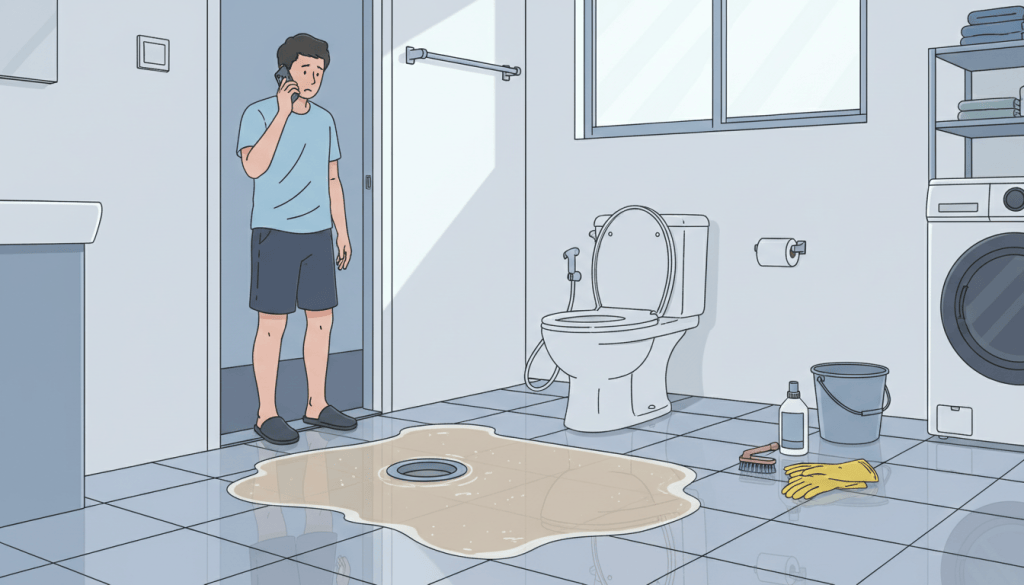
Toilet water, sewage or used water is backing up from a floor trap, sink or inspection chamber in Sengkang? Stop using the affected toilets, sinks and drains, keep children and pets away from contaminated water, and avoid touching wet electrical fittings. For a suspected sewer choke, report it through PUB’s official Help & Feedback — Report Sewer Choke Issue or call the PUB 24-hour Call Centre at 1800 2255 782 (alternative 6521 6470).
For an urgent HDB common-area sewage problem at a block managed by Sengkang Town Council, contact the 24-hour EMSU on 6590 9777. For a blockage inside a private flat, a suitable plumber or property owner may be responsible. These services have different roles: PUB maintains public sewers, while private premises owners maintain private sanitary drainage systems. Report the location and observations rather than guessing who owns an unseen underground pipe.
Call 995 only when a genuine life-threatening incident accompanies the blockage, such as serious injury, dangerous electrical exposure, collapse or an urgent rescue need. A clogged toilet that can be isolated safely is generally a plumbing and sanitation issue, not an emergency ambulance case.
The first five minutes: sewage overflow checklist
- Stop further flushing and water use at affected fixtures; do not repeatedly flush in an attempt to push the blockage through.
- Keep people and pets out of the dirty water. Move away from contaminated floors and avoid splashes.
- Watch for electrical danger. Do not step through water to touch a switch, plug, heater or appliance.
- Identify the source from a safe position. Is used water emerging from a toilet, floor trap, sink or outdoor inspection chamber?
- Check the extent without entering the contaminated area. Is it only one fixture, several fixtures in a flat, or multiple neighbouring units?
- Contact the correct service. PUB for a suspected sewer choke or public used-water issue; town council for urgent common property; plumber or managing agent for private sanitary works.
- After the cause is controlled, arrange appropriate cleaning and disinfection. Do not rush to clean during active overflow or before an electrical hazard has been made safe.
Who to call in Sengkang for blocked toilets and sewage
- 1800 2255 782 — PUB 24-hour Call Centre: suspected sewer choke and used-water overflow. Online: PUB Report Sewer Choke Issue. Alternative number: 6521 6470. PUB contact details.
- 6590 9777 — Sengkang Town Council EMSU: urgent essential maintenance for common areas under its management. Official SKTC EMSU page.
- Property owner, landlord, building manager or MCST: internal or privately owned sanitary drainage problems, depending on building ownership and maintenance boundaries.
- Appropriate plumbing contractor: ordinary fixture blockage removal or private drainage inspection. PUB’s Plumbing Works guidance distinguishes simple tasks from regulated plumbing works requiring a licensed plumber.
- 995 — SCDF: when someone is trapped, severely ill or in immediate life danger, not as the ordinary sewer-unblocking hotline.
What does PUB mean by a sewer choke?
PUB explains that signs of a sewer choke include used water overflowing from an inspection chamber or sewer, or emerging from sinks, toilets and floor traps. It explicitly asks the public to report suspected chokes promptly through its dedicated help and feedback page. These symptoms are not definitive proof of which section is blocked, but they are useful observations for assessing the problem.
Singapore has separate networks for stormwater and used water. Household wastewater from toilets, kitchens and showers flows through sanitary plumbing toward the sewerage system; rainwater drains are a different network. Do not assume a flooded rainwater drain and an overflowing toilet are the same fault.
If the used water smells foul, appears discoloured or comes from an inspection chamber, avoid direct exposure. A contaminated area may present hygiene hazards even when the volume of water is small.
Public sewers and private sanitary pipes: why ownership matters
PUB’s Public Sewers page explains that the national agency maintains the public sewerage system. PUB’s Private Sewers page states that private premises owners own and maintain their sanitary drainlines and private sewers. A choke can involve either type of pipe, so the place where water appears does not always identify ownership.
A public sewer blockage may affect more than one building or multiple apartments. A private drainage fault may affect one flat or a building’s shared private system. A plumber or the responsible manager may need to inspect the routing before responsibility can be confirmed.
When the cause is unclear, report the observed symptoms to PUB and the responsible building manager rather than arguing over the boundary while sewage continues to spread.
If the toilet bowl fills and will not drain
Do not flush again. Continued flushing can push contaminated water over the rim and into nearby rooms. Keep the affected fixture out of use and notify other household members. If it is clearly an isolated fixture blockage with no active hazard, seek an appropriate plumber or qualified handyman to assess the problem.
Simple blockage clearing may be possible without regulated construction work, but dismantling or altering permanent sanitary piping is not the same as a basic unclogging task. PUB lists simple clearance of a blockage in a water closet, floor trap or drainline separately from regulated plumbing installations.
Avoid pouring a series of chemical drain cleaners down the blocked toilet. They may fail to clear the fault, produce hazardous fumes when mixed, splash back at a plumber or damage equipment. The safer approach is to stop use and engage suitable assistance.
If dirty water comes up through the floor trap
A floor trap may back up if the downstream sanitary line is blocked or overwhelmed. Stop using associated bathrooms, showers and sinks until the cause has been assessed. Keep the area isolated; do not allow children to stand in it or wash toys and shoes in potentially contaminated water.
Report whether multiple drains are affected and whether the overflow occurs only when another fixture is used. Such observations can help a plumber or authority locate the problem, but do not require you to enter a flooded room or remove manhole covers.
If used water is overflowing from an outdoor inspection chamber
Stay back from the manhole or chamber. Covers may be heavy, slippery or unstable, and the space underneath can contain dangerous gases. Never climb into a sewer chamber or attempt to remove the cover and clear it yourself.
Use PUB’s sewer choke reporting form or the 24-hour hotline. Give the nearest Sengkang road, HDB block, junction and whether sewage is entering a walkway or other public area. If it is part of a managed estate’s common area, contact the managing town council as well.
If several HDB units report backflow
Repeated overflow across adjacent units can indicate a shared system issue, although no online guide can determine the exact fault. Tell the managing agent or town council which floors and blocks are affected, and lodge a sewer choke report with PUB where appropriate.
Ask neighbours to reduce use of affected sanitary fixtures without blaming an individual household. The cause may involve a common pipe, obstruction or another structural issue and should be assessed by competent staff.
Do not try to coordinate an amateur pipe-flushing operation across several units. Such efforts can send more used water into a partly blocked system and worsen flooding.
If the sewage overflow occurs in a condominium or mall
Private commercial and condominium sites typically have managing agents, MCSTs or owners responsible for privately owned sanitary lines. Report the overflow to the onsite property team while also alerting PUB when a sewer choke or public sewer issue is suspected.
The fact that the premises are geographically in Sengkang does not make Sengkang Town Council responsible for a private shopping mall or condominium. Use the building’s actual maintenance contact.
Water and electricity: stop before cleaning
A flooded bathroom may contain electric water heaters, wall outlets, plugs, washing machines or damaged ceiling lights. Never stand in contaminated water to turn an appliance off or unplug it. If water touches electrical equipment, keep clear and alert qualified personnel.
An exposed-wire or electric-shock danger calls for a different response. See the Sengkang electric-shock guide. Call 995 for an actual life-threatening shock or rescue emergency.
How to reduce health risks from sewer overflow
Used water from toilets may contain microbes capable of causing illness. Avoid direct skin contact, splashes near the mouth and use of the contaminated area for food preparation. If clothing or shoes become wet with sewage, handle them carefully and wash them appropriately after the area is safe.
Anyone who develops significant vomiting, diarrhoea, fever or other illness after exposure should seek appropriate clinical assessment; severe symptoms require urgent care. Do not treat a foul smell alone as proof of a specific disease or toxic gas concentration.
When professional cleaners are used, ask about safe disinfection, protective equipment and disposal of contaminated materials. Do not mix bleach, acids, ammonia-containing cleaners or different drain products; chemical reactions can release dangerous fumes.
What to tell PUB or the estate maintenance team
- Exact site: HDB block, road, unit and floor, or common chamber location.
- Source: toilet, floor trap, sink, private inspection chamber or public sewer cover.
- Extent: one fixture, multiple fixtures, one flat, common corridor or several units.
- Flow: occasional bubbling, slow drainage or active sewage overflow.
- Timing: when the blockage was first noticed and whether it worsens during fixture use.
- Hazards: contact with electrical equipment, blocked accessible path, slip risk or vulnerable occupants.
- Access: contact details and where authorised contractors can approach safely.
Prevention: do not turn toilets and sinks into rubbish bins
PUB’s used-water guidance warns against allowing unsuitable materials into drains and sanitary systems. Wet wipes, sanitary products, food scraps, grease and other solids can contribute to blockages. Even a product labelled ‘flushable’ should not be assumed safe for the local sewer system.
Keep a bin near the toilet for unsuitable waste, use sink strainers for food solids, and avoid pouring cooking oil and grease down kitchen sinks. If a commercial kitchen operates in the area, grease-trap maintenance may also be required.
Report repeated slow drainage before complete overflow develops. Preventive attention is usually more manageable than cleaning a contaminated bathroom after a backflow incident.
Three Sengkang scenarios
A toilet begins overflowing after repeated flushes
Stop flushing, isolate the bathroom and call a suitable plumber for an internal fault. If other fixtures or multiple flats are also affected, report the possible shared blockage to the property manager and PUB.
Sewage flows from a chamber near an HDB walkway
Keep residents clear, do not remove the manhole cover and report through PUB’s sewer-choke form or its 24-hour call centre. Tell the town council as appropriate for common-area safety.
A basement toilet backs up and water reaches electrical sockets
Keep everybody out of the contaminated wet electrical area and contact urgent building maintenance. If somebody is injured or facing immediate electrocution danger, call 995 from a safe location.
Frequently asked questions
Does PUB fix every blocked toilet in an HDB flat?
No. PUB maintains the public sewerage system, while private and building sanitary fittings have different maintenance responsibilities. PUB can receive a sewer choke report and help identify appropriate next steps.
What number do I call for a suspected sewer choke?
PUB’s 24-hour number is 1800 2255 782, with 6521 6470 as an alternative. Its online help form also has a specific sewer-choke reporting option.
Is 6590 9777 the number for every private building?
No. That is the Sengkang Town Council 24-hour EMSU for the common estate areas it manages. Private buildings have their own management contacts.
Should I keep flushing to break the blockage?
No. Repeated flushing may increase the overflow. Stop use of affected fixtures and arrange appropriate assessment.
Can I pour two drain-cleaning chemicals together?
No. Mixing chemical cleaners can generate dangerous fumes or reactions and create additional injury risks.
More Sengkang emergency guides
- Burst water pipes, ceiling leaks and water interruptions
- Electric shock and exposed wiring
- Food poisoning and dehydration
- HDB falling concrete and unsafe ceilings
Continue with this Sengkang emergency series: Escalator injuries and emergency stop · PMD, PAB and e-bike battery fires · Death at home, doctor and Police procedures.
Official sources and review date
- PUB — Report a Sewer Choke Issue
- PUB — 24-Hour Contact Centre
- PUB — Public Sewerage System and Maintenance
- PUB — Private Sewer Ownership and Responsibility
- PUB — Plumbing Works and Licensed Plumbers
- Sengkang Town Council — 24-Hour EMSU
Reviewed 6 November 2026. This guide identifies first contacts and safety precautions; it cannot determine the ownership of an unseen pipe. If someone is in immediate life danger, call 995. For suspected sewer choke, contact PUB and the responsible property manager.
