
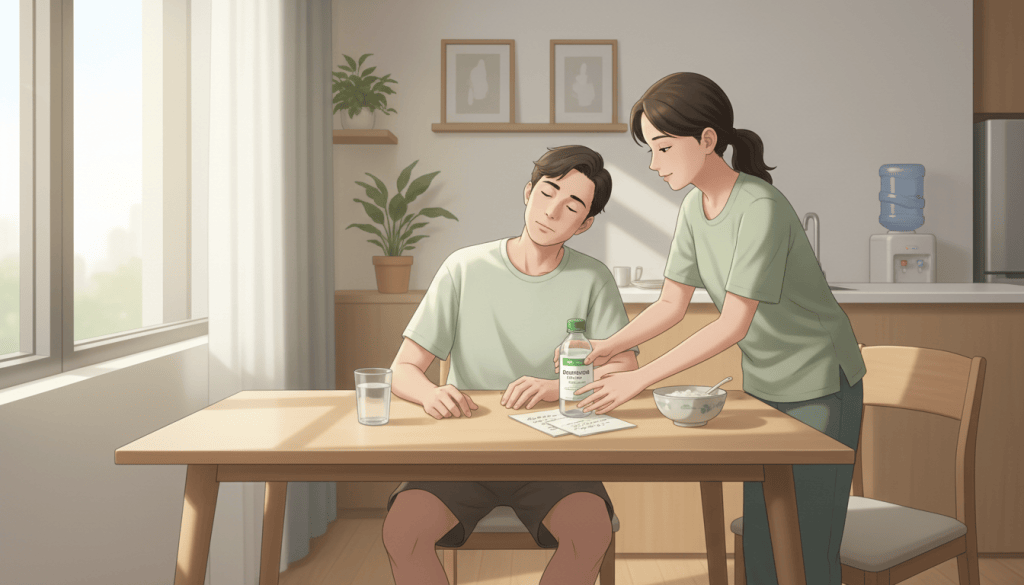
Vomiting, diarrhoea or stomach pain after a meal in Sengkang? Food poisoning or gastroenteritis may be the cause, although a meal cannot be blamed without evidence. First assess how ill the person is. Call 995 for collapse, unresponsiveness, severe difficulty breathing or another life-threatening emergency. Seek urgent medical assessment for blood in vomit or stools, severe abdominal pain, high fever, inability to retain fluids or signs of significant dehydration.
For a person who is alert, otherwise stable and able to drink, rehydration is the central initial step. Offer small, frequent sips of suitable oral rehydration solution or fluids. Children, older adults and people with significant medical conditions may become dehydrated more quickly, so arrange clinical advice early if they are not improving. Do not routinely give a child anti-diarrhoea medication without their doctor’s instructions.
Where to report suspected unsafe food: Singapore Food Agency (SFA) provides an official online feedback form for concerns about unsafe food or suspected food poisoning. Seek medical care first, then report the outlet, date, foods purchased and symptoms factually. SFA is a food-safety regulator, not an emergency medical service.
Quick decisions: when to seek emergency help
- 995 immediately: collapse, unresponsiveness, severe breathing problems, serious medical deterioration or another life-threatening emergency.
- Urgent medical assessment: bloody diarrhoea, black stools, blood or green fluid in vomit, severe abdominal pain, persistent high fever or inability to keep fluids down.
- Dehydration warning signs: very little urine, significant dizziness, dry mouth, sunken eyes, unusual sleepiness or weakness.
- Stable vomiting or diarrhoea: take small frequent sips of suitable fluids or oral rehydration solution, and follow a clinician’s guidance.
- Suspected unsafe food: submit factual information through SFA’s online feedback system once immediate care is arranged.
- Do not assume one restaurant is responsible simply because symptoms appeared after eating there. Causes may vary and the timing of illness differs by organism.
First five minutes: what to do if someone becomes unwell
- Assess consciousness, breathing and pain. Call 995 for a life-threatening emergency.
- Move the person to a safe, clean and comfortable place. Provide access to a toilet and prevent falls if they feel faint.
- For someone alert and able to swallow, begin gentle rehydration. Use small frequent sips rather than forcing a large volume at once.
- Watch for warning signs. Blood in stool or vomit, worsening abdominal pain, dehydration, high fever and repeated vomiting merit medical advice or urgent assessment.
- For infants, older adults and high-risk patients, seek advice earlier. Do not wait for prolonged illness if they appear dehydrated or lethargic.
- Record the basics. Note symptom onset, foods eaten, where and when they were bought, and others who may be affected.
- Report food-safety concerns to SFA. Use its official feedback form and submit observations rather than accusations.
Who to call or contact in Sengkang
- 995 — SCDF Emergency Medical Services: for a life-threatening medical emergency, collapse or severe deterioration. SCDF emergency guidance.
- GP, polyclinic or hospital: medical assessment for severe or persistent gastroenteritis, dehydration or other concerning symptoms. CDA food poisoning guidance.
- 6262 6262 — NurseFirst: non-emergency advice on suitable care, not an ambulance or poisoning specialist service.
- SFA online feedback form: https://csp.sfa.gov.sg/ for suspected food-safety failures, food products or food outlets.
- SFA contact centre: 6805 2871 during the agency’s published operating hours for general enquiries. The online feedback form is the better reporting channel outside office hours. SFA official contact details.
What is food poisoning?
Food poisoning is illness caused by contaminated food or water, which may contain harmful bacteria, viruses, parasites or toxins. Gastroenteritis describes inflammation of the stomach and intestines. It can arise from contaminated food, but some infections also spread through contact with an infected person or contaminated surfaces.
The Communicable Diseases Agency lists nausea, vomiting, diarrhoea, stomach pain and sometimes fever as common features. Different pathogens produce different onset times and illness patterns. A person with these symptoms does not necessarily have the same infection as someone else who became ill after a group meal.
A clinician may assess symptoms, exposure history and hydration, and order tests if indicated. A public article cannot determine which meal caused an illness or identify the organism involved.
Why hydration is the priority
Repeated diarrhoea and vomiting cause loss of fluid and electrolytes. Dehydration can lead to dizziness, low urine output and weakness, and can become serious in a child or older adult. CDA states that rehydration, orally or by intravenous fluids when needed, is the mainstay of gastroenteritis treatment.
When the person is awake and able to swallow, offer small amounts frequently. Oral rehydration solution prepared as directed can help replace water and salts. If vomiting occurs with a large drink, small sips at intervals may be better tolerated. Do not force fluids into a severely drowsy or unconscious person.
For people who cannot retain fluids, have severe dehydration or have complex heart, kidney or other medical conditions, a doctor may need to guide the type and amount of replacement fluid. Do not assume the same fluid regimen fits everyone.
How to recognise dehydration in adults
- Unusual thirst or dry mouth.
- Reduced urine output, particularly if little urine is passed over many hours.
- Dizziness, particularly when standing, or marked weakness.
- Persistent vomiting that prevents drinking.
- Worsening sleepiness, confusion or difficulty remaining alert.
- Rapid deterioration, fainting or collapse.
HealthHub advises seeking medical assessment for dehydration, blood in stool or black sticky stools, severe abdominal or anal pain and high fever. Some dehydration symptoms may be subtle; if the person is increasingly unwell, seek professional help rather than waiting for every listed sign.
Dehydration in babies and young children
Children can deteriorate more quickly because of their size and fluid needs. HealthHub’s childhood gastroenteritis guide highlights dry mouth, no tears when crying, reduced urination or wet diapers, unusual sleepiness and inability to tolerate small amounts of fluid as reasons for prompt medical evaluation.
A child who is unresponsive, severely lethargic or otherwise seriously ill may need emergency assistance through 995. Do not postpone care while trying to determine whether the illness came from a school meal, catered event or something eaten at home.
Give an age-appropriate rehydration solution according to medical guidance. Avoid routinely giving anti-diarrhoea medications to a child without professional direction; some are not safe or appropriate in young children.
When vomiting and diarrhoea require urgent care
- Blood in vomit or stool, or black, sticky stool.
- Green vomit in a child, especially with significant illness.
- Severe or worsening abdominal pain that does not settle.
- Persistent vomiting or inability to tolerate even small amounts of fluid.
- High or persistent fever and serious weakness.
- Marked dehydration, including little urine, sunken eyes, dry mouth or confusion.
- Unusual lethargy or failure to respond normally in a child or older adult.
These features can result from gastroenteritis or a different serious medical condition. Do not assume it is food poisoning and therefore safe to treat at home. Seek appropriate immediate assessment; call 995 when there is a life-threatening presentation.
Should someone take antibiotics?
CDA explains that antibiotics are generally unnecessary for routine food poisoning and have no value for viral gastroenteritis. In selected bacterial illnesses, a clinician may decide specific treatment is necessary. Taking leftover antibiotics without diagnosis can be ineffective and may cause side effects.
Do not give someone else’s prescription, stop a prescribed medicine without advice or use antibiotics merely because several people in the same household have diarrhoea. Clinical decisions depend on the likely cause and the patient’s condition.
What about anti-diarrhoea medicines?
Some nonprescription medicines may be suitable for particular adults, but they are not appropriate for every infection or symptom pattern. Bloody stools, fever, severe pain and dehydration require medical advice rather than simply suppressing diarrhoea. HealthHub specifically cautions against giving anti-diarrhoea medicines to children unless the doctor prescribes them.
If a person is pregnant, older, immunocompromised or has serious medical conditions, ask their clinician about safe medicines. Do not copy another household member’s treatment.
What can the person eat after vomiting settles?
Rehydration matters more than forcing a full meal during active vomiting. As symptoms settle and the person can tolerate fluids, normal foods may be reintroduced gradually. Simple bland items may be easier for some people at first; individual tolerance varies.
Avoid encouraging the person to finish a large meal to ‘restore strength’ when they remain nauseated. Use small amounts and monitor whether vomiting recurs. Persistent intolerance of fluids is a reason for clinical assessment.
Can you tell which food caused the illness?
Not reliably from the last food eaten alone. Some foodborne illnesses develop within hours, while others take days. A person may also have a contagious viral infection unrelated to a specific meal. The date and timing of symptoms help investigators, but they do not prove which establishment was responsible.
If several people who ate the same dish become ill, report that fact accurately. Also tell the doctor and SFA what foods were involved. Do not publicly accuse a named business before an investigation establishes relevant evidence.
How to submit a food-safety concern to SFA
- Seek medical help for anyone who needs assessment first.
- Open the official SFA feedback form.
- Identify the food outlet, product or event as precisely as you can.
- Record the date, approximate time and items eaten or purchased.
- Describe symptoms and onset times for those affected, distinguishing confirmed facts from suspicion.
- Include a receipt, food label or photographs when available and appropriate.
- Retain the case reference for possible follow-up and answer further questions from the agency if requested.
SFA’s official service accepts food-safety feedback, including concerns about contaminated food and food poisoning. The regulator may investigate, but a complaint is not proof that a specific food caused an illness. Avoid sharing personal medical records publicly or allowing a social media dispute to replace an official report.
If several people at the same event become sick
A shared meal involving a school, tuition event, company gathering or caterer may raise concern about a possible outbreak. Make sure each unwell person receives appropriate care. Keep a list of what was served, who ate it, when symptoms began and whether anyone needed medical attention.
Alert the organiser through the appropriate contact so they can preserve records and respond responsibly. Submit a factual report to SFA. Do not continue serving potentially implicated food while a safety concern is being examined.
The presence of similar symptoms among several people is important evidence but does not eliminate other explanations. Health professionals and investigators should determine what testing or public-health action is needed.
Food poisoning and a child at school
If your child returns from school with vomiting or diarrhoea, check hydration and warning signs before questioning them extensively about meals. Obtain medical care when needed, especially for poor urine output, unusual sleepiness or repeated vomiting.
Tell school staff about the illness and the relevant dates, but avoid implying guilt without evidence. If other families are affected and there is credible concern about food safety, the school and authorities can coordinate appropriate reporting.
Food hygiene while someone is unwell
Gastroenteritis can sometimes spread from person to person. Wash hands thoroughly with soap and water, especially after using the toilet or cleaning up vomit. Clean contaminated surfaces according to suitable product instructions and avoid preparing food for others while unwell.
Keep separate towels where helpful, and wash soiled clothing or linens safely. Always prepare meals with clean hands and avoid cross-contamination between raw and cooked foods.
Safer eating at food courts and at home
- Choose food that is cooked thoroughly and served hot when appropriate.
- Keep raw food separate from cooked or ready-to-eat meals.
- Refrigerate perishable food promptly and check packaging and expiry information.
- Wash hands before food preparation and after using the toilet.
- Observe hygiene practices at food stalls and eateries.
- Do not keep cooked food at room temperature for extended periods.
- Check SFA advisories and report credible food-safety concerns through official channels.
Sengkang scenarios
An adult develops vomiting after takeaway dinner
Check for serious symptoms and dehydration. If alert and stable, begin small frequent sips of fluids. Seek medical assessment for severe pain, blood, high fever or inability to drink; call 995 for life-threatening deterioration.
Two children from the same event have diarrhoea
Focus first on each child’s hydration and medical needs. Inform the organiser, record the dishes and times, and report a credible safety concern through SFA without making public accusations.
An older relative becomes confused after repeated vomiting
Confusion may reflect serious dehydration or another condition. Seek urgent medical help, and call 995 if the person is severely unwell, collapsing or unable to respond normally.
A child has very few wet diapers and no tears
These are warning signs of possible dehydration. Seek prompt clinical assessment. If the child is unresponsive or critically unwell, call 995.
Frequently asked questions
Is every vomiting episode food poisoning?
No. Gastroenteritis can arise from infections or other causes, and vomiting may reflect many medical conditions. Seek assessment when symptoms are severe or persistent.
Should I call 995 for mild diarrhoea?
Not automatically. Call 995 for a life-threatening emergency. For stable symptoms, focus on hydration and seek appropriate clinical advice.
What is the main treatment for gastroenteritis?
The CDA identifies rehydration as central. Severe dehydration may require medical supervision and intravenous fluids.
Where should I report suspected food poisoning from a stall?
Use the Singapore Food Agency’s online feedback form at https://csp.sfa.gov.sg/. Include factual details and supporting evidence when available.
Can I give my child anti-diarrhoea medication?
Do not give anti-diarrhoea medicines to a child unless prescribed by a doctor, as some are unsuitable.
More Sengkang emergency guides
- Accidental poisoning and household chemicals
- Medical emergency and ambulance 995
- Low blood sugar and diabetic emergencies
- Dengue fever and warning signs
More Sengkang emergency guides — 6 November 2026: Seizures and epilepsy first aid · Low blood sugar and diabetic emergencies · Dengue fever and warning signs.
Official sources and review
- Communicable Diseases Agency — Food Poisoning or Gastroenteritis
- HealthHub — Diarrhoea: Warning Signs and Dehydration
- HealthHub — Childhood Gastroenteritis
- Singapore Food Agency — Official Food-Safety Feedback Form
- SFA — Food Safety Tips for Consumers
- SCDF — Emergency Medical Services
Reviewed: 6 November 2026. General public-health information, not a diagnosis or finding against any food business. Seek urgent healthcare for severe symptoms or dehydration; call 995 for a life-threatening emergency. Report suspected unsafe food through SFA’s official channels.
