
Someone in Sengkang has fever, severe headache, pain behind the eyes, muscle aches or a rash? Dengue is one possible cause. Arrange prompt medical assessment rather than trying to diagnose dengue from symptoms alone. If the person has severe abdominal pain, persistent vomiting, bleeding, black stools, blood in vomit, marked drowsiness or restlessness, seek immediate emergency medical care. Call 995 for collapse, life-threatening bleeding, severe deterioration or other serious emergency symptoms.
A falling fever does not always mean the danger has passed. Singapore’s Communicable Diseases Agency warns that severe dengue symptoms may appear one to two days after the fever subsides. Follow the doctor’s advice about observation, repeat blood tests and returning for urgent assessment. Do not give aspirin or ibuprofen to someone with suspected dengue unless a qualified clinician specifically directs it; these medicines can increase bleeding risk.
Useful official contacts: 995 for a life-threatening emergency; a GP or appropriate clinic for a person with suspected dengue who is stable; CDA dengue advice for warning signs; and NEA’s live dengue cluster map or the myENV app to check current local risk. This page does not claim that any specific Sengkang street currently has an active dengue cluster.
The first decisions: what to do if dengue is suspected
- Check for warning signs first. Severe abdominal pain, persistent vomiting, bleeding, unusual drowsiness or restlessness require urgent medical attention.
- Call 995 for a life-threatening emergency. Collapse, severe bleeding, profound weakness, abnormal breathing or inability to respond normally need urgent assessment.
- For stable symptoms, consult a doctor promptly. Fever alone cannot confirm dengue, influenza or another infection. A clinician can decide whether testing or monitoring is needed.
- Drink fluids safely if alert and able to swallow. The clinician may give specific hydration advice, especially for children and people with heart or kidney conditions.
- Avoid aspirin and ibuprofen unless a clinician advises otherwise. The CDA identifies these as medicines that can raise bleeding risk in dengue.
- Watch even when the fever falls. Continue the clinician’s monitoring plan and seek urgent reassessment for new danger signs.
- Prevent further mosquito bites. Use suitable repellents, protective clothing and screens while recovering, and check the home for stagnant water.
Who to call and where to check in Sengkang
- 995 — Singapore Civil Defence Force: for severe bleeding, collapse, serious deterioration or another life-threatening medical emergency. SCDF Emergency Medical Services.
- GP, polyclinic or other appropriate clinic: for prompt assessment of a stable suspected dengue case, including whether blood tests or follow-up are needed.
- Hospital emergency department: for severe dengue warning signs and situations requiring immediate clinical assessment. CDA severe dengue guidance.
- NEA dengue cluster map: current clusters and status; do not use an old map as if it is live.
- myENV mobile app: view dengue clusters, higher Aedes mosquito populations and official environmental information. NEA myENV details.
Common symptoms: what dengue can look like
Dengue is a viral infection transmitted by infected Aedes mosquitoes. The CDA lists sudden fever, headache, pain behind the eyes, joint and muscle aches, rash and mild bleeding such as nosebleeds or gum bleeding as possible symptoms. Some people have mild illness; others can develop severe disease that requires hospital care.
A symptom list is not a diagnosis. Similar fever and body aches can occur with many other infections. A clinician may use a patient’s history, examination, illness timing and appropriate laboratory tests to assess the cause.
Do not rely on the absence of a rash or an obvious mosquito bite to exclude dengue. Likewise, a single mosquito bite does not establish that dengue has occurred.
The danger period after fever subsides
Many families feel reassured when fever begins to fall. With dengue, that can be a misleading point in the illness. The CDA says warning signs of severe dengue often begin one to two days after the fever subsides. Bleeding, repeated vomiting, abdominal pain, unusual sleepiness or restlessness may be signs of serious complications.
Medical monitoring is important because a person may require repeat evaluation even when the temperature is improving. Follow the clinician’s timing for reviews and blood tests. A website cannot determine from the fever curve alone whether someone is recovering safely.
If warning signs appear, seek immediate care. In a person who collapses or becomes severely unwell, call 995.
Severe dengue warning signs
- Persistent vomiting, especially when the person cannot keep necessary fluids down.
- Severe abdominal pain or tenderness.
- Bleeding from the nose or gums, blood in vomit or stool, or black stools.
- Unusual drowsiness, lethargy or restlessness.
- Severe weakness, fainting, collapse or signs of poor circulation.
- Any other rapidly worsening condition requiring emergency medical care.
These warnings come from CDA public dengue guidance. You should not wait for all of them to be present. Treat any significant new danger sign as a reason to seek urgent assessment.
Why aspirin and ibuprofen are usually avoided
Aspirin and ibuprofen are non-steroidal anti-inflammatory drugs (NSAIDs). The CDA advises avoiding them in suspected or confirmed dengue because they may increase bleeding risk. For fever or pain, paracetamol may be used when appropriate under the patient’s medical plan and recommended dosing, but it does not treat the underlying dengue virus.
Do not combine medicines or increase doses in an attempt to suppress a fever. People with liver disease, complex medicines or other conditions need personalised medical advice. If the person is a child, follow a clinician’s age-appropriate guidance.
Hydration and when it becomes urgent
Dengue care is generally supportive. Someone who is alert and able to drink may be advised to maintain hydration, especially during fever. However, severe vomiting, inability to retain fluids, extreme weakness or reduced consciousness needs urgent reassessment. Do not make a severely drowsy person drink.
Families should not interpret generic hydration advice as a requirement for everyone to drink the same large volume. Existing kidney or heart disease and individual clinical findings can change what is safe. Follow the treating team’s instructions.
What to tell the 995 operator
- Location: Sengkang HDB block, road, unit and floor or exact public venue.
- Condition: conscious and breathing normally, or collapsed, confused or seriously unwell.
- Warning signs: bleeding, persistent vomiting, abdominal pain, drowsiness and any measured fever.
- Timeline: when fever began, when it subsided and when danger signs appeared.
- Care so far: clinic visit, dengue test, medicines taken and any follow-up instructions.
- Accessibility: lift lobby, security gate or other safe entrance for responders.
How to check a dengue cluster near a Sengkang block
NEA maintains an interactive dengue cluster map. Its list distinguishes active clusters and those under surveillance. The information changes over time, so a static article should not assert a cluster status indefinitely. Search for the estate street or use the myENV app to view nearby alerts.
The map marks a cluster when epidemiological and geographical criteria are met. An address outside an active cluster is not guaranteed to be free from mosquito exposure. Conversely, being in a cluster does not mean every resident is infected.
If NEA officers are conducting inspections or vector-control work, cooperate with legitimate official instructions and take household prevention measures. Verify the officers’ credentials through official channels if uncertain; do not share banking information with someone claiming to be an environmental inspector.
What does the NEA cluster colour mean?
NEA’s cluster page uses three status levels for active and surveillance clusters: red for a high-risk area with at least ten cases, yellow for a high-risk area with fewer than ten, and green for a cluster that has stopped reporting new cases but remains under surveillance. The status is an operational indicator, not a personalised medical risk score.
Check the map’s last-updated time before interpreting it. Cluster boundaries and figures can change rapidly, so screenshots in neighbourhood chat groups may be outdated.
Mosquito breeding can begin close to home
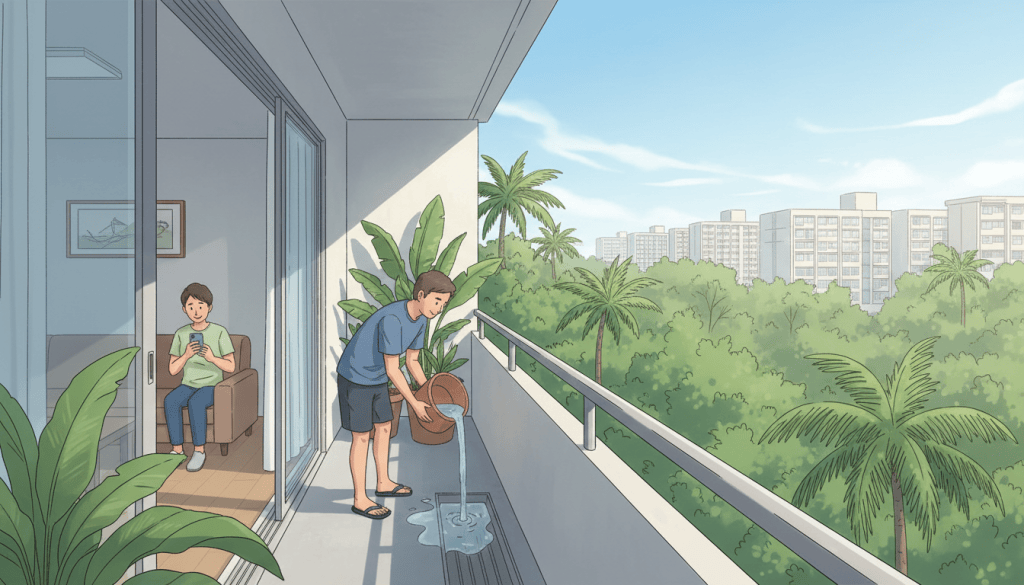
The Aedes mosquito can breed in small collections of clean stagnant water. NEA warns that a very small amount, around the volume of a 20-cent coin, may provide breeding conditions. Potential sites include flowerpot plates, containers, pails, vases and poorly maintained drainage areas.
A once-weekly inspection is a practical baseline. Residents should empty and scrub containers, keep common areas clear and report locations outside their control to the appropriate managing agency. Never enter an unsafe roof or drainage area to inspect it yourself.
The B-L-O-C-K mosquito prevention routine
- B — Break up hardened soil on exposed surfaces where mosquito eggs may be present.
- L — Lift and empty flowerpot plates.
- O — Overturn pails and wipe the rims to remove possible eggs.
- C — Change water in vases.
- K — Keep roof gutters clear; follow NEA guidance on appropriate BTI where indicated.
These are the NEA Mozzie Wipeout B-L-O-C-K actions. Do not assume every roof gutter or drain is safe for a resident to access; use qualified maintenance staff and the relevant property manager where needed.
Protect the patient and the neighbourhood from further mosquito bites
People with dengue can be bitten by mosquitoes that may subsequently transmit the virus to others. The patient should therefore try to avoid mosquito bites while ill. NEA encourages applying effective mosquito repellent and wearing long sleeves and trousers, as practical and safe.
Use screened doors and windows or air-conditioned spaces when appropriate. Reapply repellent according to the product label. For infants, pregnant people and those with skin sensitivities, follow approved age- and condition-specific instructions rather than improvising repellent concentrations.
Dengue in children
Children can experience fever, aches and other symptoms but may struggle to describe abdominal pain or dizziness accurately. Parents should pay attention to persistent vomiting, unusual sleepiness, bleeding, poor fluid intake or a worsening condition, and seek medical care promptly.
Avoid using adult medicines or doses without a clinician’s direction. A child who collapses, is unresponsive or becomes seriously ill needs emergency help through 995. The absence of a visible mosquito bite does not rule out dengue.
Dengue in older adults
An older adult may have additional risks because of chronic illness, medication or difficulties maintaining fluids. Inform the treating clinician of blood thinners, other relevant medicines and significant health conditions. Do not stop prescribed medicines or take NSAIDs independently.
Monitor according to the clinical care plan, especially as the fever subsides. Prompt evaluation for bleeding, vomiting, weakness or mental-status changes is essential.
Sengkang scenarios
A secondary-school student has fever, aches and a rash
Arrange medical assessment, encourage appropriate hydration when safe and keep them from strenuous activity. The clinician may consider dengue testing. Watch for warning signs, especially after the fever begins to fall.
An older relative with suspected dengue starts vomiting repeatedly
This is an urgent warning sign. Seek immediate medical attention, and call 995 if there is serious deterioration, collapse or other life-threatening illness. Do not force food or drinks when swallowing is unsafe.
A neighbour shares a photo claiming a new Sengkang red cluster
Check the current NEA cluster map or myENV rather than forwarding the old image. Carry out mosquito prevention and seek medical assessment for symptoms; the screenshot alone cannot diagnose a household member.
You see water collecting in flowerpot trays around your flat
Empty and scrub the trays and check other small containers. Encourage neighbours to follow the official B-L-O-C-K routine without entering private or dangerous areas.
Frequently asked questions
Does the fever going away mean dengue is over?
Not necessarily. Severe dengue warning signs can appear one to two days after fever subsides. Follow the doctor’s monitoring advice and seek immediate care for warning signs.
Can I take ibuprofen for dengue fever?
CDA advises avoiding ibuprofen and aspirin because of bleeding risks. Ask a healthcare professional about appropriate fever and pain relief.
Is dengue contagious by ordinary touch?
Dengue is transmitted principally by infected Aedes mosquito bites, not by ordinary social contact in the way respiratory infections spread.
How do I know if Sengkang has an active cluster?
Use NEA’s live dengue cluster map or myENV. Do not rely on the date of this article or a saved screenshot as the current cluster status.
When should I call 995?
Call 995 for life-threatening deterioration, collapse, severe bleeding or another medical emergency. Seek immediate hospital care for severe dengue warning signs.
More Sengkang emergency guides
- Medical emergency and ambulance 995
- Heatstroke and dehydration risk
- Flash flooding, rain and lightning
- Haze and air-quality health guidance
More Sengkang emergency guides — 6 November 2026: Seizures and epilepsy first aid · Low blood sugar and diabetic emergencies · Food poisoning and dehydration.
Official sources and review
- CDA — Dengue Fever and Dengue Haemorrhagic Fever (September 2026)
- NEA — Dengue Clusters and Live Map
- NEA — Stop Dengue Now: B-L-O-C-K and S-A-W
- NEA — myENV App and Dengue Alerts
- SCDF — Emergency Medical Services
Reviewed: 6 November 2026. Public health information, not a diagnosis or a live dengue cluster notice. Use updated NEA data and medical advice. Severe dengue warning signs need immediate clinical assessment; life-threatening emergencies require 995.
