
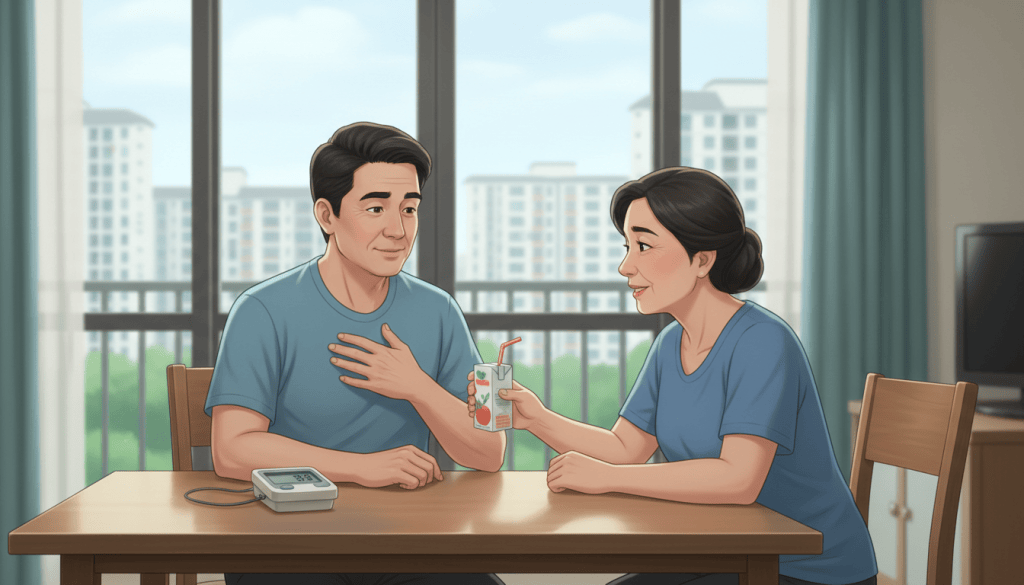
Someone in Sengkang with diabetes is shaking, sweating, dizzy, confused or unusually sleepy? Low blood sugar, called hypoglycaemia, may be the cause. If they are unconscious, having a seizure, unable to swallow safely or cannot care for themselves, call 995 immediately. Do not put food, juice or sugar into the mouth of an unconscious or severely confused person. Follow the SCDF dispatcher’s instructions while help is coming.
If the person is fully awake, able to swallow safely and their blood glucose is low, Singapore HealthHub advises the 15–15 rule: give approximately 15 g of fast-acting carbohydrate, check blood glucose after 15 minutes and repeat if the reading remains below 4 mmol/L or symptoms persist. Once recovered, have a suitable snack or earlier meal as advised. Seek medical help if the problem does not resolve, recurs or seems severe.
Key contacts: 995 for a severe diabetic emergency; the patient’s own treating diabetes team for medication review and non-emergency guidance; and an appropriate GP or clinic for assessment when they are stable. This article does not prescribe insulin adjustments or replace the person’s individual diabetes action plan.
The quick decision: can the person swallow safely?
- Unconscious, seizing, barely responsive or unable to swallow: call 995; no food or drinks by mouth.
- Awake, alert and able to swallow: use the clinician-approved hypoglycaemia plan and HealthHub’s 15–15 approach if blood sugar is low.
- Glucose meter present: check blood glucose promptly if safe, but do not delay 995 for an unresponsive person.
- Blood sugar below 4 mmol/L: this is a low reading requiring prompt treatment in the usual adult diabetes guidance.
- Still low after 15 minutes: give another 15 g of fast-acting carbohydrate and recheck according to the plan.
- Not recovering, repeated episodes or significant deterioration: seek urgent medical care and use 995 for emergencies.
First five minutes: low blood sugar emergency
- Check responsiveness and breathing. If unconscious or not breathing normally, call 995 immediately and follow dispatcher instructions for first aid or CPR as appropriate.
- Ask whether the person has diabetes and knows their glucose reading. If a glucometer is accessible, an awake person or trained caregiver can check without delaying urgent assistance.
- If fully conscious and safely swallowing with low glucose, provide about 15 g of quick-acting sugar, for example glucose tablets or an appropriate sweetened drink, following HealthHub guidance.
- Wait 15 minutes and recheck the level. If it remains below 4 mmol/L or symptoms persist, repeat the 15 g once as directed by the individual’s plan.
- Escalate if necessary. If symptoms persist after repeat treatment, or the person becomes drowsy, confused or unable to swallow, seek urgent medical help and call 995 when severe.
- After improvement, a suitable snack or an earlier balanced meal may reduce recurrence, according to the healthcare plan.
- Record the circumstances and tell the doctor about missed food, exercise, illness and medicines. Do not independently change prescribed doses.
Who to call in Sengkang
- 995 — SCDF emergency ambulance: unconsciousness, severe confusion, seizures, unsafe swallowing, collapse or another life-threatening emergency. SCDF Emergency Medical Services.
- Diabetes clinic or prescribing doctor: non-emergency review of recurrent lows and adjustment of the individual treatment plan.
- GP or polyclinic: evaluation of stable episodes, recurrent symptoms or issues with food and medication routines.
- 6262 6262 — NurseFirst: advice about an appropriate care setting for non-life-threatening medical symptoms; not a replacement for 995.
- Trained caregiver: when there is a prescribed emergency glucagon treatment, follow the written plan and training while emergency help is contacted as appropriate. Do not invent a dose or method.
What counts as hypoglycaemia?
HealthHub’s diabetes education uses a blood glucose value below 4 mmol/L as a threshold for low sugar. Not every person experiences the same symptoms or notices them at the same time. Some may have sweating, shaking, hunger and a fast heartbeat. Others become irritable, clumsy, weak, drowsy or confused.
A person with long-standing diabetes may sometimes have reduced awareness of low sugar. This means they may not experience the usual early warning sensations. Caregivers should not insist that a person must be sweaty or hungry for low blood sugar to be possible.
Not all dizziness or confusion is due to diabetes. Stroke, infection, dehydration and other serious conditions may cause similar signs. Do not force sugar into an unresponsive person or make a diagnosis without checking the circumstances and seeking help when needed.
The 15–15 rule explained correctly
HealthHub’s Hypoglycaemia Guide describes taking 15 g of fast-acting sugar, waiting 15 minutes and checking blood glucose again. Suitable examples include a measured portion of glucose tablets or sugar-containing sweets and approximately half a glass of ordinary sweetened drink, depending on the product. The quantity matters more than brand names.
If the reading is still low, or symptoms have not cleared, the HealthHub guide describes repeating the treatment once and then seeking medical advice if the condition persists. A person who deteriorates or cannot safely swallow needs emergency assistance rather than additional oral sugar.
Once the glucose has recovered to the appropriate range, a light snack or earlier meal may help prevent another low. The correct next meal, insulin timing and dose adjustment depend on the patient’s individual plan and should be discussed with the healthcare team.
Why a diet or zero-sugar drink is not the treatment
A beverage labelled ‘zero sugar’ or ‘diet’ may provide little or no fast-acting carbohydrate. It therefore should not be assumed to work for a low blood glucose event. Look for a measured glucose source or a regular sweetened drink when the person is alert, can swallow and treatment is appropriate.
Chocolate, fatty snacks and mixed meals may act more slowly because digestion affects the rate at which carbohydrate becomes available. The HealthHub emergency method starts with fast-acting carbohydrate, followed by a suitable snack or meal once the person has recovered.
What if they are confused but still talking?
A person may appear awake while being too confused to follow instructions or swallow safely. Do not force an oral treatment simply because their eyes are open. If they are unable to cooperate, very drowsy or at risk of choking, call 995 and follow the dispatcher.
If the person is alert enough to understand, answer questions and swallow safely, their approved plan may be followed with assistance. Remain nearby to monitor changes rather than assuming that a drink has immediately solved the problem.
If the person collapses or has a seizure
Call 995 immediately, protect them from further injury and check breathing. Do not give liquid or glucose tablets by mouth. If a seizure occurs, time the movements, clear nearby objects and do not restrain them or put anything in the mouth.
If they are unresponsive and not breathing normally, follow 995 directions for CPR and AED use. If normal breathing continues, follow the emergency operator’s instructions about safe positioning and monitoring. Tell responders if the person uses insulin or other glucose-lowering medicines.
Glucagon: a prescribed rescue medicine
Some people with diabetes have a prescribed glucagon emergency kit, with a device and instructions selected by their clinician. A trained caregiver may be taught to administer it during a severe hypoglycaemia event when oral sugar is unsafe. The correct device, route and dose must follow the individual’s personal prescription.
Do not improvise from a neighbour’s medicine, give oral liquids to an unconscious person or delay calling 995 while searching for a kit. If glucagon is administered, tell responders the time, dose and product when known.
Why low sugar may happen
Common triggers include a mismatch between glucose-lowering medication and food, delaying or missing a meal, unexpected physical activity, alcohol or illness. The exact cause is not always clear. It is useful to record the preceding meal, exercise, medicines and measured glucose so clinicians can review the pattern.
People using insulin or certain oral diabetes medicines may be particularly vulnerable. Never advise someone to stop all diabetes medication or take an extra dose on the basis of a short public article. Individual decisions require clinical supervision.
Do not confuse low sugar with a high blood sugar emergency
People with diabetes can also develop dangerously high blood glucose, sometimes accompanied by dehydration, vomiting, abdominal pain, deep breathing or altered consciousness. An unwell person should not be assumed to have low glucose simply because they have diabetes.
If the person is drowsy, breathing abnormally, collapsing or unable to swallow, call 995 rather than trying to treat an uncertain condition with food or insulin. Provide glucose readings and symptoms to responders when available.
What to tell the 995 dispatcher
- Exact location: Sengkang block, road, unit, floor or public-venue entrance.
- Condition: awake and swallowing or unresponsive; breathing normally or not.
- Blood glucose: the most recent result and when it was taken, if known.
- Medication: insulin or oral diabetes medicines, plus any rescue medicine administered.
- Timing: when unusual behaviour or symptoms were first noticed.
- First aid: type and amount of fast sugar provided, and time of administration.
- Risks: seizures, falls, injury, vomiting or another dangerous symptom.
Helping a child or older person
A child with diabetes may describe low sugar differently from an adult. Younger children may become unusually irritable, tired or unable to explain what they feel. Their medical team should provide an age-appropriate treatment plan and teach parents or school caregivers how to follow it.
An older adult with diabetes may have difficulty using a meter, remembering medicines or recognising symptoms. Family members can help by keeping a clear record of meals and doses and by discussing recurring low readings with the clinical team.
Avoid giving adult quantities or an unfamiliar medicine to a child without their personal care plan. If a child becomes unresponsive or has a seizure, call 995 immediately.
Sengkang situations
A commuter with diabetes becomes shaky at the LRT station
If alert and able to swallow, help them use their prescribed low-glucose plan and measure glucose when possible. If severely confused, unconscious or otherwise seriously ill, call 995 and give the station and nearest exit.
An older relative is found drowsy before breakfast
Check whether they respond and can swallow safely. If not, call 995 and do not give drinks. Tell responders about diabetes medication and the last known meal and glucose reading.
A student becomes sweaty after sports
Stop exercise, check glucose if possible and follow the student’s individual plan if alert and safely swallowing. If a severe episode develops, call 995 and contact the parent or designated caregiver.
The person recovers after sweetened juice but has repeated lows
Record the episode and arrange medical review of medication, meals and activity. Frequent episodes require a safer long-term plan rather than simply carrying more sweets.
Prepare before the next low
- Keep a measured fast-acting sugar option accessible for people at risk, as advised by their care plan.
- Carry glucose monitoring supplies and know how to use them.
- Ensure family and school caregivers know the person’s warning signs and emergency steps.
- Discuss medication and exercise adjustments with a clinician rather than experimenting.
- Record repeat episodes so the healthcare team can identify patterns.
- Agree on who can help if a person is away from home or unable to communicate.
Frequently asked questions
What glucose level is considered low?
HealthHub’s diabetes guidance generally treats below 4 mmol/L as low. Individual medical targets and plans may differ.
Can I give orange juice to someone who is unconscious?
No. Never put food or drink into the mouth of an unconscious or swallowing-impaired person. Call 995.
How much sugar should an alert adult take?
The standard HealthHub 15–15 approach begins with about 15 g of fast-acting carbohydrate, followed by a glucose check after 15 minutes. Follow the patient’s individual plan.
What if symptoms do not improve after repeat treatment?
Seek urgent medical advice; call 995 if the person deteriorates, cannot swallow safely, collapses or has another emergency sign.
Does every person with diabetes need the same plan?
No. Treatment depends on age, medicines, risk and the clinician’s instructions. Do not use another person’s prescribed medicine.
More Sengkang emergency guides
- Seizure, epilepsy and safe first aid
- Stroke, FAST signs and sudden weakness
- Medical emergencies and ambulance 995
- Choking and CPR-AED first aid
More Sengkang emergency guides — 6 November 2026: Seizures and epilepsy first aid · Dengue fever and warning signs · Food poisoning and dehydration.
Official sources and review
- HealthHub Diabetes Hub — Hypoglycaemia and the 15–15 Rule
- HealthHub Diabetes Hub — Diabetes Self-Care
- SCDF — Emergency Medical Services
- Sengkang General Hospital — Emergency Visit
Reviewed: 6 November 2026. General first-aid information, not individual medication or insulin dosing advice. Call 995 for severe hypoglycaemia, unconsciousness, unsafe swallowing or seizures.
