
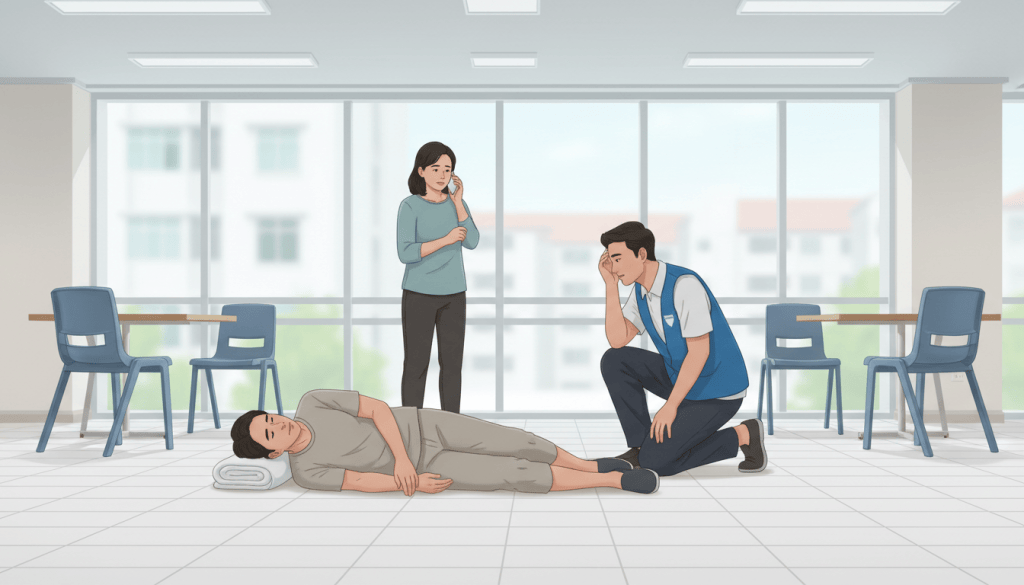
Someone is having a seizure in a Sengkang HDB flat, classroom, shop or public area? Make the immediate area safe, gently protect their head, time the seizure and call 995 for emergency medical help if this is their first seizure, it lasts around five minutes or longer, another seizure begins before recovery, the person is injured or pregnant, breathing is impaired, or the seizure happens in water. Do not hold them down or put any object or your fingers into their mouth.
For a seizure with no known diagnosis or any uncertainty about the person’s safety, 995 can provide emergency triage. Once convulsive movements have finished and breathing is normal, help the person rest on their side if you can do so safely, keep them comfortable and stay until they are alert. Do not give food, drinks or tablets until they are fully awake and able to swallow.
Key contacts: 995 for a severe or first-time seizure and urgent medical emergencies; 70995 is SCDF’s emergency SMS service intended for people with hearing or speech impairments. If this is a known epilepsy patient with a personalised seizure action plan, follow the plan and escalate to 995 for warning signs.
What to do first: a seven-step seizure checklist
- Stay calm and look at the time. A seizure’s duration affects whether emergency treatment may be required. Use your phone clock if convenient, but do not delay assistance.
- Protect against nearby injury. Clear hard or sharp objects from around the person. Cushion the head with a folded jacket or soft item if feasible without restraining.
- Do not hold their arms or legs. Forcibly stopping the movements can injure them. Do not pin the person to the floor.
- Put nothing in the mouth. Do not insert a spoon, fingers, towel or medicine. People do not need an object to keep from ‘swallowing their tongue’.
- Call 995 when the emergency criteria apply. First seizure, lasting five minutes or longer, repeated seizures without recovery, injury, breathing trouble, pregnancy or a water incident all warrant emergency evaluation.
- Once the convulsion ends, check breathing. If breathing normally, gently place the person on their side when safe and practical; if not breathing normally, tell 995 and follow CPR instructions.
- Stay with the person. They may be confused or exhausted afterward. Reassure them, protect privacy and report the observations to medical personnel.
Which seizures need 995 immediately?
- A first seizure or an event with no known epilepsy diagnosis.
- A seizure lasting more than five minutes, or a prolonged seizure that approaches that duration and is not stopping.
- Back-to-back seizures without regaining consciousness between episodes.
- Breathing difficulty or failure to regain consciousness after movements stop.
- A seizure in water, including a pool or bath, because of the drowning risk.
- Injury or pregnancy associated with the seizure.
- Another immediate risk such as fire, traffic, suspected poisoning, severe hypoglycaemia or a serious fall.
SingHealth’s epilepsy guidance lists these circumstances for emergency treatment. SCDF’s 2026 Civil Defence Emergency Handbook explains how to keep the scene safe, avoid restraint or inserting anything into the mouth, check breathing and dial 995. These are established first-aid principles, not a diagnosis of an individual event.
Who to call in Sengkang
- 995 — Singapore Civil Defence Force: emergency ambulance when a seizure is serious, first-time or otherwise meets urgent criteria. SCDF Emergency Medical Services.
- 70995 — SCDF emergency SMS: accessible service for callers who are deaf, hard of hearing or have speech impairment; give the service needed and the location.
- Treating neurologist or clinic: for an existing epilepsy action plan and follow-up, not as a substitute for 995 during a dangerous seizure.
- School or venue trained first-aider: ask for assistance and someone to meet the ambulance while maintaining the patient’s privacy.
- Sengkang General Hospital Emergency Department: available 24 hours for medical emergencies, but call 995 for a severe seizure so dispatchers can coordinate the safest response.
What is a seizure?
A seizure is a sudden episode of abnormal electrical activity in the brain. Its appearance varies. Some involve rhythmic jerking of the body and loss of consciousness; others involve a brief change in awareness, staring, unusual movements or altered sensations. Epilepsy means a tendency to have recurrent seizures under the relevant clinical definition. A single event does not by itself establish an epilepsy diagnosis.
Bystanders are not expected to determine which seizure type is occurring. Their role is to prevent avoidable injury, observe the duration, seek urgent help when needed and report what happened. Describing whether the person was staring, shaking or unresponsive is more useful than guessing a technical label.
National Neuroscience Institute guidance explains that clinicians may use witness reports, medical history, blood tests, an electroencephalogram or brain imaging depending on the situation. These investigations happen after the immediate safety needs are addressed.
Why you should never force open the mouth
The mistaken belief that someone can swallow their tongue has led bystanders to place spoons or fingers into a person’s mouth. This can injure the teeth, gums and airway, or result in the helper being bitten. The official SCDF advice is simple: put nothing in the mouth.
Do not give water or tablets during a seizure or while the person remains confused. They may not be able to swallow safely. If they have a prescribed rescue medication in a formal seizure action plan, follow the documented plan and trained professional directions; do not improvise doses.
Should you hold them down?
No. During a convulsive seizure, the person’s movements are not under their voluntary control. Restraining arms or legs can cause physical injury. Instead, move nearby chairs, glassware and sharp items away. Help protect their head with something soft where possible.
If the person is already on a road, staircase or another immediately dangerous surface, inform the dispatcher and make the safest choice available. Do not try a forceful lift or drag unless remaining in place poses greater immediate danger and you can act safely.
What happens when movements stop?
The person may be sleepy, confused, frightened or unable to remember the event. This recovery period can last longer than the visible convulsion. Check for normal breathing; help them rest on their side if safe, and keep their surroundings calm. Do not crowd, film, ask multiple questions or insist they stand quickly.
If breathing is absent or abnormal, call or update 995 and begin dispatcher-guided CPR. If breathing normally, monitor and keep them safe until they recover or medical help arrives. Any injury should be assessed by a healthcare professional.
How to explain the seizure to the dispatcher
- Exact location: HDB block, street, unit and floor; or school, mall, park or station entrance.
- Duration: when the seizure started and whether it has stopped.
- Consciousness: whether the person was responsive before, during or after the episode.
- Movements: one limb or the whole body, jerking, stiffening or absence of normal responses.
- Breathing and injury: difficulty breathing, head impact, bleeding or occurrence in water.
- Medical background: known epilepsy, diabetes, pregnancy or prescribed rescue medication, if known.
- Access: security gate, lift, floor number and a helper to meet responders.
What about a child with fever and a seizure?
A child may experience a seizure during a febrile illness. Caregivers cannot reliably determine at home whether this is a simple febrile seizure or another serious illness, particularly during a first episode. Protect the child from objects and falls, do not restrain them or put anything in their mouth, note the duration and seek emergency help according to 995 guidance.
For a first seizure, a long episode, breathing problems, repeated episodes or poor recovery, call 995. Do not attempt to cool a convulsing child by forcing a bath, and do not give oral medicine while they cannot swallow safely. Tell responders about the fever and any new rash or other concerning symptoms.
Known epilepsy: follow the personalised action plan
Some people with diagnosed epilepsy have a written seizure action plan for family, school or workplace. The plan may explain what their usual seizure looks like, when to call for emergency assistance and how trained caregivers should administer a prescribed rescue medicine. Use that individual plan where appropriate, while recognising that unexpected severe symptoms may still require 995.
Families should ensure that relevant caregivers know the plan, know where emergency medication is stored and can identify the patient’s address. Do not copy a neighbour’s prescription or a generic online dosage scheme.
Seizures near water, roads or cooking equipment
A seizure in a swimming pool, bathtub or waterway is dangerous even if the visible seizure is brief, because the person may inhale water. Alert lifeguards where present, call 995 and follow safe rescue instructions. Untrained bystanders should not leap into unknown water.
In a kitchen, on an escalator or beside traffic, clear hazards without exposing yourself to a second accident. An emergency operator needs to know the surrounding danger as well as the seizure. The goal is to prevent secondary injury while medical responders approach.
If a witness wants to record the episode
Details about seizure duration and movement can help clinicians, but patient safety and privacy come first. If a trusted caregiver can safely record a short video without delaying urgent help, clinicians may find it useful; do not film for social media or prioritise recording over 995.
Where no recording exists, write down what was seen while it is still fresh: start and end times, any warning signs, movements, injuries and how long recovery took. Being honest about uncertainty is more valuable than inventing precision.
Sengkang scenarios
An adult collapses while queuing at a coffee shop
Move hard objects away, protect their head, note the time and call 995 if this is a first seizure or other emergency criterion applies. Ask staff to direct paramedics to the stall and level. Do not put a drink or spoon in their mouth.
A student has a known seizure disorder during class
Follow their seizure action plan, clear the surrounding space, time the episode and assign a staff member to help. Call 995 for prolonged or atypical episodes, injury or breathing trouble. Protect the student’s privacy.
Someone has repeated seizures without waking
This is an emergency. Call 995 immediately and keep them safe from nearby hazards. Do not wait for a scheduled clinic appointment or give oral medication.
A person with epilepsy recovers quickly after a familiar brief episode
Follow their individual medical plan and observe recovery. If any red flag develops or the episode differs significantly from their usual pattern, seek urgent professional help and contact 995 as appropriate.
How families can prepare
- Keep the person’s seizure action plan where relevant caregivers can locate it.
- Learn seizure first aid and basic CPR-AED through a recognised provider.
- Have a clear medication list and emergency contacts.
- Reduce fall and impact hazards at home, especially around bathrooms and stairways.
- Maintain prescribed treatments and discuss missed doses with a clinician.
- Share relevant information with school or workplace first-aiders discreetly and with appropriate consent.
Frequently asked questions
Does every seizure mean epilepsy?
No. A seizure is an event; epilepsy is a diagnosis involving recurrent seizure risk. A first seizure still requires urgent medical evaluation.
Should I hold a person’s tongue?
No. Do not put fingers or anything else in the mouth. This can cause injury.
How long is too long?
A seizure that lasts around five minutes or more, or repeated seizures without recovery, needs immediate 995 assistance. Do not delay calling when other danger signs are present.
Should I offer water when the movements end?
Wait until the person is fully alert and able to swallow safely. Do not force food, drinks or pills.
When can CPR be needed?
If the person is unresponsive and not breathing normally after the seizure, call 995 and follow the operator’s CPR instructions.
More Sengkang emergency guides
- Medical emergencies and ambulance 995
- Choking, infant first aid and CPR-AED
- Water rescue and drowning emergencies
- Elderly falls and head injuries
More Sengkang emergency guides — 6 November 2026: Low blood sugar and diabetic emergencies · Dengue fever and warning signs · Food poisoning and dehydration.
Official sources and review
- SCDF — 2026 Civil Defence Emergency Handbook: Fits/Seizures
- HealthHub — Epilepsy and Seizures (NNI)
- SingHealth — Epilepsy and Emergency Warning Signs
- HealthHub — If Your Child Has Epilepsy
- SCDF — Emergency Medical Services
Reviewed: 6 November 2026. Public first-aid information for Singapore; not a diagnosis or substitute for a personalised seizure action plan. For a serious or first-time seizure, call 995 and follow dispatcher instructions.
