
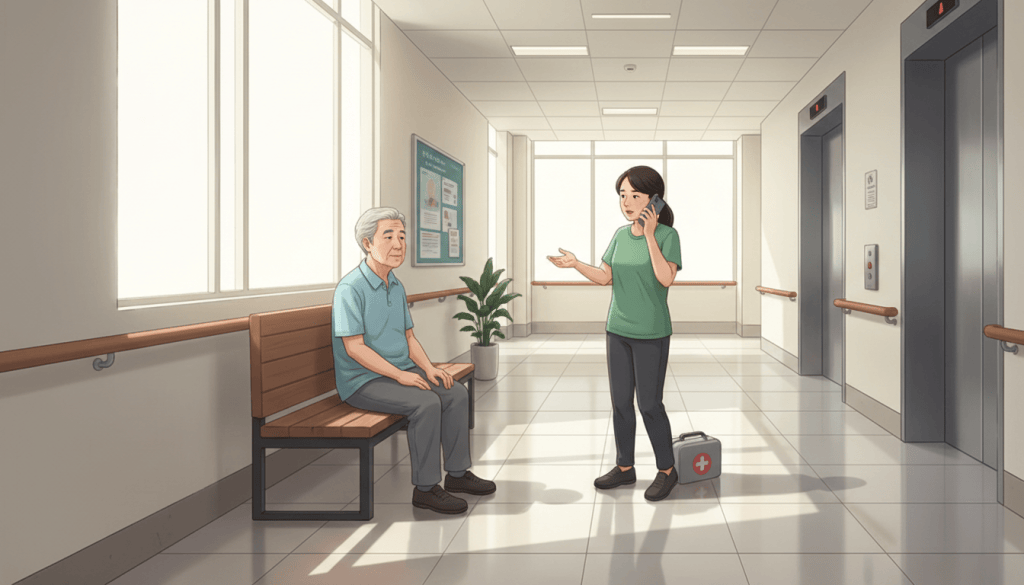
An older adult in Sengkang has fallen and is unconscious, has severe pain, cannot get up or may have injured their head, neck, hip or thigh? Call 995 immediately for an SCDF emergency ambulance. Do not pull the person to their feet, drag them into a chair or attempt a stair carry. Keep them warm, calm and as still as appropriate while following the 995 dispatcher’s instructions.
If the fall appears minor and the person can move normally without serious pain or other concerning symptoms, help them to a safe position only when appropriate and arrange clinical assessment if pain or symptoms develop. Not all falls are trivial; concussion, internal bleeding or a fracture can be missed when someone initially says they are fine. A person taking a blood thinner, such as warfarin, who has fallen or injured their head should obtain urgent medical advice even if they initially feel well.
Quick contact: 995 for serious fall injuries or life-threatening conditions. For non-life-threatening symptoms, consult an appropriate doctor; NurseFirst 6262 6262 offers non-emergency advice on care options. This guide is for residents and caregivers in Sengkang HDB flats, lift lobbies, parks and nearby communities.
Immediate checklist: what to do after a serious fall
- Make the scene safe. Avoid stepping onto a wet floor, unstable staircase or road where another person could fall.
- Check responsiveness and breathing. If the person is unconscious or not breathing normally, call 995 and follow dispatcher instructions for CPR and other emergency care.
- Ask where it hurts without moving them. Severe hip, head, back or neck pain, inability to stand, and new weakness are major warning signs.
- Call 995 when there is a serious injury. Tell the dispatcher whether the person struck their head, can move and is breathing normally.
- Do not force a transfer. A suspected fracture or spine injury may worsen with unnecessary lifting or turning.
- Keep them warm and reassured. A light blanket may help if suitable, but avoid pressing on injuries.
- Prepare ambulance access. Give the exact HDB block, floor, unit and whether the lift or passageway is accessible.
When 995 is the right call
- Unconsciousness, abnormal breathing or collapse.
- Severe pain or inability to get up after the fall.
- Suspected head, neck, hip or thigh injury, especially with serious symptoms or impaired mobility.
- Bleeding, clear fluid or unusual discharge from the ears or nose after a head impact.
- Sudden weakness, confusion, difficulty speaking or seizure.
- Major injury in an unsafe place such as steps, a road or an area where urgent rescue is required.
HealthHub’s Managing Injuries After a Fall specifically lists unconsciousness, severe pain, inability to move, breathing difficulty, fluid or blood from the nose, ears or mouth, and head, neck, hip or thigh injuries as reasons to call 995. It also advises against attempting to move the senior.
Who to call and where to get help
- 995 — SCDF: ambulance or urgent rescue for serious fall injury, unresponsiveness or another medical emergency. SCDF emergency medical services.
- Sengkang General Hospital Emergency Department: open 24 hours for serious injuries and medical emergencies; call 995 first for the life-threatening scenario. SKH emergency visit.
- 6262 6262 — NurseFirst: non-emergency medical guidance on suitable care settings. Not a replacement for 995 when red flags are present.
- GP or polyclinic: for a minor fall when the person is stable and clinical assessment is appropriate; seek urgent care if symptoms worsen.
- Town council or property manager: for a dangerous loose tile, spill or shared-area defect after the injured person has received help; fixing the hazard is separate from medical treatment.
Why you should not immediately help someone stand
The first instinct after a fall is to help the person up, especially if they are embarrassed or want to reassure family members. But severe pain, inability to bear weight or an unusual leg position may indicate a fracture. Pulling someone to stand can worsen pain and possibly injury.
If a head or neck injury is suspected, unnecessary movement can also create avoidable risk. The safest approach is to keep the person in a stable position and follow the dispatcher. Moving them to escape an immediate hazard is a separate emergency judgement; tell 995 what danger is present.
Do not improvise a stretcher, carry the person down an HDB stairwell or persuade them to walk just to avoid calling for help. Paramedics have equipment and methods for safe assessment and transfer.
What if the person hit their head?
A head injury can become more serious after the first minutes. SingHealth’s head injury guidance warns that worsening headache, vomiting, increasing sleepiness, confusion, changes in behaviour, limb weakness, difficulty walking or talking, seizures and blood or fluid from the ears or nose require urgent emergency assessment.
If the person is unconscious, confused, severely ill or has major red flags, call 995. Even a person who initially seemed fine may need clinical evaluation depending on the mechanism, symptoms, age and medications. Do not assume a small scalp bump reveals everything happening inside the head.
If a doctor determines that the injury is minor and gives a home-observation plan, follow that specific advice. Do not substitute a generic online checklist for the discharge instructions.
Why blood thinners change the decision
An older adult may be taking anticoagulants for atrial fibrillation, prior blood clots or other conditions. These medicines can increase the risk of bleeding after injury. SingHealth’s warfarin guidance says to seek immediate medical attention after a fall or head injury because serious internal bleeding can occur.
Tell emergency or urgent-care staff the medicine name, last dose and any available medical history. Do not independently stop or double the medicine without medical advice. The clinician assesses whether the fall requires investigations or medication changes.
Do not assume anticoagulants all work in the same way or that a normal-looking bruise proves there is no internal bleeding. Seek professional evaluation.
Hip fractures and inability to walk
A fall onto the side may injure the hip or pelvis. Warning signs include substantial hip or groin pain, inability to bear weight and a leg that appears unusually positioned. Not every person will show the same signs, so a fracture cannot be ruled out by appearance alone.
If the older person cannot get up, reports severe hip pain or seems seriously injured, call 995. Keep them still and warm. Do not massage the painful area, twist the leg or put weight through the limb to test whether it works.
Even if someone can stand after the incident, persistent pain or new difficulty walking should be assessed clinically. A minor-looking injury may still reduce safe mobility and increase the likelihood of another fall.
What if the person fell because of sudden illness?
Not every fall begins with a loose rug. Someone may collapse from a heart problem, low blood pressure, a stroke, infection, medication effects or other medical conditions. A fall accompanied by new one-sided weakness, face drooping or speech change raises concern for stroke; chest discomfort, breathlessness or collapse may indicate cardiac problems.
Report the symptoms before and after the fall, rather than telling dispatchers only that the person slipped. If a serious condition is suspected, call 995. Treat the underlying illness and the injury as potentially separate concerns that both need assessment.
What to say to 995 in Sengkang
- Location: HDB block, street, unit and floor; or an exact park, mall or lift-lobby landmark.
- Consciousness: awake and speaking, confused, drowsy or unresponsive.
- Breathing: normal, difficult or absent/abnormal.
- Injury: location of pain, possible head strike, bleeding, ability to move or bear weight.
- Medical information: blood thinners, diabetes, heart conditions or other relevant known conditions.
- Timing: when and where the person fell, and any symptoms before the fall.
- Access: whether a wheelchair, stairs, gate or crowded walkway makes it difficult for responders to reach them.
If a fall occurs inside an HDB bathroom
Bathroom tiles, water and soap make falls especially difficult to manage. First avoid slipping yourself. Do not attempt to pull the person up by their arms, even when the floor is wet. If serious injury is suspected, call 995 and ask how best to keep them safe while waiting.
A caregiver may need to open the flat door or move small objects away so paramedics can enter. Do this without leaving the person unattended if they are medically unstable and no other helper is present.
Once the emergency is over, examine the bathroom’s flooring, lighting and grab-bar provision. Home modifications can reduce future falls but should never delay injury treatment.
If the fall happens at a lift lobby or staircase
Keep others from crowding the landing. If the person is on steps, do not drag them to a flat surface without direction unless remaining there poses a more immediate danger. Report the exact staircase or lift number and whether the route is blocked.
If you identify a loose tile, spill or lighting failure, tell the town council or building manager once the casualty is cared for. A maintenance request is not a substitute for medical help.
If the person seems embarrassed and wants to walk home
Respect their dignity while checking for urgent symptoms. You can calmly explain that new pain, head impact, dizziness or inability to walk safely should be assessed. Do not force someone to demonstrate they are uninjured by standing or walking.
When there is a serious injury or concern about decision-making ability, tell the emergency service. If the fall is minor and the person is otherwise well, arrange a safe path home and appropriate follow-up rather than dismissing their symptoms.
The role of an AED and CPR
If the person is unresponsive and not breathing normally, call 995 and follow the dispatcher’s CPR instructions. Ask a helper to locate an AED using SCDF’s myResponder app when available.
Do not perform chest compressions on someone who is responsive and breathing normally solely because they have fallen. CPR is for an appropriate resuscitation emergency, not routine treatment of hip or limb injuries.
What if the injury looks small?
For a clearly minor fall with no dangerous features, there may be no need for an emergency ambulance. Keep the person comfortable, monitor for new symptoms and seek clinical evaluation if pain persists or anything changes. HealthHub’s fall-injury information distinguishes minor home monitoring, GP assessment and ambulance emergencies.
A fall with head impact, persistent pain, new dizziness or confusion should not be labelled minor without considering clinical risks. If you are uncertain, obtain professional advice promptly.
Four Sengkang examples
An older resident is found on the toilet floor
Check responsiveness and breathing, avoid slipping, and call 995 if they cannot get up or have severe pain, a head injury or other warning signs. Do not try a forceful lift.
A parent trips over a carpet and later becomes sleepy
Increasing drowsiness after a head impact is a warning sign. Seek urgent emergency assessment through 995, especially if speech, behaviour or movement changes.
A senior can stand but has persistent groin pain
Do not ignore ongoing pain because they managed a few steps. Arrange prompt medical assessment; a fracture or other injury may be present.
A person falls and has sudden arm weakness
Consider both injury and a possible stroke. Call 995, note when the weakness began and follow directions. See the Sengkang FAST stroke guide for stroke recognition.
Prevention: make the home easier to move through
- Use non-slip mats or safer slip-resistant surfaces in wet bathrooms.
- Install properly secured grab bars where clinically and practically appropriate.
- Keep walking routes free of loose carpets, cables and stacked objects.
- Put frequently used items within easy reach rather than on high shelves.
- Improve night lighting between the bedroom and bathroom.
- Use well-fitting, non-slip footwear.
- Discuss strength, balance, vision and medication review with the person’s clinician when falls recur.
HealthHub’s Healthy Ageing Hub includes a home safety checklist, strength and balance recommendations, and Singapore’s Enhancement for Active Seniors (EASE) home-improvement support. Families should check current eligibility and official HDB information rather than assume a subsidy applies automatically.
After the hospital or clinic visit
Clarify the diagnosis, safe level of activity, medication instructions and follow-up. Ask whether the person needs a mobility aid, home physiotherapy, rehabilitation or home safety review. A person who is frightened of falling again may start avoiding movement; a clinician can advise how to rebuild safe confidence.
Keep a record of the fall date, location, symptoms and possible environmental factors. The goal is not to blame the older person, but to identify what can be changed to reduce future risk.
Frequently asked questions
Should I lift an older adult immediately after a fall?
Not when there is severe pain, head, neck or hip injury, inability to move or another emergency sign. Call 995 and avoid unnecessary movement.
What if they are taking warfarin?
Seek immediate medical attention after a fall or head injury. Tell clinicians the drug and last known dose.
Is a fall still serious if there is no visible bleeding?
Yes. Head injury, hip fracture and other internal problems may not be obvious at first. Assess symptoms and obtain care.
Can someone be assessed by a GP?
Yes, for appropriate stable non-emergency falls. But loss of consciousness, severe pain, inability to get up or major injury signs require emergency care.
What number should I call from a Sengkang HDB flat?
Call 995 for serious fall injuries. Give the exact block, street, unit, floor and any accessibility issues.
More Sengkang emergency guides
- Stroke and sudden weakness
- Heart attack and chest pain
- Medical emergency and ambulance
- Power outage and lift failures
Official sources and review
- HealthHub — Managing Injuries After a Fall
- SingHealth — Head Injury: Emergency Warning Signs
- SingHealth — Warfarin Safety Precautions
- HealthHub — Fall Prevention for Seniors
- HealthHub — 7 Fall Prevention Tips
- SCDF — Emergency Medical Services
Reviewed 6 November 2026. This is a general resident and caregiver guide, not a clinical evaluation or transfer instruction. Call 995 for serious falls and follow medical responders’ guidance.
