
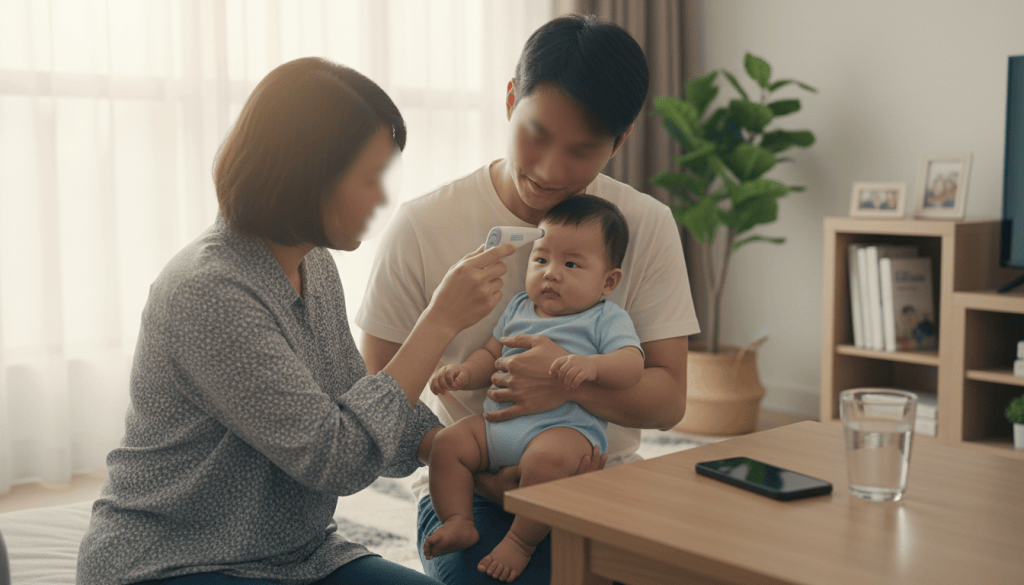
Your baby in Sengkang is younger than three months and has a temperature of 38°C or higher? Seek immediate Children’s Emergency assessment, even if the baby is feeding or appears comfortable. If a child of any age has severe difficulty breathing, blue or grey lips, is unresponsive, collapsing or has another life-threatening symptom, call 995 for an emergency ambulance. Do not delay urgent care to wait for a fever medicine to work.
For older children, a fever alone does not reveal how serious the illness is. Watch how the child breathes, responds, drinks and passes urine. Difficulty waking, confusion, persistent vomiting, dehydration, an unexplained bruise-like rash, a seizure or very high fever should prompt urgent medical review. HealthHub’s Fever in Children guidance explains when to go directly to a Children’s Emergency.
Local decision guide: 995 for life-threatening deterioration; urgent paediatric emergency assessment for fever in an infant under three months, breathing red flags or other serious symptoms; GP or polyclinic for a stable older child with a mild common illness. KK Women’s and Children’s Hospital (KKH) Children’s Emergency operates 24 hours at Basement 1, Children’s Tower, 100 Bukit Timah Road. The ambulance dispatcher determines the appropriate response and destination for an emergency.
The first five minutes: check the child, not just the thermometer
- Look at breathing. Severe effort, gasping, blue lips or inability to breathe normally is an emergency: call 995.
- Check responsiveness. Is the child awake, interacting, making eye contact and responding as usual? Difficulty waking or abnormal awareness needs urgent help.
- Measure the temperature if safe. Record the reading, method and time, but do not delay treatment for major red flags.
- Check age carefully. A baby under three months with fever of 38°C or more needs immediate clinical assessment.
- Check feeds and urine. Persistent refusal to feed, significantly fewer wet nappies or inability to keep fluids down may signal dehydration.
- Watch for seizures and rashes. A new convulsion, unexplained bruise-like spots or a rapidly deteriorating appearance merits urgent evaluation.
- Seek the appropriate care. Call 995 for life-threatening symptoms and use a paediatric emergency department for serious warning signs.
Which situations need 995, Children’s Emergency or a GP?
- Call 995 immediately: not breathing normally, severe respiratory distress, unconsciousness, collapse, blue or grey lips, a prolonged seizure or another life-threatening emergency.
- Go to Children’s Emergency promptly: fever of at least 38°C in a baby under three months, unexplained purple/bruising rash, serious dehydration, significant or persistent breathing changes, severe illness or seizures.
- Seek prompt medical review: an older child with persistent fever, worsening symptoms, poor feeding or dehydration concerns without an immediate emergency.
- GP or polyclinic may be appropriate: an alert, active older child who is drinking and has a mild common infection with no emergency warning signs.
- Use emergency service instructions first when a clinician or 995 operator advises that the child needs urgent transport.
Who to call in Sengkang
- 995 — SCDF emergency ambulance: life-threatening paediatric illness, severe breathing problems, unresponsiveness, major injury or another urgent medical emergency. SCDF Emergency Medical Services.
- KKH Children’s Emergency: 24-hour emergency assessment at Basement 1, Children’s Tower. KKH Clinics and Centres directory.
- GP or polyclinic: for many mild, non-emergency fevers, coughs, colds and other common conditions where clinical assessment is needed.
- KKH U-PAL: current official online paediatric advice service for common non-emergency concerns, described as available 24 hours. It does not replace examination or an ambulance in a medical emergency.
- 6262 6262 — NurseFirst: non-emergency nursing guidance about care options; not an ambulance service.
Why a fever in a baby under three months is different
A very young infant may have a serious infection without the usual obvious symptoms an older child shows. The Ministry of Health’s advice says babies under three months with a temperature of 38°C or more should be referred to the Children’s Emergency for assessment and consideration of admission.
Do not assume a newborn is safe because the temperature falls after removing a blanket or because the baby briefly feeds. A thermometer reading and the child’s age are enough to justify immediate medical advice. In addition, poor feeding, unusual sleepiness, breathing difficulty or a change in colour requires urgent attention regardless of temperature.
Do not administer a medication to a very young infant without professional direction. HealthHub’s infant guide advises parents to consult a doctor about medicine use.
How much fever is dangerous in an older child?
A temperature above 38°C is generally considered fever in children. The number alone does not always indicate the severity of illness. HealthHub advises Children’s Emergency assessment for a temperature above 41°C or when concerning symptoms appear. A child with 38.5°C who is unresponsive or struggling to breathe may need more urgent help than a child with a higher reading who is otherwise interactive.
Parents should observe behaviour, fluids, breathing and the duration of the illness. For fever lasting several days, especially with new symptoms, arrange medical review. If the child’s condition worsens, do not wait for a specific fever threshold.
Breathing danger signs
- Breathing much faster or harder than normal, including chest or rib retractions.
- Grunting, gasping or inability to cry or speak normally because of breathlessness.
- Blue, purple or grey discoloration around lips or skin.
- Severe wheezing, unusual noisy breathing or difficulty swallowing.
- Marked lethargy or reduced responsiveness together with respiratory symptoms.
HealthHub’s Should I Take My Child to the ER? describes these signs as reasons for urgent care. If breathing appears life-threatening, call 995 and state the child’s age and precise location. Do not force a breathless child to walk to the main road to meet responders.
Dehydration: what parents can observe
A child who is vomiting, has diarrhoea or drinks much less than usual may become dehydrated. Warning signs include fewer wet diapers or trips to the toilet, dry mouth, inability to keep fluids down, unusual tiredness and reduced interaction. Infants are particularly vulnerable because of their size and limited fluid reserve.
If the child remains alert and can swallow safely, follow age-appropriate feeding and rehydration guidance, including breastfeeding or formula for young infants. Do not force fluids into a drowsy or unconscious child. If the child is refusing feeds or passing much less urine, seek prompt assessment.
For persistent vomiting or diarrhoea, see the Sengkang food-poisoning and dehydration guide. Severe weakness, collapse or impaired consciousness warrants emergency help.
Febrile seizures: do not restrain or place anything in the mouth
Some children between about six months and six years can have a seizure with fever. The episode may involve stiffening, jerking or a temporary loss of awareness. A first seizure or one with prolonged activity needs urgent assessment. Do not hold the child down, put a spoon in the mouth or attempt to give oral fever medicine during a convulsion.
Clear nearby hazards, note the time, cushion the head if safe and follow SCDF advice. Call 995 for a first or prolonged seizure, breathing danger or failure to recover. Once the movements end, monitor breathing and position safely according to the dispatcher.
See the Sengkang seizures and epilepsy first-aid guide for the fuller seizure-specific checklist.
Rashes and unusual bruising
A rash associated with fever can have different causes. However, bruise-like purple or red spots, rapidly spreading lesions or a child who is very ill should not be dismissed as a normal viral rash. HealthHub identifies unexplained bruising spots in a feverish child as a warning sign for emergency assessment.
Do not attempt to confirm a specific infection using only photos from the internet. Tell the doctor when the rash appeared, what the fever was doing and whether the child’s behaviour or breathing changed.
Fever medicine: what to check
Paracetamol and, for appropriately aged children, ibuprofen can relieve discomfort and reduce fever. They do not cure the underlying infection. The correct dose depends on the child’s weight, the product’s concentration and professional instructions. Avoid giving multiple medicines that contain the same active ingredient.
HealthHub’s fever medicine guidance states that ibuprofen is generally for children older than six months, with additional cautions, and paracetamol dosing should be weight-based. Do not give aspirin to a child with fever unless a doctor specifically prescribes it for a recognised condition. Never substitute another child’s dose.
For a baby under three months with fever, seek immediate medical assessment rather than starting a home medicine regimen. For older children, if you are uncertain about a dose or the child has complex medical conditions, ask the doctor or pharmacist.
Why you should not bundle a feverish child in blankets
Thick clothing and overheating can make a child less comfortable and prevent heat loss. HealthHub recommends light clothing, a cool and comfortable room, rest and appropriate fluids. Tepid or lukewarm sponging may improve comfort for some children; do not use ice baths or cold water that causes shivering.
Do not focus so heavily on lowering the thermometer reading that you miss a child’s changing breathing, alertness or hydration. The clinical condition matters.
When a child is alert and drinking normally
A common viral fever in an older child may be managed by a GP or polyclinic when the child is interactive, able to take fluids and has no emergency warning signs. KKH’s Children’s Emergency guidance explains that most mild fevers and colds do not benefit from emergency department assessment solely because they occur at night.
A clinician can advise on symptom relief, tests and when to return. Do not assume that being discharged from a clinic means you should ignore subsequent red flags. If the child’s symptoms change significantly, reassess and seek further care.
KKH Children’s Emergency: what it does
KKH operates its Children’s Emergency service around the clock at Basement 1 of Children’s Tower. The department assesses acutely ill or injured infants and children, including serious breathing problems, seizures, poisoning, dehydration and major trauma. A triage nurse assesses clinical urgency; patients are not necessarily seen in arrival order.
The hospital is at 100 Bukit Timah Road, Singapore 229899. A parent travelling from Sengkang should not assume that the geographically closest hospital provides the same paediatric specialty services. In a life-threatening situation, call 995 and let emergency professionals determine the safest conveyance and receiving facility.
How to describe a child’s illness to 995
- Exact location: block, street, unit and floor, or childcare, mall or park entrance.
- Age: newborn, two-month-old infant, toddler or school-age child; exact age if known.
- Condition: breathing normally, interacting, lethargic, confused, seizing or unresponsive.
- Temperature: measured value, when taken and thermometer method, if known.
- Fluids and urine: last feed and when the child last passed urine.
- Other signs: rash, blue lips, vomiting, neck stiffness, severe pain or known medical conditions.
- Action already taken: medicines given, dose and time, if known.
If a child is unresponsive or not breathing normally
Call 995 immediately. Follow the emergency operator’s child-specific CPR instructions and ask another adult to direct paramedics to the home or venue. Do not put food, water or medicine in the mouth of an unresponsive child.
Child and infant resuscitation techniques differ from adult methods. In an emergency, follow telephone guidance and your current first-aid training rather than attempting to remember an unrelated demonstration.
Four Sengkang household scenarios
A two-month-old has a fever of 38.1°C
Seek immediate Children’s Emergency assessment. The age and temperature alone meet MOH’s guidance for urgent assessment, even if the baby has moments of normal behaviour. Call 995 if serious breathing or consciousness symptoms occur.
A four-year-old has 38.5°C but is playing and drinking
An ordinary clinic may be suitable if there are no danger signs. Keep the child comfortable and watch for a change in breathing, alertness, hydration or persistent fever. Follow professional advice on medicines.
A toddler has fever and stops producing usual wet diapers
Reduced urine output may mean dehydration. Seek prompt clinical assessment, especially if the toddler also refuses feeds, vomits repeatedly or becomes unusually sleepy.
A child develops fever, a seizure and abnormal breathing
Call 995 immediately, protect the child from injury without restraint and follow emergency directions. Do not wait for the fever to fall.
Preparing for the next childhood illness
- Keep a working digital thermometer at home and know how to use it appropriately.
- Record your child’s age, usual medications, allergies and important medical conditions.
- Know the 995 number and the full HDB address and unit, including the entrance responders should use.
- Learn infant and child CPR and choking first aid through a recognised training provider.
- Agree with other caregivers on when to seek medical help and who will accompany the child.
- Keep enough basic household supplies for normal illness care without stockpiling prescription medicines.
- Use the latest official KKH and HealthHub resources rather than relying on old messages about fever thresholds.
Frequently asked questions
Does a two-month-old with 38°C need emergency assessment?
Yes. MOH advises immediate Children’s Emergency assessment for an infant younger than three months with a fever of 38°C or above.
Do I call 995 for every child with fever?
No. 995 is for a life-threatening or similarly critical emergency. A stable older child with an ordinary fever may be assessed by a GP; major warning signs need paediatric emergency assessment.
Can I give ibuprofen to a newborn?
Do not administer ibuprofen to a newborn. HealthHub states it is generally for children older than six months. Seek medical advice before giving medication to a very young baby.
Is fever above 41°C an emergency sign?
Yes. HealthHub directs urgent Children’s Emergency assessment for temperatures above 41°C and for serious accompanying symptoms.
Is an improving temperature proof the child is safe?
No. Check responsiveness, breathing, hydration and other signs. Serious illness may persist after medicine lowers the reading.
Related Sengkang emergency guides
- Medical emergency and ambulance 995
- Seizure, epilepsy and safe first aid
- Choking, infant first aid and CPR-AED
- Food poisoning, vomiting and dehydration
New Sengkang emergency guides (6 November 2026): Severe bleeding, cuts and wound first aid · Pregnancy bleeding, labour and obstetric emergencies · KPE and TPE vehicle breakdowns and EMAS.
Official sources and review date
- MOH — What to Do If Your Child Becomes Unwell
- HealthHub — Fever in Children
- HealthHub — Should I Take My Child to the Emergency Room?
- KKH — Children’s Emergency Service
- KKH — Emergency Conditions and Triage
- KKH — U-PAL Paediatric Advice Service
- SCDF — Emergency Medical Services
Reviewed 6 November 2026. This article is family public-health information, not a medical examination or prescription. For infants younger than three months with fever, seek immediate Children’s Emergency assessment; call 995 for life-threatening symptoms.
