
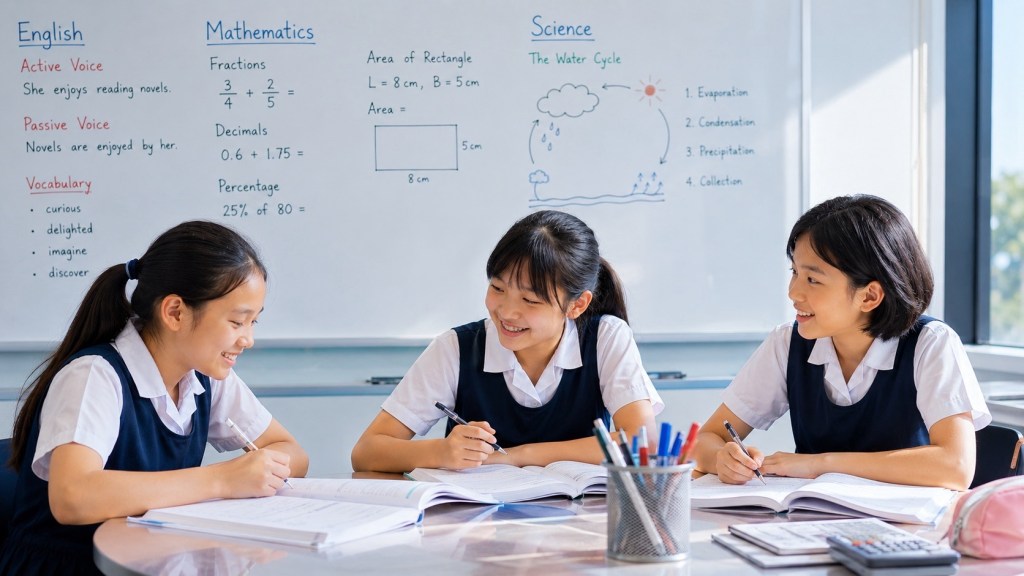
Preparatory Sengkang Science Tuition for Primary 1 Students: Science Classes in Small Groups
Primary 1 is the beginning of a new academic life.
Children are learning how to sit through longer lessons, follow multi-step instructions, organise their work, read more independently and explain what they are thinking. Everything feels new at once.
For this reason, good preparatory Science tuition for Primary 1 students should not simply push Primary 3 worksheets forward by two years. It should give children the thinking habits, language and confidence that will allow them to learn Science properly when the formal subject becomes more demanding.
At eduKate Sengkang, our preparatory Primary 1 Science classes use small-group teaching to help children observe carefully, ask useful questions and explain simple ideas clearly.
The intention is not to make childhood unnecessarily academic.
It is to make future learning feel natural.
What Does Preparatory Primary 1 Science Tuition Mean?
Dedicated Science curriculum time in Singapore primary schools is provided from Primary 3 to Primary 6. The national Primary Science curriculum is designed not only to teach facts, but also to develop curiosity about nature and the ability to investigate and explain scientific ideas. (Ministry of Education)
This makes Primary 1 an excellent preparatory year.
There is no need to rush through the entire Primary 3 Science syllabus. Instead, younger students can begin developing the underlying abilities that Science will eventually require:
- noticing important details;
- naming objects and properties accurately;
- comparing two observations;
- sorting items according to a rule;
- identifying simple changes;
- making sensible predictions;
- following a sequence;
- describing cause and effect;
- explaining an answer in a complete sentence.
These may appear to be small skills. Together, however, they form the early architecture of scientific thinking.
A child who can observe but cannot explain may struggle with structured questions later. A child who knows many facts but does not understand relationships may become confused when a question is presented in an unfamiliar form.
Preparatory Science lessons help connect knowledge, language and reasoning before the academic load becomes heavier.
Why Some Primary 1 Students Benefit from Science Tuition
Parents usually consider preparatory Science classes for different reasons.
Some children are naturally curious but give very short answers. They may know what happened but cannot explain why.
Others enjoy experiments and nature but become lost when they need to read instructions, compare information or record an observation.
A child may also be confident during conversation yet hesitate when faced with unfamiliar vocabulary. Another may understand quickly and require broader questions to remain intellectually engaged.
The purpose of small-group tuition is not to make every child follow exactly the same route.
A thoughtful tutor adjusts the route while keeping the destination clear.
A child who needs more support may return to physical objects, pictures, demonstrations and guided language. A child who is ready for more may be asked to predict alternatives, notice exceptions or apply the same principle to a different situation.
Both students are learning Science.
They simply require different widths of instruction.
A Clearer Route for Children Who Need More Support
A young learner can appear weak in Science for reasons that have little to do with intelligence.
The child may not understand a word in the question. The instructions may contain too many steps. The idea may have been introduced too abstractly. The child may notice the answer but lack the language needed to express it.
In a large classroom, these difficulties can blend into the background. A quiet child may copy the class response without fully understanding it.
Small-group Primary 1 Science tuition gives the tutor more opportunities to discover exactly where the difficulty begins.
For example, consider a simple question:
Why did the wet cloth become dry after it was left outside?
A child may understand that the water is no longer there but be unable to form a complete explanation.
The tutor can rebuild the reasoning in smaller stages:
- The cloth was wet at the beginning.
- It was placed outside.
- Heat and moving air acted on the water.
- The amount of water in the cloth decreased.
- The cloth eventually felt dry.
The child is not merely given an answer to memorise. The child learns how an explanation is assembled.
This is a more durable form of preparation.
A Wider Route for Children Who Are Ready to Go Further
Preparatory Science tuition should not hold an advanced child inside repetitive work.
Some Primary 1 students already ask sophisticated questions. They notice patterns, test their own ideas and connect what they see to earlier experiences. Giving them more worksheets may not be enough.
They need wider questions.
Instead of asking only whether an object floats, the tutor might ask:
- Would it still float if its shape changed?
- Do all heavy objects sink?
- What could we change while keeping the test fair?
- How could we record the results?
- What evidence would change our conclusion?
The lesson remains accessible to a young child, but the intellectual space becomes larger.
This is how strong learners continue growing. They are not simply moved faster through content. They are taught to look further into it.
Why Small-Group Science Classes Work Well at Primary 1
Young children learn through interaction.
They benefit from hearing how another student describes an observation, watching a classmate approach a problem differently and discussing why two answers may not mean exactly the same thing.
However, the class must remain small enough for the tutor to hear each child think.
In a carefully managed small group, the tutor can notice:
- who is following the demonstration;
- who is copying without understanding;
- who has misunderstood a key word;
- who can answer verbally but not in writing;
- who needs more time;
- who is ready for a more challenging question.
This level of attention matters because early misunderstandings are often subtle.
A child may use the words living and moving as though they mean the same thing. Another may believe that every change is permanent. A third may classify objects by colour when the question requires classification by material.
These are not major failures. They are early routes that need to be corrected gently.
When corrections happen early, the child can move forward without carrying unnecessary confusion into Primary 3 and beyond.
What Primary 1 Students Learn in Preparatory Science Classes
Our lessons are designed around age-appropriate ideas that can be seen, discussed and understood.
Activities may include exploring:
Living and Non-Living Things
Children learn to look beyond a single visible feature.
A toy car moves, but it is not alive. A plant may appear still, but it is living. Students begin identifying several characteristics before reaching a conclusion.
Materials and Their Properties
Students observe whether objects are hard, soft, flexible, waterproof, absorbent, rough, smooth, transparent or opaque.
They then consider why particular materials are suitable for particular uses.
Light and Shadows
Children investigate how shadows form, what happens when an object moves closer to a light source and why transparent materials behave differently from opaque ones.
Magnets and Simple Forces
Students explore attraction and repulsion, identify magnetic materials and learn that scientific conclusions should be based on observations rather than guesses.
Plants, Animals and Everyday Environments
Children notice similarities and differences, identify basic needs and practise grouping living things according to visible characteristics.
Changes in Everyday Life
Melting, freezing, drying, mixing and dissolving can become opportunities to observe sequences and discuss whether changes can be reversed.
The purpose is not to overwhelm a six- or seven-year-old with technical terminology.
The purpose is to make the world more understandable.
Science Also Depends on English
Many parents are surprised when a child who appears to understand a Science topic performs poorly on written questions.
Often, the difficulty lies in language.
Science requires students to distinguish between words such as:
- observe and infer;
- describe and explain;
- same and similar;
- cause and result;
- increase and decrease;
- before and after;
- suitable and unsuitable.
A child must also understand sentence structures that express comparison, sequence and cause.
For example:
The second plant grew taller because it received more light.
Both objects are made of metal, but only one is attracted to the magnet.
When the ice gained heat, it melted into water.
These language patterns eventually become essential for answering structured Science questions.
The current PSLE Science assessment continues to test knowledge with understanding as well as the application of knowledge and scientific inquiry. Students are expected to interpret information, evaluate observations and communicate explanations and reasoning—not simply recall isolated facts.
The long-term destination therefore matters even in the early years.
A Primary 1 child does not need PSLE drilling. The child does benefit from learning how to speak and write in a clear chain of thought.
Learning to Answer “Why?”
Young children frequently ask “why”, but answering a “why” question is more demanding than asking one.
An effective explanation usually contains a relationship:
- something happened;
- a condition caused it;
- evidence supports the conclusion.
Preparatory Science tuition teaches children not to stop at statements such as:
“Because it is like that.”
“I saw it.”
“My teacher said so.”
Instead, the tutor helps the child construct a more complete response:
“The paper became wet because it absorbed water.”
“The shadow became shorter because the object moved farther from the light.”
“The metal spoon was attracted to the magnet, but the plastic spoon was not.”
This is not merely answer-writing practice. It is training in organised thought.
The Tutor’s Role Is to Diagnose Before Pushing
A productive lesson begins by finding out what the child already understands.
When an answer is wrong, an experienced tutor does not immediately assume that the entire topic is weak.
The tutor checks:
- Did the child misread the instruction?
- Is one unfamiliar word blocking the question?
- Does the child understand the observation but not the reason?
- Is the child using an incorrect classification rule?
- Can the child explain orally but not write independently?
- Has the child memorised a phrase without understanding it?
The response should match the actual difficulty.
A vocabulary gap requires language support. A conceptual gap requires a clearer demonstration. A reasoning gap requires carefully sequenced questions. A confident learner may simply require a more demanding application.
This is one of the strongest reasons to choose small-group tuition.
The teaching can change direction before confusion becomes a habit.
We Do Not Rush Children Through Science
Beginning early should not mean creating early pressure.
A Primary 1 student still needs time to play, read, rest and adjust to school life. Preparatory tuition should support this development rather than compete with it.
Our lessons are therefore structured to remain calm, purposeful and appropriately paced.
Children are encouraged to:
- handle simple materials;
- make observations;
- discuss their ideas;
- draw or record findings;
- listen to another viewpoint;
- revise an answer after receiving evidence;
- enjoy discovering that an earlier guess can be improved.
Being wrong is not treated as embarrassment.
It is treated as the beginning of investigation.
This attitude matters. Students who are afraid of mistakes often avoid difficult questions. Students who learn to examine and correct mistakes become more independent over time.
From Primary 1 Curiosity to Primary 3 Readiness
The transition into formal Primary Science can feel significant.
Students encounter more specialised vocabulary, topic-based content, diagrams, experimental situations and written explanations. Those who have already developed basic observation and reasoning routines usually have more mental space available for the new content.
They are not trying to learn everything simultaneously.
They already know how to:
- read the situation;
- identify what changed;
- compare the relevant details;
- connect cause and effect;
- state a conclusion;
- support it with evidence.
Preparatory Science tuition is therefore not about completing the journey early.
It is about making the later journey more manageable.
Who May Benefit from Sengkang Primary 1 Science Tuition?
Preparatory classes may be suitable for a child who:
- is curious about nature and how things work;
- enjoys hands-on learning;
- gives answers that are correct but incomplete;
- finds it difficult to explain observations;
- needs help with scientific vocabulary;
- rushes and misses important details;
- is quiet in larger classes;
- benefits from close guidance;
- requires greater challenge than simple activity sheets provide;
- would benefit from a steady foundation before Primary 3.
The most important consideration is not whether a child is already “good” or “weak” in Science.
It is whether the class can give the child an appropriate next step.
Why Choose eduKate Sengkang for Preparatory Primary 1 Science Tuition?
Parents choose tuition because they want something to improve.
That improvement may be greater confidence, better expression, stronger reasoning, more careful work or a healthier attitude towards learning.
At eduKate Sengkang, our small-group approach allows the tutor to work closely with each student while preserving the energy of learning with peers.
We focus on:
Clear Foundations
Children learn the meaning behind an idea before they are expected to remember terminology.
Close Correction
Misunderstandings are identified and corrected during the learning process, not left until a test reveals them.
Appropriate Challenge
Students who require more guidance receive a clearer route. Students who are ready for more receive broader and deeper questions.
Strong Language
Children practise describing, comparing, sequencing and explaining in complete sentences.
Calm Progress
Lessons are designed to build confidence without turning Primary 1 into an examination year.
Long-Term Readiness
The work supports the thinking and communication skills that students will need when formal Science begins.
Frequently Asked Questions
Is Science formally taught in Primary 1?
Dedicated primary Science curriculum time is associated with Primary 3 to Primary 6. Preparatory Primary 1 Science tuition should therefore concentrate on foundational observation, vocabulary, reasoning and inquiry rather than prematurely drilling the complete upper-level syllabus. (Ministry of Education)
Will starting Science tuition early place too much pressure on my child?
It depends on how the lessons are taught. Age-appropriate preparatory classes should be interactive, measured and encouraging. The goal is to develop curiosity and clear thinking, not to create examination pressure.
Does my child need to be able to read independently?
Independent reading is helpful but not essential at the beginning. The tutor can use pictures, objects, demonstrations and oral discussion while gradually strengthening the child’s ability to understand written instructions.
Is preparatory Science only for advanced students?
No. Some children attend because they need help expressing themselves or following logical sequences. Others attend because they are ready for broader questions. Small-group teaching allows the level of support to be adjusted.
Will the lessons teach Primary 3 topics in advance?
Some familiar scientific ideas may be introduced through simple, age-appropriate activities. However, the aim is not to finish the Primary 3 syllabus prematurely. Understanding, language and reasoning come first.
Why not wait until Primary 3?
Waiting is perfectly reasonable for many children. Preparatory tuition becomes useful when parents can already see a need: difficulty explaining ideas, limited vocabulary, low confidence, careless observation or a desire for meaningful academic enrichment.
A Strong Beginning Without Unnecessary Pressure
The best early education does not make children run before they can walk.
It gives them balance.
Preparatory Sengkang Science tuition for Primary 1 students can provide that balance by turning natural curiosity into careful observation, simple evidence and clear explanation.
Children who need support receive a route they can follow.
Children who are ready for more receive room to explore.
Both are guided forward without noise, haste or unnecessary pressure.
At eduKate Sengkang, our small-group Science classes help young learners begin with confidence, build sound habits and arrive at formal Primary Science ready to understand—not merely memorise.
Start quietly. Build carefully. Let curiosity grow into capability.
Nurturing a Love for Science from an Early Age
At eduKate Singapore, we understand the importance of building a strong foundation in Science from the earliest years of education. Our Sengkang Science Tuition for Primary 1 students is designed to spark curiosity, foster inquiry-based learning, and help young learners develop a deep appreciation for the world around them. We believe that starting Science education early sets the stage for future academic success and encourages a lifelong love for learning.
Why Choose Our Sengkang Science Tuition for Primary 1 Students?
Interactive and Fun Learning
Our Primary 1 Science tuition is crafted to be engaging and interactive, using age-appropriate activities and hands-on experiments. We introduce scientific concepts through play-based learning, ensuring that students remain curious and excited about the subject.
Building a Strong Foundation
Primary 1 is a crucial stage in a child’s learning journey, and we focus on helping students develop basic science skills, such as observation, classification, and exploration. Our tuition provides students with the opportunity to start exploring SEAB PSLE science in a structured yet enjoyable environment, making it easier for them to grasp more complex concepts in the future.
Small Group Classes for Personalized Attention
We maintain small class sizes in our Sengkang Science Tuition program to ensure that every child receives individualized attention. Our experienced tutors carefully monitor each student’s progress, ensuring that they understand each concept before moving forward.
Encouraging Curiosity and Inquiry
Our PSLE Science lessons are designed to cultivate an inquiring mind, encouraging students to ask questions and seek answers. At eduKate Singapore, we emphasize the importance of asking “why” and “how,” which lays the foundation for critical thinking skills that are essential as students progress through their academic journey.
Our Approach to Science for Primary 1 Students
At eduKate Singapore, we believe that Science should be taught in a way that stimulates the imagination and encourages hands-on exploration. Our Sengkang Primary 1 Science Tuition curriculum is aligned with the Ministry of Education (MOE) syllabus, ensuring that your child develops the skills and knowledge they need while having fun.
Key Focus Areas of Our Primary 1 Science Tuition
- Exploring the Environment
- Learning about plants, animals, and their habitats.
- Understanding how living things grow, change, and interact with their environment.
- Engaging in nature-based activities to develop a sense of wonder about the natural world.
- Basic Process Skills Development
- Observation: Students learn to observe their surroundings and identify patterns.
- Classification: Understanding how to group objects based on common characteristics.
- Measurement: Introducing basic concepts of size, weight, and volume.
- Prediction: Encouraging students to make simple predictions based on their observations.
- Introduction to Scientific Language
- Building a foundation of scientific vocabulary appropriate for Primary 1 students.
- Using simple, everyday language to explain scientific phenomena and gradually introducing key scientific terms.
- Interactive Experiments and Activities
- Conducting simple, safe experiments to help students understand how science works in the real world.
- Activities like growing plants, observing weather changes, and experimenting with magnets help make science tangible for young learners.
What Makes Sengkang Science Tuition at eduKate Singapore Special?
Our Primary 1 Science tuition is more than just about teaching science—it’s about fostering a love for learning and encouraging students to be active participants in their education. Here’s what sets us apart:
Experienced and Engaging Tutors
Our tutors are passionate about teaching Science and are skilled in making the subject approachable and fun for young students. With years of experience in the MOE Science syllabus, they understand how to engage young minds and cater to individual learning needs.
Hands-On Learning Environment
We believe that children learn best when they can interact with what they are learning. That’s why our Sengkang Science Tuition sessions include hands-on activities that allow students to experience science in action. Whether it’s exploring how plants grow or experimenting with simple materials, our approach ensures that concepts are retained and understood.
Structured Yet Flexible Lessons
While we adhere to the MOE syllabus for Science, our lessons are flexible to suit the varying learning speeds of our students. We incorporate fun, creative exercises that allow children to enjoy learning while building a strong science foundation.
Nurturing Individual Potential
Our small group tuition setting ensures that each student’s individual needs are met. We provide personalized support and create a safe space for students to ask questions and express their ideas without hesitation.
Benefits of Early Science Education for Primary 1 Students
Developing Critical Thinking and Problem-Solving Skills
By introducing science concepts at an early age, we help students develop their critical thinking skills. Through simple investigations and experiments, they learn to observe, question, and draw conclusions—skills that are important for success in all subjects.
Building Confidence in Learning
Our Sengkang Primary 1 Science tuition aims to build confidence in young learners by making science concepts accessible and easy to understand. As students successfully grasp these concepts, their confidence grows, making them more eager to learn.
Preparing for Future Academic Success
Starting science education early gives students an advantage as they progress through their academic years. By the time they reach Primary 5 and 6, they will have a strong foundation in Science, making it easier for them to tackle more advanced topics and perform well in their exams.
Our Tuition Program Outline for Primary 1 Science
Course Objectives
- Introduction to Science Concepts: Introduce students to the basic ideas of Science through exploration and observation.
- Develop Process Skills: Teach students the fundamental skills needed to explore the world scientifically, such as observing, classifying, and predicting.
- Encourage Inquiry-Based Learning: Foster a spirit of curiosity and inquiry by encouraging students to ask questions and explore ideas.
Course Topics
- Exploring Living Things: Understanding plants, animals, and their habitats.
- The Environment Around Us: Learning about weather, seasons, and how the environment changes.
- Properties of Materials: Discovering the characteristics of different materials through hands-on experiments.
- Simple Machines: Introducing basic mechanical concepts through playful activities and examples.
Interactive Learning Activities
- Nature Walks: Observing plants and animals in their natural surroundings.
- Science Experiments: Hands-on activities that demonstrate basic scientific principles in a fun and engaging way.
- Storytelling and Science: Using stories to explain scientific concepts, making them relatable and memorable for young learners.
Parent Involvement and Feedback
We believe that collaboration between tutors and parents is essential for a child’s academic success. That’s why we keep parents updated on their child’s progress through regular reports and consultations. We also provide tips for parents to reinforce Science learning at home, making it a holistic experience.
Contact Us for Primary 1 Science Tuition at Sengkang
Give your child a head start in Science with our engaging and interactive Sengkang Science Tuition for Primary 1 students. Our experienced tutors, small group learning environment, and hands-on approach will help your child develop a love for Science and build the skills needed for future academic success.
Get in touch with us today:
- Phone: +65 82226327
- Email: admin@edukatesg.com
- Website: edukatesingapore.com
Help your child discover the wonders of Science with eduKate Singapore’s Primary 1 Science Tuition in Sengkang. Start their educational journey with confidence and curiosity today!
Sengkang Science Tuition for Primary 1 Students
Quick Summary for Parents:
- What It Is: Sengkang Science Tuition for Primary 1 Students offers tailored lessons to develop young minds.
- Improving It: Techniques and resources for enhancing learning experiences.
- How to Learn: Strategies for effective learning.
- How to Prepare: Tips for parents to prepare their children for Science tuition.
- What Can Be Done: Methods to create a supportive learning environment.
- Reasons: Why Sengkang Science Tuition is essential for Primary 1 Students.
What Is Sengkang Science Tuition for Primary 1 Students?
Sengkang Science Tuition for Primary 1 Students is a specialized learning program designed to cater to young students in the Sengkang area. It builds on the principles of the previously successful Primary 2 Sengkang English Tuition program but focuses explicitly on the fascinating world of Science.
The program offers tailored lessons to meet the individual needs of each student, encouraging curiosity and creativity. Instructors use hands-on experiments, interactive learning tools, and real-world applications to engage young minds.
How to Improve Sengkang Science Tuition for Primary 1 Students?
Improving the program involves several key areas:
- Enhanced Curriculum: Constant updates to the syllabus to match international standards, making it relevant and engaging.
- Qualified Instructors: Regular training and development sessions for teachers to stay abreast of new teaching methodologies.
- Parental Involvement: Engaging parents in the learning process to ensure continuity between home and tuition center.
- Technology Integration: Utilizing modern teaching tools like tablets and interactive whiteboards.
How to Learn Sengkang Science Tuition for Primary 1 Students?
Learning in the program is facilitated through various channels:
- Classroom Sessions: Regular face-to-face lessons with experienced teachers.
- Online Resources: Providing access to online materials and tutorials.
- Hands-on Experiments: Encouraging students to explore and discover through practical experiments.
- Homework Assignments: Reinforcing concepts through regular assignments.
How to Prepare for Sengkang Science Tuition for Primary 1 Students?
Parents can help their children prepare by:
- Discussing Expectations: Talking about what to expect from the lessons.
- Providing Resources: Equipping children with necessary stationery and learning materials.
- Encouraging Curiosity: Fostering a love for Science by exploring natural phenomena together.
- Regular Communication: Staying in touch with tutors to monitor progress.
What Can Be Done for Sengkang Science Tuition for Primary 1 Students?
Parents, teachers, and administrators can collaborate to create a supportive learning environment for students enrolled in Sengkang Science Tuition. Here’s what can be done:
- Parental Engagement: Regular meetings and workshops with parents to keep them involved in their child’s learning journey.
- Tailored Teaching Plans: Creating individualized lesson plans to meet the unique needs of each student.
- Community Involvement: Encouraging community engagement through Science fairs and exhibitions.
- Emphasis on Mental Well-being: Focusing on the emotional and psychological well-being of the students, ensuring a balanced approach to learning.
What Are the Reasons for Choosing Sengkang Science Tuition for Primary 1 Students?
The decision to enrol a child in Sengkang Science Tuition should be based on several compelling reasons:
- Personalized Learning: Each child receives attention tailored to their needs and learning pace.
- Quality Education: The program adheres to international standards, ensuring world-class education.
- Skilled Educators: Highly trained and dedicated teachers who specialize in educating young learners.
- Holistic Development: A focus on overall development, including critical thinking, problem-solving, and creativity.
Useful Links and Resources
Parents looking for more information about the best practices in Science education can refer to the following international resources:
- National Science Teaching Association (NSTA): A professional organization in the USA dedicated to promoting excellence in Science teaching.
- The Royal Society: The UK’s independent scientific academy, focusing on excellence in Science.
- Australian Science Teachers Association (ASTA): ASTA supports and provides resources for Science teachers across Australia.
- Science Education at the Smithsonian’s National Museum of Natural History: Offers a wide range of resources and programs for educators and students alike.
Conclusion
Sengkang Science Tuition for Primary 1 Students represents a significant step in nurturing the future scientists of tomorrow. With a solid structure, innovative approach, and dedicated educators, it provides a platform for young learners to explore the wonders of Science.
The collaboration between parents, teachers, and the community ensures that the learning experience is engaging, enriching, and in alignment with international standards. The integration of modern teaching tools and emphasis on overall development prepares children not only for academic success but for life as curious, critical thinkers.
With the success of Sengkang English Tuition as its foundation, the Science program promises to be a valuable asset for the children in the Sengkang community, guiding them towards a bright and successful future. Click here to enrol at eduKateSingapore.com

