
Primary 1 Discovery Science in Sengkang: Learn to Look Before Learning the Chapter
Primary 1 Discovery Science is not a claim that Primary 1 children are taking the formal Primary Science curriculum. It is a way to build the habits that later Science depends on: noticing carefully, comparing, asking useful questions, describing change, using simple evidence and learning to separate what we saw from what we guessed.
Notice → Observe → Compare → Name → Ask → Explain → Check
Quick Read
A young child already lives inside a scientific world. Ice becomes water. Shadows move. Seeds sprout. Wet clothes dry. Some objects float. Some materials bend. Some animals move differently from others.
The purpose of Discovery Science is not to rush the child into upper-primary terminology. It is to improve the quality of attention.
We want the learner to become better at asking:
- What did I actually notice?
- What is different?
- What stayed the same?
- How could I describe it more precisely?
- What do I think happened?
- What evidence do I have?
- What would I need to check next?
The One-Sentence Answer
Primary 1 Discovery Science helps children turn everyday curiosity into more disciplined observation, comparison, classification, questioning and simple evidence-based explanation before formal Primary Science begins.
At a Glance
| Level | Primary 1 |
| Programme | Discovery Science / cross-subject scientific thinking |
| Class size | Up to 3 students |
| Lesson duration | 1.5 hours |
| Location | 83 Punggol Central, Singapore 828761 |
| Main focus | Observation, comparison, classification, scientific language, simple evidence and explanation |
Why Discovery Science Before Formal Science?
Children do not begin wondering about the world only when a Science textbook appears. They already ask why rain falls, why ice melts, why an insect can walk on a wall, why one leaf is green and another brown, why one object rolls while another stays still.
The educational opportunity is to protect that curiosity while making it more precise.
At this age, a strong lesson does not have to begin with the adult explanation. It can begin with the world itself.
Look first. Describe carefully. Compare. Ask. Then explain only as far as the evidence allows.
This creates a foundation for later Science, but it also supports English and Mathematics. The child is learning to describe, sequence, compare, group, measure, justify and revise an idea.
Looking Is Not Yet Observing
A child can look at an object without extracting much information from it. Observation is more deliberate.
Suppose two ice cubes are placed in different locations. A child may first say:
“That one melted.”
We can strengthen the observation:
“The ice cube became smaller, and liquid water appeared around it.”
The second description contains more usable information. It separates visible change from the explanation we may later give for that change.
Observation and Inference Are Different Jobs
This is one of the most valuable early distinctions.
| Statement | Type |
|---|---|
| The leaf is yellow. | Observation |
| The plant is unhealthy. | Inference |
| There is water on the outside of the cup. | Observation |
| The cup is leaking. | Possible inference |
| The shadow is longer now. | Observation |
| The Sun moved closer to the tree. | Unsupported explanation |
Young children naturally move quickly from seeing to explaining. We do not want to remove that instinct. We want to add a small pause:
What did I see, and what am I concluding from it?
That pause becomes increasingly important later when Science asks students to distinguish data from conclusion and evidence from explanation.
Comparison: Hold Two States in Mind
Comparison is a deceptively powerful skill. The learner has to notice one thing while keeping another thing available for reference.
- same / different;
- more / less;
- before / after;
- rough / smooth;
- longer / shorter;
- warmer / cooler;
- faster / slower;
- heavier / lighter.
The goal is not to collect comparison words. It is to make the basis of comparison visible.
“This is bigger” becomes stronger when the child can answer: bigger in what way? Longer? Taller? Wider? Heavier? Holding more water?
Precision in comparison creates a bridge into both Mathematics and Science.
Classification: A Group Needs a Reason
Sorting objects is easy to make look like learning. The stronger question is whether the child can state the rule.
If shells, stones and leaves are placed on a table, a child may group them by colour, texture, shape, whether they came from a living thing, or another defensible property.
The key move is:
I grouped these together because…
Classification becomes scientific when the rule can be explained and applied consistently.
Scientific Language Begins With Better Everyday Language
At Primary 1, we do not need to force technical vocabulary before the child can see the relationship it represents.
We can begin with language such as:
- I noticed…
- It changed from… to…
- These are similar because…
- These are different because…
- I think… because…
- I am not sure yet because…
- We could check by…
These sentence structures do more than improve English. They give the child tools for representing observation, comparison, uncertainty and evidence.
Ask Better Questions, Not Just More Questions
Curiosity can be developed. A child may begin with:
“Why?”
Later, the question can become more discriminating:
- What changed?
- What stayed the same?
- What happened first?
- How are these two objects different?
- What could we observe to check?
- What would happen if we changed one thing?
- Do we have enough information to know?
The child is learning that a useful question can make the world easier to inspect.
A Worked Example: The Wet Cloth
Imagine two similar wet cloths. One is spread open. The other is folded.
A weak activity simply tells the child which one dries faster.
A stronger Discovery Science conversation asks:
- What is the same about the two cloths?
- What is different?
- How could we decide which is drier later?
- What do you predict?
- Why?
- What would we need to keep reasonably similar?
The child does not need a formal lesson on variables. The learner is already beginning to understand that comparisons become more useful when the situations are organised carefully.
The Voyage of Water
Water is a useful recurring context because one familiar substance can be seen through many different frames: containers, movement, weather, plants, temperature, wet and dry surfaces, measuring and everyday life.
The purpose is not to teach an advanced “water chapter” early. The purpose is to let the child meet the same world repeatedly while the questions become better.
A P1 child may ask:
What do I notice?
Later, the same learner can ask:
What pattern do I see? What changed? What evidence supports my explanation?
The world stays familiar. The learner’s resolution increases.
What Can Go Wrong at Primary 1?
Discovery Science is gentle, but that does not mean there is nothing to diagnose.
| What we see | Possible learning need |
|---|---|
| The child gives one-word answers. | More descriptive language and guided observation |
| The child guesses before looking. | Pause and return to visible evidence |
| Everything is grouped by appearance. | Explore alternative classification rules |
| The child notices differences but cannot explain them. | Comparison language and sentence structure |
| The child copies another child’s answer immediately. | Independent noticing before group discussion |
| The child wants one “correct” explanation too quickly. | Comfort with uncertainty and checking |
The purpose is not to label the child. It is to identify which habit needs more opportunity to grow.
Correction Is Different From Discovery
If a child says something scientifically incorrect, we do correct it. But the correction should not erase the process that produced the answer.
We can ask:
- What made you think that?
- Which part did you observe?
- What could we check?
- Does this new observation fit your first idea?
- Would you change your explanation now?
This teaches something larger than one fact: ideas can be revised when better evidence appears.
Why Small Groups of 3?
Three children can look at the same object and notice different features. That is educationally useful.
One child may notice colour. Another notices shape. Another notices movement. The tutor can place those observations beside one another and ask which are relevant to the question.
The small group also allows every child to speak before the strongest voice becomes the class answer. We can preserve independent observation, then compare explanations.
See for yourself → say what you saw → hear another view → return to the evidence.
How Discovery Science Connects to English and Mathematics
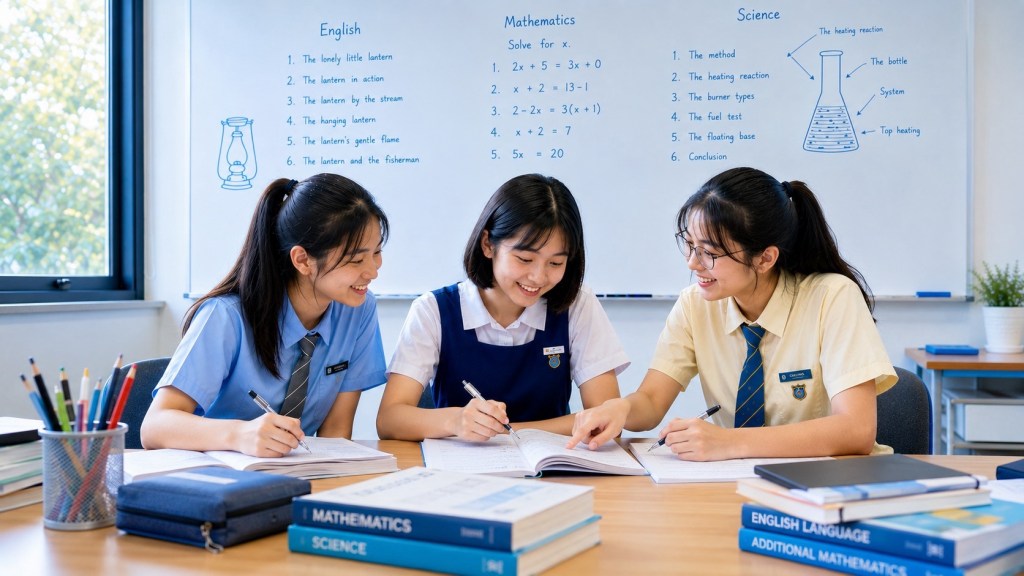
Discovery Science remains its own learning experience, but the child carries the same mind across subjects.
- English: describe accurately, sequence events, explain a reason, distinguish “I saw” from “I think”.
- Mathematics: compare quantities, notice more/less, measure, order, recognise patterns.
- Science: observe, classify, ask, predict, compare and explain from evidence.
This does not make the subjects identical. It shows how one child’s developing attention, language and reasoning can support several forms of learning.
What Progress Looks Like
- descriptions become more precise;
- the child notices before guessing;
- comparisons state the basis more clearly;
- classification includes a reason;
- the child asks more useful “how do we know?” questions;
- simple explanations include a because;
- the child is willing to say “I am not sure yet” when evidence is incomplete;
- the learner can revise an idea after a new observation;
- independent noticing happens before copying another answer;
- curiosity becomes easier to organise into a question.
What Parents Can Do at Home
You do not need a laboratory. Everyday life provides enough material.
- Compare two leaves and ask for three differences.
- Watch an ice cube and describe change without explaining it first.
- Sort household objects using two different rules.
- Ask what evidence supports a prediction.
- When the child says “because”, ask what was observed.
- When neither of you knows, model the phrase: “We need more information.”
The goal is not to turn home into school. It is to show that careful noticing is useful outside a worksheet.
Preparing for Primary 2 Discovery Science
Primary 1 begins with attention and distinction. Primary 2 can ask the learner to coordinate more information: patterns, predictions, fairer comparisons and simple evidence-based explanations.
P1: Notice → Observe → Compare.
P2: Observe → Classify → Compare → Predict → Check → Explain.
The transition should feel like increasing resolution, not a sudden jump into formal exam Science.
Next: Primary 2 Discovery Science Sengkang
Frequently Asked Questions
Is this formal MOE Science tuition?
No. This is Discovery Science and general educational development before formal Primary Science. The purpose is to build observation, comparison, questioning, evidence language and curiosity without pretending Primary 1 is an upper-primary Science class.
Should Primary 1 children memorise scientific terms?
Useful vocabulary can be introduced, but meaning should come first. A technical word is more valuable when the child can connect it to something observed or understood.
Why teach evidence language so early?
Because children already make explanations. The useful habit is learning that “I saw” and “I think” are different statements and that a conclusion should have a reason.
What if my child keeps asking questions I cannot answer?
That can be productive. “I do not know yet” is a valid educational answer. You can decide whether to observe more, look something up together or simply keep the question open.
Does Discovery Science help later school Science?
It can help by strengthening the habits formal Science later depends on: observation, comparison, classification, explanation and willingness to use evidence rather than guess.
Primary 1 Discovery Science Sengkang with eduKate Sengkang
Discovery Science | Small groups of up to 3 | 1.5-hour lessons | 83 Punggol Central
The aim is not to accelerate a seven-year-old into later Science content. It is to help the child look at the world with increasing precision, curiosity and independence.
Notice carefully enough that the world begins giving you better questions.
If you want your child to develop careful observation, clearer explanation and scientific curiosity before formal Science begins, send us your child’s current level and preferred timing.
