
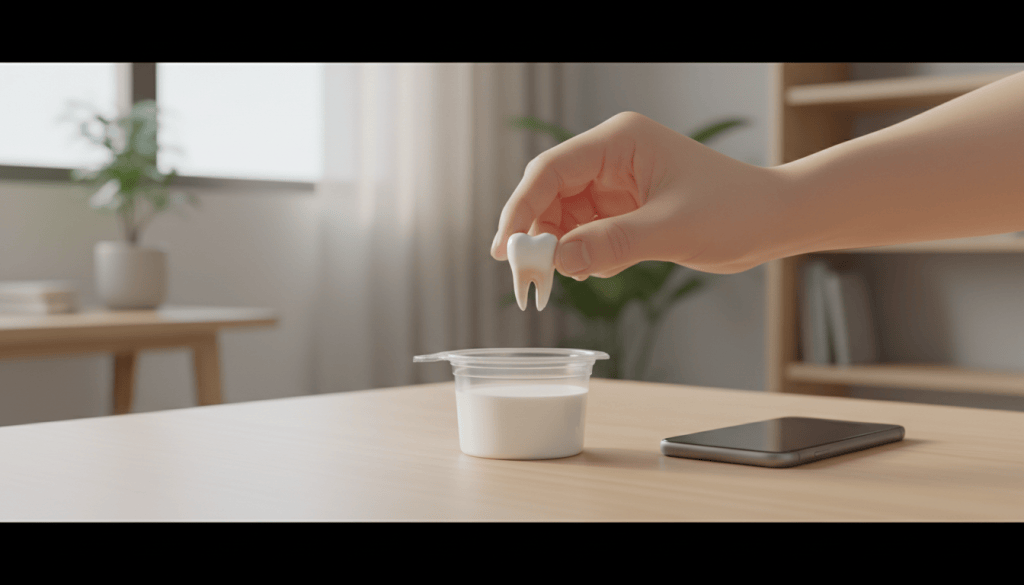
An adult or child in Sengkang has knocked a tooth completely out after a fall, sports collision or accident? First check for serious injuries. If there is severe facial trauma, uncontrollable bleeding, breathing difficulty, loss of consciousness or another life-threatening condition, call 995. If the person is otherwise stable, seek an emergency dentist immediately. A knocked-out permanent tooth may be saved, especially when treated quickly; the first minutes matter.
For a permanent adult tooth, handle it only by the white crown, not the root. If clean and if safe and practical, an adult or appropriately supervised person can place it back into its socket, as directed by SingHealth guidance, and see a dentist immediately. If it is dirty, rinse gently in cold running water for no more than about ten seconds. Do not scrub the root. If replantation is not possible, place the tooth in a clean container of plain cold milk and take it to a dentist urgently; do not store it dry or in water.
If the tooth is a baby tooth, do NOT put it back in the socket. Replanting a baby tooth can damage the permanent tooth developing beneath it. Arrange prompt dental advice, even when the child seems otherwise comfortable. If you are uncertain whether a knocked-out tooth is permanent or primary, protect the tooth and ask a dental professional promptly instead of forcing it back.
Quick checklist: what to do with a knocked-out tooth
- Assess life safety. Call 995 for severe facial trauma, major uncontrolled bleeding, unconsciousness, breathing difficulty or another emergency.
- Determine whether it is a permanent or baby tooth. Never replant a baby tooth. When uncertain, seek a dentist’s directions rather than guessing.
- For a permanent tooth, pick it up by the crown. Keep fingers off the root surface and do not scrape or brush it.
- If a permanent tooth is dirty, rinse very briefly in cold running water, not longer than about ten seconds under SingHealth’s guidance. Do not disinfect or soak the root.
- If safe and practical, reinsert a permanent tooth into its socket gently and seek emergency dental treatment immediately. Do not force it or attempt this when there is a significant risk of choking, other serious injury or uncertainty.
- If replantation is not possible, place the permanent tooth in plain cold milk and bring it to a dentist right away.
- Contact an emergency dentist now. Do not wait for the next routine cleaning appointment; timing affects the chance of tooth survival.
Who to call from Sengkang
- 995 — SCDF: severe bleeding, difficulty breathing, major trauma, collapse or an otherwise life-threatening emergency. SCDF emergency medical services.
- Urgent dental care: call a dental clinic equipped to assess trauma or the relevant dental emergency service and explain that a permanent tooth has been completely knocked out.
- National Dental Centre Singapore / SingHealth: official knocked-out-tooth guidance and appointment information can help identify appropriate services; standard outpatient appointments are not a substitute for immediate dental trauma treatment.
- Hospital Emergency Department: required for serious facial injury, uncontrolled bleeding or another medical emergency; a stable isolated knocked-out tooth chiefly requires rapid dental treatment.
- Child’s dentist: for a knocked-out or displaced baby tooth; do not attempt replantation.
Permanent tooth versus baby tooth: the critical difference
A permanent tooth is intended to stay in the mouth throughout adult life. After an accident, a permanent tooth that has been fully dislodged is called an avulsed tooth. The cells on its root can deteriorate when they dry out, affecting the likelihood that a dentist can preserve the tooth after replantation.
A primary or baby tooth has a developing permanent tooth beneath it. Both SingHealth and HealthHub explicitly say not to replant baby teeth. Doing so can harm the permanent tooth or surrounding tissue.
School-age children can have a mixture of baby and permanent teeth. An adult may mistakenly assume any front tooth in a younger child is a baby tooth, or that a fully formed-looking tooth must be permanent. If uncertain, preserve the tooth safely and contact an urgent dental service.
Why the crown, not the root?
The crown is the visible white portion of the tooth, while the root is the part normally embedded in bone. The root surface contains delicate tissues important for successful reattachment. Rubbing it with tissue, wiping it clean or holding it tightly may damage those tissues.
SingHealth’s tooth-avulsion guide advises picking the tooth up by the crown and avoiding the root. If dirty, rinse briefly, do not scrape, and seek urgent dental care. A small amount of dirt is not a reason to spend several minutes cleaning a tooth.
Milk is for preserving a tooth, not for drinking
If immediate replantation is not possible, a permanent tooth needs to remain moist. SingHealth recommends a container of plain cold milk and explicitly warns against storing it in water, drying it out, wrapping it in tissue paper or placing it loosely in a pocket.
Milk is a storage medium for the tooth; it is not a treatment for the injured person’s pain or bleeding. Do not instruct an unconscious person or someone with a serious mouth injury to drink. The aim is simply to keep the permanent tooth viable during the journey to emergency dental care.
If milk is unavailable, contact a dentist promptly for an alternative. SingHealth describes saliva as an option, but storing a loose tooth inside the mouth can pose a choking or swallowing risk, particularly for children. A clean container is generally safer than placing a tooth in the mouth of someone who may not control it reliably.
Is 30 minutes a deadline?
SingHealth notes that permanent teeth replanted within about 30 minutes have a better chance of survival. This does not mean care is pointless afterward. The sooner appropriate dental evaluation occurs, the better; do not delay calling a dentist just because more than 30 minutes have passed.
Tell the dental team the time the tooth was knocked out, whether it was replanted, how long it was dry and what storage medium was used. Honest timing helps clinicians evaluate the likelihood of healing and the need for follow-up.
What if the tooth cannot be placed back safely?
Do not force a tooth into a socket when the person is struggling, severely injured or too young to cooperate. Put a permanent tooth in cold milk in a container, then arrange emergency dental care. A dentist can evaluate the socket, other injuries and whether replantation is appropriate.
A tooth that is fractured at the root, an altered bite or a displaced jaw may require assessment beyond simple replantation. You do not need to diagnose these conditions before seeking help.
What if there is bleeding in the mouth?
Some bleeding after a dental injury is expected, but heavy or persistent bleeding requires attention. Where safe, apply gentle direct pressure with clean gauze to the bleeding area, avoiding unnecessary pressure on unstable or embedded structures.
SingHealth’s dental pain triage guidance recommends emergency department assessment for profuse gum or tooth bleeding that does not stop despite pressure. Call 995 for life-threatening bleeding, airway difficulty or severe associated injuries.
Knocked-out tooth after a fall: check the whole person
A knocked-out tooth may be the most visible injury, but the person could also have a head injury, concussion, broken jaw or neck injury. Assess consciousness, breathing, severe facial pain and any fall from height or motor vehicle collision. Serious symptoms take priority over saving the tooth.
If the person is unconscious, has abnormal breathing or is otherwise in immediate danger, call 995 and follow the dispatcher. A helper who is not involved in emergency resuscitation may preserve the tooth, but dental preservation must never delay lifesaving care.
A chipped tooth versus a tooth completely knocked out
A chip or fracture is different from full avulsion. If a tooth is chipped, save any fragments when safely available and contact a dentist promptly, especially for pain, sensitivity or an exposed inner surface. Do not try to glue a fragment onto the tooth yourself.
If a tooth is loose or pushed partly out of its normal position, do not repeatedly wiggle it to test stability. Arrange urgent dental evaluation. A dental X-ray or examination may be required to assess the root and surrounding bone.
What if a baby tooth is knocked out in childcare?
Do not reinsert it. Caregivers should contact the parents and arrange prompt dental assessment according to the childcare facility’s safety procedure. Note the time, circumstances and other injuries; keep the child comfortable and check for any head trauma.
HealthHub’s preschool oral-care advice explicitly warns that replanting a primary tooth can damage the permanent tooth sitting underneath the gum. Reassurance matters, but the child’s dentist needs to assess the injury and follow-up.
If the person has braces or another dental appliance
Do not try to remove damaged braces, wires or appliances by force after trauma. If part of an appliance is loose, sharp or embedded, contact the orthodontist or urgent dental provider. A serious cut, uncontrolled bleeding or breathing concern requires emergency assessment.
Tell the treating service what type of dental appliance is present and whether the tooth or bracket has moved. Do not use household glue, pliers or tools in the mouth.
If a swollen jaw and tooth pain develop
Dental infections can cause severe pain, swelling and fever even without an accident. Contact a dentist promptly. Facial swelling with fever, pus or difficulty opening the mouth deserves urgent clinical evaluation. Difficulty breathing, inability to swallow secretions or rapidly spreading swelling is a medical emergency; call 995.
Painkillers can temporarily reduce discomfort but do not fix an infection or replace dental treatment. Use medicines only within appropriate medical advice and directions.
Sengkang examples
A secondary-school student loses a permanent incisor during sport
Check for other injuries. Handle the permanent tooth by its crown, briefly rinse if dirty, and arrange prompt replantation where safely appropriate. Otherwise place the tooth in milk and seek an emergency dentist immediately. Report the incident through school procedures after urgent care begins.
A preschool child loses a front baby tooth during a fall
Do not replant the baby tooth. Assess for head and facial injury and arrange prompt dental advice. Tell the dentist how the fall occurred.
An adult slips on a stair and chips a tooth
Check for head or neck injury, save any clean tooth fragment when possible and contact a dentist promptly. Seek emergency medical help for serious trauma or uncontrolled bleeding.
A parent finds a knocked-out permanent tooth an hour later
Preserve it in cold milk and contact an emergency dental service. Longer time outside the mouth can reduce chances of survival, but only a dental professional can determine the appropriate treatment. Do not discard it solely because more than 30 minutes have passed.
Prevention and preparation for families
- Use a properly fitted mouthguard in appropriate contact sports.
- Ensure sports coaches and school first-aiders understand the difference between permanent and baby teeth.
- Have the household’s dentist contact details accessible.
- Teach children to report an injured or loose tooth promptly rather than hiding it.
- Prevent slippery bathroom and stair hazards where practical.
- Know that a clean container of cold milk can help preserve a knocked-out permanent tooth on the way to a dentist.
- Arrange follow-up after dental trauma because root and supporting tissue damage may develop over time.
Frequently asked questions
Can I replant a child’s baby tooth?
No. HealthHub and SingHealth advise against replanting primary teeth because of the risk to the developing permanent tooth.
What is the most important first step for a knocked-out permanent tooth?
Seek urgent dental care; handle the tooth by the crown, preserve it moist, and replant promptly only when it is confirmed permanent and safe to do so.
Can I wrap a tooth in tissue?
No. SingHealth warns that allowing the root to dry out can harm the cells important for reattachment. Use a clean container of plain cold milk if replantation is not possible.
Does the tooth need a dentist even if it goes back into the socket?
Yes. Immediate dental treatment and follow-up are still necessary to examine position, stabilisation and possible root or nerve injury.
Should I call 995 for every chipped tooth?
No. An isolated chip generally requires dental assessment. Call 995 for life-threatening bleeding, severe facial trauma, airway difficulty or another medical emergency.
More Sengkang emergency guides
- Elderly falls and head injuries
- Road accidents and pedestrian injuries
- Medical emergency and ambulance 995
- Choking and infant first aid
More Sengkang emergency guides (6 November 2026): Asthma attacks and severe breathlessness · Electric shocks and exposed wiring · Chemical eye splashes and sudden vision loss.
Official sources and review
- SingHealth — Tooth Avulsion (Knocked-Out Tooth)
- SingHealth — Dental Trauma in Children
- HealthHub — Oral Care for Your Pre-Schooler
- SingHealth — Gum or Tooth Pain and Emergency Warning Signs
- SCDF — Emergency Medical Services
Reviewed 6 November 2026. General first-aid information; it cannot replace prompt trauma dentistry or hospital assessment for serious injuries. Never replant a baby tooth. For severe medical emergencies call 995.
