
Springdale Primary School began operations in January 2013, according to its official history. Its first-year archive records a bilingual storytelling appearance in July and a Primary One artwork exhibited at the Singapore Youth Festival. These are useful starting points for a Sengkang school history: one record establishes the institutional beginning, while the others show children participating as the community took shape. The January date describes operations, rather than an exact ceremony day.
There is an earlier stage too. A Ministry of Education release from June 2012, preserved by the National Archives of Singapore, names Springdale among seven new schools preparing to take pupils in 2013. This guide follows the path from preparation to first-year activity, then compares later writing, arts and curriculum records. Original storytelling, geometry and project exercises explain the learning mechanisms behind those records. Every invented number and case is labelled; none supplies missing school statistics or a biography of a pupil. Families can follow the linked documents from home and use the final investigation to make their own checkable account of how a young school becomes a community.
eduKateSengkang • Neighbourhood history and learning
Choose your reading route
Read the historical record, follow the worked explanations, or begin with independent practice.
Route 1 · Chapters 1–2: Trace registration and the first operational year
Before the first lesson: the 2012 registration arrangements; January 2013: what an operational beginning tells us.
Route 2 · Chapters 3–4: Explore storytelling and the first artwork
A July storytelling record and the work of speaking to listeners; The first artwork: diversity, pattern and a geometry exercise.
Route 3 · Chapters 5–6: Compare later writing and leadership records
The 2015 writing record: selection, audience and revision; Leadership periods: continuity without inventing a cause.
Route 4 · Chapters 7–8: Follow creative work and curriculum change
A later arts archive: what a sparse page can and cannot show; The 2026 reflection: from stated purpose to a testable project.
Route 5 · Chapters 9–10: Practise a family investigation and check the evidence
Independent practice: build a first-year evidence notebook; Parents, partnerships and a history that can keep growing.
Full chapter index · Independent practice · Sources · Continue exploring
Contents
Chapters 1–2 · Trace registration and the first operational year
1. Before the first lesson: the 2012 registration arrangements
Chapters 3–4 · Explore storytelling and the first artwork
3. A July storytelling record and the work of speaking to listeners
4. The first artwork: diversity, pattern and a geometry exercise
Chapters 5–6 · Compare later writing and leadership records
5. The 2015 writing record: selection, audience and revision
Chapters 7–8 · Follow creative work and curriculum change
7. A later arts archive: what a sparse page can and cannot show
8. The 2026 reflection: from stated purpose to a testable project
Chapters 9–10 · Practise a family investigation and check the evidence
9. Independent practice: build a first-year evidence notebook
10. Parents, partnerships and a history that can keep growing
CHAPTER 1 OF 10 • Trace registration and the first operational year
1. Before the first lesson: the 2012 registration arrangements
The MOE release dated 18 June 2012 lists Springdale among seven new primary schools that would take pupils the following year. Its Annex B identifies Anchor Green Primary as Springdale’s registration centre and 71 Anchorvale Link as the location where the new school was to function in January 2013. That is a specific administrative relationship. It does not establish that Springdale taught its first classes at Anchor Green, or that the two institutions merged. A place where families register can be different from the place where children later learn.
This distinction reveals something useful about starting a school. An institution must establish contact with families before its first operational year. Registration, preparation and teaching belong to connected but different stages. The release captures an announced arrangement at the preparation stage; the later school history confirms the operational beginning. Reading the documents together is stronger than converting the earlier plan into proof of every later outcome. It also shows why a neighbourhood school story can include another school without transferring ownership of the new institution’s history to that temporary administrative connection.
Draw an invented network with three nodes: a family, registration centre R and teaching campus T. A link from the family to R represents an administrative task. A later link from the family to T represents attendance. Joining R to T in a historical diagram can show that the two stages concern the same school application, but it does not make R and T the same place. This original model is deliberately simple. It helps children recognise that a map of relationships can represent functions rather than only journeys or permanent locations.
For practice, imagine an announcement that says applications will be received at a community office while a new library is prepared elsewhere. Can a researcher conclude that books were borrowed from the office? No: the announcement establishes an application function, not a lending service. A later opening account would answer another question. Transfer that reasoning back to Springdale’s registration arrangements. The useful historical claim concerns where registration was organised and where operation was planned, with the actual January start established by the school’s own history. The old release’s registration procedures remain historical material, not instructions for a family applying now.
CHAPTER 2 OF 10 • Trace registration and the first operational year
2. January 2013: what an operational beginning tells us
The official history places Springdale’s start within Sengkang West and identifies its first principal as Mrs Lee-Koh SC, serving from 2013 to 2018. It also describes the school’s intention to work with parents and community partners. Together these details locate an institution, an early leadership period and an expressed relationship with its community. They do not provide a full classroom timetable, a count of every early pupil or a transcript of the first assembly. Those questions would require additional records designed to preserve that information.
A new school is more than an empty building becoming occupied. Classes need shared routines, families need reliable communication and pupils need ways to recognise their place in the institution. That is an explanation of the tasks involved in school formation, not an assertion about undocumented Springdale arrangements. The first-year records examined here are especially useful because they move from the institutional date to concrete activity. They let us see an early community through particular events while leaving the ordinary days between those events open to further research.
Consider an invented cohort model. A new school admits 150 Primary One pupils each year and, for the model only, begins with no other levels. With no transfers, departures or repeating years, it would contain 150 pupils in its first year, 300 in its second and 900 once six equal cohorts were present. This is not Springdale’s enrolment history. It demonstrates the mechanism of cohort accumulation: the annual intake and the number of pupils across a whole school are different quantities. Knowing one does not establish the other without further assumptions.
Change the imagined second intake to 120 while all later intakes return to 150. Once six cohorts are present, the total is five times 150 plus 120, or 870. The original equal-cohort prediction would be thirty too high. This changed condition is a useful check on historical reasoning. A school’s operational year does not determine its later size, and a model that looks tidy can be wrong when a single assumption changes. In a local-history notebook, write the confirmed beginning first and keep any illustrative growth diagram clearly separate from the institution’s actual records.
| Date or period | Record and contribution | Keep separate |
|---|---|---|
| 18 June 2012 | MOE release lists Springdale among seven planned new schools | Registration centre is not the planned operating campus. |
| January 2013 | School history confirms operations began | No exact opening-ceremony day inferred. |
| 27 July 2013 | School archive records bilingual storytelling participation | Participation account is not a school-wide language measure. |
| 2013 | Our Kaleidoscopic World exhibited at SYF | No invented material dimensions or production timetable. |
| 2015 | School records selected P2/P3 Malay writing entries | Selected entries do not measure every pupil’s attainment. |
| 2025 recalled in 2026 | Principal describes reflection and curriculum renewal | Stated intentions do not establish measured outcomes. |
CHAPTER 3 OF 10 • Explore storytelling and the first artwork
3. A July storytelling record and the work of speaking to listeners
Springdale’s 2013 archive records a Primary One pupil participating in the National Bilingual Storytelling Competition on 27 July. The account identifies the National Library Board and Lee Kuan Yew Fund for Bilingualism as organisers and describes a focus on presentation in English and Mother Tongue. This is a school’s dated participation account. It supplies an example of first-year activity, rather than a measure of every child’s language proficiency. No individual biography is needed to understand its place in the school’s early story.
Storytelling makes several parts of communication visible at once. A listener needs to recognise who is involved, understand what changes and follow why the next event matters. A speaker must choose details rather than merely recite a long list. The historical record does not preserve the complete performance used on that occasion, so the following task is an original exercise. Imagine a short story in which a child finds an unlabelled seed packet, plants one seed and later discovers an unexpected flower. The narrative needs a situation, an action and a consequence that the listener can connect.
Try three versions. The first gives only sequence: packet, seed, soil, flower. The second adds a cause: the child plants the seed because the label is missing and curiosity replaces certainty. The third adds a change in understanding: the child initially expects one flower, then revises that expectation when the plant grows. These versions are not progressively better merely because they contain more words. They answer different listener questions. A speaker can test the account by asking a listener to explain what the character expected and what evidence changed that expectation.
A changed-language task should preserve the important relationships while allowing natural expression. Retelling the invented story in another language need not keep the same word count or sentence order. It should still make the initial uncertainty, decision and discovery understandable. Ask an independent listener to identify those three elements. If the discovery is clear but the reason for planting is lost, revise that connection. This checks communication rather than memorised wording. It also explains why a bilingual storytelling record is historically interesting: it documents a platform for expression, while leaving the quality of any particular performance to evidence we have not reproduced here.
CHAPTER 4 OF 10 • Explore storytelling and the first artwork
4. The first artwork: diversity, pattern and a geometry exercise
The same archive records a group of Primary One pupils creating Our Kaleidoscopic World for the 2013 Singapore Youth Festival Art Exhibition. The school’s accompanying explanation relates the work to a diverse world of cultures and races. That stated meaning belongs to the institutional record. The artwork’s title invites a discussion of pattern and viewpoints, but it does not establish a mathematical construction method, physical dimensions or the materials used. Those details should not be invented from the title alone.
An original paper-design exercise can explore the idea without reconstructing the actual work. Draw a circle and divide it into six equal sectors. A full turn is 360 degrees, so each sector spans 360/6 = 60 degrees. Create a motif in one sector and repeat it around the centre. If each repetition follows the previous one through the same rotation, the complete design can have rotational symmetry. This is our invented geometry model, not a claim that Springdale’s exhibited artwork used six sectors or a particular symmetry operation.
Now change one motif’s colour while retaining its shape. If colour forms part of what counts as an exact match, a sixty-degree rotation may no longer reproduce the whole design. If the question considers only outlines, the shape pattern may still match. The answer depends on the definition of sameness. This is a useful reasoning lesson because visual resemblance and mathematical symmetry are related but different ideas. A child should state what features must remain unchanged before deciding which rotations preserve a design.
For independent practice, divide a new circle into eight equal sectors. The sector angle is 45 degrees. If a two-sector pattern repeats four times, a ninety-degree rotation reproduces that pattern; a forty-five-degree rotation need not do so when the two neighbouring sectors differ. Explain the answer using the repeated unit rather than guessing from the number of sectors. Finally, return to the historical record: the school supplies the artwork’s title and its interpretation of diversity. The geometry task supplies a separate way to investigate repetition, difference and an observer’s viewpoint without replacing the artwork’s documented purpose with our own invented production history.
CHAPTER 5 OF 10 • Compare later writing and leadership records
5. The 2015 writing record: selection, audience and revision
Springdale’s 2015 archive records selected Primary Two and Primary Three essays submitted to a National Malay Writing Competition organised by Pusat Bahasa NUSA. It describes the opportunity in terms of writing talent and confidence. This later record adds another form of language activity to the early storytelling account. The two entries concern different years, participants and forms of expression. Their coexistence supports a comparison, but does not establish that one programme directly caused the other or that identical arrangements ran throughout the intervening period.
Speaking and writing also create different conditions for explanation. A speaker may see a listener’s puzzled expression and respond immediately. A written account must give a later reader enough information without the author standing beside it. That difference provides a useful family workshop. Write a three-sentence description of an invented classroom garden. Then ask a reader who has not seen the drawing to sketch where the plants are. If the sketch differs, identify which relationship was unclear: left and right, inside and outside, or near and far.
Suppose the draft says, “The small pot is next to the large one. The labels are behind it.” The word “it” has two plausible referents. Revising to “The labels stand behind the large pot” removes the ambiguity. The change is small but addresses a specific mechanism: a reader cannot reliably recover a reference that the sentence leaves undecided. This exercise is original; it is not a recovered pupil essay or an account of judging at the competition. It explains one kind of work involved in making written communication usable to another person.
For a transfer check, ask the writer to explain the arrangement without using the words “next to”. They might specify that the small pot stands immediately to the large pot’s left. Then change the viewpoint: are left and right defined from the drawing, the reader or someone facing the garden? A stable description states the perspective when it matters. This is how independent practice can move beyond correcting one sentence. The historical writing record identifies an opportunity; the original exercise lets a child investigate an underlying skill without treating a selected competition entry as proof of every pupil’s attainment.
CHAPTER 6 OF 10 • Compare later writing and leadership records
6. Leadership periods: continuity without inventing a cause
The current history page records a second principal, Mdm Neo Lay Wah, from 2019 to 2024, following the first leadership period. It identifies Mrs Anne Quek as the third principal. These are useful institutional markers. They help organise a chronology, but they do not tell us that every programme changed whenever leadership changed. A new appointment, a curriculum revision and a competition result are different events. To establish a causal link between them, a source must do more than place them close together on a timeline.
There is a counting trap in year ranges. The labels 2013 through 2018 include six calendar years. That does not give an exact term length in days or months without appointment dates. A school history can accurately provide a range while leaving that finer duration unstated. Similarly, a photograph dated within a principal’s tenure does not prove that the pictured event was personally initiated by that principal. It may reflect work by teachers, pupils, families or an earlier plan. Historical attribution should identify responsibility where evidence supports it, rather than award every activity to the person at the top of an organisational chart.
An invented timeline can test the difference. A planning group begins a project in November of year A; a new leader arrives in January of year B; pupils present the result in March of year B. Which date marks the beginning of the project? November, if that is what the planning record establishes. Which year contains the presentation? Year B. A photograph from March might be excellent evidence of the presentation while saying little about the November planning work. Multiple milestones can belong to one project without collapsing into a single start date.
For independent practice, imagine a programme page first captured in 2020 while its text says the programme began in 2018. The capture date establishes availability by that point, whereas the text makes a claim about an earlier beginning. A researcher should retain both dates and look for supporting records if the earlier date matters. This exercise explains why the school’s leadership sequence is useful as an organising framework, while the dated activities remain the stronger evidence for particular experiences. Continuity is something to investigate through recurring purposes and records, not simply to assume between the first and last entries.
CHAPTER 7 OF 10 • Follow creative work and curriculum change
7. A later arts archive: what a sparse page can and cannot show
Springdale’s 2023 achievements archive includes headings for the Singapore Youth Festival Art Exhibition and the Youth Station Project’s Original Songs. The accessible text is brief. It establishes that the school grouped these areas within its 2023 achievement record; it does not provide a full account of how every work was conceived, rehearsed or assessed. The earlier visual-art record and the later arts headings make a worthwhile comparison, but they do not demonstrate an uninterrupted ten-year project with the same participants or methods.
A sparse archive is not necessarily an empty history. It may direct a researcher toward a programme, image or publication whose fuller context remains to be examined. The right next question is specific: what kind of work was recorded, and what additional evidence would explain it? A caption may identify an event; a rehearsal note may explain process; a finished work may show the result. Those sources perform different jobs. A later reader should not fill the missing process by imagining a conventional rehearsal sequence and presenting it as something documented at the school.
Here is an invented musical timing model. A short section contains eight bars with four beats each, giving 32 beats. At a steady 96 beats per minute, the duration is 32/96 minute, or twenty seconds. Repeat it three times without gaps and the total is sixty seconds. This model is an original explanation of how rhythm, repetition and time relate. It is not a description of a Springdale song, and it does not establish what tempo or structure any pupil composer used.
Change the tempo to 120 beats per minute while keeping the same 32 beats. The section now lasts sixteen seconds, and three repetitions last forty-eight seconds. If someone says “the piece has the same length” after changing the tempo, ask whether length means the number of bars or elapsed time. Those are different measurements. This transfer check gives a child a useful way to discuss creative work precisely. In the historical account, we likewise need to identify what stayed the same: an institution, an arts platform or a broad interest in expression, rather than assume that all details of activity remained fixed.
CHAPTER 8 OF 10 • Follow creative work and curriculum change
8. The 2026 reflection: from stated purpose to a testable project
The principal’s 2026 message looks back on 2025 as a period of reflection and reimagining, describing refreshed vision, mission and values and a Total Curriculum Framework. It then sets out implementation aims for 2026. This is an institutional account of thinking and intended action. It is useful evidence of how the school explains its direction, without by itself proving the outcomes of every classroom experience. The retrospective and forward-looking parts should stay attached to the years they concern.
The current Changemakers overview connects applied learning with character, life skills and community contribution. Its examples include pupils identifying a problem, developing an idea and sharing their work. Read alongside the first-year arts and language records, it raises a productive historical question about different platforms for expression and contribution. It does not establish that the current programme existed under the same name in 2013. A comparison can show related educational concerns while leaving the precise history of a programme’s introduction to a dated source that actually addresses it.
Consider an invented classroom project about returning shared pencils. In an initial observation, 18 of 30 pencils are returned to the labelled tray. The return proportion is 18/30 = 60%. Pupils add a clearer picture label and later observe 24 of 30 returned, or 80%. The difference is twenty percentage points, not twenty per cent relative improvement. Relative to the original proportion, the increase is 20/60, approximately 33.3%. These calculations describe the model data, not an actual Springdale project or measured programme impact.
Now change the second observation to 24 returned out of 40. The return proportion is again 60%, so the count rose while the proportion did not. This changed condition identifies the denominator as essential. Even if both proportions improved, a single before-and-after observation would not isolate the label as the cause: the class, task or reminders might also have changed. A stronger pupil explanation states what was observed and what remains uncertain. That is a concrete way to turn a broad purpose into an investigation, while keeping the school’s published aspirations distinct from the results of our invented example.
CHAPTER 9 OF 10 • Practise a family investigation and check the evidence
9. Independent practice: build a first-year evidence notebook
Begin with three entries for Springdale: the registration announcement, the operational beginning and one first-year pupil activity. For each, write the date of the event or arrangement, the source that supports it and the smallest claim that source can securely establish. This is a family investigation using the linked historical material. It does not require entering the campus, contacting former pupils or collecting private information. A short notebook can be rigorous if another reader can follow how its statements were formed.
First question: does a 2012 announcement naming a 2013 operating location prove that lessons occurred there in 2012? The explained answer is no. The statement concerns a future arrangement. The school’s own history supplies the later confirmation of the January operational start. Second question: does a current page update change a historical competition into a current event? Again no. An event date and a maintenance date refer to different objects. A useful notebook gives each its own label rather than selecting whichever date appears most prominently on the screen.
Third question: what can a family reasonably compare between storytelling and an artwork? Possible answers include how each gives an audience a way to follow meaning, how a child selects details and how the finished expression differs from the process of making it. Those are analytical questions. The comparison does not require deciding that one activity was more successful, and the sources do not provide a common measure that would justify such a ranking. Give the historical facts first, then label your interpretation so a reader can distinguish it from the institutional description.
Finally, change the conditions by removing one source from the notebook. Which claims lose their support? If the operational history is removed, the announcement remains evidence of a plan but cannot alone confirm the actual start. If the first-year activity record is removed, the founding account remains but the specific pupil experience needs another source. This exercise tests the connection between evidence and claim. It prevents a timeline from becoming a collection of dates whose origins are forgotten, and it gives the child a clear next step when a link later stops working.
CHAPTER 10 OF 10 • Practise a family investigation and check the evidence
10. Parents, partnerships and a history that can keep growing
The school-hosted Parent Support Group page describes present roles such as supporting activities, contributing to student programmes and connecting families. This supplies a contemporary view of partnership. The founding history’s reference to parents and community partners provides an earlier institutional intention, but the two statements do not establish when every present role began. Keeping that distinction visible allows the school’s community story to grow without projecting today’s structures backward into its first operational year.
An original planning case shows why participation counts need context. Suppose twelve parents each help for one hour at a fictional activity. That gives twelve person-hours, not a twelve-hour event. If they all attend simultaneously, the activity may last only one hour. If three people cover each of four successive one-hour sessions, the same twelve person-hours support a four-hour span. The total effort is identical while the arrangement differs. This is an invented mathematical model, not a volunteer requirement, participation statistic or arrangement at Springdale.
For a changed-condition check, imagine six of those people also attend a second one-hour session. The unique headcount remains twelve, while the effort becomes eighteen person-hours. A report saying “eighteen volunteers” would confuse sessions of participation with distinct people. Good community history records the unit that fits the question: people, sessions, hours or activities. It also preserves what the contribution involved. Preparing materials and listening to a child read are different tasks even if both fit under a general label of support.
Springdale’s accessible record connects an announced institution with an operational beginning, early expression and later reflection. Families can continue the investigation by following the official history and dated archives, then adding a question that a further record could answer. What changed in the kind of work pupils produced? How did the school explain its purposes at different times? A useful history keeps those questions open while giving immediate factual anchors. The result is a neighbourhood account that children can understand, test and extend, with the institution’s own records and original learning models performing their separate roles clearly.
Frequently asked questions
When did Springdale Primary School begin operations?
Its official history identifies January 2013. That is a month-level operational beginning. The earlier registration release describes preparation for the following year; it should not replace the later confirmation of operations or be turned into an exact ceremonial opening day that the sources used here do not supply.
Was Anchor Green the first teaching campus?
The 2012 MOE release identifies it as the registration centre for Springdale. That administrative role does not establish a teaching arrangement or merger. Annex B separately lists the location planned for operations. Use the actual role named in a record rather than assuming every address in a school’s early paperwork was a classroom site.
What do the first-year storytelling and art records show?
They supply specific examples of pupils participating in the school’s first operational year. They do not measure every child’s attainment or document every lesson. The original exercises in this article explain communication and pattern-making; their scripts, dimensions and numbers are not specifications recovered from the historical activities.
Can later programme descriptions be treated as founding-year facts?
Only if a dated source establishes that connection. Current pages can explain present purposes and later institutional reflections, while early archives describe particular past activities. Similar interests across those records support comparison, but do not establish identical programme names, methods or uninterrupted operation throughout the intervening years.
What should a family record when a historical page is sparse?
Keep the source title, institution, event period and the claim its visible contents actually support. Note a precise question for further research instead of inventing missing process details. A sparse record may still establish a useful milestone; it simply cannot carry every conclusion a reader might want to draw from it.
Sources and reading notes
MOE press release,18 June 2012, preserved by NAS — Actual release opened; paragraph7 and AnnexB distinguish the announced2013 school from its2012 registration centre. Historical registration rules are not offered as present advice.
Springdale Primary:2015 writing record — Opened institutional account of selected P2/P3 essays submitted to the named Malay writing competition. No pupil biographies or whole-school attainment inference.
Springdale Primary:2023 achievements archive — Opened institutional page with SYF Art Exhibition and Youth Station Original Songs headings. The sparse text does not establish project details or continuous activity in intervening years.
Springdale Primary:2026 principal’s message — Opened retrospective discussion of2025 and plans for2026, updated17 August2026. Distinguishes intentions, implementation and outcomes.
Springdale Primary:Changemakers overview — Opened current institutional account connecting applied learning with character and community work. Original worked cases here are not school project reports.
Springdale Primary:Parent Support Group — Opened school-hosted partnership description. Contemporary roles are not projected into the founding year and no admissions benefit is inferred.
Springdale Primary: official history
Springdale Primary: 2013 achievements archive
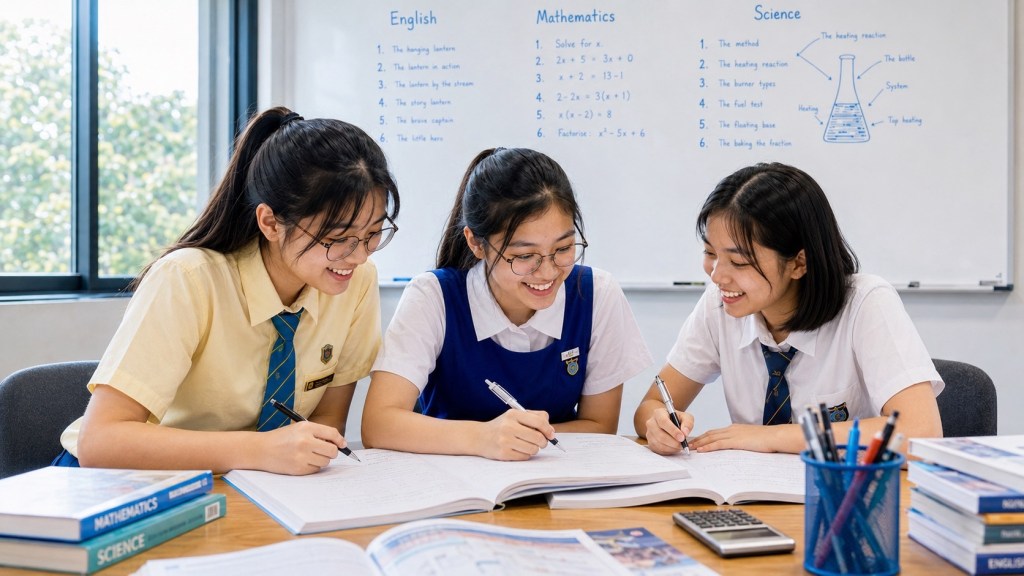
These records describe particular historical milestones and activities. Check official school channels for current arrangements. The featured classroom photograph illustrates eduKate’s learning theme and does not depict the named school.
More Sengkang school stories
Springdale learning and parent guide
North Vista Primary School History: 2008 Beginnings and Campus Milestones
Palm View Primary School History: January 2013 Start and the 2015 Opening
North Spring Primary School History: The 2024 Silver Jubilee and Family Memories
