
North Spring Primary School’s 2024 silver-jubilee story has two distinct dated occasions. The school preserved an alumni invitation for Staff Appreciation Day on 29 August, while NYAA’s 2024 annual report records a luncheon on 15 November. These should remain separate entries in a neighbourhood timeline. A page updated in 2026 can still contain an invitation written for 2024; its update date does not make the old occasion a present invitation.
The school’s history also reaches beyond its own anniversary through Cherished Memories of Yesteryears, a collection created from pupils’ conversations with grandparents. Its introduction identifies a North Spring initiative with more than one hundred stories. That gives families a concrete way to explore how listening becomes a written record. This guide follows the anniversary sources and the publication, then offers an original family-history workshop with worked examples, independent questions and explained answers. Invented times, routes, counts and remembered scenes below are explicitly learning models, not biographies of North Spring pupils or their relatives. The aim is to build a useful account that another reader can check while keeping each person’s voice and uncertainty visible.
eduKateSengkang • Neighbourhood history and learning
Choose your reading route
Read the historical record, follow the worked explanations, or begin with independent practice.
Route 1 · Chapters 1–2: Distinguish the two anniversary occasions
A silver jubilee is a relationship with time; The August invitation: a short occasion with a long memory.
Route 2 · Chapters 3–4: Explore the grandparents’ publication and listening
The November luncheon: a different occasion and a different source; A school publication that carries older family histories.
Route 3 · Chapters 5–6: Build a dated family account with clear voices
How to ask a question that leaves room for an answer; Date a memory with brackets, rather than an invented day.
Route 4 · Chapters 7–8: Test counts and compare school publications
Preserve the speaker, the listener and the language; More than one hundred stories: count the right thing.
Route 5 · Chapters 9–10: Create a checkable history and transfer the method
Read the anniversary-year newsletter alongside the book; Make a family history that remains useful to another reader.
Full chapter index · Independent practice · Sources · Continue exploring
Contents
Chapters 1–2 · Distinguish the two anniversary occasions
1. A silver jubilee is a relationship with time
2. The August invitation: a short occasion with a long memory
Chapters 3–4 · Explore the grandparents’ publication and listening
3. The November luncheon: a different occasion and a different source
Chapters 5–6 · Build a dated family account with clear voices
Chapters 7–8 · Test counts and compare school publications
Chapters 9–10 · Create a checkable history and transfer the method
9. Read the anniversary-year newsletter alongside the book
10. Make a family history that remains useful to another reader
CHAPTER 1 OF 10 • Distinguish the two anniversary occasions
1. A silver jubilee is a relationship with time
A twenty-fifth anniversary links a present occasion with an earlier institutional beginning. At year level, 2024 minus 25 gives 1999. That is a useful chronological inference from the anniversary description, not evidence of an exact founding day. The sources examined here foreground the 2024 celebration and the making of family memories. An exact operational start, a formal opening ceremony and the age of a particular school building would each need the appropriate record. There is no benefit in merging those questions merely because they all concern beginnings.
Anniversaries also connect people who experienced a school at different times. A former pupil may recognise a teacher or remember a classroom; a current child may know the institution through different routines. They need not have experienced identical surroundings to take part in the same school story. This is an interpretive way to understand an alumni invitation, rather than a claim that every invited person returned or felt the same emotion. The invitation establishes an intended relationship between past pupils and the institution. Attendance and individual responses remain different questions.
To see how anniversary counting works, imagine a club formed on 20 November 1999. Its twenty-fifth anniversary falls on 20 November 2024. On 19 November, it has not yet completed that exact interval, although subtracting year numbers still gives 25. This is an invented example, not North Spring’s founding date. It explains why a year-level anniversary can be reported accurately without attaching a made-up day to the institution’s beginning. Precision means answering the question at the level supported by the evidence, not adding detail for its own sake.
Try this independent check: a child writes every year from 1999 through 2024 and counts 26 labels. Does that disprove a twenty-five-year interval? No. The labels identify endpoints as well as intervening years; the spaces between the year markers number 25. Draw a line with three markers labelled 0, 1 and 2 to test the same idea on a smaller scale. There are three labels but two intervals. This simple distinction helps families make a school timeline that represents elapsed time rather than accidentally adding an extra year.
CHAPTER 2 OF 10 • Distinguish the two anniversary occasions
2. The August invitation: a short occasion with a long memory
The school’s announcements page gives the alumni return invitation a specific date, Thursday 29 August 2024, and a time of 10.30 to 11.15 am. It refers to meeting teachers again and an anniversary photo booth. This is an institutional invitation addressed to former pupils during the anniversary year. It establishes what the school invited them to do. Without a later attendance account, it does not establish how many came, how long each person stayed or the conversations that took place.
The stated interval is forty-five minutes. There are thirty minutes from 10.30 to 11.00, then another fifteen to 11.15. A numerical question about that published interval is different from a question about the day’s actual running order. The invitation does not allocate minutes to every activity. If an imagined visitor spends ten minutes arriving, twenty minutes talking and fifteen minutes at a display, the total is also forty-five minutes, but that is our invented allocation. It must not be presented as the school’s programme simply because its total matches the invitation.
Change the invented allocation so that conversation takes twenty-eight minutes while the other two parts stay the same. The total becomes 10 + 28 + 15 = 53 minutes, exceeding the forty-five-minute window by eight. To fit the original window, something must change: shorten a component, overlap activities where appropriate or choose fewer activities. The calculation exposes a planning constraint without telling us how the actual event was managed. This is a useful distinction in local history: an arithmetic model may clarify what a timetable allows, while remaining separate from evidence of what participants really did.
A photo booth offers another way to think about school memory. A photograph can preserve who stood together at a particular moment, but the picture alone may not explain why they returned or what they remember. A caption, date and context make it more useful to a future reader. For a family album exercise, label an existing photograph with what is known and leave an uncertain name or year unresolved. A careful incomplete caption can be more historically useful than a confident guess that later becomes difficult to disentangle from fact.
| Record | What it directly supports | What it does not establish |
|---|---|---|
| School alumni invitation: 29 August 2024 | A dated Staff Appreciation Day return invitation | No verified attendance total or current return invitation. |
| NYAA Annual Report 2024: 15 November | A reported silver-jubilee luncheon | Separate occasion from the August invitation. |
| Cherished Memories introduction | School-initiated conversations with grandparents; over 100 stories | Not an exact100, sample survey or founding-date record. |
| School’s 2024 Semester2 Spring Roll | An institutional anniversary-year newsletter | School publication, not a complete account of all families. |
| Announcements page updated 2026 | A page retaining entries from several dates | Update date does not redetermine old event dates. |
CHAPTER 3 OF 10 • Explore the grandparents’ publication and listening
3. The November luncheon: a different occasion and a different source
The preserved NYAA Annual Report 2024 records a North Spring twenty-fifth-anniversary luncheon on 15 November 2024, identifying NYAA Council chairman Dr Eugene Seah as guest of honour. It also states that the executive director sent a prerecorded congratulatory message while overseas. These details establish a reported occasion and different ways of contributing to it. They do not mean that every named organisational representative was physically present. Presence, a recorded message and a role in supporting an institution should remain distinct descriptions.
The annual report is available on an external publication platform. Its North Spring entry appears at viewer page 46, with printed page number 44. Those two numbers are not necessarily an error: digital viewers can count covers or preliminary pages that the printed sequence treats differently. When citing it, give the report title and the North Spring entry as well as the page reference. A reader should be able to locate the evidence even if the viewing software displays another counter or opens at a different page.
The relationship between August and November is chronological, not proof of one continuous event. August’s source is an invitation; November’s is a retrospective report. The first primarily establishes an announced opportunity, while the second reports a luncheon. Reading them together gives the anniversary year more shape, but does not permit us to transfer details from one to the other. For example, the photo booth belongs to the August invitation, while the guest-of-honour detail belongs to the luncheon account. Their shared anniversary context does not make those details interchangeable.
For practice, consider an invented event with twenty people physically present and three people sending recorded messages. If a report says twenty-three people contributed, that can be consistent with twenty attending in person. If it says twenty-three attended the room, further evidence would be needed. Now imagine two of the recorded contributors also attended: there would be only twenty-one distinct contributors, not twenty-three, because two people were counted twice. This changed condition shows why useful event records specify what is being counted. It also helps readers interpret institutional reports without treating every contribution as an attendance statistic.
CHAPTER 4 OF 10 • Explore the grandparents’ publication and listening
4. A school publication that carries older family histories
Cherished Memories of Yesteryears has a different purpose from an anniversary invitation or luncheon report. Its introduction describes a school-initiated project in which students documented grandparents’ narratives through conversation. It says the collection contains over one hundred stories and credits publication and support to the National Youth Achievement Award Council and the Stephen Riady Foundation. NYAA’s official publications page links to the book on FlipBuilder. This gives a clear institutional route to the externally hosted publication, rather than leaving readers with an unexplained file on an unrelated platform.
The mechanism is intergenerational: one person remembers, another listens and writes, and a publication makes selected accounts available to further readers. Several kinds of work sit between a spoken memory and a printed page. Someone chooses a question, decides which details to include, arranges the sequence and gives the account a title. Those choices need not make the account untrustworthy. They do mean that a written story is a shaped record of a conversation, rather than a transparent recording of every word ever spoken about the experience.
The book’s subject can also reach further back than the school’s own life. A grandparent’s childhood belongs to a different timeline from a pupil’s present schooling. An institution can therefore help preserve memories older than itself without claiming that it existed during all the events recalled. This is a valuable neighbourhood connection: school activity can carry family experience into a wider shared record. It does not require every family to have lived in Sengkang for several generations, and this article does not infer where individual contributors previously lived.
An original notebook exercise makes the layers visible. Create three columns headed remembered event, conversation and written account. Use a family story for which the speaker is comfortable sharing approximate dates, or use a completely invented example. The event may have occurred decades before the conversation, while the written account may be prepared later still. Each layer has a different date and authorial role. If the date of the event is uncertain, record that uncertainty in the first column rather than borrowing the precise date of the conversation to make the whole story look exact.
CHAPTER 5 OF 10 • Build a dated family account with clear voices
5. How to ask a question that leaves room for an answer
A useful family-history conversation starts with a manageable subject. “Tell me everything about your childhood” may be too broad for a short session. “What do you remember about travelling to school?” gives the speaker a concrete routine to explore. It can lead to questions about companions, landmarks, weather and changes over time. These are suggested questions for an original family activity, not a reconstruction of the interviewing instructions used in North Spring’s publication. The historical source confirms the conversational project; the workshop here explains one way a family might undertake similar learning.
Compare two invented questions: “Was your school journey miserable because it was so long?” and “What was the journey like?” The first supplies an emotion and a cause before the speaker has answered. The second leaves room for a pleasant, difficult, mixed or uncertain memory. A follow-up can then ask for a specific example. This does not mean every open question produces a perfectly accurate account. It means the listener avoids building the desired answer into the question, which makes it easier to preserve a voice that differs from their expectations.
A practical sequence is to ask for a description, then a remembered instance, then a date clue. For example: “What did you usually carry?”, “Can you remember a particular day?” and “Was that before or after your family moved?” Let the speaker say that a detail is unclear. A remembered object may be vivid while its year is not. Pressing for a precise date can produce an answer that sounds more certain than the memory warrants. The aim is to identify what the person knows, not to fill every box at the same level of precision.
For an independent transfer check, suppose a speaker says, “I remember enjoying the walk, but not how long it took.” Which follow-up fits the evidence: “So it must have been short,” or “What made it enjoyable?” The second develops the stated memory. Enjoyment alone does not establish distance or duration. If the family later wants to investigate a route, a map or address record can help answer a different question. Keeping those enquiries distinct lets the speaker’s experience remain meaningful without converting a feeling into a measurement it cannot support.
CHAPTER 6 OF 10 • Build a dated family account with clear voices
6. Date a memory with brackets, rather than an invented day
Historical precision can be expressed as a range. In an explicitly invented example, a speaker remembers an activity occurring after a family move in 1982 and before beginning a new school in 1985. If the sequence is reliable, the activity belongs somewhere between those markers. It does not follow that it happened in 1983 simply because that year sits near the middle. A midpoint is a mathematical convenience, not a recovered memory. Write the range and identify the clues that produce it.
Now add an imagined photograph with a reliable processing date in September 1984. If it depicts the particular activity, the image must have been taken no later than processing, but it could have been taken earlier. Processing and exposure are different events. The photograph can narrow one boundary without fixing an exact day. This example is deliberately fictional. It shows how a material record can contribute to a family account while retaining its own limits, and why a date printed on an object needs interpretation before being copied into a timeline.
Try a numerical version. Suppose a remembered event is known to fall from 1982 through 1984 inclusive. There are three possible calendar-year labels, but that does not establish equal probability for each. If a further clue excludes 1982, two possibilities remain. The sensible conclusion is a narrowed range, not a claim of fifty per cent certainty for each remaining year. Assigning probabilities would require a model or evidence about their relative likelihoods. A useful timeline can show uncertainty with a shaded band or the words “between” and “before”, without pretending to know more.
For independent practice, imagine two accounts place the same activity in different periods: one says before a move, while another says after it. Averaging the two suggested years does not resolve the disagreement. Check whether they describe the same occasion, whether an activity happened more than once and what clues each speaker used. It may remain unresolved. The explained answer is methodological: a contradiction calls for a question about sources, not automatic arithmetic. The arithmetic of time helps us identify a problem, but it cannot choose which recollection is correct without further evidence.
CHAPTER 7 OF 10 • Test counts and compare school publications
7. Preserve the speaker, the listener and the language
Writing a family account involves at least two voices: the person who remembers and the person who arranges the story. If an account is translated, another layer of choices enters. A remembered expression may not have an exact equivalent in the language used for the written piece. One useful approach is to retain a short original term where appropriate and explain what the speaker means by it. This is a proposed writing method, not a claim about the languages or editing processes of every contributor to the North Spring book.
Direct quotation should be distinguished from paraphrase. A sentence in quotation marks claims to preserve the speaker’s actual wording. A paraphrase conveys meaning in the writer’s own words. If notes contain only a rough summary, turning them into polished direct speech invents a level of verbal accuracy the record does not have. A child can instead write, “My relative explained that…” and then give the summary. That sentence is less theatrical but more transparent about how the information reached the page.
Consider a fictional account in which the notes say only, “journey felt long; enjoyed company.” A draft that makes the speaker say, “Every morning I trudged exactly three kilometres” adds a distance, a repeated frequency and a particular mood. None follows from the notes. A faithful summary could say that the speaker remembered a long-feeling journey and valued the people who travelled with them. If the child wants a distance, it becomes a separate research question. The distinction makes the story more useful, because later readers can see what was remembered and what still needs checking.
After drafting, let a willing speaker review the account at a comfortable pace. They may correct a name, qualify a date or prefer to remove a detail. Record changes in the working notes so that the final wording is understandable. This is part of producing a reliable collaborative account, rather than a guarantee that every memory becomes exact after review. A useful transfer question is whether the writer can explain the origin of each sentence: remembered statement, document, translation, interpretation or connecting prose. If those origins blur, revise before treating the piece as a finished historical record.
CHAPTER 8 OF 10 • Test counts and compare school publications
8. More than one hundred stories: count the right thing
The publication introduction’s phrase “over 100 stories” is deliberately broader than an exact count. If stories are counted as whole items, it implies at least 101. It does not identify an upper limit, and it does not establish exactly one hundred contributing grandparents, pupils or households. One person can tell more than one story, and a single story can involve several people. The unit matters. A publication’s story count cannot be silently converted into a population count merely because both involve whole numbers.
Use an invented collection of 108 stories to practise. Suppose 36 concern journeys, 45 concern work and 27 concern games, with each story placed in exactly one category. The total is 36 + 45 + 27 = 108. The journey share is 36/108, or one third, approximately 33.3%. This is an invented coding scheme, not an analysis of the actual book. Its purpose is to show how a percentage depends on a defined collection and a rule for classifying its items.
Now allow a story to receive several theme labels. Suppose 40 mention journeys and 50 mention work, with 20 mentioning both. The number mentioning at least one of those themes is 40 + 50 − 20 = 70. The overlap is subtracted because it was included in each first count. Adding theme totals without checking the coding rule could misrepresent the size of the collection. Conversely, insisting that every story fit only one category may hide a relationship the writer wants to study. The right counting method follows the question, and the rule should be stated.
For independent practice, imagine 108 stories written by 90 pupils, with eighteen pupils contributing two stories each and the remaining pupils contributing one. Does the count fit? Yes: eighteen times two gives 36, while 72 times one gives 72, totalling 108. Change the condition so that twenty pupils contribute two stories and everyone else one: the total becomes 40 + 70 = 110. This exercise explains why a story count alone does not determine a contributor count. It also shows why a small family collection should not be treated as a representative survey of a whole neighbourhood without an appropriate sampling basis.
CHAPTER 9 OF 10 • Create a checkable history and transfer the method
9. Read the anniversary-year newsletter alongside the book
The school’s official Spring Roll index links a Semester Two 2024 publication. Its opening principal’s message places the issue within the twenty-fifth-anniversary year and reflects on the school community’s journey. This is another institutional record of the anniversary context, with a different format from an invitation or an external organisation’s annual report. The issue can be followed through the school’s own index, which helps establish where the file comes from. That provenance is useful even when the PDF is served from a government content-hosting domain rather than the school’s page address.
A newsletter and a grandparents’ collection organise time differently. A semester publication tends to gather selected recent school activity, while a collection of family recollections can move across decades and places. Neither format is inherently a complete record of everyone’s experience. Their editorial purposes make them useful for different questions. A researcher seeking evidence of how the school presented its anniversary should begin with the dated institutional material. A researcher studying how children recorded older relatives’ experiences should begin with the book’s introduction and the particular accounts relevant to that question.
Make a comparison sheet with a row for each source. Ask who produced it, what it was trying to communicate and which period it describes. Then add one question it cannot answer by itself. For the August invitation, that might be actual attendance. For the luncheon report, it might be a complete list of activities across the anniversary year. For the book, it might be an exact founding day. These limits do not make the sources unhelpful; they stop a useful record from being stretched beyond the question it can support.
For a changed-condition check, imagine the school moves the PDF to a new web address. Has the historical anniversary year changed? No. The file’s route has changed, while its contents and publication context may remain the same. Verify that the new file is the same edition before replacing a link in your notes. A descriptive title, year and source institution help identify it. This is why a family history notebook should preserve more than a bare URL: a link is a route to evidence, while the document’s identity is what lets another reader recognise the evidence when routes change.
CHAPTER 10 OF 10 • Create a checkable history and transfer the method
10. Make a family history that remains useful to another reader
A manageable finished project can contain one short account, a timeline and a source note. The account explains the experience in connected prose. The timeline shows the sequence at the level of precision available. The note identifies the conversation and any documents used, with uncertainty retained. This is an original activity inspired by the school’s documented intergenerational project, not a substitute edition of its book. A family can keep the result privately or share a version agreed with the people whose experiences it contains.
Before finishing, test every numerical statement. Does a duration come from a clock, a remembered estimate or a calculation? Does a count refer to stories, people or visits? Does a date identify an event, an invitation or a page update? An invented route example illustrates the issue: a remembered fifteen-minute walk at an assumed speed of four kilometres per hour would suggest one kilometre, because fifteen minutes is one quarter of an hour. But the speed is an assumption. The calculation does not prove the actual route length or that the walk contained no pauses.
Change that assumption to three kilometres per hour and the same fifteen minutes suggests 0.75 kilometres. The altered result shows how much the answer depends on information we supplied rather than recovered. The useful family-history sentence is therefore that the speaker remembered the journey taking roughly fifteen minutes, if that is what was actually said. A calculated distance can be included separately as an illustrative estimate with its assumptions. Keeping those roles distinct prevents a mathematical exercise from hardening into a false biographical fact.
North Spring’s anniversary records and grandparents’ publication offer complementary ways to remember a community: an institution marks its own passage of time, and children help carry older experiences into writing. A good final account should let a reader follow both the story and the evidence. Try explaining one entry to another family member without showing the original draft. If they can identify what happened, when it is thought to have happened and how the information is known, the account has a useful structure. Where they cannot, clarify the sentence or preserve the question for further enquiry rather than adding an unsupported detail.
Frequently asked questions
Were the August and November 2024 occasions the same celebration?
They are separate dated records: a school alumni invitation for Staff Appreciation Day and a reported anniversary luncheon. Their shared silver-jubilee context does not make every detail interchangeable. Keep the invitation’s date and purpose attached to it, and use the annual report for the occasion it actually describes.
Does a twenty-fifth anniversary give an exact founding day?
It supports a year-level calculation, but an exact founding day needs an appropriate institutional record. Establishment, first operations and a formal opening can also be different events. A careful timeline labels the kind of beginning it records and uses only the date precision available, rather than filling in an attractive-looking day.
What is Cherished Memories of Yesteryears?
It is the school-initiated collection described in its introduction as arising from students’ conversations with grandparents. NYAA’s official publications page links to the externally hosted book. This article uses the introduction to explain the project; the invented family scenes and numerical exercises are not accounts of individual contributors’ lives.
Does over one hundred stories mean one hundred families?
No. Stories, contributors and households are different units. The phrase gives a lower boundary for whole stories, without an exact total or a count of families. A single person may contribute several stories. Any analysis needs a stated counting rule before percentages or comparisons can be interpreted usefully.
What should a child do when a relative cannot remember a year?
Keep the uncertainty visible. Ask about events before and after the memory, then use a range if those clues support one. Do not choose a midpoint as if it were a recovered date. A relative’s experience can remain valuable even when its exact year is unresolved, and a later document may help narrow the range.
Sources and reading notes
Cherished Memories of Yesteryears: introduction — Opened actual publication introduction on FlipBuilder, reached through NYAA’s official publications link. It identifies a North Spring school-initiated project and over 100 stories. Individual biographies are not reproduced.
Cherished Memories of Yesteryears: title page — Opened publication title page. A publication hosted on an external platform and linked by the institutional publisher; no inferred publication date from an undated announcement.
North Spring Primary: Spring Roll newsletter index — Opened official index and followed its 2024 Semester 2 PDF link. The index supplies provenance, not proof of every activity in unopened editions.
Spring Roll,2024 Semester 2: school-linked PDF — Opened actual institutional publication and visually read pages 1–2 and 19–21. First-page principal’s message places the issue in the 25th-anniversary year. No inspection of other pages or complete visual review is claimed.
NYAA: current annual-report access route — Opened institutional page; current link leads to 2025 report. The 2024 luncheon evidence is from the separately opened preserved 2024 edition on FlipBuilder, page 46 in viewer numbering, printed 44. It is not represented as the current year’s report.
North Spring Primary: dated anniversary announcement and book link
NYAA Annual Report 2024: anniversary luncheon
NYAA: publications and grandparents’ stories
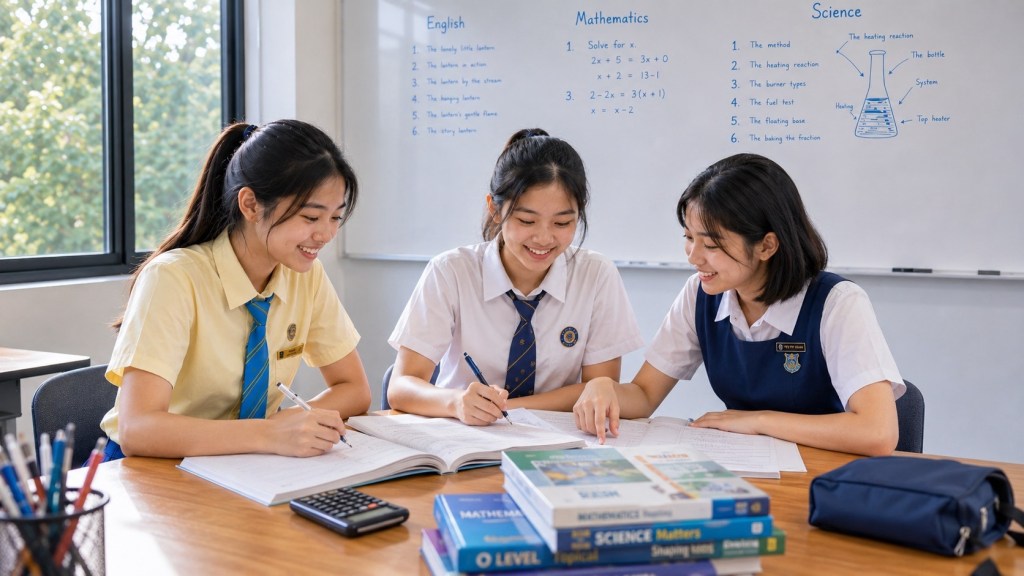
These records describe particular historical milestones and activities. Check official school channels for current arrangements. The featured classroom photograph illustrates eduKate’s learning theme and does not depict the named school.
More Sengkang school stories
North Spring learning and parent guide
North Vista Primary School History: 2008 Beginnings and Campus Milestones
Palm View Primary School History: January 2013 Start and the 2015 Opening
Springdale Primary School History: 2013 Beginnings and First-Year Stories
