
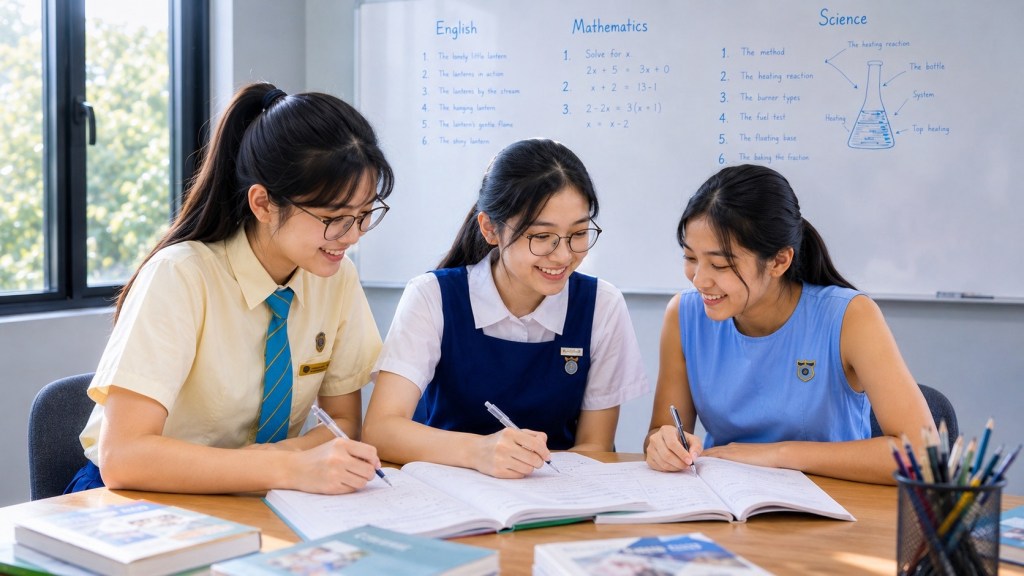
Direct Answer: Independent learning works when a learner can increasingly carry the decisions that make learning move: understanding the task, choosing a strategy, beginning, monitoring, checking, repairing, deciding when to seek help and knowing when the work is complete. Independence does not mean never needing a teacher. It means the learner is not helpless without one.
The simplest definition of independent learning
Independent learning is the ability to manage increasingly important parts of learning without someone else carrying every next decision.
In one line: A learner becomes more independent when useful control can move from the teacher to the learner without learning collapsing.
The core mechanism
GOAL → PLAN → FIRST ACTION → ATTEMPT → MONITOR → CHECK → FEEDBACK → ADJUST → HELP IF NEEDED → CONTINUE → FINISH → REFLECT → CARRY FORWARD
At the beginning, many of these operations may be supplied externally. A teacher defines the task, chooses the resource, models the method, notices the error, tells the student what to correct and decides when to stop. The learner can appear productive while carrying only a small fraction of the learning control.
Independent learning develops when those operations are taught, made visible, practised and progressively handed over. The Education Endowment Foundation’s evidence work on metacognition and self-regulation describes planning, monitoring and evaluating learning as explicit processes that can be taught and scaffolded. Its updated guidance also emphasises helping pupils use such strategies with increasing independence rather than expecting self-regulation to appear by itself.
The eight parts of independent learning
1. The learner can name the real task
“Study Science” is not yet an operable task. Neither is “revise Chapter 7.” Independent movement begins when the learner can convert a broad instruction into a bounded study object: what exactly am I trying to learn, practise, retrieve, repair or prepare?
The Student/Studying Interface Study Object Interface exists because organisation is impossible when the object itself remains vague.
2. The learner can start without rebuilding the whole plan
Some students can describe what they should do yet remain unable to begin. Independence therefore includes converting intention into one visible first action.
First-Action Interface makes this concrete: open the right page, attempt the first retrieval, solve the first diagnostic problem, read the first paragraph with a purpose. A plan needs a starting line.
3. The learner can choose or inspect a strategy
Independent learning is not repeating the same preferred method for every task. A learner must know that different jobs require different moves: learning a new concept, practising a method, retrieving knowledge, revising before an examination and repairing an error are not the same session.
The learner gradually needs a repertoire—and the judgement to choose among it.
4. The learner can monitor while working
A student can work for forty minutes without noticing that the strategy stopped working in minute five. Metacognitive monitoring asks questions such as: Do I understand what I am doing? Am I retrieving or merely rereading? Did the last two examples reveal the same error? Is this resource helping the current task?
Metacognitive Monitoring State treats monitoring as an operation, not a personality trait.
5. The learner can use feedback without surrendering control
Independent learners still need information from teachers, tutors, answer keys, peers and sometimes technology. The distinction is what happens after the information arrives.
How Feedback Works in Learning explains the handoff: feedback should help the learner repair the performance and eventually become better at detecting similar discrepancies alone.
6. The learner can seek help intelligently
Independence does not mean refusing help. It means knowing when persistence is still productive, when inspection is needed and when outside expertise will save time or prevent a misconception from hardening.
The Help-Seeking Interface therefore treats asking for help as a learning decision rather than a failure. The goal is not maximum struggle. It is appropriate ownership.
7. The learner can define “done”
Time spent and pages completed are weak stopping rules when the real goal is learning. Independent learners increasingly need finish conditions connected to the job: retrieve the key ideas without notes, solve a mixed set accurately, explain the mechanism, repair the recurring error, complete one timed section and check it.
Finish-Condition Interface makes the stopping rule explicit so study does not become endless activity.
8. The learner can carry learning into the next session
Independent study should leave a useful state behind. What was completed? What remains weak? What question is unresolved? What should happen first next time? Otherwise every session begins by reconstructing yesterday from memory.
The Study History Interface preserves that minimum continuity.
Independence is not the removal of teaching
There is a common mistake hidden inside the phrase “independent learner”: if independence is good, perhaps adults should simply stop helping. That is not the model.
Support can be necessary while capability is being built. A worked example can reveal a route. A prompt can direct attention. A checklist can temporarily externalise a process the learner cannot yet hold. A tutor can see an error the learner cannot see from inside the performance.
The educational question is whether those supports are temporary structures that build capability or permanent structures that quietly carry capability.
This is why Scaffold Fading State and the Cape Canaveral article Umbilicals | The Supports That Must Eventually Disconnect belong to the same larger logic.
What independent learning is not
- Independent learning is not studying alone. A student can be physically alone while depending completely on answers, videos or AI for every decision.
- Independent learning is not refusing help. Mature independence includes recognising when expertise is needed.
- Independent learning is not “motivation” in disguise. A willing learner can still lack planning, monitoring, strategy-selection or error-repair skills.
- Independent learning is not perfect self-knowledge. Learners still need external calibration because everyone has blind spots.
- Independent learning is not one permanent state. A student can be independent in familiar algebra and highly dependent when entering a new area of calculus.
When independence only looks real
| What we see | What may be hidden | Useful test |
|---|---|---|
| The student works quietly for a long time | Activity may be continuing without monitoring or useful learning | Ask what the current goal is and what evidence will show progress |
| The student gets correct answers at home | Answer keys, search or AI may be carrying method selection or explanation | Give a fresh unsupported attempt |
| The student never asks for help | They may be persevering productively—or remaining stuck for too long | Ask how they decide when to escalate |
| The student can follow a revision timetable | The timetable may organise time without regulating learning quality | Ask how they change the plan when evidence shows a different weakness |
| The student performs well only with one tutor | Environmental cues or teacher prompting may be carrying hidden operations | Reduce one form of support and observe what survives |
The smallest useful independence test
Do not remove all support at once. Remove one support and watch what happens.
Stop choosing the first question. Stop reminding the student to check. Hide the worked example. Ask the learner to decide whether the task is complete. Let them identify the error before you name it. Ask them what help they need rather than immediately providing it.
The point where performance breaks tells us which piece of control has not yet transferred.
How independence develops across subjects
English
Independent English learners can read unfamiliar texts with a purpose, notice when comprehension breaks, infer from evidence, make vocabulary decisions, plan writing, revise meaning and seek targeted feedback rather than waiting for every sentence to be corrected.
Mathematics
Independent Mathematics learners can represent the problem, choose a plausible route, monitor whether it is working, detect implausible results, verify important steps and decide when a conceptual block genuinely requires help.
Science
Independent Science learners can move beyond memorised facts: inspect evidence, identify variables, distinguish observation from inference, build an explanation and challenge their own claim when the evidence does not support it.
Independent learning and examinations
An examination is a severe independence test because many ordinary supports disappear simultaneously. The teacher cannot clarify each question. The answer key is closed. The learner must allocate time, choose methods, recover after a difficult item, decide what to check and continue despite uncertainty.
This does not mean examinations measure “independence” perfectly. They measure performance in a particular constrained environment. But they make one educational truth visible: capability that depends completely on external regulation will struggle when external regulation is removed.
How do we know independence is real?
- The learner can define a useful task from a broad instruction.
- The learner can begin without repeated adult prompting.
- The learner can choose among at least some learning strategies for a reason.
- The learner can notice when a strategy or answer is failing.
- The learner can use feedback to change a later attempt.
- The learner can ask for specific help rather than outsourcing the whole task.
- The learner can stop based on evidence rather than only time or page count.
- The learner can perform important parts of the capability after support is reduced.
The strongest receipt is not “the student did it alone once.” It is the student can repeatedly carry more of the control, across time and changed conditions, while still using external expertise intelligently when it is genuinely needed.
For parents: should I stop reminding my child?
Not necessarily all at once. The better question is which reminder is doing useful temporary work and which reminder has become a permanent external control.
Choose one bounded responsibility to transfer. For example, instead of reminding the child to study every evening, ask them to define tomorrow’s first action before they stop today. Instead of checking every answer, ask them to perform their own verification before you look.
Independence grows through calibrated handover, not abandonment.
For students: how can I become more independent?
- Before starting, write one sentence naming the real study job.
- Choose the first action instead of waiting for the whole plan to feel perfect.
- Ask yourself what evidence would prove the session worked.
- When stuck, identify whether the problem is knowledge, retrieval, method, representation or uncertainty before asking for help.
- After feedback, make a fresh attempt without copying.
- Keep a short record of what remains open for the next session.
- Periodically remove one support and see what you can now carry.
The teacher’s changing job
At first, good teaching may require a great deal of visible control. Later, good teaching can look quieter because the learner has internalised more of the process.
Bolt 32 — The Teacher’s Final Job Is to Become Less Necessary makes this explicit. The aim is not to erase teachers. It is to ensure that teaching creates capability rather than permanent dependence on teaching.
The complete independence chain
MAKE THE JOB VISIBLE → MODEL → GUIDE → PRACTISE → ASK THE LEARNER TO PLAN → LET THE LEARNER ATTEMPT → MONITOR → FEEDBACK → REPAIR → REDUCE ONE SUPPORT → TEST AGAIN → TRANSFER CONTROL → OBSERVE THE RETURN → RECALIBRATE
Frequently asked questions
What age should independent learning begin?
The underlying operations can begin very early in age-appropriate form. A young child can choose a first step, check a simple criterion or explain what help is needed. The complexity and amount of control transferred should grow with capability rather than waiting for one age when independence suddenly begins.
Does independent learning mean no tuition?
No. Tuition can support independent learning if it builds capability, judgement and self-regulation and progressively hands appropriate control back to the learner. Tuition that permanently carries the learner’s planning, checking and decision-making can produce the opposite result.
Can a strong student still be dependent?
Yes. High performance and independence are related but not identical. A student can achieve strong results inside a highly supported routine and struggle when cues, reminders or teacher regulation disappear.
How can AI affect independent learning?
AI can scaffold explanation, search, feedback and planning, but it can also silently carry those operations. The relevant question is which cognitive work belongs to the learner and whether capability survives when the tool is reduced or removed.
Read next
- The Goal of Tuition | Building a Learner Who Needs Less Help Over Time
- Bolt 24 — Building an Internal Coach
- Bolt 28 — From External Marks to Self-Regulated Learning
- Release | When the Tutorial Lets the Learner Carry the Next Move
- How Practice Works in Learning
- How Learning Transfer Works
- How Learning Works | The eduKate Sengkang Mechanism Map
- eduKate Sengkang Education Runtime | How the Learning System Works
Research bridges
For an external evidence overview, see the Education Endowment Foundation’s Metacognition and Self-Regulation Toolkit and its updated guidance report on teaching planning, monitoring and evaluation strategies with increasing learner independence.
The Destination Is More Learner Control
Independent learning is what becomes possible when more of the next useful move can be carried by the learner. I Am Brave is the wider doorway back into that cycle whenever uncertainty, failure, help, transfer or a new stage changes the problem.
Independence inside the tutoring relationship
The Tutor System shows how parents, students and tutors use this independence principle across the full tutoring lifecycle: choosing help, calibrating support, reviewing fit, fading prompts and deciding when routine tuition can reduce or end.
Independent learning inside tuition
Independence does not require avoiding tutors. It requires using help so that more of the learning cycle returns to the learner. The student-facing application now lives at How to Work With a Tutor, which connects this independence mechanism to lessons, feedback, practice, examinations and support fading.
Independence needs evidence, not just less help
Independent learning becomes a defensible claim only when the learner can carry the relevant work under appropriate conditions. Use A Capability Profile Without Labelling the Child to record what the learner can do, what support is still present and what remains uncertain. Then use How We Know Learning Has Really Held and The Release when the evidence is strong enough to reduce routine intervention.
