
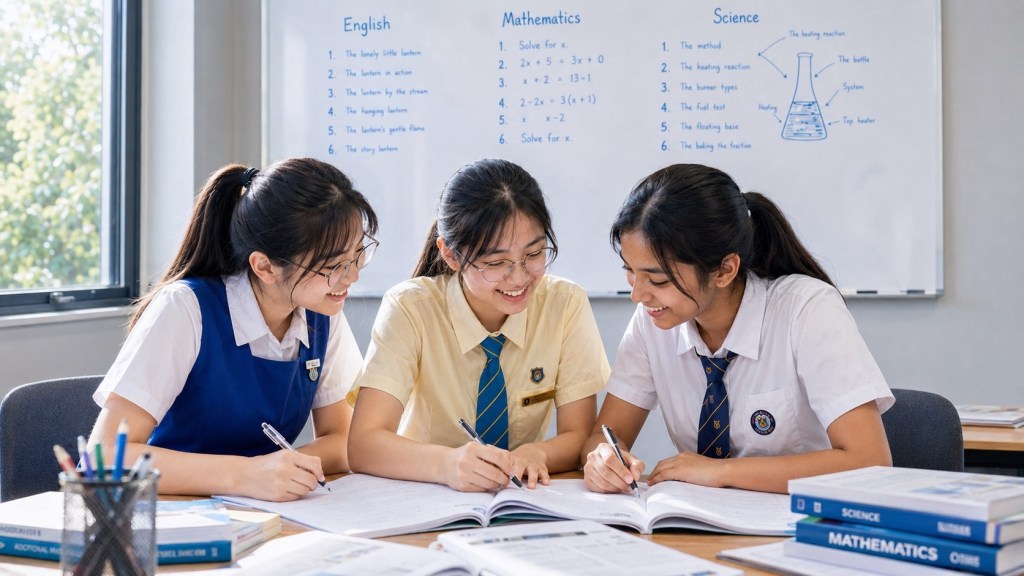
Science project ideas for students are most useful when the project is a real investigation rather than a decorative model with a predetermined answer. A strong school Science project starts with a question that can be tested safely, identifies something measurable, controls important competing factors, records evidence and reaches a conclusion that stays within the data. The best project is not necessarily the most spectacular one. It is the one the student genuinely understands and can defend.
This Advanced Science Tutorials guide is written for parents and students in Sengkang, Punggol and across Singapore who search for science project ideas, science fair projects, easy science experiments, investigatory projects, science projects for Primary students, middle school science projects and STEM project ideas. It provides a safety-first bank of investigation directions across Biology, Chemistry, Physics, Earth Science and Environmental Science, together with the method needed to turn a topic into real evidence.
The project ideas below are starting points, not instructions to bypass school rules. If the student’s school has a project rubric, approved-material list, ethics requirement or teacher-supervision rule, those requirements control the project. Avoid unknown chemicals, household cleaners, flames, high heat, pressure, opened batteries, mains electricity, biological cultures, sharp tools without supervision, human medical testing, or experiments involving ingestion. The site’s Scientific Method for Students owner provides the full experimental-design framework.
What makes a strong Science project idea?
- The question is specific enough to test.
- The outcome can be measured or observed consistently.
- The materials and procedure are safe and age-appropriate.
- The learner can explain the Science behind the prediction.
- Important competing factors can be controlled or acknowledged.
- The project can be repeated within the available time.
- The student can collect enough data to make a meaningful comparison.
- The conclusion can be based on evidence rather than presentation quality.
- The project has room for an unexpected result.
- The learner—not the adult—can explain every major decision.
How to turn a topic into a project
- Choose a broad area that genuinely interests the student.
- List three observable or measurable questions inside that area.
- Choose one variable or comparison that is safe to change.
- Define exactly what will be measured.
- Write a prediction with a scientific reason.
- Plan a method and safety review.
- Design the data table before starting.
- Run a small pilot if appropriate.
- Collect evidence consistently.
- Analyse, conclude, identify limitations and propose a next test.
Projects versus demonstrations
A demonstration shows a known effect: a magnet moves an object, a circuit lights a bulb or a model displays a process. Demonstrations can be excellent teaching tools, but they are not automatically investigations. A project becomes investigative when the student asks a question, varies a factor, measures an outcome and uses evidence to compare conditions.
For example, “make a paper airplane” is a build. “How does wing width affect flight distance when paper type, launch point and launch method are kept as consistent as possible?” is an investigation. The second version creates data and requires interpretation.
Safety and ethics before originality
Do not make a project more impressive by increasing risk. Science fairs and classrooms often prohibit or restrict microorganisms, vertebrate animals, human-subject research, hazardous chemicals, high voltage, weapons, combustion, pressure systems and certain biological materials. Ask the teacher before choosing a project in any restricted area.
For home projects, prefer ordinary materials, passive observation, low-voltage commercial classroom equipment used as intended, paper engineering, plant observation, public datasets and non-hazardous material comparisons. An elegant investigation with simple materials can demonstrate better Science than a dramatic setup the student does not understand.
Paper towel absorbency
Project question. How does paper type affect a defined measure of water absorption?
Safe design direction. Use equal-sized samples, a controlled water amount and a consistent contact time. Define absorption by mass gain, remaining water or another practical school-safe measure.
Science being learned. Absorbency, material structure, measurement and fair comparison.
Investigation logic. Define the measured outcome before collecting data, identify the main changed condition, list the most important competing factors, and design the table before beginning. The project should report what actually happened rather than the result the student hoped to obtain.
Evidence quality. Repeat trials where repetition is meaningful, keep raw data, show units, graph the comparison when appropriate, and identify at least one limitation that could affect interpretation. Do not invent, delete or smooth data merely to create a neat pattern.
Student ownership. The learner should be able to explain why the question is testable, why the measurement answers it, what could make the comparison unfair, and what conclusion the evidence supports. If an adult designed every decision, the project may look polished while teaching very little.
Extension. After the first result, change only one aspect of the investigation question: widen the range, improve the measurement, compare a new but safe material, or repeat on another day. The extension should answer a new question rather than simply produce more of the same data. This gives the student a genuine next-step discussion for the report and presentation.
Paper strength
Project question. How does paper type or fold pattern affect the load a paper strip can support?
Safe design direction. Use lightweight safe loads and stop before objects fall from height. Keep strip dimensions and support spacing consistent.
Science being learned. Structure, tensile behaviour, engineering design and repeated trials.
Investigation logic. Define the measured outcome before collecting data, identify the main changed condition, list the most important competing factors, and design the table before beginning. The project should report what actually happened rather than the result the student hoped to obtain.
Evidence quality. Repeat trials where repetition is meaningful, keep raw data, show units, graph the comparison when appropriate, and identify at least one limitation that could affect interpretation. Do not invent, delete or smooth data merely to create a neat pattern.
Student ownership. The learner should be able to explain why the question is testable, why the measurement answers it, what could make the comparison unfair, and what conclusion the evidence supports. If an adult designed every decision, the project may look polished while teaching very little.
Extension. After the first result, change only one aspect of the investigation question: widen the range, improve the measurement, compare a new but safe material, or repeat on another day. The extension should answer a new question rather than simply produce more of the same data. This gives the student a genuine next-step discussion for the report and presentation.
Cardboard column shape
Project question. How does column shape affect the load supported by the same amount of cardboard?
Safe design direction. Build equal-height columns from identical card area and use small safe masses.
Science being learned. Geometry, buckling, fair tests and design optimisation.
Investigation logic. Define the measured outcome before collecting data, identify the main changed condition, list the most important competing factors, and design the table before beginning. The project should report what actually happened rather than the result the student hoped to obtain.
Evidence quality. Repeat trials where repetition is meaningful, keep raw data, show units, graph the comparison when appropriate, and identify at least one limitation that could affect interpretation. Do not invent, delete or smooth data merely to create a neat pattern.
Student ownership. The learner should be able to explain why the question is testable, why the measurement answers it, what could make the comparison unfair, and what conclusion the evidence supports. If an adult designed every decision, the project may look polished while teaching very little.
Extension. After the first result, change only one aspect of the investigation question: widen the range, improve the measurement, compare a new but safe material, or repeat on another day. The extension should answer a new question rather than simply produce more of the same data. This gives the student a genuine next-step discussion for the report and presentation.
Bridge span
Project question. How does bridge span length affect the load supported by one paper-bridge design?
Safe design direction. Use small masses over a tray or low surface so failure cannot injure anyone.
Science being learned. Forces, bending, structural design and controlled variables.
Investigation logic. Define the measured outcome before collecting data, identify the main changed condition, list the most important competing factors, and design the table before beginning. The project should report what actually happened rather than the result the student hoped to obtain.
Evidence quality. Repeat trials where repetition is meaningful, keep raw data, show units, graph the comparison when appropriate, and identify at least one limitation that could affect interpretation. Do not invent, delete or smooth data merely to create a neat pattern.
Student ownership. The learner should be able to explain why the question is testable, why the measurement answers it, what could make the comparison unfair, and what conclusion the evidence supports. If an adult designed every decision, the project may look polished while teaching very little.
Extension. After the first result, change only one aspect of the investigation question: widen the range, improve the measurement, compare a new but safe material, or repeat on another day. The extension should answer a new question rather than simply produce more of the same data. This gives the student a genuine next-step discussion for the report and presentation.
Beam folding
Project question. How does folding a paper beam change its load-bearing capacity?
Safe design direction. Compare flat, V-shaped or box-folded beams made from the same paper size.
Science being learned. Structure, stiffness and evidence.
Investigation logic. Define the measured outcome before collecting data, identify the main changed condition, list the most important competing factors, and design the table before beginning. The project should report what actually happened rather than the result the student hoped to obtain.
Evidence quality. Repeat trials where repetition is meaningful, keep raw data, show units, graph the comparison when appropriate, and identify at least one limitation that could affect interpretation. Do not invent, delete or smooth data merely to create a neat pattern.
Student ownership. The learner should be able to explain why the question is testable, why the measurement answers it, what could make the comparison unfair, and what conclusion the evidence supports. If an adult designed every decision, the project may look polished while teaching very little.
Extension. After the first result, change only one aspect of the investigation question: widen the range, improve the measurement, compare a new but safe material, or repeat on another day. The extension should answer a new question rather than simply produce more of the same data. This gives the student a genuine next-step discussion for the report and presentation.
Paper airplane wing width
Project question. How does wing width affect flight distance for the same basic paper airplane design?
Safe design direction. Use the same paper, launch location and as-consistent-as-possible launch method in a clear indoor area.
Science being learned. Aerodynamics, variability, repeated trials and averages.
Investigation logic. Define the measured outcome before collecting data, identify the main changed condition, list the most important competing factors, and design the table before beginning. The project should report what actually happened rather than the result the student hoped to obtain.
Evidence quality. Repeat trials where repetition is meaningful, keep raw data, show units, graph the comparison when appropriate, and identify at least one limitation that could affect interpretation. Do not invent, delete or smooth data merely to create a neat pattern.
Student ownership. The learner should be able to explain why the question is testable, why the measurement answers it, what could make the comparison unfair, and what conclusion the evidence supports. If an adult designed every decision, the project may look polished while teaching very little.
Extension. After the first result, change only one aspect of the investigation question: widen the range, improve the measurement, compare a new but safe material, or repeat on another day. The extension should answer a new question rather than simply produce more of the same data. This gives the student a genuine next-step discussion for the report and presentation.
Paper airplane nose mass
Project question. How does a small safe paperclip mass at the nose affect flight distance or stability?
Safe design direction. Use paperclips only and keep the flight path clear of faces and breakable objects.
Science being learned. Centre of mass, stability, measurement and trade-offs.
Investigation logic. Define the measured outcome before collecting data, identify the main changed condition, list the most important competing factors, and design the table before beginning. The project should report what actually happened rather than the result the student hoped to obtain.
Evidence quality. Repeat trials where repetition is meaningful, keep raw data, show units, graph the comparison when appropriate, and identify at least one limitation that could affect interpretation. Do not invent, delete or smooth data merely to create a neat pattern.
Student ownership. The learner should be able to explain why the question is testable, why the measurement answers it, what could make the comparison unfair, and what conclusion the evidence supports. If an adult designed every decision, the project may look polished while teaching very little.
Extension. After the first result, change only one aspect of the investigation question: widen the range, improve the measurement, compare a new but safe material, or repeat on another day. The extension should answer a new question rather than simply produce more of the same data. This gives the student a genuine next-step discussion for the report and presentation.
Ramp height and rolling distance
Project question. How does ramp height affect the distance a toy car rolls on the same surface?
Safe design direction. Use a stable low ramp and clear floor. Keep the car and starting position consistent.
Science being learned. Energy, motion, friction and graphing.
Investigation logic. Define the measured outcome before collecting data, identify the main changed condition, list the most important competing factors, and design the table before beginning. The project should report what actually happened rather than the result the student hoped to obtain.
Evidence quality. Repeat trials where repetition is meaningful, keep raw data, show units, graph the comparison when appropriate, and identify at least one limitation that could affect interpretation. Do not invent, delete or smooth data merely to create a neat pattern.
Student ownership. The learner should be able to explain why the question is testable, why the measurement answers it, what could make the comparison unfair, and what conclusion the evidence supports. If an adult designed every decision, the project may look polished while teaching very little.
Extension. After the first result, change only one aspect of the investigation question: widen the range, improve the measurement, compare a new but safe material, or repeat on another day. The extension should answer a new question rather than simply produce more of the same data. This gives the student a genuine next-step discussion for the report and presentation.
Ramp surface and rolling distance
Project question. How does surface material affect a toy car’s travel distance?
Safe design direction. Use safe floor-level materials and the same ramp and car.
Science being learned. Friction, surface interaction and controlled comparison.
Investigation logic. Define the measured outcome before collecting data, identify the main changed condition, list the most important competing factors, and design the table before beginning. The project should report what actually happened rather than the result the student hoped to obtain.
Evidence quality. Repeat trials where repetition is meaningful, keep raw data, show units, graph the comparison when appropriate, and identify at least one limitation that could affect interpretation. Do not invent, delete or smooth data merely to create a neat pattern.
Student ownership. The learner should be able to explain why the question is testable, why the measurement answers it, what could make the comparison unfair, and what conclusion the evidence supports. If an adult designed every decision, the project may look polished while teaching very little.
Extension. After the first result, change only one aspect of the investigation question: widen the range, improve the measurement, compare a new but safe material, or repeat on another day. The extension should answer a new question rather than simply produce more of the same data. This gives the student a genuine next-step discussion for the report and presentation.
Pendulum length
Project question. How does pendulum length affect the time for several swings?
Safe design direction. Use a lightweight bob, secure support and adult supervision; keep the swing small and clear of people.
Science being learned. Period, repeated timing, averaging and variable control.
Investigation logic. Define the measured outcome before collecting data, identify the main changed condition, list the most important competing factors, and design the table before beginning. The project should report what actually happened rather than the result the student hoped to obtain.
Evidence quality. Repeat trials where repetition is meaningful, keep raw data, show units, graph the comparison when appropriate, and identify at least one limitation that could affect interpretation. Do not invent, delete or smooth data merely to create a neat pattern.
Student ownership. The learner should be able to explain why the question is testable, why the measurement answers it, what could make the comparison unfair, and what conclusion the evidence supports. If an adult designed every decision, the project may look polished while teaching very little.
Extension. After the first result, change only one aspect of the investigation question: widen the range, improve the measurement, compare a new but safe material, or repeat on another day. The extension should answer a new question rather than simply produce more of the same data. This gives the student a genuine next-step discussion for the report and presentation.
Pendulum mass
Project question. How does bob mass affect pendulum timing when length and release angle are similar?
Safe design direction. Use lightweight masses and a secure low-height setup.
Science being learned. Experimental design, null effects and repeated measurements.
Investigation logic. Define the measured outcome before collecting data, identify the main changed condition, list the most important competing factors, and design the table before beginning. The project should report what actually happened rather than the result the student hoped to obtain.
Evidence quality. Repeat trials where repetition is meaningful, keep raw data, show units, graph the comparison when appropriate, and identify at least one limitation that could affect interpretation. Do not invent, delete or smooth data merely to create a neat pattern.
Student ownership. The learner should be able to explain why the question is testable, why the measurement answers it, what could make the comparison unfair, and what conclusion the evidence supports. If an adult designed every decision, the project may look polished while teaching very little.
Extension. After the first result, change only one aspect of the investigation question: widen the range, improve the measurement, compare a new but safe material, or repeat on another day. The extension should answer a new question rather than simply produce more of the same data. This gives the student a genuine next-step discussion for the report and presentation.
Shadow size
Project question. How does object distance from a light source affect shadow size on a screen?
Safe design direction. Use an ordinary torch, not lasers or intense lamps. Keep object and screen conditions defined.
Science being learned. Light propagation, geometry, measurement and graphs.
Investigation logic. Define the measured outcome before collecting data, identify the main changed condition, list the most important competing factors, and design the table before beginning. The project should report what actually happened rather than the result the student hoped to obtain.
Evidence quality. Repeat trials where repetition is meaningful, keep raw data, show units, graph the comparison when appropriate, and identify at least one limitation that could affect interpretation. Do not invent, delete or smooth data merely to create a neat pattern.
Student ownership. The learner should be able to explain why the question is testable, why the measurement answers it, what could make the comparison unfair, and what conclusion the evidence supports. If an adult designed every decision, the project may look polished while teaching very little.
Extension. After the first result, change only one aspect of the investigation question: widen the range, improve the measurement, compare a new but safe material, or repeat on another day. The extension should answer a new question rather than simply produce more of the same data. This gives the student a genuine next-step discussion for the report and presentation.
Shadow sharpness
Project question. How does light-source size or distance affect shadow-edge sharpness?
Safe design direction. Use safe household light sources without staring into them.
Science being learned. Light rays, penumbra, operational definitions and qualitative-to-quantitative design.
Investigation logic. Define the measured outcome before collecting data, identify the main changed condition, list the most important competing factors, and design the table before beginning. The project should report what actually happened rather than the result the student hoped to obtain.
Evidence quality. Repeat trials where repetition is meaningful, keep raw data, show units, graph the comparison when appropriate, and identify at least one limitation that could affect interpretation. Do not invent, delete or smooth data merely to create a neat pattern.
Student ownership. The learner should be able to explain why the question is testable, why the measurement answers it, what could make the comparison unfair, and what conclusion the evidence supports. If an adult designed every decision, the project may look polished while teaching very little.
Extension. After the first result, change only one aspect of the investigation question: widen the range, improve the measurement, compare a new but safe material, or repeat on another day. The extension should answer a new question rather than simply produce more of the same data. This gives the student a genuine next-step discussion for the report and presentation.
Reflective materials
Project question. How does material surface type affect reflected light intensity measured by a safe classroom light sensor or consistent photographic method?
Safe design direction. Avoid direct sunlight focusing and lasers. Keep geometry fixed.
Science being learned. Reflection, surface properties, instrument limits and data variation.
Investigation logic. Define the measured outcome before collecting data, identify the main changed condition, list the most important competing factors, and design the table before beginning. The project should report what actually happened rather than the result the student hoped to obtain.
Evidence quality. Repeat trials where repetition is meaningful, keep raw data, show units, graph the comparison when appropriate, and identify at least one limitation that could affect interpretation. Do not invent, delete or smooth data merely to create a neat pattern.
Student ownership. The learner should be able to explain why the question is testable, why the measurement answers it, what could make the comparison unfair, and what conclusion the evidence supports. If an adult designed every decision, the project may look polished while teaching very little.
Extension. After the first result, change only one aspect of the investigation question: widen the range, improve the measurement, compare a new but safe material, or repeat on another day. The extension should answer a new question rather than simply produce more of the same data. This gives the student a genuine next-step discussion for the report and presentation.
Transparent materials
Project question. How does material type affect light transmission?
Safe design direction. Use a normal torch and safe translucent/transparent sheets. Define transmission using a classroom sensor if available.
Science being learned. Transparency, absorption, scattering and measurement.
Investigation logic. Define the measured outcome before collecting data, identify the main changed condition, list the most important competing factors, and design the table before beginning. The project should report what actually happened rather than the result the student hoped to obtain.
Evidence quality. Repeat trials where repetition is meaningful, keep raw data, show units, graph the comparison when appropriate, and identify at least one limitation that could affect interpretation. Do not invent, delete or smooth data merely to create a neat pattern.
Student ownership. The learner should be able to explain why the question is testable, why the measurement answers it, what could make the comparison unfair, and what conclusion the evidence supports. If an adult designed every decision, the project may look polished while teaching very little.
Extension. After the first result, change only one aspect of the investigation question: widen the range, improve the measurement, compare a new but safe material, or repeat on another day. The extension should answer a new question rather than simply produce more of the same data. This gives the student a genuine next-step discussion for the report and presentation.
Insulation wrapping
Project question. How does wrapping material affect cooling rate of safely warm water?
Safe design direction. Use warm—not scalding—water, stable cups and adult supervision. Measure at fixed times.
Science being learned. Thermal transfer, insulation, time series and experimental controls.
Investigation logic. Define the measured outcome before collecting data, identify the main changed condition, list the most important competing factors, and design the table before beginning. The project should report what actually happened rather than the result the student hoped to obtain.
Evidence quality. Repeat trials where repetition is meaningful, keep raw data, show units, graph the comparison when appropriate, and identify at least one limitation that could affect interpretation. Do not invent, delete or smooth data merely to create a neat pattern.
Student ownership. The learner should be able to explain why the question is testable, why the measurement answers it, what could make the comparison unfair, and what conclusion the evidence supports. If an adult designed every decision, the project may look polished while teaching very little.
Extension. After the first result, change only one aspect of the investigation question: widen the range, improve the measurement, compare a new but safe material, or repeat on another day. The extension should answer a new question rather than simply produce more of the same data. This gives the student a genuine next-step discussion for the report and presentation.
Container surface area
Project question. How does container geometry affect cooling rate when starting temperature and volume are controlled?
Safe design direction. Use safe warm water and stable containers.
Science being learned. Surface area, heat transfer and time-series graphs.
Investigation logic. Define the measured outcome before collecting data, identify the main changed condition, list the most important competing factors, and design the table before beginning. The project should report what actually happened rather than the result the student hoped to obtain.
Evidence quality. Repeat trials where repetition is meaningful, keep raw data, show units, graph the comparison when appropriate, and identify at least one limitation that could affect interpretation. Do not invent, delete or smooth data merely to create a neat pattern.
Student ownership. The learner should be able to explain why the question is testable, why the measurement answers it, what could make the comparison unfair, and what conclusion the evidence supports. If an adult designed every decision, the project may look polished while teaching very little.
Extension. After the first result, change only one aspect of the investigation question: widen the range, improve the measurement, compare a new but safe material, or repeat on another day. The extension should answer a new question rather than simply produce more of the same data. This gives the student a genuine next-step discussion for the report and presentation.
Lid versus no lid
Project question. How does a lid affect cooling or water loss from a safely warm sample?
Safe design direction. Use safe temperatures and identical containers.
Science being learned. Evaporation, convection, energy transfer and mass measurement.
Investigation logic. Define the measured outcome before collecting data, identify the main changed condition, list the most important competing factors, and design the table before beginning. The project should report what actually happened rather than the result the student hoped to obtain.
Evidence quality. Repeat trials where repetition is meaningful, keep raw data, show units, graph the comparison when appropriate, and identify at least one limitation that could affect interpretation. Do not invent, delete or smooth data merely to create a neat pattern.
Student ownership. The learner should be able to explain why the question is testable, why the measurement answers it, what could make the comparison unfair, and what conclusion the evidence supports. If an adult designed every decision, the project may look polished while teaching very little.
Extension. After the first result, change only one aspect of the investigation question: widen the range, improve the measurement, compare a new but safe material, or repeat on another day. The extension should answer a new question rather than simply produce more of the same data. This gives the student a genuine next-step discussion for the report and presentation.
Ice covering
Project question. How do different safe coverings affect ice-melting time?
Safe design direction. Use equal ice pieces as closely as practical and wipe spills immediately.
Science being learned. Heat transfer, insulation, variability and method limitations.
Investigation logic. Define the measured outcome before collecting data, identify the main changed condition, list the most important competing factors, and design the table before beginning. The project should report what actually happened rather than the result the student hoped to obtain.
Evidence quality. Repeat trials where repetition is meaningful, keep raw data, show units, graph the comparison when appropriate, and identify at least one limitation that could affect interpretation. Do not invent, delete or smooth data merely to create a neat pattern.
Student ownership. The learner should be able to explain why the question is testable, why the measurement answers it, what could make the comparison unfair, and what conclusion the evidence supports. If an adult designed every decision, the project may look polished while teaching very little.
Extension. After the first result, change only one aspect of the investigation question: widen the range, improve the measurement, compare a new but safe material, or repeat on another day. The extension should answer a new question rather than simply produce more of the same data. This gives the student a genuine next-step discussion for the report and presentation.
Salt dissolving rate
Project question. How does stirring affect the time for a fixed amount of table salt to dissolve in water?
Safe design direction. Use ordinary table salt and room-temperature water. Do not ingest experimental solutions.
Science being learned. Dissolving rate, control variables and rate versus solubility.
Investigation logic. Define the measured outcome before collecting data, identify the main changed condition, list the most important competing factors, and design the table before beginning. The project should report what actually happened rather than the result the student hoped to obtain.
Evidence quality. Repeat trials where repetition is meaningful, keep raw data, show units, graph the comparison when appropriate, and identify at least one limitation that could affect interpretation. Do not invent, delete or smooth data merely to create a neat pattern.
Student ownership. The learner should be able to explain why the question is testable, why the measurement answers it, what could make the comparison unfair, and what conclusion the evidence supports. If an adult designed every decision, the project may look polished while teaching very little.
Extension. After the first result, change only one aspect of the investigation question: widen the range, improve the measurement, compare a new but safe material, or repeat on another day. The extension should answer a new question rather than simply produce more of the same data. This gives the student a genuine next-step discussion for the report and presentation.
Sugar particle size
Project question. How does safe sugar particle size affect dissolving time under otherwise similar conditions?
Safe design direction. Use ordinary food-grade sugar but do not consume experimental material.
Science being learned. Surface area, rate, measurement and fair comparison.
Investigation logic. Define the measured outcome before collecting data, identify the main changed condition, list the most important competing factors, and design the table before beginning. The project should report what actually happened rather than the result the student hoped to obtain.
Evidence quality. Repeat trials where repetition is meaningful, keep raw data, show units, graph the comparison when appropriate, and identify at least one limitation that could affect interpretation. Do not invent, delete or smooth data merely to create a neat pattern.
Student ownership. The learner should be able to explain why the question is testable, why the measurement answers it, what could make the comparison unfair, and what conclusion the evidence supports. If an adult designed every decision, the project may look polished while teaching very little.
Extension. After the first result, change only one aspect of the investigation question: widen the range, improve the measurement, compare a new but safe material, or repeat on another day. The extension should answer a new question rather than simply produce more of the same data. This gives the student a genuine next-step discussion for the report and presentation.
Water temperature and dissolving
Project question. How does safe water temperature affect dissolving time?
Safe design direction. Use only safely warm water with adult supervision; avoid hot water and burns.
Science being learned. Temperature, particle motion, rate and thermal measurement.
Investigation logic. Define the measured outcome before collecting data, identify the main changed condition, list the most important competing factors, and design the table before beginning. The project should report what actually happened rather than the result the student hoped to obtain.
Evidence quality. Repeat trials where repetition is meaningful, keep raw data, show units, graph the comparison when appropriate, and identify at least one limitation that could affect interpretation. Do not invent, delete or smooth data merely to create a neat pattern.
Student ownership. The learner should be able to explain why the question is testable, why the measurement answers it, what could make the comparison unfair, and what conclusion the evidence supports. If an adult designed every decision, the project may look polished while teaching very little.
Extension. After the first result, change only one aspect of the investigation question: widen the range, improve the measurement, compare a new but safe material, or repeat on another day. The extension should answer a new question rather than simply produce more of the same data. This gives the student a genuine next-step discussion for the report and presentation.
Filtration material
Project question. How does filter material affect removal of visible inert particles from clean water?
Safe design direction. Use clean water plus safe inert particles such as clean sand; never drink filtered water.
Science being learned. Filtration, particle size, turbidity and method comparison.
Investigation logic. Define the measured outcome before collecting data, identify the main changed condition, list the most important competing factors, and design the table before beginning. The project should report what actually happened rather than the result the student hoped to obtain.
Evidence quality. Repeat trials where repetition is meaningful, keep raw data, show units, graph the comparison when appropriate, and identify at least one limitation that could affect interpretation. Do not invent, delete or smooth data merely to create a neat pattern.
Student ownership. The learner should be able to explain why the question is testable, why the measurement answers it, what could make the comparison unfair, and what conclusion the evidence supports. If an adult designed every decision, the project may look polished while teaching very little.
Extension. After the first result, change only one aspect of the investigation question: widen the range, improve the measurement, compare a new but safe material, or repeat on another day. The extension should answer a new question rather than simply produce more of the same data. This gives the student a genuine next-step discussion for the report and presentation.
Washable-ink chromatography
Project question. How do different washable inks separate on school-safe paper chromatography?
Safe design direction. Use water-soluble washable markers and follow teacher or kit instructions.
Science being learned. Mixtures, chromatography and pattern comparison.
Investigation logic. Define the measured outcome before collecting data, identify the main changed condition, list the most important competing factors, and design the table before beginning. The project should report what actually happened rather than the result the student hoped to obtain.
Evidence quality. Repeat trials where repetition is meaningful, keep raw data, show units, graph the comparison when appropriate, and identify at least one limitation that could affect interpretation. Do not invent, delete or smooth data merely to create a neat pattern.
Student ownership. The learner should be able to explain why the question is testable, why the measurement answers it, what could make the comparison unfair, and what conclusion the evidence supports. If an adult designed every decision, the project may look polished while teaching very little.
Extension. After the first result, change only one aspect of the investigation question: widen the range, improve the measurement, compare a new but safe material, or repeat on another day. The extension should answer a new question rather than simply produce more of the same data. This gives the student a genuine next-step discussion for the report and presentation.
Evaporation surface area
Project question. How does exposed surface area affect evaporation rate of water at room conditions?
Safe design direction. Use shallow stable containers, small water volumes and safe locations.
Science being learned. Surface processes, environmental controls and repeated mass or volume measurement.
Investigation logic. Define the measured outcome before collecting data, identify the main changed condition, list the most important competing factors, and design the table before beginning. The project should report what actually happened rather than the result the student hoped to obtain.
Evidence quality. Repeat trials where repetition is meaningful, keep raw data, show units, graph the comparison when appropriate, and identify at least one limitation that could affect interpretation. Do not invent, delete or smooth data merely to create a neat pattern.
Student ownership. The learner should be able to explain why the question is testable, why the measurement answers it, what could make the comparison unfair, and what conclusion the evidence supports. If an adult designed every decision, the project may look polished while teaching very little.
Extension. After the first result, change only one aspect of the investigation question: widen the range, improve the measurement, compare a new but safe material, or repeat on another day. The extension should answer a new question rather than simply produce more of the same data. This gives the student a genuine next-step discussion for the report and presentation.
Seed germination light condition
Project question. How does light exposure affect germination of a suitable commercial seed species?
Safe design direction. Use commercially supplied seeds, clean materials and no consumption of experimental plants.
Science being learned. Germination, variables, biological variation and sample size.
Investigation logic. Define the measured outcome before collecting data, identify the main changed condition, list the most important competing factors, and design the table before beginning. The project should report what actually happened rather than the result the student hoped to obtain.
Evidence quality. Repeat trials where repetition is meaningful, keep raw data, show units, graph the comparison when appropriate, and identify at least one limitation that could affect interpretation. Do not invent, delete or smooth data merely to create a neat pattern.
Student ownership. The learner should be able to explain why the question is testable, why the measurement answers it, what could make the comparison unfair, and what conclusion the evidence supports. If an adult designed every decision, the project may look polished while teaching very little.
Extension. After the first result, change only one aspect of the investigation question: widen the range, improve the measurement, compare a new but safe material, or repeat on another day. The extension should answer a new question rather than simply produce more of the same data. This gives the student a genuine next-step discussion for the report and presentation.
Seed germination water amount
Project question. How does water amount affect germination under otherwise similar conditions?
Safe design direction. Avoid mould by using small controlled setups and discard responsibly.
Science being learned. Resource requirements, dose-response and biological variability.
Investigation logic. Define the measured outcome before collecting data, identify the main changed condition, list the most important competing factors, and design the table before beginning. The project should report what actually happened rather than the result the student hoped to obtain.
Evidence quality. Repeat trials where repetition is meaningful, keep raw data, show units, graph the comparison when appropriate, and identify at least one limitation that could affect interpretation. Do not invent, delete or smooth data merely to create a neat pattern.
Student ownership. The learner should be able to explain why the question is testable, why the measurement answers it, what could make the comparison unfair, and what conclusion the evidence supports. If an adult designed every decision, the project may look polished while teaching very little.
Extension. After the first result, change only one aspect of the investigation question: widen the range, improve the measurement, compare a new but safe material, or repeat on another day. The extension should answer a new question rather than simply produce more of the same data. This gives the student a genuine next-step discussion for the report and presentation.
Seed size and early growth
Project question. Is seed size associated with early seedling growth in one commercial seed type?
Safe design direction. Measure without eating experimental seeds or plants.
Science being learned. Correlation, sampling and biological variation.
Investigation logic. Define the measured outcome before collecting data, identify the main changed condition, list the most important competing factors, and design the table before beginning. The project should report what actually happened rather than the result the student hoped to obtain.
Evidence quality. Repeat trials where repetition is meaningful, keep raw data, show units, graph the comparison when appropriate, and identify at least one limitation that could affect interpretation. Do not invent, delete or smooth data merely to create a neat pattern.
Student ownership. The learner should be able to explain why the question is testable, why the measurement answers it, what could make the comparison unfair, and what conclusion the evidence supports. If an adult designed every decision, the project may look polished while teaching very little.
Extension. After the first result, change only one aspect of the investigation question: widen the range, improve the measurement, compare a new but safe material, or repeat on another day. The extension should answer a new question rather than simply produce more of the same data. This gives the student a genuine next-step discussion for the report and presentation.
Plant direction response
Project question. How does a plant shoot change orientation relative to a safe light source over time?
Safe design direction. Use ordinary daylight or a low-risk lamp setup, not intense heat-producing lights.
Science being learned. Plant responses, time series and observational evidence.
Investigation logic. Define the measured outcome before collecting data, identify the main changed condition, list the most important competing factors, and design the table before beginning. The project should report what actually happened rather than the result the student hoped to obtain.
Evidence quality. Repeat trials where repetition is meaningful, keep raw data, show units, graph the comparison when appropriate, and identify at least one limitation that could affect interpretation. Do not invent, delete or smooth data merely to create a neat pattern.
Student ownership. The learner should be able to explain why the question is testable, why the measurement answers it, what could make the comparison unfair, and what conclusion the evidence supports. If an adult designed every decision, the project may look polished while teaching very little.
Extension. After the first result, change only one aspect of the investigation question: widen the range, improve the measurement, compare a new but safe material, or repeat on another day. The extension should answer a new question rather than simply produce more of the same data. This gives the student a genuine next-step discussion for the report and presentation.
Leaf area estimate
Project question. How does estimated leaf area change during early growth?
Safe design direction. Use non-toxic common plants and simple grid or photograph methods.
Science being learned. Measurement, growth curves and operational definitions.
Investigation logic. Define the measured outcome before collecting data, identify the main changed condition, list the most important competing factors, and design the table before beginning. The project should report what actually happened rather than the result the student hoped to obtain.
Evidence quality. Repeat trials where repetition is meaningful, keep raw data, show units, graph the comparison when appropriate, and identify at least one limitation that could affect interpretation. Do not invent, delete or smooth data merely to create a neat pattern.
Student ownership. The learner should be able to explain why the question is testable, why the measurement answers it, what could make the comparison unfair, and what conclusion the evidence supports. If an adult designed every decision, the project may look polished while teaching very little.
Extension. After the first result, change only one aspect of the investigation question: widen the range, improve the measurement, compare a new but safe material, or repeat on another day. The extension should answer a new question rather than simply produce more of the same data. This gives the student a genuine next-step discussion for the report and presentation.
Fruit browning observation
Project question. How does exposure condition affect browning rate of cut apple pieces?
Safe design direction. Use clean food material but do not consume experimental samples after handling.
Science being learned. Oxidation-related processes, operational scoring and time series.
Investigation logic. Define the measured outcome before collecting data, identify the main changed condition, list the most important competing factors, and design the table before beginning. The project should report what actually happened rather than the result the student hoped to obtain.
Evidence quality. Repeat trials where repetition is meaningful, keep raw data, show units, graph the comparison when appropriate, and identify at least one limitation that could affect interpretation. Do not invent, delete or smooth data merely to create a neat pattern.
Student ownership. The learner should be able to explain why the question is testable, why the measurement answers it, what could make the comparison unfair, and what conclusion the evidence supports. If an adult designed every decision, the project may look polished while teaching very little.
Extension. After the first result, change only one aspect of the investigation question: widen the range, improve the measurement, compare a new but safe material, or repeat on another day. The extension should answer a new question rather than simply produce more of the same data. This gives the student a genuine next-step discussion for the report and presentation.
Magnetic material classification
Project question. Which tested household materials are attracted to a classroom magnet?
Safe design direction. Keep magnets away from electronics and medical devices.
Science being learned. Magnetic materials, classification, evidence and non-examples.
Investigation logic. Define the measured outcome before collecting data, identify the main changed condition, list the most important competing factors, and design the table before beginning. The project should report what actually happened rather than the result the student hoped to obtain.
Evidence quality. Repeat trials where repetition is meaningful, keep raw data, show units, graph the comparison when appropriate, and identify at least one limitation that could affect interpretation. Do not invent, delete or smooth data merely to create a neat pattern.
Student ownership. The learner should be able to explain why the question is testable, why the measurement answers it, what could make the comparison unfair, and what conclusion the evidence supports. If an adult designed every decision, the project may look polished while teaching very little.
Extension. After the first result, change only one aspect of the investigation question: widen the range, improve the measurement, compare a new but safe material, or repeat on another day. The extension should answer a new question rather than simply produce more of the same data. This gives the student a genuine next-step discussion for the report and presentation.
Magnet distance
Project question. How does distance affect the ability of a magnet to influence a safe lightweight magnetic object?
Safe design direction. Use a classroom magnet and keep it away from sensitive devices.
Science being learned. Non-contact forces, operational measurement and repeated trials.
Investigation logic. Define the measured outcome before collecting data, identify the main changed condition, list the most important competing factors, and design the table before beginning. The project should report what actually happened rather than the result the student hoped to obtain.
Evidence quality. Repeat trials where repetition is meaningful, keep raw data, show units, graph the comparison when appropriate, and identify at least one limitation that could affect interpretation. Do not invent, delete or smooth data merely to create a neat pattern.
Student ownership. The learner should be able to explain why the question is testable, why the measurement answers it, what could make the comparison unfair, and what conclusion the evidence supports. If an adult designed every decision, the project may look polished while teaching very little.
Extension. After the first result, change only one aspect of the investigation question: widen the range, improve the measurement, compare a new but safe material, or repeat on another day. The extension should answer a new question rather than simply produce more of the same data. This gives the student a genuine next-step discussion for the report and presentation.
Series versus parallel bulb observation
Project question. How does circuit arrangement affect bulb brightness using a safe commercial low-voltage kit?
Safe design direction. Use only teacher-approved low-voltage kits; never use mains electricity.
Science being learned. Circuits, systems, comparison and limits of subjective brightness.
Investigation logic. Define the measured outcome before collecting data, identify the main changed condition, list the most important competing factors, and design the table before beginning. The project should report what actually happened rather than the result the student hoped to obtain.
Evidence quality. Repeat trials where repetition is meaningful, keep raw data, show units, graph the comparison when appropriate, and identify at least one limitation that could affect interpretation. Do not invent, delete or smooth data merely to create a neat pattern.
Student ownership. The learner should be able to explain why the question is testable, why the measurement answers it, what could make the comparison unfair, and what conclusion the evidence supports. If an adult designed every decision, the project may look polished while teaching very little.
Extension. After the first result, change only one aspect of the investigation question: widen the range, improve the measurement, compare a new but safe material, or repeat on another day. The extension should answer a new question rather than simply produce more of the same data. This gives the student a genuine next-step discussion for the report and presentation.
Sound insulation materials
Project question. How do soft materials affect measured sound level from the same low-volume source?
Safe design direction. Keep sound at safe volume and use an app only for relative comparison unless calibrated.
Science being learned. Sound, absorption, instrument limitations and repeated measurement.
Investigation logic. Define the measured outcome before collecting data, identify the main changed condition, list the most important competing factors, and design the table before beginning. The project should report what actually happened rather than the result the student hoped to obtain.
Evidence quality. Repeat trials where repetition is meaningful, keep raw data, show units, graph the comparison when appropriate, and identify at least one limitation that could affect interpretation. Do not invent, delete or smooth data merely to create a neat pattern.
Student ownership. The learner should be able to explain why the question is testable, why the measurement answers it, what could make the comparison unfair, and what conclusion the evidence supports. If an adult designed every decision, the project may look polished while teaching very little.
Extension. After the first result, change only one aspect of the investigation question: widen the range, improve the measurement, compare a new but safe material, or repeat on another day. The extension should answer a new question rather than simply produce more of the same data. This gives the student a genuine next-step discussion for the report and presentation.
String length and pitch
Project question. How does vibrating string length affect pitch using a safe classroom string instrument or kit?
Safe design direction. Use equipment designed for the activity; avoid high-tension improvised strings.
Science being learned. Frequency, vibration and controlled comparison.
Investigation logic. Define the measured outcome before collecting data, identify the main changed condition, list the most important competing factors, and design the table before beginning. The project should report what actually happened rather than the result the student hoped to obtain.
Evidence quality. Repeat trials where repetition is meaningful, keep raw data, show units, graph the comparison when appropriate, and identify at least one limitation that could affect interpretation. Do not invent, delete or smooth data merely to create a neat pattern.
Student ownership. The learner should be able to explain why the question is testable, why the measurement answers it, what could make the comparison unfair, and what conclusion the evidence supports. If an adult designed every decision, the project may look polished while teaching very little.
Extension. After the first result, change only one aspect of the investigation question: widen the range, improve the measurement, compare a new but safe material, or repeat on another day. The extension should answer a new question rather than simply produce more of the same data. This gives the student a genuine next-step discussion for the report and presentation.
Water-cycle model
Project question. How do temperature differences affect condensation in a closed classroom demonstration model?
Safe design direction. Use teacher-approved safe warm water and no boiling.
Science being learned. Evaporation, condensation, system boundaries and model limitations.
Investigation logic. Define the measured outcome before collecting data, identify the main changed condition, list the most important competing factors, and design the table before beginning. The project should report what actually happened rather than the result the student hoped to obtain.
Evidence quality. Repeat trials where repetition is meaningful, keep raw data, show units, graph the comparison when appropriate, and identify at least one limitation that could affect interpretation. Do not invent, delete or smooth data merely to create a neat pattern.
Student ownership. The learner should be able to explain why the question is testable, why the measurement answers it, what could make the comparison unfair, and what conclusion the evidence supports. If an adult designed every decision, the project may look polished while teaching very little.
Extension. After the first result, change only one aspect of the investigation question: widen the range, improve the measurement, compare a new but safe material, or repeat on another day. The extension should answer a new question rather than simply produce more of the same data. This gives the student a genuine next-step discussion for the report and presentation.
Puddle evaporation observation
Project question. How does location affect the time small naturally occurring puddles remain after rain?
Safe design direction. Observe without creating hazards; do not sample contaminated water.
Science being learned. Weather, surface exposure, confounding and field observation.
Investigation logic. Define the measured outcome before collecting data, identify the main changed condition, list the most important competing factors, and design the table before beginning. The project should report what actually happened rather than the result the student hoped to obtain.
Evidence quality. Repeat trials where repetition is meaningful, keep raw data, show units, graph the comparison when appropriate, and identify at least one limitation that could affect interpretation. Do not invent, delete or smooth data merely to create a neat pattern.
Student ownership. The learner should be able to explain why the question is testable, why the measurement answers it, what could make the comparison unfair, and what conclusion the evidence supports. If an adult designed every decision, the project may look polished while teaching very little.
Extension. After the first result, change only one aspect of the investigation question: widen the range, improve the measurement, compare a new but safe material, or repeat on another day. The extension should answer a new question rather than simply produce more of the same data. This gives the student a genuine next-step discussion for the report and presentation.
Soil infiltration
Project question. How does clean soil type affect infiltration time for a fixed small volume of water?
Safe design direction. Use clean commercially obtained soils and wash hands after handling.
Science being learned. Porosity, infiltration, repeated trials and environmental relevance.
Investigation logic. Define the measured outcome before collecting data, identify the main changed condition, list the most important competing factors, and design the table before beginning. The project should report what actually happened rather than the result the student hoped to obtain.
Evidence quality. Repeat trials where repetition is meaningful, keep raw data, show units, graph the comparison when appropriate, and identify at least one limitation that could affect interpretation. Do not invent, delete or smooth data merely to create a neat pattern.
Student ownership. The learner should be able to explain why the question is testable, why the measurement answers it, what could make the comparison unfair, and what conclusion the evidence supports. If an adult designed every decision, the project may look polished while teaching very little.
Extension. After the first result, change only one aspect of the investigation question: widen the range, improve the measurement, compare a new but safe material, or repeat on another day. The extension should answer a new question rather than simply produce more of the same data. This gives the student a genuine next-step discussion for the report and presentation.
Soil water retention
Project question. How much water remains in equal samples of clean commercial soils after a defined drainage time?
Safe design direction. Use clean materials, trays and hand washing.
Science being learned. Water storage, mass measurement and soil properties.
Investigation logic. Define the measured outcome before collecting data, identify the main changed condition, list the most important competing factors, and design the table before beginning. The project should report what actually happened rather than the result the student hoped to obtain.
Evidence quality. Repeat trials where repetition is meaningful, keep raw data, show units, graph the comparison when appropriate, and identify at least one limitation that could affect interpretation. Do not invent, delete or smooth data merely to create a neat pattern.
Student ownership. The learner should be able to explain why the question is testable, why the measurement answers it, what could make the comparison unfair, and what conclusion the evidence supports. If an adult designed every decision, the project may look polished while teaching very little.
Extension. After the first result, change only one aspect of the investigation question: widen the range, improve the measurement, compare a new but safe material, or repeat on another day. The extension should answer a new question rather than simply produce more of the same data. This gives the student a genuine next-step discussion for the report and presentation.
Erosion model
Project question. How does safe surface covering affect sediment movement in a tray model with gentle water flow?
Safe design direction. Use shallow trays, clean sand or soil and small water volumes; prevent slips.
Science being learned. Erosion, surface-cover models and scale limitations.
Investigation logic. Define the measured outcome before collecting data, identify the main changed condition, list the most important competing factors, and design the table before beginning. The project should report what actually happened rather than the result the student hoped to obtain.
Evidence quality. Repeat trials where repetition is meaningful, keep raw data, show units, graph the comparison when appropriate, and identify at least one limitation that could affect interpretation. Do not invent, delete or smooth data merely to create a neat pattern.
Student ownership. The learner should be able to explain why the question is testable, why the measurement answers it, what could make the comparison unfair, and what conclusion the evidence supports. If an adult designed every decision, the project may look polished while teaching very little.
Extension. After the first result, change only one aspect of the investigation question: widen the range, improve the measurement, compare a new but safe material, or repeat on another day. The extension should answer a new question rather than simply produce more of the same data. This gives the student a genuine next-step discussion for the report and presentation.
Rain gauge comparison
Project question. How consistent are two simple school rain gauges placed in suitable open locations?
Safe design direction. Follow school guidance and avoid rooftops or unsafe locations.
Science being learned. Measurement design, siting, calibration and weather data.
Investigation logic. Define the measured outcome before collecting data, identify the main changed condition, list the most important competing factors, and design the table before beginning. The project should report what actually happened rather than the result the student hoped to obtain.
Evidence quality. Repeat trials where repetition is meaningful, keep raw data, show units, graph the comparison when appropriate, and identify at least one limitation that could affect interpretation. Do not invent, delete or smooth data merely to create a neat pattern.
Student ownership. The learner should be able to explain why the question is testable, why the measurement answers it, what could make the comparison unfair, and what conclusion the evidence supports. If an adult designed every decision, the project may look polished while teaching very little.
Extension. After the first result, change only one aspect of the investigation question: widen the range, improve the measurement, compare a new but safe material, or repeat on another day. The extension should answer a new question rather than simply produce more of the same data. This gives the student a genuine next-step discussion for the report and presentation.
Shade temperature survey
Project question. How does measured air temperature differ between shaded and sun-exposed locations at matched times?
Safe design direction. Avoid prolonged heat exposure; instruments should be shaded appropriately for valid air-temperature comparison.
Science being learned. Microclimate, measurement bias and field sampling.
Investigation logic. Define the measured outcome before collecting data, identify the main changed condition, list the most important competing factors, and design the table before beginning. The project should report what actually happened rather than the result the student hoped to obtain.
Evidence quality. Repeat trials where repetition is meaningful, keep raw data, show units, graph the comparison when appropriate, and identify at least one limitation that could affect interpretation. Do not invent, delete or smooth data merely to create a neat pattern.
Student ownership. The learner should be able to explain why the question is testable, why the measurement answers it, what could make the comparison unfair, and what conclusion the evidence supports. If an adult designed every decision, the project may look polished while teaching very little.
Extension. After the first result, change only one aspect of the investigation question: widen the range, improve the measurement, compare a new but safe material, or repeat on another day. The extension should answer a new question rather than simply produce more of the same data. This gives the student a genuine next-step discussion for the report and presentation.
Surface temperature survey
Project question. How do surface temperatures of safe outdoor materials differ under similar conditions?
Safe design direction. Avoid touching hot surfaces and use teacher-approved infrared thermometers if available.
Science being learned. Absorption, material properties and environmental measurement.
Investigation logic. Define the measured outcome before collecting data, identify the main changed condition, list the most important competing factors, and design the table before beginning. The project should report what actually happened rather than the result the student hoped to obtain.
Evidence quality. Repeat trials where repetition is meaningful, keep raw data, show units, graph the comparison when appropriate, and identify at least one limitation that could affect interpretation. Do not invent, delete or smooth data merely to create a neat pattern.
Student ownership. The learner should be able to explain why the question is testable, why the measurement answers it, what could make the comparison unfair, and what conclusion the evidence supports. If an adult designed every decision, the project may look polished while teaching very little.
Extension. After the first result, change only one aspect of the investigation question: widen the range, improve the measurement, compare a new but safe material, or repeat on another day. The extension should answer a new question rather than simply produce more of the same data. This gives the student a genuine next-step discussion for the report and presentation.
Cloud-cover diary
Project question. How does observed cloud cover vary across a week at the same observation time?
Safe design direction. Observe safely from ground level and never look at the Sun.
Science being learned. Categorical data, consistency and weather variability.
Investigation logic. Define the measured outcome before collecting data, identify the main changed condition, list the most important competing factors, and design the table before beginning. The project should report what actually happened rather than the result the student hoped to obtain.
Evidence quality. Repeat trials where repetition is meaningful, keep raw data, show units, graph the comparison when appropriate, and identify at least one limitation that could affect interpretation. Do not invent, delete or smooth data merely to create a neat pattern.
Student ownership. The learner should be able to explain why the question is testable, why the measurement answers it, what could make the comparison unfair, and what conclusion the evidence supports. If an adult designed every decision, the project may look polished while teaching very little.
Extension. After the first result, change only one aspect of the investigation question: widen the range, improve the measurement, compare a new but safe material, or repeat on another day. The extension should answer a new question rather than simply produce more of the same data. This gives the student a genuine next-step discussion for the report and presentation.
Weather forecast verification
Project question. How do public forecast temperature or rain predictions compare with later official observations over several days?
Safe design direction. Use public data; do not collect private information.
Science being learned. Prediction, verification, error and model uncertainty.
Investigation logic. Define the measured outcome before collecting data, identify the main changed condition, list the most important competing factors, and design the table before beginning. The project should report what actually happened rather than the result the student hoped to obtain.
Evidence quality. Repeat trials where repetition is meaningful, keep raw data, show units, graph the comparison when appropriate, and identify at least one limitation that could affect interpretation. Do not invent, delete or smooth data merely to create a neat pattern.
Student ownership. The learner should be able to explain why the question is testable, why the measurement answers it, what could make the comparison unfair, and what conclusion the evidence supports. If an adult designed every decision, the project may look polished while teaching very little.
Extension. After the first result, change only one aspect of the investigation question: widen the range, improve the measurement, compare a new but safe material, or repeat on another day. The extension should answer a new question rather than simply produce more of the same data. This gives the student a genuine next-step discussion for the report and presentation.
Local rainfall data analysis
Project question. What patterns appear in publicly available rainfall data across months or locations?
Safe design direction. Use authoritative public datasets and document source and units.
Science being learned. Time series, spatial variation and climate versus weather.
Investigation logic. Define the measured outcome before collecting data, identify the main changed condition, list the most important competing factors, and design the table before beginning. The project should report what actually happened rather than the result the student hoped to obtain.
Evidence quality. Repeat trials where repetition is meaningful, keep raw data, show units, graph the comparison when appropriate, and identify at least one limitation that could affect interpretation. Do not invent, delete or smooth data merely to create a neat pattern.
Student ownership. The learner should be able to explain why the question is testable, why the measurement answers it, what could make the comparison unfair, and what conclusion the evidence supports. If an adult designed every decision, the project may look polished while teaching very little.
Extension. After the first result, change only one aspect of the investigation question: widen the range, improve the measurement, compare a new but safe material, or repeat on another day. The extension should answer a new question rather than simply produce more of the same data. This gives the student a genuine next-step discussion for the report and presentation.
Air-quality public data
Project question. How does public air-quality index data vary by time of day or weather condition?
Safe design direction. Use public authoritative data rather than personal exposure experiments.
Science being learned. Monitoring, indices, correlation and limitations.
Investigation logic. Define the measured outcome before collecting data, identify the main changed condition, list the most important competing factors, and design the table before beginning. The project should report what actually happened rather than the result the student hoped to obtain.
Evidence quality. Repeat trials where repetition is meaningful, keep raw data, show units, graph the comparison when appropriate, and identify at least one limitation that could affect interpretation. Do not invent, delete or smooth data merely to create a neat pattern.
Student ownership. The learner should be able to explain why the question is testable, why the measurement answers it, what could make the comparison unfair, and what conclusion the evidence supports. If an adult designed every decision, the project may look polished while teaching very little.
Extension. After the first result, change only one aspect of the investigation question: widen the range, improve the measurement, compare a new but safe material, or repeat on another day. The extension should answer a new question rather than simply produce more of the same data. This gives the student a genuine next-step discussion for the report and presentation.
Recycling audit
Project question. What categories of clean classroom waste appear most often during a defined period?
Safe design direction. Use gloves if required by school rules; do not handle hazardous or contaminated waste.
Science being learned. Sampling, classification and waste systems.
Investigation logic. Define the measured outcome before collecting data, identify the main changed condition, list the most important competing factors, and design the table before beginning. The project should report what actually happened rather than the result the student hoped to obtain.
Evidence quality. Repeat trials where repetition is meaningful, keep raw data, show units, graph the comparison when appropriate, and identify at least one limitation that could affect interpretation. Do not invent, delete or smooth data merely to create a neat pattern.
Student ownership. The learner should be able to explain why the question is testable, why the measurement answers it, what could make the comparison unfair, and what conclusion the evidence supports. If an adult designed every decision, the project may look polished while teaching very little.
Extension. After the first result, change only one aspect of the investigation question: widen the range, improve the measurement, compare a new but safe material, or repeat on another day. The extension should answer a new question rather than simply produce more of the same data. This gives the student a genuine next-step discussion for the report and presentation.
Packaging mass comparison
Project question. How does packaging mass compare across similar unopened products?
Safe design direction. Measure clean external packaging only.
Science being learned. Material efficiency, ratios and system boundaries.
Investigation logic. Define the measured outcome before collecting data, identify the main changed condition, list the most important competing factors, and design the table before beginning. The project should report what actually happened rather than the result the student hoped to obtain.
Evidence quality. Repeat trials where repetition is meaningful, keep raw data, show units, graph the comparison when appropriate, and identify at least one limitation that could affect interpretation. Do not invent, delete or smooth data merely to create a neat pattern.
Student ownership. The learner should be able to explain why the question is testable, why the measurement answers it, what could make the comparison unfair, and what conclusion the evidence supports. If an adult designed every decision, the project may look polished while teaching very little.
Extension. After the first result, change only one aspect of the investigation question: widen the range, improve the measurement, compare a new but safe material, or repeat on another day. The extension should answer a new question rather than simply produce more of the same data. This gives the student a genuine next-step discussion for the report and presentation.
Biodiversity photo survey
Project question. How many visible plant morphotypes occur in equal-sized photographed plots in two safe locations?
Safe design direction. Do not disturb wildlife; follow property rules and avoid collecting organisms.
Science being learned. Sampling, operational definitions and biodiversity proxies.
Investigation logic. Define the measured outcome before collecting data, identify the main changed condition, list the most important competing factors, and design the table before beginning. The project should report what actually happened rather than the result the student hoped to obtain.
Evidence quality. Repeat trials where repetition is meaningful, keep raw data, show units, graph the comparison when appropriate, and identify at least one limitation that could affect interpretation. Do not invent, delete or smooth data merely to create a neat pattern.
Student ownership. The learner should be able to explain why the question is testable, why the measurement answers it, what could make the comparison unfair, and what conclusion the evidence supports. If an adult designed every decision, the project may look polished while teaching very little.
Extension. After the first result, change only one aspect of the investigation question: widen the range, improve the measurement, compare a new but safe material, or repeat on another day. The extension should answer a new question rather than simply produce more of the same data. This gives the student a genuine next-step discussion for the report and presentation.
Tree shade and surface temperature
Project question. How do safe ground-surface temperatures differ beneath tree shade and nearby open areas?
Safe design direction. Avoid heat stress and use teacher-approved measurement methods.
Science being learned. Microclimate, ecosystem services and matched comparisons.
Investigation logic. Define the measured outcome before collecting data, identify the main changed condition, list the most important competing factors, and design the table before beginning. The project should report what actually happened rather than the result the student hoped to obtain.
Evidence quality. Repeat trials where repetition is meaningful, keep raw data, show units, graph the comparison when appropriate, and identify at least one limitation that could affect interpretation. Do not invent, delete or smooth data merely to create a neat pattern.
Student ownership. The learner should be able to explain why the question is testable, why the measurement answers it, what could make the comparison unfair, and what conclusion the evidence supports. If an adult designed every decision, the project may look polished while teaching very little.
Extension. After the first result, change only one aspect of the investigation question: widen the range, improve the measurement, compare a new but safe material, or repeat on another day. The extension should answer a new question rather than simply produce more of the same data. This gives the student a genuine next-step discussion for the report and presentation.
Litter mapping
Project question. How does visible litter count vary across predefined safe public or school zones?
Safe design direction. Observe without handling hazardous litter; follow school supervision and privacy rules.
Science being learned. Sampling, mapping and human-environment interaction.
Investigation logic. Define the measured outcome before collecting data, identify the main changed condition, list the most important competing factors, and design the table before beginning. The project should report what actually happened rather than the result the student hoped to obtain.
Evidence quality. Repeat trials where repetition is meaningful, keep raw data, show units, graph the comparison when appropriate, and identify at least one limitation that could affect interpretation. Do not invent, delete or smooth data merely to create a neat pattern.
Student ownership. The learner should be able to explain why the question is testable, why the measurement answers it, what could make the comparison unfair, and what conclusion the evidence supports. If an adult designed every decision, the project may look polished while teaching very little.
Extension. After the first result, change only one aspect of the investigation question: widen the range, improve the measurement, compare a new but safe material, or repeat on another day. The extension should answer a new question rather than simply produce more of the same data. This gives the student a genuine next-step discussion for the report and presentation.
Water-use public data
Project question. What pattern appears in anonymised or public water-use records over time?
Safe design direction. Use only non-sensitive aggregated data.
Science being learned. Resource use, time series and conservation reasoning.
Investigation logic. Define the measured outcome before collecting data, identify the main changed condition, list the most important competing factors, and design the table before beginning. The project should report what actually happened rather than the result the student hoped to obtain.
Evidence quality. Repeat trials where repetition is meaningful, keep raw data, show units, graph the comparison when appropriate, and identify at least one limitation that could affect interpretation. Do not invent, delete or smooth data merely to create a neat pattern.
Student ownership. The learner should be able to explain why the question is testable, why the measurement answers it, what could make the comparison unfair, and what conclusion the evidence supports. If an adult designed every decision, the project may look polished while teaching very little.
Extension. After the first result, change only one aspect of the investigation question: widen the range, improve the measurement, compare a new but safe material, or repeat on another day. The extension should answer a new question rather than simply produce more of the same data. This gives the student a genuine next-step discussion for the report and presentation.
Energy-use public data
Project question. How does publicly available electricity demand vary across time?
Safe design direction. Use public datasets rather than private accounts.
Science being learned. Energy systems, peaks, time series and causal caution.
Investigation logic. Define the measured outcome before collecting data, identify the main changed condition, list the most important competing factors, and design the table before beginning. The project should report what actually happened rather than the result the student hoped to obtain.
Evidence quality. Repeat trials where repetition is meaningful, keep raw data, show units, graph the comparison when appropriate, and identify at least one limitation that could affect interpretation. Do not invent, delete or smooth data merely to create a neat pattern.
Student ownership. The learner should be able to explain why the question is testable, why the measurement answers it, what could make the comparison unfair, and what conclusion the evidence supports. If an adult designed every decision, the project may look polished while teaching very little.
Extension. After the first result, change only one aspect of the investigation question: widen the range, improve the measurement, compare a new but safe material, or repeat on another day. The extension should answer a new question rather than simply produce more of the same data. This gives the student a genuine next-step discussion for the report and presentation.
Solar-cell angle
Project question. How does angle affect light received by a small classroom solar-cell kit?
Safe design direction. Use commercial low-voltage kits and ordinary light; do not concentrate sunlight with lenses.
Science being learned. Energy conversion, geometry and measurement.
Investigation logic. Define the measured outcome before collecting data, identify the main changed condition, list the most important competing factors, and design the table before beginning. The project should report what actually happened rather than the result the student hoped to obtain.
Evidence quality. Repeat trials where repetition is meaningful, keep raw data, show units, graph the comparison when appropriate, and identify at least one limitation that could affect interpretation. Do not invent, delete or smooth data merely to create a neat pattern.
Student ownership. The learner should be able to explain why the question is testable, why the measurement answers it, what could make the comparison unfair, and what conclusion the evidence supports. If an adult designed every decision, the project may look polished while teaching very little.
Extension. After the first result, change only one aspect of the investigation question: widen the range, improve the measurement, compare a new but safe material, or repeat on another day. The extension should answer a new question rather than simply produce more of the same data. This gives the student a genuine next-step discussion for the report and presentation.
Mini wind-turbine blade angle
Project question. How does blade angle affect output from a classroom wind-turbine kit under a small guarded fan?
Safe design direction. Use manufacturer-approved kit and keep fingers away from moving blades.
Science being learned. Energy conversion, optimisation and repeated trials.
Investigation logic. Define the measured outcome before collecting data, identify the main changed condition, list the most important competing factors, and design the table before beginning. The project should report what actually happened rather than the result the student hoped to obtain.
Evidence quality. Repeat trials where repetition is meaningful, keep raw data, show units, graph the comparison when appropriate, and identify at least one limitation that could affect interpretation. Do not invent, delete or smooth data merely to create a neat pattern.
Student ownership. The learner should be able to explain why the question is testable, why the measurement answers it, what could make the comparison unfair, and what conclusion the evidence supports. If an adult designed every decision, the project may look polished while teaching very little.
Extension. After the first result, change only one aspect of the investigation question: widen the range, improve the measurement, compare a new but safe material, or repeat on another day. The extension should answer a new question rather than simply produce more of the same data. This gives the student a genuine next-step discussion for the report and presentation.
Thermal insulation design
Project question. Which safe material arrangement best slows cooling for the same mass of safely warm water?
Safe design direction. Use warm—not scalding—water and stable containers.
Science being learned. Heat transfer, design constraints and optimisation.
Investigation logic. Define the measured outcome before collecting data, identify the main changed condition, list the most important competing factors, and design the table before beginning. The project should report what actually happened rather than the result the student hoped to obtain.
Evidence quality. Repeat trials where repetition is meaningful, keep raw data, show units, graph the comparison when appropriate, and identify at least one limitation that could affect interpretation. Do not invent, delete or smooth data merely to create a neat pattern.
Student ownership. The learner should be able to explain why the question is testable, why the measurement answers it, what could make the comparison unfair, and what conclusion the evidence supports. If an adult designed every decision, the project may look polished while teaching very little.
Extension. After the first result, change only one aspect of the investigation question: widen the range, improve the measurement, compare a new but safe material, or repeat on another day. The extension should answer a new question rather than simply produce more of the same data. This gives the student a genuine next-step discussion for the report and presentation.
Paper tower height
Project question. How does base width affect maximum stable height using a fixed amount of paper?
Safe design direction. Build on the floor or low table with lightweight materials.
Science being learned. Stability, centre of mass and design iteration.
Investigation logic. Define the measured outcome before collecting data, identify the main changed condition, list the most important competing factors, and design the table before beginning. The project should report what actually happened rather than the result the student hoped to obtain.
Evidence quality. Repeat trials where repetition is meaningful, keep raw data, show units, graph the comparison when appropriate, and identify at least one limitation that could affect interpretation. Do not invent, delete or smooth data merely to create a neat pattern.
Student ownership. The learner should be able to explain why the question is testable, why the measurement answers it, what could make the comparison unfair, and what conclusion the evidence supports. If an adult designed every decision, the project may look polished while teaching very little.
Extension. After the first result, change only one aspect of the investigation question: widen the range, improve the measurement, compare a new but safe material, or repeat on another day. The extension should answer a new question rather than simply produce more of the same data. This gives the student a genuine next-step discussion for the report and presentation.
Paper tower wind test
Project question. How does bracing pattern affect a paper tower’s response to a small desk fan?
Safe design direction. Use low-speed fan and lightweight structures.
Science being learned. Structural engineering, variables and operational scoring.
Investigation logic. Define the measured outcome before collecting data, identify the main changed condition, list the most important competing factors, and design the table before beginning. The project should report what actually happened rather than the result the student hoped to obtain.
Evidence quality. Repeat trials where repetition is meaningful, keep raw data, show units, graph the comparison when appropriate, and identify at least one limitation that could affect interpretation. Do not invent, delete or smooth data merely to create a neat pattern.
Student ownership. The learner should be able to explain why the question is testable, why the measurement answers it, what could make the comparison unfair, and what conclusion the evidence supports. If an adult designed every decision, the project may look polished while teaching very little.
Extension. After the first result, change only one aspect of the investigation question: widen the range, improve the measurement, compare a new but safe material, or repeat on another day. The extension should answer a new question rather than simply produce more of the same data. This gives the student a genuine next-step discussion for the report and presentation.
Straw bridge design
Project question. Which bridge geometry supports the largest safe lightweight load for a fixed number of paper straws?
Safe design direction. Use paper straws and safe adhesive; no sharp cutting without supervision.
Science being learned. Constraint-based design, load distribution and fair comparison.
Investigation logic. Define the measured outcome before collecting data, identify the main changed condition, list the most important competing factors, and design the table before beginning. The project should report what actually happened rather than the result the student hoped to obtain.
Evidence quality. Repeat trials where repetition is meaningful, keep raw data, show units, graph the comparison when appropriate, and identify at least one limitation that could affect interpretation. Do not invent, delete or smooth data merely to create a neat pattern.
Student ownership. The learner should be able to explain why the question is testable, why the measurement answers it, what could make the comparison unfair, and what conclusion the evidence supports. If an adult designed every decision, the project may look polished while teaching very little.
Extension. After the first result, change only one aspect of the investigation question: widen the range, improve the measurement, compare a new but safe material, or repeat on another day. The extension should answer a new question rather than simply produce more of the same data. This gives the student a genuine next-step discussion for the report and presentation.
Parachute canopy area
Project question. How does lightweight canopy area affect fall time for the same safe small mass?
Safe design direction. Drop from a safe low indoor height away from people.
Science being learned. Drag, repeated timing and design variables.
Investigation logic. Define the measured outcome before collecting data, identify the main changed condition, list the most important competing factors, and design the table before beginning. The project should report what actually happened rather than the result the student hoped to obtain.
Evidence quality. Repeat trials where repetition is meaningful, keep raw data, show units, graph the comparison when appropriate, and identify at least one limitation that could affect interpretation. Do not invent, delete or smooth data merely to create a neat pattern.
Student ownership. The learner should be able to explain why the question is testable, why the measurement answers it, what could make the comparison unfair, and what conclusion the evidence supports. If an adult designed every decision, the project may look polished while teaching very little.
Extension. After the first result, change only one aspect of the investigation question: widen the range, improve the measurement, compare a new but safe material, or repeat on another day. The extension should answer a new question rather than simply produce more of the same data. This gives the student a genuine next-step discussion for the report and presentation.
Parachute shape
Project question. How does canopy shape affect fall time when area and mass are kept similar?
Safe design direction. Use lightweight materials and low heights.
Science being learned. Aerodynamics, control variables and measurement uncertainty.
Investigation logic. Define the measured outcome before collecting data, identify the main changed condition, list the most important competing factors, and design the table before beginning. The project should report what actually happened rather than the result the student hoped to obtain.
Evidence quality. Repeat trials where repetition is meaningful, keep raw data, show units, graph the comparison when appropriate, and identify at least one limitation that could affect interpretation. Do not invent, delete or smooth data merely to create a neat pattern.
Student ownership. The learner should be able to explain why the question is testable, why the measurement answers it, what could make the comparison unfair, and what conclusion the evidence supports. If an adult designed every decision, the project may look polished while teaching very little.
Extension. After the first result, change only one aspect of the investigation question: widen the range, improve the measurement, compare a new but safe material, or repeat on another day. The extension should answer a new question rather than simply produce more of the same data. This gives the student a genuine next-step discussion for the report and presentation.
Paper spinner
Project question. How does paper-spinner blade length affect fall time?
Safe design direction. Use paper only and safe low-height drops.
Science being learned. Rotation, drag and repeatability.
Investigation logic. Define the measured outcome before collecting data, identify the main changed condition, list the most important competing factors, and design the table before beginning. The project should report what actually happened rather than the result the student hoped to obtain.
Evidence quality. Repeat trials where repetition is meaningful, keep raw data, show units, graph the comparison when appropriate, and identify at least one limitation that could affect interpretation. Do not invent, delete or smooth data merely to create a neat pattern.
Student ownership. The learner should be able to explain why the question is testable, why the measurement answers it, what could make the comparison unfair, and what conclusion the evidence supports. If an adult designed every decision, the project may look polished while teaching very little.
Extension. After the first result, change only one aspect of the investigation question: widen the range, improve the measurement, compare a new but safe material, or repeat on another day. The extension should answer a new question rather than simply produce more of the same data. This gives the student a genuine next-step discussion for the report and presentation.
Foil boat shape
Project question. How does foil boat shape affect the number of small equal masses supported before water enters?
Safe design direction. Use a tray of water and dry spills promptly.
Science being learned. Buoyancy, design and operational failure criteria.
Investigation logic. Define the measured outcome before collecting data, identify the main changed condition, list the most important competing factors, and design the table before beginning. The project should report what actually happened rather than the result the student hoped to obtain.
Evidence quality. Repeat trials where repetition is meaningful, keep raw data, show units, graph the comparison when appropriate, and identify at least one limitation that could affect interpretation. Do not invent, delete or smooth data merely to create a neat pattern.
Student ownership. The learner should be able to explain why the question is testable, why the measurement answers it, what could make the comparison unfair, and what conclusion the evidence supports. If an adult designed every decision, the project may look polished while teaching very little.
Extension. After the first result, change only one aspect of the investigation question: widen the range, improve the measurement, compare a new but safe material, or repeat on another day. The extension should answer a new question rather than simply produce more of the same data. This gives the student a genuine next-step discussion for the report and presentation.
Modelling-clay buoyancy
Project question. How does shape affect whether the same mass of modelling clay floats?
Safe design direction. Use a water tray and wash hands after handling.
Science being learned. Density, displacement and conservation of material amount.
Investigation logic. Define the measured outcome before collecting data, identify the main changed condition, list the most important competing factors, and design the table before beginning. The project should report what actually happened rather than the result the student hoped to obtain.
Evidence quality. Repeat trials where repetition is meaningful, keep raw data, show units, graph the comparison when appropriate, and identify at least one limitation that could affect interpretation. Do not invent, delete or smooth data merely to create a neat pattern.
Student ownership. The learner should be able to explain why the question is testable, why the measurement answers it, what could make the comparison unfair, and what conclusion the evidence supports. If an adult designed every decision, the project may look polished while teaching very little.
Extension. After the first result, change only one aspect of the investigation question: widen the range, improve the measurement, compare a new but safe material, or repeat on another day. The extension should answer a new question rather than simply produce more of the same data. This gives the student a genuine next-step discussion for the report and presentation.
Absorbent versus waterproof
Project question. How do safe household materials compare in water absorption and transmission?
Safe design direction. Use clean water and labelled samples; protect surfaces.
Science being learned. Material properties, operational definitions and classification.
Investigation logic. Define the measured outcome before collecting data, identify the main changed condition, list the most important competing factors, and design the table before beginning. The project should report what actually happened rather than the result the student hoped to obtain.
Evidence quality. Repeat trials where repetition is meaningful, keep raw data, show units, graph the comparison when appropriate, and identify at least one limitation that could affect interpretation. Do not invent, delete or smooth data merely to create a neat pattern.
Student ownership. The learner should be able to explain why the question is testable, why the measurement answers it, what could make the comparison unfair, and what conclusion the evidence supports. If an adult designed every decision, the project may look polished while teaching very little.
Extension. After the first result, change only one aspect of the investigation question: widen the range, improve the measurement, compare a new but safe material, or repeat on another day. The extension should answer a new question rather than simply produce more of the same data. This gives the student a genuine next-step discussion for the report and presentation.
Elastic-band extension
Project question. How does safe load affect extension of a classroom elastic band within a small range?
Safe design direction. Never overstretch or snap bands; use eye protection if required.
Science being learned. Force-extension relationships, graphs and elastic limits.
Investigation logic. Define the measured outcome before collecting data, identify the main changed condition, list the most important competing factors, and design the table before beginning. The project should report what actually happened rather than the result the student hoped to obtain.
Evidence quality. Repeat trials where repetition is meaningful, keep raw data, show units, graph the comparison when appropriate, and identify at least one limitation that could affect interpretation. Do not invent, delete or smooth data merely to create a neat pattern.
Student ownership. The learner should be able to explain why the question is testable, why the measurement answers it, what could make the comparison unfair, and what conclusion the evidence supports. If an adult designed every decision, the project may look polished while teaching very little.
Extension. After the first result, change only one aspect of the investigation question: widen the range, improve the measurement, compare a new but safe material, or repeat on another day. The extension should answer a new question rather than simply produce more of the same data. This gives the student a genuine next-step discussion for the report and presentation.
Spring extension kit
Project question. How does load affect extension using a commercial classroom spring kit?
Safe design direction. Follow manufacturer limits and teacher supervision.
Science being learned. Force, proportionality, graphing and apparatus use.
Investigation logic. Define the measured outcome before collecting data, identify the main changed condition, list the most important competing factors, and design the table before beginning. The project should report what actually happened rather than the result the student hoped to obtain.
Evidence quality. Repeat trials where repetition is meaningful, keep raw data, show units, graph the comparison when appropriate, and identify at least one limitation that could affect interpretation. Do not invent, delete or smooth data merely to create a neat pattern.
Student ownership. The learner should be able to explain why the question is testable, why the measurement answers it, what could make the comparison unfair, and what conclusion the evidence supports. If an adult designed every decision, the project may look polished while teaching very little.
Extension. After the first result, change only one aspect of the investigation question: widen the range, improve the measurement, compare a new but safe material, or repeat on another day. The extension should answer a new question rather than simply produce more of the same data. This gives the student a genuine next-step discussion for the report and presentation.
Data smoothing comparison
Project question. How does a moving average change the appearance of a noisy public time series?
Safe design direction. Use public non-sensitive data and preserve raw data.
Science being learned. Signal versus noise, processing and interpretation.
Investigation logic. Define the measured outcome before collecting data, identify the main changed condition, list the most important competing factors, and design the table before beginning. The project should report what actually happened rather than the result the student hoped to obtain.
Evidence quality. Repeat trials where repetition is meaningful, keep raw data, show units, graph the comparison when appropriate, and identify at least one limitation that could affect interpretation. Do not invent, delete or smooth data merely to create a neat pattern.
Student ownership. The learner should be able to explain why the question is testable, why the measurement answers it, what could make the comparison unfair, and what conclusion the evidence supports. If an adult designed every decision, the project may look polished while teaching very little.
Extension. After the first result, change only one aspect of the investigation question: widen the range, improve the measurement, compare a new but safe material, or repeat on another day. The extension should answer a new question rather than simply produce more of the same data. This gives the student a genuine next-step discussion for the report and presentation.
Sampling frequency
Project question. How does recording a changing safe classroom quantity every minute versus every five minutes affect the observed pattern?
Safe design direction. Use temperature or another harmless quantity.
Science being learned. Temporal resolution, sampling and information loss.
Investigation logic. Define the measured outcome before collecting data, identify the main changed condition, list the most important competing factors, and design the table before beginning. The project should report what actually happened rather than the result the student hoped to obtain.
Evidence quality. Repeat trials where repetition is meaningful, keep raw data, show units, graph the comparison when appropriate, and identify at least one limitation that could affect interpretation. Do not invent, delete or smooth data merely to create a neat pattern.
Student ownership. The learner should be able to explain why the question is testable, why the measurement answers it, what could make the comparison unfair, and what conclusion the evidence supports. If an adult designed every decision, the project may look polished while teaching very little.
Extension. After the first result, change only one aspect of the investigation question: widen the range, improve the measurement, compare a new but safe material, or repeat on another day. The extension should answer a new question rather than simply produce more of the same data. This gives the student a genuine next-step discussion for the report and presentation.
Measurement rounding
Project question. How does rounding to different decimal places affect calculated averages and graphs?
Safe design direction. Use previously collected or public data.
Science being learned. Precision and numerical communication.
Investigation logic. Define the measured outcome before collecting data, identify the main changed condition, list the most important competing factors, and design the table before beginning. The project should report what actually happened rather than the result the student hoped to obtain.
Evidence quality. Repeat trials where repetition is meaningful, keep raw data, show units, graph the comparison when appropriate, and identify at least one limitation that could affect interpretation. Do not invent, delete or smooth data merely to create a neat pattern.
Student ownership. The learner should be able to explain why the question is testable, why the measurement answers it, what could make the comparison unfair, and what conclusion the evidence supports. If an adult designed every decision, the project may look polished while teaching very little.
Extension. After the first result, change only one aspect of the investigation question: widen the range, improve the measurement, compare a new but safe material, or repeat on another day. The extension should answer a new question rather than simply produce more of the same data. This gives the student a genuine next-step discussion for the report and presentation.
Graph choice
Project question. How does the same dataset look in bar, line and scatter representations, and which graph matches the variable types?
Safe design direction. Use one non-sensitive dataset.
Science being learned. Representation, data type and misleading displays.
Investigation logic. Define the measured outcome before collecting data, identify the main changed condition, list the most important competing factors, and design the table before beginning. The project should report what actually happened rather than the result the student hoped to obtain.
Evidence quality. Repeat trials where repetition is meaningful, keep raw data, show units, graph the comparison when appropriate, and identify at least one limitation that could affect interpretation. Do not invent, delete or smooth data merely to create a neat pattern.
Student ownership. The learner should be able to explain why the question is testable, why the measurement answers it, what could make the comparison unfair, and what conclusion the evidence supports. If an adult designed every decision, the project may look polished while teaching very little.
Extension. After the first result, change only one aspect of the investigation question: widen the range, improve the measurement, compare a new but safe material, or repeat on another day. The extension should answer a new question rather than simply produce more of the same data. This gives the student a genuine next-step discussion for the report and presentation.
Outlier influence
Project question. How does one extreme value affect mean, median and range in a simulated dataset?
Safe design direction. Use invented numbers rather than manipulating real human measurements.
Science being learned. Statistics, robust summaries and interpretation.
Investigation logic. Define the measured outcome before collecting data, identify the main changed condition, list the most important competing factors, and design the table before beginning. The project should report what actually happened rather than the result the student hoped to obtain.
Evidence quality. Repeat trials where repetition is meaningful, keep raw data, show units, graph the comparison when appropriate, and identify at least one limitation that could affect interpretation. Do not invent, delete or smooth data merely to create a neat pattern.
Student ownership. The learner should be able to explain why the question is testable, why the measurement answers it, what could make the comparison unfair, and what conclusion the evidence supports. If an adult designed every decision, the project may look polished while teaching very little.
Extension. After the first result, change only one aspect of the investigation question: widen the range, improve the measurement, compare a new but safe material, or repeat on another day. The extension should answer a new question rather than simply produce more of the same data. This gives the student a genuine next-step discussion for the report and presentation.
Model assumption test
Project question. How sensitive is a simple prediction to changing one assumed parameter?
Safe design direction. Use a transparent spreadsheet model with non-sensitive variables.
Science being learned. Models, assumptions, sensitivity and uncertainty.
Investigation logic. Define the measured outcome before collecting data, identify the main changed condition, list the most important competing factors, and design the table before beginning. The project should report what actually happened rather than the result the student hoped to obtain.
Evidence quality. Repeat trials where repetition is meaningful, keep raw data, show units, graph the comparison when appropriate, and identify at least one limitation that could affect interpretation. Do not invent, delete or smooth data merely to create a neat pattern.
Student ownership. The learner should be able to explain why the question is testable, why the measurement answers it, what could make the comparison unfair, and what conclusion the evidence supports. If an adult designed every decision, the project may look polished while teaching very little.
Extension. After the first result, change only one aspect of the investigation question: widen the range, improve the measurement, compare a new but safe material, or repeat on another day. The extension should answer a new question rather than simply produce more of the same data. This gives the student a genuine next-step discussion for the report and presentation.
Public climate trend
Project question. What long-term pattern appears in an authoritative temperature dataset, and how does it differ from year-to-year variability?
Safe design direction. Use authoritative public data and cite source.
Science being learned. Climate versus weather, trends and timescale.
Investigation logic. Define the measured outcome before collecting data, identify the main changed condition, list the most important competing factors, and design the table before beginning. The project should report what actually happened rather than the result the student hoped to obtain.
Evidence quality. Repeat trials where repetition is meaningful, keep raw data, show units, graph the comparison when appropriate, and identify at least one limitation that could affect interpretation. Do not invent, delete or smooth data merely to create a neat pattern.
Student ownership. The learner should be able to explain why the question is testable, why the measurement answers it, what could make the comparison unfair, and what conclusion the evidence supports. If an adult designed every decision, the project may look polished while teaching very little.
Extension. After the first result, change only one aspect of the investigation question: widen the range, improve the measurement, compare a new but safe material, or repeat on another day. The extension should answer a new question rather than simply produce more of the same data. This gives the student a genuine next-step discussion for the report and presentation.
Moon-phase observation log
Project question. How does the visible Moon phase change across several weeks?
Safe design direction. Observe from safe locations and never use optical instruments to look at the Sun.
Science being learned. Cycles, observation logs and prediction.
Investigation logic. Define the measured outcome before collecting data, identify the main changed condition, list the most important competing factors, and design the table before beginning. The project should report what actually happened rather than the result the student hoped to obtain.
Evidence quality. Repeat trials where repetition is meaningful, keep raw data, show units, graph the comparison when appropriate, and identify at least one limitation that could affect interpretation. Do not invent, delete or smooth data merely to create a neat pattern.
Student ownership. The learner should be able to explain why the question is testable, why the measurement answers it, what could make the comparison unfair, and what conclusion the evidence supports. If an adult designed every decision, the project may look polished while teaching very little.
Extension. After the first result, change only one aspect of the investigation question: widen the range, improve the measurement, compare a new but safe material, or repeat on another day. The extension should answer a new question rather than simply produce more of the same data. This gives the student a genuine next-step discussion for the report and presentation.
Shadow-length time series
Project question. How does a fixed object’s shadow length change through part of a day?
Safe design direction. Use safe outdoor conditions, avoid heat stress and do not stare at the Sun.
Science being learned. Sun-Earth geometry, repeated measurement and time series.
Investigation logic. Define the measured outcome before collecting data, identify the main changed condition, list the most important competing factors, and design the table before beginning. The project should report what actually happened rather than the result the student hoped to obtain.
Evidence quality. Repeat trials where repetition is meaningful, keep raw data, show units, graph the comparison when appropriate, and identify at least one limitation that could affect interpretation. Do not invent, delete or smooth data merely to create a neat pattern.
Student ownership. The learner should be able to explain why the question is testable, why the measurement answers it, what could make the comparison unfair, and what conclusion the evidence supports. If an adult designed every decision, the project may look polished while teaching very little.
Extension. After the first result, change only one aspect of the investigation question: widen the range, improve the measurement, compare a new but safe material, or repeat on another day. The extension should answer a new question rather than simply produce more of the same data. This gives the student a genuine next-step discussion for the report and presentation.
Choosing a project
Start with safety, time, materials, teacher approval and the student’s ability to measure the outcome. Eliminate ideas requiring prohibited materials, specialised equipment or more time than the calendar allows.
Then choose for scientific leverage: a narrow question with one clear comparison usually produces stronger evidence than an ambitious project containing many uncontrolled variables.
Writing the title
Name the relationship without announcing the result. A title such as ‘How Ramp Height Affects Toy-Car Travel Distance’ tells the reader what was tested.
Avoid words such as ‘best’ unless a measurable success criterion has been defined.
Writing background research
Explain only the Science needed to understand the question and hypothesis. Define important terms and summarise relevant mechanisms.
Use the student’s own words and cite sources according to school requirements. Background research should guide the design, not drown it.
Writing the hypothesis
Connect the changed variable to the measured outcome through a scientific reason. The learner should be able to state what result would count against the hypothesis.
Do not rewrite the hypothesis after the result is known.
Piloting the method
A small pilot can reveal whether measurements are too difficult, ranges are too narrow or apparatus is unreliable.
Record pilot changes transparently and then freeze the final method before collecting the main dataset where possible.
Designing the data table
Create headings and units before testing. Separate trials and leave space for notes about unusual events.
A predesigned table reduces selective recording and makes missing measurements visible.
Choosing a graph
Match graph type to variables. Use line graphs for ordered continuous relationships, bar charts for categories and scatter plots for paired quantitative data where appropriate.
Select it because it represents the data honestly, not because it looks impressive.
Writing the conclusion
Answer the project question from actual data, cite the strongest comparison, state whether the prediction was supported and limit the claim to tested conditions.
Mixed or null results can support a strong conclusion when reported honestly.
Writing limitations
Name a limitation and explain the pathway by which it could affect the result.
Generic ‘human error’ statements are weak unless they identify a real procedural mechanism.
Proposing improvements
Change the method in a way that directly addresses a limitation. State why the change should improve evidence quality.
Doing more trials is useful for random variation but may do nothing for a biased instrument or flawed comparison.
Preparing the board
Use a visual hierarchy: question, background, hypothesis, method, data, graph, conclusion and limitations.
Design should clarify the Science rather than hide it behind decoration.
Preparing the oral presentation
Practise a two-minute explanation: question, reason, method, key result, conclusion and limitation.
The student should be able to answer why each major decision was made.
Handling unexpected results
Keep them. Check measurements, inspect the method and consider whether the model needs revision.
An unexpected result is not a failed project unless the evidence is unusable.
Handling anomalies
Do not delete an outlier automatically. Look for a documented procedural reason, instrument problem or recording mistake.
If no defensible reason exists, report the anomaly and discuss how it affects interpretation.
Using public datasets
Document source, date, variable definitions, units and any processing. Use authoritative data and follow citation requirements.
A public-data project can be excellent Science when the question and analysis are clear.
Using spreadsheets
Use formulas transparently for averages, graphs or simple models. Keep raw values unchanged and separate calculated columns.
The student should understand every formula used.
Working in a group
Assign roles but make sure every member understands question, method and evidence.
Keep a decision log so the group can explain why changes were made.
Parent help
Parents can supervise safety, transport, scheduling and age-appropriate measurement.
They should not manufacture results, write the final conclusion or design a project the student cannot explain.
Tutor help
Tutors can narrow a question, teach variable reasoning, check safety, help interpret graphs and challenge overstrong conclusions.
The tutor should fade support before presentation so the learner owns the final explanation.
School approval
Ask early when a project involves plants, fieldwork, electronics, public spaces, human observation or any material outside ordinary classroom-safe supplies.
Approval is part of responsible investigation.
Primary-to-Secondary project progression
Primary 1–2 projects can centre on observation and simple comparisons. Primary 3–4 students can handle clear fair tests and tables. Primary 5–6 students can add graphs, repeated trials and limitations. Secondary G1, G2 and G3 students can add better instrument selection, quantitative relationships, sampling, uncertainty and deeper evaluation.
The project should become more precise as the learner grows, not merely larger. Complexity without control often weakens the Science.
Common project mistakes
- Choosing a demonstration instead of an investigation.
- Changing several important factors at once.
- Defining the outcome after seeing the results.
- Collecting too little data to interpret variability.
- Deleting anomalous results without justification.
- Using unsafe material for visual impact.
- Building a complicated model the student cannot explain.
- Writing a hypothesis after the experiment.
- Claiming causation from observational data.
- Ignoring units or instrument limits.
- Using adult-generated wording the student cannot defend.
- Treating presentation quality as more important than evidence.
- Inventing data to fit the prediction.
- Generalising beyond tested conditions.
- Forgetting that a null result is still a result.
A four-week project timeline
- Week 1: choose question, obtain approval, research background and pilot the method.
- Week 2: collect the main data using the final method.
- Week 3: analyse, graph, perform justified checks and draft the conclusion.
- Week 4: build the report or board, practise explanation and verify citations and safety documentation.
Project evaluation workshops
Workshop 1: make one project stronger
Choose one project idea from this article. First, remove all decorative language and write the scientific question in one sentence. Name the independent or comparison variable, the measured outcome and the most important competing condition. If those cannot be stated clearly, the project is not ready for data collection.
Next, imagine three possible results: the predicted pattern, no detectable difference and an unexpected reverse pattern. Write a valid conclusion for each. This exercise prevents the student from believing that only one result can make the project successful.
Finally, identify one random source of variation, one possible systematic bias and one limitation on generalisation. Propose a targeted response to each. This turns a project from a one-off craft activity into training in scientific evidence.
Workshop 2: make one project stronger
Choose one project idea from this article. First, remove all decorative language and write the scientific question in one sentence. Name the independent or comparison variable, the measured outcome and the most important competing condition. If those cannot be stated clearly, the project is not ready for data collection.
Next, imagine three possible results: the predicted pattern, no detectable difference and an unexpected reverse pattern. Write a valid conclusion for each. This exercise prevents the student from believing that only one result can make the project successful.
Finally, identify one random source of variation, one possible systematic bias and one limitation on generalisation. Propose a targeted response to each. This turns a project from a one-off craft activity into training in scientific evidence.
Workshop 3: make one project stronger
Choose one project idea from this article. First, remove all decorative language and write the scientific question in one sentence. Name the independent or comparison variable, the measured outcome and the most important competing condition. If those cannot be stated clearly, the project is not ready for data collection.
Next, imagine three possible results: the predicted pattern, no detectable difference and an unexpected reverse pattern. Write a valid conclusion for each. This exercise prevents the student from believing that only one result can make the project successful.
Finally, identify one random source of variation, one possible systematic bias and one limitation on generalisation. Propose a targeted response to each. This turns a project from a one-off craft activity into training in scientific evidence.
Workshop 4: make one project stronger
Choose one project idea from this article. First, remove all decorative language and write the scientific question in one sentence. Name the independent or comparison variable, the measured outcome and the most important competing condition. If those cannot be stated clearly, the project is not ready for data collection.
Next, imagine three possible results: the predicted pattern, no detectable difference and an unexpected reverse pattern. Write a valid conclusion for each. This exercise prevents the student from believing that only one result can make the project successful.
Finally, identify one random source of variation, one possible systematic bias and one limitation on generalisation. Propose a targeted response to each. This turns a project from a one-off craft activity into training in scientific evidence.
Workshop 5: make one project stronger
Choose one project idea from this article. First, remove all decorative language and write the scientific question in one sentence. Name the independent or comparison variable, the measured outcome and the most important competing condition. If those cannot be stated clearly, the project is not ready for data collection.
Next, imagine three possible results: the predicted pattern, no detectable difference and an unexpected reverse pattern. Write a valid conclusion for each. This exercise prevents the student from believing that only one result can make the project successful.
Finally, identify one random source of variation, one possible systematic bias and one limitation on generalisation. Propose a targeted response to each. This turns a project from a one-off craft activity into training in scientific evidence.
Workshop 6: make one project stronger
Choose one project idea from this article. First, remove all decorative language and write the scientific question in one sentence. Name the independent or comparison variable, the measured outcome and the most important competing condition. If those cannot be stated clearly, the project is not ready for data collection.
Next, imagine three possible results: the predicted pattern, no detectable difference and an unexpected reverse pattern. Write a valid conclusion for each. This exercise prevents the student from believing that only one result can make the project successful.
Finally, identify one random source of variation, one possible systematic bias and one limitation on generalisation. Propose a targeted response to each. This turns a project from a one-off craft activity into training in scientific evidence.
Workshop 7: make one project stronger
Choose one project idea from this article. First, remove all decorative language and write the scientific question in one sentence. Name the independent or comparison variable, the measured outcome and the most important competing condition. If those cannot be stated clearly, the project is not ready for data collection.
Next, imagine three possible results: the predicted pattern, no detectable difference and an unexpected reverse pattern. Write a valid conclusion for each. This exercise prevents the student from believing that only one result can make the project successful.
Finally, identify one random source of variation, one possible systematic bias and one limitation on generalisation. Propose a targeted response to each. This turns a project from a one-off craft activity into training in scientific evidence.
Workshop 8: make one project stronger
Choose one project idea from this article. First, remove all decorative language and write the scientific question in one sentence. Name the independent or comparison variable, the measured outcome and the most important competing condition. If those cannot be stated clearly, the project is not ready for data collection.
Next, imagine three possible results: the predicted pattern, no detectable difference and an unexpected reverse pattern. Write a valid conclusion for each. This exercise prevents the student from believing that only one result can make the project successful.
Finally, identify one random source of variation, one possible systematic bias and one limitation on generalisation. Propose a targeted response to each. This turns a project from a one-off craft activity into training in scientific evidence.
Workshop 9: make one project stronger
Choose one project idea from this article. First, remove all decorative language and write the scientific question in one sentence. Name the independent or comparison variable, the measured outcome and the most important competing condition. If those cannot be stated clearly, the project is not ready for data collection.
Next, imagine three possible results: the predicted pattern, no detectable difference and an unexpected reverse pattern. Write a valid conclusion for each. This exercise prevents the student from believing that only one result can make the project successful.
Finally, identify one random source of variation, one possible systematic bias and one limitation on generalisation. Propose a targeted response to each. This turns a project from a one-off craft activity into training in scientific evidence.
Workshop 10: make one project stronger
Choose one project idea from this article. First, remove all decorative language and write the scientific question in one sentence. Name the independent or comparison variable, the measured outcome and the most important competing condition. If those cannot be stated clearly, the project is not ready for data collection.
Next, imagine three possible results: the predicted pattern, no detectable difference and an unexpected reverse pattern. Write a valid conclusion for each. This exercise prevents the student from believing that only one result can make the project successful.
Finally, identify one random source of variation, one possible systematic bias and one limitation on generalisation. Propose a targeted response to each. This turns a project from a one-off craft activity into training in scientific evidence.
Workshop 11: make one project stronger
Choose one project idea from this article. First, remove all decorative language and write the scientific question in one sentence. Name the independent or comparison variable, the measured outcome and the most important competing condition. If those cannot be stated clearly, the project is not ready for data collection.
Next, imagine three possible results: the predicted pattern, no detectable difference and an unexpected reverse pattern. Write a valid conclusion for each. This exercise prevents the student from believing that only one result can make the project successful.
Finally, identify one random source of variation, one possible systematic bias and one limitation on generalisation. Propose a targeted response to each. This turns a project from a one-off craft activity into training in scientific evidence.
Workshop 12: make one project stronger
Choose one project idea from this article. First, remove all decorative language and write the scientific question in one sentence. Name the independent or comparison variable, the measured outcome and the most important competing condition. If those cannot be stated clearly, the project is not ready for data collection.
Next, imagine three possible results: the predicted pattern, no detectable difference and an unexpected reverse pattern. Write a valid conclusion for each. This exercise prevents the student from believing that only one result can make the project successful.
Finally, identify one random source of variation, one possible systematic bias and one limitation on generalisation. Propose a targeted response to each. This turns a project from a one-off craft activity into training in scientific evidence.
Workshop 13: make one project stronger
Choose one project idea from this article. First, remove all decorative language and write the scientific question in one sentence. Name the independent or comparison variable, the measured outcome and the most important competing condition. If those cannot be stated clearly, the project is not ready for data collection.
Next, imagine three possible results: the predicted pattern, no detectable difference and an unexpected reverse pattern. Write a valid conclusion for each. This exercise prevents the student from believing that only one result can make the project successful.
Finally, identify one random source of variation, one possible systematic bias and one limitation on generalisation. Propose a targeted response to each. This turns a project from a one-off craft activity into training in scientific evidence.
Workshop 14: make one project stronger
Choose one project idea from this article. First, remove all decorative language and write the scientific question in one sentence. Name the independent or comparison variable, the measured outcome and the most important competing condition. If those cannot be stated clearly, the project is not ready for data collection.
Next, imagine three possible results: the predicted pattern, no detectable difference and an unexpected reverse pattern. Write a valid conclusion for each. This exercise prevents the student from believing that only one result can make the project successful.
Finally, identify one random source of variation, one possible systematic bias and one limitation on generalisation. Propose a targeted response to each. This turns a project from a one-off craft activity into training in scientific evidence.
Workshop 15: make one project stronger
Choose one project idea from this article. First, remove all decorative language and write the scientific question in one sentence. Name the independent or comparison variable, the measured outcome and the most important competing condition. If those cannot be stated clearly, the project is not ready for data collection.
Next, imagine three possible results: the predicted pattern, no detectable difference and an unexpected reverse pattern. Write a valid conclusion for each. This exercise prevents the student from believing that only one result can make the project successful.
Finally, identify one random source of variation, one possible systematic bias and one limitation on generalisation. Propose a targeted response to each. This turns a project from a one-off craft activity into training in scientific evidence.
Workshop 16: make one project stronger
Choose one project idea from this article. First, remove all decorative language and write the scientific question in one sentence. Name the independent or comparison variable, the measured outcome and the most important competing condition. If those cannot be stated clearly, the project is not ready for data collection.
Next, imagine three possible results: the predicted pattern, no detectable difference and an unexpected reverse pattern. Write a valid conclusion for each. This exercise prevents the student from believing that only one result can make the project successful.
Finally, identify one random source of variation, one possible systematic bias and one limitation on generalisation. Propose a targeted response to each. This turns a project from a one-off craft activity into training in scientific evidence.
Workshop 17: make one project stronger
Choose one project idea from this article. First, remove all decorative language and write the scientific question in one sentence. Name the independent or comparison variable, the measured outcome and the most important competing condition. If those cannot be stated clearly, the project is not ready for data collection.
Next, imagine three possible results: the predicted pattern, no detectable difference and an unexpected reverse pattern. Write a valid conclusion for each. This exercise prevents the student from believing that only one result can make the project successful.
Finally, identify one random source of variation, one possible systematic bias and one limitation on generalisation. Propose a targeted response to each. This turns a project from a one-off craft activity into training in scientific evidence.
Workshop 18: make one project stronger
Choose one project idea from this article. First, remove all decorative language and write the scientific question in one sentence. Name the independent or comparison variable, the measured outcome and the most important competing condition. If those cannot be stated clearly, the project is not ready for data collection.
Next, imagine three possible results: the predicted pattern, no detectable difference and an unexpected reverse pattern. Write a valid conclusion for each. This exercise prevents the student from believing that only one result can make the project successful.
Finally, identify one random source of variation, one possible systematic bias and one limitation on generalisation. Propose a targeted response to each. This turns a project from a one-off craft activity into training in scientific evidence.
Frequently asked questions
What is a good Science project?
A safe, testable question with a measurable outcome, a method the student understands, enough evidence for comparison and a conclusion that stays within the data.
Does a Science project need to be original?
It should show student ownership, but it does not need to discover new science. A familiar relationship can be investigated under a new safe condition.
What is an easy project?
Easy should mean manageable, not trivial. Paper absorbency, shadows, toy-car ramps, safe dissolving comparisons and public-data analysis can all support real scientific thinking.
What is the difference between a model and an experiment?
A model represents a system; an experiment tests a question by changing conditions and measuring outcomes.
Should the hypothesis be correct?
No. The point is to test it. Evidence that does not support the prediction can still produce excellent Science.
How many trials are enough?
There is no universal number. Use enough repetition to see variability and support the comparison within the project’s time and material constraints.
Can we do Chemistry projects at home?
Only low-risk, age-appropriate activities with ordinary materials and adult supervision. Do not mix cleaners, unknown chemicals, fuels, medicines or reactive substances.
Can a project use public data?
Yes. Data-analysis projects can be scientifically strong when the source is authoritative, variables are understood and limitations are reported.
Can parents help?
Yes with safety, logistics, reading and age-appropriate support. The student should own the question, method decisions, interpretation and explanation.
Does this replace the school rubric?
No. School requirements, teacher approval and safety rules always take priority.
External and internal resources
- Science Buddies Project Ideas
- Science Buddies Scientific Method
- Scientific Method for Students
- Science Experiments at Home
- Complete Science Index
Final operating rule
Choose a project the student can genuinely investigate. Make the question narrow. Make the measurement clear. Keep the setup safe. Collect the data honestly. Let unexpected results remain visible. Explain the limitation. Improve the next test. A project does not become advanced because it uses expensive equipment or dramatic effects; it becomes advanced when the evidence and reasoning are strong enough that the student can defend every decision.
