
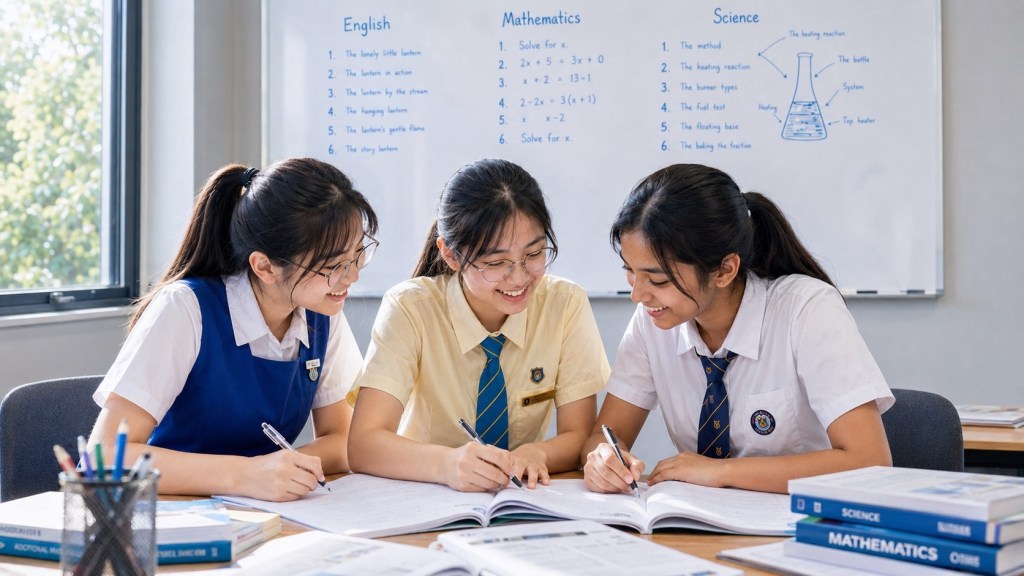
Science project ideas for students are most useful when they begin with a good question rather than a dramatic demonstration. The best school project is not the one with the biggest explosion, brightest colour or most expensive kit. It is the one where the student can explain the variable being changed, the outcome being measured, the controls needed for a fair comparison, the data collected, and the conclusion the evidence can actually support.
This Advanced Science Tutorials guide is written for parents and students in Sengkang, Punggol and across Singapore who search for science project ideas, science fair projects, easy science experiments, science investigation ideas, STEM projects, fair test ideas and science projects for kids. It provides a structured bank of safe, measurable project questions from Primary readiness through PSLE and Secondary G1, G2 and G3 Science.
Science Buddies notes that a strong project question should be practical, testable and measurable, usually with a variable the student can change and an outcome that can be measured. Its large project library also shows how project quality improves when questions are scoped by subject and grade. See Science Buddies Science Projects and the project-question guide.
Safety gate before choosing a project
- No mixing household cleaners or unknown chemicals.
- No open flames, fireworks, fuels or combustion experiments at home.
- No mains electricity or dismantling batteries/electronics.
- No pressurised containers or projectile launchers that can injure.
- No culturing unknown microbes or handling biological samples from people or animals.
- No tasting experimental substances.
- No medical experiments, deliberate allergen exposure or drug/supplement testing.
- Avoid collecting sensitive personal data from classmates or family.
- Use adult supervision for cutting tools, heat, glassware and any activity required by the school.
- Choose published datasets or simulations when a safe physical experiment is not practical.
A safe project can still be scientifically excellent. The core skill is not danger; it is disciplined comparison.
How to turn an idea into a project question
A useful beginner structure is: How does [independent variable] affect [dependent variable] under [defined conditions]? This does not mean every scientific question must take that form, but it gives students a reliable starting point for experimental projects.
The learner should be able to state the units, range and method before collecting data. If “better”, “stronger”, “healthier” or “faster” appears in the question, define exactly how that outcome will be measured.
Project-planning checklist
- Choose a safe question that interests the learner.
- Define one main independent variable.
- Define a measurable dependent variable.
- List the most important controlled variables.
- Choose a sensible range of test conditions.
- Plan repeated trials or enough samples where needed.
- Prepare a data table before collecting data.
- Decide how results will be graphed.
- Write the procedure so another student could repeat it.
- Record unexpected results rather than hiding them.
- Make a conclusion proportional to the evidence.
- State one limitation and one improvement that actually addresses it.
Paper towel absorbency
Project question. How does paper material type affect the volume of water absorbed by equal-sized samples?
Independent variable. material type. Dependent variable. water absorbed in millilitres or mass gain in grams. A student should define the dependent measure before collecting data so “better”, “faster” or “more effective” cannot shift meaning after the results are seen.
Controls and method. Keep these important conditions as consistent as practical: sample area, initial dry mass, water contact time, method of draining. Decide the range of the independent variable before starting, prepare a table with units, and use repeated trials or multiple samples when variability matters. The method should be specific enough that another student could repeat it without guessing.
Science learned. This project develops materials properties and measurement. Before the experiment, make a prediction and explain the model behind it. Afterward, describe the data before explaining the pattern. If an anomaly appears, investigate it rather than deleting it automatically.
Safety boundary. Use clean water and wipe spills promptly. If the school requires equipment, adult supervision or a laboratory, move the activity into the supervised setting rather than improvising at home.
Extension. After the first investigation, change the question rather than simply adding more trials. Ask whether another variable, measurement method, range or representation would test the model more strongly. A good extension should answer a new scientific question, not decorate the original poster.
Paper thickness and absorbency
Project question. How does the number of paper layers affect total water absorption?
Independent variable. number of layers. Dependent variable. water absorbed. A student should define the dependent measure before collecting data so “better”, “faster” or “more effective” cannot shift meaning after the results are seen.
Controls and method. Keep these important conditions as consistent as practical: paper brand, sample area, contact time, water amount. Decide the range of the independent variable before starting, prepare a table with units, and use repeated trials or multiple samples when variability matters. The method should be specific enough that another student could repeat it without guessing.
Science learned. This project develops surface structure and capacity. Before the experiment, make a prediction and explain the model behind it. Afterward, describe the data before explaining the pattern. If an anomaly appears, investigate it rather than deleting it automatically.
Safety boundary. Keep the floor dry to prevent slips. If the school requires equipment, adult supervision or a laboratory, move the activity into the supervised setting rather than improvising at home.
Extension. After the first investigation, change the question rather than simply adding more trials. Ask whether another variable, measurement method, range or representation would test the model more strongly. A good extension should answer a new scientific question, not decorate the original poster.
Fabric absorbency
Project question. How does fabric type affect water absorbed by equal-area samples?
Independent variable. fabric type. Dependent variable. mass gain after standard contact. A student should define the dependent measure before collecting data so “better”, “faster” or “more effective” cannot shift meaning after the results are seen.
Controls and method. Keep these important conditions as consistent as practical: sample area, water volume, contact time, draining method. Decide the range of the independent variable before starting, prepare a table with units, and use repeated trials or multiple samples when variability matters. The method should be specific enough that another student could repeat it without guessing.
Science learned. This project develops material properties. Before the experiment, make a prediction and explain the model behind it. Afterward, describe the data before explaining the pattern. If an anomaly appears, investigate it rather than deleting it automatically.
Safety boundary. Use clean fabrics and water only. If the school requires equipment, adult supervision or a laboratory, move the activity into the supervised setting rather than improvising at home.
Extension. After the first investigation, change the question rather than simply adding more trials. Ask whether another variable, measurement method, range or representation would test the model more strongly. A good extension should answer a new scientific question, not decorate the original poster.
Drying surface area
Project question. How does exposed surface area affect the time a fixed amount of water takes to evaporate?
Independent variable. surface area. Dependent variable. mass loss or time to a defined endpoint. A student should define the dependent measure before collecting data so “better”, “faster” or “more effective” cannot shift meaning after the results are seen.
Controls and method. Keep these important conditions as consistent as practical: water volume, location, container material, airflow as far as practical. Decide the range of the independent variable before starting, prepare a table with units, and use repeated trials or multiple samples when variability matters. The method should be specific enough that another student could repeat it without guessing.
Science learned. This project develops evaporation. Before the experiment, make a prediction and explain the model behind it. Afterward, describe the data before explaining the pattern. If an anomaly appears, investigate it rather than deleting it automatically.
Safety boundary. Avoid hot plates; use room-temperature conditions. If the school requires equipment, adult supervision or a laboratory, move the activity into the supervised setting rather than improvising at home.
Extension. After the first investigation, change the question rather than simply adding more trials. Ask whether another variable, measurement method, range or representation would test the model more strongly. A good extension should answer a new scientific question, not decorate the original poster.
Airflow and drying
Project question. How does gentle airflow affect drying time of identical wet cloth samples?
Independent variable. airflow condition. Dependent variable. time or mass loss. A student should define the dependent measure before collecting data so “better”, “faster” or “more effective” cannot shift meaning after the results are seen.
Controls and method. Keep these important conditions as consistent as practical: cloth type, water added, area, temperature, distance from fan. Decide the range of the independent variable before starting, prepare a table with units, and use repeated trials or multiple samples when variability matters. The method should be specific enough that another student could repeat it without guessing.
Science learned. This project develops evaporation rate. Before the experiment, make a prediction and explain the model behind it. Afterward, describe the data before explaining the pattern. If an anomaly appears, investigate it rather than deleting it automatically.
Safety boundary. Use a stable household fan away from water splashes and electrical hazards. If the school requires equipment, adult supervision or a laboratory, move the activity into the supervised setting rather than improvising at home.
Extension. After the first investigation, change the question rather than simply adding more trials. Ask whether another variable, measurement method, range or representation would test the model more strongly. A good extension should answer a new scientific question, not decorate the original poster.
Shade and evaporation
Project question. How does location in shade versus indirect sun affect water loss from identical shallow containers?
Independent variable. location/light exposure. Dependent variable. mass loss over time. A student should define the dependent measure before collecting data so “better”, “faster” or “more effective” cannot shift meaning after the results are seen.
Controls and method. Keep these important conditions as consistent as practical: container, starting water mass, time period, airflow as far as practical. Decide the range of the independent variable before starting, prepare a table with units, and use repeated trials or multiple samples when variability matters. The method should be specific enough that another student could repeat it without guessing.
Science learned. This project develops thermal effects and evaporation. Before the experiment, make a prediction and explain the model behind it. Afterward, describe the data before explaining the pattern. If an anomaly appears, investigate it rather than deleting it automatically.
Safety boundary. Avoid direct high-heat setups; protect from tipping. If the school requires equipment, adult supervision or a laboratory, move the activity into the supervised setting rather than improvising at home.
Extension. After the first investigation, change the question rather than simply adding more trials. Ask whether another variable, measurement method, range or representation would test the model more strongly. A good extension should answer a new scientific question, not decorate the original poster.
Shadow distance
Project question. How does the distance between an opaque object and a screen affect shadow size with a fixed light source?
Independent variable. object-screen distance. Dependent variable. shadow height or width. A student should define the dependent measure before collecting data so “better”, “faster” or “more effective” cannot shift meaning after the results are seen.
Controls and method. Keep these important conditions as consistent as practical: light source, object, source-object distance, screen. Decide the range of the independent variable before starting, prepare a table with units, and use repeated trials or multiple samples when variability matters. The method should be specific enough that another student could repeat it without guessing.
Science learned. This project develops light and geometry. Before the experiment, make a prediction and explain the model behind it. Afterward, describe the data before explaining the pattern. If an anomaly appears, investigate it rather than deleting it automatically.
Safety boundary. Use a low-power torch; never use lasers. If the school requires equipment, adult supervision or a laboratory, move the activity into the supervised setting rather than improvising at home.
Extension. After the first investigation, change the question rather than simply adding more trials. Ask whether another variable, measurement method, range or representation would test the model more strongly. A good extension should answer a new scientific question, not decorate the original poster.
Light-source distance
Project question. How does distance from a torch affect the illumination recorded by a safe light-meter app or sensor?
Independent variable. distance. Dependent variable. relative light reading. A student should define the dependent measure before collecting data so “better”, “faster” or “more effective” cannot shift meaning after the results are seen.
Controls and method. Keep these important conditions as consistent as practical: torch, angle, ambient light, sensor. Decide the range of the independent variable before starting, prepare a table with units, and use repeated trials or multiple samples when variability matters. The method should be specific enough that another student could repeat it without guessing.
Science learned. This project develops inverse-distance patterns and measurement. Before the experiment, make a prediction and explain the model behind it. Afterward, describe the data before explaining the pattern. If an anomaly appears, investigate it rather than deleting it automatically.
Safety boundary. Do not stare into bright sources; use ordinary torches. If the school requires equipment, adult supervision or a laboratory, move the activity into the supervised setting rather than improvising at home.
Extension. After the first investigation, change the question rather than simply adding more trials. Ask whether another variable, measurement method, range or representation would test the model more strongly. A good extension should answer a new scientific question, not decorate the original poster.
Object height and shadow
Project question. How does object height affect shadow length under a fixed lamp geometry?
Independent variable. object height. Dependent variable. shadow length. A student should define the dependent measure before collecting data so “better”, “faster” or “more effective” cannot shift meaning after the results are seen.
Controls and method. Keep these important conditions as consistent as practical: light position, screen/floor, object shape. Decide the range of the independent variable before starting, prepare a table with units, and use repeated trials or multiple samples when variability matters. The method should be specific enough that another student could repeat it without guessing.
Science learned. This project develops light geometry. Before the experiment, make a prediction and explain the model behind it. Afterward, describe the data before explaining the pattern. If an anomaly appears, investigate it rather than deleting it automatically.
Safety boundary. Use stable objects that cannot fall. If the school requires equipment, adult supervision or a laboratory, move the activity into the supervised setting rather than improvising at home.
Extension. After the first investigation, change the question rather than simply adding more trials. Ask whether another variable, measurement method, range or representation would test the model more strongly. A good extension should answer a new scientific question, not decorate the original poster.
Transparent material comparison
Project question. How does material type affect light transmission measured with a safe light sensor?
Independent variable. material type. Dependent variable. relative transmitted-light reading. A student should define the dependent measure before collecting data so “better”, “faster” or “more effective” cannot shift meaning after the results are seen.
Controls and method. Keep these important conditions as consistent as practical: source, distance, sample area, thickness where possible. Decide the range of the independent variable before starting, prepare a table with units, and use repeated trials or multiple samples when variability matters. The method should be specific enough that another student could repeat it without guessing.
Science learned. This project develops transparency and optical properties. Before the experiment, make a prediction and explain the model behind it. Afterward, describe the data before explaining the pattern. If an anomaly appears, investigate it rather than deleting it automatically.
Safety boundary. Use unbroken plastic or safe household materials, not glass shards. If the school requires equipment, adult supervision or a laboratory, move the activity into the supervised setting rather than improvising at home.
Extension. After the first investigation, change the question rather than simply adding more trials. Ask whether another variable, measurement method, range or representation would test the model more strongly. A good extension should answer a new scientific question, not decorate the original poster.
Thermal insulation materials
Project question. How does wrapping material affect cooling rate of warm water?
Independent variable. insulation material. Dependent variable. temperature drop over time. A student should define the dependent measure before collecting data so “better”, “faster” or “more effective” cannot shift meaning after the results are seen.
Controls and method. Keep these important conditions as consistent as practical: container, starting temperature, water volume, room location. Decide the range of the independent variable before starting, prepare a table with units, and use repeated trials or multiple samples when variability matters. The method should be specific enough that another student could repeat it without guessing.
Science learned. This project develops thermal transfer. Before the experiment, make a prediction and explain the model behind it. Afterward, describe the data before explaining the pattern. If an anomaly appears, investigate it rather than deleting it automatically.
Safety boundary. Use warm, not scalding, water; adult handles any hot water. If the school requires equipment, adult supervision or a laboratory, move the activity into the supervised setting rather than improvising at home.
Extension. After the first investigation, change the question rather than simply adding more trials. Ask whether another variable, measurement method, range or representation would test the model more strongly. A good extension should answer a new scientific question, not decorate the original poster.
Number of insulation layers
Project question. How does number of fabric or paper layers affect cooling rate?
Independent variable. layer count. Dependent variable. temperature drop. A student should define the dependent measure before collecting data so “better”, “faster” or “more effective” cannot shift meaning after the results are seen.
Controls and method. Keep these important conditions as consistent as practical: material type, container, starting water temperature, water volume. Decide the range of the independent variable before starting, prepare a table with units, and use repeated trials or multiple samples when variability matters. The method should be specific enough that another student could repeat it without guessing.
Science learned. This project develops insulation and thermal resistance. Before the experiment, make a prediction and explain the model behind it. Afterward, describe the data before explaining the pattern. If an anomaly appears, investigate it rather than deleting it automatically.
Safety boundary. Use warm water within safe handling temperature. If the school requires equipment, adult supervision or a laboratory, move the activity into the supervised setting rather than improvising at home.
Extension. After the first investigation, change the question rather than simply adding more trials. Ask whether another variable, measurement method, range or representation would test the model more strongly. A good extension should answer a new scientific question, not decorate the original poster.
Container shape and cooling
Project question. How does container surface-area-to-volume geometry affect cooling rate for equal water volumes?
Independent variable. container geometry. Dependent variable. temperature change. A student should define the dependent measure before collecting data so “better”, “faster” or “more effective” cannot shift meaning after the results are seen.
Controls and method. Keep these important conditions as consistent as practical: material if possible, starting temperature, location. Decide the range of the independent variable before starting, prepare a table with units, and use repeated trials or multiple samples when variability matters. The method should be specific enough that another student could repeat it without guessing.
Science learned. This project develops heat transfer and geometry. Before the experiment, make a prediction and explain the model behind it. Afterward, describe the data before explaining the pattern. If an anomaly appears, investigate it rather than deleting it automatically.
Safety boundary. Use safe plastic or school-approved containers; avoid breakable glass at home. If the school requires equipment, adult supervision or a laboratory, move the activity into the supervised setting rather than improvising at home.
Extension. After the first investigation, change the question rather than simply adding more trials. Ask whether another variable, measurement method, range or representation would test the model more strongly. A good extension should answer a new scientific question, not decorate the original poster.
Colour and solar warming
Project question. How does surface colour affect temperature rise under the same lamp or indirect sunlight?
Independent variable. colour. Dependent variable. temperature change. A student should define the dependent measure before collecting data so “better”, “faster” or “more effective” cannot shift meaning after the results are seen.
Controls and method. Keep these important conditions as consistent as practical: material, area, starting temperature, exposure time. Decide the range of the independent variable before starting, prepare a table with units, and use repeated trials or multiple samples when variability matters. The method should be specific enough that another student could repeat it without guessing.
Science learned. This project develops absorption of radiation. Before the experiment, make a prediction and explain the model behind it. Afterward, describe the data before explaining the pattern. If an anomaly appears, investigate it rather than deleting it automatically.
Safety boundary. Avoid high-power lamps or overheating. If the school requires equipment, adult supervision or a laboratory, move the activity into the supervised setting rather than improvising at home.
Extension. After the first investigation, change the question rather than simply adding more trials. Ask whether another variable, measurement method, range or representation would test the model more strongly. A good extension should answer a new scientific question, not decorate the original poster.
Ramp height and rolling distance
Project question. How does ramp height affect the distance a toy car travels on the same surface?
Independent variable. ramp height. Dependent variable. travel distance. A student should define the dependent measure before collecting data so “better”, “faster” or “more effective” cannot shift meaning after the results are seen.
Controls and method. Keep these important conditions as consistent as practical: car, release method, ramp, surface. Decide the range of the independent variable before starting, prepare a table with units, and use repeated trials or multiple samples when variability matters. The method should be specific enough that another student could repeat it without guessing.
Science learned. This project develops forces and motion. Before the experiment, make a prediction and explain the model behind it. Afterward, describe the data before explaining the pattern. If an anomaly appears, investigate it rather than deleting it automatically.
Safety boundary. Use a low stable ramp away from stairs and breakables. If the school requires equipment, adult supervision or a laboratory, move the activity into the supervised setting rather than improvising at home.
Extension. After the first investigation, change the question rather than simply adding more trials. Ask whether another variable, measurement method, range or representation would test the model more strongly. A good extension should answer a new scientific question, not decorate the original poster.
Ramp height and travel time
Project question. How does ramp height affect time for a toy car to travel a fixed distance?
Independent variable. ramp height. Dependent variable. time. A student should define the dependent measure before collecting data so “better”, “faster” or “more effective” cannot shift meaning after the results are seen.
Controls and method. Keep these important conditions as consistent as practical: car, track, release point, distance. Decide the range of the independent variable before starting, prepare a table with units, and use repeated trials or multiple samples when variability matters. The method should be specific enough that another student could repeat it without guessing.
Science learned. This project develops motion and acceleration. Before the experiment, make a prediction and explain the model behind it. Afterward, describe the data before explaining the pattern. If an anomaly appears, investigate it rather than deleting it automatically.
Safety boundary. Keep the path clear. If the school requires equipment, adult supervision or a laboratory, move the activity into the supervised setting rather than improvising at home.
Extension. After the first investigation, change the question rather than simply adding more trials. Ask whether another variable, measurement method, range or representation would test the model more strongly. A good extension should answer a new scientific question, not decorate the original poster.
Surface type and rolling distance
Project question. How does floor surface affect how far the same toy car rolls from a fixed ramp?
Independent variable. surface type. Dependent variable. distance travelled. A student should define the dependent measure before collecting data so “better”, “faster” or “more effective” cannot shift meaning after the results are seen.
Controls and method. Keep these important conditions as consistent as practical: car, ramp height, release method. Decide the range of the independent variable before starting, prepare a table with units, and use repeated trials or multiple samples when variability matters. The method should be specific enough that another student could repeat it without guessing.
Science learned. This project develops friction. Before the experiment, make a prediction and explain the model behind it. Afterward, describe the data before explaining the pattern. If an anomaly appears, investigate it rather than deleting it automatically.
Safety boundary. Use flat safe surfaces only. If the school requires equipment, adult supervision or a laboratory, move the activity into the supervised setting rather than improvising at home.
Extension. After the first investigation, change the question rather than simply adding more trials. Ask whether another variable, measurement method, range or representation would test the model more strongly. A good extension should answer a new scientific question, not decorate the original poster.
Wheel size model
Project question. How does wheel diameter affect travel distance for otherwise matched toy models?
Independent variable. wheel diameter. Dependent variable. distance. A student should define the dependent measure before collecting data so “better”, “faster” or “more effective” cannot shift meaning after the results are seen.
Controls and method. Keep these important conditions as consistent as practical: vehicle mass, axle, ramp, release. Decide the range of the independent variable before starting, prepare a table with units, and use repeated trials or multiple samples when variability matters. The method should be specific enough that another student could repeat it without guessing.
Science learned. This project develops mechanical design. Before the experiment, make a prediction and explain the model behind it. Afterward, describe the data before explaining the pattern. If an anomaly appears, investigate it rather than deleting it automatically.
Safety boundary. Use commercially safe toy parts; no powered projectiles. If the school requires equipment, adult supervision or a laboratory, move the activity into the supervised setting rather than improvising at home.
Extension. After the first investigation, change the question rather than simply adding more trials. Ask whether another variable, measurement method, range or representation would test the model more strongly. A good extension should answer a new scientific question, not decorate the original poster.
Ball material and bounce height
Project question. How does ball type affect rebound height from the same drop height?
Independent variable. ball type. Dependent variable. bounce height. A student should define the dependent measure before collecting data so “better”, “faster” or “more effective” cannot shift meaning after the results are seen.
Controls and method. Keep these important conditions as consistent as practical: drop height, surface, release method. Decide the range of the independent variable before starting, prepare a table with units, and use repeated trials or multiple samples when variability matters. The method should be specific enough that another student could repeat it without guessing.
Science learned. This project develops energy transfer and material elasticity. Before the experiment, make a prediction and explain the model behind it. Afterward, describe the data before explaining the pattern. If an anomaly appears, investigate it rather than deleting it automatically.
Safety boundary. Use soft/light balls in a clear space; no heavy objects. If the school requires equipment, adult supervision or a laboratory, move the activity into the supervised setting rather than improvising at home.
Extension. After the first investigation, change the question rather than simply adding more trials. Ask whether another variable, measurement method, range or representation would test the model more strongly. A good extension should answer a new scientific question, not decorate the original poster.
Drop height and bounce
Project question. How does drop height affect rebound height for one safe rubber ball?
Independent variable. drop height. Dependent variable. rebound height. A student should define the dependent measure before collecting data so “better”, “faster” or “more effective” cannot shift meaning after the results are seen.
Controls and method. Keep these important conditions as consistent as practical: ball, surface, release method. Decide the range of the independent variable before starting, prepare a table with units, and use repeated trials or multiple samples when variability matters. The method should be specific enough that another student could repeat it without guessing.
Science learned. This project develops energy and elasticity. Before the experiment, make a prediction and explain the model behind it. Afterward, describe the data before explaining the pattern. If an anomaly appears, investigate it rather than deleting it automatically.
Safety boundary. Keep drop heights modest and area clear. If the school requires equipment, adult supervision or a laboratory, move the activity into the supervised setting rather than improvising at home.
Extension. After the first investigation, change the question rather than simply adding more trials. Ask whether another variable, measurement method, range or representation would test the model more strongly. A good extension should answer a new scientific question, not decorate the original poster.
Pendulum length and period
Project question. How does string length affect the period of a small pendulum?
Independent variable. pendulum length. Dependent variable. time for a fixed number of oscillations. A student should define the dependent measure before collecting data so “better”, “faster” or “more effective” cannot shift meaning after the results are seen.
Controls and method. Keep these important conditions as consistent as practical: bob mass, release angle, location. Decide the range of the independent variable before starting, prepare a table with units, and use repeated trials or multiple samples when variability matters. The method should be specific enough that another student could repeat it without guessing.
Science learned. This project develops periodic motion. Before the experiment, make a prediction and explain the model behind it. Afterward, describe the data before explaining the pattern. If an anomaly appears, investigate it rather than deleting it automatically.
Safety boundary. Use a lightweight soft bob and small swing amplitude away from faces. If the school requires equipment, adult supervision or a laboratory, move the activity into the supervised setting rather than improvising at home.
Extension. After the first investigation, change the question rather than simply adding more trials. Ask whether another variable, measurement method, range or representation would test the model more strongly. A good extension should answer a new scientific question, not decorate the original poster.
Pendulum release angle small-range
Project question. Within small angles, how does release angle affect measured period?
Independent variable. small release angle. Dependent variable. period. A student should define the dependent measure before collecting data so “better”, “faster” or “more effective” cannot shift meaning after the results are seen.
Controls and method. Keep these important conditions as consistent as practical: length, bob, timing method. Decide the range of the independent variable before starting, prepare a table with units, and use repeated trials or multiple samples when variability matters. The method should be specific enough that another student could repeat it without guessing.
Science learned. This project develops model limits. Before the experiment, make a prediction and explain the model behind it. Afterward, describe the data before explaining the pattern. If an anomaly appears, investigate it rather than deleting it automatically.
Safety boundary. Use small safe angles and a soft bob. If the school requires equipment, adult supervision or a laboratory, move the activity into the supervised setting rather than improvising at home.
Extension. After the first investigation, change the question rather than simply adding more trials. Ask whether another variable, measurement method, range or representation would test the model more strongly. A good extension should answer a new scientific question, not decorate the original poster.
Paper helicopter blade length
Project question. How does paper helicopter blade length affect fall time from a fixed safe height?
Independent variable. blade length. Dependent variable. fall time. A student should define the dependent measure before collecting data so “better”, “faster” or “more effective” cannot shift meaning after the results are seen.
Controls and method. Keep these important conditions as consistent as practical: paper, mass, drop height, release method. Decide the range of the independent variable before starting, prepare a table with units, and use repeated trials or multiple samples when variability matters. The method should be specific enough that another student could repeat it without guessing.
Science learned. This project develops air resistance and design. Before the experiment, make a prediction and explain the model behind it. Afterward, describe the data before explaining the pattern. If an anomaly appears, investigate it rather than deleting it automatically.
Safety boundary. Drop from standing height only; no stairwells or balconies. If the school requires equipment, adult supervision or a laboratory, move the activity into the supervised setting rather than improvising at home.
Extension. After the first investigation, change the question rather than simply adding more trials. Ask whether another variable, measurement method, range or representation would test the model more strongly. A good extension should answer a new scientific question, not decorate the original poster.
Paper helicopter mass
Project question. How does adding identical paper clips affect safe paper-helicopter fall time?
Independent variable. mass via paper clips. Dependent variable. fall time. A student should define the dependent measure before collecting data so “better”, “faster” or “more effective” cannot shift meaning after the results are seen.
Controls and method. Keep these important conditions as consistent as practical: blade design, drop height, paper. Decide the range of the independent variable before starting, prepare a table with units, and use repeated trials or multiple samples when variability matters. The method should be specific enough that another student could repeat it without guessing.
Science learned. This project develops gravity and drag. Before the experiment, make a prediction and explain the model behind it. Afterward, describe the data before explaining the pattern. If an anomaly appears, investigate it rather than deleting it automatically.
Safety boundary. Use only a few light clips; keep area clear. If the school requires equipment, adult supervision or a laboratory, move the activity into the supervised setting rather than improvising at home.
Extension. After the first investigation, change the question rather than simply adding more trials. Ask whether another variable, measurement method, range or representation would test the model more strongly. A good extension should answer a new scientific question, not decorate the original poster.
Paper plane wing width
Project question. How does wing width affect glide distance for the same paper mass and launch method?
Independent variable. wing width. Dependent variable. glide distance. A student should define the dependent measure before collecting data so “better”, “faster” or “more effective” cannot shift meaning after the results are seen.
Controls and method. Keep these important conditions as consistent as practical: paper, launch point, throw method as controlled as possible. Decide the range of the independent variable before starting, prepare a table with units, and use repeated trials or multiple samples when variability matters. The method should be specific enough that another student could repeat it without guessing.
Science learned. This project develops aerodynamics and experimental variability. Before the experiment, make a prediction and explain the model behind it. Afterward, describe the data before explaining the pattern. If an anomaly appears, investigate it rather than deleting it automatically.
Safety boundary. Use open indoor space, away from faces and fragile objects. If the school requires equipment, adult supervision or a laboratory, move the activity into the supervised setting rather than improvising at home.
Extension. After the first investigation, change the question rather than simply adding more trials. Ask whether another variable, measurement method, range or representation would test the model more strongly. A good extension should answer a new scientific question, not decorate the original poster.
Paper plane mass placement
Project question. How does position of one small paper clip affect glide distance?
Independent variable. clip position. Dependent variable. distance. A student should define the dependent measure before collecting data so “better”, “faster” or “more effective” cannot shift meaning after the results are seen.
Controls and method. Keep these important conditions as consistent as practical: plane design, clip, launch. Decide the range of the independent variable before starting, prepare a table with units, and use repeated trials or multiple samples when variability matters. The method should be specific enough that another student could repeat it without guessing.
Science learned. This project develops centre of mass. Before the experiment, make a prediction and explain the model behind it. Afterward, describe the data before explaining the pattern. If an anomaly appears, investigate it rather than deleting it automatically.
Safety boundary. Use lightweight clips and safe indoor throwing direction. If the school requires equipment, adult supervision or a laboratory, move the activity into the supervised setting rather than improvising at home.
Extension. After the first investigation, change the question rather than simply adding more trials. Ask whether another variable, measurement method, range or representation would test the model more strongly. A good extension should answer a new scientific question, not decorate the original poster.
Magnetic material classification
Project question. Which common classroom materials are attracted to a magnet under the same test?
Independent variable. material type. Dependent variable. attraction yes/no or pull-distance proxy. A student should define the dependent measure before collecting data so “better”, “faster” or “more effective” cannot shift meaning after the results are seen.
Controls and method. Keep these important conditions as consistent as practical: magnet, sample size where possible, distance. Decide the range of the independent variable before starting, prepare a table with units, and use repeated trials or multiple samples when variability matters. The method should be specific enough that another student could repeat it without guessing.
Science learned. This project develops magnetic properties. Before the experiment, make a prediction and explain the model behind it. Afterward, describe the data before explaining the pattern. If an anomaly appears, investigate it rather than deleting it automatically.
Safety boundary. Use intact school magnets; keep away from electronics and medical devices. If the school requires equipment, adult supervision or a laboratory, move the activity into the supervised setting rather than improvising at home.
Extension. After the first investigation, change the question rather than simply adding more trials. Ask whether another variable, measurement method, range or representation would test the model more strongly. A good extension should answer a new scientific question, not decorate the original poster.
Magnet distance and attraction
Project question. How does distance affect whether a paper clip is attracted by the same magnet?
Independent variable. distance. Dependent variable. attraction threshold or movement. A student should define the dependent measure before collecting data so “better”, “faster” or “more effective” cannot shift meaning after the results are seen.
Controls and method. Keep these important conditions as consistent as practical: magnet, paper clip, alignment. Decide the range of the independent variable before starting, prepare a table with units, and use repeated trials or multiple samples when variability matters. The method should be specific enough that another student could repeat it without guessing.
Science learned. This project develops magnetic interaction. Before the experiment, make a prediction and explain the model behind it. Afterward, describe the data before explaining the pattern. If an anomaly appears, investigate it rather than deleting it automatically.
Safety boundary. Do not use very strong neodymium magnets without teacher supervision. If the school requires equipment, adult supervision or a laboratory, move the activity into the supervised setting rather than improvising at home.
Extension. After the first investigation, change the question rather than simply adding more trials. Ask whether another variable, measurement method, range or representation would test the model more strongly. A good extension should answer a new scientific question, not decorate the original poster.
Number of paper layers over magnet
Project question. How does non-magnetic barrier thickness affect observable magnetic attraction?
Independent variable. number of paper layers. Dependent variable. maximum pickup or attraction threshold. A student should define the dependent measure before collecting data so “better”, “faster” or “more effective” cannot shift meaning after the results are seen.
Controls and method. Keep these important conditions as consistent as practical: magnet, clips, paper type. Decide the range of the independent variable before starting, prepare a table with units, and use repeated trials or multiple samples when variability matters. The method should be specific enough that another student could repeat it without guessing.
Science learned. This project develops fields through materials. Before the experiment, make a prediction and explain the model behind it. Afterward, describe the data before explaining the pattern. If an anomaly appears, investigate it rather than deleting it automatically.
Safety boundary. Use ordinary school magnets. If the school requires equipment, adult supervision or a laboratory, move the activity into the supervised setting rather than improvising at home.
Extension. After the first investigation, change the question rather than simply adding more trials. Ask whether another variable, measurement method, range or representation would test the model more strongly. A good extension should answer a new scientific question, not decorate the original poster.
Salt dissolving temperature
Project question. How does safe water temperature affect the mass of table salt that dissolves in a fixed water volume?
Independent variable. water temperature. Dependent variable. mass dissolved to a defined endpoint. A student should define the dependent measure before collecting data so “better”, “faster” or “more effective” cannot shift meaning after the results are seen.
Controls and method. Keep these important conditions as consistent as practical: water volume, salt type, stirring method. Decide the range of the independent variable before starting, prepare a table with units, and use repeated trials or multiple samples when variability matters. The method should be specific enough that another student could repeat it without guessing.
Science learned. This project develops solubility. Before the experiment, make a prediction and explain the model behind it. Afterward, describe the data before explaining the pattern. If an anomaly appears, investigate it rather than deleting it automatically.
Safety boundary. Adult handles warm water; no tasting; avoid hot water. If the school requires equipment, adult supervision or a laboratory, move the activity into the supervised setting rather than improvising at home.
Extension. After the first investigation, change the question rather than simply adding more trials. Ask whether another variable, measurement method, range or representation would test the model more strongly. A good extension should answer a new scientific question, not decorate the original poster.
Sugar dissolving rate
Project question. How does gentle stirring rate affect time for a fixed mass of sugar to dissolve?
Independent variable. stirring condition. Dependent variable. time to visually defined dissolution. A student should define the dependent measure before collecting data so “better”, “faster” or “more effective” cannot shift meaning after the results are seen.
Controls and method. Keep these important conditions as consistent as practical: water volume, temperature, sugar mass, container. Decide the range of the independent variable before starting, prepare a table with units, and use repeated trials or multiple samples when variability matters. The method should be specific enough that another student could repeat it without guessing.
Science learned. This project develops rate versus solubility. Before the experiment, make a prediction and explain the model behind it. Afterward, describe the data before explaining the pattern. If an anomaly appears, investigate it rather than deleting it automatically.
Safety boundary. Use room-temperature or safely warm water; no tasting. If the school requires equipment, adult supervision or a laboratory, move the activity into the supervised setting rather than improvising at home.
Extension. After the first investigation, change the question rather than simply adding more trials. Ask whether another variable, measurement method, range or representation would test the model more strongly. A good extension should answer a new scientific question, not decorate the original poster.
Sugar particle size and dissolving
Project question. How does grain size affect dissolving time for equal masses of sugar?
Independent variable. particle size. Dependent variable. dissolving time. A student should define the dependent measure before collecting data so “better”, “faster” or “more effective” cannot shift meaning after the results are seen.
Controls and method. Keep these important conditions as consistent as practical: water, temperature, stirring. Decide the range of the independent variable before starting, prepare a table with units, and use repeated trials or multiple samples when variability matters. The method should be specific enough that another student could repeat it without guessing.
Science learned. This project develops surface area and rate. Before the experiment, make a prediction and explain the model behind it. Afterward, describe the data before explaining the pattern. If an anomaly appears, investigate it rather than deleting it automatically.
Safety boundary. Use food-grade materials but do not consume experimental samples. If the school requires equipment, adult supervision or a laboratory, move the activity into the supervised setting rather than improvising at home.
Extension. After the first investigation, change the question rather than simply adding more trials. Ask whether another variable, measurement method, range or representation would test the model more strongly. A good extension should answer a new scientific question, not decorate the original poster.
Water volume and concentration
Project question. How does adding different water volumes to the same solute mass affect concentration calculated as mass per volume?
Independent variable. water volume. Dependent variable. calculated concentration. A student should define the dependent measure before collecting data so “better”, “faster” or “more effective” cannot shift meaning after the results are seen.
Controls and method. Keep these important conditions as consistent as practical: solute mass, temperature. Decide the range of the independent variable before starting, prepare a table with units, and use repeated trials or multiple samples when variability matters. The method should be specific enough that another student could repeat it without guessing.
Science learned. This project develops concentration. Before the experiment, make a prediction and explain the model behind it. Afterward, describe the data before explaining the pattern. If an anomaly appears, investigate it rather than deleting it automatically.
Safety boundary. No tasting. If the school requires equipment, adult supervision or a laboratory, move the activity into the supervised setting rather than improvising at home.
Extension. After the first investigation, change the question rather than simply adding more trials. Ask whether another variable, measurement method, range or representation would test the model more strongly. A good extension should answer a new scientific question, not decorate the original poster.
Saltwater density model
Project question. How does salt concentration affect the mass of a fixed volume of solution?
Independent variable. salt concentration. Dependent variable. mass of fixed volume. A student should define the dependent measure before collecting data so “better”, “faster” or “more effective” cannot shift meaning after the results are seen.
Controls and method. Keep these important conditions as consistent as practical: volume, temperature, container. Decide the range of the independent variable before starting, prepare a table with units, and use repeated trials or multiple samples when variability matters. The method should be specific enough that another student could repeat it without guessing.
Science learned. This project develops density and concentration. Before the experiment, make a prediction and explain the model behind it. Afterward, describe the data before explaining the pattern. If an anomaly appears, investigate it rather than deleting it automatically.
Safety boundary. Use small food-grade quantities; do not ingest samples. If the school requires equipment, adult supervision or a laboratory, move the activity into the supervised setting rather than improvising at home.
Extension. After the first investigation, change the question rather than simply adding more trials. Ask whether another variable, measurement method, range or representation would test the model more strongly. A good extension should answer a new scientific question, not decorate the original poster.
Simple filtration material
Project question. How does filter material affect clarity of a safe sand-water mixture?
Independent variable. filter material. Dependent variable. turbidity proxy or filtered mass. A student should define the dependent measure before collecting data so “better”, “faster” or “more effective” cannot shift meaning after the results are seen.
Controls and method. Keep these important conditions as consistent as practical: mixture composition, volume, filter area. Decide the range of the independent variable before starting, prepare a table with units, and use repeated trials or multiple samples when variability matters. The method should be specific enough that another student could repeat it without guessing.
Science learned. This project develops separation and filtration. Before the experiment, make a prediction and explain the model behind it. Afterward, describe the data before explaining the pattern. If an anomaly appears, investigate it rather than deleting it automatically.
Safety boundary. Use clean sand and water; wash hands and do not drink filtered water. If the school requires equipment, adult supervision or a laboratory, move the activity into the supervised setting rather than improvising at home.
Extension. After the first investigation, change the question rather than simply adding more trials. Ask whether another variable, measurement method, range or representation would test the model more strongly. A good extension should answer a new scientific question, not decorate the original poster.
Filter layer thickness
Project question. How does filter thickness affect flow time for clean sand-water mixtures?
Independent variable. filter thickness. Dependent variable. filtration time. A student should define the dependent measure before collecting data so “better”, “faster” or “more effective” cannot shift meaning after the results are seen.
Controls and method. Keep these important conditions as consistent as practical: filter material, mixture, volume. Decide the range of the independent variable before starting, prepare a table with units, and use repeated trials or multiple samples when variability matters. The method should be specific enough that another student could repeat it without guessing.
Science learned. This project develops flow and separation. Before the experiment, make a prediction and explain the model behind it. Afterward, describe the data before explaining the pattern. If an anomaly appears, investigate it rather than deleting it automatically.
Safety boundary. Use only clean inert materials. If the school requires equipment, adult supervision or a laboratory, move the activity into the supervised setting rather than improvising at home.
Extension. After the first investigation, change the question rather than simply adding more trials. Ask whether another variable, measurement method, range or representation would test the model more strongly. A good extension should answer a new scientific question, not decorate the original poster.
Sieve opening size
Project question. How does mesh opening size affect separation of dry mixtures of safe craft beads of different sizes?
Independent variable. mesh size. Dependent variable. fraction separated. A student should define the dependent measure before collecting data so “better”, “faster” or “more effective” cannot shift meaning after the results are seen.
Controls and method. Keep these important conditions as consistent as practical: mixture amount, shaking time. Decide the range of the independent variable before starting, prepare a table with units, and use repeated trials or multiple samples when variability matters. The method should be specific enough that another student could repeat it without guessing.
Science learned. This project develops particle size separation. Before the experiment, make a prediction and explain the model behind it. Afterward, describe the data before explaining the pattern. If an anomaly appears, investigate it rather than deleting it automatically.
Safety boundary. Use large non-ingestible craft pieces and supervise young children. If the school requires equipment, adult supervision or a laboratory, move the activity into the supervised setting rather than improvising at home.
Extension. After the first investigation, change the question rather than simply adding more trials. Ask whether another variable, measurement method, range or representation would test the model more strongly. A good extension should answer a new scientific question, not decorate the original poster.
Ice covering and melting
Project question. How does covering material affect melting time of equal ice cubes?
Independent variable. covering material. Dependent variable. mass remaining or melt time. A student should define the dependent measure before collecting data so “better”, “faster” or “more effective” cannot shift meaning after the results are seen.
Controls and method. Keep these important conditions as consistent as practical: ice size, container, location. Decide the range of the independent variable before starting, prepare a table with units, and use repeated trials or multiple samples when variability matters. The method should be specific enough that another student could repeat it without guessing.
Science learned. This project develops thermal insulation. Before the experiment, make a prediction and explain the model behind it. Afterward, describe the data before explaining the pattern. If an anomaly appears, investigate it rather than deleting it automatically.
Safety boundary. Wipe water promptly; no salt-ice skin contact experiments. If the school requires equipment, adult supervision or a laboratory, move the activity into the supervised setting rather than improvising at home.
Extension. After the first investigation, change the question rather than simply adding more trials. Ask whether another variable, measurement method, range or representation would test the model more strongly. A good extension should answer a new scientific question, not decorate the original poster.
Ice cube size
Project question. How does cube size affect melting time at room conditions?
Independent variable. ice size. Dependent variable. melting time or mass loss. A student should define the dependent measure before collecting data so “better”, “faster” or “more effective” cannot shift meaning after the results are seen.
Controls and method. Keep these important conditions as consistent as practical: material, location, initial temperature. Decide the range of the independent variable before starting, prepare a table with units, and use repeated trials or multiple samples when variability matters. The method should be specific enough that another student could repeat it without guessing.
Science learned. This project develops surface area-to-volume ratio. Before the experiment, make a prediction and explain the model behind it. Afterward, describe the data before explaining the pattern. If an anomaly appears, investigate it rather than deleting it automatically.
Safety boundary. Use ordinary ice and prevent slips. If the school requires equipment, adult supervision or a laboratory, move the activity into the supervised setting rather than improvising at home.
Extension. After the first investigation, change the question rather than simply adding more trials. Ask whether another variable, measurement method, range or representation would test the model more strongly. A good extension should answer a new scientific question, not decorate the original poster.
Water droplet surface
Project question. How does surface material affect contact spread of equal water droplets?
Independent variable. surface type. Dependent variable. droplet diameter or area. A student should define the dependent measure before collecting data so “better”, “faster” or “more effective” cannot shift meaning after the results are seen.
Controls and method. Keep these important conditions as consistent as practical: drop volume, height, temperature. Decide the range of the independent variable before starting, prepare a table with units, and use repeated trials or multiple samples when variability matters. The method should be specific enough that another student could repeat it without guessing.
Science learned. This project develops surface interaction. Before the experiment, make a prediction and explain the model behind it. Afterward, describe the data before explaining the pattern. If an anomaly appears, investigate it rather than deleting it automatically.
Safety boundary. Use clean water and stable surfaces. If the school requires equipment, adult supervision or a laboratory, move the activity into the supervised setting rather than improvising at home.
Extension. After the first investigation, change the question rather than simply adding more trials. Ask whether another variable, measurement method, range or representation would test the model more strongly. A good extension should answer a new scientific question, not decorate the original poster.
Capillary rise in paper
Project question. How does paper type affect distance water travels upward in a fixed time?
Independent variable. paper type. Dependent variable. wicking distance. A student should define the dependent measure before collecting data so “better”, “faster” or “more effective” cannot shift meaning after the results are seen.
Controls and method. Keep these important conditions as consistent as practical: strip width, water depth, time. Decide the range of the independent variable before starting, prepare a table with units, and use repeated trials or multiple samples when variability matters. The method should be specific enough that another student could repeat it without guessing.
Science learned. This project develops capillary action and material structure. Before the experiment, make a prediction and explain the model behind it. Afterward, describe the data before explaining the pattern. If an anomaly appears, investigate it rather than deleting it automatically.
Safety boundary. Use clean water only. If the school requires equipment, adult supervision or a laboratory, move the activity into the supervised setting rather than improvising at home.
Extension. After the first investigation, change the question rather than simply adding more trials. Ask whether another variable, measurement method, range or representation would test the model more strongly. A good extension should answer a new scientific question, not decorate the original poster.
Wicking strip width
Project question. How does strip width affect mass or distance of water wicked over a fixed time?
Independent variable. strip width. Dependent variable. water mass or distance. A student should define the dependent measure before collecting data so “better”, “faster” or “more effective” cannot shift meaning after the results are seen.
Controls and method. Keep these important conditions as consistent as practical: paper material, time, immersion depth. Decide the range of the independent variable before starting, prepare a table with units, and use repeated trials or multiple samples when variability matters. The method should be specific enough that another student could repeat it without guessing.
Science learned. This project develops capillary transport. Before the experiment, make a prediction and explain the model behind it. Afterward, describe the data before explaining the pattern. If an anomaly appears, investigate it rather than deleting it automatically.
Safety boundary. Keep surfaces dry around the setup. If the school requires equipment, adult supervision or a laboratory, move the activity into the supervised setting rather than improvising at home.
Extension. After the first investigation, change the question rather than simply adding more trials. Ask whether another variable, measurement method, range or representation would test the model more strongly. A good extension should answer a new scientific question, not decorate the original poster.
Plant light direction observation
Project question. How does the direction of a safe light source affect the orientation of fast-growing seedlings over several days?
Independent variable. light direction. Dependent variable. angle of growth. A student should define the dependent measure before collecting data so “better”, “faster” or “more effective” cannot shift meaning after the results are seen.
Controls and method. Keep these important conditions as consistent as practical: plant type, water, soil, temperature. Decide the range of the independent variable before starting, prepare a table with units, and use repeated trials or multiple samples when variability matters. The method should be specific enough that another student could repeat it without guessing.
Science learned. This project develops plant responses. Before the experiment, make a prediction and explain the model behind it. Afterward, describe the data before explaining the pattern. If an anomaly appears, investigate it rather than deleting it automatically.
Safety boundary. Use common non-toxic plants; do not use intense heat-producing lamps. If the school requires equipment, adult supervision or a laboratory, move the activity into the supervised setting rather than improvising at home.
Extension. After the first investigation, change the question rather than simply adding more trials. Ask whether another variable, measurement method, range or representation would test the model more strongly. A good extension should answer a new scientific question, not decorate the original poster.
Plant water amount
Project question. Within a safe school-approved range, how does water amount affect seedling height over a defined period?
Independent variable. water amount. Dependent variable. height or leaf count. A student should define the dependent measure before collecting data so “better”, “faster” or “more effective” cannot shift meaning after the results are seen.
Controls and method. Keep these important conditions as consistent as practical: plant type, soil, light, pot. Decide the range of the independent variable before starting, prepare a table with units, and use repeated trials or multiple samples when variability matters. The method should be specific enough that another student could repeat it without guessing.
Science learned. This project develops plant growth and variables. Before the experiment, make a prediction and explain the model behind it. Afterward, describe the data before explaining the pattern. If an anomaly appears, investigate it rather than deleting it automatically.
Safety boundary. Avoid overwatering that creates mould; wash hands after soil handling. If the school requires equipment, adult supervision or a laboratory, move the activity into the supervised setting rather than improvising at home.
Extension. After the first investigation, change the question rather than simply adding more trials. Ask whether another variable, measurement method, range or representation would test the model more strongly. A good extension should answer a new scientific question, not decorate the original poster.
Seed type and germination timing
Project question. How does seed type affect time to germination under the same safe conditions?
Independent variable. seed type. Dependent variable. days to germination. A student should define the dependent measure before collecting data so “better”, “faster” or “more effective” cannot shift meaning after the results are seen.
Controls and method. Keep these important conditions as consistent as practical: water, substrate, temperature, light. Decide the range of the independent variable before starting, prepare a table with units, and use repeated trials or multiple samples when variability matters. The method should be specific enough that another student could repeat it without guessing.
Science learned. This project develops life cycles and biological variability. Before the experiment, make a prediction and explain the model behind it. Afterward, describe the data before explaining the pattern. If an anomaly appears, investigate it rather than deleting it automatically.
Safety boundary. Use commercially packaged seeds; do not eat experimental seeds. If the school requires equipment, adult supervision or a laboratory, move the activity into the supervised setting rather than improvising at home.
Extension. After the first investigation, change the question rather than simply adding more trials. Ask whether another variable, measurement method, range or representation would test the model more strongly. A good extension should answer a new scientific question, not decorate the original poster.
Soil type and water drainage
Project question. How does clean commercial growing-medium type affect drainage time for the same water volume?
Independent variable. growing medium. Dependent variable. drainage volume or time. A student should define the dependent measure before collecting data so “better”, “faster” or “more effective” cannot shift meaning after the results are seen.
Controls and method. Keep these important conditions as consistent as practical: container, material mass, water volume. Decide the range of the independent variable before starting, prepare a table with units, and use repeated trials or multiple samples when variability matters. The method should be specific enough that another student could repeat it without guessing.
Science learned. This project develops soil properties. Before the experiment, make a prediction and explain the model behind it. Afterward, describe the data before explaining the pattern. If an anomaly appears, investigate it rather than deleting it automatically.
Safety boundary. Use bagged clean materials; avoid unknown soil contamination. If the school requires equipment, adult supervision or a laboratory, move the activity into the supervised setting rather than improvising at home.
Extension. After the first investigation, change the question rather than simply adding more trials. Ask whether another variable, measurement method, range or representation would test the model more strongly. A good extension should answer a new scientific question, not decorate the original poster.
Leaf area sampling
Project question. How does leaf position on one safe common plant relate to measured leaf area?
Independent variable. leaf position. Dependent variable. estimated leaf area. A student should define the dependent measure before collecting data so “better”, “faster” or “more effective” cannot shift meaning after the results are seen.
Controls and method. Keep these important conditions as consistent as practical: plant, measurement method. Decide the range of the independent variable before starting, prepare a table with units, and use repeated trials or multiple samples when variability matters. The method should be specific enough that another student could repeat it without guessing.
Science learned. This project develops biological sampling. Before the experiment, make a prediction and explain the model behind it. Afterward, describe the data before explaining the pattern. If an anomaly appears, investigate it rather than deleting it automatically.
Safety boundary. Prefer fallen leaves or non-destructive measurement. If the school requires equipment, adult supervision or a laboratory, move the activity into the supervised setting rather than improvising at home.
Extension. After the first investigation, change the question rather than simply adding more trials. Ask whether another variable, measurement method, range or representation would test the model more strongly. A good extension should answer a new scientific question, not decorate the original poster.
Schoolyard shade and ground temperature
Project question. How does shade condition affect ground-surface temperature at matched safe locations?
Independent variable. shade condition. Dependent variable. surface temperature. A student should define the dependent measure before collecting data so “better”, “faster” or “more effective” cannot shift meaning after the results are seen.
Controls and method. Keep these important conditions as consistent as practical: time, surface type where possible, instrument. Decide the range of the independent variable before starting, prepare a table with units, and use repeated trials or multiple samples when variability matters. The method should be specific enough that another student could repeat it without guessing.
Science learned. This project develops microclimate. Before the experiment, make a prediction and explain the model behind it. Afterward, describe the data before explaining the pattern. If an anomaly appears, investigate it rather than deleting it automatically.
Safety boundary. Do not enter roads, construction sites or restricted areas. If the school requires equipment, adult supervision or a laboratory, move the activity into the supervised setting rather than improvising at home.
Extension. After the first investigation, change the question rather than simply adding more trials. Ask whether another variable, measurement method, range or representation would test the model more strongly. A good extension should answer a new scientific question, not decorate the original poster.
Indoor versus outdoor temperature log
Project question. How do indoor and shaded outdoor temperatures differ over a school day?
Independent variable. location. Dependent variable. temperature over time. A student should define the dependent measure before collecting data so “better”, “faster” or “more effective” cannot shift meaning after the results are seen.
Controls and method. Keep these important conditions as consistent as practical: instrument, time points. Decide the range of the independent variable before starting, prepare a table with units, and use repeated trials or multiple samples when variability matters. The method should be specific enough that another student could repeat it without guessing.
Science learned. This project develops microclimate and time series. Before the experiment, make a prediction and explain the model behind it. Afterward, describe the data before explaining the pattern. If an anomaly appears, investigate it rather than deleting it automatically.
Safety boundary. Take outdoor measurements in safe supervised locations. If the school requires equipment, adult supervision or a laboratory, move the activity into the supervised setting rather than improvising at home.
Extension. After the first investigation, change the question rather than simply adding more trials. Ask whether another variable, measurement method, range or representation would test the model more strongly. A good extension should answer a new scientific question, not decorate the original poster.
Cloud-cover observation
Project question. How does observed cloud-cover category relate to local temperature change over several safe observation days?
Independent variable. cloud category/time. Dependent variable. temperature. A student should define the dependent measure before collecting data so “better”, “faster” or “more effective” cannot shift meaning after the results are seen.
Controls and method. Keep these important conditions as consistent as practical: location, measurement time. Decide the range of the independent variable before starting, prepare a table with units, and use repeated trials or multiple samples when variability matters. The method should be specific enough that another student could repeat it without guessing.
Science learned. This project develops weather observation and correlation. Before the experiment, make a prediction and explain the model behind it. Afterward, describe the data before explaining the pattern. If an anomaly appears, investigate it rather than deleting it automatically.
Safety boundary. No need to go outside during storms. If the school requires equipment, adult supervision or a laboratory, move the activity into the supervised setting rather than improvising at home.
Extension. After the first investigation, change the question rather than simply adding more trials. Ask whether another variable, measurement method, range or representation would test the model more strongly. A good extension should answer a new scientific question, not decorate the original poster.
Rainfall data project
Project question. How does monthly rainfall vary across months using official Singapore or trusted public datasets?
Independent variable. month/time. Dependent variable. rainfall amount. A student should define the dependent measure before collecting data so “better”, “faster” or “more effective” cannot shift meaning after the results are seen.
Controls and method. Keep these important conditions as consistent as practical: dataset definition. Decide the range of the independent variable before starting, prepare a table with units, and use repeated trials or multiple samples when variability matters. The method should be specific enough that another student could repeat it without guessing.
Science learned. This project develops secondary data and climate patterns. Before the experiment, make a prediction and explain the model behind it. Afterward, describe the data before explaining the pattern. If an anomaly appears, investigate it rather than deleting it automatically.
Safety boundary. Use published data; no physical risk. If the school requires equipment, adult supervision or a laboratory, move the activity into the supervised setting rather than improvising at home.
Extension. After the first investigation, change the question rather than simply adding more trials. Ask whether another variable, measurement method, range or representation would test the model more strongly. A good extension should answer a new scientific question, not decorate the original poster.
Temperature data project
Project question. How does daily maximum temperature vary across a selected period using public weather data?
Independent variable. date. Dependent variable. temperature. A student should define the dependent measure before collecting data so “better”, “faster” or “more effective” cannot shift meaning after the results are seen.
Controls and method. Keep these important conditions as consistent as practical: station/data source. Decide the range of the independent variable before starting, prepare a table with units, and use repeated trials or multiple samples when variability matters. The method should be specific enough that another student could repeat it without guessing.
Science learned. This project develops time series. Before the experiment, make a prediction and explain the model behind it. Afterward, describe the data before explaining the pattern. If an anomaly appears, investigate it rather than deleting it automatically.
Safety boundary. Use public data. If the school requires equipment, adult supervision or a laboratory, move the activity into the supervised setting rather than improvising at home.
Extension. After the first investigation, change the question rather than simply adding more trials. Ask whether another variable, measurement method, range or representation would test the model more strongly. A good extension should answer a new scientific question, not decorate the original poster.
Air-quality data project
Project question. How does a published air-quality index vary by time of day or date in a selected dataset?
Independent variable. time/date. Dependent variable. index value. A student should define the dependent measure before collecting data so “better”, “faster” or “more effective” cannot shift meaning after the results are seen.
Controls and method. Keep these important conditions as consistent as practical: station/source definition. Decide the range of the independent variable before starting, prepare a table with units, and use repeated trials or multiple samples when variability matters. The method should be specific enough that another student could repeat it without guessing.
Science learned. This project develops environmental data interpretation. Before the experiment, make a prediction and explain the model behind it. Afterward, describe the data before explaining the pattern. If an anomaly appears, investigate it rather than deleting it automatically.
Safety boundary. Use public aggregate data; avoid personal exposure experiments. If the school requires equipment, adult supervision or a laboratory, move the activity into the supervised setting rather than improvising at home.
Extension. After the first investigation, change the question rather than simply adding more trials. Ask whether another variable, measurement method, range or representation would test the model more strongly. A good extension should answer a new scientific question, not decorate the original poster.
Water-use audit
Project question. How does household activity category contribute to estimated water use using meter or published estimates without collecting personal sensitive data?
Independent variable. activity category. Dependent variable. estimated litres. A student should define the dependent measure before collecting data so “better”, “faster” or “more effective” cannot shift meaning after the results are seen.
Controls and method. Keep these important conditions as consistent as practical: measurement method. Decide the range of the independent variable before starting, prepare a table with units, and use repeated trials or multiple samples when variability matters. The method should be specific enough that another student could repeat it without guessing.
Science learned. This project develops resource use and estimation. Before the experiment, make a prediction and explain the model behind it. Afterward, describe the data before explaining the pattern. If an anomaly appears, investigate it rather than deleting it automatically.
Safety boundary. Do not interfere with plumbing; use safe observation or public estimates. If the school requires equipment, adult supervision or a laboratory, move the activity into the supervised setting rather than improvising at home.
Extension. After the first investigation, change the question rather than simply adding more trials. Ask whether another variable, measurement method, range or representation would test the model more strongly. A good extension should answer a new scientific question, not decorate the original poster.
Inquiry Evidence | What a Small Water-Use Project Can Actually Show
A small water-use project is useful because one bounded question can connect Science evidence, Mathematics measurement and English reporting without pretending that one household observation proves a large environmental claim. The project should be treated as an inquiry route, not a poster theme.
The core job is to move through a complete evidence loop: define the question → decide what can be observed or estimated safely → choose a consistent unit and measurement method → record data → represent the pattern → separate observation from explanation → write a conclusion proportional to the evidence → state limitations → decide what a better next investigation would test.
Step 1 | Keep the question small enough to answer
“How can Singapore save water?” is too large for one student project. A bounded question might be: “Across four ordinary household activity categories, which category contributes the largest estimated water use under one consistent estimation method?” The second question does not claim to describe every household. It creates a measurable local investigation.
A question can also compare one changed condition: “How does shower duration change estimated water use if the flow estimate is held constant?” or “How does using a full versus half-full container change the amount of water used in one repeated cleaning task?” The project should avoid unsafe plumbing interference and should not collect private information that is irrelevant to the learning job.
Step 2 | Decide what counts as data
Data may come from safe direct measurement, a meter reading where appropriate, timed observation combined with a published flow estimate, or a clearly cited public value. These sources are not automatically equivalent. A direct measured volume, a household meter change and a published estimate answer slightly different questions and carry different uncertainty.
Record the source beside the number. Do not merge measured and estimated values into one table without marking the difference. If the project uses estimates, the conclusion should also say “estimated water use” rather than silently becoming a claim about exact use.
Step 3 | Mathematics owns the measurement discipline
The Mathematics work is not decoration added after the Science project. Units, precision, repeated measurements, averages, ratios and graph scales can change the conclusion. Use BukitTimahTutor’s Primary Mathematics: Measurement Precision, Error, Tolerance and Accuracy when the project needs deeper work on measurement quality, and Statistical Questions, Data Collection and Variability when repeated observations and variation matter.
A student should be able to explain why the chosen unit makes sense, what level of precision the method supports, whether repeated readings vary, and whether the graph exaggerates or compresses the pattern. A bar chart with a misleading scale can make a small difference look dramatic. The visual must serve the data, not the desired conclusion.
Step 4 | Science owns the claim–evidence boundary
The Science question is not “Which bar is tallest?” It is what the data can support. A student may observe that one category has the highest estimated use in this small dataset. That does not prove the category is the largest source of water use in every household, every week or every setting.
Use Scientific Method: Investigation Decisions, Variables and Evidence for the deeper investigation logic. The student should separate what was measured, what was estimated, what pattern was observed, what explanation is plausible and what remains uncertain.
Step 5 | English owns the reporting discipline
A project is not complete when the graph is drawn. The report has to make the evidence inspectable. Use Singapore English Tuition Centre’s Report Writing for findings, conclusions and recommendations; use Lab Report Writing when the project is closer to a formal investigation; and use Evidence, Data & Multimodal English when charts, numbers and written claims need to agree.
The writing should keep methods, results and discussion doing different jobs. “Three minutes used an estimated 18 litres under our chosen flow estimate” belongs in results. “Longer shower duration increases estimated use when flow is held constant” is interpretation. “Households should always do X” is a recommendation and needs a stronger evidence boundary than one small student dataset can provide.
Step 6 | Assessment Evidence decides what the project can prove about the learner
A completed project is not automatically evidence that the learner independently planned, measured, analysed and wrote every part. Record who selected the question, who built the table, whether a parent supplied values, whether the tutor corrected the graph and whether a report template was provided.
Use How Assessment Evidence Works to interpret the result. A learner may demonstrate strong data interpretation under a supplied table while experimental planning remains untested. Another may collect data independently but need substantial English support to report it. Keep those capabilities separate.
Step 7 | Retest one capability outside the original project
The strongest project handover is not another water poster. Choose one capability and test it fresh. If the learner struggled with units, use a different measurement context. If graph scale was weak, use a new dataset. If conclusions overclaimed, use a non-water graph and ask what can and cannot be concluded. If report structure required a heavy template, use a shorter new investigation and fade the template.
This is the difference between completing a project and learning from a project. The project supplies evidence; the fresh task shows whether the capability travelled.
A bounded water-use evidence table
| Field | Student record | Evidence caution |
|---|---|---|
| Question | What exactly are we comparing? | Avoid town-wide or national conclusions from a household-scale sample. |
| Source | Measured / meter / timed estimate / public value | Do not present estimates as exact measurements. |
| Unit | mL, L, L/min or another justified unit | Keep units consistent before comparing. |
| Repeated data | Where useful, collect repeated observations | Variation is evidence, not an inconvenience to delete. |
| Representation | Table / graph / ratio / percentage | Choose a scale that does not distort the pattern. |
| Finding | Describe the observed pattern | Keep finding separate from explanation. |
| Conclusion | Answer only the bounded project question | Do not generalise beyond the sample and method. |
| Limitation | Name one real uncertainty | “Human error” is too vague unless the mechanism is explained. |
| Next investigation | Change one meaningful condition | A new question is stronger than simply adding more decoration. |
Parent boundary
Parents can help with safety, logistics, access to ordinary household information and discussion of what the question means. They should not quietly choose the conclusion, rewrite the report or generate the graph and then treat the finished project as the child’s independent evidence. If substantial help was necessary, that is useful learning information—record it and choose a fresh learner-owned step.
Tutor boundary
The tutor can help the learner narrow the question, check unit consistency, challenge an overclaim, or model how a report separates results from discussion. The tutor should then create a fresh transfer check. The goal is not a perfect project board; it is a learner who can carry more of inquiry, measurement and reporting into the next problem.
For the wider cross-subject water journey, return to The Voyage of Water. For the learner-state route after the project, return to Learning Atlas V2.0.
Packaging mass comparison
Project question. How does packaging type affect packaging mass relative to product mass for safe household dry goods?
Independent variable. packaging type. Dependent variable. packaging-to-product mass ratio. A student should define the dependent measure before collecting data so “better”, “faster” or “more effective” cannot shift meaning after the results are seen.
Controls and method. Keep these important conditions as consistent as practical: product category where possible, scale. Decide the range of the independent variable before starting, prepare a table with units, and use repeated trials or multiple samples when variability matters. The method should be specific enough that another student could repeat it without guessing.
Science learned. This project develops materials and sustainability. Before the experiment, make a prediction and explain the model behind it. Afterward, describe the data before explaining the pattern. If an anomaly appears, investigate it rather than deleting it automatically.
Safety boundary. Use clean empty packaging; no sharp metal edges. If the school requires equipment, adult supervision or a laboratory, move the activity into the supervised setting rather than improvising at home.
Extension. After the first investigation, change the question rather than simply adding more trials. Ask whether another variable, measurement method, range or representation would test the model more strongly. A good extension should answer a new scientific question, not decorate the original poster.
Recycling classification accuracy
Project question. How accurately can a student classify clean household packaging using official recycling guidance before and after reading the rules?
Independent variable. training condition. Dependent variable. classification accuracy. A student should define the dependent measure before collecting data so “better”, “faster” or “more effective” cannot shift meaning after the results are seen.
Controls and method. Keep these important conditions as consistent as practical: same item set. Decide the range of the independent variable before starting, prepare a table with units, and use repeated trials or multiple samples when variability matters. The method should be specific enough that another student could repeat it without guessing.
Science learned. This project develops environmental literacy. Before the experiment, make a prediction and explain the model behind it. Afterward, describe the data before explaining the pattern. If an anomaly appears, investigate it rather than deleting it automatically.
Safety boundary. Use clean, safe packaging only. If the school requires equipment, adult supervision or a laboratory, move the activity into the supervised setting rather than improvising at home.
Extension. After the first investigation, change the question rather than simply adding more trials. Ask whether another variable, measurement method, range or representation would test the model more strongly. A good extension should answer a new scientific question, not decorate the original poster.
Paper bridge span
Project question. How does bridge span affect the load supported by the same folded-paper design?
Independent variable. span length. Dependent variable. maximum safe mass supported. A student should define the dependent measure before collecting data so “better”, “faster” or “more effective” cannot shift meaning after the results are seen.
Controls and method. Keep these important conditions as consistent as practical: paper, fold, width, loading position. Decide the range of the independent variable before starting, prepare a table with units, and use repeated trials or multiple samples when variability matters. The method should be specific enough that another student could repeat it without guessing.
Science learned. This project develops structures and engineering. Before the experiment, make a prediction and explain the model behind it. Afterward, describe the data before explaining the pattern. If an anomaly appears, investigate it rather than deleting it automatically.
Safety boundary. Use small masses over a tray; keep feet and faces away. If the school requires equipment, adult supervision or a laboratory, move the activity into the supervised setting rather than improvising at home.
Extension. After the first investigation, change the question rather than simply adding more trials. Ask whether another variable, measurement method, range or representation would test the model more strongly. A good extension should answer a new scientific question, not decorate the original poster.
Paper bridge fold type
Project question. How does fold geometry affect safe load capacity of equal paper strips?
Independent variable. fold type. Dependent variable. load supported. A student should define the dependent measure before collecting data so “better”, “faster” or “more effective” cannot shift meaning after the results are seen.
Controls and method. Keep these important conditions as consistent as practical: paper dimensions, span, loading method. Decide the range of the independent variable before starting, prepare a table with units, and use repeated trials or multiple samples when variability matters. The method should be specific enough that another student could repeat it without guessing.
Science learned. This project develops engineering structures. Before the experiment, make a prediction and explain the model behind it. Afterward, describe the data before explaining the pattern. If an anomaly appears, investigate it rather than deleting it automatically.
Safety boundary. Use coins or light washers, not heavy weights. If the school requires equipment, adult supervision or a laboratory, move the activity into the supervised setting rather than improvising at home.
Extension. After the first investigation, change the question rather than simply adding more trials. Ask whether another variable, measurement method, range or representation would test the model more strongly. A good extension should answer a new scientific question, not decorate the original poster.
Straw tower geometry
Project question. How does base width affect height stability of a lightweight straw tower?
Independent variable. base width. Dependent variable. tilt angle or success under gentle standard disturbance. A student should define the dependent measure before collecting data so “better”, “faster” or “more effective” cannot shift meaning after the results are seen.
Controls and method. Keep these important conditions as consistent as practical: materials, height, connection method. Decide the range of the independent variable before starting, prepare a table with units, and use repeated trials or multiple samples when variability matters. The method should be specific enough that another student could repeat it without guessing.
Science learned. This project develops engineering stability. Before the experiment, make a prediction and explain the model behind it. Afterward, describe the data before explaining the pattern. If an anomaly appears, investigate it rather than deleting it automatically.
Safety boundary. Use blunt-ended paper straws or safe craft materials. If the school requires equipment, adult supervision or a laboratory, move the activity into the supervised setting rather than improvising at home.
Extension. After the first investigation, change the question rather than simply adding more trials. Ask whether another variable, measurement method, range or representation would test the model more strongly. A good extension should answer a new scientific question, not decorate the original poster.
Card tower shape
Project question. How does structural shape affect the number of cards supported at a fixed height?
Independent variable. shape. Dependent variable. load count. A student should define the dependent measure before collecting data so “better”, “faster” or “more effective” cannot shift meaning after the results are seen.
Controls and method. Keep these important conditions as consistent as practical: card type, height. Decide the range of the independent variable before starting, prepare a table with units, and use repeated trials or multiple samples when variability matters. The method should be specific enough that another student could repeat it without guessing.
Science learned. This project develops structures and load paths. Before the experiment, make a prediction and explain the model behind it. Afterward, describe the data before explaining the pattern. If an anomaly appears, investigate it rather than deleting it automatically.
Safety boundary. Use lightweight materials. If the school requires equipment, adult supervision or a laboratory, move the activity into the supervised setting rather than improvising at home.
Extension. After the first investigation, change the question rather than simply adding more trials. Ask whether another variable, measurement method, range or representation would test the model more strongly. A good extension should answer a new scientific question, not decorate the original poster.
Rubber-band powered car distance
Project question. How does number of safe rubber-band turns affect travel distance in a teacher-approved toy design?
Independent variable. turn count. Dependent variable. distance. A student should define the dependent measure before collecting data so “better”, “faster” or “more effective” cannot shift meaning after the results are seen.
Controls and method. Keep these important conditions as consistent as practical: car, surface, band. Decide the range of the independent variable before starting, prepare a table with units, and use repeated trials or multiple samples when variability matters. The method should be specific enough that another student could repeat it without guessing.
Science learned. This project develops stored elastic energy. Before the experiment, make a prediction and explain the model behind it. Afterward, describe the data before explaining the pattern. If an anomaly appears, investigate it rather than deleting it automatically.
Safety boundary. Use only low-energy designs and eye protection if school requires; adult supervision. If the school requires equipment, adult supervision or a laboratory, move the activity into the supervised setting rather than improvising at home.
Extension. After the first investigation, change the question rather than simply adding more trials. Ask whether another variable, measurement method, range or representation would test the model more strongly. A good extension should answer a new scientific question, not decorate the original poster.
Fan blade paper model
Project question. How does paper blade angle affect rotation speed in gentle fan airflow?
Independent variable. blade angle. Dependent variable. rotations in fixed time. A student should define the dependent measure before collecting data so “better”, “faster” or “more effective” cannot shift meaning after the results are seen.
Controls and method. Keep these important conditions as consistent as practical: paper, rotor size, fan setting, distance. Decide the range of the independent variable before starting, prepare a table with units, and use repeated trials or multiple samples when variability matters. The method should be specific enough that another student could repeat it without guessing.
Science learned. This project develops fluid interaction. Before the experiment, make a prediction and explain the model behind it. Afterward, describe the data before explaining the pattern. If an anomaly appears, investigate it rather than deleting it automatically.
Safety boundary. Use a guarded household fan and lightweight paper only. If the school requires equipment, adult supervision or a laboratory, move the activity into the supervised setting rather than improvising at home.
Extension. After the first investigation, change the question rather than simply adding more trials. Ask whether another variable, measurement method, range or representation would test the model more strongly. A good extension should answer a new scientific question, not decorate the original poster.
Pinwheel blade number
Project question. How does blade number affect rotations per minute in constant gentle airflow?
Independent variable. blade number. Dependent variable. rpm. A student should define the dependent measure before collecting data so “better”, “faster” or “more effective” cannot shift meaning after the results are seen.
Controls and method. Keep these important conditions as consistent as practical: paper, area, fan, distance. Decide the range of the independent variable before starting, prepare a table with units, and use repeated trials or multiple samples when variability matters. The method should be specific enough that another student could repeat it without guessing.
Science learned. This project develops design and airflow. Before the experiment, make a prediction and explain the model behind it. Afterward, describe the data before explaining the pattern. If an anomaly appears, investigate it rather than deleting it automatically.
Safety boundary. Use paper pinwheels and guarded fans. If the school requires equipment, adult supervision or a laboratory, move the activity into the supervised setting rather than improvising at home.
Extension. After the first investigation, change the question rather than simply adding more trials. Ask whether another variable, measurement method, range or representation would test the model more strongly. A good extension should answer a new scientific question, not decorate the original poster.
Sound distance with phone meter
Project question. How does distance from a low-volume speaker affect relative sound-level app readings?
Independent variable. distance. Dependent variable. sound-level reading. A student should define the dependent measure before collecting data so “better”, “faster” or “more effective” cannot shift meaning after the results are seen.
Controls and method. Keep these important conditions as consistent as practical: speaker volume, room, phone position. Decide the range of the independent variable before starting, prepare a table with units, and use repeated trials or multiple samples when variability matters. The method should be specific enough that another student could repeat it without guessing.
Science learned. This project develops sound propagation. Before the experiment, make a prediction and explain the model behind it. Afterward, describe the data before explaining the pattern. If an anomaly appears, investigate it rather than deleting it automatically.
Safety boundary. Keep volume at safe listening level; apps are relative tools, not calibrated instruments unless verified. If the school requires equipment, adult supervision or a laboratory, move the activity into the supervised setting rather than improvising at home.
Extension. After the first investigation, change the question rather than simply adding more trials. Ask whether another variable, measurement method, range or representation would test the model more strongly. A good extension should answer a new scientific question, not decorate the original poster.
Cup-string telephone length
Project question. How does string length affect perceived or measured signal strength in a simple cup-string telephone?
Independent variable. string length. Dependent variable. relative loudness or intelligibility score. A student should define the dependent measure before collecting data so “better”, “faster” or “more effective” cannot shift meaning after the results are seen.
Controls and method. Keep these important conditions as consistent as practical: cups, string material, tension. Decide the range of the independent variable before starting, prepare a table with units, and use repeated trials or multiple samples when variability matters. The method should be specific enough that another student could repeat it without guessing.
Science learned. This project develops vibration and sound. Before the experiment, make a prediction and explain the model behind it. Afterward, describe the data before explaining the pattern. If an anomaly appears, investigate it rather than deleting it automatically.
Safety boundary. Use blunt tools and adult help for making holes. If the school requires equipment, adult supervision or a laboratory, move the activity into the supervised setting rather than improvising at home.
Extension. After the first investigation, change the question rather than simply adding more trials. Ask whether another variable, measurement method, range or representation would test the model more strongly. A good extension should answer a new scientific question, not decorate the original poster.
String tension and pitch model
Project question. How does tension affect pitch of the same safe elastic string on a teacher-approved model?
Independent variable. tension category. Dependent variable. frequency via tuner app. A student should define the dependent measure before collecting data so “better”, “faster” or “more effective” cannot shift meaning after the results are seen.
Controls and method. Keep these important conditions as consistent as practical: string length, material. Decide the range of the independent variable before starting, prepare a table with units, and use repeated trials or multiple samples when variability matters. The method should be specific enough that another student could repeat it without guessing.
Science learned. This project develops vibration frequency. Before the experiment, make a prediction and explain the model behind it. Afterward, describe the data before explaining the pattern. If an anomaly appears, investigate it rather than deleting it automatically.
Safety boundary. Avoid high-tension wires; use safe elastic or classroom apparatus. If the school requires equipment, adult supervision or a laboratory, move the activity into the supervised setting rather than improvising at home.
Extension. After the first investigation, change the question rather than simply adding more trials. Ask whether another variable, measurement method, range or representation would test the model more strongly. A good extension should answer a new scientific question, not decorate the original poster.
Bottle-air pitch with water level
Project question. How does water level change the pitch when gently blowing across identical bottle openings?
Independent variable. water level. Dependent variable. frequency. A student should define the dependent measure before collecting data so “better”, “faster” or “more effective” cannot shift meaning after the results are seen.
Controls and method. Keep these important conditions as consistent as practical: bottle type, blowing method. Decide the range of the independent variable before starting, prepare a table with units, and use repeated trials or multiple samples when variability matters. The method should be specific enough that another student could repeat it without guessing.
Science learned. This project develops air-column resonance. Before the experiment, make a prediction and explain the model behind it. Afterward, describe the data before explaining the pattern. If an anomaly appears, investigate it rather than deleting it automatically.
Safety boundary. Use plastic bottles; do not use broken glass or forceful blowing. If the school requires equipment, adult supervision or a laboratory, move the activity into the supervised setting rather than improvising at home.
Extension. After the first investigation, change the question rather than simply adding more trials. Ask whether another variable, measurement method, range or representation would test the model more strongly. A good extension should answer a new scientific question, not decorate the original poster.
Simple circuit bulb arrangement simulation
Project question. How does series versus parallel arrangement affect simulated bulb brightness in a trusted circuit simulator?
Independent variable. circuit arrangement. Dependent variable. simulated current/brightness. A student should define the dependent measure before collecting data so “better”, “faster” or “more effective” cannot shift meaning after the results are seen.
Controls and method. Keep these important conditions as consistent as practical: components. Decide the range of the independent variable before starting, prepare a table with units, and use repeated trials or multiple samples when variability matters. The method should be specific enough that another student could repeat it without guessing.
Science learned. This project develops circuit systems. Before the experiment, make a prediction and explain the model behind it. Afterward, describe the data before explaining the pattern. If an anomaly appears, investigate it rather than deleting it automatically.
Safety boundary. Use simulations or teacher-supervised low-voltage kits; no mains electricity. If the school requires equipment, adult supervision or a laboratory, move the activity into the supervised setting rather than improvising at home.
Extension. After the first investigation, change the question rather than simply adding more trials. Ask whether another variable, measurement method, range or representation would test the model more strongly. A good extension should answer a new scientific question, not decorate the original poster.
Wire length simulation
Project question. How does wire length affect simulated resistance in a trusted educational circuit model?
Independent variable. wire length. Dependent variable. resistance/current. A student should define the dependent measure before collecting data so “better”, “faster” or “more effective” cannot shift meaning after the results are seen.
Controls and method. Keep these important conditions as consistent as practical: material, area, voltage. Decide the range of the independent variable before starting, prepare a table with units, and use repeated trials or multiple samples when variability matters. The method should be specific enough that another student could repeat it without guessing.
Science learned. This project develops electrical resistance. Before the experiment, make a prediction and explain the model behind it. Afterward, describe the data before explaining the pattern. If an anomaly appears, investigate it rather than deleting it automatically.
Safety boundary. Simulation only unless school provides supervised apparatus. If the school requires equipment, adult supervision or a laboratory, move the activity into the supervised setting rather than improvising at home.
Extension. After the first investigation, change the question rather than simply adding more trials. Ask whether another variable, measurement method, range or representation would test the model more strongly. A good extension should answer a new scientific question, not decorate the original poster.
Solar-panel angle dataset
Project question. How does panel angle affect output in a teacher-approved small solar-cell kit or published dataset?
Independent variable. angle. Dependent variable. voltage/power reading. A student should define the dependent measure before collecting data so “better”, “faster” or “more effective” cannot shift meaning after the results are seen.
Controls and method. Keep these important conditions as consistent as practical: light source, distance, panel. Decide the range of the independent variable before starting, prepare a table with units, and use repeated trials or multiple samples when variability matters. The method should be specific enough that another student could repeat it without guessing.
Science learned. This project develops energy conversion. Before the experiment, make a prediction and explain the model behind it. Afterward, describe the data before explaining the pattern. If an anomaly appears, investigate it rather than deleting it automatically.
Safety boundary. Use low-voltage educational equipment only. If the school requires equipment, adult supervision or a laboratory, move the activity into the supervised setting rather than improvising at home.
Extension. After the first investigation, change the question rather than simply adding more trials. Ask whether another variable, measurement method, range or representation would test the model more strongly. A good extension should answer a new scientific question, not decorate the original poster.
Insulation design challenge
Project question. Which safe packaging design keeps a small volume of warm water closest to its starting temperature after 20 minutes?
Independent variable. design. Dependent variable. temperature change. A student should define the dependent measure before collecting data so “better”, “faster” or “more effective” cannot shift meaning after the results are seen.
Controls and method. Keep these important conditions as consistent as practical: water volume, starting temperature, container. Decide the range of the independent variable before starting, prepare a table with units, and use repeated trials or multiple samples when variability matters. The method should be specific enough that another student could repeat it without guessing.
Science learned. This project develops engineering and thermal transfer. Before the experiment, make a prediction and explain the model behind it. Afterward, describe the data before explaining the pattern. If an anomaly appears, investigate it rather than deleting it automatically.
Safety boundary. Use warm—not scalding—water and adult supervision. If the school requires equipment, adult supervision or a laboratory, move the activity into the supervised setting rather than improvising at home.
Extension. After the first investigation, change the question rather than simply adding more trials. Ask whether another variable, measurement method, range or representation would test the model more strongly. A good extension should answer a new scientific question, not decorate the original poster.
Friction shoe-material model
Project question. How does sole material on a small model block affect the force needed to start sliding?
Independent variable. material. Dependent variable. spring-scale force. A student should define the dependent measure before collecting data so “better”, “faster” or “more effective” cannot shift meaning after the results are seen.
Controls and method. Keep these important conditions as consistent as practical: mass, surface, contact area. Decide the range of the independent variable before starting, prepare a table with units, and use repeated trials or multiple samples when variability matters. The method should be specific enough that another student could repeat it without guessing.
Science learned. This project develops friction. Before the experiment, make a prediction and explain the model behind it. Afterward, describe the data before explaining the pattern. If an anomaly appears, investigate it rather than deleting it automatically.
Safety boundary. Use classroom spring scales and small masses; no human fall tests. If the school requires equipment, adult supervision or a laboratory, move the activity into the supervised setting rather than improvising at home.
Extension. After the first investigation, change the question rather than simply adding more trials. Ask whether another variable, measurement method, range or representation would test the model more strongly. A good extension should answer a new scientific question, not decorate the original poster.
Surface roughness and friction
Project question. How does safe surface type affect sliding distance of the same model block from a fixed ramp?
Independent variable. surface. Dependent variable. distance. A student should define the dependent measure before collecting data so “better”, “faster” or “more effective” cannot shift meaning after the results are seen.
Controls and method. Keep these important conditions as consistent as practical: block, ramp, release. Decide the range of the independent variable before starting, prepare a table with units, and use repeated trials or multiple samples when variability matters. The method should be specific enough that another student could repeat it without guessing.
Science learned. This project develops friction. Before the experiment, make a prediction and explain the model behind it. Afterward, describe the data before explaining the pattern. If an anomaly appears, investigate it rather than deleting it automatically.
Safety boundary. Use tabletop or floor-level models. If the school requires equipment, adult supervision or a laboratory, move the activity into the supervised setting rather than improvising at home.
Extension. After the first investigation, change the question rather than simply adding more trials. Ask whether another variable, measurement method, range or representation would test the model more strongly. A good extension should answer a new scientific question, not decorate the original poster.
Parachute area
Project question. How does paper or lightweight plastic parachute area affect fall time of the same very light payload?
Independent variable. parachute area. Dependent variable. fall time. A student should define the dependent measure before collecting data so “better”, “faster” or “more effective” cannot shift meaning after the results are seen.
Controls and method. Keep these important conditions as consistent as practical: payload, material, drop height. Decide the range of the independent variable before starting, prepare a table with units, and use repeated trials or multiple samples when variability matters. The method should be specific enough that another student could repeat it without guessing.
Science learned. This project develops drag. Before the experiment, make a prediction and explain the model behind it. Afterward, describe the data before explaining the pattern. If an anomaly appears, investigate it rather than deleting it automatically.
Safety boundary. Drop from standing height only; no balconies or stairwells. If the school requires equipment, adult supervision or a laboratory, move the activity into the supervised setting rather than improvising at home.
Extension. After the first investigation, change the question rather than simply adding more trials. Ask whether another variable, measurement method, range or representation would test the model more strongly. A good extension should answer a new scientific question, not decorate the original poster.
Parachute hole size
Project question. How does a central vent-hole size affect fall stability and time?
Independent variable. hole size. Dependent variable. fall time/landing spread. A student should define the dependent measure before collecting data so “better”, “faster” or “more effective” cannot shift meaning after the results are seen.
Controls and method. Keep these important conditions as consistent as practical: parachute area, payload, drop height. Decide the range of the independent variable before starting, prepare a table with units, and use repeated trials or multiple samples when variability matters. The method should be specific enough that another student could repeat it without guessing.
Science learned. This project develops airflow and stability. Before the experiment, make a prediction and explain the model behind it. Afterward, describe the data before explaining the pattern. If an anomaly appears, investigate it rather than deleting it automatically.
Safety boundary. Use lightweight materials indoors. If the school requires equipment, adult supervision or a laboratory, move the activity into the supervised setting rather than improvising at home.
Extension. After the first investigation, change the question rather than simply adding more trials. Ask whether another variable, measurement method, range or representation would test the model more strongly. A good extension should answer a new scientific question, not decorate the original poster.
Boat foil shape
Project question. How does aluminium-foil boat shape affect the number of identical coins supported before sinking?
Independent variable. boat shape. Dependent variable. coin count. A student should define the dependent measure before collecting data so “better”, “faster” or “more effective” cannot shift meaning after the results are seen.
Controls and method. Keep these important conditions as consistent as practical: foil area, coin type, water container. Decide the range of the independent variable before starting, prepare a table with units, and use repeated trials or multiple samples when variability matters. The method should be specific enough that another student could repeat it without guessing.
Science learned. This project develops buoyancy and design. Before the experiment, make a prediction and explain the model behind it. Afterward, describe the data before explaining the pattern. If an anomaly appears, investigate it rather than deleting it automatically.
Safety boundary. Use a shallow stable tub; wipe spills. If the school requires equipment, adult supervision or a laboratory, move the activity into the supervised setting rather than improvising at home.
Extension. After the first investigation, change the question rather than simply adding more trials. Ask whether another variable, measurement method, range or representation would test the model more strongly. A good extension should answer a new scientific question, not decorate the original poster.
Boat surface area
Project question. How does base area affect load capacity for equal foil mass?
Independent variable. base area. Dependent variable. load mass. A student should define the dependent measure before collecting data so “better”, “faster” or “more effective” cannot shift meaning after the results are seen.
Controls and method. Keep these important conditions as consistent as practical: foil amount, water, loading method. Decide the range of the independent variable before starting, prepare a table with units, and use repeated trials or multiple samples when variability matters. The method should be specific enough that another student could repeat it without guessing.
Science learned. This project develops buoyancy and pressure distribution. Before the experiment, make a prediction and explain the model behind it. Afterward, describe the data before explaining the pattern. If an anomaly appears, investigate it rather than deleting it automatically.
Safety boundary. Use light coins and shallow water. If the school requires equipment, adult supervision or a laboratory, move the activity into the supervised setting rather than improvising at home.
Extension. After the first investigation, change the question rather than simply adding more trials. Ask whether another variable, measurement method, range or representation would test the model more strongly. A good extension should answer a new scientific question, not decorate the original poster.
Floating object density model
Project question. How does average density of sealed safe objects relate to floating behaviour in water?
Independent variable. object type/density. Dependent variable. fraction submerged or float/sink. A student should define the dependent measure before collecting data so “better”, “faster” or “more effective” cannot shift meaning after the results are seen.
Controls and method. Keep these important conditions as consistent as practical: water, container. Decide the range of the independent variable before starting, prepare a table with units, and use repeated trials or multiple samples when variability matters. The method should be specific enough that another student could repeat it without guessing.
Science learned. This project develops density and buoyancy. Before the experiment, make a prediction and explain the model behind it. Afterward, describe the data before explaining the pattern. If an anomaly appears, investigate it rather than deleting it automatically.
Safety boundary. Use sealed non-toxic objects; no electrical devices. If the school requires equipment, adult supervision or a laboratory, move the activity into the supervised setting rather than improvising at home.
Extension. After the first investigation, change the question rather than simply adding more trials. Ask whether another variable, measurement method, range or representation would test the model more strongly. A good extension should answer a new scientific question, not decorate the original poster.
Dissolving and surface area
Project question. How does size of safe sugar pieces affect time to dissolve at fixed conditions?
Independent variable. particle size. Dependent variable. time. A student should define the dependent measure before collecting data so “better”, “faster” or “more effective” cannot shift meaning after the results are seen.
Controls and method. Keep these important conditions as consistent as practical: mass, water volume, temperature, stirring. Decide the range of the independent variable before starting, prepare a table with units, and use repeated trials or multiple samples when variability matters. The method should be specific enough that another student could repeat it without guessing.
Science learned. This project develops surface area and rate. Before the experiment, make a prediction and explain the model behind it. Afterward, describe the data before explaining the pattern. If an anomaly appears, investigate it rather than deleting it automatically.
Safety boundary. No tasting; wash containers after. If the school requires equipment, adult supervision or a laboratory, move the activity into the supervised setting rather than improvising at home.
Extension. After the first investigation, change the question rather than simply adding more trials. Ask whether another variable, measurement method, range or representation would test the model more strongly. A good extension should answer a new scientific question, not decorate the original poster.
Evaporation container opening
Project question. How does opening area affect mass loss of water over the same time?
Independent variable. opening area. Dependent variable. mass loss. A student should define the dependent measure before collecting data so “better”, “faster” or “more effective” cannot shift meaning after the results are seen.
Controls and method. Keep these important conditions as consistent as practical: water mass, location, container material. Decide the range of the independent variable before starting, prepare a table with units, and use repeated trials or multiple samples when variability matters. The method should be specific enough that another student could repeat it without guessing.
Science learned. This project develops evaporation. Before the experiment, make a prediction and explain the model behind it. Afterward, describe the data before explaining the pattern. If an anomaly appears, investigate it rather than deleting it automatically.
Safety boundary. Keep containers stable and away from electronics. If the school requires equipment, adult supervision or a laboratory, move the activity into the supervised setting rather than improvising at home.
Extension. After the first investigation, change the question rather than simply adding more trials. Ask whether another variable, measurement method, range or representation would test the model more strongly. A good extension should answer a new scientific question, not decorate the original poster.
Condensation surface temperature
Project question. How does starting surface temperature affect mass or area of condensation over a fixed time using sealed cold containers?
Independent variable. surface temperature. Dependent variable. condensation mass/area. A student should define the dependent measure before collecting data so “better”, “faster” or “more effective” cannot shift meaning after the results are seen.
Controls and method. Keep these important conditions as consistent as practical: container, exposure time, room. Decide the range of the independent variable before starting, prepare a table with units, and use repeated trials or multiple samples when variability matters. The method should be specific enough that another student could repeat it without guessing.
Science learned. This project develops condensation. Before the experiment, make a prediction and explain the model behind it. Afterward, describe the data before explaining the pattern. If an anomaly appears, investigate it rather than deleting it automatically.
Safety boundary. Avoid very cold surfaces that cause skin injury; ordinary chilled containers only. If the school requires equipment, adult supervision or a laboratory, move the activity into the supervised setting rather than improvising at home.
Extension. After the first investigation, change the question rather than simply adding more trials. Ask whether another variable, measurement method, range or representation would test the model more strongly. A good extension should answer a new scientific question, not decorate the original poster.
School-map walking-distance estimation
Project question. How does map-estimated path length compare with step-count or safe measured walking distance around school grounds?
Independent variable. measurement method. Dependent variable. distance estimate. A student should define the dependent measure before collecting data so “better”, “faster” or “more effective” cannot shift meaning after the results are seen.
Controls and method. Keep these important conditions as consistent as practical: route. Decide the range of the independent variable before starting, prepare a table with units, and use repeated trials or multiple samples when variability matters. The method should be specific enough that another student could repeat it without guessing.
Science learned. This project develops measurement and scale. Before the experiment, make a prediction and explain the model behind it. Afterward, describe the data before explaining the pattern. If an anomaly appears, investigate it rather than deleting it automatically.
Safety boundary. Stay within supervised safe routes. If the school requires equipment, adult supervision or a laboratory, move the activity into the supervised setting rather than improvising at home.
Extension. After the first investigation, change the question rather than simply adding more trials. Ask whether another variable, measurement method, range or representation would test the model more strongly. A good extension should answer a new scientific question, not decorate the original poster.
Public satellite-image vegetation comparison
Project question. How does a published vegetation index differ between two known land-cover areas?
Independent variable. location/land cover. Dependent variable. vegetation index. A student should define the dependent measure before collecting data so “better”, “faster” or “more effective” cannot shift meaning after the results are seen.
Controls and method. Keep these important conditions as consistent as practical: date/source. Decide the range of the independent variable before starting, prepare a table with units, and use repeated trials or multiple samples when variability matters. The method should be specific enough that another student could repeat it without guessing.
Science learned. This project develops remote sensing. Before the experiment, make a prediction and explain the model behind it. Afterward, describe the data before explaining the pattern. If an anomaly appears, investigate it rather than deleting it automatically.
Safety boundary. Use public data; no field access required. If the school requires equipment, adult supervision or a laboratory, move the activity into the supervised setting rather than improvising at home.
Extension. After the first investigation, change the question rather than simply adding more trials. Ask whether another variable, measurement method, range or representation would test the model more strongly. A good extension should answer a new scientific question, not decorate the original poster.
Sun angle and shadow length public-data model
Project question. How does time of day relate to shadow length using safe observations of a fixed object?
Independent variable. time. Dependent variable. shadow length. A student should define the dependent measure before collecting data so “better”, “faster” or “more effective” cannot shift meaning after the results are seen.
Controls and method. Keep these important conditions as consistent as practical: object, location, weather. Decide the range of the independent variable before starting, prepare a table with units, and use repeated trials or multiple samples when variability matters. The method should be specific enough that another student could repeat it without guessing.
Science learned. This project develops Earth-Sun geometry. Before the experiment, make a prediction and explain the model behind it. Afterward, describe the data before explaining the pattern. If an anomaly appears, investigate it rather than deleting it automatically.
Safety boundary. Never look directly at the Sun. If the school requires equipment, adult supervision or a laboratory, move the activity into the supervised setting rather than improvising at home.
Extension. After the first investigation, change the question rather than simply adding more trials. Ask whether another variable, measurement method, range or representation would test the model more strongly. A good extension should answer a new scientific question, not decorate the original poster.
Noise map observation
Project question. How does location within a school or home environment affect relative sound readings at the same time windows?
Independent variable. location. Dependent variable. relative sound level. A student should define the dependent measure before collecting data so “better”, “faster” or “more effective” cannot shift meaning after the results are seen.
Controls and method. Keep these important conditions as consistent as practical: device, duration. Decide the range of the independent variable before starting, prepare a table with units, and use repeated trials or multiple samples when variability matters. The method should be specific enough that another student could repeat it without guessing.
Science learned. This project develops environmental measurement. Before the experiment, make a prediction and explain the model behind it. Afterward, describe the data before explaining the pattern. If an anomaly appears, investigate it rather than deleting it automatically.
Safety boundary. Do not enter traffic or unsafe areas; use ordinary safe sound levels. If the school requires equipment, adult supervision or a laboratory, move the activity into the supervised setting rather than improvising at home.
Extension. After the first investigation, change the question rather than simply adding more trials. Ask whether another variable, measurement method, range or representation would test the model more strongly. A good extension should answer a new scientific question, not decorate the original poster.
Reading-light distance
Project question. How does lamp distance affect measured illumination on a page?
Independent variable. distance. Dependent variable. light reading. A student should define the dependent measure before collecting data so “better”, “faster” or “more effective” cannot shift meaning after the results are seen.
Controls and method. Keep these important conditions as consistent as practical: lamp, angle, ambient light. Decide the range of the independent variable before starting, prepare a table with units, and use repeated trials or multiple samples when variability matters. The method should be specific enough that another student could repeat it without guessing.
Science learned. This project develops light intensity. Before the experiment, make a prediction and explain the model behind it. Afterward, describe the data before explaining the pattern. If an anomaly appears, investigate it rather than deleting it automatically.
Safety boundary. Use ordinary cool lamps and avoid overheating. If the school requires equipment, adult supervision or a laboratory, move the activity into the supervised setting rather than improvising at home.
Extension. After the first investigation, change the question rather than simply adding more trials. Ask whether another variable, measurement method, range or representation would test the model more strongly. A good extension should answer a new scientific question, not decorate the original poster.
Screen brightness battery drain published test
Project question. How does screen brightness setting affect battery percentage change over a fixed time on one device, if permitted?
Independent variable. brightness setting. Dependent variable. battery percentage change. A student should define the dependent measure before collecting data so “better”, “faster” or “more effective” cannot shift meaning after the results are seen.
Controls and method. Keep these important conditions as consistent as practical: device, app, duration. Decide the range of the independent variable before starting, prepare a table with units, and use repeated trials or multiple samples when variability matters. The method should be specific enough that another student could repeat it without guessing.
Science learned. This project develops energy use and measurement. Before the experiment, make a prediction and explain the model behind it. Afterward, describe the data before explaining the pattern. If an anomaly appears, investigate it rather than deleting it automatically.
Safety boundary. Do not overheat or modify device; stop if warm and follow manufacturer guidance. If the school requires equipment, adult supervision or a laboratory, move the activity into the supervised setting rather than improvising at home.
Extension. After the first investigation, change the question rather than simply adding more trials. Ask whether another variable, measurement method, range or representation would test the model more strongly. A good extension should answer a new scientific question, not decorate the original poster.
Data compression file size project
Project question. How does image compression quality setting affect digital file size and a defined image-quality metric?
Independent variable. compression setting. Dependent variable. file size/quality metric. A student should define the dependent measure before collecting data so “better”, “faster” or “more effective” cannot shift meaning after the results are seen.
Controls and method. Keep these important conditions as consistent as practical: image, software. Decide the range of the independent variable before starting, prepare a table with units, and use repeated trials or multiple samples when variability matters. The method should be specific enough that another student could repeat it without guessing.
Science learned. This project develops information and measurement. Before the experiment, make a prediction and explain the model behind it. Afterward, describe the data before explaining the pattern. If an anomaly appears, investigate it rather than deleting it automatically.
Safety boundary. Digital-only project; no physical risk. If the school requires equipment, adult supervision or a laboratory, move the activity into the supervised setting rather than improvising at home.
Extension. After the first investigation, change the question rather than simply adding more trials. Ask whether another variable, measurement method, range or representation would test the model more strongly. A good extension should answer a new scientific question, not decorate the original poster.
Algorithm sorting simulation
Project question. How does list size affect the number of comparison steps in a classroom sorting-algorithm simulation?
Independent variable. list size. Dependent variable. comparison count. A student should define the dependent measure before collecting data so “better”, “faster” or “more effective” cannot shift meaning after the results are seen.
Controls and method. Keep these important conditions as consistent as practical: algorithm, list properties. Decide the range of the independent variable before starting, prepare a table with units, and use repeated trials or multiple samples when variability matters. The method should be specific enough that another student could repeat it without guessing.
Science learned. This project develops computational science. Before the experiment, make a prediction and explain the model behind it. Afterward, describe the data before explaining the pattern. If an anomaly appears, investigate it rather than deleting it automatically.
Safety boundary. Use digital or card-based simulation. If the school requires equipment, adult supervision or a laboratory, move the activity into the supervised setting rather than improvising at home.
Extension. After the first investigation, change the question rather than simply adding more trials. Ask whether another variable, measurement method, range or representation would test the model more strongly. A good extension should answer a new scientific question, not decorate the original poster.
Reaction-rate published-data project
Project question. How does temperature affect reaction rate using teacher-provided or published safe datasets?
Independent variable. temperature. Dependent variable. rate. A student should define the dependent measure before collecting data so “better”, “faster” or “more effective” cannot shift meaning after the results are seen.
Controls and method. Keep these important conditions as consistent as practical: dataset and reaction definition. Decide the range of the independent variable before starting, prepare a table with units, and use repeated trials or multiple samples when variability matters. The method should be specific enough that another student could repeat it without guessing.
Science learned. This project develops chemical kinetics. Before the experiment, make a prediction and explain the model behind it. Afterward, describe the data before explaining the pattern. If an anomaly appears, investigate it rather than deleting it automatically.
Safety boundary. Use data rather than home chemical reactions. If the school requires equipment, adult supervision or a laboratory, move the activity into the supervised setting rather than improvising at home.
Extension. After the first investigation, change the question rather than simply adding more trials. Ask whether another variable, measurement method, range or representation would test the model more strongly. A good extension should answer a new scientific question, not decorate the original poster.
Population-growth simulation
Project question. How does a resource-limit parameter affect population size over time in a teacher-approved simulation?
Independent variable. resource parameter. Dependent variable. population trajectory. A student should define the dependent measure before collecting data so “better”, “faster” or “more effective” cannot shift meaning after the results are seen.
Controls and method. Keep these important conditions as consistent as practical: model. Decide the range of the independent variable before starting, prepare a table with units, and use repeated trials or multiple samples when variability matters. The method should be specific enough that another student could repeat it without guessing.
Science learned. This project develops ecology and modelling. Before the experiment, make a prediction and explain the model behind it. Afterward, describe the data before explaining the pattern. If an anomaly appears, investigate it rather than deleting it automatically.
Safety boundary. Simulation-only; no organism manipulation. If the school requires equipment, adult supervision or a laboratory, move the activity into the supervised setting rather than improvising at home.
Extension. After the first investigation, change the question rather than simply adding more trials. Ask whether another variable, measurement method, range or representation would test the model more strongly. A good extension should answer a new scientific question, not decorate the original poster.
Epidemic-model simulation
Project question. How does contact rate affect simulated infection curves in an educational model?
Independent variable. contact-rate parameter. Dependent variable. peak cases/time. A student should define the dependent measure before collecting data so “better”, “faster” or “more effective” cannot shift meaning after the results are seen.
Controls and method. Keep these important conditions as consistent as practical: model assumptions. Decide the range of the independent variable before starting, prepare a table with units, and use repeated trials or multiple samples when variability matters. The method should be specific enough that another student could repeat it without guessing.
Science learned. This project develops modelling and systems. Before the experiment, make a prediction and explain the model behind it. Afterward, describe the data before explaining the pattern. If an anomaly appears, investigate it rather than deleting it automatically.
Safety boundary. Simulation only; do not collect health data from classmates. If the school requires equipment, adult supervision or a laboratory, move the activity into the supervised setting rather than improvising at home.
Extension. After the first investigation, change the question rather than simply adding more trials. Ask whether another variable, measurement method, range or representation would test the model more strongly. A good extension should answer a new scientific question, not decorate the original poster.
Climate-data trend project
Project question. How does annual mean temperature vary across decades in a trusted public dataset?
Independent variable. year. Dependent variable. temperature anomaly. A student should define the dependent measure before collecting data so “better”, “faster” or “more effective” cannot shift meaning after the results are seen.
Controls and method. Keep these important conditions as consistent as practical: dataset definition. Decide the range of the independent variable before starting, prepare a table with units, and use repeated trials or multiple samples when variability matters. The method should be specific enough that another student could repeat it without guessing.
Science learned. This project develops climate data. Before the experiment, make a prediction and explain the model behind it. Afterward, describe the data before explaining the pattern. If an anomaly appears, investigate it rather than deleting it automatically.
Safety boundary. Public data only. If the school requires equipment, adult supervision or a laboratory, move the activity into the supervised setting rather than improvising at home.
Extension. After the first investigation, change the question rather than simply adding more trials. Ask whether another variable, measurement method, range or representation would test the model more strongly. A good extension should answer a new scientific question, not decorate the original poster.
Rainfall variability project
Project question. How does monthly rainfall variability compare between two periods using official data?
Independent variable. period/month. Dependent variable. rainfall distribution. A student should define the dependent measure before collecting data so “better”, “faster” or “more effective” cannot shift meaning after the results are seen.
Controls and method. Keep these important conditions as consistent as practical: station/source. Decide the range of the independent variable before starting, prepare a table with units, and use repeated trials or multiple samples when variability matters. The method should be specific enough that another student could repeat it without guessing.
Science learned. This project develops climate variability. Before the experiment, make a prediction and explain the model behind it. Afterward, describe the data before explaining the pattern. If an anomaly appears, investigate it rather than deleting it automatically.
Safety boundary. Public data only. If the school requires equipment, adult supervision or a laboratory, move the activity into the supervised setting rather than improvising at home.
Extension. After the first investigation, change the question rather than simply adding more trials. Ask whether another variable, measurement method, range or representation would test the model more strongly. A good extension should answer a new scientific question, not decorate the original poster.
Biodiversity observation count
Project question. How does safe observation location affect the number of visible plant species in equal-area school-ground plots?
Independent variable. location. Dependent variable. species count. A student should define the dependent measure before collecting data so “better”, “faster” or “more effective” cannot shift meaning after the results are seen.
Controls and method. Keep these important conditions as consistent as practical: plot size, observation time, identification method. Decide the range of the independent variable before starting, prepare a table with units, and use repeated trials or multiple samples when variability matters. The method should be specific enough that another student could repeat it without guessing.
Science learned. This project develops sampling and biodiversity. Before the experiment, make a prediction and explain the model behind it. Afterward, describe the data before explaining the pattern. If an anomaly appears, investigate it rather than deleting it automatically.
Safety boundary. Observe only; do not collect organisms; stay in permitted areas. If the school requires equipment, adult supervision or a laboratory, move the activity into the supervised setting rather than improvising at home.
Extension. After the first investigation, change the question rather than simply adding more trials. Ask whether another variable, measurement method, range or representation would test the model more strongly. A good extension should answer a new scientific question, not decorate the original poster.
Leaf-litter coverage
Project question. How does canopy shade relate to visible leaf-litter coverage in safe school plots?
Independent variable. shade category. Dependent variable. coverage estimate. A student should define the dependent measure before collecting data so “better”, “faster” or “more effective” cannot shift meaning after the results are seen.
Controls and method. Keep these important conditions as consistent as practical: plot size, season/time. Decide the range of the independent variable before starting, prepare a table with units, and use repeated trials or multiple samples when variability matters. The method should be specific enough that another student could repeat it without guessing.
Science learned. This project develops field observation and correlation. Before the experiment, make a prediction and explain the model behind it. Afterward, describe the data before explaining the pattern. If an anomaly appears, investigate it rather than deleting it automatically.
Safety boundary. Observation only; avoid unknown organisms and sharp litter. If the school requires equipment, adult supervision or a laboratory, move the activity into the supervised setting rather than improvising at home.
Extension. After the first investigation, change the question rather than simply adding more trials. Ask whether another variable, measurement method, range or representation would test the model more strongly. A good extension should answer a new scientific question, not decorate the original poster.
Human-impact photo audit
Project question. How does land-use category relate to visible litter count in publicly accessible safe areas using photographs or supervised observation?
Independent variable. land-use category. Dependent variable. litter count. A student should define the dependent measure before collecting data so “better”, “faster” or “more effective” cannot shift meaning after the results are seen.
Controls and method. Keep these important conditions as consistent as practical: area, time, definition. Decide the range of the independent variable before starting, prepare a table with units, and use repeated trials or multiple samples when variability matters. The method should be specific enough that another student could repeat it without guessing.
Science learned. This project develops environmental sampling. Before the experiment, make a prediction and explain the model behind it. Afterward, describe the data before explaining the pattern. If an anomaly appears, investigate it rather than deleting it automatically.
Safety boundary. Do not handle litter; avoid roads and unsafe areas. If the school requires equipment, adult supervision or a laboratory, move the activity into the supervised setting rather than improvising at home.
Extension. After the first investigation, change the question rather than simply adding more trials. Ask whether another variable, measurement method, range or representation would test the model more strongly. A good extension should answer a new scientific question, not decorate the original poster.
Recycling-data analysis
Project question. How do published municipal recycling rates vary by material category or year?
Independent variable. material/year. Dependent variable. recycling rate. A student should define the dependent measure before collecting data so “better”, “faster” or “more effective” cannot shift meaning after the results are seen.
Controls and method. Keep these important conditions as consistent as practical: source definition. Decide the range of the independent variable before starting, prepare a table with units, and use repeated trials or multiple samples when variability matters. The method should be specific enough that another student could repeat it without guessing.
Science learned. This project develops secondary data and sustainability. Before the experiment, make a prediction and explain the model behind it. Afterward, describe the data before explaining the pattern. If an anomaly appears, investigate it rather than deleting it automatically.
Safety boundary. Public data only. If the school requires equipment, adult supervision or a laboratory, move the activity into the supervised setting rather than improvising at home.
Extension. After the first investigation, change the question rather than simply adding more trials. Ask whether another variable, measurement method, range or representation would test the model more strongly. A good extension should answer a new scientific question, not decorate the original poster.
Energy-source comparison
Project question. How do published lifecycle emission estimates differ among electricity-generation technologies in one authoritative dataset?
Independent variable. technology. Dependent variable. emissions metric. A student should define the dependent measure before collecting data so “better”, “faster” or “more effective” cannot shift meaning after the results are seen.
Controls and method. Keep these important conditions as consistent as practical: dataset boundary. Decide the range of the independent variable before starting, prepare a table with units, and use repeated trials or multiple samples when variability matters. The method should be specific enough that another student could repeat it without guessing.
Science learned. This project develops systems comparison. Before the experiment, make a prediction and explain the model behind it. Afterward, describe the data before explaining the pattern. If an anomaly appears, investigate it rather than deleting it automatically.
Safety boundary. Data analysis only; present uncertainty and system boundaries. If the school requires equipment, adult supervision or a laboratory, move the activity into the supervised setting rather than improvising at home.
Extension. After the first investigation, change the question rather than simply adding more trials. Ask whether another variable, measurement method, range or representation would test the model more strongly. A good extension should answer a new scientific question, not decorate the original poster.
Water-cycle diagram comprehension
Project question. Does adding storage reservoirs to a water-cycle concept map improve a student’s ability to explain water movement in a delayed quiz?
Independent variable. diagram type. Dependent variable. quiz score. A student should define the dependent measure before collecting data so “better”, “faster” or “more effective” cannot shift meaning after the results are seen.
Controls and method. Keep these important conditions as consistent as practical: same content, delay, scoring. Decide the range of the independent variable before starting, prepare a table with units, and use repeated trials or multiple samples when variability matters. The method should be specific enough that another student could repeat it without guessing.
Science learned. This project develops learning science and models. Before the experiment, make a prediction and explain the model behind it. Afterward, describe the data before explaining the pattern. If an anomaly appears, investigate it rather than deleting it automatically.
Safety boundary. Use the student’s own learning data only; avoid testing classmates without school approval. If the school requires equipment, adult supervision or a laboratory, move the activity into the supervised setting rather than improvising at home.
Extension. After the first investigation, change the question rather than simply adding more trials. Ask whether another variable, measurement method, range or representation would test the model more strongly. A good extension should answer a new scientific question, not decorate the original poster.
Retrieval-practice self-study
Project question. How does retrieval practice versus rereading affect the student’s own delayed recall of a small Science vocabulary set?
Independent variable. study method. Dependent variable. personal recall score. A student should define the dependent measure before collecting data so “better”, “faster” or “more effective” cannot shift meaning after the results are seen.
Controls and method. Keep these important conditions as consistent as practical: word set, study time, delay. Decide the range of the independent variable before starting, prepare a table with units, and use repeated trials or multiple samples when variability matters. The method should be specific enough that another student could repeat it without guessing.
Science learned. This project develops learning science. Before the experiment, make a prediction and explain the model behind it. Afterward, describe the data before explaining the pattern. If an anomaly appears, investigate it rather than deleting it automatically.
Safety boundary. Self-study only; do not turn classmates into research participants without approval. If the school requires equipment, adult supervision or a laboratory, move the activity into the supervised setting rather than improvising at home.
Extension. After the first investigation, change the question rather than simply adding more trials. Ask whether another variable, measurement method, range or representation would test the model more strongly. A good extension should answer a new scientific question, not decorate the original poster.
Graph-format comprehension self-study
Project question. How does graph type affect the student’s own accuracy reading the same dataset?
Independent variable. graph format. Dependent variable. personal accuracy/time. A student should define the dependent measure before collecting data so “better”, “faster” or “more effective” cannot shift meaning after the results are seen.
Controls and method. Keep these important conditions as consistent as practical: dataset, questions. Decide the range of the independent variable before starting, prepare a table with units, and use repeated trials or multiple samples when variability matters. The method should be specific enough that another student could repeat it without guessing.
Science learned. This project develops representation literacy. Before the experiment, make a prediction and explain the model behind it. Afterward, describe the data before explaining the pattern. If an anomaly appears, investigate it rather than deleting it automatically.
Safety boundary. Self-study only; no sensitive data. If the school requires equipment, adult supervision or a laboratory, move the activity into the supervised setting rather than improvising at home.
Extension. After the first investigation, change the question rather than simply adding more trials. Ask whether another variable, measurement method, range or representation would test the model more strongly. A good extension should answer a new scientific question, not decorate the original poster.
How to choose among project ideas
Choose the idea that sits at the intersection of interest, safety, measurable variables, accessible materials and enough time for repeated data collection. A project becomes weaker when the student chooses a fashionable topic that cannot be measured well with available tools.
The learner should be able to explain the project in one sentence without referring to the title board. If the question, variables and measurement disappear from the explanation, simplify the project.
Primary 1 and Primary 2 project scale
For younger learners, a good project can be one comparison with a picture table: which material absorbs more water, which object rolls farther, or how a shadow changes. Keep sessions short, use ordinary language and let the child make the prediction.
The adult owns safety and setup; the child should own the observation and explanation as far as possible.
Primary 3 and Primary 4 project scale
Introduce explicit fair-test reasoning. Ask what is changed, what is measured and what must remain similar. Projects should use simple measurements and clear diagrams. The learner should be able to state why a comparison would be unfair if two important factors changed together.
Use school Science topics as a source of questions, not as a restriction to copy the textbook experiment exactly.
Primary 5 and Primary 6 project scale
Older Primary students can use repeated trials, clearer operational definitions, graphs and more careful evaluation. They can compare alternative explanations and propose method improvements that address specific limitations.
PSLE preparation benefits when project work feeds back into examination reasoning: variables, evidence, data, conclusions and fair tests become meaningful rather than abstract vocabulary.
Secondary G1, G2 and G3 project scale
Lower Secondary students can add instrument resolution, quantitative relationships, uncertainty, sample size, simulations and public datasets. They should also become more explicit about safety, ethics and the difference between correlation and causation.
Use the current school syllabus and teacher expectations. A project does not become “advanced” by adding hazardous materials or unnecessary complexity.
How to write the project report
- Title that states the scientific focus.
- Question.
- Background theory with sources.
- Hypothesis and prediction where appropriate.
- Variables and operational definitions.
- Materials and safety.
- Procedure.
- Raw data table.
- Processed data and graphs.
- Results description.
- Scientific explanation.
- Conclusion.
- Limitations.
- Specific improvements.
- Next question.
- References.
How parents can help without doing the project
Parents can check whether the question is safe, whether variables are measurable and whether the procedure is realistic. They can help obtain ordinary materials and supervise hazards. They should not write the conclusion, choose the expected result or repair data to make the hypothesis look correct.
If a project produces an unexpected result, that is not failure. Ask what the evidence shows, whether the method worked as intended and what a better follow-up test would be.
How tutors can use a three-student project lesson
Three learners can propose different methods for the same question. Compare them. Which design controls the relevant variables? Which measure is more direct? Which procedure is safer and more reproducible? Which conclusion would each design permit?
This turns the small group into a design studio rather than three students copying one “correct” project.
Common project mistakes
- Choosing a demonstration instead of a testable question.
- Changing more than one important variable.
- Using an outcome that cannot be measured.
- Collecting too little data.
- Repeating one measurement instead of sampling biological variability.
- Changing the question after seeing the results.
- Deleting inconvenient data without investigation.
- Using a graph type that does not match the variables.
- Writing that the experiment “proved” a broad law.
- Suggesting “repeat more” as the answer to every limitation.
- Using dangerous materials to make the project look impressive.
- Letting a parent or tutor do the analysis and conclusion.
When Science tuition may help with project work
Extra support may be useful when a learner has an interesting topic but cannot turn it into a measurable question, repeatedly confuses variables, or needs help reading data without overclaiming. The tutor should coach the design and reasoning while leaving ownership of the project with the student.
For current Primary 3–6 and PSLE programme information, use Primary Science Tuition Sengkang. Secondary coverage here is educational transition material.
Frequently asked questions
What makes a good Science project?
A good project has a safe, focused question; measurable variables; a method that can answer the question; enough data to see a pattern; and a conclusion that matches the evidence.
Do Science projects need to be original?
School projects usually do not need to discover new science. The learner can use a known type of investigation while making genuine decisions about question, range, measurement and analysis.
How many trials should I do?
There is no universal number. Use enough repeats to see variability and enough samples when individual differences matter. Explain why the chosen number is appropriate.
What if my hypothesis is wrong?
That is acceptable. The project is successful if the method was sound and the conclusion accurately reflects the evidence.
Should I use a science kit?
A kit can be useful if it is safe and the student still understands the question, variables and measurements. Avoid projects where the learner simply follows a recipe without making scientific decisions.
Can I use public datasets?
Yes. Weather, climate, environmental and astronomy data can support excellent projects, especially when physical experimentation would be unsafe or impractical. Read metadata and measurement definitions first.
Can I test people?
Human-participant research can raise consent, privacy and ethics requirements. Prefer self-study, anonymous low-risk school-approved work, simulations or public aggregate data unless a teacher explicitly approves the design.
Further reading
- Science Buddies Science Projects
- Science Buddies: What Makes a Good Project Question?
- Science Buddies: Variables for Beginners
- Science Buddies: Data Analysis & Graphs
- Advanced Science Tutorials | Scientific Method for Students
Final operating rule
Choose a project because it creates a clean scientific decision, not because it creates a spectacular photo. Ask a question. Change one meaningful factor when a fair test is appropriate. Measure something clearly. Record the data before explaining it. Keep the work safe. Let unexpected results stay visible. Then write a conclusion that tells the reader exactly what the evidence supports—and no more.
