
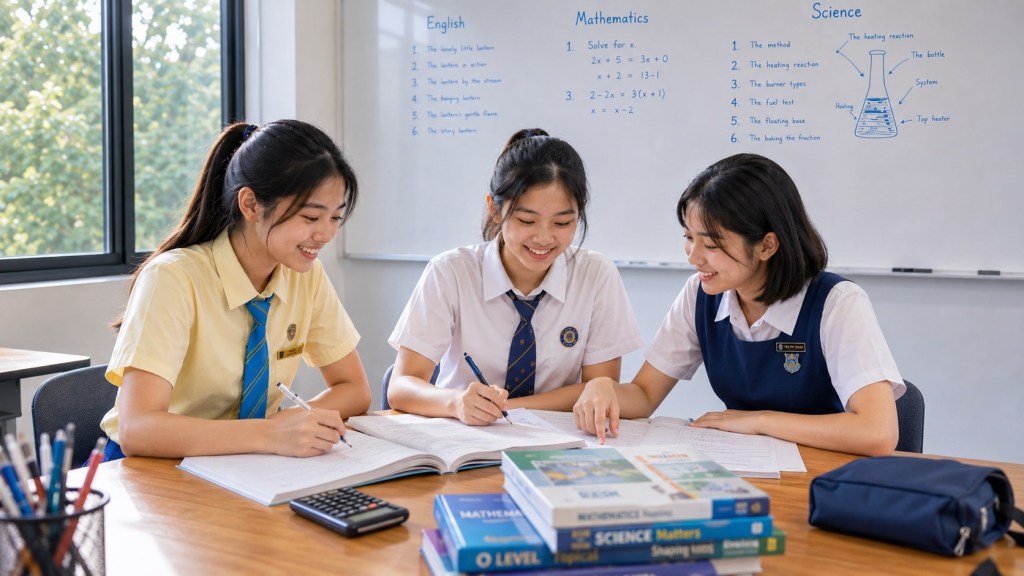
Science exam techniques are not tricks for guessing answers. They are disciplined decisions that help a student show what they actually know under examination conditions. A learner may understand the topic but still lose marks because the command word is misread, a graph axis is ignored, a fair-test variable is confused, an explanation skips the mechanism, an MCQ option is accepted too quickly, or too much time is spent on one difficult item. Strong exam technique protects scientific thinking when the clock, unfamiliar context and mark scheme are all applying pressure.
This Advanced Science Tutorials guide is written for parents and students in Sengkang, Punggol and across Singapore who search for Science exam tips, PSLE Science exam techniques, how to answer Science questions, Science open-ended questions, Science MCQ strategies, Science revision, Science careless mistakes, Science time management and how to score better in Science. It covers Primary readiness, Primary 3–6, PSLE and the transition into Secondary G1, G2 and G3 Science.
The 2026 PSLE Science syllabus assesses knowledge with understanding, application of facts and concepts, interpretation, prediction, analysis, evaluation and communication of explanations and reasoning. That means exam technique cannot be separated from scientific understanding. The official reference is the SEAB PSLE Science syllabus from 2026. For broader study, use How to Study Science Effectively; for revision planning, use the 12-Week PSLE Science Revision Plan.
The 30-second exam operating system
- Read the command word.
- Identify the object, system or organism being asked about.
- Locate the evidence in the text, diagram, graph or table.
- Name the scientific concept that connects the evidence to the answer.
- Decide the minimum complete response.
- Write the relationship clearly.
- Check the unit, condition, comparison and final effect.
- Move on when the answer has done its job.
The operating system is deliberately short. Under pressure, students need a routine that can be repeated many times. The routine should reduce avoidable errors without becoming another long checklist that consumes working memory.
The four layers of Science exam performance
- Knowledge: facts, vocabulary, properties, processes, diagrams and relationships.
- Selection: deciding which concept or model applies to this question.
- Construction: turning the selected idea into the form the command word requires.
- Execution: timing, legibility, units, checking, recovery and paper control.
A student can be strong at one layer and weak at another. Revision should diagnose the first failing layer. More content practice will not fully solve a selection problem; more exam papers will not fully solve a missing-concept problem.
Primary 1 and Primary 2: exam-readiness before formal Science
Formal Primary Science in Singapore begins from Primary 3, but younger students can build exam-ready habits through careful reading and explanation. Ask children to compare two objects, follow a simple instruction exactly, describe what changed, and answer only the question asked. These are pre-examination skills even before formal Science papers begin.
Primary 3 and Primary 4: learn the structure of a Science question
At Primary 3 and Primary 4, students should learn to locate the command word, identify the scientific object, and use evidence from diagrams or simple experiments. They should also begin distinguishing direct observation from explanation.
Use Primary 3 Science answering techniques and Primary 4 experiments, data and conclusions for level-specific practice.
Primary 5: cumulative exam craft
Primary 5 is the right year to stop treating every worksheet as one chapter. Mixed practice should force the learner to select the correct concept before answering. Open-ended explanations, diagrams and experiments should be practised alongside MCQ reasoning.
Primary 6 and PSLE: integrate the whole system
By Primary 6, exam technique must integrate knowledge, data reading, open-ended explanation, MCQ choice, fair-test reasoning, time management and checking. The student should know personal recurring errors before entering the examination.
Use Primary 6 Science Tuition | Careless Mistakes, Timing and Examination Control when the major weakness is execution under examination conditions.
Secondary G1, G2 and G3: more representations, more precision
Lower Secondary Science increases the use of quantitative relationships, laboratory evidence, models and graphs. The same exam operating system still works, but the student needs greater precision with units, terminology and method evaluation.
Use the official G1 and G2/G3 Lower Secondary Science syllabuses together with the school’s actual assessment format.
Read the command word first
Core technique. The command word tells the student what kind of response is required. State, describe, compare, explain, predict, infer, suggest and evaluate are not interchangeable.
Common failure. Students often answer the topic they recognise instead of the task that was asked.
Exam move. Tag the command word before solving and translate it into a job.
Practice drill. Take ten old questions and write the job each command word requires.
Why it matters. This reduces wrong-format answers before content even becomes the problem.
To make this technique durable, practise it in at least two different Science branches. A method that works only for one familiar topic is not yet general exam control. Parents can ask the student to explain the move after a practice paper; tutors can observe whether the move occurs before prompting. The target is independent execution under time pressure.
Read the final line before the long setup
Core technique. Long Science questions can contain a paragraph, diagram and table before the actual task.
Common failure. Students read everything with equal intensity before knowing what matters.
Exam move. Scan the final instruction, then return to collect relevant evidence.
Practice drill. Practise with long data questions using ask-first reading.
Why it matters. Purposeful reading reduces working-memory overload.
To make this technique durable, practise it in at least two different Science branches. A method that works only for one familiar topic is not yet general exam control. Parents can ask the student to explain the move after a practice paper; tutors can observe whether the move occurs before prompting. The target is independent execution under time pressure.
Identify the scientific object
Core technique. Every question is about a specific object, organism, component, quantity or system.
Common failure. Vague answers drift into the whole chapter.
Exam move. Name the object before answering and keep references explicit.
Practice drill. Rewrite vague answers so the scientific object appears clearly.
Why it matters. Reference clarity prevents pronoun and scope errors.
To make this technique durable, practise it in at least two different Science branches. A method that works only for one familiar topic is not yet general exam control. Parents can ask the student to explain the move after a practice paper; tutors can observe whether the move occurs before prompting. The target is independent execution under time pressure.
Identify the condition
Core technique. Science explanations often depend on a stated condition such as hotter, shaded, sealed, equal or after a set time.
Common failure. Students give a generally true fact that ignores the setup.
Exam move. Complete the phrase ‘under this condition’ before applying the concept.
Practice drill. Use pairs of questions where only one condition changes.
Why it matters. Condition sensitivity is essential for transfer.
To make this technique durable, practise it in at least two different Science branches. A method that works only for one familiar topic is not yet general exam control. Parents can ask the student to explain the move after a practice paper; tutors can observe whether the move occurs before prompting. The target is independent execution under time pressure.
Identify the comparison
Core technique. Compare questions require the same property or variable across cases.
Common failure. Students write unrelated facts about A and B.
Exam move. Name the comparison dimension and align both sides.
Practice drill. Build two-column comparison notes before writing.
Why it matters. Matched comparison improves precision and mark efficiency.
To make this technique durable, practise it in at least two different Science branches. A method that works only for one familiar topic is not yet general exam control. Parents can ask the student to explain the move after a practice paper; tutors can observe whether the move occurs before prompting. The target is independent execution under time pressure.
Find evidence before theory
Core technique. Data questions should begin with what the representation shows.
Common failure. Students force a familiar theory onto the evidence.
Exam move. Point to the value, trend or labelled feature first.
Practice drill. Require an evidence sentence before an explanation sentence.
Why it matters. Evidence-first reasoning prevents confirmation bias.
To make this technique durable, practise it in at least two different Science branches. A method that works only for one familiar topic is not yet general exam control. Parents can ask the student to explain the move after a practice paper; tutors can observe whether the move occurs before prompting. The target is independent execution under time pressure.
Separate description from explanation
Core technique. Description states what happened; explanation gives why.
Common failure. Students mix them and do neither cleanly.
Exam move. Use ‘The evidence shows…’ then ‘This happens because…’.
Practice drill. Practise on graphs and experiments.
Why it matters. The distinction transfers across PSLE and Secondary Science.
To make this technique durable, practise it in at least two different Science branches. A method that works only for one familiar topic is not yet general exam control. Parents can ask the student to explain the move after a practice paper; tutors can observe whether the move occurs before prompting. The target is independent execution under time pressure.
State questions
Core technique. State questions usually require a concise fact, value, name or outcome.
Common failure. Students over-answer and create contradictions.
Exam move. Give the requested item with unit if required and stop.
Practice drill. Reduce overlong state answers.
Why it matters. Conciseness protects time and accuracy.
To make this technique durable, practise it in at least two different Science branches. A method that works only for one familiar topic is not yet general exam control. Parents can ask the student to explain the move after a practice paper; tutors can observe whether the move occurs before prompting. The target is independent execution under time pressure.
Describe questions
Core technique. Describe questions require an account of pattern, sequence or observation.
Common failure. Students insert causal language when not asked.
Exam move. Use values, directions and visible features.
Practice drill. Describe five graphs without explaining them.
Why it matters. Evidence description is its own skill.
To make this technique durable, practise it in at least two different Science branches. A method that works only for one familiar topic is not yet general exam control. Parents can ask the student to explain the move after a practice paper; tutors can observe whether the move occurs before prompting. The target is independent execution under time pressure.
Explain questions
Core technique. Explain questions require a mechanism or reason.
Common failure. Students write keywords without a causal bridge.
Exam move. Use condition → process → effect.
Practice drill. Underline cause, process and effect in model answers, then reconstruct.
Why it matters. The missing middle is a common mark loss.
To make this technique durable, practise it in at least two different Science branches. A method that works only for one familiar topic is not yet general exam control. Parents can ask the student to explain the move after a practice paper; tutors can observe whether the move occurs before prompting. The target is independent execution under time pressure.
Compare questions
Core technique. Compare questions require aligned similarities or differences.
Common failure. Two independent descriptions do not form a comparison.
Exam move. Use the same property for both cases.
Practice drill. Convert unrelated facts into comparison sentences.
Why it matters. Alignment makes the comparison scorable.
To make this technique durable, practise it in at least two different Science branches. A method that works only for one familiar topic is not yet general exam control. Parents can ask the student to explain the move after a practice paper; tutors can observe whether the move occurs before prompting. The target is independent execution under time pressure.
Predict questions
Core technique. Prediction states an expected outcome based on evidence or model.
Common failure. Students guess a direction without reasoning.
Exam move. State the expected change and the relevant relationship.
Practice drill. Predict before looking at MCQ options.
Why it matters. Prediction exposes whether the model is usable.
To make this technique durable, practise it in at least two different Science branches. A method that works only for one familiar topic is not yet general exam control. Parents can ask the student to explain the move after a practice paper; tutors can observe whether the move occurs before prompting. The target is independent execution under time pressure.
Infer questions
Core technique. Inference goes beyond direct observation while remaining tied to evidence.
Common failure. Students treat inference as imagination.
Exam move. Identify the observation first, then state what it supports.
Practice drill. Classify observations and inferences before full questions.
Why it matters. Inference discipline controls overclaiming.
To make this technique durable, practise it in at least two different Science branches. A method that works only for one familiar topic is not yet general exam control. Parents can ask the student to explain the move after a practice paper; tutors can observe whether the move occurs before prompting. The target is independent execution under time pressure.
Suggest questions
Core technique. Suggest questions allow plausible answers within constraints.
Common failure. Students give any true fact regardless of relevance.
Exam move. List constraints, then propose an idea that addresses them.
Practice drill. Write one reason for each suggestion.
Why it matters. Relevance matters as much as plausibility.
To make this technique durable, practise it in at least two different Science branches. A method that works only for one familiar topic is not yet general exam control. Parents can ask the student to explain the move after a practice paper; tutors can observe whether the move occurs before prompting. The target is independent execution under time pressure.
Evaluate questions
Core technique. Evaluation requires a judgment supported by criteria or evidence.
Common failure. Students use generic phrases such as ‘not accurate’.
Exam move. Name the feature, its effect and the judgment.
Practice drill. Evaluate methods with one concrete strength or weakness.
Why it matters. Evaluation is reasoned judgment, not opinion.
To make this technique durable, practise it in at least two different Science branches. A method that works only for one familiar topic is not yet general exam control. Parents can ask the student to explain the move after a practice paper; tutors can observe whether the move occurs before prompting. The target is independent execution under time pressure.
MCQ stem discipline
Core technique. The stem defines the task before options distract.
Common failure. Students jump to familiar words in options.
Exam move. Predict the concept or direction before reading choices.
Practice drill. Cover options for selected practice MCQs.
Why it matters. This converts recognition into retrieval.
To make this technique durable, practise it in at least two different Science branches. A method that works only for one familiar topic is not yet general exam control. Parents can ask the student to explain the move after a practice paper; tutors can observe whether the move occurs before prompting. The target is independent execution under time pressure.
Eliminate impossible options
Core technique. Elimination is strongest when each rejection has a scientific reason.
Common failure. Students cross out options by feeling.
Exam move. Say why each wrong option fails condition, evidence or concept.
Practice drill. Keep a distractor notebook of misconceptions.
Why it matters. Wrong options become diagnostic tools.
To make this technique durable, practise it in at least two different Science branches. A method that works only for one familiar topic is not yet general exam control. Parents can ask the student to explain the move after a practice paper; tutors can observe whether the move occurs before prompting. The target is independent execution under time pressure.
Beware partly true options
Core technique. A statement can be true but irrelevant to the stem.
Common failure. Students choose familiar truths.
Exam move. Ask whether the option answers this condition and this question.
Practice drill. Collect true-but-irrelevant distractors.
Why it matters. Relevance is part of correctness.
To make this technique durable, practise it in at least two different Science branches. A method that works only for one familiar topic is not yet general exam control. Parents can ask the student to explain the move after a practice paper; tutors can observe whether the move occurs before prompting. The target is independent execution under time pressure.
Beware absolute words
Core technique. Always, never, all and only can make claims too strong but are not automatic traps.
Common failure. Students use absolute words as a guessing shortcut.
Exam move. Test whether the rule genuinely has no exception at syllabus level.
Practice drill. Rewrite claims with calibrated scope.
Why it matters. Evidence should decide, not superstition.
To make this technique durable, practise it in at least two different Science branches. A method that works only for one familiar topic is not yet general exam control. Parents can ask the student to explain the move after a practice paper; tutors can observe whether the move occurs before prompting. The target is independent execution under time pressure.
Change an MCQ answer only for a reason
Core technique. Changing an answer is useful when new evidence or corrected reasoning appears.
Common failure. Students either never change or endlessly second-guess.
Exam move. Require a specific reason for any change.
Practice drill. Track answer changes in mocks and whether they help.
Why it matters. Metacognitive calibration improves decision quality.
To make this technique durable, practise it in at least two different Science branches. A method that works only for one familiar topic is not yet general exam control. Parents can ask the student to explain the move after a practice paper; tutors can observe whether the move occurs before prompting. The target is independent execution under time pressure.
Open-ended answer scope
Core technique. Open-ended answers need enough Science but not an unrelated chapter summary.
Common failure. Students write everything they know to chase keywords.
Exam move. Identify the endpoint and write the shortest complete route to it.
Practice drill. Shorten long answers without losing the mechanism.
Why it matters. Scope saves time and reduces contradictions.
To make this technique durable, practise it in at least two different Science branches. A method that works only for one familiar topic is not yet general exam control. Parents can ask the student to explain the move after a practice paper; tutors can observe whether the move occurs before prompting. The target is independent execution under time pressure.
Cause-process-effect
Core technique. Many explanations need the middle mechanism.
Common failure. Students jump from condition straight to result.
Exam move. Write cause → process → effect and remove redundancy later.
Practice drill. Apply across heat, plants, circuits, forces and ecosystems.
Why it matters. The pattern is highly transferable.
To make this technique durable, practise it in at least two different Science branches. A method that works only for one familiar topic is not yet general exam control. Parents can ask the student to explain the move after a practice paper; tutors can observe whether the move occurs before prompting. The target is independent execution under time pressure.
Use precise verbs
Core technique. Scientific verbs name processes more clearly than vague language.
Common failure. Students write goes, helps, affects or does.
Exam move. Replace vague verbs with the relevant process term.
Practice drill. Build a verb bank from corrections.
Why it matters. Precision should reveal the mechanism.
To make this technique durable, practise it in at least two different Science branches. A method that works only for one familiar topic is not yet general exam control. Parents can ask the student to explain the move after a practice paper; tutors can observe whether the move occurs before prompting. The target is independent execution under time pressure.
Use units consistently
Core technique. Units identify quantities and often carry marks.
Common failure. Students copy numbers without units or mix unit systems.
Exam move. Write quantity and unit together during working.
Practice drill. Circle unit errors separately when marking.
Why it matters. Unit discipline prevents interpretation errors.
To make this technique durable, practise it in at least two different Science branches. A method that works only for one familiar topic is not yet general exam control. Parents can ask the student to explain the move after a practice paper; tutors can observe whether the move occurs before prompting. The target is independent execution under time pressure.
Check graph axes
Core technique. Graphs cannot be interpreted until variables and units are known.
Common failure. Students see an upward line and answer immediately.
Exam move. Read x-axis, y-axis, units and scale before trend.
Practice drill. Practise axis-first graph reading.
Why it matters. This should become automatic.
To make this technique durable, practise it in at least two different Science branches. A method that works only for one familiar topic is not yet general exam control. Parents can ask the student to explain the move after a practice paper; tutors can observe whether the move occurs before prompting. The target is independent execution under time pressure.
Check graph scale
Core technique. Visual steepness depends on scale.
Common failure. Students compare appearance instead of numbers.
Exam move. Identify start and interval before comparing.
Practice drill. Plot the same data on different scales.
Why it matters. Numbers outrank visual intuition.
To make this technique durable, practise it in at least two different Science branches. A method that works only for one familiar topic is not yet general exam control. Parents can ask the student to explain the move after a practice paper; tutors can observe whether the move occurs before prompting. The target is independent execution under time pressure.
Describe trend before cause
Core technique. Evidence and explanation are distinct jobs.
Common failure. Students write the expected mechanism even when the graph differs.
Exam move. State the pattern first, then explain if asked.
Practice drill. Use separate evidence and explanation annotations.
Why it matters. Unexpected data become easier to handle.
To make this technique durable, practise it in at least two different Science branches. A method that works only for one familiar topic is not yet general exam control. Parents can ask the student to explain the move after a practice paper; tutors can observe whether the move occurs before prompting. The target is independent execution under time pressure.
Notice anomalies
Core technique. Anomalies can affect conclusions and evaluation.
Common failure. Students mentally erase inconvenient points.
Exam move. Identify the unusual value and decide whether it changes the pattern.
Practice drill. Practise writing cautious anomaly statements.
Why it matters. An anomaly deserves investigation, not automatic deletion.
To make this technique durable, practise it in at least two different Science branches. A method that works only for one familiar topic is not yet general exam control. Parents can ask the student to explain the move after a practice paper; tutors can observe whether the move occurs before prompting. The target is independent execution under time pressure.
Do not extrapolate casually
Core technique. Predictions outside the measured range carry greater uncertainty.
Common failure. Students extend a trend indefinitely.
Exam move. Mark the observed range before predicting.
Practice drill. Compare interpolation and extrapolation.
Why it matters. Scope protects scientific credibility.
To make this technique durable, practise it in at least two different Science branches. A method that works only for one familiar topic is not yet general exam control. Parents can ask the student to explain the move after a practice paper; tutors can observe whether the move occurs before prompting. The target is independent execution under time pressure.
Table reading
Core technique. Tables require matched comparison across headings and units.
Common failure. Students compare convenient values from different conditions.
Exam move. Locate the exact rows and columns relevant to the task.
Practice drill. Trace values during practice.
Why it matters. Matched evidence prevents invalid comparisons.
To make this technique durable, practise it in at least two different Science branches. A method that works only for one familiar topic is not yet general exam control. Parents can ask the student to explain the move after a practice paper; tutors can observe whether the move occurs before prompting. The target is independent execution under time pressure.
Diagram conventions
Core technique. Arrows, colours and proportions can be symbolic.
Common failure. Students interpret diagrams literally.
Exam move. Read labels and legends; ask what the model omits.
Practice drill. Explain conventions in three diagrams.
Why it matters. Models are selective representations.
To make this technique durable, practise it in at least two different Science branches. A method that works only for one familiar topic is not yet general exam control. Parents can ask the student to explain the move after a practice paper; tutors can observe whether the move occurs before prompting. The target is independent execution under time pressure.
Circuit tracing
Core technique. Circuit questions require connectivity reasoning.
Common failure. Students use visual layout rather than actual connections.
Exam move. Trace complete conducting paths through junctions.
Practice drill. Redraw the same circuit with a different layout.
Why it matters. Connectivity should survive picture changes.
To make this technique durable, practise it in at least two different Science branches. A method that works only for one familiar topic is not yet general exam control. Parents can ask the student to explain the move after a practice paper; tutors can observe whether the move occurs before prompting. The target is independent execution under time pressure.
Food-web tracing
Core technique. Food-web questions require specific pathway reasoning.
Common failure. Students write ‘everything changes’.
Exam move. Trace direct and indirect relationships one path at a time.
Practice drill. Mark only arrows relevant to the question.
Why it matters. Mechanism is stronger than generic system language.
To make this technique durable, practise it in at least two different Science branches. A method that works only for one familiar topic is not yet general exam control. Parents can ask the student to explain the move after a practice paper; tutors can observe whether the move occurs before prompting. The target is independent execution under time pressure.
Heat-transfer direction
Core technique. Heat answers require direction and temperature context.
Common failure. Students confuse heat with temperature.
Exam move. Identify hotter and colder objects and direction of thermal energy transfer.
Practice drill. Practise across different materials.
Why it matters. Direction is part of the explanation.
To make this technique durable, practise it in at least two different Science branches. A method that works only for one familiar topic is not yet general exam control. Parents can ask the student to explain the move after a practice paper; tutors can observe whether the move occurs before prompting. The target is independent execution under time pressure.
Force questions
Core technique. Force explanations need interacting objects and direction.
Common failure. Students name a force without its effect.
Exam move. Identify object, force, direction and change in motion or shape.
Practice drill. Use simple force-arrow tasks.
Why it matters. A force label alone may be incomplete.
To make this technique durable, practise it in at least two different Science branches. A method that works only for one familiar topic is not yet general exam control. Parents can ask the student to explain the move after a practice paper; tutors can observe whether the move occurs before prompting. The target is independent execution under time pressure.
Energy questions
Core technique. Energy answers should track transfer or transformation.
Common failure. Students write ‘energy is used up’.
Exam move. Identify starting form/store, transfer pathway and outcome.
Practice drill. Build energy chains for devices.
Why it matters. Conservation-aware reasoning improves transfer.
To make this technique durable, practise it in at least two different Science branches. A method that works only for one familiar topic is not yet general exam control. Parents can ask the student to explain the move after a practice paper; tutors can observe whether the move occurs before prompting. The target is independent execution under time pressure.
Chemical-change evidence
Core technique. Chemical-change questions require evidence for new substances.
Common failure. Students treat bubbles or colour change as proof.
Exam move. Consider alternative physical explanations and use context.
Practice drill. Evaluate several reaction-evidence scenarios.
Why it matters. Evidence must support the chemical claim.
To make this technique durable, practise it in at least two different Science branches. A method that works only for one familiar topic is not yet general exam control. Parents can ask the student to explain the move after a practice paper; tutors can observe whether the move occurs before prompting. The target is independent execution under time pressure.
Variable identification
Core technique. Investigation questions depend on changed and measured factors.
Common failure. Students memorise labels without reading the purpose.
Exam move. Rewrite the question as ‘How does X affect Y?’.
Practice drill. Practise with unfamiliar setups.
Why it matters. The investigation question reveals the variables.
To make this technique durable, practise it in at least two different Science branches. A method that works only for one familiar topic is not yet general exam control. Parents can ask the student to explain the move after a practice paper; tutors can observe whether the move occurs before prompting. The target is independent execution under time pressure.
Fair-test logic
Core technique. A fair test protects a comparison from plausible competing causes.
Common failure. Students list irrelevant controls or miss the important one.
Exam move. For each control, state the wrong conclusion it prevents.
Practice drill. Audit flawed methods.
Why it matters. Control reasoning is stronger than vocabulary alone.
To make this technique durable, practise it in at least two different Science branches. A method that works only for one familiar topic is not yet general exam control. Parents can ask the student to explain the move after a practice paper; tutors can observe whether the move occurs before prompting. The target is independent execution under time pressure.
Repeated trials
Core technique. Repeats address variability, not every error.
Common failure. Students prescribe repeats for systematic bias.
Exam move. Diagnose random variation versus bias.
Practice drill. Match method weaknesses to remedies.
Why it matters. More trials do not repair a miscalibrated instrument.
To make this technique durable, practise it in at least two different Science branches. A method that works only for one familiar topic is not yet general exam control. Parents can ask the student to explain the move after a practice paper; tutors can observe whether the move occurs before prompting. The target is independent execution under time pressure.
Sample size
Core technique. Biological and environmental studies may need more independent units.
Common failure. Students confuse repeated measurement with sample size.
Exam move. Distinguish one specimen measured many times from many specimens.
Practice drill. Compare alternative designs.
Why it matters. Different variability sources require different designs.
To make this technique durable, practise it in at least two different Science branches. A method that works only for one familiar topic is not yet general exam control. Parents can ask the student to explain the move after a practice paper; tutors can observe whether the move occurs before prompting. The target is independent execution under time pressure.
Method improvement
Core technique. An improvement should fix a named limitation.
Common failure. Students write ‘be more careful’.
Exam move. State limitation → change → reason.
Practice drill. Build limitation-improvement pairs.
Why it matters. Specificity reveals understanding.
To make this technique durable, practise it in at least two different Science branches. A method that works only for one familiar topic is not yet general exam control. Parents can ask the student to explain the move after a practice paper; tutors can observe whether the move occurs before prompting. The target is independent execution under time pressure.
Conclusion proportionality
Core technique. Conclusions should not exceed tested conditions or samples.
Common failure. Students write universal claims after small investigations.
Exam move. Tie the claim to tested range and evidence.
Practice drill. Rewrite overstrong conclusions.
Why it matters. Scientific caution is precision.
To make this technique durable, practise it in at least two different Science branches. A method that works only for one familiar topic is not yet general exam control. Parents can ask the student to explain the move after a practice paper; tutors can observe whether the move occurs before prompting. The target is independent execution under time pressure.
Time-budget first pass
Core technique. A first pass should secure accessible marks before one hard item consumes time.
Common failure. Students equate leaving a question with failure.
Exam move. Use a personal stop rule, mark the item and return.
Practice drill. Practise two-pass papers.
Why it matters. Paper control protects total performance.
To make this technique durable, practise it in at least two different Science branches. A method that works only for one familiar topic is not yet general exam control. Parents can ask the student to explain the move after a practice paper; tutors can observe whether the move occurs before prompting. The target is independent execution under time pressure.
Time per mark awareness
Core technique. Mark allocation can help calibrate response scope.
Common failure. Students write paragraphs for one-mark items and fragments for multi-mark explanations.
Exam move. Use marks as one clue to expected depth.
Practice drill. Compare answer lengths across mark values.
Why it matters. Calibration improves efficiency.
To make this technique durable, practise it in at least two different Science branches. A method that works only for one familiar topic is not yet general exam control. Parents can ask the student to explain the move after a practice paper; tutors can observe whether the move occurs before prompting. The target is independent execution under time pressure.
Skip and return
Core technique. Leaving a blocked item temporarily can protect the paper.
Common failure. Students stare until time drains away.
Exam move. Mark clearly, continue and return in the planned second pass.
Practice drill. Practise with difficult early questions.
Why it matters. Recovery is an exam skill.
To make this technique durable, practise it in at least two different Science branches. A method that works only for one familiar topic is not yet general exam control. Parents can ask the student to explain the move after a practice paper; tutors can observe whether the move occurs before prompting. The target is independent execution under time pressure.
Micro-reset after a hard item
Core technique. Frustration can contaminate the next question.
Common failure. Students rush or ruminate.
Exam move. Use a brief reset and read the next stem from zero.
Practice drill. Practise resets in mocks.
Why it matters. Stress should not become a second error source.
To make this technique durable, practise it in at least two different Science branches. A method that works only for one familiar topic is not yet general exam control. Parents can ask the student to explain the move after a practice paper; tutors can observe whether the move occurs before prompting. The target is independent execution under time pressure.
Check unanswered subparts
Core technique. Multi-part questions can hide missed items.
Common failure. Students overlook b(ii) or later subparts.
Exam move. Scan numbering during final checks.
Practice drill. Use completion ticks during practice if permitted.
Why it matters. Completion checks recover straightforward marks.
To make this technique durable, practise it in at least two different Science branches. A method that works only for one familiar topic is not yet general exam control. Parents can ask the student to explain the move after a practice paper; tutors can observe whether the move occurs before prompting. The target is independent execution under time pressure.
Check comparison direction
Core technique. Reversing A and B can invalidate correct thinking.
Common failure. Students know values but switch labels in writing.
Exam move. Point to both values and reread the sentence direction.
Practice drill. Practise near-identical labels.
Why it matters. Directional accuracy matters.
To make this technique durable, practise it in at least two different Science branches. A method that works only for one familiar topic is not yet general exam control. Parents can ask the student to explain the move after a practice paper; tutors can observe whether the move occurs before prompting. The target is independent execution under time pressure.
Check condition words
Core technique. Words such as only, except, sealed, equal, most and least can decide the answer.
Common failure. Students skim function words.
Exam move. Underline or mentally tag condition words.
Practice drill. Build a personal condition-word error list.
Why it matters. Reading precision is Science precision.
To make this technique durable, practise it in at least two different Science branches. A method that works only for one familiar topic is not yet general exam control. Parents can ask the student to explain the move after a practice paper; tutors can observe whether the move occurs before prompting. The target is independent execution under time pressure.
Check negative stems
Core technique. NOT, except and least invert tasks.
Common failure. Students answer the positive version by habit.
Exam move. Restate the stem before choosing.
Practice drill. Mix positive and negative MCQ stems.
Why it matters. Task inversion must be caught early.
To make this technique durable, practise it in at least two different Science branches. A method that works only for one familiar topic is not yet general exam control. Parents can ask the student to explain the move after a practice paper; tutors can observe whether the move occurs before prompting. The target is independent execution under time pressure.
Check contradictions
Core technique. An answer should not contradict evidence or itself.
Common failure. Students append a memorised phrase that reverses their conclusion.
Exam move. Compare the final sentence with the graph or setup.
Practice drill. Edit deliberate contradictions.
Why it matters. Coherence is a valid checking target.
To make this technique durable, practise it in at least two different Science branches. A method that works only for one familiar topic is not yet general exam control. Parents can ask the student to explain the move after a practice paper; tutors can observe whether the move occurs before prompting. The target is independent execution under time pressure.
Legibility
Core technique. Answers must be readable enough to interpret intended words, symbols and numbers.
Common failure. Students rush into ambiguous handwriting.
Exam move. Maintain normal size and spacing under time.
Practice drill. Practise one timed page with readable writing.
Why it matters. Functional readability protects credit.
To make this technique durable, practise it in at least two different Science branches. A method that works only for one familiar topic is not yet general exam control. Parents can ask the student to explain the move after a practice paper; tutors can observe whether the move occurs before prompting. The target is independent execution under time pressure.
Diagram labels
Core technique. Labels must point clearly to correct structures.
Common failure. Students cross lines or misplace endpoints.
Exam move. Use clear lines and verify each endpoint.
Practice drill. Redraw labelled diagrams under time.
Why it matters. A correct word pointing to the wrong part is still wrong.
To make this technique durable, practise it in at least two different Science branches. A method that works only for one familiar topic is not yet general exam control. Parents can ask the student to explain the move after a practice paper; tutors can observe whether the move occurs before prompting. The target is independent execution under time pressure.
Graph plotting
Core technique. Plots must match the table and scale.
Common failure. Students rush points or misuse graph type.
Exam move. Check scale, plot, then verify two anchor values.
Practice drill. Plot small datasets accurately.
Why it matters. Representation accuracy is part of scientific communication.
To make this technique durable, practise it in at least two different Science branches. A method that works only for one familiar topic is not yet general exam control. Parents can ask the student to explain the move after a practice paper; tutors can observe whether the move occurs before prompting. The target is independent execution under time pressure.
Show working
Core technique. Quantitative Secondary Science benefits from visible method.
Common failure. Students do mental arithmetic and cannot locate errors.
Exam move. Write relationship, substitute values with units where appropriate, then calculate.
Practice drill. Mark where worked solutions first go wrong.
Why it matters. Visible working supports diagnosis and method credit where applicable.
To make this technique durable, practise it in at least two different Science branches. A method that works only for one familiar topic is not yet general exam control. Parents can ask the student to explain the move after a practice paper; tutors can observe whether the move occurs before prompting. The target is independent execution under time pressure.
Formula selection
Core technique. Formulas should come from physical meaning, not symbol matching.
Common failure. Students hunt equations containing familiar letters.
Exam move. Name quantities and relationship before substituting.
Practice drill. Ask for formula choice without numbers.
Why it matters. Equation use should follow conceptual selection.
To make this technique durable, practise it in at least two different Science branches. A method that works only for one familiar topic is not yet general exam control. Parents can ask the student to explain the move after a practice paper; tutors can observe whether the move occurs before prompting. The target is independent execution under time pressure.
Estimate first
Core technique. A rough expectation can catch calculator and unit errors.
Common failure. Students accept any calculator output.
Exam move. Estimate direction or order of magnitude before exact calculation.
Practice drill. Use deliberately absurd outputs.
Why it matters. Estimation is efficient error detection.
To make this technique durable, practise it in at least two different Science branches. A method that works only for one familiar topic is not yet general exam control. Parents can ask the student to explain the move after a practice paper; tutors can observe whether the move occurs before prompting. The target is independent execution under time pressure.
Significant figures and precision
Core technique. Reported precision should reflect data and course conventions.
Common failure. Students copy all calculator digits.
Exam move. Use measurement precision and instructions to report sensibly.
Practice drill. Practise rounding at the end.
Why it matters. False precision weakens scientific reporting.
To make this technique durable, practise it in at least two different Science branches. A method that works only for one familiar topic is not yet general exam control. Parents can ask the student to explain the move after a practice paper; tutors can observe whether the move occurs before prompting. The target is independent execution under time pressure.
Past paper as diagnosis
Core technique. A past paper should change future practice.
Common failure. Students collect scores without changing behaviour.
Exam move. Classify each error by knowledge, selection, construction or execution.
Practice drill. Repair top recurring errors before the next full paper.
Why it matters. Paper volume without diagnosis can repeat failure.
To make this technique durable, practise it in at least two different Science branches. A method that works only for one familiar topic is not yet general exam control. Parents can ask the student to explain the move after a practice paper; tutors can observe whether the move occurs before prompting. The target is independent execution under time pressure.
Model-answer use
Core technique. Model answers reveal structure but should not become scripts.
Common failure. Students memorise wording.
Exam move. Compare, identify missing relationships, close the model and rewrite.
Practice drill. Then answer a changed question.
Why it matters. Transfer proves learning.
To make this technique durable, practise it in at least two different Science branches. A method that works only for one familiar topic is not yet general exam control. Parents can ask the student to explain the move after a practice paper; tutors can observe whether the move occurs before prompting. The target is independent execution under time pressure.
Self-marking calibration
Core technique. Self-marking can inflate scores when learners award what they meant.
Common failure. Students read intention into vague writing.
Exam move. Mark only what is on the page.
Practice drill. Re-mark after a delay.
Why it matters. Honest marking improves diagnosis.
To make this technique durable, practise it in at least two different Science branches. A method that works only for one familiar topic is not yet general exam control. Parents can ask the student to explain the move after a practice paper; tutors can observe whether the move occurs before prompting. The target is independent execution under time pressure.
Error log
Core technique. An error log should capture recurring decisions.
Common failure. Students copy whole questions into huge notebooks.
Exam move. Record question type, first failure, corrected rule and next retest.
Practice drill. Review before timed work.
Why it matters. A small active log beats an archive.
To make this technique durable, practise it in at least two different Science branches. A method that works only for one familiar topic is not yet general exam control. Parents can ask the student to explain the move after a practice paper; tutors can observe whether the move occurs before prompting. The target is independent execution under time pressure.
Delayed retest
Core technique. Same-day correction is weak evidence.
Common failure. Students assume learning because the answer feels obvious after correction.
Exam move. Retest after days and in a changed context.
Practice drill. Use a different surface example.
Why it matters. Durability is part of mastery.
To make this technique durable, practise it in at least two different Science branches. A method that works only for one familiar topic is not yet general exam control. Parents can ask the student to explain the move after a practice paper; tutors can observe whether the move occurs before prompting. The target is independent execution under time pressure.
Final week stabilisation
Core technique. The final week should protect proven routines.
Common failure. Students invent new notes and chase extreme questions.
Exam move. Use retrieval, personal error list, short mixed practice and adequate sleep.
Practice drill. Plan the final week in advance.
Why it matters. Familiar process supports execution.
To make this technique durable, practise it in at least two different Science branches. A method that works only for one familiar topic is not yet general exam control. Parents can ask the student to explain the move after a practice paper; tutors can observe whether the move occurs before prompting. The target is independent execution under time pressure.
Night-before routine
Core technique. The night before should reduce uncertainty, not maximise volume.
Common failure. Students stay up doing one last giant paper.
Exam move. Review compact high-value material, prepare items and stop.
Practice drill. Practise a cut-off routine before school tests.
Why it matters. Sleep supports attention and recall.
To make this technique durable, practise it in at least two different Science branches. A method that works only for one familiar topic is not yet general exam control. Parents can ask the student to explain the move after a practice paper; tutors can observe whether the move occurs before prompting. The target is independent execution under time pressure.
Morning-of-exam routine
Core technique. The morning should preserve routine and reduce clutter.
Common failure. Students cram unfamiliar details or compare with peers.
Exam move. Use a light warm-up only if helpful, eat normally and arrive prepared.
Practice drill. Pre-plan the routine.
Why it matters. Consistency is more useful than novelty.
To make this technique durable, practise it in at least two different Science branches. A method that works only for one familiar topic is not yet general exam control. Parents can ask the student to explain the move after a practice paper; tutors can observe whether the move occurs before prompting. The target is independent execution under time pressure.
Panic recovery
Core technique. Stress can narrow attention and make familiar questions look unfamiliar.
Common failure. Students interpret panic as proof they know nothing.
Exam move. Return to command, object, evidence and concept.
Practice drill. Practise recovery in mocks.
Why it matters. A stress response is not a knowledge diagnosis.
To make this technique durable, practise it in at least two different Science branches. A method that works only for one familiar topic is not yet general exam control. Parents can ask the student to explain the move after a practice paper; tutors can observe whether the move occurs before prompting. The target is independent execution under time pressure.
Blank recovery
Core technique. Retrieval can fail temporarily.
Common failure. Students stare at one item until time is lost.
Exam move. Write any cue, move on and return after other questions activate related knowledge.
Practice drill. Practise skip-return deliberately.
Why it matters. Memory search can improve after context change.
To make this technique durable, practise it in at least two different Science branches. A method that works only for one familiar topic is not yet general exam control. Parents can ask the student to explain the move after a practice paper; tutors can observe whether the move occurs before prompting. The target is independent execution under time pressure.
End-of-paper scan
Core technique. Final minutes should target high-yield checks.
Common failure. Students reread the paper from page one and run out of time.
Exam move. Scan blanks, units, negative stems, comparison direction and labels first.
Practice drill. Build a personal final-scan order.
Why it matters. Checking should reflect known risk.
To make this technique durable, practise it in at least two different Science branches. A method that works only for one familiar topic is not yet general exam control. Parents can ask the student to explain the move after a practice paper; tutors can observe whether the move occurs before prompting. The target is independent execution under time pressure.
Post-exam review
Core technique. Returned papers should update the next learning cycle.
Common failure. Students focus only on total score or peer comparison.
Exam move. Classify lost marks and choose high-leverage repairs.
Practice drill. Retest repaired skills later.
Why it matters. Results become useful when they change future practice.
To make this technique durable, practise it in at least two different Science branches. A method that works only for one familiar topic is not yet general exam control. Parents can ask the student to explain the move after a practice paper; tutors can observe whether the move occurs before prompting. The target is independent execution under time pressure.
A 90-minute practice-paper routine
- Before starting: write the three personal errors you are watching for.
- First pass: answer secure questions and mark stuck items for return.
- Second pass: solve difficult questions with remaining time.
- Final scan: unanswered parts, negative stems, units, comparison direction, diagrams and graphs.
- After marking: classify each lost mark by knowledge, selection, construction or execution.
- Repair the three highest-leverage errors.
- Retest them after a delay before doing another full paper.
A 30-minute Science exam-technique clinic
- 5 minutes: command-word drill.
- 5 minutes: one graph or table reading task.
- 5 minutes: one variables/fair-test task.
- 5 minutes: one MCQ distractor analysis.
- 5 minutes: one open-ended cause-process-effect answer.
- 5 minutes: checking and error-log update.
A twelve-week exam-technique plan
- Week 1: command words and answer scope.
- Week 2: MCQ stems, prediction and distractors.
- Week 3: open-ended mechanisms.
- Week 4: diagrams and model reading.
- Week 5: graphs and tables.
- Week 6: variables, fair tests and method evaluation.
- Week 7: mixed-topic selection.
- Week 8: timed short sections.
- Week 9: full-paper first-pass strategy.
- Week 10: personal error log and delayed retest.
- Week 11: checking routines and recovery under pressure.
- Week 12: full simulation and final stabilisation.
Parent role before Science examinations
Parents do not need to become the examiner. The useful role is to protect routine and ask diagnostic questions: What is your top recurring error? Which questions cost you time? What is your skip rule? What do you check in the final minutes? Which concept has been retested after correction?
Avoid turning the final week into a daily score interrogation. A stable learner needs accurate feedback, sleep and a familiar plan more than another emotional prediction about the grade.
Tutor role in a three-student exam lesson
A three-student lesson can expose different exam failures. One learner may choose the wrong concept, another may know the concept but write an incomplete explanation, and a third may lose time through over-answering. Give the same question, let all three attempt independently, then compare the first point where each route diverged.
The small group becomes valuable when the tutor uses those differences to change the next prompt rather than simply reading out the model answer.
Frequently asked questions
What is the best Science exam technique?
There is no single trick. The most transferable routine is command word → evidence → concept → minimum complete answer → targeted check.
How do I stop careless mistakes?
Replace “careless” with the first wrong decision: missed unit, reversed comparison, ignored condition, wrong concept or skipped subpart. Build a check for that specific error.
Should I answer hard questions first?
Usually secure marks should be protected, but the best order depends on paper format and learner profile. Use timed practice to find a stable first-pass strategy.
How long should an open-ended answer be?
Long enough to show the required relationship and no longer than necessary. Mark allocation and command word help calibrate scope.
Should I memorise model answers?
Use models to learn structure and precision, then close them. Reconstruct and transfer to a changed question.
What if I panic and forget everything?
Return to the operating routine: identify command, object, evidence and concept. Skip temporarily if retrieval remains blocked and return later.
How many practice papers should I do?
Use enough papers to test integrated performance, but only when each paper is analysed and repaired. More papers without correction can repeat the same errors.
How can parents help?
Ask about the learner’s process and recurring errors rather than supplying answers. Protect sleep, routine and realistic practice volume.
Internal routes
- PSLE Science Learning Guide
- Primary 6 Careless Mistakes, Timing and Examination Control
- How to Study Science Effectively
- 12-Week PSLE Science Revision Plan
- Scientific Method for Students
- Primary Science Tuition Sengkang
Final operating rule
Strong Science exam technique is the ability to keep scientific reasoning intact under constraints. Read the task. Find the evidence. Choose the model. Build the shortest complete answer. Check the personal risk points. Move on. Recover when stuck. Then use the marked paper to improve the next attempt. The exam is not separate from learning; it is where knowledge, selection, construction and execution have to work together.
Read the command word first — transfer clinic 1
Begin with a fresh question from a different Science topic. Before answering, ask the student to describe read the command word first in operational terms. The learner must show when the technique is used, what evidence triggers it, and what error it is meant to prevent. A technique that can only be named after prompting is not yet automatic enough for examination conditions.
Now deliberately recreate the common failure: Students often answer the topic they recognise instead of the task that was asked.. Ask the learner to identify the first decision that went wrong and predict how that error would affect the final answer, timing or mark. This turns error analysis into a causal chain rather than a vague instruction to be more careful.
Run the corrective move: Tag the command word before solving and translate it into a job.. The student should complete the item, then explain why the move changed the reasoning rather than merely the wording. Next, use the drill—Take ten old questions and write the job each command word requires.—with a second context. The target is transfer across content, not repetition of one answer pattern.
Finish with a delayed return several days later. The reason this matters is This reduces wrong-format answers before content even becomes the problem. When the technique survives delay, unfamiliar content and time pressure without tutor prompting, it is becoming part of the learner’s examination operating system.
Read the final line before the long setup — transfer clinic 1
Begin with a fresh question from a different Science topic. Before answering, ask the student to describe read the final line before the long setup in operational terms. The learner must show when the technique is used, what evidence triggers it, and what error it is meant to prevent. A technique that can only be named after prompting is not yet automatic enough for examination conditions.
Now deliberately recreate the common failure: Students read everything with equal intensity before knowing what matters.. Ask the learner to identify the first decision that went wrong and predict how that error would affect the final answer, timing or mark. This turns error analysis into a causal chain rather than a vague instruction to be more careful.
Run the corrective move: Scan the final instruction, then return to collect relevant evidence.. The student should complete the item, then explain why the move changed the reasoning rather than merely the wording. Next, use the drill—Practise with long data questions using ask-first reading.—with a second context. The target is transfer across content, not repetition of one answer pattern.
Finish with a delayed return several days later. The reason this matters is Purposeful reading reduces working-memory overload. When the technique survives delay, unfamiliar content and time pressure without tutor prompting, it is becoming part of the learner’s examination operating system.
Identify the scientific object — transfer clinic 1
Begin with a fresh question from a different Science topic. Before answering, ask the student to describe identify the scientific object in operational terms. The learner must show when the technique is used, what evidence triggers it, and what error it is meant to prevent. A technique that can only be named after prompting is not yet automatic enough for examination conditions.
Now deliberately recreate the common failure: Vague answers drift into the whole chapter.. Ask the learner to identify the first decision that went wrong and predict how that error would affect the final answer, timing or mark. This turns error analysis into a causal chain rather than a vague instruction to be more careful.
Run the corrective move: Name the object before answering and keep references explicit.. The student should complete the item, then explain why the move changed the reasoning rather than merely the wording. Next, use the drill—Rewrite vague answers so the scientific object appears clearly.—with a second context. The target is transfer across content, not repetition of one answer pattern.
Finish with a delayed return several days later. The reason this matters is Reference clarity prevents pronoun and scope errors. When the technique survives delay, unfamiliar content and time pressure without tutor prompting, it is becoming part of the learner’s examination operating system.
Identify the condition — transfer clinic 1
Begin with a fresh question from a different Science topic. Before answering, ask the student to describe identify the condition in operational terms. The learner must show when the technique is used, what evidence triggers it, and what error it is meant to prevent. A technique that can only be named after prompting is not yet automatic enough for examination conditions.
Now deliberately recreate the common failure: Students give a generally true fact that ignores the setup.. Ask the learner to identify the first decision that went wrong and predict how that error would affect the final answer, timing or mark. This turns error analysis into a causal chain rather than a vague instruction to be more careful.
Run the corrective move: Complete the phrase ‘under this condition’ before applying the concept.. The student should complete the item, then explain why the move changed the reasoning rather than merely the wording. Next, use the drill—Use pairs of questions where only one condition changes.—with a second context. The target is transfer across content, not repetition of one answer pattern.
Finish with a delayed return several days later. The reason this matters is Condition sensitivity is essential for transfer. When the technique survives delay, unfamiliar content and time pressure without tutor prompting, it is becoming part of the learner’s examination operating system.
Identify the comparison — transfer clinic 1
Begin with a fresh question from a different Science topic. Before answering, ask the student to describe identify the comparison in operational terms. The learner must show when the technique is used, what evidence triggers it, and what error it is meant to prevent. A technique that can only be named after prompting is not yet automatic enough for examination conditions.
Now deliberately recreate the common failure: Students write unrelated facts about A and B.. Ask the learner to identify the first decision that went wrong and predict how that error would affect the final answer, timing or mark. This turns error analysis into a causal chain rather than a vague instruction to be more careful.
Run the corrective move: Name the comparison dimension and align both sides.. The student should complete the item, then explain why the move changed the reasoning rather than merely the wording. Next, use the drill—Build two-column comparison notes before writing.—with a second context. The target is transfer across content, not repetition of one answer pattern.
Finish with a delayed return several days later. The reason this matters is Matched comparison improves precision and mark efficiency. When the technique survives delay, unfamiliar content and time pressure without tutor prompting, it is becoming part of the learner’s examination operating system.
Find evidence before theory — transfer clinic 1
Begin with a fresh question from a different Science topic. Before answering, ask the student to describe find evidence before theory in operational terms. The learner must show when the technique is used, what evidence triggers it, and what error it is meant to prevent. A technique that can only be named after prompting is not yet automatic enough for examination conditions.
Now deliberately recreate the common failure: Students force a familiar theory onto the evidence.. Ask the learner to identify the first decision that went wrong and predict how that error would affect the final answer, timing or mark. This turns error analysis into a causal chain rather than a vague instruction to be more careful.
Run the corrective move: Point to the value, trend or labelled feature first.. The student should complete the item, then explain why the move changed the reasoning rather than merely the wording. Next, use the drill—Require an evidence sentence before an explanation sentence.—with a second context. The target is transfer across content, not repetition of one answer pattern.
Finish with a delayed return several days later. The reason this matters is Evidence-first reasoning prevents confirmation bias. When the technique survives delay, unfamiliar content and time pressure without tutor prompting, it is becoming part of the learner’s examination operating system.
Separate description from explanation — transfer clinic 1
Begin with a fresh question from a different Science topic. Before answering, ask the student to describe separate description from explanation in operational terms. The learner must show when the technique is used, what evidence triggers it, and what error it is meant to prevent. A technique that can only be named after prompting is not yet automatic enough for examination conditions.
Now deliberately recreate the common failure: Students mix them and do neither cleanly.. Ask the learner to identify the first decision that went wrong and predict how that error would affect the final answer, timing or mark. This turns error analysis into a causal chain rather than a vague instruction to be more careful.
Run the corrective move: Use ‘The evidence shows…’ then ‘This happens because…’.. The student should complete the item, then explain why the move changed the reasoning rather than merely the wording. Next, use the drill—Practise on graphs and experiments.—with a second context. The target is transfer across content, not repetition of one answer pattern.
Finish with a delayed return several days later. The reason this matters is The distinction transfers across PSLE and Secondary Science. When the technique survives delay, unfamiliar content and time pressure without tutor prompting, it is becoming part of the learner’s examination operating system.
State questions — transfer clinic 1
Begin with a fresh question from a different Science topic. Before answering, ask the student to describe state questions in operational terms. The learner must show when the technique is used, what evidence triggers it, and what error it is meant to prevent. A technique that can only be named after prompting is not yet automatic enough for examination conditions.
Now deliberately recreate the common failure: Students over-answer and create contradictions.. Ask the learner to identify the first decision that went wrong and predict how that error would affect the final answer, timing or mark. This turns error analysis into a causal chain rather than a vague instruction to be more careful.
Run the corrective move: Give the requested item with unit if required and stop.. The student should complete the item, then explain why the move changed the reasoning rather than merely the wording. Next, use the drill—Reduce overlong state answers.—with a second context. The target is transfer across content, not repetition of one answer pattern.
Finish with a delayed return several days later. The reason this matters is Conciseness protects time and accuracy. When the technique survives delay, unfamiliar content and time pressure without tutor prompting, it is becoming part of the learner’s examination operating system.
Describe questions — transfer clinic 1
Begin with a fresh question from a different Science topic. Before answering, ask the student to describe describe questions in operational terms. The learner must show when the technique is used, what evidence triggers it, and what error it is meant to prevent. A technique that can only be named after prompting is not yet automatic enough for examination conditions.
Now deliberately recreate the common failure: Students insert causal language when not asked.. Ask the learner to identify the first decision that went wrong and predict how that error would affect the final answer, timing or mark. This turns error analysis into a causal chain rather than a vague instruction to be more careful.
Run the corrective move: Use values, directions and visible features.. The student should complete the item, then explain why the move changed the reasoning rather than merely the wording. Next, use the drill—Describe five graphs without explaining them.—with a second context. The target is transfer across content, not repetition of one answer pattern.
Finish with a delayed return several days later. The reason this matters is Evidence description is its own skill. When the technique survives delay, unfamiliar content and time pressure without tutor prompting, it is becoming part of the learner’s examination operating system.
Explain questions — transfer clinic 1
Begin with a fresh question from a different Science topic. Before answering, ask the student to describe explain questions in operational terms. The learner must show when the technique is used, what evidence triggers it, and what error it is meant to prevent. A technique that can only be named after prompting is not yet automatic enough for examination conditions.
Now deliberately recreate the common failure: Students write keywords without a causal bridge.. Ask the learner to identify the first decision that went wrong and predict how that error would affect the final answer, timing or mark. This turns error analysis into a causal chain rather than a vague instruction to be more careful.
Run the corrective move: Use condition → process → effect.. The student should complete the item, then explain why the move changed the reasoning rather than merely the wording. Next, use the drill—Underline cause, process and effect in model answers, then reconstruct.—with a second context. The target is transfer across content, not repetition of one answer pattern.
Finish with a delayed return several days later. The reason this matters is The missing middle is a common mark loss. When the technique survives delay, unfamiliar content and time pressure without tutor prompting, it is becoming part of the learner’s examination operating system.
Compare questions — transfer clinic 1
Begin with a fresh question from a different Science topic. Before answering, ask the student to describe compare questions in operational terms. The learner must show when the technique is used, what evidence triggers it, and what error it is meant to prevent. A technique that can only be named after prompting is not yet automatic enough for examination conditions.
Now deliberately recreate the common failure: Two independent descriptions do not form a comparison.. Ask the learner to identify the first decision that went wrong and predict how that error would affect the final answer, timing or mark. This turns error analysis into a causal chain rather than a vague instruction to be more careful.
Run the corrective move: Use the same property for both cases.. The student should complete the item, then explain why the move changed the reasoning rather than merely the wording. Next, use the drill—Convert unrelated facts into comparison sentences.—with a second context. The target is transfer across content, not repetition of one answer pattern.
Finish with a delayed return several days later. The reason this matters is Alignment makes the comparison scorable. When the technique survives delay, unfamiliar content and time pressure without tutor prompting, it is becoming part of the learner’s examination operating system.
Predict questions — transfer clinic 1
Begin with a fresh question from a different Science topic. Before answering, ask the student to describe predict questions in operational terms. The learner must show when the technique is used, what evidence triggers it, and what error it is meant to prevent. A technique that can only be named after prompting is not yet automatic enough for examination conditions.
Now deliberately recreate the common failure: Students guess a direction without reasoning.. Ask the learner to identify the first decision that went wrong and predict how that error would affect the final answer, timing or mark. This turns error analysis into a causal chain rather than a vague instruction to be more careful.
Run the corrective move: State the expected change and the relevant relationship.. The student should complete the item, then explain why the move changed the reasoning rather than merely the wording. Next, use the drill—Predict before looking at MCQ options.—with a second context. The target is transfer across content, not repetition of one answer pattern.
Finish with a delayed return several days later. The reason this matters is Prediction exposes whether the model is usable. When the technique survives delay, unfamiliar content and time pressure without tutor prompting, it is becoming part of the learner’s examination operating system.
Infer questions — transfer clinic 1
Begin with a fresh question from a different Science topic. Before answering, ask the student to describe infer questions in operational terms. The learner must show when the technique is used, what evidence triggers it, and what error it is meant to prevent. A technique that can only be named after prompting is not yet automatic enough for examination conditions.
Now deliberately recreate the common failure: Students treat inference as imagination.. Ask the learner to identify the first decision that went wrong and predict how that error would affect the final answer, timing or mark. This turns error analysis into a causal chain rather than a vague instruction to be more careful.
Run the corrective move: Identify the observation first, then state what it supports.. The student should complete the item, then explain why the move changed the reasoning rather than merely the wording. Next, use the drill—Classify observations and inferences before full questions.—with a second context. The target is transfer across content, not repetition of one answer pattern.
Finish with a delayed return several days later. The reason this matters is Inference discipline controls overclaiming. When the technique survives delay, unfamiliar content and time pressure without tutor prompting, it is becoming part of the learner’s examination operating system.
Suggest questions — transfer clinic 1
Begin with a fresh question from a different Science topic. Before answering, ask the student to describe suggest questions in operational terms. The learner must show when the technique is used, what evidence triggers it, and what error it is meant to prevent. A technique that can only be named after prompting is not yet automatic enough for examination conditions.
Now deliberately recreate the common failure: Students give any true fact regardless of relevance.. Ask the learner to identify the first decision that went wrong and predict how that error would affect the final answer, timing or mark. This turns error analysis into a causal chain rather than a vague instruction to be more careful.
Run the corrective move: List constraints, then propose an idea that addresses them.. The student should complete the item, then explain why the move changed the reasoning rather than merely the wording. Next, use the drill—Write one reason for each suggestion.—with a second context. The target is transfer across content, not repetition of one answer pattern.
Finish with a delayed return several days later. The reason this matters is Relevance matters as much as plausibility. When the technique survives delay, unfamiliar content and time pressure without tutor prompting, it is becoming part of the learner’s examination operating system.
Evaluate questions — transfer clinic 1
Begin with a fresh question from a different Science topic. Before answering, ask the student to describe evaluate questions in operational terms. The learner must show when the technique is used, what evidence triggers it, and what error it is meant to prevent. A technique that can only be named after prompting is not yet automatic enough for examination conditions.
Now deliberately recreate the common failure: Students use generic phrases such as ‘not accurate’.. Ask the learner to identify the first decision that went wrong and predict how that error would affect the final answer, timing or mark. This turns error analysis into a causal chain rather than a vague instruction to be more careful.
Run the corrective move: Name the feature, its effect and the judgment.. The student should complete the item, then explain why the move changed the reasoning rather than merely the wording. Next, use the drill—Evaluate methods with one concrete strength or weakness.—with a second context. The target is transfer across content, not repetition of one answer pattern.
Finish with a delayed return several days later. The reason this matters is Evaluation is reasoned judgment, not opinion. When the technique survives delay, unfamiliar content and time pressure without tutor prompting, it is becoming part of the learner’s examination operating system.
MCQ stem discipline — transfer clinic 1
Begin with a fresh question from a different Science topic. Before answering, ask the student to describe mcq stem discipline in operational terms. The learner must show when the technique is used, what evidence triggers it, and what error it is meant to prevent. A technique that can only be named after prompting is not yet automatic enough for examination conditions.
Now deliberately recreate the common failure: Students jump to familiar words in options.. Ask the learner to identify the first decision that went wrong and predict how that error would affect the final answer, timing or mark. This turns error analysis into a causal chain rather than a vague instruction to be more careful.
Run the corrective move: Predict the concept or direction before reading choices.. The student should complete the item, then explain why the move changed the reasoning rather than merely the wording. Next, use the drill—Cover options for selected practice MCQs.—with a second context. The target is transfer across content, not repetition of one answer pattern.
Finish with a delayed return several days later. The reason this matters is This converts recognition into retrieval. When the technique survives delay, unfamiliar content and time pressure without tutor prompting, it is becoming part of the learner’s examination operating system.
Eliminate impossible options — transfer clinic 1
Begin with a fresh question from a different Science topic. Before answering, ask the student to describe eliminate impossible options in operational terms. The learner must show when the technique is used, what evidence triggers it, and what error it is meant to prevent. A technique that can only be named after prompting is not yet automatic enough for examination conditions.
Now deliberately recreate the common failure: Students cross out options by feeling.. Ask the learner to identify the first decision that went wrong and predict how that error would affect the final answer, timing or mark. This turns error analysis into a causal chain rather than a vague instruction to be more careful.
Run the corrective move: Say why each wrong option fails condition, evidence or concept.. The student should complete the item, then explain why the move changed the reasoning rather than merely the wording. Next, use the drill—Keep a distractor notebook of misconceptions.—with a second context. The target is transfer across content, not repetition of one answer pattern.
Finish with a delayed return several days later. The reason this matters is Wrong options become diagnostic tools. When the technique survives delay, unfamiliar content and time pressure without tutor prompting, it is becoming part of the learner’s examination operating system.
Beware partly true options — transfer clinic 1
Begin with a fresh question from a different Science topic. Before answering, ask the student to describe beware partly true options in operational terms. The learner must show when the technique is used, what evidence triggers it, and what error it is meant to prevent. A technique that can only be named after prompting is not yet automatic enough for examination conditions.
Now deliberately recreate the common failure: Students choose familiar truths.. Ask the learner to identify the first decision that went wrong and predict how that error would affect the final answer, timing or mark. This turns error analysis into a causal chain rather than a vague instruction to be more careful.
Run the corrective move: Ask whether the option answers this condition and this question.. The student should complete the item, then explain why the move changed the reasoning rather than merely the wording. Next, use the drill—Collect true-but-irrelevant distractors.—with a second context. The target is transfer across content, not repetition of one answer pattern.
Finish with a delayed return several days later. The reason this matters is Relevance is part of correctness. When the technique survives delay, unfamiliar content and time pressure without tutor prompting, it is becoming part of the learner’s examination operating system.
Beware absolute words — transfer clinic 1
Begin with a fresh question from a different Science topic. Before answering, ask the student to describe beware absolute words in operational terms. The learner must show when the technique is used, what evidence triggers it, and what error it is meant to prevent. A technique that can only be named after prompting is not yet automatic enough for examination conditions.
Now deliberately recreate the common failure: Students use absolute words as a guessing shortcut.. Ask the learner to identify the first decision that went wrong and predict how that error would affect the final answer, timing or mark. This turns error analysis into a causal chain rather than a vague instruction to be more careful.
Run the corrective move: Test whether the rule genuinely has no exception at syllabus level.. The student should complete the item, then explain why the move changed the reasoning rather than merely the wording. Next, use the drill—Rewrite claims with calibrated scope.—with a second context. The target is transfer across content, not repetition of one answer pattern.
Finish with a delayed return several days later. The reason this matters is Evidence should decide, not superstition. When the technique survives delay, unfamiliar content and time pressure without tutor prompting, it is becoming part of the learner’s examination operating system.
Change an MCQ answer only for a reason — transfer clinic 1
Begin with a fresh question from a different Science topic. Before answering, ask the student to describe change an mcq answer only for a reason in operational terms. The learner must show when the technique is used, what evidence triggers it, and what error it is meant to prevent. A technique that can only be named after prompting is not yet automatic enough for examination conditions.
Now deliberately recreate the common failure: Students either never change or endlessly second-guess.. Ask the learner to identify the first decision that went wrong and predict how that error would affect the final answer, timing or mark. This turns error analysis into a causal chain rather than a vague instruction to be more careful.
Run the corrective move: Require a specific reason for any change.. The student should complete the item, then explain why the move changed the reasoning rather than merely the wording. Next, use the drill—Track answer changes in mocks and whether they help.—with a second context. The target is transfer across content, not repetition of one answer pattern.
Finish with a delayed return several days later. The reason this matters is Metacognitive calibration improves decision quality. When the technique survives delay, unfamiliar content and time pressure without tutor prompting, it is becoming part of the learner’s examination operating system.
Open-ended answer scope — transfer clinic 1
Begin with a fresh question from a different Science topic. Before answering, ask the student to describe open-ended answer scope in operational terms. The learner must show when the technique is used, what evidence triggers it, and what error it is meant to prevent. A technique that can only be named after prompting is not yet automatic enough for examination conditions.
Now deliberately recreate the common failure: Students write everything they know to chase keywords.. Ask the learner to identify the first decision that went wrong and predict how that error would affect the final answer, timing or mark. This turns error analysis into a causal chain rather than a vague instruction to be more careful.
Run the corrective move: Identify the endpoint and write the shortest complete route to it.. The student should complete the item, then explain why the move changed the reasoning rather than merely the wording. Next, use the drill—Shorten long answers without losing the mechanism.—with a second context. The target is transfer across content, not repetition of one answer pattern.
Finish with a delayed return several days later. The reason this matters is Scope saves time and reduces contradictions. When the technique survives delay, unfamiliar content and time pressure without tutor prompting, it is becoming part of the learner’s examination operating system.
Cause-process-effect — transfer clinic 1
Begin with a fresh question from a different Science topic. Before answering, ask the student to describe cause-process-effect in operational terms. The learner must show when the technique is used, what evidence triggers it, and what error it is meant to prevent. A technique that can only be named after prompting is not yet automatic enough for examination conditions.
Now deliberately recreate the common failure: Students jump from condition straight to result.. Ask the learner to identify the first decision that went wrong and predict how that error would affect the final answer, timing or mark. This turns error analysis into a causal chain rather than a vague instruction to be more careful.
Run the corrective move: Write cause → process → effect and remove redundancy later.. The student should complete the item, then explain why the move changed the reasoning rather than merely the wording. Next, use the drill—Apply across heat, plants, circuits, forces and ecosystems.—with a second context. The target is transfer across content, not repetition of one answer pattern.
Finish with a delayed return several days later. The reason this matters is The pattern is highly transferable. When the technique survives delay, unfamiliar content and time pressure without tutor prompting, it is becoming part of the learner’s examination operating system.
Use precise verbs — transfer clinic 1
Begin with a fresh question from a different Science topic. Before answering, ask the student to describe use precise verbs in operational terms. The learner must show when the technique is used, what evidence triggers it, and what error it is meant to prevent. A technique that can only be named after prompting is not yet automatic enough for examination conditions.
Now deliberately recreate the common failure: Students write goes, helps, affects or does.. Ask the learner to identify the first decision that went wrong and predict how that error would affect the final answer, timing or mark. This turns error analysis into a causal chain rather than a vague instruction to be more careful.
Run the corrective move: Replace vague verbs with the relevant process term.. The student should complete the item, then explain why the move changed the reasoning rather than merely the wording. Next, use the drill—Build a verb bank from corrections.—with a second context. The target is transfer across content, not repetition of one answer pattern.
Finish with a delayed return several days later. The reason this matters is Precision should reveal the mechanism. When the technique survives delay, unfamiliar content and time pressure without tutor prompting, it is becoming part of the learner’s examination operating system.
Use units consistently — transfer clinic 1
Begin with a fresh question from a different Science topic. Before answering, ask the student to describe use units consistently in operational terms. The learner must show when the technique is used, what evidence triggers it, and what error it is meant to prevent. A technique that can only be named after prompting is not yet automatic enough for examination conditions.
Now deliberately recreate the common failure: Students copy numbers without units or mix unit systems.. Ask the learner to identify the first decision that went wrong and predict how that error would affect the final answer, timing or mark. This turns error analysis into a causal chain rather than a vague instruction to be more careful.
Run the corrective move: Write quantity and unit together during working.. The student should complete the item, then explain why the move changed the reasoning rather than merely the wording. Next, use the drill—Circle unit errors separately when marking.—with a second context. The target is transfer across content, not repetition of one answer pattern.
Finish with a delayed return several days later. The reason this matters is Unit discipline prevents interpretation errors. When the technique survives delay, unfamiliar content and time pressure without tutor prompting, it is becoming part of the learner’s examination operating system.
Check graph axes — transfer clinic 1
Begin with a fresh question from a different Science topic. Before answering, ask the student to describe check graph axes in operational terms. The learner must show when the technique is used, what evidence triggers it, and what error it is meant to prevent. A technique that can only be named after prompting is not yet automatic enough for examination conditions.
Now deliberately recreate the common failure: Students see an upward line and answer immediately.. Ask the learner to identify the first decision that went wrong and predict how that error would affect the final answer, timing or mark. This turns error analysis into a causal chain rather than a vague instruction to be more careful.
Run the corrective move: Read x-axis, y-axis, units and scale before trend.. The student should complete the item, then explain why the move changed the reasoning rather than merely the wording. Next, use the drill—Practise axis-first graph reading.—with a second context. The target is transfer across content, not repetition of one answer pattern.
Finish with a delayed return several days later. The reason this matters is This should become automatic. When the technique survives delay, unfamiliar content and time pressure without tutor prompting, it is becoming part of the learner’s examination operating system.
Check graph scale — transfer clinic 1
Begin with a fresh question from a different Science topic. Before answering, ask the student to describe check graph scale in operational terms. The learner must show when the technique is used, what evidence triggers it, and what error it is meant to prevent. A technique that can only be named after prompting is not yet automatic enough for examination conditions.
Now deliberately recreate the common failure: Students compare appearance instead of numbers.. Ask the learner to identify the first decision that went wrong and predict how that error would affect the final answer, timing or mark. This turns error analysis into a causal chain rather than a vague instruction to be more careful.
Run the corrective move: Identify start and interval before comparing.. The student should complete the item, then explain why the move changed the reasoning rather than merely the wording. Next, use the drill—Plot the same data on different scales.—with a second context. The target is transfer across content, not repetition of one answer pattern.
Finish with a delayed return several days later. The reason this matters is Numbers outrank visual intuition. When the technique survives delay, unfamiliar content and time pressure without tutor prompting, it is becoming part of the learner’s examination operating system.
Describe trend before cause — transfer clinic 1
Begin with a fresh question from a different Science topic. Before answering, ask the student to describe describe trend before cause in operational terms. The learner must show when the technique is used, what evidence triggers it, and what error it is meant to prevent. A technique that can only be named after prompting is not yet automatic enough for examination conditions.
Now deliberately recreate the common failure: Students write the expected mechanism even when the graph differs.. Ask the learner to identify the first decision that went wrong and predict how that error would affect the final answer, timing or mark. This turns error analysis into a causal chain rather than a vague instruction to be more careful.
Run the corrective move: State the pattern first, then explain if asked.. The student should complete the item, then explain why the move changed the reasoning rather than merely the wording. Next, use the drill—Use separate evidence and explanation annotations.—with a second context. The target is transfer across content, not repetition of one answer pattern.
Finish with a delayed return several days later. The reason this matters is Unexpected data become easier to handle. When the technique survives delay, unfamiliar content and time pressure without tutor prompting, it is becoming part of the learner’s examination operating system.
Notice anomalies — transfer clinic 1
Begin with a fresh question from a different Science topic. Before answering, ask the student to describe notice anomalies in operational terms. The learner must show when the technique is used, what evidence triggers it, and what error it is meant to prevent. A technique that can only be named after prompting is not yet automatic enough for examination conditions.
Now deliberately recreate the common failure: Students mentally erase inconvenient points.. Ask the learner to identify the first decision that went wrong and predict how that error would affect the final answer, timing or mark. This turns error analysis into a causal chain rather than a vague instruction to be more careful.
Run the corrective move: Identify the unusual value and decide whether it changes the pattern.. The student should complete the item, then explain why the move changed the reasoning rather than merely the wording. Next, use the drill—Practise writing cautious anomaly statements.—with a second context. The target is transfer across content, not repetition of one answer pattern.
Finish with a delayed return several days later. The reason this matters is An anomaly deserves investigation, not automatic deletion. When the technique survives delay, unfamiliar content and time pressure without tutor prompting, it is becoming part of the learner’s examination operating system.
Do not extrapolate casually — transfer clinic 1
Begin with a fresh question from a different Science topic. Before answering, ask the student to describe do not extrapolate casually in operational terms. The learner must show when the technique is used, what evidence triggers it, and what error it is meant to prevent. A technique that can only be named after prompting is not yet automatic enough for examination conditions.
Now deliberately recreate the common failure: Students extend a trend indefinitely.. Ask the learner to identify the first decision that went wrong and predict how that error would affect the final answer, timing or mark. This turns error analysis into a causal chain rather than a vague instruction to be more careful.
Run the corrective move: Mark the observed range before predicting.. The student should complete the item, then explain why the move changed the reasoning rather than merely the wording. Next, use the drill—Compare interpolation and extrapolation.—with a second context. The target is transfer across content, not repetition of one answer pattern.
Finish with a delayed return several days later. The reason this matters is Scope protects scientific credibility. When the technique survives delay, unfamiliar content and time pressure without tutor prompting, it is becoming part of the learner’s examination operating system.
Table reading — transfer clinic 1
Begin with a fresh question from a different Science topic. Before answering, ask the student to describe table reading in operational terms. The learner must show when the technique is used, what evidence triggers it, and what error it is meant to prevent. A technique that can only be named after prompting is not yet automatic enough for examination conditions.
Now deliberately recreate the common failure: Students compare convenient values from different conditions.. Ask the learner to identify the first decision that went wrong and predict how that error would affect the final answer, timing or mark. This turns error analysis into a causal chain rather than a vague instruction to be more careful.
Run the corrective move: Locate the exact rows and columns relevant to the task.. The student should complete the item, then explain why the move changed the reasoning rather than merely the wording. Next, use the drill—Trace values during practice.—with a second context. The target is transfer across content, not repetition of one answer pattern.
Finish with a delayed return several days later. The reason this matters is Matched evidence prevents invalid comparisons. When the technique survives delay, unfamiliar content and time pressure without tutor prompting, it is becoming part of the learner’s examination operating system.
Diagram conventions — transfer clinic 1
Begin with a fresh question from a different Science topic. Before answering, ask the student to describe diagram conventions in operational terms. The learner must show when the technique is used, what evidence triggers it, and what error it is meant to prevent. A technique that can only be named after prompting is not yet automatic enough for examination conditions.
Now deliberately recreate the common failure: Students interpret diagrams literally.. Ask the learner to identify the first decision that went wrong and predict how that error would affect the final answer, timing or mark. This turns error analysis into a causal chain rather than a vague instruction to be more careful.
Run the corrective move: Read labels and legends; ask what the model omits.. The student should complete the item, then explain why the move changed the reasoning rather than merely the wording. Next, use the drill—Explain conventions in three diagrams.—with a second context. The target is transfer across content, not repetition of one answer pattern.
Finish with a delayed return several days later. The reason this matters is Models are selective representations. When the technique survives delay, unfamiliar content and time pressure without tutor prompting, it is becoming part of the learner’s examination operating system.
Circuit tracing — transfer clinic 1
Begin with a fresh question from a different Science topic. Before answering, ask the student to describe circuit tracing in operational terms. The learner must show when the technique is used, what evidence triggers it, and what error it is meant to prevent. A technique that can only be named after prompting is not yet automatic enough for examination conditions.
Now deliberately recreate the common failure: Students use visual layout rather than actual connections.. Ask the learner to identify the first decision that went wrong and predict how that error would affect the final answer, timing or mark. This turns error analysis into a causal chain rather than a vague instruction to be more careful.
Run the corrective move: Trace complete conducting paths through junctions.. The student should complete the item, then explain why the move changed the reasoning rather than merely the wording. Next, use the drill—Redraw the same circuit with a different layout.—with a second context. The target is transfer across content, not repetition of one answer pattern.
Finish with a delayed return several days later. The reason this matters is Connectivity should survive picture changes. When the technique survives delay, unfamiliar content and time pressure without tutor prompting, it is becoming part of the learner’s examination operating system.
Food-web tracing — transfer clinic 1
Begin with a fresh question from a different Science topic. Before answering, ask the student to describe food-web tracing in operational terms. The learner must show when the technique is used, what evidence triggers it, and what error it is meant to prevent. A technique that can only be named after prompting is not yet automatic enough for examination conditions.
Now deliberately recreate the common failure: Students write ‘everything changes’.. Ask the learner to identify the first decision that went wrong and predict how that error would affect the final answer, timing or mark. This turns error analysis into a causal chain rather than a vague instruction to be more careful.
Run the corrective move: Trace direct and indirect relationships one path at a time.. The student should complete the item, then explain why the move changed the reasoning rather than merely the wording. Next, use the drill—Mark only arrows relevant to the question.—with a second context. The target is transfer across content, not repetition of one answer pattern.
Finish with a delayed return several days later. The reason this matters is Mechanism is stronger than generic system language. When the technique survives delay, unfamiliar content and time pressure without tutor prompting, it is becoming part of the learner’s examination operating system.
Heat-transfer direction — transfer clinic 1
Begin with a fresh question from a different Science topic. Before answering, ask the student to describe heat-transfer direction in operational terms. The learner must show when the technique is used, what evidence triggers it, and what error it is meant to prevent. A technique that can only be named after prompting is not yet automatic enough for examination conditions.
Now deliberately recreate the common failure: Students confuse heat with temperature.. Ask the learner to identify the first decision that went wrong and predict how that error would affect the final answer, timing or mark. This turns error analysis into a causal chain rather than a vague instruction to be more careful.
Run the corrective move: Identify hotter and colder objects and direction of thermal energy transfer.. The student should complete the item, then explain why the move changed the reasoning rather than merely the wording. Next, use the drill—Practise across different materials.—with a second context. The target is transfer across content, not repetition of one answer pattern.
Finish with a delayed return several days later. The reason this matters is Direction is part of the explanation. When the technique survives delay, unfamiliar content and time pressure without tutor prompting, it is becoming part of the learner’s examination operating system.
Force questions — transfer clinic 1
Begin with a fresh question from a different Science topic. Before answering, ask the student to describe force questions in operational terms. The learner must show when the technique is used, what evidence triggers it, and what error it is meant to prevent. A technique that can only be named after prompting is not yet automatic enough for examination conditions.
Now deliberately recreate the common failure: Students name a force without its effect.. Ask the learner to identify the first decision that went wrong and predict how that error would affect the final answer, timing or mark. This turns error analysis into a causal chain rather than a vague instruction to be more careful.
Run the corrective move: Identify object, force, direction and change in motion or shape.. The student should complete the item, then explain why the move changed the reasoning rather than merely the wording. Next, use the drill—Use simple force-arrow tasks.—with a second context. The target is transfer across content, not repetition of one answer pattern.
Finish with a delayed return several days later. The reason this matters is A force label alone may be incomplete. When the technique survives delay, unfamiliar content and time pressure without tutor prompting, it is becoming part of the learner’s examination operating system.
Energy questions — transfer clinic 1
Begin with a fresh question from a different Science topic. Before answering, ask the student to describe energy questions in operational terms. The learner must show when the technique is used, what evidence triggers it, and what error it is meant to prevent. A technique that can only be named after prompting is not yet automatic enough for examination conditions.
Now deliberately recreate the common failure: Students write ‘energy is used up’.. Ask the learner to identify the first decision that went wrong and predict how that error would affect the final answer, timing or mark. This turns error analysis into a causal chain rather than a vague instruction to be more careful.
Run the corrective move: Identify starting form/store, transfer pathway and outcome.. The student should complete the item, then explain why the move changed the reasoning rather than merely the wording. Next, use the drill—Build energy chains for devices.—with a second context. The target is transfer across content, not repetition of one answer pattern.
Finish with a delayed return several days later. The reason this matters is Conservation-aware reasoning improves transfer. When the technique survives delay, unfamiliar content and time pressure without tutor prompting, it is becoming part of the learner’s examination operating system.
Read the command word first — transfer clinic 2
Begin with a fresh question from a different Science topic. Before answering, ask the student to describe read the command word first in operational terms. The learner must show when the technique is used, what evidence triggers it, and what error it is meant to prevent. A technique that can only be named after prompting is not yet automatic enough for examination conditions.
Now deliberately recreate the common failure: Students often answer the topic they recognise instead of the task that was asked.. Ask the learner to identify the first decision that went wrong and predict how that error would affect the final answer, timing or mark. This turns error analysis into a causal chain rather than a vague instruction to be more careful.
Run the corrective move: Tag the command word before solving and translate it into a job.. The student should complete the item, then explain why the move changed the reasoning rather than merely the wording. Next, use the drill—Take ten old questions and write the job each command word requires.—with a second context. The target is transfer across content, not repetition of one answer pattern.
Finish with a delayed return several days later. The reason this matters is This reduces wrong-format answers before content even becomes the problem. When the technique survives delay, unfamiliar content and time pressure without tutor prompting, it is becoming part of the learner’s examination operating system.
Read the final line before the long setup — transfer clinic 2
Begin with a fresh question from a different Science topic. Before answering, ask the student to describe read the final line before the long setup in operational terms. The learner must show when the technique is used, what evidence triggers it, and what error it is meant to prevent. A technique that can only be named after prompting is not yet automatic enough for examination conditions.
Now deliberately recreate the common failure: Students read everything with equal intensity before knowing what matters.. Ask the learner to identify the first decision that went wrong and predict how that error would affect the final answer, timing or mark. This turns error analysis into a causal chain rather than a vague instruction to be more careful.
Run the corrective move: Scan the final instruction, then return to collect relevant evidence.. The student should complete the item, then explain why the move changed the reasoning rather than merely the wording. Next, use the drill—Practise with long data questions using ask-first reading.—with a second context. The target is transfer across content, not repetition of one answer pattern.
Finish with a delayed return several days later. The reason this matters is Purposeful reading reduces working-memory overload. When the technique survives delay, unfamiliar content and time pressure without tutor prompting, it is becoming part of the learner’s examination operating system.
Identify the scientific object — transfer clinic 2
Begin with a fresh question from a different Science topic. Before answering, ask the student to describe identify the scientific object in operational terms. The learner must show when the technique is used, what evidence triggers it, and what error it is meant to prevent. A technique that can only be named after prompting is not yet automatic enough for examination conditions.
Now deliberately recreate the common failure: Vague answers drift into the whole chapter.. Ask the learner to identify the first decision that went wrong and predict how that error would affect the final answer, timing or mark. This turns error analysis into a causal chain rather than a vague instruction to be more careful.
Run the corrective move: Name the object before answering and keep references explicit.. The student should complete the item, then explain why the move changed the reasoning rather than merely the wording. Next, use the drill—Rewrite vague answers so the scientific object appears clearly.—with a second context. The target is transfer across content, not repetition of one answer pattern.
Finish with a delayed return several days later. The reason this matters is Reference clarity prevents pronoun and scope errors. When the technique survives delay, unfamiliar content and time pressure without tutor prompting, it is becoming part of the learner’s examination operating system.
Identify the condition — transfer clinic 2
Begin with a fresh question from a different Science topic. Before answering, ask the student to describe identify the condition in operational terms. The learner must show when the technique is used, what evidence triggers it, and what error it is meant to prevent. A technique that can only be named after prompting is not yet automatic enough for examination conditions.
Now deliberately recreate the common failure: Students give a generally true fact that ignores the setup.. Ask the learner to identify the first decision that went wrong and predict how that error would affect the final answer, timing or mark. This turns error analysis into a causal chain rather than a vague instruction to be more careful.
Run the corrective move: Complete the phrase ‘under this condition’ before applying the concept.. The student should complete the item, then explain why the move changed the reasoning rather than merely the wording. Next, use the drill—Use pairs of questions where only one condition changes.—with a second context. The target is transfer across content, not repetition of one answer pattern.
Finish with a delayed return several days later. The reason this matters is Condition sensitivity is essential for transfer. When the technique survives delay, unfamiliar content and time pressure without tutor prompting, it is becoming part of the learner’s examination operating system.
Identify the comparison — transfer clinic 2
Begin with a fresh question from a different Science topic. Before answering, ask the student to describe identify the comparison in operational terms. The learner must show when the technique is used, what evidence triggers it, and what error it is meant to prevent. A technique that can only be named after prompting is not yet automatic enough for examination conditions.
Now deliberately recreate the common failure: Students write unrelated facts about A and B.. Ask the learner to identify the first decision that went wrong and predict how that error would affect the final answer, timing or mark. This turns error analysis into a causal chain rather than a vague instruction to be more careful.
Run the corrective move: Name the comparison dimension and align both sides.. The student should complete the item, then explain why the move changed the reasoning rather than merely the wording. Next, use the drill—Build two-column comparison notes before writing.—with a second context. The target is transfer across content, not repetition of one answer pattern.
Finish with a delayed return several days later. The reason this matters is Matched comparison improves precision and mark efficiency. When the technique survives delay, unfamiliar content and time pressure without tutor prompting, it is becoming part of the learner’s examination operating system.
Find evidence before theory — transfer clinic 2
Begin with a fresh question from a different Science topic. Before answering, ask the student to describe find evidence before theory in operational terms. The learner must show when the technique is used, what evidence triggers it, and what error it is meant to prevent. A technique that can only be named after prompting is not yet automatic enough for examination conditions.
Now deliberately recreate the common failure: Students force a familiar theory onto the evidence.. Ask the learner to identify the first decision that went wrong and predict how that error would affect the final answer, timing or mark. This turns error analysis into a causal chain rather than a vague instruction to be more careful.
Run the corrective move: Point to the value, trend or labelled feature first.. The student should complete the item, then explain why the move changed the reasoning rather than merely the wording. Next, use the drill—Require an evidence sentence before an explanation sentence.—with a second context. The target is transfer across content, not repetition of one answer pattern.
Finish with a delayed return several days later. The reason this matters is Evidence-first reasoning prevents confirmation bias. When the technique survives delay, unfamiliar content and time pressure without tutor prompting, it is becoming part of the learner’s examination operating system.
Separate description from explanation — transfer clinic 2
Begin with a fresh question from a different Science topic. Before answering, ask the student to describe separate description from explanation in operational terms. The learner must show when the technique is used, what evidence triggers it, and what error it is meant to prevent. A technique that can only be named after prompting is not yet automatic enough for examination conditions.
Now deliberately recreate the common failure: Students mix them and do neither cleanly.. Ask the learner to identify the first decision that went wrong and predict how that error would affect the final answer, timing or mark. This turns error analysis into a causal chain rather than a vague instruction to be more careful.
Run the corrective move: Use ‘The evidence shows…’ then ‘This happens because…’.. The student should complete the item, then explain why the move changed the reasoning rather than merely the wording. Next, use the drill—Practise on graphs and experiments.—with a second context. The target is transfer across content, not repetition of one answer pattern.
Finish with a delayed return several days later. The reason this matters is The distinction transfers across PSLE and Secondary Science. When the technique survives delay, unfamiliar content and time pressure without tutor prompting, it is becoming part of the learner’s examination operating system.
State questions — transfer clinic 2
Begin with a fresh question from a different Science topic. Before answering, ask the student to describe state questions in operational terms. The learner must show when the technique is used, what evidence triggers it, and what error it is meant to prevent. A technique that can only be named after prompting is not yet automatic enough for examination conditions.
Now deliberately recreate the common failure: Students over-answer and create contradictions.. Ask the learner to identify the first decision that went wrong and predict how that error would affect the final answer, timing or mark. This turns error analysis into a causal chain rather than a vague instruction to be more careful.
Run the corrective move: Give the requested item with unit if required and stop.. The student should complete the item, then explain why the move changed the reasoning rather than merely the wording. Next, use the drill—Reduce overlong state answers.—with a second context. The target is transfer across content, not repetition of one answer pattern.
Finish with a delayed return several days later. The reason this matters is Conciseness protects time and accuracy. When the technique survives delay, unfamiliar content and time pressure without tutor prompting, it is becoming part of the learner’s examination operating system.
Describe questions — transfer clinic 2
Begin with a fresh question from a different Science topic. Before answering, ask the student to describe describe questions in operational terms. The learner must show when the technique is used, what evidence triggers it, and what error it is meant to prevent. A technique that can only be named after prompting is not yet automatic enough for examination conditions.
Now deliberately recreate the common failure: Students insert causal language when not asked.. Ask the learner to identify the first decision that went wrong and predict how that error would affect the final answer, timing or mark. This turns error analysis into a causal chain rather than a vague instruction to be more careful.
Run the corrective move: Use values, directions and visible features.. The student should complete the item, then explain why the move changed the reasoning rather than merely the wording. Next, use the drill—Describe five graphs without explaining them.—with a second context. The target is transfer across content, not repetition of one answer pattern.
Finish with a delayed return several days later. The reason this matters is Evidence description is its own skill. When the technique survives delay, unfamiliar content and time pressure without tutor prompting, it is becoming part of the learner’s examination operating system.
Explain questions — transfer clinic 2
Begin with a fresh question from a different Science topic. Before answering, ask the student to describe explain questions in operational terms. The learner must show when the technique is used, what evidence triggers it, and what error it is meant to prevent. A technique that can only be named after prompting is not yet automatic enough for examination conditions.
Now deliberately recreate the common failure: Students write keywords without a causal bridge.. Ask the learner to identify the first decision that went wrong and predict how that error would affect the final answer, timing or mark. This turns error analysis into a causal chain rather than a vague instruction to be more careful.
Run the corrective move: Use condition → process → effect.. The student should complete the item, then explain why the move changed the reasoning rather than merely the wording. Next, use the drill—Underline cause, process and effect in model answers, then reconstruct.—with a second context. The target is transfer across content, not repetition of one answer pattern.
Finish with a delayed return several days later. The reason this matters is The missing middle is a common mark loss. When the technique survives delay, unfamiliar content and time pressure without tutor prompting, it is becoming part of the learner’s examination operating system.
Compare questions — transfer clinic 2
Begin with a fresh question from a different Science topic. Before answering, ask the student to describe compare questions in operational terms. The learner must show when the technique is used, what evidence triggers it, and what error it is meant to prevent. A technique that can only be named after prompting is not yet automatic enough for examination conditions.
Now deliberately recreate the common failure: Two independent descriptions do not form a comparison.. Ask the learner to identify the first decision that went wrong and predict how that error would affect the final answer, timing or mark. This turns error analysis into a causal chain rather than a vague instruction to be more careful.
Run the corrective move: Use the same property for both cases.. The student should complete the item, then explain why the move changed the reasoning rather than merely the wording. Next, use the drill—Convert unrelated facts into comparison sentences.—with a second context. The target is transfer across content, not repetition of one answer pattern.
Finish with a delayed return several days later. The reason this matters is Alignment makes the comparison scorable. When the technique survives delay, unfamiliar content and time pressure without tutor prompting, it is becoming part of the learner’s examination operating system.
Predict questions — transfer clinic 2
Begin with a fresh question from a different Science topic. Before answering, ask the student to describe predict questions in operational terms. The learner must show when the technique is used, what evidence triggers it, and what error it is meant to prevent. A technique that can only be named after prompting is not yet automatic enough for examination conditions.
Now deliberately recreate the common failure: Students guess a direction without reasoning.. Ask the learner to identify the first decision that went wrong and predict how that error would affect the final answer, timing or mark. This turns error analysis into a causal chain rather than a vague instruction to be more careful.
Run the corrective move: State the expected change and the relevant relationship.. The student should complete the item, then explain why the move changed the reasoning rather than merely the wording. Next, use the drill—Predict before looking at MCQ options.—with a second context. The target is transfer across content, not repetition of one answer pattern.
Finish with a delayed return several days later. The reason this matters is Prediction exposes whether the model is usable. When the technique survives delay, unfamiliar content and time pressure without tutor prompting, it is becoming part of the learner’s examination operating system.
Infer questions — transfer clinic 2
Begin with a fresh question from a different Science topic. Before answering, ask the student to describe infer questions in operational terms. The learner must show when the technique is used, what evidence triggers it, and what error it is meant to prevent. A technique that can only be named after prompting is not yet automatic enough for examination conditions.
Now deliberately recreate the common failure: Students treat inference as imagination.. Ask the learner to identify the first decision that went wrong and predict how that error would affect the final answer, timing or mark. This turns error analysis into a causal chain rather than a vague instruction to be more careful.
Run the corrective move: Identify the observation first, then state what it supports.. The student should complete the item, then explain why the move changed the reasoning rather than merely the wording. Next, use the drill—Classify observations and inferences before full questions.—with a second context. The target is transfer across content, not repetition of one answer pattern.
Finish with a delayed return several days later. The reason this matters is Inference discipline controls overclaiming. When the technique survives delay, unfamiliar content and time pressure without tutor prompting, it is becoming part of the learner’s examination operating system.
Suggest questions — transfer clinic 2
Begin with a fresh question from a different Science topic. Before answering, ask the student to describe suggest questions in operational terms. The learner must show when the technique is used, what evidence triggers it, and what error it is meant to prevent. A technique that can only be named after prompting is not yet automatic enough for examination conditions.
Now deliberately recreate the common failure: Students give any true fact regardless of relevance.. Ask the learner to identify the first decision that went wrong and predict how that error would affect the final answer, timing or mark. This turns error analysis into a causal chain rather than a vague instruction to be more careful.
Run the corrective move: List constraints, then propose an idea that addresses them.. The student should complete the item, then explain why the move changed the reasoning rather than merely the wording. Next, use the drill—Write one reason for each suggestion.—with a second context. The target is transfer across content, not repetition of one answer pattern.
Finish with a delayed return several days later. The reason this matters is Relevance matters as much as plausibility. When the technique survives delay, unfamiliar content and time pressure without tutor prompting, it is becoming part of the learner’s examination operating system.
Evaluate questions — transfer clinic 2
Begin with a fresh question from a different Science topic. Before answering, ask the student to describe evaluate questions in operational terms. The learner must show when the technique is used, what evidence triggers it, and what error it is meant to prevent. A technique that can only be named after prompting is not yet automatic enough for examination conditions.
Now deliberately recreate the common failure: Students use generic phrases such as ‘not accurate’.. Ask the learner to identify the first decision that went wrong and predict how that error would affect the final answer, timing or mark. This turns error analysis into a causal chain rather than a vague instruction to be more careful.
Run the corrective move: Name the feature, its effect and the judgment.. The student should complete the item, then explain why the move changed the reasoning rather than merely the wording. Next, use the drill—Evaluate methods with one concrete strength or weakness.—with a second context. The target is transfer across content, not repetition of one answer pattern.
Finish with a delayed return several days later. The reason this matters is Evaluation is reasoned judgment, not opinion. When the technique survives delay, unfamiliar content and time pressure without tutor prompting, it is becoming part of the learner’s examination operating system.
MCQ stem discipline — transfer clinic 2
Begin with a fresh question from a different Science topic. Before answering, ask the student to describe mcq stem discipline in operational terms. The learner must show when the technique is used, what evidence triggers it, and what error it is meant to prevent. A technique that can only be named after prompting is not yet automatic enough for examination conditions.
Now deliberately recreate the common failure: Students jump to familiar words in options.. Ask the learner to identify the first decision that went wrong and predict how that error would affect the final answer, timing or mark. This turns error analysis into a causal chain rather than a vague instruction to be more careful.
Run the corrective move: Predict the concept or direction before reading choices.. The student should complete the item, then explain why the move changed the reasoning rather than merely the wording. Next, use the drill—Cover options for selected practice MCQs.—with a second context. The target is transfer across content, not repetition of one answer pattern.
Finish with a delayed return several days later. The reason this matters is This converts recognition into retrieval. When the technique survives delay, unfamiliar content and time pressure without tutor prompting, it is becoming part of the learner’s examination operating system.
Eliminate impossible options — transfer clinic 2
Begin with a fresh question from a different Science topic. Before answering, ask the student to describe eliminate impossible options in operational terms. The learner must show when the technique is used, what evidence triggers it, and what error it is meant to prevent. A technique that can only be named after prompting is not yet automatic enough for examination conditions.
Now deliberately recreate the common failure: Students cross out options by feeling.. Ask the learner to identify the first decision that went wrong and predict how that error would affect the final answer, timing or mark. This turns error analysis into a causal chain rather than a vague instruction to be more careful.
Run the corrective move: Say why each wrong option fails condition, evidence or concept.. The student should complete the item, then explain why the move changed the reasoning rather than merely the wording. Next, use the drill—Keep a distractor notebook of misconceptions.—with a second context. The target is transfer across content, not repetition of one answer pattern.
Finish with a delayed return several days later. The reason this matters is Wrong options become diagnostic tools. When the technique survives delay, unfamiliar content and time pressure without tutor prompting, it is becoming part of the learner’s examination operating system.
Beware partly true options — transfer clinic 2
Begin with a fresh question from a different Science topic. Before answering, ask the student to describe beware partly true options in operational terms. The learner must show when the technique is used, what evidence triggers it, and what error it is meant to prevent. A technique that can only be named after prompting is not yet automatic enough for examination conditions.
Now deliberately recreate the common failure: Students choose familiar truths.. Ask the learner to identify the first decision that went wrong and predict how that error would affect the final answer, timing or mark. This turns error analysis into a causal chain rather than a vague instruction to be more careful.
Run the corrective move: Ask whether the option answers this condition and this question.. The student should complete the item, then explain why the move changed the reasoning rather than merely the wording. Next, use the drill—Collect true-but-irrelevant distractors.—with a second context. The target is transfer across content, not repetition of one answer pattern.
Finish with a delayed return several days later. The reason this matters is Relevance is part of correctness. When the technique survives delay, unfamiliar content and time pressure without tutor prompting, it is becoming part of the learner’s examination operating system.
Beware absolute words — transfer clinic 2
Begin with a fresh question from a different Science topic. Before answering, ask the student to describe beware absolute words in operational terms. The learner must show when the technique is used, what evidence triggers it, and what error it is meant to prevent. A technique that can only be named after prompting is not yet automatic enough for examination conditions.
Now deliberately recreate the common failure: Students use absolute words as a guessing shortcut.. Ask the learner to identify the first decision that went wrong and predict how that error would affect the final answer, timing or mark. This turns error analysis into a causal chain rather than a vague instruction to be more careful.
Run the corrective move: Test whether the rule genuinely has no exception at syllabus level.. The student should complete the item, then explain why the move changed the reasoning rather than merely the wording. Next, use the drill—Rewrite claims with calibrated scope.—with a second context. The target is transfer across content, not repetition of one answer pattern.
Finish with a delayed return several days later. The reason this matters is Evidence should decide, not superstition. When the technique survives delay, unfamiliar content and time pressure without tutor prompting, it is becoming part of the learner’s examination operating system.
Change an MCQ answer only for a reason — transfer clinic 2
Begin with a fresh question from a different Science topic. Before answering, ask the student to describe change an mcq answer only for a reason in operational terms. The learner must show when the technique is used, what evidence triggers it, and what error it is meant to prevent. A technique that can only be named after prompting is not yet automatic enough for examination conditions.
Now deliberately recreate the common failure: Students either never change or endlessly second-guess.. Ask the learner to identify the first decision that went wrong and predict how that error would affect the final answer, timing or mark. This turns error analysis into a causal chain rather than a vague instruction to be more careful.
Run the corrective move: Require a specific reason for any change.. The student should complete the item, then explain why the move changed the reasoning rather than merely the wording. Next, use the drill—Track answer changes in mocks and whether they help.—with a second context. The target is transfer across content, not repetition of one answer pattern.
Finish with a delayed return several days later. The reason this matters is Metacognitive calibration improves decision quality. When the technique survives delay, unfamiliar content and time pressure without tutor prompting, it is becoming part of the learner’s examination operating system.
Open-ended answer scope — transfer clinic 2
Begin with a fresh question from a different Science topic. Before answering, ask the student to describe open-ended answer scope in operational terms. The learner must show when the technique is used, what evidence triggers it, and what error it is meant to prevent. A technique that can only be named after prompting is not yet automatic enough for examination conditions.
Now deliberately recreate the common failure: Students write everything they know to chase keywords.. Ask the learner to identify the first decision that went wrong and predict how that error would affect the final answer, timing or mark. This turns error analysis into a causal chain rather than a vague instruction to be more careful.
Run the corrective move: Identify the endpoint and write the shortest complete route to it.. The student should complete the item, then explain why the move changed the reasoning rather than merely the wording. Next, use the drill—Shorten long answers without losing the mechanism.—with a second context. The target is transfer across content, not repetition of one answer pattern.
Finish with a delayed return several days later. The reason this matters is Scope saves time and reduces contradictions. When the technique survives delay, unfamiliar content and time pressure without tutor prompting, it is becoming part of the learner’s examination operating system.
Cause-process-effect — transfer clinic 2
Begin with a fresh question from a different Science topic. Before answering, ask the student to describe cause-process-effect in operational terms. The learner must show when the technique is used, what evidence triggers it, and what error it is meant to prevent. A technique that can only be named after prompting is not yet automatic enough for examination conditions.
Now deliberately recreate the common failure: Students jump from condition straight to result.. Ask the learner to identify the first decision that went wrong and predict how that error would affect the final answer, timing or mark. This turns error analysis into a causal chain rather than a vague instruction to be more careful.
Run the corrective move: Write cause → process → effect and remove redundancy later.. The student should complete the item, then explain why the move changed the reasoning rather than merely the wording. Next, use the drill—Apply across heat, plants, circuits, forces and ecosystems.—with a second context. The target is transfer across content, not repetition of one answer pattern.
Finish with a delayed return several days later. The reason this matters is The pattern is highly transferable. When the technique survives delay, unfamiliar content and time pressure without tutor prompting, it is becoming part of the learner’s examination operating system.
Use precise verbs — transfer clinic 2
Begin with a fresh question from a different Science topic. Before answering, ask the student to describe use precise verbs in operational terms. The learner must show when the technique is used, what evidence triggers it, and what error it is meant to prevent. A technique that can only be named after prompting is not yet automatic enough for examination conditions.
Now deliberately recreate the common failure: Students write goes, helps, affects or does.. Ask the learner to identify the first decision that went wrong and predict how that error would affect the final answer, timing or mark. This turns error analysis into a causal chain rather than a vague instruction to be more careful.
Run the corrective move: Replace vague verbs with the relevant process term.. The student should complete the item, then explain why the move changed the reasoning rather than merely the wording. Next, use the drill—Build a verb bank from corrections.—with a second context. The target is transfer across content, not repetition of one answer pattern.
Finish with a delayed return several days later. The reason this matters is Precision should reveal the mechanism. When the technique survives delay, unfamiliar content and time pressure without tutor prompting, it is becoming part of the learner’s examination operating system.
Use units consistently — transfer clinic 2
Begin with a fresh question from a different Science topic. Before answering, ask the student to describe use units consistently in operational terms. The learner must show when the technique is used, what evidence triggers it, and what error it is meant to prevent. A technique that can only be named after prompting is not yet automatic enough for examination conditions.
Now deliberately recreate the common failure: Students copy numbers without units or mix unit systems.. Ask the learner to identify the first decision that went wrong and predict how that error would affect the final answer, timing or mark. This turns error analysis into a causal chain rather than a vague instruction to be more careful.
Run the corrective move: Write quantity and unit together during working.. The student should complete the item, then explain why the move changed the reasoning rather than merely the wording. Next, use the drill—Circle unit errors separately when marking.—with a second context. The target is transfer across content, not repetition of one answer pattern.
Finish with a delayed return several days later. The reason this matters is Unit discipline prevents interpretation errors. When the technique survives delay, unfamiliar content and time pressure without tutor prompting, it is becoming part of the learner’s examination operating system.
Check graph axes — transfer clinic 2
Begin with a fresh question from a different Science topic. Before answering, ask the student to describe check graph axes in operational terms. The learner must show when the technique is used, what evidence triggers it, and what error it is meant to prevent. A technique that can only be named after prompting is not yet automatic enough for examination conditions.
Now deliberately recreate the common failure: Students see an upward line and answer immediately.. Ask the learner to identify the first decision that went wrong and predict how that error would affect the final answer, timing or mark. This turns error analysis into a causal chain rather than a vague instruction to be more careful.
Run the corrective move: Read x-axis, y-axis, units and scale before trend.. The student should complete the item, then explain why the move changed the reasoning rather than merely the wording. Next, use the drill—Practise axis-first graph reading.—with a second context. The target is transfer across content, not repetition of one answer pattern.
Finish with a delayed return several days later. The reason this matters is This should become automatic. When the technique survives delay, unfamiliar content and time pressure without tutor prompting, it is becoming part of the learner’s examination operating system.
Check graph scale — transfer clinic 2
Begin with a fresh question from a different Science topic. Before answering, ask the student to describe check graph scale in operational terms. The learner must show when the technique is used, what evidence triggers it, and what error it is meant to prevent. A technique that can only be named after prompting is not yet automatic enough for examination conditions.
Now deliberately recreate the common failure: Students compare appearance instead of numbers.. Ask the learner to identify the first decision that went wrong and predict how that error would affect the final answer, timing or mark. This turns error analysis into a causal chain rather than a vague instruction to be more careful.
Run the corrective move: Identify start and interval before comparing.. The student should complete the item, then explain why the move changed the reasoning rather than merely the wording. Next, use the drill—Plot the same data on different scales.—with a second context. The target is transfer across content, not repetition of one answer pattern.
Finish with a delayed return several days later. The reason this matters is Numbers outrank visual intuition. When the technique survives delay, unfamiliar content and time pressure without tutor prompting, it is becoming part of the learner’s examination operating system.
Describe trend before cause — transfer clinic 2
Begin with a fresh question from a different Science topic. Before answering, ask the student to describe describe trend before cause in operational terms. The learner must show when the technique is used, what evidence triggers it, and what error it is meant to prevent. A technique that can only be named after prompting is not yet automatic enough for examination conditions.
Now deliberately recreate the common failure: Students write the expected mechanism even when the graph differs.. Ask the learner to identify the first decision that went wrong and predict how that error would affect the final answer, timing or mark. This turns error analysis into a causal chain rather than a vague instruction to be more careful.
Run the corrective move: State the pattern first, then explain if asked.. The student should complete the item, then explain why the move changed the reasoning rather than merely the wording. Next, use the drill—Use separate evidence and explanation annotations.—with a second context. The target is transfer across content, not repetition of one answer pattern.
Finish with a delayed return several days later. The reason this matters is Unexpected data become easier to handle. When the technique survives delay, unfamiliar content and time pressure without tutor prompting, it is becoming part of the learner’s examination operating system.
Notice anomalies — transfer clinic 2
Begin with a fresh question from a different Science topic. Before answering, ask the student to describe notice anomalies in operational terms. The learner must show when the technique is used, what evidence triggers it, and what error it is meant to prevent. A technique that can only be named after prompting is not yet automatic enough for examination conditions.
Now deliberately recreate the common failure: Students mentally erase inconvenient points.. Ask the learner to identify the first decision that went wrong and predict how that error would affect the final answer, timing or mark. This turns error analysis into a causal chain rather than a vague instruction to be more careful.
Run the corrective move: Identify the unusual value and decide whether it changes the pattern.. The student should complete the item, then explain why the move changed the reasoning rather than merely the wording. Next, use the drill—Practise writing cautious anomaly statements.—with a second context. The target is transfer across content, not repetition of one answer pattern.
Finish with a delayed return several days later. The reason this matters is An anomaly deserves investigation, not automatic deletion. When the technique survives delay, unfamiliar content and time pressure without tutor prompting, it is becoming part of the learner’s examination operating system.
Do not extrapolate casually — transfer clinic 2
Begin with a fresh question from a different Science topic. Before answering, ask the student to describe do not extrapolate casually in operational terms. The learner must show when the technique is used, what evidence triggers it, and what error it is meant to prevent. A technique that can only be named after prompting is not yet automatic enough for examination conditions.
Now deliberately recreate the common failure: Students extend a trend indefinitely.. Ask the learner to identify the first decision that went wrong and predict how that error would affect the final answer, timing or mark. This turns error analysis into a causal chain rather than a vague instruction to be more careful.
Run the corrective move: Mark the observed range before predicting.. The student should complete the item, then explain why the move changed the reasoning rather than merely the wording. Next, use the drill—Compare interpolation and extrapolation.—with a second context. The target is transfer across content, not repetition of one answer pattern.
Finish with a delayed return several days later. The reason this matters is Scope protects scientific credibility. When the technique survives delay, unfamiliar content and time pressure without tutor prompting, it is becoming part of the learner’s examination operating system.
Table reading — transfer clinic 2
Begin with a fresh question from a different Science topic. Before answering, ask the student to describe table reading in operational terms. The learner must show when the technique is used, what evidence triggers it, and what error it is meant to prevent. A technique that can only be named after prompting is not yet automatic enough for examination conditions.
Now deliberately recreate the common failure: Students compare convenient values from different conditions.. Ask the learner to identify the first decision that went wrong and predict how that error would affect the final answer, timing or mark. This turns error analysis into a causal chain rather than a vague instruction to be more careful.
Run the corrective move: Locate the exact rows and columns relevant to the task.. The student should complete the item, then explain why the move changed the reasoning rather than merely the wording. Next, use the drill—Trace values during practice.—with a second context. The target is transfer across content, not repetition of one answer pattern.
Finish with a delayed return several days later. The reason this matters is Matched evidence prevents invalid comparisons. When the technique survives delay, unfamiliar content and time pressure without tutor prompting, it is becoming part of the learner’s examination operating system.
Diagram conventions — transfer clinic 2
Begin with a fresh question from a different Science topic. Before answering, ask the student to describe diagram conventions in operational terms. The learner must show when the technique is used, what evidence triggers it, and what error it is meant to prevent. A technique that can only be named after prompting is not yet automatic enough for examination conditions.
Now deliberately recreate the common failure: Students interpret diagrams literally.. Ask the learner to identify the first decision that went wrong and predict how that error would affect the final answer, timing or mark. This turns error analysis into a causal chain rather than a vague instruction to be more careful.
Run the corrective move: Read labels and legends; ask what the model omits.. The student should complete the item, then explain why the move changed the reasoning rather than merely the wording. Next, use the drill—Explain conventions in three diagrams.—with a second context. The target is transfer across content, not repetition of one answer pattern.
Finish with a delayed return several days later. The reason this matters is Models are selective representations. When the technique survives delay, unfamiliar content and time pressure without tutor prompting, it is becoming part of the learner’s examination operating system.
Circuit tracing — transfer clinic 2
Begin with a fresh question from a different Science topic. Before answering, ask the student to describe circuit tracing in operational terms. The learner must show when the technique is used, what evidence triggers it, and what error it is meant to prevent. A technique that can only be named after prompting is not yet automatic enough for examination conditions.
Now deliberately recreate the common failure: Students use visual layout rather than actual connections.. Ask the learner to identify the first decision that went wrong and predict how that error would affect the final answer, timing or mark. This turns error analysis into a causal chain rather than a vague instruction to be more careful.
Run the corrective move: Trace complete conducting paths through junctions.. The student should complete the item, then explain why the move changed the reasoning rather than merely the wording. Next, use the drill—Redraw the same circuit with a different layout.—with a second context. The target is transfer across content, not repetition of one answer pattern.
Finish with a delayed return several days later. The reason this matters is Connectivity should survive picture changes. When the technique survives delay, unfamiliar content and time pressure without tutor prompting, it is becoming part of the learner’s examination operating system.
Food-web tracing — transfer clinic 2
Begin with a fresh question from a different Science topic. Before answering, ask the student to describe food-web tracing in operational terms. The learner must show when the technique is used, what evidence triggers it, and what error it is meant to prevent. A technique that can only be named after prompting is not yet automatic enough for examination conditions.
Now deliberately recreate the common failure: Students write ‘everything changes’.. Ask the learner to identify the first decision that went wrong and predict how that error would affect the final answer, timing or mark. This turns error analysis into a causal chain rather than a vague instruction to be more careful.
Run the corrective move: Trace direct and indirect relationships one path at a time.. The student should complete the item, then explain why the move changed the reasoning rather than merely the wording. Next, use the drill—Mark only arrows relevant to the question.—with a second context. The target is transfer across content, not repetition of one answer pattern.
Finish with a delayed return several days later. The reason this matters is Mechanism is stronger than generic system language. When the technique survives delay, unfamiliar content and time pressure without tutor prompting, it is becoming part of the learner’s examination operating system.
Heat-transfer direction — transfer clinic 2
Begin with a fresh question from a different Science topic. Before answering, ask the student to describe heat-transfer direction in operational terms. The learner must show when the technique is used, what evidence triggers it, and what error it is meant to prevent. A technique that can only be named after prompting is not yet automatic enough for examination conditions.
Now deliberately recreate the common failure: Students confuse heat with temperature.. Ask the learner to identify the first decision that went wrong and predict how that error would affect the final answer, timing or mark. This turns error analysis into a causal chain rather than a vague instruction to be more careful.
Run the corrective move: Identify hotter and colder objects and direction of thermal energy transfer.. The student should complete the item, then explain why the move changed the reasoning rather than merely the wording. Next, use the drill—Practise across different materials.—with a second context. The target is transfer across content, not repetition of one answer pattern.
Finish with a delayed return several days later. The reason this matters is Direction is part of the explanation. When the technique survives delay, unfamiliar content and time pressure without tutor prompting, it is becoming part of the learner’s examination operating system.
Force questions — transfer clinic 2
Begin with a fresh question from a different Science topic. Before answering, ask the student to describe force questions in operational terms. The learner must show when the technique is used, what evidence triggers it, and what error it is meant to prevent. A technique that can only be named after prompting is not yet automatic enough for examination conditions.
Now deliberately recreate the common failure: Students name a force without its effect.. Ask the learner to identify the first decision that went wrong and predict how that error would affect the final answer, timing or mark. This turns error analysis into a causal chain rather than a vague instruction to be more careful.
Run the corrective move: Identify object, force, direction and change in motion or shape.. The student should complete the item, then explain why the move changed the reasoning rather than merely the wording. Next, use the drill—Use simple force-arrow tasks.—with a second context. The target is transfer across content, not repetition of one answer pattern.
Finish with a delayed return several days later. The reason this matters is A force label alone may be incomplete. When the technique survives delay, unfamiliar content and time pressure without tutor prompting, it is becoming part of the learner’s examination operating system.
Energy questions — transfer clinic 2
Begin with a fresh question from a different Science topic. Before answering, ask the student to describe energy questions in operational terms. The learner must show when the technique is used, what evidence triggers it, and what error it is meant to prevent. A technique that can only be named after prompting is not yet automatic enough for examination conditions.
Now deliberately recreate the common failure: Students write ‘energy is used up’.. Ask the learner to identify the first decision that went wrong and predict how that error would affect the final answer, timing or mark. This turns error analysis into a causal chain rather than a vague instruction to be more careful.
Run the corrective move: Identify starting form/store, transfer pathway and outcome.. The student should complete the item, then explain why the move changed the reasoning rather than merely the wording. Next, use the drill—Build energy chains for devices.—with a second context. The target is transfer across content, not repetition of one answer pattern.
Finish with a delayed return several days later. The reason this matters is Conservation-aware reasoning improves transfer. When the technique survives delay, unfamiliar content and time pressure without tutor prompting, it is becoming part of the learner’s examination operating system.
Science route: return to the Science Hub for learning routes, or open the Complete Science Index for the full Science estate.
Examination handoff: keep Science ownership here for concepts, evidence, investigation and explanation; use Examination Craft for timing, checking, recovery, pressure-testing and reliable performance under examination constraints.
