
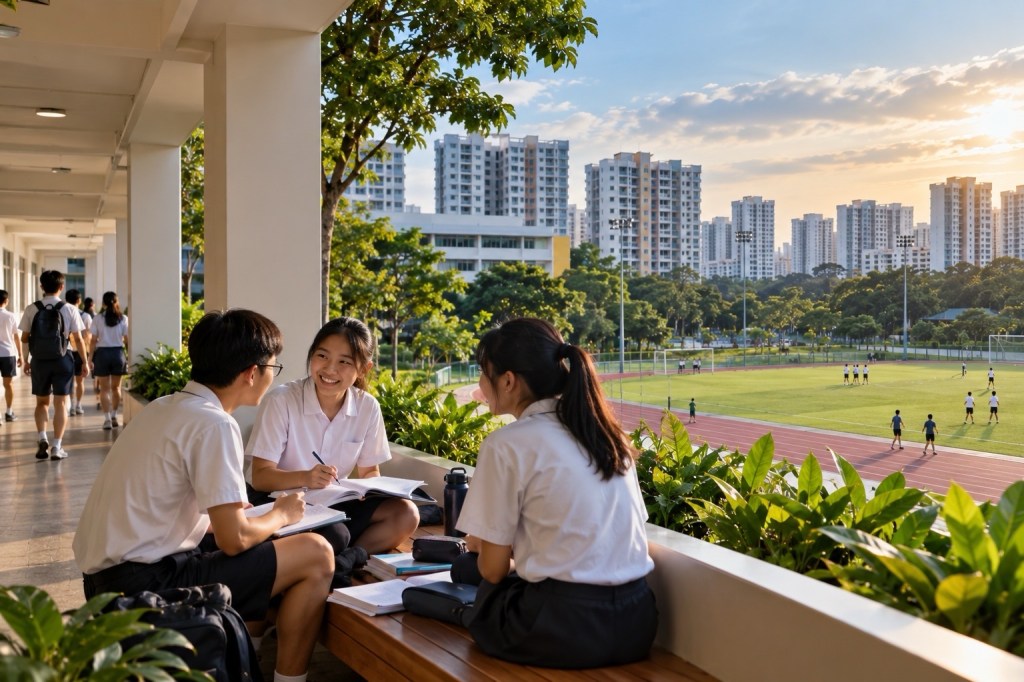
What should a PG2 student in Sengkang do if they face bullying, cyberbullying or feel unsafe at school? Tell a trusted adult and report the concern to the school promptly. Posting Group 2 (PG2) is only the child’s Secondary 1 admission grouping. It does not reduce the student’s entitlement to a safe learning environment or determine whether they may approach a form teacher, year head, school counsellor or school leader.
For families planning Secondary 1 in 2027, bullying can happen during lessons, at recess, on the bus or LRT, after CCA, or through online group chats. Students should not be told to solve persistent targeted harm alone. At the same time, a report should distinguish what is known from what still needs investigating. Schools have responsibilities to establish facts, protect students and use appropriate disciplinary, restorative and counselling support.
This Sengkang guide helps families in Compassvale, Rivervale, Fernvale and Anchorvale find a safe next step: what to do immediately, who in school to contact, how to preserve online evidence without spreading it, what to say in the report, what to ask at follow-up meetings and how to help a pupil return to ordinary learning. It also explains why a PG2 or G2 subject label has no bearing on the urgency of a safety concern.
If something happened today: the immediate action list
- Check immediate safety. Move the child away from anyone threatening them and make sure they are with a trusted adult.
- Seek urgent help for danger or injury. In Singapore, call 999 for immediate police assistance or 995 for an ambulance or fire emergency where required.
- Listen and write down what the child reports. Avoid repeated questioning or asking them to confront the other pupil.
- Preserve relevant evidence. Keep original messages and the date, place and witnesses; do not repost harmful material publicly.
- Inform the school promptly. Start with the form teacher or year head, or another trusted teacher; use school leadership if the situation is urgent or unresolved.
- Ask for near-term safety arrangements. Clarify supervision at recess, dismissal, the route to the bus stop or CCA, and safe reporting options.
- Agree a follow-up time. Find out who is handling the concern, what immediate steps will be taken and how the family will be updated.
What counts as bullying, and what should still be reported?
MOE generally describes bullying as targeted, repeated hurtful behaviour intended to harm. An isolated argument, a friendship problem and repeated intimidation can require different educational responses. Parents need not decide the final label before seeking support. A single serious assault, threat or other harmful incident can still require immediate attention even if it is not repeated.
When speaking with the school, describe observable details rather than announcing a conclusion that investigation must confirm. For instance: ‘On Monday at the LRT platform, two pupils blocked the walkway and called my child names; on Wednesday similar messages appeared in a class group chat.’ That lets the school examine what occurred, what evidence exists and what needs to be done to protect the child.
| Situation | Why it matters | First action |
|---|---|---|
| Repeated insults targeting the same child | May form a pattern of bullying | Tell a teacher and preserve dates, witnesses and messages. |
| One serious threat or physical assault | Safety may require action even without a repeated pattern | Seek immediate protection and appropriate police or medical help if necessary. |
| Online impersonation or humiliating posts | Can spread rapidly and follow a pupil home | Save evidence privately, stop engaging and report through the app and school. |
| A friendship disagreement or misunderstanding | May need support or mediation rather than a bullying finding | Describe what happened and ask for fair fact-finding. |
| A pupil refuses to attend school due to fear | Signals an urgent wellbeing and access-to-learning concern | Contact the form teacher or school counsellor and arrange a safe return plan. |
Who can a Sengkang Secondary 1 parent contact?
A good first point is the form teacher, who often knows the student’s class and can coordinate support with a year head. If the incident occurred during a specific class or CCA, the relevant subject teacher or CCA teacher may also help. A school counsellor can provide emotional support. Serious unresolved concerns may need the year head, student management team or school leadership. Each school may use different titles or reporting platforms.
Start with MOE SchoolFinder or the school’s current official website to identify the correct general office and parent communication channel. Do not rely on private mobile numbers circulating in a parent chat; teachers are not required to share personal contact details. For urgent safety concerns, contact the school directly rather than waiting for an online form to be processed.
| Need | Who to approach | What to ask |
|---|---|---|
| Immediate physical safety | Teacher on duty, school general office, leadership; emergency services where needed | Where can the child wait safely and who will supervise? |
| Repeated hurtful behaviour | Form teacher, year head or student management staff | What immediate measures and investigation process will be used? |
| Emotional distress | School counsellor, form teacher or appropriate health professional | What support can the pupil access and when? |
| Online harassment | Form teacher and school cyber-wellness reporting route; platform reporting tools | How should evidence be transferred securely and how will contact be reduced? |
| Unresolved case | Year head or school leadership through official channels | Who owns the follow-up and when should we expect an update? |
Cyberbullying: stop, save, block, tell, report
Singapore’s Parenting for Wellness resource recommends a practical sequence for online harm: STOP, SAVE, BLOCK, TELL, REPORT. The order matters: it prioritises breaking harmful interaction, preserving relevant evidence, reducing contact and involving trusted adults. Parents should not ask children to argue online, retaliate with their own insults or publish screenshots to rally public pressure.
- Stop: Leave or pause the hurtful exchange; do not answer abusive messages while upset.
- Save: Preserve the original messages, sender details, dates and relevant links in a private, secure place accessible to the parent or school.
- Block: Use platform controls to restrict contact when this can be done safely.
- Tell: Inform a parent, teacher, counsellor or other trusted adult with enough context to act.
- Report: Use the app’s reporting function; inform the school when classmates or school-related channels are involved, and contact police for serious threats or criminal concerns.
What if the content includes the child’s image or personal details?
Save enough evidence to enable a proper report, then avoid forwarding it among families. Sharing humiliating images, addresses, personal information or a child’s private messages can multiply the harm. Give the relevant material to the school or authorities using appropriate secure channels and ask the platform to review or remove abusive content. If the child may be in immediate physical danger, seek urgent official assistance rather than treating it as a normal group-chat dispute.
What happens after a school receives a bullying report?
School policies describe a process involving safety measures, fact-finding, proportionate consequences, support and follow-up. The school may need accounts from different pupils and witnesses. Parents should not assume that the first version of a story proves every detail, nor dismiss a child’s fear while those details are being established. Immediate protection and a fair investigation can happen together.
A reporting family may ask for practical safeguards such as adult supervision at a known trouble spot or a safe point of contact during dismissal. The school may provide counselling, guidance and appropriate disciplinary or restorative measures. Privacy rules can mean the school cannot disclose every detail about another pupil’s case. Ask what can be shared about your own child’s safety and wellbeing, rather than demanding another minor’s confidential disciplinary record.
How to write a report that helps the school act
Avoid a long message full of accusations. Send a short chronology and a clear request for help. State who is affected, when and where the incidents occurred, what the child reported, what evidence exists, any immediate safety concern, and how the school can reach the parent. Separate first-hand observations from the pupil’s account and from rumours. This makes investigation more reliable.
An example of a constructive parent message
Illustrative wording: ‘I am writing about my child’s safety on the journey from CCA to the school gate. My child reports being repeatedly called names by other pupils on Tuesday and Thursday and has become afraid of dismissal. I have kept the dates and relevant messages. Could you advise whom we should speak with today, what immediate safety arrangements can be considered, and when we might receive a follow-up? I am happy to provide the evidence through the school’s official channel.’
If there is an ongoing immediate danger, do not wait to compose a polished email. Call the school or relevant emergency service. For non-urgent reports, a concise written record helps everyone understand what needs to be checked. Keep a copy of the message and note who responded, without spreading the child’s details through public channels.
What should parents say to a child who has been hurt?
Start with a calm conversation: ask what happened, how the child feels, whether they are safe, and what they want adults to understand. Avoid interrogation, blame or promising that a particular punishment will happen. Explain that adults will help manage the situation, including asking the school to investigate and arranging support. The pupil should know the next point of contact and when a parent will check back.
A child may fear being called a ‘snitch’, losing friends or having classmates learn that they reported. Discuss that concern with the teacher and ask how the school can reduce the risk of retaliation. Keep the pupil informed about what is being shared and why, within the limits of safeguarding. The parent’s aim is to restore safety and trust, not merely win an argument in a chat group.
What if my child witnessed bullying rather than experienced it?
Bystanders matter. Encourage a pupil to support the affected classmate without placing themselves in danger, for instance by finding a teacher, reporting the behaviour or refusing to circulate humiliating posts. A child should not physically intervene in a dangerous confrontation or become an amateur investigator. Adults and school staff must handle safety and formal fact-finding.
For online incidents, bystanders can decline to share the content, save relevant evidence only where appropriate, and notify trusted adults or platform reporting mechanisms. Helping does not mean publishing the names or photographs of other children. A school can also use peer-support and Character and Citizenship Education approaches to strengthen behaviour across the class, not only address one case.
PG2, G2 and school safety are separate questions
Some parents hear that a child entered through PG2 and worry that staff may treat their concerns differently from those of students at other levels. That is not how the system is intended to work. Under Full SBB, pupils in different Posting Groups may share a mixed form class while attending subject lessons at different G levels. Every pupil should be able to report a safety concern. The child’s original posting group is irrelevant to the need for appropriate protection.
In practice, different subject groups can mean moving between classrooms and teachers, which may create unfamiliar spaces or times when a pupil feels alone. Help the child identify a trusted teacher for each relevant location: the form room, subject block, CCA venue and dismissal point. If a reported incident repeatedly happens on one transition route, tell the school the exact area and time so staff can consider an appropriate response.
Sengkang transport: bullying beyond the school gate
A learner might face unkind behaviour at a bus stop or on the Sengkang LRT, not in a classroom. School-linked incidents should still be reported when the people involved are pupils, especially if harassment relates to school life. Parents can help the pupil plan a safer journey while reporting the issue: use a known waiting area, travel with a trusted companion where practical, identify an adult contact and establish what to do if the usual route becomes uncomfortable.
The route plan should not quietly shift all responsibility to the child by making them permanently avoid public spaces while the problem continues. Ask the school about the relevant facts and appropriate school actions. If there are actual threats or public safety issues, contact the relevant authorities. Avoid publishing an alleged child’s identity or a detailed confrontation video in neighbourhood social channels.
School refusal, stress and the need for counselling
If a pupil suddenly resists school, loses interest in activities, reports persistent fear or cannot concentrate, parents should ask what has changed. Bullying may be one explanation; academic stress, friendship changes, health issues or multiple factors could also contribute. A supportive conversation and school meeting can help identify whether a counsellor or medical professional should be involved. Do not diagnose the cause from one behaviour alone.
A safe-return plan may include a named adult the pupil can approach on arrival, a realistic way to report concerns during school, a follow-up meeting and a clear route for parents to provide updates. If the child’s mental wellbeing appears to be deteriorating significantly, seek timely professional assessment. Immediate concerns about harm to self or others need urgent help; do not rely on routine email response times.
A seven-day follow-up plan
| When | Parent action | Evidence of progress |
|---|---|---|
| Day 1 | Report and confirm immediate safety steps | Child knows which adult to approach and where to wait. |
| Day 2 | Clarify the person responsible for follow-up | Named school contact and agreed update channel. |
| Days 3–4 | Check in with the child without repeating an interrogation | Child can describe whether the specific risky situation has changed. |
| Days 5–6 | Request an update on safety and wellbeing if needed | Practical support is in place; questions are answered within privacy limits. |
| Day 7 | Review school attendance, confidence and next steps | Agreed monitoring plan or additional support where necessary. |
This timeline is a family follow-up tool, not a promise that a complicated investigation will conclude in seven days. A school may need more time to gather accounts or work with external agencies. What matters is that urgent safety needs are addressed promptly and the family knows how to report new information while the case is being handled.
What parents should avoid
- Confronting another pupil directly or threatening the child’s family.
- Posting identifying screenshots or accusations in a large parent group or public social feed.
- Assuming that a single screenshot captures the complete sequence of events.
- Waiting for a routine online report to be read when there is immediate danger.
- Treating discipline as the only goal and overlooking the child’s emotional recovery.
- Making the child repeat a distressing account to several adults without coordination.
- Assuming that a high academic grade means a pupil cannot be experiencing serious distress.
Frequently asked questions
Can a PG2 student ask the school counsellor for help?
Yes. PG2 is an admission route; counselling and student wellbeing support are not restricted to a higher Posting Group. The form teacher or school general office can explain the appropriate access route.
What if a hurtful incident happened only once?
A single harmful incident can still require school attention, safety measures or appropriate consequences. Parents need not prove that a legal or policy definition of repeated bullying applies before reporting the facts.
Should we call the parents of the other child first?
It is generally better to contact the school so it can establish facts and coordinate a safe response, especially where pupils or witnesses may feel intimidated. Do not confront minors or publish accusations.
Should the pupil reply to a cruel group-chat message?
Avoid escalation. Follow the official STOP, SAVE, BLOCK, TELL, REPORT approach, with adult guidance and appropriate platform or school reporting.
Will a school tell us what punishment another child received?
The school may be limited in what it can disclose about another minor. Ask for information about your child’s protection, support and what you should do if an incident recurs.
Can parents still report incidents outside school hours?
Yes, especially when schoolmates and school-linked channels are involved, though the school’s process may depend on the facts and jurisdiction. Use official contact methods; urgent threats or emergencies should be referred to the relevant authorities immediately.
Is the school’s online report form always the best first step?
Not for immediate danger. Call a teacher, school general office or emergency service promptly. For non-urgent concerns, use the school’s current available reporting route and retain confirmation.
Trusted resources and further eduKate guides
- MOE: How schools manage bullying and hurtful behaviour.
- HPB Parenting for Wellness: cyberbullying and STOP, SAVE, BLOCK, TELL, REPORT.
- Mayflower Secondary: an example of a published MOE-school anti-bullying policy — learn the structure, but use your own Sengkang school’s reporting process.
- MOE SchoolFinder — find the child’s actual secondary school and official contact information.
- Parenting for Wellness resources.
- eduKate Sengkang: PG2 and 2027 Secondary 1 posting.
- eduKate Sengkang: first 90 days, travel and school routines.
- eduKate Sengkang: weighted assessments, school reports and parent meetings.
- The Complete Sengkang Guide.
Safety and accuracy note, 6 November 2026: This guide provides general safety reporting and school-home communication advice. The pupil’s own school sets its current reporting methods, and authorities determine emergency responses. Example messages and incidents are fictional. For immediate danger or serious injury in Singapore, call the appropriate emergency service instead of relying on this article, an online form or an ordinary email.
Continue the Sengkang PG2 practical guides: Secondary 1 assessments & reports · G2-to-G3 subject adjustments · Secondary 3 subject combinations · The Complete Sengkang Guide. Read the relevant official school/MOE notice before acting on dates, placements or eligibility.
