
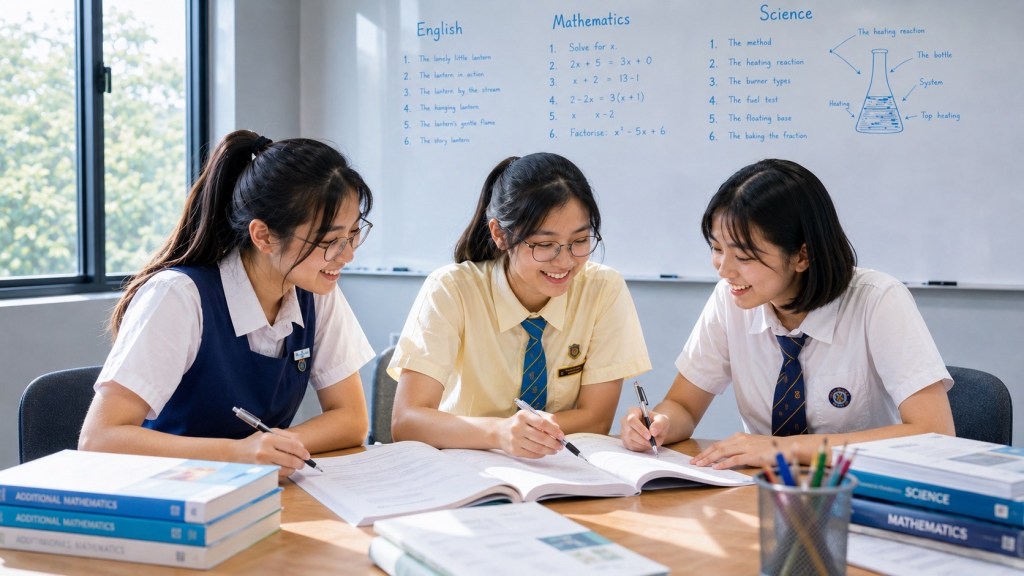
A relief or substitute Mathematics tutor should preserve continuity, not create a temporary new programme. Parents searching for Secondary Mathematics tuition in Sengkang, what happens when the regular tutor is away, whether a relief tutor can teach effectively, or whether a child should skip tuition until the usual teacher returns are dealing with a short-term continuity problem rather than a full tutor-switch decision.
The best substitute lesson feels familiar in the right places and fresh only where useful. The relief tutor should know the student’s year, subject route, current topic, primary methods, recent errors, homework state and the function of the lesson they are covering. They do not need to imitate the regular tutor’s personality. They do need enough handover information to avoid restarting, contradicting or overloading the learner.
At eduKate Sengkang, this Advanced Mathematics Tutorials article owns substitute-tutor continuity. It is distinct from the Switching Mathematics Tutors Mid-Year owner, which handles permanent or serious support changes, and from the Missed Mathematics Tuition Lessons owner, which handles absence recovery. This page asks how learning should continue when the class still happens but the regular tutor does not.
Quick answer: what should a relief Mathematics tutor do?
Preserve the live learning job, use the student’s current methods and materials where they work, collect fresh evidence, avoid unnecessary programme redesign, and leave a concise handback for the regular tutor.
- Know the current school and tuition topic.
- Know the student’s year and subject route.
- Know the primary method conventions.
- Know active weaknesses and stable strengths.
- Use existing homework and error language where possible.
- Teach the lesson function rather than a personal showcase lesson.
- Avoid promising new long-term plans.
- Leave clear evidence for the regular tutor.
Relief tutoring is not a trial audition
A substitute tutor may be excellent, but the lesson’s first responsibility is continuity. The session should not become a demonstration of a new teaching philosophy unless the existing approach is clearly failing and a change is necessary for that day’s learning.
Relief tutoring is not a full diagnostic restart
The substitute tutor does not need to retest every topic. Review the handover, inspect one fresh question and verify the current learning state. A full diagnostic can waste the session and make the student feel as though prior work has been erased.
Relief tutoring is not copying the regular tutor exactly
The substitute can have a different voice, examples and explanations. Continuity means preserving the learner’s methods, goals and sequence—not performing an imitation of another adult.
The relief-tutor handover pack
- Year and subject level.
- Current school topic.
- Current tuition topic.
- Next assessment.
- Primary method conventions.
- Active repair priority.
- Stable strengths.
- Recent homework state.
- Any important group-placement note.
- What the covered lesson is meant to accomplish.
This can fit on one page. The substitute needs the live operating state, not the student’s entire history.
The lesson-function handover
The regular tutor should state whether the substitute lesson is first teaching, repair, retrieval, mixed practice, timed work, paper review or enrichment. This prevents the relief tutor from choosing a mismatched lesson mode.
The method handover
If the student has one primary school-compatible method, the relief tutor should preserve it unless it is mathematically wrong or clearly blocking learning. Alternative methods can wait.
The homework handover
The substitute should know what homework has already been assigned and whether the lesson is supposed to review it, build on it or leave it alone. This prevents duplicated continuation work.
The error-language handover
If the programme tracks errors as concept, selection, execution, time and checking, the relief tutor should use the same language. Consistent error categories make handback easier.
The group-fit handover
In a three-student class, the relief tutor should know whether one learner is on repair, one on standard practice and one on extension. Equal worksheets for all three may erase weeks of careful differentiation.
The student should know why the tutor changed
A brief factual explanation is enough: the regular tutor is unavailable and the relief tutor will continue the current work. The student does not need unnecessary uncertainty about whether the whole programme is changing.
The parent should know whether the lesson function changes
If the substitute is covering ordinary work, say so. If the lesson will be lighter, more review-based or more independent because the relief tutor lacks the full history, explain that boundary.
The regular tutor should define non-negotiables
- Primary school-compatible methods.
- Current learning objective.
- Known active misconception.
- Homework owner.
- Assessment priority.
- Any support that has deliberately been faded.
These are the parts most likely to cause confusion if the substitute unknowingly changes them.
The substitute should still collect independent evidence
Continuity does not mean blindly following notes. Use fresh questions and inspect the student’s working. If the handover says factorisation is stable but fresh work is weak, record the discrepancy for handback.
The substitute should not silently expand scope
A one-off tutor may notice other weaknesses. Unless urgent, record them rather than redesigning the programme mid-session. The regular tutor can decide whether the finding deserves a new intervention.
The substitute should not silently reduce standards
Relief does not mean a filler lesson. The student should still make genuine attempts, receive correction and produce independent evidence.
The substitute should not overload to “make the session count”
A temporary tutor may feel pressure to demonstrate value. More worksheets and harder questions are not proof of quality. Preserve the current job.
One substitute lesson
For a single absence, keep continuity simple. Review current work, teach the planned function, record one or two important observations and hand back.
Two substitute lessons
The relief tutor now needs slightly more context: what changed after the first substitute lesson, what the next sequence requires and what the regular tutor expects to inherit.
Several weeks with a substitute
This begins to resemble temporary tutor transfer. The relief tutor needs fuller ownership of weekly planning, but should still preserve core methods and document the eventual handback.
Secondary 1 relief tutor
Protect symbolic continuity. Do not introduce multiple new algebra shortcuts during a short substitution period. Keep current school methods clear and check independent starts.
Secondary 2 relief tutor
Protect bridge skills and mixed selection. A substitute can continue contrast pairs and retrieval without creating a new lower-secondary system.
Secondary 3 relief tutor
Know whether the student takes A-Math and how E-Math is being maintained. Avoid shifting workload accidentally between subjects.
Secondary 4 relief tutor
Near prelims or examinations, preserve paper strategy, checking routines and error priorities. This is not the time for an unfamiliar substitute to redesign the student’s exam operating system.
G1/G2/G3 relief tutoring
The substitute must know the student’s actual Mathematics route. Same age does not mean same syllabus target.
The one-page handback to the regular tutor
- What was taught.
- What the student did independently.
- What support was needed.
- Any recurring error observed.
- What homework was assigned or reviewed.
- What should be checked next.
Where this relief-tutor guide sits in the Mathematics estate
Use the switching-tutor owner for permanent change, missed-lesson continuity when no substitute lesson occurs, and this page when a temporary substitute teaches the learner and the goal is to preserve one coherent Mathematics programme.
The substitute’s first responsibility is continuity of learner state
A relief tutor should inherit where the learner is now, not where a generic student at that level “should” be. If algebraic manipulation is stable but mixed selection is fragile, the substitute should preserve that state and continue the correct next job.
The substitute’s second responsibility is continuity of method
Short-term coverage is not the time to replace a reliable school-compatible method with a personal favourite. If an alternative method is genuinely useful, it can be noted for later discussion with the regular tutor.
The substitute’s third responsibility is continuity of workload
The learner already has school work and existing tuition homework. Relief lessons should not add an extra workload layer simply because the temporary tutor wants the session to feel substantial.
The substitute’s fourth responsibility is continuity of assessment priorities
If a WA, EOY or prelim is near, the substitute must know the current scope and the regular tutor’s revision plan. Randomly introducing future content can carry high opportunity cost.
The substitute’s fifth responsibility is continuity of support level
If the regular tutor has deliberately faded hints, the relief tutor should avoid restoring heavy guidance without evidence. Otherwise one lesson can rebuild dependence that took weeks to reduce.
The substitute’s sixth responsibility is continuity of group expectations
In a three-student class, students may already know routines: private first attempts, branch work, shared discussion and fresh retests. Keeping these familiar lowers transition friction.
The substitute should ask five quick questions before the lesson
- What is the current learning job?
- What can the student already do independently?
- What support has been deliberately faded?
- What school assessment is next?
- What should I hand back after this session?
These five questions often provide enough context for one effective cover lesson.
The substitute should not ask the student to reconstruct the whole programme
Students can clarify current work, but they should not be responsible for briefing the relief tutor on every method, homework expectation and error history. The programme should provide the core handover.
The substitute can still ask the student for current context
Useful questions include: What are you doing in school now? Which question took longest this week? What did your regular tutor say you were working on? This adds learner perspective without transferring administrative burden.
The substitute should verify handover claims with fresh evidence
If the notes say a skill is secure, one fresh question can confirm. If the student performs differently, record the evidence rather than assuming the handover was wrong or the student suddenly regressed.
The substitute should preserve stable strengths
Do not reopen every old weakness. If the learner has already repaired equations and moved on, use that capability as infrastructure rather than reteaching it because it appears in the handover history.
The substitute should preserve the active error queue
If the learner is currently working on sign control, method selection or paper timing, the substitute can continue that queue. Starting a new error log for one lesson fragments evidence.
The substitute should preserve the current revision calendar
The learner should leave with the same overall weekly direction unless fresh evidence reveals an urgent reason to change it.
The substitute should preserve agreed homework limits
If the programme is deliberately keeping tuition homework light during a heavy school week, the relief tutor should not expand the load because their usual teaching style includes more worksheets.
The substitute can add value without changing the system
A fresh tutor may notice a different representation, ask a useful question or catch an error pattern the regular tutor has not seen. These observations are valuable when handed back rather than converted immediately into a new programme.
Fresh eyes can be diagnostic
Students sometimes behave differently with a relief tutor. A learner who usually asks for reassurance may work more independently because familiar cues are absent. A quiet student may ask more questions. These differences can reveal hidden support patterns.
Fresh eyes should remain cautious
One session with a new adult is not enough to rewrite the learner profile. Nervousness, novelty and different task selection can distort the snapshot. Record observations as provisional evidence.
The relief tutor should not compare themselves with the regular tutor
The session is not a contest. Statements such as “my method is faster” or “I would teach this differently” can create learner confusion without serving the immediate job.
The relief tutor should not invite the student to judge tutors
Questions like “Which tutor do you prefer?” shift attention away from Mathematics. The substitute should focus on current capability and continuity.
The regular tutor should not treat the substitute’s lesson as lost time
A well-handled relief lesson can provide useful independent evidence and another teaching perspective. The regular tutor should read the handback rather than assuming the session needs to be retaught.
The regular tutor should review only important deviations
If the substitute introduced a different method, assigned unusual homework or observed a new recurring error, review those points. Ordinary successful coverage does not need a second full replay.
The handback should distinguish observation from interpretation
Observation: “The student needed one method cue on two mixed questions.” Interpretation: “Method selection may still be fragile.” Keeping these separate helps the regular tutor decide what deserves retesting.
The handback should include support conditions
A correct answer with notes open is different from a correct answer closed-book. The regular tutor needs this context to interpret the relief session accurately.
The handback should include what was not completed
Unfinished work may be intentional because the relief tutor prioritised a concept or because time ran out. The next tutor can then decide whether anything actually needs recovery.
The handback should not become a long narrative
A concise record is stronger: lesson objective, independent evidence, support used, active error, homework and next check.
The one-lesson substitute protocol
- Read handover.
- Confirm current topic.
- Observe one fresh independent attempt.
- Teach the planned function.
- Use one fresh retest.
- Assign only coordinated homework.
- Leave a short handback.
The two-lesson substitute protocol
By the second session, the relief tutor can carry slightly more sequencing responsibility. Still preserve primary methods and existing progress goals unless the regular tutor explicitly delegates a broader temporary role.
The multi-week substitute protocol
If the regular tutor is away for several weeks, the substitute needs a fuller operating map: weekly plan, assessment dates, group differentiation, maintenance topics and progress-review criteria. At this point, the role is temporary ownership rather than one-off cover.
The multi-week substitute should still plan the eventual handback
Every temporary owner should know what the regular tutor needs on return: topics covered, capabilities stabilised, active errors, assessment evidence and any method change.
The substitute period should not create a second identity
The learner should not become “a different student” under the relief tutor. Use one continuous capability history across both adults.
The substitute period should not create a second notes system
Use current notes where possible. Additional pages should be clearly labelled and easy for the regular tutor to integrate.
The substitute period should not create a second homework system
Keep one workload and one submission/review logic. Temporary cover should not leave the student with residual tasks from a parallel programme after the regular tutor returns.
The substitute period should not create a second exam strategy
Near examinations, preserve paper order, checking routines, timing checkpoints and error language unless there is a compelling evidence-based reason to change.
The substitute and Secondary 1 transition
Keep symbolic language and working conventions stable. A relief lesson should reduce disruption during an already significant school transition.
The substitute and Secondary 2 bridge work
Continue existing algebra, graph and mixed-selection goals. Avoid introducing upper-secondary acceleration merely because the substitute’s usual programme moves faster.
The substitute and Secondary 3 E-Math/A-Math coordination
Know which subject the lesson owns and how the other Mathematics subject affects workload. A relief E-Math tutor should not accidentally assign work that duplicates A-Math practice.
The substitute and Secondary 4 exam control
Use current papers, existing timing strategy and recent error categories. Consistency becomes especially valuable near high-stakes assessments.
The substitute before a WA
Cover the planned assessed scope and one live prerequisite. Avoid a novelty-heavy session.
The substitute before EOY
Continue broad retrieval and current repair priorities. The relief tutor can contribute useful fresh mixed questions while preserving the programme’s revision map.
The substitute before prelims
Paper strategy should remain stable. If the regular tutor planned a timed section, the relief tutor can administer it and record the evidence without redesigning the exam approach.
The substitute after prelims
The handover should include the prelim error priorities. A relief tutor can work on a defined category and leave evidence for the regular tutor’s final recovery plan.
The substitute during catch-up
Know the last secure checkpoint and current school access. Do not restart the catch-up programme from the beginning.
The substitute during enrichment
Continue the conceptual thread if possible. If the relief tutor lacks context, choose a self-contained rich task rather than inventing a new long-term enrichment route.
The substitute during support fading
Preserve the current prompt level. If the student suddenly seems weaker without familiar tutor cues, record the evidence rather than automatically increasing support.
The substitute in a three-student group
Learn the branch structure before teaching. One learner may need repair, another standard transfer and another extension. The small-group advantage depends on preserving this differentiation.
The substitute in private tuition
Avoid filling the session with continuous explanation simply because there is only one student. Maintain independent blocks and existing support-fading goals.
The substitute online
Use the same files, note conventions and screen-sharing routines where possible. Technical continuity reduces cognitive friction.
The substitute face-to-face
Keep materials and calculator routines familiar. A new adult already creates novelty; the lesson does not need unnecessary environmental change as well.
The parent’s one-question test after relief tuition
Ask: “Did the lesson continue what you were already working on?” If the student can explain the continuity, the substitution likely remained coherent.
The student’s one-question test after relief tuition
Ask: “What should your regular tutor know about today’s lesson?” This encourages ownership and produces a concise handback perspective.
The regular tutor’s one-question test on return
Ask: “What can the student now do independently that I should build on?” This prevents unnecessary replay.
Relief tutors need boundaries as much as information
A good handover should state what the substitute is authorised to change and what should remain stable. This protects the learner from unnecessary redesign and protects the relief tutor from guessing how much ownership they are expected to assume.
- Can homework volume change?
- Can methods change?
- Can group placement change?
- Can assessment priorities change?
- Can the substitute introduce new topics?
- Can they change the support level?
- What should be recorded for the regular tutor?
The relief tutor’s safe default
When boundaries are unclear, preserve the current programme, teach the immediate lesson function, collect evidence and record anything that might justify a later change. Short-term continuity is usually safer than broad redesign.
The relief tutor’s exception rule
If a method is mathematically wrong, a student is completely blocked, or the planned lesson is no longer appropriate because school circumstances changed, the substitute should adapt. Continuity does not require teaching a known mismatch merely because it was planned.
The substitute should make changes reversible
When the regular tutor is returning soon, any necessary change should be easy to understand and reverse. Avoid creating new note systems, long homework programmes or permanent class-position assumptions from a temporary session.
The substitute should record why a change was made
“Reduced mixed difficulty because fresh algebra showed a prerequisite gap” is enough. The regular tutor can then decide whether the change should continue.
Relief coverage during a strong term
If the learner is stable, the substitute can preserve momentum with retrieval, transfer and ordinary school alignment. There is little reason to introduce remedial work merely because a different tutor is present.
Relief coverage during a weak term
A substitute should not inherit a vague instruction such as “student is weak”. Use current evidence and one active target. The lesson remains teachable even if the regular tutor is unavailable.
Relief coverage during regression
If marks recently fell, the relief tutor needs the current regression hypothesis: concept, retrieval, transfer, timing or support. This prevents them from reopening every topic.
Relief coverage after rapid improvement
The substitute should know which supports were reduced and which topics moved to maintenance. Otherwise they may unintentionally restore heavy remedial teaching the learner has already outgrown.
Relief coverage after a tutor-switch decision
If the family is already changing tutors permanently, the substitute should not become a third competing programme. Keep the session practical and hand the learner forward cleanly.
Relief coverage after missed lessons
A substitute may encounter a learner returning from absence. Use the missed-lesson continuity map and current school evidence rather than assuming the entire sequence must be replayed.
Relief coverage in a dual-tutor system
If another Mathematics tutor is also active, the relief tutor should know the ownership boundary. Temporary cover should not expand into the other tutor’s subject or specialist role.
Relief coverage and class difficulty
The substitute should not assume their usual worksheet level matches the learner. Start from existing class demand and fresh evidence. If the work is too easy or too hard, adjust one dimension and record why.
Relief coverage and quiet learners
A quiet learner may ask even fewer questions with an unfamiliar adult. Use written working, private think time and predictable check-ins rather than interpreting silence as understanding.
Relief coverage and attention/stamina
A substitute may teach with a different pace. Watch whether late-session quality changes. Temporary novelty can either increase attention or create cognitive load.
Relief coverage and method conflict
If the substitute prefers another valid method, label it optional unless there is a clear need to change the student’s primary route. The short-term tutor should not create a long-term method dispute.
Relief coverage and homework overlap
Check what the regular tutor already assigned. A substitute should avoid “making up for” unfamiliarity with a large extra worksheet.
Relief coverage and resources
Use the programme’s existing notes, school materials and current references where possible. A temporary tutor’s personal resource pack can add value selectively, but it should not replace the student’s operating system without reason.
The relief tutor can use a self-contained lesson when handover is weak
If little context is available, choose a bounded diagnostic or transferable skill that is unlikely to conflict with current work: retrieval, error analysis, representation or one current school problem. Avoid making broad claims about the learner from this limited context.
The relief tutor should avoid future-year acceleration with weak handover
Acceleration creates sequence consequences the regular tutor will inherit. Unless explicitly planned, keep the substitute session within the learner’s current route.
The relief tutor should avoid permanent group-placement decisions
One session with a new tutor is poor evidence for moving a student. Record pace, support and shared-core observations for the regular tutor instead.
The relief tutor should avoid permanent frequency recommendations
A substitute can observe that the student needed more support, but the regular tutor or family should make longer-term frequency decisions using broader evidence.
The relief tutor should avoid grade guarantees
Temporary coverage does not support reliable outcome predictions. Keep recommendations bounded to what the session actually revealed.
The relief tutor should avoid criticising the regular tutor
Differences can be described mathematically without turning temporary cover into professional comparison. The learner benefits from coherent adult relationships.
The regular tutor’s preparation checklist before absence
- Current topic and next topic.
- Primary learner job.
- Group differentiation.
- Homework already assigned.
- Next assessment.
- Primary method conventions.
- Known active error.
- Support level.
- What the substitute should hand back.
The substitute’s preparation checklist before class
- Read the handover.
- Check school/current topic.
- Know the lesson function.
- Know what not to redesign.
- Prepare one fresh independent check.
- Prepare branch tasks if group teaching.
- Plan a concise handback.
The learner’s preparation checklist
- Bring current school and tuition work.
- Know the current topic.
- Mark recent uncertainties.
- Use familiar calculator and notes.
- Expect the same learning goals even with a different tutor.
The parent’s preparation checklist
Parents generally need only confirm logistics and any material change in school or workload. They do not need to re-brief the relief tutor on the child’s entire education history if the programme has a functioning handover system.
The relief lesson opening
Begin with a short current-context check and one independent question. This lets the substitute verify the handover and gives the student an immediate sense of continuity.
The relief lesson middle
Teach the planned function using familiar methods and adjust from evidence. The substitute can still bring their own explanation style while keeping the learner’s sequence coherent.
The relief lesson closing
End with one independent fresh question, a small continuation task if needed and a concise note for the regular tutor. Avoid launching a new long-term agenda in the final ten minutes.
The relief lesson should leave the student clearer, not merely entertained
Novelty can make a substitute session feel engaging. The educational test is whether the learner can use the Mathematics independently afterwards.
The relief lesson should leave the regular tutor more informed, not less
A good handback provides evidence the regular tutor can build on. If the regular tutor has to re-diagnose everything, the substitute session has not preserved enough continuity.
The relief lesson should leave parents calm, not uncertain about the programme
Parents should know whether the session stayed on the current route and whether anything important changed. Temporary cover should not create unnecessary doubts about the whole learning system.
Worked relief profile 1: single Secondary 1 cover lesson
The regular tutor is away for one week. The class is learning linear equations. The relief tutor preserves the balance method, checks two fresh equations, runs one word-problem application and hands back that one student still needs sign-sensitive practice. Continuity is clean.
Worked relief profile 2: Secondary 2 cover during factorisation
The substitute notices one learner can expand but cannot reverse the structure. Rather than teaching a personal shortcut, they use the programme’s factorisation method and leave a note that the learner needs another delayed mixed check.
Worked relief profile 3: Secondary 3 E-Math class with A-Math students
The relief tutor receives the E-Math-only lesson job and does not use shared algebra as an excuse to turn the class into A-Math practice. E-Math maintenance remains the owner.
Worked relief profile 4: Secondary 4 cover before prelims
The regular tutor planned a timed section. The relief tutor preserves the timing conditions, records question-start delays and leaves the regular tutor the script. No new exam strategy is introduced.
Worked relief profile 5: quiet learner with unfamiliar tutor
The student asks no questions. The substitute reads the working and finds two hidden blocks. They use written uncertainty marks and private check-ins, then hand back that the learner may need the same help-seeking routine reinforced by the regular tutor.
Worked relief profile 6: strong learner receives an unnecessary easy filler lesson
The substitute did not read the handover and gives routine revision. The student completes everything quickly. The lesson preserved attendance but not learning value. A better handover would have indicated transfer/enrichment readiness.
Worked relief profile 7: substitute unintentionally restores dependence
The regular tutor had reduced method cues. The relief tutor gives hints before every attempt and the student performs strongly. Handback should note the support level; the regular tutor can then restore the lower-support routine rather than interpreting the session as mastery.
Worked relief profile 8: substitute finds a genuine urgent misconception
The learner repeatedly applies an invalid algebra rule that the handover did not mention. The substitute pauses planned mixed work, repairs the misconception, uses a fresh retest and records the change. Continuity is allowed to adapt when evidence demands it.
Continue through the Mathematics Learning Hub for routes by concept and level, the Complete Mathematics Index for the wider estate, or Mathematics Tutor Sengkang when the question is specifically about tutoring support.
Worked relief profile 9: substitute changes homework too aggressively
The regular tutor had set a light workload because school assessments were heavy. The relief tutor assigns a full extra worksheet. The student now has duplicate practice and less revision time. This is a continuity failure in workload, not necessarily teaching quality. The handback should correct the weekly plan immediately.
Worked relief profile 10: substitute uses a different valid method
The student can follow both methods but becomes uncertain about which to use in school. The substitute should label their route as optional, preserve the student’s school-compatible primary method and record the alternative for later comparison with the regular tutor.
Worked relief profile 11: several-week cover becomes temporary ownership
The regular tutor is away for a month. The substitute receives full weekly objectives, group differentiation, assessment dates and maintenance priorities. They now own short-term sequencing but still preserve core methods and keep a handback log for the regular tutor’s return.
Worked relief profile 12: several-week cover during Secondary 4 final preparation
The substitute inherits paper strategy, current error categories and revision calendar. They may adjust from new prelim evidence, but any major change is documented because the regular tutor will return before the final examination.
The relief-tutor continuity ladder
- One lesson: preserve and report.
- Two lessons: preserve, sequence locally and report.
- Several weeks: temporary ownership with explicit boundaries.
- One term: functionally a temporary tutor transfer requiring full progress tracking.
- Permanent change: use the tutor-switch framework instead.
The boundary between substitute cover and tutor switching
If the relief tutor is likely to remain indefinitely, the family should stop treating the arrangement as temporary. A real handover, expectation reset and long-term fit review become appropriate.
The relief tutor should know when to escalate a concern
If fresh work shows a broad gap, severe mismatch or recurring issue that the planned lesson cannot address, record it and alert the regular tutor or programme owner. Short-term cover should not hide important evidence simply to preserve the plan.
The relief tutor should know when not to escalate
One hesitation, one unusual error or one low-energy session should not trigger a programme redesign. Temporary tutors should avoid overinterpreting novelty.
The regular tutor should know how to read substitute evidence
Treat it as another data point. If the same pattern appears in school work and later fresh questions, it becomes stronger. If it disappears immediately, it may have been situational.
The programme should know how to brief different substitute types
A substitute from the same teaching team may already know the curriculum and house methods. An external short-term tutor needs more explicit method and resource context. The handover depth should match the distance from the regular programme.
The substitute should know the learner’s primary resources
Textbook, school notes, tuition notes, formula sheet, error log and calculator conventions should be identified. This reduces unnecessary resource switching.
The substitute should know the learner’s current support level
A student who is supposed to work independently for ten minutes should not suddenly receive constant intervention. Support level is part of continuity.
The substitute should know the learner’s current difficulty level
A strong learner should not be given filler work; a fragile learner should not receive maximal challenge to demonstrate tutor expertise. Preserve the class’s current calibration.
The substitute should know the learner’s question habits
Quiet learners may need predictable check-ins; reassurance-dependent learners may need delayed confirmation. These routines can matter as much as topic choice.
The substitute should know the learner’s recent absence history
A student returning from illness may need lighter re-entry. A substitute who assumes normal stamina can misread the learner’s performance.
The substitute should know the learner’s recent assessment history
If the last WA exposed method selection rather than content, the relief lesson should not revert to pure topical drilling.
The substitute should know whether strong performance is recent
A learner who just recovered from a gap may still need maintenance. A tutor who only sees the latest high score could remove retrieval too quickly.
The substitute should know whether weak performance is recent
A recent mark drop may be under active diagnosis. The relief tutor should continue the current hypothesis rather than adding another broad interpretation without evidence.
The substitute should protect delayed retests
If the regular tutor scheduled a delayed check, keep it where possible. These retests are important evidence and easy to lose during temporary cover.
The substitute should protect student-owned revision
If a Secondary 4 learner has begun choosing revision priorities independently, the relief tutor should not take over planning simply because they are new to the student.
The substitute should protect parent-release goals
If parents have reduced homework supervision, a relief week should not create a return to intensive parent support unless a genuine gap appears.
The substitute should protect group routines
Private first attempts, branch practice, shared comparison and independent retest are part of the teaching architecture. Keeping them stable helps students adapt to the new adult without losing the learning system.
The substitute should protect class pace where appropriate
Do not slow the entire group dramatically because one learner needs a clarification. Use brief branch support and keep the shared core moving.
The substitute should protect the strongest learner’s extension
Strong students are easy to overlook during relief because the tutor focuses on keeping everyone together. Preserve genuine extension rather than giving extra routine pages.
The substitute should protect the most fragile learner from overload
A new tutor may not know which scaffolds are necessary. Start from the handover and fresh evidence, then adjust. Do not remove every support to test independence in one high-risk lesson.
The substitute should protect the class from method novelty
New methods are not prohibited, but the substitute should avoid turning one cover lesson into a collection of clever alternatives the regular tutor later has to untangle.
The substitute should protect the class from workload novelty
A different tutor may have a different homework philosophy. Temporary cover should not change the student’s weekly load without a specific reason.
The substitute should protect the class from assessment-strategy novelty
Near exams, keep paper order, checking and timing routines stable unless evidence clearly shows they are failing.
The relief tutor’s emergency-change rule
If a current plan is clearly inappropriate—for example, the student cannot access the task because of an unknown prerequisite—the substitute should adapt. Continuity is not rigid obedience; it is coherent progression.
The regular tutor’s return lesson should not be another reset
Begin from the substitute handback and one fresh question. Continue forward unless evidence shows that the temporary period created a real gap.
The return lesson should acknowledge useful substitute gains
If the relief tutor improved a representation, method explanation or independence routine, preserve the gain. Regular-tutor ownership does not mean undoing everything unfamiliar.
The return lesson should resolve any method divergence
If the substitute introduced another method, decide whether it becomes optional, primary or retired. The student should leave with one clear default.
The return lesson should resolve homework leftovers
Delete or complete only the tasks still relevant. Temporary-cover homework should not linger as a second backlog.
The return lesson should resolve any new error hypothesis
Retest it. If the pattern repeats, integrate it into the active repair queue. If not, close it.
The return lesson should restore ordinary support levels
If the substitute used more or less scaffolding, return to the level justified by current evidence rather than habit.
The handback checklist
- Planned objective completed: yes / partial / no.
- Independent evidence.
- Support used.
- Unexpected error or strength.
- Homework assigned.
- Method change: none / optional / significant.
- Group-fit observation if relevant.
- Next recommended check.
The parent-facing relief update
A simple update is enough: “The substitute continued the current factorisation work, your child completed fresh questions independently, and one sign error will be checked next week. No programme change.” This reassures without overselling.
The parent-facing update when something changed
“The relief tutor found that the current mixed work was blocked by algebraic rearrangement, so the lesson shifted to repair. The regular tutor will retest and decide whether the change should continue.”
The student-facing relief summary
The learner should know what was accomplished and what carries forward. “We stayed on the same topic, you can now do these questions, and your regular tutor will check this one issue.”
The relief-tutor system should become invisible when it works
A successful substitute session does not create a dramatic new chapter in the learner’s story. It keeps Mathematics moving and hands the learner back with useful evidence.
The relief-tutor continuity scorecard
- Current school route preserved.
- Primary methods preserved.
- Active learning job preserved.
- Fresh independent evidence collected.
- Homework load stayed coherent.
- Assessment priorities stayed coherent.
- Group differentiation stayed coherent.
- Support level did not drift without reason.
- Handback was concise and useful.
A substitute lesson does not need to score perfectly on every dimension, but major deviations should be visible to the regular tutor rather than disappearing inside the temporary period.
Relief coverage should be judged by the next lesson too
The real test of continuity is whether the student can enter the next regular lesson without confusion or unnecessary reteaching. A smooth return is evidence that the substitute preserved the programme well.
If the regular tutor has to reteach everything
Ask why. Perhaps the substitute used a different method, skipped independent practice, or taught unrelated content. The issue should improve the handover system rather than become a reason to distrust all relief coverage.
If the regular tutor sees stronger independence after relief
This can be useful evidence that familiar cues were creating dependence. Preserve the gain and continue reducing unnecessary support.
If the regular tutor sees lower performance after relief
Check task difficulty, method changes, homework load and support differences before assuming the substitute taught poorly. One temporary lesson can expose a fragile capability that was previously hidden.
If the student prefers the relief tutor
Preference is worth hearing but should not automatically trigger a tutor switch. Ask what the student found helpful: clearer explanation, slower pace, less prompting, different examples. The regular tutor can sometimes integrate the useful feature.
If the student dislikes the relief tutor
Again, identify why. Novelty, unfamiliar communication style or genuine confusion are different issues. Temporary discomfort does not automatically mean educational failure.
If the relief tutor sees a better class placement
Record the observation and supporting evidence. The regular tutor should review it across more than one session before moving the student.
If the relief tutor sees a different difficulty fit
A fresh perspective can help. Use comparable questions and support conditions before changing the class’s long-term challenge level.
If the relief tutor sees a new homework problem
Perhaps the student has been using AI heavily or school workload increased. Record the issue and let the regular tutor integrate it into the broader weekly plan.
If the relief tutor sees a new method conflict
Do not solve the conflict by adding another method. Identify the student’s primary route and leave the comparison for the regular tutor unless immediate correction is necessary.
Relief tutoring and two-tutor systems
If the student already has a second Mathematics tutor, the relief tutor must be especially disciplined. A temporary substitute should not become a third competing programme. Stay inside the covered tutor’s existing role.
Relief tutoring and school-tuition method differences
The substitute should know whether a method difference has already been resolved. Reopening a settled issue can create unnecessary cognitive conflict.
Relief tutoring and between-lesson practice
Continuation work should fit the established independent-study routine. Temporary cover should not reset the learner’s practice habits or duplicate school work.
Relief tutoring and regression after improvement
If the student recently regressed, the substitute needs the current hypothesis and maintenance plan. Otherwise they may unintentionally reteach secure content or miss the live relapse mechanism.
Relief tutoring and missed lessons
When the regular tutor’s absence follows the student’s own absence, continuity risk compounds. Prioritise current school access and the smallest live dependency rather than trying to recover every interrupted lesson at once.
Relief tutoring and attention stamina
An unfamiliar tutor may alter pace and interaction. Compare late-session performance with the learner’s normal pattern before making stamina conclusions.
Relief tutoring and quiet-student help-seeking
A temporary tutor should create low-friction ways to surface uncertainty: written markers, one-line questions and predictable check-ins. Quiet learners should not become invisible because the adult is new.
Relief tutoring and class difficulty
The substitute should adapt task demand enough to teach accurately while preserving the programme’s intended challenge. One easy or hard lesson should not redefine long-term placement.
The emergency substitute with no handover
Sometimes handover fails completely. The relief tutor can still protect learning by using current schoolwork, a fresh diagnostic and one bounded objective. Avoid broad claims or permanent changes. Record everything useful for the regular tutor.
The emergency substitute opening
- Ask current school topic.
- Inspect one recent piece of work.
- Use one fresh question.
- Identify one current need.
- Choose a self-contained lesson function.
- Avoid long-term promises.
The emergency substitute closing
- Record what was observed.
- Record what was taught.
- Record support level.
- Record any homework.
- Flag any urgent issue.
- Leave the regular tutor a clear starting point.
The high-quality relief programme has a standard handover template
A consistent template reduces dependence on individual memory and allows different substitutes to preserve the same learning architecture. The template should remain short enough that it is actually used.
The high-quality relief programme trains substitutes in house methods selectively
Substitutes do not need identical scripts, but they should know the core programme expectations: school alignment, small-group observation, prompt fading, error language and homework principles.
The high-quality relief programme lets substitutes use professional judgement
Rigid scripts can fail when the learner’s evidence changes. The substitute should be able to adapt within clear boundaries and document why.
The high-quality relief programme prevents “cover lesson = filler lesson”
Every session should retain a legitimate mathematical job. Review, retrieval, correction or transfer can all be valuable even when major new teaching is not appropriate.
The high-quality relief programme prevents “cover lesson = showcase lesson”
Temporary tutors should not need to prove themselves through novel content, harder questions or dramatic methods. Continuity itself is professional value.
The high-quality relief programme protects the learner’s history
The student should not have to start from zero with each adult. Current strengths, active gaps and support level should travel with the programme.
The high-quality relief programme protects the learner’s future
The substitute should leave evidence the regular tutor can use, so the session becomes part of the continuous learning story rather than an isolated event.
The return-of-regular-tutor protocol
- Read the handback before class.
- Ask the learner for one-sentence summary.
- Use one fresh check on any important deviation.
- Keep useful gains.
- Resolve method or homework conflicts.
- Return quickly to the live sequence.
The first regular lesson back should not be about the substitute
The focus should be Mathematics. Discuss the temporary period only where it affects current learning. The learner should feel continuity rather than adult comparison.
The first regular lesson back should recognise independent growth
If the student managed well with less familiar support, use that as evidence to fade unnecessary cues or increase learner ownership.
The first regular lesson back should close temporary uncertainty
If the substitute flagged a possible gap, retest it. If the issue is not reproduced, close it rather than leaving the learner under suspicion.
The first regular lesson back should delete obsolete substitute homework
Only keep tasks still relevant. The student should not finish temporary worksheets merely because they were assigned if the learning function is already satisfied.
The first regular lesson back should restore the normal progress-review cycle
Once temporary coverage is integrated, the learner returns to ordinary evidence, maintenance and support decisions. The substitute period stops being a separate track.
The relief-tutor parent checklist
- Did the relief tutor know the current job?
- Were school methods and homework kept coherent?
- Did my child do real independent work?
- Was any major change explained?
- Will the regular tutor receive a useful handback?
- Can the student re-enter normal tuition cleanly?
The relief-tutor tutor checklist
- Did I preserve what already worked?
- Did I verify rather than assume?
- Did I avoid unnecessary redesign?
- Did I collect fresh evidence?
- Did I keep workload reasonable?
- Did I document anything important for handback?
The relief-tutor student checklist
- I knew what we were working on.
- I could use my familiar methods.
- I attempted independently.
- I know what changed, if anything.
- I can tell my regular tutor what happened.
- I do not feel that my whole programme reset.
Final principle: a relief tutor should preserve the learner, not preserve a script
Continuity is not identical wording or personality. It is a stable educational route: the same learner history, current goal, primary methods, workload, assessment priorities and path toward independence.
A strong substitute lesson adds teaching without adding confusion, and hands the student back with more evidence than they arrived with.
The relief-tutor continuity test after one ordinary lesson
The clearest evidence comes after the substitute period. Can the learner enter the next normal lesson without method confusion, backlog or unusual support? If yes, continuity held. If no, identify exactly what changed during relief and repair only that point.
The relief-tutor continuity test after one assessment
A school assessment after temporary cover can show whether the learner’s primary methods, retrieval and paper routines remained stable. One result is not a verdict on the substitute, but it can confirm whether an important continuity function was lost.
The relief-tutor continuity test after a delayed retest
Return to one key skill taught during relief after several days. If the learner can retrieve and transfer it independently, the temporary teaching has integrated into the longer learning system.
The relief-tutor continuity test after a method change
If the substitute introduced an alternative method, the regular tutor should test whether it is understood, reliable and school-compatible. Then explicitly keep, demote to backup, or retire it.
The relief-tutor continuity test after a workload change
If homework volume changed during cover, review whether the student benefited or simply lost time from other priorities. Temporary workload should not become permanent without evidence.
The relief-tutor continuity test after a group-pace change
If the substitute moved the class faster or slower, compare student working and transfer rather than relying on how the lesson felt. Any permanent pace change belongs to the regular tutor’s broader review.
The relief-tutor continuity test after a support-level change
If the substitute gave more hints, fresh independent work should determine whether that support is still needed. If the substitute gave fewer hints and the student managed well, preserve the increased independence.
The relief-tutor continuity test after a new error is observed
Retest the error family once under familiar conditions. If it repeats, integrate it into the active queue. If not, treat it as a provisional observation and move on.
The relief-tutor continuity test after a strong new strength is observed
A fresh tutor may notice readiness for more challenge. Verify the strength through changed and delayed questions before redesigning difficulty or group placement.
The substitute should leave a clean audit trail
- Lesson objective.
- Evidence collected.
- Support used.
- Any departure from plan.
- Reason for departure.
- Homework status.
- Recommended next check.
This is enough for accountability without turning one temporary session into an administrative project.
The substitute should not leave hidden changes
If a method, resource or homework expectation changed, the regular tutor should know. Hidden changes force the learner to reconcile adults alone.
The substitute should not leave hidden unfinished work
Unfinished tasks should be labelled as optional, required or obsolete. Ambiguous leftovers create unnecessary backlog.
The substitute should not leave hidden support changes
If the learner required more help than expected, record it. If they managed with less, record that too. Support dose is important evidence.
The substitute should not leave hidden assessment advice
Any new exam strategy should be explicit so the regular tutor can decide whether to retain it. The student should not carry conflicting advice into the next paper.
The substitute should not leave hidden placement assumptions
One relief session should not silently change the learner’s group identity. Placement observations should be recommendations with evidence, not faits accomplis.
The regular tutor should close the loop explicitly
After reviewing the handback, tell the learner what continues: “We are keeping this method,” “we are dropping that extra worksheet,” or “we will retest this error.” Clear closure prevents temporary uncertainty from lingering.
The programme should close the relief episode administratively and educationally
Once the regular tutor has integrated the evidence, the substitute period should disappear from the active plan. The learner returns to one coherent programme.
Repeated relief coverage should trigger a systems review
If the regular tutor is frequently unavailable, the question becomes broader than individual cover quality. The programme may need more stable staffing, a named backup tutor or a structure that allows another teacher to assume continuity more seamlessly.
A named backup tutor can reduce transition cost
When the same relief tutor covers repeatedly, they accumulate learner context and can preserve methods and group differentiation more easily. The risk is that two semi-regular tutors begin overlapping roles; clear ownership still matters.
A rotating relief pool needs stronger documentation
If different substitutes cover, concise learner-state notes and house-method conventions become more important because personal familiarity is lower.
A small programme can use shared operating principles
Tutors do not need identical scripts. Shared principles—diagnose before selling, observe working, use small prompts, retest fresh questions, coordinate homework—make relief continuity much more robust.
Relief coverage should support eventual learner independence
A student who can adapt to a substitute without losing methods, practice or confidence is demonstrating transferable learning. This is a positive outcome: the Mathematics is not attached entirely to one adult.
The learner should become less vulnerable to tutor changes
Over time, students should carry their primary methods, error language, revision system and help-seeking routines personally. The adult may change temporarily without the whole learning system disappearing.
The tutor should become less vulnerable to absence too
Good documentation and learner independence mean a regular tutor can be away without fearing that weeks of work will unravel. This is a sign of a strong teaching system rather than a weaker tutor-student relationship.
Parents should see continuity as a programme quality question
A robust programme can explain what happens if the regular tutor is unavailable: how the substitute is briefed, what remains stable and how the handback works. Continuity should not depend entirely on one person’s memory.
Students should see relief as a normal variation, not a crisis
A temporary tutor can be different and still useful. The learner’s job remains familiar: attempt, use the primary method, mark uncertainty, receive feedback, solve fresh work and continue.
The final relief-tutor decision matrix
- One ordinary cover lesson → preserve and hand back.
- New concept with live dependency → teach directly, retest and document.
- Strong school overlap → verify and move on.
- New method introduced → label status and hand back.
- New error observed → flag and retest.
- Several weeks of cover → temporary ownership with full handback.
- Indefinite cover → transition to tutor-switch framework.
The final parent rule
Do not judge relief tuition by whether the substitute felt exactly like the regular tutor. Judge whether the learner’s Mathematics remained coherent and whether the next lesson can continue without unnecessary repair.
The final substitute rule
Teach the student you inherited, not the generic student you usually teach. Preserve what is stable, address the live job and leave the next tutor better evidence than you received.
The final regular-tutor rule
On return, integrate the substitute’s useful evidence without defensiveness or replay. The programme belongs to the learner, not to one adult’s preferred script.
The final student rule
A temporary tutor should not make Mathematics feel like a different subject. Keep your reliable methods, attempt independently and be ready to explain what was useful when the regular tutor returns.
Closing standard
Relief or substitute Mathematics tuition succeeds when the adult changes but the learner’s mathematical operating system stays coherent. The lesson continues the live job, respects established methods and workload, produces fresh evidence and hands the student back cleanly.
The best cover lesson does not call attention to itself for weeks afterwards. It simply keeps learning moving.
The last continuity check: can the learner still recognise their own system?
After a relief lesson, the student should still know which methods are primary, how homework is organised, what the active learning job is and what the next assessment requires. If temporary cover leaves the learner uncertain about those basics, the substitute session created avoidable friction.
The last continuity check: can the regular tutor restart from evidence?
The handback should be good enough that the regular tutor can read one paragraph, inspect one piece of work and continue. If the returning tutor must ask the student to reconstruct the whole session, the programme has shifted too much coordination burden onto the learner.
The last continuity check: did temporary cover create any unnecessary leftovers?
- Extra worksheets with no live purpose.
- A second set of notes.
- An unexplained alternative method.
- A new error label that was never retested.
- A group-placement assumption.
- An exam routine different from the established one.
Resolve or delete these leftovers quickly. Continuity is partly the discipline of preventing temporary decisions from becoming permanent clutter.
The last continuity check: did the relief tutor add something worth keeping?
Fresh tutors can notice strong ideas. Perhaps a new representation made a concept clearer, a quieter learner asked better questions, or one independence routine worked especially well. Preserve useful gains after verification. Continuity should not reject improvement merely because it came from a temporary adult.
The last continuity check: did the student become more adaptable?
A learner who can work effectively with a substitute, retain primary methods and return cleanly to the regular tutor is demonstrating transfer. The Mathematics is becoming less person-dependent and more learner-owned.
The relief-tutor review after one month of repeated cover
If several substitutions occurred within a month, review the broader system: learner continuity, staff handovers, group stability and whether the student still receives one coherent programme. Repeated cover may require stronger documentation or a named backup teacher.
The relief-tutor review after one term
If substitution has become common across a term, parents can ask whether the programme still provides stable tutor ownership and whether the learner’s methods, homework and progress reviews remain coherent. This is a service-structure question as much as a lesson question.
The named-backup model
A programme can reduce transition cost by having one backup tutor familiar with the class architecture. The backup should know the same core routines, while still using professional judgement and recording important deviations.
The learner-owned-backup model
Older students can carry more continuity themselves: current notes, error log, weekly plan, school assessment dates and precise questions. Strong learner ownership makes substitute teaching more robust even when the adult changes.
The programme-owned-backup model
Shared records and agreed teaching principles let any authorised substitute understand the current job quickly. This protects the learner from having to rebuild context every time.
The final handback record
- Current capability state.
- What changed during relief.
- What did not change.
- Fresh independent evidence.
- Any support-level change.
- Any homework change.
- Any method change.
- What should be checked first next lesson.
The final parent expectation
Parents should expect continuity of educational purpose, not identical personality. A substitute may sound different, ask different questions and use different examples while still preserving the student’s learning system.
The final student expectation
Students should expect to work normally: attempt, show working, use familiar methods, mark uncertainty and respond to feedback. Temporary cover should not feel like a holiday from learning or a total reset.
The final programme expectation
A strong programme treats tutor absence as an operational event that the learning system can absorb. Handover, substitute boundaries and handback should be normal capabilities, not improvised emergencies.
Closing synthesis: the adult can change without changing the Mathematics
Relief tutoring succeeds when the student experiences a different teacher but the same coherent educational route. The substitute understands the live job, respects the learner’s methods and workload, teaches responsively and leaves evidence that the regular tutor can use immediately.
The strongest continuity is not dependence on one tutor never being absent. It is a programme and learner robust enough that temporary adult change does not fracture the Mathematics.
A final relief-tutor audit after the regular tutor returns
After the regular tutor has taught one or two normal lessons again, review whether anything from the temporary period is still causing friction. Is the student switching methods unnecessarily? Is substitute homework still unfinished? Did the relief tutor uncover a gap that remains active? Did the learner become more independent? Close each open loop deliberately.
If no important issue remains, stop discussing the substitution. A successful temporary handover should not become a permanent part of the learner’s identity or a reason for repeated comparison between tutors.
The strongest continuity signal
The strongest signal is simple: the student can explain what was learned during relief, use the same core methods, complete fresh work independently and continue with the regular tutor without needing a reset. The adult changed, but the learning sequence did not fracture.
The strongest programme signal
The programme can absorb tutor absence because learner state is documented, core teaching principles are shared and substitute boundaries are clear. Quality does not depend on every tutor being interchangeable; it depends on continuity being designed.
The strongest learner signal
The student can adapt to another competent adult without losing their own methods, error language or revision system. This is evidence that Mathematics is becoming increasingly learner-owned rather than person-dependent.
That is the final standard for relief or substitute Mathematics tuition: preserve the live job, preserve the learner’s operating system, add useful evidence, and hand the student back cleanly enough that ordinary progress resumes immediately.
One final continuity principle: substitute coverage should become easier as the learner matures
Secondary 1 students may need more explicit handover because methods, routines and symbolic language are still new. By Secondary 4, a mature learner should be able to carry more continuity personally: current notes, paper-analysis habits, revision priorities and precise questions. The substitute still needs context, but the student’s own learning system should do more of the stabilising.
This progression matters because a robust learner should not be academically fragile whenever one adult is unavailable. Good tuition builds transferable methods, self-monitoring and independent revision so that temporary tutor absence creates inconvenience rather than collapse.
The last handback test
Ask whether the regular tutor can continue the programme from one concise handback, one piece of student work and one fresh question. If yes, continuity has been preserved efficiently. If the returning tutor must rebuild the learner profile, the handover system needs strengthening.
The last learner test
Ask whether the student still knows what to do when a fresh question arrives. If primary methods, independent starts, checking routines and help-seeking remain intact, the substitute period did not fracture the learner’s mathematical operating system.
That is what temporary coverage should protect: not identical teaching personalities, but continuous learner capability, coherent methods and a clean return to ordinary progress.
The final operational standard
A substitute should be able to step into the Mathematics without asking the learner to rebuild context from zero. The regular tutor should be able to return without undoing the substitute’s work. Parents should be able to understand whether anything important changed. The student should be able to continue using familiar methods, materials and revision logic throughout.
If those conditions hold, temporary tutor absence becomes an ordinary variation the learning system can absorb. If they do not, the programme should improve its handover architecture rather than treating every substitution as a one-off improvisation.
Continuity is therefore not the absence of change. It is controlled change: the adult may differ, the explanation may differ, and one new observation may emerge, while the learner’s educational direction remains coherent. That is the standard that protects Mathematics progress when the regular tutor is away.
The final measure is whether the learner can carry the temporary change without losing their sense of direction. They should know what topic matters, which method is primary, what homework is live, what support is normal and what the next lesson will build. When those anchors remain stable, a relief tutor can teach with their own professional voice without fragmenting the programme.
That is resilient continuity: the teaching team can absorb absence, the regular tutor can return cleanly, and the student keeps moving forward without having to rebuild the Mathematics every time the adult changes.
Relief coverage is successful when the substitute adds useful teaching without forcing the learner to rebuild context, methods, workload or trust. The adult is temporary; the mathematical operating system remains continuous.
The learner keeps the Mathematics, the regular tutor keeps the programme history, and temporary cover leaves both more informed than before.
That continuity is the real value of good substitute teaching.
Coherently.
A substitute tutor should inherit the route, not rebuild it
Relief tutoring works better when the temporary tutor receives the current learning target, recent evidence, support conditions and unresolved questions. Use The Tutor System for the shared relationship and The Tutor Handbook for the Continuity Packet and handover discipline.
