
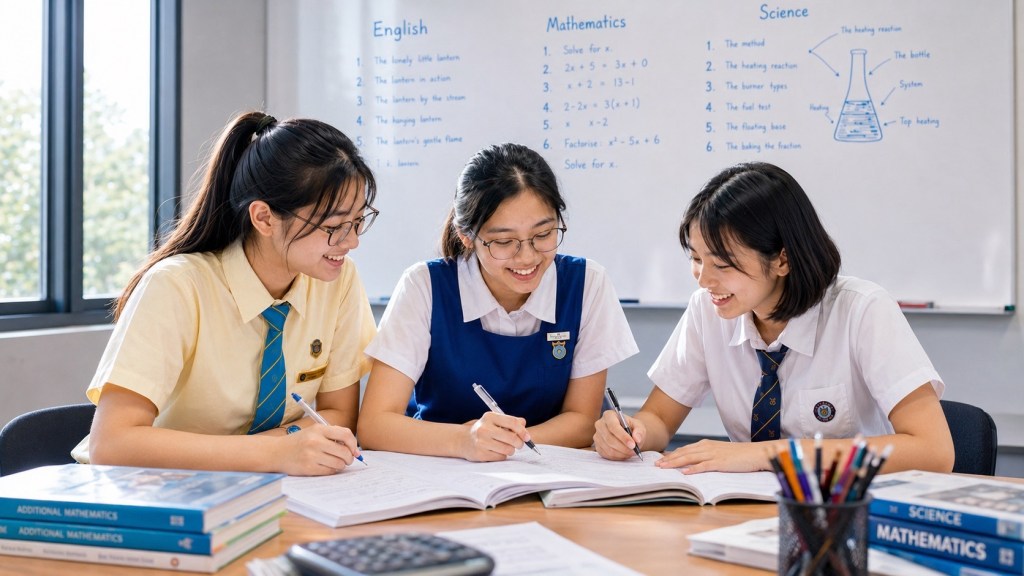
Does a child who is already good at Science need tuition in Sengkang? Parents searching for Science enrichment, advanced Primary Science, PSLE Science tuition for strong students, gifted Science programmes or a Science tutor for high achievers are not trying to rescue weak marks. They are trying to decide whether tuition can add something that school and self-study are not already providing.
That is a different commercial and educational question from remedial tuition. A high-scoring student may already retrieve concepts accurately, complete school homework independently and perform reliably in tests. Adding another weekly class only makes sense if it creates a new capability: deeper transfer, stronger explanation, more demanding evidence reasoning, better examination control or richer scientific curiosity. If tuition simply repeats familiar work, the child may gain workload without gaining much Science.
At eduKate Sengkang, formal Science tuition is currently for Primary 3 to Primary 6, including PSLE Science, in focused classes of up to three students for 1.5-hour lessons. Primary 1–2 Science on the site is educational discovery material rather than a formal tuition offer. Secondary G1/G2/G3 Science appears for transition guidance, while the stated Sengkang Science programme itself remains Primary 3–6/PSLE. This page owns one narrow parent decision: when strong students still benefit from tutoring and when they are better served by independent study or enrichment outside regular tuition.
High marks are evidence, but not the whole diagnosis
A strong score is reassuring. It shows that the learner performed well on the questions sampled by that paper. It does not automatically reveal whether knowledge is flexible, durable and transferable. A child may score well because the format was familiar, the topic was recently revised or the learner is excellent at recognising patterns.
Before enrolling a high-achieving child in Science tuition, parents should test depth. Can the student explain why an answer is correct? Can the learner handle a changed context? Can the child distinguish evidence from inference? Can old topics still be retrieved after several weeks? If yes, tuition has to offer something beyond more of the same.
Strong students need a different reason for tuition
- To deepen transfer across unfamiliar contexts.
- To sharpen open-ended explanation beyond memorised phrases.
- To work on experiment design, data interpretation and evidence limits.
- To strengthen cumulative retrieval before PSLE.
- To improve speed and checking without sacrificing reasoning.
- To experience intellectual challenge beyond routine school questions.
- To prepare for the Primary-to-Secondary Science transition without racing through future syllabuses.
If none of these jobs is necessary, regular tuition may have low marginal value.
The risk of giving strong students more routine worksheets
A high-performing child can become bored when tuition repeats school-level exercises already mastered. The learner may still complete the work quickly and appear compliant, which can hide the low educational value.
The tutor should increase depth rather than merely volume. Ask why a tempting wrong answer fails. Reverse one experimental condition. Ask what evidence would be needed to justify a stronger conclusion. Present a model that is useful but limited. These tasks make strong students operate the Science rather than just demonstrate fluency.
For a strong student, harder does not mean longer. Harder means the next question demands a new level of reasoning.
Enrichment should deepen structure, not only move ahead
Parents often associate enrichment with learning future syllabus content early. Pre-teaching can be useful in small amounts, but it is not the only way to extend a strong learner. In Science, enrichment can mean staying with the same core concept while increasing the reasoning demand.
A Primary 5 student studying electricity can design a fair comparison, interpret anomalous data, critique an explanation or predict how a changed circuit would behave. None of these requires racing into Secondary Physics. The child goes deeper rather than simply further.
Why strong students still need feedback
High achievers can develop subtle errors that rarely cost marks on routine work. They may overgeneralise from limited evidence, write longer explanations than necessary or become overconfident in familiar topics. These weaknesses become more visible when questions are unfamiliar or cumulative.
A tutor can challenge the learner’s reasoning without treating the child as weak. Feedback becomes refinement: where is the conclusion too broad? Which assumption is unstated? Which sentence is scientifically true but unnecessary?
The strongest students need counterexamples
One way to deepen understanding is to ask what would make a familiar rule fail or become inapplicable. If a child has memorised that a certain material is a poor conductor, ask which context would make that property useful and which would make it a disadvantage. If the learner knows a plant process, ask what evidence would distinguish between two possible explanations.
Counterexamples prevent knowledge from becoming rigid. The student learns that Science statements operate under conditions rather than as slogans.
The strongest students need model limits
Science uses simplified models. Primary learners can already begin to understand that a diagram or model highlights some features and ignores others. A strong student can be asked what a model helps explain and what it cannot prove.
This prepares the learner for Secondary Science, where models become more formal and assumptions matter more.
High achievers should still practise retrieval
Strong performance can create a hidden problem: because the child understands quickly, the learner may rely on recognition and short-term familiarity. Cumulative retrieval checks show whether older topics remain accessible.
A tutor should occasionally remove topic labels and ask the student to decide which concept applies. This tests method selection rather than chapter memory.
Primary 3: strong students need curiosity, not acceleration pressure
A capable Primary 3 student may already enjoy formal Science and score well. Parents do not need to turn this into a race toward PSLE. Enrichment can come through observation, classification challenges, simple investigation design and explaining everyday phenomena.
The objective is to keep the child scientifically active without replacing curiosity with constant assessment.
Primary 4: strong students can learn to justify evidence
Primary 4 is a useful stage for deeper reasoning. A strong learner can compare multiple explanations, identify which observation supports a conclusion and explain why a tempting answer is unsupported.
This goes beyond getting the correct answer and begins building the evidence discipline needed later.
Primary 5: strong students need cumulative and unfamiliar application
Primary 5 is where a high achiever can start to look strong in individual chapters but become less stable in mixed work. The tutor can increase cumulative retrieval and context variation rather than simply increasing worksheet quantity.
The Primary 5 Science Revision System route explains how older knowledge should remain active before the PSLE year.
Primary 6: strong students should train precision and paper control
For a high-achieving Primary 6 student, the goal is not endless full papers. The tutor can use papers to identify the small percentage of marks still being lost: an overbroad conclusion, a rushed comparison, an incomplete open-ended mechanism or a checking failure.
The PSLE Science Tuition Sengkang owner explains how papers can be used diagnostically. Strong students should spend less time repeating what is already stable and more time on the small number of high-value weaknesses that remain.
When tuition can reduce motivation in a strong student
A child who already enjoys Science can become less curious if every interesting question is converted into another worksheet. Parents should watch whether tuition expands or narrows the learner’s relationship with the subject.
Strong tuition should preserve room for asking questions that are not on the next test. This can include everyday phenomena, simple investigations, environmental observations or scientific claims in the news.
When tuition becomes unnecessary
If the child is independently retrieving old knowledge, transferring concepts, using school feedback well and maintaining strong performance under unfamiliar conditions, regular tuition may no longer add enough value. The family can reduce or stop and monitor.
The Continue, Change, Reduce or Stop guide provides the broader review framework.
When enrichment outside tuition may be better
A strong learner may gain more from Science books, museums, nature observations, maker projects, safe experiments or coding and engineering activities than from another exam-oriented class. The best next step depends on the family’s goal.
If the objective is deeper scientific curiosity rather than examination performance, enrichment should be allowed to look different from tuition.
How a three-student class can serve a high achiever
In a three-student group, the tutor can keep the common topic while varying task depth. One student may stabilise a concept, another may work on transfer, and the high achiever may critique an experiment or analyse why a near-miss answer fails.
The danger is teaching permanently at the middle pace. A strong group tutor should have extension routes that deepen the Science without isolating the stronger learner from the shared lesson.
Strong students should explain to prove understanding
One of the best extensions is explanation. Ask the learner to justify why the answer works, identify the minimum evidence needed or explain why another answer is wrong. This exposes shallow pattern recognition that a fast correct answer might hide.
Teaching the concept back can also be useful, but it should not turn the high achiever into an unpaid assistant. The purpose is to make reasoning explicit.
A strong student can still be weak under time pressure
High conceptual ability does not guarantee reliable examination execution. Some strong students overthink, spend too long perfecting open-ended responses or lose time checking easy questions repeatedly.
A tutor can refine pacing and stopping rules without diluting the learner’s depth.
A strong student can still be overconfident
Students who are usually correct may stop checking assumptions. A tutor can use near-miss questions and deliberately misleading distractors to rebuild healthy scepticism.
The goal is calibrated confidence: strong enough to act, cautious enough to verify when the evidence is ambiguous.
What parents should ask before enrolling a high-performing child
- What new capability will tuition build that school is not already building?
- How will the tutor avoid repeating mastered work?
- How are tasks extended for strong students?
- Will enrichment deepen reasoning or simply pre-teach future chapters?
- How will the tutor test cumulative retrieval and unfamiliar transfer?
- What evidence would make the tutor recommend reducing or stopping tuition?
How to evaluate value after six weeks
The child should not merely have more completed work. Parents should see richer questions, more precise explanations, stronger transfer, better paper control or deeper independence. If none of these changes, tuition may be adding activity without adding capability.
A high-achieving student deserves the same evidence standard as a struggling student: the programme should be able to say what changed and why it matters.
After PSLE: strong Primary Science is a foundation, not a completed Secondary syllabus
Secondary G1/G2/G3 Science becomes more formal and specialised. Strong Primary learners do not need to pre-learn the entire next syllabus. They benefit from transferable habits: evidence, models, causal explanation, careful reading and independent study.
For the transition, use From PSLE to Secondary Science G1, G2 and G3: A Parent Guide. Formal Secondary Science tuition is routed through eduKate Singapore.
Frequently asked questions
Does a child scoring well in Science need tuition?
Not automatically. Tuition should add a capability the child does not already have. Strong independent learners may gain more from enrichment or self-study.
What should Science enrichment look like?
Deeper transfer, evidence evaluation, model limits, experiment design and challenging explanations are often more valuable than simply racing ahead in syllabus content.
Can a high achiever benefit from small-group tuition?
Yes, if the tutor differentiates task depth and uses peer reasoning without forcing the strongest student to wait at the middle pace.
Should a strong Primary 6 student do more past papers?
Only when papers are revealing useful weaknesses. Once the pattern is clear, targeted repair and transfer may be more efficient than another full paper.
Final idea: strong students need a reason, not just a seat
High-achieving Science students deserve tuition only when tuition earns its place. The programme should deepen reasoning, sharpen performance or open new intellectual territory. If it merely repeats what the child can already do, the family should protect the learner’s time.
For Sengkang and Punggol families, start with the same question used for every learner: what is the next important capability that does not yet exist? If the answer is clear and tuition is the best way to build it, enrolment has a purpose. If not, let the strong learner keep learning independently.
High achievers need diagnostic difficulty, not decorative difficulty
A question can look advanced because it is long, technical or packed with unfamiliar vocabulary while testing little new reasoning. Strong students need difficulty that reveals the edge of their current capability. The tutor should know what the harder question is harder because of: more variables, less obvious concept selection, competing explanations, evidence limits, or a need to combine several ideas.
This is diagnostic difficulty. It tells the tutor where the student’s strong performance stops being automatic. Once that edge is visible, enrichment can be designed around it rather than around impressive-looking material.
The difference between acceleration and sophistication
Acceleration moves the learner forward into later content. Sophistication makes the current content more precise, connected and flexible. Both can be valuable, but they solve different problems. A strong Primary 5 student may not need Secondary Physics. The learner may benefit more from evaluating experimental claims, explaining system interactions and distinguishing correlation from cause in age-appropriate ways.
Sophistication often transfers better because it strengthens habits that remain useful when the content changes later.
Strong students should be asked to generate, not only solve
Solving teacher-created questions is important, but high achievers can also generate questions, experiments and counterexamples. Ask the student to design a fair test for a claim, create a distractor that would fool someone with a common misconception, or write two questions that use the same concept through different contexts.
Generation forces the learner to understand the structure deeply enough to manipulate it. It also reveals misconceptions that remain hidden when the child only responds to prepared material.
A strong learner should be able to compress an explanation
High achievers sometimes overwrite because they know many relevant facts. Ask the learner to produce the shortest scientifically complete explanation. This requires deciding which information is essential, which is merely true and which is redundant.
Compression builds examination precision. It also prevents strong vocabulary from turning into unfocused responses.
A strong learner should be able to expand an explanation
The reverse task is equally useful. Give a minimal answer and ask what scientific relationship is missing. Strong students should be able to expand a keyword into a mechanism and show where evidence connects.
Moving between compression and expansion develops control over answer depth rather than dependence on memorised sentence length.
High achievers benefit from uncertainty
Routine school work can make strong students accustomed to being right quickly. Enrichment should include questions where the evidence is incomplete, two explanations are plausible or a conclusion must be qualified. The student learns to say what can and cannot be claimed.
This is intellectually healthy because Science is not a subject in which every real problem arrives with a single obvious answer path.
Teach strong students to distinguish confidence from certainty
A high-achieving child may be very confident because past success has been reliable. That confidence is useful until it becomes overclaiming. Ask the learner to rate confidence and identify what evidence would change the conclusion.
The goal is not to make the student hesitant. It is to create calibrated confidence that respects evidence.
Strong students can still have weak correction habits
Because most answers are correct, a high achiever may treat the few errors as accidents. Those errors deserve close attention precisely because they may reveal the frontier of current understanding. A rare error in experiment conclusion, comparison or time management can be more informative than dozens of routine correct answers.
The tutor should preserve those errors and return to them under changed conditions.
Enrichment can include scientific communication
Ask the learner to explain a concept to a younger student, write a short evidence-based paragraph, annotate a diagram or compare two models. Scientific communication strengthens understanding because the student must organise knowledge around an audience and purpose.
This does not turn Science tuition into English tuition. It sharpens the precision with which scientific relationships are expressed.
Enrichment can include source evaluation
Strong upper-primary students can begin learning that not every scientific-looking claim is equally reliable. A simple news article, product claim or infographic can be examined for evidence, scale and missing conditions. The student learns to ask what was measured and what the source actually supports.
This links school Science to real-world reasoning without requiring advanced subject content.
High achievers should encounter mixed topics earlier
When chapter knowledge is stable, mixed practice becomes useful because the student must choose the concept rather than follow a topic label. This is one of the strongest ways to test whether knowledge is organised flexibly.
A tutor can increase the mix gradually. If discrimination becomes unstable, return briefly to clearer examples, then reintroduce the mixed set.
Strong students need selective repetition
Repetition is still necessary for durable learning, but strong students should not repeat every easy task. The tutor can use representative retrieval questions and spend more time where performance is less automatic.
This protects motivation and creates a higher return on lesson time.
Strong students need boredom diagnosed, not assumed
A child who says Science tuition is boring may be underchallenged, but boredom can also come from too much repetition, lack of ownership or work that feels disconnected from curiosity. The tutor should test task difficulty and engagement before simply making everything harder.
The solution may be a different type of challenge rather than a higher level of syllabus content.
What high-achiever PSLE preparation should avoid
- Endless full papers once the major patterns are already clear.
- Memorising increasingly elaborate model answers.
- Chasing rare trick questions at the expense of core precision.
- Pre-teaching large amounts of Secondary Science simply to stay ahead.
- Late-night revision that sacrifices sleep for small marginal gains.
- Treating every lost mark as evidence that more tuition is needed.
What high-achiever PSLE preparation should include
- Mixed retrieval from across the syllabus.
- Unfamiliar application and transfer.
- Open-ended answer compression and precision.
- Experiment and data questions with evidence limits.
- Timed paper control and deliberate checking.
- Review of the small number of repeated errors that remain.
How parents can tell whether enrichment is working
The child should begin asking better questions, not merely answering harder ones. Explanations become more precise. The learner notices assumptions, qualifies conclusions and can connect ideas across topics. School work may look calmer because the student no longer needs to overwork routine material.
If enrichment only produces more worksheets and a fuller timetable, the programme may be stretching volume rather than capability.
When competition is not the right enrichment
Science competitions can motivate some learners, but they are not required for every high achiever. Competition problems may emphasise puzzle solving, breadth or speed that differs from the child’s interests. Parents should choose them because the learner enjoys the challenge, not because strong marks create an obligation to compete.
A child can be deeply scientific without needing every achievement pathway to become a contest.
When a high achiever should reduce tuition
If the learner is increasingly self-directed, school work remains strong and enrichment can be pursued independently, the family may reduce regular tutoring. Occasional consultation or a short pre-PSLE review may be enough.
Reduction is particularly reasonable when the student’s own curiosity is generating better learning opportunities than the routine class.
When a high achiever should stay in tuition
Continue when the tutor is still adding something difficult to replicate alone: calibrated feedback, advanced transfer, high-quality experiment reasoning, disciplined paper analysis or a small peer group that challenges thinking.
The programme should be able to name that marginal value clearly.
The strongest enrichment is transferable
A learner may forget the details of a particular enrichment question but retain the habit of checking evidence, considering alternatives and explaining mechanisms. Those habits survive into Secondary Science and other subjects.
That is the deeper reason to enrich a strong Primary Science student: not to accumulate future chapters, but to strengthen the way the learner thinks.
A high achiever needs the right kind of peer
Strong students can benefit from peers who think differently, not merely peers with similar marks. One learner may notice patterns quickly, another may be better at evidence, and another may write especially precise explanations. The tutor can use these differences to deepen the group without turning the class into ranking.
A useful peer group creates intellectual friction: students must justify, compare and revise. A poor group simply moves at the speed of the fastest student or makes the strongest learner wait.
The tutor should protect strong students from over-practice
High achievers often comply with whatever work is assigned, so over-practice can remain hidden. The child finishes every worksheet but gains little from the final half of the set. A tutor should know when fluency is already sufficient and shift to a different demand.
This preserves lesson time for transfer, evidence and explanation rather than rewarding endurance for its own sake.
The tutor should also protect strong students from under-practice
Strong understanding can create the opposite mistake: assuming repetition is unnecessary. Durable knowledge still needs return. The difference is that repetition can be selective and spaced rather than massive.
A short mixed retrieval set several weeks later may be more valuable than another same-day chapter worksheet.
Use ‘why not?’ questions
Strong students are often good at explaining why the correct answer works. Ask why the other answer does not work. This forces boundary knowledge: what condition is missing, what evidence is insufficient, or what assumption is false.
Boundary knowledge becomes increasingly important in Secondary Science because rules and models operate under stated conditions.
Use ‘what would change your mind?’ questions
When the learner makes a conclusion, ask what new evidence would make that conclusion less likely or force revision. This teaches the child that scientific claims remain connected to evidence rather than identity.
It also prevents the high achiever from treating being correct as the main goal. Updating intelligently becomes part of success.
Strong students should practise explaining uncertainty
Not every Science question has equal certainty. A learner can be taught to distinguish what is directly observed, what is inferred and what remains unknown. This is a deeper form of precision than simply producing a confident answer.
It prepares the child for experiments, data and real-world scientific reasoning where incomplete evidence is normal.
Parents should watch for perfectionism disguised as excellence
Some high achievers spend too long trying to produce flawless answers. They may erase repeatedly, reread easy questions or avoid committing when two options seem plausible. Strong marks can hide inefficient execution.
A tutor can set stopping rules, time budgets and evidence thresholds: when is the answer scientifically complete enough to move on? This protects PSLE pacing without lowering standards.
Parents should watch for avoidance of genuinely hard questions
A child accustomed to success may select comfortable work to preserve the feeling of being good at Science. Enrichment should include problems where the student is likely to be uncertain and must recover.
The tutor should normalise difficult attempts as part of high-level learning rather than as threats to the child’s identity.
Strong students need a recovery routine too
When an unfamiliar question resists the first method, the learner should know how to restart: identify what is known, state the target, inspect evidence, try a representation and check whether the conclusion follows. This routine is useful even when it is rarely needed.
It also makes confidence more robust because the student knows what to do when immediate success fails.
Enrichment should connect ideas across the syllabus
High achievers can be asked to find the same reasoning pattern across different topics. Energy transfer, systems, cycles, interactions, evidence and variables can become cross-cutting ideas rather than separate chapters.
This organisation makes later retrieval more efficient and prepares the learner for more formal scientific models.
Strong students should learn to ask whether a question is answerable
Some questions do not provide enough evidence for a definite conclusion. A strong learner can be challenged to say what is missing rather than forcing an answer. This is an advanced but age-appropriate form of scientific restraint.
It also improves experiment evaluation and data interpretation.
High achievement should increase independence, not tuition intensity
As capability grows, parents should expect the child to manage more Science alone. The natural direction is toward less routine support, more selective challenge and greater ownership.
If high performance leads to ever more tutoring simply because the child can handle it, the family may be confusing capacity with need.
A six-week enrichment review
- Is the learner encountering genuinely new reasoning demands?
- Are explanations becoming more precise, not merely longer?
- Is the child handling unfamiliar contexts more calmly?
- Can the student identify assumptions and evidence limits?
- Is independent curiosity still visible outside tuition?
- Does the programme still add something school and self-study do not?
If the answers are weak, the family can reduce, change or replace the programme with a different form of enrichment.
The high-achiever goal is not perfect marks
Perfect or near-perfect scores can be useful outcomes, but the deeper goal is a learner who can continue growing when the questions become more difficult. Strong Primary Science should lead to adaptable reasoning, not fear of losing marks.
That is the capability worth carrying into Secondary school and beyond.
A high achiever should sometimes be allowed to leave a question unresolved
Strong students can become accustomed to complete closure: every question ends with a correct answer and every uncertainty is quickly resolved. Science enrichment can occasionally preserve a well-framed unanswered question. The learner can identify what evidence is missing, what competing explanations remain and what would need to be tested next.
This teaches a mature scientific habit: uncertainty can be productive when it is bounded and explicit. The goal is not confusion. It is comfort with the idea that good reasoning can end with a precise statement of what is not yet known.
Parents should compare enrichment with the child’s own projects
A curious child may already be building, reading, observing or investigating independently. Regular tuition should not crowd out those self-directed activities unless it adds something clearly stronger. Sometimes the best enrichment is protecting the learner’s own questions.
Parents can ask whether the programme gives energy back to the child’s curiosity or consumes all available Science time in assigned work.
The right endpoint for high-achiever tuition
A strong student is ready for less support when challenge can be generated independently: the learner seeks harder questions, evaluates sources, revisits errors and manages exam preparation without external prompting. At that point, tuition may become occasional calibration rather than a weekly necessity.
This is a successful outcome. The learner has converted external challenge into internal standards.
A final parent test for high-achiever tuition
Imagine removing tuition for one month while keeping school, self-study and ordinary revision stable. What important capability would be missing? If the answer is clear—expert calibration of open-ended precision, advanced evidence reasoning, or a peer group that consistently challenges the learner—then tuition has a defensible role. If the answer is mainly reassurance, routine or more worksheets, the family may be paying to preserve a habit rather than build a capability.
Strong students benefit when adults are willing to leave enough space for self-direction. The child should increasingly choose questions, notice weaknesses, seek challenge and decide when help is needed. Enrichment is strongest when it produces more independent curiosity, not a more crowded timetable.
This also protects the learner from the belief that high achievement must always be maintained through increasing external support. The long-term goal is a student who can meet harder Science with stronger internal tools.
Strong Science should leave room for non-exam curiosity
One final safeguard is to keep some Science outside the score system. A strong learner can follow a question about weather, materials, astronomy, ecology or machines simply because it is interesting. Not every extension needs a worksheet, rubric or future syllabus label.
This protects the intrinsic curiosity that helped create the high achievement in the first place. A programme that improves marks while shrinking curiosity has achieved only part of the educational job.
Parents can therefore reserve one part of the child’s Science life for exploration with no requirement to produce a result. High performance and open curiosity can coexist, and the best enrichment makes room for both.
A final enrichment rule: preserve challenge without manufacturing deficiency
Strong students do not need adults to invent a new weakness every time one capability becomes secure. If the learner is thriving, the next step can be exploration, deeper transfer or simply more independent responsibility. Enrichment should not turn success into a permanent state of remediation.
The best high-achiever programme therefore alternates challenge with release. Teach something genuinely new, test whether the student can use it, then let the child carry more of the work. Over time, the learner should need less external structure even while the Science becomes more sophisticated.
Parents can judge the programme by this direction of travel: more intellectual depth, more self-direction and no unnecessary inflation of workload.
A strong learner should finish Primary Science with more than a record of good marks. The child should know how to question evidence, explain mechanisms, recover from unfamiliar problems and keep learning without waiting for another adult-designed worksheet. Tuition has earned its place when it accelerates that independence. Once the learner can create sufficient challenge, evaluate their own errors and remain curious without weekly external structure, reducing tuition is not a loss of ambition. It is evidence that the enrichment worked.
That is the point where high achievement becomes a platform for future learning rather than a reason to keep adding more instruction.
The strongest enrichment eventually teaches the learner how to enrich themselves.
Then the programme has done its job well.
And the learner keeps growing.
Return to Science Tutor Sengkang for the complete small-group Primary Science tutoring route: diagnose the first weak link in observation, concepts, relationships, evidence, explanation and examination execution.
