
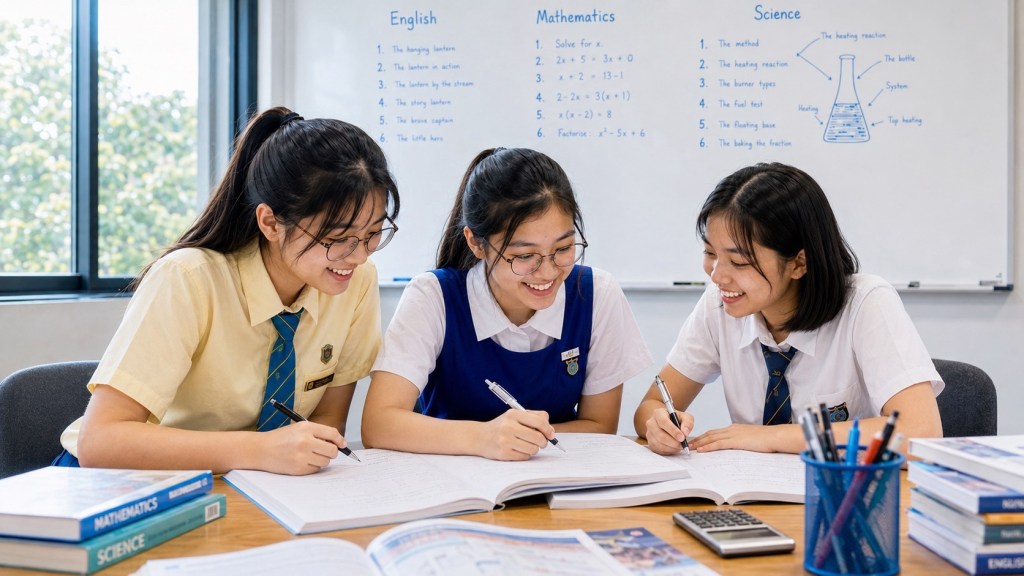
Science concept maps and mind maps help students see relationships that ordinary notes often hide. Science becomes difficult when definitions, diagrams, processes, examples and equations are stored as separate fragments. A concept map forces the learner to decide which ideas are central, which ideas depend on others, what the connecting relationship is, and where a misconception or missing link sits. The map therefore becomes both a learning tool and a diagnostic tool.
This Advanced Science Tutorials guide is written for parents and students in Sengkang, Punggol and across Singapore who search for Science concept maps, Science mind maps, concept mapping for students, how to make a Science mind map, revision mind maps, Science summary maps, Biology concept maps, Chemistry mind maps and Physics concept maps. It develops mapping from Primary Science through PSLE and Secondary G1, G2 and G3.
NSTA describes concept maps as graphical and textual representations of relationships among ideas, often using labelled arrows so connected concepts form meaningful propositions. In Science education, they can help make connections visible and can reveal how students organise and synthesise knowledge. See NSTA: Concept Maps for Structuring Instruction and NSTA: Using Concept Maps in the Science Classroom.
Concept map versus mind map
A mind map often starts with one central topic and branches outward into categories. A concept map usually makes the relationships between concepts more explicit, often with labelled links that can be read as propositions. Both can be useful. For Science, concept maps are especially powerful when the student needs to explain mechanisms, cause-and-effect relationships, systems or dependencies rather than simply collect keywords.
The choice depends on purpose. Use a mind map to brainstorm or organise a broad topic. Use a concept map when the quality of the links matters as much as the list of concepts.
The six-step Science concept-map routine
- Choose one focused question or topic.
- List 8–20 important concepts from memory before opening notes.
- Place the most general or central ideas first.
- Connect related concepts with arrows.
- Label every important connection with a meaningful phrase.
- Close the notes, explain the map aloud, then check and revise.
Primary 1 and Primary 2: mapping readiness
Young learners can begin with picture webs, category maps and simple “because” links. A central idea such as “animals” can branch into habitats, body coverings or ways of moving. The important skill is not map decoration; it is deciding which ideas belong together.
Parents can ask the child to explain one connection aloud. If the link cannot be spoken as a meaningful sentence, the map may be only a word collection.
Primary 3 and Primary 4: from branches to relationships
Primary Science students can map life cycles, material properties, plant systems, light and simple experiments. Encourage labelled arrows such as “needs”, “causes”, “is measured by”, “changes into” or “is an example of”.
This prevents a common weakness of mind maps: many colourful branches but no scientific relationships.
Primary 5 and Primary 6: map systems and mechanisms
Older Primary learners can map electricity, water cycles, food webs, reproduction, heat transfer and experiment design. A PSLE-ready concept map should contain causal links and conditions, not merely vocabulary.
After building a map, remove one central concept and ask what becomes disconnected. This reveals whether the learner sees dependencies within the topic.
Secondary G1, G2 and G3: map across topics
Lower Secondary students can use concept maps to connect particle models with states of matter, forces with motion, cells with tissues and organs, chemical changes with evidence, or climate with atmosphere, energy and water. The maps become especially useful when chapters overlap.
At this level, students should also map equations to meanings and practical methods to the quantities they measure.
Central question
Mapping principle. A strong map begins with a focused question such as ‘How does energy move through this system?’ rather than a chapter title alone.
Common failure. Students often write a huge topic in the centre and create an unmanageable map.
Better mapping move. Narrow the map to one explanatory job.
Question to ask. Can every branch help answer the central question?
Practice task. Rewrite broad topics as focused mapping questions.
A useful Science map should improve explanation, prediction or retrieval. If the student cannot read the links as meaningful scientific statements, the map is probably organising words rather than knowledge. Keep revising the relationships, not merely the appearance.
Concept selection
Mapping principle. Concepts should be scientifically meaningful nouns or short phrases.
Common failure. Students copy every bold word from the textbook.
Better mapping move. Choose ideas that are necessary for explanation or discrimination.
Question to ask. Would the map still work without this concept?
Practice task. Reduce a 40-word list to 15 essential concepts.
A useful Science map should improve explanation, prediction or retrieval. If the student cannot read the links as meaningful scientific statements, the map is probably organising words rather than knowledge. Keep revising the relationships, not merely the appearance.
Hierarchy
Mapping principle. General concepts usually sit higher while specific examples sit lower.
Common failure. Students arrange ideas by page order instead of conceptual structure.
Better mapping move. Move broad ideas above specific instances.
Question to ask. Which idea contains or governs the others?
Practice task. Rebuild a flat list into levels.
A useful Science map should improve explanation, prediction or retrieval. If the student cannot read the links as meaningful scientific statements, the map is probably organising words rather than knowledge. Keep revising the relationships, not merely the appearance.
Linking phrase
Mapping principle. A linking phrase states the relationship between two concepts.
Common failure. Students draw arrows without meaning.
Better mapping move. Use verbs or relational phrases such as causes, contains, transfers, requires or is measured by.
Question to ask. Can the arrow be read as a sentence?
Practice task. Label five unlabeled arrows.
A useful Science map should improve explanation, prediction or retrieval. If the student cannot read the links as meaningful scientific statements, the map is probably organising words rather than knowledge. Keep revising the relationships, not merely the appearance.
Proposition
Mapping principle. A proposition is two concepts linked by a meaningful relation.
Common failure. Students treat concept maps as keyword clouds.
Better mapping move. Read each concept-link-concept chain aloud.
Question to ask. Is the proposition scientifically correct?
Practice task. Turn five branches into complete propositions.
A useful Science map should improve explanation, prediction or retrieval. If the student cannot read the links as meaningful scientific statements, the map is probably organising words rather than knowledge. Keep revising the relationships, not merely the appearance.
Cross-link
Mapping principle. A cross-link connects ideas in different branches.
Common failure. Students keep topic branches isolated even when Science is interconnected.
Better mapping move. Add links that show causal, structural or quantitative relationships across sections.
Question to ask. Which two distant ideas influence one another?
Practice task. Add three valid cross-links.
A useful Science map should improve explanation, prediction or retrieval. If the student cannot read the links as meaningful scientific statements, the map is probably organising words rather than knowledge. Keep revising the relationships, not merely the appearance.
Example node
Mapping principle. Examples help anchor abstract concepts.
Common failure. Students confuse example with definition.
Better mapping move. Place examples below the concept they instantiate.
Question to ask. What makes this example belong here?
Practice task. Add one example and one non-example.
A useful Science map should improve explanation, prediction or retrieval. If the student cannot read the links as meaningful scientific statements, the map is probably organising words rather than knowledge. Keep revising the relationships, not merely the appearance.
Non-example
Mapping principle. A non-example clarifies boundaries.
Common failure. Students learn only positive cases.
Better mapping move. Use nearby incorrect cases to sharpen classification.
Question to ask. What looks similar but does not fit?
Practice task. Add one non-example with explanation.
A useful Science map should improve explanation, prediction or retrieval. If the student cannot read the links as meaningful scientific statements, the map is probably organising words rather than knowledge. Keep revising the relationships, not merely the appearance.
Definition link
Mapping principle. Definitions can be represented through ‘is defined as’ or ‘means’ links.
Common failure. Students copy long dictionary sentences into bubbles.
Better mapping move. Keep map text compact and move full definitions to notes if needed.
Question to ask. What is the minimum precise phrase?
Practice task. Compress a definition into map form.
A useful Science map should improve explanation, prediction or retrieval. If the student cannot read the links as meaningful scientific statements, the map is probably organising words rather than knowledge. Keep revising the relationships, not merely the appearance.
Cause link
Mapping principle. Cause links connect conditions to outcomes.
Common failure. Students write vague links such as affects.
Better mapping move. Use more specific relations where possible.
Question to ask. How does one concept influence the other?
Practice task. Replace ‘affects’ with a clearer verb.
A useful Science map should improve explanation, prediction or retrieval. If the student cannot read the links as meaningful scientific statements, the map is probably organising words rather than knowledge. Keep revising the relationships, not merely the appearance.
Sequence link
Mapping principle. Sequence links show ordered processes.
Common failure. Students use spatial order without arrow labels.
Better mapping move. Use leads to, followed by, triggers or becomes.
Question to ask. What must happen first?
Practice task. Map a life cycle or reaction sequence.
A useful Science map should improve explanation, prediction or retrieval. If the student cannot read the links as meaningful scientific statements, the map is probably organising words rather than knowledge. Keep revising the relationships, not merely the appearance.
Part-whole link
Mapping principle. Part-whole links connect structures to systems.
Common failure. Students mix part-of and example-of relationships.
Better mapping move. Use is part of or contains.
Question to ask. Is this a component or category member?
Practice task. Sort organ, tissue, cell and system links.
A useful Science map should improve explanation, prediction or retrieval. If the student cannot read the links as meaningful scientific statements, the map is probably organising words rather than knowledge. Keep revising the relationships, not merely the appearance.
Category link
Mapping principle. Category links organise classes and subclasses.
Common failure. Students create categories from appearance only.
Better mapping move. Use scientific classification criteria.
Question to ask. What rule creates the category?
Practice task. Map material types or organism groups.
A useful Science map should improve explanation, prediction or retrieval. If the student cannot read the links as meaningful scientific statements, the map is probably organising words rather than knowledge. Keep revising the relationships, not merely the appearance.
Property link
Mapping principle. Property links connect substances or objects to measurable features.
Common failure. Students list properties without conditions.
Better mapping move. Use has property or is measured by.
Question to ask. What evidence shows this property?
Practice task. Map materials to properties and tests.
A useful Science map should improve explanation, prediction or retrieval. If the student cannot read the links as meaningful scientific statements, the map is probably organising words rather than knowledge. Keep revising the relationships, not merely the appearance.
Function link
Mapping principle. Function links connect structures to roles.
Common failure. Students memorise structure names without purpose.
Better mapping move. Use performs, transports, supports or detects.
Question to ask. How does structure support function?
Practice task. Map cell or organ structures to functions.
A useful Science map should improve explanation, prediction or retrieval. If the student cannot read the links as meaningful scientific statements, the map is probably organising words rather than knowledge. Keep revising the relationships, not merely the appearance.
Input-output link
Mapping principle. Systems often have inputs and outputs.
Common failure. Students map components but not flows.
Better mapping move. Use enters, leaves, is converted to or produces.
Question to ask. What crosses the system boundary?
Practice task. Map inputs and outputs of photosynthesis or circuits.
A useful Science map should improve explanation, prediction or retrieval. If the student cannot read the links as meaningful scientific statements, the map is probably organising words rather than knowledge. Keep revising the relationships, not merely the appearance.
Flow link
Mapping principle. Flows track matter, energy, charge or information.
Common failure. Students use arrows without naming what moves.
Better mapping move. Label the transferred quantity.
Question to ask. What exactly flows?
Practice task. Map energy or matter flow.
A useful Science map should improve explanation, prediction or retrieval. If the student cannot read the links as meaningful scientific statements, the map is probably organising words rather than knowledge. Keep revising the relationships, not merely the appearance.
Feedback link
Mapping principle. Feedback shows outputs influencing future behaviour.
Common failure. Students create only one-way maps.
Better mapping move. Use increases, decreases, stabilises or reinforces.
Question to ask. Does the loop oppose or amplify change?
Practice task. Build a simple feedback loop.
A useful Science map should improve explanation, prediction or retrieval. If the student cannot read the links as meaningful scientific statements, the map is probably organising words rather than knowledge. Keep revising the relationships, not merely the appearance.
Evidence link
Mapping principle. Evidence links connect observations to claims.
Common failure. Students map conclusions but omit supporting data.
Better mapping move. Use is supported by or is measured as.
Question to ask. What evidence justifies the claim?
Practice task. Add data evidence to one claim.
A useful Science map should improve explanation, prediction or retrieval. If the student cannot read the links as meaningful scientific statements, the map is probably organising words rather than knowledge. Keep revising the relationships, not merely the appearance.
Model link
Mapping principle. Model links connect abstract representation to real phenomenon.
Common failure. Students confuse the model with reality.
Better mapping move. Use represents, predicts or simplifies.
Question to ask. What does this diagram stand for?
Practice task. Map model to evidence and limitation.
A useful Science map should improve explanation, prediction or retrieval. If the student cannot read the links as meaningful scientific statements, the map is probably organising words rather than knowledge. Keep revising the relationships, not merely the appearance.
Equation link
Mapping principle. Equations can sit inside maps as relationships among quantities.
Common failure. Students place formulas as isolated boxes.
Better mapping move. Connect each symbol to physical meaning and unit.
Question to ask. What changes if one quantity increases?
Practice task. Map density or speed formula.
A useful Science map should improve explanation, prediction or retrieval. If the student cannot read the links as meaningful scientific statements, the map is probably organising words rather than knowledge. Keep revising the relationships, not merely the appearance.
Unit link
Mapping principle. Units clarify quantitative concepts.
Common failure. Students learn formulas without units.
Better mapping move. Connect quantity to unit.
Question to ask. Which unit belongs to this quantity?
Practice task. Add units to all quantitative nodes.
A useful Science map should improve explanation, prediction or retrieval. If the student cannot read the links as meaningful scientific statements, the map is probably organising words rather than knowledge. Keep revising the relationships, not merely the appearance.
Measurement link
Mapping principle. Measurement links concepts to instruments or methods.
Common failure. Students treat instruments as unrelated practical trivia.
Better mapping move. Use is measured by or estimated from.
Question to ask. What tool creates the evidence?
Practice task. Map temperature, mass and volume to instruments.
A useful Science map should improve explanation, prediction or retrieval. If the student cannot read the links as meaningful scientific statements, the map is probably organising words rather than knowledge. Keep revising the relationships, not merely the appearance.
Practical-method link
Mapping principle. Methods connect questions to evidence.
Common failure. Students memorise apparatus separately from theory.
Better mapping move. Use tested by, controlled by or measured using.
Question to ask. What part of the method protects the claim?
Practice task. Map fair-test logic.
A useful Science map should improve explanation, prediction or retrieval. If the student cannot read the links as meaningful scientific statements, the map is probably organising words rather than knowledge. Keep revising the relationships, not merely the appearance.
Safety link
Mapping principle. Safety controls can be connected to hazards.
Common failure. Students memorise rules without reasons.
Better mapping move. Use hazard → controlled by → measure.
Question to ask. What harm does the control prevent?
Practice task. Map three hazards to controls.
A useful Science map should improve explanation, prediction or retrieval. If the student cannot read the links as meaningful scientific statements, the map is probably organising words rather than knowledge. Keep revising the relationships, not merely the appearance.
Misconception node
Mapping principle. A misconception node can be added temporarily to contrast with the correct model.
Common failure. Students hide wrong ideas rather than compare them.
Better mapping move. Use contradicted by or fails because.
Question to ask. What evidence makes the misconception fail?
Practice task. Map old versus new model.
A useful Science map should improve explanation, prediction or retrieval. If the student cannot read the links as meaningful scientific statements, the map is probably organising words rather than knowledge. Keep revising the relationships, not merely the appearance.
Uncertainty link
Mapping principle. Uncertainty connects measurements to confidence.
Common failure. Students map only final values.
Better mapping move. Use limited by, uncertain because or varies with.
Question to ask. What restricts precision?
Practice task. Add measurement-limit nodes.
A useful Science map should improve explanation, prediction or retrieval. If the student cannot read the links as meaningful scientific statements, the map is probably organising words rather than knowledge. Keep revising the relationships, not merely the appearance.
Scale link
Mapping principle. Scale links connect micro, organism, ecosystem or planetary levels.
Common failure. Students mix levels of explanation.
Better mapping move. Use occurs at, influences or emerges from.
Question to ask. What scale is this concept describing?
Practice task. Map cell to organ to organism.
A useful Science map should improve explanation, prediction or retrieval. If the student cannot read the links as meaningful scientific statements, the map is probably organising words rather than knowledge. Keep revising the relationships, not merely the appearance.
Time-scale link
Mapping principle. Processes operate over different durations.
Common failure. Students compare day-scale and century-scale claims directly.
Better mapping move. Connect process to characteristic timescale.
Question to ask. How fast does this process operate?
Practice task. Map weather versus climate.
A useful Science map should improve explanation, prediction or retrieval. If the student cannot read the links as meaningful scientific statements, the map is probably organising words rather than knowledge. Keep revising the relationships, not merely the appearance.
Space-scale link
Mapping principle. Different phenomena occupy different spatial scales.
Common failure. Students treat diagram size as reality.
Better mapping move. Connect atom, cell, organism, ecosystem and planet to scale.
Question to ask. Which scale requires a model rather than direct observation?
Practice task. Build a nested scale map.
A useful Science map should improve explanation, prediction or retrieval. If the student cannot read the links as meaningful scientific statements, the map is probably organising words rather than knowledge. Keep revising the relationships, not merely the appearance.
Map from memory
Mapping principle. Maps should begin from recall rather than copying.
Common failure. Students transcribe textbook diagrams and feel productive.
Better mapping move. Close notes for the first draft.
Question to ask. What relationships can you retrieve unaided?
Practice task. Build a 10-minute blank-page map.
A useful Science map should improve explanation, prediction or retrieval. If the student cannot read the links as meaningful scientific statements, the map is probably organising words rather than knowledge. Keep revising the relationships, not merely the appearance.
Map after reading
Mapping principle. Post-reading maps reveal whether the chapter became connected knowledge.
Common failure. Students finish reading with a list of notes.
Better mapping move. Map only the relationships that matter.
Question to ask. What is the chapter’s central mechanism?
Practice task. Create a one-page map after closing the book.
A useful Science map should improve explanation, prediction or retrieval. If the student cannot read the links as meaningful scientific statements, the map is probably organising words rather than knowledge. Keep revising the relationships, not merely the appearance.
Map before class
Mapping principle. Pre-class maps can expose prior knowledge and questions.
Common failure. Students copy online maps before instruction.
Better mapping move. Use only what you know and mark uncertainty.
Question to ask. Which links are guesses?
Practice task. Create a provisional map.
A useful Science map should improve explanation, prediction or retrieval. If the student cannot read the links as meaningful scientific statements, the map is probably organising words rather than knowledge. Keep revising the relationships, not merely the appearance.
Map after class
Mapping principle. Post-class maps can show conceptual change.
Common failure. Students create a second clean map and lose comparison.
Better mapping move. Edit the original using a different notation or date.
Question to ask. Which relationship changed?
Practice task. Track revisions.
A useful Science map should improve explanation, prediction or retrieval. If the student cannot read the links as meaningful scientific statements, the map is probably organising words rather than knowledge. Keep revising the relationships, not merely the appearance.
Map for revision
Mapping principle. Revision maps should compress and connect, not become decorative posters.
Common failure. Students spend hours on colours and fonts.
Better mapping move. Set a time limit and prioritise propositions.
Question to ask. Which connection is worth remembering?
Practice task. Build one map in 20 minutes.
A useful Science map should improve explanation, prediction or retrieval. If the student cannot read the links as meaningful scientific statements, the map is probably organising words rather than knowledge. Keep revising the relationships, not merely the appearance.
Map for exam planning
Mapping principle. Maps can help plan open-ended answers by revealing causal chains.
Common failure. Students try to reproduce the entire map in the exam.
Better mapping move. Select only the path relevant to the question.
Question to ask. Which nodes answer this command word?
Practice task. Trace one answer route through the map.
A useful Science map should improve explanation, prediction or retrieval. If the student cannot read the links as meaningful scientific statements, the map is probably organising words rather than knowledge. Keep revising the relationships, not merely the appearance.
Map for calculations
Mapping principle. Concept maps can connect quantities, formulas and units.
Common failure. Students keep equations isolated from theory.
Better mapping move. Place concept → relationship → formula → unit.
Question to ask. What physical meaning does the equation encode?
Practice task. Build a mechanics map.
A useful Science map should improve explanation, prediction or retrieval. If the student cannot read the links as meaningful scientific statements, the map is probably organising words rather than knowledge. Keep revising the relationships, not merely the appearance.
Map for Biology
Mapping principle. Biology maps work well for hierarchical and systems relationships.
Common failure. Students create lists of organs or vocabulary.
Better mapping move. Use structure-function, part-whole and process links.
Question to ask. How do cells, tissues, organs and systems connect?
Practice task. Map one body system.
A useful Science map should improve explanation, prediction or retrieval. If the student cannot read the links as meaningful scientific statements, the map is probably organising words rather than knowledge. Keep revising the relationships, not merely the appearance.
Map for Chemistry
Mapping principle. Chemistry maps connect particles, substances, properties and reactions.
Common failure. Students memorise categories without transformations.
Better mapping move. Use changes into, reacts with, contains and is measured by.
Question to ask. What particle model explains the property?
Practice task. Map elements, compounds, mixtures and separation.
A useful Science map should improve explanation, prediction or retrieval. If the student cannot read the links as meaningful scientific statements, the map is probably organising words rather than knowledge. Keep revising the relationships, not merely the appearance.
Map for Physics
Mapping principle. Physics maps connect quantities, interactions, models and equations.
Common failure. Students make formula sheets without concepts.
Better mapping move. Use causes, transfers, measured by and proportional to.
Question to ask. What interaction explains the equation?
Practice task. Map force, motion and energy.
A useful Science map should improve explanation, prediction or retrieval. If the student cannot read the links as meaningful scientific statements, the map is probably organising words rather than knowledge. Keep revising the relationships, not merely the appearance.
Map for Earth Science
Mapping principle. Earth Science maps connect reservoirs, flows and timescales.
Common failure. Students draw one circular cycle.
Better mapping move. Use network links and feedbacks.
Question to ask. What stores and transfers matter or energy?
Practice task. Map water cycle as a network.
A useful Science map should improve explanation, prediction or retrieval. If the student cannot read the links as meaningful scientific statements, the map is probably organising words rather than knowledge. Keep revising the relationships, not merely the appearance.
Map for experiments
Mapping principle. Investigation maps connect question, variables, apparatus, data and conclusion.
Common failure. Students list IV/DV/CV separately.
Better mapping move. Show how method produces evidence for claim.
Question to ask. Which control protects which comparison?
Practice task. Map one experiment from aim to conclusion.
A useful Science map should improve explanation, prediction or retrieval. If the student cannot read the links as meaningful scientific statements, the map is probably organising words rather than knowledge. Keep revising the relationships, not merely the appearance.
Map for misconceptions
Mapping principle. Maps expose missing or wrong links.
Common failure. Students may know all terms yet connect them incorrectly.
Better mapping move. Compare student map with evidence and ask which proposition fails.
Question to ask. Which link generates the wrong prediction?
Practice task. Repair one map.
A useful Science map should improve explanation, prediction or retrieval. If the student cannot read the links as meaningful scientific statements, the map is probably organising words rather than knowledge. Keep revising the relationships, not merely the appearance.
Map scoring
Mapping principle. Maps can be reviewed for accurate concepts and valid propositions.
Common failure. Students judge map quality by neatness.
Better mapping move. Count scientifically correct links and useful cross-links.
Question to ask. Which proposition is incorrect or vague?
Practice task. Peer-review a map.
A useful Science map should improve explanation, prediction or retrieval. If the student cannot read the links as meaningful scientific statements, the map is probably organising words rather than knowledge. Keep revising the relationships, not merely the appearance.
Map revision
Mapping principle. Maps should change after correction.
Common failure. Students treat first draft as artwork and resist changes.
Better mapping move. Use arrows, strike-throughs or versioning.
Question to ask. What evidence requires revision?
Practice task. Create version 2 after questions.
A useful Science map should improve explanation, prediction or retrieval. If the student cannot read the links as meaningful scientific statements, the map is probably organising words rather than knowledge. Keep revising the relationships, not merely the appearance.
Map comparison
Mapping principle. Two students can build different correct maps.
Common failure. Students assume there is only one right layout.
Better mapping move. Compare propositions, not visual arrangement.
Question to ask. Do both maps preserve the same scientific relationships?
Practice task. Merge two maps.
A useful Science map should improve explanation, prediction or retrieval. If the student cannot read the links as meaningful scientific statements, the map is probably organising words rather than knowledge. Keep revising the relationships, not merely the appearance.
Map and flashcards
Mapping principle. Maps support relationships while flashcards support targeted retrieval.
Common failure. Students try to use one tool for every job.
Better mapping move. Use maps for structure and cards for discrete recall.
Question to ask. Which facts need cards and which need connections?
Practice task. Create five flashcards from one map.
A useful Science map should improve explanation, prediction or retrieval. If the student cannot read the links as meaningful scientific statements, the map is probably organising words rather than knowledge. Keep revising the relationships, not merely the appearance.
Map and textbook
Mapping principle. Maps can turn linear pages into connected structure.
Common failure. Students copy textbook headings into branches.
Better mapping move. Map mechanism rather than page order.
Question to ask. What hidden cross-links appear across sections?
Practice task. Map one chapter.
A useful Science map should improve explanation, prediction or retrieval. If the student cannot read the links as meaningful scientific statements, the map is probably organising words rather than knowledge. Keep revising the relationships, not merely the appearance.
Map and notes
Mapping principle. Maps can sit above detailed notes as an overview.
Common failure. Students replace all notes with tiny unreadable maps.
Better mapping move. Keep map concise and link to deeper notes.
Question to ask. Which detail belongs off-map?
Practice task. Build a one-page overview plus note references.
A useful Science map should improve explanation, prediction or retrieval. If the student cannot read the links as meaningful scientific statements, the map is probably organising words rather than knowledge. Keep revising the relationships, not merely the appearance.
Map and graph
Mapping principle. Concept maps explain why a graph has its shape.
Common failure. Students store graph and theory separately.
Better mapping move. Link variable relationships to graph features.
Question to ask. Which concept explains the slope or plateau?
Practice task. Add graph thumbnail to map.
A useful Science map should improve explanation, prediction or retrieval. If the student cannot read the links as meaningful scientific statements, the map is probably organising words rather than knowledge. Keep revising the relationships, not merely the appearance.
Map and diagram
Mapping principle. A diagram shows structure while a concept map shows conceptual relationships.
Common failure. Students use the two interchangeably.
Better mapping move. Choose representation based on question.
Question to ask. Do you need spatial accuracy or conceptual linkage?
Practice task. Convert diagram labels into propositions.
A useful Science map should improve explanation, prediction or retrieval. If the student cannot read the links as meaningful scientific statements, the map is probably organising words rather than knowledge. Keep revising the relationships, not merely the appearance.
Map and CER
Mapping principle. Concept maps can organise claim, evidence and reasoning before writing.
Common failure. Students jump from map directly to prose without selecting evidence.
Better mapping move. Trace the claim path and tag evidence nodes.
Question to ask. Which link provides the reasoning bridge?
Practice task. Plan a CER answer from map.
A useful Science map should improve explanation, prediction or retrieval. If the student cannot read the links as meaningful scientific statements, the map is probably organising words rather than knowledge. Keep revising the relationships, not merely the appearance.
Digital maps
Mapping principle. Digital tools make editing and linking easy.
Common failure. Students spend excessive time on formatting or templates.
Better mapping move. Use the simplest tool that supports labelled links.
Question to ask. Does software make thinking easier or just prettier?
Practice task. Build a plain digital map.
A useful Science map should improve explanation, prediction or retrieval. If the student cannot read the links as meaningful scientific statements, the map is probably organising words rather than knowledge. Keep revising the relationships, not merely the appearance.
Paper maps
Mapping principle. Paper maps can be fast, flexible and distraction-free.
Common failure. Students avoid revision because the map is messy.
Better mapping move. Use pencil and allow crossing or arrows.
Question to ask. Can you explain it even if it is not beautiful?
Practice task. Build a timed paper map.
A useful Science map should improve explanation, prediction or retrieval. If the student cannot read the links as meaningful scientific statements, the map is probably organising words rather than knowledge. Keep revising the relationships, not merely the appearance.
Colour use
Mapping principle. Colour can encode categories or levels.
Common failure. Students use random colour for decoration.
Better mapping move. Assign one meaning per colour.
Question to ask. What does each colour represent?
Practice task. Limit map to three functional colours.
A useful Science map should improve explanation, prediction or retrieval. If the student cannot read the links as meaningful scientific statements, the map is probably organising words rather than knowledge. Keep revising the relationships, not merely the appearance.
Arrow direction
Mapping principle. Arrow direction changes proposition meaning.
Common failure. Students use double arrows everywhere.
Better mapping move. Choose direction that produces a readable sentence.
Question to ask. Can the link be read aloud?
Practice task. Reverse one arrow and test meaning.
A useful Science map should improve explanation, prediction or retrieval. If the student cannot read the links as meaningful scientific statements, the map is probably organising words rather than knowledge. Keep revising the relationships, not merely the appearance.
Map density
Mapping principle. Too many nodes reduce usefulness.
Common failure. Students try to include the whole textbook.
Better mapping move. Split large maps into overview and submaps.
Question to ask. What level of detail serves the current task?
Practice task. Reduce a crowded map by one third.
A useful Science map should improve explanation, prediction or retrieval. If the student cannot read the links as meaningful scientific statements, the map is probably organising words rather than knowledge. Keep revising the relationships, not merely the appearance.
Map gaps
Mapping principle. Blank or weakly connected areas reveal knowledge gaps.
Common failure. Students hide gaps with generic words.
Better mapping move. Mark missing links explicitly.
Question to ask. Which concept cannot be connected confidently?
Practice task. Turn gaps into study questions.
A useful Science map should improve explanation, prediction or retrieval. If the student cannot read the links as meaningful scientific statements, the map is probably organising words rather than knowledge. Keep revising the relationships, not merely the appearance.
Map transfer
Mapping principle. A map is learned when relationships survive changed examples.
Common failure. Students memorise map layout.
Better mapping move. Use the same concept relationships in another context.
Question to ask. Which proposition remains invariant?
Practice task. Rebuild without original positions.
A useful Science map should improve explanation, prediction or retrieval. If the student cannot read the links as meaningful scientific statements, the map is probably organising words rather than knowledge. Keep revising the relationships, not merely the appearance.
Map retrieval
Mapping principle. Retrieval maps test memory and structure at once.
Common failure. Students create perfect maps with notes open.
Better mapping move. Close all sources for first attempt.
Question to ask. How many correct propositions can you produce?
Practice task. Score and retest later.
A useful Science map should improve explanation, prediction or retrieval. If the student cannot read the links as meaningful scientific statements, the map is probably organising words rather than knowledge. Keep revising the relationships, not merely the appearance.
Map spacing
Mapping principle. Repeated maps across time support spaced retrieval.
Common failure. Students create one master map and only reread it.
Better mapping move. Redraw smaller versions from memory after delays.
Question to ask. Which links disappeared?
Practice task. Schedule 1-day and 1-week redraws.
A useful Science map should improve explanation, prediction or retrieval. If the student cannot read the links as meaningful scientific statements, the map is probably organising words rather than knowledge. Keep revising the relationships, not merely the appearance.
Map interleaving
Mapping principle. Combined maps can compare related topics.
Common failure. Students keep similar ideas isolated.
Better mapping move. Build contrast maps across chapters.
Question to ask. Which concept applies under which condition?
Practice task. Map heat vs temperature, breathing vs respiration.
A useful Science map should improve explanation, prediction or retrieval. If the student cannot read the links as meaningful scientific statements, the map is probably organising words rather than knowledge. Keep revising the relationships, not merely the appearance.
Map as parent conversation
Mapping principle. Parents can ask a child to explain the map rather than quiz random facts.
Common failure. Parents may turn maps into interrogation.
Better mapping move. Choose one branch and ask the learner to teach it.
Question to ask. Which link is hardest to explain?
Practice task. Use a five-minute explanation.
A useful Science map should improve explanation, prediction or retrieval. If the student cannot read the links as meaningful scientific statements, the map is probably organising words rather than knowledge. Keep revising the relationships, not merely the appearance.
Map as tutor diagnostic
Mapping principle. Tutors can use a blank map to see what a student connects spontaneously.
Common failure. Tutors may overcorrect layout instead of reasoning.
Better mapping move. Focus on propositions and missing dependencies.
Question to ask. Which wrong link explains repeated question errors?
Practice task. Repair one high-leverage connection.
A useful Science map should improve explanation, prediction or retrieval. If the student cannot read the links as meaningful scientific statements, the map is probably organising words rather than knowledge. Keep revising the relationships, not merely the appearance.
Three-student mapping
Mapping principle. Three students can build individual maps before merging.
Common failure. Students can copy the fastest mapper.
Better mapping move. Require independent first drafts.
Question to ask. Which relationships appear in all three?
Practice task. Create a consensus map with debated links.
A useful Science map should improve explanation, prediction or retrieval. If the student cannot read the links as meaningful scientific statements, the map is probably organising words rather than knowledge. Keep revising the relationships, not merely the appearance.
Map finish rule
Mapping principle. A map is finished when it serves its learning purpose, not when every possible node is included.
Common failure. Students endlessly decorate or expand.
Better mapping move. Stop when central question is answered and important links are retrievable.
Question to ask. What job was this map built to do?
Practice task. Write the answer below the map.
A useful Science map should improve explanation, prediction or retrieval. If the student cannot read the links as meaningful scientific statements, the map is probably organising words rather than knowledge. Keep revising the relationships, not merely the appearance.
A twelve-week Science mapping programme
- Week 1: concepts, linking phrases and propositions.
- Week 2: hierarchy and categories.
- Week 3: cause, sequence and function links.
- Week 4: systems, inputs, outputs and feedback.
- Week 5: Biology maps.
- Week 6: Chemistry maps.
- Week 7: Physics maps.
- Week 8: Earth and environmental maps.
- Week 9: equation and graph maps.
- Week 10: misconception and error maps.
- Week 11: retrieval maps and spacing.
- Week 12: mixed-topic transfer and map explanation.
When tuition may help with concept maps
Extra support can help when a student has many facts but cannot see how they connect, or when open-ended answers are missing causal bridges. A tutor can build one map collaboratively, then ask the learner to map a new topic independently.
For current Primary 3–6 and PSLE programme information, use Primary Science Tuition Sengkang. Secondary concept-mapping coverage here is educational transition material.
Frequently asked questions
Are concept maps and mind maps the same?
They overlap, but concept maps usually emphasise explicit labelled relationships among ideas, while mind maps often emphasise branching organisation from a central topic.
Should I use colour?
Only when colour encodes meaning. Decorative colour is optional and should not consume most of the study time.
Can concept maps replace notes?
Usually they work best as an overview or retrieval tool, with detailed notes or textbook sections available for depth.
How many concepts should be on one map?
Enough to explain the focused question without overcrowding. For students, 10–20 well-connected concepts can be more useful than 60 disconnected terms.
Should I make maps with notes open?
Use notes for checking, but begin at least some maps from memory so the map tests retrieval rather than copying.
How do I know a map is good?
The concepts are accurate, important links are labelled, propositions are scientifically meaningful, and the map helps answer or predict something.
Further reading
- NSTA: Concept Maps for Structuring Instruction
- NSTA: Using Concept Maps in the Science Classroom
- Scientific Models for Students
- Scientific Reasoning Skills
Final operating rule
A Science map should make relationships visible. Choose a focused question. Retrieve the concepts. Link them with precise phrases. Add cross-links. Explain the map aloud. Check it against evidence. Then redraw later from memory. The map is valuable when it changes what the learner can explain, not when it becomes a beautiful poster.
Central question — mapping clinic 1
Start with a blank page and a fresh Science topic where central question matters. The learner should build the first version from memory before opening notes. This reveals which ideas are actually connected and which are only familiar when seen.
Surface the common failure: Students often write a huge topic in the centre and create an unmanageable map.. Ask what misunderstanding this creates. Then apply the better mapping move: Narrow the map to one explanatory job. Every important arrow should now communicate a relationship that can be read aloud.
Now ask: Can every branch help answer the central question? Run the practice task: Rewrite broad topics as focused mapping questions. Check the map against the textbook or teacher notes only after the independent attempt. Add missing links in a visibly different way so correction remains traceable.
Finish with delayed transfer. Redraw a smaller map several days later or use the same structure in a different Science domain. Durable mapping appears when the learner can reconstruct relationships without remembering the original page layout.
Concept selection — mapping clinic 1
Start with a blank page and a fresh Science topic where concept selection matters. The learner should build the first version from memory before opening notes. This reveals which ideas are actually connected and which are only familiar when seen.
Surface the common failure: Students copy every bold word from the textbook.. Ask what misunderstanding this creates. Then apply the better mapping move: Choose ideas that are necessary for explanation or discrimination. Every important arrow should now communicate a relationship that can be read aloud.
Now ask: Would the map still work without this concept? Run the practice task: Reduce a 40-word list to 15 essential concepts. Check the map against the textbook or teacher notes only after the independent attempt. Add missing links in a visibly different way so correction remains traceable.
Finish with delayed transfer. Redraw a smaller map several days later or use the same structure in a different Science domain. Durable mapping appears when the learner can reconstruct relationships without remembering the original page layout.
Hierarchy — mapping clinic 1
Start with a blank page and a fresh Science topic where hierarchy matters. The learner should build the first version from memory before opening notes. This reveals which ideas are actually connected and which are only familiar when seen.
Surface the common failure: Students arrange ideas by page order instead of conceptual structure.. Ask what misunderstanding this creates. Then apply the better mapping move: Move broad ideas above specific instances. Every important arrow should now communicate a relationship that can be read aloud.
Now ask: Which idea contains or governs the others? Run the practice task: Rebuild a flat list into levels. Check the map against the textbook or teacher notes only after the independent attempt. Add missing links in a visibly different way so correction remains traceable.
Finish with delayed transfer. Redraw a smaller map several days later or use the same structure in a different Science domain. Durable mapping appears when the learner can reconstruct relationships without remembering the original page layout.
Linking phrase — mapping clinic 1
Start with a blank page and a fresh Science topic where linking phrase matters. The learner should build the first version from memory before opening notes. This reveals which ideas are actually connected and which are only familiar when seen.
Surface the common failure: Students draw arrows without meaning.. Ask what misunderstanding this creates. Then apply the better mapping move: Use verbs or relational phrases such as causes, contains, transfers, requires or is measured by. Every important arrow should now communicate a relationship that can be read aloud.
Now ask: Can the arrow be read as a sentence? Run the practice task: Label five unlabeled arrows. Check the map against the textbook or teacher notes only after the independent attempt. Add missing links in a visibly different way so correction remains traceable.
Finish with delayed transfer. Redraw a smaller map several days later or use the same structure in a different Science domain. Durable mapping appears when the learner can reconstruct relationships without remembering the original page layout.
Proposition — mapping clinic 1
Start with a blank page and a fresh Science topic where proposition matters. The learner should build the first version from memory before opening notes. This reveals which ideas are actually connected and which are only familiar when seen.
Surface the common failure: Students treat concept maps as keyword clouds.. Ask what misunderstanding this creates. Then apply the better mapping move: Read each concept-link-concept chain aloud. Every important arrow should now communicate a relationship that can be read aloud.
Now ask: Is the proposition scientifically correct? Run the practice task: Turn five branches into complete propositions. Check the map against the textbook or teacher notes only after the independent attempt. Add missing links in a visibly different way so correction remains traceable.
Finish with delayed transfer. Redraw a smaller map several days later or use the same structure in a different Science domain. Durable mapping appears when the learner can reconstruct relationships without remembering the original page layout.
Cross-link — mapping clinic 1
Start with a blank page and a fresh Science topic where cross-link matters. The learner should build the first version from memory before opening notes. This reveals which ideas are actually connected and which are only familiar when seen.
Surface the common failure: Students keep topic branches isolated even when Science is interconnected.. Ask what misunderstanding this creates. Then apply the better mapping move: Add links that show causal, structural or quantitative relationships across sections. Every important arrow should now communicate a relationship that can be read aloud.
Now ask: Which two distant ideas influence one another? Run the practice task: Add three valid cross-links. Check the map against the textbook or teacher notes only after the independent attempt. Add missing links in a visibly different way so correction remains traceable.
Finish with delayed transfer. Redraw a smaller map several days later or use the same structure in a different Science domain. Durable mapping appears when the learner can reconstruct relationships without remembering the original page layout.
Example node — mapping clinic 1
Start with a blank page and a fresh Science topic where example node matters. The learner should build the first version from memory before opening notes. This reveals which ideas are actually connected and which are only familiar when seen.
Surface the common failure: Students confuse example with definition.. Ask what misunderstanding this creates. Then apply the better mapping move: Place examples below the concept they instantiate. Every important arrow should now communicate a relationship that can be read aloud.
Now ask: What makes this example belong here? Run the practice task: Add one example and one non-example. Check the map against the textbook or teacher notes only after the independent attempt. Add missing links in a visibly different way so correction remains traceable.
Finish with delayed transfer. Redraw a smaller map several days later or use the same structure in a different Science domain. Durable mapping appears when the learner can reconstruct relationships without remembering the original page layout.
Non-example — mapping clinic 1
Start with a blank page and a fresh Science topic where non-example matters. The learner should build the first version from memory before opening notes. This reveals which ideas are actually connected and which are only familiar when seen.
Surface the common failure: Students learn only positive cases.. Ask what misunderstanding this creates. Then apply the better mapping move: Use nearby incorrect cases to sharpen classification. Every important arrow should now communicate a relationship that can be read aloud.
Now ask: What looks similar but does not fit? Run the practice task: Add one non-example with explanation. Check the map against the textbook or teacher notes only after the independent attempt. Add missing links in a visibly different way so correction remains traceable.
Finish with delayed transfer. Redraw a smaller map several days later or use the same structure in a different Science domain. Durable mapping appears when the learner can reconstruct relationships without remembering the original page layout.
Definition link — mapping clinic 1
Start with a blank page and a fresh Science topic where definition link matters. The learner should build the first version from memory before opening notes. This reveals which ideas are actually connected and which are only familiar when seen.
Surface the common failure: Students copy long dictionary sentences into bubbles.. Ask what misunderstanding this creates. Then apply the better mapping move: Keep map text compact and move full definitions to notes if needed. Every important arrow should now communicate a relationship that can be read aloud.
Now ask: What is the minimum precise phrase? Run the practice task: Compress a definition into map form. Check the map against the textbook or teacher notes only after the independent attempt. Add missing links in a visibly different way so correction remains traceable.
Finish with delayed transfer. Redraw a smaller map several days later or use the same structure in a different Science domain. Durable mapping appears when the learner can reconstruct relationships without remembering the original page layout.
Cause link — mapping clinic 1
Start with a blank page and a fresh Science topic where cause link matters. The learner should build the first version from memory before opening notes. This reveals which ideas are actually connected and which are only familiar when seen.
Surface the common failure: Students write vague links such as affects.. Ask what misunderstanding this creates. Then apply the better mapping move: Use more specific relations where possible. Every important arrow should now communicate a relationship that can be read aloud.
Now ask: How does one concept influence the other? Run the practice task: Replace ‘affects’ with a clearer verb. Check the map against the textbook or teacher notes only after the independent attempt. Add missing links in a visibly different way so correction remains traceable.
Finish with delayed transfer. Redraw a smaller map several days later or use the same structure in a different Science domain. Durable mapping appears when the learner can reconstruct relationships without remembering the original page layout.
Sequence link — mapping clinic 1
Start with a blank page and a fresh Science topic where sequence link matters. The learner should build the first version from memory before opening notes. This reveals which ideas are actually connected and which are only familiar when seen.
Surface the common failure: Students use spatial order without arrow labels.. Ask what misunderstanding this creates. Then apply the better mapping move: Use leads to, followed by, triggers or becomes. Every important arrow should now communicate a relationship that can be read aloud.
Now ask: What must happen first? Run the practice task: Map a life cycle or reaction sequence. Check the map against the textbook or teacher notes only after the independent attempt. Add missing links in a visibly different way so correction remains traceable.
Finish with delayed transfer. Redraw a smaller map several days later or use the same structure in a different Science domain. Durable mapping appears when the learner can reconstruct relationships without remembering the original page layout.
Part-whole link — mapping clinic 1
Start with a blank page and a fresh Science topic where part-whole link matters. The learner should build the first version from memory before opening notes. This reveals which ideas are actually connected and which are only familiar when seen.
Surface the common failure: Students mix part-of and example-of relationships.. Ask what misunderstanding this creates. Then apply the better mapping move: Use is part of or contains. Every important arrow should now communicate a relationship that can be read aloud.
Now ask: Is this a component or category member? Run the practice task: Sort organ, tissue, cell and system links. Check the map against the textbook or teacher notes only after the independent attempt. Add missing links in a visibly different way so correction remains traceable.
Finish with delayed transfer. Redraw a smaller map several days later or use the same structure in a different Science domain. Durable mapping appears when the learner can reconstruct relationships without remembering the original page layout.
Category link — mapping clinic 1
Start with a blank page and a fresh Science topic where category link matters. The learner should build the first version from memory before opening notes. This reveals which ideas are actually connected and which are only familiar when seen.
Surface the common failure: Students create categories from appearance only.. Ask what misunderstanding this creates. Then apply the better mapping move: Use scientific classification criteria. Every important arrow should now communicate a relationship that can be read aloud.
Now ask: What rule creates the category? Run the practice task: Map material types or organism groups. Check the map against the textbook or teacher notes only after the independent attempt. Add missing links in a visibly different way so correction remains traceable.
Finish with delayed transfer. Redraw a smaller map several days later or use the same structure in a different Science domain. Durable mapping appears when the learner can reconstruct relationships without remembering the original page layout.
Property link — mapping clinic 1
Start with a blank page and a fresh Science topic where property link matters. The learner should build the first version from memory before opening notes. This reveals which ideas are actually connected and which are only familiar when seen.
Surface the common failure: Students list properties without conditions.. Ask what misunderstanding this creates. Then apply the better mapping move: Use has property or is measured by. Every important arrow should now communicate a relationship that can be read aloud.
Now ask: What evidence shows this property? Run the practice task: Map materials to properties and tests. Check the map against the textbook or teacher notes only after the independent attempt. Add missing links in a visibly different way so correction remains traceable.
Finish with delayed transfer. Redraw a smaller map several days later or use the same structure in a different Science domain. Durable mapping appears when the learner can reconstruct relationships without remembering the original page layout.
Function link — mapping clinic 1
Start with a blank page and a fresh Science topic where function link matters. The learner should build the first version from memory before opening notes. This reveals which ideas are actually connected and which are only familiar when seen.
Surface the common failure: Students memorise structure names without purpose.. Ask what misunderstanding this creates. Then apply the better mapping move: Use performs, transports, supports or detects. Every important arrow should now communicate a relationship that can be read aloud.
Now ask: How does structure support function? Run the practice task: Map cell or organ structures to functions. Check the map against the textbook or teacher notes only after the independent attempt. Add missing links in a visibly different way so correction remains traceable.
Finish with delayed transfer. Redraw a smaller map several days later or use the same structure in a different Science domain. Durable mapping appears when the learner can reconstruct relationships without remembering the original page layout.
Input-output link — mapping clinic 1
Start with a blank page and a fresh Science topic where input-output link matters. The learner should build the first version from memory before opening notes. This reveals which ideas are actually connected and which are only familiar when seen.
Surface the common failure: Students map components but not flows.. Ask what misunderstanding this creates. Then apply the better mapping move: Use enters, leaves, is converted to or produces. Every important arrow should now communicate a relationship that can be read aloud.
Now ask: What crosses the system boundary? Run the practice task: Map inputs and outputs of photosynthesis or circuits. Check the map against the textbook or teacher notes only after the independent attempt. Add missing links in a visibly different way so correction remains traceable.
Finish with delayed transfer. Redraw a smaller map several days later or use the same structure in a different Science domain. Durable mapping appears when the learner can reconstruct relationships without remembering the original page layout.
Flow link — mapping clinic 1
Start with a blank page and a fresh Science topic where flow link matters. The learner should build the first version from memory before opening notes. This reveals which ideas are actually connected and which are only familiar when seen.
Surface the common failure: Students use arrows without naming what moves.. Ask what misunderstanding this creates. Then apply the better mapping move: Label the transferred quantity. Every important arrow should now communicate a relationship that can be read aloud.
Now ask: What exactly flows? Run the practice task: Map energy or matter flow. Check the map against the textbook or teacher notes only after the independent attempt. Add missing links in a visibly different way so correction remains traceable.
Finish with delayed transfer. Redraw a smaller map several days later or use the same structure in a different Science domain. Durable mapping appears when the learner can reconstruct relationships without remembering the original page layout.
Feedback link — mapping clinic 1
Start with a blank page and a fresh Science topic where feedback link matters. The learner should build the first version from memory before opening notes. This reveals which ideas are actually connected and which are only familiar when seen.
Surface the common failure: Students create only one-way maps.. Ask what misunderstanding this creates. Then apply the better mapping move: Use increases, decreases, stabilises or reinforces. Every important arrow should now communicate a relationship that can be read aloud.
Now ask: Does the loop oppose or amplify change? Run the practice task: Build a simple feedback loop. Check the map against the textbook or teacher notes only after the independent attempt. Add missing links in a visibly different way so correction remains traceable.
Finish with delayed transfer. Redraw a smaller map several days later or use the same structure in a different Science domain. Durable mapping appears when the learner can reconstruct relationships without remembering the original page layout.
Evidence link — mapping clinic 1
Start with a blank page and a fresh Science topic where evidence link matters. The learner should build the first version from memory before opening notes. This reveals which ideas are actually connected and which are only familiar when seen.
Surface the common failure: Students map conclusions but omit supporting data.. Ask what misunderstanding this creates. Then apply the better mapping move: Use is supported by or is measured as. Every important arrow should now communicate a relationship that can be read aloud.
Now ask: What evidence justifies the claim? Run the practice task: Add data evidence to one claim. Check the map against the textbook or teacher notes only after the independent attempt. Add missing links in a visibly different way so correction remains traceable.
Finish with delayed transfer. Redraw a smaller map several days later or use the same structure in a different Science domain. Durable mapping appears when the learner can reconstruct relationships without remembering the original page layout.
Model link — mapping clinic 1
Start with a blank page and a fresh Science topic where model link matters. The learner should build the first version from memory before opening notes. This reveals which ideas are actually connected and which are only familiar when seen.
Surface the common failure: Students confuse the model with reality.. Ask what misunderstanding this creates. Then apply the better mapping move: Use represents, predicts or simplifies. Every important arrow should now communicate a relationship that can be read aloud.
Now ask: What does this diagram stand for? Run the practice task: Map model to evidence and limitation. Check the map against the textbook or teacher notes only after the independent attempt. Add missing links in a visibly different way so correction remains traceable.
Finish with delayed transfer. Redraw a smaller map several days later or use the same structure in a different Science domain. Durable mapping appears when the learner can reconstruct relationships without remembering the original page layout.
Equation link — mapping clinic 1
Start with a blank page and a fresh Science topic where equation link matters. The learner should build the first version from memory before opening notes. This reveals which ideas are actually connected and which are only familiar when seen.
Surface the common failure: Students place formulas as isolated boxes.. Ask what misunderstanding this creates. Then apply the better mapping move: Connect each symbol to physical meaning and unit. Every important arrow should now communicate a relationship that can be read aloud.
Now ask: What changes if one quantity increases? Run the practice task: Map density or speed formula. Check the map against the textbook or teacher notes only after the independent attempt. Add missing links in a visibly different way so correction remains traceable.
Finish with delayed transfer. Redraw a smaller map several days later or use the same structure in a different Science domain. Durable mapping appears when the learner can reconstruct relationships without remembering the original page layout.
Unit link — mapping clinic 1
Start with a blank page and a fresh Science topic where unit link matters. The learner should build the first version from memory before opening notes. This reveals which ideas are actually connected and which are only familiar when seen.
Surface the common failure: Students learn formulas without units.. Ask what misunderstanding this creates. Then apply the better mapping move: Connect quantity to unit. Every important arrow should now communicate a relationship that can be read aloud.
Now ask: Which unit belongs to this quantity? Run the practice task: Add units to all quantitative nodes. Check the map against the textbook or teacher notes only after the independent attempt. Add missing links in a visibly different way so correction remains traceable.
Finish with delayed transfer. Redraw a smaller map several days later or use the same structure in a different Science domain. Durable mapping appears when the learner can reconstruct relationships without remembering the original page layout.
Measurement link — mapping clinic 1
Start with a blank page and a fresh Science topic where measurement link matters. The learner should build the first version from memory before opening notes. This reveals which ideas are actually connected and which are only familiar when seen.
Surface the common failure: Students treat instruments as unrelated practical trivia.. Ask what misunderstanding this creates. Then apply the better mapping move: Use is measured by or estimated from. Every important arrow should now communicate a relationship that can be read aloud.
Now ask: What tool creates the evidence? Run the practice task: Map temperature, mass and volume to instruments. Check the map against the textbook or teacher notes only after the independent attempt. Add missing links in a visibly different way so correction remains traceable.
Finish with delayed transfer. Redraw a smaller map several days later or use the same structure in a different Science domain. Durable mapping appears when the learner can reconstruct relationships without remembering the original page layout.
Practical-method link — mapping clinic 1
Start with a blank page and a fresh Science topic where practical-method link matters. The learner should build the first version from memory before opening notes. This reveals which ideas are actually connected and which are only familiar when seen.
Surface the common failure: Students memorise apparatus separately from theory.. Ask what misunderstanding this creates. Then apply the better mapping move: Use tested by, controlled by or measured using. Every important arrow should now communicate a relationship that can be read aloud.
Now ask: What part of the method protects the claim? Run the practice task: Map fair-test logic. Check the map against the textbook or teacher notes only after the independent attempt. Add missing links in a visibly different way so correction remains traceable.
Finish with delayed transfer. Redraw a smaller map several days later or use the same structure in a different Science domain. Durable mapping appears when the learner can reconstruct relationships without remembering the original page layout.
Safety link — mapping clinic 1
Start with a blank page and a fresh Science topic where safety link matters. The learner should build the first version from memory before opening notes. This reveals which ideas are actually connected and which are only familiar when seen.
Surface the common failure: Students memorise rules without reasons.. Ask what misunderstanding this creates. Then apply the better mapping move: Use hazard → controlled by → measure. Every important arrow should now communicate a relationship that can be read aloud.
Now ask: What harm does the control prevent? Run the practice task: Map three hazards to controls. Check the map against the textbook or teacher notes only after the independent attempt. Add missing links in a visibly different way so correction remains traceable.
Finish with delayed transfer. Redraw a smaller map several days later or use the same structure in a different Science domain. Durable mapping appears when the learner can reconstruct relationships without remembering the original page layout.
Misconception node — mapping clinic 1
Start with a blank page and a fresh Science topic where misconception node matters. The learner should build the first version from memory before opening notes. This reveals which ideas are actually connected and which are only familiar when seen.
Surface the common failure: Students hide wrong ideas rather than compare them.. Ask what misunderstanding this creates. Then apply the better mapping move: Use contradicted by or fails because. Every important arrow should now communicate a relationship that can be read aloud.
Now ask: What evidence makes the misconception fail? Run the practice task: Map old versus new model. Check the map against the textbook or teacher notes only after the independent attempt. Add missing links in a visibly different way so correction remains traceable.
Finish with delayed transfer. Redraw a smaller map several days later or use the same structure in a different Science domain. Durable mapping appears when the learner can reconstruct relationships without remembering the original page layout.
Uncertainty link — mapping clinic 1
Start with a blank page and a fresh Science topic where uncertainty link matters. The learner should build the first version from memory before opening notes. This reveals which ideas are actually connected and which are only familiar when seen.
Surface the common failure: Students map only final values.. Ask what misunderstanding this creates. Then apply the better mapping move: Use limited by, uncertain because or varies with. Every important arrow should now communicate a relationship that can be read aloud.
Now ask: What restricts precision? Run the practice task: Add measurement-limit nodes. Check the map against the textbook or teacher notes only after the independent attempt. Add missing links in a visibly different way so correction remains traceable.
Finish with delayed transfer. Redraw a smaller map several days later or use the same structure in a different Science domain. Durable mapping appears when the learner can reconstruct relationships without remembering the original page layout.
Scale link — mapping clinic 1
Start with a blank page and a fresh Science topic where scale link matters. The learner should build the first version from memory before opening notes. This reveals which ideas are actually connected and which are only familiar when seen.
Surface the common failure: Students mix levels of explanation.. Ask what misunderstanding this creates. Then apply the better mapping move: Use occurs at, influences or emerges from. Every important arrow should now communicate a relationship that can be read aloud.
Now ask: What scale is this concept describing? Run the practice task: Map cell to organ to organism. Check the map against the textbook or teacher notes only after the independent attempt. Add missing links in a visibly different way so correction remains traceable.
Finish with delayed transfer. Redraw a smaller map several days later or use the same structure in a different Science domain. Durable mapping appears when the learner can reconstruct relationships without remembering the original page layout.
Time-scale link — mapping clinic 1
Start with a blank page and a fresh Science topic where time-scale link matters. The learner should build the first version from memory before opening notes. This reveals which ideas are actually connected and which are only familiar when seen.
Surface the common failure: Students compare day-scale and century-scale claims directly.. Ask what misunderstanding this creates. Then apply the better mapping move: Connect process to characteristic timescale. Every important arrow should now communicate a relationship that can be read aloud.
Now ask: How fast does this process operate? Run the practice task: Map weather versus climate. Check the map against the textbook or teacher notes only after the independent attempt. Add missing links in a visibly different way so correction remains traceable.
Finish with delayed transfer. Redraw a smaller map several days later or use the same structure in a different Science domain. Durable mapping appears when the learner can reconstruct relationships without remembering the original page layout.
Space-scale link — mapping clinic 1
Start with a blank page and a fresh Science topic where space-scale link matters. The learner should build the first version from memory before opening notes. This reveals which ideas are actually connected and which are only familiar when seen.
Surface the common failure: Students treat diagram size as reality.. Ask what misunderstanding this creates. Then apply the better mapping move: Connect atom, cell, organism, ecosystem and planet to scale. Every important arrow should now communicate a relationship that can be read aloud.
Now ask: Which scale requires a model rather than direct observation? Run the practice task: Build a nested scale map. Check the map against the textbook or teacher notes only after the independent attempt. Add missing links in a visibly different way so correction remains traceable.
Finish with delayed transfer. Redraw a smaller map several days later or use the same structure in a different Science domain. Durable mapping appears when the learner can reconstruct relationships without remembering the original page layout.
Map from memory — mapping clinic 1
Start with a blank page and a fresh Science topic where map from memory matters. The learner should build the first version from memory before opening notes. This reveals which ideas are actually connected and which are only familiar when seen.
Surface the common failure: Students transcribe textbook diagrams and feel productive.. Ask what misunderstanding this creates. Then apply the better mapping move: Close notes for the first draft. Every important arrow should now communicate a relationship that can be read aloud.
Now ask: What relationships can you retrieve unaided? Run the practice task: Build a 10-minute blank-page map. Check the map against the textbook or teacher notes only after the independent attempt. Add missing links in a visibly different way so correction remains traceable.
Finish with delayed transfer. Redraw a smaller map several days later or use the same structure in a different Science domain. Durable mapping appears when the learner can reconstruct relationships without remembering the original page layout.
Map after reading — mapping clinic 1
Start with a blank page and a fresh Science topic where map after reading matters. The learner should build the first version from memory before opening notes. This reveals which ideas are actually connected and which are only familiar when seen.
Surface the common failure: Students finish reading with a list of notes.. Ask what misunderstanding this creates. Then apply the better mapping move: Map only the relationships that matter. Every important arrow should now communicate a relationship that can be read aloud.
Now ask: What is the chapter’s central mechanism? Run the practice task: Create a one-page map after closing the book. Check the map against the textbook or teacher notes only after the independent attempt. Add missing links in a visibly different way so correction remains traceable.
Finish with delayed transfer. Redraw a smaller map several days later or use the same structure in a different Science domain. Durable mapping appears when the learner can reconstruct relationships without remembering the original page layout.
Map before class — mapping clinic 1
Start with a blank page and a fresh Science topic where map before class matters. The learner should build the first version from memory before opening notes. This reveals which ideas are actually connected and which are only familiar when seen.
Surface the common failure: Students copy online maps before instruction.. Ask what misunderstanding this creates. Then apply the better mapping move: Use only what you know and mark uncertainty. Every important arrow should now communicate a relationship that can be read aloud.
Now ask: Which links are guesses? Run the practice task: Create a provisional map. Check the map against the textbook or teacher notes only after the independent attempt. Add missing links in a visibly different way so correction remains traceable.
Finish with delayed transfer. Redraw a smaller map several days later or use the same structure in a different Science domain. Durable mapping appears when the learner can reconstruct relationships without remembering the original page layout.
Map after class — mapping clinic 1
Start with a blank page and a fresh Science topic where map after class matters. The learner should build the first version from memory before opening notes. This reveals which ideas are actually connected and which are only familiar when seen.
Surface the common failure: Students create a second clean map and lose comparison.. Ask what misunderstanding this creates. Then apply the better mapping move: Edit the original using a different notation or date. Every important arrow should now communicate a relationship that can be read aloud.
Now ask: Which relationship changed? Run the practice task: Track revisions. Check the map against the textbook or teacher notes only after the independent attempt. Add missing links in a visibly different way so correction remains traceable.
Finish with delayed transfer. Redraw a smaller map several days later or use the same structure in a different Science domain. Durable mapping appears when the learner can reconstruct relationships without remembering the original page layout.
Map for revision — mapping clinic 1
Start with a blank page and a fresh Science topic where map for revision matters. The learner should build the first version from memory before opening notes. This reveals which ideas are actually connected and which are only familiar when seen.
Surface the common failure: Students spend hours on colours and fonts.. Ask what misunderstanding this creates. Then apply the better mapping move: Set a time limit and prioritise propositions. Every important arrow should now communicate a relationship that can be read aloud.
Now ask: Which connection is worth remembering? Run the practice task: Build one map in 20 minutes. Check the map against the textbook or teacher notes only after the independent attempt. Add missing links in a visibly different way so correction remains traceable.
Finish with delayed transfer. Redraw a smaller map several days later or use the same structure in a different Science domain. Durable mapping appears when the learner can reconstruct relationships without remembering the original page layout.
Map for exam planning — mapping clinic 1
Start with a blank page and a fresh Science topic where map for exam planning matters. The learner should build the first version from memory before opening notes. This reveals which ideas are actually connected and which are only familiar when seen.
Surface the common failure: Students try to reproduce the entire map in the exam.. Ask what misunderstanding this creates. Then apply the better mapping move: Select only the path relevant to the question. Every important arrow should now communicate a relationship that can be read aloud.
Now ask: Which nodes answer this command word? Run the practice task: Trace one answer route through the map. Check the map against the textbook or teacher notes only after the independent attempt. Add missing links in a visibly different way so correction remains traceable.
Finish with delayed transfer. Redraw a smaller map several days later or use the same structure in a different Science domain. Durable mapping appears when the learner can reconstruct relationships without remembering the original page layout.
Map for calculations — mapping clinic 1
Start with a blank page and a fresh Science topic where map for calculations matters. The learner should build the first version from memory before opening notes. This reveals which ideas are actually connected and which are only familiar when seen.
Surface the common failure: Students keep equations isolated from theory.. Ask what misunderstanding this creates. Then apply the better mapping move: Place concept → relationship → formula → unit. Every important arrow should now communicate a relationship that can be read aloud.
Now ask: What physical meaning does the equation encode? Run the practice task: Build a mechanics map. Check the map against the textbook or teacher notes only after the independent attempt. Add missing links in a visibly different way so correction remains traceable.
Finish with delayed transfer. Redraw a smaller map several days later or use the same structure in a different Science domain. Durable mapping appears when the learner can reconstruct relationships without remembering the original page layout.
Map for Biology — mapping clinic 1
Start with a blank page and a fresh Science topic where map for biology matters. The learner should build the first version from memory before opening notes. This reveals which ideas are actually connected and which are only familiar when seen.
Surface the common failure: Students create lists of organs or vocabulary.. Ask what misunderstanding this creates. Then apply the better mapping move: Use structure-function, part-whole and process links. Every important arrow should now communicate a relationship that can be read aloud.
Now ask: How do cells, tissues, organs and systems connect? Run the practice task: Map one body system. Check the map against the textbook or teacher notes only after the independent attempt. Add missing links in a visibly different way so correction remains traceable.
Finish with delayed transfer. Redraw a smaller map several days later or use the same structure in a different Science domain. Durable mapping appears when the learner can reconstruct relationships without remembering the original page layout.
Map for Chemistry — mapping clinic 1
Start with a blank page and a fresh Science topic where map for chemistry matters. The learner should build the first version from memory before opening notes. This reveals which ideas are actually connected and which are only familiar when seen.
Surface the common failure: Students memorise categories without transformations.. Ask what misunderstanding this creates. Then apply the better mapping move: Use changes into, reacts with, contains and is measured by. Every important arrow should now communicate a relationship that can be read aloud.
Now ask: What particle model explains the property? Run the practice task: Map elements, compounds, mixtures and separation. Check the map against the textbook or teacher notes only after the independent attempt. Add missing links in a visibly different way so correction remains traceable.
Finish with delayed transfer. Redraw a smaller map several days later or use the same structure in a different Science domain. Durable mapping appears when the learner can reconstruct relationships without remembering the original page layout.
Map for Physics — mapping clinic 1
Start with a blank page and a fresh Science topic where map for physics matters. The learner should build the first version from memory before opening notes. This reveals which ideas are actually connected and which are only familiar when seen.
Surface the common failure: Students make formula sheets without concepts.. Ask what misunderstanding this creates. Then apply the better mapping move: Use causes, transfers, measured by and proportional to. Every important arrow should now communicate a relationship that can be read aloud.
Now ask: What interaction explains the equation? Run the practice task: Map force, motion and energy. Check the map against the textbook or teacher notes only after the independent attempt. Add missing links in a visibly different way so correction remains traceable.
Finish with delayed transfer. Redraw a smaller map several days later or use the same structure in a different Science domain. Durable mapping appears when the learner can reconstruct relationships without remembering the original page layout.
Map for Earth Science — mapping clinic 1
Start with a blank page and a fresh Science topic where map for earth science matters. The learner should build the first version from memory before opening notes. This reveals which ideas are actually connected and which are only familiar when seen.
Surface the common failure: Students draw one circular cycle.. Ask what misunderstanding this creates. Then apply the better mapping move: Use network links and feedbacks. Every important arrow should now communicate a relationship that can be read aloud.
Now ask: What stores and transfers matter or energy? Run the practice task: Map water cycle as a network. Check the map against the textbook or teacher notes only after the independent attempt. Add missing links in a visibly different way so correction remains traceable.
Finish with delayed transfer. Redraw a smaller map several days later or use the same structure in a different Science domain. Durable mapping appears when the learner can reconstruct relationships without remembering the original page layout.
Map for experiments — mapping clinic 1
Start with a blank page and a fresh Science topic where map for experiments matters. The learner should build the first version from memory before opening notes. This reveals which ideas are actually connected and which are only familiar when seen.
Surface the common failure: Students list IV/DV/CV separately.. Ask what misunderstanding this creates. Then apply the better mapping move: Show how method produces evidence for claim. Every important arrow should now communicate a relationship that can be read aloud.
Now ask: Which control protects which comparison? Run the practice task: Map one experiment from aim to conclusion. Check the map against the textbook or teacher notes only after the independent attempt. Add missing links in a visibly different way so correction remains traceable.
Finish with delayed transfer. Redraw a smaller map several days later or use the same structure in a different Science domain. Durable mapping appears when the learner can reconstruct relationships without remembering the original page layout.
Map for misconceptions — mapping clinic 1
Start with a blank page and a fresh Science topic where map for misconceptions matters. The learner should build the first version from memory before opening notes. This reveals which ideas are actually connected and which are only familiar when seen.
Surface the common failure: Students may know all terms yet connect them incorrectly.. Ask what misunderstanding this creates. Then apply the better mapping move: Compare student map with evidence and ask which proposition fails. Every important arrow should now communicate a relationship that can be read aloud.
Now ask: Which link generates the wrong prediction? Run the practice task: Repair one map. Check the map against the textbook or teacher notes only after the independent attempt. Add missing links in a visibly different way so correction remains traceable.
Finish with delayed transfer. Redraw a smaller map several days later or use the same structure in a different Science domain. Durable mapping appears when the learner can reconstruct relationships without remembering the original page layout.
Map scoring — mapping clinic 1
Start with a blank page and a fresh Science topic where map scoring matters. The learner should build the first version from memory before opening notes. This reveals which ideas are actually connected and which are only familiar when seen.
Surface the common failure: Students judge map quality by neatness.. Ask what misunderstanding this creates. Then apply the better mapping move: Count scientifically correct links and useful cross-links. Every important arrow should now communicate a relationship that can be read aloud.
Now ask: Which proposition is incorrect or vague? Run the practice task: Peer-review a map. Check the map against the textbook or teacher notes only after the independent attempt. Add missing links in a visibly different way so correction remains traceable.
Finish with delayed transfer. Redraw a smaller map several days later or use the same structure in a different Science domain. Durable mapping appears when the learner can reconstruct relationships without remembering the original page layout.
Map revision — mapping clinic 1
Start with a blank page and a fresh Science topic where map revision matters. The learner should build the first version from memory before opening notes. This reveals which ideas are actually connected and which are only familiar when seen.
Surface the common failure: Students treat first draft as artwork and resist changes.. Ask what misunderstanding this creates. Then apply the better mapping move: Use arrows, strike-throughs or versioning. Every important arrow should now communicate a relationship that can be read aloud.
Now ask: What evidence requires revision? Run the practice task: Create version 2 after questions. Check the map against the textbook or teacher notes only after the independent attempt. Add missing links in a visibly different way so correction remains traceable.
Finish with delayed transfer. Redraw a smaller map several days later or use the same structure in a different Science domain. Durable mapping appears when the learner can reconstruct relationships without remembering the original page layout.
Central question — mapping clinic 2
Start with a blank page and a fresh Science topic where central question matters. The learner should build the first version from memory before opening notes. This reveals which ideas are actually connected and which are only familiar when seen.
Surface the common failure: Students often write a huge topic in the centre and create an unmanageable map.. Ask what misunderstanding this creates. Then apply the better mapping move: Narrow the map to one explanatory job. Every important arrow should now communicate a relationship that can be read aloud.
Now ask: Can every branch help answer the central question? Run the practice task: Rewrite broad topics as focused mapping questions. Check the map against the textbook or teacher notes only after the independent attempt. Add missing links in a visibly different way so correction remains traceable.
Finish with delayed transfer. Redraw a smaller map several days later or use the same structure in a different Science domain. Durable mapping appears when the learner can reconstruct relationships without remembering the original page layout.
Concept selection — mapping clinic 2
Start with a blank page and a fresh Science topic where concept selection matters. The learner should build the first version from memory before opening notes. This reveals which ideas are actually connected and which are only familiar when seen.
Surface the common failure: Students copy every bold word from the textbook.. Ask what misunderstanding this creates. Then apply the better mapping move: Choose ideas that are necessary for explanation or discrimination. Every important arrow should now communicate a relationship that can be read aloud.
Now ask: Would the map still work without this concept? Run the practice task: Reduce a 40-word list to 15 essential concepts. Check the map against the textbook or teacher notes only after the independent attempt. Add missing links in a visibly different way so correction remains traceable.
Finish with delayed transfer. Redraw a smaller map several days later or use the same structure in a different Science domain. Durable mapping appears when the learner can reconstruct relationships without remembering the original page layout.
Hierarchy — mapping clinic 2
Start with a blank page and a fresh Science topic where hierarchy matters. The learner should build the first version from memory before opening notes. This reveals which ideas are actually connected and which are only familiar when seen.
Surface the common failure: Students arrange ideas by page order instead of conceptual structure.. Ask what misunderstanding this creates. Then apply the better mapping move: Move broad ideas above specific instances. Every important arrow should now communicate a relationship that can be read aloud.
Now ask: Which idea contains or governs the others? Run the practice task: Rebuild a flat list into levels. Check the map against the textbook or teacher notes only after the independent attempt. Add missing links in a visibly different way so correction remains traceable.
Finish with delayed transfer. Redraw a smaller map several days later or use the same structure in a different Science domain. Durable mapping appears when the learner can reconstruct relationships without remembering the original page layout.
Linking phrase — mapping clinic 2
Start with a blank page and a fresh Science topic where linking phrase matters. The learner should build the first version from memory before opening notes. This reveals which ideas are actually connected and which are only familiar when seen.
Surface the common failure: Students draw arrows without meaning.. Ask what misunderstanding this creates. Then apply the better mapping move: Use verbs or relational phrases such as causes, contains, transfers, requires or is measured by. Every important arrow should now communicate a relationship that can be read aloud.
Now ask: Can the arrow be read as a sentence? Run the practice task: Label five unlabeled arrows. Check the map against the textbook or teacher notes only after the independent attempt. Add missing links in a visibly different way so correction remains traceable.
Finish with delayed transfer. Redraw a smaller map several days later or use the same structure in a different Science domain. Durable mapping appears when the learner can reconstruct relationships without remembering the original page layout.
Proposition — mapping clinic 2
Start with a blank page and a fresh Science topic where proposition matters. The learner should build the first version from memory before opening notes. This reveals which ideas are actually connected and which are only familiar when seen.
Surface the common failure: Students treat concept maps as keyword clouds.. Ask what misunderstanding this creates. Then apply the better mapping move: Read each concept-link-concept chain aloud. Every important arrow should now communicate a relationship that can be read aloud.
Now ask: Is the proposition scientifically correct? Run the practice task: Turn five branches into complete propositions. Check the map against the textbook or teacher notes only after the independent attempt. Add missing links in a visibly different way so correction remains traceable.
Finish with delayed transfer. Redraw a smaller map several days later or use the same structure in a different Science domain. Durable mapping appears when the learner can reconstruct relationships without remembering the original page layout.
Cross-link — mapping clinic 2
Start with a blank page and a fresh Science topic where cross-link matters. The learner should build the first version from memory before opening notes. This reveals which ideas are actually connected and which are only familiar when seen.
Surface the common failure: Students keep topic branches isolated even when Science is interconnected.. Ask what misunderstanding this creates. Then apply the better mapping move: Add links that show causal, structural or quantitative relationships across sections. Every important arrow should now communicate a relationship that can be read aloud.
Now ask: Which two distant ideas influence one another? Run the practice task: Add three valid cross-links. Check the map against the textbook or teacher notes only after the independent attempt. Add missing links in a visibly different way so correction remains traceable.
Finish with delayed transfer. Redraw a smaller map several days later or use the same structure in a different Science domain. Durable mapping appears when the learner can reconstruct relationships without remembering the original page layout.
Example node — mapping clinic 2
Start with a blank page and a fresh Science topic where example node matters. The learner should build the first version from memory before opening notes. This reveals which ideas are actually connected and which are only familiar when seen.
Surface the common failure: Students confuse example with definition.. Ask what misunderstanding this creates. Then apply the better mapping move: Place examples below the concept they instantiate. Every important arrow should now communicate a relationship that can be read aloud.
Now ask: What makes this example belong here? Run the practice task: Add one example and one non-example. Check the map against the textbook or teacher notes only after the independent attempt. Add missing links in a visibly different way so correction remains traceable.
Finish with delayed transfer. Redraw a smaller map several days later or use the same structure in a different Science domain. Durable mapping appears when the learner can reconstruct relationships without remembering the original page layout.
Non-example — mapping clinic 2
Start with a blank page and a fresh Science topic where non-example matters. The learner should build the first version from memory before opening notes. This reveals which ideas are actually connected and which are only familiar when seen.
Surface the common failure: Students learn only positive cases.. Ask what misunderstanding this creates. Then apply the better mapping move: Use nearby incorrect cases to sharpen classification. Every important arrow should now communicate a relationship that can be read aloud.
Now ask: What looks similar but does not fit? Run the practice task: Add one non-example with explanation. Check the map against the textbook or teacher notes only after the independent attempt. Add missing links in a visibly different way so correction remains traceable.
Finish with delayed transfer. Redraw a smaller map several days later or use the same structure in a different Science domain. Durable mapping appears when the learner can reconstruct relationships without remembering the original page layout.
Definition link — mapping clinic 2
Start with a blank page and a fresh Science topic where definition link matters. The learner should build the first version from memory before opening notes. This reveals which ideas are actually connected and which are only familiar when seen.
Surface the common failure: Students copy long dictionary sentences into bubbles.. Ask what misunderstanding this creates. Then apply the better mapping move: Keep map text compact and move full definitions to notes if needed. Every important arrow should now communicate a relationship that can be read aloud.
Now ask: What is the minimum precise phrase? Run the practice task: Compress a definition into map form. Check the map against the textbook or teacher notes only after the independent attempt. Add missing links in a visibly different way so correction remains traceable.
Finish with delayed transfer. Redraw a smaller map several days later or use the same structure in a different Science domain. Durable mapping appears when the learner can reconstruct relationships without remembering the original page layout.
Cause link — mapping clinic 2
Start with a blank page and a fresh Science topic where cause link matters. The learner should build the first version from memory before opening notes. This reveals which ideas are actually connected and which are only familiar when seen.
Surface the common failure: Students write vague links such as affects.. Ask what misunderstanding this creates. Then apply the better mapping move: Use more specific relations where possible. Every important arrow should now communicate a relationship that can be read aloud.
Now ask: How does one concept influence the other? Run the practice task: Replace ‘affects’ with a clearer verb. Check the map against the textbook or teacher notes only after the independent attempt. Add missing links in a visibly different way so correction remains traceable.
Finish with delayed transfer. Redraw a smaller map several days later or use the same structure in a different Science domain. Durable mapping appears when the learner can reconstruct relationships without remembering the original page layout.
Sequence link — mapping clinic 2
Start with a blank page and a fresh Science topic where sequence link matters. The learner should build the first version from memory before opening notes. This reveals which ideas are actually connected and which are only familiar when seen.
Surface the common failure: Students use spatial order without arrow labels.. Ask what misunderstanding this creates. Then apply the better mapping move: Use leads to, followed by, triggers or becomes. Every important arrow should now communicate a relationship that can be read aloud.
Now ask: What must happen first? Run the practice task: Map a life cycle or reaction sequence. Check the map against the textbook or teacher notes only after the independent attempt. Add missing links in a visibly different way so correction remains traceable.
Finish with delayed transfer. Redraw a smaller map several days later or use the same structure in a different Science domain. Durable mapping appears when the learner can reconstruct relationships without remembering the original page layout.
Part-whole link — mapping clinic 2
Start with a blank page and a fresh Science topic where part-whole link matters. The learner should build the first version from memory before opening notes. This reveals which ideas are actually connected and which are only familiar when seen.
Surface the common failure: Students mix part-of and example-of relationships.. Ask what misunderstanding this creates. Then apply the better mapping move: Use is part of or contains. Every important arrow should now communicate a relationship that can be read aloud.
Now ask: Is this a component or category member? Run the practice task: Sort organ, tissue, cell and system links. Check the map against the textbook or teacher notes only after the independent attempt. Add missing links in a visibly different way so correction remains traceable.
Finish with delayed transfer. Redraw a smaller map several days later or use the same structure in a different Science domain. Durable mapping appears when the learner can reconstruct relationships without remembering the original page layout.
Category link — mapping clinic 2
Start with a blank page and a fresh Science topic where category link matters. The learner should build the first version from memory before opening notes. This reveals which ideas are actually connected and which are only familiar when seen.
Surface the common failure: Students create categories from appearance only.. Ask what misunderstanding this creates. Then apply the better mapping move: Use scientific classification criteria. Every important arrow should now communicate a relationship that can be read aloud.
Now ask: What rule creates the category? Run the practice task: Map material types or organism groups. Check the map against the textbook or teacher notes only after the independent attempt. Add missing links in a visibly different way so correction remains traceable.
Finish with delayed transfer. Redraw a smaller map several days later or use the same structure in a different Science domain. Durable mapping appears when the learner can reconstruct relationships without remembering the original page layout.
Property link — mapping clinic 2
Start with a blank page and a fresh Science topic where property link matters. The learner should build the first version from memory before opening notes. This reveals which ideas are actually connected and which are only familiar when seen.
Surface the common failure: Students list properties without conditions.. Ask what misunderstanding this creates. Then apply the better mapping move: Use has property or is measured by. Every important arrow should now communicate a relationship that can be read aloud.
Now ask: What evidence shows this property? Run the practice task: Map materials to properties and tests. Check the map against the textbook or teacher notes only after the independent attempt. Add missing links in a visibly different way so correction remains traceable.
Finish with delayed transfer. Redraw a smaller map several days later or use the same structure in a different Science domain. Durable mapping appears when the learner can reconstruct relationships without remembering the original page layout.
Function link — mapping clinic 2
Start with a blank page and a fresh Science topic where function link matters. The learner should build the first version from memory before opening notes. This reveals which ideas are actually connected and which are only familiar when seen.
Surface the common failure: Students memorise structure names without purpose.. Ask what misunderstanding this creates. Then apply the better mapping move: Use performs, transports, supports or detects. Every important arrow should now communicate a relationship that can be read aloud.
Now ask: How does structure support function? Run the practice task: Map cell or organ structures to functions. Check the map against the textbook or teacher notes only after the independent attempt. Add missing links in a visibly different way so correction remains traceable.
Finish with delayed transfer. Redraw a smaller map several days later or use the same structure in a different Science domain. Durable mapping appears when the learner can reconstruct relationships without remembering the original page layout.
Input-output link — mapping clinic 2
Start with a blank page and a fresh Science topic where input-output link matters. The learner should build the first version from memory before opening notes. This reveals which ideas are actually connected and which are only familiar when seen.
Surface the common failure: Students map components but not flows.. Ask what misunderstanding this creates. Then apply the better mapping move: Use enters, leaves, is converted to or produces. Every important arrow should now communicate a relationship that can be read aloud.
Now ask: What crosses the system boundary? Run the practice task: Map inputs and outputs of photosynthesis or circuits. Check the map against the textbook or teacher notes only after the independent attempt. Add missing links in a visibly different way so correction remains traceable.
Finish with delayed transfer. Redraw a smaller map several days later or use the same structure in a different Science domain. Durable mapping appears when the learner can reconstruct relationships without remembering the original page layout.
Flow link — mapping clinic 2
Start with a blank page and a fresh Science topic where flow link matters. The learner should build the first version from memory before opening notes. This reveals which ideas are actually connected and which are only familiar when seen.
Surface the common failure: Students use arrows without naming what moves.. Ask what misunderstanding this creates. Then apply the better mapping move: Label the transferred quantity. Every important arrow should now communicate a relationship that can be read aloud.
Now ask: What exactly flows? Run the practice task: Map energy or matter flow. Check the map against the textbook or teacher notes only after the independent attempt. Add missing links in a visibly different way so correction remains traceable.
Finish with delayed transfer. Redraw a smaller map several days later or use the same structure in a different Science domain. Durable mapping appears when the learner can reconstruct relationships without remembering the original page layout.
Feedback link — mapping clinic 2
Start with a blank page and a fresh Science topic where feedback link matters. The learner should build the first version from memory before opening notes. This reveals which ideas are actually connected and which are only familiar when seen.
Surface the common failure: Students create only one-way maps.. Ask what misunderstanding this creates. Then apply the better mapping move: Use increases, decreases, stabilises or reinforces. Every important arrow should now communicate a relationship that can be read aloud.
Now ask: Does the loop oppose or amplify change? Run the practice task: Build a simple feedback loop. Check the map against the textbook or teacher notes only after the independent attempt. Add missing links in a visibly different way so correction remains traceable.
Finish with delayed transfer. Redraw a smaller map several days later or use the same structure in a different Science domain. Durable mapping appears when the learner can reconstruct relationships without remembering the original page layout.
Evidence link — mapping clinic 2
Start with a blank page and a fresh Science topic where evidence link matters. The learner should build the first version from memory before opening notes. This reveals which ideas are actually connected and which are only familiar when seen.
Surface the common failure: Students map conclusions but omit supporting data.. Ask what misunderstanding this creates. Then apply the better mapping move: Use is supported by or is measured as. Every important arrow should now communicate a relationship that can be read aloud.
Now ask: What evidence justifies the claim? Run the practice task: Add data evidence to one claim. Check the map against the textbook or teacher notes only after the independent attempt. Add missing links in a visibly different way so correction remains traceable.
Finish with delayed transfer. Redraw a smaller map several days later or use the same structure in a different Science domain. Durable mapping appears when the learner can reconstruct relationships without remembering the original page layout.
Model link — mapping clinic 2
Start with a blank page and a fresh Science topic where model link matters. The learner should build the first version from memory before opening notes. This reveals which ideas are actually connected and which are only familiar when seen.
Surface the common failure: Students confuse the model with reality.. Ask what misunderstanding this creates. Then apply the better mapping move: Use represents, predicts or simplifies. Every important arrow should now communicate a relationship that can be read aloud.
Now ask: What does this diagram stand for? Run the practice task: Map model to evidence and limitation. Check the map against the textbook or teacher notes only after the independent attempt. Add missing links in a visibly different way so correction remains traceable.
Finish with delayed transfer. Redraw a smaller map several days later or use the same structure in a different Science domain. Durable mapping appears when the learner can reconstruct relationships without remembering the original page layout.
Equation link — mapping clinic 2
Start with a blank page and a fresh Science topic where equation link matters. The learner should build the first version from memory before opening notes. This reveals which ideas are actually connected and which are only familiar when seen.
Surface the common failure: Students place formulas as isolated boxes.. Ask what misunderstanding this creates. Then apply the better mapping move: Connect each symbol to physical meaning and unit. Every important arrow should now communicate a relationship that can be read aloud.
Now ask: What changes if one quantity increases? Run the practice task: Map density or speed formula. Check the map against the textbook or teacher notes only after the independent attempt. Add missing links in a visibly different way so correction remains traceable.
Finish with delayed transfer. Redraw a smaller map several days later or use the same structure in a different Science domain. Durable mapping appears when the learner can reconstruct relationships without remembering the original page layout.
Unit link — mapping clinic 2
Start with a blank page and a fresh Science topic where unit link matters. The learner should build the first version from memory before opening notes. This reveals which ideas are actually connected and which are only familiar when seen.
Surface the common failure: Students learn formulas without units.. Ask what misunderstanding this creates. Then apply the better mapping move: Connect quantity to unit. Every important arrow should now communicate a relationship that can be read aloud.
Now ask: Which unit belongs to this quantity? Run the practice task: Add units to all quantitative nodes. Check the map against the textbook or teacher notes only after the independent attempt. Add missing links in a visibly different way so correction remains traceable.
Finish with delayed transfer. Redraw a smaller map several days later or use the same structure in a different Science domain. Durable mapping appears when the learner can reconstruct relationships without remembering the original page layout.
Measurement link — mapping clinic 2
Start with a blank page and a fresh Science topic where measurement link matters. The learner should build the first version from memory before opening notes. This reveals which ideas are actually connected and which are only familiar when seen.
Surface the common failure: Students treat instruments as unrelated practical trivia.. Ask what misunderstanding this creates. Then apply the better mapping move: Use is measured by or estimated from. Every important arrow should now communicate a relationship that can be read aloud.
Now ask: What tool creates the evidence? Run the practice task: Map temperature, mass and volume to instruments. Check the map against the textbook or teacher notes only after the independent attempt. Add missing links in a visibly different way so correction remains traceable.
Finish with delayed transfer. Redraw a smaller map several days later or use the same structure in a different Science domain. Durable mapping appears when the learner can reconstruct relationships without remembering the original page layout.
Practical-method link — mapping clinic 2
Start with a blank page and a fresh Science topic where practical-method link matters. The learner should build the first version from memory before opening notes. This reveals which ideas are actually connected and which are only familiar when seen.
Surface the common failure: Students memorise apparatus separately from theory.. Ask what misunderstanding this creates. Then apply the better mapping move: Use tested by, controlled by or measured using. Every important arrow should now communicate a relationship that can be read aloud.
Now ask: What part of the method protects the claim? Run the practice task: Map fair-test logic. Check the map against the textbook or teacher notes only after the independent attempt. Add missing links in a visibly different way so correction remains traceable.
Finish with delayed transfer. Redraw a smaller map several days later or use the same structure in a different Science domain. Durable mapping appears when the learner can reconstruct relationships without remembering the original page layout.
Safety link — mapping clinic 2
Start with a blank page and a fresh Science topic where safety link matters. The learner should build the first version from memory before opening notes. This reveals which ideas are actually connected and which are only familiar when seen.
Surface the common failure: Students memorise rules without reasons.. Ask what misunderstanding this creates. Then apply the better mapping move: Use hazard → controlled by → measure. Every important arrow should now communicate a relationship that can be read aloud.
Now ask: What harm does the control prevent? Run the practice task: Map three hazards to controls. Check the map against the textbook or teacher notes only after the independent attempt. Add missing links in a visibly different way so correction remains traceable.
Finish with delayed transfer. Redraw a smaller map several days later or use the same structure in a different Science domain. Durable mapping appears when the learner can reconstruct relationships without remembering the original page layout.
Misconception node — mapping clinic 2
Start with a blank page and a fresh Science topic where misconception node matters. The learner should build the first version from memory before opening notes. This reveals which ideas are actually connected and which are only familiar when seen.
Surface the common failure: Students hide wrong ideas rather than compare them.. Ask what misunderstanding this creates. Then apply the better mapping move: Use contradicted by or fails because. Every important arrow should now communicate a relationship that can be read aloud.
Now ask: What evidence makes the misconception fail? Run the practice task: Map old versus new model. Check the map against the textbook or teacher notes only after the independent attempt. Add missing links in a visibly different way so correction remains traceable.
Finish with delayed transfer. Redraw a smaller map several days later or use the same structure in a different Science domain. Durable mapping appears when the learner can reconstruct relationships without remembering the original page layout.
Uncertainty link — mapping clinic 2
Start with a blank page and a fresh Science topic where uncertainty link matters. The learner should build the first version from memory before opening notes. This reveals which ideas are actually connected and which are only familiar when seen.
Surface the common failure: Students map only final values.. Ask what misunderstanding this creates. Then apply the better mapping move: Use limited by, uncertain because or varies with. Every important arrow should now communicate a relationship that can be read aloud.
Now ask: What restricts precision? Run the practice task: Add measurement-limit nodes. Check the map against the textbook or teacher notes only after the independent attempt. Add missing links in a visibly different way so correction remains traceable.
Finish with delayed transfer. Redraw a smaller map several days later or use the same structure in a different Science domain. Durable mapping appears when the learner can reconstruct relationships without remembering the original page layout.
Scale link — mapping clinic 2
Start with a blank page and a fresh Science topic where scale link matters. The learner should build the first version from memory before opening notes. This reveals which ideas are actually connected and which are only familiar when seen.
Surface the common failure: Students mix levels of explanation.. Ask what misunderstanding this creates. Then apply the better mapping move: Use occurs at, influences or emerges from. Every important arrow should now communicate a relationship that can be read aloud.
Now ask: What scale is this concept describing? Run the practice task: Map cell to organ to organism. Check the map against the textbook or teacher notes only after the independent attempt. Add missing links in a visibly different way so correction remains traceable.
Finish with delayed transfer. Redraw a smaller map several days later or use the same structure in a different Science domain. Durable mapping appears when the learner can reconstruct relationships without remembering the original page layout.
Time-scale link — mapping clinic 2
Start with a blank page and a fresh Science topic where time-scale link matters. The learner should build the first version from memory before opening notes. This reveals which ideas are actually connected and which are only familiar when seen.
Surface the common failure: Students compare day-scale and century-scale claims directly.. Ask what misunderstanding this creates. Then apply the better mapping move: Connect process to characteristic timescale. Every important arrow should now communicate a relationship that can be read aloud.
Now ask: How fast does this process operate? Run the practice task: Map weather versus climate. Check the map against the textbook or teacher notes only after the independent attempt. Add missing links in a visibly different way so correction remains traceable.
Finish with delayed transfer. Redraw a smaller map several days later or use the same structure in a different Science domain. Durable mapping appears when the learner can reconstruct relationships without remembering the original page layout.
Space-scale link — mapping clinic 2
Start with a blank page and a fresh Science topic where space-scale link matters. The learner should build the first version from memory before opening notes. This reveals which ideas are actually connected and which are only familiar when seen.
Surface the common failure: Students treat diagram size as reality.. Ask what misunderstanding this creates. Then apply the better mapping move: Connect atom, cell, organism, ecosystem and planet to scale. Every important arrow should now communicate a relationship that can be read aloud.
Now ask: Which scale requires a model rather than direct observation? Run the practice task: Build a nested scale map. Check the map against the textbook or teacher notes only after the independent attempt. Add missing links in a visibly different way so correction remains traceable.
Finish with delayed transfer. Redraw a smaller map several days later or use the same structure in a different Science domain. Durable mapping appears when the learner can reconstruct relationships without remembering the original page layout.
Map from memory — mapping clinic 2
Start with a blank page and a fresh Science topic where map from memory matters. The learner should build the first version from memory before opening notes. This reveals which ideas are actually connected and which are only familiar when seen.
Surface the common failure: Students transcribe textbook diagrams and feel productive.. Ask what misunderstanding this creates. Then apply the better mapping move: Close notes for the first draft. Every important arrow should now communicate a relationship that can be read aloud.
Now ask: What relationships can you retrieve unaided? Run the practice task: Build a 10-minute blank-page map. Check the map against the textbook or teacher notes only after the independent attempt. Add missing links in a visibly different way so correction remains traceable.
Finish with delayed transfer. Redraw a smaller map several days later or use the same structure in a different Science domain. Durable mapping appears when the learner can reconstruct relationships without remembering the original page layout.
Map after reading — mapping clinic 2
Start with a blank page and a fresh Science topic where map after reading matters. The learner should build the first version from memory before opening notes. This reveals which ideas are actually connected and which are only familiar when seen.
Surface the common failure: Students finish reading with a list of notes.. Ask what misunderstanding this creates. Then apply the better mapping move: Map only the relationships that matter. Every important arrow should now communicate a relationship that can be read aloud.
Now ask: What is the chapter’s central mechanism? Run the practice task: Create a one-page map after closing the book. Check the map against the textbook or teacher notes only after the independent attempt. Add missing links in a visibly different way so correction remains traceable.
Finish with delayed transfer. Redraw a smaller map several days later or use the same structure in a different Science domain. Durable mapping appears when the learner can reconstruct relationships without remembering the original page layout.
Map before class — mapping clinic 2
Start with a blank page and a fresh Science topic where map before class matters. The learner should build the first version from memory before opening notes. This reveals which ideas are actually connected and which are only familiar when seen.
Surface the common failure: Students copy online maps before instruction.. Ask what misunderstanding this creates. Then apply the better mapping move: Use only what you know and mark uncertainty. Every important arrow should now communicate a relationship that can be read aloud.
Now ask: Which links are guesses? Run the practice task: Create a provisional map. Check the map against the textbook or teacher notes only after the independent attempt. Add missing links in a visibly different way so correction remains traceable.
Finish with delayed transfer. Redraw a smaller map several days later or use the same structure in a different Science domain. Durable mapping appears when the learner can reconstruct relationships without remembering the original page layout.
Map after class — mapping clinic 2
Start with a blank page and a fresh Science topic where map after class matters. The learner should build the first version from memory before opening notes. This reveals which ideas are actually connected and which are only familiar when seen.
Surface the common failure: Students create a second clean map and lose comparison.. Ask what misunderstanding this creates. Then apply the better mapping move: Edit the original using a different notation or date. Every important arrow should now communicate a relationship that can be read aloud.
Now ask: Which relationship changed? Run the practice task: Track revisions. Check the map against the textbook or teacher notes only after the independent attempt. Add missing links in a visibly different way so correction remains traceable.
Finish with delayed transfer. Redraw a smaller map several days later or use the same structure in a different Science domain. Durable mapping appears when the learner can reconstruct relationships without remembering the original page layout.
Map for revision — mapping clinic 2
Start with a blank page and a fresh Science topic where map for revision matters. The learner should build the first version from memory before opening notes. This reveals which ideas are actually connected and which are only familiar when seen.
Surface the common failure: Students spend hours on colours and fonts.. Ask what misunderstanding this creates. Then apply the better mapping move: Set a time limit and prioritise propositions. Every important arrow should now communicate a relationship that can be read aloud.
Now ask: Which connection is worth remembering? Run the practice task: Build one map in 20 minutes. Check the map against the textbook or teacher notes only after the independent attempt. Add missing links in a visibly different way so correction remains traceable.
Finish with delayed transfer. Redraw a smaller map several days later or use the same structure in a different Science domain. Durable mapping appears when the learner can reconstruct relationships without remembering the original page layout.
Map for exam planning — mapping clinic 2
Start with a blank page and a fresh Science topic where map for exam planning matters. The learner should build the first version from memory before opening notes. This reveals which ideas are actually connected and which are only familiar when seen.
Surface the common failure: Students try to reproduce the entire map in the exam.. Ask what misunderstanding this creates. Then apply the better mapping move: Select only the path relevant to the question. Every important arrow should now communicate a relationship that can be read aloud.
Now ask: Which nodes answer this command word? Run the practice task: Trace one answer route through the map. Check the map against the textbook or teacher notes only after the independent attempt. Add missing links in a visibly different way so correction remains traceable.
Finish with delayed transfer. Redraw a smaller map several days later or use the same structure in a different Science domain. Durable mapping appears when the learner can reconstruct relationships without remembering the original page layout.
Map for calculations — mapping clinic 2
Start with a blank page and a fresh Science topic where map for calculations matters. The learner should build the first version from memory before opening notes. This reveals which ideas are actually connected and which are only familiar when seen.
Surface the common failure: Students keep equations isolated from theory.. Ask what misunderstanding this creates. Then apply the better mapping move: Place concept → relationship → formula → unit. Every important arrow should now communicate a relationship that can be read aloud.
Now ask: What physical meaning does the equation encode? Run the practice task: Build a mechanics map. Check the map against the textbook or teacher notes only after the independent attempt. Add missing links in a visibly different way so correction remains traceable.
Finish with delayed transfer. Redraw a smaller map several days later or use the same structure in a different Science domain. Durable mapping appears when the learner can reconstruct relationships without remembering the original page layout.
Map for Biology — mapping clinic 2
Start with a blank page and a fresh Science topic where map for biology matters. The learner should build the first version from memory before opening notes. This reveals which ideas are actually connected and which are only familiar when seen.
Surface the common failure: Students create lists of organs or vocabulary.. Ask what misunderstanding this creates. Then apply the better mapping move: Use structure-function, part-whole and process links. Every important arrow should now communicate a relationship that can be read aloud.
Now ask: How do cells, tissues, organs and systems connect? Run the practice task: Map one body system. Check the map against the textbook or teacher notes only after the independent attempt. Add missing links in a visibly different way so correction remains traceable.
Finish with delayed transfer. Redraw a smaller map several days later or use the same structure in a different Science domain. Durable mapping appears when the learner can reconstruct relationships without remembering the original page layout.
Map for Chemistry — mapping clinic 2
Start with a blank page and a fresh Science topic where map for chemistry matters. The learner should build the first version from memory before opening notes. This reveals which ideas are actually connected and which are only familiar when seen.
Surface the common failure: Students memorise categories without transformations.. Ask what misunderstanding this creates. Then apply the better mapping move: Use changes into, reacts with, contains and is measured by. Every important arrow should now communicate a relationship that can be read aloud.
Now ask: What particle model explains the property? Run the practice task: Map elements, compounds, mixtures and separation. Check the map against the textbook or teacher notes only after the independent attempt. Add missing links in a visibly different way so correction remains traceable.
Finish with delayed transfer. Redraw a smaller map several days later or use the same structure in a different Science domain. Durable mapping appears when the learner can reconstruct relationships without remembering the original page layout.
Map for Physics — mapping clinic 2
Start with a blank page and a fresh Science topic where map for physics matters. The learner should build the first version from memory before opening notes. This reveals which ideas are actually connected and which are only familiar when seen.
Surface the common failure: Students make formula sheets without concepts.. Ask what misunderstanding this creates. Then apply the better mapping move: Use causes, transfers, measured by and proportional to. Every important arrow should now communicate a relationship that can be read aloud.
Now ask: What interaction explains the equation? Run the practice task: Map force, motion and energy. Check the map against the textbook or teacher notes only after the independent attempt. Add missing links in a visibly different way so correction remains traceable.
Finish with delayed transfer. Redraw a smaller map several days later or use the same structure in a different Science domain. Durable mapping appears when the learner can reconstruct relationships without remembering the original page layout.
Map for Earth Science — mapping clinic 2
Start with a blank page and a fresh Science topic where map for earth science matters. The learner should build the first version from memory before opening notes. This reveals which ideas are actually connected and which are only familiar when seen.
Surface the common failure: Students draw one circular cycle.. Ask what misunderstanding this creates. Then apply the better mapping move: Use network links and feedbacks. Every important arrow should now communicate a relationship that can be read aloud.
Now ask: What stores and transfers matter or energy? Run the practice task: Map water cycle as a network. Check the map against the textbook or teacher notes only after the independent attempt. Add missing links in a visibly different way so correction remains traceable.
Finish with delayed transfer. Redraw a smaller map several days later or use the same structure in a different Science domain. Durable mapping appears when the learner can reconstruct relationships without remembering the original page layout.
Map for experiments — mapping clinic 2
Start with a blank page and a fresh Science topic where map for experiments matters. The learner should build the first version from memory before opening notes. This reveals which ideas are actually connected and which are only familiar when seen.
Surface the common failure: Students list IV/DV/CV separately.. Ask what misunderstanding this creates. Then apply the better mapping move: Show how method produces evidence for claim. Every important arrow should now communicate a relationship that can be read aloud.
Now ask: Which control protects which comparison? Run the practice task: Map one experiment from aim to conclusion. Check the map against the textbook or teacher notes only after the independent attempt. Add missing links in a visibly different way so correction remains traceable.
Finish with delayed transfer. Redraw a smaller map several days later or use the same structure in a different Science domain. Durable mapping appears when the learner can reconstruct relationships without remembering the original page layout.
Map for misconceptions — mapping clinic 2
Start with a blank page and a fresh Science topic where map for misconceptions matters. The learner should build the first version from memory before opening notes. This reveals which ideas are actually connected and which are only familiar when seen.
Surface the common failure: Students may know all terms yet connect them incorrectly.. Ask what misunderstanding this creates. Then apply the better mapping move: Compare student map with evidence and ask which proposition fails. Every important arrow should now communicate a relationship that can be read aloud.
Now ask: Which link generates the wrong prediction? Run the practice task: Repair one map. Check the map against the textbook or teacher notes only after the independent attempt. Add missing links in a visibly different way so correction remains traceable.
Finish with delayed transfer. Redraw a smaller map several days later or use the same structure in a different Science domain. Durable mapping appears when the learner can reconstruct relationships without remembering the original page layout.
Map scoring — mapping clinic 2
Start with a blank page and a fresh Science topic where map scoring matters. The learner should build the first version from memory before opening notes. This reveals which ideas are actually connected and which are only familiar when seen.
Surface the common failure: Students judge map quality by neatness.. Ask what misunderstanding this creates. Then apply the better mapping move: Count scientifically correct links and useful cross-links. Every important arrow should now communicate a relationship that can be read aloud.
Now ask: Which proposition is incorrect or vague? Run the practice task: Peer-review a map. Check the map against the textbook or teacher notes only after the independent attempt. Add missing links in a visibly different way so correction remains traceable.
Finish with delayed transfer. Redraw a smaller map several days later or use the same structure in a different Science domain. Durable mapping appears when the learner can reconstruct relationships without remembering the original page layout.
Map revision — mapping clinic 2
Start with a blank page and a fresh Science topic where map revision matters. The learner should build the first version from memory before opening notes. This reveals which ideas are actually connected and which are only familiar when seen.
Surface the common failure: Students treat first draft as artwork and resist changes.. Ask what misunderstanding this creates. Then apply the better mapping move: Use arrows, strike-throughs or versioning. Every important arrow should now communicate a relationship that can be read aloud.
Now ask: What evidence requires revision? Run the practice task: Create version 2 after questions. Check the map against the textbook or teacher notes only after the independent attempt. Add missing links in a visibly different way so correction remains traceable.
Finish with delayed transfer. Redraw a smaller map several days later or use the same structure in a different Science domain. Durable mapping appears when the learner can reconstruct relationships without remembering the original page layout.
