
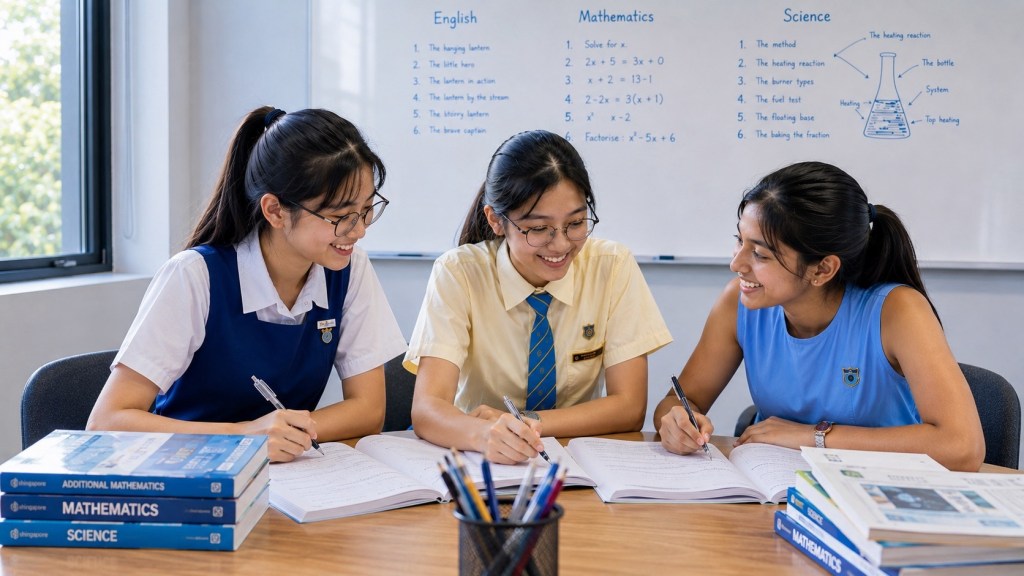
How to read Science news is now a core scientific-literacy skill. Students encounter claims about health, climate, food, technology, artificial intelligence, space, pollution and new research through social media, headlines, videos and group chats long before they read a journal article. The important skill is not cynicism. It is learning how to identify the claim, find the evidence, understand the study design, measure how strong the result really is, and notice when a headline says more than the research supports.
This Advanced Science Tutorials guide is written for parents and students in Sengkang, Punggol and across Singapore who search for how to evaluate scientific claims, how to read Science news, correlation versus causation, credible sources, scientific evidence, peer review, sample size, randomized controlled trial, statistics in the news, misinformation and scientific literacy. It is an educational reasoning guide, not medical advice and not a substitute for professional guidance on personal health decisions.
The NIH advises science communicators to distinguish association from causation, identify study type, explain limitations, provide links to original research, disclose funding and conflicts, and describe how far along a finding is. Its guide to clinical studies also explains why randomised controlled trials can support causal conclusions more strongly than observational studies in many intervention questions, while recognising that randomisation is not always ethical or practical. See NIH: Understanding Clinical Studies and NIH: Checklist for Communicating Science and Health Research.
The seven-question Science-news check
- What exactly is the claim?
- What evidence or study is the claim based on?
- What kind of study was it?
- Who or what was studied, and how many?
- How large is the effect, not just whether it is statistically significant?
- What are the important limitations and alternative explanations?
- Does the headline match the strength and scope of the evidence?
Students do not need to become statisticians before reading a headline. They need a repeatable sequence that slows down the move from “I saw a scientific claim” to “therefore this is true everywhere”.
Primary 1 and Primary 2: fact, observation and opinion
Younger students can begin by distinguishing what was directly observed from what someone thinks about it. “The plant has five leaves” is an observation. “This is the healthiest plant” is an interpretation that needs a definition of health and more evidence.
Parents can ask three gentle questions: What did you see? How do you know? Could there be another explanation? Those questions build the habit without turning childhood curiosity into suspicion of everything.
Primary 3 and Primary 4: evidence and fair comparison
Once formal Science begins, students can ask whether two things were compared fairly, whether the measurement matches the claim and whether a conclusion goes beyond the data. This connects directly to experiment questions in school.
A headline such as “Material A is strongest” should trigger questions: strongest under which test, compared with what, using how many samples and measured how?
Primary 5 and Primary 6: claims, graphs and scope
Older Primary students can begin recognising that graphs and tables support only certain claims. One experiment under one set of conditions does not prove a universal rule. A correlation in a graph does not automatically show that one variable caused the other.
This reasoning supports PSLE Science because the same skill appears when students evaluate investigations, interpret data and choose conclusions that are proportional to evidence.
Secondary G1, G2 and G3: critical appraisal becomes more formal
Lower Secondary students can add study design, sampling, controls, randomisation, effect size, uncertainty, replication and source evaluation. The goal is not to reject every imperfect study. Every study has limitations. The goal is to decide what the study can reasonably support.
Research on lower-secondary students has found that identifying and critically appraising health claims in news can be difficult even for high-performing students, which is one reason explicit practice matters. See the open-access BMJ Open study Lower secondary school students’ scientific literacy and appraisal of health claims in news media.
Identify the claim
Core idea. A claim is the specific statement being presented as true, likely or supported.
Common reading error. Students often react to the topic or headline emotion without first stating the proposition.
Appraisal move. Rewrite the story as one sentence: ‘The article claims that X is associated with or causes Y under these conditions.’
A student should now ask what additional information would change confidence in the claim. That question is powerful because it turns passive consumption into scientific inquiry. The reader is no longer choosing between believing and disbelieving; they are identifying the evidence required for a better judgment.
For Primary learners, simplify this to “What did they measure, compared with what, and how many times?” For Secondary G1, G2 and G3 learners, add study design, sampling, uncertainty and alternative explanations. Parents should model patience before forwarding a claim; tutors should require students to state the claim precisely before evaluating it.
Transfer check: apply the same appraisal skill to a different topic—nutrition, climate, technology, astronomy or environment. If the reasoning survives the topic change, it is becoming scientific literacy rather than memorised media advice.
Separate headline from evidence
Core idea. Headlines are compressed summaries and may be written for attention.
Common reading error. Students assume headline wording exactly matches the study conclusion.
Appraisal move. Compare the headline, article body and original abstract or official summary.
A student should now ask what additional information would change confidence in the claim. That question is powerful because it turns passive consumption into scientific inquiry. The reader is no longer choosing between believing and disbelieving; they are identifying the evidence required for a better judgment.
For Primary learners, simplify this to “What did they measure, compared with what, and how many times?” For Secondary G1, G2 and G3 learners, add study design, sampling, uncertainty and alternative explanations. Parents should model patience before forwarding a claim; tutors should require students to state the claim precisely before evaluating it.
Transfer check: apply the same appraisal skill to a different topic—nutrition, climate, technology, astronomy or environment. If the reasoning survives the topic change, it is becoming scientific literacy rather than memorised media advice.
Find the original source
Core idea. A news story may summarise a paper, press release, conference talk or preprint.
Common reading error. Students evaluate the journalist while never locating the underlying research.
Appraisal move. Look for the paper title, journal, DOI, PubMed record or institutional source.
A student should now ask what additional information would change confidence in the claim. That question is powerful because it turns passive consumption into scientific inquiry. The reader is no longer choosing between believing and disbelieving; they are identifying the evidence required for a better judgment.
For Primary learners, simplify this to “What did they measure, compared with what, and how many times?” For Secondary G1, G2 and G3 learners, add study design, sampling, uncertainty and alternative explanations. Parents should model patience before forwarding a claim; tutors should require students to state the claim precisely before evaluating it.
Transfer check: apply the same appraisal skill to a different topic—nutrition, climate, technology, astronomy or environment. If the reasoning survives the topic change, it is becoming scientific literacy rather than memorised media advice.
Primary source versus secondary source
Core idea. Primary research reports original methods and results; secondary sources interpret or synthesise research.
Common reading error. Students think ‘primary’ automatically means more trustworthy in every context.
Appraisal move. A systematic review can sometimes provide stronger overall evidence than one primary study.
A student should now ask what additional information would change confidence in the claim. That question is powerful because it turns passive consumption into scientific inquiry. The reader is no longer choosing between believing and disbelieving; they are identifying the evidence required for a better judgment.
For Primary learners, simplify this to “What did they measure, compared with what, and how many times?” For Secondary G1, G2 and G3 learners, add study design, sampling, uncertainty and alternative explanations. Parents should model patience before forwarding a claim; tutors should require students to state the claim precisely before evaluating it.
Transfer check: apply the same appraisal skill to a different topic—nutrition, climate, technology, astronomy or environment. If the reasoning survives the topic change, it is becoming scientific literacy rather than memorised media advice.
Study design
Core idea. Study design determines which questions the evidence can answer well.
Common reading error. Students compare results without asking how the data were generated.
Appraisal move. Identify whether the study is experimental, observational, cross-sectional, cohort, case-control, randomised or another design.
A student should now ask what additional information would change confidence in the claim. That question is powerful because it turns passive consumption into scientific inquiry. The reader is no longer choosing between believing and disbelieving; they are identifying the evidence required for a better judgment.
For Primary learners, simplify this to “What did they measure, compared with what, and how many times?” For Secondary G1, G2 and G3 learners, add study design, sampling, uncertainty and alternative explanations. Parents should model patience before forwarding a claim; tutors should require students to state the claim precisely before evaluating it.
Transfer check: apply the same appraisal skill to a different topic—nutrition, climate, technology, astronomy or environment. If the reasoning survives the topic change, it is becoming scientific literacy rather than memorised media advice.
Observational study
Core idea. Researchers observe exposures and outcomes without assigning an intervention.
Common reading error. Students read associations as proof of causation.
Appraisal move. Look for confounders and alternative explanations that could produce the same association.
A student should now ask what additional information would change confidence in the claim. That question is powerful because it turns passive consumption into scientific inquiry. The reader is no longer choosing between believing and disbelieving; they are identifying the evidence required for a better judgment.
For Primary learners, simplify this to “What did they measure, compared with what, and how many times?” For Secondary G1, G2 and G3 learners, add study design, sampling, uncertainty and alternative explanations. Parents should model patience before forwarding a claim; tutors should require students to state the claim precisely before evaluating it.
Transfer check: apply the same appraisal skill to a different topic—nutrition, climate, technology, astronomy or environment. If the reasoning survives the topic change, it is becoming scientific literacy rather than memorised media advice.
Randomised controlled trial
Core idea. Participants are randomly assigned to intervention or comparison groups in a well-designed trial.
Common reading error. Students think randomisation guarantees perfection.
Appraisal move. Randomisation reduces systematic group differences on average but does not remove attrition, measurement error or poor execution.
A student should now ask what additional information would change confidence in the claim. That question is powerful because it turns passive consumption into scientific inquiry. The reader is no longer choosing between believing and disbelieving; they are identifying the evidence required for a better judgment.
For Primary learners, simplify this to “What did they measure, compared with what, and how many times?” For Secondary G1, G2 and G3 learners, add study design, sampling, uncertainty and alternative explanations. Parents should model patience before forwarding a claim; tutors should require students to state the claim precisely before evaluating it.
Transfer check: apply the same appraisal skill to a different topic—nutrition, climate, technology, astronomy or environment. If the reasoning survives the topic change, it is becoming scientific literacy rather than memorised media advice.
Cross-sectional study
Core idea. Variables are measured at one point or short period.
Common reading error. Students infer what caused what from simultaneous measurements.
Appraisal move. Cross-sectional evidence can show prevalence or association but is weak for temporal direction.
A student should now ask what additional information would change confidence in the claim. That question is powerful because it turns passive consumption into scientific inquiry. The reader is no longer choosing between believing and disbelieving; they are identifying the evidence required for a better judgment.
For Primary learners, simplify this to “What did they measure, compared with what, and how many times?” For Secondary G1, G2 and G3 learners, add study design, sampling, uncertainty and alternative explanations. Parents should model patience before forwarding a claim; tutors should require students to state the claim precisely before evaluating it.
Transfer check: apply the same appraisal skill to a different topic—nutrition, climate, technology, astronomy or environment. If the reasoning survives the topic change, it is becoming scientific literacy rather than memorised media advice.
Cohort study
Core idea. A group is followed over time to relate exposures to later outcomes.
Common reading error. Students think follow-up alone proves causation.
Appraisal move. Temporal order helps, but confounding can remain.
A student should now ask what additional information would change confidence in the claim. That question is powerful because it turns passive consumption into scientific inquiry. The reader is no longer choosing between believing and disbelieving; they are identifying the evidence required for a better judgment.
For Primary learners, simplify this to “What did they measure, compared with what, and how many times?” For Secondary G1, G2 and G3 learners, add study design, sampling, uncertainty and alternative explanations. Parents should model patience before forwarding a claim; tutors should require students to state the claim precisely before evaluating it.
Transfer check: apply the same appraisal skill to a different topic—nutrition, climate, technology, astronomy or environment. If the reasoning survives the topic change, it is becoming scientific literacy rather than memorised media advice.
Case-control study
Core idea. People with an outcome are compared with those without it to examine prior exposures.
Common reading error. Students misunderstand that groups are selected by outcome rather than exposure.
Appraisal move. The design is useful for rare outcomes but can face recall and selection biases.
A student should now ask what additional information would change confidence in the claim. That question is powerful because it turns passive consumption into scientific inquiry. The reader is no longer choosing between believing and disbelieving; they are identifying the evidence required for a better judgment.
For Primary learners, simplify this to “What did they measure, compared with what, and how many times?” For Secondary G1, G2 and G3 learners, add study design, sampling, uncertainty and alternative explanations. Parents should model patience before forwarding a claim; tutors should require students to state the claim precisely before evaluating it.
Transfer check: apply the same appraisal skill to a different topic—nutrition, climate, technology, astronomy or environment. If the reasoning survives the topic change, it is becoming scientific literacy rather than memorised media advice.
Laboratory experiment
Core idea. Variables can be tightly controlled in laboratory conditions.
Common reading error. Students assume laboratory control means findings generalise automatically to real life.
Appraisal move. High internal control can come with limited external realism.
A student should now ask what additional information would change confidence in the claim. That question is powerful because it turns passive consumption into scientific inquiry. The reader is no longer choosing between believing and disbelieving; they are identifying the evidence required for a better judgment.
For Primary learners, simplify this to “What did they measure, compared with what, and how many times?” For Secondary G1, G2 and G3 learners, add study design, sampling, uncertainty and alternative explanations. Parents should model patience before forwarding a claim; tutors should require students to state the claim precisely before evaluating it.
Transfer check: apply the same appraisal skill to a different topic—nutrition, climate, technology, astronomy or environment. If the reasoning survives the topic change, it is becoming scientific literacy rather than memorised media advice.
Field experiment
Core idea. An intervention is tested in more natural settings.
Common reading error. Students assume field settings are automatically unbiased.
Appraisal move. Real-world conditions can introduce variability, non-compliance and measurement challenges.
A student should now ask what additional information would change confidence in the claim. That question is powerful because it turns passive consumption into scientific inquiry. The reader is no longer choosing between believing and disbelieving; they are identifying the evidence required for a better judgment.
For Primary learners, simplify this to “What did they measure, compared with what, and how many times?” For Secondary G1, G2 and G3 learners, add study design, sampling, uncertainty and alternative explanations. Parents should model patience before forwarding a claim; tutors should require students to state the claim precisely before evaluating it.
Transfer check: apply the same appraisal skill to a different topic—nutrition, climate, technology, astronomy or environment. If the reasoning survives the topic change, it is becoming scientific literacy rather than memorised media advice.
Animal study
Core idea. Research uses animal models to investigate biological mechanisms or interventions.
Common reading error. Students treat animal results as direct human outcomes.
Appraisal move. Animal studies can be important mechanistic evidence but translation to humans requires further study.
A student should now ask what additional information would change confidence in the claim. That question is powerful because it turns passive consumption into scientific inquiry. The reader is no longer choosing between believing and disbelieving; they are identifying the evidence required for a better judgment.
For Primary learners, simplify this to “What did they measure, compared with what, and how many times?” For Secondary G1, G2 and G3 learners, add study design, sampling, uncertainty and alternative explanations. Parents should model patience before forwarding a claim; tutors should require students to state the claim precisely before evaluating it.
Transfer check: apply the same appraisal skill to a different topic—nutrition, climate, technology, astronomy or environment. If the reasoning survives the topic change, it is becoming scientific literacy rather than memorised media advice.
Cell or in-vitro study
Core idea. Research uses cells, tissues or biochemical systems outside whole organisms.
Common reading error. Students read ‘kills cancer cells’ as proof of a treatment in patients.
Appraisal move. Concentrations, delivery, metabolism and whole-body effects can differ dramatically.
A student should now ask what additional information would change confidence in the claim. That question is powerful because it turns passive consumption into scientific inquiry. The reader is no longer choosing between believing and disbelieving; they are identifying the evidence required for a better judgment.
For Primary learners, simplify this to “What did they measure, compared with what, and how many times?” For Secondary G1, G2 and G3 learners, add study design, sampling, uncertainty and alternative explanations. Parents should model patience before forwarding a claim; tutors should require students to state the claim precisely before evaluating it.
Transfer check: apply the same appraisal skill to a different topic—nutrition, climate, technology, astronomy or environment. If the reasoning survives the topic change, it is becoming scientific literacy rather than memorised media advice.
Simulation study
Core idea. A model explores outcomes under specified assumptions.
Common reading error. Students treat model output as measured future reality.
Appraisal move. Ask what assumptions drive the result and whether the model has been validated against observations.
A student should now ask what additional information would change confidence in the claim. That question is powerful because it turns passive consumption into scientific inquiry. The reader is no longer choosing between believing and disbelieving; they are identifying the evidence required for a better judgment.
For Primary learners, simplify this to “What did they measure, compared with what, and how many times?” For Secondary G1, G2 and G3 learners, add study design, sampling, uncertainty and alternative explanations. Parents should model patience before forwarding a claim; tutors should require students to state the claim precisely before evaluating it.
Transfer check: apply the same appraisal skill to a different topic—nutrition, climate, technology, astronomy or environment. If the reasoning survives the topic change, it is becoming scientific literacy rather than memorised media advice.
Sample
Core idea. The sample is the set of people, organisms or observations actually measured.
Common reading error. Students assume the sample automatically represents everyone.
Appraisal move. Ask who was included, who was excluded and from where participants were recruited.
A student should now ask what additional information would change confidence in the claim. That question is powerful because it turns passive consumption into scientific inquiry. The reader is no longer choosing between believing and disbelieving; they are identifying the evidence required for a better judgment.
For Primary learners, simplify this to “What did they measure, compared with what, and how many times?” For Secondary G1, G2 and G3 learners, add study design, sampling, uncertainty and alternative explanations. Parents should model patience before forwarding a claim; tutors should require students to state the claim precisely before evaluating it.
Transfer check: apply the same appraisal skill to a different topic—nutrition, climate, technology, astronomy or environment. If the reasoning survives the topic change, it is becoming scientific literacy rather than memorised media advice.
Population
Core idea. The target population is the wider group researchers want to understand.
Common reading error. Students generalise from one school, country or age group to all people.
Appraisal move. Compare sample characteristics with the population named in the headline.
A student should now ask what additional information would change confidence in the claim. That question is powerful because it turns passive consumption into scientific inquiry. The reader is no longer choosing between believing and disbelieving; they are identifying the evidence required for a better judgment.
For Primary learners, simplify this to “What did they measure, compared with what, and how many times?” For Secondary G1, G2 and G3 learners, add study design, sampling, uncertainty and alternative explanations. Parents should model patience before forwarding a claim; tutors should require students to state the claim precisely before evaluating it.
Transfer check: apply the same appraisal skill to a different topic—nutrition, climate, technology, astronomy or environment. If the reasoning survives the topic change, it is becoming scientific literacy rather than memorised media advice.
Sample size
Core idea. Sample size affects precision and the ability to detect patterns.
Common reading error. Students assume larger always fixes bias or that small means useless.
Appraisal move. A huge biased sample can still mislead; a small well-designed study can still provide valuable preliminary evidence.
A student should now ask what additional information would change confidence in the claim. That question is powerful because it turns passive consumption into scientific inquiry. The reader is no longer choosing between believing and disbelieving; they are identifying the evidence required for a better judgment.
For Primary learners, simplify this to “What did they measure, compared with what, and how many times?” For Secondary G1, G2 and G3 learners, add study design, sampling, uncertainty and alternative explanations. Parents should model patience before forwarding a claim; tutors should require students to state the claim precisely before evaluating it.
Transfer check: apply the same appraisal skill to a different topic—nutrition, climate, technology, astronomy or environment. If the reasoning survives the topic change, it is becoming scientific literacy rather than memorised media advice.
Sampling bias
Core idea. Sampling bias occurs when included observations differ systematically from the population of interest.
Common reading error. Students focus only on number of participants.
Appraisal move. Ask how recruitment occurred and who was less likely to be included.
A student should now ask what additional information would change confidence in the claim. That question is powerful because it turns passive consumption into scientific inquiry. The reader is no longer choosing between believing and disbelieving; they are identifying the evidence required for a better judgment.
For Primary learners, simplify this to “What did they measure, compared with what, and how many times?” For Secondary G1, G2 and G3 learners, add study design, sampling, uncertainty and alternative explanations. Parents should model patience before forwarding a claim; tutors should require students to state the claim precisely before evaluating it.
Transfer check: apply the same appraisal skill to a different topic—nutrition, climate, technology, astronomy or environment. If the reasoning survives the topic change, it is becoming scientific literacy rather than memorised media advice.
Selection bias
Core idea. Selection processes can create differences related to exposure and outcome.
Common reading error. Students treat participation as neutral.
Appraisal move. Who enters, remains or is excluded from a study can alter results.
A student should now ask what additional information would change confidence in the claim. That question is powerful because it turns passive consumption into scientific inquiry. The reader is no longer choosing between believing and disbelieving; they are identifying the evidence required for a better judgment.
For Primary learners, simplify this to “What did they measure, compared with what, and how many times?” For Secondary G1, G2 and G3 learners, add study design, sampling, uncertainty and alternative explanations. Parents should model patience before forwarding a claim; tutors should require students to state the claim precisely before evaluating it.
Transfer check: apply the same appraisal skill to a different topic—nutrition, climate, technology, astronomy or environment. If the reasoning survives the topic change, it is becoming scientific literacy rather than memorised media advice.
Attrition
Core idea. Attrition occurs when participants drop out over time.
Common reading error. Students ignore whether dropout differs between groups.
Appraisal move. High or unequal attrition can change the comparability of groups.
A student should now ask what additional information would change confidence in the claim. That question is powerful because it turns passive consumption into scientific inquiry. The reader is no longer choosing between believing and disbelieving; they are identifying the evidence required for a better judgment.
For Primary learners, simplify this to “What did they measure, compared with what, and how many times?” For Secondary G1, G2 and G3 learners, add study design, sampling, uncertainty and alternative explanations. Parents should model patience before forwarding a claim; tutors should require students to state the claim precisely before evaluating it.
Transfer check: apply the same appraisal skill to a different topic—nutrition, climate, technology, astronomy or environment. If the reasoning survives the topic change, it is becoming scientific literacy rather than memorised media advice.
Control group
Core idea. A control or comparison group helps estimate what would happen without the intervention or exposure.
Common reading error. Students think a before-after change in one group is enough.
Appraisal move. Without comparison, time trends, placebo effects or outside events may explain the change.
A student should now ask what additional information would change confidence in the claim. That question is powerful because it turns passive consumption into scientific inquiry. The reader is no longer choosing between believing and disbelieving; they are identifying the evidence required for a better judgment.
For Primary learners, simplify this to “What did they measure, compared with what, and how many times?” For Secondary G1, G2 and G3 learners, add study design, sampling, uncertainty and alternative explanations. Parents should model patience before forwarding a claim; tutors should require students to state the claim precisely before evaluating it.
Transfer check: apply the same appraisal skill to a different topic—nutrition, climate, technology, astronomy or environment. If the reasoning survives the topic change, it is becoming scientific literacy rather than memorised media advice.
Placebo control
Core idea. A placebo can help separate intervention-specific effects from expectations or study participation effects.
Common reading error. Students think placebo means ‘fake study’.
Appraisal move. Placebo control is a method for improving causal interpretation where ethical and practical.
A student should now ask what additional information would change confidence in the claim. That question is powerful because it turns passive consumption into scientific inquiry. The reader is no longer choosing between believing and disbelieving; they are identifying the evidence required for a better judgment.
For Primary learners, simplify this to “What did they measure, compared with what, and how many times?” For Secondary G1, G2 and G3 learners, add study design, sampling, uncertainty and alternative explanations. Parents should model patience before forwarding a claim; tutors should require students to state the claim precisely before evaluating it.
Transfer check: apply the same appraisal skill to a different topic—nutrition, climate, technology, astronomy or environment. If the reasoning survives the topic change, it is becoming scientific literacy rather than memorised media advice.
Blinding
Core idea. Blinding reduces the chance expectations influence treatment, behaviour or measurement.
Common reading error. Students assume researchers always know who received what.
Appraisal move. Ask whether participants, caregivers, assessors or analysts were blinded where feasible.
A student should now ask what additional information would change confidence in the claim. That question is powerful because it turns passive consumption into scientific inquiry. The reader is no longer choosing between believing and disbelieving; they are identifying the evidence required for a better judgment.
For Primary learners, simplify this to “What did they measure, compared with what, and how many times?” For Secondary G1, G2 and G3 learners, add study design, sampling, uncertainty and alternative explanations. Parents should model patience before forwarding a claim; tutors should require students to state the claim precisely before evaluating it.
Transfer check: apply the same appraisal skill to a different topic—nutrition, climate, technology, astronomy or environment. If the reasoning survives the topic change, it is becoming scientific literacy rather than memorised media advice.
Randomisation
Core idea. Randomisation assigns intervention groups by chance.
Common reading error. Students confuse random assignment with random sampling.
Appraisal move. Random assignment helps causal comparison; random sampling helps population representativeness.
A student should now ask what additional information would change confidence in the claim. That question is powerful because it turns passive consumption into scientific inquiry. The reader is no longer choosing between believing and disbelieving; they are identifying the evidence required for a better judgment.
For Primary learners, simplify this to “What did they measure, compared with what, and how many times?” For Secondary G1, G2 and G3 learners, add study design, sampling, uncertainty and alternative explanations. Parents should model patience before forwarding a claim; tutors should require students to state the claim precisely before evaluating it.
Transfer check: apply the same appraisal skill to a different topic—nutrition, climate, technology, astronomy or environment. If the reasoning survives the topic change, it is becoming scientific literacy rather than memorised media advice.
Confounding
Core idea. A confounder is related to both exposure and outcome and can distort an association.
Common reading error. Students think adjusting for one variable removes every alternative explanation.
Appraisal move. Observational studies often require multiple measured adjustments, and unmeasured confounding can remain.
A student should now ask what additional information would change confidence in the claim. That question is powerful because it turns passive consumption into scientific inquiry. The reader is no longer choosing between believing and disbelieving; they are identifying the evidence required for a better judgment.
For Primary learners, simplify this to “What did they measure, compared with what, and how many times?” For Secondary G1, G2 and G3 learners, add study design, sampling, uncertainty and alternative explanations. Parents should model patience before forwarding a claim; tutors should require students to state the claim precisely before evaluating it.
Transfer check: apply the same appraisal skill to a different topic—nutrition, climate, technology, astronomy or environment. If the reasoning survives the topic change, it is becoming scientific literacy rather than memorised media advice.
Correlation
Core idea. Correlation is a relationship between variables.
Common reading error. Students treat any correlation as causal.
Appraisal move. Ask whether reverse causation or a third variable could explain the pattern.
A student should now ask what additional information would change confidence in the claim. That question is powerful because it turns passive consumption into scientific inquiry. The reader is no longer choosing between believing and disbelieving; they are identifying the evidence required for a better judgment.
For Primary learners, simplify this to “What did they measure, compared with what, and how many times?” For Secondary G1, G2 and G3 learners, add study design, sampling, uncertainty and alternative explanations. Parents should model patience before forwarding a claim; tutors should require students to state the claim precisely before evaluating it.
Transfer check: apply the same appraisal skill to a different topic—nutrition, climate, technology, astronomy or environment. If the reasoning survives the topic change, it is becoming scientific literacy rather than memorised media advice.
Causation
Core idea. Causation means changing one factor contributes to changing an outcome under defined conditions.
Common reading error. Students infer causation from sequence alone.
Appraisal move. Causal confidence depends on design, controls, consistency, mechanism and other evidence.
A student should now ask what additional information would change confidence in the claim. That question is powerful because it turns passive consumption into scientific inquiry. The reader is no longer choosing between believing and disbelieving; they are identifying the evidence required for a better judgment.
For Primary learners, simplify this to “What did they measure, compared with what, and how many times?” For Secondary G1, G2 and G3 learners, add study design, sampling, uncertainty and alternative explanations. Parents should model patience before forwarding a claim; tutors should require students to state the claim precisely before evaluating it.
Transfer check: apply the same appraisal skill to a different topic—nutrition, climate, technology, astronomy or environment. If the reasoning survives the topic change, it is becoming scientific literacy rather than memorised media advice.
Reverse causation
Core idea. The outcome may influence the supposed cause rather than the other way around.
Common reading error. Students assume the variable listed first in a headline is the cause.
Appraisal move. Ask whether Y could plausibly influence X.
A student should now ask what additional information would change confidence in the claim. That question is powerful because it turns passive consumption into scientific inquiry. The reader is no longer choosing between believing and disbelieving; they are identifying the evidence required for a better judgment.
For Primary learners, simplify this to “What did they measure, compared with what, and how many times?” For Secondary G1, G2 and G3 learners, add study design, sampling, uncertainty and alternative explanations. Parents should model patience before forwarding a claim; tutors should require students to state the claim precisely before evaluating it.
Transfer check: apply the same appraisal skill to a different topic—nutrition, climate, technology, astronomy or environment. If the reasoning survives the topic change, it is becoming scientific literacy rather than memorised media advice.
Mechanism
Core idea. A mechanism describes how a cause could produce an effect.
Common reading error. Students treat a plausible mechanism as proof the effect occurs.
Appraisal move. Mechanistic plausibility strengthens interpretation but still needs empirical evidence.
A student should now ask what additional information would change confidence in the claim. That question is powerful because it turns passive consumption into scientific inquiry. The reader is no longer choosing between believing and disbelieving; they are identifying the evidence required for a better judgment.
For Primary learners, simplify this to “What did they measure, compared with what, and how many times?” For Secondary G1, G2 and G3 learners, add study design, sampling, uncertainty and alternative explanations. Parents should model patience before forwarding a claim; tutors should require students to state the claim precisely before evaluating it.
Transfer check: apply the same appraisal skill to a different topic—nutrition, climate, technology, astronomy or environment. If the reasoning survives the topic change, it is becoming scientific literacy rather than memorised media advice.
Outcome measure
Core idea. The outcome is what researchers measure to represent the effect of interest.
Common reading error. Students read the broad claim without checking what was actually measured.
Appraisal move. A study about ‘health’ may measure blood pressure, survey score, hospitalisation or a laboratory marker.
A student should now ask what additional information would change confidence in the claim. That question is powerful because it turns passive consumption into scientific inquiry. The reader is no longer choosing between believing and disbelieving; they are identifying the evidence required for a better judgment.
For Primary learners, simplify this to “What did they measure, compared with what, and how many times?” For Secondary G1, G2 and G3 learners, add study design, sampling, uncertainty and alternative explanations. Parents should model patience before forwarding a claim; tutors should require students to state the claim precisely before evaluating it.
Transfer check: apply the same appraisal skill to a different topic—nutrition, climate, technology, astronomy or environment. If the reasoning survives the topic change, it is becoming scientific literacy rather than memorised media advice.
Surrogate endpoint
Core idea. A surrogate is a proxy measure used instead of a direct patient or system outcome.
Common reading error. Students assume improving a biomarker always means improving meaningful outcomes.
Appraisal move. Ask whether the proxy is well validated and whether direct outcomes were measured.
A student should now ask what additional information would change confidence in the claim. That question is powerful because it turns passive consumption into scientific inquiry. The reader is no longer choosing between believing and disbelieving; they are identifying the evidence required for a better judgment.
For Primary learners, simplify this to “What did they measure, compared with what, and how many times?” For Secondary G1, G2 and G3 learners, add study design, sampling, uncertainty and alternative explanations. Parents should model patience before forwarding a claim; tutors should require students to state the claim precisely before evaluating it.
Transfer check: apply the same appraisal skill to a different topic—nutrition, climate, technology, astronomy or environment. If the reasoning survives the topic change, it is becoming scientific literacy rather than memorised media advice.
Self-reported data
Core idea. Participants report their own behaviours, symptoms or exposures.
Common reading error. Students assume self-report is either useless or perfectly accurate.
Appraisal move. Recall, social desirability and interpretation can affect reports, but self-report can still be valuable for some questions.
A student should now ask what additional information would change confidence in the claim. That question is powerful because it turns passive consumption into scientific inquiry. The reader is no longer choosing between believing and disbelieving; they are identifying the evidence required for a better judgment.
For Primary learners, simplify this to “What did they measure, compared with what, and how many times?” For Secondary G1, G2 and G3 learners, add study design, sampling, uncertainty and alternative explanations. Parents should model patience before forwarding a claim; tutors should require students to state the claim precisely before evaluating it.
Transfer check: apply the same appraisal skill to a different topic—nutrition, climate, technology, astronomy or environment. If the reasoning survives the topic change, it is becoming scientific literacy rather than memorised media advice.
Objective measurement
Core idea. Instruments or records provide measurements less dependent on participant memory.
Common reading error. Students assume instrument data are bias-free.
Appraisal move. Calibration, placement, algorithms and missingness can still matter.
A student should now ask what additional information would change confidence in the claim. That question is powerful because it turns passive consumption into scientific inquiry. The reader is no longer choosing between believing and disbelieving; they are identifying the evidence required for a better judgment.
For Primary learners, simplify this to “What did they measure, compared with what, and how many times?” For Secondary G1, G2 and G3 learners, add study design, sampling, uncertainty and alternative explanations. Parents should model patience before forwarding a claim; tutors should require students to state the claim precisely before evaluating it.
Transfer check: apply the same appraisal skill to a different topic—nutrition, climate, technology, astronomy or environment. If the reasoning survives the topic change, it is becoming scientific literacy rather than memorised media advice.
Effect size
Core idea. Effect size describes how large the observed difference or association is.
Common reading error. Students focus only on whether a result is statistically significant.
Appraisal move. A tiny effect can be statistically detectable in a large sample but practically unimportant.
A student should now ask what additional information would change confidence in the claim. That question is powerful because it turns passive consumption into scientific inquiry. The reader is no longer choosing between believing and disbelieving; they are identifying the evidence required for a better judgment.
For Primary learners, simplify this to “What did they measure, compared with what, and how many times?” For Secondary G1, G2 and G3 learners, add study design, sampling, uncertainty and alternative explanations. Parents should model patience before forwarding a claim; tutors should require students to state the claim precisely before evaluating it.
Transfer check: apply the same appraisal skill to a different topic—nutrition, climate, technology, astronomy or environment. If the reasoning survives the topic change, it is becoming scientific literacy rather than memorised media advice.
Statistical significance
Core idea. Statistical significance describes compatibility of data with a null model under specified assumptions.
Common reading error. Students translate ‘significant’ as large or important.
Appraisal move. Read the effect estimate and uncertainty, not only the p-value.
A student should now ask what additional information would change confidence in the claim. That question is powerful because it turns passive consumption into scientific inquiry. The reader is no longer choosing between believing and disbelieving; they are identifying the evidence required for a better judgment.
For Primary learners, simplify this to “What did they measure, compared with what, and how many times?” For Secondary G1, G2 and G3 learners, add study design, sampling, uncertainty and alternative explanations. Parents should model patience before forwarding a claim; tutors should require students to state the claim precisely before evaluating it.
Transfer check: apply the same appraisal skill to a different topic—nutrition, climate, technology, astronomy or environment. If the reasoning survives the topic change, it is becoming scientific literacy rather than memorised media advice.
Practical or clinical significance
Core idea. Practical importance asks whether the size of an effect matters in real use.
Common reading error. Students assume every statistically significant finding changes decisions.
Appraisal move. Compare effect magnitude with meaningful thresholds or real-world consequences.
A student should now ask what additional information would change confidence in the claim. That question is powerful because it turns passive consumption into scientific inquiry. The reader is no longer choosing between believing and disbelieving; they are identifying the evidence required for a better judgment.
For Primary learners, simplify this to “What did they measure, compared with what, and how many times?” For Secondary G1, G2 and G3 learners, add study design, sampling, uncertainty and alternative explanations. Parents should model patience before forwarding a claim; tutors should require students to state the claim precisely before evaluating it.
Transfer check: apply the same appraisal skill to a different topic—nutrition, climate, technology, astronomy or environment. If the reasoning survives the topic change, it is becoming scientific literacy rather than memorised media advice.
Confidence interval
Core idea. A confidence interval expresses uncertainty around an estimate under the statistical procedure used.
Common reading error. Students treat the point estimate as exact.
Appraisal move. Wide intervals signal lower precision and can include materially different possibilities.
A student should now ask what additional information would change confidence in the claim. That question is powerful because it turns passive consumption into scientific inquiry. The reader is no longer choosing between believing and disbelieving; they are identifying the evidence required for a better judgment.
For Primary learners, simplify this to “What did they measure, compared with what, and how many times?” For Secondary G1, G2 and G3 learners, add study design, sampling, uncertainty and alternative explanations. Parents should model patience before forwarding a claim; tutors should require students to state the claim precisely before evaluating it.
Transfer check: apply the same appraisal skill to a different topic—nutrition, climate, technology, astronomy or environment. If the reasoning survives the topic change, it is becoming scientific literacy rather than memorised media advice.
Absolute risk
Core idea. Absolute risk states the actual probability or rate of an outcome.
Common reading error. Students react to percentage changes without knowing the baseline.
Appraisal move. A change from 1 in 10,000 to 2 in 10,000 doubles relative risk but remains small in absolute terms.
A student should now ask what additional information would change confidence in the claim. That question is powerful because it turns passive consumption into scientific inquiry. The reader is no longer choosing between believing and disbelieving; they are identifying the evidence required for a better judgment.
For Primary learners, simplify this to “What did they measure, compared with what, and how many times?” For Secondary G1, G2 and G3 learners, add study design, sampling, uncertainty and alternative explanations. Parents should model patience before forwarding a claim; tutors should require students to state the claim precisely before evaluating it.
Transfer check: apply the same appraisal skill to a different topic—nutrition, climate, technology, astronomy or environment. If the reasoning survives the topic change, it is becoming scientific literacy rather than memorised media advice.
Relative risk
Core idea. Relative risk compares probabilities between groups.
Common reading error. Students hear ‘50% higher risk’ without asking 50% of what baseline.
Appraisal move. Always request the underlying absolute numbers.
A student should now ask what additional information would change confidence in the claim. That question is powerful because it turns passive consumption into scientific inquiry. The reader is no longer choosing between believing and disbelieving; they are identifying the evidence required for a better judgment.
For Primary learners, simplify this to “What did they measure, compared with what, and how many times?” For Secondary G1, G2 and G3 learners, add study design, sampling, uncertainty and alternative explanations. Parents should model patience before forwarding a claim; tutors should require students to state the claim precisely before evaluating it.
Transfer check: apply the same appraisal skill to a different topic—nutrition, climate, technology, astronomy or environment. If the reasoning survives the topic change, it is becoming scientific literacy rather than memorised media advice.
Odds
Core idea. Odds differ mathematically from probability.
Common reading error. Students interpret odds ratios directly as risk ratios in every context.
Appraisal move. When outcomes are common, the distinction can materially affect interpretation.
A student should now ask what additional information would change confidence in the claim. That question is powerful because it turns passive consumption into scientific inquiry. The reader is no longer choosing between believing and disbelieving; they are identifying the evidence required for a better judgment.
For Primary learners, simplify this to “What did they measure, compared with what, and how many times?” For Secondary G1, G2 and G3 learners, add study design, sampling, uncertainty and alternative explanations. Parents should model patience before forwarding a claim; tutors should require students to state the claim precisely before evaluating it.
Transfer check: apply the same appraisal skill to a different topic—nutrition, climate, technology, astronomy or environment. If the reasoning survives the topic change, it is becoming scientific literacy rather than memorised media advice.
Base rate
Core idea. The base rate is the starting frequency of an event.
Common reading error. Students ignore how rare or common the outcome already is.
Appraisal move. Diagnostic and risk claims need the base rate to interpret impact.
A student should now ask what additional information would change confidence in the claim. That question is powerful because it turns passive consumption into scientific inquiry. The reader is no longer choosing between believing and disbelieving; they are identifying the evidence required for a better judgment.
For Primary learners, simplify this to “What did they measure, compared with what, and how many times?” For Secondary G1, G2 and G3 learners, add study design, sampling, uncertainty and alternative explanations. Parents should model patience before forwarding a claim; tutors should require students to state the claim precisely before evaluating it.
Transfer check: apply the same appraisal skill to a different topic—nutrition, climate, technology, astronomy or environment. If the reasoning survives the topic change, it is becoming scientific literacy rather than memorised media advice.
Regression to the mean
Core idea. Extreme measurements often move closer to typical values on repeat measurement.
Common reading error. Students attribute every improvement after an intervention to the intervention.
Appraisal move. Control groups and repeated measurements help distinguish natural fluctuation.
A student should now ask what additional information would change confidence in the claim. That question is powerful because it turns passive consumption into scientific inquiry. The reader is no longer choosing between believing and disbelieving; they are identifying the evidence required for a better judgment.
For Primary learners, simplify this to “What did they measure, compared with what, and how many times?” For Secondary G1, G2 and G3 learners, add study design, sampling, uncertainty and alternative explanations. Parents should model patience before forwarding a claim; tutors should require students to state the claim precisely before evaluating it.
Transfer check: apply the same appraisal skill to a different topic—nutrition, climate, technology, astronomy or environment. If the reasoning survives the topic change, it is becoming scientific literacy rather than memorised media advice.
Multiple comparisons
Core idea. Testing many hypotheses increases the chance of finding at least one apparently unusual result.
Common reading error. Students focus on the one highlighted association.
Appraisal move. Ask how many outcomes, subgroups or analyses were tested.
A student should now ask what additional information would change confidence in the claim. That question is powerful because it turns passive consumption into scientific inquiry. The reader is no longer choosing between believing and disbelieving; they are identifying the evidence required for a better judgment.
For Primary learners, simplify this to “What did they measure, compared with what, and how many times?” For Secondary G1, G2 and G3 learners, add study design, sampling, uncertainty and alternative explanations. Parents should model patience before forwarding a claim; tutors should require students to state the claim precisely before evaluating it.
Transfer check: apply the same appraisal skill to a different topic—nutrition, climate, technology, astronomy or environment. If the reasoning survives the topic change, it is becoming scientific literacy rather than memorised media advice.
Subgroup analysis
Core idea. Subgroups examine effects in smaller categories of participants.
Common reading error. Students treat dramatic subgroup findings as equally reliable as the main result.
Appraisal move. Smaller samples and multiple testing can make subgroup results unstable.
A student should now ask what additional information would change confidence in the claim. That question is powerful because it turns passive consumption into scientific inquiry. The reader is no longer choosing between believing and disbelieving; they are identifying the evidence required for a better judgment.
For Primary learners, simplify this to “What did they measure, compared with what, and how many times?” For Secondary G1, G2 and G3 learners, add study design, sampling, uncertainty and alternative explanations. Parents should model patience before forwarding a claim; tutors should require students to state the claim precisely before evaluating it.
Transfer check: apply the same appraisal skill to a different topic—nutrition, climate, technology, astronomy or environment. If the reasoning survives the topic change, it is becoming scientific literacy rather than memorised media advice.
Exploratory analysis
Core idea. Exploratory analysis looks for patterns that can generate hypotheses.
Common reading error. Students read exploratory findings as confirmed predictions.
Appraisal move. Exploration is valuable when labelled honestly and followed by confirmation.
A student should now ask what additional information would change confidence in the claim. That question is powerful because it turns passive consumption into scientific inquiry. The reader is no longer choosing between believing and disbelieving; they are identifying the evidence required for a better judgment.
For Primary learners, simplify this to “What did they measure, compared with what, and how many times?” For Secondary G1, G2 and G3 learners, add study design, sampling, uncertainty and alternative explanations. Parents should model patience before forwarding a claim; tutors should require students to state the claim precisely before evaluating it.
Transfer check: apply the same appraisal skill to a different topic—nutrition, climate, technology, astronomy or environment. If the reasoning survives the topic change, it is becoming scientific literacy rather than memorised media advice.
Pre-registration
Core idea. Pre-registration records planned hypotheses and analyses before seeing results.
Common reading error. Students assume it prevents all questionable research practices.
Appraisal move. It improves transparency but does not guarantee good design or execution.
A student should now ask what additional information would change confidence in the claim. That question is powerful because it turns passive consumption into scientific inquiry. The reader is no longer choosing between believing and disbelieving; they are identifying the evidence required for a better judgment.
For Primary learners, simplify this to “What did they measure, compared with what, and how many times?” For Secondary G1, G2 and G3 learners, add study design, sampling, uncertainty and alternative explanations. Parents should model patience before forwarding a claim; tutors should require students to state the claim precisely before evaluating it.
Transfer check: apply the same appraisal skill to a different topic—nutrition, climate, technology, astronomy or environment. If the reasoning survives the topic change, it is becoming scientific literacy rather than memorised media advice.
Protocol
Core idea. A protocol describes study plans, outcomes and methods.
Common reading error. Students read only the final paper and cannot see changed methods.
Appraisal move. Comparing protocol and publication can reveal deviations.
A student should now ask what additional information would change confidence in the claim. That question is powerful because it turns passive consumption into scientific inquiry. The reader is no longer choosing between believing and disbelieving; they are identifying the evidence required for a better judgment.
For Primary learners, simplify this to “What did they measure, compared with what, and how many times?” For Secondary G1, G2 and G3 learners, add study design, sampling, uncertainty and alternative explanations. Parents should model patience before forwarding a claim; tutors should require students to state the claim precisely before evaluating it.
Transfer check: apply the same appraisal skill to a different topic—nutrition, climate, technology, astronomy or environment. If the reasoning survives the topic change, it is becoming scientific literacy rather than memorised media advice.
Preprint
Core idea. A preprint is a manuscript shared before formal peer review.
Common reading error. Students treat ‘published online’ as equivalent to peer-reviewed publication.
Appraisal move. Preprints can spread useful findings quickly but require greater caution.
A student should now ask what additional information would change confidence in the claim. That question is powerful because it turns passive consumption into scientific inquiry. The reader is no longer choosing between believing and disbelieving; they are identifying the evidence required for a better judgment.
For Primary learners, simplify this to “What did they measure, compared with what, and how many times?” For Secondary G1, G2 and G3 learners, add study design, sampling, uncertainty and alternative explanations. Parents should model patience before forwarding a claim; tutors should require students to state the claim precisely before evaluating it.
Transfer check: apply the same appraisal skill to a different topic—nutrition, climate, technology, astronomy or environment. If the reasoning survives the topic change, it is becoming scientific literacy rather than memorised media advice.
Peer review
Core idea. Peer review involves expert evaluation before or after publication.
Common reading error. Students treat peer review as a guarantee that results are correct.
Appraisal move. Review can identify problems but cannot eliminate all error, bias or fraud.
A student should now ask what additional information would change confidence in the claim. That question is powerful because it turns passive consumption into scientific inquiry. The reader is no longer choosing between believing and disbelieving; they are identifying the evidence required for a better judgment.
For Primary learners, simplify this to “What did they measure, compared with what, and how many times?” For Secondary G1, G2 and G3 learners, add study design, sampling, uncertainty and alternative explanations. Parents should model patience before forwarding a claim; tutors should require students to state the claim precisely before evaluating it.
Transfer check: apply the same appraisal skill to a different topic—nutrition, climate, technology, astronomy or environment. If the reasoning survives the topic change, it is becoming scientific literacy rather than memorised media advice.
Replication
Core idea. Replication tests whether findings recur in new data or independent studies.
Common reading error. Students treat one striking paper as final.
Appraisal move. Repeated compatible evidence generally increases confidence.
A student should now ask what additional information would change confidence in the claim. That question is powerful because it turns passive consumption into scientific inquiry. The reader is no longer choosing between believing and disbelieving; they are identifying the evidence required for a better judgment.
For Primary learners, simplify this to “What did they measure, compared with what, and how many times?” For Secondary G1, G2 and G3 learners, add study design, sampling, uncertainty and alternative explanations. Parents should model patience before forwarding a claim; tutors should require students to state the claim precisely before evaluating it.
Transfer check: apply the same appraisal skill to a different topic—nutrition, climate, technology, astronomy or environment. If the reasoning survives the topic change, it is becoming scientific literacy rather than memorised media advice.
Systematic review
Core idea. A systematic review uses explicit methods to find and synthesise a body of research.
Common reading error. Students think any review article is systematic.
Appraisal move. Look for a stated search strategy, inclusion criteria and quality assessment.
A student should now ask what additional information would change confidence in the claim. That question is powerful because it turns passive consumption into scientific inquiry. The reader is no longer choosing between believing and disbelieving; they are identifying the evidence required for a better judgment.
For Primary learners, simplify this to “What did they measure, compared with what, and how many times?” For Secondary G1, G2 and G3 learners, add study design, sampling, uncertainty and alternative explanations. Parents should model patience before forwarding a claim; tutors should require students to state the claim precisely before evaluating it.
Transfer check: apply the same appraisal skill to a different topic—nutrition, climate, technology, astronomy or environment. If the reasoning survives the topic change, it is becoming scientific literacy rather than memorised media advice.
Meta-analysis
Core idea. Meta-analysis statistically combines results across studies when appropriate.
Common reading error. Students assume pooled numbers automatically solve poor study quality.
Appraisal move. The synthesis inherits limitations from included studies and analytical choices.
A student should now ask what additional information would change confidence in the claim. That question is powerful because it turns passive consumption into scientific inquiry. The reader is no longer choosing between believing and disbelieving; they are identifying the evidence required for a better judgment.
For Primary learners, simplify this to “What did they measure, compared with what, and how many times?” For Secondary G1, G2 and G3 learners, add study design, sampling, uncertainty and alternative explanations. Parents should model patience before forwarding a claim; tutors should require students to state the claim precisely before evaluating it.
Transfer check: apply the same appraisal skill to a different topic—nutrition, climate, technology, astronomy or environment. If the reasoning survives the topic change, it is becoming scientific literacy rather than memorised media advice.
Publication bias
Core idea. Studies with positive or exciting results may be more likely to appear publicly.
Common reading error. Students assume the published literature contains all conducted studies.
Appraisal move. Registries, funnel plots and systematic searches can help reveal missing evidence.
A student should now ask what additional information would change confidence in the claim. That question is powerful because it turns passive consumption into scientific inquiry. The reader is no longer choosing between believing and disbelieving; they are identifying the evidence required for a better judgment.
For Primary learners, simplify this to “What did they measure, compared with what, and how many times?” For Secondary G1, G2 and G3 learners, add study design, sampling, uncertainty and alternative explanations. Parents should model patience before forwarding a claim; tutors should require students to state the claim precisely before evaluating it.
Transfer check: apply the same appraisal skill to a different topic—nutrition, climate, technology, astronomy or environment. If the reasoning survives the topic change, it is becoming scientific literacy rather than memorised media advice.
Conflict of interest
Core idea. Financial or professional interests can create incentives that matter to interpretation.
Common reading error. Students assume disclosed funding automatically invalidates a study.
Appraisal move. Treat conflicts as information requiring transparency, not automatic proof of error.
A student should now ask what additional information would change confidence in the claim. That question is powerful because it turns passive consumption into scientific inquiry. The reader is no longer choosing between believing and disbelieving; they are identifying the evidence required for a better judgment.
For Primary learners, simplify this to “What did they measure, compared with what, and how many times?” For Secondary G1, G2 and G3 learners, add study design, sampling, uncertainty and alternative explanations. Parents should model patience before forwarding a claim; tutors should require students to state the claim precisely before evaluating it.
Transfer check: apply the same appraisal skill to a different topic—nutrition, climate, technology, astronomy or environment. If the reasoning survives the topic change, it is becoming scientific literacy rather than memorised media advice.
Funding source
Core idea. Funding shows who paid for research.
Common reading error. Students use funding as a substitute for evaluating methods.
Appraisal move. Study design, data and analysis still need appraisal regardless of sponsor.
A student should now ask what additional information would change confidence in the claim. That question is powerful because it turns passive consumption into scientific inquiry. The reader is no longer choosing between believing and disbelieving; they are identifying the evidence required for a better judgment.
For Primary learners, simplify this to “What did they measure, compared with what, and how many times?” For Secondary G1, G2 and G3 learners, add study design, sampling, uncertainty and alternative explanations. Parents should model patience before forwarding a claim; tutors should require students to state the claim precisely before evaluating it.
Transfer check: apply the same appraisal skill to a different topic—nutrition, climate, technology, astronomy or environment. If the reasoning survives the topic change, it is becoming scientific literacy rather than memorised media advice.
Press release
Core idea. Institutional press releases often frame new research for media attention.
Common reading error. Students assume institutional branding guarantees cautious wording.
Appraisal move. Compare the release with the actual paper or abstract.
A student should now ask what additional information would change confidence in the claim. That question is powerful because it turns passive consumption into scientific inquiry. The reader is no longer choosing between believing and disbelieving; they are identifying the evidence required for a better judgment.
For Primary learners, simplify this to “What did they measure, compared with what, and how many times?” For Secondary G1, G2 and G3 learners, add study design, sampling, uncertainty and alternative explanations. Parents should model patience before forwarding a claim; tutors should require students to state the claim precisely before evaluating it.
Transfer check: apply the same appraisal skill to a different topic—nutrition, climate, technology, astronomy or environment. If the reasoning survives the topic change, it is becoming scientific literacy rather than memorised media advice.
Headline language
Core idea. Words such as breakthrough, miracle, proves and game-changing can overstate evidence.
Common reading error. Students use excitement as a credibility cue.
Appraisal move. Translate sensational wording into the actual measured effect.
A student should now ask what additional information would change confidence in the claim. That question is powerful because it turns passive consumption into scientific inquiry. The reader is no longer choosing between believing and disbelieving; they are identifying the evidence required for a better judgment.
For Primary learners, simplify this to “What did they measure, compared with what, and how many times?” For Secondary G1, G2 and G3 learners, add study design, sampling, uncertainty and alternative explanations. Parents should model patience before forwarding a claim; tutors should require students to state the claim precisely before evaluating it.
Transfer check: apply the same appraisal skill to a different topic—nutrition, climate, technology, astronomy or environment. If the reasoning survives the topic change, it is becoming scientific literacy rather than memorised media advice.
Animal-to-human leap
Core idea. Results in animals may motivate human research but do not automatically establish human benefit or harm.
Common reading error. Students skip the species distinction.
Appraisal move. Check the model system near the top of the story.
A student should now ask what additional information would change confidence in the claim. That question is powerful because it turns passive consumption into scientific inquiry. The reader is no longer choosing between believing and disbelieving; they are identifying the evidence required for a better judgment.
For Primary learners, simplify this to “What did they measure, compared with what, and how many times?” For Secondary G1, G2 and G3 learners, add study design, sampling, uncertainty and alternative explanations. Parents should model patience before forwarding a claim; tutors should require students to state the claim precisely before evaluating it.
Transfer check: apply the same appraisal skill to a different topic—nutrition, climate, technology, astronomy or environment. If the reasoning survives the topic change, it is becoming scientific literacy rather than memorised media advice.
Association-to-causation leap
Core idea. News articles may use causal verbs for observational associations.
Common reading error. Students miss the design-language mismatch.
Appraisal move. Replace ’causes’ with ‘was associated with’ and see whether the evidence still sounds as strong.
A student should now ask what additional information would change confidence in the claim. That question is powerful because it turns passive consumption into scientific inquiry. The reader is no longer choosing between believing and disbelieving; they are identifying the evidence required for a better judgment.
For Primary learners, simplify this to “What did they measure, compared with what, and how many times?” For Secondary G1, G2 and G3 learners, add study design, sampling, uncertainty and alternative explanations. Parents should model patience before forwarding a claim; tutors should require students to state the claim precisely before evaluating it.
Transfer check: apply the same appraisal skill to a different topic—nutrition, climate, technology, astronomy or environment. If the reasoning survives the topic change, it is becoming scientific literacy rather than memorised media advice.
Mechanism-to-outcome leap
Core idea. A plausible biological mechanism does not guarantee a meaningful real-world outcome.
Common reading error. Students think molecular effects equal health benefits.
Appraisal move. Ask whether the study measured the outcome people actually care about.
A student should now ask what additional information would change confidence in the claim. That question is powerful because it turns passive consumption into scientific inquiry. The reader is no longer choosing between believing and disbelieving; they are identifying the evidence required for a better judgment.
For Primary learners, simplify this to “What did they measure, compared with what, and how many times?” For Secondary G1, G2 and G3 learners, add study design, sampling, uncertainty and alternative explanations. Parents should model patience before forwarding a claim; tutors should require students to state the claim precisely before evaluating it.
Transfer check: apply the same appraisal skill to a different topic—nutrition, climate, technology, astronomy or environment. If the reasoning survives the topic change, it is becoming scientific literacy rather than memorised media advice.
Lab-dose-to-real-life leap
Core idea. Experimental concentrations may differ greatly from ordinary exposure.
Common reading error. Students assume an effect at any dose applies to everyday use.
Appraisal move. Compare dose, route and duration with real-world conditions.
A student should now ask what additional information would change confidence in the claim. That question is powerful because it turns passive consumption into scientific inquiry. The reader is no longer choosing between believing and disbelieving; they are identifying the evidence required for a better judgment.
For Primary learners, simplify this to “What did they measure, compared with what, and how many times?” For Secondary G1, G2 and G3 learners, add study design, sampling, uncertainty and alternative explanations. Parents should model patience before forwarding a claim; tutors should require students to state the claim precisely before evaluating it.
Transfer check: apply the same appraisal skill to a different topic—nutrition, climate, technology, astronomy or environment. If the reasoning survives the topic change, it is becoming scientific literacy rather than memorised media advice.
Short-term-to-long-term leap
Core idea. A brief study may not establish long-term benefits or harms.
Common reading error. Students assume early change persists indefinitely.
Appraisal move. Check follow-up duration and whether outcomes remain stable.
A student should now ask what additional information would change confidence in the claim. That question is powerful because it turns passive consumption into scientific inquiry. The reader is no longer choosing between believing and disbelieving; they are identifying the evidence required for a better judgment.
For Primary learners, simplify this to “What did they measure, compared with what, and how many times?” For Secondary G1, G2 and G3 learners, add study design, sampling, uncertainty and alternative explanations. Parents should model patience before forwarding a claim; tutors should require students to state the claim precisely before evaluating it.
Transfer check: apply the same appraisal skill to a different topic—nutrition, climate, technology, astronomy or environment. If the reasoning survives the topic change, it is becoming scientific literacy rather than memorised media advice.
One-population-to-everyone leap
Core idea. Evidence from one demographic group may not generalise fully to another.
Common reading error. Students ignore age, sex, geography or health status.
Appraisal move. Check participant characteristics before universalising.
A student should now ask what additional information would change confidence in the claim. That question is powerful because it turns passive consumption into scientific inquiry. The reader is no longer choosing between believing and disbelieving; they are identifying the evidence required for a better judgment.
For Primary learners, simplify this to “What did they measure, compared with what, and how many times?” For Secondary G1, G2 and G3 learners, add study design, sampling, uncertainty and alternative explanations. Parents should model patience before forwarding a claim; tutors should require students to state the claim precisely before evaluating it.
Transfer check: apply the same appraisal skill to a different topic—nutrition, climate, technology, astronomy or environment. If the reasoning survives the topic change, it is becoming scientific literacy rather than memorised media advice.
One-study syndrome
Core idea. A single new study can be informative without overturning an entire field.
Common reading error. Students treat each headline as the final answer.
Appraisal move. Look for prior studies, reviews and replication.
A student should now ask what additional information would change confidence in the claim. That question is powerful because it turns passive consumption into scientific inquiry. The reader is no longer choosing between believing and disbelieving; they are identifying the evidence required for a better judgment.
For Primary learners, simplify this to “What did they measure, compared with what, and how many times?” For Secondary G1, G2 and G3 learners, add study design, sampling, uncertainty and alternative explanations. Parents should model patience before forwarding a claim; tutors should require students to state the claim precisely before evaluating it.
Transfer check: apply the same appraisal skill to a different topic—nutrition, climate, technology, astronomy or environment. If the reasoning survives the topic change, it is becoming scientific literacy rather than memorised media advice.
Consensus
Core idea. Scientific consensus emerges from converging evidence across studies and experts.
Common reading error. Students confuse consensus with a vote that cannot change.
Appraisal move. Consensus can be strong while remaining open to better evidence.
A student should now ask what additional information would change confidence in the claim. That question is powerful because it turns passive consumption into scientific inquiry. The reader is no longer choosing between believing and disbelieving; they are identifying the evidence required for a better judgment.
For Primary learners, simplify this to “What did they measure, compared with what, and how many times?” For Secondary G1, G2 and G3 learners, add study design, sampling, uncertainty and alternative explanations. Parents should model patience before forwarding a claim; tutors should require students to state the claim precisely before evaluating it.
Transfer check: apply the same appraisal skill to a different topic—nutrition, climate, technology, astronomy or environment. If the reasoning survives the topic change, it is becoming scientific literacy rather than memorised media advice.
Expertise
Core idea. Relevant expertise helps evaluate complex evidence.
Common reading error. Students either obey any expert or reject expertise entirely.
Appraisal move. Ask whether the expert’s training matches the topic and whether claims are supported with evidence.
A student should now ask what additional information would change confidence in the claim. That question is powerful because it turns passive consumption into scientific inquiry. The reader is no longer choosing between believing and disbelieving; they are identifying the evidence required for a better judgment.
For Primary learners, simplify this to “What did they measure, compared with what, and how many times?” For Secondary G1, G2 and G3 learners, add study design, sampling, uncertainty and alternative explanations. Parents should model patience before forwarding a claim; tutors should require students to state the claim precisely before evaluating it.
Transfer check: apply the same appraisal skill to a different topic—nutrition, climate, technology, astronomy or environment. If the reasoning survives the topic change, it is becoming scientific literacy rather than memorised media advice.
Institutional source
Core idea. Government agencies, universities, journals and professional societies can provide useful evidence.
Common reading error. Students assume official-looking websites are automatically correct.
Appraisal move. Still inspect methods, date, scope and underlying sources.
A student should now ask what additional information would change confidence in the claim. That question is powerful because it turns passive consumption into scientific inquiry. The reader is no longer choosing between believing and disbelieving; they are identifying the evidence required for a better judgment.
For Primary learners, simplify this to “What did they measure, compared with what, and how many times?” For Secondary G1, G2 and G3 learners, add study design, sampling, uncertainty and alternative explanations. Parents should model patience before forwarding a claim; tutors should require students to state the claim precisely before evaluating it.
Transfer check: apply the same appraisal skill to a different topic—nutrition, climate, technology, astronomy or environment. If the reasoning survives the topic change, it is becoming scientific literacy rather than memorised media advice.
Journal quality
Core idea. Journals vary in standards and scope.
Common reading error. Students rely on journal name alone.
Appraisal move. Evaluate the study itself while using journal practices as one credibility signal.
A student should now ask what additional information would change confidence in the claim. That question is powerful because it turns passive consumption into scientific inquiry. The reader is no longer choosing between believing and disbelieving; they are identifying the evidence required for a better judgment.
For Primary learners, simplify this to “What did they measure, compared with what, and how many times?” For Secondary G1, G2 and G3 learners, add study design, sampling, uncertainty and alternative explanations. Parents should model patience before forwarding a claim; tutors should require students to state the claim precisely before evaluating it.
Transfer check: apply the same appraisal skill to a different topic—nutrition, climate, technology, astronomy or environment. If the reasoning survives the topic change, it is becoming scientific literacy rather than memorised media advice.
Retraction
Core idea. A retraction signals that a published paper should no longer be relied upon as part of the literature.
Common reading error. Students think retraction proves Science is broken.
Appraisal move. Correction mechanisms are part of scientific self-correction.
A student should now ask what additional information would change confidence in the claim. That question is powerful because it turns passive consumption into scientific inquiry. The reader is no longer choosing between believing and disbelieving; they are identifying the evidence required for a better judgment.
For Primary learners, simplify this to “What did they measure, compared with what, and how many times?” For Secondary G1, G2 and G3 learners, add study design, sampling, uncertainty and alternative explanations. Parents should model patience before forwarding a claim; tutors should require students to state the claim precisely before evaluating it.
Transfer check: apply the same appraisal skill to a different topic—nutrition, climate, technology, astronomy or environment. If the reasoning survives the topic change, it is becoming scientific literacy rather than memorised media advice.
Correction
Core idea. Papers and news stories can be corrected without invalidating every conclusion.
Common reading error. Students treat any correction as fatal or ignore it entirely.
Appraisal move. Read what changed and whether the main result is affected.
A student should now ask what additional information would change confidence in the claim. That question is powerful because it turns passive consumption into scientific inquiry. The reader is no longer choosing between believing and disbelieving; they are identifying the evidence required for a better judgment.
For Primary learners, simplify this to “What did they measure, compared with what, and how many times?” For Secondary G1, G2 and G3 learners, add study design, sampling, uncertainty and alternative explanations. Parents should model patience before forwarding a claim; tutors should require students to state the claim precisely before evaluating it.
Transfer check: apply the same appraisal skill to a different topic—nutrition, climate, technology, astronomy or environment. If the reasoning survives the topic change, it is becoming scientific literacy rather than memorised media advice.
Data visualisation
Core idea. Graphs can clarify or distort depending on scale, baseline and design.
Common reading error. Students trust visual impact more than numeric context.
Appraisal move. Read axes, units, denominators and truncation.
A student should now ask what additional information would change confidence in the claim. That question is powerful because it turns passive consumption into scientific inquiry. The reader is no longer choosing between believing and disbelieving; they are identifying the evidence required for a better judgment.
For Primary learners, simplify this to “What did they measure, compared with what, and how many times?” For Secondary G1, G2 and G3 learners, add study design, sampling, uncertainty and alternative explanations. Parents should model patience before forwarding a claim; tutors should require students to state the claim precisely before evaluating it.
Transfer check: apply the same appraisal skill to a different topic—nutrition, climate, technology, astronomy or environment. If the reasoning survives the topic change, it is becoming scientific literacy rather than memorised media advice.
Truncated axis
Core idea. Starting an axis far from zero can exaggerate visual differences in some charts.
Common reading error. Students judge effect size by bar height alone.
Appraisal move. Calculate the actual numeric difference.
A student should now ask what additional information would change confidence in the claim. That question is powerful because it turns passive consumption into scientific inquiry. The reader is no longer choosing between believing and disbelieving; they are identifying the evidence required for a better judgment.
For Primary learners, simplify this to “What did they measure, compared with what, and how many times?” For Secondary G1, G2 and G3 learners, add study design, sampling, uncertainty and alternative explanations. Parents should model patience before forwarding a claim; tutors should require students to state the claim precisely before evaluating it.
Transfer check: apply the same appraisal skill to a different topic—nutrition, climate, technology, astronomy or environment. If the reasoning survives the topic change, it is becoming scientific literacy rather than memorised media advice.
Cherry-picked time window
Core idea. Selecting one start and end period can create a misleading trend.
Common reading error. Students accept the displayed window as natural.
Appraisal move. Ask what a longer or alternative time range shows.
A student should now ask what additional information would change confidence in the claim. That question is powerful because it turns passive consumption into scientific inquiry. The reader is no longer choosing between believing and disbelieving; they are identifying the evidence required for a better judgment.
For Primary learners, simplify this to “What did they measure, compared with what, and how many times?” For Secondary G1, G2 and G3 learners, add study design, sampling, uncertainty and alternative explanations. Parents should model patience before forwarding a claim; tutors should require students to state the claim precisely before evaluating it.
Transfer check: apply the same appraisal skill to a different topic—nutrition, climate, technology, astronomy or environment. If the reasoning survives the topic change, it is becoming scientific literacy rather than memorised media advice.
Cumulative totals
Core idea. Cumulative graphs almost always rise even when current rate falls.
Common reading error. Students read a slowing cumulative curve as continued acceleration.
Appraisal move. Distinguish total level from daily or weekly rate.
A student should now ask what additional information would change confidence in the claim. That question is powerful because it turns passive consumption into scientific inquiry. The reader is no longer choosing between believing and disbelieving; they are identifying the evidence required for a better judgment.
For Primary learners, simplify this to “What did they measure, compared with what, and how many times?” For Secondary G1, G2 and G3 learners, add study design, sampling, uncertainty and alternative explanations. Parents should model patience before forwarding a claim; tutors should require students to state the claim precisely before evaluating it.
Transfer check: apply the same appraisal skill to a different topic—nutrition, climate, technology, astronomy or environment. If the reasoning survives the topic change, it is becoming scientific literacy rather than memorised media advice.
Percentage without denominator
Core idea. Percentages require a denominator and baseline.
Common reading error. Students react to ‘200% increase’ without knowing counts.
Appraisal move. Request raw numbers or absolute rates.
A student should now ask what additional information would change confidence in the claim. That question is powerful because it turns passive consumption into scientific inquiry. The reader is no longer choosing between believing and disbelieving; they are identifying the evidence required for a better judgment.
For Primary learners, simplify this to “What did they measure, compared with what, and how many times?” For Secondary G1, G2 and G3 learners, add study design, sampling, uncertainty and alternative explanations. Parents should model patience before forwarding a claim; tutors should require students to state the claim precisely before evaluating it.
Transfer check: apply the same appraisal skill to a different topic—nutrition, climate, technology, astronomy or environment. If the reasoning survives the topic change, it is becoming scientific literacy rather than memorised media advice.
Average
Core idea. Mean values can hide variation and subgroup differences.
Common reading error. Students assume the average describes most individuals.
Appraisal move. Look at distribution, median and range where available.
A student should now ask what additional information would change confidence in the claim. That question is powerful because it turns passive consumption into scientific inquiry. The reader is no longer choosing between believing and disbelieving; they are identifying the evidence required for a better judgment.
For Primary learners, simplify this to “What did they measure, compared with what, and how many times?” For Secondary G1, G2 and G3 learners, add study design, sampling, uncertainty and alternative explanations. Parents should model patience before forwarding a claim; tutors should require students to state the claim precisely before evaluating it.
Transfer check: apply the same appraisal skill to a different topic—nutrition, climate, technology, astronomy or environment. If the reasoning survives the topic change, it is becoming scientific literacy rather than memorised media advice.
Median
Core idea. Median can better represent skewed data.
Common reading error. Students treat mean and median as interchangeable.
Appraisal move. Compare both when extreme values matter.
A student should now ask what additional information would change confidence in the claim. That question is powerful because it turns passive consumption into scientific inquiry. The reader is no longer choosing between believing and disbelieving; they are identifying the evidence required for a better judgment.
For Primary learners, simplify this to “What did they measure, compared with what, and how many times?” For Secondary G1, G2 and G3 learners, add study design, sampling, uncertainty and alternative explanations. Parents should model patience before forwarding a claim; tutors should require students to state the claim precisely before evaluating it.
Transfer check: apply the same appraisal skill to a different topic—nutrition, climate, technology, astronomy or environment. If the reasoning survives the topic change, it is becoming scientific literacy rather than memorised media advice.
Outlier
Core idea. Outliers may be errors, rare valid cases or evidence of heterogeneity.
Common reading error. Students delete unusual values automatically.
Appraisal move. Investigate before excluding.
A student should now ask what additional information would change confidence in the claim. That question is powerful because it turns passive consumption into scientific inquiry. The reader is no longer choosing between believing and disbelieving; they are identifying the evidence required for a better judgment.
For Primary learners, simplify this to “What did they measure, compared with what, and how many times?” For Secondary G1, G2 and G3 learners, add study design, sampling, uncertainty and alternative explanations. Parents should model patience before forwarding a claim; tutors should require students to state the claim precisely before evaluating it.
Transfer check: apply the same appraisal skill to a different topic—nutrition, climate, technology, astronomy or environment. If the reasoning survives the topic change, it is becoming scientific literacy rather than memorised media advice.
Uncertainty
Core idea. Science claims should communicate what is not known as well as what is known.
Common reading error. Students read uncertainty as weakness or ignorance.
Appraisal move. Uncertainty ranges often make the evidence more honest and useful.
A student should now ask what additional information would change confidence in the claim. That question is powerful because it turns passive consumption into scientific inquiry. The reader is no longer choosing between believing and disbelieving; they are identifying the evidence required for a better judgment.
For Primary learners, simplify this to “What did they measure, compared with what, and how many times?” For Secondary G1, G2 and G3 learners, add study design, sampling, uncertainty and alternative explanations. Parents should model patience before forwarding a claim; tutors should require students to state the claim precisely before evaluating it.
Transfer check: apply the same appraisal skill to a different topic—nutrition, climate, technology, astronomy or environment. If the reasoning survives the topic change, it is becoming scientific literacy rather than memorised media advice.
Probability
Core idea. Probability expresses uncertainty about events or models in defined ways.
Common reading error. Students interpret a 70% chance as a guarantee or failure if the 30% event occurs.
Appraisal move. One outcome does not invalidate a probabilistic forecast.
A student should now ask what additional information would change confidence in the claim. That question is powerful because it turns passive consumption into scientific inquiry. The reader is no longer choosing between believing and disbelieving; they are identifying the evidence required for a better judgment.
For Primary learners, simplify this to “What did they measure, compared with what, and how many times?” For Secondary G1, G2 and G3 learners, add study design, sampling, uncertainty and alternative explanations. Parents should model patience before forwarding a claim; tutors should require students to state the claim precisely before evaluating it.
Transfer check: apply the same appraisal skill to a different topic—nutrition, climate, technology, astronomy or environment. If the reasoning survives the topic change, it is becoming scientific literacy rather than memorised media advice.
Forecast
Core idea. Forecasts depend on models, current data and assumptions.
Common reading error. Students judge quality from one lucky or unlucky outcome.
Appraisal move. Evaluate calibration and performance across many forecasts.
A student should now ask what additional information would change confidence in the claim. That question is powerful because it turns passive consumption into scientific inquiry. The reader is no longer choosing between believing and disbelieving; they are identifying the evidence required for a better judgment.
For Primary learners, simplify this to “What did they measure, compared with what, and how many times?” For Secondary G1, G2 and G3 learners, add study design, sampling, uncertainty and alternative explanations. Parents should model patience before forwarding a claim; tutors should require students to state the claim precisely before evaluating it.
Transfer check: apply the same appraisal skill to a different topic—nutrition, climate, technology, astronomy or environment. If the reasoning survives the topic change, it is becoming scientific literacy rather than memorised media advice.
Risk communication
Core idea. Risk should include baseline, magnitude, uncertainty and relevant timeframe.
Common reading error. Students respond to frightening words without quantitative context.
Appraisal move. Translate risk into absolute numbers when possible.
A student should now ask what additional information would change confidence in the claim. That question is powerful because it turns passive consumption into scientific inquiry. The reader is no longer choosing between believing and disbelieving; they are identifying the evidence required for a better judgment.
For Primary learners, simplify this to “What did they measure, compared with what, and how many times?” For Secondary G1, G2 and G3 learners, add study design, sampling, uncertainty and alternative explanations. Parents should model patience before forwarding a claim; tutors should require students to state the claim precisely before evaluating it.
Transfer check: apply the same appraisal skill to a different topic—nutrition, climate, technology, astronomy or environment. If the reasoning survives the topic change, it is becoming scientific literacy rather than memorised media advice.
Anecdote
Core idea. A personal story can be emotionally vivid but cannot establish population-level effect by itself.
Common reading error. Students give one story the weight of a controlled dataset.
Appraisal move. Use anecdotes to generate questions, not settle causal claims.
A student should now ask what additional information would change confidence in the claim. That question is powerful because it turns passive consumption into scientific inquiry. The reader is no longer choosing between believing and disbelieving; they are identifying the evidence required for a better judgment.
For Primary learners, simplify this to “What did they measure, compared with what, and how many times?” For Secondary G1, G2 and G3 learners, add study design, sampling, uncertainty and alternative explanations. Parents should model patience before forwarding a claim; tutors should require students to state the claim precisely before evaluating it.
Transfer check: apply the same appraisal skill to a different topic—nutrition, climate, technology, astronomy or environment. If the reasoning survives the topic change, it is becoming scientific literacy rather than memorised media advice.
Testimonial
Core idea. A testimonial reports an individual’s experience.
Common reading error. Students treat confidence or celebrity as evidence.
Appraisal move. Ask what comparison is missing and whether natural recovery or other factors could explain the result.
A student should now ask what additional information would change confidence in the claim. That question is powerful because it turns passive consumption into scientific inquiry. The reader is no longer choosing between believing and disbelieving; they are identifying the evidence required for a better judgment.
For Primary learners, simplify this to “What did they measure, compared with what, and how many times?” For Secondary G1, G2 and G3 learners, add study design, sampling, uncertainty and alternative explanations. Parents should model patience before forwarding a claim; tutors should require students to state the claim precisely before evaluating it.
Transfer check: apply the same appraisal skill to a different topic—nutrition, climate, technology, astronomy or environment. If the reasoning survives the topic change, it is becoming scientific literacy rather than memorised media advice.
Before-and-after photo
Core idea. Images can show change but rarely isolate cause.
Common reading error. Students infer intervention effectiveness without a control.
Appraisal move. Lighting, angle, timing and other changes can affect appearance.
A student should now ask what additional information would change confidence in the claim. That question is powerful because it turns passive consumption into scientific inquiry. The reader is no longer choosing between believing and disbelieving; they are identifying the evidence required for a better judgment.
For Primary learners, simplify this to “What did they measure, compared with what, and how many times?” For Secondary G1, G2 and G3 learners, add study design, sampling, uncertainty and alternative explanations. Parents should model patience before forwarding a claim; tutors should require students to state the claim precisely before evaluating it.
Transfer check: apply the same appraisal skill to a different topic—nutrition, climate, technology, astronomy or environment. If the reasoning survives the topic change, it is becoming scientific literacy rather than memorised media advice.
Authority language
Core idea. Phrases such as ‘scientists say’ can hide who the researchers are and what they actually found.
Common reading error. Students use authority as a substitute for evidence.
Appraisal move. Locate the institution, field and study.
A student should now ask what additional information would change confidence in the claim. That question is powerful because it turns passive consumption into scientific inquiry. The reader is no longer choosing between believing and disbelieving; they are identifying the evidence required for a better judgment.
For Primary learners, simplify this to “What did they measure, compared with what, and how many times?” For Secondary G1, G2 and G3 learners, add study design, sampling, uncertainty and alternative explanations. Parents should model patience before forwarding a claim; tutors should require students to state the claim precisely before evaluating it.
Transfer check: apply the same appraisal skill to a different topic—nutrition, climate, technology, astronomy or environment. If the reasoning survives the topic change, it is becoming scientific literacy rather than memorised media advice.
Scientific jargon
Core idea. Technical vocabulary can make weak claims sound authoritative.
Common reading error. Students confuse complexity with quality.
Appraisal move. Translate the claim into plain language and ask whether the method still supports it.
A student should now ask what additional information would change confidence in the claim. That question is powerful because it turns passive consumption into scientific inquiry. The reader is no longer choosing between believing and disbelieving; they are identifying the evidence required for a better judgment.
For Primary learners, simplify this to “What did they measure, compared with what, and how many times?” For Secondary G1, G2 and G3 learners, add study design, sampling, uncertainty and alternative explanations. Parents should model patience before forwarding a claim; tutors should require students to state the claim precisely before evaluating it.
Transfer check: apply the same appraisal skill to a different topic—nutrition, climate, technology, astronomy or environment. If the reasoning survives the topic change, it is becoming scientific literacy rather than memorised media advice.
AI-generated summary
Core idea. AI tools can summarise studies but may omit nuance, invent details or flatten uncertainty.
Common reading error. Students treat fluent wording as verified evidence.
Appraisal move. Check the original source, methods and key numbers.
A student should now ask what additional information would change confidence in the claim. That question is powerful because it turns passive consumption into scientific inquiry. The reader is no longer choosing between believing and disbelieving; they are identifying the evidence required for a better judgment.
For Primary learners, simplify this to “What did they measure, compared with what, and how many times?” For Secondary G1, G2 and G3 learners, add study design, sampling, uncertainty and alternative explanations. Parents should model patience before forwarding a claim; tutors should require students to state the claim precisely before evaluating it.
Transfer check: apply the same appraisal skill to a different topic—nutrition, climate, technology, astronomy or environment. If the reasoning survives the topic change, it is becoming scientific literacy rather than memorised media advice.
Social-media clip
Core idea. Short videos compress context and may prioritise engagement.
Common reading error. Students cannot see what was omitted.
Appraisal move. Look for original sources, full explanation and whether claims survive outside the clip.
A student should now ask what additional information would change confidence in the claim. That question is powerful because it turns passive consumption into scientific inquiry. The reader is no longer choosing between believing and disbelieving; they are identifying the evidence required for a better judgment.
For Primary learners, simplify this to “What did they measure, compared with what, and how many times?” For Secondary G1, G2 and G3 learners, add study design, sampling, uncertainty and alternative explanations. Parents should model patience before forwarding a claim; tutors should require students to state the claim precisely before evaluating it.
Transfer check: apply the same appraisal skill to a different topic—nutrition, climate, technology, astronomy or environment. If the reasoning survives the topic change, it is becoming scientific literacy rather than memorised media advice.
Viral claim
Core idea. Virality measures spread, not truth.
Common reading error. Students interpret repeated exposure as independent confirmation.
Appraisal move. Trace copies back to the earliest identifiable source.
A student should now ask what additional information would change confidence in the claim. That question is powerful because it turns passive consumption into scientific inquiry. The reader is no longer choosing between believing and disbelieving; they are identifying the evidence required for a better judgment.
For Primary learners, simplify this to “What did they measure, compared with what, and how many times?” For Secondary G1, G2 and G3 learners, add study design, sampling, uncertainty and alternative explanations. Parents should model patience before forwarding a claim; tutors should require students to state the claim precisely before evaluating it.
Transfer check: apply the same appraisal skill to a different topic—nutrition, climate, technology, astronomy or environment. If the reasoning survives the topic change, it is becoming scientific literacy rather than memorised media advice.
Misinformation
Core idea. Misinformation can be false, misleading or stripped of necessary context regardless of intent.
Common reading error. Students assume misinformation always looks absurd.
Appraisal move. Plausible claims with real graphs can still mislead through scope or design errors.
A student should now ask what additional information would change confidence in the claim. That question is powerful because it turns passive consumption into scientific inquiry. The reader is no longer choosing between believing and disbelieving; they are identifying the evidence required for a better judgment.
For Primary learners, simplify this to “What did they measure, compared with what, and how many times?” For Secondary G1, G2 and G3 learners, add study design, sampling, uncertainty and alternative explanations. Parents should model patience before forwarding a claim; tutors should require students to state the claim precisely before evaluating it.
Transfer check: apply the same appraisal skill to a different topic—nutrition, climate, technology, astronomy or environment. If the reasoning survives the topic change, it is becoming scientific literacy rather than memorised media advice.
Disinformation
Core idea. Disinformation is intentionally deceptive information.
Common reading error. Students focus only on motive and skip evidence appraisal.
Appraisal move. Evidence quality matters even when intent is uncertain.
A student should now ask what additional information would change confidence in the claim. That question is powerful because it turns passive consumption into scientific inquiry. The reader is no longer choosing between believing and disbelieving; they are identifying the evidence required for a better judgment.
For Primary learners, simplify this to “What did they measure, compared with what, and how many times?” For Secondary G1, G2 and G3 learners, add study design, sampling, uncertainty and alternative explanations. Parents should model patience before forwarding a claim; tutors should require students to state the claim precisely before evaluating it.
Transfer check: apply the same appraisal skill to a different topic—nutrition, climate, technology, astronomy or environment. If the reasoning survives the topic change, it is becoming scientific literacy rather than memorised media advice.
False balance
Core idea. Presenting two views equally can misrepresent evidence when one has far stronger support.
Common reading error. Students think fairness always requires equal scientific weight.
Appraisal move. Compare quality and quantity of evidence rather than number of quoted voices.
A student should now ask what additional information would change confidence in the claim. That question is powerful because it turns passive consumption into scientific inquiry. The reader is no longer choosing between believing and disbelieving; they are identifying the evidence required for a better judgment.
For Primary learners, simplify this to “What did they measure, compared with what, and how many times?” For Secondary G1, G2 and G3 learners, add study design, sampling, uncertainty and alternative explanations. Parents should model patience before forwarding a claim; tutors should require students to state the claim precisely before evaluating it.
Transfer check: apply the same appraisal skill to a different topic—nutrition, climate, technology, astronomy or environment. If the reasoning survives the topic change, it is becoming scientific literacy rather than memorised media advice.
Scientific disagreement
Core idea. Researchers can disagree because evidence is incomplete, methods differ or interpretation differs.
Common reading error. Students assume disagreement means nobody knows anything.
Appraisal move. Identify exactly what is disputed and what remains broadly established.
A student should now ask what additional information would change confidence in the claim. That question is powerful because it turns passive consumption into scientific inquiry. The reader is no longer choosing between believing and disbelieving; they are identifying the evidence required for a better judgment.
For Primary learners, simplify this to “What did they measure, compared with what, and how many times?” For Secondary G1, G2 and G3 learners, add study design, sampling, uncertainty and alternative explanations. Parents should model patience before forwarding a claim; tutors should require students to state the claim precisely before evaluating it.
Transfer check: apply the same appraisal skill to a different topic—nutrition, climate, technology, astronomy or environment. If the reasoning survives the topic change, it is becoming scientific literacy rather than memorised media advice.
Changing advice
Core idea. Recommendations can change when evidence, technology or circumstances change.
Common reading error. Students treat revision as proof earlier Science was useless.
Appraisal move. Ask what new evidence or context produced the update.
A student should now ask what additional information would change confidence in the claim. That question is powerful because it turns passive consumption into scientific inquiry. The reader is no longer choosing between believing and disbelieving; they are identifying the evidence required for a better judgment.
For Primary learners, simplify this to “What did they measure, compared with what, and how many times?” For Secondary G1, G2 and G3 learners, add study design, sampling, uncertainty and alternative explanations. Parents should model patience before forwarding a claim; tutors should require students to state the claim precisely before evaluating it.
Transfer check: apply the same appraisal skill to a different topic—nutrition, climate, technology, astronomy or environment. If the reasoning survives the topic change, it is becoming scientific literacy rather than memorised media advice.
Replication crisis
Core idea. Some fields have faced difficulty reproducing published results.
Common reading error. Students use this to dismiss research wholesale.
Appraisal move. The response includes better transparency, preregistration, larger studies and replication.
A student should now ask what additional information would change confidence in the claim. That question is powerful because it turns passive consumption into scientific inquiry. The reader is no longer choosing between believing and disbelieving; they are identifying the evidence required for a better judgment.
For Primary learners, simplify this to “What did they measure, compared with what, and how many times?” For Secondary G1, G2 and G3 learners, add study design, sampling, uncertainty and alternative explanations. Parents should model patience before forwarding a claim; tutors should require students to state the claim precisely before evaluating it.
Transfer check: apply the same appraisal skill to a different topic—nutrition, climate, technology, astronomy or environment. If the reasoning survives the topic change, it is becoming scientific literacy rather than memorised media advice.
Evidence hierarchy
Core idea. Some designs are better suited than others to particular questions.
Common reading error. Students assume one universal hierarchy covers every scientific field.
Appraisal move. Randomised trials suit many interventions; astronomy, geology and ecology often rely on observational evidence by necessity.
A student should now ask what additional information would change confidence in the claim. That question is powerful because it turns passive consumption into scientific inquiry. The reader is no longer choosing between believing and disbelieving; they are identifying the evidence required for a better judgment.
For Primary learners, simplify this to “What did they measure, compared with what, and how many times?” For Secondary G1, G2 and G3 learners, add study design, sampling, uncertainty and alternative explanations. Parents should model patience before forwarding a claim; tutors should require students to state the claim precisely before evaluating it.
Transfer check: apply the same appraisal skill to a different topic—nutrition, climate, technology, astronomy or environment. If the reasoning survives the topic change, it is becoming scientific literacy rather than memorised media advice.
Triangulation
Core idea. Confidence grows when different methods converge on compatible conclusions.
Common reading error. Students expect one perfect study.
Appraisal move. Laboratory, observational, modelling and historical evidence can support one another.
A student should now ask what additional information would change confidence in the claim. That question is powerful because it turns passive consumption into scientific inquiry. The reader is no longer choosing between believing and disbelieving; they are identifying the evidence required for a better judgment.
For Primary learners, simplify this to “What did they measure, compared with what, and how many times?” For Secondary G1, G2 and G3 learners, add study design, sampling, uncertainty and alternative explanations. Parents should model patience before forwarding a claim; tutors should require students to state the claim precisely before evaluating it.
Transfer check: apply the same appraisal skill to a different topic—nutrition, climate, technology, astronomy or environment. If the reasoning survives the topic change, it is becoming scientific literacy rather than memorised media advice.
Bayesian updating
Core idea. New evidence should update confidence rather than force instant certainty or total reversal.
Common reading error. Students switch from 0% to 100% belief after one headline.
Appraisal move. Ask how much stronger or weaker the new evidence makes the claim.
A student should now ask what additional information would change confidence in the claim. That question is powerful because it turns passive consumption into scientific inquiry. The reader is no longer choosing between believing and disbelieving; they are identifying the evidence required for a better judgment.
For Primary learners, simplify this to “What did they measure, compared with what, and how many times?” For Secondary G1, G2 and G3 learners, add study design, sampling, uncertainty and alternative explanations. Parents should model patience before forwarding a claim; tutors should require students to state the claim precisely before evaluating it.
Transfer check: apply the same appraisal skill to a different topic—nutrition, climate, technology, astronomy or environment. If the reasoning survives the topic change, it is becoming scientific literacy rather than memorised media advice.
Scientific humility
Core idea. Strong Science allows uncertainty and revision.
Common reading error. Students think confident language is more scientific.
Appraisal move. Calibrated claims often indicate better reasoning than absolute certainty.
A student should now ask what additional information would change confidence in the claim. That question is powerful because it turns passive consumption into scientific inquiry. The reader is no longer choosing between believing and disbelieving; they are identifying the evidence required for a better judgment.
For Primary learners, simplify this to “What did they measure, compared with what, and how many times?” For Secondary G1, G2 and G3 learners, add study design, sampling, uncertainty and alternative explanations. Parents should model patience before forwarding a claim; tutors should require students to state the claim precisely before evaluating it.
Transfer check: apply the same appraisal skill to a different topic—nutrition, climate, technology, astronomy or environment. If the reasoning survives the topic change, it is becoming scientific literacy rather than memorised media advice.
The NIH five-part health-claim reading routine
- Identify whether the study is observational or experimental.
- Identify humans, animals, cells or another model system.
- Check sample size and participant characteristics.
- Distinguish association from causation.
- Read limitations, funding and conflicts before applying the result broadly.
NIH’s public communication guidance explicitly recommends these distinctions because headlines can otherwise imply a level of certainty the design does not support.
How to read a scientific journal article without reading every word first
- Read the title and abstract for the question and claimed result.
- Scan methods for design, sample and measurements.
- Inspect figures and tables directly.
- Read the results for effect size and uncertainty.
- Read discussion for interpretation and limitations.
- Compare conclusions with actual results.
- Look at references and related studies.
- Return to detailed methods if the claim depends on a design choice.
The NIH National Center for Complementary and Integrative Health provides a student-friendly resource on making sense of scientific journal articles, including the reminder that one study rarely provides a final definitive answer and that statistical significance is not the same as practical importance. See NCCIH: How To Make Sense of a Scientific Journal Article.
A twelve-week scientific-literacy programme
- Week 1: identify claims and evidence.
- Week 2: observational versus experimental studies.
- Week 3: sampling, controls and randomisation.
- Week 4: correlation, causation and confounding.
- Week 5: effect size, absolute risk and relative risk.
- Week 6: uncertainty, confidence intervals and statistical significance.
- Week 7: graphs, denominators and visual framing.
- Week 8: peer review, preprints and replication.
- Week 9: systematic reviews and meta-analysis.
- Week 10: funding, conflicts and press releases.
- Week 11: social media, AI summaries and misinformation.
- Week 12: full claim appraisal across health, environment and technology.
A parent conversation when a child brings home a viral Science claim
- What is the exact claim?
- Where did it originate?
- Can we find the original study or official source?
- What did researchers actually measure?
- Was it people, animals, cells, models or something else?
- Was there a comparison group?
- How big was the effect?
- What does the study not tell us?
- Would we make a personal health decision from this alone, or seek professional guidance?
When tuition may help with scientific literacy
Extra support can be useful when a learner can memorise Science content but struggles to evaluate experiments, graphs, claims or sources. A tutor can turn current Science stories into evidence exercises without telling students what political or lifestyle conclusion to adopt. The educational target is method: identify claim, source, design, evidence, uncertainty and scope.
For current Primary 3–6 and PSLE programme information, use Primary Science Tuition Sengkang. This article’s Secondary coverage is educational transition and scientific-literacy material.
Frequently asked questions
How do I know whether a Science news story is reliable?
Find the original evidence, identify the study design, inspect sample and measurements, compare headline with the actual conclusion, and look for limitations and replication.
Does correlation mean causation?
No. Correlation shows variables are related. Causal conclusions require stronger design and evidence that alternative explanations are unlikely.
Is peer-reviewed research always correct?
No. Peer review improves scrutiny but does not guarantee correctness. Replication, methods and the wider evidence base still matter.
Is a preprint unreliable?
Not necessarily, but it has not completed conventional peer review. Treat conclusions as more provisional and look for later versions or independent evaluation.
What is more important than statistical significance?
Effect size, uncertainty, study design, data quality and practical relevance are all important. A statistically detectable effect can be too small to matter.
Should I distrust research funded by companies?
Funding is relevant transparency information but does not automatically invalidate a study. Evaluate design, methods, data, conflicts and independent replication.
Can AI explain scientific papers accurately?
AI can help summarise, but it can omit caveats or make mistakes. Use it as an aid and verify key claims, numbers and methods against the original source.
What should I do with personal health claims online?
Use authoritative health sources and consult qualified healthcare professionals for decisions about your own care rather than acting on a viral claim or one study alone.
Further reading
- NIH: Understanding Clinical Studies
- NIH: Checklist for Communicating Science and Health Research
- NCCIH: How To Make Sense of a Scientific Journal Article
- BMJ Open: Lower-secondary students and appraisal of health claims in news media
- Scientific Method, Evidence & Measurement | How Science Knows
Final operating rule
Do not ask only, “Is this Science story true?” Ask a sequence of better questions: What is the exact claim? What study produced it? Who or what was studied? Compared with what? How large is the effect? What uncertainty remains? What alternative explanation fits? Has the result been replicated or synthesised with other evidence? Does the headline match the study? Scientific literacy is not automatic disbelief. It is calibrated belief that changes when better evidence arrives.
Identify the claim — claim-appraisal clinic 1
Start with a short headline from any Science domain and identify where identify the claim matters. State the claim in neutral language before judging it. The first task is comprehension: a reader cannot evaluate a claim that has not been accurately identified.
Surface the reading error: Students often react to the topic or headline emotion without first stating the proposition.. Ask what incorrect conclusion a student could reach if that mistake were made. Then apply the core idea—A claim is the specific statement being presented as true, likely or supported.—and use the appraisal move: Rewrite the story as one sentence: ‘The article claims that X is associated with or causes Y under these conditions.’
Next, request the missing information. What sample detail, study-design feature, effect estimate, uncertainty range, comparison group or replication result would most improve the judgment? This step is more educational than simply labelling the headline true or false because it identifies how confidence should be updated.
Finish with transfer. Move from a health claim to an environmental or technology claim and repeat the same reasoning. Parents can model not forwarding before checking; tutors can ask students to defend the strength of a conclusion without telling them which lifestyle or political position to adopt.
Separate headline from evidence — claim-appraisal clinic 1
Start with a short headline from any Science domain and identify where separate headline from evidence matters. State the claim in neutral language before judging it. The first task is comprehension: a reader cannot evaluate a claim that has not been accurately identified.
Surface the reading error: Students assume headline wording exactly matches the study conclusion.. Ask what incorrect conclusion a student could reach if that mistake were made. Then apply the core idea—Headlines are compressed summaries and may be written for attention.—and use the appraisal move: Compare the headline, article body and original abstract or official summary.
Next, request the missing information. What sample detail, study-design feature, effect estimate, uncertainty range, comparison group or replication result would most improve the judgment? This step is more educational than simply labelling the headline true or false because it identifies how confidence should be updated.
Finish with transfer. Move from a health claim to an environmental or technology claim and repeat the same reasoning. Parents can model not forwarding before checking; tutors can ask students to defend the strength of a conclusion without telling them which lifestyle or political position to adopt.
Find the original source — claim-appraisal clinic 1
Start with a short headline from any Science domain and identify where find the original source matters. State the claim in neutral language before judging it. The first task is comprehension: a reader cannot evaluate a claim that has not been accurately identified.
Surface the reading error: Students evaluate the journalist while never locating the underlying research.. Ask what incorrect conclusion a student could reach if that mistake were made. Then apply the core idea—A news story may summarise a paper, press release, conference talk or preprint.—and use the appraisal move: Look for the paper title, journal, DOI, PubMed record or institutional source.
Next, request the missing information. What sample detail, study-design feature, effect estimate, uncertainty range, comparison group or replication result would most improve the judgment? This step is more educational than simply labelling the headline true or false because it identifies how confidence should be updated.
Finish with transfer. Move from a health claim to an environmental or technology claim and repeat the same reasoning. Parents can model not forwarding before checking; tutors can ask students to defend the strength of a conclusion without telling them which lifestyle or political position to adopt.
Primary source versus secondary source — claim-appraisal clinic 1
Start with a short headline from any Science domain and identify where primary source versus secondary source matters. State the claim in neutral language before judging it. The first task is comprehension: a reader cannot evaluate a claim that has not been accurately identified.
Surface the reading error: Students think ‘primary’ automatically means more trustworthy in every context.. Ask what incorrect conclusion a student could reach if that mistake were made. Then apply the core idea—Primary research reports original methods and results; secondary sources interpret or synthesise research.—and use the appraisal move: A systematic review can sometimes provide stronger overall evidence than one primary study.
Next, request the missing information. What sample detail, study-design feature, effect estimate, uncertainty range, comparison group or replication result would most improve the judgment? This step is more educational than simply labelling the headline true or false because it identifies how confidence should be updated.
Finish with transfer. Move from a health claim to an environmental or technology claim and repeat the same reasoning. Parents can model not forwarding before checking; tutors can ask students to defend the strength of a conclusion without telling them which lifestyle or political position to adopt.
Study design — claim-appraisal clinic 1
Start with a short headline from any Science domain and identify where study design matters. State the claim in neutral language before judging it. The first task is comprehension: a reader cannot evaluate a claim that has not been accurately identified.
Surface the reading error: Students compare results without asking how the data were generated.. Ask what incorrect conclusion a student could reach if that mistake were made. Then apply the core idea—Study design determines which questions the evidence can answer well.—and use the appraisal move: Identify whether the study is experimental, observational, cross-sectional, cohort, case-control, randomised or another design.
Next, request the missing information. What sample detail, study-design feature, effect estimate, uncertainty range, comparison group or replication result would most improve the judgment? This step is more educational than simply labelling the headline true or false because it identifies how confidence should be updated.
Finish with transfer. Move from a health claim to an environmental or technology claim and repeat the same reasoning. Parents can model not forwarding before checking; tutors can ask students to defend the strength of a conclusion without telling them which lifestyle or political position to adopt.
Observational study — claim-appraisal clinic 1
Start with a short headline from any Science domain and identify where observational study matters. State the claim in neutral language before judging it. The first task is comprehension: a reader cannot evaluate a claim that has not been accurately identified.
Surface the reading error: Students read associations as proof of causation.. Ask what incorrect conclusion a student could reach if that mistake were made. Then apply the core idea—Researchers observe exposures and outcomes without assigning an intervention.—and use the appraisal move: Look for confounders and alternative explanations that could produce the same association.
Next, request the missing information. What sample detail, study-design feature, effect estimate, uncertainty range, comparison group or replication result would most improve the judgment? This step is more educational than simply labelling the headline true or false because it identifies how confidence should be updated.
Finish with transfer. Move from a health claim to an environmental or technology claim and repeat the same reasoning. Parents can model not forwarding before checking; tutors can ask students to defend the strength of a conclusion without telling them which lifestyle or political position to adopt.
Randomised controlled trial — claim-appraisal clinic 1
Start with a short headline from any Science domain and identify where randomised controlled trial matters. State the claim in neutral language before judging it. The first task is comprehension: a reader cannot evaluate a claim that has not been accurately identified.
Surface the reading error: Students think randomisation guarantees perfection.. Ask what incorrect conclusion a student could reach if that mistake were made. Then apply the core idea—Participants are randomly assigned to intervention or comparison groups in a well-designed trial.—and use the appraisal move: Randomisation reduces systematic group differences on average but does not remove attrition, measurement error or poor execution.
Next, request the missing information. What sample detail, study-design feature, effect estimate, uncertainty range, comparison group or replication result would most improve the judgment? This step is more educational than simply labelling the headline true or false because it identifies how confidence should be updated.
Finish with transfer. Move from a health claim to an environmental or technology claim and repeat the same reasoning. Parents can model not forwarding before checking; tutors can ask students to defend the strength of a conclusion without telling them which lifestyle or political position to adopt.
Cross-sectional study — claim-appraisal clinic 1
Start with a short headline from any Science domain and identify where cross-sectional study matters. State the claim in neutral language before judging it. The first task is comprehension: a reader cannot evaluate a claim that has not been accurately identified.
Surface the reading error: Students infer what caused what from simultaneous measurements.. Ask what incorrect conclusion a student could reach if that mistake were made. Then apply the core idea—Variables are measured at one point or short period.—and use the appraisal move: Cross-sectional evidence can show prevalence or association but is weak for temporal direction.
Next, request the missing information. What sample detail, study-design feature, effect estimate, uncertainty range, comparison group or replication result would most improve the judgment? This step is more educational than simply labelling the headline true or false because it identifies how confidence should be updated.
Finish with transfer. Move from a health claim to an environmental or technology claim and repeat the same reasoning. Parents can model not forwarding before checking; tutors can ask students to defend the strength of a conclusion without telling them which lifestyle or political position to adopt.
Cohort study — claim-appraisal clinic 1
Start with a short headline from any Science domain and identify where cohort study matters. State the claim in neutral language before judging it. The first task is comprehension: a reader cannot evaluate a claim that has not been accurately identified.
Surface the reading error: Students think follow-up alone proves causation.. Ask what incorrect conclusion a student could reach if that mistake were made. Then apply the core idea—A group is followed over time to relate exposures to later outcomes.—and use the appraisal move: Temporal order helps, but confounding can remain.
Next, request the missing information. What sample detail, study-design feature, effect estimate, uncertainty range, comparison group or replication result would most improve the judgment? This step is more educational than simply labelling the headline true or false because it identifies how confidence should be updated.
Finish with transfer. Move from a health claim to an environmental or technology claim and repeat the same reasoning. Parents can model not forwarding before checking; tutors can ask students to defend the strength of a conclusion without telling them which lifestyle or political position to adopt.
Case-control study — claim-appraisal clinic 1
Start with a short headline from any Science domain and identify where case-control study matters. State the claim in neutral language before judging it. The first task is comprehension: a reader cannot evaluate a claim that has not been accurately identified.
Surface the reading error: Students misunderstand that groups are selected by outcome rather than exposure.. Ask what incorrect conclusion a student could reach if that mistake were made. Then apply the core idea—People with an outcome are compared with those without it to examine prior exposures.—and use the appraisal move: The design is useful for rare outcomes but can face recall and selection biases.
Next, request the missing information. What sample detail, study-design feature, effect estimate, uncertainty range, comparison group or replication result would most improve the judgment? This step is more educational than simply labelling the headline true or false because it identifies how confidence should be updated.
Finish with transfer. Move from a health claim to an environmental or technology claim and repeat the same reasoning. Parents can model not forwarding before checking; tutors can ask students to defend the strength of a conclusion without telling them which lifestyle or political position to adopt.
Laboratory experiment — claim-appraisal clinic 1
Start with a short headline from any Science domain and identify where laboratory experiment matters. State the claim in neutral language before judging it. The first task is comprehension: a reader cannot evaluate a claim that has not been accurately identified.
Surface the reading error: Students assume laboratory control means findings generalise automatically to real life.. Ask what incorrect conclusion a student could reach if that mistake were made. Then apply the core idea—Variables can be tightly controlled in laboratory conditions.—and use the appraisal move: High internal control can come with limited external realism.
Next, request the missing information. What sample detail, study-design feature, effect estimate, uncertainty range, comparison group or replication result would most improve the judgment? This step is more educational than simply labelling the headline true or false because it identifies how confidence should be updated.
Finish with transfer. Move from a health claim to an environmental or technology claim and repeat the same reasoning. Parents can model not forwarding before checking; tutors can ask students to defend the strength of a conclusion without telling them which lifestyle or political position to adopt.
Field experiment — claim-appraisal clinic 1
Start with a short headline from any Science domain and identify where field experiment matters. State the claim in neutral language before judging it. The first task is comprehension: a reader cannot evaluate a claim that has not been accurately identified.
Surface the reading error: Students assume field settings are automatically unbiased.. Ask what incorrect conclusion a student could reach if that mistake were made. Then apply the core idea—An intervention is tested in more natural settings.—and use the appraisal move: Real-world conditions can introduce variability, non-compliance and measurement challenges.
Next, request the missing information. What sample detail, study-design feature, effect estimate, uncertainty range, comparison group or replication result would most improve the judgment? This step is more educational than simply labelling the headline true or false because it identifies how confidence should be updated.
Finish with transfer. Move from a health claim to an environmental or technology claim and repeat the same reasoning. Parents can model not forwarding before checking; tutors can ask students to defend the strength of a conclusion without telling them which lifestyle or political position to adopt.
Animal study — claim-appraisal clinic 1
Start with a short headline from any Science domain and identify where animal study matters. State the claim in neutral language before judging it. The first task is comprehension: a reader cannot evaluate a claim that has not been accurately identified.
Surface the reading error: Students treat animal results as direct human outcomes.. Ask what incorrect conclusion a student could reach if that mistake were made. Then apply the core idea—Research uses animal models to investigate biological mechanisms or interventions.—and use the appraisal move: Animal studies can be important mechanistic evidence but translation to humans requires further study.
Next, request the missing information. What sample detail, study-design feature, effect estimate, uncertainty range, comparison group or replication result would most improve the judgment? This step is more educational than simply labelling the headline true or false because it identifies how confidence should be updated.
Finish with transfer. Move from a health claim to an environmental or technology claim and repeat the same reasoning. Parents can model not forwarding before checking; tutors can ask students to defend the strength of a conclusion without telling them which lifestyle or political position to adopt.
Cell or in-vitro study — claim-appraisal clinic 1
Start with a short headline from any Science domain and identify where cell or in-vitro study matters. State the claim in neutral language before judging it. The first task is comprehension: a reader cannot evaluate a claim that has not been accurately identified.
Surface the reading error: Students read ‘kills cancer cells’ as proof of a treatment in patients.. Ask what incorrect conclusion a student could reach if that mistake were made. Then apply the core idea—Research uses cells, tissues or biochemical systems outside whole organisms.—and use the appraisal move: Concentrations, delivery, metabolism and whole-body effects can differ dramatically.
Next, request the missing information. What sample detail, study-design feature, effect estimate, uncertainty range, comparison group or replication result would most improve the judgment? This step is more educational than simply labelling the headline true or false because it identifies how confidence should be updated.
Finish with transfer. Move from a health claim to an environmental or technology claim and repeat the same reasoning. Parents can model not forwarding before checking; tutors can ask students to defend the strength of a conclusion without telling them which lifestyle or political position to adopt.
Simulation study — claim-appraisal clinic 1
Start with a short headline from any Science domain and identify where simulation study matters. State the claim in neutral language before judging it. The first task is comprehension: a reader cannot evaluate a claim that has not been accurately identified.
Surface the reading error: Students treat model output as measured future reality.. Ask what incorrect conclusion a student could reach if that mistake were made. Then apply the core idea—A model explores outcomes under specified assumptions.—and use the appraisal move: Ask what assumptions drive the result and whether the model has been validated against observations.
Next, request the missing information. What sample detail, study-design feature, effect estimate, uncertainty range, comparison group or replication result would most improve the judgment? This step is more educational than simply labelling the headline true or false because it identifies how confidence should be updated.
Finish with transfer. Move from a health claim to an environmental or technology claim and repeat the same reasoning. Parents can model not forwarding before checking; tutors can ask students to defend the strength of a conclusion without telling them which lifestyle or political position to adopt.
Sample — claim-appraisal clinic 1
Start with a short headline from any Science domain and identify where sample matters. State the claim in neutral language before judging it. The first task is comprehension: a reader cannot evaluate a claim that has not been accurately identified.
Surface the reading error: Students assume the sample automatically represents everyone.. Ask what incorrect conclusion a student could reach if that mistake were made. Then apply the core idea—The sample is the set of people, organisms or observations actually measured.—and use the appraisal move: Ask who was included, who was excluded and from where participants were recruited.
Next, request the missing information. What sample detail, study-design feature, effect estimate, uncertainty range, comparison group or replication result would most improve the judgment? This step is more educational than simply labelling the headline true or false because it identifies how confidence should be updated.
Finish with transfer. Move from a health claim to an environmental or technology claim and repeat the same reasoning. Parents can model not forwarding before checking; tutors can ask students to defend the strength of a conclusion without telling them which lifestyle or political position to adopt.
Population — claim-appraisal clinic 1
Start with a short headline from any Science domain and identify where population matters. State the claim in neutral language before judging it. The first task is comprehension: a reader cannot evaluate a claim that has not been accurately identified.
Surface the reading error: Students generalise from one school, country or age group to all people.. Ask what incorrect conclusion a student could reach if that mistake were made. Then apply the core idea—The target population is the wider group researchers want to understand.—and use the appraisal move: Compare sample characteristics with the population named in the headline.
Next, request the missing information. What sample detail, study-design feature, effect estimate, uncertainty range, comparison group or replication result would most improve the judgment? This step is more educational than simply labelling the headline true or false because it identifies how confidence should be updated.
Finish with transfer. Move from a health claim to an environmental or technology claim and repeat the same reasoning. Parents can model not forwarding before checking; tutors can ask students to defend the strength of a conclusion without telling them which lifestyle or political position to adopt.
Sample size — claim-appraisal clinic 1
Start with a short headline from any Science domain and identify where sample size matters. State the claim in neutral language before judging it. The first task is comprehension: a reader cannot evaluate a claim that has not been accurately identified.
Surface the reading error: Students assume larger always fixes bias or that small means useless.. Ask what incorrect conclusion a student could reach if that mistake were made. Then apply the core idea—Sample size affects precision and the ability to detect patterns.—and use the appraisal move: A huge biased sample can still mislead; a small well-designed study can still provide valuable preliminary evidence.
Next, request the missing information. What sample detail, study-design feature, effect estimate, uncertainty range, comparison group or replication result would most improve the judgment? This step is more educational than simply labelling the headline true or false because it identifies how confidence should be updated.
Finish with transfer. Move from a health claim to an environmental or technology claim and repeat the same reasoning. Parents can model not forwarding before checking; tutors can ask students to defend the strength of a conclusion without telling them which lifestyle or political position to adopt.
Sampling bias — claim-appraisal clinic 1
Start with a short headline from any Science domain and identify where sampling bias matters. State the claim in neutral language before judging it. The first task is comprehension: a reader cannot evaluate a claim that has not been accurately identified.
Surface the reading error: Students focus only on number of participants.. Ask what incorrect conclusion a student could reach if that mistake were made. Then apply the core idea—Sampling bias occurs when included observations differ systematically from the population of interest.—and use the appraisal move: Ask how recruitment occurred and who was less likely to be included.
Next, request the missing information. What sample detail, study-design feature, effect estimate, uncertainty range, comparison group or replication result would most improve the judgment? This step is more educational than simply labelling the headline true or false because it identifies how confidence should be updated.
Finish with transfer. Move from a health claim to an environmental or technology claim and repeat the same reasoning. Parents can model not forwarding before checking; tutors can ask students to defend the strength of a conclusion without telling them which lifestyle or political position to adopt.
Selection bias — claim-appraisal clinic 1
Start with a short headline from any Science domain and identify where selection bias matters. State the claim in neutral language before judging it. The first task is comprehension: a reader cannot evaluate a claim that has not been accurately identified.
Surface the reading error: Students treat participation as neutral.. Ask what incorrect conclusion a student could reach if that mistake were made. Then apply the core idea—Selection processes can create differences related to exposure and outcome.—and use the appraisal move: Who enters, remains or is excluded from a study can alter results.
Next, request the missing information. What sample detail, study-design feature, effect estimate, uncertainty range, comparison group or replication result would most improve the judgment? This step is more educational than simply labelling the headline true or false because it identifies how confidence should be updated.
Finish with transfer. Move from a health claim to an environmental or technology claim and repeat the same reasoning. Parents can model not forwarding before checking; tutors can ask students to defend the strength of a conclusion without telling them which lifestyle or political position to adopt.
Attrition — claim-appraisal clinic 1
Start with a short headline from any Science domain and identify where attrition matters. State the claim in neutral language before judging it. The first task is comprehension: a reader cannot evaluate a claim that has not been accurately identified.
Surface the reading error: Students ignore whether dropout differs between groups.. Ask what incorrect conclusion a student could reach if that mistake were made. Then apply the core idea—Attrition occurs when participants drop out over time.—and use the appraisal move: High or unequal attrition can change the comparability of groups.
Next, request the missing information. What sample detail, study-design feature, effect estimate, uncertainty range, comparison group or replication result would most improve the judgment? This step is more educational than simply labelling the headline true or false because it identifies how confidence should be updated.
Finish with transfer. Move from a health claim to an environmental or technology claim and repeat the same reasoning. Parents can model not forwarding before checking; tutors can ask students to defend the strength of a conclusion without telling them which lifestyle or political position to adopt.
Control group — claim-appraisal clinic 1
Start with a short headline from any Science domain and identify where control group matters. State the claim in neutral language before judging it. The first task is comprehension: a reader cannot evaluate a claim that has not been accurately identified.
Surface the reading error: Students think a before-after change in one group is enough.. Ask what incorrect conclusion a student could reach if that mistake were made. Then apply the core idea—A control or comparison group helps estimate what would happen without the intervention or exposure.—and use the appraisal move: Without comparison, time trends, placebo effects or outside events may explain the change.
Next, request the missing information. What sample detail, study-design feature, effect estimate, uncertainty range, comparison group or replication result would most improve the judgment? This step is more educational than simply labelling the headline true or false because it identifies how confidence should be updated.
Finish with transfer. Move from a health claim to an environmental or technology claim and repeat the same reasoning. Parents can model not forwarding before checking; tutors can ask students to defend the strength of a conclusion without telling them which lifestyle or political position to adopt.
Placebo control — claim-appraisal clinic 1
Start with a short headline from any Science domain and identify where placebo control matters. State the claim in neutral language before judging it. The first task is comprehension: a reader cannot evaluate a claim that has not been accurately identified.
Surface the reading error: Students think placebo means ‘fake study’.. Ask what incorrect conclusion a student could reach if that mistake were made. Then apply the core idea—A placebo can help separate intervention-specific effects from expectations or study participation effects.—and use the appraisal move: Placebo control is a method for improving causal interpretation where ethical and practical.
Next, request the missing information. What sample detail, study-design feature, effect estimate, uncertainty range, comparison group or replication result would most improve the judgment? This step is more educational than simply labelling the headline true or false because it identifies how confidence should be updated.
Finish with transfer. Move from a health claim to an environmental or technology claim and repeat the same reasoning. Parents can model not forwarding before checking; tutors can ask students to defend the strength of a conclusion without telling them which lifestyle or political position to adopt.
Blinding — claim-appraisal clinic 1
Start with a short headline from any Science domain and identify where blinding matters. State the claim in neutral language before judging it. The first task is comprehension: a reader cannot evaluate a claim that has not been accurately identified.
Surface the reading error: Students assume researchers always know who received what.. Ask what incorrect conclusion a student could reach if that mistake were made. Then apply the core idea—Blinding reduces the chance expectations influence treatment, behaviour or measurement.—and use the appraisal move: Ask whether participants, caregivers, assessors or analysts were blinded where feasible.
Next, request the missing information. What sample detail, study-design feature, effect estimate, uncertainty range, comparison group or replication result would most improve the judgment? This step is more educational than simply labelling the headline true or false because it identifies how confidence should be updated.
Finish with transfer. Move from a health claim to an environmental or technology claim and repeat the same reasoning. Parents can model not forwarding before checking; tutors can ask students to defend the strength of a conclusion without telling them which lifestyle or political position to adopt.
Randomisation — claim-appraisal clinic 1
Start with a short headline from any Science domain and identify where randomisation matters. State the claim in neutral language before judging it. The first task is comprehension: a reader cannot evaluate a claim that has not been accurately identified.
Surface the reading error: Students confuse random assignment with random sampling.. Ask what incorrect conclusion a student could reach if that mistake were made. Then apply the core idea—Randomisation assigns intervention groups by chance.—and use the appraisal move: Random assignment helps causal comparison; random sampling helps population representativeness.
Next, request the missing information. What sample detail, study-design feature, effect estimate, uncertainty range, comparison group or replication result would most improve the judgment? This step is more educational than simply labelling the headline true or false because it identifies how confidence should be updated.
Finish with transfer. Move from a health claim to an environmental or technology claim and repeat the same reasoning. Parents can model not forwarding before checking; tutors can ask students to defend the strength of a conclusion without telling them which lifestyle or political position to adopt.
Confounding — claim-appraisal clinic 1
Start with a short headline from any Science domain and identify where confounding matters. State the claim in neutral language before judging it. The first task is comprehension: a reader cannot evaluate a claim that has not been accurately identified.
Surface the reading error: Students think adjusting for one variable removes every alternative explanation.. Ask what incorrect conclusion a student could reach if that mistake were made. Then apply the core idea—A confounder is related to both exposure and outcome and can distort an association.—and use the appraisal move: Observational studies often require multiple measured adjustments, and unmeasured confounding can remain.
Next, request the missing information. What sample detail, study-design feature, effect estimate, uncertainty range, comparison group or replication result would most improve the judgment? This step is more educational than simply labelling the headline true or false because it identifies how confidence should be updated.
Finish with transfer. Move from a health claim to an environmental or technology claim and repeat the same reasoning. Parents can model not forwarding before checking; tutors can ask students to defend the strength of a conclusion without telling them which lifestyle or political position to adopt.
Correlation — claim-appraisal clinic 1
Start with a short headline from any Science domain and identify where correlation matters. State the claim in neutral language before judging it. The first task is comprehension: a reader cannot evaluate a claim that has not been accurately identified.
Surface the reading error: Students treat any correlation as causal.. Ask what incorrect conclusion a student could reach if that mistake were made. Then apply the core idea—Correlation is a relationship between variables.—and use the appraisal move: Ask whether reverse causation or a third variable could explain the pattern.
Next, request the missing information. What sample detail, study-design feature, effect estimate, uncertainty range, comparison group or replication result would most improve the judgment? This step is more educational than simply labelling the headline true or false because it identifies how confidence should be updated.
Finish with transfer. Move from a health claim to an environmental or technology claim and repeat the same reasoning. Parents can model not forwarding before checking; tutors can ask students to defend the strength of a conclusion without telling them which lifestyle or political position to adopt.
Causation — claim-appraisal clinic 1
Start with a short headline from any Science domain and identify where causation matters. State the claim in neutral language before judging it. The first task is comprehension: a reader cannot evaluate a claim that has not been accurately identified.
Surface the reading error: Students infer causation from sequence alone.. Ask what incorrect conclusion a student could reach if that mistake were made. Then apply the core idea—Causation means changing one factor contributes to changing an outcome under defined conditions.—and use the appraisal move: Causal confidence depends on design, controls, consistency, mechanism and other evidence.
Next, request the missing information. What sample detail, study-design feature, effect estimate, uncertainty range, comparison group or replication result would most improve the judgment? This step is more educational than simply labelling the headline true or false because it identifies how confidence should be updated.
Finish with transfer. Move from a health claim to an environmental or technology claim and repeat the same reasoning. Parents can model not forwarding before checking; tutors can ask students to defend the strength of a conclusion without telling them which lifestyle or political position to adopt.
Reverse causation — claim-appraisal clinic 1
Start with a short headline from any Science domain and identify where reverse causation matters. State the claim in neutral language before judging it. The first task is comprehension: a reader cannot evaluate a claim that has not been accurately identified.
Surface the reading error: Students assume the variable listed first in a headline is the cause.. Ask what incorrect conclusion a student could reach if that mistake were made. Then apply the core idea—The outcome may influence the supposed cause rather than the other way around.—and use the appraisal move: Ask whether Y could plausibly influence X.
Next, request the missing information. What sample detail, study-design feature, effect estimate, uncertainty range, comparison group or replication result would most improve the judgment? This step is more educational than simply labelling the headline true or false because it identifies how confidence should be updated.
Finish with transfer. Move from a health claim to an environmental or technology claim and repeat the same reasoning. Parents can model not forwarding before checking; tutors can ask students to defend the strength of a conclusion without telling them which lifestyle or political position to adopt.
Mechanism — claim-appraisal clinic 1
Start with a short headline from any Science domain and identify where mechanism matters. State the claim in neutral language before judging it. The first task is comprehension: a reader cannot evaluate a claim that has not been accurately identified.
Surface the reading error: Students treat a plausible mechanism as proof the effect occurs.. Ask what incorrect conclusion a student could reach if that mistake were made. Then apply the core idea—A mechanism describes how a cause could produce an effect.—and use the appraisal move: Mechanistic plausibility strengthens interpretation but still needs empirical evidence.
Next, request the missing information. What sample detail, study-design feature, effect estimate, uncertainty range, comparison group or replication result would most improve the judgment? This step is more educational than simply labelling the headline true or false because it identifies how confidence should be updated.
Finish with transfer. Move from a health claim to an environmental or technology claim and repeat the same reasoning. Parents can model not forwarding before checking; tutors can ask students to defend the strength of a conclusion without telling them which lifestyle or political position to adopt.
Outcome measure — claim-appraisal clinic 1
Start with a short headline from any Science domain and identify where outcome measure matters. State the claim in neutral language before judging it. The first task is comprehension: a reader cannot evaluate a claim that has not been accurately identified.
Surface the reading error: Students read the broad claim without checking what was actually measured.. Ask what incorrect conclusion a student could reach if that mistake were made. Then apply the core idea—The outcome is what researchers measure to represent the effect of interest.—and use the appraisal move: A study about ‘health’ may measure blood pressure, survey score, hospitalisation or a laboratory marker.
Next, request the missing information. What sample detail, study-design feature, effect estimate, uncertainty range, comparison group or replication result would most improve the judgment? This step is more educational than simply labelling the headline true or false because it identifies how confidence should be updated.
Finish with transfer. Move from a health claim to an environmental or technology claim and repeat the same reasoning. Parents can model not forwarding before checking; tutors can ask students to defend the strength of a conclusion without telling them which lifestyle or political position to adopt.
Surrogate endpoint — claim-appraisal clinic 1
Start with a short headline from any Science domain and identify where surrogate endpoint matters. State the claim in neutral language before judging it. The first task is comprehension: a reader cannot evaluate a claim that has not been accurately identified.
Surface the reading error: Students assume improving a biomarker always means improving meaningful outcomes.. Ask what incorrect conclusion a student could reach if that mistake were made. Then apply the core idea—A surrogate is a proxy measure used instead of a direct patient or system outcome.—and use the appraisal move: Ask whether the proxy is well validated and whether direct outcomes were measured.
Next, request the missing information. What sample detail, study-design feature, effect estimate, uncertainty range, comparison group or replication result would most improve the judgment? This step is more educational than simply labelling the headline true or false because it identifies how confidence should be updated.
Finish with transfer. Move from a health claim to an environmental or technology claim and repeat the same reasoning. Parents can model not forwarding before checking; tutors can ask students to defend the strength of a conclusion without telling them which lifestyle or political position to adopt.
Self-reported data — claim-appraisal clinic 1
Start with a short headline from any Science domain and identify where self-reported data matters. State the claim in neutral language before judging it. The first task is comprehension: a reader cannot evaluate a claim that has not been accurately identified.
Surface the reading error: Students assume self-report is either useless or perfectly accurate.. Ask what incorrect conclusion a student could reach if that mistake were made. Then apply the core idea—Participants report their own behaviours, symptoms or exposures.—and use the appraisal move: Recall, social desirability and interpretation can affect reports, but self-report can still be valuable for some questions.
Next, request the missing information. What sample detail, study-design feature, effect estimate, uncertainty range, comparison group or replication result would most improve the judgment? This step is more educational than simply labelling the headline true or false because it identifies how confidence should be updated.
Finish with transfer. Move from a health claim to an environmental or technology claim and repeat the same reasoning. Parents can model not forwarding before checking; tutors can ask students to defend the strength of a conclusion without telling them which lifestyle or political position to adopt.
Objective measurement — claim-appraisal clinic 1
Start with a short headline from any Science domain and identify where objective measurement matters. State the claim in neutral language before judging it. The first task is comprehension: a reader cannot evaluate a claim that has not been accurately identified.
Surface the reading error: Students assume instrument data are bias-free.. Ask what incorrect conclusion a student could reach if that mistake were made. Then apply the core idea—Instruments or records provide measurements less dependent on participant memory.—and use the appraisal move: Calibration, placement, algorithms and missingness can still matter.
Next, request the missing information. What sample detail, study-design feature, effect estimate, uncertainty range, comparison group or replication result would most improve the judgment? This step is more educational than simply labelling the headline true or false because it identifies how confidence should be updated.
Finish with transfer. Move from a health claim to an environmental or technology claim and repeat the same reasoning. Parents can model not forwarding before checking; tutors can ask students to defend the strength of a conclusion without telling them which lifestyle or political position to adopt.
Effect size — claim-appraisal clinic 1
Start with a short headline from any Science domain and identify where effect size matters. State the claim in neutral language before judging it. The first task is comprehension: a reader cannot evaluate a claim that has not been accurately identified.
Surface the reading error: Students focus only on whether a result is statistically significant.. Ask what incorrect conclusion a student could reach if that mistake were made. Then apply the core idea—Effect size describes how large the observed difference or association is.—and use the appraisal move: A tiny effect can be statistically detectable in a large sample but practically unimportant.
Next, request the missing information. What sample detail, study-design feature, effect estimate, uncertainty range, comparison group or replication result would most improve the judgment? This step is more educational than simply labelling the headline true or false because it identifies how confidence should be updated.
Finish with transfer. Move from a health claim to an environmental or technology claim and repeat the same reasoning. Parents can model not forwarding before checking; tutors can ask students to defend the strength of a conclusion without telling them which lifestyle or political position to adopt.
Statistical significance — claim-appraisal clinic 1
Start with a short headline from any Science domain and identify where statistical significance matters. State the claim in neutral language before judging it. The first task is comprehension: a reader cannot evaluate a claim that has not been accurately identified.
Surface the reading error: Students translate ‘significant’ as large or important.. Ask what incorrect conclusion a student could reach if that mistake were made. Then apply the core idea—Statistical significance describes compatibility of data with a null model under specified assumptions.—and use the appraisal move: Read the effect estimate and uncertainty, not only the p-value.
Next, request the missing information. What sample detail, study-design feature, effect estimate, uncertainty range, comparison group or replication result would most improve the judgment? This step is more educational than simply labelling the headline true or false because it identifies how confidence should be updated.
Finish with transfer. Move from a health claim to an environmental or technology claim and repeat the same reasoning. Parents can model not forwarding before checking; tutors can ask students to defend the strength of a conclusion without telling them which lifestyle or political position to adopt.
Practical or clinical significance — claim-appraisal clinic 1
Start with a short headline from any Science domain and identify where practical or clinical significance matters. State the claim in neutral language before judging it. The first task is comprehension: a reader cannot evaluate a claim that has not been accurately identified.
Surface the reading error: Students assume every statistically significant finding changes decisions.. Ask what incorrect conclusion a student could reach if that mistake were made. Then apply the core idea—Practical importance asks whether the size of an effect matters in real use.—and use the appraisal move: Compare effect magnitude with meaningful thresholds or real-world consequences.
Next, request the missing information. What sample detail, study-design feature, effect estimate, uncertainty range, comparison group or replication result would most improve the judgment? This step is more educational than simply labelling the headline true or false because it identifies how confidence should be updated.
Finish with transfer. Move from a health claim to an environmental or technology claim and repeat the same reasoning. Parents can model not forwarding before checking; tutors can ask students to defend the strength of a conclusion without telling them which lifestyle or political position to adopt.
Confidence interval — claim-appraisal clinic 1
Start with a short headline from any Science domain and identify where confidence interval matters. State the claim in neutral language before judging it. The first task is comprehension: a reader cannot evaluate a claim that has not been accurately identified.
Surface the reading error: Students treat the point estimate as exact.. Ask what incorrect conclusion a student could reach if that mistake were made. Then apply the core idea—A confidence interval expresses uncertainty around an estimate under the statistical procedure used.—and use the appraisal move: Wide intervals signal lower precision and can include materially different possibilities.
Next, request the missing information. What sample detail, study-design feature, effect estimate, uncertainty range, comparison group or replication result would most improve the judgment? This step is more educational than simply labelling the headline true or false because it identifies how confidence should be updated.
Finish with transfer. Move from a health claim to an environmental or technology claim and repeat the same reasoning. Parents can model not forwarding before checking; tutors can ask students to defend the strength of a conclusion without telling them which lifestyle or political position to adopt.
Absolute risk — claim-appraisal clinic 1
Start with a short headline from any Science domain and identify where absolute risk matters. State the claim in neutral language before judging it. The first task is comprehension: a reader cannot evaluate a claim that has not been accurately identified.
Surface the reading error: Students react to percentage changes without knowing the baseline.. Ask what incorrect conclusion a student could reach if that mistake were made. Then apply the core idea—Absolute risk states the actual probability or rate of an outcome.—and use the appraisal move: A change from 1 in 10,000 to 2 in 10,000 doubles relative risk but remains small in absolute terms.
Next, request the missing information. What sample detail, study-design feature, effect estimate, uncertainty range, comparison group or replication result would most improve the judgment? This step is more educational than simply labelling the headline true or false because it identifies how confidence should be updated.
Finish with transfer. Move from a health claim to an environmental or technology claim and repeat the same reasoning. Parents can model not forwarding before checking; tutors can ask students to defend the strength of a conclusion without telling them which lifestyle or political position to adopt.
Relative risk — claim-appraisal clinic 1
Start with a short headline from any Science domain and identify where relative risk matters. State the claim in neutral language before judging it. The first task is comprehension: a reader cannot evaluate a claim that has not been accurately identified.
Surface the reading error: Students hear ‘50% higher risk’ without asking 50% of what baseline.. Ask what incorrect conclusion a student could reach if that mistake were made. Then apply the core idea—Relative risk compares probabilities between groups.—and use the appraisal move: Always request the underlying absolute numbers.
Next, request the missing information. What sample detail, study-design feature, effect estimate, uncertainty range, comparison group or replication result would most improve the judgment? This step is more educational than simply labelling the headline true or false because it identifies how confidence should be updated.
Finish with transfer. Move from a health claim to an environmental or technology claim and repeat the same reasoning. Parents can model not forwarding before checking; tutors can ask students to defend the strength of a conclusion without telling them which lifestyle or political position to adopt.
Odds — claim-appraisal clinic 1
Start with a short headline from any Science domain and identify where odds matters. State the claim in neutral language before judging it. The first task is comprehension: a reader cannot evaluate a claim that has not been accurately identified.
Surface the reading error: Students interpret odds ratios directly as risk ratios in every context.. Ask what incorrect conclusion a student could reach if that mistake were made. Then apply the core idea—Odds differ mathematically from probability.—and use the appraisal move: When outcomes are common, the distinction can materially affect interpretation.
Next, request the missing information. What sample detail, study-design feature, effect estimate, uncertainty range, comparison group or replication result would most improve the judgment? This step is more educational than simply labelling the headline true or false because it identifies how confidence should be updated.
Finish with transfer. Move from a health claim to an environmental or technology claim and repeat the same reasoning. Parents can model not forwarding before checking; tutors can ask students to defend the strength of a conclusion without telling them which lifestyle or political position to adopt.
Base rate — claim-appraisal clinic 1
Start with a short headline from any Science domain and identify where base rate matters. State the claim in neutral language before judging it. The first task is comprehension: a reader cannot evaluate a claim that has not been accurately identified.
Surface the reading error: Students ignore how rare or common the outcome already is.. Ask what incorrect conclusion a student could reach if that mistake were made. Then apply the core idea—The base rate is the starting frequency of an event.—and use the appraisal move: Diagnostic and risk claims need the base rate to interpret impact.
Next, request the missing information. What sample detail, study-design feature, effect estimate, uncertainty range, comparison group or replication result would most improve the judgment? This step is more educational than simply labelling the headline true or false because it identifies how confidence should be updated.
Finish with transfer. Move from a health claim to an environmental or technology claim and repeat the same reasoning. Parents can model not forwarding before checking; tutors can ask students to defend the strength of a conclusion without telling them which lifestyle or political position to adopt.
Regression to the mean — claim-appraisal clinic 1
Start with a short headline from any Science domain and identify where regression to the mean matters. State the claim in neutral language before judging it. The first task is comprehension: a reader cannot evaluate a claim that has not been accurately identified.
Surface the reading error: Students attribute every improvement after an intervention to the intervention.. Ask what incorrect conclusion a student could reach if that mistake were made. Then apply the core idea—Extreme measurements often move closer to typical values on repeat measurement.—and use the appraisal move: Control groups and repeated measurements help distinguish natural fluctuation.
Next, request the missing information. What sample detail, study-design feature, effect estimate, uncertainty range, comparison group or replication result would most improve the judgment? This step is more educational than simply labelling the headline true or false because it identifies how confidence should be updated.
Finish with transfer. Move from a health claim to an environmental or technology claim and repeat the same reasoning. Parents can model not forwarding before checking; tutors can ask students to defend the strength of a conclusion without telling them which lifestyle or political position to adopt.
Multiple comparisons — claim-appraisal clinic 1
Start with a short headline from any Science domain and identify where multiple comparisons matters. State the claim in neutral language before judging it. The first task is comprehension: a reader cannot evaluate a claim that has not been accurately identified.
Surface the reading error: Students focus on the one highlighted association.. Ask what incorrect conclusion a student could reach if that mistake were made. Then apply the core idea—Testing many hypotheses increases the chance of finding at least one apparently unusual result.—and use the appraisal move: Ask how many outcomes, subgroups or analyses were tested.
Next, request the missing information. What sample detail, study-design feature, effect estimate, uncertainty range, comparison group or replication result would most improve the judgment? This step is more educational than simply labelling the headline true or false because it identifies how confidence should be updated.
Finish with transfer. Move from a health claim to an environmental or technology claim and repeat the same reasoning. Parents can model not forwarding before checking; tutors can ask students to defend the strength of a conclusion without telling them which lifestyle or political position to adopt.
Subgroup analysis — claim-appraisal clinic 1
Start with a short headline from any Science domain and identify where subgroup analysis matters. State the claim in neutral language before judging it. The first task is comprehension: a reader cannot evaluate a claim that has not been accurately identified.
Surface the reading error: Students treat dramatic subgroup findings as equally reliable as the main result.. Ask what incorrect conclusion a student could reach if that mistake were made. Then apply the core idea—Subgroups examine effects in smaller categories of participants.—and use the appraisal move: Smaller samples and multiple testing can make subgroup results unstable.
Next, request the missing information. What sample detail, study-design feature, effect estimate, uncertainty range, comparison group or replication result would most improve the judgment? This step is more educational than simply labelling the headline true or false because it identifies how confidence should be updated.
Finish with transfer. Move from a health claim to an environmental or technology claim and repeat the same reasoning. Parents can model not forwarding before checking; tutors can ask students to defend the strength of a conclusion without telling them which lifestyle or political position to adopt.
Exploratory analysis — claim-appraisal clinic 1
Start with a short headline from any Science domain and identify where exploratory analysis matters. State the claim in neutral language before judging it. The first task is comprehension: a reader cannot evaluate a claim that has not been accurately identified.
Surface the reading error: Students read exploratory findings as confirmed predictions.. Ask what incorrect conclusion a student could reach if that mistake were made. Then apply the core idea—Exploratory analysis looks for patterns that can generate hypotheses.—and use the appraisal move: Exploration is valuable when labelled honestly and followed by confirmation.
Next, request the missing information. What sample detail, study-design feature, effect estimate, uncertainty range, comparison group or replication result would most improve the judgment? This step is more educational than simply labelling the headline true or false because it identifies how confidence should be updated.
Finish with transfer. Move from a health claim to an environmental or technology claim and repeat the same reasoning. Parents can model not forwarding before checking; tutors can ask students to defend the strength of a conclusion without telling them which lifestyle or political position to adopt.
