
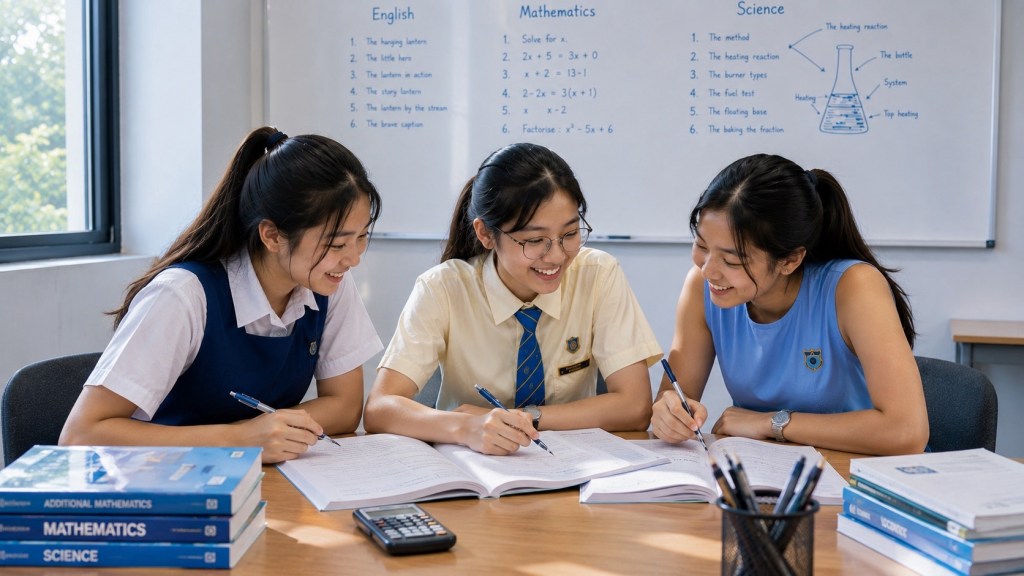
Using AI for Science study safely means using artificial-intelligence tools to support learning without allowing the tool to replace the thinking that produces learning. AI can generate explanations, questions, summaries, examples, feedback, diagrams, calculations and research leads quickly. That speed is useful—but it also creates a new risk: a fluent answer can look scientific even when a fact, formula, source, diagram or explanation is wrong. Students therefore need a disciplined system: attempt first, use AI for a defined job, verify important claims, protect privacy, follow school rules and finish with independent retrieval or problem solving.
This Advanced Science Tutorials guide is written for parents and students in Sengkang, Punggol and across Singapore who search for AI for Science study, how to use AI for homework, AI study tools, ChatGPT for Science revision, AI tutor for Science, AI flashcards, AI homework help, generative AI in education and how to verify AI answers. It is deliberately learning-first: the aim is stronger human understanding, not faster production of homework-looking text.
UNESCO’s AI Competency Framework for Students emphasises responsible and creative use of AI, critical judgement of AI solutions, ethical awareness and a human-centred mindset. UNESCO’s Guidance for Generative AI in Education and Research likewise argues for human agency, data privacy and educational uses that genuinely benefit learners rather than displacing human learning. See UNESCO: AI Competency Framework for Students and UNESCO: Guidance for Generative AI in Education and Research.
The eight-rule AI Science study protocol
- Attempt the Science task before asking AI for the final answer.
- Give AI one defined job at a time.
- Never assume fluent output is scientifically correct.
- Verify important facts, equations, citations, diagrams and safety claims against authoritative sources.
- Do not upload sensitive personal, school or assessment information that should remain private.
- Follow school, teacher, examination and platform rules.
- Use AI feedback to repair your own reasoning rather than replace it.
- Finish with an independent no-AI attempt so learning belongs to the student.
Primary 1 and Primary 2: adult-mediated use only where appropriate
Young children do not need independent generative-AI study routines. If AI is used at all, an adult should mediate the interaction, follow platform age rules and keep the task simple: generate a safe observation question, explain a familiar natural phenomenon in age-appropriate language, or suggest a picture-book question. The child should still observe, speak, draw and reason.
The educational question is not “Can AI answer this?” but “What should the child still do personally so the concept develops?”
Primary 3 and Primary 4: AI as question generator, not answer machine
Primary Science learners can use AI under appropriate supervision to generate retrieval questions, alternative examples or short quizzes after a topic is learned. They should answer before seeing feedback and compare the AI explanation with school notes.
Avoid copying AI-generated open-ended answers into homework. The student needs to construct the explanation, because that construction is part of the learning.
Primary 5 and Primary 6: use AI for diagnosis and changed contexts
Older Primary learners can ask AI to create a changed-context question, identify a possible misconception or compare two explanations. The student should then solve independently and verify the scientific rule against the textbook or teacher notes.
For PSLE preparation, AI can create practice volume, but it should not become the authority on marking. School marking conventions, official syllabus requirements and teacher feedback remain important.
Secondary G1, G2 and G3: AI becomes a research and reasoning tool
Lower Secondary students can use AI to explain difficult prose, generate practice questions, compare models, critique a lab-report paragraph, suggest search terms, create a study plan or simulate Socratic questioning. The risk also rises because content becomes more technical: one wrong sign, unit, circuit connection, chemical equation or citation can silently contaminate a polished answer.
At this level, verification should become habitual rather than optional.
Attempt-first rule
AI-study principle. Students should make a genuine first attempt before asking AI to solve the task.
Common risk. Immediate outsourcing prevents diagnosis of what the learner actually knows.
Safer learning move. Write the first answer, calculation, diagram or explanation before prompting AI.
Question to ask. What can I already do without help?
Practice task. Use AI only after marking the point of difficulty.
The verification rule is simple: the more consequential, technical, current or safety-sensitive the claim, the stronger the independent check should be. AI fluency is not evidence. Textbooks, teacher materials, official syllabuses, authoritative scientific organisations, real data and properly verified sources remain essential.
One-job prompt
AI-study principle. AI works better for learning when the prompt has one clear job.
Common risk. Students ask for ‘everything I need to know’ and receive broad summaries they passively read.
Safer learning move. Ask for one explanation, quiz, comparison, critique or hint.
Question to ask. What exact learning operation do I need?
Practice task. Rewrite a broad prompt into one focused job.
The verification rule is simple: the more consequential, technical, current or safety-sensitive the claim, the stronger the independent check should be. AI fluency is not evidence. Textbooks, teacher materials, official syllabuses, authoritative scientific organisations, real data and properly verified sources remain essential.
Hint-first prompt
AI-study principle. Hints preserve productive struggle better than full solutions.
Common risk. Students ask for the final answer as soon as they feel stuck.
Safer learning move. Request the smallest hint that unlocks the next step.
Question to ask. What is the next decision, not the final answer?
Practice task. Use a three-level hint ladder.
The verification rule is simple: the more consequential, technical, current or safety-sensitive the claim, the stronger the independent check should be. AI fluency is not evidence. Textbooks, teacher materials, official syllabuses, authoritative scientific organisations, real data and properly verified sources remain essential.
Socratic prompt
AI-study principle. AI can ask questions instead of delivering content.
Common risk. Students become passive recipients of explanations.
Safer learning move. Ask the system to question your reasoning one step at a time.
Question to ask. Can I produce the explanation myself?
Practice task. Run a five-question Socratic dialogue.
The verification rule is simple: the more consequential, technical, current or safety-sensitive the claim, the stronger the independent check should be. AI fluency is not evidence. Textbooks, teacher materials, official syllabuses, authoritative scientific organisations, real data and properly verified sources remain essential.
Quiz generator
AI-study principle. AI can generate low-stakes retrieval questions quickly.
Common risk. Students read the answer alongside the question.
Safer learning move. Ask for questions only, answer independently, then request marking or feedback.
Question to ask. Did I retrieve before seeing feedback?
Practice task. Generate ten mixed questions.
The verification rule is simple: the more consequential, technical, current or safety-sensitive the claim, the stronger the independent check should be. AI fluency is not evidence. Textbooks, teacher materials, official syllabuses, authoritative scientific organisations, real data and properly verified sources remain essential.
Changed-context questions
AI-study principle. AI can vary surface details while preserving the concept.
Common risk. Students repeat identical worksheets and learn pattern recognition.
Safer learning move. Ask for a new scenario testing the same deep relationship.
Question to ask. What must remain scientifically invariant?
Practice task. Generate three variants of one concept.
The verification rule is simple: the more consequential, technical, current or safety-sensitive the claim, the stronger the independent check should be. AI fluency is not evidence. Textbooks, teacher materials, official syllabuses, authoritative scientific organisations, real data and properly verified sources remain essential.
Misconception test
AI-study principle. AI can propose common wrong ideas for the learner to diagnose.
Common risk. Students memorise correct facts without contrast.
Safer learning move. Ask for a true/false misconception set and justify each answer.
Question to ask. Why is the wrong idea tempting?
Practice task. Create five misconception items.
The verification rule is simple: the more consequential, technical, current or safety-sensitive the claim, the stronger the independent check should be. AI fluency is not evidence. Textbooks, teacher materials, official syllabuses, authoritative scientific organisations, real data and properly verified sources remain essential.
Compare explanations
AI-study principle. AI can produce two explanations of different quality for critique.
Common risk. Students accept the first fluent answer.
Safer learning move. Ask for one complete and one subtly flawed explanation, then identify the flaw.
Question to ask. What evidence or mechanism is missing?
Practice task. Critique before seeing AI’s diagnosis.
The verification rule is simple: the more consequential, technical, current or safety-sensitive the claim, the stronger the independent check should be. AI fluency is not evidence. Textbooks, teacher materials, official syllabuses, authoritative scientific organisations, real data and properly verified sources remain essential.
Plain-language explanation
AI-study principle. AI can translate dense prose into simpler language.
Common risk. Students replace all scientific vocabulary with oversimplified terms.
Safer learning move. Request simpler wording while preserving specified key terms.
Question to ask. Which technical words must remain exact?
Practice task. Compare textbook and simplified version.
The verification rule is simple: the more consequential, technical, current or safety-sensitive the claim, the stronger the independent check should be. AI fluency is not evidence. Textbooks, teacher materials, official syllabuses, authoritative scientific organisations, real data and properly verified sources remain essential.
Technical-language upgrade
AI-study principle. AI can help turn a correct simple explanation into precise scientific language.
Common risk. Students add jargon without improving logic.
Safer learning move. Give your own explanation and ask which scientific terms would make it more precise.
Question to ask. Does every added term have a role?
Practice task. Upgrade one paragraph.
The verification rule is simple: the more consequential, technical, current or safety-sensitive the claim, the stronger the independent check should be. AI fluency is not evidence. Textbooks, teacher materials, official syllabuses, authoritative scientific organisations, real data and properly verified sources remain essential.
Definition checker
AI-study principle. AI can compare a student’s definition with a standard definition.
Common risk. Students ask AI to generate definitions without retrieval.
Safer learning move. Write from memory first, then request discrepancy feedback.
Question to ask. What essential element is missing?
Practice task. Correct one definition.
The verification rule is simple: the more consequential, technical, current or safety-sensitive the claim, the stronger the independent check should be. AI fluency is not evidence. Textbooks, teacher materials, official syllabuses, authoritative scientific organisations, real data and properly verified sources remain essential.
Example generator
AI-study principle. AI can produce additional examples and non-examples.
Common risk. Students learn one textbook example only.
Safer learning move. Ask for examples across different contexts.
Question to ask. Which defining feature stays constant?
Practice task. Classify generated cases.
The verification rule is simple: the more consequential, technical, current or safety-sensitive the claim, the stronger the independent check should be. AI fluency is not evidence. Textbooks, teacher materials, official syllabuses, authoritative scientific organisations, real data and properly verified sources remain essential.
Analogy generator
AI-study principle. AI can suggest analogies for difficult concepts.
Common risk. Students treat analogy as literal Science.
Safer learning move. Ask where the analogy works and where it breaks.
Question to ask. Which mapped features are valid?
Practice task. Create an analogy-limit table.
The verification rule is simple: the more consequential, technical, current or safety-sensitive the claim, the stronger the independent check should be. AI fluency is not evidence. Textbooks, teacher materials, official syllabuses, authoritative scientific organisations, real data and properly verified sources remain essential.
Mechanism explainer
AI-study principle. AI can expand the missing middle of a causal chain.
Common risk. Students paste mechanism explanations into homework.
Safer learning move. Ask for the steps, then close AI and reconstruct independently.
Question to ask. What happens between cause and outcome?
Practice task. Rebuild mechanism from memory.
The verification rule is simple: the more consequential, technical, current or safety-sensitive the claim, the stronger the independent check should be. AI fluency is not evidence. Textbooks, teacher materials, official syllabuses, authoritative scientific organisations, real data and properly verified sources remain essential.
Concept map helper
AI-study principle. AI can suggest concepts or possible links for a map.
Common risk. Students let AI build the whole map and never organise the knowledge.
Safer learning move. Create your own map first, then ask what major connection may be missing.
Question to ask. Which AI suggestion is actually supported by the syllabus?
Practice task. Verify and revise the map.
The verification rule is simple: the more consequential, technical, current or safety-sensitive the claim, the stronger the independent check should be. AI fluency is not evidence. Textbooks, teacher materials, official syllabuses, authoritative scientific organisations, real data and properly verified sources remain essential.
Flashcard helper
AI-study principle. AI can convert notes into draft flashcard prompts.
Common risk. Students import hundreds of cards without checking quality.
Safer learning move. Ask for a small set, edit each card and remove ambiguity.
Question to ask. Does the front force retrieval?
Practice task. Audit ten AI cards.
The verification rule is simple: the more consequential, technical, current or safety-sensitive the claim, the stronger the independent check should be. AI fluency is not evidence. Textbooks, teacher materials, official syllabuses, authoritative scientific organisations, real data and properly verified sources remain essential.
Spaced-review helper
AI-study principle. AI can help plan return dates and topic rotation.
Common risk. Students treat AI schedule as more important than real school load.
Safer learning move. Give realistic commitments and adjust the plan yourself.
Question to ask. Does this timetable protect sleep and homework?
Practice task. Compare AI plan with actual week.
The verification rule is simple: the more consequential, technical, current or safety-sensitive the claim, the stronger the independent check should be. AI fluency is not evidence. Textbooks, teacher materials, official syllabuses, authoritative scientific organisations, real data and properly verified sources remain essential.
Textbook explainer
AI-study principle. AI can clarify a paragraph after the student reads it.
Common risk. Students skip the textbook and ask AI for a summary first.
Safer learning move. Read and mark the confusing sentence before prompting.
Question to ask. What specifically is unclear?
Practice task. Compare AI explanation against textbook wording.
The verification rule is simple: the more consequential, technical, current or safety-sensitive the claim, the stronger the independent check should be. AI fluency is not evidence. Textbooks, teacher materials, official syllabuses, authoritative scientific organisations, real data and properly verified sources remain essential.
Diagram explainer
AI-study principle. AI can describe what a diagram should show.
Common risk. Students trust AI-generated diagrams visually.
Safer learning move. Use textual explanation, then verify diagram conventions against authoritative material.
Question to ask. Are arrows, labels and scale scientifically correct?
Practice task. Audit a draft diagram.
The verification rule is simple: the more consequential, technical, current or safety-sensitive the claim, the stronger the independent check should be. AI fluency is not evidence. Textbooks, teacher materials, official syllabuses, authoritative scientific organisations, real data and properly verified sources remain essential.
Graph explainer
AI-study principle. AI can help interpret axes, trends and possible mechanisms.
Common risk. Students ask AI what the graph means without reading axes.
Safer learning move. State axes and trend yourself first.
Question to ask. What observation comes before explanation?
Practice task. Compare your description with AI’s.
The verification rule is simple: the more consequential, technical, current or safety-sensitive the claim, the stronger the independent check should be. AI fluency is not evidence. Textbooks, teacher materials, official syllabuses, authoritative scientific organisations, real data and properly verified sources remain essential.
Table interpreter
AI-study principle. AI can summarise patterns in data tables.
Common risk. Students upload tables and accept invented or misread values.
Safer learning move. Check exact rows, columns and units before using the summary.
Question to ask. Which cells support the claim?
Practice task. Verify three AI statements against table.
The verification rule is simple: the more consequential, technical, current or safety-sensitive the claim, the stronger the independent check should be. AI fluency is not evidence. Textbooks, teacher materials, official syllabuses, authoritative scientific organisations, real data and properly verified sources remain essential.
Formula explainer
AI-study principle. AI can explain what symbols and relationships mean.
Common risk. Students ask for formulas without knowing applicability.
Safer learning move. Provide the formula from school notes and ask for conceptual explanation.
Question to ask. Under what conditions is this formula valid?
Practice task. Explain it back without AI.
The verification rule is simple: the more consequential, technical, current or safety-sensitive the claim, the stronger the independent check should be. AI fluency is not evidence. Textbooks, teacher materials, official syllabuses, authoritative scientific organisations, real data and properly verified sources remain essential.
Formula selection
AI-study principle. AI can suggest a relationship for a problem.
Common risk. Students copy the suggested equation and skip model selection.
Safer learning move. Ask why the formula applies and verify with units and syllabus.
Question to ask. What physical model connects the quantities?
Practice task. Solve a variant independently.
The verification rule is simple: the more consequential, technical, current or safety-sensitive the claim, the stronger the independent check should be. AI fluency is not evidence. Textbooks, teacher materials, official syllabuses, authoritative scientific organisations, real data and properly verified sources remain essential.
Formula rearrangement
AI-study principle. AI can show algebraic rearrangement.
Common risk. Students depend on the tool for every subject change.
Safer learning move. Attempt the rearrangement first, then use AI as checker.
Question to ask. Does substituting back recover the original?
Practice task. Redo from blank.
The verification rule is simple: the more consequential, technical, current or safety-sensitive the claim, the stronger the independent check should be. AI fluency is not evidence. Textbooks, teacher materials, official syllabuses, authoritative scientific organisations, real data and properly verified sources remain essential.
Calculation checking
AI-study principle. AI can check a calculation path.
Common risk. Students trust the final number despite possible AI arithmetic errors.
Safer learning move. Provide your working and ask for the first incorrect step, not a replacement solution.
Question to ask. Can I locate the error myself after the hint?
Practice task. Reverse-check with calculator.
The verification rule is simple: the more consequential, technical, current or safety-sensitive the claim, the stronger the independent check should be. AI fluency is not evidence. Textbooks, teacher materials, official syllabuses, authoritative scientific organisations, real data and properly verified sources remain essential.
Unit checking
AI-study principle. AI can flag unit inconsistency.
Common risk. Students ask AI to supply units after the calculation.
Safer learning move. Carry units yourself, then request a dimensional audit.
Question to ask. Does the final unit match the target quantity?
Practice task. Repair one mismatch.
The verification rule is simple: the more consequential, technical, current or safety-sensitive the claim, the stronger the independent check should be. AI fluency is not evidence. Textbooks, teacher materials, official syllabuses, authoritative scientific organisations, real data and properly verified sources remain essential.
Order-of-magnitude check
AI-study principle. AI can discuss whether an answer is physically plausible.
Common risk. Students use it instead of developing scale intuition.
Safer learning move. Estimate first and ask AI to critique the estimate.
Question to ask. What real benchmark supports the scale?
Practice task. Compare estimate and exact result.
The verification rule is simple: the more consequential, technical, current or safety-sensitive the claim, the stronger the independent check should be. AI fluency is not evidence. Textbooks, teacher materials, official syllabuses, authoritative scientific organisations, real data and properly verified sources remain essential.
Lab-method critique
AI-study principle. AI can help identify possible method weaknesses in a teacher-provided safe experiment.
Common risk. Students ask it to design hazardous procedures independently.
Safer learning move. Use only school-approved or low-risk contexts and ask for methodological critique.
Question to ask. Which suggestion affects validity or safety?
Practice task. Verify against teacher instructions.
The verification rule is simple: the more consequential, technical, current or safety-sensitive the claim, the stronger the independent check should be. AI fluency is not evidence. Textbooks, teacher materials, official syllabuses, authoritative scientific organisations, real data and properly verified sources remain essential.
Variable checker
AI-study principle. AI can check IV, DV and controlled variables.
Common risk. Students ask for labels without understanding the investigation.
Safer learning move. Write variables first and ask for feedback.
Question to ask. What comparison does the experiment test?
Practice task. Explain why each control matters.
The verification rule is simple: the more consequential, technical, current or safety-sensitive the claim, the stronger the independent check should be. AI fluency is not evidence. Textbooks, teacher materials, official syllabuses, authoritative scientific organisations, real data and properly verified sources remain essential.
Conclusion checker
AI-study principle. AI can critique whether a conclusion overclaims.
Common risk. Students ask it to write the conclusion from scratch.
Safer learning move. Write your own conclusion, then ask what evidence is missing or overextended.
Question to ask. Does the claim stay inside tested conditions?
Practice task. Revise independently.
The verification rule is simple: the more consequential, technical, current or safety-sensitive the claim, the stronger the independent check should be. AI fluency is not evidence. Textbooks, teacher materials, official syllabuses, authoritative scientific organisations, real data and properly verified sources remain essential.
Lab-report feedback
AI-study principle. AI can give structural feedback on a draft.
Common risk. Students upload a report and accept rewritten text as their own.
Safer learning move. Ask for comments by section rather than a replacement report.
Question to ask. Which scientific link is weak?
Practice task. Rewrite the section yourself.
The verification rule is simple: the more consequential, technical, current or safety-sensitive the claim, the stronger the independent check should be. AI fluency is not evidence. Textbooks, teacher materials, official syllabuses, authoritative scientific organisations, real data and properly verified sources remain essential.
Grammar feedback
AI-study principle. AI can help improve clarity after scientific reasoning is correct.
Common risk. Students polish prose before fixing the Science.
Safer learning move. Ask first for scientific-logic feedback, then language feedback.
Question to ask. Is the content correct before style changes?
Practice task. Revise in two passes.
The verification rule is simple: the more consequential, technical, current or safety-sensitive the claim, the stronger the independent check should be. AI fluency is not evidence. Textbooks, teacher materials, official syllabuses, authoritative scientific organisations, real data and properly verified sources remain essential.
Research keyword helper
AI-study principle. AI can generate synonyms and search terms.
Common risk. Students ask AI to provide the research evidence itself.
Safer learning move. Use AI for query design, then search authoritative databases or sources.
Question to ask. Do these terms exist in real literature?
Practice task. Verify search terms.
The verification rule is simple: the more consequential, technical, current or safety-sensitive the claim, the stronger the independent check should be. AI fluency is not evidence. Textbooks, teacher materials, official syllabuses, authoritative scientific organisations, real data and properly verified sources remain essential.
Source-discovery helper
AI-study principle. AI can suggest organisations or paper titles, but suggestions may be fabricated or outdated.
Common risk. Students cite AI-provided references without opening them.
Safer learning move. Treat every suggested source as an unverified lead.
Question to ask. Can I locate the real source independently?
Practice task. Verify title, author, DOI and publisher.
The verification rule is simple: the more consequential, technical, current or safety-sensitive the claim, the stronger the independent check should be. AI fluency is not evidence. Textbooks, teacher materials, official syllabuses, authoritative scientific organisations, real data and properly verified sources remain essential.
Citation hallucination risk
AI-study principle. Generative AI can produce realistic-looking citations that do not exist.
Common risk. Students assume formal formatting proves authenticity.
Safer learning move. Never cite a reference until it has been located and read.
Question to ask. Does the DOI or journal record exist?
Practice task. Verify three AI-suggested citations.
The verification rule is simple: the more consequential, technical, current or safety-sensitive the claim, the stronger the independent check should be. AI fluency is not evidence. Textbooks, teacher materials, official syllabuses, authoritative scientific organisations, real data and properly verified sources remain essential.
Source summary
AI-study principle. AI can summarise a real source supplied by the student.
Common risk. Students rely on the summary instead of inspecting the source.
Safer learning move. Read abstract, figures and conclusion first; then compare AI summary.
Question to ask. What limitation did the summary omit?
Practice task. Audit against original.
The verification rule is simple: the more consequential, technical, current or safety-sensitive the claim, the stronger the independent check should be. AI fluency is not evidence. Textbooks, teacher materials, official syllabuses, authoritative scientific organisations, real data and properly verified sources remain essential.
Research synthesis
AI-study principle. AI can help organise themes across verified notes.
Common risk. Students ask AI to synthesise sources it has not actually accessed reliably.
Safer learning move. Provide your verified notes, not imagined citations.
Question to ask. Which source supports each claim?
Practice task. Build a claim-source map.
The verification rule is simple: the more consequential, technical, current or safety-sensitive the claim, the stronger the independent check should be. AI fluency is not evidence. Textbooks, teacher materials, official syllabuses, authoritative scientific organisations, real data and properly verified sources remain essential.
Science-news checker
AI-study principle. AI can help generate questions to evaluate a headline.
Common risk. Students ask ‘Is this true?’ and accept one verdict.
Safer learning move. Ask for study-design, sample, effect-size and uncertainty questions.
Question to ask. What evidence would change confidence?
Practice task. Verify using original source.
The verification rule is simple: the more consequential, technical, current or safety-sensitive the claim, the stronger the independent check should be. AI fluency is not evidence. Textbooks, teacher materials, official syllabuses, authoritative scientific organisations, real data and properly verified sources remain essential.
Claim-evidence reasoning coach
AI-study principle. AI can critique a CER response.
Common risk. Students ask for the model answer first.
Safer learning move. Submit your claim, evidence and reasoning separately.
Question to ask. Which link is unsupported?
Practice task. Rewrite one component.
The verification rule is simple: the more consequential, technical, current or safety-sensitive the claim, the stronger the independent check should be. AI fluency is not evidence. Textbooks, teacher materials, official syllabuses, authoritative scientific organisations, real data and properly verified sources remain essential.
Open-ended answer coach
AI-study principle. AI can identify whether an answer has condition, process and effect.
Common risk. Students submit the question and ask AI to answer it.
Safer learning move. Write first, then ask for missing scientific relationship.
Question to ask. What happens in between?
Practice task. Rewrite without copying AI words.
The verification rule is simple: the more consequential, technical, current or safety-sensitive the claim, the stronger the independent check should be. AI fluency is not evidence. Textbooks, teacher materials, official syllabuses, authoritative scientific organisations, real data and properly verified sources remain essential.
MCQ distractor coach
AI-study principle. AI can explain why distractors are wrong.
Common risk. Students use AI to choose answers without attempting.
Safer learning move. Select first, explain reasoning, then compare.
Question to ask. Which misconception does the distractor represent?
Practice task. Turn MCQ into open question.
The verification rule is simple: the more consequential, technical, current or safety-sensitive the claim, the stronger the independent check should be. AI fluency is not evidence. Textbooks, teacher materials, official syllabuses, authoritative scientific organisations, real data and properly verified sources remain essential.
Past-paper helper
AI-study principle. AI can classify errors after the student marks a paper.
Common risk. Students ask AI to solve whole papers, weakening exam diagnosis.
Safer learning move. Use marked questions and ask for error categories.
Question to ask. Was the first failure knowledge, selection, reasoning or execution?
Practice task. Update error log.
The verification rule is simple: the more consequential, technical, current or safety-sensitive the claim, the stronger the independent check should be. AI fluency is not evidence. Textbooks, teacher materials, official syllabuses, authoritative scientific organisations, real data and properly verified sources remain essential.
Error-log helper
AI-study principle. AI can help turn mistakes into checking cues.
Common risk. Students ask AI to maintain a huge log automatically and stop reflecting.
Safer learning move. Write the first wrong decision yourself, then ask for a concise cue.
Question to ask. Will this cue change behaviour?
Practice task. Retest after delay.
The verification rule is simple: the more consequential, technical, current or safety-sensitive the claim, the stronger the independent check should be. AI fluency is not evidence. Textbooks, teacher materials, official syllabuses, authoritative scientific organisations, real data and properly verified sources remain essential.
Study-plan helper
AI-study principle. AI can propose a revision schedule.
Common risk. Students copy a generic timetable that ignores school and sleep.
Safer learning move. Provide fixed commitments and then edit the plan manually.
Question to ask. Is the plan sustainable for this student?
Practice task. Run a one-week trial.
The verification rule is simple: the more consequential, technical, current or safety-sensitive the claim, the stronger the independent check should be. AI fluency is not evidence. Textbooks, teacher materials, official syllabuses, authoritative scientific organisations, real data and properly verified sources remain essential.
Tutor simulation
AI-study principle. AI can simulate a patient question-and-answer tutor.
Common risk. Students allow it to lecture continuously.
Safer learning move. Ask it to wait for your answer after each question.
Question to ask. Am I producing more than the AI?
Practice task. Use a five-turn tutoring session.
The verification rule is simple: the more consequential, technical, current or safety-sensitive the claim, the stronger the independent check should be. AI fluency is not evidence. Textbooks, teacher materials, official syllabuses, authoritative scientific organisations, real data and properly verified sources remain essential.
Oral revision partner
AI-study principle. Voice-capable AI can ask oral questions where permitted.
Common risk. Students talk without recording or checking errors.
Safer learning move. Use a short topic and verify disputed answers afterwards.
Question to ask. Which answer needs source checking?
Practice task. Keep a correction list.
The verification rule is simple: the more consequential, technical, current or safety-sensitive the claim, the stronger the independent check should be. AI fluency is not evidence. Textbooks, teacher materials, official syllabuses, authoritative scientific organisations, real data and properly verified sources remain essential.
Teach-back listener
AI-study principle. AI can critique a student’s own explanation.
Common risk. Students ask it to teach first.
Safer learning move. Explain the topic aloud or in text, then request missing-step feedback.
Question to ask. Where did my explanation become vague?
Practice task. Repeat the teach-back unaided.
The verification rule is simple: the more consequential, technical, current or safety-sensitive the claim, the stronger the independent check should be. AI fluency is not evidence. Textbooks, teacher materials, official syllabuses, authoritative scientific organisations, real data and properly verified sources remain essential.
Rubric interpreter
AI-study principle. AI can help translate an assignment rubric into a checklist.
Common risk. Students let AI invent rubric requirements.
Safer learning move. Provide the actual rubric text and verify every item.
Question to ask. Which requirement is explicit versus inferred?
Practice task. Create a student checklist.
The verification rule is simple: the more consequential, technical, current or safety-sensitive the claim, the stronger the independent check should be. AI fluency is not evidence. Textbooks, teacher materials, official syllabuses, authoritative scientific organisations, real data and properly verified sources remain essential.
Poster feedback
AI-study principle. AI can critique hierarchy and scientific story of a poster draft.
Common risk. Students ask it to redesign the poster automatically.
Safer learning move. Ask for three clarity problems only.
Question to ask. Which visual hides the main result?
Practice task. Revise yourself.
The verification rule is simple: the more consequential, technical, current or safety-sensitive the claim, the stronger the independent check should be. AI fluency is not evidence. Textbooks, teacher materials, official syllabuses, authoritative scientific organisations, real data and properly verified sources remain essential.
Presentation rehearsal
AI-study principle. AI can generate likely audience questions.
Common risk. Students memorise AI answers.
Safer learning move. Answer questions independently and use AI only for critique.
Question to ask. Can I explain the evidence without notes?
Practice task. Practise five questions.
The verification rule is simple: the more consequential, technical, current or safety-sensitive the claim, the stronger the independent check should be. AI fluency is not evidence. Textbooks, teacher materials, official syllabuses, authoritative scientific organisations, real data and properly verified sources remain essential.
Writing clarity
AI-study principle. AI can flag ambiguous pronouns or long sentences.
Common risk. Students accept rewrites that subtly alter scientific meaning.
Safer learning move. Compare revised text with original claim and units.
Question to ask. Did the Science change?
Practice task. Approve changes one by one.
The verification rule is simple: the more consequential, technical, current or safety-sensitive the claim, the stronger the independent check should be. AI fluency is not evidence. Textbooks, teacher materials, official syllabuses, authoritative scientific organisations, real data and properly verified sources remain essential.
Translation help
AI-study principle. AI can translate Science explanations for comprehension.
Common risk. Students use translated technical terms without checking school terminology.
Safer learning move. Verify key scientific vocabulary against teacher materials.
Question to ask. Does the translated term match local course usage?
Practice task. Build a bilingual term list carefully.
The verification rule is simple: the more consequential, technical, current or safety-sensitive the claim, the stronger the independent check should be. AI fluency is not evidence. Textbooks, teacher materials, official syllabuses, authoritative scientific organisations, real data and properly verified sources remain essential.
Accessibility support
AI-study principle. AI can produce simpler explanations, alt text or text-to-speech support.
Common risk. Students assume accessibility adaptation means lowering scientific expectations.
Safer learning move. Preserve the concept while changing format.
Question to ask. What learning goal must remain unchanged?
Practice task. Create an accessible version then retest understanding.
The verification rule is simple: the more consequential, technical, current or safety-sensitive the claim, the stronger the independent check should be. AI fluency is not evidence. Textbooks, teacher materials, official syllabuses, authoritative scientific organisations, real data and properly verified sources remain essential.
Idea brainstorming
AI-study principle. AI can brainstorm project ideas.
Common risk. Students choose unsafe or untestable suggestions because they sound exciting.
Safer learning move. Apply safety, measurability and school-approval filters.
Question to ask. Can this be done safely with available resources?
Practice task. Reject unsafe ideas.
The verification rule is simple: the more consequential, technical, current or safety-sensitive the claim, the stronger the independent check should be. AI fluency is not evidence. Textbooks, teacher materials, official syllabuses, authoritative scientific organisations, real data and properly verified sources remain essential.
Safe-project filter
AI-study principle. AI suggestions for experiments require independent safety review.
Common risk. Students assume a generated method has been risk-assessed.
Safer learning move. Use only low-risk home activities or teacher-approved laboratory methods.
Question to ask. Does this require chemicals, flames, mains electricity, pressure, cultures or specialist disposal?
Practice task. Move risky ideas to simulation or school supervision.
The verification rule is simple: the more consequential, technical, current or safety-sensitive the claim, the stronger the independent check should be. AI fluency is not evidence. Textbooks, teacher materials, official syllabuses, authoritative scientific organisations, real data and properly verified sources remain essential.
Chemical safety
AI-study principle. AI must not be treated as laboratory safety authority for unknown chemicals.
Common risk. Students ask for mixtures, concentrations or cleanup instructions without supervision.
Safer learning move. Follow teacher, SDS and institutional procedures instead.
Question to ask. Is this an activity-specific safety question for trained staff?
Practice task. Stop and ask responsible adult.
The verification rule is simple: the more consequential, technical, current or safety-sensitive the claim, the stronger the independent check should be. AI fluency is not evidence. Textbooks, teacher materials, official syllabuses, authoritative scientific organisations, real data and properly verified sources remain essential.
Electrical safety
AI-study principle. AI-generated circuit ideas may not respect equipment ratings.
Common risk. Students transfer low-voltage school experiments to mains power.
Safer learning move. Use only teacher-approved low-voltage educational equipment.
Question to ask. Does this involve mains electricity or damaged equipment?
Practice task. Use simulation if uncertain.
The verification rule is simple: the more consequential, technical, current or safety-sensitive the claim, the stronger the independent check should be. AI fluency is not evidence. Textbooks, teacher materials, official syllabuses, authoritative scientific organisations, real data and properly verified sources remain essential.
Biology safety
AI-study principle. AI can suggest biological activities that are inappropriate at home.
Common risk. Students culture unknown microbes or handle bodily samples.
Safer learning move. Use prepared resources, safe observations or school-approved protocols.
Question to ask. Does this involve unknown organisms or human samples?
Practice task. Choose a safer alternative.
The verification rule is simple: the more consequential, technical, current or safety-sensitive the claim, the stronger the independent check should be. AI fluency is not evidence. Textbooks, teacher materials, official syllabuses, authoritative scientific organisations, real data and properly verified sources remain essential.
Astronomy safety
AI-study principle. AI may casually suggest solar observations.
Common risk. Students interpret ‘observe the Sun’ without proper filters.
Safer learning move. Never look directly at the Sun; use certified methods and authoritative guidance.
Question to ask. Does the activity involve direct solar viewing?
Practice task. Use projection or trusted datasets.
The verification rule is simple: the more consequential, technical, current or safety-sensitive the claim, the stronger the independent check should be. AI fluency is not evidence. Textbooks, teacher materials, official syllabuses, authoritative scientific organisations, real data and properly verified sources remain essential.
Medical boundary
AI-study principle. AI can explain general Biology but should not replace healthcare professionals for personal medical decisions.
Common risk. Students ask Science-study tools to diagnose symptoms.
Safer learning move. Separate curriculum explanation from personal medical advice.
Question to ask. Is this a study question or a health decision?
Practice task. Use qualified healthcare guidance for personal care.
The verification rule is simple: the more consequential, technical, current or safety-sensitive the claim, the stronger the independent check should be. AI fluency is not evidence. Textbooks, teacher materials, official syllabuses, authoritative scientific organisations, real data and properly verified sources remain essential.
Privacy
AI-study principle. AI services may process user-provided data according to their own policies.
Common risk. Students paste full names, school IDs, private chats or personal records.
Safer learning move. Use minimal non-sensitive information and follow school/platform rules.
Question to ask. Does the tool need this information to do the learning task?
Practice task. Remove identifying details.
The verification rule is simple: the more consequential, technical, current or safety-sensitive the claim, the stronger the independent check should be. AI fluency is not evidence. Textbooks, teacher materials, official syllabuses, authoritative scientific organisations, real data and properly verified sources remain essential.
Schoolwork privacy
AI-study principle. Assignments may contain school-owned or restricted materials.
Common risk. Students upload entire papers or proprietary worksheets without permission.
Safer learning move. Follow school rules and share only what is permitted.
Question to ask. Am I authorised to upload this material?
Practice task. Use a self-created equivalent question.
The verification rule is simple: the more consequential, technical, current or safety-sensitive the claim, the stronger the independent check should be. AI fluency is not evidence. Textbooks, teacher materials, official syllabuses, authoritative scientific organisations, real data and properly verified sources remain essential.
Classmate privacy
AI-study principle. Group-work materials may include names or personal information.
Common risk. Students upload teammates’ work without consent.
Safer learning move. Anonymise or obtain appropriate permission.
Question to ask. Whose information is this?
Practice task. Remove identifying details.
The verification rule is simple: the more consequential, technical, current or safety-sensitive the claim, the stronger the independent check should be. AI fluency is not evidence. Textbooks, teacher materials, official syllabuses, authoritative scientific organisations, real data and properly verified sources remain essential.
Assessment integrity
AI-study principle. AI use may be restricted in tests, graded assignments or coursework.
Common risk. Students assume help is allowed because the tool is available.
Safer learning move. Follow explicit teacher and examination rules.
Question to ask. Would I be allowed to receive this help from another person?
Practice task. Ask teacher when rules are unclear.
The verification rule is simple: the more consequential, technical, current or safety-sensitive the claim, the stronger the independent check should be. AI fluency is not evidence. Textbooks, teacher materials, official syllabuses, authoritative scientific organisations, real data and properly verified sources remain essential.
Authorship
AI-study principle. Submitting AI-generated work as personal work can violate academic-integrity expectations.
Common risk. Students think editing a few words creates ownership.
Safer learning move. Use AI as feedback or scaffolding and produce the final reasoning yourself.
Question to ask. Can I defend every sentence and calculation?
Practice task. Write from memory after feedback.
The verification rule is simple: the more consequential, technical, current or safety-sensitive the claim, the stronger the independent check should be. AI fluency is not evidence. Textbooks, teacher materials, official syllabuses, authoritative scientific organisations, real data and properly verified sources remain essential.
Disclosure
AI-study principle. Some assignments require declaring AI use.
Common risk. Students hide use because they fear marks.
Safer learning move. Follow the school’s disclosure policy honestly.
Question to ask. What use must be acknowledged?
Practice task. Keep a simple AI-use log.
The verification rule is simple: the more consequential, technical, current or safety-sensitive the claim, the stronger the independent check should be. AI fluency is not evidence. Textbooks, teacher materials, official syllabuses, authoritative scientific organisations, real data and properly verified sources remain essential.
Fabricated data
AI-study principle. AI must never be used to invent experiment results presented as real.
Common risk. Students ask for ‘realistic numbers’ to complete a lab report.
Safer learning move. Report actual observations or clearly labelled simulations only.
Question to ask. Were these data genuinely collected?
Practice task. Mark simulated datasets explicitly.
The verification rule is simple: the more consequential, technical, current or safety-sensitive the claim, the stronger the independent check should be. AI fluency is not evidence. Textbooks, teacher materials, official syllabuses, authoritative scientific organisations, real data and properly verified sources remain essential.
Fabricated citation
AI-study principle. AI should never generate references that are cited without verification.
Common risk. Students mistake citation style for authenticity.
Safer learning move. Locate and inspect every cited source.
Question to ask. Can another reader retrieve it?
Practice task. Delete unverifiable references.
The verification rule is simple: the more consequential, technical, current or safety-sensitive the claim, the stronger the independent check should be. AI fluency is not evidence. Textbooks, teacher materials, official syllabuses, authoritative scientific organisations, real data and properly verified sources remain essential.
Fabricated quote
AI-study principle. AI may invent quotations or paraphrases.
Common risk. Students include them because they sound scholarly.
Safer learning move. Quote only from text you can see in the real source.
Question to ask. Where is the exact wording?
Practice task. Use your own paraphrase with citation.
The verification rule is simple: the more consequential, technical, current or safety-sensitive the claim, the stronger the independent check should be. AI fluency is not evidence. Textbooks, teacher materials, official syllabuses, authoritative scientific organisations, real data and properly verified sources remain essential.
Diagram hallucination
AI-study principle. Generated diagrams can contain anatomically or physically impossible details.
Common risk. Students trust visual polish.
Safer learning move. Check every label, arrow and relationship.
Question to ask. Does the figure match textbook and authoritative references?
Practice task. Redraw manually if needed.
The verification rule is simple: the more consequential, technical, current or safety-sensitive the claim, the stronger the independent check should be. AI fluency is not evidence. Textbooks, teacher materials, official syllabuses, authoritative scientific organisations, real data and properly verified sources remain essential.
Math hallucination
AI-study principle. AI can make algebra or arithmetic mistakes.
Common risk. Students assume computational confidence equals correctness.
Safer learning move. Check with calculator, unit analysis and inverse substitution.
Question to ask. Does the result pass magnitude and unit checks?
Practice task. Verify independently.
The verification rule is simple: the more consequential, technical, current or safety-sensitive the claim, the stronger the independent check should be. AI fluency is not evidence. Textbooks, teacher materials, official syllabuses, authoritative scientific organisations, real data and properly verified sources remain essential.
Science-fact hallucination
AI-study principle. AI can state false facts fluently.
Common risk. Students accept answers with no citations or mechanism.
Safer learning move. Cross-check important claims with textbook or authoritative organisation.
Question to ask. What source confirms this?
Practice task. Verify at least one key claim.
The verification rule is simple: the more consequential, technical, current or safety-sensitive the claim, the stronger the independent check should be. AI fluency is not evidence. Textbooks, teacher materials, official syllabuses, authoritative scientific organisations, real data and properly verified sources remain essential.
Overconfident wording
AI-study principle. AI often produces decisive prose even when evidence is uncertain.
Common risk. Students copy ‘proves’ or ‘always’.
Safer learning move. Calibrate wording to study design and evidence.
Question to ask. What is the strongest defensible verb?
Practice task. Rewrite with appropriate scope.
The verification rule is simple: the more consequential, technical, current or safety-sensitive the claim, the stronger the independent check should be. AI fluency is not evidence. Textbooks, teacher materials, official syllabuses, authoritative scientific organisations, real data and properly verified sources remain essential.
Source-date check
AI-study principle. AI may provide outdated information.
Common risk. Students use it for current syllabus, discoveries or regulations without checking date.
Safer learning move. Verify time-sensitive facts through official current sources.
Question to ask. When was this source updated?
Practice task. Check official webpage.
The verification rule is simple: the more consequential, technical, current or safety-sensitive the claim, the stronger the independent check should be. AI fluency is not evidence. Textbooks, teacher materials, official syllabuses, authoritative scientific organisations, real data and properly verified sources remain essential.
Syllabus check
AI-study principle. AI may mix curricula from different countries or years.
Common risk. Students learn material not assessed locally or miss required phrasing.
Safer learning move. Compare with current school/MOE/SEAB materials.
Question to ask. Does this match my course?
Practice task. Use syllabus as scope gate.
The verification rule is simple: the more consequential, technical, current or safety-sensitive the claim, the stronger the independent check should be. AI fluency is not evidence. Textbooks, teacher materials, official syllabuses, authoritative scientific organisations, real data and properly verified sources remain essential.
Marking-scheme check
AI-study principle. AI may not match local marking conventions.
Common risk. Students use it as definitive examiner.
Safer learning move. Use teacher feedback and official/school marking guidance.
Question to ask. Would my school award this wording?
Practice task. Compare with marked examples.
The verification rule is simple: the more consequential, technical, current or safety-sensitive the claim, the stronger the independent check should be. AI fluency is not evidence. Textbooks, teacher materials, official syllabuses, authoritative scientific organisations, real data and properly verified sources remain essential.
Teacher-note check
AI-study principle. Teacher explanations may intentionally use a simplified model suitable for level.
Common risk. Students replace it with advanced AI content that creates confusion.
Safer learning move. Keep school model as assessment baseline, then add enrichment separately.
Question to ask. What level is this answer for?
Practice task. Tag core versus extension.
The verification rule is simple: the more consequential, technical, current or safety-sensitive the claim, the stronger the independent check should be. AI fluency is not evidence. Textbooks, teacher materials, official syllabuses, authoritative scientific organisations, real data and properly verified sources remain essential.
Model-limit check
AI-study principle. AI can overextend simplified models.
Common risk. Students use one explanation universally.
Safer learning move. Ask for assumptions and limitations, then verify them.
Question to ask. Under what conditions does this model fail?
Practice task. Create one counterexample.
The verification rule is simple: the more consequential, technical, current or safety-sensitive the claim, the stronger the independent check should be. AI fluency is not evidence. Textbooks, teacher materials, official syllabuses, authoritative scientific organisations, real data and properly verified sources remain essential.
Citation-needed check
AI-study principle. Not every study explanation needs citations, but research claims do.
Common risk. Students either cite nothing or cite every sentence.
Safer learning move. Follow assignment expectations and source traceability.
Question to ask. Is this my reasoning or borrowed information?
Practice task. Mark citation points.
The verification rule is simple: the more consequential, technical, current or safety-sensitive the claim, the stronger the independent check should be. AI fluency is not evidence. Textbooks, teacher materials, official syllabuses, authoritative scientific organisations, real data and properly verified sources remain essential.
Answer-length control
AI-study principle. AI tends to generate more text than needed.
Common risk. Students submit long answers that hide the mechanism.
Safer learning move. Ask for feedback on minimum complete answer, not a longer rewrite.
Question to ask. What is the shortest complete response?
Practice task. Cut one AI-assisted paragraph by half.
The verification rule is simple: the more consequential, technical, current or safety-sensitive the claim, the stronger the independent check should be. AI fluency is not evidence. Textbooks, teacher materials, official syllabuses, authoritative scientific organisations, real data and properly verified sources remain essential.
Difficulty calibration
AI-study principle. AI can generate questions too easy or too advanced.
Common risk. Students mistake harder for better.
Safer learning move. Specify current level and verify against syllabus.
Question to ask. Does this question test required knowledge?
Practice task. Reject misaligned items.
The verification rule is simple: the more consequential, technical, current or safety-sensitive the claim, the stronger the independent check should be. AI fluency is not evidence. Textbooks, teacher materials, official syllabuses, authoritative scientific organisations, real data and properly verified sources remain essential.
Adaptive practice
AI-study principle. AI can change question difficulty based on performance.
Common risk. Students allow the tool to decide everything without understanding progress.
Safer learning move. Use explicit success criteria and keep your own error log.
Question to ask. Why did the difficulty change?
Practice task. Review after ten questions.
The verification rule is simple: the more consequential, technical, current or safety-sensitive the claim, the stronger the independent check should be. AI fluency is not evidence. Textbooks, teacher materials, official syllabuses, authoritative scientific organisations, real data and properly verified sources remain essential.
Interleaving helper
AI-study principle. AI can mix topics to force concept selection.
Common risk. Students ask for random variety before foundations are stable.
Safer learning move. Interleave only known topics.
Question to ask. Can I distinguish which model applies?
Practice task. Generate a balanced mixed set.
The verification rule is simple: the more consequential, technical, current or safety-sensitive the claim, the stronger the independent check should be. AI fluency is not evidence. Textbooks, teacher materials, official syllabuses, authoritative scientific organisations, real data and properly verified sources remain essential.
Spaced-return helper
AI-study principle. AI can remind or generate later retrieval sets.
Common risk. Students rely on the chat history rather than their own planner.
Safer learning move. Record next-review dates outside the conversation too.
Question to ask. When will I test this again independently?
Practice task. Schedule delayed set.
The verification rule is simple: the more consequential, technical, current or safety-sensitive the claim, the stronger the independent check should be. AI fluency is not evidence. Textbooks, teacher materials, official syllabuses, authoritative scientific organisations, real data and properly verified sources remain essential.
Exam simulation
AI-study principle. AI can generate mock-style questions, but authenticity may vary.
Common risk. Students assume generated papers match official standards.
Safer learning move. Use real school/past material as the benchmark and AI only for supplemental practice.
Question to ask. How does this item differ from authentic papers?
Practice task. Audit generated questions.
The verification rule is simple: the more consequential, technical, current or safety-sensitive the claim, the stronger the independent check should be. AI fluency is not evidence. Textbooks, teacher materials, official syllabuses, authoritative scientific organisations, real data and properly verified sources remain essential.
Self-marking
AI-study principle. AI can provide tentative feedback on student answers.
Common risk. Students accept a score as official.
Safer learning move. Treat AI marks as practice feedback, not authoritative grading.
Question to ask. What rubric is being used?
Practice task. Compare with teacher marking.
The verification rule is simple: the more consequential, technical, current or safety-sensitive the claim, the stronger the independent check should be. AI fluency is not evidence. Textbooks, teacher materials, official syllabuses, authoritative scientific organisations, real data and properly verified sources remain essential.
Confidence calibration
AI-study principle. AI can ask confidence before revealing feedback.
Common risk. Students feel confident after fluent conversation.
Safer learning move. Record confidence before answer and compare with correctness.
Question to ask. Does confidence track performance?
Practice task. Maintain calibration table.
The verification rule is simple: the more consequential, technical, current or safety-sensitive the claim, the stronger the independent check should be. AI fluency is not evidence. Textbooks, teacher materials, official syllabuses, authoritative scientific organisations, real data and properly verified sources remain essential.
Learning ownership
AI-study principle. The student should remain the person doing the cognitive work.
Common risk. Students outsource planning, reading, writing, solving and checking simultaneously.
Safer learning move. Choose which parts AI may support and which must remain human.
Question to ask. What learning operation am I preserving?
Practice task. Write an AI-use boundary for one assignment.
The verification rule is simple: the more consequential, technical, current or safety-sensitive the claim, the stronger the independent check should be. AI fluency is not evidence. Textbooks, teacher materials, official syllabuses, authoritative scientific organisations, real data and properly verified sources remain essential.
Human agency
AI-study principle. AI should expand choices and feedback, not decide what the student believes without scrutiny.
Common risk. Students treat generated responses as final authority.
Safer learning move. Compare AI claims with evidence and make the final judgment yourself.
Question to ask. What evidence changed my view?
Practice task. Write your own conclusion.
The verification rule is simple: the more consequential, technical, current or safety-sensitive the claim, the stronger the independent check should be. AI fluency is not evidence. Textbooks, teacher materials, official syllabuses, authoritative scientific organisations, real data and properly verified sources remain essential.
Teacher relationship
AI-study principle. AI should not replace asking teachers about course-specific expectations.
Common risk. Students use AI to resolve local rubric or syllabus questions.
Safer learning move. Ask the teacher when local rules matter.
Question to ask. Who has authority over this assignment?
Practice task. List questions for teacher.
The verification rule is simple: the more consequential, technical, current or safety-sensitive the claim, the stronger the independent check should be. AI fluency is not evidence. Textbooks, teacher materials, official syllabuses, authoritative scientific organisations, real data and properly verified sources remain essential.
Parent role
AI-study principle. Parents can help set privacy, age and integrity boundaries.
Common risk. Parents may either ban all AI or allow unrestricted outsourcing.
Safer learning move. Agree on allowed uses and require independent attempts.
Question to ask. What use supports learning versus replaces it?
Practice task. Create family AI rules.
The verification rule is simple: the more consequential, technical, current or safety-sensitive the claim, the stronger the independent check should be. AI fluency is not evidence. Textbooks, teacher materials, official syllabuses, authoritative scientific organisations, real data and properly verified sources remain essential.
Tutor role
AI-study principle. Tutors can model verification and prompt design while keeping student thinking central.
Common risk. Tutors may use AI to generate all lesson content without checking.
Safer learning move. Verify materials and adapt to actual learner errors.
Question to ask. What evidence shows this task fits the student?
Practice task. Audit an AI-generated worksheet.
The verification rule is simple: the more consequential, technical, current or safety-sensitive the claim, the stronger the independent check should be. AI fluency is not evidence. Textbooks, teacher materials, official syllabuses, authoritative scientific organisations, real data and properly verified sources remain essential.
Three-student AI lesson
AI-study principle. Small groups can compare independently generated answers and verification methods.
Common risk. Students may converge on one AI answer too quickly.
Safer learning move. Require each learner to critique one claim or source.
Question to ask. Which answer survives verification?
Practice task. Run a compare-and-check activity.
The verification rule is simple: the more consequential, technical, current or safety-sensitive the claim, the stronger the independent check should be. AI fluency is not evidence. Textbooks, teacher materials, official syllabuses, authoritative scientific organisations, real data and properly verified sources remain essential.
AI finish rule
AI-study principle. AI use should end with an independent performance check.
Common risk. Students stop after understanding the generated explanation.
Safer learning move. Close the tool and solve, explain, draw or retrieve unaided.
Question to ask. What can I now do without AI?
Practice task. Complete one no-AI transfer task.
The verification rule is simple: the more consequential, technical, current or safety-sensitive the claim, the stronger the independent check should be. AI fluency is not evidence. Textbooks, teacher materials, official syllabuses, authoritative scientific organisations, real data and properly verified sources remain essential.
A safe AI workflow for Science homework
- Read the task yourself.
- Attempt it without AI.
- Mark the exact point where you are stuck.
- Ask for a hint or critique rather than a replacement answer.
- Verify any new fact, equation, source or safety claim.
- Rewrite the solution in your own reasoning.
- Close AI and complete a changed-context question independently.
- Record any repeated error in your Science correction log.
A safe AI workflow for Science research
- Define the research question yourself.
- Use AI only to suggest keywords, source types or possible subquestions.
- Search real databases and authoritative websites.
- Open and read the actual sources.
- Use AI to help organise verified notes if useful.
- Check every citation, quotation and numerical claim.
- Write from your own source matrix.
- Disclose AI use if the assignment requires it.
A twelve-week AI Science literacy programme
- Week 1: attempt-first and hint-first use.
- Week 2: quizzes, retrieval and changed-context questions.
- Week 3: explanation checking and teach-back.
- Week 4: diagrams, graphs and formula verification.
- Week 5: calculation and unit checking.
- Week 6: practical-method critique and safety boundaries.
- Week 7: research keywords and source verification.
- Week 8: citations, hallucinations and AI summaries.
- Week 9: academic integrity, privacy and disclosure.
- Week 10: error logs, study plans and adaptive practice.
- Week 11: exam support without answer outsourcing.
- Week 12: independent no-AI transfer and personal AI-use policy.
When tuition may help with AI study habits
Extra support can help when a learner has begun outsourcing difficult questions, cannot tell whether AI output is correct, or needs a safer workflow for using AI as a tutor rather than an answer generator. The tutor should model verification and then require independent performance.
For current Primary 3–6 and PSLE programme information, use Primary Science Tuition Sengkang. The use of any AI service should follow platform age requirements, school rules and family decisions.
Frequently asked questions
Can AI help me study Science?
Yes. It can generate questions, hints, explanations, comparisons and feedback, but important scientific claims and sources should be verified, and the student should still perform the core learning work.
Should I use AI before attempting homework?
Usually attempt first. Your first attempt reveals what you know and where help is actually needed.
Can AI mark my Science answers?
It can provide practice feedback, but it may not match your school’s marking conventions and should not be treated as an official examiner.
Can AI create citations for my project?
It can suggest leads, but every citation must be located and verified in the real source before use because AI can invent references.
Can I upload my school worksheet?
Only if school and platform rules allow it and the material contains no restricted or sensitive information. When uncertain, use a self-created equivalent question.
How do I know if an AI Science answer is correct?
Check it against your textbook, teacher notes, official syllabus, authoritative scientific source, units, calculations and known evidence. High confidence in the wording is not proof.
Can I use AI to write my lab report?
Use it only within school rules and preferably for feedback or structure. The report should reflect the experiment you actually performed, your real data and your own scientific reasoning.
What is the safest way to use AI for revision?
Use it to quiz you, give hints, vary contexts and critique your own answers, then finish with an independent no-AI retrieval or problem-solving attempt.
Further reading
- UNESCO: AI Competency Framework for Students
- UNESCO: Guidance for Generative AI in Education and Research
- UNESCO: AI and Education — Protecting the Rights of Learners
- Science Research Skills
- Science Error Log and Correction Book
Final operating rule
Use AI to increase the amount of thinking you can do, not to remove the thinking. Attempt first. Ask for hints, questions and critique. Verify important Science. Protect privacy. Follow school rules. Never fabricate data or sources. Close the tool and prove that you can still explain, calculate, draw or solve independently. AI has helped only when the learner becomes more capable without it.
Attempt-first rule — AI-study clinic 1
Start with a real Science task where attempt-first rule matters. Require the learner to make a first attempt before opening AI. This preserves diagnostic evidence and keeps the student responsible for the initial model.
Surface the common risk: Immediate outsourcing prevents diagnosis of what the learner actually knows.. Ask what learning, privacy, integrity or scientific error could result. Then apply the safer move: Write the first answer, calculation, diagram or explanation before prompting AI. The learner should know exactly why AI is being used in this step.
Now ask: What can I already do without help? Run the practice task: Use AI only after marking the point of difficulty. Verify any technical claim, source, formula, diagram or safety-sensitive suggestion against an authoritative source or course material.
Finish by closing AI and completing a no-AI transfer task. Parents can protect boundaries, teachers control assessment rules, and tutors can model verification. The student owns the final reasoning.
One-job prompt — AI-study clinic 1
Start with a real Science task where one-job prompt matters. Require the learner to make a first attempt before opening AI. This preserves diagnostic evidence and keeps the student responsible for the initial model.
Surface the common risk: Students ask for ‘everything I need to know’ and receive broad summaries they passively read.. Ask what learning, privacy, integrity or scientific error could result. Then apply the safer move: Ask for one explanation, quiz, comparison, critique or hint. The learner should know exactly why AI is being used in this step.
Now ask: What exact learning operation do I need? Run the practice task: Rewrite a broad prompt into one focused job. Verify any technical claim, source, formula, diagram or safety-sensitive suggestion against an authoritative source or course material.
Finish by closing AI and completing a no-AI transfer task. Parents can protect boundaries, teachers control assessment rules, and tutors can model verification. The student owns the final reasoning.
Hint-first prompt — AI-study clinic 1
Start with a real Science task where hint-first prompt matters. Require the learner to make a first attempt before opening AI. This preserves diagnostic evidence and keeps the student responsible for the initial model.
Surface the common risk: Students ask for the final answer as soon as they feel stuck.. Ask what learning, privacy, integrity or scientific error could result. Then apply the safer move: Request the smallest hint that unlocks the next step. The learner should know exactly why AI is being used in this step.
Now ask: What is the next decision, not the final answer? Run the practice task: Use a three-level hint ladder. Verify any technical claim, source, formula, diagram or safety-sensitive suggestion against an authoritative source or course material.
Finish by closing AI and completing a no-AI transfer task. Parents can protect boundaries, teachers control assessment rules, and tutors can model verification. The student owns the final reasoning.
Socratic prompt — AI-study clinic 1
Start with a real Science task where socratic prompt matters. Require the learner to make a first attempt before opening AI. This preserves diagnostic evidence and keeps the student responsible for the initial model.
Surface the common risk: Students become passive recipients of explanations.. Ask what learning, privacy, integrity or scientific error could result. Then apply the safer move: Ask the system to question your reasoning one step at a time. The learner should know exactly why AI is being used in this step.
Now ask: Can I produce the explanation myself? Run the practice task: Run a five-question Socratic dialogue. Verify any technical claim, source, formula, diagram or safety-sensitive suggestion against an authoritative source or course material.
Finish by closing AI and completing a no-AI transfer task. Parents can protect boundaries, teachers control assessment rules, and tutors can model verification. The student owns the final reasoning.
Quiz generator — AI-study clinic 1
Start with a real Science task where quiz generator matters. Require the learner to make a first attempt before opening AI. This preserves diagnostic evidence and keeps the student responsible for the initial model.
Surface the common risk: Students read the answer alongside the question.. Ask what learning, privacy, integrity or scientific error could result. Then apply the safer move: Ask for questions only, answer independently, then request marking or feedback. The learner should know exactly why AI is being used in this step.
Now ask: Did I retrieve before seeing feedback? Run the practice task: Generate ten mixed questions. Verify any technical claim, source, formula, diagram or safety-sensitive suggestion against an authoritative source or course material.
Finish by closing AI and completing a no-AI transfer task. Parents can protect boundaries, teachers control assessment rules, and tutors can model verification. The student owns the final reasoning.
Changed-context questions — AI-study clinic 1
Start with a real Science task where changed-context questions matters. Require the learner to make a first attempt before opening AI. This preserves diagnostic evidence and keeps the student responsible for the initial model.
Surface the common risk: Students repeat identical worksheets and learn pattern recognition.. Ask what learning, privacy, integrity or scientific error could result. Then apply the safer move: Ask for a new scenario testing the same deep relationship. The learner should know exactly why AI is being used in this step.
Now ask: What must remain scientifically invariant? Run the practice task: Generate three variants of one concept. Verify any technical claim, source, formula, diagram or safety-sensitive suggestion against an authoritative source or course material.
Finish by closing AI and completing a no-AI transfer task. Parents can protect boundaries, teachers control assessment rules, and tutors can model verification. The student owns the final reasoning.
Misconception test — AI-study clinic 1
Start with a real Science task where misconception test matters. Require the learner to make a first attempt before opening AI. This preserves diagnostic evidence and keeps the student responsible for the initial model.
Surface the common risk: Students memorise correct facts without contrast.. Ask what learning, privacy, integrity or scientific error could result. Then apply the safer move: Ask for a true/false misconception set and justify each answer. The learner should know exactly why AI is being used in this step.
Now ask: Why is the wrong idea tempting? Run the practice task: Create five misconception items. Verify any technical claim, source, formula, diagram or safety-sensitive suggestion against an authoritative source or course material.
Finish by closing AI and completing a no-AI transfer task. Parents can protect boundaries, teachers control assessment rules, and tutors can model verification. The student owns the final reasoning.
Compare explanations — AI-study clinic 1
Start with a real Science task where compare explanations matters. Require the learner to make a first attempt before opening AI. This preserves diagnostic evidence and keeps the student responsible for the initial model.
Surface the common risk: Students accept the first fluent answer.. Ask what learning, privacy, integrity or scientific error could result. Then apply the safer move: Ask for one complete and one subtly flawed explanation, then identify the flaw. The learner should know exactly why AI is being used in this step.
Now ask: What evidence or mechanism is missing? Run the practice task: Critique before seeing AI’s diagnosis. Verify any technical claim, source, formula, diagram or safety-sensitive suggestion against an authoritative source or course material.
Finish by closing AI and completing a no-AI transfer task. Parents can protect boundaries, teachers control assessment rules, and tutors can model verification. The student owns the final reasoning.
Plain-language explanation — AI-study clinic 1
Start with a real Science task where plain-language explanation matters. Require the learner to make a first attempt before opening AI. This preserves diagnostic evidence and keeps the student responsible for the initial model.
Surface the common risk: Students replace all scientific vocabulary with oversimplified terms.. Ask what learning, privacy, integrity or scientific error could result. Then apply the safer move: Request simpler wording while preserving specified key terms. The learner should know exactly why AI is being used in this step.
Now ask: Which technical words must remain exact? Run the practice task: Compare textbook and simplified version. Verify any technical claim, source, formula, diagram or safety-sensitive suggestion against an authoritative source or course material.
Finish by closing AI and completing a no-AI transfer task. Parents can protect boundaries, teachers control assessment rules, and tutors can model verification. The student owns the final reasoning.
Technical-language upgrade — AI-study clinic 1
Start with a real Science task where technical-language upgrade matters. Require the learner to make a first attempt before opening AI. This preserves diagnostic evidence and keeps the student responsible for the initial model.
Surface the common risk: Students add jargon without improving logic.. Ask what learning, privacy, integrity or scientific error could result. Then apply the safer move: Give your own explanation and ask which scientific terms would make it more precise. The learner should know exactly why AI is being used in this step.
Now ask: Does every added term have a role? Run the practice task: Upgrade one paragraph. Verify any technical claim, source, formula, diagram or safety-sensitive suggestion against an authoritative source or course material.
Finish by closing AI and completing a no-AI transfer task. Parents can protect boundaries, teachers control assessment rules, and tutors can model verification. The student owns the final reasoning.
Definition checker — AI-study clinic 1
Start with a real Science task where definition checker matters. Require the learner to make a first attempt before opening AI. This preserves diagnostic evidence and keeps the student responsible for the initial model.
Surface the common risk: Students ask AI to generate definitions without retrieval.. Ask what learning, privacy, integrity or scientific error could result. Then apply the safer move: Write from memory first, then request discrepancy feedback. The learner should know exactly why AI is being used in this step.
Now ask: What essential element is missing? Run the practice task: Correct one definition. Verify any technical claim, source, formula, diagram or safety-sensitive suggestion against an authoritative source or course material.
Finish by closing AI and completing a no-AI transfer task. Parents can protect boundaries, teachers control assessment rules, and tutors can model verification. The student owns the final reasoning.
Example generator — AI-study clinic 1
Start with a real Science task where example generator matters. Require the learner to make a first attempt before opening AI. This preserves diagnostic evidence and keeps the student responsible for the initial model.
Surface the common risk: Students learn one textbook example only.. Ask what learning, privacy, integrity or scientific error could result. Then apply the safer move: Ask for examples across different contexts. The learner should know exactly why AI is being used in this step.
Now ask: Which defining feature stays constant? Run the practice task: Classify generated cases. Verify any technical claim, source, formula, diagram or safety-sensitive suggestion against an authoritative source or course material.
Finish by closing AI and completing a no-AI transfer task. Parents can protect boundaries, teachers control assessment rules, and tutors can model verification. The student owns the final reasoning.
Analogy generator — AI-study clinic 1
Start with a real Science task where analogy generator matters. Require the learner to make a first attempt before opening AI. This preserves diagnostic evidence and keeps the student responsible for the initial model.
Surface the common risk: Students treat analogy as literal Science.. Ask what learning, privacy, integrity or scientific error could result. Then apply the safer move: Ask where the analogy works and where it breaks. The learner should know exactly why AI is being used in this step.
Now ask: Which mapped features are valid? Run the practice task: Create an analogy-limit table. Verify any technical claim, source, formula, diagram or safety-sensitive suggestion against an authoritative source or course material.
Finish by closing AI and completing a no-AI transfer task. Parents can protect boundaries, teachers control assessment rules, and tutors can model verification. The student owns the final reasoning.
Mechanism explainer — AI-study clinic 1
Start with a real Science task where mechanism explainer matters. Require the learner to make a first attempt before opening AI. This preserves diagnostic evidence and keeps the student responsible for the initial model.
Surface the common risk: Students paste mechanism explanations into homework.. Ask what learning, privacy, integrity or scientific error could result. Then apply the safer move: Ask for the steps, then close AI and reconstruct independently. The learner should know exactly why AI is being used in this step.
Now ask: What happens between cause and outcome? Run the practice task: Rebuild mechanism from memory. Verify any technical claim, source, formula, diagram or safety-sensitive suggestion against an authoritative source or course material.
Finish by closing AI and completing a no-AI transfer task. Parents can protect boundaries, teachers control assessment rules, and tutors can model verification. The student owns the final reasoning.
Concept map helper — AI-study clinic 1
Start with a real Science task where concept map helper matters. Require the learner to make a first attempt before opening AI. This preserves diagnostic evidence and keeps the student responsible for the initial model.
Surface the common risk: Students let AI build the whole map and never organise the knowledge.. Ask what learning, privacy, integrity or scientific error could result. Then apply the safer move: Create your own map first, then ask what major connection may be missing. The learner should know exactly why AI is being used in this step.
Now ask: Which AI suggestion is actually supported by the syllabus? Run the practice task: Verify and revise the map. Verify any technical claim, source, formula, diagram or safety-sensitive suggestion against an authoritative source or course material.
Finish by closing AI and completing a no-AI transfer task. Parents can protect boundaries, teachers control assessment rules, and tutors can model verification. The student owns the final reasoning.
Flashcard helper — AI-study clinic 1
Start with a real Science task where flashcard helper matters. Require the learner to make a first attempt before opening AI. This preserves diagnostic evidence and keeps the student responsible for the initial model.
Surface the common risk: Students import hundreds of cards without checking quality.. Ask what learning, privacy, integrity or scientific error could result. Then apply the safer move: Ask for a small set, edit each card and remove ambiguity. The learner should know exactly why AI is being used in this step.
Now ask: Does the front force retrieval? Run the practice task: Audit ten AI cards. Verify any technical claim, source, formula, diagram or safety-sensitive suggestion against an authoritative source or course material.
Finish by closing AI and completing a no-AI transfer task. Parents can protect boundaries, teachers control assessment rules, and tutors can model verification. The student owns the final reasoning.
Spaced-review helper — AI-study clinic 1
Start with a real Science task where spaced-review helper matters. Require the learner to make a first attempt before opening AI. This preserves diagnostic evidence and keeps the student responsible for the initial model.
Surface the common risk: Students treat AI schedule as more important than real school load.. Ask what learning, privacy, integrity or scientific error could result. Then apply the safer move: Give realistic commitments and adjust the plan yourself. The learner should know exactly why AI is being used in this step.
Now ask: Does this timetable protect sleep and homework? Run the practice task: Compare AI plan with actual week. Verify any technical claim, source, formula, diagram or safety-sensitive suggestion against an authoritative source or course material.
Finish by closing AI and completing a no-AI transfer task. Parents can protect boundaries, teachers control assessment rules, and tutors can model verification. The student owns the final reasoning.
Textbook explainer — AI-study clinic 1
Start with a real Science task where textbook explainer matters. Require the learner to make a first attempt before opening AI. This preserves diagnostic evidence and keeps the student responsible for the initial model.
Surface the common risk: Students skip the textbook and ask AI for a summary first.. Ask what learning, privacy, integrity or scientific error could result. Then apply the safer move: Read and mark the confusing sentence before prompting. The learner should know exactly why AI is being used in this step.
Now ask: What specifically is unclear? Run the practice task: Compare AI explanation against textbook wording. Verify any technical claim, source, formula, diagram or safety-sensitive suggestion against an authoritative source or course material.
Finish by closing AI and completing a no-AI transfer task. Parents can protect boundaries, teachers control assessment rules, and tutors can model verification. The student owns the final reasoning.
Diagram explainer — AI-study clinic 1
Start with a real Science task where diagram explainer matters. Require the learner to make a first attempt before opening AI. This preserves diagnostic evidence and keeps the student responsible for the initial model.
Surface the common risk: Students trust AI-generated diagrams visually.. Ask what learning, privacy, integrity or scientific error could result. Then apply the safer move: Use textual explanation, then verify diagram conventions against authoritative material. The learner should know exactly why AI is being used in this step.
Now ask: Are arrows, labels and scale scientifically correct? Run the practice task: Audit a draft diagram. Verify any technical claim, source, formula, diagram or safety-sensitive suggestion against an authoritative source or course material.
Finish by closing AI and completing a no-AI transfer task. Parents can protect boundaries, teachers control assessment rules, and tutors can model verification. The student owns the final reasoning.
Graph explainer — AI-study clinic 1
Start with a real Science task where graph explainer matters. Require the learner to make a first attempt before opening AI. This preserves diagnostic evidence and keeps the student responsible for the initial model.
Surface the common risk: Students ask AI what the graph means without reading axes.. Ask what learning, privacy, integrity or scientific error could result. Then apply the safer move: State axes and trend yourself first. The learner should know exactly why AI is being used in this step.
Now ask: What observation comes before explanation? Run the practice task: Compare your description with AI’s. Verify any technical claim, source, formula, diagram or safety-sensitive suggestion against an authoritative source or course material.
Finish by closing AI and completing a no-AI transfer task. Parents can protect boundaries, teachers control assessment rules, and tutors can model verification. The student owns the final reasoning.
Table interpreter — AI-study clinic 1
Start with a real Science task where table interpreter matters. Require the learner to make a first attempt before opening AI. This preserves diagnostic evidence and keeps the student responsible for the initial model.
Surface the common risk: Students upload tables and accept invented or misread values.. Ask what learning, privacy, integrity or scientific error could result. Then apply the safer move: Check exact rows, columns and units before using the summary. The learner should know exactly why AI is being used in this step.
Now ask: Which cells support the claim? Run the practice task: Verify three AI statements against table. Verify any technical claim, source, formula, diagram or safety-sensitive suggestion against an authoritative source or course material.
Finish by closing AI and completing a no-AI transfer task. Parents can protect boundaries, teachers control assessment rules, and tutors can model verification. The student owns the final reasoning.
Formula explainer — AI-study clinic 1
Start with a real Science task where formula explainer matters. Require the learner to make a first attempt before opening AI. This preserves diagnostic evidence and keeps the student responsible for the initial model.
Surface the common risk: Students ask for formulas without knowing applicability.. Ask what learning, privacy, integrity or scientific error could result. Then apply the safer move: Provide the formula from school notes and ask for conceptual explanation. The learner should know exactly why AI is being used in this step.
Now ask: Under what conditions is this formula valid? Run the practice task: Explain it back without AI. Verify any technical claim, source, formula, diagram or safety-sensitive suggestion against an authoritative source or course material.
Finish by closing AI and completing a no-AI transfer task. Parents can protect boundaries, teachers control assessment rules, and tutors can model verification. The student owns the final reasoning.
Formula selection — AI-study clinic 1
Start with a real Science task where formula selection matters. Require the learner to make a first attempt before opening AI. This preserves diagnostic evidence and keeps the student responsible for the initial model.
Surface the common risk: Students copy the suggested equation and skip model selection.. Ask what learning, privacy, integrity or scientific error could result. Then apply the safer move: Ask why the formula applies and verify with units and syllabus. The learner should know exactly why AI is being used in this step.
Now ask: What physical model connects the quantities? Run the practice task: Solve a variant independently. Verify any technical claim, source, formula, diagram or safety-sensitive suggestion against an authoritative source or course material.
Finish by closing AI and completing a no-AI transfer task. Parents can protect boundaries, teachers control assessment rules, and tutors can model verification. The student owns the final reasoning.
Formula rearrangement — AI-study clinic 1
Start with a real Science task where formula rearrangement matters. Require the learner to make a first attempt before opening AI. This preserves diagnostic evidence and keeps the student responsible for the initial model.
Surface the common risk: Students depend on the tool for every subject change.. Ask what learning, privacy, integrity or scientific error could result. Then apply the safer move: Attempt the rearrangement first, then use AI as checker. The learner should know exactly why AI is being used in this step.
Now ask: Does substituting back recover the original? Run the practice task: Redo from blank. Verify any technical claim, source, formula, diagram or safety-sensitive suggestion against an authoritative source or course material.
Finish by closing AI and completing a no-AI transfer task. Parents can protect boundaries, teachers control assessment rules, and tutors can model verification. The student owns the final reasoning.
Calculation checking — AI-study clinic 1
Start with a real Science task where calculation checking matters. Require the learner to make a first attempt before opening AI. This preserves diagnostic evidence and keeps the student responsible for the initial model.
Surface the common risk: Students trust the final number despite possible AI arithmetic errors.. Ask what learning, privacy, integrity or scientific error could result. Then apply the safer move: Provide your working and ask for the first incorrect step, not a replacement solution. The learner should know exactly why AI is being used in this step.
Now ask: Can I locate the error myself after the hint? Run the practice task: Reverse-check with calculator. Verify any technical claim, source, formula, diagram or safety-sensitive suggestion against an authoritative source or course material.
Finish by closing AI and completing a no-AI transfer task. Parents can protect boundaries, teachers control assessment rules, and tutors can model verification. The student owns the final reasoning.
Unit checking — AI-study clinic 1
Start with a real Science task where unit checking matters. Require the learner to make a first attempt before opening AI. This preserves diagnostic evidence and keeps the student responsible for the initial model.
Surface the common risk: Students ask AI to supply units after the calculation.. Ask what learning, privacy, integrity or scientific error could result. Then apply the safer move: Carry units yourself, then request a dimensional audit. The learner should know exactly why AI is being used in this step.
Now ask: Does the final unit match the target quantity? Run the practice task: Repair one mismatch. Verify any technical claim, source, formula, diagram or safety-sensitive suggestion against an authoritative source or course material.
Finish by closing AI and completing a no-AI transfer task. Parents can protect boundaries, teachers control assessment rules, and tutors can model verification. The student owns the final reasoning.
Order-of-magnitude check — AI-study clinic 1
Start with a real Science task where order-of-magnitude check matters. Require the learner to make a first attempt before opening AI. This preserves diagnostic evidence and keeps the student responsible for the initial model.
Surface the common risk: Students use it instead of developing scale intuition.. Ask what learning, privacy, integrity or scientific error could result. Then apply the safer move: Estimate first and ask AI to critique the estimate. The learner should know exactly why AI is being used in this step.
Now ask: What real benchmark supports the scale? Run the practice task: Compare estimate and exact result. Verify any technical claim, source, formula, diagram or safety-sensitive suggestion against an authoritative source or course material.
Finish by closing AI and completing a no-AI transfer task. Parents can protect boundaries, teachers control assessment rules, and tutors can model verification. The student owns the final reasoning.
Lab-method critique — AI-study clinic 1
Start with a real Science task where lab-method critique matters. Require the learner to make a first attempt before opening AI. This preserves diagnostic evidence and keeps the student responsible for the initial model.
Surface the common risk: Students ask it to design hazardous procedures independently.. Ask what learning, privacy, integrity or scientific error could result. Then apply the safer move: Use only school-approved or low-risk contexts and ask for methodological critique. The learner should know exactly why AI is being used in this step.
Now ask: Which suggestion affects validity or safety? Run the practice task: Verify against teacher instructions. Verify any technical claim, source, formula, diagram or safety-sensitive suggestion against an authoritative source or course material.
Finish by closing AI and completing a no-AI transfer task. Parents can protect boundaries, teachers control assessment rules, and tutors can model verification. The student owns the final reasoning.
Variable checker — AI-study clinic 1
Start with a real Science task where variable checker matters. Require the learner to make a first attempt before opening AI. This preserves diagnostic evidence and keeps the student responsible for the initial model.
Surface the common risk: Students ask for labels without understanding the investigation.. Ask what learning, privacy, integrity or scientific error could result. Then apply the safer move: Write variables first and ask for feedback. The learner should know exactly why AI is being used in this step.
Now ask: What comparison does the experiment test? Run the practice task: Explain why each control matters. Verify any technical claim, source, formula, diagram or safety-sensitive suggestion against an authoritative source or course material.
Finish by closing AI and completing a no-AI transfer task. Parents can protect boundaries, teachers control assessment rules, and tutors can model verification. The student owns the final reasoning.
Conclusion checker — AI-study clinic 1
Start with a real Science task where conclusion checker matters. Require the learner to make a first attempt before opening AI. This preserves diagnostic evidence and keeps the student responsible for the initial model.
Surface the common risk: Students ask it to write the conclusion from scratch.. Ask what learning, privacy, integrity or scientific error could result. Then apply the safer move: Write your own conclusion, then ask what evidence is missing or overextended. The learner should know exactly why AI is being used in this step.
Now ask: Does the claim stay inside tested conditions? Run the practice task: Revise independently. Verify any technical claim, source, formula, diagram or safety-sensitive suggestion against an authoritative source or course material.
Finish by closing AI and completing a no-AI transfer task. Parents can protect boundaries, teachers control assessment rules, and tutors can model verification. The student owns the final reasoning.
Lab-report feedback — AI-study clinic 1
Start with a real Science task where lab-report feedback matters. Require the learner to make a first attempt before opening AI. This preserves diagnostic evidence and keeps the student responsible for the initial model.
Surface the common risk: Students upload a report and accept rewritten text as their own.. Ask what learning, privacy, integrity or scientific error could result. Then apply the safer move: Ask for comments by section rather than a replacement report. The learner should know exactly why AI is being used in this step.
Now ask: Which scientific link is weak? Run the practice task: Rewrite the section yourself. Verify any technical claim, source, formula, diagram or safety-sensitive suggestion against an authoritative source or course material.
Finish by closing AI and completing a no-AI transfer task. Parents can protect boundaries, teachers control assessment rules, and tutors can model verification. The student owns the final reasoning.
Grammar feedback — AI-study clinic 1
Start with a real Science task where grammar feedback matters. Require the learner to make a first attempt before opening AI. This preserves diagnostic evidence and keeps the student responsible for the initial model.
Surface the common risk: Students polish prose before fixing the Science.. Ask what learning, privacy, integrity or scientific error could result. Then apply the safer move: Ask first for scientific-logic feedback, then language feedback. The learner should know exactly why AI is being used in this step.
Now ask: Is the content correct before style changes? Run the practice task: Revise in two passes. Verify any technical claim, source, formula, diagram or safety-sensitive suggestion against an authoritative source or course material.
Finish by closing AI and completing a no-AI transfer task. Parents can protect boundaries, teachers control assessment rules, and tutors can model verification. The student owns the final reasoning.
Research keyword helper — AI-study clinic 1
Start with a real Science task where research keyword helper matters. Require the learner to make a first attempt before opening AI. This preserves diagnostic evidence and keeps the student responsible for the initial model.
Surface the common risk: Students ask AI to provide the research evidence itself.. Ask what learning, privacy, integrity or scientific error could result. Then apply the safer move: Use AI for query design, then search authoritative databases or sources. The learner should know exactly why AI is being used in this step.
Now ask: Do these terms exist in real literature? Run the practice task: Verify search terms. Verify any technical claim, source, formula, diagram or safety-sensitive suggestion against an authoritative source or course material.
Finish by closing AI and completing a no-AI transfer task. Parents can protect boundaries, teachers control assessment rules, and tutors can model verification. The student owns the final reasoning.
Source-discovery helper — AI-study clinic 1
Start with a real Science task where source-discovery helper matters. Require the learner to make a first attempt before opening AI. This preserves diagnostic evidence and keeps the student responsible for the initial model.
Surface the common risk: Students cite AI-provided references without opening them.. Ask what learning, privacy, integrity or scientific error could result. Then apply the safer move: Treat every suggested source as an unverified lead. The learner should know exactly why AI is being used in this step.
Now ask: Can I locate the real source independently? Run the practice task: Verify title, author, DOI and publisher. Verify any technical claim, source, formula, diagram or safety-sensitive suggestion against an authoritative source or course material.
Finish by closing AI and completing a no-AI transfer task. Parents can protect boundaries, teachers control assessment rules, and tutors can model verification. The student owns the final reasoning.
Citation hallucination risk — AI-study clinic 1
Start with a real Science task where citation hallucination risk matters. Require the learner to make a first attempt before opening AI. This preserves diagnostic evidence and keeps the student responsible for the initial model.
Surface the common risk: Students assume formal formatting proves authenticity.. Ask what learning, privacy, integrity or scientific error could result. Then apply the safer move: Never cite a reference until it has been located and read. The learner should know exactly why AI is being used in this step.
Now ask: Does the DOI or journal record exist? Run the practice task: Verify three AI-suggested citations. Verify any technical claim, source, formula, diagram or safety-sensitive suggestion against an authoritative source or course material.
Finish by closing AI and completing a no-AI transfer task. Parents can protect boundaries, teachers control assessment rules, and tutors can model verification. The student owns the final reasoning.
Source summary — AI-study clinic 1
Start with a real Science task where source summary matters. Require the learner to make a first attempt before opening AI. This preserves diagnostic evidence and keeps the student responsible for the initial model.
Surface the common risk: Students rely on the summary instead of inspecting the source.. Ask what learning, privacy, integrity or scientific error could result. Then apply the safer move: Read abstract, figures and conclusion first; then compare AI summary. The learner should know exactly why AI is being used in this step.
Now ask: What limitation did the summary omit? Run the practice task: Audit against original. Verify any technical claim, source, formula, diagram or safety-sensitive suggestion against an authoritative source or course material.
Finish by closing AI and completing a no-AI transfer task. Parents can protect boundaries, teachers control assessment rules, and tutors can model verification. The student owns the final reasoning.
Research synthesis — AI-study clinic 1
Start with a real Science task where research synthesis matters. Require the learner to make a first attempt before opening AI. This preserves diagnostic evidence and keeps the student responsible for the initial model.
Surface the common risk: Students ask AI to synthesise sources it has not actually accessed reliably.. Ask what learning, privacy, integrity or scientific error could result. Then apply the safer move: Provide your verified notes, not imagined citations. The learner should know exactly why AI is being used in this step.
Now ask: Which source supports each claim? Run the practice task: Build a claim-source map. Verify any technical claim, source, formula, diagram or safety-sensitive suggestion against an authoritative source or course material.
Finish by closing AI and completing a no-AI transfer task. Parents can protect boundaries, teachers control assessment rules, and tutors can model verification. The student owns the final reasoning.
Science-news checker — AI-study clinic 1
Start with a real Science task where science-news checker matters. Require the learner to make a first attempt before opening AI. This preserves diagnostic evidence and keeps the student responsible for the initial model.
Surface the common risk: Students ask ‘Is this true?’ and accept one verdict.. Ask what learning, privacy, integrity or scientific error could result. Then apply the safer move: Ask for study-design, sample, effect-size and uncertainty questions. The learner should know exactly why AI is being used in this step.
Now ask: What evidence would change confidence? Run the practice task: Verify using original source. Verify any technical claim, source, formula, diagram or safety-sensitive suggestion against an authoritative source or course material.
Finish by closing AI and completing a no-AI transfer task. Parents can protect boundaries, teachers control assessment rules, and tutors can model verification. The student owns the final reasoning.
Claim-evidence reasoning coach — AI-study clinic 1
Start with a real Science task where claim-evidence reasoning coach matters. Require the learner to make a first attempt before opening AI. This preserves diagnostic evidence and keeps the student responsible for the initial model.
Surface the common risk: Students ask for the model answer first.. Ask what learning, privacy, integrity or scientific error could result. Then apply the safer move: Submit your claim, evidence and reasoning separately. The learner should know exactly why AI is being used in this step.
Now ask: Which link is unsupported? Run the practice task: Rewrite one component. Verify any technical claim, source, formula, diagram or safety-sensitive suggestion against an authoritative source or course material.
Finish by closing AI and completing a no-AI transfer task. Parents can protect boundaries, teachers control assessment rules, and tutors can model verification. The student owns the final reasoning.
Open-ended answer coach — AI-study clinic 1
Start with a real Science task where open-ended answer coach matters. Require the learner to make a first attempt before opening AI. This preserves diagnostic evidence and keeps the student responsible for the initial model.
Surface the common risk: Students submit the question and ask AI to answer it.. Ask what learning, privacy, integrity or scientific error could result. Then apply the safer move: Write first, then ask for missing scientific relationship. The learner should know exactly why AI is being used in this step.
Now ask: What happens in between? Run the practice task: Rewrite without copying AI words. Verify any technical claim, source, formula, diagram or safety-sensitive suggestion against an authoritative source or course material.
Finish by closing AI and completing a no-AI transfer task. Parents can protect boundaries, teachers control assessment rules, and tutors can model verification. The student owns the final reasoning.
MCQ distractor coach — AI-study clinic 1
Start with a real Science task where mcq distractor coach matters. Require the learner to make a first attempt before opening AI. This preserves diagnostic evidence and keeps the student responsible for the initial model.
Surface the common risk: Students use AI to choose answers without attempting.. Ask what learning, privacy, integrity or scientific error could result. Then apply the safer move: Select first, explain reasoning, then compare. The learner should know exactly why AI is being used in this step.
Now ask: Which misconception does the distractor represent? Run the practice task: Turn MCQ into open question. Verify any technical claim, source, formula, diagram or safety-sensitive suggestion against an authoritative source or course material.
Finish by closing AI and completing a no-AI transfer task. Parents can protect boundaries, teachers control assessment rules, and tutors can model verification. The student owns the final reasoning.
Past-paper helper — AI-study clinic 1
Start with a real Science task where past-paper helper matters. Require the learner to make a first attempt before opening AI. This preserves diagnostic evidence and keeps the student responsible for the initial model.
Surface the common risk: Students ask AI to solve whole papers, weakening exam diagnosis.. Ask what learning, privacy, integrity or scientific error could result. Then apply the safer move: Use marked questions and ask for error categories. The learner should know exactly why AI is being used in this step.
Now ask: Was the first failure knowledge, selection, reasoning or execution? Run the practice task: Update error log. Verify any technical claim, source, formula, diagram or safety-sensitive suggestion against an authoritative source or course material.
Finish by closing AI and completing a no-AI transfer task. Parents can protect boundaries, teachers control assessment rules, and tutors can model verification. The student owns the final reasoning.
Error-log helper — AI-study clinic 1
Start with a real Science task where error-log helper matters. Require the learner to make a first attempt before opening AI. This preserves diagnostic evidence and keeps the student responsible for the initial model.
Surface the common risk: Students ask AI to maintain a huge log automatically and stop reflecting.. Ask what learning, privacy, integrity or scientific error could result. Then apply the safer move: Write the first wrong decision yourself, then ask for a concise cue. The learner should know exactly why AI is being used in this step.
Now ask: Will this cue change behaviour? Run the practice task: Retest after delay. Verify any technical claim, source, formula, diagram or safety-sensitive suggestion against an authoritative source or course material.
Finish by closing AI and completing a no-AI transfer task. Parents can protect boundaries, teachers control assessment rules, and tutors can model verification. The student owns the final reasoning.
Study-plan helper — AI-study clinic 1
Start with a real Science task where study-plan helper matters. Require the learner to make a first attempt before opening AI. This preserves diagnostic evidence and keeps the student responsible for the initial model.
Surface the common risk: Students copy a generic timetable that ignores school and sleep.. Ask what learning, privacy, integrity or scientific error could result. Then apply the safer move: Provide fixed commitments and then edit the plan manually. The learner should know exactly why AI is being used in this step.
Now ask: Is the plan sustainable for this student? Run the practice task: Run a one-week trial. Verify any technical claim, source, formula, diagram or safety-sensitive suggestion against an authoritative source or course material.
Finish by closing AI and completing a no-AI transfer task. Parents can protect boundaries, teachers control assessment rules, and tutors can model verification. The student owns the final reasoning.
Tutor simulation — AI-study clinic 1
Start with a real Science task where tutor simulation matters. Require the learner to make a first attempt before opening AI. This preserves diagnostic evidence and keeps the student responsible for the initial model.
Surface the common risk: Students allow it to lecture continuously.. Ask what learning, privacy, integrity or scientific error could result. Then apply the safer move: Ask it to wait for your answer after each question. The learner should know exactly why AI is being used in this step.
Now ask: Am I producing more than the AI? Run the practice task: Use a five-turn tutoring session. Verify any technical claim, source, formula, diagram or safety-sensitive suggestion against an authoritative source or course material.
Finish by closing AI and completing a no-AI transfer task. Parents can protect boundaries, teachers control assessment rules, and tutors can model verification. The student owns the final reasoning.
Oral revision partner — AI-study clinic 1
Start with a real Science task where oral revision partner matters. Require the learner to make a first attempt before opening AI. This preserves diagnostic evidence and keeps the student responsible for the initial model.
Surface the common risk: Students talk without recording or checking errors.. Ask what learning, privacy, integrity or scientific error could result. Then apply the safer move: Use a short topic and verify disputed answers afterwards. The learner should know exactly why AI is being used in this step.
Now ask: Which answer needs source checking? Run the practice task: Keep a correction list. Verify any technical claim, source, formula, diagram or safety-sensitive suggestion against an authoritative source or course material.
Finish by closing AI and completing a no-AI transfer task. Parents can protect boundaries, teachers control assessment rules, and tutors can model verification. The student owns the final reasoning.
Teach-back listener — AI-study clinic 1
Start with a real Science task where teach-back listener matters. Require the learner to make a first attempt before opening AI. This preserves diagnostic evidence and keeps the student responsible for the initial model.
Surface the common risk: Students ask it to teach first.. Ask what learning, privacy, integrity or scientific error could result. Then apply the safer move: Explain the topic aloud or in text, then request missing-step feedback. The learner should know exactly why AI is being used in this step.
Now ask: Where did my explanation become vague? Run the practice task: Repeat the teach-back unaided. Verify any technical claim, source, formula, diagram or safety-sensitive suggestion against an authoritative source or course material.
Finish by closing AI and completing a no-AI transfer task. Parents can protect boundaries, teachers control assessment rules, and tutors can model verification. The student owns the final reasoning.
Rubric interpreter — AI-study clinic 1
Start with a real Science task where rubric interpreter matters. Require the learner to make a first attempt before opening AI. This preserves diagnostic evidence and keeps the student responsible for the initial model.
Surface the common risk: Students let AI invent rubric requirements.. Ask what learning, privacy, integrity or scientific error could result. Then apply the safer move: Provide the actual rubric text and verify every item. The learner should know exactly why AI is being used in this step.
Now ask: Which requirement is explicit versus inferred? Run the practice task: Create a student checklist. Verify any technical claim, source, formula, diagram or safety-sensitive suggestion against an authoritative source or course material.
Finish by closing AI and completing a no-AI transfer task. Parents can protect boundaries, teachers control assessment rules, and tutors can model verification. The student owns the final reasoning.
Attempt-first rule — AI-study clinic 2
Start with a real Science task where attempt-first rule matters. Require the learner to make a first attempt before opening AI. This preserves diagnostic evidence and keeps the student responsible for the initial model.
Surface the common risk: Immediate outsourcing prevents diagnosis of what the learner actually knows.. Ask what learning, privacy, integrity or scientific error could result. Then apply the safer move: Write the first answer, calculation, diagram or explanation before prompting AI. The learner should know exactly why AI is being used in this step.
Now ask: What can I already do without help? Run the practice task: Use AI only after marking the point of difficulty. Verify any technical claim, source, formula, diagram or safety-sensitive suggestion against an authoritative source or course material.
Finish by closing AI and completing a no-AI transfer task. Parents can protect boundaries, teachers control assessment rules, and tutors can model verification. The student owns the final reasoning.
One-job prompt — AI-study clinic 2
Start with a real Science task where one-job prompt matters. Require the learner to make a first attempt before opening AI. This preserves diagnostic evidence and keeps the student responsible for the initial model.
Surface the common risk: Students ask for ‘everything I need to know’ and receive broad summaries they passively read.. Ask what learning, privacy, integrity or scientific error could result. Then apply the safer move: Ask for one explanation, quiz, comparison, critique or hint. The learner should know exactly why AI is being used in this step.
Now ask: What exact learning operation do I need? Run the practice task: Rewrite a broad prompt into one focused job. Verify any technical claim, source, formula, diagram or safety-sensitive suggestion against an authoritative source or course material.
Finish by closing AI and completing a no-AI transfer task. Parents can protect boundaries, teachers control assessment rules, and tutors can model verification. The student owns the final reasoning.
Hint-first prompt — AI-study clinic 2
Start with a real Science task where hint-first prompt matters. Require the learner to make a first attempt before opening AI. This preserves diagnostic evidence and keeps the student responsible for the initial model.
Surface the common risk: Students ask for the final answer as soon as they feel stuck.. Ask what learning, privacy, integrity or scientific error could result. Then apply the safer move: Request the smallest hint that unlocks the next step. The learner should know exactly why AI is being used in this step.
Now ask: What is the next decision, not the final answer? Run the practice task: Use a three-level hint ladder. Verify any technical claim, source, formula, diagram or safety-sensitive suggestion against an authoritative source or course material.
Finish by closing AI and completing a no-AI transfer task. Parents can protect boundaries, teachers control assessment rules, and tutors can model verification. The student owns the final reasoning.
Socratic prompt — AI-study clinic 2
Start with a real Science task where socratic prompt matters. Require the learner to make a first attempt before opening AI. This preserves diagnostic evidence and keeps the student responsible for the initial model.
Surface the common risk: Students become passive recipients of explanations.. Ask what learning, privacy, integrity or scientific error could result. Then apply the safer move: Ask the system to question your reasoning one step at a time. The learner should know exactly why AI is being used in this step.
Now ask: Can I produce the explanation myself? Run the practice task: Run a five-question Socratic dialogue. Verify any technical claim, source, formula, diagram or safety-sensitive suggestion against an authoritative source or course material.
Finish by closing AI and completing a no-AI transfer task. Parents can protect boundaries, teachers control assessment rules, and tutors can model verification. The student owns the final reasoning.
Quiz generator — AI-study clinic 2
Start with a real Science task where quiz generator matters. Require the learner to make a first attempt before opening AI. This preserves diagnostic evidence and keeps the student responsible for the initial model.
Surface the common risk: Students read the answer alongside the question.. Ask what learning, privacy, integrity or scientific error could result. Then apply the safer move: Ask for questions only, answer independently, then request marking or feedback. The learner should know exactly why AI is being used in this step.
Now ask: Did I retrieve before seeing feedback? Run the practice task: Generate ten mixed questions. Verify any technical claim, source, formula, diagram or safety-sensitive suggestion against an authoritative source or course material.
Finish by closing AI and completing a no-AI transfer task. Parents can protect boundaries, teachers control assessment rules, and tutors can model verification. The student owns the final reasoning.
Changed-context questions — AI-study clinic 2
Start with a real Science task where changed-context questions matters. Require the learner to make a first attempt before opening AI. This preserves diagnostic evidence and keeps the student responsible for the initial model.
Surface the common risk: Students repeat identical worksheets and learn pattern recognition.. Ask what learning, privacy, integrity or scientific error could result. Then apply the safer move: Ask for a new scenario testing the same deep relationship. The learner should know exactly why AI is being used in this step.
Now ask: What must remain scientifically invariant? Run the practice task: Generate three variants of one concept. Verify any technical claim, source, formula, diagram or safety-sensitive suggestion against an authoritative source or course material.
Finish by closing AI and completing a no-AI transfer task. Parents can protect boundaries, teachers control assessment rules, and tutors can model verification. The student owns the final reasoning.
Misconception test — AI-study clinic 2
Start with a real Science task where misconception test matters. Require the learner to make a first attempt before opening AI. This preserves diagnostic evidence and keeps the student responsible for the initial model.
Surface the common risk: Students memorise correct facts without contrast.. Ask what learning, privacy, integrity or scientific error could result. Then apply the safer move: Ask for a true/false misconception set and justify each answer. The learner should know exactly why AI is being used in this step.
Now ask: Why is the wrong idea tempting? Run the practice task: Create five misconception items. Verify any technical claim, source, formula, diagram or safety-sensitive suggestion against an authoritative source or course material.
Finish by closing AI and completing a no-AI transfer task. Parents can protect boundaries, teachers control assessment rules, and tutors can model verification. The student owns the final reasoning.
Compare explanations — AI-study clinic 2
Start with a real Science task where compare explanations matters. Require the learner to make a first attempt before opening AI. This preserves diagnostic evidence and keeps the student responsible for the initial model.
Surface the common risk: Students accept the first fluent answer.. Ask what learning, privacy, integrity or scientific error could result. Then apply the safer move: Ask for one complete and one subtly flawed explanation, then identify the flaw. The learner should know exactly why AI is being used in this step.
Now ask: What evidence or mechanism is missing? Run the practice task: Critique before seeing AI’s diagnosis. Verify any technical claim, source, formula, diagram or safety-sensitive suggestion against an authoritative source or course material.
Finish by closing AI and completing a no-AI transfer task. Parents can protect boundaries, teachers control assessment rules, and tutors can model verification. The student owns the final reasoning.
Plain-language explanation — AI-study clinic 2
Start with a real Science task where plain-language explanation matters. Require the learner to make a first attempt before opening AI. This preserves diagnostic evidence and keeps the student responsible for the initial model.
Surface the common risk: Students replace all scientific vocabulary with oversimplified terms.. Ask what learning, privacy, integrity or scientific error could result. Then apply the safer move: Request simpler wording while preserving specified key terms. The learner should know exactly why AI is being used in this step.
Now ask: Which technical words must remain exact? Run the practice task: Compare textbook and simplified version. Verify any technical claim, source, formula, diagram or safety-sensitive suggestion against an authoritative source or course material.
Finish by closing AI and completing a no-AI transfer task. Parents can protect boundaries, teachers control assessment rules, and tutors can model verification. The student owns the final reasoning.
Technical-language upgrade — AI-study clinic 2
Start with a real Science task where technical-language upgrade matters. Require the learner to make a first attempt before opening AI. This preserves diagnostic evidence and keeps the student responsible for the initial model.
Surface the common risk: Students add jargon without improving logic.. Ask what learning, privacy, integrity or scientific error could result. Then apply the safer move: Give your own explanation and ask which scientific terms would make it more precise. The learner should know exactly why AI is being used in this step.
Now ask: Does every added term have a role? Run the practice task: Upgrade one paragraph. Verify any technical claim, source, formula, diagram or safety-sensitive suggestion against an authoritative source or course material.
Finish by closing AI and completing a no-AI transfer task. Parents can protect boundaries, teachers control assessment rules, and tutors can model verification. The student owns the final reasoning.
Definition checker — AI-study clinic 2
Start with a real Science task where definition checker matters. Require the learner to make a first attempt before opening AI. This preserves diagnostic evidence and keeps the student responsible for the initial model.
Surface the common risk: Students ask AI to generate definitions without retrieval.. Ask what learning, privacy, integrity or scientific error could result. Then apply the safer move: Write from memory first, then request discrepancy feedback. The learner should know exactly why AI is being used in this step.
Now ask: What essential element is missing? Run the practice task: Correct one definition. Verify any technical claim, source, formula, diagram or safety-sensitive suggestion against an authoritative source or course material.
Finish by closing AI and completing a no-AI transfer task. Parents can protect boundaries, teachers control assessment rules, and tutors can model verification. The student owns the final reasoning.
Example generator — AI-study clinic 2
Start with a real Science task where example generator matters. Require the learner to make a first attempt before opening AI. This preserves diagnostic evidence and keeps the student responsible for the initial model.
Surface the common risk: Students learn one textbook example only.. Ask what learning, privacy, integrity or scientific error could result. Then apply the safer move: Ask for examples across different contexts. The learner should know exactly why AI is being used in this step.
Now ask: Which defining feature stays constant? Run the practice task: Classify generated cases. Verify any technical claim, source, formula, diagram or safety-sensitive suggestion against an authoritative source or course material.
Finish by closing AI and completing a no-AI transfer task. Parents can protect boundaries, teachers control assessment rules, and tutors can model verification. The student owns the final reasoning.
Analogy generator — AI-study clinic 2
Start with a real Science task where analogy generator matters. Require the learner to make a first attempt before opening AI. This preserves diagnostic evidence and keeps the student responsible for the initial model.
Surface the common risk: Students treat analogy as literal Science.. Ask what learning, privacy, integrity or scientific error could result. Then apply the safer move: Ask where the analogy works and where it breaks. The learner should know exactly why AI is being used in this step.
Now ask: Which mapped features are valid? Run the practice task: Create an analogy-limit table. Verify any technical claim, source, formula, diagram or safety-sensitive suggestion against an authoritative source or course material.
Finish by closing AI and completing a no-AI transfer task. Parents can protect boundaries, teachers control assessment rules, and tutors can model verification. The student owns the final reasoning.
Mechanism explainer — AI-study clinic 2
Start with a real Science task where mechanism explainer matters. Require the learner to make a first attempt before opening AI. This preserves diagnostic evidence and keeps the student responsible for the initial model.
Surface the common risk: Students paste mechanism explanations into homework.. Ask what learning, privacy, integrity or scientific error could result. Then apply the safer move: Ask for the steps, then close AI and reconstruct independently. The learner should know exactly why AI is being used in this step.
Now ask: What happens between cause and outcome? Run the practice task: Rebuild mechanism from memory. Verify any technical claim, source, formula, diagram or safety-sensitive suggestion against an authoritative source or course material.
Finish by closing AI and completing a no-AI transfer task. Parents can protect boundaries, teachers control assessment rules, and tutors can model verification. The student owns the final reasoning.
Concept map helper — AI-study clinic 2
Start with a real Science task where concept map helper matters. Require the learner to make a first attempt before opening AI. This preserves diagnostic evidence and keeps the student responsible for the initial model.
Surface the common risk: Students let AI build the whole map and never organise the knowledge.. Ask what learning, privacy, integrity or scientific error could result. Then apply the safer move: Create your own map first, then ask what major connection may be missing. The learner should know exactly why AI is being used in this step.
Now ask: Which AI suggestion is actually supported by the syllabus? Run the practice task: Verify and revise the map. Verify any technical claim, source, formula, diagram or safety-sensitive suggestion against an authoritative source or course material.
Finish by closing AI and completing a no-AI transfer task. Parents can protect boundaries, teachers control assessment rules, and tutors can model verification. The student owns the final reasoning.
Flashcard helper — AI-study clinic 2
Start with a real Science task where flashcard helper matters. Require the learner to make a first attempt before opening AI. This preserves diagnostic evidence and keeps the student responsible for the initial model.
Surface the common risk: Students import hundreds of cards without checking quality.. Ask what learning, privacy, integrity or scientific error could result. Then apply the safer move: Ask for a small set, edit each card and remove ambiguity. The learner should know exactly why AI is being used in this step.
Now ask: Does the front force retrieval? Run the practice task: Audit ten AI cards. Verify any technical claim, source, formula, diagram or safety-sensitive suggestion against an authoritative source or course material.
Finish by closing AI and completing a no-AI transfer task. Parents can protect boundaries, teachers control assessment rules, and tutors can model verification. The student owns the final reasoning.
Spaced-review helper — AI-study clinic 2
Start with a real Science task where spaced-review helper matters. Require the learner to make a first attempt before opening AI. This preserves diagnostic evidence and keeps the student responsible for the initial model.
Surface the common risk: Students treat AI schedule as more important than real school load.. Ask what learning, privacy, integrity or scientific error could result. Then apply the safer move: Give realistic commitments and adjust the plan yourself. The learner should know exactly why AI is being used in this step.
Now ask: Does this timetable protect sleep and homework? Run the practice task: Compare AI plan with actual week. Verify any technical claim, source, formula, diagram or safety-sensitive suggestion against an authoritative source or course material.
Finish by closing AI and completing a no-AI transfer task. Parents can protect boundaries, teachers control assessment rules, and tutors can model verification. The student owns the final reasoning.
Textbook explainer — AI-study clinic 2
Start with a real Science task where textbook explainer matters. Require the learner to make a first attempt before opening AI. This preserves diagnostic evidence and keeps the student responsible for the initial model.
Surface the common risk: Students skip the textbook and ask AI for a summary first.. Ask what learning, privacy, integrity or scientific error could result. Then apply the safer move: Read and mark the confusing sentence before prompting. The learner should know exactly why AI is being used in this step.
Now ask: What specifically is unclear? Run the practice task: Compare AI explanation against textbook wording. Verify any technical claim, source, formula, diagram or safety-sensitive suggestion against an authoritative source or course material.
Finish by closing AI and completing a no-AI transfer task. Parents can protect boundaries, teachers control assessment rules, and tutors can model verification. The student owns the final reasoning.
Diagram explainer — AI-study clinic 2
Start with a real Science task where diagram explainer matters. Require the learner to make a first attempt before opening AI. This preserves diagnostic evidence and keeps the student responsible for the initial model.
Surface the common risk: Students trust AI-generated diagrams visually.. Ask what learning, privacy, integrity or scientific error could result. Then apply the safer move: Use textual explanation, then verify diagram conventions against authoritative material. The learner should know exactly why AI is being used in this step.
Now ask: Are arrows, labels and scale scientifically correct? Run the practice task: Audit a draft diagram. Verify any technical claim, source, formula, diagram or safety-sensitive suggestion against an authoritative source or course material.
Finish by closing AI and completing a no-AI transfer task. Parents can protect boundaries, teachers control assessment rules, and tutors can model verification. The student owns the final reasoning.
Graph explainer — AI-study clinic 2
Start with a real Science task where graph explainer matters. Require the learner to make a first attempt before opening AI. This preserves diagnostic evidence and keeps the student responsible for the initial model.
Surface the common risk: Students ask AI what the graph means without reading axes.. Ask what learning, privacy, integrity or scientific error could result. Then apply the safer move: State axes and trend yourself first. The learner should know exactly why AI is being used in this step.
Now ask: What observation comes before explanation? Run the practice task: Compare your description with AI’s. Verify any technical claim, source, formula, diagram or safety-sensitive suggestion against an authoritative source or course material.
Finish by closing AI and completing a no-AI transfer task. Parents can protect boundaries, teachers control assessment rules, and tutors can model verification. The student owns the final reasoning.
Table interpreter — AI-study clinic 2
Start with a real Science task where table interpreter matters. Require the learner to make a first attempt before opening AI. This preserves diagnostic evidence and keeps the student responsible for the initial model.
Surface the common risk: Students upload tables and accept invented or misread values.. Ask what learning, privacy, integrity or scientific error could result. Then apply the safer move: Check exact rows, columns and units before using the summary. The learner should know exactly why AI is being used in this step.
Now ask: Which cells support the claim? Run the practice task: Verify three AI statements against table. Verify any technical claim, source, formula, diagram or safety-sensitive suggestion against an authoritative source or course material.
Finish by closing AI and completing a no-AI transfer task. Parents can protect boundaries, teachers control assessment rules, and tutors can model verification. The student owns the final reasoning.
Formula explainer — AI-study clinic 2
Start with a real Science task where formula explainer matters. Require the learner to make a first attempt before opening AI. This preserves diagnostic evidence and keeps the student responsible for the initial model.
Surface the common risk: Students ask for formulas without knowing applicability.. Ask what learning, privacy, integrity or scientific error could result. Then apply the safer move: Provide the formula from school notes and ask for conceptual explanation. The learner should know exactly why AI is being used in this step.
Now ask: Under what conditions is this formula valid? Run the practice task: Explain it back without AI. Verify any technical claim, source, formula, diagram or safety-sensitive suggestion against an authoritative source or course material.
Finish by closing AI and completing a no-AI transfer task. Parents can protect boundaries, teachers control assessment rules, and tutors can model verification. The student owns the final reasoning.
Formula selection — AI-study clinic 2
Start with a real Science task where formula selection matters. Require the learner to make a first attempt before opening AI. This preserves diagnostic evidence and keeps the student responsible for the initial model.
Surface the common risk: Students copy the suggested equation and skip model selection.. Ask what learning, privacy, integrity or scientific error could result. Then apply the safer move: Ask why the formula applies and verify with units and syllabus. The learner should know exactly why AI is being used in this step.
Now ask: What physical model connects the quantities? Run the practice task: Solve a variant independently. Verify any technical claim, source, formula, diagram or safety-sensitive suggestion against an authoritative source or course material.
Finish by closing AI and completing a no-AI transfer task. Parents can protect boundaries, teachers control assessment rules, and tutors can model verification. The student owns the final reasoning.
Formula rearrangement — AI-study clinic 2
Start with a real Science task where formula rearrangement matters. Require the learner to make a first attempt before opening AI. This preserves diagnostic evidence and keeps the student responsible for the initial model.
Surface the common risk: Students depend on the tool for every subject change.. Ask what learning, privacy, integrity or scientific error could result. Then apply the safer move: Attempt the rearrangement first, then use AI as checker. The learner should know exactly why AI is being used in this step.
Now ask: Does substituting back recover the original? Run the practice task: Redo from blank. Verify any technical claim, source, formula, diagram or safety-sensitive suggestion against an authoritative source or course material.
Finish by closing AI and completing a no-AI transfer task. Parents can protect boundaries, teachers control assessment rules, and tutors can model verification. The student owns the final reasoning.
Calculation checking — AI-study clinic 2
Start with a real Science task where calculation checking matters. Require the learner to make a first attempt before opening AI. This preserves diagnostic evidence and keeps the student responsible for the initial model.
Surface the common risk: Students trust the final number despite possible AI arithmetic errors.. Ask what learning, privacy, integrity or scientific error could result. Then apply the safer move: Provide your working and ask for the first incorrect step, not a replacement solution. The learner should know exactly why AI is being used in this step.
Now ask: Can I locate the error myself after the hint? Run the practice task: Reverse-check with calculator. Verify any technical claim, source, formula, diagram or safety-sensitive suggestion against an authoritative source or course material.
Finish by closing AI and completing a no-AI transfer task. Parents can protect boundaries, teachers control assessment rules, and tutors can model verification. The student owns the final reasoning.
Unit checking — AI-study clinic 2
Start with a real Science task where unit checking matters. Require the learner to make a first attempt before opening AI. This preserves diagnostic evidence and keeps the student responsible for the initial model.
Surface the common risk: Students ask AI to supply units after the calculation.. Ask what learning, privacy, integrity or scientific error could result. Then apply the safer move: Carry units yourself, then request a dimensional audit. The learner should know exactly why AI is being used in this step.
Now ask: Does the final unit match the target quantity? Run the practice task: Repair one mismatch. Verify any technical claim, source, formula, diagram or safety-sensitive suggestion against an authoritative source or course material.
Finish by closing AI and completing a no-AI transfer task. Parents can protect boundaries, teachers control assessment rules, and tutors can model verification. The student owns the final reasoning.
Order-of-magnitude check — AI-study clinic 2
Start with a real Science task where order-of-magnitude check matters. Require the learner to make a first attempt before opening AI. This preserves diagnostic evidence and keeps the student responsible for the initial model.
Surface the common risk: Students use it instead of developing scale intuition.. Ask what learning, privacy, integrity or scientific error could result. Then apply the safer move: Estimate first and ask AI to critique the estimate. The learner should know exactly why AI is being used in this step.
Now ask: What real benchmark supports the scale? Run the practice task: Compare estimate and exact result. Verify any technical claim, source, formula, diagram or safety-sensitive suggestion against an authoritative source or course material.
Finish by closing AI and completing a no-AI transfer task. Parents can protect boundaries, teachers control assessment rules, and tutors can model verification. The student owns the final reasoning.
Lab-method critique — AI-study clinic 2
Start with a real Science task where lab-method critique matters. Require the learner to make a first attempt before opening AI. This preserves diagnostic evidence and keeps the student responsible for the initial model.
Surface the common risk: Students ask it to design hazardous procedures independently.. Ask what learning, privacy, integrity or scientific error could result. Then apply the safer move: Use only school-approved or low-risk contexts and ask for methodological critique. The learner should know exactly why AI is being used in this step.
Now ask: Which suggestion affects validity or safety? Run the practice task: Verify against teacher instructions. Verify any technical claim, source, formula, diagram or safety-sensitive suggestion against an authoritative source or course material.
Finish by closing AI and completing a no-AI transfer task. Parents can protect boundaries, teachers control assessment rules, and tutors can model verification. The student owns the final reasoning.
Variable checker — AI-study clinic 2
Start with a real Science task where variable checker matters. Require the learner to make a first attempt before opening AI. This preserves diagnostic evidence and keeps the student responsible for the initial model.
Surface the common risk: Students ask for labels without understanding the investigation.. Ask what learning, privacy, integrity or scientific error could result. Then apply the safer move: Write variables first and ask for feedback. The learner should know exactly why AI is being used in this step.
Now ask: What comparison does the experiment test? Run the practice task: Explain why each control matters. Verify any technical claim, source, formula, diagram or safety-sensitive suggestion against an authoritative source or course material.
Finish by closing AI and completing a no-AI transfer task. Parents can protect boundaries, teachers control assessment rules, and tutors can model verification. The student owns the final reasoning.
Conclusion checker — AI-study clinic 2
Start with a real Science task where conclusion checker matters. Require the learner to make a first attempt before opening AI. This preserves diagnostic evidence and keeps the student responsible for the initial model.
Surface the common risk: Students ask it to write the conclusion from scratch.. Ask what learning, privacy, integrity or scientific error could result. Then apply the safer move: Write your own conclusion, then ask what evidence is missing or overextended. The learner should know exactly why AI is being used in this step.
Now ask: Does the claim stay inside tested conditions? Run the practice task: Revise independently. Verify any technical claim, source, formula, diagram or safety-sensitive suggestion against an authoritative source or course material.
Finish by closing AI and completing a no-AI transfer task. Parents can protect boundaries, teachers control assessment rules, and tutors can model verification. The student owns the final reasoning.
Lab-report feedback — AI-study clinic 2
Start with a real Science task where lab-report feedback matters. Require the learner to make a first attempt before opening AI. This preserves diagnostic evidence and keeps the student responsible for the initial model.
Surface the common risk: Students upload a report and accept rewritten text as their own.. Ask what learning, privacy, integrity or scientific error could result. Then apply the safer move: Ask for comments by section rather than a replacement report. The learner should know exactly why AI is being used in this step.
Now ask: Which scientific link is weak? Run the practice task: Rewrite the section yourself. Verify any technical claim, source, formula, diagram or safety-sensitive suggestion against an authoritative source or course material.
Finish by closing AI and completing a no-AI transfer task. Parents can protect boundaries, teachers control assessment rules, and tutors can model verification. The student owns the final reasoning.
Grammar feedback — AI-study clinic 2
Start with a real Science task where grammar feedback matters. Require the learner to make a first attempt before opening AI. This preserves diagnostic evidence and keeps the student responsible for the initial model.
Surface the common risk: Students polish prose before fixing the Science.. Ask what learning, privacy, integrity or scientific error could result. Then apply the safer move: Ask first for scientific-logic feedback, then language feedback. The learner should know exactly why AI is being used in this step.
Now ask: Is the content correct before style changes? Run the practice task: Revise in two passes. Verify any technical claim, source, formula, diagram or safety-sensitive suggestion against an authoritative source or course material.
Finish by closing AI and completing a no-AI transfer task. Parents can protect boundaries, teachers control assessment rules, and tutors can model verification. The student owns the final reasoning.
Research keyword helper — AI-study clinic 2
Start with a real Science task where research keyword helper matters. Require the learner to make a first attempt before opening AI. This preserves diagnostic evidence and keeps the student responsible for the initial model.
Surface the common risk: Students ask AI to provide the research evidence itself.. Ask what learning, privacy, integrity or scientific error could result. Then apply the safer move: Use AI for query design, then search authoritative databases or sources. The learner should know exactly why AI is being used in this step.
Now ask: Do these terms exist in real literature? Run the practice task: Verify search terms. Verify any technical claim, source, formula, diagram or safety-sensitive suggestion against an authoritative source or course material.
Finish by closing AI and completing a no-AI transfer task. Parents can protect boundaries, teachers control assessment rules, and tutors can model verification. The student owns the final reasoning.
Source-discovery helper — AI-study clinic 2
Start with a real Science task where source-discovery helper matters. Require the learner to make a first attempt before opening AI. This preserves diagnostic evidence and keeps the student responsible for the initial model.
Surface the common risk: Students cite AI-provided references without opening them.. Ask what learning, privacy, integrity or scientific error could result. Then apply the safer move: Treat every suggested source as an unverified lead. The learner should know exactly why AI is being used in this step.
Now ask: Can I locate the real source independently? Run the practice task: Verify title, author, DOI and publisher. Verify any technical claim, source, formula, diagram or safety-sensitive suggestion against an authoritative source or course material.
Finish by closing AI and completing a no-AI transfer task. Parents can protect boundaries, teachers control assessment rules, and tutors can model verification. The student owns the final reasoning.
Citation hallucination risk — AI-study clinic 2
Start with a real Science task where citation hallucination risk matters. Require the learner to make a first attempt before opening AI. This preserves diagnostic evidence and keeps the student responsible for the initial model.
Surface the common risk: Students assume formal formatting proves authenticity.. Ask what learning, privacy, integrity or scientific error could result. Then apply the safer move: Never cite a reference until it has been located and read. The learner should know exactly why AI is being used in this step.
Now ask: Does the DOI or journal record exist? Run the practice task: Verify three AI-suggested citations. Verify any technical claim, source, formula, diagram or safety-sensitive suggestion against an authoritative source or course material.
Finish by closing AI and completing a no-AI transfer task. Parents can protect boundaries, teachers control assessment rules, and tutors can model verification. The student owns the final reasoning.
Source summary — AI-study clinic 2
Start with a real Science task where source summary matters. Require the learner to make a first attempt before opening AI. This preserves diagnostic evidence and keeps the student responsible for the initial model.
Surface the common risk: Students rely on the summary instead of inspecting the source.. Ask what learning, privacy, integrity or scientific error could result. Then apply the safer move: Read abstract, figures and conclusion first; then compare AI summary. The learner should know exactly why AI is being used in this step.
Now ask: What limitation did the summary omit? Run the practice task: Audit against original. Verify any technical claim, source, formula, diagram or safety-sensitive suggestion against an authoritative source or course material.
Finish by closing AI and completing a no-AI transfer task. Parents can protect boundaries, teachers control assessment rules, and tutors can model verification. The student owns the final reasoning.
Research synthesis — AI-study clinic 2
Start with a real Science task where research synthesis matters. Require the learner to make a first attempt before opening AI. This preserves diagnostic evidence and keeps the student responsible for the initial model.
Surface the common risk: Students ask AI to synthesise sources it has not actually accessed reliably.. Ask what learning, privacy, integrity or scientific error could result. Then apply the safer move: Provide your verified notes, not imagined citations. The learner should know exactly why AI is being used in this step.
Now ask: Which source supports each claim? Run the practice task: Build a claim-source map. Verify any technical claim, source, formula, diagram or safety-sensitive suggestion against an authoritative source or course material.
Finish by closing AI and completing a no-AI transfer task. Parents can protect boundaries, teachers control assessment rules, and tutors can model verification. The student owns the final reasoning.
Science-news checker — AI-study clinic 2
Start with a real Science task where science-news checker matters. Require the learner to make a first attempt before opening AI. This preserves diagnostic evidence and keeps the student responsible for the initial model.
Surface the common risk: Students ask ‘Is this true?’ and accept one verdict.. Ask what learning, privacy, integrity or scientific error could result. Then apply the safer move: Ask for study-design, sample, effect-size and uncertainty questions. The learner should know exactly why AI is being used in this step.
Now ask: What evidence would change confidence? Run the practice task: Verify using original source. Verify any technical claim, source, formula, diagram or safety-sensitive suggestion against an authoritative source or course material.
Finish by closing AI and completing a no-AI transfer task. Parents can protect boundaries, teachers control assessment rules, and tutors can model verification. The student owns the final reasoning.
Claim-evidence reasoning coach — AI-study clinic 2
Start with a real Science task where claim-evidence reasoning coach matters. Require the learner to make a first attempt before opening AI. This preserves diagnostic evidence and keeps the student responsible for the initial model.
Surface the common risk: Students ask for the model answer first.. Ask what learning, privacy, integrity or scientific error could result. Then apply the safer move: Submit your claim, evidence and reasoning separately. The learner should know exactly why AI is being used in this step.
Now ask: Which link is unsupported? Run the practice task: Rewrite one component. Verify any technical claim, source, formula, diagram or safety-sensitive suggestion against an authoritative source or course material.
Finish by closing AI and completing a no-AI transfer task. Parents can protect boundaries, teachers control assessment rules, and tutors can model verification. The student owns the final reasoning.
Open-ended answer coach — AI-study clinic 2
Start with a real Science task where open-ended answer coach matters. Require the learner to make a first attempt before opening AI. This preserves diagnostic evidence and keeps the student responsible for the initial model.
Surface the common risk: Students submit the question and ask AI to answer it.. Ask what learning, privacy, integrity or scientific error could result. Then apply the safer move: Write first, then ask for missing scientific relationship. The learner should know exactly why AI is being used in this step.
Now ask: What happens in between? Run the practice task: Rewrite without copying AI words. Verify any technical claim, source, formula, diagram or safety-sensitive suggestion against an authoritative source or course material.
Finish by closing AI and completing a no-AI transfer task. Parents can protect boundaries, teachers control assessment rules, and tutors can model verification. The student owns the final reasoning.
MCQ distractor coach — AI-study clinic 2
Start with a real Science task where mcq distractor coach matters. Require the learner to make a first attempt before opening AI. This preserves diagnostic evidence and keeps the student responsible for the initial model.
Surface the common risk: Students use AI to choose answers without attempting.. Ask what learning, privacy, integrity or scientific error could result. Then apply the safer move: Select first, explain reasoning, then compare. The learner should know exactly why AI is being used in this step.
Now ask: Which misconception does the distractor represent? Run the practice task: Turn MCQ into open question. Verify any technical claim, source, formula, diagram or safety-sensitive suggestion against an authoritative source or course material.
Finish by closing AI and completing a no-AI transfer task. Parents can protect boundaries, teachers control assessment rules, and tutors can model verification. The student owns the final reasoning.
Past-paper helper — AI-study clinic 2
Start with a real Science task where past-paper helper matters. Require the learner to make a first attempt before opening AI. This preserves diagnostic evidence and keeps the student responsible for the initial model.
Surface the common risk: Students ask AI to solve whole papers, weakening exam diagnosis.. Ask what learning, privacy, integrity or scientific error could result. Then apply the safer move: Use marked questions and ask for error categories. The learner should know exactly why AI is being used in this step.
Now ask: Was the first failure knowledge, selection, reasoning or execution? Run the practice task: Update error log. Verify any technical claim, source, formula, diagram or safety-sensitive suggestion against an authoritative source or course material.
Finish by closing AI and completing a no-AI transfer task. Parents can protect boundaries, teachers control assessment rules, and tutors can model verification. The student owns the final reasoning.
Error-log helper — AI-study clinic 2
Start with a real Science task where error-log helper matters. Require the learner to make a first attempt before opening AI. This preserves diagnostic evidence and keeps the student responsible for the initial model.
Surface the common risk: Students ask AI to maintain a huge log automatically and stop reflecting.. Ask what learning, privacy, integrity or scientific error could result. Then apply the safer move: Write the first wrong decision yourself, then ask for a concise cue. The learner should know exactly why AI is being used in this step.
Now ask: Will this cue change behaviour? Run the practice task: Retest after delay. Verify any technical claim, source, formula, diagram or safety-sensitive suggestion against an authoritative source or course material.
Finish by closing AI and completing a no-AI transfer task. Parents can protect boundaries, teachers control assessment rules, and tutors can model verification. The student owns the final reasoning.
Study-plan helper — AI-study clinic 2
Start with a real Science task where study-plan helper matters. Require the learner to make a first attempt before opening AI. This preserves diagnostic evidence and keeps the student responsible for the initial model.
Surface the common risk: Students copy a generic timetable that ignores school and sleep.. Ask what learning, privacy, integrity or scientific error could result. Then apply the safer move: Provide fixed commitments and then edit the plan manually. The learner should know exactly why AI is being used in this step.
Now ask: Is the plan sustainable for this student? Run the practice task: Run a one-week trial. Verify any technical claim, source, formula, diagram or safety-sensitive suggestion against an authoritative source or course material.
Finish by closing AI and completing a no-AI transfer task. Parents can protect boundaries, teachers control assessment rules, and tutors can model verification. The student owns the final reasoning.
Tutor simulation — AI-study clinic 2
Start with a real Science task where tutor simulation matters. Require the learner to make a first attempt before opening AI. This preserves diagnostic evidence and keeps the student responsible for the initial model.
Surface the common risk: Students allow it to lecture continuously.. Ask what learning, privacy, integrity or scientific error could result. Then apply the safer move: Ask it to wait for your answer after each question. The learner should know exactly why AI is being used in this step.
Now ask: Am I producing more than the AI? Run the practice task: Use a five-turn tutoring session. Verify any technical claim, source, formula, diagram or safety-sensitive suggestion against an authoritative source or course material.
Finish by closing AI and completing a no-AI transfer task. Parents can protect boundaries, teachers control assessment rules, and tutors can model verification. The student owns the final reasoning.
Oral revision partner — AI-study clinic 2
Start with a real Science task where oral revision partner matters. Require the learner to make a first attempt before opening AI. This preserves diagnostic evidence and keeps the student responsible for the initial model.
Surface the common risk: Students talk without recording or checking errors.. Ask what learning, privacy, integrity or scientific error could result. Then apply the safer move: Use a short topic and verify disputed answers afterwards. The learner should know exactly why AI is being used in this step.
Now ask: Which answer needs source checking? Run the practice task: Keep a correction list. Verify any technical claim, source, formula, diagram or safety-sensitive suggestion against an authoritative source or course material.
Finish by closing AI and completing a no-AI transfer task. Parents can protect boundaries, teachers control assessment rules, and tutors can model verification. The student owns the final reasoning.
Teach-back listener — AI-study clinic 2
Start with a real Science task where teach-back listener matters. Require the learner to make a first attempt before opening AI. This preserves diagnostic evidence and keeps the student responsible for the initial model.
Surface the common risk: Students ask it to teach first.. Ask what learning, privacy, integrity or scientific error could result. Then apply the safer move: Explain the topic aloud or in text, then request missing-step feedback. The learner should know exactly why AI is being used in this step.
Now ask: Where did my explanation become vague? Run the practice task: Repeat the teach-back unaided. Verify any technical claim, source, formula, diagram or safety-sensitive suggestion against an authoritative source or course material.
Finish by closing AI and completing a no-AI transfer task. Parents can protect boundaries, teachers control assessment rules, and tutors can model verification. The student owns the final reasoning.
Rubric interpreter — AI-study clinic 2
Start with a real Science task where rubric interpreter matters. Require the learner to make a first attempt before opening AI. This preserves diagnostic evidence and keeps the student responsible for the initial model.
Surface the common risk: Students let AI invent rubric requirements.. Ask what learning, privacy, integrity or scientific error could result. Then apply the safer move: Provide the actual rubric text and verify every item. The learner should know exactly why AI is being used in this step.
Now ask: Which requirement is explicit versus inferred? Run the practice task: Create a student checklist. Verify any technical claim, source, formula, diagram or safety-sensitive suggestion against an authoritative source or course material.
Finish by closing AI and completing a no-AI transfer task. Parents can protect boundaries, teachers control assessment rules, and tutors can model verification. The student owns the final reasoning.
