
Parents searching for Secondary English tuition in Sengkang often see situational writing described through Paper 1, email writing, reports, speeches, articles, formal and informal register, audience, purpose, tone, content and organisation. Those are useful keywords because they point to the real job: the student must understand a communication situation and produce a message that helps a specific reader understand, decide or act.
A strong Secondary English situational writing tutor in Sengkang should therefore teach more than formats. Students need to identify task requirements, select relevant information, transform source material, organise points, control register and maintain a relationship with the reader. A beautifully written response can still fail if it omits an essential instruction. A complete response can still feel weak if its tone is unsuitable for the audience.
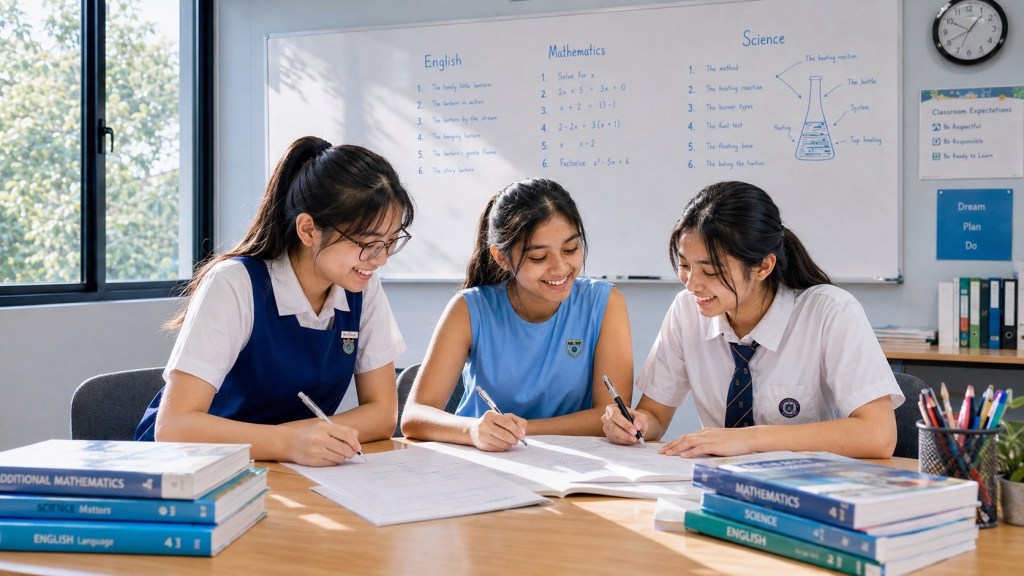
At eduKate Sengkang, situational writing is taught in small groups of up to three students. That lets the tutor observe planning before the final script hides the decisions. One learner may miss content points, another may include everything but sound abrupt, and a third may write fluent paragraphs that never make the requested recommendation. The teaching begins with the communication job, not with a memorised opening line.
The One-Sentence Goal
Strong situational writing gives the right reader the right information, in the right order and tone, so the intended purpose can be achieved.
Situational Writing Is a Communication Problem
Students sometimes approach situational writing as a formatting exercise: remember the greeting, use a few formal phrases, include a closing and hope the rest takes care of itself. Format matters, but it sits around the deeper task.
Every situational-writing prompt contains a relationship. Someone is writing to someone else for a reason. The writer may need to request, persuade, explain, apologise, recommend, report, invite, complain, inform or respond.
The writing succeeds when the reader can tell:
- why the message has been sent;
- what information matters;
- what the writer wants or recommends;
- what the reader should do next;
- what relationship exists between writer and reader.
Five Questions Before Drafting
- Task: What am I being asked to produce?
- Audience: Who will read it?
- Purpose: What should the message achieve?
- Content: Which details must be included or transformed?
- Register: What level of formality, tone and relationship is appropriate?
These five questions are not a fixed examination formula. They are a planning lens that helps the learner understand the situation before writing.
What “Weak in Situational Writing” Can Actually Mean
| Visible problem | Possible first weak link | What we investigate |
|---|---|---|
| Several required points are missing | Task reading | Can the student identify every content requirement before drafting? |
| All points are present but the response feels mechanical | Transformation | Can source information be turned into natural prose for this reader? |
| Tone is too casual or too stiff | Register | Does the learner understand the relationship between writer and audience? |
| Message is long but purpose is unclear | Organisation | Are the points ordered around the reader’s needs? |
| Writer uses impressive language but sounds inappropriate | Style selection | Is vocabulary serving the task or displaying itself? |
| Opening and closing are memorised but body is weak | Task ownership | Has the student learned a communication process or only a format shell? |
| Student writes well in practice but misses requirements under time pressure | Planning control | Can the learner convert the prompt into a fast checklist before drafting? |
Task Fulfilment: The Hidden Engine
Situational writing is unusually unforgiving of omission. If the prompt asks the writer to explain two reasons, recommend one option and state a next step, a response that covers only the recommendation may be linguistically strong but functionally incomplete.
We teach students to convert the prompt into visible obligations before writing. A margin plan may contain:
- reason 1;
- reason 2;
- recommendation;
- supporting detail;
- action requested;
- deadline or condition if supplied.
The student then checks each obligation once it has been satisfied. This is different from copying the prompt. The purpose is to prevent elegant omission.
Audience Changes Language
Writing to a close friend, a teacher, a principal, a community organisation or an unfamiliar adult creates different expectations. The factual content may remain similar while the language changes.
Compare:
“Can you send me the details by tonight?”
“Could you please send me the details by this evening so that I can finalise the registration?”
The second version is not “better English” in every situation. It is more suitable when the relationship requires greater formality and explanation.
Register Is a Range, Not a Switch
Students sometimes divide language into only “formal” and “informal”. Real register is more flexible. A message to a familiar teacher may be polite and respectful without sounding like a legal document. A report can be formal without becoming pompous. A speech may be public-facing yet still conversational.
We ask students to control:
- greeting and address;
- sentence length;
- directness of requests;
- contractions;
- slang and colloquial language;
- level of explanation;
- degree of personal warmth;
- closing and next-step language.
Purpose Decides What Comes First
Organisation should follow the communication job. A complaint may begin by identifying the incident clearly. A recommendation may state the preferred option early and then justify it. An invitation may give the event and reason before logistical details. A report may organise findings by category.
This is more useful than memorising one universal paragraph order.
Source Material Must Be Transformed
Situational-writing tasks often provide notes, posters, messages, tables, schedules or other source material. The writer needs to use that information accurately without sounding as though the source has simply been copied line by line.
Transformation may involve:
- changing fragments into complete sentences;
- combining related details;
- changing pronouns and perspective;
- explaining why a detail matters to the reader;
- reordering information for clarity;
- adjusting tense or time reference;
- selecting only information relevant to the task.
The factual meaning must remain stable even while the wording changes.
Worked Example: Recommend an Activity
Imagine a student must write to a teacher recommending one of two class activities. The source material shows that Activity A costs less and is near school, while Activity B offers a more unusual experience but requires longer travel.
A weak response may list all the facts about both activities without deciding. Another may say “I recommend Activity B because it is more fun,” ignoring the practical details.
A stronger response makes the communication purpose visible:
I recommend Activity A because it is easier for the class to attend and costs less per student. Since it is located near school, less time would be spent travelling, leaving more time for the activity itself.
The answer selects details that support the recommendation. It does not merely repeat every line of the source.
Content and Language Work Together
Students sometimes treat content and language as separate phases: first include the points, then make the language fancy. The two interact.
A precise connector can clarify the relationship between points. A well-placed explanation can make a recommendation more persuasive. A sentence that names the requested action clearly can improve both task fulfilment and readability.
Good language is language that helps the message do its job.
Tone: Respectful Does Not Mean Weak
Students sometimes soften requests until the purpose disappears, or become so direct that the message sounds rude.
Compare:
Too blunt: “Change the schedule because it is inconvenient.”
Too weak: “Perhaps there might possibly be a chance that the schedule could maybe be reconsidered.”
Controlled: “Could the schedule be reconsidered? The current timing clashes with the school dismissal time for several participants.”
The controlled version is clear about the request while explaining the reason.
Format: Necessary but Not Sufficient
Students should know the conventions required for the form they are asked to produce. Depending on the task, this may include an email, letter, report, speech, article or another school-based format.
But formatting does not rescue a message that misses the purpose. We teach format as the container after the communication job is understood.
Openings Should Orient the Reader Quickly
A good opening helps the reader understand why the message exists.
Instead of beginning every task with “I am writing this email to…”, the student learns several natural options:
- state the purpose directly;
- refer to the relevant event or request;
- thank the reader where appropriate;
- identify the issue being reported;
- announce the recommendation or invitation.
The choice depends on audience and purpose.
Closings Should Complete the Transaction
Weak situational writing often fades out after the final content point. A strong closing clarifies the next step, expresses appropriate appreciation or reinforces the purpose.
Examples of closing jobs include:
- requesting a reply;
- confirming a deadline;
- thanking the reader;
- expressing hope for consideration;
- restating willingness to assist;
- ending a speech with a clear call to action.
Grammar: Control the Structures the Task Uses
Situational writing often requires accurate control over requests, recommendations, reasons, conditions and future actions. That means grammar is not a separate worksheet topic; it is part of the communication.
Useful structures include:
- modal verbs for requests and suggestions;
- conditionals for consequences;
- relative clauses for compact detail;
- cause-and-effect connectors;
- accurate tense when reporting an incident;
- parallel structure when listing recommendations.
We repair the grammar that limits the task rather than interrupting every draft with unrelated exercises.
Editing: Check the Communication Before the Commas
Students often begin editing with spelling. We prefer a hierarchy.
- Have I fulfilled every task requirement?
- Is the purpose clear?
- Is the tone appropriate for the audience?
- Are the points in a logical order?
- Have I transformed the source accurately?
- Are sentences clear and grammatically controlled?
- Are spelling and punctuation accurate?
There is little value correcting commas in a paragraph that fails the task.
Why Three Students Can Work Well for Situational Writing
The same prompt can produce several valid responses. In a group of three, students can compare how different choices affect the reader.
- One learner may choose a very direct opening.
- Another may organise around chronology.
- A third may group information by importance.
The tutor can ask which structure best serves the purpose rather than declaring one model answer to be universally correct.
Because the group is small, every student still plans and writes independently. Peer comparison is used to sharpen judgement, not replace individual work.
A Practical Lesson Sequence
- Decode the task: identify writer, reader, purpose and required content.
- Extract: mark the source details that matter.
- Transform: decide how each detail should be expressed for this audience.
- Order: arrange points around the communication purpose.
- Set register: choose the appropriate level of formality and tone.
- Draft: write without overloading the first version with editing.
- Review content: confirm task fulfilment.
- Review language: improve clarity, grammar and cohesion.
- Transfer: repeat the same communication skill with a different format or audience.
Correction Categories We Use
- missed task requirement;
- wrong audience assumption;
- purpose unclear;
- register mismatch;
- source information copied mechanically;
- important detail omitted;
- unnecessary detail included;
- request or recommendation not explicit;
- organisation follows source order rather than reader need;
- grammar interferes with clarity;
- format convention missing;
- closing fails to state the next step.
What Progress Looks Like
- The student annotates the prompt before drafting.
- Required content points are missed less often.
- Source material is transformed more naturally.
- Tone matches the audience more consistently.
- Openings become purposeful rather than formulaic.
- Paragraph order becomes easier for the reader to follow.
- Requests, explanations and recommendations are more explicit.
- Vocabulary becomes appropriate rather than decorative.
- Editing begins with task fulfilment before surface errors.
- The learner needs fewer tutor prompts to plan a new situation.
Secondary 1–4: The Communication Load Increases
Secondary 1: Learn the relationship between task and reader
Students consolidate basic email, letter and school communication conventions while learning that tone changes with audience and purpose.
Secondary 2: Improve transformation and organisation
Source material becomes denser and students need better control over selecting, reordering and paraphrasing information.
Secondary 3: Handle more complex purposes
Tasks increasingly reward judgement: recommending, explaining, reporting and persuading with a clearer awareness of audience needs.
Secondary 4: Integrate under time pressure
The student must read quickly without missing requirements, plan efficiently and control content and language under examination conditions.
Frequently Asked Questions
Should students memorise openings and closings?
A few adaptable patterns can reduce hesitation, but fixed lines should not override purpose or audience. Students need to know what the opening and closing are trying to achieve.
Is format the most important part?
Format is important, but task fulfilment, audience, purpose, content and language all matter. Correct formatting cannot compensate for missing the communication job.
How formal should the language be?
That depends on the relationship and purpose. We teach register as a range so the student can sound appropriately respectful without becoming artificial.
What if my child includes all the points but still scores weakly?
The issue may be transformation, organisation, tone or language control. Content coverage is necessary but not the entire writing performance.
How do you teach tone?
We compare versions of the same message written for different audiences and ask what changes: directness, vocabulary, explanation, greeting, request form and closing.
Can students use memorised phrases?
Reusable language chunks are helpful when they fit naturally. We discourage inserting impressive phrases that do not match the situation.
What should parents bring to a consultation?
A recent situational-writing script with the original task is ideal. The task allows us to see whether the problem is omission, audience awareness, transformation, organisation or language.
The Best Situational Writing Feels Useful
Situational writing becomes easier to control when students stop treating it as a miniature essay and start treating it as real communication. The reader has a need. The writer has a purpose. The information has to be selected and shaped so the message works.
That is the capability we build at eduKate Sengkang: not merely remembering formats, but understanding the task well enough to make good language decisions under new conditions.
Continue through English Tuition Sengkang, the Secondary English Learning Hub, or the Sengkang tuition enquiry process.
