
The Tutor Handbook · Volume 0058 · Series ID THB-0058
The learner has recovered.
That is not the end of the story.
It is the first moment in several weeks when the story becomes safe to change again.
Alicia’s shorter checking routine is reliable again. The seven-step version was too slow; the three-check version has restored accuracy without destroying paper completion.
Beatrice can organise paragraphs again without forcing every idea into the same visible frame. The rigid scaffold is gone, but the deeper question remains: how does she keep structure when the writing job changes?
Denise has recovered stable Additional Mathematics accuracy under moderate timing. The full-paper pressure that caused sign and method-selection errors has been removed. She still needs to become faster under realistic examination conditions.
Emily’s rolling three-day study plan is functioning again. Work is being completed. Backlog is visible. Sleep is protected. Yet the old plan still becomes fragile during the heaviest school weeks.
Faith has regained independent starts under one light prompt. The rollback worked. The original goal remains unchanged: she should eventually begin unfamiliar work without needing that prompt.
The tutor now faces a different kind of responsibility.
Do not rush back into the failed route.
Do not stay forever in the recovered state merely because it feels safe.
A Rebuild is the deliberate design of the next forward learning route from a verified stable base, using the evidence produced by the failed change to alter the mechanism, dose, sequence, support or operating conditions before the learner approaches the unresolved problem again.
The previous volume, The Tutor Handbook Vol No.0057 | The Recovery Check, asked whether rollback had restored the learner’s important stable functions strongly enough for another forward decision to become interpretable.
This volume owns the next move:
How do we solve the problem that still remains without rebuilding the exact route that already failed?
Quick Read
- A Rebuild begins only after the base has been verified as stable enough to change again.
- The goal is not to recreate the failed route more carefully. The goal is to solve the unresolved problem using better evidence.
- Start from the recovered state and name the exact limitation that still remains.
- Preserve every stable gain from both the original route and the failed route.
- Change the smallest mechanism that could plausibly solve the remaining problem.
- Do not reintroduce all failed variables at once.
- Separate mechanism, dose, sequence and support level. A route can fail because any one of those was wrong even when the underlying idea was sound.
- Build from one verified state to one next testable state.
- A Rebuild should be easier to interpret than the failed change that preceded it.
- The new version should state what is deliberately different from the failed version.
- Keep the old failure evidence visible so the same design error does not return under a new name.
- Use the Learning Budget: a rebuild must retire, reduce or replace something rather than simply add more work.
- Protect learner ownership. A rebuild that improves output by moving more control to the tutor may be solving the wrong problem.
- Reintroduce pressure gradually: time, variation, unfamiliarity, independence and workload do not all need to return at once.
- Learning, studying, training, education and improvement require different rebuild designs.
- Class 0 to Class 6 tutors rebuild different layers of the learning system.
- Repair, Alignment and Frontier work each have distinct rebuild risks.
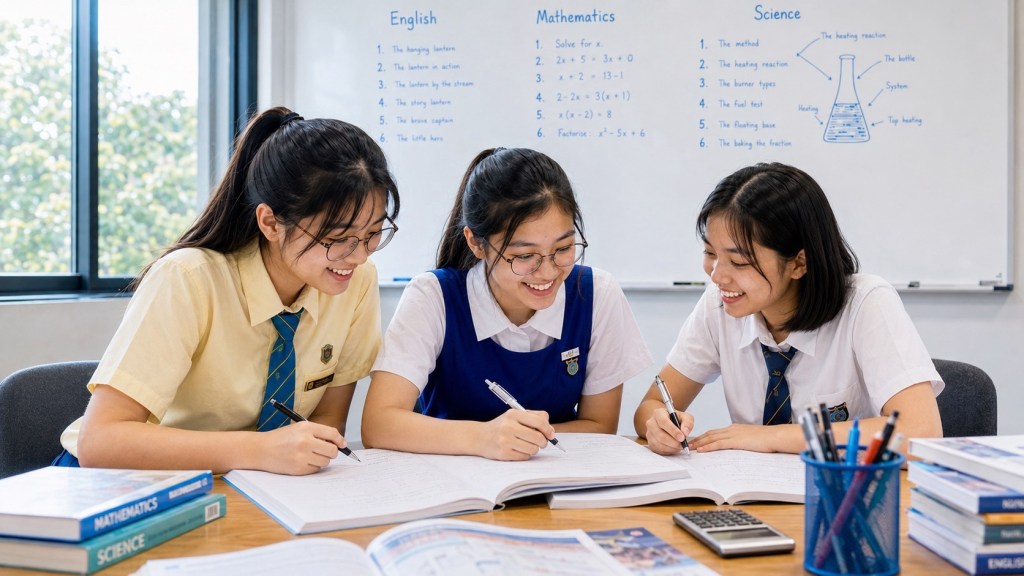
- Three-student tutorials give useful evidence because the tutor’s moving attention exposes whether the rebuilt route can operate without continuous rescue.
- A rebuild should lead naturally into a new Trial Run rather than immediate permanent adoption.
- The final question is not “What new method should we try?” It is “What did the failed version teach us about the unresolved problem, and what is the smallest better-designed next version worth testing?”
1. What This Volume Owns
This volume owns tutor-side redesign after a failed learning-route change has been rolled back and recovery has been verified.
The learner is no longer in immediate instability.
The tutor is no longer asking, “How do we get back to something that works?”
The tutor is asking, “How do we move forward differently?”
The Rebuild therefore sits between recovery and the next controlled trial. It converts failure into design information.
2. What This Volume Does Not Own
The Tutor Handbook Vol No.0030 | The Second Repair owns a reopened weak link after maintenance has failed and asks how to repair that weak link again without blindly repeating the original intervention.
Volume 0031 | The New Baseline owns how repeated repair changes the learner model.
Volume 0005 | Route Designer owns the general sequencing function.
The Trial Run owns the bounded test after a candidate rebuild has been designed.
The Rebuild owns the design problem in between:
What should Version 2 of the forward route look like after Version 1 taught us why it failed?
3. Recovery Is a Platform, Not a Destination
Recovery feels good because uncertainty falls.
The learner is working again.
The lesson is calmer.
The parent can see order.
The temptation is to preserve the recovered state indefinitely.
But the earlier state was usually only known good, not complete.
Something still motivated the original change.
Denise was accurate but too slow. Emily’s plan was usable but fragile under peak weeks. Faith could begin with a light prompt but still did not fully own initiation.
A stable platform exists so the unresolved problem can be approached again without compounding instability.
4. Reconstruct the Original Unresolved Problem
Before designing anything new, recover the reason change was attempted.
Not the failed intervention.
The problem.
“We tried more timing” is not the problem.
“Denise cannot complete representative papers despite stable untimed knowledge” is the problem.
“We tried a paragraph frame” is not the problem.
“Beatrice needs reliable idea organisation across changing writing tasks” is the problem.
Rebuild the route around the unresolved learner need, not around the memory of the failed tool.
5. Failure Is Information About Design
A failed intervention does not only say “this did not work”.
It can say:
- the dose was too large;
- the sequence was premature;
- the support was too strong or too weak;
- the task demand was introduced too quickly;
- the target was misidentified;
- the intervention solved one layer and exposed another;
- the route worked only under tutor control;
- the learner could perform the method but not select it;
- the system cost exceeded the benefit;
- the real problem belongs to a different tutor function.
The Rebuild begins by translating failure from disappointment into design evidence.
6. The Rebuild Question
Given the recovered stable state and the failure evidence, what is the smallest forward change that addresses the unresolved problem while avoiding the failure mechanism we have already seen?
That question prevents two common errors.
First, repeating the failed intervention with more intensity.
Second, replacing it with an unrelated new idea simply because novelty feels hopeful.
7. The Rebuild Equation
Verified Stable Base + Unresolved Problem + Preserved Failure Evidence + One Deliberate Design Change + Bounded Cost + Testable Receipt + Rollback Path = Rebuild Candidate.
This is deliberately stricter than “try something else”.
A rebuild should have memory.
It should know what it is changing from, what it is trying to solve, which earlier design error it refuses to repeat, what evidence will matter, and how it will retreat if the new version becomes unstable again.
8. Build From the Stable Base, Not From Zero
The recovered route already contains working parts.
Keep them.
If Alicia’s three-check routine is stable, do not replace it while trying to improve paper speed.
If Emily’s rolling three-day plan works under ordinary weeks, do not rebuild the whole planning system merely because peak weeks remain weak.
If Faith’s light prompt restores starts, keep that support condition stable while testing one new step toward self-initiation.
The stable base reduces the number of variables the tutor is changing.
9. Preserve Positive Residue From the Failed Route
A failed route can still leave useful capability behind.
Denise’s heavy timing block may have improved her awareness of paper checkpoints.
Beatrice’s rigid paragraph frame may have taught her to distinguish claim from evidence.
Emily’s oversized dashboard may have revealed which repeated weak links actually deserve weekly attention.
The Rebuild should keep these stable gains where they can be retained cheaply.
Failure should make the next version smarter, not merely different.
10. Separate Mechanism From Implementation
An idea can be sound and the implementation wrong.
Mixed practice can be useful, but it can arrive before component execution is stable.
Timed practice can be useful, but the time pressure can increase too fast.
A planning scaffold can be useful, but the visible frame can become too rigid.
Prompt fading can be useful, but the fade can remove more support than the learner has replaced with internal control.
The Rebuild asks whether the mechanism should be abandoned or the implementation should be redesigned.
11. Change the Dose Before Abandoning the Mechanism
A correct mechanism at the wrong dose can look like the wrong mechanism.
Denise may still need timing.
She may not need full-paper timing yet.
Faith may still need fading.
She may need one prompt removed at a time rather than the entire scaffold disappearing at once.
Emily may still need adaptive planning.
She may need one buffer rule rather than an entire dashboard.
Dose is often the first rebuild variable because it changes intensity without changing the educational purpose.
12. Change the Sequence When the Right Work Arrived at the Wrong Time
Some routes fail because the learner was asked to do the right thing too early.
Mixed selection before execution.
Full-paper timing before section timing.
Independent planning before the learner can estimate workload.
Open-ended writing before the learner can hold the relationship between point and evidence.
A sequence rebuild preserves the end goal but inserts the missing bridge.
13. Change the Support Level When Control Moved to the Wrong Owner
A route can produce better output while moving control away from the learner.
The tutor chooses every task.
The parent checks every deadline.
The checklist carries every decision.
The AI tool selects every structure.
The Rebuild should identify which operation needs to return to the learner and design the next version around that ownership transfer.
14. Change the Representation When Meaning Was Lost
A learner may understand a concept in one representation and lose it in another.
The failed route may have moved too quickly from concrete relation to compressed notation, from diagram to formula, or from verbal explanation to symbolic procedure.
The Rebuild does not simply return to the easiest representation.
It builds a bridge between the representation that carries meaning and the representation the learner must ultimately use.
15. Change the Feedback Timing When Correction Replaced Thinking
Immediate correction can make a lesson look efficient.
It can also remove the learner’s opportunity to detect and repair.
If the failed route created dependence on instant tutor confirmation, the rebuild may delay feedback by one step: learner commits, checks, explains, then receives feedback.
The mechanism remains support.
The implementation now protects self-monitoring.
16. Change the Task Grain When the Intervention Was Too Large
Full papers are expensive.
Whole essays are expensive.
Complete weekly systems are expensive.
When a large intervention failed, shrink the task to the smallest unit that still contains the target decision.
One timed section instead of a full paper.
One paragraph instead of a full composition.
One busy-day planning decision instead of redesigning the whole week.
Smaller grain produces faster, cleaner evidence.
17. Change One Important Variable at a Time
The learner has just recovered from a failed change.
This is not the moment for a five-variable redesign.
If timing intensity changes, keep the checking routine stable.
If the paragraph scaffold changes, keep topic difficulty reasonable.
If the study buffer changes, keep the priority method stable.
Education is not a laboratory, but interpretability still matters.
The tutor should not rebuild uncertainty faster than the learner can produce evidence.
18. Write the Difference Between Version 1 and Version 2
A rebuild should be able to state its delta.
Version 1 failed because full-paper timing increased pressure across too many decisions at once. Version 2 keeps moderate timing, adds one late-paper section and holds sign checking constant.
Or:
Version 1 used a visible paragraph template on every task. Version 2 keeps only two planning questions and varies paragraph shape across unlike prompts.
If the tutor cannot state what Version 2 deliberately changes, it may simply be Version 1 with new materials.
19. Define the New Primary Receipt
The rebuild should predict one visible learner change.
Not “this should work better”.
Something inspectable.
- Completion rises while sign errors remain inside the recovered baseline.
- Paragraph organisation remains clear across unlike prompts without the full template.
- Faith begins within ninety seconds after a smaller prompt and still chooses the first method herself.
- Emily absorbs one school disruption without rebuilding the whole weekly plan.
The receipt should measure the unresolved problem, not merely compliance with the new routine.
20. Define the Old Failure Signal Again
The failed route taught the tutor what danger looks like.
Use that information.
If sign errors were the failure signal, keep counting them.
If planning overhead was the failure signal, keep measuring time spent planning versus doing.
If prompt dependence was the failure signal, keep observing what happens when tutor attention moves away.
The rebuild should not discard the warning system simply because the design changed.
21. Add One New Failure Signal
A redesign can solve the old problem and create a new one.
Version 2 therefore needs one new nearby variable to watch.
A smaller prompt may preserve initiation but increase unproductive persistence.
A shorter writing frame may preserve flexibility but reduce evidence discipline.
A lighter timing dose may preserve accuracy but fail to create enough speed pressure to change paper completion.
Good rebuilds inherit old warnings and create new observability.
22. Keep a Rollback Path Before You Trial the Rebuild
The new route should not require another crisis before the tutor knows how to retreat.
Record the recovered stable state.
Record what is changing.
Record which deterioration signal would justify returning.
This is the practical connection to eduKateSG’s How Change Control Works | Stop Rebuilding the Learning Plan: preserve a baseline, limit simultaneous variables, observe the result, and keep the option to revise or roll back based on evidence.
23. The Learning Budget Must Fund the Rebuild
A rebuild is not free because it is smaller.
Every new practice block, reflection routine, transfer test or performance simulation consumes time and attention.
The Learning Budget asks what will become smaller so the rebuild can exist.
A stronger rebuild often retires part of the failed intervention first.
New work should replace low-value work before it stacks on top of a full system.
24. Limit Work in Progress
A learner recovering from one failed change should not become the site of four new improvement projects.
Rebuilding timing, study planning, vocabulary, note-taking and sleep routines simultaneously may feel comprehensive.
It creates a learner who is constantly adapting to the improvement system rather than learning the subject.
Keep active rebuilds few enough that each one can produce interpretable evidence.
25. Rebuild the Bottleneck, Not the Entire Estate
The tutor should ask which unresolved constraint now limits the learner.
If Denise’s knowledge is stable and timing is the bottleneck, rebuild performance conversion.
If Beatrice’s ideas are good and organisation fails only under open prompts, rebuild flexible planning.
If Emily’s ordinary weeks are stable and peak weeks fail, rebuild exception handling for workload spikes.
The rebuild is strongest when it targets the current constraint rather than rewarding the tutor for designing a bigger system.
26. Rebuild From Capability, Not From Materials
A new workbook is not a rebuild.
A new app is not a rebuild.
A new worksheet sequence is not a rebuild unless the tutor can explain which learner operation it is changing and why that operation matters now.
Materials are tools.
The Rebuild is a change in the learning route.
27. Rebuild After Excessive Intensity
Version 1 may have been correct in direction and excessive in intensity.
Four timed sections become one.
Nightly parent monitoring becomes a twice-weekly audit.
A seven-step check becomes three high-risk checks.
A full weekly diagnostic review becomes one targeted probe.
The rebuild preserves direction while reducing intervention cost.
28. Rebuild After Premature Difficulty
The learner may have been asked to carry a harder condition before the prerequisite control was ready.
The rebuild inserts an intermediate stage.
- same method, slightly changed surface;
- two method families before five;
- moderate timing before full timing;
- partial planning cue before no cue;
- one independent decision before a whole learner-owned study plan.
Difficulty should increase along the dimension the learner is actually ready to train.
29. Rebuild After Excessive Support
The failed route may have succeeded too well at making work easy.
Prompts arrive before uncertainty develops.
Templates decide structure.
Answer keys settle disputes immediately.
The rebuild should protect the learner’s next decision by removing support exactly where learner control needs to grow.
Do not remove every support. Remove the support that is carrying the target operation.
30. Rebuild After Insufficient Support
The opposite failure exists.
The tutor asks for independence before the learner has enough structure to make a meaningful attempt.
The learner guesses, freezes or rehearses error.
The rebuild adds the smallest support that restores productive thinking: one representation, one cue, one worked contrast, one prompt to state the task.
Support is not dependence when it creates a route toward less support.
31. Rebuild After a Wrong Causal Story
Sometimes Version 1 failed because the tutor targeted the wrong mechanism.
More drill was prescribed for a selection problem.
More explanation was prescribed for a retrieval problem.
More timing was prescribed for a prerequisite failure.
The Rebuild should not preserve the old intervention merely because it was well implemented.
If the causal claim changed, return to the Differential and rebuild from the corrected cause.
32. Rebuild After a Scope Error
A tutoring route can fail because it was trying to own a problem tuition should not own.
In that case the Rebuild may actually be smaller.
Return the academic part to tuition.
Coordinate the broader concern with the responsible adult, school or qualified professional as appropriate.
The Scope Boundary protects the rebuild from becoming a larger version of the original overreach.
33. Rebuild After Measurement Distortion
Sometimes the route looked successful because the measure became easier.
Same question family.
Same wording.
Same tutor cue.
Same answer structure.
The rebuild should include a more honest evidence condition: fresh tasks, changed surfaces, delayed return or reduced support.
Do not rebuild the learner around a metric that accidentally measured familiarity with the intervention.
34. Rebuild After Overfitting to the Tutor
The learner performs beautifully with one tutor and poorly elsewhere.
The tutor may be carrying hidden signals: phrasing, pauses, question order, facial reactions and familiar examples.
The rebuild changes conditions deliberately.
Use fresh materials.
Reduce pre-framing.
Let the learner work while tutor attention moves elsewhere.
The goal is to move useful structure from the relationship into the learner.
35. Learning Rebuild
Learning concerns understanding, retrieval, representation and reasoning.
A learning rebuild begins from the recovered cognitive operation and changes only the layer that prevents the next step.
If understanding is stable but retrieval is weak, rebuild retrieval.
If retrieval is stable but selection is weak, rebuild discrimination.
If selection is stable but transfer fails, rebuild variation.
Learning rebuilds move from one verified capability boundary to the next.
36. Studying Rebuild
Studying concerns planning, allocation, retrieval, resources and self-management across real days.
A studying rebuild should not aim for the prettiest system.
It should aim for the smallest system that survives the learner’s real week.
If ordinary weeks are stable and peak weeks fail, rebuild only the peak-week rule.
If the learner plans well but cannot reprioritise, rebuild replanning rather than planning from zero.
Studying rebuilds should reduce administrative overhead as capability grows.
37. Training Rebuild
Training concerns reliability under repetition, variation, delay and pressure.
A training rebuild changes one load variable at a time.
Accuracy is stable?
Add variation.
Variation is stable?
Add delay.
Delay is stable?
Add moderate pressure.
Training rebuilds protect the core operation while increasing realism in controlled layers.
38. Education Rebuild
Education places the learner inside curricula, school stages, examinations and institutional constraints.
An education rebuild must fit the actual calendar.
A perfect long-term repair that leaves the learner unable to participate in current school is not yet a good route.
A pure exam strategy that preserves this month and weakens next term is also incomplete.
Education rebuild balances current operability, prerequisite repair and future runway.
39. Improvement Rebuild
Improvement is the whole loop from observation through diagnosis, prioritisation, repair, practice, connection, performance and review.
A rebuild should repair the transition that failed inside that loop.
Diagnosis was correct but practice did not transfer?
Rebuild the connection stage.
Practice was strong but examination output collapsed?
Rebuild performance conversion.
Feedback never changed the next attempt?
Rebuild review-to-action.
Improvement rebuild is often about repairing interfaces between stages rather than adding more activity inside one stage.
40. Class 0 · Homework Helper Rebuild
Class 0 works nearest to task flow and routine.
A failed organisational system often became too elaborate or too adult-owned.
The rebuild should simplify:
- one capture location;
- one priority rule;
- one start routine;
- one finish check.
Class 0 rebuild rule: make the routine easier to operate without making the adult more necessary.
41. Class 1 · Explainer Rebuild
The Explainer rebuilds access to meaning.
If the failed explanation was too abstract, add a representation.
If it was too long, compress the relation.
If it produced recognition without reconstruction, reduce tutor talk and increase learner explanation.
Class 1 rebuild rule: change the explanation until the learner can generate the relation, not until the tutor can say it more beautifully.
42. Class 2 · Drill Builder Rebuild
The Drill Builder rebuilds reliability.
Ask which training variable failed:
- volume;
- spacing;
- variation;
- retrieval;
- speed;
- feedback;
- method selection.
Class 2 rebuild rule: change the training condition that failed while preserving every component already reliable.
43. Class 3 · Diagnostic Tutor Rebuild
The Diagnostic Tutor rebuilds the learner model when the previous causal story cannot carry the evidence.
Do not defend the old hypothesis by inventing more exceptions.
List the disconfirming evidence.
Separate what the old hypothesis still explains from what it does not.
Class 3 rebuild rule: improve the explanatory model before improving the intervention.
44. Class 4 · Route Designer Rebuild
The Route Designer rebuilds sequence.
The failed route may have put the right work in the wrong order, allocated too much capacity to one lane or disconnected repair from school reality.
Class 4 rebuild rule: change sequence only where the failure evidence shows the old transition was unstable.
The rest of the route should remain recognisable.
45. Class 5 · Performance Coach Rebuild
The Performance Coach rebuilds the bridge between available capability and reliable output under pressure.
Time, paper length, uncertainty, recovery and checking can be varied separately.
Class 5 rebuild rule: add realism in the smallest layer that reproduces the real performance problem without unnecessarily destabilising the rest of the learner.
46. Class 6 · Learning Architect Rebuild
The Learning Architect rebuilds interacting systems.
This makes subtraction essential.
Which parts of the old architecture remain stable?
Which interface actually failed?
What complexity can remain absent?
Class 6 rebuild rule: restore coherence before adding sophistication.
A Learning Architect should design fewer moving parts after a failure, not more.
47. The Tutor Classification Model Is a Rebuild Map
The wider Tutor Classification Model by eduKateSG separates Class 0 Homework Helper through Class 6 Learning Architect.
A failed route may show that the wrong tutor function was dominant.
A Class 2 drill rebuild may reveal a Class 3 diagnostic problem.
A Class 1 explanation rebuild may reveal that explanation is already sufficient and Class 5 performance conversion is now the real job.
Reclassification is sometimes the rebuild.
48. Repair Mode Rebuild
eduKateSG’s Three Modes of Tuition distinguish Repair, Alignment and Frontier work.
Repair Mode rebuild asks whether the weak link was targeted at the correct depth and whether the repair can now reconnect to current work.
A failed repair may need a different representation, smaller grain, stronger prerequisite or different practice condition.
Repair rebuild rule: change the repair mechanism, not the learner’s entire route, unless the evidence demands it.
49. Alignment Mode Rebuild
Alignment Mode rebuild asks whether tuition is helping the learner travel with school or quietly creating a second operating system.
If a new route became too detached from current school demands, rebuild the bridge.
Keep enough repair to solve the bottleneck.
Keep enough current work to preserve participation.
Alignment rebuild rule: the learner should need less translation between tuition and school as the route improves.
50. Frontier Mode Rebuild
Frontier Mode rebuild asks whether extension is developing transferable capability or merely increasing difficulty.
If advanced work destabilised the core, rebuild with smaller stretch, wider transfer or a lower frequency.
Frontier rebuild rule: challenge should extend a strong system, not consume the capacity that keeps the system strong.
51. Three-Student Tutorials Are Strong Rebuild Environments
A three-student tutorial naturally creates alternating attention.
This makes rebuild evidence cheaper.
The tutor can introduce one new route, then turn to another learner and observe whether the first student continues.
The rebuild can therefore test both capability and independence without manufacturing an artificial test environment.
Small groups are especially useful when the design question concerns prompting, initiation, checking or self-correction.
52. Shared Lesson, Different Rebuilds
Alicia can rebuild timing.
Beatrice can rebuild writing flexibility.
Ciara can rebuild transfer.
All three can share parts of one lesson.
Group teaching does not require one group-level change when the failure mechanism is learner-specific.
The rebuild should follow evidence, not classroom convenience.
53. One-to-One Tutoring Needs Deliberate Constraint
One-to-one tutoring makes redesign easy because every variable can be customised instantly.
That is also the danger.
The tutor can change explanation, difficulty, prompt timing, question type and checking routine inside one problem.
Rebuild discipline requires holding most variables steady long enough to learn from the one being redesigned.
54. Alicia · Mathematics: Rebuild Speed Without Rebuilding Checking
Alicia’s three-check routine is recovered and reliable.
Her unresolved problem is speed.
Version 1 tried to solve both speed and accuracy with a longer checklist.
Version 2 keeps the three-check routine unchanged and rebuilds speed elsewhere.
The tutor chooses short routine sections where method selection is already stable and sets moderate time targets.
Primary receipt: completion improves.
Inherited failure signal: sign, unit and copied-value error rate must remain inside the recovered baseline.
The rebuild protects the checking mechanism while training a different bottleneck.
55. Beatrice · English: Rebuild Flexible Structure
Beatrice’s recovered state is two planning questions rather than a rigid four-line frame.
The unresolved problem is reliability across changing prompts.
The rebuild does not add a new template.
Instead, Beatrice compares two unlike paragraphs and identifies what remains invariant: each paragraph must establish something, develop it with relevant material and make the relationship clear to the reader.
Then the surface changes.
The rebuild trains principle selection rather than template completion.
56. Ciara · Science: Rebuild the Link Between Mechanism and Language
Ciara recovered causal reconstruction after model-answer dependence became too strong.
The unresolved problem is precision under examination wording.
Version 1 put model language before reasoning.
Version 2 reverses the order.
- reconstruct mechanism;
- identify required relation;
- choose precise scientific language;
- check whether wording still matches the changed condition.
The rebuild keeps useful language without allowing language to become the mechanism.
57. Denise · Additional Mathematics: Rebuild Full-Paper Timing in Layers
Denise has recovered stable accuracy under moderate timed sections.
The unresolved problem is endurance and whole-paper allocation.
Version 1 jumped from short sets to repeated full-paper timing.
Version 2 adds only one new layer: a longer mixed section with a planned checkpoint.
Accuracy, method selection and completion are tracked separately.
If those remain stable, the next Trial Run can add another section.
The rebuild treats full-paper performance as an integration ladder rather than a cliff.
58. Emily · Studying: Rebuild Peak-Week Resilience
Emily’s rolling three-day plan is recovered.
The unresolved problem is peak-week variance.
Version 1 added a dashboard with too many controls.
Version 2 adds one rule only:
When a new task enters the week, something of equal or lower value must move, shrink or leave.
The tutor does not rebuild the planner.
The tutor rebuilds the reallocation decision.
59. Faith · Independence: Rebuild the Fade as a Ladder
Faith recovered under one light prompt:
State the task in your own words.
The unresolved problem is self-initiation.
Version 1 removed the prompt completely.
Version 2 changes the prompt from tutor-owned to learner-owned.
Faith receives a small card with the question printed on it for one week, then the card disappears and she is expected to ask herself the same question silently.
The rebuild preserves the cognitive cue while transferring who initiates it.
60. Parent Communication: Explain What Is Different This Time
A parent should not hear, “We are trying again.”
That sounds like repetition.
A stronger explanation is:
The earlier change taught us that the goal was right but the route was too large. Your child has recovered the stable base. We are now testing a smaller version that changes only one variable, keeps the recovered routine intact and watches the exact error that increased last time.
This makes the rebuild traceable.
61. Learner Communication: Failure Becomes Design Knowledge
Learners can interpret rollback as “I could not do it”.
The rebuild should change that story.
The first version asked you to carry too much at once. We learned exactly where it broke. This version keeps what you can already do, changes one part and gives us a cleaner way to see whether the next step is right.
The learner becomes a participant in system improvement rather than the object of repeated adult experiments.
62. School Coordination: Rebuild Around the Real Environment
A route may fail because tuition designed for an imagined environment rather than the school environment the learner actually faces.
Check current task formats.
Check assessment timing.
Check the school sequence.
Check whether a notation, rubric or response convention matters.
The rebuild should help the learner operate in the real system without allowing tuition to become a competing institution.
63. AI and Digital Tools: Rebuild the Ownership Boundary
Digital tools can improve output faster than learner capability.
If a tool became too involved, the rebuild should define the learner operation first.
The tool may clarify background knowledge.
The learner still selects the argument.
The tool may generate practice.
The learner still solves and checks.
The tool may critique a draft.
The learner still decides what revision is justified.
The rebuild should make the ownership boundary explicit before the tool returns.
64. The Rebuild Record
- Recovered base: What state has been verified as stable?
- Unresolved problem: What still prevents the learner from meeting the next demand?
- Failed Version 1: What was tried?
- Failure evidence: What became unstable?
- Useful residue: What capability from Version 1 should remain?
- Design diagnosis: Was the problem mechanism, dose, sequence, support, representation, timing or scope?
- Version 2 delta: What exactly will change this time?
- Preserved conditions: What stays stable?
- Primary receipt: What should improve?
- Inherited failure signal: What must not deteriorate again?
- New nearby signal: What new side effect should be watched?
- Learning Budget: What becomes smaller or stops?
- Rollback point: What stable state remains available if Version 2 fails?
- Trial condition: How long or under what evidence window will Version 2 be tested?
65. The Thirty-Second Rebuild Question
What still needs solving, what exactly failed last time, what will stay stable, what one thing will change, and what evidence would make this version worth keeping?
That question is enough for many ordinary tutoring rebuilds.
66. The Rebuild Should Feed the Trial Run
The Rebuild designs.
The Trial Run tests.
Do not merge those jobs.
A beautifully reasoned rebuild is still a hypothesis until the learner produces evidence under it.
The natural sequence is:
Recover → Rebuild → Trial → Review → Adopt, modify or roll back.
67. The Rebuild and the Adoption Gate
Do not adopt Version 2 merely because Version 1 failed.
Version 2 earns adoption through evidence.
The Adoption Gate still asks whether the trial result survives enough variation, delay, support reduction and cost scrutiny to become normal practice.
Rebuild quality improves the trial.
It does not replace it.
68. The Rebuild and the Drift Check
A rebuilt route can drift too.
Moderate timing slowly becomes full timing.
A light prompt becomes a tutor explanation.
Two planning questions become a new four-step template.
The Drift Check should therefore compare the enacted Version 2 with the Version 2 that was actually designed.
69. The Rebuild and the Temporary Override
A rebuild should survive ordinary variation without constant exceptions.
If Version 2 immediately needs repeated overrides, that is evidence.
One exceptional school week may justify a Temporary Override.
Repeated overrides may mean the rebuild itself is too brittle.
70. The Rebuild and Rollback
Rollback remains available.
That is not pessimism.
It is what allows the tutor to test forward changes without turning every experiment into a permanent commitment.
The recovered base should remain understandable until Version 2 has earned enough evidence to replace it.
71. The Rebuild and the Recovery Check
Recovery Check answered:
Is the base stable enough to change?
The Rebuild answers:
What should the next change be?
If recovery is still uncertain, rebuild is premature.
If recovery is verified, the tutor can make one forward change without stacking new uncertainty on top of old instability.
72. The Rebuild and the Stability Window
Once Version 2 begins, it needs enough stability to generate evidence.
Do not redesign Version 2 after one ordinary error.
Do not protect Version 2 after clear stop conditions are crossed.
The Stability Window governs how long the rebuilt route remains steady enough to be interpretable.
73. The Rebuild and the Decision Record
A rebuild deserves a clear decision record because hindsight will later simplify the story.
Record why Version 1 failed.
Record why Version 2 differs.
Record what evidence would justify keeping it.
Record what would trigger rollback.
This allows future tutors, parents and learners to distinguish iteration from random change.
74. Research Foundation: Monitor Progress So Teaching Can Change
The Australian Education Research Organisation’s Monitor Progress guidance emphasises using evidence about what students know and can do to adjust teaching, guidance and feedback.
The Rebuild is a practical tutor-side expression of that principle.
Evidence from the failed route should change the next design.
If teaching changes but the reasoning does not, the system has not really learned.
75. Research Foundation: Scaffolds Should Respond to Proficiency
AERO’s Scaffold Practice guide describes planned and responsive supports that are adjusted and gradually removed as learner proficiency develops.
This is directly useful in rebuild design.
If Version 1 removed support too quickly, Version 2 should not simply restore maximum support. It should restore the smallest support that makes productive learner work possible, then plan the next fade more carefully.
76. Research Foundation: Vary Practice to Build Adaptability
AERO’s Vary Practice guidance highlights varied and spaced opportunities that support adaptability across examples and contexts.
A rebuild should therefore distinguish variation from premature complexity.
Once the core operation is stable, variation becomes evidence and training.
Before the core operation is stable, uncontrolled variation can make the failure harder to interpret.
77. Research Foundation: Implementation Is Structured and Contextual
The Education Endowment Foundation’s A School’s Guide to Implementation emphasises that educational ideas need structured implementation inside real contexts rather than simply being selected because they sound promising.
The Tutor Handbook operates at a smaller scale, but the principle transfers.
A rebuild should specify the active idea, the local constraint, the implementation change and the evidence window.
“New method” is not enough.
78. Research Foundation: Self-Regulation Changes Who Owns the Route
The Education Endowment Foundation’s guidance on Metacognition and Self-Regulated Learning emphasises planning, monitoring and evaluating within subject learning.
A strong rebuild should therefore ask not only whether performance improves but whether more route control can gradually return to the learner.
The mature rebuild reduces the need for permanent adult architecture.
79. The Tutor’s Rebuild Checklist
- Has recovery been verified strongly enough to change the route again?
- What exact problem remains unresolved?
- What did Version 1 attempt to change?
- What evidence shows why Version 1 failed?
- Which parts of Version 1 produced genuine gains?
- Was the design failure mechanism, dose, sequence, support, representation, feedback timing, task grain, measurement or scope?
- What stable base will remain unchanged?
- What single design variable will Version 2 change first?
- What is the smallest testable version?
- What primary receipt should improve?
- What inherited failure signal must remain inside bounds?
- What new nearby capability should be watched?
- What work stops or shrinks so the rebuild fits the Learning Budget?
- Who owns the target operation during the new route?
- What support is temporary?
- What is the rollback point?
- How will Version 2 enter a Trial Run?
- What evidence would justify adoption, modification or rollback?
80. The Parent’s Rebuild Checklist
- What problem still remains after recovery?
- What did the previous change improve?
- What did the previous change damage or fail to solve?
- What is different about the new version?
- What is deliberately staying the same?
- How much extra time or attention will the rebuild consume?
- What will be removed so the learner is not overloaded?
- What result should appear if the new version is helping?
- What warning sign from the failed version is still being monitored?
- What happens if the rebuild fails too?
81. The Learner’s Rebuild Checklist
- What part of my learning is working again?
- What still needs to become better?
- What did the old new method teach me?
- What made that version difficult or unreliable?
- What will stay the same this time?
- What one thing will change?
- What am I still expected to do myself?
- What should I notice if the rebuild is working?
- What warning sign should I report if it returns?
- How will we decide whether this version deserves to stay?
82. What the Rebuild Is Not
- It is not starting from zero.
- It is not repeating the failed intervention with more effort.
- It is not chasing novelty.
- It is not changing every weak area at once.
- It is not adding work on top of a full Learning Budget.
- It is not redesigning the learner’s whole life because one tutoring layer failed.
- It is not proof that the original idea was completely wrong.
- It is not proof that the original idea was basically right.
- It is not the Trial Run; it designs the candidate that the Trial Run will test.
- It is not the Adoption Gate; adoption comes later.
- It is not a permanent safe state after rollback.
- It is not a reason to exceed tutoring scope.
- It is a forward redesign built from stable ground, preserved evidence and a clearer understanding of what failed.
83. The Ethical Standard
Failure creates temptation.
One temptation is pride:
Try the same route again. The learner simply needs more time.
Another temptation is novelty:
That method failed. Replace everything.
The professional tutor chooses neither reflex.
Preserve what is verified.
Preserve what the failure taught.
Name the unresolved problem.
Change only what the evidence justifies changing.
Keep the learner’s time protected.
Keep the learner’s control visible.
Keep a return path.
The ethical rebuild does not make the learner pay repeatedly for adult attachment to a method. It uses failure as information, preserves stable capability, redesigns the smallest necessary layer, and gives the next version a fair but bounded chance to earn its place.
Evidence and Connected Reading
- The Tutor Handbook Vol No.0057 | The Recovery Check
- The Tutor Handbook Vol No.0056 | The Rollback
- The Tutor Handbook Vol No.0055 | The Temporary Override
- The Tutor Handbook Vol No.0054 | The Drift Check
- The Tutor Handbook Vol No.0053 | The Adoption Gate
- The Tutor Handbook Vol No.0052 | The Trial Run
- The Tutor Handbook Vol No.0051 | The Intervention Cost
- The Tutor Handbook Vol No.0050 | The Decision Record
- The Tutor Handbook Vol No.0049 | The Learning Claim
- The Tutor Handbook Vol No.0048 | The Scope Boundary
- The Tutor Handbook Vol No.0047 | The Learning Budget
- The Tutor Handbook Vol No.0046 | The Stability Window
- The Tutor Handbook Vol No.0036 | The Differential
- The Tutor Handbook Vol No.0030 | The Second Repair
- How Change Control Works | Stop Rebuilding the Learning Plan
- How Recovery Planning Works | Know the Return Path Before You Need It
- Tutor Classification Model by eduKateSG
- How Tuition Works | The 3 Modes of Tuition
- Australian Education Research Organisation | Monitor Progress
- Australian Education Research Organisation | Scaffold Practice
- Australian Education Research Organisation | Vary Practice
- Education Endowment Foundation | A School’s Guide to Implementation
- Education Endowment Foundation | Metacognition and Self-Regulated Learning
Final Compression
Recovery created a stable base.
Do not live there forever.
Recover the unresolved problem.
Recover the evidence from Version 1.
Separate the mechanism from the failed implementation.
Ask whether the failure came from dose, sequence, support, representation, timing, task grain, feedback, measurement or scope.
Keep every stable gain.
Keep useful residue from the failed route.
Hold the stable base still.
Change one important variable.
Make the delta visible.
Name the primary receipt.
Keep the old failure signal alive.
Add one new nearby cost signal.
Fund the rebuild from the Learning Budget.
Do not open five improvement projects at once.
Keep a rollback point.
Turn the rebuild into a Trial Run.
Let evidence decide whether Version 2 is adopted, modified or rolled back.
Make the learner more capable, not the system more complicated.
The Rebuild is where a tutor proves that failure created learning rather than merely disappointment. The stable base is preserved, the failed version is studied, the unresolved problem is named again, and only the smallest necessary forward change is redesigned before the learner is asked to carry more.
That is the Rebuild.
That is Tutor Handbook Volume 0058.
