
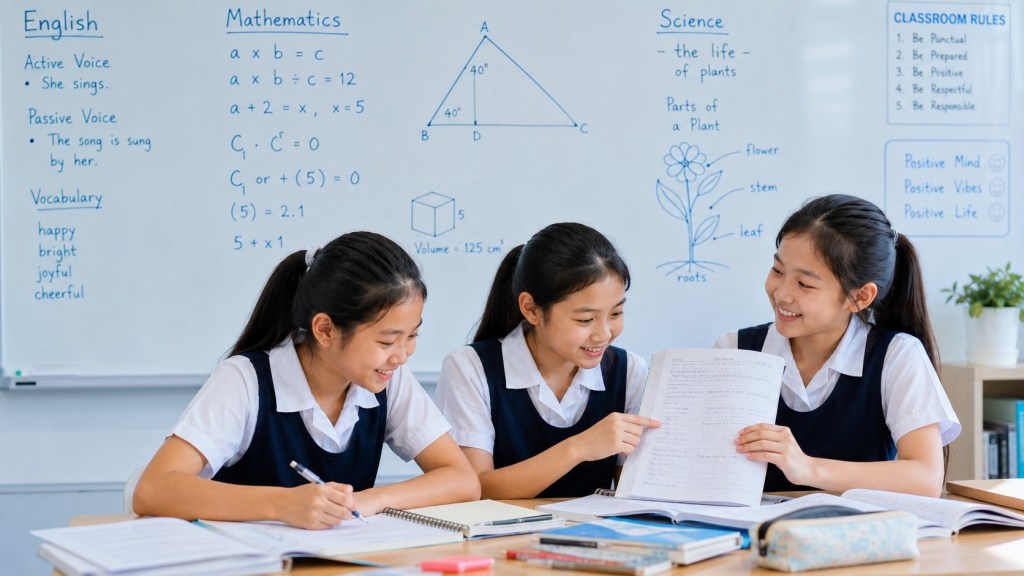
A child gives an answer.
Another child says, “I disagree.”
What happens next?
In weak scientific discussion, the first child repeats the answer louder. The second says, “But I think I’m right.” The conversation becomes a contest of confidence.
In strong scientific discussion, both pupils turn toward the evidence.
Scientific defence is not protecting an answer from change. It is showing why the answer deserves confidence—and changing it when the evidence no longer supports it.
This guide develops a distinct Primary 4 Science capability inside the Primary 4 Science Learning Hub: defending ideas, critiquing reasoning and revising explanations.
Why Defence and Critique Belong in Primary Science
The current Singapore Primary Science framework includes communicating, evaluating and defending ideas with evidence. This is more than presenting information neatly. It asks whether a learner can inspect an idea, judge its reasonableness, support it with evidence and respond when another person identifies a weakness.
That creates a different instructional job from the existing Scientific Communication and Presenting Findings guide. Presentation owns clarity of delivery. This page owns challenge, defence and revision.
Quick Answer: The Scientific Discussion Loop
CLAIM → EVIDENCE → REASONING → CHALLENGE → CHECK → DEFEND / REVISE → NEW TEST
This is an eduKate teaching routine, not an official MOE formula.
Wait, What? Defending an Idea Does Not Mean Refusing to Change It
Suppose a learner says:
“Foam is the best insulator.”
A classmate asks:
“Did we test every insulating material?”
Good defence is not:
“Yes, but I still think foam is best.”
Better revision:
“Our evidence only shows foam reduced cooling more than cloth under the tested conditions.”
The idea becomes stronger by becoming narrower.
Challenge the Idea, Not the Person
Weak peer critique:
“You’re wrong.”
Strong peer critique:
“Your conclusion says ‘always’, but the experiment tested only two materials. Can we narrow the claim?”
The target is the reasoning.
The Four Parts of a Defensible Scientific Idea
- Claim: what you think the answer is.
- Evidence: what observation, measurement or condition supports it.
- Reasoning: the scientific relationship connecting evidence to claim.
- Boundary: how far the evidence allows the claim to go.
If one part is weak, peer critique has somewhere specific to work.
Critique Type 1 | “Where Is Your Evidence?”
Claim:
“Plant Q absorbed less water.”
Possible support:
- Q had many damaged roots;
- water supplied was equal;
- Q wilted more.
But if water uptake was not directly measured, the learner should distinguish explanation from direct observation.
Defence:
“Reduced absorption is an inference based on the root function and Q’s greater wilting, not a direct measurement of uptake.”
Critique Type 2 | “Does the Evidence Actually Match the Claim?”
Claim:
“The object has greater mass.”
Evidence:
“It looks larger.”
Peer challenge:
“Did we measure mass, or only size?”
The claim requires a mass measurement.
Critique Type 3 | “What Else Changed?”
Claim:
“Foam caused Cup A to stay warmer.”
But Cup A also started hotter.
Peer challenge:
“Could starting temperature explain the final difference?”
If yes, causal confidence falls.
Critique Type 4 | “Are You Comparing the Same Property?”
One learner compares:
- Cup A final temperature;
- Cup B temperature decrease.
Peer challenge:
“Are those the same property?”
They are not.
Fair comparison requires like with like.
Critique Type 5 | “What Is Your Reference Point?”
Claim:
“The object moved closer.”
Peer challenge:
“Closer to the source or the screen?”
The clarification improves the Light model before debate continues.
Critique Type 6 | “Is That Observation or Explanation?”
Statement:
“The plant lacked water.”
If the task asks for an observation, peer challenge:
“Could we directly see lack of water, or did we see drooping leaves?”
This restores evidence level.
Critique Type 7 | “Does the Scientific Model Allow That?”
Claim:
“Cold moved from the ice into the water.”
Peer challenge:
“Which object is hotter, and which direction does heat transfer?”
The model redirects the explanation.
Critique Type 8 | “Is Your Claim Too Broad?”
Evidence:
one test, two materials.
Claim:
“Foam is always best.”
Challenge:
“Which materials and conditions were actually tested?”
Revision:
“Foam reduced cooling more than cloth in this test.”
Critique Type 9 | “What Information Is Missing?”
Two cups finish at different temperatures.
Claim:
“Cup A cooled more.”
Challenge:
“Do we know the starting temperatures?”
If not, the conclusion cannot be defended.
Critique Type 10 | “Could Another Method Also Work?”
A pupil proposes one way to measure an irregular object’s volume.
A classmate proposes another scientifically valid route using the available apparatus.
The job is not to reject the second method because it differs from the teacher’s demonstration.
Ask whether it:
- measures the intended property;
- uses the apparatus correctly;
- produces interpretable evidence;
- respects the constraints.
Defence Type 1 | Point to the Evidence
Challenge:
“Why do you say foam reduced cooling more?”
Defence:
“Both cups started at 70°C. The foam cup decreased 9°C, while the cloth cup decreased 13°C.”
The defence begins with evidence.
Defence Type 2 | State the Scientific Relationship
Challenge:
“Why does the smaller decrease matter?”
Defence:
“A smaller temperature decrease means the water lost less thermal energy over the same time; foam reduced heat transfer to the cooler surroundings more than cloth under these conditions.”
Defence Type 3 | State the Boundary
Challenge:
“So is foam always best?”
Defence:
“No. Our test supports only the comparison between foam and cloth under the stated conditions.”
Defence Type 4 | Admit Uncertainty
Challenge:
“Are you sure root damage was the only cause?”
Strong answer:
“Only if water, light, plant type and other relevant conditions were sufficiently comparable. Otherwise other explanations remain possible.”
Admitting uncertainty can strengthen scientific credibility.
Defence Type 5 | Revise the Idea
A good scientific response can be:
“I need to change my conclusion because I overlooked the different starting temperatures.”
Revision is not defeat.
It is the point of critique.
The Critique Ladder
Use questions from light to deep:
- Clarify: “What do you mean by ‘better’?”
- Evidence: “Which measurement supports that?”
- Reasoning: “How does the measurement connect to the claim?”
- Control: “What else changed?”
- Boundary: “How far can the conclusion go?”
- Revision: “What should change in your answer?”
Peer Critique Should Be Specific
Weak:
“Your explanation is bad.”
Better:
“Your explanation states the result but does not explain why damaged roots reduce water uptake.”
Specific critique creates an actionable repair.
Peer Critique Should Be Evidence-Seeking
Useful phrases:
- “Which evidence supports that?”
- “What else could explain the result?”
- “Which condition was kept the same?”
- “What is your reference point?”
- “Does your conclusion go beyond the tested range?”
- “What would make you change your mind?”
Peer Critique Should Not Become Answer Giving
A partner should not simply replace the learner’s answer.
Better:
“You used final temperature. Does the question ask for final temperature or cooling amount?”
This restarts the learner’s reasoning.
Original Defence Case 1 | Matter
Claim:
“The water has less volume because it is lower in the bowl.”
Peer critique:
“Was any water removed?”
“What did the measuring cylinder read before and after?”
Revision:
“The water level is lower because the bowl is wider, but volume remains 100 mL if none is lost.”
Original Defence Case 2 | Light
Claim:
“The shadow becomes bigger when the card gets closer.”
Peer critique:
“Closer to which object?”
Revision:
“When the card moves closer to the torch while the screen remains fixed, the shadow becomes larger in this arrangement.”
Original Defence Case 3 | Heat
Claim:
“Metal is colder than wood.”
Peer critique:
“Did we measure different temperatures?”
Revision:
“Metal may feel colder because it conducts heat from the hand more readily, even when both materials are at similar room temperature.”
Original Defence Case 4 | Plant System
Claim:
“Plant Q wilted because it received less water.”
Evidence:
both plants were supplied equal water; Q had damaged roots.
Critique:
“Are water supplied and water absorbed the same thing?”
Revision:
“Q received the same amount of water but may have absorbed less because many roots were damaged.”
Original Defence Case 5 | Digestion
Claim:
“The large intestine absorbs digested food.”
Peer critique:
“Which organ comes after the stomach and is associated with absorption of digested food?”
Revision:
small intestine.
Original Defence Case 6 | Fair Test
Claim:
“Material A caused the difference.”
Peer critique:
“But the water volumes were also different. Can material be isolated?”
Revision:
“The current evidence cannot isolate material because more than one relevant condition changed.”
Original Defence Case 7 | Pattern
Data:
three distances show decreasing shadow width.
Claim:
“Shadow width always decreases at every possible distance.”
Critique:
“Which distances were actually tested?”
Revision:
“Shadow width decreased as distance increased across the tested positions.”
Original Defence Case 8 | Apparatus
Choice:
use an unmarked bucket to measure 45 mL.
Critique:
“How will the bucket give a 45 mL reading?”
Revision:
choose suitable graduated apparatus.
Defending an Idea With a Diagram
Light claim:
“The book is seen because reflected light enters the eye.”
Defence:
draw source → book → eye.
A representation can serve as part of the reasoning when its meaning is clear.
Defending an Idea With a Table
Heat claim:
“Foam reduced cooling more.”
Defence:
| Wrapping | Start | End | Decrease |
|---|---|---|---|
| Foam | 70°C | 61°C | 9°C |
| Cloth | 70°C | 57°C | 13°C |
The table makes the comparison inspectable.
Defending an Idea With a Concept Map
Plant claim:
root damage can contribute to wilting.
Map:
roots absorb water → many roots damaged → less water absorbed → greater wilting.
The causal chain exposes whether a reasoning step is missing.
Critique and Confidence
High confidence should not protect an answer from questioning.
Ask:
“What evidence makes you confident?”
Confidence should come from evidence and model fit, not familiarity.
Critique and Uncertainty
If two explanations remain possible, the learner can defend a cautious statement:
“The evidence is consistent with root damage, but water amount was not controlled, so we cannot isolate the cause.”
This is stronger than pretending certainty.
Critique and Repeated Trials
Peer question:
“Did the result happen again?”
Repeated consistent evidence can strengthen a defence.
But repeated flawed methods do not repair a design problem.
Critique and Baselines
Peer question:
“What was the starting value?”
Baselines are often necessary to defend claims about change.
Critique and Best-Next Measurement
If the defence fails because a key value is missing, ask:
“What one measurement would most reduce the uncertainty?”
Critique can therefore generate the next investigation.
Critique and Decision-Making
A learner chooses Option B.
Peer asks:
“Which criterion made B better than A?”
The learner must make criteria visible.
Critique and Values
A method produces good data but is unsafe.
Peer question:
“Should safety be one of our criteria?”
Responsible scientific decisions include consequences and values.
Critique and Generating Possibilities
A partner can widen the search space:
“Is there another safe way to test the same idea?”
Then both methods can be evaluated against the same criteria.
The Revision Ladder
Not every challenge requires abandoning the whole answer.
- Clarify wording.
- Add missing evidence.
- Add missing causal link.
- Narrow the conclusion.
- Change the selected model.
- Reject the claim and rebuild.
Repair only as deeply as the evidence requires.
Revision Without Erasing Learning
Science journals should preserve:
- original prediction;
- new evidence;
- critique received;
- revised explanation.
This makes model change visible.
What Counts as a Strong Revision?
A strong revision should explain what changed.
Example:
“I first concluded that foam was always best. I revised the claim because the experiment compared only foam and cloth. The evidence supports only those tested materials.”
Do Not Revise Because Someone Sounds Confident
Peer disagreement is not evidence.
Revise when the challenge reveals:
- missing evidence;
- wrong calculation;
- wrong model;
- uncontrolled variable;
- overclaim;
- clear contradiction.
Do Not Defend Because the Answer Was Yours
Ownership of an idea should not become attachment to an error.
A scientific answer belongs to the evidence once it is offered for evaluation.
Respectful Scientific Language
Useful phrases:
- “What evidence supports that?”
- “Could there be another explanation?”
- “I agree with the result but not the reason.”
- “I think the claim is too broad because…”
- “My answer changes because…”
- “I am not certain because this information is missing.”
Peer Review Roles
In a two-pupil activity:
- Explainer: states claim and evidence.
- Reviewer: asks one discriminating question.
Then swap roles.
The reviewer should not rewrite the entire answer.
The One-Challenge Rule
For younger learners, one high-quality challenge is often enough.
Too many criticisms at once can hide the first weak link.
Ask the question that most changes the reasoning.
Original Peer Review Workshop 1 | Heat
Learner:
“The foam cup is warmer because foam makes heat.”
Reviewer:
“Did the foam cup’s temperature rise, or did it decrease less?”
Revision:
foam reduced heat transfer, so temperature decreased less.
Original Peer Review Workshop 2 | Matter
Learner:
“The bowl has less water because the level is lower.”
Reviewer:
“What did the volume measurement show?”
Revision:
same volume, different shape/height.
Original Peer Review Workshop 3 | Light
Learner:
“The object moved closer, so the shadow became bigger.”
Reviewer:
“Closer to the source or the screen?”
Revision:
specify reference point and geometry.
Original Peer Review Workshop 4 | Plants
Learner:
“Q got less water.”
Reviewer:
“The table says equal water was supplied. Could damaged roots affect absorption instead?”
Revision:
equal supply, potentially unequal uptake.
Original Peer Review Workshop 5 | Investigation
Learner:
“Material caused the difference.”
Reviewer:
“Were starting temperatures equal?”
Revision depends on the answer.
Peer Critique and MCQs
Instead of:
“The answer is C.”
Ask:
“Why does B fail?”
Defending the rejection of distractors exposes model depth.
Peer Critique and Open-Ended Answers
Review checklist:
- Did the answer follow the command?
- Is the evidence relevant?
- Is the mechanism present?
- Are nouns and units precise?
- Is the conclusion bounded?
Peer Critique and Diagrams
Ask:
- What does this arrow mean?
- Is the reference distance labelled?
- Is the diagram being treated as to scale?
- Does the drawing match the written explanation?
Peer Critique and Tables
Ask:
- Are units present?
- Are final values confused with changes?
- Were the correct rows compared?
- Does the conclusion match the pattern?
Peer Critique and Graphs
Ask:
- What do the axes show?
- Does the claim go beyond the tested range?
- Is one anomalous point being ignored?
When Defence Is Strong Enough
A learner does not need to answer every imaginable objection.
A defence is strong enough for a Primary 4 task when:
- claim matches command;
- evidence is relevant;
- scientific relationship is accurate;
- major alternative conditions are controlled or acknowledged;
- conclusion stays within evidence.
When Revision Is Necessary
Revise when:
- evidence contradicts the claim;
- a key condition was overlooked;
- the wrong property was compared;
- the model is scientifically wrong;
- the conclusion is too broad;
- important information is missing.
Original Practice Set
Question 1
What is the difference between defending an idea and refusing to change it?
Question 2
Why should critique target the reasoning rather than the person?
Question 3
What four parts make an idea more defensible?
Question 4
Why can “What else changed?” be a powerful critique?
Question 5
What should happen when the evidence supports only a narrower claim?
Question 6
Is disagreement itself evidence?
Question 7
How can critique generate a follow-up investigation?
Question 8
What makes revision scientifically strong?
Practice Answers
1. Defence explains why evidence supports the idea; scientific defence remains open to revision when the support fails.
2. Scientific discussion evaluates claims and evidence, not personal worth.
3. Claim, evidence, reasoning and boundary.
4. It can reveal an uncontrolled variable that weakens a causal conclusion.
5. Narrow the claim to what the tested evidence actually supports.
6. No. A challenge becomes useful when it points to evidence, logic, method or model.
7. A failed defence can reveal which missing measurement or control should be tested next.
8. The learner identifies what changed in the evidence or reasoning and updates the claim accordingly.
The Scientific-Discourse Diagnostic
| If the learner… | Likely weak link | Repair |
|---|---|---|
| repeats answer louder | evidence defence | point to measurement/condition |
| says “you are wrong” | critique specificity | challenge claim or method |
| never changes answer | revision | identify evidence that would change mind |
| changes answer because peer insists | evidence independence | require reason for revision |
| defends universal claim | boundary control | state tested scope |
A 35-Minute Defence and Critique Lesson
Minutes 1–5: write one claim with evidence.
Minutes 6–10: partner asks one clarification question.
Minutes 11–15: partner asks one evidence question.
Minutes 16–20: inspect one alternative condition.
Minutes 21–25: defend or revise.
Minutes 26–30: change the surface example.
Minutes 31–35: record what evidence would trigger another revision.
What Parents and Tutors Can Ask
- “What is your claim?”
- “Which evidence supports it?”
- “How does that evidence connect to the Science?”
- “What else changed?”
- “Is your conclusion wider than the test?”
- “What question should a classmate ask you?”
- “What evidence would make you revise?”
Complete Batch 17 | Primary 4 Science Learning Guide
- Primary 4 Science Learning Guide | Seeking Clarification, Resolving Ambiguity and Asking the Next Useful Question
- Primary 4 Science Learning Guide | Generating Possibilities and Exploring Alternatives
- Primary 4 Science Learning Guide | Making Scientific Decisions with Criteria, Consequences and Values
- Primary 4 Science Learning Guide | Defending Scientific Ideas, Peer Critique and Revision
Return to the Primary 4 Science Learning Hub.
The Quiet Return
Science advances through ideas strong enough to be questioned.
State the claim. Show the evidence. Explain the link. Invite the challenge. Repair the weak point. Narrow or revise when necessary. Then carry the improved idea into a new test and see whether it survives again.
