
Quick Read for Punggol Families
Families searching for English tuition in Punggol usually begin with location. That is sensible. A tuition programme has to fit real family life: school, travel, meals, CCAs, homework and rest.
But location should decide where the student enters the learning system—not what kind of English the child is taught.
Punggol location → identify the student’s stage → diagnose the actual weak link → teach the right capability → test whether it transfers.
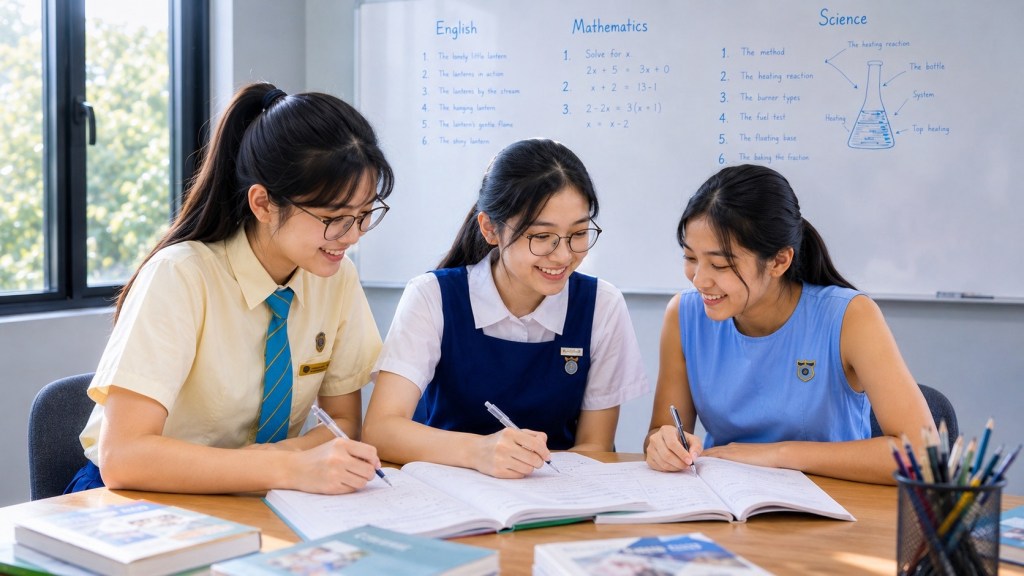
eduKate Sengkang teaches at 83 Punggol Central, Singapore 828761, near Punggol MRT, in focused groups of up to three students. This page is the local Punggol gateway. It helps parents decide which English route is relevant before moving into the more specific Primary, Secondary or level pages.
Locality routing note
This established eduKate Sengkang page is retained as a learning-system entry for families using the Punggol teaching location. The canonical Punggol locality and service route now lives on eduKatePunggol English Tuition. Use that site for Punggol-specific discovery, current local English routes and locality-led navigation; use this page for the connected English learning framework.
The One-Sentence Answer
Good English tuition in Punggol should be convenient enough to sustain, small enough for the tutor to see how the student is thinking, and structured enough to identify the real language problem instead of giving every learner the same pile of worksheets.
Why “English Tuition Near Me” Is Only the First Question
Convenience matters because learning depends on consistency.
A programme can look excellent on paper but become difficult to sustain if every lesson requires a long journey, rushed dinner and late homework. A nearby programme can reduce that friction.
Yet convenience by itself does not tell a parent whether the teaching will help.
Once the location works, the next questions should be educational:
- What is my child actually struggling with?
- Does the programme distinguish reading, vocabulary, grammar, comprehension, writing, oral and examination execution?
- How does the tutor decide what to teach first?
- What happens after a mistake?
- Can the student use the correction in a different task?
- Does support reduce as the student becomes more independent?
The physical location gets the learner through the door. The learning system determines what happens next.
Start With the Student’s Stage
Primary English and Secondary English are connected, but they are not the same educational problem.
Primary English in Punggol
Primary students are building the language foundations that later support every English component: reading, vocabulary, grammar, comprehension, writing, listening and oral communication.
The emphasis changes as the child grows.
- P1–P2: reading, meaning, vocabulary, sentence construction and growing independence.
- P3–P4: connected comprehension, grammar, inference, evidence and stronger writing.
- P5–P6: upper-primary maturity, PSLE runway, transfer and examination control.
For the complete Primary route, continue to Primary English Tuition Punggol | P1–P6.
Secondary English in Punggol
Secondary students need the Primary language system to survive a heavier environment.
Texts become denser. Vocabulary becomes more abstract. Students are expected to infer, evaluate evidence, control audience and purpose, organise longer writing and manage more of their own learning.
For the complete Secondary route, continue to Secondary English Tuition Punggol | S1–S4.
Then Ask: Which Part of English Is Actually Weak?
“Weak in English” is too broad to teach well.
A student may have difficulty with one or several of the following:
- Reading: decoding, fluency or holding meaning across text.
- Vocabulary: meaning, context, retrieval and accurate use.
- Grammar: sentence control that survives real writing.
- Comprehension: understanding the question, reconstructing meaning and answering precisely.
- Evidence: selecting the exact textual support required.
- Writing: ideas, organisation, sentence control, audience and revision.
- Oral: idea generation, organisation, vocabulary and live expression.
- Examination control: timing, checking, recovery and mark conversion.
Two students with the same result may need entirely different lessons.
That is why our broader diagnostic gateway is English Tuition Sengkang | Find the First Weak Link in the Language System.
English Is One Connected System
School timetables divide English into components because components are easier to teach and assess.
The learner experiences something more connected.
Vocabulary changes comprehension. Comprehension changes writing. Grammar affects whether a good idea is understandable. Oral discussion helps students test ideas before writing them. Reading gives students the language and knowledge from which later expression grows.
receive meaning → understand → organise → express → check → repair → use again.
A useful tuition programme should therefore connect skills rather than create isolated islands of worksheet success.
Why More Worksheets Do Not Automatically Mean More Learning
Practice is necessary. But practice only helps when the student is practising the right thing in the right way.
A child can complete ten comprehension passages while repeating the same misunderstanding. A Secondary student can write many essays without learning how to improve paragraph logic. A Primary student can memorise vocabulary that never appears in real writing.
A stronger sequence is:
diagnose → explain → practise → feedback → reattempt → transfer.
The reattempt matters because it tells us whether the student changed. The transfer matters because it tells us whether the learning can survive outside the original worksheet.
What the Tutor Should Be Able to See
English mistakes often hide inside decisions.
A final answer can be wrong because the student misunderstood the text, misunderstood the question, chose weak evidence, used an imprecise word or stopped the explanation too early.
The tutor therefore needs enough visibility to ask:
- What did you think this question was asking?
- Which part of the passage changed your mind?
- Why did you choose this word?
- What is this paragraph trying to achieve?
- Can you explain the answer aloud first?
- Can you find the weakness in your own sentence?
These questions turn correction into diagnosis.
Why eduKate Uses Small Groups of Up to Three Students
At eduKate Sengkang, classes are kept to a maximum of three students.
The educational reason is visibility.
With three students, the tutor can inspect written work closely, hear individual explanations and respond before a misunderstanding becomes a repeated habit.
The class is still large enough for language to remain social.
One student may offer an interpretation. Another may identify better evidence. A third may suggest a clearer sentence. The tutor can compare the responses while ensuring that no student disappears into the group.
Small-group value comes from what the tutor can observe and change, not from the number alone.
Punggol Primary English: What Changes by Stage?
Primary 1–2: Build the Language Base
At lower Primary, we want increasingly reliable reading, sentence understanding, useful vocabulary, complete written sentences, retelling and confidence in communication.
The key question is whether skills are becoming independent or remain heavily dependent on adult prompts.
Primary 3–4: Connect the Parts
Comprehension, grammar, vocabulary and writing begin to interact more strongly. Primary 4 brings a noticeable increase in inference, evidence and precision.
Primary 5–6: Build the PSLE Runway
By upper Primary, capability must survive longer tasks and examination conditions. The student needs not only language knowledge but reliable execution across writing, language use, comprehension, listening and oral communication.
The programme increasingly moves from learning individual skills to coordinating them.
Punggol Secondary English: What Changes by Stage?
Secondary 1: The Reset
The student discovers which Primary methods still work and which no longer carry the heavier reading, writing and independence load.
Secondary 2: Perspective and Stability
Students increasingly distinguish fact, interpretation, framing, purpose and audience. The year is important for stabilising methods before upper Secondary.
Secondary 3: Evidence Becomes Argument
Ideas need stronger support and organisation. Reading and writing move towards more mature argument, interpretation and judgement.
Secondary 4: Capability Must Become Dependable Performance
Teaching becomes increasingly selective. We protect stable methods, close repeated losses and make sure the student can perform independently under examination conditions.
Catch Up, Keep Up or Move Ahead?
A local English class should still recognise that students enter from different positions.
Catch Up
Repair a foundational reading, vocabulary, grammar, comprehension or writing weakness that is restricting current work.
Keep Up
Stabilise a student who understands but performs inconsistently. Build retrieval, transfer, checking and confidence.
Move Ahead
Extend a secure student through richer reading, deeper interpretation, stronger writing, vocabulary precision and greater independence.
The most advanced worksheet is not automatically the most advanced teaching. The right work is the work that develops the next capability.
What Parents Should Look For When Comparing Punggol English Tuition
- Clear diagnosis: can the tutor explain the problem more precisely than “weak English”?
- Useful feedback: does a mistake lead to a changed next attempt?
- Transfer: can the student use the repaired skill in an unfamiliar task?
- Progression: does teaching change from lower Primary to PSLE, and from S1 to S4?
- Visibility: can the tutor see how the student reached the answer?
- Independence: does support reduce as capability improves?
- Practical sustainability: can the family maintain the lesson schedule without creating unnecessary strain?
These questions are more useful than asking only whether a centre is “good” or “popular”.
When Tuition May Not Be the First Need
Not every student who lives in Punggol needs tuition simply because a convenient class exists nearby.
If the learner is progressing steadily, school feedback is effective and the weekly schedule is already full, additional tuition may create more load than value.
A useful reason to begin is a persistent learning need: recurring errors, unstable performance, weak independence, insufficient challenge or an important examination transition that would benefit from closer teaching.
The first consultation should reduce uncertainty, not manufacture urgency.
What Progress Should Look Like
- reading becomes more accurate and less tiring;
- vocabulary becomes more precise;
- comprehension answers become better supported;
- writing becomes more organised;
- grammar survives increasingly complex work;
- oral answers become fuller;
- repeated errors reduce;
- corrections appear successfully in new tasks;
- the student needs fewer prompts;
- school English becomes more manageable.
Marks are important, but these process changes often show that the improvement has a stronger foundation.
English Tuition at 83 Punggol Central
eduKate Sengkang
83 Punggol Central
Singapore 828761
Near Punggol MRT
Class format: focused small-group English tuition with up to three students.
Levels: Primary and Secondary English, including PSLE preparation and upper-secondary examination preparation.
The local advantage is simple: the lesson can be close to home while still belonging to a complete Primary-to-Secondary English pathway.
Frequently Asked Questions
Where is eduKate’s Punggol English tuition conducted?
Classes are conducted at 83 Punggol Central, Singapore 828761, near Punggol MRT.
How many students are in each English class?
Classes are kept to a maximum of three students so the tutor can observe individual reading, reasoning, writing and correction closely while retaining useful peer discussion.
Does eduKate teach both Primary and Secondary English?
Yes. The programme supports Primary and Secondary students, with the content and teaching emphasis adjusted to the learner’s stage and current needs.
Can the programme help a student who is already doing well?
Yes, when the student has secure foundations and a worthwhile next capability to develop. Extension should deepen reading, vocabulary, writing, judgement and independence rather than simply add more volume.
Can the programme help a student who has fallen behind?
Yes, but the first task is diagnosis. We identify the earliest useful weak link and repair that dependency before expecting harder work to become stable.
Do students only prepare for examinations?
No. Examination performance matters, but it rests on broader language capability: reading, comprehension, vocabulary, grammar, writing, listening, speaking, retrieval and independent judgement.
Final Thought: Local Should Make the Journey Easier, Not Smaller
Punggol is the local door.
Behind that door, the child still needs the same large English journey: learn to receive meaning, understand it, organise thought, express it clearly, check it and eventually do all of that without depending on the tutor.
A nearby class is valuable when it reduces family friction and makes consistent learning easier.
A good programme is valuable when it also knows where the student is, what needs to change next and how to return increasing control to the learner.
Choose the local door. Then make sure it opens into a complete learning system.
WhatsApp eduKate Sengkang at +65 8823 1234 to arrange a parent–student consultation.
More useful Punggol English routes
- Primary map: Find the right P1–P6 English stage in Punggol
- Secondary map: Follow the S1–S4 English route from reset to examination control
- Primary 1 local entry: Build strong Primary 1 literacy foundations in Punggol
- Primary 3 local entry: Strengthen the Primary 3 English integration year
- Primary 5 local entry: Enter the PSLE English runway from Primary 5
- Primary 6 local entry: Move from Primary 6 English into PSLE examination craft
- Secondary 1 local entry: Use the Punggol entry to the Secondary 1 English reset
- Secondary 3 local entry: Move into Secondary 3 argument and examination preparation
Legacy Punggol route preserved on eduKateSengkang
This page is being kept at its existing URL because it is part of the older eduKate estate and may still be useful to readers arriving through historical links or search. Current Punggol discovery and local-family routing now belongs to the eduKatePunggol Atlas.
If your question is about the learner rather than the location—what is blocked, fragile, stable, transfer-ready or examination-ready—return to the eduKateSengkang Learning Atlas V2.0. The URL is preserved; ownership is made explicit so the two estates do not compete for the same job.
