
Category: Blog
-
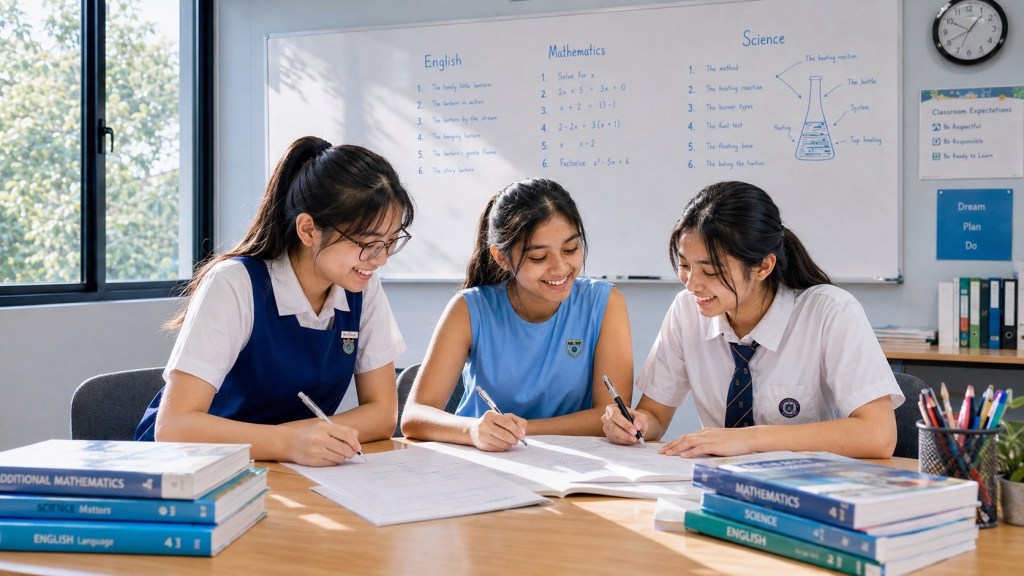
How Should Science Revision Change from Primary 3 to SEC?
Adapt Science revision from Primary 3–6 and PSLE to SEC G1–3: observe, explain, interpret data and prepare for the correct subject requirements.
-
How Should Mathematics Practice Change from Primary 1 to SEC?
Build a Mathematics practice routine that develops from Primary 1–6 through PSLE to SEC G1–3, connecting concepts, representations and independent checks.
-
How Should English Revision Change from Primary 1 to SEC?
See how English revision changes from Primary 1–6 and PSLE to SEC G1–3, with practical tasks, examples and independent progress checks.
-
How Should Students Study for SEC at G1, G2 and G3? | A Subject-by-Subject Learning Plan
Build a SEC learning plan from the correct subject, G level, examination year and SEAB syllabus, with study actions for every subject family.
-
How Should Students Study After PSLE? | A Learning Plan for PG1, PG2 and PG3
Prepare for Secondary 1 after PSLE with a subject-by-subject learning plan that distinguishes PG1–3 admission groups from G1–3 subject levels.
-
How Do You Know If PSLE Revision Is Working? | Checks Across Every Subject
Check whether PSLE revision produces independent understanding, better answers, effective corrections and control across examination components.
