
Category: Blog
-
TumbleBook for Sengkang Children: Animated Picture Books and Shared Reading
TumbleBook Library offers Sengkang families a way to share a picture book when a narrated story suits the moment. Choose one title, watch or read it together, and leave a little time for the child to respond.
-
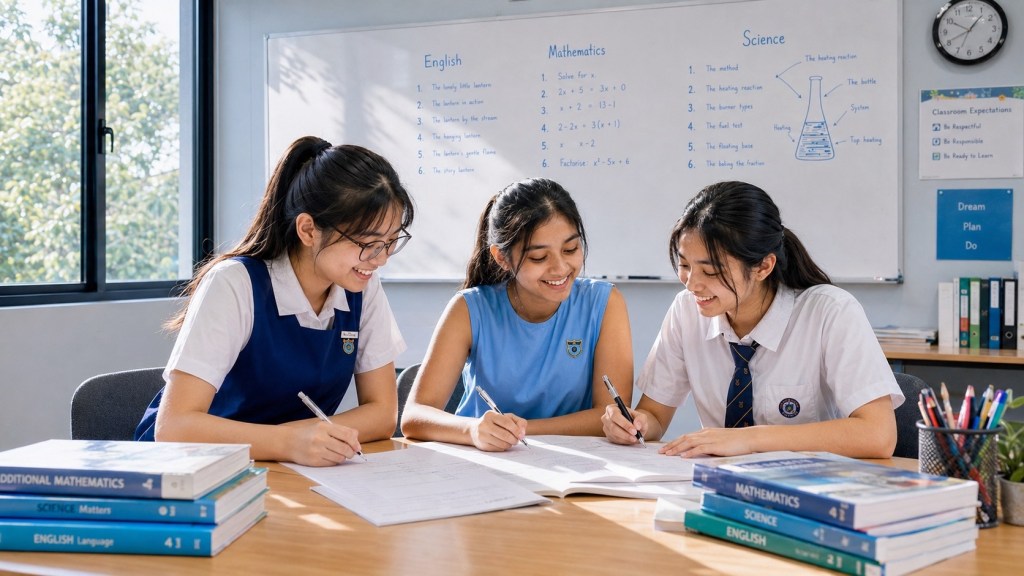
How Can Secondary 3 Students Revise Mother Tongue Writing Without Copying a Model Answer?
Did you know? A Mother Tongue model answer can help a Secondary 3 student revise without becoming a script to copy. First identify one weakness in the student’s own writing, inspect how an appropriate model handles that job and make a fresh correction in the learner’s own words.
-
How Can a Secondary 3 Student Spot an Overclaim in a Science Conclusion?
Did you know? Words such as “always”, “proves” and “all” can make a Science conclusion stronger than its evidence. Help a Secondary 3 student compare the claim with the actual measurements, conditions and range tested. Keep the useful finding while removing claims the investigation cannot establish.
-
How Can a Secondary 3 Student Explain Why Reversing a Percentage Comparison Changes the Answer?
Did you know? Reversing a percentage comparison usually changes the answer because it changes the reference quantity. Help a Secondary 3 student identify what counts as 100%, calculate the difference and divide by the named base. The same numerical gap can represent different percentages.
-
How Can a Secondary 3 Student Match English Writing Tone to the Audience?
Did you know? Appropriate English writing tone comes from the audience, purpose and situation, not simply from using longer words. Help a Secondary 3 student identify who will read the message, what it needs to achieve and what relationship the writer has with the reader. Then choose wording that supports those conditions.
-
How Can Secondary 2 Students Use PE Feedback to Improve One Movement Skill?
Did you know? PE feedback is easier to use when it points to one movement skill and one observable next step. Help a Secondary 2 student identify the task, understand the teacher’s cue and notice what changes during an appropriate practice. Improvement is not only a comparison with the fastest or most skilled classmate.
