
Category: Blog
-
Fraction Activities for Kids in Sengkang: Equal Parts and Paper Sharing
Fraction activities for kids in Sengkang can begin with paper instead of a worksheet. Fold a rectangle, shade a part and ask what makes that part a half. The important idea is equal shares of a clearly identified whole.
-
NewspaperSG for Sengkang School Projects: Finding and Reading Historical Reports
NewspaperSG can help Sengkang students investigate how a place or event was reported at the time. It is a historical newspaper archive, so approach it differently from a service for reading today’s news.
-
TumbleBook for Sengkang Children: Animated Picture Books and Shared Reading
TumbleBook Library offers Sengkang families a way to share a picture book when a narrated story suits the moment. Choose one title, watch or read it together, and leave a little time for the child to respond.
-
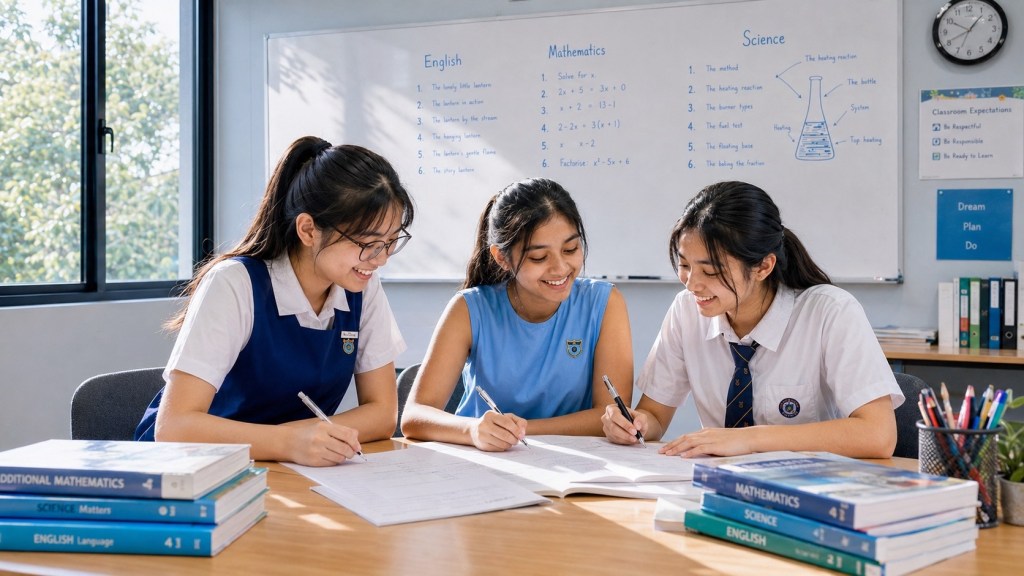
How Can Secondary 3 Students Revise Mother Tongue Writing Without Copying a Model Answer?
Did you know? A Mother Tongue model answer can help a Secondary 3 student revise without becoming a script to copy. First identify one weakness in the student’s own writing, inspect how an appropriate model handles that job and make a fresh correction in the learner’s own words.
-
How Can a Secondary 3 Student Spot an Overclaim in a Science Conclusion?
Did you know? Words such as “always”, “proves” and “all” can make a Science conclusion stronger than its evidence. Help a Secondary 3 student compare the claim with the actual measurements, conditions and range tested. Keep the useful finding while removing claims the investigation cannot establish.
-
How Can a Secondary 3 Student Explain Why Reversing a Percentage Comparison Changes the Answer?
Did you know? Reversing a percentage comparison usually changes the answer because it changes the reference quantity. Help a Secondary 3 student identify what counts as 100%, calculate the difference and divide by the named base. The same numerical gap can represent different percentages.
