
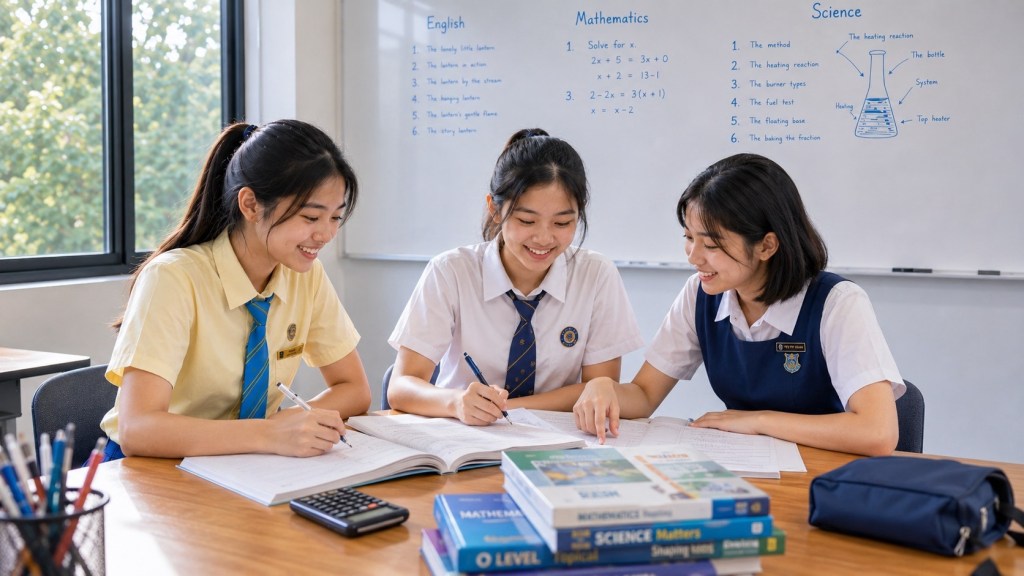
Can a PG2 child in Sengkang apply for Direct School Admission (DSA-Sec)? Yes, a child who may eventually enter Secondary 1 through Posting Group 2 can apply to schools offering suitable DSA talent areas. But a DSA offer does not waive PSLE eligibility: the child’s final PSLE Score must qualify them for a Posting Group offered by the particular school. A PG2-only eligible pupil cannot enter a PG3-only school merely because a talent trial went well.
For the 2027 Secondary 1 intake, the 2026 DSA-Sec exercise included applications from 6 May to 2 June 2026 and school preference submissions from 19 to 23 October 2026. Both windows have already ended as of 6 November 2026. Families with a Confirmed Offer or Waitlist offer should now use official notices and prepare for the PSLE-result allocation stage; families without a DSA allocation should plan for the standard Secondary 1 Posting Exercise.
Sengkang families searching for PG2 DSA in Compassvale, Fernvale, Rivervale or Anchorvale should start from evidence of real talent and interest, not a promise of an easier route past a school cut-off. This guide explains the important academic eligibility rule, highlights actual DSA areas advertised by local schools for the 2027 intake, and shows parents how to respond correctly to a Confirmed Offer, a Waitlist offer or an unsuccessful application.
The short answer: DSA is talent-based, but PSLE still matters
- DSA-Sec lets students apply for schools on the basis of demonstrated talent, potential and interest in specified areas such as sport, performing arts or STEM.
- A school may give a Confirmed Offer (CO) or place a pupil on its Waitlist (WL); an offer still depends on PSLE eligibility for a Posting Group the school offers.
- During the 2026 application stage pupils could specify up to three school-and-talent choices, subject to the portal’s limits.
- Successful DSA allocation leads to commitment to that school and talent programme; pupils do not enter the ordinary six-school posting exercise afterwards.
- Students without a successful DSA allocation use standard S1 Posting and their actual PSLE posting eligibility.
- 2027 cohort application windows are not interchangeable with future DSA exercises; use MOE’s new notices for the next intake.
What PG2 actually means for DSA eligibility
PG2 means Posting Group 2, used to facilitate Secondary 1 admission under Full Subject-Based Banding. It is not a separate tuition syllabus and not a label that guarantees or disqualifies every DSA opportunity. What matters is a school’s offered Posting Group(s) and the pupil’s eligibility after receiving the official PSLE Score.
| PSLE position | General posting eligibility | DSA implication |
|---|---|---|
| 21–22 | Option band between PG2 and PG3 | A pupil may be eligible for either offered group; verify the school’s current rules and official allocation. |
| 23–24 | PG2 | A school offering PG2 may be possible; a PG3-only school cannot be treated as eligible simply because of a talent offer. |
| 25 | Option band between PG1 and PG2 | Match the school to the actual eligible group and selection criteria. |
| Other results | Refer to official MOE eligibility | Do not guess school programme eligibility from an early trial result. |
The grouping in this table describes the published Full SBB framework. The official current-year PSLE instructions control each student’s application. A school that admits only PG3 students is not offering the same academic route as a school that admits PG2 students; the talent assessment cannot override that difference. An early DSA offer is therefore conditional on qualifying for the school’s programme.
A Sengkang example that changes the decision
Nan Chiau High School’s official 2026 DSA FAQ states that its DSA route is through Posting Group 3. A child who ultimately qualifies only for PG2 cannot gain entry to this PG3-only programme simply by receiving a positive DSA assessment. This is an example of why a parent should check the school’s offered group before putting months into a portfolio, training or a trial. Use Nan Chiau High’s DSA FAQs and confirm arrangements again for each future cohort.
By contrast, a family should not assume that a school with a PG2 route automatically grants DSA to every PG2 pupil. Talent selection remains competitive, and an applicant must demonstrate readiness, commitment and the qualities the school assesses. The two separate gates are school talent selection and PSLE eligibility for the offered programme.
Four local schools with 2026 DSA information
The school pages below describe the 2026 DSA application exercise for Secondary 1 admission in 2027. This is a dated research list, not a promise that all areas, talent quotas or Posting Groups stay unchanged in future years. Always confirm both the current talent area and the Posting Group offered by each school.
| School | Examples of advertised 2026 talent areas | Official information |
|---|---|---|
| Compassvale Secondary School | STEM (aeronautics, environmental science, robotics); sports including badminton, floorball, netball and softball | Compassvale DSA page |
| Seng Kang Secondary School | Sports such as basketball, badminton, hockey, football and netball; STEM | Seng Kang Secondary DSA page |
| Pei Hwa Secondary School | Robotics, guzheng, Chinese/modern dance, floorball, wushu and taekwondo | Pei Hwa DSA page |
| North Vista Secondary School | Selected sports and performing arts including athletics, basketball, football, netball, golf, dance, band, choir and strings | North Vista DSA page |
A student can be drawn to different schools for different reasons. One child might love aeronautics and spend weekends building gliders; another could be an experienced netball player; another might learn best through dance or strings. A genuine choice connects the pupil’s existing interest, ability and willingness to participate with the school’s actual programme. Do not collect medals for display while ignoring whether the child wants to continue the activity over several years.
How many DSA choices could a 2026 applicant make?
In the 2026 DSA-Sec portal, applicants could indicate up to three choices, with a choice meaning a particular school and talent area. A maximum of two choices could be used for two different talent areas in the same school. It is not necessarily ‘three schools’, because two of the choices might be different talent areas at one school. Parents should record which evidence corresponds to each choice.
For example, a pupil might have credible experience in badminton and in robotics. Two applications to the same school under those distinct talents could consume two choices if that school’s categories permit it; a third choice could concern another school’s STEM area. A more effective plan may instead use only one or two carefully matched choices. There is no educational advantage in filling every available slot with a weak match merely because the system permits it.
What evidence belongs in a useful DSA portfolio?
For a talent application, the best portfolio is specific and truthful. Describe what the student actually did, show the work when appropriate, and explain what improved as a result of practice. A parent’s polished paragraph is not a replacement for a child’s own account of decisions, setbacks or development. Schools may evaluate current ability and potential in trials or interviews, so claims must survive simple questions.
- Identify the talent: one clear focus such as aeronautics, contemporary dance, basketball or STEM problem-solving.
- Choose evidence: two or three genuine pieces, such as a project, recording, competition result, school activity or sustained training record.
- Explain contribution: what was the student’s own role, rather than the group’s collective achievement?
- Show a learning arc: describe an earlier weakness, the practice used and what changed.
- Read the school criteria: a generic certificate may be less relevant than a task matching the school’s talent area.
- Practise a truthful interview: the pupil should be able to discuss their interest naturally without reciting a rehearsed essay.
- Check logistics: trials, travel, study demands and long-term programme commitments should fit the family.
Example: a STEM child who has no medal
A child built a cardboard glider, found that the design kept diving and changed the wing angle in three trials. There may be no national competition prize. Yet a small log showing the original hypothesis, the changed variable, results and what the student concluded can be a strong explanation of curiosity and problem-solving. Compassvale’s published 2026 STEM information explicitly allowed applicants without prior formal experience to be assessed for potential; success was still not guaranteed.
Example: a team-sport application without exaggerated claims
A pupil has been in the school badminton team for two years but was not the team’s top player. The useful story may concern consistent training, technical improvements, teamwork and response to setbacks. If a coach reference or results sheet is used, the parent should ensure it accurately describes the student. Fabricating awards, inventing leadership roles or buying an empty portfolio is never a sensible strategy.
Confirmed Offer, Waitlist offer and no offer: what changes?
| Outcome | What it means | Next practical action |
|---|---|---|
| Confirmed Offer (CO) | School selects the pupil for a talent place, subject to relevant PSLE eligibility and preference submission. | Consider the commitment; enter the eligible school’s official DSA preference by the deadline. |
| Waitlist (WL) | An applicant may be allocated if a place becomes available and academic eligibility is satisfied. | Decide whether to list it in official preference order; do not present WL as a confirmed place. |
| Unsuccessful | No DSA place is offered through that application. | Follow ordinary S1 Posting using the child’s official PSLE eligibility. |
| DSA allocation after PSLE | Pupil is successfully allocated to a DSA school. | Follow the school’s registration instructions; do not submit six ordinary school choices. |
Both CO and WL require informed consideration of the preference stage. The important family question is not ‘Is it impressive to have an offer?’ but ‘Would the child still want to attend this school and participate in this talent programme in Secondary 3?’ A successful allocation is a commitment and generally removes the ordinary option to change schools after PSLE results.
What happened in the 2026 cycle for 2027 intake?
- 6 May–2 June 2026: application window for the DSA-Sec portal.
- June–August 2026: trials, interviews and selection stages arranged by individual schools.
- 17–28 August 2026: schools notified applicants of outcomes under the published exercise.
- 19–23 October 2026: official DSA school preference submission for recipients of offers.
- PSLE results release later in November 2026: qualifying DSA allocation outcome accompanies PSLE results.
- Secondary 1 registration: follow the actual posted school’s instructions.
As of 6 November 2026, the May/June application and October preference windows are past. This is not a live application announcement. Families aiming for a later Secondary 1 intake should watch the new MOE DSA-Sec announcements rather than reuse these dates. School talent categories, portals and decisions may be revised.
Why DSA can be a poor choice even for a talented pupil
A pupil can be genuinely good at an activity and still prefer to participate recreationally rather than commit to a school talent programme. Others enjoy competitions but find late training difficult alongside a demanding journey. Families should examine the full cost of commitment: training time, CCA participation, recovery, subject workload, transport from Sengkang and the child’s own motivation. DSA is not a shortcut that turns a hobby into an obligation without consequences.
For residents near Sengkang LRT or the North East Line, test the actual after-school route rather than relying on a midday route planner estimate. Do not assume that a school near the neighbourhood name is automatically quickest; late practices, weather and transfers can change the experience. Consider a simple weekly schedule with school, training, meals, homework and adequate sleep before making a commitment.
What if the child did not get a DSA place?
The S1 Posting Exercise remains the established route for students who do not secure DSA allocation. The family can compare eligible schools, accurate Posting Group options, the latest historical cut-off data and school fit. It is not necessary to apologise to a child for an unsuccessful audition. A selection result is a match for a school’s specific current vacancies and criteria, not a universal score for talent or character.
Use the Sengkang school-choice and cut-off guide for the six-school process, and the PG2 PSLE eligibility guide for Posting Groups. That keeps this page focused on DSA, rather than reproducing the whole admission system.
Frequently asked questions
Can a PG2 child DSA to Nan Chiau High?
For the school’s published 2026 DSA arrangements, the programme was limited to PG3 eligibility. A pupil who qualifies only for PG2 does not satisfy that requirement. Scores in a two-group option band require careful attention to official eligibility and the school programme. Verify the current-year school notice rather than assume the requirement remains unchanged indefinitely.
If a school gave a Confirmed Offer, does PSLE no longer matter?
No. DSA allocation still requires a PSLE result qualifying the student for a Posting Group that the school offers. This is distinct from meeting a school’s previous indicative standard S1 Posting cut-off. The specific programme eligibility rule controls.
Can a successful DSA student still list six ordinary schools?
No. Once successfully allocated through DSA-Sec, students do not participate in the usual six-school S1 Posting option process. The decision to submit school preferences during DSA is consequential.
Does a Waitlist offer guarantee admission?
No. A WL candidate may be allocated if a place becomes available and they meet relevant eligibility requirements. It is still possible to proceed to standard S1 Posting without an allocation.
Are DSA deadlines for 2027 and the 2027 intake the same?
No. The DSA exercise undertaken in 2026 was for entry into Secondary 1 in 2027. The DSA exercise held in 2027 would generally concern entry the following year. Use the official cohort label, not the headline year alone.
Should we pay for a professional portfolio?
An attractive design is less valuable than truthful evidence and a child who can explain their work. Start with the actual school’s criteria and the child’s own activity records. Many meaningful examples can be documented clearly with ordinary materials.
Official sources and next reading
- MOE DSA-Sec — current programme information and application notices.
- Compassvale Secondary 2026 DSA — STEM and sports areas for 2027 intake.
- Seng Kang Secondary 2026 DSA — sports and STEM.
- Pei Hwa Secondary 2026 DSA — robotics, arts and sports.
- North Vista Secondary DSA — athletics, games and performing arts.
- Nan Chiau High DSA FAQ — the importance of school-level Posting Group eligibility.
- PG2 PSLE Scores and 2027 Secondary 1 Posting — eligibility and admission stage.
- eduKate: DSA-Sec Portfolios and Interviews — separate broader talent-preparation owner.
- The Complete Sengkang Guide — school travel, estate life and local resources.
Checked 6 November 2026. This independent guide reports the published 2026 DSA exercise for the 2027 Secondary 1 intake; it does not offer a live application or a guaranteed place. Confirm the current DSA year, talent area, PSLE eligibility and school rules with MOE and the school. Examples are illustrative, not actual applicant records.
More PG2 Sengkang guides in this batch: Secondary 1 appeals and transfers · Higher Mother Tongue eligibility · Learning support and SEN transition. For the larger estate library, see The Complete Sengkang Guide.
