
The Friendship Gate links Fernvale Primary School and MINDS Fernvale Gardens School. MINDS publications describe the physical connection as supporting interaction between pupils, while the FY2016–2017 annual report records a buddy-reading programme launched on 21 March 2017. The record supports a history of a particular school partnership; it does not turn the gate into a public shortcut or establish every present-day activity.
This learning article uses that documented milestone to teach careful reading, inclusive planning and evidence-based explanation. Its pupil counts, reading times and schedules are invented classroom models. They are not enrolment figures or reports about individual children. The emphasis stays on voluntary roles, privacy, accessible participation and language that describes arrangements without reducing a learner to a label.
eduKateSengkang • Neighbourhood history and learning
Choose your reading route
Read the historical evidence, follow a worked explanation or begin with independent practice.
Route 1 · Chapters 1–2: Establish the partnership
Route 2 · Chapters 3–4: Read together respectfully
Route 3 · Chapters 5–6: Measure participation carefully
Route 4 · Chapters 7–8: Design an inclusive activity
Route 5 · Chapters 9–10: Practise and transfer
Full chapter index · Independent practice · Sources · Continue exploring
Contents
Chapters 1–2 · Establish the partnership
Chapters 3–4 · Read together respectfully
Chapters 5–6 · Measure participation carefully
Chapters 7–8 · Design an inclusive activity
Chapters 9–10 · Practise and transfer
CHAPTER 1 OF 10 • Establish the partnership
1. What the two MINDS records establish
Historical focus. The annual report supplies a programme date and activity; the 2019 publication explains the gate as a connection between neighbouring schools. Begin by copying the smallest claim that the named record can support. Add the organisation and the type of record beside it. This prevents a useful local detail from growing into an unsupported statement about every earlier year, every later year or every person connected with the place.
Reading method. Turn the focus into four columns: event or feature, time marker, place, and source. If one cell is unknown, write “not established by this source” rather than guessing. Then explain which two cells a reader might accidentally merge. The purpose is not to make the table look complete; it is to make the limits visible enough for another reader to audit.
Guided activity. Arrange three evidence cards: physical link, 21 March 2017 launch, and later published description. Put only supported wording under each card. Ask the learner to say why each label is needed. A label is doing useful work when removing it would change the meaning, hide the origin of a fact or make invented practice look like real history. Revise any sentence that depends on words such as always, everyone, exactly or proves without matching evidence.
Worked example. A card saying “the programme launched on 21 March 2017” supports that milestone but not an uninterrupted yearly timetable. Show the units and the chosen whole before calculating. After the answer, add a sentence beginning “This result tells us…” and another beginning “It does not tell us…”. That second sentence is part of the solution because it stops a mathematical relationship from being mistaken for a historical observation.
Check the conclusion. Keep programme history separate from claims about current access or individual pupils. Compare the conclusion with the original evidence card word by word. If the conclusion adds a date, cause, route, intention, population or present condition that the card did not contain, either find another reliable source or weaken the statement. Accurate modest wording is stronger than a confident sentence that outruns its evidence.
Independent attempt. Create a new example with one condition changed: use another date range, another total, another address or another role. Solve it without copying the worked sentence. Then exchange work with a partner and mark the evidence word, the calculation word and the limitation word. If one is missing, revise before checking the final answer.
Answer discussion. A strong response names the evidence, performs only the required comparison and states what remains unresolved. Different wording can be correct when the reasoning chain is visible. An answer that reaches the right number but changes the unit, hides the denominator or treats an invented model as site data needs repair. Return to the cards or counters before repeating the arithmetic.
Transfer. Apply the same method to a fictional neighbourhood example unrelated to Fernvale Friendship Gate History: Two Schools and a 2017 Reading Partnership. Preserve the distinction between record, observation and model. Finally, write one question that requires a current official answer. Transfer matters because it shows that the learner has acquired a checking routine, not merely memorised one local story.
CHAPTER 2 OF 10 • Establish the partnership
2. Build a timeline without inventing a beginning
Historical focus. The sources document a 2017 reading milestone and a later description, but do not provide one complete chronology for every aspect of the partnership. Begin by copying the smallest claim that the named record can support. Add the organisation and the type of record beside it. This prevents a useful local detail from growing into an unsupported statement about every earlier year, every later year or every person connected with the place.
Reading method. Turn the focus into four columns: event or feature, time marker, place, and source. If one cell is unknown, write “not established by this source” rather than guessing. Then explain which two cells a reader might accidentally merge. The purpose is not to make the table look complete; it is to make the limits visible enough for another reader to audit.
Guided activity. Place 2017 and 2019 on a line, then add an undated card labelled “gate connection described”. Explain why publication year and event year can differ. Ask the learner to say why each label is needed. A label is doing useful work when removing it would change the meaning, hide the origin of a fact or make invented practice look like real history. Revise any sentence that depends on words such as always, everyone, exactly or proves without matching evidence.
Worked example. If a 2019 publication discusses a 2017 event, the elapsed time is two years; that arithmetic does not date the gate itself. Show the units and the chosen whole before calculating. After the answer, add a sentence beginning “This result tells us…” and another beginning “It does not tell us…”. That second sentence is part of the solution because it stops a mathematical relationship from being mistaken for a historical observation.
Check the conclusion. Use “by the time of the publication” when an exact earlier date is absent. Compare the conclusion with the original evidence card word by word. If the conclusion adds a date, cause, route, intention, population or present condition that the card did not contain, either find another reliable source or weaken the statement. Accurate modest wording is stronger than a confident sentence that outruns its evidence.
Independent attempt. Create a new example with one condition changed: use another date range, another total, another address or another role. Solve it without copying the worked sentence. Then exchange work with a partner and mark the evidence word, the calculation word and the limitation word. If one is missing, revise before checking the final answer.
Answer discussion. A strong response names the evidence, performs only the required comparison and states what remains unresolved. Different wording can be correct when the reasoning chain is visible. An answer that reaches the right number but changes the unit, hides the denominator or treats an invented model as site data needs repair. Return to the cards or counters before repeating the arithmetic.
Transfer. Apply the same method to a fictional neighbourhood example unrelated to Fernvale Friendship Gate History: Two Schools and a 2017 Reading Partnership. Preserve the distinction between record, observation and model. Finally, write one question that requires a current official answer. Transfer matters because it shows that the learner has acquired a checking routine, not merely memorised one local story.
Historical focus. The report describes Fernvale Primary pupils reading aloud with Fernvale Gardens students in the library. A useful model gives both readers agency. Begin by copying the smallest claim that the named record can support. Add the organisation and the type of record beside it. This prevents a useful local detail from growing into an unsupported statement about every earlier year, every later year or every person connected with the place.
Reading method. Turn the focus into four columns: event or feature, time marker, place, and source. If one cell is unknown, write “not established by this source” rather than guessing. Then explain which two cells a reader might accidentally merge. The purpose is not to make the table look complete; it is to make the limits visible enough for another reader to audit.
Guided activity. Create roles named reader, listener, page chooser, question asker and summariser. Let partners select or exchange roles rather than assigning permanent helper and recipient positions. Ask the learner to say why each label is needed. A label is doing useful work when removing it would change the meaning, hide the origin of a fact or make invented practice look like real history. Revise any sentence that depends on words such as always, everyone, exactly or proves without matching evidence.
Worked example. In an invented 20-minute session, 6 minutes choosing and previewing leaves 14 minutes for reading and conversation. Show the units and the chosen whole before calculating. After the answer, add a sentence beginning “This result tells us…” and another beginning “It does not tell us…”. That second sentence is part of the solution because it stops a mathematical relationship from being mistaken for a historical observation.
Check the conclusion. Do not infer ability, diagnosis or preference from a school name. Compare the conclusion with the original evidence card word by word. If the conclusion adds a date, cause, route, intention, population or present condition that the card did not contain, either find another reliable source or weaken the statement. Accurate modest wording is stronger than a confident sentence that outruns its evidence.
Independent attempt. Create a new example with one condition changed: use another date range, another total, another address or another role. Solve it without copying the worked sentence. Then exchange work with a partner and mark the evidence word, the calculation word and the limitation word. If one is missing, revise before checking the final answer.
Answer discussion. A strong response names the evidence, performs only the required comparison and states what remains unresolved. Different wording can be correct when the reasoning chain is visible. An answer that reaches the right number but changes the unit, hides the denominator or treats an invented model as site data needs repair. Return to the cards or counters before repeating the arithmetic.
Transfer. Apply the same method to a fictional neighbourhood example unrelated to Fernvale Friendship Gate History: Two Schools and a 2017 Reading Partnership. Preserve the distinction between record, observation and model. Finally, write one question that requires a current official answer. Transfer matters because it shows that the learner has acquired a checking routine, not merely memorised one local story.
| Session | Pairs recorded | What the number means |
|---|---|---|
| 1 | 5 | Five pair-sessions in the fictional session |
| 2 | 7 | Seven pair-sessions in the fictional session |
| 3 | 6 | Six pair-sessions in the fictional session |
Historical focus. A slower plan can be better when it creates space for choice, repetition, communication or rest. Efficiency is not the only criterion. Begin by copying the smallest claim that the named record can support. Add the organisation and the type of record beside it. This prevents a useful local detail from growing into an unsupported statement about every earlier year, every later year or every person connected with the place.
Reading method. Turn the focus into four columns: event or feature, time marker, place, and source. If one cell is unknown, write “not established by this source” rather than guessing. Then explain which two cells a reader might accidentally merge. The purpose is not to make the table look complete; it is to make the limits visible enough for another reader to audit.
Guided activity. Compare Plan A: four short passages with one question each, and Plan B: two passages with preview, reading and response. State which fits a named goal. Ask the learner to say why each label is needed. A label is doing useful work when removing it would change the meaning, hide the origin of a fact or make invented practice look like real history. Revise any sentence that depends on words such as always, everyone, exactly or proves without matching evidence.
Worked example. If Plan A uses 4×3 minutes and Plan B uses 2×6 minutes, both total 12 minutes but organise attention differently. Show the units and the chosen whole before calculating. After the answer, add a sentence beginning “This result tells us…” and another beginning “It does not tell us…”. That second sentence is part of the solution because it stops a mathematical relationship from being mistaken for a historical observation.
Check the conclusion. A numerical tie does not make the experiences identical. Compare the conclusion with the original evidence card word by word. If the conclusion adds a date, cause, route, intention, population or present condition that the card did not contain, either find another reliable source or weaken the statement. Accurate modest wording is stronger than a confident sentence that outruns its evidence.
Independent attempt. Create a new example with one condition changed: use another date range, another total, another address or another role. Solve it without copying the worked sentence. Then exchange work with a partner and mark the evidence word, the calculation word and the limitation word. If one is missing, revise before checking the final answer.
Answer discussion. A strong response names the evidence, performs only the required comparison and states what remains unresolved. Different wording can be correct when the reasoning chain is visible. An answer that reaches the right number but changes the unit, hides the denominator or treats an invented model as site data needs repair. Return to the cards or counters before repeating the arithmetic.
Transfer. Apply the same method to a fictional neighbourhood example unrelated to Fernvale Friendship Gate History: Two Schools and a 2017 Reading Partnership. Preserve the distinction between record, observation and model. Finally, write one question that requires a current official answer. Transfer matters because it shows that the learner has acquired a checking routine, not merely memorised one local story.
CHAPTER 5 OF 10 • Measure participation carefully
5. Use counts without ranking people
Historical focus. Participation counts describe arrangements only when the unit and time period are clear. They must not become scores of worth or effort. Begin by copying the smallest claim that the named record can support. Add the organisation and the type of record beside it. This prevents a useful local detail from growing into an unsupported statement about every earlier year, every later year or every person connected with the place.
Reading method. Turn the focus into four columns: event or feature, time marker, place, and source. If one cell is unknown, write “not established by this source” rather than guessing. Then explain which two cells a reader might accidentally merge. The purpose is not to make the table look complete; it is to make the limits visible enough for another reader to audit.
Guided activity. In a fictional activity, count completed reading turns, requested pauses and book choices. Explain what each count can and cannot show. Ask the learner to say why each label is needed. A label is doing useful work when removing it would change the meaning, hide the origin of a fact or make invented practice look like real history. Revise any sentence that depends on words such as always, everyone, exactly or proves without matching evidence.
Worked example. If 8 of 12 pairs choose fiction, the share is 8/12=2/3, about 66.7%; it says nothing about why they chose it. Show the units and the chosen whole before calculating. After the answer, add a sentence beginning “This result tells us…” and another beginning “It does not tell us…”. That second sentence is part of the solution because it stops a mathematical relationship from being mistaken for a historical observation.
Check the conclusion. Never use invented counts as claims about the named schools. Compare the conclusion with the original evidence card word by word. If the conclusion adds a date, cause, route, intention, population or present condition that the card did not contain, either find another reliable source or weaken the statement. Accurate modest wording is stronger than a confident sentence that outruns its evidence.
Independent attempt. Create a new example with one condition changed: use another date range, another total, another address or another role. Solve it without copying the worked sentence. Then exchange work with a partner and mark the evidence word, the calculation word and the limitation word. If one is missing, revise before checking the final answer.
Answer discussion. A strong response names the evidence, performs only the required comparison and states what remains unresolved. Different wording can be correct when the reasoning chain is visible. An answer that reaches the right number but changes the unit, hides the denominator or treats an invented model as site data needs repair. Return to the cards or counters before repeating the arithmetic.
Transfer. Apply the same method to a fictional neighbourhood example unrelated to Fernvale Friendship Gate History: Two Schools and a 2017 Reading Partnership. Preserve the distinction between record, observation and model. Finally, write one question that requires a current official answer. Transfer matters because it shows that the learner has acquired a checking routine, not merely memorised one local story.
CHAPTER 6 OF 10 • Measure participation carefully
6. Read a small participation table
Historical focus. Tables are useful when headings define the counted event, the session and the source of each entry. Begin by copying the smallest claim that the named record can support. Add the organisation and the type of record beside it. This prevents a useful local detail from growing into an unsupported statement about every earlier year, every later year or every person connected with the place.
Reading method. Turn the focus into four columns: event or feature, time marker, place, and source. If one cell is unknown, write “not established by this source” rather than guessing. Then explain which two cells a reader might accidentally merge. The purpose is not to make the table look complete; it is to make the limits visible enough for another reader to audit.
Guided activity. Check a fictional table with 5 pairs in session one, 7 in session two and 6 in session three. Find the total and mean, then name the limitation. Ask the learner to say why each label is needed. A label is doing useful work when removing it would change the meaning, hide the origin of a fact or make invented practice look like real history. Revise any sentence that depends on words such as always, everyone, exactly or proves without matching evidence.
Worked example. The total is 18 pair-sessions and the mean is 6 per session; repeated participants would make 18 an invalid count of unique pupils. Show the units and the chosen whole before calculating. After the answer, add a sentence beginning “This result tells us…” and another beginning “It does not tell us…”. That second sentence is part of the solution because it stops a mathematical relationship from being mistaken for a historical observation.
Check the conclusion. Denominator and unit must appear beside every percentage. Compare the conclusion with the original evidence card word by word. If the conclusion adds a date, cause, route, intention, population or present condition that the card did not contain, either find another reliable source or weaken the statement. Accurate modest wording is stronger than a confident sentence that outruns its evidence.
Independent attempt. Create a new example with one condition changed: use another date range, another total, another address or another role. Solve it without copying the worked sentence. Then exchange work with a partner and mark the evidence word, the calculation word and the limitation word. If one is missing, revise before checking the final answer.
Answer discussion. A strong response names the evidence, performs only the required comparison and states what remains unresolved. Different wording can be correct when the reasoning chain is visible. An answer that reaches the right number but changes the unit, hides the denominator or treats an invented model as site data needs repair. Return to the cards or counters before repeating the arithmetic.
Transfer. Apply the same method to a fictional neighbourhood example unrelated to Fernvale Friendship Gate History: Two Schools and a 2017 Reading Partnership. Preserve the distinction between record, observation and model. Finally, write one question that requires a current official answer. Transfer matters because it shows that the learner has acquired a checking routine, not merely memorised one local story.
CHAPTER 7 OF 10 • Design an inclusive activity
7. Design for more than one way to join
Historical focus. Inclusive planning begins with options: speaking, listening, pointing, choosing, using a communication aid or taking a pause. Begin by copying the smallest claim that the named record can support. Add the organisation and the type of record beside it. This prevents a useful local detail from growing into an unsupported statement about every earlier year, every later year or every person connected with the place.
Reading method. Turn the focus into four columns: event or feature, time marker, place, and source. If one cell is unknown, write “not established by this source” rather than guessing. Then explain which two cells a reader might accidentally merge. The purpose is not to make the table look complete; it is to make the limits visible enough for another reader to audit.
Guided activity. Redesign a rigid read-aloud instruction into a menu of equivalent contributions and include a private way to request support. Ask the learner to say why each label is needed. A label is doing useful work when removing it would change the meaning, hide the origin of a fact or make invented practice look like real history. Revise any sentence that depends on words such as always, everyone, exactly or proves without matching evidence.
Worked example. If five contribution modes are offered and a learner selects two, 2/5 describes selected options, not 40% of the learner’s ability. Show the units and the chosen whole before calculating. After the answer, add a sentence beginning “This result tells us…” and another beginning “It does not tell us…”. That second sentence is part of the solution because it stops a mathematical relationship from being mistaken for a historical observation.
Check the conclusion. Choice should be genuine and not a disguised test. Compare the conclusion with the original evidence card word by word. If the conclusion adds a date, cause, route, intention, population or present condition that the card did not contain, either find another reliable source or weaken the statement. Accurate modest wording is stronger than a confident sentence that outruns its evidence.
Independent attempt. Create a new example with one condition changed: use another date range, another total, another address or another role. Solve it without copying the worked sentence. Then exchange work with a partner and mark the evidence word, the calculation word and the limitation word. If one is missing, revise before checking the final answer.
Answer discussion. A strong response names the evidence, performs only the required comparison and states what remains unresolved. Different wording can be correct when the reasoning chain is visible. An answer that reaches the right number but changes the unit, hides the denominator or treats an invented model as site data needs repair. Return to the cards or counters before repeating the arithmetic.
Transfer. Apply the same method to a fictional neighbourhood example unrelated to Fernvale Friendship Gate History: Two Schools and a 2017 Reading Partnership. Preserve the distinction between record, observation and model. Finally, write one question that requires a current official answer. Transfer matters because it shows that the learner has acquired a checking routine, not merely memorised one local story.
Historical focus. A proposal needs a clear aim, roles, safeguarding, resources, a review point and evidence that fits the aim. Begin by copying the smallest claim that the named record can support. Add the organisation and the type of record beside it. This prevents a useful local detail from growing into an unsupported statement about every earlier year, every later year or every person connected with the place.
Reading method. Turn the focus into four columns: event or feature, time marker, place, and source. If one cell is unknown, write “not established by this source” rather than guessing. Then explain which two cells a reader might accidentally merge. The purpose is not to make the table look complete; it is to make the limits visible enough for another reader to audit.
Guided activity. Test a fictional six-week reading plan against those headings. Identify one missing safeguard and one measure that avoids photographing or naming pupils. Ask the learner to say why each label is needed. A label is doing useful work when removing it would change the meaning, hide the origin of a fact or make invented practice look like real history. Revise any sentence that depends on words such as always, everyone, exactly or proves without matching evidence.
Worked example. A goal such as “each pair discusses one text feature” can be checked with anonymous task records rather than personal profiles. Show the units and the chosen whole before calculating. After the answer, add a sentence beginning “This result tells us…” and another beginning “It does not tell us…”. That second sentence is part of the solution because it stops a mathematical relationship from being mistaken for a historical observation.
Check the conclusion. Institutional approval and privacy rules come before a family-made plan. Compare the conclusion with the original evidence card word by word. If the conclusion adds a date, cause, route, intention, population or present condition that the card did not contain, either find another reliable source or weaken the statement. Accurate modest wording is stronger than a confident sentence that outruns its evidence.
Independent attempt. Create a new example with one condition changed: use another date range, another total, another address or another role. Solve it without copying the worked sentence. Then exchange work with a partner and mark the evidence word, the calculation word and the limitation word. If one is missing, revise before checking the final answer.
Answer discussion. A strong response names the evidence, performs only the required comparison and states what remains unresolved. Different wording can be correct when the reasoning chain is visible. An answer that reaches the right number but changes the unit, hides the denominator or treats an invented model as site data needs repair. Return to the cards or counters before repeating the arithmetic.
Transfer. Apply the same method to a fictional neighbourhood example unrelated to Fernvale Friendship Gate History: Two Schools and a 2017 Reading Partnership. Preserve the distinction between record, observation and model. Finally, write one question that requires a current official answer. Transfer matters because it shows that the learner has acquired a checking routine, not merely memorised one local story.
CHAPTER 9 OF 10 • Practise and transfer
9. Independent practice: repair five claims
Historical focus. Strong practice asks the learner to correct overstatements about dates, access, participation and causation. Begin by copying the smallest claim that the named record can support. Add the organisation and the type of record beside it. This prevents a useful local detail from growing into an unsupported statement about every earlier year, every later year or every person connected with the place.
Reading method. Turn the focus into four columns: event or feature, time marker, place, and source. If one cell is unknown, write “not established by this source” rather than guessing. Then explain which two cells a reader might accidentally merge. The purpose is not to make the table look complete; it is to make the limits visible enough for another reader to audit.
Guided activity. Repair these forms: “the gate opened in 2017”, “all pupils joined”, “the programme still runs identically”, “reading caused inclusion”, and “visitors may use the gate”. Ask the learner to say why each label is needed. A label is doing useful work when removing it would change the meaning, hide the origin of a fact or make invented practice look like real history. Revise any sentence that depends on words such as always, everyone, exactly or proves without matching evidence.
Worked example. A repaired claim names what the source records and explicitly leaves unsupported matters open. Show the units and the chosen whole before calculating. After the answer, add a sentence beginning “This result tells us…” and another beginning “It does not tell us…”. That second sentence is part of the solution because it stops a mathematical relationship from being mistaken for a historical observation.
Check the conclusion. Use cautious verbs such as records, describes, indicates and does not establish. Compare the conclusion with the original evidence card word by word. If the conclusion adds a date, cause, route, intention, population or present condition that the card did not contain, either find another reliable source or weaken the statement. Accurate modest wording is stronger than a confident sentence that outruns its evidence.
Independent attempt. Create a new example with one condition changed: use another date range, another total, another address or another role. Solve it without copying the worked sentence. Then exchange work with a partner and mark the evidence word, the calculation word and the limitation word. If one is missing, revise before checking the final answer.
Answer discussion. A strong response names the evidence, performs only the required comparison and states what remains unresolved. Different wording can be correct when the reasoning chain is visible. An answer that reaches the right number but changes the unit, hides the denominator or treats an invented model as site data needs repair. Return to the cards or counters before repeating the arithmetic.
Transfer. Apply the same method to a fictional neighbourhood example unrelated to Fernvale Friendship Gate History: Two Schools and a 2017 Reading Partnership. Preserve the distinction between record, observation and model. Finally, write one question that requires a current official answer. Transfer matters because it shows that the learner has acquired a checking routine, not merely memorised one local story.
CHAPTER 10 OF 10 • Practise and transfer
10. Transfer the method to a fictional partnership
Historical focus. Transfer shows whether the learner can preserve dignity and evidence boundaries in a new setting. Begin by copying the smallest claim that the named record can support. Add the organisation and the type of record beside it. This prevents a useful local detail from growing into an unsupported statement about every earlier year, every later year or every person connected with the place.
Reading method. Turn the focus into four columns: event or feature, time marker, place, and source. If one cell is unknown, write “not established by this source” rather than guessing. Then explain which two cells a reader might accidentally merge. The purpose is not to make the table look complete; it is to make the limits visible enough for another reader to audit.
Guided activity. Invent two neighbouring learning groups sharing a garden project. Create a source card, a timeline, optional roles, one fair count and a privacy-safe review. Ask the learner to say why each label is needed. A label is doing useful work when removing it would change the meaning, hide the origin of a fact or make invented practice look like real history. Revise any sentence that depends on words such as always, everyone, exactly or proves without matching evidence.
Worked example. Changing the activity from reading to gardening changes practical risks but not the need for consent, clear units and limited claims. Show the units and the chosen whole before calculating. After the answer, add a sentence beginning “This result tells us…” and another beginning “It does not tell us…”. That second sentence is part of the solution because it stops a mathematical relationship from being mistaken for a historical observation.
Check the conclusion. Finish with one question that only a current official source could answer. Compare the conclusion with the original evidence card word by word. If the conclusion adds a date, cause, route, intention, population or present condition that the card did not contain, either find another reliable source or weaken the statement. Accurate modest wording is stronger than a confident sentence that outruns its evidence.
Independent attempt. Create a new example with one condition changed: use another date range, another total, another address or another role. Solve it without copying the worked sentence. Then exchange work with a partner and mark the evidence word, the calculation word and the limitation word. If one is missing, revise before checking the final answer.
Answer discussion. A strong response names the evidence, performs only the required comparison and states what remains unresolved. Different wording can be correct when the reasoning chain is visible. An answer that reaches the right number but changes the unit, hides the denominator or treats an invented model as site data needs repair. Return to the cards or counters before repeating the arithmetic.
Transfer. Apply the same method to a fictional neighbourhood example unrelated to Fernvale Friendship Gate History: Two Schools and a 2017 Reading Partnership. Preserve the distinction between record, observation and model. Finally, write one question that requires a current official answer. Transfer matters because it shows that the learner has acquired a checking routine, not merely memorised one local story.
Frequently asked questions
How should a child separate a source fact from an interpretation?
Write the source fact first with its date, organisation and exact job. Put the interpretation in a second sentence and introduce it as a possible reading rather than a certainty. If the source records a programme, photograph, location or move, do not silently turn that record into a claim about every year before and after it. This two-sentence habit lets a reader see both the evidence and the reasoning.
Can the worked numbers be treated as measurements of the real place?
No. Every worked number in the learning activities is labelled as an invented classroom model unless the paragraph explicitly attributes it to a named source. The models teach comparison, proportion, chronology and checking. They do not report visitor counts, distances, programme participation or present operating conditions. Use current official information and direct observation for a real-world question.
What should a family do before visiting?
Check current official information, permitted public access, opening arrangements and on-site notices. Schools, places of worship, residential common areas and operational facilities require particular care. A historical article does not create access rights. Keep paths clear, respect privacy, avoid disrupting activities and ask the relevant institution when permission is needed.
How can a parent make the activity easier without giving the answer?
Reduce the number of items, provide event cards or counters, and ask one precise question at a time: What happened? Which source says so? What belongs in the total? What changed? Let the child point, sort or sketch before writing. Then ask for one because-sentence. The support should reveal the relationship while leaving the conclusion for the learner to express.
What shows that the learner has understood the method?
Give a changed context with different names, numbers or dates. A learner who understands can rebuild the timeline, choose a fair denominator, label an inference and explain the limit of the evidence without copying the earlier wording. A correct answer matters, but the stronger sign is an explanation that remains accurate when one condition changes.
Sources and historical scope
MINDS: annual report FY2016–2017
MINDS: 2019 publication describing the Friendship Gate
Historical sources rechecked; expanded learning article reviewed on 22 October 2026. Documented records are kept separate from interpretation, invented practice and current access information.
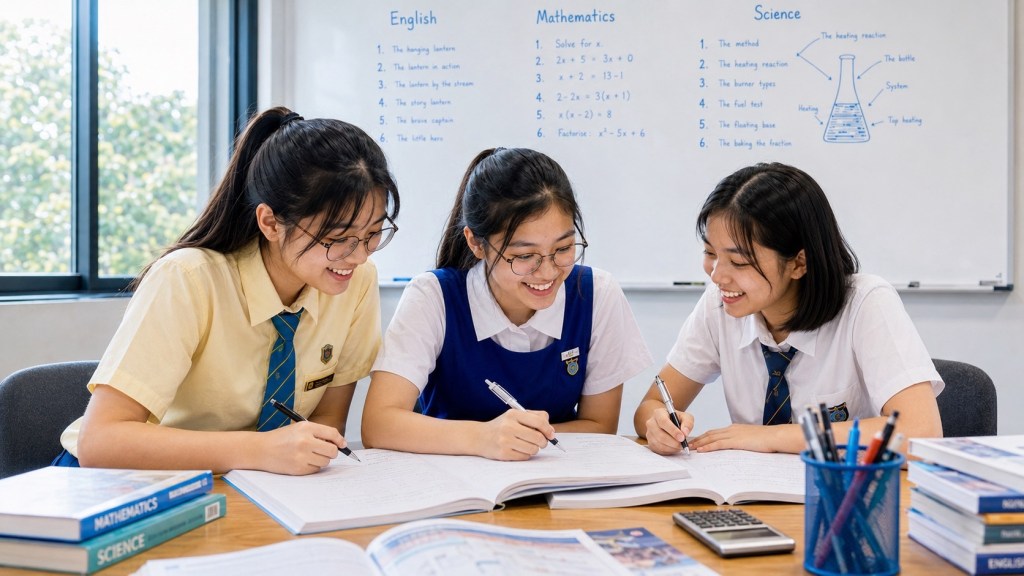
The featured classroom photograph illustrates eduKate’s learning theme; it does not depict the named place, artwork, institution or activity.
Continue exploring Sengkang
Outram Secondary School history · Compassvale Secondary School history · Rivervale Primary School history
