
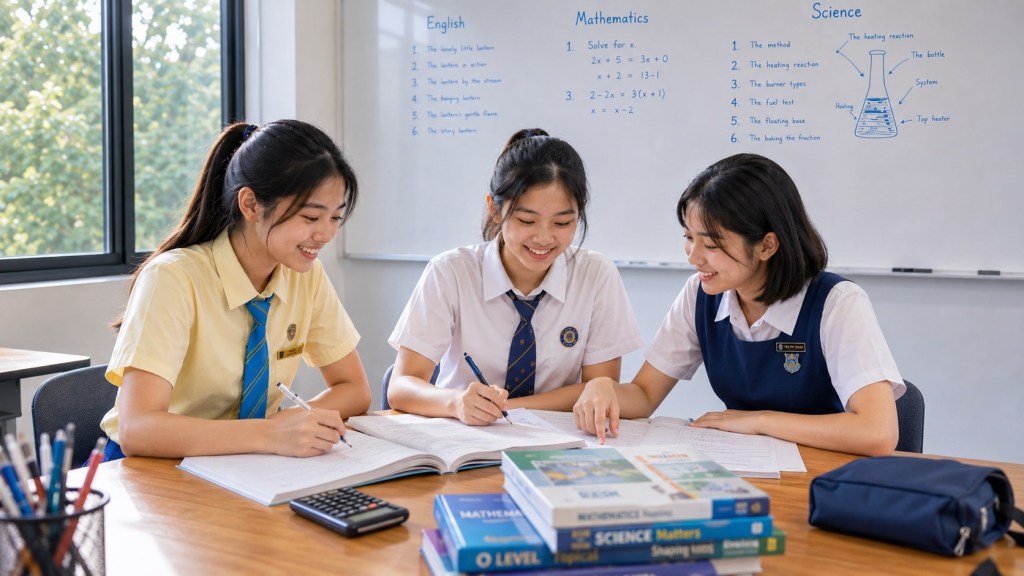
A Science study environment should make the next learning action obvious and distractions harder to reach. The desk, phone, noise level, lighting, materials and digital setup do not teach Science by themselves, but they can either support or interrupt retrieval, problem solving, graph interpretation and correction. For parents searching for how to focus while studying, the best study environment, Science revision setup, study desk ideas or Science tuition support in Sengkang, the useful principle is simple: arrange the environment around the learning job, not around appearance.
University learning centres commonly recommend reducing avoidable distractions, using a reasonably quiet study zone and limiting unnecessary device access when focus matters. Cornell’s Learning Strategies Center advises students to turn off and remove distractions when building a study schedule, while Harvard and Penn teaching resources similarly note that digital devices can pull attention away from learning. The goal is not to create a perfect silent room for every student. It is to reduce switching costs so more attention stays on the Science.
This guide turns the environment into a practical Science system. A good setup should answer five questions: What am I studying? What tools do I need? What distractions can I remove? What output should I produce? What will I do when I get stuck?
Quick answer: the Science study-zone checklist
- one clearly defined Science task;
- only the materials needed for that task;
- phone out of reach unless required;
- notes closed during retrieval;
- calculator available only when the task needs it;
- blank paper or whiteboard for working;
- error log nearby for recurring mistakes;
- reasonable lighting and seating;
- water available;
- a planned stopping point or break.
The first environmental decision: define the task before sitting down
“Study Science” is too vague. The environment cannot support a task that has not been chosen. Write the outcome first: retrieve the water cycle from memory; solve four circuit questions; review one marked test; practise graph comparisons; complete one Secondary Chemistry calculation set.
Once the job is clear, remove materials that do not serve it. A desk covered with five books, three notebooks and several tabs creates more possible actions than the learner needs.
Phone placement matters more than phone intention
Students often intend not to use a phone but leave it beside the working area. Notifications, habit and easy access increase the chance of task switching. If the device is not needed, move it out of reach, use do-not-disturb settings or leave it in another room where practical.
If the phone is required for a timer, school platform or reference image, define that function before the session. Open the required tool, close unrelated apps and return the device to a fixed position. The goal is not moral judgement about technology; it is attention management.
Choose the material stack for the learning job
Retrieval requires a blank surface and a source to check afterward. Problem solving requires questions, working space and perhaps a calculator. Test review requires the marked paper, correction source and error log. Practical reasoning may require diagrams or method descriptions. Set out only that stack.
This small act reduces search time and the temptation to keep changing study methods in the middle of the session.
Primary Science study environment
Primary learners often need a visible, simple setup. One workbook or school resource, one blank sheet, pencil, ruler and coloured pen for corrections can be enough. Keep unrelated toys and screens away from the immediate working area during the short focus block.
Parents should not make the space feel punitive. The aim is clarity. The child should know what to do, how long the block lasts and what completion looks like.
PSLE Science study environment
PSLE revision usually needs three zones of material: current weak-topic notes, mixed questions and an error log. Keep these organised so the learner can move from retrieval to application to correction without searching through piles of paper.
During timed practice, imitate relevant examination conditions more closely: clear desk, no prompts, no answer key visible and only permitted tools. During teaching or repair, allow the supports needed to rebuild the weak link. The environment should match the purpose.
SEC G1, G2 and G3 Science study environment
Secondary students may need calculator, formula sheet where permitted for study, graph paper, textbook, practical notes and digital resources. The key is sequencing access. Do not keep the worked solution open while attempting independent practice. Do not keep a formula list visible when testing retrieval unless the exam itself provides that formula.
A more advanced learner should become able to configure the environment independently based on the task.
Noise: silence is not the only option
Some students work well in quiet; others tolerate low-level background sound. The question is whether the environment supports the specific cognitive job. Reading dense Science text, solving unfamiliar calculations and writing explanations usually require more focused attention than organising notes.
If background audio contains lyrics or constantly changing content and the student repeatedly rereads the same line, remove it. Use performance evidence rather than preference alone.
Lighting and physical comfort
Good lighting reduces unnecessary visual strain, especially for diagrams, graphs and long reading. Seating should be comfortable enough to sustain the planned block without encouraging sleep. A perfect ergonomic setup is not required, but obvious discomfort becomes another source of attention switching.
Keep a blank working surface
Science thinking needs space. Leave room for diagrams, equations, tables and scratch work. A crowded desk can encourage students to write tiny, compressed working or avoid drawing a useful representation. Blank paper or a whiteboard gives the learner permission to externalise the model.
Use a “parking lot” for distracting thoughts
If the student remembers another task, question or message during study, write it on a small parking-lot list and return to Science. This prevents the thought from becoming a full task switch while reassuring the learner that it will not be forgotten.
The browser setup for digital Science study
Use as few tabs as possible. One school platform, one textbook or reliable reference and one question source may be enough. Close entertainment, messaging and unrelated search tabs. If the learner needs to research a scientific term, write the question first so browsing remains purposeful.
The study-start ritual
- Write the task.
- Put the phone away or configure it.
- Set out only required materials.
- Choose the focus interval.
- Start with retrieval or the first question, not with desk rearrangement.
A consistent start ritual lowers the amount of decision-making required before work begins.
The study-end ritual
- Mark what was completed.
- Write the main remaining weak link.
- Put the correction into the error log.
- Choose the first task for the next session.
- Clear or file the materials.
Ending well makes the next start easier.
Study environment for blurting
Use a blank page or whiteboard with the source closed and physically moved aside. The environment should make checking slightly less convenient than retrieving so the student does not peek every few seconds.
Study environment for Pomodoro
Define the block and break before starting. Put the timer where it can run without becoming another distraction. During the break, leave the work surface briefly rather than opening another stream of digital content.
Study environment for past papers
Separate learning mode from simulation mode. When simulating, remove hints, notes and answers. When correcting, bring them back. Mixing the two environments makes it difficult to know what the student can do independently.
Study environment for three-student tuition
A small-group environment should allow each learner enough workspace to attempt independently before answers are shared. The tutor needs to see working, hear explanations and prevent one student’s response from becoming the other two students’ evidence.
Common environment mistakes
- spending more time organising the desk than studying;
- keeping every resource open at once;
- leaving answers visible during independent attempts;
- using the phone as a timer while also leaving notifications active;
- choosing a noisy environment for difficult reasoning because it feels lively;
- changing locations repeatedly instead of changing the study method;
- using environment problems to explain every learning difficulty.
The 60-second environment audit
- What is the exact Science task?
- What do I need on the desk?
- What can leave the desk?
- Is the phone necessary?
- Is the source supposed to be open or closed?
- What output proves this session is complete?
How parents can help without policing every minute
Agree on the setup before the session. Define the task, phone rule, stopping point and expected output. Then allow the child to work. Constant monitoring can itself become another interruption.
Review the result afterward. If the environment worked, preserve it. If the child still switched tasks constantly, change one variable next time rather than redesigning everything.
Useful eduKate Sengkang routes
- Master Science Tutorials Quickly | Pomodoro Technique for Science Study
- Master Science Tutorials Quickly | Whiteboard Method for Science Revision
- Advanced Science Tutorials | Science Revision Timetable
- Complete Science Index
- Cornell Learning Strategies Center | Study Schedule
Frequently asked questions
Does a perfect study desk improve grades?
No. The environment supports attention and task execution; it does not replace effective learning strategies, teaching or practice.
Should phones always be banned during study?
Not necessarily. If the device is genuinely needed, define its function and limit unrelated access. If it is not needed and repeatedly distracts, moving it away is simpler.
Is silence always best?
No. Judge the environment by whether the student can sustain the task accurately. Difficult reading and problem solving usually benefit from fewer interruptions.
The Science study-environment receipt
A good study environment reduces unnecessary decisions and makes useful work easy to start. The student knows the task, has the right tools, can keep distractions away and can produce clear evidence of learning before the session ends.
