
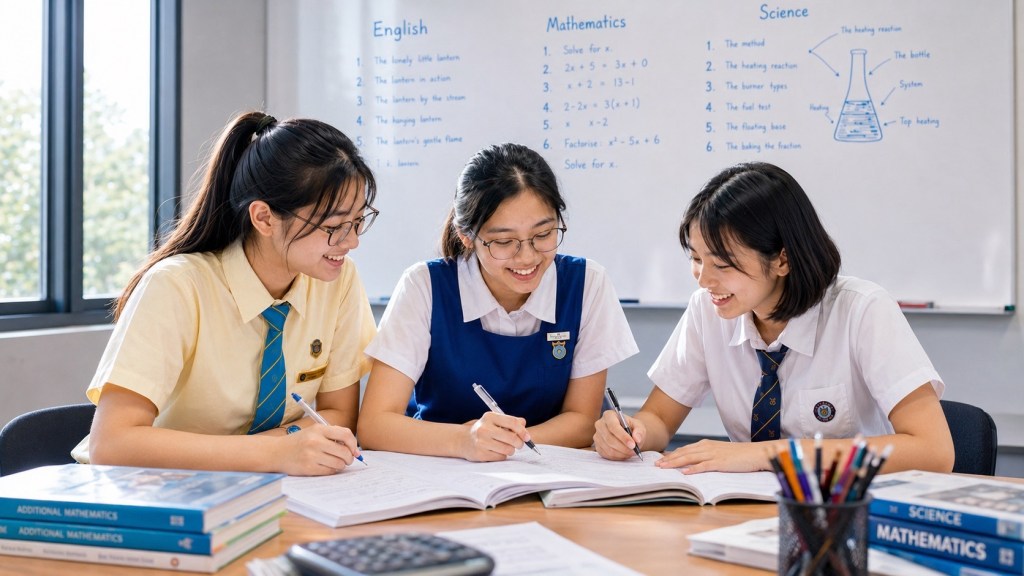
Science mnemonics and memory techniques are useful when the learner needs to retrieve ordered information, labels, vocabulary, units, classifications or short lists quickly. They are much less useful when the real problem is understanding a mechanism, applying a model or solving an unfamiliar question. The best memory tool therefore reduces the load of remembering selected details while leaving the student free to reason with the Science.
This Advanced Science Tutorials guide is written for parents and students in Sengkang, Punggol and across Singapore who search for Science mnemonics, memory techniques for Science, how to memorise Biology, Chemistry mnemonics, Physics mnemonics, how to remember Science facts, memory palace Science, acronyms for Science and how to remember scientific vocabulary. It develops a memory system from Primary Science through PSLE and Secondary G1, G2 and G3.
Retrieval-practice research consistently emphasises that durable learning comes from retrieving information over time rather than only rereading it. Mnemonics can make selected information easier to retrieve, but they should be followed by active recall and use. See Retrieval Practice Guide, Make It Stick resources, and Retrieval Practice: Creating Mnemonics.
The mnemonic decision rule
- Ask whether the information is arbitrary enough to need a memory aid.
- Make sure the learner understands the concept first.
- Choose the smallest mnemonic that solves the recall problem.
- Keep the mnemonic distinct from similar lists.
- Retrieve the actual Science, not only the mnemonic phrase.
- Use the remembered knowledge in a question, diagram or explanation.
- Retest after delay until the mnemonic becomes optional.
Primary 1 and Primary 2: use memorable language sparingly
Young learners can benefit from rhyme, rhythm, picture associations and simple sorting phrases. The adult should avoid loading every lesson with acronyms. A mnemonic is valuable only when it helps the child recall a useful relationship or sequence.
Whenever possible, pair the mnemonic with an observation, picture or story that preserves meaning.
Primary 3 and Primary 4: remember lists, then explain
Primary Science includes categories, life-cycle stages, material properties and key vocabulary. Mnemonics can help retrieve a list, but the student should then explain what each item means. Remembering the letters is only the first layer.
A useful practice is: say mnemonic → expand words → explain one example → answer one changed-context question.
Primary 5 and Primary 6: mnemonic plus mechanism
Older Primary learners can use acronyms for experimental steps, classification cues or answer-check routines, but PSLE Science also requires application. The mnemonic should point to a reasoning process, not become the answer.
For example, a checking mnemonic can remind a student to inspect command word, evidence and unit, but the student must still do the scientific reasoning.
Secondary G1, G2 and G3: memory aids should become selective
Lower Secondary Science contains more vocabulary, formulas, processes and classification systems. Mnemonics can reduce memory load for selected details, but overuse creates interference: similar acronyms become confused and students remember slogans without models.
The mature learner should know which information deserves a mnemonic and which information should be derived from understanding.
Acronym
Memory principle. An acronym uses initial letters to create a pronounceable word or short sequence.
Common failure. Students create acronyms for material that would be easier to understand conceptually.
Better memory move. Use acronyms for compact lists or checks.
Question to ask. Would I still need this if I understood the mechanism?
Practice task. Build one acronym for a true list.
A mnemonic should reduce recall friction without replacing understanding. After the cue retrieves the information, the learner should still explain, classify, calculate or apply the Science. If the mnemonic is remembered but the concept cannot be used, the memory aid has only solved part of the task.
Acrostic
Memory principle. An acrostic creates a sentence whose initial letters cue a sequence.
Common failure. Students create bizarre sentences they cannot decode later.
Better memory move. Keep wording memorable and unambiguous.
Question to ask. Does each word map to one item only?
Practice task. Create an acrostic and test after one day.
A mnemonic should reduce recall friction without replacing understanding. After the cue retrieves the information, the learner should still explain, classify, calculate or apply the Science. If the mnemonic is remembered but the concept cannot be used, the memory aid has only solved part of the task.
Rhyme
Memory principle. Rhyme uses sound structure to support recall.
Common failure. Students remember the rhyme but distort scientific wording.
Better memory move. Keep the scientific claim accurate.
Question to ask. Does the rhyme preserve the concept?
Practice task. Write one accurate two-line rhyme.
A mnemonic should reduce recall friction without replacing understanding. After the cue retrieves the information, the learner should still explain, classify, calculate or apply the Science. If the mnemonic is remembered but the concept cannot be used, the memory aid has only solved part of the task.
Rhythm
Memory principle. Rhythm groups information into a repeatable spoken pattern.
Common failure. Students chant without understanding.
Better memory move. Use rhythm only after meaning is secure.
Question to ask. Can you explain each item without the rhythm?
Practice task. Speak then expand the list.
A mnemonic should reduce recall friction without replacing understanding. After the cue retrieves the information, the learner should still explain, classify, calculate or apply the Science. If the mnemonic is remembered but the concept cannot be used, the memory aid has only solved part of the task.
Song
Memory principle. Melody can make sequences or vocabulary memorable.
Common failure. Students remember lyrics but not scientific relationships.
Better memory move. Use songs for labels or lists, then transfer to questions.
Question to ask. What does each line actually mean?
Practice task. Create a short chorus and explanation.
A mnemonic should reduce recall friction without replacing understanding. After the cue retrieves the information, the learner should still explain, classify, calculate or apply the Science. If the mnemonic is remembered but the concept cannot be used, the memory aid has only solved part of the task.
Chunking
Memory principle. Chunking groups many items into meaningful smaller units.
Common failure. Students try to memorise one long undifferentiated list.
Better memory move. Group by scientific category or relationship.
Question to ask. Which items naturally belong together?
Practice task. Split a 12-item list into 3–4 chunks.
A mnemonic should reduce recall friction without replacing understanding. After the cue retrieves the information, the learner should still explain, classify, calculate or apply the Science. If the mnemonic is remembered but the concept cannot be used, the memory aid has only solved part of the task.
Category chunk
Memory principle. Grouping by category makes memory semantic rather than arbitrary.
Common failure. Students group by page order.
Better memory move. Use scientific relationships as the chunk rule.
Question to ask. Why do these items belong together?
Practice task. Reorganise vocabulary by category.
A mnemonic should reduce recall friction without replacing understanding. After the cue retrieves the information, the learner should still explain, classify, calculate or apply the Science. If the mnemonic is remembered but the concept cannot be used, the memory aid has only solved part of the task.
Sequence chunk
Memory principle. Processes can be broken into stages.
Common failure. Students memorise every microstep equally.
Better memory move. Group steps into phases.
Question to ask. What marks the transition between phases?
Practice task. Create three-stage summary.
A mnemonic should reduce recall friction without replacing understanding. After the cue retrieves the information, the learner should still explain, classify, calculate or apply the Science. If the mnemonic is remembered but the concept cannot be used, the memory aid has only solved part of the task.
Paired association
Memory principle. Paired associations link term and meaning or quantity and unit.
Common failure. Students memorise one direction only.
Better memory move. Retrieve both directions selectively.
Question to ask. Can you identify term from definition and definition from term?
Practice task. Make reciprocal pairs.
A mnemonic should reduce recall friction without replacing understanding. After the cue retrieves the information, the learner should still explain, classify, calculate or apply the Science. If the mnemonic is remembered but the concept cannot be used, the memory aid has only solved part of the task.
Keyword image
Memory principle. A keyword image links a difficult term with a memorable visual cue.
Common failure. Students choose an image unrelated to meaning.
Better memory move. Make the image point to one scientifically relevant feature.
Question to ask. What does the image remind you to recall?
Practice task. Create a simple sketch association.
A mnemonic should reduce recall friction without replacing understanding. After the cue retrieves the information, the learner should still explain, classify, calculate or apply the Science. If the mnemonic is remembered but the concept cannot be used, the memory aid has only solved part of the task.
Concrete connection
Memory principle. A concrete connection links abstract information to a vivid known object or event.
Common failure. Students create connections that are memorable but scientifically misleading.
Better memory move. State where the analogy stops.
Question to ask. Which feature is useful?
Practice task. Build one safe connection.
A mnemonic should reduce recall friction without replacing understanding. After the cue retrieves the information, the learner should still explain, classify, calculate or apply the Science. If the mnemonic is remembered but the concept cannot be used, the memory aid has only solved part of the task.
Story chain
Memory principle. A story links items in sequence.
Common failure. Students remember story events but not item order.
Better memory move. Make each event explicitly cue one Science item.
Question to ask. Can you decode the list without hesitation?
Practice task. Create a 5-item story.
A mnemonic should reduce recall friction without replacing understanding. After the cue retrieves the information, the learner should still explain, classify, calculate or apply the Science. If the mnemonic is remembered but the concept cannot be used, the memory aid has only solved part of the task.
Journey method
Memory principle. A familiar route can store ordered items at distinct locations.
Common failure. Students choose locations too similar to distinguish.
Better memory move. Use stable, vivid landmarks.
Question to ask. Which item is stored at each place?
Practice task. Build a five-stop route.
A mnemonic should reduce recall friction without replacing understanding. After the cue retrieves the information, the learner should still explain, classify, calculate or apply the Science. If the mnemonic is remembered but the concept cannot be used, the memory aid has only solved part of the task.
Memory palace
Memory principle. A memory palace places information in imagined familiar locations.
Common failure. Students use it for concepts that should be reasoned instead.
Better memory move. Reserve it for arbitrary ordered or grouped information.
Question to ask. Would a concept map work better?
Practice task. Build one small palace.
A mnemonic should reduce recall friction without replacing understanding. After the cue retrieves the information, the learner should still explain, classify, calculate or apply the Science. If the mnemonic is remembered but the concept cannot be used, the memory aid has only solved part of the task.
Visual exaggeration
Memory principle. Unusual imagery can strengthen a mnemonic association.
Common failure. Students confuse exaggerated image with scientific reality.
Better memory move. Keep the image clearly symbolic.
Question to ask. What is literal and what is memory aid?
Practice task. Create one exaggerated cue.
A mnemonic should reduce recall friction without replacing understanding. After the cue retrieves the information, the learner should still explain, classify, calculate or apply the Science. If the mnemonic is remembered but the concept cannot be used, the memory aid has only solved part of the task.
Humour
Memory principle. Humour can make a mnemonic distinctive.
Common failure. Students remember joke more than content.
Better memory move. Tie the punch line directly to the item.
Question to ask. Can the joke decode the Science?
Practice task. Test recall after delay.
A mnemonic should reduce recall friction without replacing understanding. After the cue retrieves the information, the learner should still explain, classify, calculate or apply the Science. If the mnemonic is remembered but the concept cannot be used, the memory aid has only solved part of the task.
Personal association
Memory principle. Personal examples can make recall distinctive.
Common failure. Students rely on private associations that do not generalise.
Better memory move. Use personal cue only for retrieval, then state formal Science.
Question to ask. What is the official term after the cue?
Practice task. Create one personal cue.
A mnemonic should reduce recall friction without replacing understanding. After the cue retrieves the information, the learner should still explain, classify, calculate or apply the Science. If the mnemonic is remembered but the concept cannot be used, the memory aid has only solved part of the task.
Spatial layout
Memory principle. Consistent spatial placement can support recall.
Common failure. Students memorise page position and fail when layout changes.
Better memory move. Use layout as an initial cue, then vary representation.
Question to ask. Can you retrieve when positions change?
Practice task. Redraw in a new layout.
A mnemonic should reduce recall friction without replacing understanding. After the cue retrieves the information, the learner should still explain, classify, calculate or apply the Science. If the mnemonic is remembered but the concept cannot be used, the memory aid has only solved part of the task.
Colour cue
Memory principle. Colour can distinguish categories.
Common failure. Students depend on colour and cannot recall in black-and-white exams.
Better memory move. Use colour as secondary cue only.
Question to ask. Can you retrieve without colour?
Practice task. Test monochrome.
A mnemonic should reduce recall friction without replacing understanding. After the cue retrieves the information, the learner should still explain, classify, calculate or apply the Science. If the mnemonic is remembered but the concept cannot be used, the memory aid has only solved part of the task.
Shape cue
Memory principle. Shapes can represent different concept classes.
Common failure. Students infer shape has literal scientific meaning.
Better memory move. Use a legend and fade the cue later.
Question to ask. What category does the shape represent?
Practice task. Build a simple icon system.
A mnemonic should reduce recall friction without replacing understanding. After the cue retrieves the information, the learner should still explain, classify, calculate or apply the Science. If the mnemonic is remembered but the concept cannot be used, the memory aid has only solved part of the task.
Gesture
Memory principle. Physical gestures can cue direction or sequence.
Common failure. Students perform movement without verbal explanation.
Better memory move. Pair gesture with scientific language.
Question to ask. What concept does the movement represent?
Practice task. Use one gesture then explain.
A mnemonic should reduce recall friction without replacing understanding. After the cue retrieves the information, the learner should still explain, classify, calculate or apply the Science. If the mnemonic is remembered but the concept cannot be used, the memory aid has only solved part of the task.
Location cue
Memory principle. Apparatus or anatomy location can cue names.
Common failure. Students know positions only in one orientation.
Better memory move. Rotate diagrams after initial learning.
Question to ask. Can you identify when orientation changes?
Practice task. Use rotated-image practice.
A mnemonic should reduce recall friction without replacing understanding. After the cue retrieves the information, the learner should still explain, classify, calculate or apply the Science. If the mnemonic is remembered but the concept cannot be used, the memory aid has only solved part of the task.
First-letter cue
Memory principle. Initial letters can provide partial retrieval support.
Common failure. Students stop after recalling letters.
Better memory move. Expand each letter into term and explanation.
Question to ask. What does each term mean?
Practice task. Use acronym then teach back.
A mnemonic should reduce recall friction without replacing understanding. After the cue retrieves the information, the learner should still explain, classify, calculate or apply the Science. If the mnemonic is remembered but the concept cannot be used, the memory aid has only solved part of the task.
Last-letter cue
Memory principle. Some learners use endings to distinguish similar terms.
Common failure. Students create arbitrary cues that interfere.
Better memory move. Use only if it helps discriminate.
Question to ask. Does the cue reduce a real confusion?
Practice task. Test paired terms.
A mnemonic should reduce recall friction without replacing understanding. After the cue retrieves the information, the learner should still explain, classify, calculate or apply the Science. If the mnemonic is remembered but the concept cannot be used, the memory aid has only solved part of the task.
Root-word mnemonic
Memory principle. Prefixes, roots and suffixes can support vocabulary memory.
Common failure. Students treat word roots as exact definitions.
Better memory move. Use roots as clues, then confirm scientific meaning.
Question to ask. What does the root suggest and what is the precise definition?
Practice task. Analyse one term.
A mnemonic should reduce recall friction without replacing understanding. After the cue retrieves the information, the learner should still explain, classify, calculate or apply the Science. If the mnemonic is remembered but the concept cannot be used, the memory aid has only solved part of the task.
Prefix cue
Memory principle. Prefixes such as endo-, exo-, hypo- or hyper- can cue direction or relative meaning.
Common failure. Students generalise across words where usage differs.
Better memory move. Verify each course term.
Question to ask. Does the prefix map correctly here?
Practice task. Build prefix table.
A mnemonic should reduce recall friction without replacing understanding. After the cue retrieves the information, the learner should still explain, classify, calculate or apply the Science. If the mnemonic is remembered but the concept cannot be used, the memory aid has only solved part of the task.
Suffix cue
Memory principle. Suffixes can signal process, structure or field.
Common failure. Students overinterpret morphology.
Better memory move. Use as orientation, not final definition.
Question to ask. What exact scientific meaning applies?
Practice task. Compare related words.
A mnemonic should reduce recall friction without replacing understanding. After the cue retrieves the information, the learner should still explain, classify, calculate or apply the Science. If the mnemonic is remembered but the concept cannot be used, the memory aid has only solved part of the task.
Etymology
Memory principle. Word origins can make terminology memorable.
Common failure. Students spend time on history irrelevant to assessment.
Better memory move. Use only when origin clarifies meaning.
Question to ask. Does this help current recall?
Practice task. Write one etymology note.
A mnemonic should reduce recall friction without replacing understanding. After the cue retrieves the information, the learner should still explain, classify, calculate or apply the Science. If the mnemonic is remembered but the concept cannot be used, the memory aid has only solved part of the task.
Formula mnemonic
Memory principle. A phrase or visual can help remember formula structure.
Common failure. Students memorise the mnemonic and ignore units or model.
Better memory move. Pair formula with quantity names and units.
Question to ask. Why does the relationship make sense?
Practice task. Retrieve formula then explain it.
A mnemonic should reduce recall friction without replacing understanding. After the cue retrieves the information, the learner should still explain, classify, calculate or apply the Science. If the mnemonic is remembered but the concept cannot be used, the memory aid has only solved part of the task.
Formula triangle
Memory principle. A triangle can cue simple multiplicative rearrangement.
Common failure. Students depend on it and struggle with complex equations.
Better memory move. Use temporarily, then learn algebraic rearrangement.
Question to ask. Can you solve without the triangle?
Practice task. Fade the triangle.
A mnemonic should reduce recall friction without replacing understanding. After the cue retrieves the information, the learner should still explain, classify, calculate or apply the Science. If the mnemonic is remembered but the concept cannot be used, the memory aid has only solved part of the task.
Unit mnemonic
Memory principle. Mnemonics can remember SI prefixes or unit families.
Common failure. Students remember prefix order but not factors of ten.
Better memory move. Expand every prefix into its magnitude.
Question to ask. What power of ten belongs to each?
Practice task. Test conversions.
A mnemonic should reduce recall friction without replacing understanding. After the cue retrieves the information, the learner should still explain, classify, calculate or apply the Science. If the mnemonic is remembered but the concept cannot be used, the memory aid has only solved part of the task.
Planet-order mnemonic
Memory principle. Planet order is a classic arbitrary sequence suitable for a mnemonic.
Common failure. Students learn order but not planetary properties.
Better memory move. Use the mnemonic only for sequence, then study characteristics separately.
Question to ask. What else must be known beyond order?
Practice task. Recall order then compare planets.
A mnemonic should reduce recall friction without replacing understanding. After the cue retrieves the information, the learner should still explain, classify, calculate or apply the Science. If the mnemonic is remembered but the concept cannot be used, the memory aid has only solved part of the task.
Taxonomy mnemonic
Memory principle. Hierarchical category orders can be supported by acrostics.
Common failure. Students remember hierarchy names but not classification criteria.
Better memory move. Pair each level with meaning.
Question to ask. What changes at each level?
Practice task. Use hierarchy plus examples.
A mnemonic should reduce recall friction without replacing understanding. After the cue retrieves the information, the learner should still explain, classify, calculate or apply the Science. If the mnemonic is remembered but the concept cannot be used, the memory aid has only solved part of the task.
Life-cycle mnemonic
Memory principle. A mnemonic can cue stages when sequence matters.
Common failure. Students think every life cycle follows same stages.
Better memory move. Use species-specific or concept-specific cue.
Question to ask. Which stages actually apply?
Practice task. Create accurate cycle aid.
A mnemonic should reduce recall friction without replacing understanding. After the cue retrieves the information, the learner should still explain, classify, calculate or apply the Science. If the mnemonic is remembered but the concept cannot be used, the memory aid has only solved part of the task.
Rock-cycle mnemonic
Memory principle. Because the rock cycle is a network, a fixed mnemonic can mislead.
Common failure. Students force a linear sequence.
Better memory move. Use process mnemonics rather than one circular order.
Question to ask. Which transformations are possible?
Practice task. Choose a concept map instead.
A mnemonic should reduce recall friction without replacing understanding. After the cue retrieves the information, the learner should still explain, classify, calculate or apply the Science. If the mnemonic is remembered but the concept cannot be used, the memory aid has only solved part of the task.
Water-cycle mnemonic
Memory principle. A list mnemonic can cue processes such as evaporation and condensation.
Common failure. Students think all water follows the same order.
Better memory move. Pair mnemonic with network diagram.
Question to ask. What alternative pathways exist?
Practice task. Use list plus map.
A mnemonic should reduce recall friction without replacing understanding. After the cue retrieves the information, the learner should still explain, classify, calculate or apply the Science. If the mnemonic is remembered but the concept cannot be used, the memory aid has only solved part of the task.
Electromagnetic-spectrum mnemonic
Memory principle. Ordered categories may be supported by an acrostic at suitable Secondary level.
Common failure. Students know order but not wavelength/frequency trends.
Better memory move. Add directional trend to mnemonic.
Question to ask. Which way do frequency and wavelength change?
Practice task. Recall order and trends.
A mnemonic should reduce recall friction without replacing understanding. After the cue retrieves the information, the learner should still explain, classify, calculate or apply the Science. If the mnemonic is remembered but the concept cannot be used, the memory aid has only solved part of the task.
Reactivity-series mnemonic
Memory principle. Ordered chemical lists can be mnemonic-friendly at course level.
Common failure. Students remember order without understanding displacement or extraction.
Better memory move. Pair sequence with application questions.
Question to ask. What does higher position predict?
Practice task. Use order then solve reaction.
A mnemonic should reduce recall friction without replacing understanding. After the cue retrieves the information, the learner should still explain, classify, calculate or apply the Science. If the mnemonic is remembered but the concept cannot be used, the memory aid has only solved part of the task.
Colour-change mnemonic
Memory principle. Indicators or test colours may be remembered with cue systems.
Common failure. Students rely on arbitrary phrases and reverse colours.
Better memory move. Use table plus retrieval and actual supervised observation when available.
Question to ask. Which reagent/test is being used?
Practice task. Test both directions.
A mnemonic should reduce recall friction without replacing understanding. After the cue retrieves the information, the learner should still explain, classify, calculate or apply the Science. If the mnemonic is remembered but the concept cannot be used, the memory aid has only solved part of the task.
Food-test mnemonic
Memory principle. School food tests contain reagent-result pairs that may benefit from memory aids.
Common failure. Students confuse reagent, procedure and positive result.
Better memory move. Use separate cards or paired mnemonic for each test.
Question to ask. What does a positive result indicate?
Practice task. Retrieve and verify against school notes.
A mnemonic should reduce recall friction without replacing understanding. After the cue retrieves the information, the learner should still explain, classify, calculate or apply the Science. If the mnemonic is remembered but the concept cannot be used, the memory aid has only solved part of the task.
Cell-organelle mnemonic
Memory principle. Mnemonics can cue organelle functions.
Common failure. Students anthropomorphise functions or oversimplify.
Better memory move. Use function phrases accurately.
Question to ask. Which organelle does this function and how?
Practice task. Use mnemonic then diagram.
A mnemonic should reduce recall friction without replacing understanding. After the cue retrieves the information, the learner should still explain, classify, calculate or apply the Science. If the mnemonic is remembered but the concept cannot be used, the memory aid has only solved part of the task.
Body-system mnemonic
Memory principle. Lists of organs may be supported by ordered cues.
Common failure. Students memorise order but miss cross-system interactions.
Better memory move. Pair with flow diagram.
Question to ask. What moves between organs?
Practice task. Recall then explain pathway.
A mnemonic should reduce recall friction without replacing understanding. After the cue retrieves the information, the learner should still explain, classify, calculate or apply the Science. If the mnemonic is remembered but the concept cannot be used, the memory aid has only solved part of the task.
Disease-agent mnemonic
Memory principle. Classification aids can distinguish bacteria, viruses or other agents.
Common failure. Students create unsafe or stigmatizing simplifications.
Better memory move. Keep categories scientifically accurate and neutral.
Question to ask. What biological distinction matters?
Practice task. Use comparison table.
A mnemonic should reduce recall friction without replacing understanding. After the cue retrieves the information, the learner should still explain, classify, calculate or apply the Science. If the mnemonic is remembered but the concept cannot be used, the memory aid has only solved part of the task.
Physics-direction mnemonic
Memory principle. Directional rules sometimes use physical hand rules or conventional cues.
Common failure. Students apply them without understanding conditions.
Better memory move. Use course-approved conventions and always identify vectors first.
Question to ask. What quantities determine direction?
Practice task. Apply to changed orientation.
A mnemonic should reduce recall friction without replacing understanding. After the cue retrieves the information, the learner should still explain, classify, calculate or apply the Science. If the mnemonic is remembered but the concept cannot be used, the memory aid has only solved part of the task.
Graph mnemonic
Memory principle. A short checklist can cue axis, units, scale, trend and anomaly.
Common failure. Students remember acronym but skip actual graph reading.
Better memory move. Expand every letter into an action.
Question to ask. Did I do the operation?
Practice task. Use on five graphs.
A mnemonic should reduce recall friction without replacing understanding. After the cue retrieves the information, the learner should still explain, classify, calculate or apply the Science. If the mnemonic is remembered but the concept cannot be used, the memory aid has only solved part of the task.
Experiment mnemonic
Memory principle. A checklist can cue question, variables, controls, measure, repeats and conclusion.
Common failure. Students treat acronym as answer.
Better memory move. Use it to structure analysis.
Question to ask. Which step protects validity?
Practice task. Apply to unfamiliar method.
A mnemonic should reduce recall friction without replacing understanding. After the cue retrieves the information, the learner should still explain, classify, calculate or apply the Science. If the mnemonic is remembered but the concept cannot be used, the memory aid has only solved part of the task.
Exam-check mnemonic
Memory principle. A personal mnemonic can cue command, unit, condition and completeness.
Common failure. Students create a long universal acronym.
Better memory move. Keep it to recurring personal errors.
Question to ask. Which checks save marks for this student?
Practice task. Build 3–5 item cue.
A mnemonic should reduce recall friction without replacing understanding. After the cue retrieves the information, the learner should still explain, classify, calculate or apply the Science. If the mnemonic is remembered but the concept cannot be used, the memory aid has only solved part of the task.
CER mnemonic
Memory principle. Claim-Evidence-Reasoning is itself a memorable structure.
Common failure. Students write labels instead of explanation.
Better memory move. Use structure then remove visible labels.
Question to ask. Does reasoning actually connect evidence?
Practice task. Write a natural paragraph.
A mnemonic should reduce recall friction without replacing understanding. After the cue retrieves the information, the learner should still explain, classify, calculate or apply the Science. If the mnemonic is remembered but the concept cannot be used, the memory aid has only solved part of the task.
Cause-process-effect mnemonic
Memory principle. A three-part sequence can cue explanation construction.
Common failure. Students produce a rigid sentence formula.
Better memory move. Use as planning structure, not forced wording.
Question to ask. What process belongs in the middle?
Practice task. Use across three topics.
A mnemonic should reduce recall friction without replacing understanding. After the cue retrieves the information, the learner should still explain, classify, calculate or apply the Science. If the mnemonic is remembered but the concept cannot be used, the memory aid has only solved part of the task.
IV-DV-CV mnemonic
Memory principle. Variable abbreviations reduce wording load.
Common failure. Students know letters but cannot infer variables.
Better memory move. Use only after rewriting question as X affects Y.
Question to ask. What is changed and measured?
Practice task. Identify in new setup.
A mnemonic should reduce recall friction without replacing understanding. After the cue retrieves the information, the learner should still explain, classify, calculate or apply the Science. If the mnemonic is remembered but the concept cannot be used, the memory aid has only solved part of the task.
Accuracy-precision mnemonic
Memory principle. A visual target image can distinguish concepts better than verbal mnemonic.
Common failure. Students memorise AP definitions but still confuse data cases.
Better memory move. Use target patterns and examples.
Question to ask. Is the centre correct or spread tight?
Practice task. Classify datasets.
A mnemonic should reduce recall friction without replacing understanding. After the cue retrieves the information, the learner should still explain, classify, calculate or apply the Science. If the mnemonic is remembered but the concept cannot be used, the memory aid has only solved part of the task.
Random-systematic mnemonic
Memory principle. Directional cue can help distinguish variation from bias.
Common failure. Students use a catchy phrase without diagnosing mechanism.
Better memory move. Ask whether errors change direction or persist.
Question to ask. Would repeats fix it?
Practice task. Classify examples.
A mnemonic should reduce recall friction without replacing understanding. After the cue retrieves the information, the learner should still explain, classify, calculate or apply the Science. If the mnemonic is remembered but the concept cannot be used, the memory aid has only solved part of the task.
Mass-weight mnemonic
Memory principle. A unit cue can distinguish kg and N.
Common failure. Students reduce concept to units only.
Better memory move. Use units plus definition and gravitational relationship.
Question to ask. Which quantity changes with gravity?
Practice task. Compare Moon/Earth case.
A mnemonic should reduce recall friction without replacing understanding. After the cue retrieves the information, the learner should still explain, classify, calculate or apply the Science. If the mnemonic is remembered but the concept cannot be used, the memory aid has only solved part of the task.
Heat-temperature mnemonic
Memory principle. A contrast phrase can help keep transfer versus measure distinct.
Common failure. Students repeat phrase without mechanism.
Better memory move. Pair with examples.
Question to ask. What flows and what is measured?
Practice task. Explain metal/wood case.
A mnemonic should reduce recall friction without replacing understanding. After the cue retrieves the information, the learner should still explain, classify, calculate or apply the Science. If the mnemonic is remembered but the concept cannot be used, the memory aid has only solved part of the task.
Breathing-respiration mnemonic
Memory principle. A contrast cue can separate ventilation from cellular chemistry.
Common failure. Students know cue but cannot connect scales.
Better memory move. Map lungs → blood → cells.
Question to ask. Where does each process occur?
Practice task. Teach back.
A mnemonic should reduce recall friction without replacing understanding. After the cue retrieves the information, the learner should still explain, classify, calculate or apply the Science. If the mnemonic is remembered but the concept cannot be used, the memory aid has only solved part of the task.
Weather-climate mnemonic
Memory principle. A timescale cue can distinguish short-term versus long-term patterns.
Common failure. Students reduce climate to ‘long weather’.
Better memory move. Pair with datasets and statistical idea.
Question to ask. What period is measured?
Practice task. Compare one day with 30-year norm.
A mnemonic should reduce recall friction without replacing understanding. After the cue retrieves the information, the learner should still explain, classify, calculate or apply the Science. If the mnemonic is remembered but the concept cannot be used, the memory aid has only solved part of the task.
Adaptation-acclimatisation mnemonic
Memory principle. A contrast cue can distinguish inherited population traits from individual short-term responses.
Common failure. Students use both words interchangeably.
Better memory move. Pair with timescale and inheritance.
Question to ask. Does the change pass to offspring?
Practice task. Classify examples.
A mnemonic should reduce recall friction without replacing understanding. After the cue retrieves the information, the learner should still explain, classify, calculate or apply the Science. If the mnemonic is remembered but the concept cannot be used, the memory aid has only solved part of the task.
Moon-phase mnemonic
Memory principle. Phase names can be memorised, but geometry must be understood.
Common failure. Students know order but believe shadow misconception.
Better memory move. Pair names with Sun-Earth-Moon model.
Question to ask. What portion is illuminated?
Practice task. Use model after mnemonic.
A mnemonic should reduce recall friction without replacing understanding. After the cue retrieves the information, the learner should still explain, classify, calculate or apply the Science. If the mnemonic is remembered but the concept cannot be used, the memory aid has only solved part of the task.
Season mnemonic
Memory principle. Season order does not solve axial-tilt reasoning.
Common failure. Students memorise months instead of mechanism.
Better memory move. Use mnemonic only for dates if needed; learn tilt separately.
Question to ask. Why are hemispheres opposite?
Practice task. Explain after recall.
A mnemonic should reduce recall friction without replacing understanding. After the cue retrieves the information, the learner should still explain, classify, calculate or apply the Science. If the mnemonic is remembered but the concept cannot be used, the memory aid has only solved part of the task.
Astronomy scale mnemonic
Memory principle. Unit sequences can be cued but must preserve meaning.
Common failure. Students remember km-AU-ly without scale sense.
Better memory move. Attach real benchmarks.
Question to ask. What distance range suits each unit?
Practice task. Choose unit for objects.
A mnemonic should reduce recall friction without replacing understanding. After the cue retrieves the information, the learner should still explain, classify, calculate or apply the Science. If the mnemonic is remembered but the concept cannot be used, the memory aid has only solved part of the task.
Safety mnemonic
Memory principle. Short safety cues can remind students to stop, ask and report.
Common failure. Students treat mnemonic as substitute for teacher instructions.
Better memory move. Use only as a reminder within school procedures.
Question to ask. What specific hazard exists?
Practice task. Apply teacher-approved rule.
A mnemonic should reduce recall friction without replacing understanding. After the cue retrieves the information, the learner should still explain, classify, calculate or apply the Science. If the mnemonic is remembered but the concept cannot be used, the memory aid has only solved part of the task.
Lab-equipment mnemonic
Memory principle. Equipment names can be recalled with grouped images.
Common failure. Students memorise names but misuse apparatus.
Better memory move. Pair name with measured quantity and safety.
Question to ask. What does this instrument measure?
Practice task. Match tools to tasks.
A mnemonic should reduce recall friction without replacing understanding. After the cue retrieves the information, the learner should still explain, classify, calculate or apply the Science. If the mnemonic is remembered but the concept cannot be used, the memory aid has only solved part of the task.
Sequence interference
Memory principle. Multiple similar mnemonics can compete in memory.
Common failure. Students create acronyms for every chapter.
Better memory move. Limit the number of mnemonic systems active at once.
Question to ask. Could this be confused with another cue?
Practice task. Audit and delete weak mnemonics.
A mnemonic should reduce recall friction without replacing understanding. After the cue retrieves the information, the learner should still explain, classify, calculate or apply the Science. If the mnemonic is remembered but the concept cannot be used, the memory aid has only solved part of the task.
Cue overload
Memory principle. A mnemonic with too many steps becomes another list to memorise.
Common failure. Students make ten-word acrostics.
Better memory move. Keep the aid shorter than the target information when possible.
Question to ask. Is this actually easier?
Practice task. Compress or abandon.
A mnemonic should reduce recall friction without replacing understanding. After the cue retrieves the information, the learner should still explain, classify, calculate or apply the Science. If the mnemonic is remembered but the concept cannot be used, the memory aid has only solved part of the task.
Meaningless phrase
Memory principle. A phrase may be memorable but hard to decode.
Common failure. Students recall sentence but not target items.
Better memory move. Strengthen one-to-one mapping.
Question to ask. Can each word expand immediately?
Practice task. Test decoding speed.
A mnemonic should reduce recall friction without replacing understanding. After the cue retrieves the information, the learner should still explain, classify, calculate or apply the Science. If the mnemonic is remembered but the concept cannot be used, the memory aid has only solved part of the task.
Misleading mnemonic
Memory principle. Some memory aids oversimplify Science.
Common failure. Students carry mnemonic into contexts where it fails.
Better memory move. State limitation on the card or note.
Question to ask. Under what conditions is this cue valid?
Practice task. Add a warning example.
A mnemonic should reduce recall friction without replacing understanding. After the cue retrieves the information, the learner should still explain, classify, calculate or apply the Science. If the mnemonic is remembered but the concept cannot be used, the memory aid has only solved part of the task.
Outdated mnemonic
Memory principle. Curriculum terminology can change.
Common failure. Students inherit old mnemonics from older siblings or websites.
Better memory move. Check current syllabus and school wording.
Question to ask. Does each term still match course?
Practice task. Update or retire.
A mnemonic should reduce recall friction without replacing understanding. After the cue retrieves the information, the learner should still explain, classify, calculate or apply the Science. If the mnemonic is remembered but the concept cannot be used, the memory aid has only solved part of the task.
Personal mnemonic
Memory principle. Learner-created cues are often more memorable.
Common failure. Students copy internet mnemonics that mean nothing personally.
Better memory move. Create own image, phrase or association.
Question to ask. Why is this cue memorable to you?
Practice task. Design one personal version.
A mnemonic should reduce recall friction without replacing understanding. After the cue retrieves the information, the learner should still explain, classify, calculate or apply the Science. If the mnemonic is remembered but the concept cannot be used, the memory aid has only solved part of the task.
Shared mnemonic
Memory principle. Class mnemonics support common language.
Common failure. Students assume shared mnemonic must be used even if confusing.
Better memory move. Keep alternative personal cues available.
Question to ask. Does it improve retrieval for this learner?
Practice task. Compare two options.
A mnemonic should reduce recall friction without replacing understanding. After the cue retrieves the information, the learner should still explain, classify, calculate or apply the Science. If the mnemonic is remembered but the concept cannot be used, the memory aid has only solved part of the task.
Teacher mnemonic
Memory principle. Teacher-provided cues may align well to marking language.
Common failure. Students repeat without understanding.
Better memory move. Ask teacher what concept the cue protects.
Question to ask. What mistake is it preventing?
Practice task. Use in one question.
A mnemonic should reduce recall friction without replacing understanding. After the cue retrieves the information, the learner should still explain, classify, calculate or apply the Science. If the mnemonic is remembered but the concept cannot be used, the memory aid has only solved part of the task.
Internet mnemonic
Memory principle. Online mnemonic lists vary in quality.
Common failure. Students accept memorable inaccuracies.
Better memory move. Verify content against authoritative materials.
Question to ask. Is every mapped item scientifically correct?
Practice task. Audit one online mnemonic.
A mnemonic should reduce recall friction without replacing understanding. After the cue retrieves the information, the learner should still explain, classify, calculate or apply the Science. If the mnemonic is remembered but the concept cannot be used, the memory aid has only solved part of the task.
AI-generated mnemonic
Memory principle. AI can quickly generate memory aids but may distort terminology or order.
Common failure. Students use the first generated phrase.
Better memory move. Verify every mapping and choose only if memorable and accurate.
Question to ask. Does each cue map one-to-one?
Practice task. Generate, audit, then test.
A mnemonic should reduce recall friction without replacing understanding. After the cue retrieves the information, the learner should still explain, classify, calculate or apply the Science. If the mnemonic is remembered but the concept cannot be used, the memory aid has only solved part of the task.
Mnemonic card
Memory principle. Flashcards can store cue on front and expanded Science on back.
Common failure. Students put mnemonic and answer together.
Better memory move. Separate retrieval from feedback.
Question to ask. Can you expand before flipping?
Practice task. Build one card.
A mnemonic should reduce recall friction without replacing understanding. After the cue retrieves the information, the learner should still explain, classify, calculate or apply the Science. If the mnemonic is remembered but the concept cannot be used, the memory aid has only solved part of the task.
Mnemonic map
Memory principle. Concept maps can show where mnemonic details belong.
Common failure. Students keep list isolated from relationships.
Better memory move. Place the mnemonic items into a conceptual structure.
Question to ask. How do the items connect?
Practice task. Add list to concept map.
A mnemonic should reduce recall friction without replacing understanding. After the cue retrieves the information, the learner should still explain, classify, calculate or apply the Science. If the mnemonic is remembered but the concept cannot be used, the memory aid has only solved part of the task.
Mnemonic plus diagram
Memory principle. Visual and verbal cues can complement each other.
Common failure. Students use redundant decorations.
Better memory move. Use diagram when spatial relation matters.
Question to ask. What does the diagram add?
Practice task. Pair one mnemonic with one figure.
A mnemonic should reduce recall friction without replacing understanding. After the cue retrieves the information, the learner should still explain, classify, calculate or apply the Science. If the mnemonic is remembered but the concept cannot be used, the memory aid has only solved part of the task.
Mnemonic plus example
Memory principle. Examples ensure the retrieved term is usable.
Common failure. Students can recite list but not identify cases.
Better memory move. Add one example after recall.
Question to ask. Can you apply the remembered item?
Practice task. Use one changed context.
A mnemonic should reduce recall friction without replacing understanding. After the cue retrieves the information, the learner should still explain, classify, calculate or apply the Science. If the mnemonic is remembered but the concept cannot be used, the memory aid has only solved part of the task.
Mnemonic plus question
Memory principle. Exam questions test whether recalled information can be selected.
Common failure. Students stop after reciting mnemonic.
Better memory move. Immediately solve one question.
Question to ask. Which item applies here?
Practice task. Use one MCQ and one open-ended item.
A mnemonic should reduce recall friction without replacing understanding. After the cue retrieves the information, the learner should still explain, classify, calculate or apply the Science. If the mnemonic is remembered but the concept cannot be used, the memory aid has only solved part of the task.
Mnemonic plus explanation
Memory principle. Mechanism writing tests understanding beyond recall.
Common failure. Students believe memory equals mastery.
Better memory move. Explain why one item matters.
Question to ask. What causal relation uses this fact?
Practice task. Write one explanation.
A mnemonic should reduce recall friction without replacing understanding. After the cue retrieves the information, the learner should still explain, classify, calculate or apply the Science. If the mnemonic is remembered but the concept cannot be used, the memory aid has only solved part of the task.
Mnemonic plus retrieval
Memory principle. The mnemonic itself should be retrieved rather than reread.
Common failure. Students stare at posters repeatedly.
Better memory move. Cover and produce the cue from memory.
Question to ask. Can you generate it after delay?
Practice task. Use closed-book recall.
A mnemonic should reduce recall friction without replacing understanding. After the cue retrieves the information, the learner should still explain, classify, calculate or apply the Science. If the mnemonic is remembered but the concept cannot be used, the memory aid has only solved part of the task.
Mnemonic plus spacing
Memory principle. Delayed returns strengthen access.
Common failure. Students repeat a mnemonic ten times in one sitting.
Better memory move. Review after increasing delays.
Question to ask. Can you recall tomorrow and next week?
Practice task. Schedule returns.
A mnemonic should reduce recall friction without replacing understanding. After the cue retrieves the information, the learner should still explain, classify, calculate or apply the Science. If the mnemonic is remembered but the concept cannot be used, the memory aid has only solved part of the task.
Mnemonic fading
Memory principle. Once knowledge is stable, the cue can become unnecessary.
Common failure. Students remain dependent on the phrase.
Better memory move. Attempt direct recall before using cue.
Question to ask. Can you retrieve the Science without mnemonic?
Practice task. Use cue only after failed recall.
A mnemonic should reduce recall friction without replacing understanding. After the cue retrieves the information, the learner should still explain, classify, calculate or apply the Science. If the mnemonic is remembered but the concept cannot be used, the memory aid has only solved part of the task.
Mnemonic retirement
Memory principle. Retire cues that create interference or no longer add value.
Common failure. Students maintain huge lists forever.
Better memory move. Keep only cues that still improve retrieval.
Question to ask. Is this mnemonic solving a current problem?
Practice task. Archive mastered cue.
A mnemonic should reduce recall friction without replacing understanding. After the cue retrieves the information, the learner should still explain, classify, calculate or apply the Science. If the mnemonic is remembered but the concept cannot be used, the memory aid has only solved part of the task.
Memory palace for lists
Memory principle. Spatial memory can support long arbitrary lists.
Common failure. Students use palaces for concepts that need mechanisms.
Better memory move. Reserve for ordered or categorical information.
Question to ask. Could I derive this instead of memorise it?
Practice task. Build a small list palace.
A mnemonic should reduce recall friction without replacing understanding. After the cue retrieves the information, the learner should still explain, classify, calculate or apply the Science. If the mnemonic is remembered but the concept cannot be used, the memory aid has only solved part of the task.
Memory palace interference
Memory principle. Using the same locations for multiple lists can cause confusion.
Common failure. Students overload one route.
Better memory move. Use separate contexts or clear resets.
Question to ask. Which list belongs here?
Practice task. Audit palace reuse.
A mnemonic should reduce recall friction without replacing understanding. After the cue retrieves the information, the learner should still explain, classify, calculate or apply the Science. If the mnemonic is remembered but the concept cannot be used, the memory aid has only solved part of the task.
Story mnemonic
Memory principle. Stories can encode ordered lists.
Common failure. Students make stories too elaborate to decode quickly.
Better memory move. Keep each event tied directly to one item.
Question to ask. Can you expand the list fast?
Practice task. Time retrieval.
A mnemonic should reduce recall friction without replacing understanding. After the cue retrieves the information, the learner should still explain, classify, calculate or apply the Science. If the mnemonic is remembered but the concept cannot be used, the memory aid has only solved part of the task.
Story interference
Memory principle. Similar stories create confusion.
Common failure. Students use the same characters for many topics.
Better memory move. Make cues distinctive.
Question to ask. Could this scene trigger another list?
Practice task. Change imagery.
A mnemonic should reduce recall friction without replacing understanding. After the cue retrieves the information, the learner should still explain, classify, calculate or apply the Science. If the mnemonic is remembered but the concept cannot be used, the memory aid has only solved part of the task.
Sound-alike mnemonic
Memory principle. Phonetic resemblance can cue unfamiliar terminology.
Common failure. Students learn incorrect pronunciation.
Better memory move. Use only if correct pronunciation is also practised.
Question to ask. Does the sound cue distort the word?
Practice task. Say official term after cue.
A mnemonic should reduce recall friction without replacing understanding. After the cue retrieves the information, the learner should still explain, classify, calculate or apply the Science. If the mnemonic is remembered but the concept cannot be used, the memory aid has only solved part of the task.
Initial-letter skeleton
Memory principle. Writing first letters can support recall during study.
Common failure. Students rely on visible letters in exams where cue is absent.
Better memory move. Fade letters over time.
Question to ask. Can you retrieve without the skeleton?
Practice task. Remove one letter each round.
A mnemonic should reduce recall friction without replacing understanding. After the cue retrieves the information, the learner should still explain, classify, calculate or apply the Science. If the mnemonic is remembered but the concept cannot be used, the memory aid has only solved part of the task.
Blank-page mnemonic recall
Memory principle. Writing all mnemonics from memory can be a quick warm-up.
Common failure. Students then stop without expanding them.
Better memory move. Require expansion and one application.
Question to ask. What Science does each cue unlock?
Practice task. Use 5-minute warm-up.
A mnemonic should reduce recall friction without replacing understanding. After the cue retrieves the information, the learner should still explain, classify, calculate or apply the Science. If the mnemonic is remembered but the concept cannot be used, the memory aid has only solved part of the task.
Exam-room cue
Memory principle. A legal memory cue must come from the student’s own memory, not unauthorised material.
Common failure. Students plan hidden crib systems.
Better memory move. Use learned mnemonics only within assessment rules.
Question to ask. Can you generate the cue independently?
Practice task. Practise without notes.
A mnemonic should reduce recall friction without replacing understanding. After the cue retrieves the information, the learner should still explain, classify, calculate or apply the Science. If the mnemonic is remembered but the concept cannot be used, the memory aid has only solved part of the task.
Mnemonic error log
Memory principle. If a mnemonic causes a mistake, record and repair it.
Common failure. Students keep using a cue because it is catchy.
Better memory move. Identify mapping failure.
Question to ask. What wrong answer did the cue create?
Practice task. Replace or retire mnemonic.
A mnemonic should reduce recall friction without replacing understanding. After the cue retrieves the information, the learner should still explain, classify, calculate or apply the Science. If the mnemonic is remembered but the concept cannot be used, the memory aid has only solved part of the task.
Mnemonic finish rule
Memory principle. A mnemonic has succeeded when the actual knowledge becomes accessible and usable.
Common failure. Students collect memory tricks as an end in themselves.
Better memory move. Stop evaluating the cleverness of the phrase and test application.
Question to ask. Can the learner answer without relying on the cue?
Practice task. Use a transfer question.
A mnemonic should reduce recall friction without replacing understanding. After the cue retrieves the information, the learner should still explain, classify, calculate or apply the Science. If the mnemonic is remembered but the concept cannot be used, the memory aid has only solved part of the task.
A twelve-week Science memory programme
- Week 1: choose what deserves memorising.
- Week 2: acronyms and acrostics.
- Week 3: chunking and categories.
- Week 4: visual and concrete associations.
- Week 5: stories, journeys and memory palaces.
- Week 6: vocabulary roots and contrasts.
- Week 7: formulas, units and sequences.
- Week 8: Biology mnemonics.
- Week 9: Chemistry and Physics mnemonics.
- Week 10: retrieval and spacing.
- Week 11: mnemonic fading and transfer.
- Week 12: interference audit and retirement.
When tuition may help with memory techniques
Extra support can help when a learner spends excessive time memorising details that should instead be understood, or when multiple mnemonics create confusion. A tutor can separate arbitrary recall from conceptual reasoning and build memory aids only where they genuinely reduce load.
For current Primary 3–6 and PSLE programme information, use Primary Science Tuition Sengkang.
Frequently asked questions
Are mnemonics good for Science?
Yes for selected lists, sequences, labels, units and vocabulary. They are not a replacement for understanding mechanisms or applying concepts.
Should I make my own mnemonic?
Often yes. Personal cues can be memorable, but every mapping must remain scientifically accurate.
What if I remember the mnemonic but forget what the letters mean?
The mnemonic is too detached from the content. Practise expanding every item and use the items in questions.
Can I use a memory palace for Science?
Yes for arbitrary ordered information, but concept maps, models or explanations are usually better for relationships and mechanisms.
How many mnemonics should I use?
Only as many as solve real recall problems. Too many similar acronyms can interfere with one another.
Should I keep using a mnemonic forever?
No. As retrieval becomes stable, attempt direct recall first and let the mnemonic fade or retire it.
Further reading
- Retrieval Practice Guide
- Make It Stick Resources
- Retrieval Practice: Creating Mnemonics
- Science Flashcards and Active Recall
Final operating rule
Use mnemonics for what truly needs a cue. Keep them accurate, short and distinctive. Expand the mnemonic into the real Science. Retrieve it after delay. Use the remembered information in a diagram, explanation, calculation or question. Then let the mnemonic fade when direct knowledge becomes strong. Memory aids are scaffolds, not the building.
Acronym — memory clinic 1
Take one Science item where acronym may help. First ask whether the information is arbitrary enough to justify a mnemonic or whether a concept map, model or explanation would be stronger. This prevents memory tricks from replacing understanding.
Surface the common failure: Students create acronyms for material that would be easier to understand conceptually.. Ask how that failure could create confusion in an exam or new context. Then apply the better move: Use acronyms for compact lists or checks. Verify the mnemonic against teacher notes or authoritative material.
Now ask: Would I still need this if I understood the mechanism? Run the practice task: Build one acronym for a true list. After the cue retrieves the information, require one application so the learner connects memory with meaning.
Finish with delayed retrieval and fading. Try direct recall first on the next session; use the mnemonic only if needed. The final goal is knowledge that remains available even after the cue becomes unnecessary.
Acrostic — memory clinic 1
Take one Science item where acrostic may help. First ask whether the information is arbitrary enough to justify a mnemonic or whether a concept map, model or explanation would be stronger. This prevents memory tricks from replacing understanding.
Surface the common failure: Students create bizarre sentences they cannot decode later.. Ask how that failure could create confusion in an exam or new context. Then apply the better move: Keep wording memorable and unambiguous. Verify the mnemonic against teacher notes or authoritative material.
Now ask: Does each word map to one item only? Run the practice task: Create an acrostic and test after one day. After the cue retrieves the information, require one application so the learner connects memory with meaning.
Finish with delayed retrieval and fading. Try direct recall first on the next session; use the mnemonic only if needed. The final goal is knowledge that remains available even after the cue becomes unnecessary.
Rhyme — memory clinic 1
Take one Science item where rhyme may help. First ask whether the information is arbitrary enough to justify a mnemonic or whether a concept map, model or explanation would be stronger. This prevents memory tricks from replacing understanding.
Surface the common failure: Students remember the rhyme but distort scientific wording.. Ask how that failure could create confusion in an exam or new context. Then apply the better move: Keep the scientific claim accurate. Verify the mnemonic against teacher notes or authoritative material.
Now ask: Does the rhyme preserve the concept? Run the practice task: Write one accurate two-line rhyme. After the cue retrieves the information, require one application so the learner connects memory with meaning.
Finish with delayed retrieval and fading. Try direct recall first on the next session; use the mnemonic only if needed. The final goal is knowledge that remains available even after the cue becomes unnecessary.
Rhythm — memory clinic 1
Take one Science item where rhythm may help. First ask whether the information is arbitrary enough to justify a mnemonic or whether a concept map, model or explanation would be stronger. This prevents memory tricks from replacing understanding.
Surface the common failure: Students chant without understanding.. Ask how that failure could create confusion in an exam or new context. Then apply the better move: Use rhythm only after meaning is secure. Verify the mnemonic against teacher notes or authoritative material.
Now ask: Can you explain each item without the rhythm? Run the practice task: Speak then expand the list. After the cue retrieves the information, require one application so the learner connects memory with meaning.
Finish with delayed retrieval and fading. Try direct recall first on the next session; use the mnemonic only if needed. The final goal is knowledge that remains available even after the cue becomes unnecessary.
Song — memory clinic 1
Take one Science item where song may help. First ask whether the information is arbitrary enough to justify a mnemonic or whether a concept map, model or explanation would be stronger. This prevents memory tricks from replacing understanding.
Surface the common failure: Students remember lyrics but not scientific relationships.. Ask how that failure could create confusion in an exam or new context. Then apply the better move: Use songs for labels or lists, then transfer to questions. Verify the mnemonic against teacher notes or authoritative material.
Now ask: What does each line actually mean? Run the practice task: Create a short chorus and explanation. After the cue retrieves the information, require one application so the learner connects memory with meaning.
Finish with delayed retrieval and fading. Try direct recall first on the next session; use the mnemonic only if needed. The final goal is knowledge that remains available even after the cue becomes unnecessary.
Chunking — memory clinic 1
Take one Science item where chunking may help. First ask whether the information is arbitrary enough to justify a mnemonic or whether a concept map, model or explanation would be stronger. This prevents memory tricks from replacing understanding.
Surface the common failure: Students try to memorise one long undifferentiated list.. Ask how that failure could create confusion in an exam or new context. Then apply the better move: Group by scientific category or relationship. Verify the mnemonic against teacher notes or authoritative material.
Now ask: Which items naturally belong together? Run the practice task: Split a 12-item list into 3–4 chunks. After the cue retrieves the information, require one application so the learner connects memory with meaning.
Finish with delayed retrieval and fading. Try direct recall first on the next session; use the mnemonic only if needed. The final goal is knowledge that remains available even after the cue becomes unnecessary.
Category chunk — memory clinic 1
Take one Science item where category chunk may help. First ask whether the information is arbitrary enough to justify a mnemonic or whether a concept map, model or explanation would be stronger. This prevents memory tricks from replacing understanding.
Surface the common failure: Students group by page order.. Ask how that failure could create confusion in an exam or new context. Then apply the better move: Use scientific relationships as the chunk rule. Verify the mnemonic against teacher notes or authoritative material.
Now ask: Why do these items belong together? Run the practice task: Reorganise vocabulary by category. After the cue retrieves the information, require one application so the learner connects memory with meaning.
Finish with delayed retrieval and fading. Try direct recall first on the next session; use the mnemonic only if needed. The final goal is knowledge that remains available even after the cue becomes unnecessary.
Sequence chunk — memory clinic 1
Take one Science item where sequence chunk may help. First ask whether the information is arbitrary enough to justify a mnemonic or whether a concept map, model or explanation would be stronger. This prevents memory tricks from replacing understanding.
Surface the common failure: Students memorise every microstep equally.. Ask how that failure could create confusion in an exam or new context. Then apply the better move: Group steps into phases. Verify the mnemonic against teacher notes or authoritative material.
Now ask: What marks the transition between phases? Run the practice task: Create three-stage summary. After the cue retrieves the information, require one application so the learner connects memory with meaning.
Finish with delayed retrieval and fading. Try direct recall first on the next session; use the mnemonic only if needed. The final goal is knowledge that remains available even after the cue becomes unnecessary.
Paired association — memory clinic 1
Take one Science item where paired association may help. First ask whether the information is arbitrary enough to justify a mnemonic or whether a concept map, model or explanation would be stronger. This prevents memory tricks from replacing understanding.
Surface the common failure: Students memorise one direction only.. Ask how that failure could create confusion in an exam or new context. Then apply the better move: Retrieve both directions selectively. Verify the mnemonic against teacher notes or authoritative material.
Now ask: Can you identify term from definition and definition from term? Run the practice task: Make reciprocal pairs. After the cue retrieves the information, require one application so the learner connects memory with meaning.
Finish with delayed retrieval and fading. Try direct recall first on the next session; use the mnemonic only if needed. The final goal is knowledge that remains available even after the cue becomes unnecessary.
Keyword image — memory clinic 1
Take one Science item where keyword image may help. First ask whether the information is arbitrary enough to justify a mnemonic or whether a concept map, model or explanation would be stronger. This prevents memory tricks from replacing understanding.
Surface the common failure: Students choose an image unrelated to meaning.. Ask how that failure could create confusion in an exam or new context. Then apply the better move: Make the image point to one scientifically relevant feature. Verify the mnemonic against teacher notes or authoritative material.
Now ask: What does the image remind you to recall? Run the practice task: Create a simple sketch association. After the cue retrieves the information, require one application so the learner connects memory with meaning.
Finish with delayed retrieval and fading. Try direct recall first on the next session; use the mnemonic only if needed. The final goal is knowledge that remains available even after the cue becomes unnecessary.
Concrete connection — memory clinic 1
Take one Science item where concrete connection may help. First ask whether the information is arbitrary enough to justify a mnemonic or whether a concept map, model or explanation would be stronger. This prevents memory tricks from replacing understanding.
Surface the common failure: Students create connections that are memorable but scientifically misleading.. Ask how that failure could create confusion in an exam or new context. Then apply the better move: State where the analogy stops. Verify the mnemonic against teacher notes or authoritative material.
Now ask: Which feature is useful? Run the practice task: Build one safe connection. After the cue retrieves the information, require one application so the learner connects memory with meaning.
Finish with delayed retrieval and fading. Try direct recall first on the next session; use the mnemonic only if needed. The final goal is knowledge that remains available even after the cue becomes unnecessary.
Story chain — memory clinic 1
Take one Science item where story chain may help. First ask whether the information is arbitrary enough to justify a mnemonic or whether a concept map, model or explanation would be stronger. This prevents memory tricks from replacing understanding.
Surface the common failure: Students remember story events but not item order.. Ask how that failure could create confusion in an exam or new context. Then apply the better move: Make each event explicitly cue one Science item. Verify the mnemonic against teacher notes or authoritative material.
Now ask: Can you decode the list without hesitation? Run the practice task: Create a 5-item story. After the cue retrieves the information, require one application so the learner connects memory with meaning.
Finish with delayed retrieval and fading. Try direct recall first on the next session; use the mnemonic only if needed. The final goal is knowledge that remains available even after the cue becomes unnecessary.
Journey method — memory clinic 1
Take one Science item where journey method may help. First ask whether the information is arbitrary enough to justify a mnemonic or whether a concept map, model or explanation would be stronger. This prevents memory tricks from replacing understanding.
Surface the common failure: Students choose locations too similar to distinguish.. Ask how that failure could create confusion in an exam or new context. Then apply the better move: Use stable, vivid landmarks. Verify the mnemonic against teacher notes or authoritative material.
Now ask: Which item is stored at each place? Run the practice task: Build a five-stop route. After the cue retrieves the information, require one application so the learner connects memory with meaning.
Finish with delayed retrieval and fading. Try direct recall first on the next session; use the mnemonic only if needed. The final goal is knowledge that remains available even after the cue becomes unnecessary.
Memory palace — memory clinic 1
Take one Science item where memory palace may help. First ask whether the information is arbitrary enough to justify a mnemonic or whether a concept map, model or explanation would be stronger. This prevents memory tricks from replacing understanding.
Surface the common failure: Students use it for concepts that should be reasoned instead.. Ask how that failure could create confusion in an exam or new context. Then apply the better move: Reserve it for arbitrary ordered or grouped information. Verify the mnemonic against teacher notes or authoritative material.
Now ask: Would a concept map work better? Run the practice task: Build one small palace. After the cue retrieves the information, require one application so the learner connects memory with meaning.
Finish with delayed retrieval and fading. Try direct recall first on the next session; use the mnemonic only if needed. The final goal is knowledge that remains available even after the cue becomes unnecessary.
Visual exaggeration — memory clinic 1
Take one Science item where visual exaggeration may help. First ask whether the information is arbitrary enough to justify a mnemonic or whether a concept map, model or explanation would be stronger. This prevents memory tricks from replacing understanding.
Surface the common failure: Students confuse exaggerated image with scientific reality.. Ask how that failure could create confusion in an exam or new context. Then apply the better move: Keep the image clearly symbolic. Verify the mnemonic against teacher notes or authoritative material.
Now ask: What is literal and what is memory aid? Run the practice task: Create one exaggerated cue. After the cue retrieves the information, require one application so the learner connects memory with meaning.
Finish with delayed retrieval and fading. Try direct recall first on the next session; use the mnemonic only if needed. The final goal is knowledge that remains available even after the cue becomes unnecessary.
Humour — memory clinic 1
Take one Science item where humour may help. First ask whether the information is arbitrary enough to justify a mnemonic or whether a concept map, model or explanation would be stronger. This prevents memory tricks from replacing understanding.
Surface the common failure: Students remember joke more than content.. Ask how that failure could create confusion in an exam or new context. Then apply the better move: Tie the punch line directly to the item. Verify the mnemonic against teacher notes or authoritative material.
Now ask: Can the joke decode the Science? Run the practice task: Test recall after delay. After the cue retrieves the information, require one application so the learner connects memory with meaning.
Finish with delayed retrieval and fading. Try direct recall first on the next session; use the mnemonic only if needed. The final goal is knowledge that remains available even after the cue becomes unnecessary.
Personal association — memory clinic 1
Take one Science item where personal association may help. First ask whether the information is arbitrary enough to justify a mnemonic or whether a concept map, model or explanation would be stronger. This prevents memory tricks from replacing understanding.
Surface the common failure: Students rely on private associations that do not generalise.. Ask how that failure could create confusion in an exam or new context. Then apply the better move: Use personal cue only for retrieval, then state formal Science. Verify the mnemonic against teacher notes or authoritative material.
Now ask: What is the official term after the cue? Run the practice task: Create one personal cue. After the cue retrieves the information, require one application so the learner connects memory with meaning.
Finish with delayed retrieval and fading. Try direct recall first on the next session; use the mnemonic only if needed. The final goal is knowledge that remains available even after the cue becomes unnecessary.
Spatial layout — memory clinic 1
Take one Science item where spatial layout may help. First ask whether the information is arbitrary enough to justify a mnemonic or whether a concept map, model or explanation would be stronger. This prevents memory tricks from replacing understanding.
Surface the common failure: Students memorise page position and fail when layout changes.. Ask how that failure could create confusion in an exam or new context. Then apply the better move: Use layout as an initial cue, then vary representation. Verify the mnemonic against teacher notes or authoritative material.
Now ask: Can you retrieve when positions change? Run the practice task: Redraw in a new layout. After the cue retrieves the information, require one application so the learner connects memory with meaning.
Finish with delayed retrieval and fading. Try direct recall first on the next session; use the mnemonic only if needed. The final goal is knowledge that remains available even after the cue becomes unnecessary.
Colour cue — memory clinic 1
Take one Science item where colour cue may help. First ask whether the information is arbitrary enough to justify a mnemonic or whether a concept map, model or explanation would be stronger. This prevents memory tricks from replacing understanding.
Surface the common failure: Students depend on colour and cannot recall in black-and-white exams.. Ask how that failure could create confusion in an exam or new context. Then apply the better move: Use colour as secondary cue only. Verify the mnemonic against teacher notes or authoritative material.
Now ask: Can you retrieve without colour? Run the practice task: Test monochrome. After the cue retrieves the information, require one application so the learner connects memory with meaning.
Finish with delayed retrieval and fading. Try direct recall first on the next session; use the mnemonic only if needed. The final goal is knowledge that remains available even after the cue becomes unnecessary.
Shape cue — memory clinic 1
Take one Science item where shape cue may help. First ask whether the information is arbitrary enough to justify a mnemonic or whether a concept map, model or explanation would be stronger. This prevents memory tricks from replacing understanding.
Surface the common failure: Students infer shape has literal scientific meaning.. Ask how that failure could create confusion in an exam or new context. Then apply the better move: Use a legend and fade the cue later. Verify the mnemonic against teacher notes or authoritative material.
Now ask: What category does the shape represent? Run the practice task: Build a simple icon system. After the cue retrieves the information, require one application so the learner connects memory with meaning.
Finish with delayed retrieval and fading. Try direct recall first on the next session; use the mnemonic only if needed. The final goal is knowledge that remains available even after the cue becomes unnecessary.
Gesture — memory clinic 1
Take one Science item where gesture may help. First ask whether the information is arbitrary enough to justify a mnemonic or whether a concept map, model or explanation would be stronger. This prevents memory tricks from replacing understanding.
Surface the common failure: Students perform movement without verbal explanation.. Ask how that failure could create confusion in an exam or new context. Then apply the better move: Pair gesture with scientific language. Verify the mnemonic against teacher notes or authoritative material.
Now ask: What concept does the movement represent? Run the practice task: Use one gesture then explain. After the cue retrieves the information, require one application so the learner connects memory with meaning.
Finish with delayed retrieval and fading. Try direct recall first on the next session; use the mnemonic only if needed. The final goal is knowledge that remains available even after the cue becomes unnecessary.
Location cue — memory clinic 1
Take one Science item where location cue may help. First ask whether the information is arbitrary enough to justify a mnemonic or whether a concept map, model or explanation would be stronger. This prevents memory tricks from replacing understanding.
Surface the common failure: Students know positions only in one orientation.. Ask how that failure could create confusion in an exam or new context. Then apply the better move: Rotate diagrams after initial learning. Verify the mnemonic against teacher notes or authoritative material.
Now ask: Can you identify when orientation changes? Run the practice task: Use rotated-image practice. After the cue retrieves the information, require one application so the learner connects memory with meaning.
Finish with delayed retrieval and fading. Try direct recall first on the next session; use the mnemonic only if needed. The final goal is knowledge that remains available even after the cue becomes unnecessary.
First-letter cue — memory clinic 1
Take one Science item where first-letter cue may help. First ask whether the information is arbitrary enough to justify a mnemonic or whether a concept map, model or explanation would be stronger. This prevents memory tricks from replacing understanding.
Surface the common failure: Students stop after recalling letters.. Ask how that failure could create confusion in an exam or new context. Then apply the better move: Expand each letter into term and explanation. Verify the mnemonic against teacher notes or authoritative material.
Now ask: What does each term mean? Run the practice task: Use acronym then teach back. After the cue retrieves the information, require one application so the learner connects memory with meaning.
Finish with delayed retrieval and fading. Try direct recall first on the next session; use the mnemonic only if needed. The final goal is knowledge that remains available even after the cue becomes unnecessary.
Last-letter cue — memory clinic 1
Take one Science item where last-letter cue may help. First ask whether the information is arbitrary enough to justify a mnemonic or whether a concept map, model or explanation would be stronger. This prevents memory tricks from replacing understanding.
Surface the common failure: Students create arbitrary cues that interfere.. Ask how that failure could create confusion in an exam or new context. Then apply the better move: Use only if it helps discriminate. Verify the mnemonic against teacher notes or authoritative material.
Now ask: Does the cue reduce a real confusion? Run the practice task: Test paired terms. After the cue retrieves the information, require one application so the learner connects memory with meaning.
Finish with delayed retrieval and fading. Try direct recall first on the next session; use the mnemonic only if needed. The final goal is knowledge that remains available even after the cue becomes unnecessary.
Root-word mnemonic — memory clinic 1
Take one Science item where root-word mnemonic may help. First ask whether the information is arbitrary enough to justify a mnemonic or whether a concept map, model or explanation would be stronger. This prevents memory tricks from replacing understanding.
Surface the common failure: Students treat word roots as exact definitions.. Ask how that failure could create confusion in an exam or new context. Then apply the better move: Use roots as clues, then confirm scientific meaning. Verify the mnemonic against teacher notes or authoritative material.
Now ask: What does the root suggest and what is the precise definition? Run the practice task: Analyse one term. After the cue retrieves the information, require one application so the learner connects memory with meaning.
Finish with delayed retrieval and fading. Try direct recall first on the next session; use the mnemonic only if needed. The final goal is knowledge that remains available even after the cue becomes unnecessary.
Prefix cue — memory clinic 1
Take one Science item where prefix cue may help. First ask whether the information is arbitrary enough to justify a mnemonic or whether a concept map, model or explanation would be stronger. This prevents memory tricks from replacing understanding.
Surface the common failure: Students generalise across words where usage differs.. Ask how that failure could create confusion in an exam or new context. Then apply the better move: Verify each course term. Verify the mnemonic against teacher notes or authoritative material.
Now ask: Does the prefix map correctly here? Run the practice task: Build prefix table. After the cue retrieves the information, require one application so the learner connects memory with meaning.
Finish with delayed retrieval and fading. Try direct recall first on the next session; use the mnemonic only if needed. The final goal is knowledge that remains available even after the cue becomes unnecessary.
Suffix cue — memory clinic 1
Take one Science item where suffix cue may help. First ask whether the information is arbitrary enough to justify a mnemonic or whether a concept map, model or explanation would be stronger. This prevents memory tricks from replacing understanding.
Surface the common failure: Students overinterpret morphology.. Ask how that failure could create confusion in an exam or new context. Then apply the better move: Use as orientation, not final definition. Verify the mnemonic against teacher notes or authoritative material.
Now ask: What exact scientific meaning applies? Run the practice task: Compare related words. After the cue retrieves the information, require one application so the learner connects memory with meaning.
Finish with delayed retrieval and fading. Try direct recall first on the next session; use the mnemonic only if needed. The final goal is knowledge that remains available even after the cue becomes unnecessary.
Etymology — memory clinic 1
Take one Science item where etymology may help. First ask whether the information is arbitrary enough to justify a mnemonic or whether a concept map, model or explanation would be stronger. This prevents memory tricks from replacing understanding.
Surface the common failure: Students spend time on history irrelevant to assessment.. Ask how that failure could create confusion in an exam or new context. Then apply the better move: Use only when origin clarifies meaning. Verify the mnemonic against teacher notes or authoritative material.
Now ask: Does this help current recall? Run the practice task: Write one etymology note. After the cue retrieves the information, require one application so the learner connects memory with meaning.
Finish with delayed retrieval and fading. Try direct recall first on the next session; use the mnemonic only if needed. The final goal is knowledge that remains available even after the cue becomes unnecessary.
Formula mnemonic — memory clinic 1
Take one Science item where formula mnemonic may help. First ask whether the information is arbitrary enough to justify a mnemonic or whether a concept map, model or explanation would be stronger. This prevents memory tricks from replacing understanding.
Surface the common failure: Students memorise the mnemonic and ignore units or model.. Ask how that failure could create confusion in an exam or new context. Then apply the better move: Pair formula with quantity names and units. Verify the mnemonic against teacher notes or authoritative material.
Now ask: Why does the relationship make sense? Run the practice task: Retrieve formula then explain it. After the cue retrieves the information, require one application so the learner connects memory with meaning.
Finish with delayed retrieval and fading. Try direct recall first on the next session; use the mnemonic only if needed. The final goal is knowledge that remains available even after the cue becomes unnecessary.
Formula triangle — memory clinic 1
Take one Science item where formula triangle may help. First ask whether the information is arbitrary enough to justify a mnemonic or whether a concept map, model or explanation would be stronger. This prevents memory tricks from replacing understanding.
Surface the common failure: Students depend on it and struggle with complex equations.. Ask how that failure could create confusion in an exam or new context. Then apply the better move: Use temporarily, then learn algebraic rearrangement. Verify the mnemonic against teacher notes or authoritative material.
Now ask: Can you solve without the triangle? Run the practice task: Fade the triangle. After the cue retrieves the information, require one application so the learner connects memory with meaning.
Finish with delayed retrieval and fading. Try direct recall first on the next session; use the mnemonic only if needed. The final goal is knowledge that remains available even after the cue becomes unnecessary.
Unit mnemonic — memory clinic 1
Take one Science item where unit mnemonic may help. First ask whether the information is arbitrary enough to justify a mnemonic or whether a concept map, model or explanation would be stronger. This prevents memory tricks from replacing understanding.
Surface the common failure: Students remember prefix order but not factors of ten.. Ask how that failure could create confusion in an exam or new context. Then apply the better move: Expand every prefix into its magnitude. Verify the mnemonic against teacher notes or authoritative material.
Now ask: What power of ten belongs to each? Run the practice task: Test conversions. After the cue retrieves the information, require one application so the learner connects memory with meaning.
Finish with delayed retrieval and fading. Try direct recall first on the next session; use the mnemonic only if needed. The final goal is knowledge that remains available even after the cue becomes unnecessary.
Planet-order mnemonic — memory clinic 1
Take one Science item where planet-order mnemonic may help. First ask whether the information is arbitrary enough to justify a mnemonic or whether a concept map, model or explanation would be stronger. This prevents memory tricks from replacing understanding.
Surface the common failure: Students learn order but not planetary properties.. Ask how that failure could create confusion in an exam or new context. Then apply the better move: Use the mnemonic only for sequence, then study characteristics separately. Verify the mnemonic against teacher notes or authoritative material.
Now ask: What else must be known beyond order? Run the practice task: Recall order then compare planets. After the cue retrieves the information, require one application so the learner connects memory with meaning.
Finish with delayed retrieval and fading. Try direct recall first on the next session; use the mnemonic only if needed. The final goal is knowledge that remains available even after the cue becomes unnecessary.
Taxonomy mnemonic — memory clinic 1
Take one Science item where taxonomy mnemonic may help. First ask whether the information is arbitrary enough to justify a mnemonic or whether a concept map, model or explanation would be stronger. This prevents memory tricks from replacing understanding.
Surface the common failure: Students remember hierarchy names but not classification criteria.. Ask how that failure could create confusion in an exam or new context. Then apply the better move: Pair each level with meaning. Verify the mnemonic against teacher notes or authoritative material.
Now ask: What changes at each level? Run the practice task: Use hierarchy plus examples. After the cue retrieves the information, require one application so the learner connects memory with meaning.
Finish with delayed retrieval and fading. Try direct recall first on the next session; use the mnemonic only if needed. The final goal is knowledge that remains available even after the cue becomes unnecessary.
Life-cycle mnemonic — memory clinic 1
Take one Science item where life-cycle mnemonic may help. First ask whether the information is arbitrary enough to justify a mnemonic or whether a concept map, model or explanation would be stronger. This prevents memory tricks from replacing understanding.
Surface the common failure: Students think every life cycle follows same stages.. Ask how that failure could create confusion in an exam or new context. Then apply the better move: Use species-specific or concept-specific cue. Verify the mnemonic against teacher notes or authoritative material.
Now ask: Which stages actually apply? Run the practice task: Create accurate cycle aid. After the cue retrieves the information, require one application so the learner connects memory with meaning.
Finish with delayed retrieval and fading. Try direct recall first on the next session; use the mnemonic only if needed. The final goal is knowledge that remains available even after the cue becomes unnecessary.
Rock-cycle mnemonic — memory clinic 1
Take one Science item where rock-cycle mnemonic may help. First ask whether the information is arbitrary enough to justify a mnemonic or whether a concept map, model or explanation would be stronger. This prevents memory tricks from replacing understanding.
Surface the common failure: Students force a linear sequence.. Ask how that failure could create confusion in an exam or new context. Then apply the better move: Use process mnemonics rather than one circular order. Verify the mnemonic against teacher notes or authoritative material.
Now ask: Which transformations are possible? Run the practice task: Choose a concept map instead. After the cue retrieves the information, require one application so the learner connects memory with meaning.
Finish with delayed retrieval and fading. Try direct recall first on the next session; use the mnemonic only if needed. The final goal is knowledge that remains available even after the cue becomes unnecessary.
Water-cycle mnemonic — memory clinic 1
Take one Science item where water-cycle mnemonic may help. First ask whether the information is arbitrary enough to justify a mnemonic or whether a concept map, model or explanation would be stronger. This prevents memory tricks from replacing understanding.
Surface the common failure: Students think all water follows the same order.. Ask how that failure could create confusion in an exam or new context. Then apply the better move: Pair mnemonic with network diagram. Verify the mnemonic against teacher notes or authoritative material.
Now ask: What alternative pathways exist? Run the practice task: Use list plus map. After the cue retrieves the information, require one application so the learner connects memory with meaning.
Finish with delayed retrieval and fading. Try direct recall first on the next session; use the mnemonic only if needed. The final goal is knowledge that remains available even after the cue becomes unnecessary.
Electromagnetic-spectrum mnemonic — memory clinic 1
Take one Science item where electromagnetic-spectrum mnemonic may help. First ask whether the information is arbitrary enough to justify a mnemonic or whether a concept map, model or explanation would be stronger. This prevents memory tricks from replacing understanding.
Surface the common failure: Students know order but not wavelength/frequency trends.. Ask how that failure could create confusion in an exam or new context. Then apply the better move: Add directional trend to mnemonic. Verify the mnemonic against teacher notes or authoritative material.
Now ask: Which way do frequency and wavelength change? Run the practice task: Recall order and trends. After the cue retrieves the information, require one application so the learner connects memory with meaning.
Finish with delayed retrieval and fading. Try direct recall first on the next session; use the mnemonic only if needed. The final goal is knowledge that remains available even after the cue becomes unnecessary.
Reactivity-series mnemonic — memory clinic 1
Take one Science item where reactivity-series mnemonic may help. First ask whether the information is arbitrary enough to justify a mnemonic or whether a concept map, model or explanation would be stronger. This prevents memory tricks from replacing understanding.
Surface the common failure: Students remember order without understanding displacement or extraction.. Ask how that failure could create confusion in an exam or new context. Then apply the better move: Pair sequence with application questions. Verify the mnemonic against teacher notes or authoritative material.
Now ask: What does higher position predict? Run the practice task: Use order then solve reaction. After the cue retrieves the information, require one application so the learner connects memory with meaning.
Finish with delayed retrieval and fading. Try direct recall first on the next session; use the mnemonic only if needed. The final goal is knowledge that remains available even after the cue becomes unnecessary.
Colour-change mnemonic — memory clinic 1
Take one Science item where colour-change mnemonic may help. First ask whether the information is arbitrary enough to justify a mnemonic or whether a concept map, model or explanation would be stronger. This prevents memory tricks from replacing understanding.
Surface the common failure: Students rely on arbitrary phrases and reverse colours.. Ask how that failure could create confusion in an exam or new context. Then apply the better move: Use table plus retrieval and actual supervised observation when available. Verify the mnemonic against teacher notes or authoritative material.
Now ask: Which reagent/test is being used? Run the practice task: Test both directions. After the cue retrieves the information, require one application so the learner connects memory with meaning.
Finish with delayed retrieval and fading. Try direct recall first on the next session; use the mnemonic only if needed. The final goal is knowledge that remains available even after the cue becomes unnecessary.
Food-test mnemonic — memory clinic 1
Take one Science item where food-test mnemonic may help. First ask whether the information is arbitrary enough to justify a mnemonic or whether a concept map, model or explanation would be stronger. This prevents memory tricks from replacing understanding.
Surface the common failure: Students confuse reagent, procedure and positive result.. Ask how that failure could create confusion in an exam or new context. Then apply the better move: Use separate cards or paired mnemonic for each test. Verify the mnemonic against teacher notes or authoritative material.
Now ask: What does a positive result indicate? Run the practice task: Retrieve and verify against school notes. After the cue retrieves the information, require one application so the learner connects memory with meaning.
Finish with delayed retrieval and fading. Try direct recall first on the next session; use the mnemonic only if needed. The final goal is knowledge that remains available even after the cue becomes unnecessary.
Cell-organelle mnemonic — memory clinic 1
Take one Science item where cell-organelle mnemonic may help. First ask whether the information is arbitrary enough to justify a mnemonic or whether a concept map, model or explanation would be stronger. This prevents memory tricks from replacing understanding.
Surface the common failure: Students anthropomorphise functions or oversimplify.. Ask how that failure could create confusion in an exam or new context. Then apply the better move: Use function phrases accurately. Verify the mnemonic against teacher notes or authoritative material.
Now ask: Which organelle does this function and how? Run the practice task: Use mnemonic then diagram. After the cue retrieves the information, require one application so the learner connects memory with meaning.
Finish with delayed retrieval and fading. Try direct recall first on the next session; use the mnemonic only if needed. The final goal is knowledge that remains available even after the cue becomes unnecessary.
Body-system mnemonic — memory clinic 1
Take one Science item where body-system mnemonic may help. First ask whether the information is arbitrary enough to justify a mnemonic or whether a concept map, model or explanation would be stronger. This prevents memory tricks from replacing understanding.
Surface the common failure: Students memorise order but miss cross-system interactions.. Ask how that failure could create confusion in an exam or new context. Then apply the better move: Pair with flow diagram. Verify the mnemonic against teacher notes or authoritative material.
Now ask: What moves between organs? Run the practice task: Recall then explain pathway. After the cue retrieves the information, require one application so the learner connects memory with meaning.
Finish with delayed retrieval and fading. Try direct recall first on the next session; use the mnemonic only if needed. The final goal is knowledge that remains available even after the cue becomes unnecessary.
Disease-agent mnemonic — memory clinic 1
Take one Science item where disease-agent mnemonic may help. First ask whether the information is arbitrary enough to justify a mnemonic or whether a concept map, model or explanation would be stronger. This prevents memory tricks from replacing understanding.
Surface the common failure: Students create unsafe or stigmatizing simplifications.. Ask how that failure could create confusion in an exam or new context. Then apply the better move: Keep categories scientifically accurate and neutral. Verify the mnemonic against teacher notes or authoritative material.
Now ask: What biological distinction matters? Run the practice task: Use comparison table. After the cue retrieves the information, require one application so the learner connects memory with meaning.
Finish with delayed retrieval and fading. Try direct recall first on the next session; use the mnemonic only if needed. The final goal is knowledge that remains available even after the cue becomes unnecessary.
Physics-direction mnemonic — memory clinic 1
Take one Science item where physics-direction mnemonic may help. First ask whether the information is arbitrary enough to justify a mnemonic or whether a concept map, model or explanation would be stronger. This prevents memory tricks from replacing understanding.
Surface the common failure: Students apply them without understanding conditions.. Ask how that failure could create confusion in an exam or new context. Then apply the better move: Use course-approved conventions and always identify vectors first. Verify the mnemonic against teacher notes or authoritative material.
Now ask: What quantities determine direction? Run the practice task: Apply to changed orientation. After the cue retrieves the information, require one application so the learner connects memory with meaning.
Finish with delayed retrieval and fading. Try direct recall first on the next session; use the mnemonic only if needed. The final goal is knowledge that remains available even after the cue becomes unnecessary.
Graph mnemonic — memory clinic 1
Take one Science item where graph mnemonic may help. First ask whether the information is arbitrary enough to justify a mnemonic or whether a concept map, model or explanation would be stronger. This prevents memory tricks from replacing understanding.
Surface the common failure: Students remember acronym but skip actual graph reading.. Ask how that failure could create confusion in an exam or new context. Then apply the better move: Expand every letter into an action. Verify the mnemonic against teacher notes or authoritative material.
Now ask: Did I do the operation? Run the practice task: Use on five graphs. After the cue retrieves the information, require one application so the learner connects memory with meaning.
Finish with delayed retrieval and fading. Try direct recall first on the next session; use the mnemonic only if needed. The final goal is knowledge that remains available even after the cue becomes unnecessary.
Experiment mnemonic — memory clinic 1
Take one Science item where experiment mnemonic may help. First ask whether the information is arbitrary enough to justify a mnemonic or whether a concept map, model or explanation would be stronger. This prevents memory tricks from replacing understanding.
Surface the common failure: Students treat acronym as answer.. Ask how that failure could create confusion in an exam or new context. Then apply the better move: Use it to structure analysis. Verify the mnemonic against teacher notes or authoritative material.
Now ask: Which step protects validity? Run the practice task: Apply to unfamiliar method. After the cue retrieves the information, require one application so the learner connects memory with meaning.
Finish with delayed retrieval and fading. Try direct recall first on the next session; use the mnemonic only if needed. The final goal is knowledge that remains available even after the cue becomes unnecessary.
Acronym — memory clinic 2
Take one Science item where acronym may help. First ask whether the information is arbitrary enough to justify a mnemonic or whether a concept map, model or explanation would be stronger. This prevents memory tricks from replacing understanding.
Surface the common failure: Students create acronyms for material that would be easier to understand conceptually.. Ask how that failure could create confusion in an exam or new context. Then apply the better move: Use acronyms for compact lists or checks. Verify the mnemonic against teacher notes or authoritative material.
Now ask: Would I still need this if I understood the mechanism? Run the practice task: Build one acronym for a true list. After the cue retrieves the information, require one application so the learner connects memory with meaning.
Finish with delayed retrieval and fading. Try direct recall first on the next session; use the mnemonic only if needed. The final goal is knowledge that remains available even after the cue becomes unnecessary.
Acrostic — memory clinic 2
Take one Science item where acrostic may help. First ask whether the information is arbitrary enough to justify a mnemonic or whether a concept map, model or explanation would be stronger. This prevents memory tricks from replacing understanding.
Surface the common failure: Students create bizarre sentences they cannot decode later.. Ask how that failure could create confusion in an exam or new context. Then apply the better move: Keep wording memorable and unambiguous. Verify the mnemonic against teacher notes or authoritative material.
Now ask: Does each word map to one item only? Run the practice task: Create an acrostic and test after one day. After the cue retrieves the information, require one application so the learner connects memory with meaning.
Finish with delayed retrieval and fading. Try direct recall first on the next session; use the mnemonic only if needed. The final goal is knowledge that remains available even after the cue becomes unnecessary.
Rhyme — memory clinic 2
Take one Science item where rhyme may help. First ask whether the information is arbitrary enough to justify a mnemonic or whether a concept map, model or explanation would be stronger. This prevents memory tricks from replacing understanding.
Surface the common failure: Students remember the rhyme but distort scientific wording.. Ask how that failure could create confusion in an exam or new context. Then apply the better move: Keep the scientific claim accurate. Verify the mnemonic against teacher notes or authoritative material.
Now ask: Does the rhyme preserve the concept? Run the practice task: Write one accurate two-line rhyme. After the cue retrieves the information, require one application so the learner connects memory with meaning.
Finish with delayed retrieval and fading. Try direct recall first on the next session; use the mnemonic only if needed. The final goal is knowledge that remains available even after the cue becomes unnecessary.
Rhythm — memory clinic 2
Take one Science item where rhythm may help. First ask whether the information is arbitrary enough to justify a mnemonic or whether a concept map, model or explanation would be stronger. This prevents memory tricks from replacing understanding.
Surface the common failure: Students chant without understanding.. Ask how that failure could create confusion in an exam or new context. Then apply the better move: Use rhythm only after meaning is secure. Verify the mnemonic against teacher notes or authoritative material.
Now ask: Can you explain each item without the rhythm? Run the practice task: Speak then expand the list. After the cue retrieves the information, require one application so the learner connects memory with meaning.
Finish with delayed retrieval and fading. Try direct recall first on the next session; use the mnemonic only if needed. The final goal is knowledge that remains available even after the cue becomes unnecessary.
Song — memory clinic 2
Take one Science item where song may help. First ask whether the information is arbitrary enough to justify a mnemonic or whether a concept map, model or explanation would be stronger. This prevents memory tricks from replacing understanding.
Surface the common failure: Students remember lyrics but not scientific relationships.. Ask how that failure could create confusion in an exam or new context. Then apply the better move: Use songs for labels or lists, then transfer to questions. Verify the mnemonic against teacher notes or authoritative material.
Now ask: What does each line actually mean? Run the practice task: Create a short chorus and explanation. After the cue retrieves the information, require one application so the learner connects memory with meaning.
Finish with delayed retrieval and fading. Try direct recall first on the next session; use the mnemonic only if needed. The final goal is knowledge that remains available even after the cue becomes unnecessary.
Chunking — memory clinic 2
Take one Science item where chunking may help. First ask whether the information is arbitrary enough to justify a mnemonic or whether a concept map, model or explanation would be stronger. This prevents memory tricks from replacing understanding.
Surface the common failure: Students try to memorise one long undifferentiated list.. Ask how that failure could create confusion in an exam or new context. Then apply the better move: Group by scientific category or relationship. Verify the mnemonic against teacher notes or authoritative material.
Now ask: Which items naturally belong together? Run the practice task: Split a 12-item list into 3–4 chunks. After the cue retrieves the information, require one application so the learner connects memory with meaning.
Finish with delayed retrieval and fading. Try direct recall first on the next session; use the mnemonic only if needed. The final goal is knowledge that remains available even after the cue becomes unnecessary.
Category chunk — memory clinic 2
Take one Science item where category chunk may help. First ask whether the information is arbitrary enough to justify a mnemonic or whether a concept map, model or explanation would be stronger. This prevents memory tricks from replacing understanding.
Surface the common failure: Students group by page order.. Ask how that failure could create confusion in an exam or new context. Then apply the better move: Use scientific relationships as the chunk rule. Verify the mnemonic against teacher notes or authoritative material.
Now ask: Why do these items belong together? Run the practice task: Reorganise vocabulary by category. After the cue retrieves the information, require one application so the learner connects memory with meaning.
Finish with delayed retrieval and fading. Try direct recall first on the next session; use the mnemonic only if needed. The final goal is knowledge that remains available even after the cue becomes unnecessary.
Sequence chunk — memory clinic 2
Take one Science item where sequence chunk may help. First ask whether the information is arbitrary enough to justify a mnemonic or whether a concept map, model or explanation would be stronger. This prevents memory tricks from replacing understanding.
Surface the common failure: Students memorise every microstep equally.. Ask how that failure could create confusion in an exam or new context. Then apply the better move: Group steps into phases. Verify the mnemonic against teacher notes or authoritative material.
Now ask: What marks the transition between phases? Run the practice task: Create three-stage summary. After the cue retrieves the information, require one application so the learner connects memory with meaning.
Finish with delayed retrieval and fading. Try direct recall first on the next session; use the mnemonic only if needed. The final goal is knowledge that remains available even after the cue becomes unnecessary.
Paired association — memory clinic 2
Take one Science item where paired association may help. First ask whether the information is arbitrary enough to justify a mnemonic or whether a concept map, model or explanation would be stronger. This prevents memory tricks from replacing understanding.
Surface the common failure: Students memorise one direction only.. Ask how that failure could create confusion in an exam or new context. Then apply the better move: Retrieve both directions selectively. Verify the mnemonic against teacher notes or authoritative material.
Now ask: Can you identify term from definition and definition from term? Run the practice task: Make reciprocal pairs. After the cue retrieves the information, require one application so the learner connects memory with meaning.
Finish with delayed retrieval and fading. Try direct recall first on the next session; use the mnemonic only if needed. The final goal is knowledge that remains available even after the cue becomes unnecessary.
Keyword image — memory clinic 2
Take one Science item where keyword image may help. First ask whether the information is arbitrary enough to justify a mnemonic or whether a concept map, model or explanation would be stronger. This prevents memory tricks from replacing understanding.
Surface the common failure: Students choose an image unrelated to meaning.. Ask how that failure could create confusion in an exam or new context. Then apply the better move: Make the image point to one scientifically relevant feature. Verify the mnemonic against teacher notes or authoritative material.
Now ask: What does the image remind you to recall? Run the practice task: Create a simple sketch association. After the cue retrieves the information, require one application so the learner connects memory with meaning.
Finish with delayed retrieval and fading. Try direct recall first on the next session; use the mnemonic only if needed. The final goal is knowledge that remains available even after the cue becomes unnecessary.
Concrete connection — memory clinic 2
Take one Science item where concrete connection may help. First ask whether the information is arbitrary enough to justify a mnemonic or whether a concept map, model or explanation would be stronger. This prevents memory tricks from replacing understanding.
Surface the common failure: Students create connections that are memorable but scientifically misleading.. Ask how that failure could create confusion in an exam or new context. Then apply the better move: State where the analogy stops. Verify the mnemonic against teacher notes or authoritative material.
Now ask: Which feature is useful? Run the practice task: Build one safe connection. After the cue retrieves the information, require one application so the learner connects memory with meaning.
Finish with delayed retrieval and fading. Try direct recall first on the next session; use the mnemonic only if needed. The final goal is knowledge that remains available even after the cue becomes unnecessary.
Story chain — memory clinic 2
Take one Science item where story chain may help. First ask whether the information is arbitrary enough to justify a mnemonic or whether a concept map, model or explanation would be stronger. This prevents memory tricks from replacing understanding.
Surface the common failure: Students remember story events but not item order.. Ask how that failure could create confusion in an exam or new context. Then apply the better move: Make each event explicitly cue one Science item. Verify the mnemonic against teacher notes or authoritative material.
Now ask: Can you decode the list without hesitation? Run the practice task: Create a 5-item story. After the cue retrieves the information, require one application so the learner connects memory with meaning.
Finish with delayed retrieval and fading. Try direct recall first on the next session; use the mnemonic only if needed. The final goal is knowledge that remains available even after the cue becomes unnecessary.
Journey method — memory clinic 2
Take one Science item where journey method may help. First ask whether the information is arbitrary enough to justify a mnemonic or whether a concept map, model or explanation would be stronger. This prevents memory tricks from replacing understanding.
Surface the common failure: Students choose locations too similar to distinguish.. Ask how that failure could create confusion in an exam or new context. Then apply the better move: Use stable, vivid landmarks. Verify the mnemonic against teacher notes or authoritative material.
Now ask: Which item is stored at each place? Run the practice task: Build a five-stop route. After the cue retrieves the information, require one application so the learner connects memory with meaning.
Finish with delayed retrieval and fading. Try direct recall first on the next session; use the mnemonic only if needed. The final goal is knowledge that remains available even after the cue becomes unnecessary.
Memory palace — memory clinic 2
Take one Science item where memory palace may help. First ask whether the information is arbitrary enough to justify a mnemonic or whether a concept map, model or explanation would be stronger. This prevents memory tricks from replacing understanding.
Surface the common failure: Students use it for concepts that should be reasoned instead.. Ask how that failure could create confusion in an exam or new context. Then apply the better move: Reserve it for arbitrary ordered or grouped information. Verify the mnemonic against teacher notes or authoritative material.
Now ask: Would a concept map work better? Run the practice task: Build one small palace. After the cue retrieves the information, require one application so the learner connects memory with meaning.
Finish with delayed retrieval and fading. Try direct recall first on the next session; use the mnemonic only if needed. The final goal is knowledge that remains available even after the cue becomes unnecessary.
Visual exaggeration — memory clinic 2
Take one Science item where visual exaggeration may help. First ask whether the information is arbitrary enough to justify a mnemonic or whether a concept map, model or explanation would be stronger. This prevents memory tricks from replacing understanding.
Surface the common failure: Students confuse exaggerated image with scientific reality.. Ask how that failure could create confusion in an exam or new context. Then apply the better move: Keep the image clearly symbolic. Verify the mnemonic against teacher notes or authoritative material.
Now ask: What is literal and what is memory aid? Run the practice task: Create one exaggerated cue. After the cue retrieves the information, require one application so the learner connects memory with meaning.
Finish with delayed retrieval and fading. Try direct recall first on the next session; use the mnemonic only if needed. The final goal is knowledge that remains available even after the cue becomes unnecessary.
Humour — memory clinic 2
Take one Science item where humour may help. First ask whether the information is arbitrary enough to justify a mnemonic or whether a concept map, model or explanation would be stronger. This prevents memory tricks from replacing understanding.
Surface the common failure: Students remember joke more than content.. Ask how that failure could create confusion in an exam or new context. Then apply the better move: Tie the punch line directly to the item. Verify the mnemonic against teacher notes or authoritative material.
Now ask: Can the joke decode the Science? Run the practice task: Test recall after delay. After the cue retrieves the information, require one application so the learner connects memory with meaning.
Finish with delayed retrieval and fading. Try direct recall first on the next session; use the mnemonic only if needed. The final goal is knowledge that remains available even after the cue becomes unnecessary.
Personal association — memory clinic 2
Take one Science item where personal association may help. First ask whether the information is arbitrary enough to justify a mnemonic or whether a concept map, model or explanation would be stronger. This prevents memory tricks from replacing understanding.
Surface the common failure: Students rely on private associations that do not generalise.. Ask how that failure could create confusion in an exam or new context. Then apply the better move: Use personal cue only for retrieval, then state formal Science. Verify the mnemonic against teacher notes or authoritative material.
Now ask: What is the official term after the cue? Run the practice task: Create one personal cue. After the cue retrieves the information, require one application so the learner connects memory with meaning.
Finish with delayed retrieval and fading. Try direct recall first on the next session; use the mnemonic only if needed. The final goal is knowledge that remains available even after the cue becomes unnecessary.
Spatial layout — memory clinic 2
Take one Science item where spatial layout may help. First ask whether the information is arbitrary enough to justify a mnemonic or whether a concept map, model or explanation would be stronger. This prevents memory tricks from replacing understanding.
Surface the common failure: Students memorise page position and fail when layout changes.. Ask how that failure could create confusion in an exam or new context. Then apply the better move: Use layout as an initial cue, then vary representation. Verify the mnemonic against teacher notes or authoritative material.
Now ask: Can you retrieve when positions change? Run the practice task: Redraw in a new layout. After the cue retrieves the information, require one application so the learner connects memory with meaning.
Finish with delayed retrieval and fading. Try direct recall first on the next session; use the mnemonic only if needed. The final goal is knowledge that remains available even after the cue becomes unnecessary.
Colour cue — memory clinic 2
Take one Science item where colour cue may help. First ask whether the information is arbitrary enough to justify a mnemonic or whether a concept map, model or explanation would be stronger. This prevents memory tricks from replacing understanding.
Surface the common failure: Students depend on colour and cannot recall in black-and-white exams.. Ask how that failure could create confusion in an exam or new context. Then apply the better move: Use colour as secondary cue only. Verify the mnemonic against teacher notes or authoritative material.
Now ask: Can you retrieve without colour? Run the practice task: Test monochrome. After the cue retrieves the information, require one application so the learner connects memory with meaning.
Finish with delayed retrieval and fading. Try direct recall first on the next session; use the mnemonic only if needed. The final goal is knowledge that remains available even after the cue becomes unnecessary.
Shape cue — memory clinic 2
Take one Science item where shape cue may help. First ask whether the information is arbitrary enough to justify a mnemonic or whether a concept map, model or explanation would be stronger. This prevents memory tricks from replacing understanding.
Surface the common failure: Students infer shape has literal scientific meaning.. Ask how that failure could create confusion in an exam or new context. Then apply the better move: Use a legend and fade the cue later. Verify the mnemonic against teacher notes or authoritative material.
Now ask: What category does the shape represent? Run the practice task: Build a simple icon system. After the cue retrieves the information, require one application so the learner connects memory with meaning.
Finish with delayed retrieval and fading. Try direct recall first on the next session; use the mnemonic only if needed. The final goal is knowledge that remains available even after the cue becomes unnecessary.
Gesture — memory clinic 2
Take one Science item where gesture may help. First ask whether the information is arbitrary enough to justify a mnemonic or whether a concept map, model or explanation would be stronger. This prevents memory tricks from replacing understanding.
Surface the common failure: Students perform movement without verbal explanation.. Ask how that failure could create confusion in an exam or new context. Then apply the better move: Pair gesture with scientific language. Verify the mnemonic against teacher notes or authoritative material.
Now ask: What concept does the movement represent? Run the practice task: Use one gesture then explain. After the cue retrieves the information, require one application so the learner connects memory with meaning.
Finish with delayed retrieval and fading. Try direct recall first on the next session; use the mnemonic only if needed. The final goal is knowledge that remains available even after the cue becomes unnecessary.
Location cue — memory clinic 2
Take one Science item where location cue may help. First ask whether the information is arbitrary enough to justify a mnemonic or whether a concept map, model or explanation would be stronger. This prevents memory tricks from replacing understanding.
Surface the common failure: Students know positions only in one orientation.. Ask how that failure could create confusion in an exam or new context. Then apply the better move: Rotate diagrams after initial learning. Verify the mnemonic against teacher notes or authoritative material.
Now ask: Can you identify when orientation changes? Run the practice task: Use rotated-image practice. After the cue retrieves the information, require one application so the learner connects memory with meaning.
Finish with delayed retrieval and fading. Try direct recall first on the next session; use the mnemonic only if needed. The final goal is knowledge that remains available even after the cue becomes unnecessary.
First-letter cue — memory clinic 2
Take one Science item where first-letter cue may help. First ask whether the information is arbitrary enough to justify a mnemonic or whether a concept map, model or explanation would be stronger. This prevents memory tricks from replacing understanding.
Surface the common failure: Students stop after recalling letters.. Ask how that failure could create confusion in an exam or new context. Then apply the better move: Expand each letter into term and explanation. Verify the mnemonic against teacher notes or authoritative material.
Now ask: What does each term mean? Run the practice task: Use acronym then teach back. After the cue retrieves the information, require one application so the learner connects memory with meaning.
Finish with delayed retrieval and fading. Try direct recall first on the next session; use the mnemonic only if needed. The final goal is knowledge that remains available even after the cue becomes unnecessary.
Last-letter cue — memory clinic 2
Take one Science item where last-letter cue may help. First ask whether the information is arbitrary enough to justify a mnemonic or whether a concept map, model or explanation would be stronger. This prevents memory tricks from replacing understanding.
Surface the common failure: Students create arbitrary cues that interfere.. Ask how that failure could create confusion in an exam or new context. Then apply the better move: Use only if it helps discriminate. Verify the mnemonic against teacher notes or authoritative material.
Now ask: Does the cue reduce a real confusion? Run the practice task: Test paired terms. After the cue retrieves the information, require one application so the learner connects memory with meaning.
Finish with delayed retrieval and fading. Try direct recall first on the next session; use the mnemonic only if needed. The final goal is knowledge that remains available even after the cue becomes unnecessary.
Root-word mnemonic — memory clinic 2
Take one Science item where root-word mnemonic may help. First ask whether the information is arbitrary enough to justify a mnemonic or whether a concept map, model or explanation would be stronger. This prevents memory tricks from replacing understanding.
Surface the common failure: Students treat word roots as exact definitions.. Ask how that failure could create confusion in an exam or new context. Then apply the better move: Use roots as clues, then confirm scientific meaning. Verify the mnemonic against teacher notes or authoritative material.
Now ask: What does the root suggest and what is the precise definition? Run the practice task: Analyse one term. After the cue retrieves the information, require one application so the learner connects memory with meaning.
Finish with delayed retrieval and fading. Try direct recall first on the next session; use the mnemonic only if needed. The final goal is knowledge that remains available even after the cue becomes unnecessary.
Prefix cue — memory clinic 2
Take one Science item where prefix cue may help. First ask whether the information is arbitrary enough to justify a mnemonic or whether a concept map, model or explanation would be stronger. This prevents memory tricks from replacing understanding.
Surface the common failure: Students generalise across words where usage differs.. Ask how that failure could create confusion in an exam or new context. Then apply the better move: Verify each course term. Verify the mnemonic against teacher notes or authoritative material.
Now ask: Does the prefix map correctly here? Run the practice task: Build prefix table. After the cue retrieves the information, require one application so the learner connects memory with meaning.
Finish with delayed retrieval and fading. Try direct recall first on the next session; use the mnemonic only if needed. The final goal is knowledge that remains available even after the cue becomes unnecessary.
Suffix cue — memory clinic 2
Take one Science item where suffix cue may help. First ask whether the information is arbitrary enough to justify a mnemonic or whether a concept map, model or explanation would be stronger. This prevents memory tricks from replacing understanding.
Surface the common failure: Students overinterpret morphology.. Ask how that failure could create confusion in an exam or new context. Then apply the better move: Use as orientation, not final definition. Verify the mnemonic against teacher notes or authoritative material.
Now ask: What exact scientific meaning applies? Run the practice task: Compare related words. After the cue retrieves the information, require one application so the learner connects memory with meaning.
Finish with delayed retrieval and fading. Try direct recall first on the next session; use the mnemonic only if needed. The final goal is knowledge that remains available even after the cue becomes unnecessary.
Etymology — memory clinic 2
Take one Science item where etymology may help. First ask whether the information is arbitrary enough to justify a mnemonic or whether a concept map, model or explanation would be stronger. This prevents memory tricks from replacing understanding.
Surface the common failure: Students spend time on history irrelevant to assessment.. Ask how that failure could create confusion in an exam or new context. Then apply the better move: Use only when origin clarifies meaning. Verify the mnemonic against teacher notes or authoritative material.
Now ask: Does this help current recall? Run the practice task: Write one etymology note. After the cue retrieves the information, require one application so the learner connects memory with meaning.
Finish with delayed retrieval and fading. Try direct recall first on the next session; use the mnemonic only if needed. The final goal is knowledge that remains available even after the cue becomes unnecessary.
Formula mnemonic — memory clinic 2
Take one Science item where formula mnemonic may help. First ask whether the information is arbitrary enough to justify a mnemonic or whether a concept map, model or explanation would be stronger. This prevents memory tricks from replacing understanding.
Surface the common failure: Students memorise the mnemonic and ignore units or model.. Ask how that failure could create confusion in an exam or new context. Then apply the better move: Pair formula with quantity names and units. Verify the mnemonic against teacher notes or authoritative material.
Now ask: Why does the relationship make sense? Run the practice task: Retrieve formula then explain it. After the cue retrieves the information, require one application so the learner connects memory with meaning.
Finish with delayed retrieval and fading. Try direct recall first on the next session; use the mnemonic only if needed. The final goal is knowledge that remains available even after the cue becomes unnecessary.
Formula triangle — memory clinic 2
Take one Science item where formula triangle may help. First ask whether the information is arbitrary enough to justify a mnemonic or whether a concept map, model or explanation would be stronger. This prevents memory tricks from replacing understanding.
Surface the common failure: Students depend on it and struggle with complex equations.. Ask how that failure could create confusion in an exam or new context. Then apply the better move: Use temporarily, then learn algebraic rearrangement. Verify the mnemonic against teacher notes or authoritative material.
Now ask: Can you solve without the triangle? Run the practice task: Fade the triangle. After the cue retrieves the information, require one application so the learner connects memory with meaning.
Finish with delayed retrieval and fading. Try direct recall first on the next session; use the mnemonic only if needed. The final goal is knowledge that remains available even after the cue becomes unnecessary.
Unit mnemonic — memory clinic 2
Take one Science item where unit mnemonic may help. First ask whether the information is arbitrary enough to justify a mnemonic or whether a concept map, model or explanation would be stronger. This prevents memory tricks from replacing understanding.
Surface the common failure: Students remember prefix order but not factors of ten.. Ask how that failure could create confusion in an exam or new context. Then apply the better move: Expand every prefix into its magnitude. Verify the mnemonic against teacher notes or authoritative material.
Now ask: What power of ten belongs to each? Run the practice task: Test conversions. After the cue retrieves the information, require one application so the learner connects memory with meaning.
Finish with delayed retrieval and fading. Try direct recall first on the next session; use the mnemonic only if needed. The final goal is knowledge that remains available even after the cue becomes unnecessary.
Planet-order mnemonic — memory clinic 2
Take one Science item where planet-order mnemonic may help. First ask whether the information is arbitrary enough to justify a mnemonic or whether a concept map, model or explanation would be stronger. This prevents memory tricks from replacing understanding.
Surface the common failure: Students learn order but not planetary properties.. Ask how that failure could create confusion in an exam or new context. Then apply the better move: Use the mnemonic only for sequence, then study characteristics separately. Verify the mnemonic against teacher notes or authoritative material.
Now ask: What else must be known beyond order? Run the practice task: Recall order then compare planets. After the cue retrieves the information, require one application so the learner connects memory with meaning.
Finish with delayed retrieval and fading. Try direct recall first on the next session; use the mnemonic only if needed. The final goal is knowledge that remains available even after the cue becomes unnecessary.
Taxonomy mnemonic — memory clinic 2
Take one Science item where taxonomy mnemonic may help. First ask whether the information is arbitrary enough to justify a mnemonic or whether a concept map, model or explanation would be stronger. This prevents memory tricks from replacing understanding.
Surface the common failure: Students remember hierarchy names but not classification criteria.. Ask how that failure could create confusion in an exam or new context. Then apply the better move: Pair each level with meaning. Verify the mnemonic against teacher notes or authoritative material.
Now ask: What changes at each level? Run the practice task: Use hierarchy plus examples. After the cue retrieves the information, require one application so the learner connects memory with meaning.
Finish with delayed retrieval and fading. Try direct recall first on the next session; use the mnemonic only if needed. The final goal is knowledge that remains available even after the cue becomes unnecessary.
Life-cycle mnemonic — memory clinic 2
Take one Science item where life-cycle mnemonic may help. First ask whether the information is arbitrary enough to justify a mnemonic or whether a concept map, model or explanation would be stronger. This prevents memory tricks from replacing understanding.
Surface the common failure: Students think every life cycle follows same stages.. Ask how that failure could create confusion in an exam or new context. Then apply the better move: Use species-specific or concept-specific cue. Verify the mnemonic against teacher notes or authoritative material.
Now ask: Which stages actually apply? Run the practice task: Create accurate cycle aid. After the cue retrieves the information, require one application so the learner connects memory with meaning.
Finish with delayed retrieval and fading. Try direct recall first on the next session; use the mnemonic only if needed. The final goal is knowledge that remains available even after the cue becomes unnecessary.
Rock-cycle mnemonic — memory clinic 2
Take one Science item where rock-cycle mnemonic may help. First ask whether the information is arbitrary enough to justify a mnemonic or whether a concept map, model or explanation would be stronger. This prevents memory tricks from replacing understanding.
Surface the common failure: Students force a linear sequence.. Ask how that failure could create confusion in an exam or new context. Then apply the better move: Use process mnemonics rather than one circular order. Verify the mnemonic against teacher notes or authoritative material.
Now ask: Which transformations are possible? Run the practice task: Choose a concept map instead. After the cue retrieves the information, require one application so the learner connects memory with meaning.
Finish with delayed retrieval and fading. Try direct recall first on the next session; use the mnemonic only if needed. The final goal is knowledge that remains available even after the cue becomes unnecessary.
Water-cycle mnemonic — memory clinic 2
Take one Science item where water-cycle mnemonic may help. First ask whether the information is arbitrary enough to justify a mnemonic or whether a concept map, model or explanation would be stronger. This prevents memory tricks from replacing understanding.
Surface the common failure: Students think all water follows the same order.. Ask how that failure could create confusion in an exam or new context. Then apply the better move: Pair mnemonic with network diagram. Verify the mnemonic against teacher notes or authoritative material.
Now ask: What alternative pathways exist? Run the practice task: Use list plus map. After the cue retrieves the information, require one application so the learner connects memory with meaning.
Finish with delayed retrieval and fading. Try direct recall first on the next session; use the mnemonic only if needed. The final goal is knowledge that remains available even after the cue becomes unnecessary.
Electromagnetic-spectrum mnemonic — memory clinic 2
Take one Science item where electromagnetic-spectrum mnemonic may help. First ask whether the information is arbitrary enough to justify a mnemonic or whether a concept map, model or explanation would be stronger. This prevents memory tricks from replacing understanding.
Surface the common failure: Students know order but not wavelength/frequency trends.. Ask how that failure could create confusion in an exam or new context. Then apply the better move: Add directional trend to mnemonic. Verify the mnemonic against teacher notes or authoritative material.
Now ask: Which way do frequency and wavelength change? Run the practice task: Recall order and trends. After the cue retrieves the information, require one application so the learner connects memory with meaning.
Finish with delayed retrieval and fading. Try direct recall first on the next session; use the mnemonic only if needed. The final goal is knowledge that remains available even after the cue becomes unnecessary.
Reactivity-series mnemonic — memory clinic 2
Take one Science item where reactivity-series mnemonic may help. First ask whether the information is arbitrary enough to justify a mnemonic or whether a concept map, model or explanation would be stronger. This prevents memory tricks from replacing understanding.
Surface the common failure: Students remember order without understanding displacement or extraction.. Ask how that failure could create confusion in an exam or new context. Then apply the better move: Pair sequence with application questions. Verify the mnemonic against teacher notes or authoritative material.
Now ask: What does higher position predict? Run the practice task: Use order then solve reaction. After the cue retrieves the information, require one application so the learner connects memory with meaning.
Finish with delayed retrieval and fading. Try direct recall first on the next session; use the mnemonic only if needed. The final goal is knowledge that remains available even after the cue becomes unnecessary.
Colour-change mnemonic — memory clinic 2
Take one Science item where colour-change mnemonic may help. First ask whether the information is arbitrary enough to justify a mnemonic or whether a concept map, model or explanation would be stronger. This prevents memory tricks from replacing understanding.
Surface the common failure: Students rely on arbitrary phrases and reverse colours.. Ask how that failure could create confusion in an exam or new context. Then apply the better move: Use table plus retrieval and actual supervised observation when available. Verify the mnemonic against teacher notes or authoritative material.
Now ask: Which reagent/test is being used? Run the practice task: Test both directions. After the cue retrieves the information, require one application so the learner connects memory with meaning.
Finish with delayed retrieval and fading. Try direct recall first on the next session; use the mnemonic only if needed. The final goal is knowledge that remains available even after the cue becomes unnecessary.
Food-test mnemonic — memory clinic 2
Take one Science item where food-test mnemonic may help. First ask whether the information is arbitrary enough to justify a mnemonic or whether a concept map, model or explanation would be stronger. This prevents memory tricks from replacing understanding.
Surface the common failure: Students confuse reagent, procedure and positive result.. Ask how that failure could create confusion in an exam or new context. Then apply the better move: Use separate cards or paired mnemonic for each test. Verify the mnemonic against teacher notes or authoritative material.
Now ask: What does a positive result indicate? Run the practice task: Retrieve and verify against school notes. After the cue retrieves the information, require one application so the learner connects memory with meaning.
Finish with delayed retrieval and fading. Try direct recall first on the next session; use the mnemonic only if needed. The final goal is knowledge that remains available even after the cue becomes unnecessary.
Cell-organelle mnemonic — memory clinic 2
Take one Science item where cell-organelle mnemonic may help. First ask whether the information is arbitrary enough to justify a mnemonic or whether a concept map, model or explanation would be stronger. This prevents memory tricks from replacing understanding.
Surface the common failure: Students anthropomorphise functions or oversimplify.. Ask how that failure could create confusion in an exam or new context. Then apply the better move: Use function phrases accurately. Verify the mnemonic against teacher notes or authoritative material.
Now ask: Which organelle does this function and how? Run the practice task: Use mnemonic then diagram. After the cue retrieves the information, require one application so the learner connects memory with meaning.
Finish with delayed retrieval and fading. Try direct recall first on the next session; use the mnemonic only if needed. The final goal is knowledge that remains available even after the cue becomes unnecessary.
Body-system mnemonic — memory clinic 2
Take one Science item where body-system mnemonic may help. First ask whether the information is arbitrary enough to justify a mnemonic or whether a concept map, model or explanation would be stronger. This prevents memory tricks from replacing understanding.
Surface the common failure: Students memorise order but miss cross-system interactions.. Ask how that failure could create confusion in an exam or new context. Then apply the better move: Pair with flow diagram. Verify the mnemonic against teacher notes or authoritative material.
Now ask: What moves between organs? Run the practice task: Recall then explain pathway. After the cue retrieves the information, require one application so the learner connects memory with meaning.
Finish with delayed retrieval and fading. Try direct recall first on the next session; use the mnemonic only if needed. The final goal is knowledge that remains available even after the cue becomes unnecessary.
Disease-agent mnemonic — memory clinic 2
Take one Science item where disease-agent mnemonic may help. First ask whether the information is arbitrary enough to justify a mnemonic or whether a concept map, model or explanation would be stronger. This prevents memory tricks from replacing understanding.
Surface the common failure: Students create unsafe or stigmatizing simplifications.. Ask how that failure could create confusion in an exam or new context. Then apply the better move: Keep categories scientifically accurate and neutral. Verify the mnemonic against teacher notes or authoritative material.
Now ask: What biological distinction matters? Run the practice task: Use comparison table. After the cue retrieves the information, require one application so the learner connects memory with meaning.
Finish with delayed retrieval and fading. Try direct recall first on the next session; use the mnemonic only if needed. The final goal is knowledge that remains available even after the cue becomes unnecessary.
Physics-direction mnemonic — memory clinic 2
Take one Science item where physics-direction mnemonic may help. First ask whether the information is arbitrary enough to justify a mnemonic or whether a concept map, model or explanation would be stronger. This prevents memory tricks from replacing understanding.
Surface the common failure: Students apply them without understanding conditions.. Ask how that failure could create confusion in an exam or new context. Then apply the better move: Use course-approved conventions and always identify vectors first. Verify the mnemonic against teacher notes or authoritative material.
Now ask: What quantities determine direction? Run the practice task: Apply to changed orientation. After the cue retrieves the information, require one application so the learner connects memory with meaning.
Finish with delayed retrieval and fading. Try direct recall first on the next session; use the mnemonic only if needed. The final goal is knowledge that remains available even after the cue becomes unnecessary.
Graph mnemonic — memory clinic 2
Take one Science item where graph mnemonic may help. First ask whether the information is arbitrary enough to justify a mnemonic or whether a concept map, model or explanation would be stronger. This prevents memory tricks from replacing understanding.
Surface the common failure: Students remember acronym but skip actual graph reading.. Ask how that failure could create confusion in an exam or new context. Then apply the better move: Expand every letter into an action. Verify the mnemonic against teacher notes or authoritative material.
Now ask: Did I do the operation? Run the practice task: Use on five graphs. After the cue retrieves the information, require one application so the learner connects memory with meaning.
Finish with delayed retrieval and fading. Try direct recall first on the next session; use the mnemonic only if needed. The final goal is knowledge that remains available even after the cue becomes unnecessary.
Experiment mnemonic — memory clinic 2
Take one Science item where experiment mnemonic may help. First ask whether the information is arbitrary enough to justify a mnemonic or whether a concept map, model or explanation would be stronger. This prevents memory tricks from replacing understanding.
Surface the common failure: Students treat acronym as answer.. Ask how that failure could create confusion in an exam or new context. Then apply the better move: Use it to structure analysis. Verify the mnemonic against teacher notes or authoritative material.
Now ask: Which step protects validity? Run the practice task: Apply to unfamiliar method. After the cue retrieves the information, require one application so the learner connects memory with meaning.
Finish with delayed retrieval and fading. Try direct recall first on the next session; use the mnemonic only if needed. The final goal is knowledge that remains available even after the cue becomes unnecessary.
Continue through the wider Science estate: Science Learning Hub for routes by concept and level, or the Complete Science Index for the full set of guides, tutorials and Reality Lab routes.
