
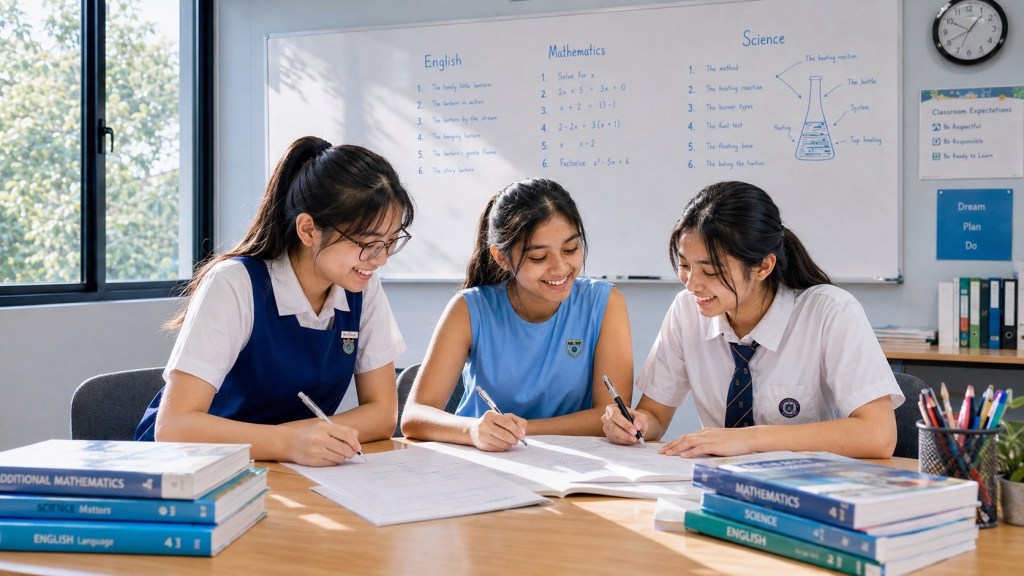
Scientific reasoning skills for students are the thinking operations that connect observations to explanations. Science is not simply a collection of facts; it is a disciplined way to decide what counts as evidence, what can be inferred from that evidence, which alternative explanations remain possible, and how strongly a conclusion should be stated. Students who can reason scientifically are better able to handle unfamiliar exam questions, experiments, data, scientific models and real-world claims because they are not dependent on recognising one memorised textbook surface.
This Advanced Science Tutorials guide is written for parents and students in Sengkang, Punggol and across Singapore who search for scientific reasoning skills, observation vs inference, claim evidence reasoning, critical thinking in Science, cause and effect, scientific explanation, scientific argument, data interpretation and how to think like a scientist. It develops reasoning from Primary readiness through PSLE and Secondary G1, G2 and G3 Science.
NSTA resources repeatedly distinguish observation from inference and emphasise the role of evidence, reasoning and argument in scientific explanation. In one elementary example, students learn that observations should describe what can be verified while inferences are conclusions drawn from those observations; in claims-evidence-reasoning work, the reasoning is the bridge that explains why the evidence supports the claim. See NSTA: Observation Versus Inference and NSTA: Science in the Literacy Block.
The scientific-reasoning loop
- Observe or measure.
- Separate observation from interpretation.
- Ask a focused question.
- Activate relevant scientific knowledge.
- Generate one or more plausible explanations.
- Predict what each explanation would imply.
- Compare predictions with evidence.
- Reject, revise or retain explanations.
- State the conclusion at the strength the evidence permits.
- Transfer the reasoning to a changed context.
Primary 1 and Primary 2: reasoning before formal Science
Young children reason scientifically whenever they compare objects, predict what will happen, notice a pattern and revise an idea after seeing new evidence. Parents can build this habit by asking “What did you notice?”, “What do you think that means?” and “How could we check?” rather than supplying every explanation.
The goal is not formal terminology. It is to make observation, prediction and revision feel normal.
Primary 3 and Primary 4: evidence must enter the answer
Formal Primary Science asks learners to use observations, experiments, diagrams and comparisons. Students should learn that a correct scientific fact is not always relevant evidence. The evidence must support the actual claim in the actual question.
A strong classroom routine is claim → evidence → reasoning: state the answer, point to the observation or data, then explain the scientific relationship that connects them.
Primary 5 and Primary 6: unfamiliar context exposes reasoning
By Primary 5 and Primary 6, familiar facts are often embedded in unfamiliar setups. Scientific reasoning allows the student to strip away the surface context, identify the underlying system and use evidence. This is why changed-context practice is so important for PSLE Science.
The site’s Primary 6 open-ended answering guide is the level-specific route for examination construction; this owner develops the broader reasoning underneath.
Secondary G1, G2 and G3: reasoning becomes more explicit
Lower Secondary Science adds models, quantitative data, formal variables, calculations and stronger expectations for evaluating methods and evidence. Students should distinguish correlation from causation, prediction from explanation, model from reality and statistical pattern from mechanism.
The exact vocabulary and depth vary by subject level, but the reasoning operations remain transferable across Biology, Chemistry, Physics and Earth or environmental contexts.
Observation
Reasoning skill. An observation records what is directly perceived or measured without adding an explanation.
Common failure. Students often write an inference as though it were an observation.
Example. ‘The thermometer reads 32°C’ is observation; ‘the liquid warmed because of the lamp’ is explanation.
Question to ask. Ask which part another observer could verify directly.
Practice task. Rewrite mixed statements into pure observations.
The transfer test is to move the same reasoning operation into another Science branch. If the learner can distinguish observation from inference in Biology but not in Physics data, the operation is still attached to content cues. A mature reasoning skill should survive changes in topic, representation and wording.
Inference
Reasoning skill. An inference is a conclusion drawn from observations plus prior knowledge.
Common failure. Students may treat any inference as fact.
Example. ‘The animal probably visited recently because the tracks are fresh’ goes beyond direct observation.
Question to ask. Ask what evidence supports the inference and what alternative fits.
Practice task. Generate two plausible inferences from one observation.
The transfer test is to move the same reasoning operation into another Science branch. If the learner can distinguish observation from inference in Biology but not in Physics data, the operation is still attached to content cues. A mature reasoning skill should survive changes in topic, representation and wording.
Measurement
Reasoning skill. Measurement turns selected properties into quantities using defined methods and units.
Common failure. Students may treat the displayed number as perfect truth.
Example. A temperature reading depends on sensor position, calibration and response time.
Question to ask. Ask how the method produced the number.
Practice task. Compare two measurement methods.
The transfer test is to move the same reasoning operation into another Science branch. If the learner can distinguish observation from inference in Biology but not in Physics data, the operation is still attached to content cues. A mature reasoning skill should survive changes in topic, representation and wording.
Classification
Reasoning skill. Classification groups things according to defined criteria.
Common failure. Students may classify by appearance without stating the rule.
Example. Animals can be grouped by life cycle, body covering, habitat or other criteria depending on purpose.
Question to ask. Ask what criterion defines membership.
Practice task. Reclassify the same objects using another valid criterion.
The transfer test is to move the same reasoning operation into another Science branch. If the learner can distinguish observation from inference in Biology but not in Physics data, the operation is still attached to content cues. A mature reasoning skill should survive changes in topic, representation and wording.
Comparison
Reasoning skill. Comparison examines the same property across two or more cases.
Common failure. Students often list unrelated facts.
Example. Two leaves can be compared by area, texture, colour or water loss, but the dimension must match.
Question to ask. Ask which property is being compared.
Practice task. Turn two descriptions into a matched comparison.
The transfer test is to move the same reasoning operation into another Science branch. If the learner can distinguish observation from inference in Biology but not in Physics data, the operation is still attached to content cues. A mature reasoning skill should survive changes in topic, representation and wording.
Pattern recognition
Reasoning skill. Pattern recognition identifies regularity, trend or repeated structure in data.
Common failure. Students may see a pattern where only a few points exist.
Example. A steady increase across several temperatures may suggest a relationship.
Question to ask. Ask how many observations support the pattern.
Practice task. Add a new data point and decide whether the pattern still holds.
The transfer test is to move the same reasoning operation into another Science branch. If the learner can distinguish observation from inference in Biology but not in Physics data, the operation is still attached to content cues. A mature reasoning skill should survive changes in topic, representation and wording.
Anomaly detection
Reasoning skill. Anomaly detection notices observations that do not fit the broader pattern.
Common failure. Students may delete anomalies automatically.
Example. One unusually high measurement may be error or genuine variation.
Question to ask. Ask what check would distinguish the possibilities.
Practice task. Investigate before excluding.
The transfer test is to move the same reasoning operation into another Science branch. If the learner can distinguish observation from inference in Biology but not in Physics data, the operation is still attached to content cues. A mature reasoning skill should survive changes in topic, representation and wording.
Question formation
Reasoning skill. A scientific question is narrow enough for evidence to address.
Common failure. Students ask questions too broad to test.
Example. ‘How does light distance affect measured illumination?’ is more usable than ‘How does light work?’ for one experiment.
Question to ask. Ask what would be measured to answer the question.
Practice task. Rewrite broad questions into measurable ones.
The transfer test is to move the same reasoning operation into another Science branch. If the learner can distinguish observation from inference in Biology but not in Physics data, the operation is still attached to content cues. A mature reasoning skill should survive changes in topic, representation and wording.
Variable identification
Reasoning skill. Variables identify what changes, what is measured and what must remain controlled.
Common failure. Students memorise IV/DV/CV labels without understanding comparison logic.
Example. In a ramp experiment, height may be changed while travel distance is measured.
Question to ask. Ask ‘How does X affect Y?’
Practice task. Infer variables from an unfamiliar method.
The transfer test is to move the same reasoning operation into another Science branch. If the learner can distinguish observation from inference in Biology but not in Physics data, the operation is still attached to content cues. A mature reasoning skill should survive changes in topic, representation and wording.
Operational definition
Reasoning skill. An operational definition states exactly how a concept is measured.
Common failure. Students use vague terms such as healthy or strong.
Example. Plant growth might be defined as change in height over seven days.
Question to ask. Ask what observable rule decides the value.
Practice task. Turn vague outcomes into measurable definitions.
The transfer test is to move the same reasoning operation into another Science branch. If the learner can distinguish observation from inference in Biology but not in Physics data, the operation is still attached to content cues. A mature reasoning skill should survive changes in topic, representation and wording.
Prediction
Reasoning skill. A prediction states an expected outcome based on a model or pattern.
Common failure. Students guess without scientific basis.
Example. If insulation reduces thermal transfer, the insulated container should cool more slowly.
Question to ask. Ask what model generated the prediction.
Practice task. Write a prediction before seeing results.
The transfer test is to move the same reasoning operation into another Science branch. If the learner can distinguish observation from inference in Biology but not in Physics data, the operation is still attached to content cues. A mature reasoning skill should survive changes in topic, representation and wording.
Hypothesis
Reasoning skill. A hypothesis is a testable explanatory proposition.
Common failure. Students write only a prediction and call it a hypothesis.
Example. A hypothesis about increased surface area can explain why dissolving rate changes.
Question to ask. Ask what mechanism connects cause and outcome.
Practice task. Pair a hypothesis with a discriminating prediction.
The transfer test is to move the same reasoning operation into another Science branch. If the learner can distinguish observation from inference in Biology but not in Physics data, the operation is still attached to content cues. A mature reasoning skill should survive changes in topic, representation and wording.
Alternative hypothesis
Reasoning skill. Alternative explanations compete to account for the same evidence.
Common failure. Students stop at the first plausible explanation.
Example. Plant growth difference may reflect light, water or starting size.
Question to ask. Ask what other mechanism could produce the observation.
Practice task. List two alternatives before designing the next test.
The transfer test is to move the same reasoning operation into another Science branch. If the learner can distinguish observation from inference in Biology but not in Physics data, the operation is still attached to content cues. A mature reasoning skill should survive changes in topic, representation and wording.
Control of variables
Reasoning skill. Control reduces plausible competing explanations in a fair test.
Common failure. Students try to keep every imaginable condition identical or miss the important one.
Example. Same water volume matters in a dissolving-temperature investigation.
Question to ask. Ask how each control could affect the outcome.
Practice task. Justify each controlled variable.
The transfer test is to move the same reasoning operation into another Science branch. If the learner can distinguish observation from inference in Biology but not in Physics data, the operation is still attached to content cues. A mature reasoning skill should survive changes in topic, representation and wording.
Fair comparison
Reasoning skill. A fair comparison changes the factor of interest while keeping relevant conditions sufficiently similar.
Common failure. Students think fairness means equal results or perfect sameness.
Example. Two materials can be compared under the same applied load and dimensions.
Question to ask. Ask what extra change would confound the comparison.
Practice task. Audit a flawed comparison.
The transfer test is to move the same reasoning operation into another Science branch. If the learner can distinguish observation from inference in Biology but not in Physics data, the operation is still attached to content cues. A mature reasoning skill should survive changes in topic, representation and wording.
Baseline
Reasoning skill. A baseline provides a reference for interpreting change.
Common failure. Students claim improvement without knowing starting performance.
Example. A no-insulation container can serve as a baseline for insulation designs.
Question to ask. Ask what would happen without the tested change.
Practice task. Add a suitable baseline condition.
The transfer test is to move the same reasoning operation into another Science branch. If the learner can distinguish observation from inference in Biology but not in Physics data, the operation is still attached to content cues. A mature reasoning skill should survive changes in topic, representation and wording.
Control condition
Reasoning skill. A control condition helps interpret whether an intervention caused an effect.
Common failure. Students confuse control condition with controlled variables.
Example. Untreated plants can be compared with treated plants while water and light are controlled.
Question to ask. Ask what comparison the control enables.
Practice task. Separate controls from controlled variables.
The transfer test is to move the same reasoning operation into another Science branch. If the learner can distinguish observation from inference in Biology but not in Physics data, the operation is still attached to content cues. A mature reasoning skill should survive changes in topic, representation and wording.
Cause
Reasoning skill. A cause contributes to producing an effect under defined conditions.
Common failure. Students infer causation from sequence alone.
Example. Heating can cause temperature increase when energy transfer is controlled and measured.
Question to ask. Ask whether alternative causes are ruled out.
Practice task. Compare observational and experimental evidence.
The transfer test is to move the same reasoning operation into another Science branch. If the learner can distinguish observation from inference in Biology but not in Physics data, the operation is still attached to content cues. A mature reasoning skill should survive changes in topic, representation and wording.
Correlation
Reasoning skill. Correlation means variables vary together statistically.
Common failure. Students equate correlation with cause.
Example. Ice-cream sales and heat illness may both rise during hot weather.
Question to ask. Ask what third variable could affect both.
Practice task. Draw alternative causal diagrams.
The transfer test is to move the same reasoning operation into another Science branch. If the learner can distinguish observation from inference in Biology but not in Physics data, the operation is still attached to content cues. A mature reasoning skill should survive changes in topic, representation and wording.
Confounding
Reasoning skill. Confounding occurs when another variable affects both the supposed cause and outcome.
Common failure. Students think adding one control solves every confounder.
Example. Age may affect both activity pattern and health outcome in observational data.
Question to ask. Ask what hidden variable could explain the association.
Practice task. Identify confounders in simple scenarios.
The transfer test is to move the same reasoning operation into another Science branch. If the learner can distinguish observation from inference in Biology but not in Physics data, the operation is still attached to content cues. A mature reasoning skill should survive changes in topic, representation and wording.
Reverse causation
Reasoning skill. Reverse causation occurs when the supposed outcome may influence the supposed cause.
Common failure. Students assume the first variable named is causal.
Example. Poor health might reduce exercise, not only low exercise causing poor health.
Question to ask. Ask whether Y could influence X.
Practice task. Reverse the causal arrow and test plausibility.
The transfer test is to move the same reasoning operation into another Science branch. If the learner can distinguish observation from inference in Biology but not in Physics data, the operation is still attached to content cues. A mature reasoning skill should survive changes in topic, representation and wording.
Mechanism
Reasoning skill. A mechanism explains the intermediate process connecting cause and effect.
Common failure. Students jump from condition to result.
Example. Greater exposed surface can increase collision opportunities, increasing reaction rate in a suitable model.
Question to ask. Ask what happens in between.
Practice task. Write cause → process → effect.
The transfer test is to move the same reasoning operation into another Science branch. If the learner can distinguish observation from inference in Biology but not in Physics data, the operation is still attached to content cues. A mature reasoning skill should survive changes in topic, representation and wording.
Evidence relevance
Reasoning skill. Relevant evidence bears directly on the claim.
Common failure. Students include true facts that do not support the answer.
Example. Leaf colour may be irrelevant to a question about water transport unless linked mechanistically.
Question to ask. Ask how the evidence changes confidence in the claim.
Practice task. Remove irrelevant facts from an explanation.
The transfer test is to move the same reasoning operation into another Science branch. If the learner can distinguish observation from inference in Biology but not in Physics data, the operation is still attached to content cues. A mature reasoning skill should survive changes in topic, representation and wording.
Evidence strength
Reasoning skill. Evidence strength depends on design, measurement quality, sample and consistency.
Common failure. Students count pieces of evidence without weighing quality.
Example. One controlled experiment may be stronger than ten anecdotes for a causal question.
Question to ask. Ask what makes this evidence discriminating.
Practice task. Rank evidence sources for a specific claim.
The transfer test is to move the same reasoning operation into another Science branch. If the learner can distinguish observation from inference in Biology but not in Physics data, the operation is still attached to content cues. A mature reasoning skill should survive changes in topic, representation and wording.
Claims-evidence-reasoning
Reasoning skill. CER separates answer, supporting evidence and the scientific bridge between them.
Common failure. Students list evidence but leave the reasoning implicit.
Example. A claim about survival needs observed features plus reasoning about how those features help under conditions.
Question to ask. Ask why the evidence supports this claim rather than another.
Practice task. Complete missing reasoning in CER examples.
The transfer test is to move the same reasoning operation into another Science branch. If the learner can distinguish observation from inference in Biology but not in Physics data, the operation is still attached to content cues. A mature reasoning skill should survive changes in topic, representation and wording.
Deductive reasoning
Reasoning skill. Deduction applies general rules or models to specific cases.
Common failure. Students may apply a rule outside its valid conditions.
Example. If all tested conductors allow current and copper is a conductor under the model, predict circuit behaviour.
Question to ask. Ask whether premises are valid.
Practice task. Use rules to make predictions.
The transfer test is to move the same reasoning operation into another Science branch. If the learner can distinguish observation from inference in Biology but not in Physics data, the operation is still attached to content cues. A mature reasoning skill should survive changes in topic, representation and wording.
Inductive reasoning
Reasoning skill. Induction builds generalisations from repeated observations.
Common failure. Students may generalise from too few cases.
Example. Observing several metals conduct does not prove every material class behaves identically.
Question to ask. Ask how broad the sample is.
Practice task. Write cautious generalisations.
The transfer test is to move the same reasoning operation into another Science branch. If the learner can distinguish observation from inference in Biology but not in Physics data, the operation is still attached to content cues. A mature reasoning skill should survive changes in topic, representation and wording.
Abductive reasoning
Reasoning skill. Abduction selects the best explanation among competing possibilities given evidence.
Common failure. Students mistake best current explanation for certainty.
Example. Fresh tracks, disturbed soil and camera data may jointly support one animal’s presence.
Question to ask. Ask which explanation accounts for most evidence with fewest unsupported assumptions.
Practice task. Compare competing explanations.
The transfer test is to move the same reasoning operation into another Science branch. If the learner can distinguish observation from inference in Biology but not in Physics data, the operation is still attached to content cues. A mature reasoning skill should survive changes in topic, representation and wording.
Analogical reasoning
Reasoning skill. Analogy transfers structure from a familiar case to a new one.
Common failure. Students transfer irrelevant features.
Example. Water-flow analogies can illuminate some circuit relationships but mislead about current consumption.
Question to ask. Ask exactly which relationship maps.
Practice task. List useful and misleading parts of an analogy.
The transfer test is to move the same reasoning operation into another Science branch. If the learner can distinguish observation from inference in Biology but not in Physics data, the operation is still attached to content cues. A mature reasoning skill should survive changes in topic, representation and wording.
Proportional reasoning
Reasoning skill. Proportional reasoning connects quantities through ratios.
Common failure. Students call every increasing trend proportional.
Example. Direct proportion requires constant ratio under model conditions.
Question to ask. Ask whether doubling one quantity doubles another.
Practice task. Test datasets for proportionality.
The transfer test is to move the same reasoning operation into another Science branch. If the learner can distinguish observation from inference in Biology but not in Physics data, the operation is still attached to content cues. A mature reasoning skill should survive changes in topic, representation and wording.
Ratio reasoning
Reasoning skill. Ratios compare quantities relative to one another.
Common failure. Students compare raw values with different totals.
Example. Concentration and density often require ratios.
Question to ask. Ask what numerator and denominator represent.
Practice task. Rewrite raw counts as rates or ratios where appropriate.
The transfer test is to move the same reasoning operation into another Science branch. If the learner can distinguish observation from inference in Biology but not in Physics data, the operation is still attached to content cues. A mature reasoning skill should survive changes in topic, representation and wording.
Rate reasoning
Reasoning skill. Rates describe change per unit of another quantity.
Common failure. Students confuse amount with speed.
Example. A larger total product does not necessarily mean faster reaction if time differs.
Question to ask. Ask ‘per what?’
Practice task. Compare rates across different intervals.
The transfer test is to move the same reasoning operation into another Science branch. If the learner can distinguish observation from inference in Biology but not in Physics data, the operation is still attached to content cues. A mature reasoning skill should survive changes in topic, representation and wording.
Scale reasoning
Reasoning skill. Scientific phenomena operate at different spatial and temporal scales.
Common failure. Students transfer everyday scale intuition to atoms, ecosystems or galaxies.
Example. A process visible over centuries may be invisible in a one-day observation.
Question to ask. Ask what scale the claim belongs to.
Practice task. Reframe one phenomenon at cell, organism and ecosystem scales.
The transfer test is to move the same reasoning operation into another Science branch. If the learner can distinguish observation from inference in Biology but not in Physics data, the operation is still attached to content cues. A mature reasoning skill should survive changes in topic, representation and wording.
Time-scale reasoning
Reasoning skill. Rates and processes depend on the observation window.
Common failure. Students interpret short-term fluctuation as long-term trend.
Example. Weather varies daily while climate is assessed over long periods.
Question to ask. Ask how the conclusion changes with a longer window.
Practice task. Compare short and long time series.
The transfer test is to move the same reasoning operation into another Science branch. If the learner can distinguish observation from inference in Biology but not in Physics data, the operation is still attached to content cues. A mature reasoning skill should survive changes in topic, representation and wording.
Spatial reasoning
Reasoning skill. Scientific diagrams and systems often require understanding position, orientation and three-dimensional relationships.
Common failure. Students rely on one familiar diagram orientation.
Example. Circuit topology or anatomy should survive rotated diagrams.
Question to ask. Ask what relationships remain after rotation.
Practice task. Redraw from another viewpoint.
The transfer test is to move the same reasoning operation into another Science branch. If the learner can distinguish observation from inference in Biology but not in Physics data, the operation is still attached to content cues. A mature reasoning skill should survive changes in topic, representation and wording.
Systems thinking
Reasoning skill. Systems thinking examines components, interactions, inputs, outputs and feedback.
Common failure. Students analyse parts in isolation.
Example. Ecosystem population changes can propagate through food webs.
Question to ask. Ask what crosses the system boundary.
Practice task. Build a box-and-arrow model.
The transfer test is to move the same reasoning operation into another Science branch. If the learner can distinguish observation from inference in Biology but not in Physics data, the operation is still attached to content cues. A mature reasoning skill should survive changes in topic, representation and wording.
Boundary reasoning
Reasoning skill. A system boundary decides what is included in analysis.
Common failure. Students change boundaries without noticing.
Example. Mass conservation looks different in open versus closed containers.
Question to ask. Ask what can enter or leave.
Practice task. Redraw the same event using two boundaries.
The transfer test is to move the same reasoning operation into another Science branch. If the learner can distinguish observation from inference in Biology but not in Physics data, the operation is still attached to content cues. A mature reasoning skill should survive changes in topic, representation and wording.
Feedback reasoning
Reasoning skill. Feedback occurs when outputs influence future system behaviour.
Common failure. Students think all feedback amplifies change.
Example. Negative feedback can stabilise while positive feedback reinforces.
Question to ask. Ask whether the loop opposes or reinforces change.
Practice task. Trace one feedback loop.
The transfer test is to move the same reasoning operation into another Science branch. If the learner can distinguish observation from inference in Biology but not in Physics data, the operation is still attached to content cues. A mature reasoning skill should survive changes in topic, representation and wording.
Conservation reasoning
Reasoning skill. Conservation principles track quantities that persist through transformations.
Common failure. Students think matter or energy disappears when no longer useful.
Example. Mass remains conserved in closed chemical systems; energy disperses into other forms.
Question to ask. Ask where the quantity went.
Practice task. Build before-and-after accounting tables.
The transfer test is to move the same reasoning operation into another Science branch. If the learner can distinguish observation from inference in Biology but not in Physics data, the operation is still attached to content cues. A mature reasoning skill should survive changes in topic, representation and wording.
Constraint reasoning
Reasoning skill. Scientific explanations must respect known constraints such as conservation, geometry or boundary conditions.
Common failure. Students accept explanations that violate basic constraints.
Example. A proposed circuit cannot light a bulb without a complete conducting path.
Question to ask. Ask what must be true before the explanation can work.
Practice task. Reject impossible explanations using constraints.
The transfer test is to move the same reasoning operation into another Science branch. If the learner can distinguish observation from inference in Biology but not in Physics data, the operation is still attached to content cues. A mature reasoning skill should survive changes in topic, representation and wording.
Counterfactual reasoning
Reasoning skill. Counterfactuals ask what would happen if a condition were different.
Common failure. Students memorise actual outcomes without understanding dependency.
Example. If the plant had no light, which process would change?
Question to ask. Ask which causal link changes under the counterfactual.
Practice task. Modify one condition and predict.
The transfer test is to move the same reasoning operation into another Science branch. If the learner can distinguish observation from inference in Biology but not in Physics data, the operation is still attached to content cues. A mature reasoning skill should survive changes in topic, representation and wording.
Necessary condition
Reasoning skill. A necessary condition must be present for an outcome, though it may not be sufficient alone.
Common failure. Students treat necessary as sufficient.
Example. A complete circuit is necessary for conventional bulb operation, but component condition also matters.
Question to ask. Ask whether the condition alone guarantees outcome.
Practice task. Classify necessary versus sufficient examples.
The transfer test is to move the same reasoning operation into another Science branch. If the learner can distinguish observation from inference in Biology but not in Physics data, the operation is still attached to content cues. A mature reasoning skill should survive changes in topic, representation and wording.
Sufficient condition
Reasoning skill. A sufficient condition guarantees an outcome under defined assumptions, though it may not be necessary.
Common failure. Students use ‘sufficient’ loosely.
Example. Specific reaction conditions may guarantee an indicator colour change in a controlled system.
Question to ask. Ask whether other routes can produce the same outcome.
Practice task. Compare sufficient conditions.
The transfer test is to move the same reasoning operation into another Science branch. If the learner can distinguish observation from inference in Biology but not in Physics data, the operation is still attached to content cues. A mature reasoning skill should survive changes in topic, representation and wording.
Threshold reasoning
Reasoning skill. Some systems change qualitatively after crossing a threshold.
Common failure. Students assume every response changes linearly.
Example. A material may fail only after load exceeds strength.
Question to ask. Ask whether a critical boundary exists.
Practice task. Identify thresholds in graphs.
The transfer test is to move the same reasoning operation into another Science branch. If the learner can distinguish observation from inference in Biology but not in Physics data, the operation is still attached to content cues. A mature reasoning skill should survive changes in topic, representation and wording.
Nonlinear reasoning
Reasoning skill. Nonlinear relationships change at different rates across the range.
Common failure. Students extend straight-line intuition everywhere.
Example. pH, exponential growth and saturation are nonlinear.
Question to ask. Ask whether doubling input doubles output.
Practice task. Compare linear and nonlinear graphs.
The transfer test is to move the same reasoning operation into another Science branch. If the learner can distinguish observation from inference in Biology but not in Physics data, the operation is still attached to content cues. A mature reasoning skill should survive changes in topic, representation and wording.
Probabilistic reasoning
Reasoning skill. Probability expresses uncertainty about outcomes.
Common failure. Students treat likely as guaranteed.
Example. A 70% forecast can be well calibrated even when some predicted events do not occur.
Question to ask. Ask what repeated frequency would support the probability.
Practice task. Simulate repeated trials.
The transfer test is to move the same reasoning operation into another Science branch. If the learner can distinguish observation from inference in Biology but not in Physics data, the operation is still attached to content cues. A mature reasoning skill should survive changes in topic, representation and wording.
Statistical variation
Reasoning skill. Natural systems and measurements vary.
Common failure. Students treat every difference as meaningful.
Example. Biological measurements can differ even under matched conditions.
Question to ask. Ask whether the difference exceeds typical spread.
Practice task. Compare distributions, not single values.
The transfer test is to move the same reasoning operation into another Science branch. If the learner can distinguish observation from inference in Biology but not in Physics data, the operation is still attached to content cues. A mature reasoning skill should survive changes in topic, representation and wording.
Sample reasoning
Reasoning skill. A sample is used to infer something about a wider population.
Common failure. Students treat one specimen as representative.
Example. Several independent plants provide stronger population evidence than repeated measures on one plant.
Question to ask. Ask what the sampling unit is.
Practice task. Compare sample designs.
The transfer test is to move the same reasoning operation into another Science branch. If the learner can distinguish observation from inference in Biology but not in Physics data, the operation is still attached to content cues. A mature reasoning skill should survive changes in topic, representation and wording.
Representativeness
Reasoning skill. A representative sample resembles the target population on relevant dimensions.
Common failure. Students assume large samples are representative automatically.
Example. A large convenience sample can remain biased.
Question to ask. Ask who could not enter the sample.
Practice task. Redesign a biased sampling plan.
The transfer test is to move the same reasoning operation into another Science branch. If the learner can distinguish observation from inference in Biology but not in Physics data, the operation is still attached to content cues. A mature reasoning skill should survive changes in topic, representation and wording.
Replication reasoning
Reasoning skill. Independent repetition strengthens confidence when results recur.
Common failure. Students confuse repeating a reading with independent replication.
Example. Another group using the method adds different evidence.
Question to ask. Ask what changed between replications.
Practice task. Separate technical repeats from independent replications.
The transfer test is to move the same reasoning operation into another Science branch. If the learner can distinguish observation from inference in Biology but not in Physics data, the operation is still attached to content cues. A mature reasoning skill should survive changes in topic, representation and wording.
Uncertainty reasoning
Reasoning skill. Conclusions should incorporate uncertainty from measurement, sampling and models.
Common failure. Students think uncertainty weakens Science.
Example. Uncertainty tells us how strongly a conclusion should be stated.
Question to ask. Ask what range of outcomes remains plausible.
Practice task. Rewrite absolute claims with calibrated wording.
The transfer test is to move the same reasoning operation into another Science branch. If the learner can distinguish observation from inference in Biology but not in Physics data, the operation is still attached to content cues. A mature reasoning skill should survive changes in topic, representation and wording.
Error diagnosis
Reasoning skill. Error diagnosis identifies the first point where reasoning or measurement fails.
Common failure. Students call all mistakes careless.
Example. Errors can be conceptual, procedural, mathematical or representational.
Question to ask. Ask what the first wrong decision was.
Practice task. Classify errors before correcting.
The transfer test is to move the same reasoning operation into another Science branch. If the learner can distinguish observation from inference in Biology but not in Physics data, the operation is still attached to content cues. A mature reasoning skill should survive changes in topic, representation and wording.
Contradiction detection
Reasoning skill. A valid explanation should not contradict evidence or itself.
Common failure. Students append memorised facts that reverse their conclusion.
Example. A graph showing decrease cannot support a sentence claiming increase.
Question to ask. Ask whether every sentence agrees with data.
Practice task. Edit contradictory explanations.
The transfer test is to move the same reasoning operation into another Science branch. If the learner can distinguish observation from inference in Biology but not in Physics data, the operation is still attached to content cues. A mature reasoning skill should survive changes in topic, representation and wording.
Assumption detection
Reasoning skill. Reasoning often depends on unstated assumptions.
Common failure. Students treat assumptions as facts.
Example. A simple model may assume constant temperature or ideal behaviour.
Question to ask. Ask what must be assumed for the argument to work.
Practice task. List assumptions in a calculation or model.
The transfer test is to move the same reasoning operation into another Science branch. If the learner can distinguish observation from inference in Biology but not in Physics data, the operation is still attached to content cues. A mature reasoning skill should survive changes in topic, representation and wording.
Model selection
Reasoning skill. Different models suit different questions.
Common failure. Students use the most familiar model regardless of purpose.
Example. Ray and wave models of light answer different questions.
Question to ask. Ask what the model must explain.
Practice task. Choose between two models.
The transfer test is to move the same reasoning operation into another Science branch. If the learner can distinguish observation from inference in Biology but not in Physics data, the operation is still attached to content cues. A mature reasoning skill should survive changes in topic, representation and wording.
Model limitation
Reasoning skill. Every model omits or simplifies features.
Common failure. Students treat model failure outside range as proof it was useless.
Example. A linear model can be useful over a limited interval.
Question to ask. Ask where the model stops working.
Practice task. State model scope explicitly.
The transfer test is to move the same reasoning operation into another Science branch. If the learner can distinguish observation from inference in Biology but not in Physics data, the operation is still attached to content cues. A mature reasoning skill should survive changes in topic, representation and wording.
Graph reasoning
Reasoning skill. Graphs encode relationships through axes, units, scale and shape.
Common failure. Students respond to visual shape before reading axes.
Example. An upward curve can mean different things depending on quantities.
Question to ask. Ask what x and y represent.
Practice task. Describe graph before explaining.
The transfer test is to move the same reasoning operation into another Science branch. If the learner can distinguish observation from inference in Biology but not in Physics data, the operation is still attached to content cues. A mature reasoning skill should survive changes in topic, representation and wording.
Table reasoning
Reasoning skill. Tables support structured comparison across conditions.
Common failure. Students choose the largest number without matching rows and columns.
Example. Like-for-like comparison requires aligned conditions.
Question to ask. Ask which cells form the valid comparison.
Practice task. Highlight matched evidence.
The transfer test is to move the same reasoning operation into another Science branch. If the learner can distinguish observation from inference in Biology but not in Physics data, the operation is still attached to content cues. A mature reasoning skill should survive changes in topic, representation and wording.
Diagram reasoning
Reasoning skill. Diagrams represent selected structures or processes using conventions.
Common failure. Students interpret colour, arrow length or spacing literally.
Example. A food-web arrow and force arrow mean different relationships.
Question to ask. Ask what each symbol represents.
Practice task. Translate diagram into prose.
The transfer test is to move the same reasoning operation into another Science branch. If the learner can distinguish observation from inference in Biology but not in Physics data, the operation is still attached to content cues. A mature reasoning skill should survive changes in topic, representation and wording.
Equation reasoning
Reasoning skill. Equations express relationships among quantities under assumptions.
Common failure. Students treat equations as arithmetic recipes.
Example. F=ma represents a physical relationship, not just letters.
Question to ask. Ask what happens qualitatively if one quantity doubles.
Practice task. Explain formula in words before calculation.
The transfer test is to move the same reasoning operation into another Science branch. If the learner can distinguish observation from inference in Biology but not in Physics data, the operation is still attached to content cues. A mature reasoning skill should survive changes in topic, representation and wording.
Unit reasoning
Reasoning skill. Units reveal quantity meaning and calculation consistency.
Common failure. Students attach units at the end mechanically.
Example. Impossible units often reveal wrong equations or conversions.
Question to ask. Ask what unit the target must have.
Practice task. Cancel units symbolically.
The transfer test is to move the same reasoning operation into another Science branch. If the learner can distinguish observation from inference in Biology but not in Physics data, the operation is still attached to content cues. A mature reasoning skill should survive changes in topic, representation and wording.
Dimensional reasoning
Reasoning skill. Dimensions can test whether relationships are plausible.
Common failure. Students memorise formulae without structural checks.
Example. Distance/time has dimensions of speed, unlike distance×time.
Question to ask. Ask whether both sides of an equation match dimensions.
Practice task. Reject dimensionally inconsistent formulae.
The transfer test is to move the same reasoning operation into another Science branch. If the learner can distinguish observation from inference in Biology but not in Physics data, the operation is still attached to content cues. A mature reasoning skill should survive changes in topic, representation and wording.
Order-of-magnitude reasoning
Reasoning skill. Approximate scale checks catch implausible answers.
Common failure. Students accept calculator results blindly.
Example. A classroom object cannot reasonably have a mass of 10^8 kg.
Question to ask. Ask what range is physically plausible.
Practice task. Estimate before exact calculation.
The transfer test is to move the same reasoning operation into another Science branch. If the learner can distinguish observation from inference in Biology but not in Physics data, the operation is still attached to content cues. A mature reasoning skill should survive changes in topic, representation and wording.
Interpolation
Reasoning skill. Interpolation estimates within observed range.
Common failure. Students treat it as direct measurement.
Example. A value between tested temperatures is model-based but supported by nearby data.
Question to ask. Ask whether target lies inside range.
Practice task. Estimate from graph and report appropriately.
The transfer test is to move the same reasoning operation into another Science branch. If the learner can distinguish observation from inference in Biology but not in Physics data, the operation is still attached to content cues. A mature reasoning skill should survive changes in topic, representation and wording.
Extrapolation
Reasoning skill. Extrapolation predicts beyond observed range and carries greater uncertainty.
Common failure. Students extend trends indefinitely.
Example. Relationships can change outside tested conditions.
Question to ask. Ask what physical reason could break the trend.
Practice task. Compare near and far extrapolation.
The transfer test is to move the same reasoning operation into another Science branch. If the learner can distinguish observation from inference in Biology but not in Physics data, the operation is still attached to content cues. A mature reasoning skill should survive changes in topic, representation and wording.
Causal chain
Reasoning skill. A causal chain links multiple intermediate steps.
Common failure. Students skip from cause to distant effect.
Example. Pollution can alter water quality, affect organisms, then alter food-web relationships.
Question to ask. Ask what happens at each link.
Practice task. Write each arrow as a sentence.
The transfer test is to move the same reasoning operation into another Science branch. If the learner can distinguish observation from inference in Biology but not in Physics data, the operation is still attached to content cues. A mature reasoning skill should survive changes in topic, representation and wording.
Multiple causation
Reasoning skill. Many outcomes have several contributing causes.
Common failure. Students search for one cause because exams often simplify.
Example. Population decline may involve habitat, food, disease and climate.
Question to ask. Ask what other factors could contribute.
Practice task. Build a multi-cause diagram.
The transfer test is to move the same reasoning operation into another Science branch. If the learner can distinguish observation from inference in Biology but not in Physics data, the operation is still attached to content cues. A mature reasoning skill should survive changes in topic, representation and wording.
Interaction reasoning
Reasoning skill. Two variables can affect each other’s impact.
Common failure. Students assume effects simply add.
Example. Temperature may alter how another factor influences rate.
Question to ask. Ask whether one factor changes the effect of another.
Practice task. Interpret simple interaction graphs.
The transfer test is to move the same reasoning operation into another Science branch. If the learner can distinguish observation from inference in Biology but not in Physics data, the operation is still attached to content cues. A mature reasoning skill should survive changes in topic, representation and wording.
Evidence hierarchy by question
Reasoning skill. Different questions require different evidence.
Common failure. Students think one universal evidence ranking applies everywhere.
Example. Randomised trials suit some interventions; astronomy relies on observation and physical law.
Question to ask. Ask what evidence is possible and ethical for the question.
Practice task. Choose an appropriate study design.
The transfer test is to move the same reasoning operation into another Science branch. If the learner can distinguish observation from inference in Biology but not in Physics data, the operation is still attached to content cues. A mature reasoning skill should survive changes in topic, representation and wording.
Argument from evidence
Reasoning skill. Scientific argument defends a claim using evidence and reasoning while considering alternatives.
Common failure. Students think argument means personal disagreement.
Example. A strong argument identifies claim, evidence, mechanism and limitations.
Question to ask. Ask what evidence would change the claim.
Practice task. Build and critique two competing arguments.
The transfer test is to move the same reasoning operation into another Science branch. If the learner can distinguish observation from inference in Biology but not in Physics data, the operation is still attached to content cues. A mature reasoning skill should survive changes in topic, representation and wording.
Falsifiability
Reasoning skill. A scientific claim should expose itself to possible evidence against it where appropriate.
Common failure. Students design claims that fit every possible outcome.
Example. A prediction should identify what result would challenge the model.
Question to ask. Ask what observation would make us revise the idea.
Practice task. Rewrite unfalsifiable claims.
The transfer test is to move the same reasoning operation into another Science branch. If the learner can distinguish observation from inference in Biology but not in Physics data, the operation is still attached to content cues. A mature reasoning skill should survive changes in topic, representation and wording.
Parsimony
Reasoning skill. Parsimony favours explanations that account for evidence without unnecessary assumptions, all else equal.
Common failure. Students think simplest means always correct.
Example. A simple explanation can still be wrong if it fails evidence.
Question to ask. Ask which assumptions each model requires.
Practice task. Compare explanations with equal predictive success.
The transfer test is to move the same reasoning operation into another Science branch. If the learner can distinguish observation from inference in Biology but not in Physics data, the operation is still attached to content cues. A mature reasoning skill should survive changes in topic, representation and wording.
Tentative certainty
Reasoning skill. Scientific conclusions can be strong without claiming absolute proof.
Common failure. Students swing between certainty and total doubt.
Example. Well-established models can deserve high confidence while remaining revisable.
Question to ask. Ask how strong the evidence is and what remains open.
Practice task. Use calibrated terms: suggests, supports, strongly supports.
The transfer test is to move the same reasoning operation into another Science branch. If the learner can distinguish observation from inference in Biology but not in Physics data, the operation is still attached to content cues. A mature reasoning skill should survive changes in topic, representation and wording.
Transfer
Reasoning skill. Transfer applies reasoning learned in one context to another.
Common failure. Students succeed only when surface features match practice.
Example. Variable reasoning should work in plant, circuit and heat experiments.
Question to ask. Ask what deep structure is the same.
Practice task. Solve structurally similar problems across topics.
The transfer test is to move the same reasoning operation into another Science branch. If the learner can distinguish observation from inference in Biology but not in Physics data, the operation is still attached to content cues. A mature reasoning skill should survive changes in topic, representation and wording.
Metacognitive monitoring
Reasoning skill. Students should monitor whether their reasoning is working.
Common failure. Students confuse fluency with correctness.
Example. Pausing to ask ‘what evidence supports this step?’ can catch drift.
Question to ask. Ask where confidence comes from.
Practice task. Rate confidence before checking.
The transfer test is to move the same reasoning operation into another Science branch. If the learner can distinguish observation from inference in Biology but not in Physics data, the operation is still attached to content cues. A mature reasoning skill should survive changes in topic, representation and wording.
Reflective revision
Reasoning skill. Reflection converts an error into a future decision rule.
Common failure. Students copy corrected answers without changing process.
Example. After error, write the first wrong decision and new rule.
Question to ask. Ask when this error could recur.
Practice task. Retest after delay.
The transfer test is to move the same reasoning operation into another Science branch. If the learner can distinguish observation from inference in Biology but not in Physics data, the operation is still attached to content cues. A mature reasoning skill should survive changes in topic, representation and wording.
A twelve-week scientific-reasoning programme
- Week 1: observation, inference and classification.
- Week 2: questions, variables and prediction.
- Week 3: claims, evidence and reasoning.
- Week 4: correlation, causation and confounding.
- Week 5: mechanisms, causal chains and alternatives.
- Week 6: proportional, rate and scale reasoning.
- Week 7: systems, boundaries and conservation.
- Week 8: graphs, tables, diagrams and equations.
- Week 9: uncertainty, sampling and replication.
- Week 10: models, assumptions and limitations.
- Week 11: scientific argument and falsifiability.
- Week 12: mixed transfer across Biology, Chemistry, Physics and Earth Science.
When tuition may help with scientific reasoning
Extra support can help when a student knows facts but cannot use them in unfamiliar contexts, repeatedly confuses observation with inference, or gives conclusions without evidence. A tutor should make the reasoning operation visible, practise it across topics and then remove the prompt.
For current Primary 3–6 and PSLE programme information, use Primary Science Tuition Sengkang. Secondary G1/G2/G3 reasoning coverage here is educational transition material.
Frequently asked questions
What is scientific reasoning?
Scientific reasoning is the use of evidence, models, logic and uncertainty to move from observations to explanations, predictions and conclusions.
What is the difference between observation and inference?
Observation records what is directly perceived or measured; inference is a conclusion drawn from observations plus prior knowledge.
What is claims-evidence-reasoning?
CER is a structure in which a claim answers the question, evidence supports the claim and reasoning explains why the evidence is scientifically relevant.
Does scientific reasoning require Mathematics?
Some reasoning is qualitative, while many scientific questions also require ratios, graphs, units and quantitative models.
Can scientific reasoning be taught directly?
Yes. Students can practise specific operations such as distinguishing observation from inference, evaluating evidence, tracing causal chains and comparing models.
How do I know if reasoning has transferred?
The learner can use the same operation accurately in a new topic or representation without being told which rule applies.
Further reading
- NSTA: Observation Versus Inference
- NSTA: Claims, Evidence and Reasoning
- NSTA: Evaluating the Strength of Evidence
- NGSS: Argument from Evidence and Science Literacy
Final operating rule
Scientific reasoning is disciplined movement between evidence and explanation. Observe carefully. Name the claim. Ask what evidence supports it. Make the mechanism visible. Generate alternatives. Respect uncertainty. Check scale and units. Test the model against new evidence. Then transfer the reasoning to a different context. That is how students move from knowing Science to thinking with Science.
Observation — reasoning clinic 1
Start with a new problem that does not name observation. Ask the learner to solve or explain it, then identify where this reasoning operation was needed. The skill should emerge from the structure of the problem rather than from a teacher label.
Surface the common failure: Students often write an inference as though it were an observation.. Use the example: ‘The thermometer reads 32°C’ is observation; ‘the liquid warmed because of the lamp’ is explanation. Ask what conclusion the faulty reasoning would produce and what evidence or constraint reveals the problem.
Now ask: Ask which part another observer could verify directly. Run the practice task: Rewrite mixed statements into pure observations. Require the student to explain why the move is valid, not merely give the corrected answer. This makes the reasoning transferable.
Finish with delayed return in another domain. Parents can ask for evidence before accepting an explanation; tutors can compare different reasoning routes. Scientific reasoning is durable when the learner selects the operation independently.
Inference — reasoning clinic 1
Start with a new problem that does not name inference. Ask the learner to solve or explain it, then identify where this reasoning operation was needed. The skill should emerge from the structure of the problem rather than from a teacher label.
Surface the common failure: Students may treat any inference as fact.. Use the example: ‘The animal probably visited recently because the tracks are fresh’ goes beyond direct observation. Ask what conclusion the faulty reasoning would produce and what evidence or constraint reveals the problem.
Now ask: Ask what evidence supports the inference and what alternative fits. Run the practice task: Generate two plausible inferences from one observation. Require the student to explain why the move is valid, not merely give the corrected answer. This makes the reasoning transferable.
Finish with delayed return in another domain. Parents can ask for evidence before accepting an explanation; tutors can compare different reasoning routes. Scientific reasoning is durable when the learner selects the operation independently.
Measurement — reasoning clinic 1
Start with a new problem that does not name measurement. Ask the learner to solve or explain it, then identify where this reasoning operation was needed. The skill should emerge from the structure of the problem rather than from a teacher label.
Surface the common failure: Students may treat the displayed number as perfect truth.. Use the example: A temperature reading depends on sensor position, calibration and response time. Ask what conclusion the faulty reasoning would produce and what evidence or constraint reveals the problem.
Now ask: Ask how the method produced the number. Run the practice task: Compare two measurement methods. Require the student to explain why the move is valid, not merely give the corrected answer. This makes the reasoning transferable.
Finish with delayed return in another domain. Parents can ask for evidence before accepting an explanation; tutors can compare different reasoning routes. Scientific reasoning is durable when the learner selects the operation independently.
Classification — reasoning clinic 1
Start with a new problem that does not name classification. Ask the learner to solve or explain it, then identify where this reasoning operation was needed. The skill should emerge from the structure of the problem rather than from a teacher label.
Surface the common failure: Students may classify by appearance without stating the rule.. Use the example: Animals can be grouped by life cycle, body covering, habitat or other criteria depending on purpose. Ask what conclusion the faulty reasoning would produce and what evidence or constraint reveals the problem.
Now ask: Ask what criterion defines membership. Run the practice task: Reclassify the same objects using another valid criterion. Require the student to explain why the move is valid, not merely give the corrected answer. This makes the reasoning transferable.
Finish with delayed return in another domain. Parents can ask for evidence before accepting an explanation; tutors can compare different reasoning routes. Scientific reasoning is durable when the learner selects the operation independently.
Comparison — reasoning clinic 1
Start with a new problem that does not name comparison. Ask the learner to solve or explain it, then identify where this reasoning operation was needed. The skill should emerge from the structure of the problem rather than from a teacher label.
Surface the common failure: Students often list unrelated facts.. Use the example: Two leaves can be compared by area, texture, colour or water loss, but the dimension must match. Ask what conclusion the faulty reasoning would produce and what evidence or constraint reveals the problem.
Now ask: Ask which property is being compared. Run the practice task: Turn two descriptions into a matched comparison. Require the student to explain why the move is valid, not merely give the corrected answer. This makes the reasoning transferable.
Finish with delayed return in another domain. Parents can ask for evidence before accepting an explanation; tutors can compare different reasoning routes. Scientific reasoning is durable when the learner selects the operation independently.
Pattern recognition — reasoning clinic 1
Start with a new problem that does not name pattern recognition. Ask the learner to solve or explain it, then identify where this reasoning operation was needed. The skill should emerge from the structure of the problem rather than from a teacher label.
Surface the common failure: Students may see a pattern where only a few points exist.. Use the example: A steady increase across several temperatures may suggest a relationship. Ask what conclusion the faulty reasoning would produce and what evidence or constraint reveals the problem.
Now ask: Ask how many observations support the pattern. Run the practice task: Add a new data point and decide whether the pattern still holds. Require the student to explain why the move is valid, not merely give the corrected answer. This makes the reasoning transferable.
Finish with delayed return in another domain. Parents can ask for evidence before accepting an explanation; tutors can compare different reasoning routes. Scientific reasoning is durable when the learner selects the operation independently.
Anomaly detection — reasoning clinic 1
Start with a new problem that does not name anomaly detection. Ask the learner to solve or explain it, then identify where this reasoning operation was needed. The skill should emerge from the structure of the problem rather than from a teacher label.
Surface the common failure: Students may delete anomalies automatically.. Use the example: One unusually high measurement may be error or genuine variation. Ask what conclusion the faulty reasoning would produce and what evidence or constraint reveals the problem.
Now ask: Ask what check would distinguish the possibilities. Run the practice task: Investigate before excluding. Require the student to explain why the move is valid, not merely give the corrected answer. This makes the reasoning transferable.
Finish with delayed return in another domain. Parents can ask for evidence before accepting an explanation; tutors can compare different reasoning routes. Scientific reasoning is durable when the learner selects the operation independently.
Question formation — reasoning clinic 1
Start with a new problem that does not name question formation. Ask the learner to solve or explain it, then identify where this reasoning operation was needed. The skill should emerge from the structure of the problem rather than from a teacher label.
Surface the common failure: Students ask questions too broad to test.. Use the example: ‘How does light distance affect measured illumination?’ is more usable than ‘How does light work?’ for one experiment. Ask what conclusion the faulty reasoning would produce and what evidence or constraint reveals the problem.
Now ask: Ask what would be measured to answer the question. Run the practice task: Rewrite broad questions into measurable ones. Require the student to explain why the move is valid, not merely give the corrected answer. This makes the reasoning transferable.
Finish with delayed return in another domain. Parents can ask for evidence before accepting an explanation; tutors can compare different reasoning routes. Scientific reasoning is durable when the learner selects the operation independently.
Variable identification — reasoning clinic 1
Start with a new problem that does not name variable identification. Ask the learner to solve or explain it, then identify where this reasoning operation was needed. The skill should emerge from the structure of the problem rather than from a teacher label.
Surface the common failure: Students memorise IV/DV/CV labels without understanding comparison logic.. Use the example: In a ramp experiment, height may be changed while travel distance is measured. Ask what conclusion the faulty reasoning would produce and what evidence or constraint reveals the problem.
Now ask: Ask ‘How does X affect Y?’ Run the practice task: Infer variables from an unfamiliar method. Require the student to explain why the move is valid, not merely give the corrected answer. This makes the reasoning transferable.
Finish with delayed return in another domain. Parents can ask for evidence before accepting an explanation; tutors can compare different reasoning routes. Scientific reasoning is durable when the learner selects the operation independently.
Operational definition — reasoning clinic 1
Start with a new problem that does not name operational definition. Ask the learner to solve or explain it, then identify where this reasoning operation was needed. The skill should emerge from the structure of the problem rather than from a teacher label.
Surface the common failure: Students use vague terms such as healthy or strong.. Use the example: Plant growth might be defined as change in height over seven days. Ask what conclusion the faulty reasoning would produce and what evidence or constraint reveals the problem.
Now ask: Ask what observable rule decides the value. Run the practice task: Turn vague outcomes into measurable definitions. Require the student to explain why the move is valid, not merely give the corrected answer. This makes the reasoning transferable.
Finish with delayed return in another domain. Parents can ask for evidence before accepting an explanation; tutors can compare different reasoning routes. Scientific reasoning is durable when the learner selects the operation independently.
Prediction — reasoning clinic 1
Start with a new problem that does not name prediction. Ask the learner to solve or explain it, then identify where this reasoning operation was needed. The skill should emerge from the structure of the problem rather than from a teacher label.
Surface the common failure: Students guess without scientific basis.. Use the example: If insulation reduces thermal transfer, the insulated container should cool more slowly. Ask what conclusion the faulty reasoning would produce and what evidence or constraint reveals the problem.
Now ask: Ask what model generated the prediction. Run the practice task: Write a prediction before seeing results. Require the student to explain why the move is valid, not merely give the corrected answer. This makes the reasoning transferable.
Finish with delayed return in another domain. Parents can ask for evidence before accepting an explanation; tutors can compare different reasoning routes. Scientific reasoning is durable when the learner selects the operation independently.
Hypothesis — reasoning clinic 1
Start with a new problem that does not name hypothesis. Ask the learner to solve or explain it, then identify where this reasoning operation was needed. The skill should emerge from the structure of the problem rather than from a teacher label.
Surface the common failure: Students write only a prediction and call it a hypothesis.. Use the example: A hypothesis about increased surface area can explain why dissolving rate changes. Ask what conclusion the faulty reasoning would produce and what evidence or constraint reveals the problem.
Now ask: Ask what mechanism connects cause and outcome. Run the practice task: Pair a hypothesis with a discriminating prediction. Require the student to explain why the move is valid, not merely give the corrected answer. This makes the reasoning transferable.
Finish with delayed return in another domain. Parents can ask for evidence before accepting an explanation; tutors can compare different reasoning routes. Scientific reasoning is durable when the learner selects the operation independently.
Alternative hypothesis — reasoning clinic 1
Start with a new problem that does not name alternative hypothesis. Ask the learner to solve or explain it, then identify where this reasoning operation was needed. The skill should emerge from the structure of the problem rather than from a teacher label.
Surface the common failure: Students stop at the first plausible explanation.. Use the example: Plant growth difference may reflect light, water or starting size. Ask what conclusion the faulty reasoning would produce and what evidence or constraint reveals the problem.
Now ask: Ask what other mechanism could produce the observation. Run the practice task: List two alternatives before designing the next test. Require the student to explain why the move is valid, not merely give the corrected answer. This makes the reasoning transferable.
Finish with delayed return in another domain. Parents can ask for evidence before accepting an explanation; tutors can compare different reasoning routes. Scientific reasoning is durable when the learner selects the operation independently.
Control of variables — reasoning clinic 1
Start with a new problem that does not name control of variables. Ask the learner to solve or explain it, then identify where this reasoning operation was needed. The skill should emerge from the structure of the problem rather than from a teacher label.
Surface the common failure: Students try to keep every imaginable condition identical or miss the important one.. Use the example: Same water volume matters in a dissolving-temperature investigation. Ask what conclusion the faulty reasoning would produce and what evidence or constraint reveals the problem.
Now ask: Ask how each control could affect the outcome. Run the practice task: Justify each controlled variable. Require the student to explain why the move is valid, not merely give the corrected answer. This makes the reasoning transferable.
Finish with delayed return in another domain. Parents can ask for evidence before accepting an explanation; tutors can compare different reasoning routes. Scientific reasoning is durable when the learner selects the operation independently.
Fair comparison — reasoning clinic 1
Start with a new problem that does not name fair comparison. Ask the learner to solve or explain it, then identify where this reasoning operation was needed. The skill should emerge from the structure of the problem rather than from a teacher label.
Surface the common failure: Students think fairness means equal results or perfect sameness.. Use the example: Two materials can be compared under the same applied load and dimensions. Ask what conclusion the faulty reasoning would produce and what evidence or constraint reveals the problem.
Now ask: Ask what extra change would confound the comparison. Run the practice task: Audit a flawed comparison. Require the student to explain why the move is valid, not merely give the corrected answer. This makes the reasoning transferable.
Finish with delayed return in another domain. Parents can ask for evidence before accepting an explanation; tutors can compare different reasoning routes. Scientific reasoning is durable when the learner selects the operation independently.
Baseline — reasoning clinic 1
Start with a new problem that does not name baseline. Ask the learner to solve or explain it, then identify where this reasoning operation was needed. The skill should emerge from the structure of the problem rather than from a teacher label.
Surface the common failure: Students claim improvement without knowing starting performance.. Use the example: A no-insulation container can serve as a baseline for insulation designs. Ask what conclusion the faulty reasoning would produce and what evidence or constraint reveals the problem.
Now ask: Ask what would happen without the tested change. Run the practice task: Add a suitable baseline condition. Require the student to explain why the move is valid, not merely give the corrected answer. This makes the reasoning transferable.
Finish with delayed return in another domain. Parents can ask for evidence before accepting an explanation; tutors can compare different reasoning routes. Scientific reasoning is durable when the learner selects the operation independently.
Control condition — reasoning clinic 1
Start with a new problem that does not name control condition. Ask the learner to solve or explain it, then identify where this reasoning operation was needed. The skill should emerge from the structure of the problem rather than from a teacher label.
Surface the common failure: Students confuse control condition with controlled variables.. Use the example: Untreated plants can be compared with treated plants while water and light are controlled. Ask what conclusion the faulty reasoning would produce and what evidence or constraint reveals the problem.
Now ask: Ask what comparison the control enables. Run the practice task: Separate controls from controlled variables. Require the student to explain why the move is valid, not merely give the corrected answer. This makes the reasoning transferable.
Finish with delayed return in another domain. Parents can ask for evidence before accepting an explanation; tutors can compare different reasoning routes. Scientific reasoning is durable when the learner selects the operation independently.
Cause — reasoning clinic 1
Start with a new problem that does not name cause. Ask the learner to solve or explain it, then identify where this reasoning operation was needed. The skill should emerge from the structure of the problem rather than from a teacher label.
Surface the common failure: Students infer causation from sequence alone.. Use the example: Heating can cause temperature increase when energy transfer is controlled and measured. Ask what conclusion the faulty reasoning would produce and what evidence or constraint reveals the problem.
Now ask: Ask whether alternative causes are ruled out. Run the practice task: Compare observational and experimental evidence. Require the student to explain why the move is valid, not merely give the corrected answer. This makes the reasoning transferable.
Finish with delayed return in another domain. Parents can ask for evidence before accepting an explanation; tutors can compare different reasoning routes. Scientific reasoning is durable when the learner selects the operation independently.
Correlation — reasoning clinic 1
Start with a new problem that does not name correlation. Ask the learner to solve or explain it, then identify where this reasoning operation was needed. The skill should emerge from the structure of the problem rather than from a teacher label.
Surface the common failure: Students equate correlation with cause.. Use the example: Ice-cream sales and heat illness may both rise during hot weather. Ask what conclusion the faulty reasoning would produce and what evidence or constraint reveals the problem.
Now ask: Ask what third variable could affect both. Run the practice task: Draw alternative causal diagrams. Require the student to explain why the move is valid, not merely give the corrected answer. This makes the reasoning transferable.
Finish with delayed return in another domain. Parents can ask for evidence before accepting an explanation; tutors can compare different reasoning routes. Scientific reasoning is durable when the learner selects the operation independently.
Confounding — reasoning clinic 1
Start with a new problem that does not name confounding. Ask the learner to solve or explain it, then identify where this reasoning operation was needed. The skill should emerge from the structure of the problem rather than from a teacher label.
Surface the common failure: Students think adding one control solves every confounder.. Use the example: Age may affect both activity pattern and health outcome in observational data. Ask what conclusion the faulty reasoning would produce and what evidence or constraint reveals the problem.
Now ask: Ask what hidden variable could explain the association. Run the practice task: Identify confounders in simple scenarios. Require the student to explain why the move is valid, not merely give the corrected answer. This makes the reasoning transferable.
Finish with delayed return in another domain. Parents can ask for evidence before accepting an explanation; tutors can compare different reasoning routes. Scientific reasoning is durable when the learner selects the operation independently.
Reverse causation — reasoning clinic 1
Start with a new problem that does not name reverse causation. Ask the learner to solve or explain it, then identify where this reasoning operation was needed. The skill should emerge from the structure of the problem rather than from a teacher label.
Surface the common failure: Students assume the first variable named is causal.. Use the example: Poor health might reduce exercise, not only low exercise causing poor health. Ask what conclusion the faulty reasoning would produce and what evidence or constraint reveals the problem.
Now ask: Ask whether Y could influence X. Run the practice task: Reverse the causal arrow and test plausibility. Require the student to explain why the move is valid, not merely give the corrected answer. This makes the reasoning transferable.
Finish with delayed return in another domain. Parents can ask for evidence before accepting an explanation; tutors can compare different reasoning routes. Scientific reasoning is durable when the learner selects the operation independently.
Mechanism — reasoning clinic 1
Start with a new problem that does not name mechanism. Ask the learner to solve or explain it, then identify where this reasoning operation was needed. The skill should emerge from the structure of the problem rather than from a teacher label.
Surface the common failure: Students jump from condition to result.. Use the example: Greater exposed surface can increase collision opportunities, increasing reaction rate in a suitable model. Ask what conclusion the faulty reasoning would produce and what evidence or constraint reveals the problem.
Now ask: Ask what happens in between. Run the practice task: Write cause → process → effect. Require the student to explain why the move is valid, not merely give the corrected answer. This makes the reasoning transferable.
Finish with delayed return in another domain. Parents can ask for evidence before accepting an explanation; tutors can compare different reasoning routes. Scientific reasoning is durable when the learner selects the operation independently.
Evidence relevance — reasoning clinic 1
Start with a new problem that does not name evidence relevance. Ask the learner to solve or explain it, then identify where this reasoning operation was needed. The skill should emerge from the structure of the problem rather than from a teacher label.
Surface the common failure: Students include true facts that do not support the answer.. Use the example: Leaf colour may be irrelevant to a question about water transport unless linked mechanistically. Ask what conclusion the faulty reasoning would produce and what evidence or constraint reveals the problem.
Now ask: Ask how the evidence changes confidence in the claim. Run the practice task: Remove irrelevant facts from an explanation. Require the student to explain why the move is valid, not merely give the corrected answer. This makes the reasoning transferable.
Finish with delayed return in another domain. Parents can ask for evidence before accepting an explanation; tutors can compare different reasoning routes. Scientific reasoning is durable when the learner selects the operation independently.
Evidence strength — reasoning clinic 1
Start with a new problem that does not name evidence strength. Ask the learner to solve or explain it, then identify where this reasoning operation was needed. The skill should emerge from the structure of the problem rather than from a teacher label.
Surface the common failure: Students count pieces of evidence without weighing quality.. Use the example: One controlled experiment may be stronger than ten anecdotes for a causal question. Ask what conclusion the faulty reasoning would produce and what evidence or constraint reveals the problem.
Now ask: Ask what makes this evidence discriminating. Run the practice task: Rank evidence sources for a specific claim. Require the student to explain why the move is valid, not merely give the corrected answer. This makes the reasoning transferable.
Finish with delayed return in another domain. Parents can ask for evidence before accepting an explanation; tutors can compare different reasoning routes. Scientific reasoning is durable when the learner selects the operation independently.
Claims-evidence-reasoning — reasoning clinic 1
Start with a new problem that does not name claims-evidence-reasoning. Ask the learner to solve or explain it, then identify where this reasoning operation was needed. The skill should emerge from the structure of the problem rather than from a teacher label.
Surface the common failure: Students list evidence but leave the reasoning implicit.. Use the example: A claim about survival needs observed features plus reasoning about how those features help under conditions. Ask what conclusion the faulty reasoning would produce and what evidence or constraint reveals the problem.
Now ask: Ask why the evidence supports this claim rather than another. Run the practice task: Complete missing reasoning in CER examples. Require the student to explain why the move is valid, not merely give the corrected answer. This makes the reasoning transferable.
Finish with delayed return in another domain. Parents can ask for evidence before accepting an explanation; tutors can compare different reasoning routes. Scientific reasoning is durable when the learner selects the operation independently.
Deductive reasoning — reasoning clinic 1
Start with a new problem that does not name deductive reasoning. Ask the learner to solve or explain it, then identify where this reasoning operation was needed. The skill should emerge from the structure of the problem rather than from a teacher label.
Surface the common failure: Students may apply a rule outside its valid conditions.. Use the example: If all tested conductors allow current and copper is a conductor under the model, predict circuit behaviour. Ask what conclusion the faulty reasoning would produce and what evidence or constraint reveals the problem.
Now ask: Ask whether premises are valid. Run the practice task: Use rules to make predictions. Require the student to explain why the move is valid, not merely give the corrected answer. This makes the reasoning transferable.
Finish with delayed return in another domain. Parents can ask for evidence before accepting an explanation; tutors can compare different reasoning routes. Scientific reasoning is durable when the learner selects the operation independently.
Inductive reasoning — reasoning clinic 1
Start with a new problem that does not name inductive reasoning. Ask the learner to solve or explain it, then identify where this reasoning operation was needed. The skill should emerge from the structure of the problem rather than from a teacher label.
Surface the common failure: Students may generalise from too few cases.. Use the example: Observing several metals conduct does not prove every material class behaves identically. Ask what conclusion the faulty reasoning would produce and what evidence or constraint reveals the problem.
Now ask: Ask how broad the sample is. Run the practice task: Write cautious generalisations. Require the student to explain why the move is valid, not merely give the corrected answer. This makes the reasoning transferable.
Finish with delayed return in another domain. Parents can ask for evidence before accepting an explanation; tutors can compare different reasoning routes. Scientific reasoning is durable when the learner selects the operation independently.
Abductive reasoning — reasoning clinic 1
Start with a new problem that does not name abductive reasoning. Ask the learner to solve or explain it, then identify where this reasoning operation was needed. The skill should emerge from the structure of the problem rather than from a teacher label.
Surface the common failure: Students mistake best current explanation for certainty.. Use the example: Fresh tracks, disturbed soil and camera data may jointly support one animal’s presence. Ask what conclusion the faulty reasoning would produce and what evidence or constraint reveals the problem.
Now ask: Ask which explanation accounts for most evidence with fewest unsupported assumptions. Run the practice task: Compare competing explanations. Require the student to explain why the move is valid, not merely give the corrected answer. This makes the reasoning transferable.
Finish with delayed return in another domain. Parents can ask for evidence before accepting an explanation; tutors can compare different reasoning routes. Scientific reasoning is durable when the learner selects the operation independently.
Analogical reasoning — reasoning clinic 1
Start with a new problem that does not name analogical reasoning. Ask the learner to solve or explain it, then identify where this reasoning operation was needed. The skill should emerge from the structure of the problem rather than from a teacher label.
Surface the common failure: Students transfer irrelevant features.. Use the example: Water-flow analogies can illuminate some circuit relationships but mislead about current consumption. Ask what conclusion the faulty reasoning would produce and what evidence or constraint reveals the problem.
Now ask: Ask exactly which relationship maps. Run the practice task: List useful and misleading parts of an analogy. Require the student to explain why the move is valid, not merely give the corrected answer. This makes the reasoning transferable.
Finish with delayed return in another domain. Parents can ask for evidence before accepting an explanation; tutors can compare different reasoning routes. Scientific reasoning is durable when the learner selects the operation independently.
Proportional reasoning — reasoning clinic 1
Start with a new problem that does not name proportional reasoning. Ask the learner to solve or explain it, then identify where this reasoning operation was needed. The skill should emerge from the structure of the problem rather than from a teacher label.
Surface the common failure: Students call every increasing trend proportional.. Use the example: Direct proportion requires constant ratio under model conditions. Ask what conclusion the faulty reasoning would produce and what evidence or constraint reveals the problem.
Now ask: Ask whether doubling one quantity doubles another. Run the practice task: Test datasets for proportionality. Require the student to explain why the move is valid, not merely give the corrected answer. This makes the reasoning transferable.
Finish with delayed return in another domain. Parents can ask for evidence before accepting an explanation; tutors can compare different reasoning routes. Scientific reasoning is durable when the learner selects the operation independently.
Ratio reasoning — reasoning clinic 1
Start with a new problem that does not name ratio reasoning. Ask the learner to solve or explain it, then identify where this reasoning operation was needed. The skill should emerge from the structure of the problem rather than from a teacher label.
Surface the common failure: Students compare raw values with different totals.. Use the example: Concentration and density often require ratios. Ask what conclusion the faulty reasoning would produce and what evidence or constraint reveals the problem.
Now ask: Ask what numerator and denominator represent. Run the practice task: Rewrite raw counts as rates or ratios where appropriate. Require the student to explain why the move is valid, not merely give the corrected answer. This makes the reasoning transferable.
Finish with delayed return in another domain. Parents can ask for evidence before accepting an explanation; tutors can compare different reasoning routes. Scientific reasoning is durable when the learner selects the operation independently.
Rate reasoning — reasoning clinic 1
Start with a new problem that does not name rate reasoning. Ask the learner to solve or explain it, then identify where this reasoning operation was needed. The skill should emerge from the structure of the problem rather than from a teacher label.
Surface the common failure: Students confuse amount with speed.. Use the example: A larger total product does not necessarily mean faster reaction if time differs. Ask what conclusion the faulty reasoning would produce and what evidence or constraint reveals the problem.
Now ask: Ask ‘per what?’ Run the practice task: Compare rates across different intervals. Require the student to explain why the move is valid, not merely give the corrected answer. This makes the reasoning transferable.
Finish with delayed return in another domain. Parents can ask for evidence before accepting an explanation; tutors can compare different reasoning routes. Scientific reasoning is durable when the learner selects the operation independently.
Scale reasoning — reasoning clinic 1
Start with a new problem that does not name scale reasoning. Ask the learner to solve or explain it, then identify where this reasoning operation was needed. The skill should emerge from the structure of the problem rather than from a teacher label.
Surface the common failure: Students transfer everyday scale intuition to atoms, ecosystems or galaxies.. Use the example: A process visible over centuries may be invisible in a one-day observation. Ask what conclusion the faulty reasoning would produce and what evidence or constraint reveals the problem.
Now ask: Ask what scale the claim belongs to. Run the practice task: Reframe one phenomenon at cell, organism and ecosystem scales. Require the student to explain why the move is valid, not merely give the corrected answer. This makes the reasoning transferable.
Finish with delayed return in another domain. Parents can ask for evidence before accepting an explanation; tutors can compare different reasoning routes. Scientific reasoning is durable when the learner selects the operation independently.
Time-scale reasoning — reasoning clinic 1
Start with a new problem that does not name time-scale reasoning. Ask the learner to solve or explain it, then identify where this reasoning operation was needed. The skill should emerge from the structure of the problem rather than from a teacher label.
Surface the common failure: Students interpret short-term fluctuation as long-term trend.. Use the example: Weather varies daily while climate is assessed over long periods. Ask what conclusion the faulty reasoning would produce and what evidence or constraint reveals the problem.
Now ask: Ask how the conclusion changes with a longer window. Run the practice task: Compare short and long time series. Require the student to explain why the move is valid, not merely give the corrected answer. This makes the reasoning transferable.
Finish with delayed return in another domain. Parents can ask for evidence before accepting an explanation; tutors can compare different reasoning routes. Scientific reasoning is durable when the learner selects the operation independently.
Spatial reasoning — reasoning clinic 1
Start with a new problem that does not name spatial reasoning. Ask the learner to solve or explain it, then identify where this reasoning operation was needed. The skill should emerge from the structure of the problem rather than from a teacher label.
Surface the common failure: Students rely on one familiar diagram orientation.. Use the example: Circuit topology or anatomy should survive rotated diagrams. Ask what conclusion the faulty reasoning would produce and what evidence or constraint reveals the problem.
Now ask: Ask what relationships remain after rotation. Run the practice task: Redraw from another viewpoint. Require the student to explain why the move is valid, not merely give the corrected answer. This makes the reasoning transferable.
Finish with delayed return in another domain. Parents can ask for evidence before accepting an explanation; tutors can compare different reasoning routes. Scientific reasoning is durable when the learner selects the operation independently.
Systems thinking — reasoning clinic 1
Start with a new problem that does not name systems thinking. Ask the learner to solve or explain it, then identify where this reasoning operation was needed. The skill should emerge from the structure of the problem rather than from a teacher label.
Surface the common failure: Students analyse parts in isolation.. Use the example: Ecosystem population changes can propagate through food webs. Ask what conclusion the faulty reasoning would produce and what evidence or constraint reveals the problem.
Now ask: Ask what crosses the system boundary. Run the practice task: Build a box-and-arrow model. Require the student to explain why the move is valid, not merely give the corrected answer. This makes the reasoning transferable.
Finish with delayed return in another domain. Parents can ask for evidence before accepting an explanation; tutors can compare different reasoning routes. Scientific reasoning is durable when the learner selects the operation independently.
Boundary reasoning — reasoning clinic 1
Start with a new problem that does not name boundary reasoning. Ask the learner to solve or explain it, then identify where this reasoning operation was needed. The skill should emerge from the structure of the problem rather than from a teacher label.
Surface the common failure: Students change boundaries without noticing.. Use the example: Mass conservation looks different in open versus closed containers. Ask what conclusion the faulty reasoning would produce and what evidence or constraint reveals the problem.
Now ask: Ask what can enter or leave. Run the practice task: Redraw the same event using two boundaries. Require the student to explain why the move is valid, not merely give the corrected answer. This makes the reasoning transferable.
Finish with delayed return in another domain. Parents can ask for evidence before accepting an explanation; tutors can compare different reasoning routes. Scientific reasoning is durable when the learner selects the operation independently.
Feedback reasoning — reasoning clinic 1
Start with a new problem that does not name feedback reasoning. Ask the learner to solve or explain it, then identify where this reasoning operation was needed. The skill should emerge from the structure of the problem rather than from a teacher label.
Surface the common failure: Students think all feedback amplifies change.. Use the example: Negative feedback can stabilise while positive feedback reinforces. Ask what conclusion the faulty reasoning would produce and what evidence or constraint reveals the problem.
Now ask: Ask whether the loop opposes or reinforces change. Run the practice task: Trace one feedback loop. Require the student to explain why the move is valid, not merely give the corrected answer. This makes the reasoning transferable.
Finish with delayed return in another domain. Parents can ask for evidence before accepting an explanation; tutors can compare different reasoning routes. Scientific reasoning is durable when the learner selects the operation independently.
Conservation reasoning — reasoning clinic 1
Start with a new problem that does not name conservation reasoning. Ask the learner to solve or explain it, then identify where this reasoning operation was needed. The skill should emerge from the structure of the problem rather than from a teacher label.
Surface the common failure: Students think matter or energy disappears when no longer useful.. Use the example: Mass remains conserved in closed chemical systems; energy disperses into other forms. Ask what conclusion the faulty reasoning would produce and what evidence or constraint reveals the problem.
Now ask: Ask where the quantity went. Run the practice task: Build before-and-after accounting tables. Require the student to explain why the move is valid, not merely give the corrected answer. This makes the reasoning transferable.
Finish with delayed return in another domain. Parents can ask for evidence before accepting an explanation; tutors can compare different reasoning routes. Scientific reasoning is durable when the learner selects the operation independently.
Constraint reasoning — reasoning clinic 1
Start with a new problem that does not name constraint reasoning. Ask the learner to solve or explain it, then identify where this reasoning operation was needed. The skill should emerge from the structure of the problem rather than from a teacher label.
Surface the common failure: Students accept explanations that violate basic constraints.. Use the example: A proposed circuit cannot light a bulb without a complete conducting path. Ask what conclusion the faulty reasoning would produce and what evidence or constraint reveals the problem.
Now ask: Ask what must be true before the explanation can work. Run the practice task: Reject impossible explanations using constraints. Require the student to explain why the move is valid, not merely give the corrected answer. This makes the reasoning transferable.
Finish with delayed return in another domain. Parents can ask for evidence before accepting an explanation; tutors can compare different reasoning routes. Scientific reasoning is durable when the learner selects the operation independently.
Counterfactual reasoning — reasoning clinic 1
Start with a new problem that does not name counterfactual reasoning. Ask the learner to solve or explain it, then identify where this reasoning operation was needed. The skill should emerge from the structure of the problem rather than from a teacher label.
Surface the common failure: Students memorise actual outcomes without understanding dependency.. Use the example: If the plant had no light, which process would change? Ask what conclusion the faulty reasoning would produce and what evidence or constraint reveals the problem.
Now ask: Ask which causal link changes under the counterfactual. Run the practice task: Modify one condition and predict. Require the student to explain why the move is valid, not merely give the corrected answer. This makes the reasoning transferable.
Finish with delayed return in another domain. Parents can ask for evidence before accepting an explanation; tutors can compare different reasoning routes. Scientific reasoning is durable when the learner selects the operation independently.
Necessary condition — reasoning clinic 1
Start with a new problem that does not name necessary condition. Ask the learner to solve or explain it, then identify where this reasoning operation was needed. The skill should emerge from the structure of the problem rather than from a teacher label.
Surface the common failure: Students treat necessary as sufficient.. Use the example: A complete circuit is necessary for conventional bulb operation, but component condition also matters. Ask what conclusion the faulty reasoning would produce and what evidence or constraint reveals the problem.
Now ask: Ask whether the condition alone guarantees outcome. Run the practice task: Classify necessary versus sufficient examples. Require the student to explain why the move is valid, not merely give the corrected answer. This makes the reasoning transferable.
Finish with delayed return in another domain. Parents can ask for evidence before accepting an explanation; tutors can compare different reasoning routes. Scientific reasoning is durable when the learner selects the operation independently.
Sufficient condition — reasoning clinic 1
Start with a new problem that does not name sufficient condition. Ask the learner to solve or explain it, then identify where this reasoning operation was needed. The skill should emerge from the structure of the problem rather than from a teacher label.
Surface the common failure: Students use ‘sufficient’ loosely.. Use the example: Specific reaction conditions may guarantee an indicator colour change in a controlled system. Ask what conclusion the faulty reasoning would produce and what evidence or constraint reveals the problem.
Now ask: Ask whether other routes can produce the same outcome. Run the practice task: Compare sufficient conditions. Require the student to explain why the move is valid, not merely give the corrected answer. This makes the reasoning transferable.
Finish with delayed return in another domain. Parents can ask for evidence before accepting an explanation; tutors can compare different reasoning routes. Scientific reasoning is durable when the learner selects the operation independently.
Threshold reasoning — reasoning clinic 1
Start with a new problem that does not name threshold reasoning. Ask the learner to solve or explain it, then identify where this reasoning operation was needed. The skill should emerge from the structure of the problem rather than from a teacher label.
Surface the common failure: Students assume every response changes linearly.. Use the example: A material may fail only after load exceeds strength. Ask what conclusion the faulty reasoning would produce and what evidence or constraint reveals the problem.
Now ask: Ask whether a critical boundary exists. Run the practice task: Identify thresholds in graphs. Require the student to explain why the move is valid, not merely give the corrected answer. This makes the reasoning transferable.
Finish with delayed return in another domain. Parents can ask for evidence before accepting an explanation; tutors can compare different reasoning routes. Scientific reasoning is durable when the learner selects the operation independently.
Observation — reasoning clinic 2
Start with a new problem that does not name observation. Ask the learner to solve or explain it, then identify where this reasoning operation was needed. The skill should emerge from the structure of the problem rather than from a teacher label.
Surface the common failure: Students often write an inference as though it were an observation.. Use the example: ‘The thermometer reads 32°C’ is observation; ‘the liquid warmed because of the lamp’ is explanation. Ask what conclusion the faulty reasoning would produce and what evidence or constraint reveals the problem.
Now ask: Ask which part another observer could verify directly. Run the practice task: Rewrite mixed statements into pure observations. Require the student to explain why the move is valid, not merely give the corrected answer. This makes the reasoning transferable.
Finish with delayed return in another domain. Parents can ask for evidence before accepting an explanation; tutors can compare different reasoning routes. Scientific reasoning is durable when the learner selects the operation independently.
Inference — reasoning clinic 2
Start with a new problem that does not name inference. Ask the learner to solve or explain it, then identify where this reasoning operation was needed. The skill should emerge from the structure of the problem rather than from a teacher label.
Surface the common failure: Students may treat any inference as fact.. Use the example: ‘The animal probably visited recently because the tracks are fresh’ goes beyond direct observation. Ask what conclusion the faulty reasoning would produce and what evidence or constraint reveals the problem.
Now ask: Ask what evidence supports the inference and what alternative fits. Run the practice task: Generate two plausible inferences from one observation. Require the student to explain why the move is valid, not merely give the corrected answer. This makes the reasoning transferable.
Finish with delayed return in another domain. Parents can ask for evidence before accepting an explanation; tutors can compare different reasoning routes. Scientific reasoning is durable when the learner selects the operation independently.
Measurement — reasoning clinic 2
Start with a new problem that does not name measurement. Ask the learner to solve or explain it, then identify where this reasoning operation was needed. The skill should emerge from the structure of the problem rather than from a teacher label.
Surface the common failure: Students may treat the displayed number as perfect truth.. Use the example: A temperature reading depends on sensor position, calibration and response time. Ask what conclusion the faulty reasoning would produce and what evidence or constraint reveals the problem.
Now ask: Ask how the method produced the number. Run the practice task: Compare two measurement methods. Require the student to explain why the move is valid, not merely give the corrected answer. This makes the reasoning transferable.
Finish with delayed return in another domain. Parents can ask for evidence before accepting an explanation; tutors can compare different reasoning routes. Scientific reasoning is durable when the learner selects the operation independently.
Classification — reasoning clinic 2
Start with a new problem that does not name classification. Ask the learner to solve or explain it, then identify where this reasoning operation was needed. The skill should emerge from the structure of the problem rather than from a teacher label.
Surface the common failure: Students may classify by appearance without stating the rule.. Use the example: Animals can be grouped by life cycle, body covering, habitat or other criteria depending on purpose. Ask what conclusion the faulty reasoning would produce and what evidence or constraint reveals the problem.
Now ask: Ask what criterion defines membership. Run the practice task: Reclassify the same objects using another valid criterion. Require the student to explain why the move is valid, not merely give the corrected answer. This makes the reasoning transferable.
Finish with delayed return in another domain. Parents can ask for evidence before accepting an explanation; tutors can compare different reasoning routes. Scientific reasoning is durable when the learner selects the operation independently.
Comparison — reasoning clinic 2
Start with a new problem that does not name comparison. Ask the learner to solve or explain it, then identify where this reasoning operation was needed. The skill should emerge from the structure of the problem rather than from a teacher label.
Surface the common failure: Students often list unrelated facts.. Use the example: Two leaves can be compared by area, texture, colour or water loss, but the dimension must match. Ask what conclusion the faulty reasoning would produce and what evidence or constraint reveals the problem.
Now ask: Ask which property is being compared. Run the practice task: Turn two descriptions into a matched comparison. Require the student to explain why the move is valid, not merely give the corrected answer. This makes the reasoning transferable.
Finish with delayed return in another domain. Parents can ask for evidence before accepting an explanation; tutors can compare different reasoning routes. Scientific reasoning is durable when the learner selects the operation independently.
Pattern recognition — reasoning clinic 2
Start with a new problem that does not name pattern recognition. Ask the learner to solve or explain it, then identify where this reasoning operation was needed. The skill should emerge from the structure of the problem rather than from a teacher label.
Surface the common failure: Students may see a pattern where only a few points exist.. Use the example: A steady increase across several temperatures may suggest a relationship. Ask what conclusion the faulty reasoning would produce and what evidence or constraint reveals the problem.
Now ask: Ask how many observations support the pattern. Run the practice task: Add a new data point and decide whether the pattern still holds. Require the student to explain why the move is valid, not merely give the corrected answer. This makes the reasoning transferable.
Finish with delayed return in another domain. Parents can ask for evidence before accepting an explanation; tutors can compare different reasoning routes. Scientific reasoning is durable when the learner selects the operation independently.
Anomaly detection — reasoning clinic 2
Start with a new problem that does not name anomaly detection. Ask the learner to solve or explain it, then identify where this reasoning operation was needed. The skill should emerge from the structure of the problem rather than from a teacher label.
Surface the common failure: Students may delete anomalies automatically.. Use the example: One unusually high measurement may be error or genuine variation. Ask what conclusion the faulty reasoning would produce and what evidence or constraint reveals the problem.
Now ask: Ask what check would distinguish the possibilities. Run the practice task: Investigate before excluding. Require the student to explain why the move is valid, not merely give the corrected answer. This makes the reasoning transferable.
Finish with delayed return in another domain. Parents can ask for evidence before accepting an explanation; tutors can compare different reasoning routes. Scientific reasoning is durable when the learner selects the operation independently.
Question formation — reasoning clinic 2
Start with a new problem that does not name question formation. Ask the learner to solve or explain it, then identify where this reasoning operation was needed. The skill should emerge from the structure of the problem rather than from a teacher label.
Surface the common failure: Students ask questions too broad to test.. Use the example: ‘How does light distance affect measured illumination?’ is more usable than ‘How does light work?’ for one experiment. Ask what conclusion the faulty reasoning would produce and what evidence or constraint reveals the problem.
Now ask: Ask what would be measured to answer the question. Run the practice task: Rewrite broad questions into measurable ones. Require the student to explain why the move is valid, not merely give the corrected answer. This makes the reasoning transferable.
Finish with delayed return in another domain. Parents can ask for evidence before accepting an explanation; tutors can compare different reasoning routes. Scientific reasoning is durable when the learner selects the operation independently.
Variable identification — reasoning clinic 2
Start with a new problem that does not name variable identification. Ask the learner to solve or explain it, then identify where this reasoning operation was needed. The skill should emerge from the structure of the problem rather than from a teacher label.
Surface the common failure: Students memorise IV/DV/CV labels without understanding comparison logic.. Use the example: In a ramp experiment, height may be changed while travel distance is measured. Ask what conclusion the faulty reasoning would produce and what evidence or constraint reveals the problem.
Now ask: Ask ‘How does X affect Y?’ Run the practice task: Infer variables from an unfamiliar method. Require the student to explain why the move is valid, not merely give the corrected answer. This makes the reasoning transferable.
Finish with delayed return in another domain. Parents can ask for evidence before accepting an explanation; tutors can compare different reasoning routes. Scientific reasoning is durable when the learner selects the operation independently.
Operational definition — reasoning clinic 2
Start with a new problem that does not name operational definition. Ask the learner to solve or explain it, then identify where this reasoning operation was needed. The skill should emerge from the structure of the problem rather than from a teacher label.
Surface the common failure: Students use vague terms such as healthy or strong.. Use the example: Plant growth might be defined as change in height over seven days. Ask what conclusion the faulty reasoning would produce and what evidence or constraint reveals the problem.
Now ask: Ask what observable rule decides the value. Run the practice task: Turn vague outcomes into measurable definitions. Require the student to explain why the move is valid, not merely give the corrected answer. This makes the reasoning transferable.
Finish with delayed return in another domain. Parents can ask for evidence before accepting an explanation; tutors can compare different reasoning routes. Scientific reasoning is durable when the learner selects the operation independently.
Prediction — reasoning clinic 2
Start with a new problem that does not name prediction. Ask the learner to solve or explain it, then identify where this reasoning operation was needed. The skill should emerge from the structure of the problem rather than from a teacher label.
Surface the common failure: Students guess without scientific basis.. Use the example: If insulation reduces thermal transfer, the insulated container should cool more slowly. Ask what conclusion the faulty reasoning would produce and what evidence or constraint reveals the problem.
Now ask: Ask what model generated the prediction. Run the practice task: Write a prediction before seeing results. Require the student to explain why the move is valid, not merely give the corrected answer. This makes the reasoning transferable.
Finish with delayed return in another domain. Parents can ask for evidence before accepting an explanation; tutors can compare different reasoning routes. Scientific reasoning is durable when the learner selects the operation independently.
Hypothesis — reasoning clinic 2
Start with a new problem that does not name hypothesis. Ask the learner to solve or explain it, then identify where this reasoning operation was needed. The skill should emerge from the structure of the problem rather than from a teacher label.
Surface the common failure: Students write only a prediction and call it a hypothesis.. Use the example: A hypothesis about increased surface area can explain why dissolving rate changes. Ask what conclusion the faulty reasoning would produce and what evidence or constraint reveals the problem.
Now ask: Ask what mechanism connects cause and outcome. Run the practice task: Pair a hypothesis with a discriminating prediction. Require the student to explain why the move is valid, not merely give the corrected answer. This makes the reasoning transferable.
Finish with delayed return in another domain. Parents can ask for evidence before accepting an explanation; tutors can compare different reasoning routes. Scientific reasoning is durable when the learner selects the operation independently.
Alternative hypothesis — reasoning clinic 2
Start with a new problem that does not name alternative hypothesis. Ask the learner to solve or explain it, then identify where this reasoning operation was needed. The skill should emerge from the structure of the problem rather than from a teacher label.
Surface the common failure: Students stop at the first plausible explanation.. Use the example: Plant growth difference may reflect light, water or starting size. Ask what conclusion the faulty reasoning would produce and what evidence or constraint reveals the problem.
Now ask: Ask what other mechanism could produce the observation. Run the practice task: List two alternatives before designing the next test. Require the student to explain why the move is valid, not merely give the corrected answer. This makes the reasoning transferable.
Finish with delayed return in another domain. Parents can ask for evidence before accepting an explanation; tutors can compare different reasoning routes. Scientific reasoning is durable when the learner selects the operation independently.
Control of variables — reasoning clinic 2
Start with a new problem that does not name control of variables. Ask the learner to solve or explain it, then identify where this reasoning operation was needed. The skill should emerge from the structure of the problem rather than from a teacher label.
Surface the common failure: Students try to keep every imaginable condition identical or miss the important one.. Use the example: Same water volume matters in a dissolving-temperature investigation. Ask what conclusion the faulty reasoning would produce and what evidence or constraint reveals the problem.
Now ask: Ask how each control could affect the outcome. Run the practice task: Justify each controlled variable. Require the student to explain why the move is valid, not merely give the corrected answer. This makes the reasoning transferable.
Finish with delayed return in another domain. Parents can ask for evidence before accepting an explanation; tutors can compare different reasoning routes. Scientific reasoning is durable when the learner selects the operation independently.
Fair comparison — reasoning clinic 2
Start with a new problem that does not name fair comparison. Ask the learner to solve or explain it, then identify where this reasoning operation was needed. The skill should emerge from the structure of the problem rather than from a teacher label.
Surface the common failure: Students think fairness means equal results or perfect sameness.. Use the example: Two materials can be compared under the same applied load and dimensions. Ask what conclusion the faulty reasoning would produce and what evidence or constraint reveals the problem.
Now ask: Ask what extra change would confound the comparison. Run the practice task: Audit a flawed comparison. Require the student to explain why the move is valid, not merely give the corrected answer. This makes the reasoning transferable.
Finish with delayed return in another domain. Parents can ask for evidence before accepting an explanation; tutors can compare different reasoning routes. Scientific reasoning is durable when the learner selects the operation independently.
Baseline — reasoning clinic 2
Start with a new problem that does not name baseline. Ask the learner to solve or explain it, then identify where this reasoning operation was needed. The skill should emerge from the structure of the problem rather than from a teacher label.
Surface the common failure: Students claim improvement without knowing starting performance.. Use the example: A no-insulation container can serve as a baseline for insulation designs. Ask what conclusion the faulty reasoning would produce and what evidence or constraint reveals the problem.
Now ask: Ask what would happen without the tested change. Run the practice task: Add a suitable baseline condition. Require the student to explain why the move is valid, not merely give the corrected answer. This makes the reasoning transferable.
Finish with delayed return in another domain. Parents can ask for evidence before accepting an explanation; tutors can compare different reasoning routes. Scientific reasoning is durable when the learner selects the operation independently.
Control condition — reasoning clinic 2
Start with a new problem that does not name control condition. Ask the learner to solve or explain it, then identify where this reasoning operation was needed. The skill should emerge from the structure of the problem rather than from a teacher label.
Surface the common failure: Students confuse control condition with controlled variables.. Use the example: Untreated plants can be compared with treated plants while water and light are controlled. Ask what conclusion the faulty reasoning would produce and what evidence or constraint reveals the problem.
Now ask: Ask what comparison the control enables. Run the practice task: Separate controls from controlled variables. Require the student to explain why the move is valid, not merely give the corrected answer. This makes the reasoning transferable.
Finish with delayed return in another domain. Parents can ask for evidence before accepting an explanation; tutors can compare different reasoning routes. Scientific reasoning is durable when the learner selects the operation independently.
Cause — reasoning clinic 2
Start with a new problem that does not name cause. Ask the learner to solve or explain it, then identify where this reasoning operation was needed. The skill should emerge from the structure of the problem rather than from a teacher label.
Surface the common failure: Students infer causation from sequence alone.. Use the example: Heating can cause temperature increase when energy transfer is controlled and measured. Ask what conclusion the faulty reasoning would produce and what evidence or constraint reveals the problem.
Now ask: Ask whether alternative causes are ruled out. Run the practice task: Compare observational and experimental evidence. Require the student to explain why the move is valid, not merely give the corrected answer. This makes the reasoning transferable.
Finish with delayed return in another domain. Parents can ask for evidence before accepting an explanation; tutors can compare different reasoning routes. Scientific reasoning is durable when the learner selects the operation independently.
Correlation — reasoning clinic 2
Start with a new problem that does not name correlation. Ask the learner to solve or explain it, then identify where this reasoning operation was needed. The skill should emerge from the structure of the problem rather than from a teacher label.
Surface the common failure: Students equate correlation with cause.. Use the example: Ice-cream sales and heat illness may both rise during hot weather. Ask what conclusion the faulty reasoning would produce and what evidence or constraint reveals the problem.
Now ask: Ask what third variable could affect both. Run the practice task: Draw alternative causal diagrams. Require the student to explain why the move is valid, not merely give the corrected answer. This makes the reasoning transferable.
Finish with delayed return in another domain. Parents can ask for evidence before accepting an explanation; tutors can compare different reasoning routes. Scientific reasoning is durable when the learner selects the operation independently.
Confounding — reasoning clinic 2
Start with a new problem that does not name confounding. Ask the learner to solve or explain it, then identify where this reasoning operation was needed. The skill should emerge from the structure of the problem rather than from a teacher label.
Surface the common failure: Students think adding one control solves every confounder.. Use the example: Age may affect both activity pattern and health outcome in observational data. Ask what conclusion the faulty reasoning would produce and what evidence or constraint reveals the problem.
Now ask: Ask what hidden variable could explain the association. Run the practice task: Identify confounders in simple scenarios. Require the student to explain why the move is valid, not merely give the corrected answer. This makes the reasoning transferable.
Finish with delayed return in another domain. Parents can ask for evidence before accepting an explanation; tutors can compare different reasoning routes. Scientific reasoning is durable when the learner selects the operation independently.
Reverse causation — reasoning clinic 2
Start with a new problem that does not name reverse causation. Ask the learner to solve or explain it, then identify where this reasoning operation was needed. The skill should emerge from the structure of the problem rather than from a teacher label.
Surface the common failure: Students assume the first variable named is causal.. Use the example: Poor health might reduce exercise, not only low exercise causing poor health. Ask what conclusion the faulty reasoning would produce and what evidence or constraint reveals the problem.
Now ask: Ask whether Y could influence X. Run the practice task: Reverse the causal arrow and test plausibility. Require the student to explain why the move is valid, not merely give the corrected answer. This makes the reasoning transferable.
Finish with delayed return in another domain. Parents can ask for evidence before accepting an explanation; tutors can compare different reasoning routes. Scientific reasoning is durable when the learner selects the operation independently.
Mechanism — reasoning clinic 2
Start with a new problem that does not name mechanism. Ask the learner to solve or explain it, then identify where this reasoning operation was needed. The skill should emerge from the structure of the problem rather than from a teacher label.
Surface the common failure: Students jump from condition to result.. Use the example: Greater exposed surface can increase collision opportunities, increasing reaction rate in a suitable model. Ask what conclusion the faulty reasoning would produce and what evidence or constraint reveals the problem.
Now ask: Ask what happens in between. Run the practice task: Write cause → process → effect. Require the student to explain why the move is valid, not merely give the corrected answer. This makes the reasoning transferable.
Finish with delayed return in another domain. Parents can ask for evidence before accepting an explanation; tutors can compare different reasoning routes. Scientific reasoning is durable when the learner selects the operation independently.
Evidence relevance — reasoning clinic 2
Start with a new problem that does not name evidence relevance. Ask the learner to solve or explain it, then identify where this reasoning operation was needed. The skill should emerge from the structure of the problem rather than from a teacher label.
Surface the common failure: Students include true facts that do not support the answer.. Use the example: Leaf colour may be irrelevant to a question about water transport unless linked mechanistically. Ask what conclusion the faulty reasoning would produce and what evidence or constraint reveals the problem.
Now ask: Ask how the evidence changes confidence in the claim. Run the practice task: Remove irrelevant facts from an explanation. Require the student to explain why the move is valid, not merely give the corrected answer. This makes the reasoning transferable.
Finish with delayed return in another domain. Parents can ask for evidence before accepting an explanation; tutors can compare different reasoning routes. Scientific reasoning is durable when the learner selects the operation independently.
Evidence strength — reasoning clinic 2
Start with a new problem that does not name evidence strength. Ask the learner to solve or explain it, then identify where this reasoning operation was needed. The skill should emerge from the structure of the problem rather than from a teacher label.
Surface the common failure: Students count pieces of evidence without weighing quality.. Use the example: One controlled experiment may be stronger than ten anecdotes for a causal question. Ask what conclusion the faulty reasoning would produce and what evidence or constraint reveals the problem.
Now ask: Ask what makes this evidence discriminating. Run the practice task: Rank evidence sources for a specific claim. Require the student to explain why the move is valid, not merely give the corrected answer. This makes the reasoning transferable.
Finish with delayed return in another domain. Parents can ask for evidence before accepting an explanation; tutors can compare different reasoning routes. Scientific reasoning is durable when the learner selects the operation independently.
Claims-evidence-reasoning — reasoning clinic 2
Start with a new problem that does not name claims-evidence-reasoning. Ask the learner to solve or explain it, then identify where this reasoning operation was needed. The skill should emerge from the structure of the problem rather than from a teacher label.
Surface the common failure: Students list evidence but leave the reasoning implicit.. Use the example: A claim about survival needs observed features plus reasoning about how those features help under conditions. Ask what conclusion the faulty reasoning would produce and what evidence or constraint reveals the problem.
Now ask: Ask why the evidence supports this claim rather than another. Run the practice task: Complete missing reasoning in CER examples. Require the student to explain why the move is valid, not merely give the corrected answer. This makes the reasoning transferable.
Finish with delayed return in another domain. Parents can ask for evidence before accepting an explanation; tutors can compare different reasoning routes. Scientific reasoning is durable when the learner selects the operation independently.
Deductive reasoning — reasoning clinic 2
Start with a new problem that does not name deductive reasoning. Ask the learner to solve or explain it, then identify where this reasoning operation was needed. The skill should emerge from the structure of the problem rather than from a teacher label.
Surface the common failure: Students may apply a rule outside its valid conditions.. Use the example: If all tested conductors allow current and copper is a conductor under the model, predict circuit behaviour. Ask what conclusion the faulty reasoning would produce and what evidence or constraint reveals the problem.
Now ask: Ask whether premises are valid. Run the practice task: Use rules to make predictions. Require the student to explain why the move is valid, not merely give the corrected answer. This makes the reasoning transferable.
Finish with delayed return in another domain. Parents can ask for evidence before accepting an explanation; tutors can compare different reasoning routes. Scientific reasoning is durable when the learner selects the operation independently.
Inductive reasoning — reasoning clinic 2
Start with a new problem that does not name inductive reasoning. Ask the learner to solve or explain it, then identify where this reasoning operation was needed. The skill should emerge from the structure of the problem rather than from a teacher label.
Surface the common failure: Students may generalise from too few cases.. Use the example: Observing several metals conduct does not prove every material class behaves identically. Ask what conclusion the faulty reasoning would produce and what evidence or constraint reveals the problem.
Now ask: Ask how broad the sample is. Run the practice task: Write cautious generalisations. Require the student to explain why the move is valid, not merely give the corrected answer. This makes the reasoning transferable.
Finish with delayed return in another domain. Parents can ask for evidence before accepting an explanation; tutors can compare different reasoning routes. Scientific reasoning is durable when the learner selects the operation independently.
Abductive reasoning — reasoning clinic 2
Start with a new problem that does not name abductive reasoning. Ask the learner to solve or explain it, then identify where this reasoning operation was needed. The skill should emerge from the structure of the problem rather than from a teacher label.
Surface the common failure: Students mistake best current explanation for certainty.. Use the example: Fresh tracks, disturbed soil and camera data may jointly support one animal’s presence. Ask what conclusion the faulty reasoning would produce and what evidence or constraint reveals the problem.
Now ask: Ask which explanation accounts for most evidence with fewest unsupported assumptions. Run the practice task: Compare competing explanations. Require the student to explain why the move is valid, not merely give the corrected answer. This makes the reasoning transferable.
Finish with delayed return in another domain. Parents can ask for evidence before accepting an explanation; tutors can compare different reasoning routes. Scientific reasoning is durable when the learner selects the operation independently.
Analogical reasoning — reasoning clinic 2
Start with a new problem that does not name analogical reasoning. Ask the learner to solve or explain it, then identify where this reasoning operation was needed. The skill should emerge from the structure of the problem rather than from a teacher label.
Surface the common failure: Students transfer irrelevant features.. Use the example: Water-flow analogies can illuminate some circuit relationships but mislead about current consumption. Ask what conclusion the faulty reasoning would produce and what evidence or constraint reveals the problem.
Now ask: Ask exactly which relationship maps. Run the practice task: List useful and misleading parts of an analogy. Require the student to explain why the move is valid, not merely give the corrected answer. This makes the reasoning transferable.
Finish with delayed return in another domain. Parents can ask for evidence before accepting an explanation; tutors can compare different reasoning routes. Scientific reasoning is durable when the learner selects the operation independently.
Proportional reasoning — reasoning clinic 2
Start with a new problem that does not name proportional reasoning. Ask the learner to solve or explain it, then identify where this reasoning operation was needed. The skill should emerge from the structure of the problem rather than from a teacher label.
Surface the common failure: Students call every increasing trend proportional.. Use the example: Direct proportion requires constant ratio under model conditions. Ask what conclusion the faulty reasoning would produce and what evidence or constraint reveals the problem.
Now ask: Ask whether doubling one quantity doubles another. Run the practice task: Test datasets for proportionality. Require the student to explain why the move is valid, not merely give the corrected answer. This makes the reasoning transferable.
Finish with delayed return in another domain. Parents can ask for evidence before accepting an explanation; tutors can compare different reasoning routes. Scientific reasoning is durable when the learner selects the operation independently.
Ratio reasoning — reasoning clinic 2
Start with a new problem that does not name ratio reasoning. Ask the learner to solve or explain it, then identify where this reasoning operation was needed. The skill should emerge from the structure of the problem rather than from a teacher label.
Surface the common failure: Students compare raw values with different totals.. Use the example: Concentration and density often require ratios. Ask what conclusion the faulty reasoning would produce and what evidence or constraint reveals the problem.
Now ask: Ask what numerator and denominator represent. Run the practice task: Rewrite raw counts as rates or ratios where appropriate. Require the student to explain why the move is valid, not merely give the corrected answer. This makes the reasoning transferable.
Finish with delayed return in another domain. Parents can ask for evidence before accepting an explanation; tutors can compare different reasoning routes. Scientific reasoning is durable when the learner selects the operation independently.
Rate reasoning — reasoning clinic 2
Start with a new problem that does not name rate reasoning. Ask the learner to solve or explain it, then identify where this reasoning operation was needed. The skill should emerge from the structure of the problem rather than from a teacher label.
Surface the common failure: Students confuse amount with speed.. Use the example: A larger total product does not necessarily mean faster reaction if time differs. Ask what conclusion the faulty reasoning would produce and what evidence or constraint reveals the problem.
Now ask: Ask ‘per what?’ Run the practice task: Compare rates across different intervals. Require the student to explain why the move is valid, not merely give the corrected answer. This makes the reasoning transferable.
Finish with delayed return in another domain. Parents can ask for evidence before accepting an explanation; tutors can compare different reasoning routes. Scientific reasoning is durable when the learner selects the operation independently.
Scale reasoning — reasoning clinic 2
Start with a new problem that does not name scale reasoning. Ask the learner to solve or explain it, then identify where this reasoning operation was needed. The skill should emerge from the structure of the problem rather than from a teacher label.
Surface the common failure: Students transfer everyday scale intuition to atoms, ecosystems or galaxies.. Use the example: A process visible over centuries may be invisible in a one-day observation. Ask what conclusion the faulty reasoning would produce and what evidence or constraint reveals the problem.
Now ask: Ask what scale the claim belongs to. Run the practice task: Reframe one phenomenon at cell, organism and ecosystem scales. Require the student to explain why the move is valid, not merely give the corrected answer. This makes the reasoning transferable.
Finish with delayed return in another domain. Parents can ask for evidence before accepting an explanation; tutors can compare different reasoning routes. Scientific reasoning is durable when the learner selects the operation independently.
Time-scale reasoning — reasoning clinic 2
Start with a new problem that does not name time-scale reasoning. Ask the learner to solve or explain it, then identify where this reasoning operation was needed. The skill should emerge from the structure of the problem rather than from a teacher label.
Surface the common failure: Students interpret short-term fluctuation as long-term trend.. Use the example: Weather varies daily while climate is assessed over long periods. Ask what conclusion the faulty reasoning would produce and what evidence or constraint reveals the problem.
Now ask: Ask how the conclusion changes with a longer window. Run the practice task: Compare short and long time series. Require the student to explain why the move is valid, not merely give the corrected answer. This makes the reasoning transferable.
Finish with delayed return in another domain. Parents can ask for evidence before accepting an explanation; tutors can compare different reasoning routes. Scientific reasoning is durable when the learner selects the operation independently.
Spatial reasoning — reasoning clinic 2
Start with a new problem that does not name spatial reasoning. Ask the learner to solve or explain it, then identify where this reasoning operation was needed. The skill should emerge from the structure of the problem rather than from a teacher label.
Surface the common failure: Students rely on one familiar diagram orientation.. Use the example: Circuit topology or anatomy should survive rotated diagrams. Ask what conclusion the faulty reasoning would produce and what evidence or constraint reveals the problem.
Now ask: Ask what relationships remain after rotation. Run the practice task: Redraw from another viewpoint. Require the student to explain why the move is valid, not merely give the corrected answer. This makes the reasoning transferable.
Finish with delayed return in another domain. Parents can ask for evidence before accepting an explanation; tutors can compare different reasoning routes. Scientific reasoning is durable when the learner selects the operation independently.
Systems thinking — reasoning clinic 2
Start with a new problem that does not name systems thinking. Ask the learner to solve or explain it, then identify where this reasoning operation was needed. The skill should emerge from the structure of the problem rather than from a teacher label.
Surface the common failure: Students analyse parts in isolation.. Use the example: Ecosystem population changes can propagate through food webs. Ask what conclusion the faulty reasoning would produce and what evidence or constraint reveals the problem.
Now ask: Ask what crosses the system boundary. Run the practice task: Build a box-and-arrow model. Require the student to explain why the move is valid, not merely give the corrected answer. This makes the reasoning transferable.
Finish with delayed return in another domain. Parents can ask for evidence before accepting an explanation; tutors can compare different reasoning routes. Scientific reasoning is durable when the learner selects the operation independently.
Boundary reasoning — reasoning clinic 2
Start with a new problem that does not name boundary reasoning. Ask the learner to solve or explain it, then identify where this reasoning operation was needed. The skill should emerge from the structure of the problem rather than from a teacher label.
Surface the common failure: Students change boundaries without noticing.. Use the example: Mass conservation looks different in open versus closed containers. Ask what conclusion the faulty reasoning would produce and what evidence or constraint reveals the problem.
Now ask: Ask what can enter or leave. Run the practice task: Redraw the same event using two boundaries. Require the student to explain why the move is valid, not merely give the corrected answer. This makes the reasoning transferable.
Finish with delayed return in another domain. Parents can ask for evidence before accepting an explanation; tutors can compare different reasoning routes. Scientific reasoning is durable when the learner selects the operation independently.
Feedback reasoning — reasoning clinic 2
Start with a new problem that does not name feedback reasoning. Ask the learner to solve or explain it, then identify where this reasoning operation was needed. The skill should emerge from the structure of the problem rather than from a teacher label.
Surface the common failure: Students think all feedback amplifies change.. Use the example: Negative feedback can stabilise while positive feedback reinforces. Ask what conclusion the faulty reasoning would produce and what evidence or constraint reveals the problem.
Now ask: Ask whether the loop opposes or reinforces change. Run the practice task: Trace one feedback loop. Require the student to explain why the move is valid, not merely give the corrected answer. This makes the reasoning transferable.
Finish with delayed return in another domain. Parents can ask for evidence before accepting an explanation; tutors can compare different reasoning routes. Scientific reasoning is durable when the learner selects the operation independently.
Conservation reasoning — reasoning clinic 2
Start with a new problem that does not name conservation reasoning. Ask the learner to solve or explain it, then identify where this reasoning operation was needed. The skill should emerge from the structure of the problem rather than from a teacher label.
Surface the common failure: Students think matter or energy disappears when no longer useful.. Use the example: Mass remains conserved in closed chemical systems; energy disperses into other forms. Ask what conclusion the faulty reasoning would produce and what evidence or constraint reveals the problem.
Now ask: Ask where the quantity went. Run the practice task: Build before-and-after accounting tables. Require the student to explain why the move is valid, not merely give the corrected answer. This makes the reasoning transferable.
Finish with delayed return in another domain. Parents can ask for evidence before accepting an explanation; tutors can compare different reasoning routes. Scientific reasoning is durable when the learner selects the operation independently.
Constraint reasoning — reasoning clinic 2
Start with a new problem that does not name constraint reasoning. Ask the learner to solve or explain it, then identify where this reasoning operation was needed. The skill should emerge from the structure of the problem rather than from a teacher label.
Surface the common failure: Students accept explanations that violate basic constraints.. Use the example: A proposed circuit cannot light a bulb without a complete conducting path. Ask what conclusion the faulty reasoning would produce and what evidence or constraint reveals the problem.
Now ask: Ask what must be true before the explanation can work. Run the practice task: Reject impossible explanations using constraints. Require the student to explain why the move is valid, not merely give the corrected answer. This makes the reasoning transferable.
Finish with delayed return in another domain. Parents can ask for evidence before accepting an explanation; tutors can compare different reasoning routes. Scientific reasoning is durable when the learner selects the operation independently.
Counterfactual reasoning — reasoning clinic 2
Start with a new problem that does not name counterfactual reasoning. Ask the learner to solve or explain it, then identify where this reasoning operation was needed. The skill should emerge from the structure of the problem rather than from a teacher label.
Surface the common failure: Students memorise actual outcomes without understanding dependency.. Use the example: If the plant had no light, which process would change? Ask what conclusion the faulty reasoning would produce and what evidence or constraint reveals the problem.
Now ask: Ask which causal link changes under the counterfactual. Run the practice task: Modify one condition and predict. Require the student to explain why the move is valid, not merely give the corrected answer. This makes the reasoning transferable.
Finish with delayed return in another domain. Parents can ask for evidence before accepting an explanation; tutors can compare different reasoning routes. Scientific reasoning is durable when the learner selects the operation independently.
Necessary condition — reasoning clinic 2
Start with a new problem that does not name necessary condition. Ask the learner to solve or explain it, then identify where this reasoning operation was needed. The skill should emerge from the structure of the problem rather than from a teacher label.
Surface the common failure: Students treat necessary as sufficient.. Use the example: A complete circuit is necessary for conventional bulb operation, but component condition also matters. Ask what conclusion the faulty reasoning would produce and what evidence or constraint reveals the problem.
Now ask: Ask whether the condition alone guarantees outcome. Run the practice task: Classify necessary versus sufficient examples. Require the student to explain why the move is valid, not merely give the corrected answer. This makes the reasoning transferable.
Finish with delayed return in another domain. Parents can ask for evidence before accepting an explanation; tutors can compare different reasoning routes. Scientific reasoning is durable when the learner selects the operation independently.
Sufficient condition — reasoning clinic 2
Start with a new problem that does not name sufficient condition. Ask the learner to solve or explain it, then identify where this reasoning operation was needed. The skill should emerge from the structure of the problem rather than from a teacher label.
Surface the common failure: Students use ‘sufficient’ loosely.. Use the example: Specific reaction conditions may guarantee an indicator colour change in a controlled system. Ask what conclusion the faulty reasoning would produce and what evidence or constraint reveals the problem.
Now ask: Ask whether other routes can produce the same outcome. Run the practice task: Compare sufficient conditions. Require the student to explain why the move is valid, not merely give the corrected answer. This makes the reasoning transferable.
Finish with delayed return in another domain. Parents can ask for evidence before accepting an explanation; tutors can compare different reasoning routes. Scientific reasoning is durable when the learner selects the operation independently.
Threshold reasoning — reasoning clinic 2
Start with a new problem that does not name threshold reasoning. Ask the learner to solve or explain it, then identify where this reasoning operation was needed. The skill should emerge from the structure of the problem rather than from a teacher label.
Surface the common failure: Students assume every response changes linearly.. Use the example: A material may fail only after load exceeds strength. Ask what conclusion the faulty reasoning would produce and what evidence or constraint reveals the problem.
Now ask: Ask whether a critical boundary exists. Run the practice task: Identify thresholds in graphs. Require the student to explain why the move is valid, not merely give the corrected answer. This makes the reasoning transferable.
Finish with delayed return in another domain. Parents can ask for evidence before accepting an explanation; tutors can compare different reasoning routes. Scientific reasoning is durable when the learner selects the operation independently.
