
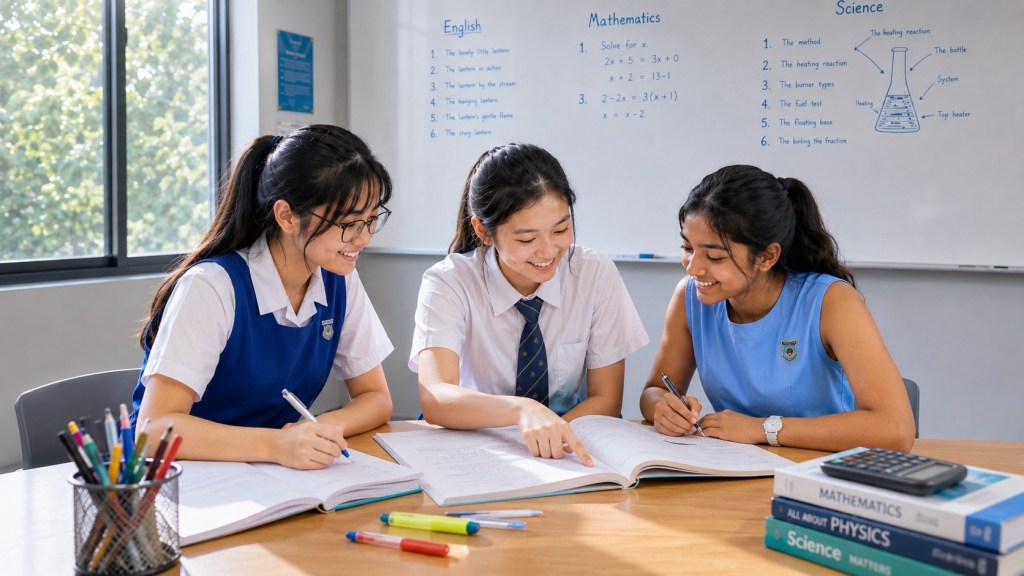
Science presentations and posters are not just display tasks. They are scientific communication tasks: explain a question, show the evidence, make the reasoning visible, and help an audience understand what matters without forcing them to read a full report. A strong presentation does not place every fact, graph and paragraph onto a slide. It selects the essential Science, arranges it in a clear sequence, uses figures where they explain more efficiently than prose, and leaves enough visual space for the audience to see the argument.
This Advanced Science Tutorials guide is written for parents and students in Sengkang, Punggol and across Singapore who search for Science presentation, Science poster, science fair poster, research poster, Science project presentation, how to present a Science project, oral presentation Science and poster presentation tips. It supports Primary projects, PSLE-style communication skills and Secondary G1, G2 and G3 Science.
The U.S. National Institutes of Health describes scientific posters as a way to communicate research and receive feedback, with content commonly including title and authors, introduction, purpose, methods, results and conclusions. NIH also recommends using figures, diagrams and bullet points rather than large blocks of prose and practising a short verbal explanation of the work. See NIH: Creating a Scientific Poster.
The presentation architecture
- Question: what problem or scientific question are you addressing?
- Context: why does the question matter?
- Method: how did you investigate it?
- Evidence: what did you observe or measure?
- Reasoning: what does the evidence mean scientifically?
- Conclusion: what can you claim?
- Limitation: what should the audience not overinterpret?
- Next question: what would you investigate or improve next?
Primary 1 and Primary 2: show and tell with evidence
Young learners can present one observation, one drawing and one simple explanation. The adult should not turn the task into a miniature conference poster. The educational goal is to say what was observed and what it might mean.
A strong early prompt is: “Show us what you noticed, and tell us how you know.”
Primary 3 and Primary 4: organise question, method and result
Primary Science students can use a simple poster or slide sequence: question, prediction, method, result and conclusion. Use large diagrams and short labels. The student should be able to explain each visual in their own words rather than reading every word from the board.
One graph or diagram with a clear explanation is usually stronger than five small images with no interpretation.
Primary 5 and Primary 6: add evidence and scientific reasoning
Older Primary learners can include variables, data tables, graphs and explanation. They should distinguish what the experiment showed from why the result happened. If the project did not support the prediction, the presentation should say so honestly.
PSLE-ready communication benefits from the same habit: concise claim, relevant evidence and mechanism.
Secondary G1, G2 and G3: communicate a scientific argument
Lower Secondary students should increasingly present methods, quantitative evidence, uncertainty, limitations and comparisons with expected theory. A poster should allow a viewer to understand the project in under a few minutes, while the oral explanation can add nuance.
The exact required poster size, slide count, citation style and presentation duration depend on the assignment. Follow the teacher’s rubric first.
Audience
Communication principle. The presentation should be designed for the knowledge level of the audience.
Common failure. Students either oversimplify or assume everyone knows the chapter.
Better presentation move. Define what the audience already knows and what they need explained.
Question to ask. What could confuse a viewer who was absent from the experiment?
Practice task. Rewrite one technical sentence for a younger audience.
The final test is whether the audience can see the scientific argument quickly: question, evidence, interpretation and conclusion. Design should serve that argument rather than compete with it.
Purpose
Communication principle. Every presentation needs a clear purpose: explain, report, compare, persuade scientifically or share results.
Common failure. Students add content without knowing the communication job.
Better presentation move. State the purpose in one sentence before designing.
Question to ask. What should the audience understand or remember afterward?
Practice task. Write one communication objective.
The final test is whether the audience can see the scientific argument quickly: question, evidence, interpretation and conclusion. Design should serve that argument rather than compete with it.
Title
Communication principle. A title should identify the scientific focus clearly.
Common failure. Students use generic titles such as ‘My Science Project’.
Better presentation move. Name the relationship, question or main finding.
Question to ask. Could the title stand alone on a programme?
Practice task. Create three stronger titles.
The final test is whether the audience can see the scientific argument quickly: question, evidence, interpretation and conclusion. Design should serve that argument rather than compete with it.
Opening
Communication principle. The opening should orient the audience quickly.
Common failure. Students begin with long background history.
Better presentation move. Start with the question, phenomenon or problem.
Question to ask. Why should the audience care about this system?
Practice task. Write a 20-second opening.
The final test is whether the audience can see the scientific argument quickly: question, evidence, interpretation and conclusion. Design should serve that argument rather than compete with it.
Background
Communication principle. Background supplies only the Science needed to understand the question.
Common failure. Students turn the poster into a textbook summary.
Better presentation move. Keep the theory selective and linked to the project.
Question to ask. Which concept is essential for interpreting the result?
Practice task. Cut background by half.
The final test is whether the audience can see the scientific argument quickly: question, evidence, interpretation and conclusion. Design should serve that argument rather than compete with it.
Research question
Communication principle. The question should be visible and specific.
Common failure. Students bury it in prose.
Better presentation move. Display it prominently.
Question to ask. Can a viewer find it in five seconds?
Practice task. Rewrite for clarity.
The final test is whether the audience can see the scientific argument quickly: question, evidence, interpretation and conclusion. Design should serve that argument rather than compete with it.
Aim
Communication principle. The aim explains what the investigation intended to do.
Common failure. Students confuse aim with conclusion.
Better presentation move. Use to investigate, compare or determine.
Question to ask. Does the aim match the method?
Practice task. Audit aim-method alignment.
The final test is whether the audience can see the scientific argument quickly: question, evidence, interpretation and conclusion. Design should serve that argument rather than compete with it.
Hypothesis
Communication principle. A hypothesis can be shown if required and should remain testable.
Common failure. Students hide unsupported predictions after seeing results.
Better presentation move. Present the original prediction honestly.
Question to ask. What mechanism supported the prediction?
Practice task. Add one sentence of rationale.
The final test is whether the audience can see the scientific argument quickly: question, evidence, interpretation and conclusion. Design should serve that argument rather than compete with it.
Variables
Communication principle. Variables can be shown briefly in experimental presentations.
Common failure. Students list long IV/DV/CV definitions instead of the actual project variables.
Better presentation move. Name the actual changed, measured and controlled conditions.
Question to ask. Which controls matter most to validity?
Practice task. Build a compact variable panel.
The final test is whether the audience can see the scientific argument quickly: question, evidence, interpretation and conclusion. Design should serve that argument rather than compete with it.
Method
Communication principle. Method should show enough detail to understand how evidence was produced.
Common failure. Students paste every procedural step.
Better presentation move. Use a flow diagram, labelled setup or 4–6 concise bullets.
Question to ask. Which steps affect the result?
Practice task. Convert a full method into a visual sequence.
The final test is whether the audience can see the scientific argument quickly: question, evidence, interpretation and conclusion. Design should serve that argument rather than compete with it.
Apparatus diagram
Communication principle. A clean apparatus figure can replace many words.
Common failure. Students use low-resolution photos or crowded drawings.
Better presentation move. Use a simplified labelled diagram.
Question to ask. Can the viewer see the measurement points?
Practice task. Create a poster-ready setup diagram.
The final test is whether the audience can see the scientific argument quickly: question, evidence, interpretation and conclusion. Design should serve that argument rather than compete with it.
Safety note
Communication principle. Safety can be mentioned when it is scientifically relevant or required.
Common failure. Students either ignore it or devote excessive poster space.
Better presentation move. State the important control briefly.
Question to ask. Which hazard influenced the design?
Practice task. Add one safety line.
The final test is whether the audience can see the scientific argument quickly: question, evidence, interpretation and conclusion. Design should serve that argument rather than compete with it.
Raw data
Communication principle. Raw data usually do not belong in full on a poster unless the dataset is small.
Common failure. Students paste spreadsheets that cannot be read.
Better presentation move. Summarise and keep raw data in an appendix or backup where allowed.
Question to ask. What evidence does the audience need to see?
Practice task. Reduce a data table.
The final test is whether the audience can see the scientific argument quickly: question, evidence, interpretation and conclusion. Design should serve that argument rather than compete with it.
Processed data
Communication principle. Processed data such as means, rates or percentages should be transparent.
Common failure. Students show final values without explaining what was calculated.
Better presentation move. Label the quantity and method of processing.
Question to ask. What transformation produced this number?
Practice task. Add a one-line calculation note.
The final test is whether the audience can see the scientific argument quickly: question, evidence, interpretation and conclusion. Design should serve that argument rather than compete with it.
Table
Communication principle. Tables work best for small exact datasets.
Common failure. Students use large tables that viewers cannot scan.
Better presentation move. Use concise columns, units and highlighting sparingly.
Question to ask. Would a graph communicate the pattern better?
Practice task. Choose table or graph.
The final test is whether the audience can see the scientific argument quickly: question, evidence, interpretation and conclusion. Design should serve that argument rather than compete with it.
Graph
Communication principle. Graphs show relationships and trends efficiently.
Common failure. Students use default spreadsheet graphs with unreadable labels.
Better presentation move. Use large axes, units, simple legends and a clear title.
Question to ask. Can the trend be seen from one metre away?
Practice task. Redesign one graph.
The final test is whether the audience can see the scientific argument quickly: question, evidence, interpretation and conclusion. Design should serve that argument rather than compete with it.
Graph title
Communication principle. The title should identify the relationship, not just say ‘Results’.
Common failure. Students leave default titles.
Better presentation move. Name dependent versus independent variables or the key finding.
Question to ask. Does the title help interpretation?
Practice task. Rewrite three graph titles.
The final test is whether the audience can see the scientific argument quickly: question, evidence, interpretation and conclusion. Design should serve that argument rather than compete with it.
Axis labels
Communication principle. Axes need readable variable names and units.
Common failure. Students use tiny text or abbreviations without explanation.
Better presentation move. Use concise full labels.
Question to ask. Could a viewer interpret the graph without narration?
Practice task. Audit axis readability.
The final test is whether the audience can see the scientific argument quickly: question, evidence, interpretation and conclusion. Design should serve that argument rather than compete with it.
Legend
Communication principle. Legends should be simple and directly tied to plotted data.
Common failure. Students rely on many colours and long legend entries.
Better presentation move. Use few conditions and direct labels where possible.
Question to ask. Can lines or bars be distinguished without guessing?
Practice task. Simplify a legend.
The final test is whether the audience can see the scientific argument quickly: question, evidence, interpretation and conclusion. Design should serve that argument rather than compete with it.
Error bars
Communication principle. Error bars should be defined if used.
Common failure. Students include software-default bars without knowing what they mean.
Better presentation move. State whether they represent SD, SE, CI or another measure.
Question to ask. What uncertainty does the figure communicate?
Practice task. Write a clear caption.
The final test is whether the audience can see the scientific argument quickly: question, evidence, interpretation and conclusion. Design should serve that argument rather than compete with it.
Image
Communication principle. Images should contribute evidence or context.
Common failure. Students add decorative stock images.
Better presentation move. Use images only when they show specimen, setup or relevant phenomenon.
Question to ask. What scientific job does this image do?
Practice task. Remove one decorative image.
The final test is whether the audience can see the scientific argument quickly: question, evidence, interpretation and conclusion. Design should serve that argument rather than compete with it.
Micrograph
Communication principle. Micrographs need scale, labels and context.
Common failure. Students crop away scale bars or alter contrast without explanation.
Better presentation move. Preserve scientific metadata and use annotations carefully.
Question to ask. What structure should the audience notice?
Practice task. Create an annotated micrograph panel.
The final test is whether the audience can see the scientific argument quickly: question, evidence, interpretation and conclusion. Design should serve that argument rather than compete with it.
Diagram
Communication principle. Diagrams can show mechanism or structure more efficiently than text.
Common failure. Students paste complex textbook diagrams with unreadable labels.
Better presentation move. Redraw a simplified project-specific figure.
Question to ask. What relation must the audience understand?
Practice task. Create one clean diagram.
The final test is whether the audience can see the scientific argument quickly: question, evidence, interpretation and conclusion. Design should serve that argument rather than compete with it.
Flowchart
Communication principle. Flowcharts show process or analysis steps.
Common failure. Students use long paragraphs in boxes.
Better presentation move. Use short actions and arrows.
Question to ask. Where are the key decision points?
Practice task. Convert method into a flowchart.
The final test is whether the audience can see the scientific argument quickly: question, evidence, interpretation and conclusion. Design should serve that argument rather than compete with it.
Concept map
Communication principle. Concept maps can show theory relationships but should not dominate the poster.
Common failure. Students create dense webs nobody can read.
Better presentation move. Use only if relationships are central to the project.
Question to ask. Which connections matter to the conclusion?
Practice task. Simplify to five nodes.
The final test is whether the audience can see the scientific argument quickly: question, evidence, interpretation and conclusion. Design should serve that argument rather than compete with it.
Figure caption
Communication principle. Captions should let figures stand alone.
Common failure. Students write ‘Figure 1: Graph’.
Better presentation move. State what is shown and relevant conditions.
Question to ask. What would a reader need if you walked away?
Practice task. Write an informative caption.
The final test is whether the audience can see the scientific argument quickly: question, evidence, interpretation and conclusion. Design should serve that argument rather than compete with it.
Main finding
Communication principle. The main result should be visually obvious.
Common failure. Students make viewers hunt through tables.
Better presentation move. Use one headline sentence or highlighted figure.
Question to ask. What is the one result the audience should remember?
Practice task. Write a finding sentence.
The final test is whether the audience can see the scientific argument quickly: question, evidence, interpretation and conclusion. Design should serve that argument rather than compete with it.
Results text
Communication principle. Results text should describe pattern without repeating every number.
Common failure. Students narrate entire tables.
Better presentation move. Select the most relevant comparisons.
Question to ask. Which numbers support the conclusion?
Practice task. Write a 3-sentence result summary.
The final test is whether the audience can see the scientific argument quickly: question, evidence, interpretation and conclusion. Design should serve that argument rather than compete with it.
Discussion
Communication principle. Discussion explains why the pattern makes scientific sense.
Common failure. Students repeat the result.
Better presentation move. Connect result to model or mechanism.
Question to ask. What scientific concept explains the evidence?
Practice task. Write a mechanism sentence.
The final test is whether the audience can see the scientific argument quickly: question, evidence, interpretation and conclusion. Design should serve that argument rather than compete with it.
Unexpected result
Communication principle. Unexpected results should be presented honestly.
Common failure. Students hide them because they seem embarrassing.
Better presentation move. State the observation and discuss plausible reasons cautiously.
Question to ask. Does it change the conclusion?
Practice task. Add one anomaly note.
The final test is whether the audience can see the scientific argument quickly: question, evidence, interpretation and conclusion. Design should serve that argument rather than compete with it.
Limitation
Communication principle. A limitation should identify how confidence or scope is restricted.
Common failure. Students write ‘human error’.
Better presentation move. Name the specific design or measurement issue.
Question to ask. How could it affect the result?
Practice task. Write limitation → effect.
The final test is whether the audience can see the scientific argument quickly: question, evidence, interpretation and conclusion. Design should serve that argument rather than compete with it.
Improvement
Communication principle. An improvement should address a stated limitation.
Common failure. Students suggest generic ‘more accurate equipment’.
Better presentation move. Name the change and reason.
Question to ask. Which limitation does it fix?
Practice task. Pair limitation with improvement.
The final test is whether the audience can see the scientific argument quickly: question, evidence, interpretation and conclusion. Design should serve that argument rather than compete with it.
Conclusion
Communication principle. The conclusion should answer the question without overstating.
Common failure. Students restate the entire presentation.
Better presentation move. Use one or two direct sentences.
Question to ask. What can the data support?
Practice task. Write a calibrated conclusion.
The final test is whether the audience can see the scientific argument quickly: question, evidence, interpretation and conclusion. Design should serve that argument rather than compete with it.
Next step
Communication principle. Future work should follow from a limitation or new question.
Common failure. Students write ‘do more research’.
Better presentation move. Name a specific variable, method or population.
Question to ask. What uncertainty remains?
Practice task. Write one next experiment.
The final test is whether the audience can see the scientific argument quickly: question, evidence, interpretation and conclusion. Design should serve that argument rather than compete with it.
References
Communication principle. Posters and slides should cite sources according to assignment rules.
Common failure. Students omit sources because space is limited.
Better presentation move. Use concise references and citations for figures/data.
Question to ask. Which claims are not your own?
Practice task. Create a reference block.
The final test is whether the audience can see the scientific argument quickly: question, evidence, interpretation and conclusion. Design should serve that argument rather than compete with it.
Image attribution
Communication principle. Borrowed images may require attribution and licence compliance.
Common failure. Students copy from image search.
Better presentation move. Use permitted images or create your own diagrams.
Question to ask. Can you legally reuse it?
Practice task. Replace one uncredited image.
The final test is whether the audience can see the scientific argument quickly: question, evidence, interpretation and conclusion. Design should serve that argument rather than compete with it.
Data attribution
Communication principle. Public datasets should be cited.
Common failure. Students treat downloaded data as anonymous facts.
Better presentation move. Name provider, dataset and date/version when relevant.
Question to ask. Could another person retrieve the same data?
Practice task. Add data source.
The final test is whether the audience can see the scientific argument quickly: question, evidence, interpretation and conclusion. Design should serve that argument rather than compete with it.
Poster hierarchy
Communication principle. Visual hierarchy tells the eye where to look first.
Common failure. Students make every heading the same size.
Better presentation move. Use title, section heading, body and figure hierarchy.
Question to ask. Can a viewer scan the structure in ten seconds?
Practice task. Audit poster hierarchy.
The final test is whether the audience can see the scientific argument quickly: question, evidence, interpretation and conclusion. Design should serve that argument rather than compete with it.
Reading order
Communication principle. A poster should guide viewers through a logical path.
Common failure. Students create a magazine-like collage with no sequence.
Better presentation move. Use columns, numbering or spatial grouping.
Question to ask. Where does the eye go next?
Practice task. Sketch a reading path.
The final test is whether the audience can see the scientific argument quickly: question, evidence, interpretation and conclusion. Design should serve that argument rather than compete with it.
White space
Communication principle. White space improves readability and visual grouping.
Common failure. Students fill every empty area.
Better presentation move. Leave margins and gaps intentionally.
Question to ask. Can the poster breathe?
Practice task. Remove 20% of content.
The final test is whether the audience can see the scientific argument quickly: question, evidence, interpretation and conclusion. Design should serve that argument rather than compete with it.
Font size
Communication principle. Poster text must be readable at viewing distance.
Common failure. Students design on a laptop and use tiny text.
Better presentation move. Test print or zoom to realistic scale.
Question to ask. Can someone read without leaning in?
Practice task. Increase body text and reduce wording.
The final test is whether the audience can see the scientific argument quickly: question, evidence, interpretation and conclusion. Design should serve that argument rather than compete with it.
Font consistency
Communication principle. Few consistent fonts improve cohesion.
Common failure. Students use many decorative styles.
Better presentation move. Use one family with clear hierarchy.
Question to ask. Does typography help or distract?
Practice task. Standardise fonts.
The final test is whether the audience can see the scientific argument quickly: question, evidence, interpretation and conclusion. Design should serve that argument rather than compete with it.
Colour palette
Communication principle. Colour can group sections or highlight data.
Common failure. Students use many saturated colours.
Better presentation move. Use limited high-contrast colours.
Question to ask. Does the colour encode meaning?
Practice task. Reduce palette.
The final test is whether the audience can see the scientific argument quickly: question, evidence, interpretation and conclusion. Design should serve that argument rather than compete with it.
Contrast
Communication principle. Text and background need sufficient contrast.
Common failure. Students choose pale text on bright backgrounds.
Better presentation move. Use dark text on light background or equivalent high contrast.
Question to ask. Can it be read in ordinary lighting?
Practice task. Test grayscale readability.
The final test is whether the audience can see the scientific argument quickly: question, evidence, interpretation and conclusion. Design should serve that argument rather than compete with it.
Alignment
Communication principle. Alignment creates structure and professionalism.
Common failure. Students float text boxes randomly.
Better presentation move. Use consistent columns and edges.
Question to ask. Do sections line up?
Practice task. Snap to a simple grid.
The final test is whether the audience can see the scientific argument quickly: question, evidence, interpretation and conclusion. Design should serve that argument rather than compete with it.
Poster density
Communication principle. Dense posters discourage reading.
Common failure. Students include full lab report text.
Better presentation move. Prioritise question, evidence and conclusion.
Question to ask. What can move to oral explanation?
Practice task. Cut 30% of words.
The final test is whether the audience can see the scientific argument quickly: question, evidence, interpretation and conclusion. Design should serve that argument rather than compete with it.
Bullet points
Communication principle. Bullets work for short information, not every explanation.
Common failure. Students turn every sentence into a bullet.
Better presentation move. Use bullets for lists and prose for essential reasoning.
Question to ask. Does the bullet preserve meaning?
Practice task. Rewrite one section.
The final test is whether the audience can see the scientific argument quickly: question, evidence, interpretation and conclusion. Design should serve that argument rather than compete with it.
Paragraph length
Communication principle. Poster paragraphs should remain short.
Common failure. Students paste report paragraphs unchanged.
Better presentation move. Use 2–4 sentence blocks.
Question to ask. Could this become a figure or bullet?
Practice task. Compress one paragraph.
The final test is whether the audience can see the scientific argument quickly: question, evidence, interpretation and conclusion. Design should serve that argument rather than compete with it.
Slide title
Communication principle. Slide titles can state the message rather than only topic.
Common failure. Students write ‘Results’ repeatedly.
Better presentation move. Use ‘Temperature increased as…’ where appropriate.
Question to ask. What should the audience learn from this slide?
Practice task. Rewrite slide titles.
The final test is whether the audience can see the scientific argument quickly: question, evidence, interpretation and conclusion. Design should serve that argument rather than compete with it.
One-message slide
Communication principle. Each slide should have one main communication job.
Common failure. Students place background, method and results on one slide.
Better presentation move. Split by purpose.
Question to ask. What is the one sentence takeaway?
Practice task. Remove unrelated elements.
The final test is whether the audience can see the scientific argument quickly: question, evidence, interpretation and conclusion. Design should serve that argument rather than compete with it.
Slide text
Communication principle. Slides support speaking; they should not become scripts.
Common failure. Students read paragraphs aloud.
Better presentation move. Use short phrases, figures and cues.
Question to ask. What must be seen versus heard?
Practice task. Cut slide text in half.
The final test is whether the audience can see the scientific argument quickly: question, evidence, interpretation and conclusion. Design should serve that argument rather than compete with it.
Animation
Communication principle. Animation can reveal sequence but can distract.
Common failure. Students animate every bullet.
Better presentation move. Use only when order or process benefits.
Question to ask. Does movement clarify mechanism?
Practice task. Remove decorative animation.
The final test is whether the audience can see the scientific argument quickly: question, evidence, interpretation and conclusion. Design should serve that argument rather than compete with it.
Transition
Communication principle. Transitions should support structure, not spectacle.
Common failure. Students use flashy effects.
Better presentation move. Keep simple or none.
Question to ask. Would the audience notice the Science more than the transition?
Practice task. Standardise transitions.
The final test is whether the audience can see the scientific argument quickly: question, evidence, interpretation and conclusion. Design should serve that argument rather than compete with it.
Opening sentence
Communication principle. The oral opening should tell the audience the question and why it matters.
Common failure. Students begin by apologising or reading the title.
Better presentation move. Use a direct problem statement.
Question to ask. What is the scientific problem?
Practice task. Practise a 20-second opening.
The final test is whether the audience can see the scientific argument quickly: question, evidence, interpretation and conclusion. Design should serve that argument rather than compete with it.
Project pitch
Communication principle. A short pitch summarises purpose, method, result and conclusion.
Common failure. Students memorise a long speech.
Better presentation move. Use 60–90 seconds for a compact version.
Question to ask. Can you explain it without slides?
Practice task. Record one pitch.
The final test is whether the audience can see the scientific argument quickly: question, evidence, interpretation and conclusion. Design should serve that argument rather than compete with it.
Three-minute explanation
Communication principle. A three-minute version provides more method and evidence detail.
Common failure. Students use the same pace for every section.
Better presentation move. Spend most time on result and interpretation.
Question to ask. What can background omit?
Practice task. Time one rehearsal.
The final test is whether the audience can see the scientific argument quickly: question, evidence, interpretation and conclusion. Design should serve that argument rather than compete with it.
Five-minute explanation
Communication principle. Longer presentations need transitions and selective depth.
Common failure. Students simply add more text.
Better presentation move. Add one worked figure, limitation and next step.
Question to ask. Where should questions naturally arise?
Practice task. Build a five-minute structure.
The final test is whether the audience can see the scientific argument quickly: question, evidence, interpretation and conclusion. Design should serve that argument rather than compete with it.
Speaking pace
Communication principle. Pace should allow the audience to process graphs and terms.
Common failure. Students speak rapidly from nerves.
Better presentation move. Pause before and after important figures.
Question to ask. Can the audience follow each causal link?
Practice task. Record and time.
The final test is whether the audience can see the scientific argument quickly: question, evidence, interpretation and conclusion. Design should serve that argument rather than compete with it.
Voice volume
Communication principle. Volume should reach the audience without shouting.
Common failure. Students speak toward the screen.
Better presentation move. Face the audience and project clearly.
Question to ask. Can the back row hear?
Practice task. Practise in the room.
The final test is whether the audience can see the scientific argument quickly: question, evidence, interpretation and conclusion. Design should serve that argument rather than compete with it.
Eye contact
Communication principle. Eye contact helps monitor audience understanding.
Common failure. Students stare at notes or slides.
Better presentation move. Use slides as cues, not scripts.
Question to ask. Can you explain one slide without turning around?
Practice task. Practise with minimal notes.
The final test is whether the audience can see the scientific argument quickly: question, evidence, interpretation and conclusion. Design should serve that argument rather than compete with it.
Gesture
Communication principle. Gestures can direct attention to a graph or component.
Common failure. Students wave constantly or point vaguely.
Better presentation move. Use deliberate gestures tied to content.
Question to ask. What exactly are you directing attention to?
Practice task. Practise figure pointing.
The final test is whether the audience can see the scientific argument quickly: question, evidence, interpretation and conclusion. Design should serve that argument rather than compete with it.
Pointer
Communication principle. Pointers or cursor tools can focus attention.
Common failure. Students circle the whole slide repeatedly.
Better presentation move. Point only to the relevant data or feature.
Question to ask. Which point supports the sentence?
Practice task. Use one graph rehearsal.
The final test is whether the audience can see the scientific argument quickly: question, evidence, interpretation and conclusion. Design should serve that argument rather than compete with it.
Presenter notes
Communication principle. Notes should be cues, not full prose.
Common failure. Students read prepared scripts verbatim.
Better presentation move. Use keywords and transition prompts.
Question to ask. Could you recover if the note page disappeared?
Practice task. Reduce notes to one card.
The final test is whether the audience can see the scientific argument quickly: question, evidence, interpretation and conclusion. Design should serve that argument rather than compete with it.
Rehearsal
Communication principle. Rehearsal improves timing and reveals unclear explanations.
Common failure. Students rehearse only silently.
Better presentation move. Practise aloud with actual visuals.
Question to ask. Where do you stumble or overrun?
Practice task. Run two timed rehearsals.
The final test is whether the audience can see the scientific argument quickly: question, evidence, interpretation and conclusion. Design should serve that argument rather than compete with it.
Audience question
Communication principle. Questions test whether the presenter understands beyond the script.
Common failure. Students fear questions as attacks.
Better presentation move. Listen, restate if needed, answer evidence-first.
Question to ask. What data or limitation addresses the question?
Practice task. Practise five likely questions.
The final test is whether the audience can see the scientific argument quickly: question, evidence, interpretation and conclusion. Design should serve that argument rather than compete with it.
Unknown answer
Communication principle. It is acceptable to say you do not know.
Common failure. Students invent answers to appear confident.
Better presentation move. State what is known and what would be needed to answer.
Question to ask. What evidence would resolve it?
Practice task. Practise an honest uncertainty response.
The final test is whether the audience can see the scientific argument quickly: question, evidence, interpretation and conclusion. Design should serve that argument rather than compete with it.
Challenge question
Communication principle. A critical question can improve the project.
Common failure. Students become defensive.
Better presentation move. Separate challenge to evidence from challenge to self.
Question to ask. Does the question reveal a limitation?
Practice task. Write a follow-up action.
The final test is whether the audience can see the scientific argument quickly: question, evidence, interpretation and conclusion. Design should serve that argument rather than compete with it.
Team presentation
Communication principle. Teams need coherent roles and transitions.
Common failure. Students divide slides and produce disconnected mini-talks.
Better presentation move. Share one central argument and rehearse handoffs.
Question to ask. Does every presenter know the whole project?
Practice task. Cross-question teammates.
The final test is whether the audience can see the scientific argument quickly: question, evidence, interpretation and conclusion. Design should serve that argument rather than compete with it.
Fair contribution
Communication principle. Group work should distribute meaningful tasks.
Common failure. Students assign one member only formatting work.
Better presentation move. Rotate research, analysis and speaking where possible.
Question to ask. What did each member contribute scientifically?
Practice task. Create role log.
The final test is whether the audience can see the scientific argument quickly: question, evidence, interpretation and conclusion. Design should serve that argument rather than compete with it.
Primary poster
Communication principle. Primary posters should favour large diagrams, short text and oral explanation.
Common failure. Adults may over-design for the child.
Better presentation move. Keep the child’s language and ownership visible.
Question to ask. Can the student explain every element?
Practice task. Remove adult-written prose.
The final test is whether the audience can see the scientific argument quickly: question, evidence, interpretation and conclusion. Design should serve that argument rather than compete with it.
Secondary poster
Communication principle. Secondary posters can add more data, methods, uncertainty and references.
Common failure. Students imitate university posters with unreadable density.
Better presentation move. Scale complexity to the assignment.
Question to ask. What does the rubric actually reward?
Practice task. Build a rubric map.
The final test is whether the audience can see the scientific argument quickly: question, evidence, interpretation and conclusion. Design should serve that argument rather than compete with it.
Science fair board
Communication principle. Tri-fold boards often need question, background, method, data and conclusion.
Common failure. Students fill every panel with text.
Better presentation move. Use one strong figure per major section.
Question to ask. Can judges follow without narration?
Practice task. Sketch layout first.
The final test is whether the audience can see the scientific argument quickly: question, evidence, interpretation and conclusion. Design should serve that argument rather than compete with it.
Digital poster
Communication principle. Digital posters can use zoom or interactive elements.
Common failure. Students hide key content behind clicks.
Better presentation move. Keep essential argument visible immediately.
Question to ask. What is readable on the actual display?
Practice task. Test on target screen.
The final test is whether the audience can see the scientific argument quickly: question, evidence, interpretation and conclusion. Design should serve that argument rather than compete with it.
Video presentation
Communication principle. Recorded Science presentations need clear narration and visual pacing.
Common failure. Students read static slides over music.
Better presentation move. Use close-up diagrams, captions and spoken explanation.
Question to ask. Can a viewer pause and understand each figure?
Practice task. Storyboard first.
The final test is whether the audience can see the scientific argument quickly: question, evidence, interpretation and conclusion. Design should serve that argument rather than compete with it.
Poster accessibility
Communication principle. Accessibility includes readable text, colour contrast and alternatives for visuals.
Common failure. Students rely only on colour differences.
Better presentation move. Use labels, patterns and descriptive captions.
Question to ask. Would a colour-blind viewer interpret the graph?
Practice task. Audit figure encoding.
The final test is whether the audience can see the scientific argument quickly: question, evidence, interpretation and conclusion. Design should serve that argument rather than compete with it.
Presentation ethics
Communication principle. Do not manipulate graphs, hide negative results or overstate conclusions.
Common failure. Students think presentations are marketing.
Better presentation move. Keep the evidence chain honest.
Question to ask. Does visual design exaggerate the effect?
Practice task. Compare two graph scales.
The final test is whether the audience can see the scientific argument quickly: question, evidence, interpretation and conclusion. Design should serve that argument rather than compete with it.
Poster finish rule
Communication principle. A poster is finished when the scientific story is clear at viewing distance.
Common failure. Students keep adding content until deadline.
Better presentation move. Stop when question, method, evidence, conclusion and limitation are all readable.
Question to ask. What can be removed without losing the argument?
Practice task. Run a five-second scan test.
The final test is whether the audience can see the scientific argument quickly: question, evidence, interpretation and conclusion. Design should serve that argument rather than compete with it.
Presentation finish rule
Communication principle. A talk is ready when it fits the time and the presenter can explain every visual without reading.
Common failure. Students keep rewriting slides instead of rehearsing.
Better presentation move. Freeze visuals and practise delivery.
Question to ask. Can you answer likely questions?
Practice task. Do a final timed run.
The final test is whether the audience can see the scientific argument quickly: question, evidence, interpretation and conclusion. Design should serve that argument rather than compete with it.
A twelve-week Science presentation programme
- Week 1: audience, purpose and title.
- Week 2: question, background and aim.
- Week 3: methods and apparatus figures.
- Week 4: tables, graphs and captions.
- Week 5: results and main finding.
- Week 6: discussion, mechanism and limitation.
- Week 7: poster hierarchy and layout.
- Week 8: slide design and one-message slides.
- Week 9: oral opening, pace and voice.
- Week 10: short project pitch and rehearsal.
- Week 11: questions, uncertainty and rebuttal.
- Week 12: final poster/talk and audience feedback.
When tuition may help with Science presentations
Extra support can help when a student understands the project but cannot decide what belongs on the poster, reads slides word for word, or cannot explain the graph orally. A tutor should help organise the scientific story while keeping the student’s ownership and wording intact.
For current Primary 3–6 and PSLE programme information, use Primary Science Tuition Sengkang. Secondary presentation coverage here is educational transition material.
Frequently asked questions
What should a Science poster include?
Usually a clear title, question or purpose, brief background, methods, results, figures, conclusion, limitations and references, adjusted to the assignment rubric.
How much text should a poster have?
Less than a report. Use figures, diagrams, tables and concise text so the key argument is readable at viewing distance.
Should I put all raw data on the poster?
Usually no. Show the data needed to support the conclusion and keep full raw data available separately if required.
How long should my oral explanation be?
Follow the assignment, but prepare both a short 60–90 second summary and a longer version so you can adapt to the audience.
What if my experiment did not support the hypothesis?
Present the result honestly. Explain what the evidence shows, possible limitations and what you would test next.
Should I memorise my presentation word for word?
Usually no. Know the scientific story and use cue notes so you can speak naturally and answer questions.
Further reading
Final operating rule
A Science presentation is successful when the audience can answer four questions after seeing it: What was the question? What evidence was collected? What does the evidence mean? What can we reasonably conclude? Everything else—fonts, colours, slide transitions, poster panels—is useful only if it helps those four answers become clearer.
Audience — presentation clinic 1
Take one real or draft Science presentation where audience matters. Ask the student what the audience should understand before editing the visual. This keeps the scientific message ahead of design preference.
Surface the common failure: Students either oversimplify or assume everyone knows the chapter.. Ask what misunderstanding or overload it could create. Then apply the better move: Define what the audience already knows and what they need explained. The revision should make the evidence or relationship easier to see.
Now ask: What could confuse a viewer who was absent from the experiment? Run the practice task: Rewrite one technical sentence for a younger audience. View the result from realistic distance or deliver it aloud. If the audience needs extra explanation simply to decode the layout, simplify further.
Finish with rehearsal and questions. The learner should be able to explain the figure, limitation and conclusion without reading. Presentation skill is durable when the scientific story remains clear even after the exact wording changes.
Purpose — presentation clinic 1
Take one real or draft Science presentation where purpose matters. Ask the student what the audience should understand before editing the visual. This keeps the scientific message ahead of design preference.
Surface the common failure: Students add content without knowing the communication job.. Ask what misunderstanding or overload it could create. Then apply the better move: State the purpose in one sentence before designing. The revision should make the evidence or relationship easier to see.
Now ask: What should the audience understand or remember afterward? Run the practice task: Write one communication objective. View the result from realistic distance or deliver it aloud. If the audience needs extra explanation simply to decode the layout, simplify further.
Finish with rehearsal and questions. The learner should be able to explain the figure, limitation and conclusion without reading. Presentation skill is durable when the scientific story remains clear even after the exact wording changes.
Title — presentation clinic 1
Take one real or draft Science presentation where title matters. Ask the student what the audience should understand before editing the visual. This keeps the scientific message ahead of design preference.
Surface the common failure: Students use generic titles such as ‘My Science Project’.. Ask what misunderstanding or overload it could create. Then apply the better move: Name the relationship, question or main finding. The revision should make the evidence or relationship easier to see.
Now ask: Could the title stand alone on a programme? Run the practice task: Create three stronger titles. View the result from realistic distance or deliver it aloud. If the audience needs extra explanation simply to decode the layout, simplify further.
Finish with rehearsal and questions. The learner should be able to explain the figure, limitation and conclusion without reading. Presentation skill is durable when the scientific story remains clear even after the exact wording changes.
Opening — presentation clinic 1
Take one real or draft Science presentation where opening matters. Ask the student what the audience should understand before editing the visual. This keeps the scientific message ahead of design preference.
Surface the common failure: Students begin with long background history.. Ask what misunderstanding or overload it could create. Then apply the better move: Start with the question, phenomenon or problem. The revision should make the evidence or relationship easier to see.
Now ask: Why should the audience care about this system? Run the practice task: Write a 20-second opening. View the result from realistic distance or deliver it aloud. If the audience needs extra explanation simply to decode the layout, simplify further.
Finish with rehearsal and questions. The learner should be able to explain the figure, limitation and conclusion without reading. Presentation skill is durable when the scientific story remains clear even after the exact wording changes.
Background — presentation clinic 1
Take one real or draft Science presentation where background matters. Ask the student what the audience should understand before editing the visual. This keeps the scientific message ahead of design preference.
Surface the common failure: Students turn the poster into a textbook summary.. Ask what misunderstanding or overload it could create. Then apply the better move: Keep the theory selective and linked to the project. The revision should make the evidence or relationship easier to see.
Now ask: Which concept is essential for interpreting the result? Run the practice task: Cut background by half. View the result from realistic distance or deliver it aloud. If the audience needs extra explanation simply to decode the layout, simplify further.
Finish with rehearsal and questions. The learner should be able to explain the figure, limitation and conclusion without reading. Presentation skill is durable when the scientific story remains clear even after the exact wording changes.
Research question — presentation clinic 1
Take one real or draft Science presentation where research question matters. Ask the student what the audience should understand before editing the visual. This keeps the scientific message ahead of design preference.
Surface the common failure: Students bury it in prose.. Ask what misunderstanding or overload it could create. Then apply the better move: Display it prominently. The revision should make the evidence or relationship easier to see.
Now ask: Can a viewer find it in five seconds? Run the practice task: Rewrite for clarity. View the result from realistic distance or deliver it aloud. If the audience needs extra explanation simply to decode the layout, simplify further.
Finish with rehearsal and questions. The learner should be able to explain the figure, limitation and conclusion without reading. Presentation skill is durable when the scientific story remains clear even after the exact wording changes.
Aim — presentation clinic 1
Take one real or draft Science presentation where aim matters. Ask the student what the audience should understand before editing the visual. This keeps the scientific message ahead of design preference.
Surface the common failure: Students confuse aim with conclusion.. Ask what misunderstanding or overload it could create. Then apply the better move: Use to investigate, compare or determine. The revision should make the evidence or relationship easier to see.
Now ask: Does the aim match the method? Run the practice task: Audit aim-method alignment. View the result from realistic distance or deliver it aloud. If the audience needs extra explanation simply to decode the layout, simplify further.
Finish with rehearsal and questions. The learner should be able to explain the figure, limitation and conclusion without reading. Presentation skill is durable when the scientific story remains clear even after the exact wording changes.
Hypothesis — presentation clinic 1
Take one real or draft Science presentation where hypothesis matters. Ask the student what the audience should understand before editing the visual. This keeps the scientific message ahead of design preference.
Surface the common failure: Students hide unsupported predictions after seeing results.. Ask what misunderstanding or overload it could create. Then apply the better move: Present the original prediction honestly. The revision should make the evidence or relationship easier to see.
Now ask: What mechanism supported the prediction? Run the practice task: Add one sentence of rationale. View the result from realistic distance or deliver it aloud. If the audience needs extra explanation simply to decode the layout, simplify further.
Finish with rehearsal and questions. The learner should be able to explain the figure, limitation and conclusion without reading. Presentation skill is durable when the scientific story remains clear even after the exact wording changes.
Variables — presentation clinic 1
Take one real or draft Science presentation where variables matters. Ask the student what the audience should understand before editing the visual. This keeps the scientific message ahead of design preference.
Surface the common failure: Students list long IV/DV/CV definitions instead of the actual project variables.. Ask what misunderstanding or overload it could create. Then apply the better move: Name the actual changed, measured and controlled conditions. The revision should make the evidence or relationship easier to see.
Now ask: Which controls matter most to validity? Run the practice task: Build a compact variable panel. View the result from realistic distance or deliver it aloud. If the audience needs extra explanation simply to decode the layout, simplify further.
Finish with rehearsal and questions. The learner should be able to explain the figure, limitation and conclusion without reading. Presentation skill is durable when the scientific story remains clear even after the exact wording changes.
Method — presentation clinic 1
Take one real or draft Science presentation where method matters. Ask the student what the audience should understand before editing the visual. This keeps the scientific message ahead of design preference.
Surface the common failure: Students paste every procedural step.. Ask what misunderstanding or overload it could create. Then apply the better move: Use a flow diagram, labelled setup or 4–6 concise bullets. The revision should make the evidence or relationship easier to see.
Now ask: Which steps affect the result? Run the practice task: Convert a full method into a visual sequence. View the result from realistic distance or deliver it aloud. If the audience needs extra explanation simply to decode the layout, simplify further.
Finish with rehearsal and questions. The learner should be able to explain the figure, limitation and conclusion without reading. Presentation skill is durable when the scientific story remains clear even after the exact wording changes.
Apparatus diagram — presentation clinic 1
Take one real or draft Science presentation where apparatus diagram matters. Ask the student what the audience should understand before editing the visual. This keeps the scientific message ahead of design preference.
Surface the common failure: Students use low-resolution photos or crowded drawings.. Ask what misunderstanding or overload it could create. Then apply the better move: Use a simplified labelled diagram. The revision should make the evidence or relationship easier to see.
Now ask: Can the viewer see the measurement points? Run the practice task: Create a poster-ready setup diagram. View the result from realistic distance or deliver it aloud. If the audience needs extra explanation simply to decode the layout, simplify further.
Finish with rehearsal and questions. The learner should be able to explain the figure, limitation and conclusion without reading. Presentation skill is durable when the scientific story remains clear even after the exact wording changes.
Safety note — presentation clinic 1
Take one real or draft Science presentation where safety note matters. Ask the student what the audience should understand before editing the visual. This keeps the scientific message ahead of design preference.
Surface the common failure: Students either ignore it or devote excessive poster space.. Ask what misunderstanding or overload it could create. Then apply the better move: State the important control briefly. The revision should make the evidence or relationship easier to see.
Now ask: Which hazard influenced the design? Run the practice task: Add one safety line. View the result from realistic distance or deliver it aloud. If the audience needs extra explanation simply to decode the layout, simplify further.
Finish with rehearsal and questions. The learner should be able to explain the figure, limitation and conclusion without reading. Presentation skill is durable when the scientific story remains clear even after the exact wording changes.
Raw data — presentation clinic 1
Take one real or draft Science presentation where raw data matters. Ask the student what the audience should understand before editing the visual. This keeps the scientific message ahead of design preference.
Surface the common failure: Students paste spreadsheets that cannot be read.. Ask what misunderstanding or overload it could create. Then apply the better move: Summarise and keep raw data in an appendix or backup where allowed. The revision should make the evidence or relationship easier to see.
Now ask: What evidence does the audience need to see? Run the practice task: Reduce a data table. View the result from realistic distance or deliver it aloud. If the audience needs extra explanation simply to decode the layout, simplify further.
Finish with rehearsal and questions. The learner should be able to explain the figure, limitation and conclusion without reading. Presentation skill is durable when the scientific story remains clear even after the exact wording changes.
Processed data — presentation clinic 1
Take one real or draft Science presentation where processed data matters. Ask the student what the audience should understand before editing the visual. This keeps the scientific message ahead of design preference.
Surface the common failure: Students show final values without explaining what was calculated.. Ask what misunderstanding or overload it could create. Then apply the better move: Label the quantity and method of processing. The revision should make the evidence or relationship easier to see.
Now ask: What transformation produced this number? Run the practice task: Add a one-line calculation note. View the result from realistic distance or deliver it aloud. If the audience needs extra explanation simply to decode the layout, simplify further.
Finish with rehearsal and questions. The learner should be able to explain the figure, limitation and conclusion without reading. Presentation skill is durable when the scientific story remains clear even after the exact wording changes.
Table — presentation clinic 1
Take one real or draft Science presentation where table matters. Ask the student what the audience should understand before editing the visual. This keeps the scientific message ahead of design preference.
Surface the common failure: Students use large tables that viewers cannot scan.. Ask what misunderstanding or overload it could create. Then apply the better move: Use concise columns, units and highlighting sparingly. The revision should make the evidence or relationship easier to see.
Now ask: Would a graph communicate the pattern better? Run the practice task: Choose table or graph. View the result from realistic distance or deliver it aloud. If the audience needs extra explanation simply to decode the layout, simplify further.
Finish with rehearsal and questions. The learner should be able to explain the figure, limitation and conclusion without reading. Presentation skill is durable when the scientific story remains clear even after the exact wording changes.
Graph — presentation clinic 1
Take one real or draft Science presentation where graph matters. Ask the student what the audience should understand before editing the visual. This keeps the scientific message ahead of design preference.
Surface the common failure: Students use default spreadsheet graphs with unreadable labels.. Ask what misunderstanding or overload it could create. Then apply the better move: Use large axes, units, simple legends and a clear title. The revision should make the evidence or relationship easier to see.
Now ask: Can the trend be seen from one metre away? Run the practice task: Redesign one graph. View the result from realistic distance or deliver it aloud. If the audience needs extra explanation simply to decode the layout, simplify further.
Finish with rehearsal and questions. The learner should be able to explain the figure, limitation and conclusion without reading. Presentation skill is durable when the scientific story remains clear even after the exact wording changes.
Graph title — presentation clinic 1
Take one real or draft Science presentation where graph title matters. Ask the student what the audience should understand before editing the visual. This keeps the scientific message ahead of design preference.
Surface the common failure: Students leave default titles.. Ask what misunderstanding or overload it could create. Then apply the better move: Name dependent versus independent variables or the key finding. The revision should make the evidence or relationship easier to see.
Now ask: Does the title help interpretation? Run the practice task: Rewrite three graph titles. View the result from realistic distance or deliver it aloud. If the audience needs extra explanation simply to decode the layout, simplify further.
Finish with rehearsal and questions. The learner should be able to explain the figure, limitation and conclusion without reading. Presentation skill is durable when the scientific story remains clear even after the exact wording changes.
Axis labels — presentation clinic 1
Take one real or draft Science presentation where axis labels matters. Ask the student what the audience should understand before editing the visual. This keeps the scientific message ahead of design preference.
Surface the common failure: Students use tiny text or abbreviations without explanation.. Ask what misunderstanding or overload it could create. Then apply the better move: Use concise full labels. The revision should make the evidence or relationship easier to see.
Now ask: Could a viewer interpret the graph without narration? Run the practice task: Audit axis readability. View the result from realistic distance or deliver it aloud. If the audience needs extra explanation simply to decode the layout, simplify further.
Finish with rehearsal and questions. The learner should be able to explain the figure, limitation and conclusion without reading. Presentation skill is durable when the scientific story remains clear even after the exact wording changes.
Legend — presentation clinic 1
Take one real or draft Science presentation where legend matters. Ask the student what the audience should understand before editing the visual. This keeps the scientific message ahead of design preference.
Surface the common failure: Students rely on many colours and long legend entries.. Ask what misunderstanding or overload it could create. Then apply the better move: Use few conditions and direct labels where possible. The revision should make the evidence or relationship easier to see.
Now ask: Can lines or bars be distinguished without guessing? Run the practice task: Simplify a legend. View the result from realistic distance or deliver it aloud. If the audience needs extra explanation simply to decode the layout, simplify further.
Finish with rehearsal and questions. The learner should be able to explain the figure, limitation and conclusion without reading. Presentation skill is durable when the scientific story remains clear even after the exact wording changes.
Error bars — presentation clinic 1
Take one real or draft Science presentation where error bars matters. Ask the student what the audience should understand before editing the visual. This keeps the scientific message ahead of design preference.
Surface the common failure: Students include software-default bars without knowing what they mean.. Ask what misunderstanding or overload it could create. Then apply the better move: State whether they represent SD, SE, CI or another measure. The revision should make the evidence or relationship easier to see.
Now ask: What uncertainty does the figure communicate? Run the practice task: Write a clear caption. View the result from realistic distance or deliver it aloud. If the audience needs extra explanation simply to decode the layout, simplify further.
Finish with rehearsal and questions. The learner should be able to explain the figure, limitation and conclusion without reading. Presentation skill is durable when the scientific story remains clear even after the exact wording changes.
Image — presentation clinic 1
Take one real or draft Science presentation where image matters. Ask the student what the audience should understand before editing the visual. This keeps the scientific message ahead of design preference.
Surface the common failure: Students add decorative stock images.. Ask what misunderstanding or overload it could create. Then apply the better move: Use images only when they show specimen, setup or relevant phenomenon. The revision should make the evidence or relationship easier to see.
Now ask: What scientific job does this image do? Run the practice task: Remove one decorative image. View the result from realistic distance or deliver it aloud. If the audience needs extra explanation simply to decode the layout, simplify further.
Finish with rehearsal and questions. The learner should be able to explain the figure, limitation and conclusion without reading. Presentation skill is durable when the scientific story remains clear even after the exact wording changes.
Micrograph — presentation clinic 1
Take one real or draft Science presentation where micrograph matters. Ask the student what the audience should understand before editing the visual. This keeps the scientific message ahead of design preference.
Surface the common failure: Students crop away scale bars or alter contrast without explanation.. Ask what misunderstanding or overload it could create. Then apply the better move: Preserve scientific metadata and use annotations carefully. The revision should make the evidence or relationship easier to see.
Now ask: What structure should the audience notice? Run the practice task: Create an annotated micrograph panel. View the result from realistic distance or deliver it aloud. If the audience needs extra explanation simply to decode the layout, simplify further.
Finish with rehearsal and questions. The learner should be able to explain the figure, limitation and conclusion without reading. Presentation skill is durable when the scientific story remains clear even after the exact wording changes.
Diagram — presentation clinic 1
Take one real or draft Science presentation where diagram matters. Ask the student what the audience should understand before editing the visual. This keeps the scientific message ahead of design preference.
Surface the common failure: Students paste complex textbook diagrams with unreadable labels.. Ask what misunderstanding or overload it could create. Then apply the better move: Redraw a simplified project-specific figure. The revision should make the evidence or relationship easier to see.
Now ask: What relation must the audience understand? Run the practice task: Create one clean diagram. View the result from realistic distance or deliver it aloud. If the audience needs extra explanation simply to decode the layout, simplify further.
Finish with rehearsal and questions. The learner should be able to explain the figure, limitation and conclusion without reading. Presentation skill is durable when the scientific story remains clear even after the exact wording changes.
Flowchart — presentation clinic 1
Take one real or draft Science presentation where flowchart matters. Ask the student what the audience should understand before editing the visual. This keeps the scientific message ahead of design preference.
Surface the common failure: Students use long paragraphs in boxes.. Ask what misunderstanding or overload it could create. Then apply the better move: Use short actions and arrows. The revision should make the evidence or relationship easier to see.
Now ask: Where are the key decision points? Run the practice task: Convert method into a flowchart. View the result from realistic distance or deliver it aloud. If the audience needs extra explanation simply to decode the layout, simplify further.
Finish with rehearsal and questions. The learner should be able to explain the figure, limitation and conclusion without reading. Presentation skill is durable when the scientific story remains clear even after the exact wording changes.
Concept map — presentation clinic 1
Take one real or draft Science presentation where concept map matters. Ask the student what the audience should understand before editing the visual. This keeps the scientific message ahead of design preference.
Surface the common failure: Students create dense webs nobody can read.. Ask what misunderstanding or overload it could create. Then apply the better move: Use only if relationships are central to the project. The revision should make the evidence or relationship easier to see.
Now ask: Which connections matter to the conclusion? Run the practice task: Simplify to five nodes. View the result from realistic distance or deliver it aloud. If the audience needs extra explanation simply to decode the layout, simplify further.
Finish with rehearsal and questions. The learner should be able to explain the figure, limitation and conclusion without reading. Presentation skill is durable when the scientific story remains clear even after the exact wording changes.
Figure caption — presentation clinic 1
Take one real or draft Science presentation where figure caption matters. Ask the student what the audience should understand before editing the visual. This keeps the scientific message ahead of design preference.
Surface the common failure: Students write ‘Figure 1: Graph’.. Ask what misunderstanding or overload it could create. Then apply the better move: State what is shown and relevant conditions. The revision should make the evidence or relationship easier to see.
Now ask: What would a reader need if you walked away? Run the practice task: Write an informative caption. View the result from realistic distance or deliver it aloud. If the audience needs extra explanation simply to decode the layout, simplify further.
Finish with rehearsal and questions. The learner should be able to explain the figure, limitation and conclusion without reading. Presentation skill is durable when the scientific story remains clear even after the exact wording changes.
Main finding — presentation clinic 1
Take one real or draft Science presentation where main finding matters. Ask the student what the audience should understand before editing the visual. This keeps the scientific message ahead of design preference.
Surface the common failure: Students make viewers hunt through tables.. Ask what misunderstanding or overload it could create. Then apply the better move: Use one headline sentence or highlighted figure. The revision should make the evidence or relationship easier to see.
Now ask: What is the one result the audience should remember? Run the practice task: Write a finding sentence. View the result from realistic distance or deliver it aloud. If the audience needs extra explanation simply to decode the layout, simplify further.
Finish with rehearsal and questions. The learner should be able to explain the figure, limitation and conclusion without reading. Presentation skill is durable when the scientific story remains clear even after the exact wording changes.
Results text — presentation clinic 1
Take one real or draft Science presentation where results text matters. Ask the student what the audience should understand before editing the visual. This keeps the scientific message ahead of design preference.
Surface the common failure: Students narrate entire tables.. Ask what misunderstanding or overload it could create. Then apply the better move: Select the most relevant comparisons. The revision should make the evidence or relationship easier to see.
Now ask: Which numbers support the conclusion? Run the practice task: Write a 3-sentence result summary. View the result from realistic distance or deliver it aloud. If the audience needs extra explanation simply to decode the layout, simplify further.
Finish with rehearsal and questions. The learner should be able to explain the figure, limitation and conclusion without reading. Presentation skill is durable when the scientific story remains clear even after the exact wording changes.
Discussion — presentation clinic 1
Take one real or draft Science presentation where discussion matters. Ask the student what the audience should understand before editing the visual. This keeps the scientific message ahead of design preference.
Surface the common failure: Students repeat the result.. Ask what misunderstanding or overload it could create. Then apply the better move: Connect result to model or mechanism. The revision should make the evidence or relationship easier to see.
Now ask: What scientific concept explains the evidence? Run the practice task: Write a mechanism sentence. View the result from realistic distance or deliver it aloud. If the audience needs extra explanation simply to decode the layout, simplify further.
Finish with rehearsal and questions. The learner should be able to explain the figure, limitation and conclusion without reading. Presentation skill is durable when the scientific story remains clear even after the exact wording changes.
Unexpected result — presentation clinic 1
Take one real or draft Science presentation where unexpected result matters. Ask the student what the audience should understand before editing the visual. This keeps the scientific message ahead of design preference.
Surface the common failure: Students hide them because they seem embarrassing.. Ask what misunderstanding or overload it could create. Then apply the better move: State the observation and discuss plausible reasons cautiously. The revision should make the evidence or relationship easier to see.
Now ask: Does it change the conclusion? Run the practice task: Add one anomaly note. View the result from realistic distance or deliver it aloud. If the audience needs extra explanation simply to decode the layout, simplify further.
Finish with rehearsal and questions. The learner should be able to explain the figure, limitation and conclusion without reading. Presentation skill is durable when the scientific story remains clear even after the exact wording changes.
Limitation — presentation clinic 1
Take one real or draft Science presentation where limitation matters. Ask the student what the audience should understand before editing the visual. This keeps the scientific message ahead of design preference.
Surface the common failure: Students write ‘human error’.. Ask what misunderstanding or overload it could create. Then apply the better move: Name the specific design or measurement issue. The revision should make the evidence or relationship easier to see.
Now ask: How could it affect the result? Run the practice task: Write limitation → effect. View the result from realistic distance or deliver it aloud. If the audience needs extra explanation simply to decode the layout, simplify further.
Finish with rehearsal and questions. The learner should be able to explain the figure, limitation and conclusion without reading. Presentation skill is durable when the scientific story remains clear even after the exact wording changes.
Improvement — presentation clinic 1
Take one real or draft Science presentation where improvement matters. Ask the student what the audience should understand before editing the visual. This keeps the scientific message ahead of design preference.
Surface the common failure: Students suggest generic ‘more accurate equipment’.. Ask what misunderstanding or overload it could create. Then apply the better move: Name the change and reason. The revision should make the evidence or relationship easier to see.
Now ask: Which limitation does it fix? Run the practice task: Pair limitation with improvement. View the result from realistic distance or deliver it aloud. If the audience needs extra explanation simply to decode the layout, simplify further.
Finish with rehearsal and questions. The learner should be able to explain the figure, limitation and conclusion without reading. Presentation skill is durable when the scientific story remains clear even after the exact wording changes.
Conclusion — presentation clinic 1
Take one real or draft Science presentation where conclusion matters. Ask the student what the audience should understand before editing the visual. This keeps the scientific message ahead of design preference.
Surface the common failure: Students restate the entire presentation.. Ask what misunderstanding or overload it could create. Then apply the better move: Use one or two direct sentences. The revision should make the evidence or relationship easier to see.
Now ask: What can the data support? Run the practice task: Write a calibrated conclusion. View the result from realistic distance or deliver it aloud. If the audience needs extra explanation simply to decode the layout, simplify further.
Finish with rehearsal and questions. The learner should be able to explain the figure, limitation and conclusion without reading. Presentation skill is durable when the scientific story remains clear even after the exact wording changes.
Next step — presentation clinic 1
Take one real or draft Science presentation where next step matters. Ask the student what the audience should understand before editing the visual. This keeps the scientific message ahead of design preference.
Surface the common failure: Students write ‘do more research’.. Ask what misunderstanding or overload it could create. Then apply the better move: Name a specific variable, method or population. The revision should make the evidence or relationship easier to see.
Now ask: What uncertainty remains? Run the practice task: Write one next experiment. View the result from realistic distance or deliver it aloud. If the audience needs extra explanation simply to decode the layout, simplify further.
Finish with rehearsal and questions. The learner should be able to explain the figure, limitation and conclusion without reading. Presentation skill is durable when the scientific story remains clear even after the exact wording changes.
References — presentation clinic 1
Take one real or draft Science presentation where references matters. Ask the student what the audience should understand before editing the visual. This keeps the scientific message ahead of design preference.
Surface the common failure: Students omit sources because space is limited.. Ask what misunderstanding or overload it could create. Then apply the better move: Use concise references and citations for figures/data. The revision should make the evidence or relationship easier to see.
Now ask: Which claims are not your own? Run the practice task: Create a reference block. View the result from realistic distance or deliver it aloud. If the audience needs extra explanation simply to decode the layout, simplify further.
Finish with rehearsal and questions. The learner should be able to explain the figure, limitation and conclusion without reading. Presentation skill is durable when the scientific story remains clear even after the exact wording changes.
Image attribution — presentation clinic 1
Take one real or draft Science presentation where image attribution matters. Ask the student what the audience should understand before editing the visual. This keeps the scientific message ahead of design preference.
Surface the common failure: Students copy from image search.. Ask what misunderstanding or overload it could create. Then apply the better move: Use permitted images or create your own diagrams. The revision should make the evidence or relationship easier to see.
Now ask: Can you legally reuse it? Run the practice task: Replace one uncredited image. View the result from realistic distance or deliver it aloud. If the audience needs extra explanation simply to decode the layout, simplify further.
Finish with rehearsal and questions. The learner should be able to explain the figure, limitation and conclusion without reading. Presentation skill is durable when the scientific story remains clear even after the exact wording changes.
Data attribution — presentation clinic 1
Take one real or draft Science presentation where data attribution matters. Ask the student what the audience should understand before editing the visual. This keeps the scientific message ahead of design preference.
Surface the common failure: Students treat downloaded data as anonymous facts.. Ask what misunderstanding or overload it could create. Then apply the better move: Name provider, dataset and date/version when relevant. The revision should make the evidence or relationship easier to see.
Now ask: Could another person retrieve the same data? Run the practice task: Add data source. View the result from realistic distance or deliver it aloud. If the audience needs extra explanation simply to decode the layout, simplify further.
Finish with rehearsal and questions. The learner should be able to explain the figure, limitation and conclusion without reading. Presentation skill is durable when the scientific story remains clear even after the exact wording changes.
Poster hierarchy — presentation clinic 1
Take one real or draft Science presentation where poster hierarchy matters. Ask the student what the audience should understand before editing the visual. This keeps the scientific message ahead of design preference.
Surface the common failure: Students make every heading the same size.. Ask what misunderstanding or overload it could create. Then apply the better move: Use title, section heading, body and figure hierarchy. The revision should make the evidence or relationship easier to see.
Now ask: Can a viewer scan the structure in ten seconds? Run the practice task: Audit poster hierarchy. View the result from realistic distance or deliver it aloud. If the audience needs extra explanation simply to decode the layout, simplify further.
Finish with rehearsal and questions. The learner should be able to explain the figure, limitation and conclusion without reading. Presentation skill is durable when the scientific story remains clear even after the exact wording changes.
Reading order — presentation clinic 1
Take one real or draft Science presentation where reading order matters. Ask the student what the audience should understand before editing the visual. This keeps the scientific message ahead of design preference.
Surface the common failure: Students create a magazine-like collage with no sequence.. Ask what misunderstanding or overload it could create. Then apply the better move: Use columns, numbering or spatial grouping. The revision should make the evidence or relationship easier to see.
Now ask: Where does the eye go next? Run the practice task: Sketch a reading path. View the result from realistic distance or deliver it aloud. If the audience needs extra explanation simply to decode the layout, simplify further.
Finish with rehearsal and questions. The learner should be able to explain the figure, limitation and conclusion without reading. Presentation skill is durable when the scientific story remains clear even after the exact wording changes.
White space — presentation clinic 1
Take one real or draft Science presentation where white space matters. Ask the student what the audience should understand before editing the visual. This keeps the scientific message ahead of design preference.
Surface the common failure: Students fill every empty area.. Ask what misunderstanding or overload it could create. Then apply the better move: Leave margins and gaps intentionally. The revision should make the evidence or relationship easier to see.
Now ask: Can the poster breathe? Run the practice task: Remove 20% of content. View the result from realistic distance or deliver it aloud. If the audience needs extra explanation simply to decode the layout, simplify further.
Finish with rehearsal and questions. The learner should be able to explain the figure, limitation and conclusion without reading. Presentation skill is durable when the scientific story remains clear even after the exact wording changes.
Font size — presentation clinic 1
Take one real or draft Science presentation where font size matters. Ask the student what the audience should understand before editing the visual. This keeps the scientific message ahead of design preference.
Surface the common failure: Students design on a laptop and use tiny text.. Ask what misunderstanding or overload it could create. Then apply the better move: Test print or zoom to realistic scale. The revision should make the evidence or relationship easier to see.
Now ask: Can someone read without leaning in? Run the practice task: Increase body text and reduce wording. View the result from realistic distance or deliver it aloud. If the audience needs extra explanation simply to decode the layout, simplify further.
Finish with rehearsal and questions. The learner should be able to explain the figure, limitation and conclusion without reading. Presentation skill is durable when the scientific story remains clear even after the exact wording changes.
Font consistency — presentation clinic 1
Take one real or draft Science presentation where font consistency matters. Ask the student what the audience should understand before editing the visual. This keeps the scientific message ahead of design preference.
Surface the common failure: Students use many decorative styles.. Ask what misunderstanding or overload it could create. Then apply the better move: Use one family with clear hierarchy. The revision should make the evidence or relationship easier to see.
Now ask: Does typography help or distract? Run the practice task: Standardise fonts. View the result from realistic distance or deliver it aloud. If the audience needs extra explanation simply to decode the layout, simplify further.
Finish with rehearsal and questions. The learner should be able to explain the figure, limitation and conclusion without reading. Presentation skill is durable when the scientific story remains clear even after the exact wording changes.
Colour palette — presentation clinic 1
Take one real or draft Science presentation where colour palette matters. Ask the student what the audience should understand before editing the visual. This keeps the scientific message ahead of design preference.
Surface the common failure: Students use many saturated colours.. Ask what misunderstanding or overload it could create. Then apply the better move: Use limited high-contrast colours. The revision should make the evidence or relationship easier to see.
Now ask: Does the colour encode meaning? Run the practice task: Reduce palette. View the result from realistic distance or deliver it aloud. If the audience needs extra explanation simply to decode the layout, simplify further.
Finish with rehearsal and questions. The learner should be able to explain the figure, limitation and conclusion without reading. Presentation skill is durable when the scientific story remains clear even after the exact wording changes.
Contrast — presentation clinic 1
Take one real or draft Science presentation where contrast matters. Ask the student what the audience should understand before editing the visual. This keeps the scientific message ahead of design preference.
Surface the common failure: Students choose pale text on bright backgrounds.. Ask what misunderstanding or overload it could create. Then apply the better move: Use dark text on light background or equivalent high contrast. The revision should make the evidence or relationship easier to see.
Now ask: Can it be read in ordinary lighting? Run the practice task: Test grayscale readability. View the result from realistic distance or deliver it aloud. If the audience needs extra explanation simply to decode the layout, simplify further.
Finish with rehearsal and questions. The learner should be able to explain the figure, limitation and conclusion without reading. Presentation skill is durable when the scientific story remains clear even after the exact wording changes.
Alignment — presentation clinic 1
Take one real or draft Science presentation where alignment matters. Ask the student what the audience should understand before editing the visual. This keeps the scientific message ahead of design preference.
Surface the common failure: Students float text boxes randomly.. Ask what misunderstanding or overload it could create. Then apply the better move: Use consistent columns and edges. The revision should make the evidence or relationship easier to see.
Now ask: Do sections line up? Run the practice task: Snap to a simple grid. View the result from realistic distance or deliver it aloud. If the audience needs extra explanation simply to decode the layout, simplify further.
Finish with rehearsal and questions. The learner should be able to explain the figure, limitation and conclusion without reading. Presentation skill is durable when the scientific story remains clear even after the exact wording changes.
Audience — presentation clinic 2
Take one real or draft Science presentation where audience matters. Ask the student what the audience should understand before editing the visual. This keeps the scientific message ahead of design preference.
Surface the common failure: Students either oversimplify or assume everyone knows the chapter.. Ask what misunderstanding or overload it could create. Then apply the better move: Define what the audience already knows and what they need explained. The revision should make the evidence or relationship easier to see.
Now ask: What could confuse a viewer who was absent from the experiment? Run the practice task: Rewrite one technical sentence for a younger audience. View the result from realistic distance or deliver it aloud. If the audience needs extra explanation simply to decode the layout, simplify further.
Finish with rehearsal and questions. The learner should be able to explain the figure, limitation and conclusion without reading. Presentation skill is durable when the scientific story remains clear even after the exact wording changes.
Purpose — presentation clinic 2
Take one real or draft Science presentation where purpose matters. Ask the student what the audience should understand before editing the visual. This keeps the scientific message ahead of design preference.
Surface the common failure: Students add content without knowing the communication job.. Ask what misunderstanding or overload it could create. Then apply the better move: State the purpose in one sentence before designing. The revision should make the evidence or relationship easier to see.
Now ask: What should the audience understand or remember afterward? Run the practice task: Write one communication objective. View the result from realistic distance or deliver it aloud. If the audience needs extra explanation simply to decode the layout, simplify further.
Finish with rehearsal and questions. The learner should be able to explain the figure, limitation and conclusion without reading. Presentation skill is durable when the scientific story remains clear even after the exact wording changes.
Title — presentation clinic 2
Take one real or draft Science presentation where title matters. Ask the student what the audience should understand before editing the visual. This keeps the scientific message ahead of design preference.
Surface the common failure: Students use generic titles such as ‘My Science Project’.. Ask what misunderstanding or overload it could create. Then apply the better move: Name the relationship, question or main finding. The revision should make the evidence or relationship easier to see.
Now ask: Could the title stand alone on a programme? Run the practice task: Create three stronger titles. View the result from realistic distance or deliver it aloud. If the audience needs extra explanation simply to decode the layout, simplify further.
Finish with rehearsal and questions. The learner should be able to explain the figure, limitation and conclusion without reading. Presentation skill is durable when the scientific story remains clear even after the exact wording changes.
Opening — presentation clinic 2
Take one real or draft Science presentation where opening matters. Ask the student what the audience should understand before editing the visual. This keeps the scientific message ahead of design preference.
Surface the common failure: Students begin with long background history.. Ask what misunderstanding or overload it could create. Then apply the better move: Start with the question, phenomenon or problem. The revision should make the evidence or relationship easier to see.
Now ask: Why should the audience care about this system? Run the practice task: Write a 20-second opening. View the result from realistic distance or deliver it aloud. If the audience needs extra explanation simply to decode the layout, simplify further.
Finish with rehearsal and questions. The learner should be able to explain the figure, limitation and conclusion without reading. Presentation skill is durable when the scientific story remains clear even after the exact wording changes.
Background — presentation clinic 2
Take one real or draft Science presentation where background matters. Ask the student what the audience should understand before editing the visual. This keeps the scientific message ahead of design preference.
Surface the common failure: Students turn the poster into a textbook summary.. Ask what misunderstanding or overload it could create. Then apply the better move: Keep the theory selective and linked to the project. The revision should make the evidence or relationship easier to see.
Now ask: Which concept is essential for interpreting the result? Run the practice task: Cut background by half. View the result from realistic distance or deliver it aloud. If the audience needs extra explanation simply to decode the layout, simplify further.
Finish with rehearsal and questions. The learner should be able to explain the figure, limitation and conclusion without reading. Presentation skill is durable when the scientific story remains clear even after the exact wording changes.
Research question — presentation clinic 2
Take one real or draft Science presentation where research question matters. Ask the student what the audience should understand before editing the visual. This keeps the scientific message ahead of design preference.
Surface the common failure: Students bury it in prose.. Ask what misunderstanding or overload it could create. Then apply the better move: Display it prominently. The revision should make the evidence or relationship easier to see.
Now ask: Can a viewer find it in five seconds? Run the practice task: Rewrite for clarity. View the result from realistic distance or deliver it aloud. If the audience needs extra explanation simply to decode the layout, simplify further.
Finish with rehearsal and questions. The learner should be able to explain the figure, limitation and conclusion without reading. Presentation skill is durable when the scientific story remains clear even after the exact wording changes.
Aim — presentation clinic 2
Take one real or draft Science presentation where aim matters. Ask the student what the audience should understand before editing the visual. This keeps the scientific message ahead of design preference.
Surface the common failure: Students confuse aim with conclusion.. Ask what misunderstanding or overload it could create. Then apply the better move: Use to investigate, compare or determine. The revision should make the evidence or relationship easier to see.
Now ask: Does the aim match the method? Run the practice task: Audit aim-method alignment. View the result from realistic distance or deliver it aloud. If the audience needs extra explanation simply to decode the layout, simplify further.
Finish with rehearsal and questions. The learner should be able to explain the figure, limitation and conclusion without reading. Presentation skill is durable when the scientific story remains clear even after the exact wording changes.
Hypothesis — presentation clinic 2
Take one real or draft Science presentation where hypothesis matters. Ask the student what the audience should understand before editing the visual. This keeps the scientific message ahead of design preference.
Surface the common failure: Students hide unsupported predictions after seeing results.. Ask what misunderstanding or overload it could create. Then apply the better move: Present the original prediction honestly. The revision should make the evidence or relationship easier to see.
Now ask: What mechanism supported the prediction? Run the practice task: Add one sentence of rationale. View the result from realistic distance or deliver it aloud. If the audience needs extra explanation simply to decode the layout, simplify further.
Finish with rehearsal and questions. The learner should be able to explain the figure, limitation and conclusion without reading. Presentation skill is durable when the scientific story remains clear even after the exact wording changes.
Variables — presentation clinic 2
Take one real or draft Science presentation where variables matters. Ask the student what the audience should understand before editing the visual. This keeps the scientific message ahead of design preference.
Surface the common failure: Students list long IV/DV/CV definitions instead of the actual project variables.. Ask what misunderstanding or overload it could create. Then apply the better move: Name the actual changed, measured and controlled conditions. The revision should make the evidence or relationship easier to see.
Now ask: Which controls matter most to validity? Run the practice task: Build a compact variable panel. View the result from realistic distance or deliver it aloud. If the audience needs extra explanation simply to decode the layout, simplify further.
Finish with rehearsal and questions. The learner should be able to explain the figure, limitation and conclusion without reading. Presentation skill is durable when the scientific story remains clear even after the exact wording changes.
Method — presentation clinic 2
Take one real or draft Science presentation where method matters. Ask the student what the audience should understand before editing the visual. This keeps the scientific message ahead of design preference.
Surface the common failure: Students paste every procedural step.. Ask what misunderstanding or overload it could create. Then apply the better move: Use a flow diagram, labelled setup or 4–6 concise bullets. The revision should make the evidence or relationship easier to see.
Now ask: Which steps affect the result? Run the practice task: Convert a full method into a visual sequence. View the result from realistic distance or deliver it aloud. If the audience needs extra explanation simply to decode the layout, simplify further.
Finish with rehearsal and questions. The learner should be able to explain the figure, limitation and conclusion without reading. Presentation skill is durable when the scientific story remains clear even after the exact wording changes.
Apparatus diagram — presentation clinic 2
Take one real or draft Science presentation where apparatus diagram matters. Ask the student what the audience should understand before editing the visual. This keeps the scientific message ahead of design preference.
Surface the common failure: Students use low-resolution photos or crowded drawings.. Ask what misunderstanding or overload it could create. Then apply the better move: Use a simplified labelled diagram. The revision should make the evidence or relationship easier to see.
Now ask: Can the viewer see the measurement points? Run the practice task: Create a poster-ready setup diagram. View the result from realistic distance or deliver it aloud. If the audience needs extra explanation simply to decode the layout, simplify further.
Finish with rehearsal and questions. The learner should be able to explain the figure, limitation and conclusion without reading. Presentation skill is durable when the scientific story remains clear even after the exact wording changes.
Safety note — presentation clinic 2
Take one real or draft Science presentation where safety note matters. Ask the student what the audience should understand before editing the visual. This keeps the scientific message ahead of design preference.
Surface the common failure: Students either ignore it or devote excessive poster space.. Ask what misunderstanding or overload it could create. Then apply the better move: State the important control briefly. The revision should make the evidence or relationship easier to see.
Now ask: Which hazard influenced the design? Run the practice task: Add one safety line. View the result from realistic distance or deliver it aloud. If the audience needs extra explanation simply to decode the layout, simplify further.
Finish with rehearsal and questions. The learner should be able to explain the figure, limitation and conclusion without reading. Presentation skill is durable when the scientific story remains clear even after the exact wording changes.
Raw data — presentation clinic 2
Take one real or draft Science presentation where raw data matters. Ask the student what the audience should understand before editing the visual. This keeps the scientific message ahead of design preference.
Surface the common failure: Students paste spreadsheets that cannot be read.. Ask what misunderstanding or overload it could create. Then apply the better move: Summarise and keep raw data in an appendix or backup where allowed. The revision should make the evidence or relationship easier to see.
Now ask: What evidence does the audience need to see? Run the practice task: Reduce a data table. View the result from realistic distance or deliver it aloud. If the audience needs extra explanation simply to decode the layout, simplify further.
Finish with rehearsal and questions. The learner should be able to explain the figure, limitation and conclusion without reading. Presentation skill is durable when the scientific story remains clear even after the exact wording changes.
Processed data — presentation clinic 2
Take one real or draft Science presentation where processed data matters. Ask the student what the audience should understand before editing the visual. This keeps the scientific message ahead of design preference.
Surface the common failure: Students show final values without explaining what was calculated.. Ask what misunderstanding or overload it could create. Then apply the better move: Label the quantity and method of processing. The revision should make the evidence or relationship easier to see.
Now ask: What transformation produced this number? Run the practice task: Add a one-line calculation note. View the result from realistic distance or deliver it aloud. If the audience needs extra explanation simply to decode the layout, simplify further.
Finish with rehearsal and questions. The learner should be able to explain the figure, limitation and conclusion without reading. Presentation skill is durable when the scientific story remains clear even after the exact wording changes.
Table — presentation clinic 2
Take one real or draft Science presentation where table matters. Ask the student what the audience should understand before editing the visual. This keeps the scientific message ahead of design preference.
Surface the common failure: Students use large tables that viewers cannot scan.. Ask what misunderstanding or overload it could create. Then apply the better move: Use concise columns, units and highlighting sparingly. The revision should make the evidence or relationship easier to see.
Now ask: Would a graph communicate the pattern better? Run the practice task: Choose table or graph. View the result from realistic distance or deliver it aloud. If the audience needs extra explanation simply to decode the layout, simplify further.
Finish with rehearsal and questions. The learner should be able to explain the figure, limitation and conclusion without reading. Presentation skill is durable when the scientific story remains clear even after the exact wording changes.
Graph — presentation clinic 2
Take one real or draft Science presentation where graph matters. Ask the student what the audience should understand before editing the visual. This keeps the scientific message ahead of design preference.
Surface the common failure: Students use default spreadsheet graphs with unreadable labels.. Ask what misunderstanding or overload it could create. Then apply the better move: Use large axes, units, simple legends and a clear title. The revision should make the evidence or relationship easier to see.
Now ask: Can the trend be seen from one metre away? Run the practice task: Redesign one graph. View the result from realistic distance or deliver it aloud. If the audience needs extra explanation simply to decode the layout, simplify further.
Finish with rehearsal and questions. The learner should be able to explain the figure, limitation and conclusion without reading. Presentation skill is durable when the scientific story remains clear even after the exact wording changes.
Graph title — presentation clinic 2
Take one real or draft Science presentation where graph title matters. Ask the student what the audience should understand before editing the visual. This keeps the scientific message ahead of design preference.
Surface the common failure: Students leave default titles.. Ask what misunderstanding or overload it could create. Then apply the better move: Name dependent versus independent variables or the key finding. The revision should make the evidence or relationship easier to see.
Now ask: Does the title help interpretation? Run the practice task: Rewrite three graph titles. View the result from realistic distance or deliver it aloud. If the audience needs extra explanation simply to decode the layout, simplify further.
Finish with rehearsal and questions. The learner should be able to explain the figure, limitation and conclusion without reading. Presentation skill is durable when the scientific story remains clear even after the exact wording changes.
Axis labels — presentation clinic 2
Take one real or draft Science presentation where axis labels matters. Ask the student what the audience should understand before editing the visual. This keeps the scientific message ahead of design preference.
Surface the common failure: Students use tiny text or abbreviations without explanation.. Ask what misunderstanding or overload it could create. Then apply the better move: Use concise full labels. The revision should make the evidence or relationship easier to see.
Now ask: Could a viewer interpret the graph without narration? Run the practice task: Audit axis readability. View the result from realistic distance or deliver it aloud. If the audience needs extra explanation simply to decode the layout, simplify further.
Finish with rehearsal and questions. The learner should be able to explain the figure, limitation and conclusion without reading. Presentation skill is durable when the scientific story remains clear even after the exact wording changes.
Legend — presentation clinic 2
Take one real or draft Science presentation where legend matters. Ask the student what the audience should understand before editing the visual. This keeps the scientific message ahead of design preference.
Surface the common failure: Students rely on many colours and long legend entries.. Ask what misunderstanding or overload it could create. Then apply the better move: Use few conditions and direct labels where possible. The revision should make the evidence or relationship easier to see.
Now ask: Can lines or bars be distinguished without guessing? Run the practice task: Simplify a legend. View the result from realistic distance or deliver it aloud. If the audience needs extra explanation simply to decode the layout, simplify further.
Finish with rehearsal and questions. The learner should be able to explain the figure, limitation and conclusion without reading. Presentation skill is durable when the scientific story remains clear even after the exact wording changes.
Error bars — presentation clinic 2
Take one real or draft Science presentation where error bars matters. Ask the student what the audience should understand before editing the visual. This keeps the scientific message ahead of design preference.
Surface the common failure: Students include software-default bars without knowing what they mean.. Ask what misunderstanding or overload it could create. Then apply the better move: State whether they represent SD, SE, CI or another measure. The revision should make the evidence or relationship easier to see.
Now ask: What uncertainty does the figure communicate? Run the practice task: Write a clear caption. View the result from realistic distance or deliver it aloud. If the audience needs extra explanation simply to decode the layout, simplify further.
Finish with rehearsal and questions. The learner should be able to explain the figure, limitation and conclusion without reading. Presentation skill is durable when the scientific story remains clear even after the exact wording changes.
Image — presentation clinic 2
Take one real or draft Science presentation where image matters. Ask the student what the audience should understand before editing the visual. This keeps the scientific message ahead of design preference.
Surface the common failure: Students add decorative stock images.. Ask what misunderstanding or overload it could create. Then apply the better move: Use images only when they show specimen, setup or relevant phenomenon. The revision should make the evidence or relationship easier to see.
Now ask: What scientific job does this image do? Run the practice task: Remove one decorative image. View the result from realistic distance or deliver it aloud. If the audience needs extra explanation simply to decode the layout, simplify further.
Finish with rehearsal and questions. The learner should be able to explain the figure, limitation and conclusion without reading. Presentation skill is durable when the scientific story remains clear even after the exact wording changes.
Micrograph — presentation clinic 2
Take one real or draft Science presentation where micrograph matters. Ask the student what the audience should understand before editing the visual. This keeps the scientific message ahead of design preference.
Surface the common failure: Students crop away scale bars or alter contrast without explanation.. Ask what misunderstanding or overload it could create. Then apply the better move: Preserve scientific metadata and use annotations carefully. The revision should make the evidence or relationship easier to see.
Now ask: What structure should the audience notice? Run the practice task: Create an annotated micrograph panel. View the result from realistic distance or deliver it aloud. If the audience needs extra explanation simply to decode the layout, simplify further.
Finish with rehearsal and questions. The learner should be able to explain the figure, limitation and conclusion without reading. Presentation skill is durable when the scientific story remains clear even after the exact wording changes.
Diagram — presentation clinic 2
Take one real or draft Science presentation where diagram matters. Ask the student what the audience should understand before editing the visual. This keeps the scientific message ahead of design preference.
Surface the common failure: Students paste complex textbook diagrams with unreadable labels.. Ask what misunderstanding or overload it could create. Then apply the better move: Redraw a simplified project-specific figure. The revision should make the evidence or relationship easier to see.
Now ask: What relation must the audience understand? Run the practice task: Create one clean diagram. View the result from realistic distance or deliver it aloud. If the audience needs extra explanation simply to decode the layout, simplify further.
Finish with rehearsal and questions. The learner should be able to explain the figure, limitation and conclusion without reading. Presentation skill is durable when the scientific story remains clear even after the exact wording changes.
Flowchart — presentation clinic 2
Take one real or draft Science presentation where flowchart matters. Ask the student what the audience should understand before editing the visual. This keeps the scientific message ahead of design preference.
Surface the common failure: Students use long paragraphs in boxes.. Ask what misunderstanding or overload it could create. Then apply the better move: Use short actions and arrows. The revision should make the evidence or relationship easier to see.
Now ask: Where are the key decision points? Run the practice task: Convert method into a flowchart. View the result from realistic distance or deliver it aloud. If the audience needs extra explanation simply to decode the layout, simplify further.
Finish with rehearsal and questions. The learner should be able to explain the figure, limitation and conclusion without reading. Presentation skill is durable when the scientific story remains clear even after the exact wording changes.
Concept map — presentation clinic 2
Take one real or draft Science presentation where concept map matters. Ask the student what the audience should understand before editing the visual. This keeps the scientific message ahead of design preference.
Surface the common failure: Students create dense webs nobody can read.. Ask what misunderstanding or overload it could create. Then apply the better move: Use only if relationships are central to the project. The revision should make the evidence or relationship easier to see.
Now ask: Which connections matter to the conclusion? Run the practice task: Simplify to five nodes. View the result from realistic distance or deliver it aloud. If the audience needs extra explanation simply to decode the layout, simplify further.
Finish with rehearsal and questions. The learner should be able to explain the figure, limitation and conclusion without reading. Presentation skill is durable when the scientific story remains clear even after the exact wording changes.
Figure caption — presentation clinic 2
Take one real or draft Science presentation where figure caption matters. Ask the student what the audience should understand before editing the visual. This keeps the scientific message ahead of design preference.
Surface the common failure: Students write ‘Figure 1: Graph’.. Ask what misunderstanding or overload it could create. Then apply the better move: State what is shown and relevant conditions. The revision should make the evidence or relationship easier to see.
Now ask: What would a reader need if you walked away? Run the practice task: Write an informative caption. View the result from realistic distance or deliver it aloud. If the audience needs extra explanation simply to decode the layout, simplify further.
Finish with rehearsal and questions. The learner should be able to explain the figure, limitation and conclusion without reading. Presentation skill is durable when the scientific story remains clear even after the exact wording changes.
Main finding — presentation clinic 2
Take one real or draft Science presentation where main finding matters. Ask the student what the audience should understand before editing the visual. This keeps the scientific message ahead of design preference.
Surface the common failure: Students make viewers hunt through tables.. Ask what misunderstanding or overload it could create. Then apply the better move: Use one headline sentence or highlighted figure. The revision should make the evidence or relationship easier to see.
Now ask: What is the one result the audience should remember? Run the practice task: Write a finding sentence. View the result from realistic distance or deliver it aloud. If the audience needs extra explanation simply to decode the layout, simplify further.
Finish with rehearsal and questions. The learner should be able to explain the figure, limitation and conclusion without reading. Presentation skill is durable when the scientific story remains clear even after the exact wording changes.
Results text — presentation clinic 2
Take one real or draft Science presentation where results text matters. Ask the student what the audience should understand before editing the visual. This keeps the scientific message ahead of design preference.
Surface the common failure: Students narrate entire tables.. Ask what misunderstanding or overload it could create. Then apply the better move: Select the most relevant comparisons. The revision should make the evidence or relationship easier to see.
Now ask: Which numbers support the conclusion? Run the practice task: Write a 3-sentence result summary. View the result from realistic distance or deliver it aloud. If the audience needs extra explanation simply to decode the layout, simplify further.
Finish with rehearsal and questions. The learner should be able to explain the figure, limitation and conclusion without reading. Presentation skill is durable when the scientific story remains clear even after the exact wording changes.
Discussion — presentation clinic 2
Take one real or draft Science presentation where discussion matters. Ask the student what the audience should understand before editing the visual. This keeps the scientific message ahead of design preference.
Surface the common failure: Students repeat the result.. Ask what misunderstanding or overload it could create. Then apply the better move: Connect result to model or mechanism. The revision should make the evidence or relationship easier to see.
Now ask: What scientific concept explains the evidence? Run the practice task: Write a mechanism sentence. View the result from realistic distance or deliver it aloud. If the audience needs extra explanation simply to decode the layout, simplify further.
Finish with rehearsal and questions. The learner should be able to explain the figure, limitation and conclusion without reading. Presentation skill is durable when the scientific story remains clear even after the exact wording changes.
Unexpected result — presentation clinic 2
Take one real or draft Science presentation where unexpected result matters. Ask the student what the audience should understand before editing the visual. This keeps the scientific message ahead of design preference.
Surface the common failure: Students hide them because they seem embarrassing.. Ask what misunderstanding or overload it could create. Then apply the better move: State the observation and discuss plausible reasons cautiously. The revision should make the evidence or relationship easier to see.
Now ask: Does it change the conclusion? Run the practice task: Add one anomaly note. View the result from realistic distance or deliver it aloud. If the audience needs extra explanation simply to decode the layout, simplify further.
Finish with rehearsal and questions. The learner should be able to explain the figure, limitation and conclusion without reading. Presentation skill is durable when the scientific story remains clear even after the exact wording changes.
Limitation — presentation clinic 2
Take one real or draft Science presentation where limitation matters. Ask the student what the audience should understand before editing the visual. This keeps the scientific message ahead of design preference.
Surface the common failure: Students write ‘human error’.. Ask what misunderstanding or overload it could create. Then apply the better move: Name the specific design or measurement issue. The revision should make the evidence or relationship easier to see.
Now ask: How could it affect the result? Run the practice task: Write limitation → effect. View the result from realistic distance or deliver it aloud. If the audience needs extra explanation simply to decode the layout, simplify further.
Finish with rehearsal and questions. The learner should be able to explain the figure, limitation and conclusion without reading. Presentation skill is durable when the scientific story remains clear even after the exact wording changes.
Improvement — presentation clinic 2
Take one real or draft Science presentation where improvement matters. Ask the student what the audience should understand before editing the visual. This keeps the scientific message ahead of design preference.
Surface the common failure: Students suggest generic ‘more accurate equipment’.. Ask what misunderstanding or overload it could create. Then apply the better move: Name the change and reason. The revision should make the evidence or relationship easier to see.
Now ask: Which limitation does it fix? Run the practice task: Pair limitation with improvement. View the result from realistic distance or deliver it aloud. If the audience needs extra explanation simply to decode the layout, simplify further.
Finish with rehearsal and questions. The learner should be able to explain the figure, limitation and conclusion without reading. Presentation skill is durable when the scientific story remains clear even after the exact wording changes.
Conclusion — presentation clinic 2
Take one real or draft Science presentation where conclusion matters. Ask the student what the audience should understand before editing the visual. This keeps the scientific message ahead of design preference.
Surface the common failure: Students restate the entire presentation.. Ask what misunderstanding or overload it could create. Then apply the better move: Use one or two direct sentences. The revision should make the evidence or relationship easier to see.
Now ask: What can the data support? Run the practice task: Write a calibrated conclusion. View the result from realistic distance or deliver it aloud. If the audience needs extra explanation simply to decode the layout, simplify further.
Finish with rehearsal and questions. The learner should be able to explain the figure, limitation and conclusion without reading. Presentation skill is durable when the scientific story remains clear even after the exact wording changes.
Next step — presentation clinic 2
Take one real or draft Science presentation where next step matters. Ask the student what the audience should understand before editing the visual. This keeps the scientific message ahead of design preference.
Surface the common failure: Students write ‘do more research’.. Ask what misunderstanding or overload it could create. Then apply the better move: Name a specific variable, method or population. The revision should make the evidence or relationship easier to see.
Now ask: What uncertainty remains? Run the practice task: Write one next experiment. View the result from realistic distance or deliver it aloud. If the audience needs extra explanation simply to decode the layout, simplify further.
Finish with rehearsal and questions. The learner should be able to explain the figure, limitation and conclusion without reading. Presentation skill is durable when the scientific story remains clear even after the exact wording changes.
References — presentation clinic 2
Take one real or draft Science presentation where references matters. Ask the student what the audience should understand before editing the visual. This keeps the scientific message ahead of design preference.
Surface the common failure: Students omit sources because space is limited.. Ask what misunderstanding or overload it could create. Then apply the better move: Use concise references and citations for figures/data. The revision should make the evidence or relationship easier to see.
Now ask: Which claims are not your own? Run the practice task: Create a reference block. View the result from realistic distance or deliver it aloud. If the audience needs extra explanation simply to decode the layout, simplify further.
Finish with rehearsal and questions. The learner should be able to explain the figure, limitation and conclusion without reading. Presentation skill is durable when the scientific story remains clear even after the exact wording changes.
Image attribution — presentation clinic 2
Take one real or draft Science presentation where image attribution matters. Ask the student what the audience should understand before editing the visual. This keeps the scientific message ahead of design preference.
Surface the common failure: Students copy from image search.. Ask what misunderstanding or overload it could create. Then apply the better move: Use permitted images or create your own diagrams. The revision should make the evidence or relationship easier to see.
Now ask: Can you legally reuse it? Run the practice task: Replace one uncredited image. View the result from realistic distance or deliver it aloud. If the audience needs extra explanation simply to decode the layout, simplify further.
Finish with rehearsal and questions. The learner should be able to explain the figure, limitation and conclusion without reading. Presentation skill is durable when the scientific story remains clear even after the exact wording changes.
Data attribution — presentation clinic 2
Take one real or draft Science presentation where data attribution matters. Ask the student what the audience should understand before editing the visual. This keeps the scientific message ahead of design preference.
Surface the common failure: Students treat downloaded data as anonymous facts.. Ask what misunderstanding or overload it could create. Then apply the better move: Name provider, dataset and date/version when relevant. The revision should make the evidence or relationship easier to see.
Now ask: Could another person retrieve the same data? Run the practice task: Add data source. View the result from realistic distance or deliver it aloud. If the audience needs extra explanation simply to decode the layout, simplify further.
Finish with rehearsal and questions. The learner should be able to explain the figure, limitation and conclusion without reading. Presentation skill is durable when the scientific story remains clear even after the exact wording changes.
Poster hierarchy — presentation clinic 2
Take one real or draft Science presentation where poster hierarchy matters. Ask the student what the audience should understand before editing the visual. This keeps the scientific message ahead of design preference.
Surface the common failure: Students make every heading the same size.. Ask what misunderstanding or overload it could create. Then apply the better move: Use title, section heading, body and figure hierarchy. The revision should make the evidence or relationship easier to see.
Now ask: Can a viewer scan the structure in ten seconds? Run the practice task: Audit poster hierarchy. View the result from realistic distance or deliver it aloud. If the audience needs extra explanation simply to decode the layout, simplify further.
Finish with rehearsal and questions. The learner should be able to explain the figure, limitation and conclusion without reading. Presentation skill is durable when the scientific story remains clear even after the exact wording changes.
Reading order — presentation clinic 2
Take one real or draft Science presentation where reading order matters. Ask the student what the audience should understand before editing the visual. This keeps the scientific message ahead of design preference.
Surface the common failure: Students create a magazine-like collage with no sequence.. Ask what misunderstanding or overload it could create. Then apply the better move: Use columns, numbering or spatial grouping. The revision should make the evidence or relationship easier to see.
Now ask: Where does the eye go next? Run the practice task: Sketch a reading path. View the result from realistic distance or deliver it aloud. If the audience needs extra explanation simply to decode the layout, simplify further.
Finish with rehearsal and questions. The learner should be able to explain the figure, limitation and conclusion without reading. Presentation skill is durable when the scientific story remains clear even after the exact wording changes.
White space — presentation clinic 2
Take one real or draft Science presentation where white space matters. Ask the student what the audience should understand before editing the visual. This keeps the scientific message ahead of design preference.
Surface the common failure: Students fill every empty area.. Ask what misunderstanding or overload it could create. Then apply the better move: Leave margins and gaps intentionally. The revision should make the evidence or relationship easier to see.
Now ask: Can the poster breathe? Run the practice task: Remove 20% of content. View the result from realistic distance or deliver it aloud. If the audience needs extra explanation simply to decode the layout, simplify further.
Finish with rehearsal and questions. The learner should be able to explain the figure, limitation and conclusion without reading. Presentation skill is durable when the scientific story remains clear even after the exact wording changes.
Font size — presentation clinic 2
Take one real or draft Science presentation where font size matters. Ask the student what the audience should understand before editing the visual. This keeps the scientific message ahead of design preference.
Surface the common failure: Students design on a laptop and use tiny text.. Ask what misunderstanding or overload it could create. Then apply the better move: Test print or zoom to realistic scale. The revision should make the evidence or relationship easier to see.
Now ask: Can someone read without leaning in? Run the practice task: Increase body text and reduce wording. View the result from realistic distance or deliver it aloud. If the audience needs extra explanation simply to decode the layout, simplify further.
Finish with rehearsal and questions. The learner should be able to explain the figure, limitation and conclusion without reading. Presentation skill is durable when the scientific story remains clear even after the exact wording changes.
Font consistency — presentation clinic 2
Take one real or draft Science presentation where font consistency matters. Ask the student what the audience should understand before editing the visual. This keeps the scientific message ahead of design preference.
Surface the common failure: Students use many decorative styles.. Ask what misunderstanding or overload it could create. Then apply the better move: Use one family with clear hierarchy. The revision should make the evidence or relationship easier to see.
Now ask: Does typography help or distract? Run the practice task: Standardise fonts. View the result from realistic distance or deliver it aloud. If the audience needs extra explanation simply to decode the layout, simplify further.
Finish with rehearsal and questions. The learner should be able to explain the figure, limitation and conclusion without reading. Presentation skill is durable when the scientific story remains clear even after the exact wording changes.
Colour palette — presentation clinic 2
Take one real or draft Science presentation where colour palette matters. Ask the student what the audience should understand before editing the visual. This keeps the scientific message ahead of design preference.
Surface the common failure: Students use many saturated colours.. Ask what misunderstanding or overload it could create. Then apply the better move: Use limited high-contrast colours. The revision should make the evidence or relationship easier to see.
Now ask: Does the colour encode meaning? Run the practice task: Reduce palette. View the result from realistic distance or deliver it aloud. If the audience needs extra explanation simply to decode the layout, simplify further.
Finish with rehearsal and questions. The learner should be able to explain the figure, limitation and conclusion without reading. Presentation skill is durable when the scientific story remains clear even after the exact wording changes.
Contrast — presentation clinic 2
Take one real or draft Science presentation where contrast matters. Ask the student what the audience should understand before editing the visual. This keeps the scientific message ahead of design preference.
Surface the common failure: Students choose pale text on bright backgrounds.. Ask what misunderstanding or overload it could create. Then apply the better move: Use dark text on light background or equivalent high contrast. The revision should make the evidence or relationship easier to see.
Now ask: Can it be read in ordinary lighting? Run the practice task: Test grayscale readability. View the result from realistic distance or deliver it aloud. If the audience needs extra explanation simply to decode the layout, simplify further.
Finish with rehearsal and questions. The learner should be able to explain the figure, limitation and conclusion without reading. Presentation skill is durable when the scientific story remains clear even after the exact wording changes.
Alignment — presentation clinic 2
Take one real or draft Science presentation where alignment matters. Ask the student what the audience should understand before editing the visual. This keeps the scientific message ahead of design preference.
Surface the common failure: Students float text boxes randomly.. Ask what misunderstanding or overload it could create. Then apply the better move: Use consistent columns and edges. The revision should make the evidence or relationship easier to see.
Now ask: Do sections line up? Run the practice task: Snap to a simple grid. View the result from realistic distance or deliver it aloud. If the audience needs extra explanation simply to decode the layout, simplify further.
Finish with rehearsal and questions. The learner should be able to explain the figure, limitation and conclusion without reading. Presentation skill is durable when the scientific story remains clear even after the exact wording changes.
Audience — presentation clinic 3
Take one real or draft Science presentation where audience matters. Ask the student what the audience should understand before editing the visual. This keeps the scientific message ahead of design preference.
Surface the common failure: Students either oversimplify or assume everyone knows the chapter.. Ask what misunderstanding or overload it could create. Then apply the better move: Define what the audience already knows and what they need explained. The revision should make the evidence or relationship easier to see.
Now ask: What could confuse a viewer who was absent from the experiment? Run the practice task: Rewrite one technical sentence for a younger audience. View the result from realistic distance or deliver it aloud. If the audience needs extra explanation simply to decode the layout, simplify further.
Finish with rehearsal and questions. The learner should be able to explain the figure, limitation and conclusion without reading. Presentation skill is durable when the scientific story remains clear even after the exact wording changes.
Purpose — presentation clinic 3
Take one real or draft Science presentation where purpose matters. Ask the student what the audience should understand before editing the visual. This keeps the scientific message ahead of design preference.
Surface the common failure: Students add content without knowing the communication job.. Ask what misunderstanding or overload it could create. Then apply the better move: State the purpose in one sentence before designing. The revision should make the evidence or relationship easier to see.
Now ask: What should the audience understand or remember afterward? Run the practice task: Write one communication objective. View the result from realistic distance or deliver it aloud. If the audience needs extra explanation simply to decode the layout, simplify further.
Finish with rehearsal and questions. The learner should be able to explain the figure, limitation and conclusion without reading. Presentation skill is durable when the scientific story remains clear even after the exact wording changes.
Title — presentation clinic 3
Take one real or draft Science presentation where title matters. Ask the student what the audience should understand before editing the visual. This keeps the scientific message ahead of design preference.
Surface the common failure: Students use generic titles such as ‘My Science Project’.. Ask what misunderstanding or overload it could create. Then apply the better move: Name the relationship, question or main finding. The revision should make the evidence or relationship easier to see.
Now ask: Could the title stand alone on a programme? Run the practice task: Create three stronger titles. View the result from realistic distance or deliver it aloud. If the audience needs extra explanation simply to decode the layout, simplify further.
Finish with rehearsal and questions. The learner should be able to explain the figure, limitation and conclusion without reading. Presentation skill is durable when the scientific story remains clear even after the exact wording changes.
Opening — presentation clinic 3
Take one real or draft Science presentation where opening matters. Ask the student what the audience should understand before editing the visual. This keeps the scientific message ahead of design preference.
Surface the common failure: Students begin with long background history.. Ask what misunderstanding or overload it could create. Then apply the better move: Start with the question, phenomenon or problem. The revision should make the evidence or relationship easier to see.
Now ask: Why should the audience care about this system? Run the practice task: Write a 20-second opening. View the result from realistic distance or deliver it aloud. If the audience needs extra explanation simply to decode the layout, simplify further.
Finish with rehearsal and questions. The learner should be able to explain the figure, limitation and conclusion without reading. Presentation skill is durable when the scientific story remains clear even after the exact wording changes.
Background — presentation clinic 3
Take one real or draft Science presentation where background matters. Ask the student what the audience should understand before editing the visual. This keeps the scientific message ahead of design preference.
Surface the common failure: Students turn the poster into a textbook summary.. Ask what misunderstanding or overload it could create. Then apply the better move: Keep the theory selective and linked to the project. The revision should make the evidence or relationship easier to see.
Now ask: Which concept is essential for interpreting the result? Run the practice task: Cut background by half. View the result from realistic distance or deliver it aloud. If the audience needs extra explanation simply to decode the layout, simplify further.
Finish with rehearsal and questions. The learner should be able to explain the figure, limitation and conclusion without reading. Presentation skill is durable when the scientific story remains clear even after the exact wording changes.
Research question — presentation clinic 3
Take one real or draft Science presentation where research question matters. Ask the student what the audience should understand before editing the visual. This keeps the scientific message ahead of design preference.
Surface the common failure: Students bury it in prose.. Ask what misunderstanding or overload it could create. Then apply the better move: Display it prominently. The revision should make the evidence or relationship easier to see.
Now ask: Can a viewer find it in five seconds? Run the practice task: Rewrite for clarity. View the result from realistic distance or deliver it aloud. If the audience needs extra explanation simply to decode the layout, simplify further.
Finish with rehearsal and questions. The learner should be able to explain the figure, limitation and conclusion without reading. Presentation skill is durable when the scientific story remains clear even after the exact wording changes.
Aim — presentation clinic 3
Take one real or draft Science presentation where aim matters. Ask the student what the audience should understand before editing the visual. This keeps the scientific message ahead of design preference.
Surface the common failure: Students confuse aim with conclusion.. Ask what misunderstanding or overload it could create. Then apply the better move: Use to investigate, compare or determine. The revision should make the evidence or relationship easier to see.
Now ask: Does the aim match the method? Run the practice task: Audit aim-method alignment. View the result from realistic distance or deliver it aloud. If the audience needs extra explanation simply to decode the layout, simplify further.
Finish with rehearsal and questions. The learner should be able to explain the figure, limitation and conclusion without reading. Presentation skill is durable when the scientific story remains clear even after the exact wording changes.
Hypothesis — presentation clinic 3
Take one real or draft Science presentation where hypothesis matters. Ask the student what the audience should understand before editing the visual. This keeps the scientific message ahead of design preference.
Surface the common failure: Students hide unsupported predictions after seeing results.. Ask what misunderstanding or overload it could create. Then apply the better move: Present the original prediction honestly. The revision should make the evidence or relationship easier to see.
Now ask: What mechanism supported the prediction? Run the practice task: Add one sentence of rationale. View the result from realistic distance or deliver it aloud. If the audience needs extra explanation simply to decode the layout, simplify further.
Finish with rehearsal and questions. The learner should be able to explain the figure, limitation and conclusion without reading. Presentation skill is durable when the scientific story remains clear even after the exact wording changes.
Variables — presentation clinic 3
Take one real or draft Science presentation where variables matters. Ask the student what the audience should understand before editing the visual. This keeps the scientific message ahead of design preference.
Surface the common failure: Students list long IV/DV/CV definitions instead of the actual project variables.. Ask what misunderstanding or overload it could create. Then apply the better move: Name the actual changed, measured and controlled conditions. The revision should make the evidence or relationship easier to see.
Now ask: Which controls matter most to validity? Run the practice task: Build a compact variable panel. View the result from realistic distance or deliver it aloud. If the audience needs extra explanation simply to decode the layout, simplify further.
Finish with rehearsal and questions. The learner should be able to explain the figure, limitation and conclusion without reading. Presentation skill is durable when the scientific story remains clear even after the exact wording changes.
Method — presentation clinic 3
Take one real or draft Science presentation where method matters. Ask the student what the audience should understand before editing the visual. This keeps the scientific message ahead of design preference.
Surface the common failure: Students paste every procedural step.. Ask what misunderstanding or overload it could create. Then apply the better move: Use a flow diagram, labelled setup or 4–6 concise bullets. The revision should make the evidence or relationship easier to see.
Now ask: Which steps affect the result? Run the practice task: Convert a full method into a visual sequence. View the result from realistic distance or deliver it aloud. If the audience needs extra explanation simply to decode the layout, simplify further.
Finish with rehearsal and questions. The learner should be able to explain the figure, limitation and conclusion without reading. Presentation skill is durable when the scientific story remains clear even after the exact wording changes.
Apparatus diagram — presentation clinic 3
Take one real or draft Science presentation where apparatus diagram matters. Ask the student what the audience should understand before editing the visual. This keeps the scientific message ahead of design preference.
Surface the common failure: Students use low-resolution photos or crowded drawings.. Ask what misunderstanding or overload it could create. Then apply the better move: Use a simplified labelled diagram. The revision should make the evidence or relationship easier to see.
Now ask: Can the viewer see the measurement points? Run the practice task: Create a poster-ready setup diagram. View the result from realistic distance or deliver it aloud. If the audience needs extra explanation simply to decode the layout, simplify further.
Finish with rehearsal and questions. The learner should be able to explain the figure, limitation and conclusion without reading. Presentation skill is durable when the scientific story remains clear even after the exact wording changes.
Safety note — presentation clinic 3
Take one real or draft Science presentation where safety note matters. Ask the student what the audience should understand before editing the visual. This keeps the scientific message ahead of design preference.
Surface the common failure: Students either ignore it or devote excessive poster space.. Ask what misunderstanding or overload it could create. Then apply the better move: State the important control briefly. The revision should make the evidence or relationship easier to see.
Now ask: Which hazard influenced the design? Run the practice task: Add one safety line. View the result from realistic distance or deliver it aloud. If the audience needs extra explanation simply to decode the layout, simplify further.
Finish with rehearsal and questions. The learner should be able to explain the figure, limitation and conclusion without reading. Presentation skill is durable when the scientific story remains clear even after the exact wording changes.
Raw data — presentation clinic 3
Take one real or draft Science presentation where raw data matters. Ask the student what the audience should understand before editing the visual. This keeps the scientific message ahead of design preference.
Surface the common failure: Students paste spreadsheets that cannot be read.. Ask what misunderstanding or overload it could create. Then apply the better move: Summarise and keep raw data in an appendix or backup where allowed. The revision should make the evidence or relationship easier to see.
Now ask: What evidence does the audience need to see? Run the practice task: Reduce a data table. View the result from realistic distance or deliver it aloud. If the audience needs extra explanation simply to decode the layout, simplify further.
Finish with rehearsal and questions. The learner should be able to explain the figure, limitation and conclusion without reading. Presentation skill is durable when the scientific story remains clear even after the exact wording changes.
Processed data — presentation clinic 3
Take one real or draft Science presentation where processed data matters. Ask the student what the audience should understand before editing the visual. This keeps the scientific message ahead of design preference.
Surface the common failure: Students show final values without explaining what was calculated.. Ask what misunderstanding or overload it could create. Then apply the better move: Label the quantity and method of processing. The revision should make the evidence or relationship easier to see.
Now ask: What transformation produced this number? Run the practice task: Add a one-line calculation note. View the result from realistic distance or deliver it aloud. If the audience needs extra explanation simply to decode the layout, simplify further.
Finish with rehearsal and questions. The learner should be able to explain the figure, limitation and conclusion without reading. Presentation skill is durable when the scientific story remains clear even after the exact wording changes.
Table — presentation clinic 3
Take one real or draft Science presentation where table matters. Ask the student what the audience should understand before editing the visual. This keeps the scientific message ahead of design preference.
Surface the common failure: Students use large tables that viewers cannot scan.. Ask what misunderstanding or overload it could create. Then apply the better move: Use concise columns, units and highlighting sparingly. The revision should make the evidence or relationship easier to see.
Now ask: Would a graph communicate the pattern better? Run the practice task: Choose table or graph. View the result from realistic distance or deliver it aloud. If the audience needs extra explanation simply to decode the layout, simplify further.
Finish with rehearsal and questions. The learner should be able to explain the figure, limitation and conclusion without reading. Presentation skill is durable when the scientific story remains clear even after the exact wording changes.
Graph — presentation clinic 3
Take one real or draft Science presentation where graph matters. Ask the student what the audience should understand before editing the visual. This keeps the scientific message ahead of design preference.
Surface the common failure: Students use default spreadsheet graphs with unreadable labels.. Ask what misunderstanding or overload it could create. Then apply the better move: Use large axes, units, simple legends and a clear title. The revision should make the evidence or relationship easier to see.
Now ask: Can the trend be seen from one metre away? Run the practice task: Redesign one graph. View the result from realistic distance or deliver it aloud. If the audience needs extra explanation simply to decode the layout, simplify further.
Finish with rehearsal and questions. The learner should be able to explain the figure, limitation and conclusion without reading. Presentation skill is durable when the scientific story remains clear even after the exact wording changes.
Graph title — presentation clinic 3
Take one real or draft Science presentation where graph title matters. Ask the student what the audience should understand before editing the visual. This keeps the scientific message ahead of design preference.
Surface the common failure: Students leave default titles.. Ask what misunderstanding or overload it could create. Then apply the better move: Name dependent versus independent variables or the key finding. The revision should make the evidence or relationship easier to see.
Now ask: Does the title help interpretation? Run the practice task: Rewrite three graph titles. View the result from realistic distance or deliver it aloud. If the audience needs extra explanation simply to decode the layout, simplify further.
Finish with rehearsal and questions. The learner should be able to explain the figure, limitation and conclusion without reading. Presentation skill is durable when the scientific story remains clear even after the exact wording changes.
Axis labels — presentation clinic 3
Take one real or draft Science presentation where axis labels matters. Ask the student what the audience should understand before editing the visual. This keeps the scientific message ahead of design preference.
Surface the common failure: Students use tiny text or abbreviations without explanation.. Ask what misunderstanding or overload it could create. Then apply the better move: Use concise full labels. The revision should make the evidence or relationship easier to see.
Now ask: Could a viewer interpret the graph without narration? Run the practice task: Audit axis readability. View the result from realistic distance or deliver it aloud. If the audience needs extra explanation simply to decode the layout, simplify further.
Finish with rehearsal and questions. The learner should be able to explain the figure, limitation and conclusion without reading. Presentation skill is durable when the scientific story remains clear even after the exact wording changes.
Legend — presentation clinic 3
Take one real or draft Science presentation where legend matters. Ask the student what the audience should understand before editing the visual. This keeps the scientific message ahead of design preference.
Surface the common failure: Students rely on many colours and long legend entries.. Ask what misunderstanding or overload it could create. Then apply the better move: Use few conditions and direct labels where possible. The revision should make the evidence or relationship easier to see.
Now ask: Can lines or bars be distinguished without guessing? Run the practice task: Simplify a legend. View the result from realistic distance or deliver it aloud. If the audience needs extra explanation simply to decode the layout, simplify further.
Finish with rehearsal and questions. The learner should be able to explain the figure, limitation and conclusion without reading. Presentation skill is durable when the scientific story remains clear even after the exact wording changes.
Error bars — presentation clinic 3
Take one real or draft Science presentation where error bars matters. Ask the student what the audience should understand before editing the visual. This keeps the scientific message ahead of design preference.
Surface the common failure: Students include software-default bars without knowing what they mean.. Ask what misunderstanding or overload it could create. Then apply the better move: State whether they represent SD, SE, CI or another measure. The revision should make the evidence or relationship easier to see.
Now ask: What uncertainty does the figure communicate? Run the practice task: Write a clear caption. View the result from realistic distance or deliver it aloud. If the audience needs extra explanation simply to decode the layout, simplify further.
Finish with rehearsal and questions. The learner should be able to explain the figure, limitation and conclusion without reading. Presentation skill is durable when the scientific story remains clear even after the exact wording changes.
Image — presentation clinic 3
Take one real or draft Science presentation where image matters. Ask the student what the audience should understand before editing the visual. This keeps the scientific message ahead of design preference.
Surface the common failure: Students add decorative stock images.. Ask what misunderstanding or overload it could create. Then apply the better move: Use images only when they show specimen, setup or relevant phenomenon. The revision should make the evidence or relationship easier to see.
Now ask: What scientific job does this image do? Run the practice task: Remove one decorative image. View the result from realistic distance or deliver it aloud. If the audience needs extra explanation simply to decode the layout, simplify further.
Finish with rehearsal and questions. The learner should be able to explain the figure, limitation and conclusion without reading. Presentation skill is durable when the scientific story remains clear even after the exact wording changes.
Micrograph — presentation clinic 3
Take one real or draft Science presentation where micrograph matters. Ask the student what the audience should understand before editing the visual. This keeps the scientific message ahead of design preference.
Surface the common failure: Students crop away scale bars or alter contrast without explanation.. Ask what misunderstanding or overload it could create. Then apply the better move: Preserve scientific metadata and use annotations carefully. The revision should make the evidence or relationship easier to see.
Now ask: What structure should the audience notice? Run the practice task: Create an annotated micrograph panel. View the result from realistic distance or deliver it aloud. If the audience needs extra explanation simply to decode the layout, simplify further.
Finish with rehearsal and questions. The learner should be able to explain the figure, limitation and conclusion without reading. Presentation skill is durable when the scientific story remains clear even after the exact wording changes.
Diagram — presentation clinic 3
Take one real or draft Science presentation where diagram matters. Ask the student what the audience should understand before editing the visual. This keeps the scientific message ahead of design preference.
Surface the common failure: Students paste complex textbook diagrams with unreadable labels.. Ask what misunderstanding or overload it could create. Then apply the better move: Redraw a simplified project-specific figure. The revision should make the evidence or relationship easier to see.
Now ask: What relation must the audience understand? Run the practice task: Create one clean diagram. View the result from realistic distance or deliver it aloud. If the audience needs extra explanation simply to decode the layout, simplify further.
Finish with rehearsal and questions. The learner should be able to explain the figure, limitation and conclusion without reading. Presentation skill is durable when the scientific story remains clear even after the exact wording changes.
Flowchart — presentation clinic 3
Take one real or draft Science presentation where flowchart matters. Ask the student what the audience should understand before editing the visual. This keeps the scientific message ahead of design preference.
Surface the common failure: Students use long paragraphs in boxes.. Ask what misunderstanding or overload it could create. Then apply the better move: Use short actions and arrows. The revision should make the evidence or relationship easier to see.
Now ask: Where are the key decision points? Run the practice task: Convert method into a flowchart. View the result from realistic distance or deliver it aloud. If the audience needs extra explanation simply to decode the layout, simplify further.
Finish with rehearsal and questions. The learner should be able to explain the figure, limitation and conclusion without reading. Presentation skill is durable when the scientific story remains clear even after the exact wording changes.
Concept map — presentation clinic 3
Take one real or draft Science presentation where concept map matters. Ask the student what the audience should understand before editing the visual. This keeps the scientific message ahead of design preference.
Surface the common failure: Students create dense webs nobody can read.. Ask what misunderstanding or overload it could create. Then apply the better move: Use only if relationships are central to the project. The revision should make the evidence or relationship easier to see.
Now ask: Which connections matter to the conclusion? Run the practice task: Simplify to five nodes. View the result from realistic distance or deliver it aloud. If the audience needs extra explanation simply to decode the layout, simplify further.
Finish with rehearsal and questions. The learner should be able to explain the figure, limitation and conclusion without reading. Presentation skill is durable when the scientific story remains clear even after the exact wording changes.
Figure caption — presentation clinic 3
Take one real or draft Science presentation where figure caption matters. Ask the student what the audience should understand before editing the visual. This keeps the scientific message ahead of design preference.
Surface the common failure: Students write ‘Figure 1: Graph’.. Ask what misunderstanding or overload it could create. Then apply the better move: State what is shown and relevant conditions. The revision should make the evidence or relationship easier to see.
Now ask: What would a reader need if you walked away? Run the practice task: Write an informative caption. View the result from realistic distance or deliver it aloud. If the audience needs extra explanation simply to decode the layout, simplify further.
Finish with rehearsal and questions. The learner should be able to explain the figure, limitation and conclusion without reading. Presentation skill is durable when the scientific story remains clear even after the exact wording changes.
Main finding — presentation clinic 3
Take one real or draft Science presentation where main finding matters. Ask the student what the audience should understand before editing the visual. This keeps the scientific message ahead of design preference.
Surface the common failure: Students make viewers hunt through tables.. Ask what misunderstanding or overload it could create. Then apply the better move: Use one headline sentence or highlighted figure. The revision should make the evidence or relationship easier to see.
Now ask: What is the one result the audience should remember? Run the practice task: Write a finding sentence. View the result from realistic distance or deliver it aloud. If the audience needs extra explanation simply to decode the layout, simplify further.
Finish with rehearsal and questions. The learner should be able to explain the figure, limitation and conclusion without reading. Presentation skill is durable when the scientific story remains clear even after the exact wording changes.
Results text — presentation clinic 3
Take one real or draft Science presentation where results text matters. Ask the student what the audience should understand before editing the visual. This keeps the scientific message ahead of design preference.
Surface the common failure: Students narrate entire tables.. Ask what misunderstanding or overload it could create. Then apply the better move: Select the most relevant comparisons. The revision should make the evidence or relationship easier to see.
Now ask: Which numbers support the conclusion? Run the practice task: Write a 3-sentence result summary. View the result from realistic distance or deliver it aloud. If the audience needs extra explanation simply to decode the layout, simplify further.
Finish with rehearsal and questions. The learner should be able to explain the figure, limitation and conclusion without reading. Presentation skill is durable when the scientific story remains clear even after the exact wording changes.
Discussion — presentation clinic 3
Take one real or draft Science presentation where discussion matters. Ask the student what the audience should understand before editing the visual. This keeps the scientific message ahead of design preference.
Surface the common failure: Students repeat the result.. Ask what misunderstanding or overload it could create. Then apply the better move: Connect result to model or mechanism. The revision should make the evidence or relationship easier to see.
Now ask: What scientific concept explains the evidence? Run the practice task: Write a mechanism sentence. View the result from realistic distance or deliver it aloud. If the audience needs extra explanation simply to decode the layout, simplify further.
Finish with rehearsal and questions. The learner should be able to explain the figure, limitation and conclusion without reading. Presentation skill is durable when the scientific story remains clear even after the exact wording changes.
Unexpected result — presentation clinic 3
Take one real or draft Science presentation where unexpected result matters. Ask the student what the audience should understand before editing the visual. This keeps the scientific message ahead of design preference.
Surface the common failure: Students hide them because they seem embarrassing.. Ask what misunderstanding or overload it could create. Then apply the better move: State the observation and discuss plausible reasons cautiously. The revision should make the evidence or relationship easier to see.
Now ask: Does it change the conclusion? Run the practice task: Add one anomaly note. View the result from realistic distance or deliver it aloud. If the audience needs extra explanation simply to decode the layout, simplify further.
Finish with rehearsal and questions. The learner should be able to explain the figure, limitation and conclusion without reading. Presentation skill is durable when the scientific story remains clear even after the exact wording changes.
Limitation — presentation clinic 3
Take one real or draft Science presentation where limitation matters. Ask the student what the audience should understand before editing the visual. This keeps the scientific message ahead of design preference.
Surface the common failure: Students write ‘human error’.. Ask what misunderstanding or overload it could create. Then apply the better move: Name the specific design or measurement issue. The revision should make the evidence or relationship easier to see.
Now ask: How could it affect the result? Run the practice task: Write limitation → effect. View the result from realistic distance or deliver it aloud. If the audience needs extra explanation simply to decode the layout, simplify further.
Finish with rehearsal and questions. The learner should be able to explain the figure, limitation and conclusion without reading. Presentation skill is durable when the scientific story remains clear even after the exact wording changes.
Improvement — presentation clinic 3
Take one real or draft Science presentation where improvement matters. Ask the student what the audience should understand before editing the visual. This keeps the scientific message ahead of design preference.
Surface the common failure: Students suggest generic ‘more accurate equipment’.. Ask what misunderstanding or overload it could create. Then apply the better move: Name the change and reason. The revision should make the evidence or relationship easier to see.
Now ask: Which limitation does it fix? Run the practice task: Pair limitation with improvement. View the result from realistic distance or deliver it aloud. If the audience needs extra explanation simply to decode the layout, simplify further.
Finish with rehearsal and questions. The learner should be able to explain the figure, limitation and conclusion without reading. Presentation skill is durable when the scientific story remains clear even after the exact wording changes.
Conclusion — presentation clinic 3
Take one real or draft Science presentation where conclusion matters. Ask the student what the audience should understand before editing the visual. This keeps the scientific message ahead of design preference.
Surface the common failure: Students restate the entire presentation.. Ask what misunderstanding or overload it could create. Then apply the better move: Use one or two direct sentences. The revision should make the evidence or relationship easier to see.
Now ask: What can the data support? Run the practice task: Write a calibrated conclusion. View the result from realistic distance or deliver it aloud. If the audience needs extra explanation simply to decode the layout, simplify further.
Finish with rehearsal and questions. The learner should be able to explain the figure, limitation and conclusion without reading. Presentation skill is durable when the scientific story remains clear even after the exact wording changes.
Next step — presentation clinic 3
Take one real or draft Science presentation where next step matters. Ask the student what the audience should understand before editing the visual. This keeps the scientific message ahead of design preference.
Surface the common failure: Students write ‘do more research’.. Ask what misunderstanding or overload it could create. Then apply the better move: Name a specific variable, method or population. The revision should make the evidence or relationship easier to see.
Now ask: What uncertainty remains? Run the practice task: Write one next experiment. View the result from realistic distance or deliver it aloud. If the audience needs extra explanation simply to decode the layout, simplify further.
Finish with rehearsal and questions. The learner should be able to explain the figure, limitation and conclusion without reading. Presentation skill is durable when the scientific story remains clear even after the exact wording changes.
References — presentation clinic 3
Take one real or draft Science presentation where references matters. Ask the student what the audience should understand before editing the visual. This keeps the scientific message ahead of design preference.
Surface the common failure: Students omit sources because space is limited.. Ask what misunderstanding or overload it could create. Then apply the better move: Use concise references and citations for figures/data. The revision should make the evidence or relationship easier to see.
Now ask: Which claims are not your own? Run the practice task: Create a reference block. View the result from realistic distance or deliver it aloud. If the audience needs extra explanation simply to decode the layout, simplify further.
Finish with rehearsal and questions. The learner should be able to explain the figure, limitation and conclusion without reading. Presentation skill is durable when the scientific story remains clear even after the exact wording changes.
Image attribution — presentation clinic 3
Take one real or draft Science presentation where image attribution matters. Ask the student what the audience should understand before editing the visual. This keeps the scientific message ahead of design preference.
Surface the common failure: Students copy from image search.. Ask what misunderstanding or overload it could create. Then apply the better move: Use permitted images or create your own diagrams. The revision should make the evidence or relationship easier to see.
Now ask: Can you legally reuse it? Run the practice task: Replace one uncredited image. View the result from realistic distance or deliver it aloud. If the audience needs extra explanation simply to decode the layout, simplify further.
Finish with rehearsal and questions. The learner should be able to explain the figure, limitation and conclusion without reading. Presentation skill is durable when the scientific story remains clear even after the exact wording changes.
Data attribution — presentation clinic 3
Take one real or draft Science presentation where data attribution matters. Ask the student what the audience should understand before editing the visual. This keeps the scientific message ahead of design preference.
Surface the common failure: Students treat downloaded data as anonymous facts.. Ask what misunderstanding or overload it could create. Then apply the better move: Name provider, dataset and date/version when relevant. The revision should make the evidence or relationship easier to see.
Now ask: Could another person retrieve the same data? Run the practice task: Add data source. View the result from realistic distance or deliver it aloud. If the audience needs extra explanation simply to decode the layout, simplify further.
Finish with rehearsal and questions. The learner should be able to explain the figure, limitation and conclusion without reading. Presentation skill is durable when the scientific story remains clear even after the exact wording changes.
Poster hierarchy — presentation clinic 3
Take one real or draft Science presentation where poster hierarchy matters. Ask the student what the audience should understand before editing the visual. This keeps the scientific message ahead of design preference.
Surface the common failure: Students make every heading the same size.. Ask what misunderstanding or overload it could create. Then apply the better move: Use title, section heading, body and figure hierarchy. The revision should make the evidence or relationship easier to see.
Now ask: Can a viewer scan the structure in ten seconds? Run the practice task: Audit poster hierarchy. View the result from realistic distance or deliver it aloud. If the audience needs extra explanation simply to decode the layout, simplify further.
Finish with rehearsal and questions. The learner should be able to explain the figure, limitation and conclusion without reading. Presentation skill is durable when the scientific story remains clear even after the exact wording changes.
Reading order — presentation clinic 3
Take one real or draft Science presentation where reading order matters. Ask the student what the audience should understand before editing the visual. This keeps the scientific message ahead of design preference.
Surface the common failure: Students create a magazine-like collage with no sequence.. Ask what misunderstanding or overload it could create. Then apply the better move: Use columns, numbering or spatial grouping. The revision should make the evidence or relationship easier to see.
Now ask: Where does the eye go next? Run the practice task: Sketch a reading path. View the result from realistic distance or deliver it aloud. If the audience needs extra explanation simply to decode the layout, simplify further.
Finish with rehearsal and questions. The learner should be able to explain the figure, limitation and conclusion without reading. Presentation skill is durable when the scientific story remains clear even after the exact wording changes.
White space — presentation clinic 3
Take one real or draft Science presentation where white space matters. Ask the student what the audience should understand before editing the visual. This keeps the scientific message ahead of design preference.
Surface the common failure: Students fill every empty area.. Ask what misunderstanding or overload it could create. Then apply the better move: Leave margins and gaps intentionally. The revision should make the evidence or relationship easier to see.
Now ask: Can the poster breathe? Run the practice task: Remove 20% of content. View the result from realistic distance or deliver it aloud. If the audience needs extra explanation simply to decode the layout, simplify further.
Finish with rehearsal and questions. The learner should be able to explain the figure, limitation and conclusion without reading. Presentation skill is durable when the scientific story remains clear even after the exact wording changes.
Font size — presentation clinic 3
Take one real or draft Science presentation where font size matters. Ask the student what the audience should understand before editing the visual. This keeps the scientific message ahead of design preference.
Surface the common failure: Students design on a laptop and use tiny text.. Ask what misunderstanding or overload it could create. Then apply the better move: Test print or zoom to realistic scale. The revision should make the evidence or relationship easier to see.
Now ask: Can someone read without leaning in? Run the practice task: Increase body text and reduce wording. View the result from realistic distance or deliver it aloud. If the audience needs extra explanation simply to decode the layout, simplify further.
Finish with rehearsal and questions. The learner should be able to explain the figure, limitation and conclusion without reading. Presentation skill is durable when the scientific story remains clear even after the exact wording changes.
Font consistency — presentation clinic 3
Take one real or draft Science presentation where font consistency matters. Ask the student what the audience should understand before editing the visual. This keeps the scientific message ahead of design preference.
Surface the common failure: Students use many decorative styles.. Ask what misunderstanding or overload it could create. Then apply the better move: Use one family with clear hierarchy. The revision should make the evidence or relationship easier to see.
Now ask: Does typography help or distract? Run the practice task: Standardise fonts. View the result from realistic distance or deliver it aloud. If the audience needs extra explanation simply to decode the layout, simplify further.
Finish with rehearsal and questions. The learner should be able to explain the figure, limitation and conclusion without reading. Presentation skill is durable when the scientific story remains clear even after the exact wording changes.
Colour palette — presentation clinic 3
Take one real or draft Science presentation where colour palette matters. Ask the student what the audience should understand before editing the visual. This keeps the scientific message ahead of design preference.
Surface the common failure: Students use many saturated colours.. Ask what misunderstanding or overload it could create. Then apply the better move: Use limited high-contrast colours. The revision should make the evidence or relationship easier to see.
Now ask: Does the colour encode meaning? Run the practice task: Reduce palette. View the result from realistic distance or deliver it aloud. If the audience needs extra explanation simply to decode the layout, simplify further.
Finish with rehearsal and questions. The learner should be able to explain the figure, limitation and conclusion without reading. Presentation skill is durable when the scientific story remains clear even after the exact wording changes.
Contrast — presentation clinic 3
Take one real or draft Science presentation where contrast matters. Ask the student what the audience should understand before editing the visual. This keeps the scientific message ahead of design preference.
Surface the common failure: Students choose pale text on bright backgrounds.. Ask what misunderstanding or overload it could create. Then apply the better move: Use dark text on light background or equivalent high contrast. The revision should make the evidence or relationship easier to see.
Now ask: Can it be read in ordinary lighting? Run the practice task: Test grayscale readability. View the result from realistic distance or deliver it aloud. If the audience needs extra explanation simply to decode the layout, simplify further.
Finish with rehearsal and questions. The learner should be able to explain the figure, limitation and conclusion without reading. Presentation skill is durable when the scientific story remains clear even after the exact wording changes.
Alignment — presentation clinic 3
Take one real or draft Science presentation where alignment matters. Ask the student what the audience should understand before editing the visual. This keeps the scientific message ahead of design preference.
Surface the common failure: Students float text boxes randomly.. Ask what misunderstanding or overload it could create. Then apply the better move: Use consistent columns and edges. The revision should make the evidence or relationship easier to see.
Now ask: Do sections line up? Run the practice task: Snap to a simple grid. View the result from realistic distance or deliver it aloud. If the audience needs extra explanation simply to decode the layout, simplify further.
Finish with rehearsal and questions. The learner should be able to explain the figure, limitation and conclusion without reading. Presentation skill is durable when the scientific story remains clear even after the exact wording changes.
