
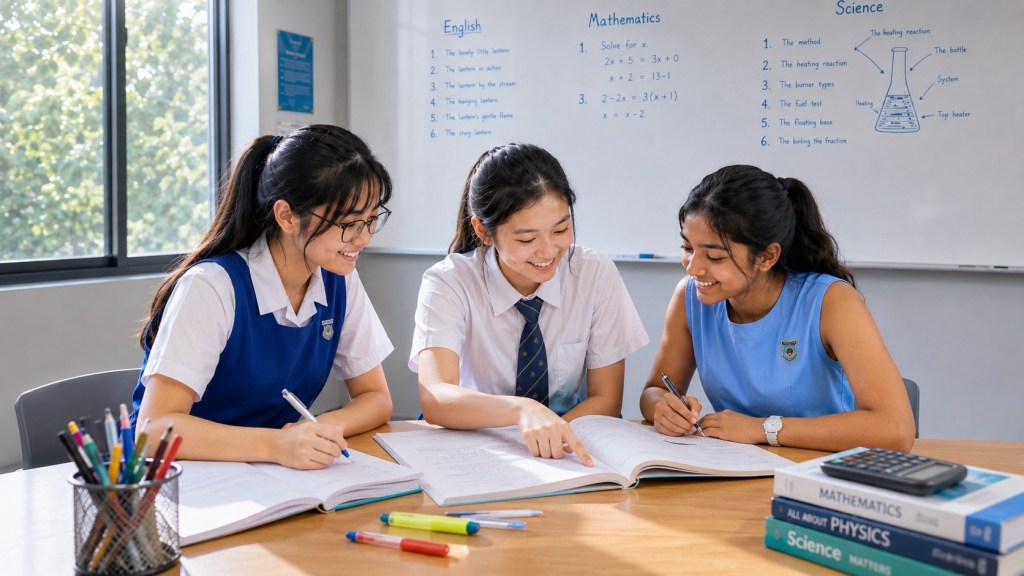
Science presentations and posters are scientific communication tasks. A good presentation does not simply display everything the student did. It helps an audience understand the question, why it matters, what method was used, what evidence was collected, what the results show and what conclusion is justified. The same scientific story can be communicated through a science-fair display board, a classroom oral presentation, a digital poster, a slide deck or a short project pitch, but the design rules change with the format.
This Advanced Science Tutorials guide is written for parents and students in Sengkang, Punggol and across Singapore who search for Science presentation, science fair display board, science fair presentation, Science poster, how to present a Science project, oral presentation Science, STEM presentation and how to explain graphs in a presentation. It develops communication from Primary Science through PSLE project work and into Secondary G1, G2 and G3.
Science Buddies recommends that science-fair presentations summarise the project idea, variables, hypothesis, experiment, results, conclusions and importance, while the display board or poster should organise the research question, background, method, data analysis, discussion and conclusion clearly. It also advises students to use charts and diagrams effectively and to answer judges honestly when they do not know something rather than inventing an answer. See Science Buddies: Prepare to Present at Science Fair and Science Buddies: Create a Display Board, Poster, or Presentation.
The five-part Science presentation story
- Question: what problem or phenomenon did you investigate?
- Method: how did you generate evidence?
- Results: what did the data show?
- Explanation: why do the results make scientific sense?
- Conclusion: what can you claim, and what remains uncertain?
Primary 1 and Primary 2: show and tell with evidence
Young learners can present one observation, drawing or simple comparison in a minute. The purpose is to say what was observed and one thing learned. Parents should avoid scripting every word; the child should own the explanation.
A picture, object or simple chart can support the talk, but the student should speak to the audience rather than read labels continuously.
Primary 3 and Primary 4: organise one clear scientific story
Primary students can present the question, what they changed or observed, what happened and what they learned. One graph or diagram is often enough. The challenge is selection: not every notebook page belongs on a poster.
A strong early presentation is short enough that the audience remembers the scientific relationship rather than the decoration.
Primary 5 and Primary 6: include variables, evidence and limitations
Older Primary students can explain variables, show results, identify one limitation and answer questions about method. They should avoid claiming the project proved a universal rule from a few trials.
The presentation becomes good PSLE reasoning practice because the learner must move from observation to evidence-based explanation.
Secondary G1, G2 and G3: communicate like a young scientist
Lower Secondary presentations can become more analytical: why this method, why this graph, how strong is the evidence, what uncertainty matters and how the result relates to the scientific model. Students should also learn to distinguish the slide or poster from the spoken explanation.
The audience should not need to read full paragraphs while listening. Visuals should carry structure; speech should carry reasoning.
Presentation purpose
Presentation principle. The purpose determines what information deserves space and speaking time.
Common failure. Students try to include every step and fact.
Better communication move. Write the one sentence the audience should remember.
Question to ask. What should the audience understand by the end?
Practice task. Create a one-sentence presentation objective.
The scientific communication test is whether the audience can follow the path from question to evidence to conclusion. Design choices, delivery choices and visual choices should all serve that path rather than compete with it.
Audience
Presentation principle. A presentation should match audience knowledge.
Common failure. Students use specialist terms without explanation or oversimplify for knowledgeable listeners.
Better communication move. Estimate what the audience already knows.
Question to ask. Which terms need definition?
Practice task. Explain the same project to a younger student and a teacher.
The scientific communication test is whether the audience can follow the path from question to evidence to conclusion. Design choices, delivery choices and visual choices should all serve that path rather than compete with it.
Time limit
Presentation principle. Time is a design constraint.
Common failure. Students write a five-minute script for a two-minute slot.
Better communication move. Budget time by section before making slides.
Question to ask. How many seconds belong to question, method, results and conclusion?
Practice task. Time one practice run.
The scientific communication test is whether the audience can follow the path from question to evidence to conclusion. Design choices, delivery choices and visual choices should all serve that path rather than compete with it.
Project title
Presentation principle. The title should identify the scientific focus clearly.
Common failure. Students use vague titles such as ‘My Science Project’.
Better communication move. Name the tested relationship or question succinctly.
Question to ask. Can a visitor predict the topic from the title?
Practice task. Write three title options.
The scientific communication test is whether the audience can follow the path from question to evidence to conclusion. Design choices, delivery choices and visual choices should all serve that path rather than compete with it.
Opening
Presentation principle. The opening should orient the audience quickly.
Common failure. Students begin with a long biography of how the project started.
Better communication move. State the question, phenomenon or problem.
Question to ask. Why should the audience care about this question?
Practice task. Write a 15-second opening.
The scientific communication test is whether the audience can follow the path from question to evidence to conclusion. Design choices, delivery choices and visual choices should all serve that path rather than compete with it.
Research question
Presentation principle. The research question gives the presentation a spine.
Common failure. Students hide it halfway through the poster.
Better communication move. Place it early and visibly.
Question to ask. What exactly was investigated?
Practice task. Rewrite the question concisely.
The scientific communication test is whether the audience can follow the path from question to evidence to conclusion. Design choices, delivery choices and visual choices should all serve that path rather than compete with it.
Background
Presentation principle. Background provides only the theory needed to understand the investigation.
Common failure. Students fill slides with textbook history.
Better communication move. Select concepts used later in the explanation.
Question to ask. Which background fact appears again in the discussion?
Practice task. Cut irrelevant background.
The scientific communication test is whether the audience can follow the path from question to evidence to conclusion. Design choices, delivery choices and visual choices should all serve that path rather than compete with it.
Hypothesis
Presentation principle. A hypothesis should be presented only where relevant and with its scientific basis.
Common failure. Students make it sound like a requirement even when project was exploratory.
Better communication move. Explain the prediction and mechanism briefly.
Question to ask. Why did you expect this outcome?
Practice task. Create one hypothesis sentence.
The scientific communication test is whether the audience can follow the path from question to evidence to conclusion. Design choices, delivery choices and visual choices should all serve that path rather than compete with it.
Variables
Presentation principle. Variables help the audience understand experimental logic.
Common failure. Students list IV/DV/CV without explaining them.
Better communication move. State changed factor, measured outcome and important controls in ordinary language.
Question to ask. What comparison was being protected?
Practice task. Create a variable diagram.
The scientific communication test is whether the audience can follow the path from question to evidence to conclusion. Design choices, delivery choices and visual choices should all serve that path rather than compete with it.
Method summary
Presentation principle. The method should be understandable without narrating every procedural detail.
Common failure. Students read the whole protocol.
Better communication move. Show 3–5 high-value steps, setup diagram or process flow.
Question to ask. What must the audience know to judge the evidence?
Practice task. Compress method into four steps.
The scientific communication test is whether the audience can follow the path from question to evidence to conclusion. Design choices, delivery choices and visual choices should all serve that path rather than compete with it.
Materials
Presentation principle. Materials usually do not need a full spoken list.
Common failure. Students read every item aloud.
Better communication move. Mention only unusual or scientifically important equipment.
Question to ask. Which material affects measurement quality?
Practice task. Move full list to small poster section.
The scientific communication test is whether the audience can follow the path from question to evidence to conclusion. Design choices, delivery choices and visual choices should all serve that path rather than compete with it.
Apparatus image
Presentation principle. A clear apparatus photo or diagram can replace lengthy description.
Common failure. Students use cluttered photos with no labels.
Better communication move. Crop, label and show measurement points.
Question to ask. What should the audience notice?
Practice task. Annotate one image.
The scientific communication test is whether the audience can follow the path from question to evidence to conclusion. Design choices, delivery choices and visual choices should all serve that path rather than compete with it.
Safety statement
Presentation principle. Safety should be mentioned when it shaped method or controls.
Common failure. Students either omit important safety or list generic rules.
Better communication move. State the relevant hazard and control briefly.
Question to ask. What safety decision changed the procedure?
Practice task. Add one safety line.
The scientific communication test is whether the audience can follow the path from question to evidence to conclusion. Design choices, delivery choices and visual choices should all serve that path rather than compete with it.
Data table
Presentation principle. Tables can show exact values but are difficult to read from far away.
Common failure. Students paste a large spreadsheet onto a poster.
Better communication move. Use only the rows or values needed for the story.
Question to ask. Which exact numbers matter?
Practice task. Create a reduced table.
The scientific communication test is whether the audience can follow the path from question to evidence to conclusion. Design choices, delivery choices and visual choices should all serve that path rather than compete with it.
Graph
Presentation principle. Graphs should make the main pattern visible quickly.
Common failure. Students use default spreadsheet charts with tiny labels.
Better communication move. Increase readability, label axes and use appropriate scale.
Question to ask. What is the one pattern the audience should see?
Practice task. Redesign a graph for presentation.
The scientific communication test is whether the audience can follow the path from question to evidence to conclusion. Design choices, delivery choices and visual choices should all serve that path rather than compete with it.
Graph title
Presentation principle. The title should state the relationship shown.
Common failure. Students use ‘Results Graph’.
Better communication move. Name dependent versus independent variable or core relationship.
Question to ask. Can the audience understand the graph without narration?
Practice task. Write a precise title.
The scientific communication test is whether the audience can follow the path from question to evidence to conclusion. Design choices, delivery choices and visual choices should all serve that path rather than compete with it.
Axis labels
Presentation principle. Axes must include quantity and units.
Common failure. Students enlarge the graph but leave tiny labels.
Better communication move. Use readable text and clear units.
Question to ask. Which variable is x and which is y?
Practice task. Audit labels.
The scientific communication test is whether the audience can follow the path from question to evidence to conclusion. Design choices, delivery choices and visual choices should all serve that path rather than compete with it.
Legend
Presentation principle. Legends should decode series clearly.
Common failure. Students use vague labels such as Series 1.
Better communication move. Name conditions or groups directly.
Question to ask. Can a viewer distinguish groups instantly?
Practice task. Rename series.
The scientific communication test is whether the audience can follow the path from question to evidence to conclusion. Design choices, delivery choices and visual choices should all serve that path rather than compete with it.
Error bars
Presentation principle. If used, error bars must be defined.
Common failure. Students add default error bars without knowing what they represent.
Better communication move. State SD, SE, range or uncertainty as appropriate.
Question to ask. What does the bar mean?
Practice task. Write one caption note.
The scientific communication test is whether the audience can follow the path from question to evidence to conclusion. Design choices, delivery choices and visual choices should all serve that path rather than compete with it.
Result statement
Presentation principle. Speech should state the key result, not read every point.
Common failure. Students narrate all data.
Better communication move. Use one or two high-value comparisons.
Question to ask. Which result answers the research question?
Practice task. Write a 20-second results statement.
The scientific communication test is whether the audience can follow the path from question to evidence to conclusion. Design choices, delivery choices and visual choices should all serve that path rather than compete with it.
Anomaly
Presentation principle. Anomalies can demonstrate scientific honesty.
Common failure. Students hide unusual results because they look messy.
Better communication move. Mention only if they affect interpretation or method.
Question to ask. Does the anomaly change the conclusion?
Practice task. Prepare one anomaly explanation.
The scientific communication test is whether the audience can follow the path from question to evidence to conclusion. Design choices, delivery choices and visual choices should all serve that path rather than compete with it.
Discussion
Presentation principle. Discussion connects evidence to scientific explanation.
Common failure. Students restate results.
Better communication move. Explain why the observed pattern follows from the model.
Question to ask. What mechanism links result to Science?
Practice task. Write one reasoning sentence.
The scientific communication test is whether the audience can follow the path from question to evidence to conclusion. Design choices, delivery choices and visual choices should all serve that path rather than compete with it.
Conclusion
Presentation principle. Conclusion answers the question at the correct scope.
Common failure. Students claim the project proved something universally.
Better communication move. State what the data support under tested conditions.
Question to ask. What remains untested?
Practice task. Write a calibrated conclusion.
The scientific communication test is whether the audience can follow the path from question to evidence to conclusion. Design choices, delivery choices and visual choices should all serve that path rather than compete with it.
Limitation
Presentation principle. One meaningful limitation is better than five generic weaknesses.
Common failure. Students say ‘human error’.
Better communication move. Name specific measurement, sample or design constraint.
Question to ask. How could it affect the result?
Practice task. Prepare one limitation and consequence.
The scientific communication test is whether the audience can follow the path from question to evidence to conclusion. Design choices, delivery choices and visual choices should all serve that path rather than compete with it.
Improvement
Presentation principle. Improvements should match limitations.
Common failure. Students say ‘repeat more’ for every weakness.
Better communication move. State one specific design change and reason.
Question to ask. What problem does this improvement solve?
Practice task. Pair limitation and improvement.
The scientific communication test is whether the audience can follow the path from question to evidence to conclusion. Design choices, delivery choices and visual choices should all serve that path rather than compete with it.
Future work
Presentation principle. Future work extends the question logically.
Common failure. Students invent a completely new topic.
Better communication move. Change one meaningful variable, range or measurement method.
Question to ask. What question follows directly from the current result?
Practice task. Write one next-step study.
The scientific communication test is whether the audience can follow the path from question to evidence to conclusion. Design choices, delivery choices and visual choices should all serve that path rather than compete with it.
Acknowledgments
Presentation principle. Acknowledgments credit help without transferring ownership.
Common failure. Students omit significant assistance or list everyone they know.
Better communication move. Thank people who provided specific support.
Question to ask. What contribution deserves acknowledgment?
Practice task. Write one concise line.
The scientific communication test is whether the audience can follow the path from question to evidence to conclusion. Design choices, delivery choices and visual choices should all serve that path rather than compete with it.
Sources
Presentation principle. Source lists show research basis.
Common failure. Students cram full citations into tiny text on main slide.
Better communication move. Use required bibliography format and place detailed list where appropriate.
Question to ask. Which sources shaped the scientific explanation?
Practice task. Prepare source slide or board section.
The scientific communication test is whether the audience can follow the path from question to evidence to conclusion. Design choices, delivery choices and visual choices should all serve that path rather than compete with it.
Display-board hierarchy
Presentation principle. Board layout should guide the eye from question to conclusion.
Common failure. Students place sections according to available space rather than story.
Better communication move. Arrange in logical reading order.
Question to ask. Where should a visitor start?
Practice task. Sketch the board before printing.
The scientific communication test is whether the audience can follow the path from question to evidence to conclusion. Design choices, delivery choices and visual choices should all serve that path rather than compete with it.
Newspaper layout
Presentation principle. Column-style layout can make display boards easier to scan.
Common failure. Students use scattered boxes and diagonal flow.
Better communication move. Use clear columns and headings.
Question to ask. Can the viewer follow without instruction?
Practice task. Rearrange board into reading path.
The scientific communication test is whether the audience can follow the path from question to evidence to conclusion. Design choices, delivery choices and visual choices should all serve that path rather than compete with it.
Font size
Presentation principle. Poster text must be readable at viewing distance.
Common failure. Students shrink text to fit more content.
Better communication move. Cut content before shrinking excessively.
Question to ask. Can the main result be read without leaning close?
Practice task. Print a sample at actual size.
The scientific communication test is whether the audience can follow the path from question to evidence to conclusion. Design choices, delivery choices and visual choices should all serve that path rather than compete with it.
Title size
Presentation principle. The title should be readable from farther away.
Common failure. Students style title decoratively but too small.
Better communication move. Use high contrast and large clean type.
Question to ask. Can a visitor locate the project quickly?
Practice task. Test from across room.
The scientific communication test is whether the audience can follow the path from question to evidence to conclusion. Design choices, delivery choices and visual choices should all serve that path rather than compete with it.
Bullet points
Presentation principle. Bullets reduce reading load when each contains one idea.
Common failure. Students write paragraphs as bullets.
Better communication move. Use fragments or short sentences.
Question to ask. Can the audience scan while listening?
Practice task. Convert one paragraph to 4 bullets.
The scientific communication test is whether the audience can follow the path from question to evidence to conclusion. Design choices, delivery choices and visual choices should all serve that path rather than compete with it.
Paragraphs
Presentation principle. Long poster paragraphs should be limited.
Common failure. Students paste lab-report sections directly.
Better communication move. Compress to essential context.
Question to ask. What information could be spoken or moved to handout?
Practice task. Cut paragraph by half.
The scientific communication test is whether the audience can follow the path from question to evidence to conclusion. Design choices, delivery choices and visual choices should all serve that path rather than compete with it.
White space
Presentation principle. Empty space improves visual organisation.
Common failure. Students fill every centimetre.
Better communication move. Leave margins and separation between sections.
Question to ask. Can the eye distinguish sections?
Practice task. Remove one decorative element.
The scientific communication test is whether the audience can follow the path from question to evidence to conclusion. Design choices, delivery choices and visual choices should all serve that path rather than compete with it.
Colour
Presentation principle. Colour can encode sections or variables.
Common failure. Students use many colours without meaning.
Better communication move. Use a limited consistent palette.
Question to ask. What does each colour communicate?
Practice task. Reduce to 2–3 functional colours.
The scientific communication test is whether the audience can follow the path from question to evidence to conclusion. Design choices, delivery choices and visual choices should all serve that path rather than compete with it.
Images
Presentation principle. Images should support explanation.
Common failure. Students add stock images for decoration.
Better communication move. Use apparatus photos, specimen images or diagrams with purpose.
Question to ask. What scientific information does this image add?
Practice task. Delete decorative image.
The scientific communication test is whether the audience can follow the path from question to evidence to conclusion. Design choices, delivery choices and visual choices should all serve that path rather than compete with it.
Caption
Presentation principle. Captions tell viewers why an image matters.
Common failure. Students assume the image is self-explanatory.
Better communication move. Use one sentence identifying content and condition.
Question to ask. What should the audience notice?
Practice task. Write a functional caption.
The scientific communication test is whether the audience can follow the path from question to evidence to conclusion. Design choices, delivery choices and visual choices should all serve that path rather than compete with it.
Data-ink priority
Presentation principle. Visual emphasis should favour evidence over decoration.
Common failure. Students use large icons and tiny graphs.
Better communication move. Give more space to results and diagrams.
Question to ask. What is the most information-dense visual?
Practice task. Resize layout.
The scientific communication test is whether the audience can follow the path from question to evidence to conclusion. Design choices, delivery choices and visual choices should all serve that path rather than compete with it.
Slide deck
Presentation principle. Slides should support speech rather than duplicate it.
Common failure. Students write their script on slides.
Better communication move. Use one main idea and visual per slide where practical.
Question to ask. What will you say that is not written?
Practice task. Reduce slide text.
The scientific communication test is whether the audience can follow the path from question to evidence to conclusion. Design choices, delivery choices and visual choices should all serve that path rather than compete with it.
Slide title
Presentation principle. A slide title can communicate the take-home message.
Common failure. Students use labels such as ‘Results’.
Better communication move. Write a message title such as ‘Increasing surface area shortened dissolving time’.
Question to ask. What should audience learn from this slide?
Practice task. Rewrite generic titles.
The scientific communication test is whether the audience can follow the path from question to evidence to conclusion. Design choices, delivery choices and visual choices should all serve that path rather than compete with it.
One-slide-one-job
Presentation principle. Each slide should have a clear communication function.
Common failure. Students combine background, method and result on one slide.
Better communication move. Split by scientific story.
Question to ask. What question does this slide answer?
Practice task. Audit every slide.
The scientific communication test is whether the audience can follow the path from question to evidence to conclusion. Design choices, delivery choices and visual choices should all serve that path rather than compete with it.
Speaker notes
Presentation principle. Notes can support detail without appearing on screen.
Common failure. Students memorise a word-for-word script or read the screen.
Better communication move. Use prompts, numbers and transitions.
Question to ask. Which exact value must be remembered?
Practice task. Create minimal notes.
The scientific communication test is whether the audience can follow the path from question to evidence to conclusion. Design choices, delivery choices and visual choices should all serve that path rather than compete with it.
Oral pitch
Presentation principle. A short pitch should explain project idea, method, result and importance.
Common failure. Students give a long chronological diary.
Better communication move. Use a scientific story rather than day-by-day history.
Question to ask. Can it fit in 60–90 seconds?
Practice task. Record an elevator pitch.
The scientific communication test is whether the audience can follow the path from question to evidence to conclusion. Design choices, delivery choices and visual choices should all serve that path rather than compete with it.
Voice
Presentation principle. Clear volume and pace help scientific meaning.
Common failure. Students speak quickly when nervous.
Better communication move. Pause after question, key result and conclusion.
Question to ask. Can the audience hear numbers and units?
Practice task. Practise with a timer.
The scientific communication test is whether the audience can follow the path from question to evidence to conclusion. Design choices, delivery choices and visual choices should all serve that path rather than compete with it.
Eye contact
Presentation principle. Eye contact keeps communication audience-focused.
Common failure. Students stare at board or script.
Better communication move. Use visuals as reference, not reading surface.
Question to ask. Can you explain one graph while facing audience?
Practice task. Practise pointing then returning gaze.
The scientific communication test is whether the audience can follow the path from question to evidence to conclusion. Design choices, delivery choices and visual choices should all serve that path rather than compete with it.
Pointing
Presentation principle. Pointing can guide attention to graph or diagram features.
Common failure. Students wave vaguely at whole poster.
Better communication move. Point briefly to the exact evidence.
Question to ask. Which data point or label matters?
Practice task. Practise one graph explanation.
The scientific communication test is whether the audience can follow the path from question to evidence to conclusion. Design choices, delivery choices and visual choices should all serve that path rather than compete with it.
Transitions
Presentation principle. Transitions show how one section leads to the next.
Common failure. Students jump from method to conclusion abruptly.
Better communication move. Use short phrases such as ‘To test this…’ or ‘The data showed…’
Question to ask. What logical relationship links sections?
Practice task. Write 5 transitions.
The scientific communication test is whether the audience can follow the path from question to evidence to conclusion. Design choices, delivery choices and visual choices should all serve that path rather than compete with it.
Timing
Presentation principle. A timed presentation needs rehearsal.
Common failure. Students speak faster instead of cutting content.
Better communication move. Remove lower-value detail.
Question to ask. Which section can lose 20 seconds?
Practice task. Run three timed rehearsals.
The scientific communication test is whether the audience can follow the path from question to evidence to conclusion. Design choices, delivery choices and visual choices should all serve that path rather than compete with it.
Rehearsal
Presentation principle. Rehearsal stabilises explanation and reveals weak reasoning.
Common failure. Students rehearse silently only.
Better communication move. Speak aloud and answer questions.
Question to ask. Where does explanation become vague?
Practice task. Record and review.
The scientific communication test is whether the audience can follow the path from question to evidence to conclusion. Design choices, delivery choices and visual choices should all serve that path rather than compete with it.
Memorisation
Presentation principle. Memorising every word can make recovery difficult.
Common failure. Students panic when one phrase is forgotten.
Better communication move. Memorise structure and key numbers, not exact prose.
Question to ask. Can you explain the same idea two ways?
Practice task. Practise without script.
The scientific communication test is whether the audience can follow the path from question to evidence to conclusion. Design choices, delivery choices and visual choices should all serve that path rather than compete with it.
Q&A listening
Presentation principle. Good answers begin by understanding the question.
Common failure. Students start answering before judge finishes.
Better communication move. Pause, restate if necessary, then answer.
Question to ask. What exactly is being asked?
Practice task. Practise question restatement.
The scientific communication test is whether the audience can follow the path from question to evidence to conclusion. Design choices, delivery choices and visual choices should all serve that path rather than compete with it.
Unknown answer
Presentation principle. Scientific honesty is better than invention.
Common failure. Students guess to avoid appearing unprepared.
Better communication move. Say you do not know and explain how you would find out or test it.
Question to ask. What evidence would answer the question?
Practice task. Practise one ‘I don’t know yet’ response.
The scientific communication test is whether the audience can follow the path from question to evidence to conclusion. Design choices, delivery choices and visual choices should all serve that path rather than compete with it.
Method question
Presentation principle. Judges may ask why a control or measurement was chosen.
Common failure. Students memorise procedure but not rationale.
Better communication move. Explain the scientific purpose of the step.
Question to ask. What error does this step prevent?
Practice task. Prepare three method rationales.
The scientific communication test is whether the audience can follow the path from question to evidence to conclusion. Design choices, delivery choices and visual choices should all serve that path rather than compete with it.
Result question
Presentation principle. Questions may probe anomalies or variation.
Common failure. Students defend every point as expected.
Better communication move. Acknowledge evidence honestly.
Question to ask. Which pattern is robust and which is uncertain?
Practice task. Prepare anomaly response.
The scientific communication test is whether the audience can follow the path from question to evidence to conclusion. Design choices, delivery choices and visual choices should all serve that path rather than compete with it.
Limitation question
Presentation principle. A limitation question tests scientific maturity.
Common failure. Students become defensive.
Better communication move. Name the limitation and realistic improvement.
Question to ask. How might it affect conclusion?
Practice task. Practise one concise answer.
The scientific communication test is whether the audience can follow the path from question to evidence to conclusion. Design choices, delivery choices and visual choices should all serve that path rather than compete with it.
Why-it-matters question
Presentation principle. Audience may ask why the project matters.
Common failure. Students give generic ‘Science is important’ answers.
Better communication move. Connect to a real application or conceptual significance.
Question to ask. Who could use this information?
Practice task. Write one significance statement.
The scientific communication test is whether the audience can follow the path from question to evidence to conclusion. Design choices, delivery choices and visual choices should all serve that path rather than compete with it.
Challenge question
Presentation principle. A judge may propose an alternative explanation.
Common failure. Students treat challenge as criticism.
Better communication move. Compare predictions and evidence calmly.
Question to ask. What evidence would distinguish the explanations?
Practice task. Practise rebuttal.
The scientific communication test is whether the audience can follow the path from question to evidence to conclusion. Design choices, delivery choices and visual choices should all serve that path rather than compete with it.
Team presentation
Presentation principle. Teams should divide by scientific responsibility, not equal word count only.
Common failure. Students switch speakers every slide mechanically.
Better communication move. Assign coherent sections and shared Q&A knowledge.
Question to ask. Can every member explain the whole project?
Practice task. Cross-train team.
The scientific communication test is whether the audience can follow the path from question to evidence to conclusion. Design choices, delivery choices and visual choices should all serve that path rather than compete with it.
Three-student presentation
Presentation principle. Small groups can each present a different interpretation or section.
Common failure. Students rely on the strongest speaker.
Better communication move. Require individual preparation first.
Question to ask. Which part can each student defend independently?
Practice task. Rotate Q&A.
The scientific communication test is whether the audience can follow the path from question to evidence to conclusion. Design choices, delivery choices and visual choices should all serve that path rather than compete with it.
Parent support
Presentation principle. Parents can listen and ask questions without writing the script.
Common failure. Parents may over-polish language until it no longer sounds like the child.
Better communication move. Ask what the graph shows and why.
Question to ask. Can the student own every sentence?
Practice task. Run mock Q&A.
The scientific communication test is whether the audience can follow the path from question to evidence to conclusion. Design choices, delivery choices and visual choices should all serve that path rather than compete with it.
Tutor support
Presentation principle. Tutors can diagnose scientific gaps revealed by presentation rehearsal.
Common failure. Tutors may focus only on delivery.
Better communication move. Correct mechanism, evidence and scope before style.
Question to ask. Is the Science accurate before the speech is polished?
Practice task. Use a rubric.
The scientific communication test is whether the audience can follow the path from question to evidence to conclusion. Design choices, delivery choices and visual choices should all serve that path rather than compete with it.
Poster rubric
Presentation principle. A rubric can separate scientific content, evidence, design and delivery.
Common failure. Students optimise decoration because it is visible.
Better communication move. Weight scientific accuracy and evidence heavily.
Question to ask. Which criterion matters most?
Practice task. Score a draft.
The scientific communication test is whether the audience can follow the path from question to evidence to conclusion. Design choices, delivery choices and visual choices should all serve that path rather than compete with it.
Presentation rubric
Presentation principle. A rubric should include clarity, evidence, explanation, timing and response to questions.
Common failure. Students judge only confidence.
Better communication move. Assess scientific reasoning explicitly.
Question to ask. Can the speaker justify the conclusion?
Practice task. Use self-score after rehearsal.
The scientific communication test is whether the audience can follow the path from question to evidence to conclusion. Design choices, delivery choices and visual choices should all serve that path rather than compete with it.
Final proofread
Presentation principle. Typos in units, labels or axes can change scientific meaning.
Common failure. Students check spelling only.
Better communication move. Verify every number, unit, graph label and citation.
Question to ask. Is the poster scientifically internally consistent?
Practice task. Do a data audit.
The scientific communication test is whether the audience can follow the path from question to evidence to conclusion. Design choices, delivery choices and visual choices should all serve that path rather than compete with it.
Final rehearsal
Presentation principle. Last rehearsal should be stable and realistic.
Common failure. Students make large content changes immediately before presenting.
Better communication move. Use final rehearsal to confirm timing and transitions.
Question to ask. Can you finish comfortably without rushing?
Practice task. Run full simulation.
The scientific communication test is whether the audience can follow the path from question to evidence to conclusion. Design choices, delivery choices and visual choices should all serve that path rather than compete with it.
Presentation finish rule
Presentation principle. The presentation is ready when the scientific story is clear, evidence is visible and the student can answer reasonable questions.
Common failure. Students keep decorating until deadline.
Better communication move. Stop when improvements no longer change understanding.
Question to ask. What will the audience remember?
Practice task. State take-home message.
The scientific communication test is whether the audience can follow the path from question to evidence to conclusion. Design choices, delivery choices and visual choices should all serve that path rather than compete with it.
A twelve-week Science presentation programme
- Week 1: question, audience and take-home message.
- Week 2: background and method compression.
- Week 3: graphs, tables and figures.
- Week 4: results and discussion.
- Week 5: limitations and conclusion.
- Week 6: display-board hierarchy.
- Week 7: slide design and captions.
- Week 8: oral pitch and transitions.
- Week 9: voice, timing and pointing.
- Week 10: Q&A and unknown answers.
- Week 11: mock judging and rubric review.
- Week 12: final revision and independent presentation.
When tuition may help with Science presentations
Extra support can help when a learner has completed the project but cannot identify the main scientific story, explain a graph or answer method questions. A tutor should help the learner clarify the Science without writing a polished script that the student cannot defend.
For current Primary 3–6 and PSLE programme information, use Primary Science Tuition Sengkang. Secondary presentation coverage here is educational transition material.
Frequently asked questions
What should be on a science fair display board?
Typical sections include title, question, background, hypothesis or variables where appropriate, method, results, graphs, discussion, conclusion, acknowledgments and sources, but follow the event’s rules.
How long should a Science project presentation be?
Use the time given by the teacher or fair. Prepare a short pitch that can communicate the scientific story efficiently, then keep detail available for questions.
Should I put full paragraphs on slides?
Usually use concise text, diagrams, graphs and images while keeping detailed explanation in speech or notes.
What if I don’t know an answer during Q&A?
Say that you do not know rather than inventing an answer, then explain how you would find out or what evidence would be needed.
How do I explain a graph orally?
Name the axes, state the main pattern, give one important value or comparison, then explain the scientific meaning.
Should parents help make the board?
Parents can support logistics and ask questions, but the student should own the scientific content and be able to explain every part independently.
Further reading
- Science Buddies: Prepare to Present at Science Fair
- Science Buddies: Create a Display Board, Poster, or Presentation
- Science Buddies: Science Fair Project Display Boards
- How to Write a Science Lab Report
Final operating rule
A Science presentation is a scientific story told under time and space constraints. Show the question. Explain the method enough to trust the evidence. Make the results visible. Explain the mechanism. State a calibrated conclusion. Be honest about limitations. Then answer questions from the evidence rather than from performance anxiety. The best poster or presentation makes the Science easier to understand—not merely harder to ignore.
Presentation purpose — presentation clinic 1
Take the current project and focus on presentation purpose. Ask what job this element performs in the scientific story. If the job is unclear, the content should be revised or removed rather than merely restyled.
Surface the common failure: Students try to include every step and fact.. Ask what the audience would misunderstand or forget. Then apply the better move: Write the one sentence the audience should remember. The revision should make the question, evidence or conclusion easier to follow.
Now ask: What should the audience understand by the end? Run the practice task: Create a one-sentence presentation objective. Rehearse aloud where possible because presentation problems often remain hidden during silent editing.
Finish with an unfamiliar question from a parent, tutor or peer. The student should answer from the project’s evidence, not from a memorised script. Ownership is demonstrated when the speaker can explain the same result in more than one way.
Audience — presentation clinic 1
Take the current project and focus on audience. Ask what job this element performs in the scientific story. If the job is unclear, the content should be revised or removed rather than merely restyled.
Surface the common failure: Students use specialist terms without explanation or oversimplify for knowledgeable listeners.. Ask what the audience would misunderstand or forget. Then apply the better move: Estimate what the audience already knows. The revision should make the question, evidence or conclusion easier to follow.
Now ask: Which terms need definition? Run the practice task: Explain the same project to a younger student and a teacher. Rehearse aloud where possible because presentation problems often remain hidden during silent editing.
Finish with an unfamiliar question from a parent, tutor or peer. The student should answer from the project’s evidence, not from a memorised script. Ownership is demonstrated when the speaker can explain the same result in more than one way.
Time limit — presentation clinic 1
Take the current project and focus on time limit. Ask what job this element performs in the scientific story. If the job is unclear, the content should be revised or removed rather than merely restyled.
Surface the common failure: Students write a five-minute script for a two-minute slot.. Ask what the audience would misunderstand or forget. Then apply the better move: Budget time by section before making slides. The revision should make the question, evidence or conclusion easier to follow.
Now ask: How many seconds belong to question, method, results and conclusion? Run the practice task: Time one practice run. Rehearse aloud where possible because presentation problems often remain hidden during silent editing.
Finish with an unfamiliar question from a parent, tutor or peer. The student should answer from the project’s evidence, not from a memorised script. Ownership is demonstrated when the speaker can explain the same result in more than one way.
Project title — presentation clinic 1
Take the current project and focus on project title. Ask what job this element performs in the scientific story. If the job is unclear, the content should be revised or removed rather than merely restyled.
Surface the common failure: Students use vague titles such as ‘My Science Project’.. Ask what the audience would misunderstand or forget. Then apply the better move: Name the tested relationship or question succinctly. The revision should make the question, evidence or conclusion easier to follow.
Now ask: Can a visitor predict the topic from the title? Run the practice task: Write three title options. Rehearse aloud where possible because presentation problems often remain hidden during silent editing.
Finish with an unfamiliar question from a parent, tutor or peer. The student should answer from the project’s evidence, not from a memorised script. Ownership is demonstrated when the speaker can explain the same result in more than one way.
Opening — presentation clinic 1
Take the current project and focus on opening. Ask what job this element performs in the scientific story. If the job is unclear, the content should be revised or removed rather than merely restyled.
Surface the common failure: Students begin with a long biography of how the project started.. Ask what the audience would misunderstand or forget. Then apply the better move: State the question, phenomenon or problem. The revision should make the question, evidence or conclusion easier to follow.
Now ask: Why should the audience care about this question? Run the practice task: Write a 15-second opening. Rehearse aloud where possible because presentation problems often remain hidden during silent editing.
Finish with an unfamiliar question from a parent, tutor or peer. The student should answer from the project’s evidence, not from a memorised script. Ownership is demonstrated when the speaker can explain the same result in more than one way.
Research question — presentation clinic 1
Take the current project and focus on research question. Ask what job this element performs in the scientific story. If the job is unclear, the content should be revised or removed rather than merely restyled.
Surface the common failure: Students hide it halfway through the poster.. Ask what the audience would misunderstand or forget. Then apply the better move: Place it early and visibly. The revision should make the question, evidence or conclusion easier to follow.
Now ask: What exactly was investigated? Run the practice task: Rewrite the question concisely. Rehearse aloud where possible because presentation problems often remain hidden during silent editing.
Finish with an unfamiliar question from a parent, tutor or peer. The student should answer from the project’s evidence, not from a memorised script. Ownership is demonstrated when the speaker can explain the same result in more than one way.
Background — presentation clinic 1
Take the current project and focus on background. Ask what job this element performs in the scientific story. If the job is unclear, the content should be revised or removed rather than merely restyled.
Surface the common failure: Students fill slides with textbook history.. Ask what the audience would misunderstand or forget. Then apply the better move: Select concepts used later in the explanation. The revision should make the question, evidence or conclusion easier to follow.
Now ask: Which background fact appears again in the discussion? Run the practice task: Cut irrelevant background. Rehearse aloud where possible because presentation problems often remain hidden during silent editing.
Finish with an unfamiliar question from a parent, tutor or peer. The student should answer from the project’s evidence, not from a memorised script. Ownership is demonstrated when the speaker can explain the same result in more than one way.
Hypothesis — presentation clinic 1
Take the current project and focus on hypothesis. Ask what job this element performs in the scientific story. If the job is unclear, the content should be revised or removed rather than merely restyled.
Surface the common failure: Students make it sound like a requirement even when project was exploratory.. Ask what the audience would misunderstand or forget. Then apply the better move: Explain the prediction and mechanism briefly. The revision should make the question, evidence or conclusion easier to follow.
Now ask: Why did you expect this outcome? Run the practice task: Create one hypothesis sentence. Rehearse aloud where possible because presentation problems often remain hidden during silent editing.
Finish with an unfamiliar question from a parent, tutor or peer. The student should answer from the project’s evidence, not from a memorised script. Ownership is demonstrated when the speaker can explain the same result in more than one way.
Variables — presentation clinic 1
Take the current project and focus on variables. Ask what job this element performs in the scientific story. If the job is unclear, the content should be revised or removed rather than merely restyled.
Surface the common failure: Students list IV/DV/CV without explaining them.. Ask what the audience would misunderstand or forget. Then apply the better move: State changed factor, measured outcome and important controls in ordinary language. The revision should make the question, evidence or conclusion easier to follow.
Now ask: What comparison was being protected? Run the practice task: Create a variable diagram. Rehearse aloud where possible because presentation problems often remain hidden during silent editing.
Finish with an unfamiliar question from a parent, tutor or peer. The student should answer from the project’s evidence, not from a memorised script. Ownership is demonstrated when the speaker can explain the same result in more than one way.
Method summary — presentation clinic 1
Take the current project and focus on method summary. Ask what job this element performs in the scientific story. If the job is unclear, the content should be revised or removed rather than merely restyled.
Surface the common failure: Students read the whole protocol.. Ask what the audience would misunderstand or forget. Then apply the better move: Show 3–5 high-value steps, setup diagram or process flow. The revision should make the question, evidence or conclusion easier to follow.
Now ask: What must the audience know to judge the evidence? Run the practice task: Compress method into four steps. Rehearse aloud where possible because presentation problems often remain hidden during silent editing.
Finish with an unfamiliar question from a parent, tutor or peer. The student should answer from the project’s evidence, not from a memorised script. Ownership is demonstrated when the speaker can explain the same result in more than one way.
Materials — presentation clinic 1
Take the current project and focus on materials. Ask what job this element performs in the scientific story. If the job is unclear, the content should be revised or removed rather than merely restyled.
Surface the common failure: Students read every item aloud.. Ask what the audience would misunderstand or forget. Then apply the better move: Mention only unusual or scientifically important equipment. The revision should make the question, evidence or conclusion easier to follow.
Now ask: Which material affects measurement quality? Run the practice task: Move full list to small poster section. Rehearse aloud where possible because presentation problems often remain hidden during silent editing.
Finish with an unfamiliar question from a parent, tutor or peer. The student should answer from the project’s evidence, not from a memorised script. Ownership is demonstrated when the speaker can explain the same result in more than one way.
Apparatus image — presentation clinic 1
Take the current project and focus on apparatus image. Ask what job this element performs in the scientific story. If the job is unclear, the content should be revised or removed rather than merely restyled.
Surface the common failure: Students use cluttered photos with no labels.. Ask what the audience would misunderstand or forget. Then apply the better move: Crop, label and show measurement points. The revision should make the question, evidence or conclusion easier to follow.
Now ask: What should the audience notice? Run the practice task: Annotate one image. Rehearse aloud where possible because presentation problems often remain hidden during silent editing.
Finish with an unfamiliar question from a parent, tutor or peer. The student should answer from the project’s evidence, not from a memorised script. Ownership is demonstrated when the speaker can explain the same result in more than one way.
Safety statement — presentation clinic 1
Take the current project and focus on safety statement. Ask what job this element performs in the scientific story. If the job is unclear, the content should be revised or removed rather than merely restyled.
Surface the common failure: Students either omit important safety or list generic rules.. Ask what the audience would misunderstand or forget. Then apply the better move: State the relevant hazard and control briefly. The revision should make the question, evidence or conclusion easier to follow.
Now ask: What safety decision changed the procedure? Run the practice task: Add one safety line. Rehearse aloud where possible because presentation problems often remain hidden during silent editing.
Finish with an unfamiliar question from a parent, tutor or peer. The student should answer from the project’s evidence, not from a memorised script. Ownership is demonstrated when the speaker can explain the same result in more than one way.
Data table — presentation clinic 1
Take the current project and focus on data table. Ask what job this element performs in the scientific story. If the job is unclear, the content should be revised or removed rather than merely restyled.
Surface the common failure: Students paste a large spreadsheet onto a poster.. Ask what the audience would misunderstand or forget. Then apply the better move: Use only the rows or values needed for the story. The revision should make the question, evidence or conclusion easier to follow.
Now ask: Which exact numbers matter? Run the practice task: Create a reduced table. Rehearse aloud where possible because presentation problems often remain hidden during silent editing.
Finish with an unfamiliar question from a parent, tutor or peer. The student should answer from the project’s evidence, not from a memorised script. Ownership is demonstrated when the speaker can explain the same result in more than one way.
Graph — presentation clinic 1
Take the current project and focus on graph. Ask what job this element performs in the scientific story. If the job is unclear, the content should be revised or removed rather than merely restyled.
Surface the common failure: Students use default spreadsheet charts with tiny labels.. Ask what the audience would misunderstand or forget. Then apply the better move: Increase readability, label axes and use appropriate scale. The revision should make the question, evidence or conclusion easier to follow.
Now ask: What is the one pattern the audience should see? Run the practice task: Redesign a graph for presentation. Rehearse aloud where possible because presentation problems often remain hidden during silent editing.
Finish with an unfamiliar question from a parent, tutor or peer. The student should answer from the project’s evidence, not from a memorised script. Ownership is demonstrated when the speaker can explain the same result in more than one way.
Graph title — presentation clinic 1
Take the current project and focus on graph title. Ask what job this element performs in the scientific story. If the job is unclear, the content should be revised or removed rather than merely restyled.
Surface the common failure: Students use ‘Results Graph’.. Ask what the audience would misunderstand or forget. Then apply the better move: Name dependent versus independent variable or core relationship. The revision should make the question, evidence or conclusion easier to follow.
Now ask: Can the audience understand the graph without narration? Run the practice task: Write a precise title. Rehearse aloud where possible because presentation problems often remain hidden during silent editing.
Finish with an unfamiliar question from a parent, tutor or peer. The student should answer from the project’s evidence, not from a memorised script. Ownership is demonstrated when the speaker can explain the same result in more than one way.
Axis labels — presentation clinic 1
Take the current project and focus on axis labels. Ask what job this element performs in the scientific story. If the job is unclear, the content should be revised or removed rather than merely restyled.
Surface the common failure: Students enlarge the graph but leave tiny labels.. Ask what the audience would misunderstand or forget. Then apply the better move: Use readable text and clear units. The revision should make the question, evidence or conclusion easier to follow.
Now ask: Which variable is x and which is y? Run the practice task: Audit labels. Rehearse aloud where possible because presentation problems often remain hidden during silent editing.
Finish with an unfamiliar question from a parent, tutor or peer. The student should answer from the project’s evidence, not from a memorised script. Ownership is demonstrated when the speaker can explain the same result in more than one way.
Legend — presentation clinic 1
Take the current project and focus on legend. Ask what job this element performs in the scientific story. If the job is unclear, the content should be revised or removed rather than merely restyled.
Surface the common failure: Students use vague labels such as Series 1.. Ask what the audience would misunderstand or forget. Then apply the better move: Name conditions or groups directly. The revision should make the question, evidence or conclusion easier to follow.
Now ask: Can a viewer distinguish groups instantly? Run the practice task: Rename series. Rehearse aloud where possible because presentation problems often remain hidden during silent editing.
Finish with an unfamiliar question from a parent, tutor or peer. The student should answer from the project’s evidence, not from a memorised script. Ownership is demonstrated when the speaker can explain the same result in more than one way.
Error bars — presentation clinic 1
Take the current project and focus on error bars. Ask what job this element performs in the scientific story. If the job is unclear, the content should be revised or removed rather than merely restyled.
Surface the common failure: Students add default error bars without knowing what they represent.. Ask what the audience would misunderstand or forget. Then apply the better move: State SD, SE, range or uncertainty as appropriate. The revision should make the question, evidence or conclusion easier to follow.
Now ask: What does the bar mean? Run the practice task: Write one caption note. Rehearse aloud where possible because presentation problems often remain hidden during silent editing.
Finish with an unfamiliar question from a parent, tutor or peer. The student should answer from the project’s evidence, not from a memorised script. Ownership is demonstrated when the speaker can explain the same result in more than one way.
Result statement — presentation clinic 1
Take the current project and focus on result statement. Ask what job this element performs in the scientific story. If the job is unclear, the content should be revised or removed rather than merely restyled.
Surface the common failure: Students narrate all data.. Ask what the audience would misunderstand or forget. Then apply the better move: Use one or two high-value comparisons. The revision should make the question, evidence or conclusion easier to follow.
Now ask: Which result answers the research question? Run the practice task: Write a 20-second results statement. Rehearse aloud where possible because presentation problems often remain hidden during silent editing.
Finish with an unfamiliar question from a parent, tutor or peer. The student should answer from the project’s evidence, not from a memorised script. Ownership is demonstrated when the speaker can explain the same result in more than one way.
Anomaly — presentation clinic 1
Take the current project and focus on anomaly. Ask what job this element performs in the scientific story. If the job is unclear, the content should be revised or removed rather than merely restyled.
Surface the common failure: Students hide unusual results because they look messy.. Ask what the audience would misunderstand or forget. Then apply the better move: Mention only if they affect interpretation or method. The revision should make the question, evidence or conclusion easier to follow.
Now ask: Does the anomaly change the conclusion? Run the practice task: Prepare one anomaly explanation. Rehearse aloud where possible because presentation problems often remain hidden during silent editing.
Finish with an unfamiliar question from a parent, tutor or peer. The student should answer from the project’s evidence, not from a memorised script. Ownership is demonstrated when the speaker can explain the same result in more than one way.
Discussion — presentation clinic 1
Take the current project and focus on discussion. Ask what job this element performs in the scientific story. If the job is unclear, the content should be revised or removed rather than merely restyled.
Surface the common failure: Students restate results.. Ask what the audience would misunderstand or forget. Then apply the better move: Explain why the observed pattern follows from the model. The revision should make the question, evidence or conclusion easier to follow.
Now ask: What mechanism links result to Science? Run the practice task: Write one reasoning sentence. Rehearse aloud where possible because presentation problems often remain hidden during silent editing.
Finish with an unfamiliar question from a parent, tutor or peer. The student should answer from the project’s evidence, not from a memorised script. Ownership is demonstrated when the speaker can explain the same result in more than one way.
Conclusion — presentation clinic 1
Take the current project and focus on conclusion. Ask what job this element performs in the scientific story. If the job is unclear, the content should be revised or removed rather than merely restyled.
Surface the common failure: Students claim the project proved something universally.. Ask what the audience would misunderstand or forget. Then apply the better move: State what the data support under tested conditions. The revision should make the question, evidence or conclusion easier to follow.
Now ask: What remains untested? Run the practice task: Write a calibrated conclusion. Rehearse aloud where possible because presentation problems often remain hidden during silent editing.
Finish with an unfamiliar question from a parent, tutor or peer. The student should answer from the project’s evidence, not from a memorised script. Ownership is demonstrated when the speaker can explain the same result in more than one way.
Limitation — presentation clinic 1
Take the current project and focus on limitation. Ask what job this element performs in the scientific story. If the job is unclear, the content should be revised or removed rather than merely restyled.
Surface the common failure: Students say ‘human error’.. Ask what the audience would misunderstand or forget. Then apply the better move: Name specific measurement, sample or design constraint. The revision should make the question, evidence or conclusion easier to follow.
Now ask: How could it affect the result? Run the practice task: Prepare one limitation and consequence. Rehearse aloud where possible because presentation problems often remain hidden during silent editing.
Finish with an unfamiliar question from a parent, tutor or peer. The student should answer from the project’s evidence, not from a memorised script. Ownership is demonstrated when the speaker can explain the same result in more than one way.
Improvement — presentation clinic 1
Take the current project and focus on improvement. Ask what job this element performs in the scientific story. If the job is unclear, the content should be revised or removed rather than merely restyled.
Surface the common failure: Students say ‘repeat more’ for every weakness.. Ask what the audience would misunderstand or forget. Then apply the better move: State one specific design change and reason. The revision should make the question, evidence or conclusion easier to follow.
Now ask: What problem does this improvement solve? Run the practice task: Pair limitation and improvement. Rehearse aloud where possible because presentation problems often remain hidden during silent editing.
Finish with an unfamiliar question from a parent, tutor or peer. The student should answer from the project’s evidence, not from a memorised script. Ownership is demonstrated when the speaker can explain the same result in more than one way.
Future work — presentation clinic 1
Take the current project and focus on future work. Ask what job this element performs in the scientific story. If the job is unclear, the content should be revised or removed rather than merely restyled.
Surface the common failure: Students invent a completely new topic.. Ask what the audience would misunderstand or forget. Then apply the better move: Change one meaningful variable, range or measurement method. The revision should make the question, evidence or conclusion easier to follow.
Now ask: What question follows directly from the current result? Run the practice task: Write one next-step study. Rehearse aloud where possible because presentation problems often remain hidden during silent editing.
Finish with an unfamiliar question from a parent, tutor or peer. The student should answer from the project’s evidence, not from a memorised script. Ownership is demonstrated when the speaker can explain the same result in more than one way.
Acknowledgments — presentation clinic 1
Take the current project and focus on acknowledgments. Ask what job this element performs in the scientific story. If the job is unclear, the content should be revised or removed rather than merely restyled.
Surface the common failure: Students omit significant assistance or list everyone they know.. Ask what the audience would misunderstand or forget. Then apply the better move: Thank people who provided specific support. The revision should make the question, evidence or conclusion easier to follow.
Now ask: What contribution deserves acknowledgment? Run the practice task: Write one concise line. Rehearse aloud where possible because presentation problems often remain hidden during silent editing.
Finish with an unfamiliar question from a parent, tutor or peer. The student should answer from the project’s evidence, not from a memorised script. Ownership is demonstrated when the speaker can explain the same result in more than one way.
Sources — presentation clinic 1
Take the current project and focus on sources. Ask what job this element performs in the scientific story. If the job is unclear, the content should be revised or removed rather than merely restyled.
Surface the common failure: Students cram full citations into tiny text on main slide.. Ask what the audience would misunderstand or forget. Then apply the better move: Use required bibliography format and place detailed list where appropriate. The revision should make the question, evidence or conclusion easier to follow.
Now ask: Which sources shaped the scientific explanation? Run the practice task: Prepare source slide or board section. Rehearse aloud where possible because presentation problems often remain hidden during silent editing.
Finish with an unfamiliar question from a parent, tutor or peer. The student should answer from the project’s evidence, not from a memorised script. Ownership is demonstrated when the speaker can explain the same result in more than one way.
Display-board hierarchy — presentation clinic 1
Take the current project and focus on display-board hierarchy. Ask what job this element performs in the scientific story. If the job is unclear, the content should be revised or removed rather than merely restyled.
Surface the common failure: Students place sections according to available space rather than story.. Ask what the audience would misunderstand or forget. Then apply the better move: Arrange in logical reading order. The revision should make the question, evidence or conclusion easier to follow.
Now ask: Where should a visitor start? Run the practice task: Sketch the board before printing. Rehearse aloud where possible because presentation problems often remain hidden during silent editing.
Finish with an unfamiliar question from a parent, tutor or peer. The student should answer from the project’s evidence, not from a memorised script. Ownership is demonstrated when the speaker can explain the same result in more than one way.
Newspaper layout — presentation clinic 1
Take the current project and focus on newspaper layout. Ask what job this element performs in the scientific story. If the job is unclear, the content should be revised or removed rather than merely restyled.
Surface the common failure: Students use scattered boxes and diagonal flow.. Ask what the audience would misunderstand or forget. Then apply the better move: Use clear columns and headings. The revision should make the question, evidence or conclusion easier to follow.
Now ask: Can the viewer follow without instruction? Run the practice task: Rearrange board into reading path. Rehearse aloud where possible because presentation problems often remain hidden during silent editing.
Finish with an unfamiliar question from a parent, tutor or peer. The student should answer from the project’s evidence, not from a memorised script. Ownership is demonstrated when the speaker can explain the same result in more than one way.
Font size — presentation clinic 1
Take the current project and focus on font size. Ask what job this element performs in the scientific story. If the job is unclear, the content should be revised or removed rather than merely restyled.
Surface the common failure: Students shrink text to fit more content.. Ask what the audience would misunderstand or forget. Then apply the better move: Cut content before shrinking excessively. The revision should make the question, evidence or conclusion easier to follow.
Now ask: Can the main result be read without leaning close? Run the practice task: Print a sample at actual size. Rehearse aloud where possible because presentation problems often remain hidden during silent editing.
Finish with an unfamiliar question from a parent, tutor or peer. The student should answer from the project’s evidence, not from a memorised script. Ownership is demonstrated when the speaker can explain the same result in more than one way.
Title size — presentation clinic 1
Take the current project and focus on title size. Ask what job this element performs in the scientific story. If the job is unclear, the content should be revised or removed rather than merely restyled.
Surface the common failure: Students style title decoratively but too small.. Ask what the audience would misunderstand or forget. Then apply the better move: Use high contrast and large clean type. The revision should make the question, evidence or conclusion easier to follow.
Now ask: Can a visitor locate the project quickly? Run the practice task: Test from across room. Rehearse aloud where possible because presentation problems often remain hidden during silent editing.
Finish with an unfamiliar question from a parent, tutor or peer. The student should answer from the project’s evidence, not from a memorised script. Ownership is demonstrated when the speaker can explain the same result in more than one way.
Bullet points — presentation clinic 1
Take the current project and focus on bullet points. Ask what job this element performs in the scientific story. If the job is unclear, the content should be revised or removed rather than merely restyled.
Surface the common failure: Students write paragraphs as bullets.. Ask what the audience would misunderstand or forget. Then apply the better move: Use fragments or short sentences. The revision should make the question, evidence or conclusion easier to follow.
Now ask: Can the audience scan while listening? Run the practice task: Convert one paragraph to 4 bullets. Rehearse aloud where possible because presentation problems often remain hidden during silent editing.
Finish with an unfamiliar question from a parent, tutor or peer. The student should answer from the project’s evidence, not from a memorised script. Ownership is demonstrated when the speaker can explain the same result in more than one way.
Paragraphs — presentation clinic 1
Take the current project and focus on paragraphs. Ask what job this element performs in the scientific story. If the job is unclear, the content should be revised or removed rather than merely restyled.
Surface the common failure: Students paste lab-report sections directly.. Ask what the audience would misunderstand or forget. Then apply the better move: Compress to essential context. The revision should make the question, evidence or conclusion easier to follow.
Now ask: What information could be spoken or moved to handout? Run the practice task: Cut paragraph by half. Rehearse aloud where possible because presentation problems often remain hidden during silent editing.
Finish with an unfamiliar question from a parent, tutor or peer. The student should answer from the project’s evidence, not from a memorised script. Ownership is demonstrated when the speaker can explain the same result in more than one way.
White space — presentation clinic 1
Take the current project and focus on white space. Ask what job this element performs in the scientific story. If the job is unclear, the content should be revised or removed rather than merely restyled.
Surface the common failure: Students fill every centimetre.. Ask what the audience would misunderstand or forget. Then apply the better move: Leave margins and separation between sections. The revision should make the question, evidence or conclusion easier to follow.
Now ask: Can the eye distinguish sections? Run the practice task: Remove one decorative element. Rehearse aloud where possible because presentation problems often remain hidden during silent editing.
Finish with an unfamiliar question from a parent, tutor or peer. The student should answer from the project’s evidence, not from a memorised script. Ownership is demonstrated when the speaker can explain the same result in more than one way.
Colour — presentation clinic 1
Take the current project and focus on colour. Ask what job this element performs in the scientific story. If the job is unclear, the content should be revised or removed rather than merely restyled.
Surface the common failure: Students use many colours without meaning.. Ask what the audience would misunderstand or forget. Then apply the better move: Use a limited consistent palette. The revision should make the question, evidence or conclusion easier to follow.
Now ask: What does each colour communicate? Run the practice task: Reduce to 2–3 functional colours. Rehearse aloud where possible because presentation problems often remain hidden during silent editing.
Finish with an unfamiliar question from a parent, tutor or peer. The student should answer from the project’s evidence, not from a memorised script. Ownership is demonstrated when the speaker can explain the same result in more than one way.
Images — presentation clinic 1
Take the current project and focus on images. Ask what job this element performs in the scientific story. If the job is unclear, the content should be revised or removed rather than merely restyled.
Surface the common failure: Students add stock images for decoration.. Ask what the audience would misunderstand or forget. Then apply the better move: Use apparatus photos, specimen images or diagrams with purpose. The revision should make the question, evidence or conclusion easier to follow.
Now ask: What scientific information does this image add? Run the practice task: Delete decorative image. Rehearse aloud where possible because presentation problems often remain hidden during silent editing.
Finish with an unfamiliar question from a parent, tutor or peer. The student should answer from the project’s evidence, not from a memorised script. Ownership is demonstrated when the speaker can explain the same result in more than one way.
Caption — presentation clinic 1
Take the current project and focus on caption. Ask what job this element performs in the scientific story. If the job is unclear, the content should be revised or removed rather than merely restyled.
Surface the common failure: Students assume the image is self-explanatory.. Ask what the audience would misunderstand or forget. Then apply the better move: Use one sentence identifying content and condition. The revision should make the question, evidence or conclusion easier to follow.
Now ask: What should the audience notice? Run the practice task: Write a functional caption. Rehearse aloud where possible because presentation problems often remain hidden during silent editing.
Finish with an unfamiliar question from a parent, tutor or peer. The student should answer from the project’s evidence, not from a memorised script. Ownership is demonstrated when the speaker can explain the same result in more than one way.
Data-ink priority — presentation clinic 1
Take the current project and focus on data-ink priority. Ask what job this element performs in the scientific story. If the job is unclear, the content should be revised or removed rather than merely restyled.
Surface the common failure: Students use large icons and tiny graphs.. Ask what the audience would misunderstand or forget. Then apply the better move: Give more space to results and diagrams. The revision should make the question, evidence or conclusion easier to follow.
Now ask: What is the most information-dense visual? Run the practice task: Resize layout. Rehearse aloud where possible because presentation problems often remain hidden during silent editing.
Finish with an unfamiliar question from a parent, tutor or peer. The student should answer from the project’s evidence, not from a memorised script. Ownership is demonstrated when the speaker can explain the same result in more than one way.
Slide deck — presentation clinic 1
Take the current project and focus on slide deck. Ask what job this element performs in the scientific story. If the job is unclear, the content should be revised or removed rather than merely restyled.
Surface the common failure: Students write their script on slides.. Ask what the audience would misunderstand or forget. Then apply the better move: Use one main idea and visual per slide where practical. The revision should make the question, evidence or conclusion easier to follow.
Now ask: What will you say that is not written? Run the practice task: Reduce slide text. Rehearse aloud where possible because presentation problems often remain hidden during silent editing.
Finish with an unfamiliar question from a parent, tutor or peer. The student should answer from the project’s evidence, not from a memorised script. Ownership is demonstrated when the speaker can explain the same result in more than one way.
Slide title — presentation clinic 1
Take the current project and focus on slide title. Ask what job this element performs in the scientific story. If the job is unclear, the content should be revised or removed rather than merely restyled.
Surface the common failure: Students use labels such as ‘Results’.. Ask what the audience would misunderstand or forget. Then apply the better move: Write a message title such as ‘Increasing surface area shortened dissolving time’. The revision should make the question, evidence or conclusion easier to follow.
Now ask: What should audience learn from this slide? Run the practice task: Rewrite generic titles. Rehearse aloud where possible because presentation problems often remain hidden during silent editing.
Finish with an unfamiliar question from a parent, tutor or peer. The student should answer from the project’s evidence, not from a memorised script. Ownership is demonstrated when the speaker can explain the same result in more than one way.
One-slide-one-job — presentation clinic 1
Take the current project and focus on one-slide-one-job. Ask what job this element performs in the scientific story. If the job is unclear, the content should be revised or removed rather than merely restyled.
Surface the common failure: Students combine background, method and result on one slide.. Ask what the audience would misunderstand or forget. Then apply the better move: Split by scientific story. The revision should make the question, evidence or conclusion easier to follow.
Now ask: What question does this slide answer? Run the practice task: Audit every slide. Rehearse aloud where possible because presentation problems often remain hidden during silent editing.
Finish with an unfamiliar question from a parent, tutor or peer. The student should answer from the project’s evidence, not from a memorised script. Ownership is demonstrated when the speaker can explain the same result in more than one way.
Speaker notes — presentation clinic 1
Take the current project and focus on speaker notes. Ask what job this element performs in the scientific story. If the job is unclear, the content should be revised or removed rather than merely restyled.
Surface the common failure: Students memorise a word-for-word script or read the screen.. Ask what the audience would misunderstand or forget. Then apply the better move: Use prompts, numbers and transitions. The revision should make the question, evidence or conclusion easier to follow.
Now ask: Which exact value must be remembered? Run the practice task: Create minimal notes. Rehearse aloud where possible because presentation problems often remain hidden during silent editing.
Finish with an unfamiliar question from a parent, tutor or peer. The student should answer from the project’s evidence, not from a memorised script. Ownership is demonstrated when the speaker can explain the same result in more than one way.
Oral pitch — presentation clinic 1
Take the current project and focus on oral pitch. Ask what job this element performs in the scientific story. If the job is unclear, the content should be revised or removed rather than merely restyled.
Surface the common failure: Students give a long chronological diary.. Ask what the audience would misunderstand or forget. Then apply the better move: Use a scientific story rather than day-by-day history. The revision should make the question, evidence or conclusion easier to follow.
Now ask: Can it fit in 60–90 seconds? Run the practice task: Record an elevator pitch. Rehearse aloud where possible because presentation problems often remain hidden during silent editing.
Finish with an unfamiliar question from a parent, tutor or peer. The student should answer from the project’s evidence, not from a memorised script. Ownership is demonstrated when the speaker can explain the same result in more than one way.
Presentation purpose — presentation clinic 2
Take the current project and focus on presentation purpose. Ask what job this element performs in the scientific story. If the job is unclear, the content should be revised or removed rather than merely restyled.
Surface the common failure: Students try to include every step and fact.. Ask what the audience would misunderstand or forget. Then apply the better move: Write the one sentence the audience should remember. The revision should make the question, evidence or conclusion easier to follow.
Now ask: What should the audience understand by the end? Run the practice task: Create a one-sentence presentation objective. Rehearse aloud where possible because presentation problems often remain hidden during silent editing.
Finish with an unfamiliar question from a parent, tutor or peer. The student should answer from the project’s evidence, not from a memorised script. Ownership is demonstrated when the speaker can explain the same result in more than one way.
Audience — presentation clinic 2
Take the current project and focus on audience. Ask what job this element performs in the scientific story. If the job is unclear, the content should be revised or removed rather than merely restyled.
Surface the common failure: Students use specialist terms without explanation or oversimplify for knowledgeable listeners.. Ask what the audience would misunderstand or forget. Then apply the better move: Estimate what the audience already knows. The revision should make the question, evidence or conclusion easier to follow.
Now ask: Which terms need definition? Run the practice task: Explain the same project to a younger student and a teacher. Rehearse aloud where possible because presentation problems often remain hidden during silent editing.
Finish with an unfamiliar question from a parent, tutor or peer. The student should answer from the project’s evidence, not from a memorised script. Ownership is demonstrated when the speaker can explain the same result in more than one way.
Time limit — presentation clinic 2
Take the current project and focus on time limit. Ask what job this element performs in the scientific story. If the job is unclear, the content should be revised or removed rather than merely restyled.
Surface the common failure: Students write a five-minute script for a two-minute slot.. Ask what the audience would misunderstand or forget. Then apply the better move: Budget time by section before making slides. The revision should make the question, evidence or conclusion easier to follow.
Now ask: How many seconds belong to question, method, results and conclusion? Run the practice task: Time one practice run. Rehearse aloud where possible because presentation problems often remain hidden during silent editing.
Finish with an unfamiliar question from a parent, tutor or peer. The student should answer from the project’s evidence, not from a memorised script. Ownership is demonstrated when the speaker can explain the same result in more than one way.
Project title — presentation clinic 2
Take the current project and focus on project title. Ask what job this element performs in the scientific story. If the job is unclear, the content should be revised or removed rather than merely restyled.
Surface the common failure: Students use vague titles such as ‘My Science Project’.. Ask what the audience would misunderstand or forget. Then apply the better move: Name the tested relationship or question succinctly. The revision should make the question, evidence or conclusion easier to follow.
Now ask: Can a visitor predict the topic from the title? Run the practice task: Write three title options. Rehearse aloud where possible because presentation problems often remain hidden during silent editing.
Finish with an unfamiliar question from a parent, tutor or peer. The student should answer from the project’s evidence, not from a memorised script. Ownership is demonstrated when the speaker can explain the same result in more than one way.
Opening — presentation clinic 2
Take the current project and focus on opening. Ask what job this element performs in the scientific story. If the job is unclear, the content should be revised or removed rather than merely restyled.
Surface the common failure: Students begin with a long biography of how the project started.. Ask what the audience would misunderstand or forget. Then apply the better move: State the question, phenomenon or problem. The revision should make the question, evidence or conclusion easier to follow.
Now ask: Why should the audience care about this question? Run the practice task: Write a 15-second opening. Rehearse aloud where possible because presentation problems often remain hidden during silent editing.
Finish with an unfamiliar question from a parent, tutor or peer. The student should answer from the project’s evidence, not from a memorised script. Ownership is demonstrated when the speaker can explain the same result in more than one way.
Research question — presentation clinic 2
Take the current project and focus on research question. Ask what job this element performs in the scientific story. If the job is unclear, the content should be revised or removed rather than merely restyled.
Surface the common failure: Students hide it halfway through the poster.. Ask what the audience would misunderstand or forget. Then apply the better move: Place it early and visibly. The revision should make the question, evidence or conclusion easier to follow.
Now ask: What exactly was investigated? Run the practice task: Rewrite the question concisely. Rehearse aloud where possible because presentation problems often remain hidden during silent editing.
Finish with an unfamiliar question from a parent, tutor or peer. The student should answer from the project’s evidence, not from a memorised script. Ownership is demonstrated when the speaker can explain the same result in more than one way.
Background — presentation clinic 2
Take the current project and focus on background. Ask what job this element performs in the scientific story. If the job is unclear, the content should be revised or removed rather than merely restyled.
Surface the common failure: Students fill slides with textbook history.. Ask what the audience would misunderstand or forget. Then apply the better move: Select concepts used later in the explanation. The revision should make the question, evidence or conclusion easier to follow.
Now ask: Which background fact appears again in the discussion? Run the practice task: Cut irrelevant background. Rehearse aloud where possible because presentation problems often remain hidden during silent editing.
Finish with an unfamiliar question from a parent, tutor or peer. The student should answer from the project’s evidence, not from a memorised script. Ownership is demonstrated when the speaker can explain the same result in more than one way.
Hypothesis — presentation clinic 2
Take the current project and focus on hypothesis. Ask what job this element performs in the scientific story. If the job is unclear, the content should be revised or removed rather than merely restyled.
Surface the common failure: Students make it sound like a requirement even when project was exploratory.. Ask what the audience would misunderstand or forget. Then apply the better move: Explain the prediction and mechanism briefly. The revision should make the question, evidence or conclusion easier to follow.
Now ask: Why did you expect this outcome? Run the practice task: Create one hypothesis sentence. Rehearse aloud where possible because presentation problems often remain hidden during silent editing.
Finish with an unfamiliar question from a parent, tutor or peer. The student should answer from the project’s evidence, not from a memorised script. Ownership is demonstrated when the speaker can explain the same result in more than one way.
Variables — presentation clinic 2
Take the current project and focus on variables. Ask what job this element performs in the scientific story. If the job is unclear, the content should be revised or removed rather than merely restyled.
Surface the common failure: Students list IV/DV/CV without explaining them.. Ask what the audience would misunderstand or forget. Then apply the better move: State changed factor, measured outcome and important controls in ordinary language. The revision should make the question, evidence or conclusion easier to follow.
Now ask: What comparison was being protected? Run the practice task: Create a variable diagram. Rehearse aloud where possible because presentation problems often remain hidden during silent editing.
Finish with an unfamiliar question from a parent, tutor or peer. The student should answer from the project’s evidence, not from a memorised script. Ownership is demonstrated when the speaker can explain the same result in more than one way.
Method summary — presentation clinic 2
Take the current project and focus on method summary. Ask what job this element performs in the scientific story. If the job is unclear, the content should be revised or removed rather than merely restyled.
Surface the common failure: Students read the whole protocol.. Ask what the audience would misunderstand or forget. Then apply the better move: Show 3–5 high-value steps, setup diagram or process flow. The revision should make the question, evidence or conclusion easier to follow.
Now ask: What must the audience know to judge the evidence? Run the practice task: Compress method into four steps. Rehearse aloud where possible because presentation problems often remain hidden during silent editing.
Finish with an unfamiliar question from a parent, tutor or peer. The student should answer from the project’s evidence, not from a memorised script. Ownership is demonstrated when the speaker can explain the same result in more than one way.
Materials — presentation clinic 2
Take the current project and focus on materials. Ask what job this element performs in the scientific story. If the job is unclear, the content should be revised or removed rather than merely restyled.
Surface the common failure: Students read every item aloud.. Ask what the audience would misunderstand or forget. Then apply the better move: Mention only unusual or scientifically important equipment. The revision should make the question, evidence or conclusion easier to follow.
Now ask: Which material affects measurement quality? Run the practice task: Move full list to small poster section. Rehearse aloud where possible because presentation problems often remain hidden during silent editing.
Finish with an unfamiliar question from a parent, tutor or peer. The student should answer from the project’s evidence, not from a memorised script. Ownership is demonstrated when the speaker can explain the same result in more than one way.
Apparatus image — presentation clinic 2
Take the current project and focus on apparatus image. Ask what job this element performs in the scientific story. If the job is unclear, the content should be revised or removed rather than merely restyled.
Surface the common failure: Students use cluttered photos with no labels.. Ask what the audience would misunderstand or forget. Then apply the better move: Crop, label and show measurement points. The revision should make the question, evidence or conclusion easier to follow.
Now ask: What should the audience notice? Run the practice task: Annotate one image. Rehearse aloud where possible because presentation problems often remain hidden during silent editing.
Finish with an unfamiliar question from a parent, tutor or peer. The student should answer from the project’s evidence, not from a memorised script. Ownership is demonstrated when the speaker can explain the same result in more than one way.
Safety statement — presentation clinic 2
Take the current project and focus on safety statement. Ask what job this element performs in the scientific story. If the job is unclear, the content should be revised or removed rather than merely restyled.
Surface the common failure: Students either omit important safety or list generic rules.. Ask what the audience would misunderstand or forget. Then apply the better move: State the relevant hazard and control briefly. The revision should make the question, evidence or conclusion easier to follow.
Now ask: What safety decision changed the procedure? Run the practice task: Add one safety line. Rehearse aloud where possible because presentation problems often remain hidden during silent editing.
Finish with an unfamiliar question from a parent, tutor or peer. The student should answer from the project’s evidence, not from a memorised script. Ownership is demonstrated when the speaker can explain the same result in more than one way.
Data table — presentation clinic 2
Take the current project and focus on data table. Ask what job this element performs in the scientific story. If the job is unclear, the content should be revised or removed rather than merely restyled.
Surface the common failure: Students paste a large spreadsheet onto a poster.. Ask what the audience would misunderstand or forget. Then apply the better move: Use only the rows or values needed for the story. The revision should make the question, evidence or conclusion easier to follow.
Now ask: Which exact numbers matter? Run the practice task: Create a reduced table. Rehearse aloud where possible because presentation problems often remain hidden during silent editing.
Finish with an unfamiliar question from a parent, tutor or peer. The student should answer from the project’s evidence, not from a memorised script. Ownership is demonstrated when the speaker can explain the same result in more than one way.
Graph — presentation clinic 2
Take the current project and focus on graph. Ask what job this element performs in the scientific story. If the job is unclear, the content should be revised or removed rather than merely restyled.
Surface the common failure: Students use default spreadsheet charts with tiny labels.. Ask what the audience would misunderstand or forget. Then apply the better move: Increase readability, label axes and use appropriate scale. The revision should make the question, evidence or conclusion easier to follow.
Now ask: What is the one pattern the audience should see? Run the practice task: Redesign a graph for presentation. Rehearse aloud where possible because presentation problems often remain hidden during silent editing.
Finish with an unfamiliar question from a parent, tutor or peer. The student should answer from the project’s evidence, not from a memorised script. Ownership is demonstrated when the speaker can explain the same result in more than one way.
Graph title — presentation clinic 2
Take the current project and focus on graph title. Ask what job this element performs in the scientific story. If the job is unclear, the content should be revised or removed rather than merely restyled.
Surface the common failure: Students use ‘Results Graph’.. Ask what the audience would misunderstand or forget. Then apply the better move: Name dependent versus independent variable or core relationship. The revision should make the question, evidence or conclusion easier to follow.
Now ask: Can the audience understand the graph without narration? Run the practice task: Write a precise title. Rehearse aloud where possible because presentation problems often remain hidden during silent editing.
Finish with an unfamiliar question from a parent, tutor or peer. The student should answer from the project’s evidence, not from a memorised script. Ownership is demonstrated when the speaker can explain the same result in more than one way.
Axis labels — presentation clinic 2
Take the current project and focus on axis labels. Ask what job this element performs in the scientific story. If the job is unclear, the content should be revised or removed rather than merely restyled.
Surface the common failure: Students enlarge the graph but leave tiny labels.. Ask what the audience would misunderstand or forget. Then apply the better move: Use readable text and clear units. The revision should make the question, evidence or conclusion easier to follow.
Now ask: Which variable is x and which is y? Run the practice task: Audit labels. Rehearse aloud where possible because presentation problems often remain hidden during silent editing.
Finish with an unfamiliar question from a parent, tutor or peer. The student should answer from the project’s evidence, not from a memorised script. Ownership is demonstrated when the speaker can explain the same result in more than one way.
Legend — presentation clinic 2
Take the current project and focus on legend. Ask what job this element performs in the scientific story. If the job is unclear, the content should be revised or removed rather than merely restyled.
Surface the common failure: Students use vague labels such as Series 1.. Ask what the audience would misunderstand or forget. Then apply the better move: Name conditions or groups directly. The revision should make the question, evidence or conclusion easier to follow.
Now ask: Can a viewer distinguish groups instantly? Run the practice task: Rename series. Rehearse aloud where possible because presentation problems often remain hidden during silent editing.
Finish with an unfamiliar question from a parent, tutor or peer. The student should answer from the project’s evidence, not from a memorised script. Ownership is demonstrated when the speaker can explain the same result in more than one way.
Error bars — presentation clinic 2
Take the current project and focus on error bars. Ask what job this element performs in the scientific story. If the job is unclear, the content should be revised or removed rather than merely restyled.
Surface the common failure: Students add default error bars without knowing what they represent.. Ask what the audience would misunderstand or forget. Then apply the better move: State SD, SE, range or uncertainty as appropriate. The revision should make the question, evidence or conclusion easier to follow.
Now ask: What does the bar mean? Run the practice task: Write one caption note. Rehearse aloud where possible because presentation problems often remain hidden during silent editing.
Finish with an unfamiliar question from a parent, tutor or peer. The student should answer from the project’s evidence, not from a memorised script. Ownership is demonstrated when the speaker can explain the same result in more than one way.
Result statement — presentation clinic 2
Take the current project and focus on result statement. Ask what job this element performs in the scientific story. If the job is unclear, the content should be revised or removed rather than merely restyled.
Surface the common failure: Students narrate all data.. Ask what the audience would misunderstand or forget. Then apply the better move: Use one or two high-value comparisons. The revision should make the question, evidence or conclusion easier to follow.
Now ask: Which result answers the research question? Run the practice task: Write a 20-second results statement. Rehearse aloud where possible because presentation problems often remain hidden during silent editing.
Finish with an unfamiliar question from a parent, tutor or peer. The student should answer from the project’s evidence, not from a memorised script. Ownership is demonstrated when the speaker can explain the same result in more than one way.
Anomaly — presentation clinic 2
Take the current project and focus on anomaly. Ask what job this element performs in the scientific story. If the job is unclear, the content should be revised or removed rather than merely restyled.
Surface the common failure: Students hide unusual results because they look messy.. Ask what the audience would misunderstand or forget. Then apply the better move: Mention only if they affect interpretation or method. The revision should make the question, evidence or conclusion easier to follow.
Now ask: Does the anomaly change the conclusion? Run the practice task: Prepare one anomaly explanation. Rehearse aloud where possible because presentation problems often remain hidden during silent editing.
Finish with an unfamiliar question from a parent, tutor or peer. The student should answer from the project’s evidence, not from a memorised script. Ownership is demonstrated when the speaker can explain the same result in more than one way.
Discussion — presentation clinic 2
Take the current project and focus on discussion. Ask what job this element performs in the scientific story. If the job is unclear, the content should be revised or removed rather than merely restyled.
Surface the common failure: Students restate results.. Ask what the audience would misunderstand or forget. Then apply the better move: Explain why the observed pattern follows from the model. The revision should make the question, evidence or conclusion easier to follow.
Now ask: What mechanism links result to Science? Run the practice task: Write one reasoning sentence. Rehearse aloud where possible because presentation problems often remain hidden during silent editing.
Finish with an unfamiliar question from a parent, tutor or peer. The student should answer from the project’s evidence, not from a memorised script. Ownership is demonstrated when the speaker can explain the same result in more than one way.
Conclusion — presentation clinic 2
Take the current project and focus on conclusion. Ask what job this element performs in the scientific story. If the job is unclear, the content should be revised or removed rather than merely restyled.
Surface the common failure: Students claim the project proved something universally.. Ask what the audience would misunderstand or forget. Then apply the better move: State what the data support under tested conditions. The revision should make the question, evidence or conclusion easier to follow.
Now ask: What remains untested? Run the practice task: Write a calibrated conclusion. Rehearse aloud where possible because presentation problems often remain hidden during silent editing.
Finish with an unfamiliar question from a parent, tutor or peer. The student should answer from the project’s evidence, not from a memorised script. Ownership is demonstrated when the speaker can explain the same result in more than one way.
Limitation — presentation clinic 2
Take the current project and focus on limitation. Ask what job this element performs in the scientific story. If the job is unclear, the content should be revised or removed rather than merely restyled.
Surface the common failure: Students say ‘human error’.. Ask what the audience would misunderstand or forget. Then apply the better move: Name specific measurement, sample or design constraint. The revision should make the question, evidence or conclusion easier to follow.
Now ask: How could it affect the result? Run the practice task: Prepare one limitation and consequence. Rehearse aloud where possible because presentation problems often remain hidden during silent editing.
Finish with an unfamiliar question from a parent, tutor or peer. The student should answer from the project’s evidence, not from a memorised script. Ownership is demonstrated when the speaker can explain the same result in more than one way.
Improvement — presentation clinic 2
Take the current project and focus on improvement. Ask what job this element performs in the scientific story. If the job is unclear, the content should be revised or removed rather than merely restyled.
Surface the common failure: Students say ‘repeat more’ for every weakness.. Ask what the audience would misunderstand or forget. Then apply the better move: State one specific design change and reason. The revision should make the question, evidence or conclusion easier to follow.
Now ask: What problem does this improvement solve? Run the practice task: Pair limitation and improvement. Rehearse aloud where possible because presentation problems often remain hidden during silent editing.
Finish with an unfamiliar question from a parent, tutor or peer. The student should answer from the project’s evidence, not from a memorised script. Ownership is demonstrated when the speaker can explain the same result in more than one way.
Future work — presentation clinic 2
Take the current project and focus on future work. Ask what job this element performs in the scientific story. If the job is unclear, the content should be revised or removed rather than merely restyled.
Surface the common failure: Students invent a completely new topic.. Ask what the audience would misunderstand or forget. Then apply the better move: Change one meaningful variable, range or measurement method. The revision should make the question, evidence or conclusion easier to follow.
Now ask: What question follows directly from the current result? Run the practice task: Write one next-step study. Rehearse aloud where possible because presentation problems often remain hidden during silent editing.
Finish with an unfamiliar question from a parent, tutor or peer. The student should answer from the project’s evidence, not from a memorised script. Ownership is demonstrated when the speaker can explain the same result in more than one way.
Acknowledgments — presentation clinic 2
Take the current project and focus on acknowledgments. Ask what job this element performs in the scientific story. If the job is unclear, the content should be revised or removed rather than merely restyled.
Surface the common failure: Students omit significant assistance or list everyone they know.. Ask what the audience would misunderstand or forget. Then apply the better move: Thank people who provided specific support. The revision should make the question, evidence or conclusion easier to follow.
Now ask: What contribution deserves acknowledgment? Run the practice task: Write one concise line. Rehearse aloud where possible because presentation problems often remain hidden during silent editing.
Finish with an unfamiliar question from a parent, tutor or peer. The student should answer from the project’s evidence, not from a memorised script. Ownership is demonstrated when the speaker can explain the same result in more than one way.
Sources — presentation clinic 2
Take the current project and focus on sources. Ask what job this element performs in the scientific story. If the job is unclear, the content should be revised or removed rather than merely restyled.
Surface the common failure: Students cram full citations into tiny text on main slide.. Ask what the audience would misunderstand or forget. Then apply the better move: Use required bibliography format and place detailed list where appropriate. The revision should make the question, evidence or conclusion easier to follow.
Now ask: Which sources shaped the scientific explanation? Run the practice task: Prepare source slide or board section. Rehearse aloud where possible because presentation problems often remain hidden during silent editing.
Finish with an unfamiliar question from a parent, tutor or peer. The student should answer from the project’s evidence, not from a memorised script. Ownership is demonstrated when the speaker can explain the same result in more than one way.
Display-board hierarchy — presentation clinic 2
Take the current project and focus on display-board hierarchy. Ask what job this element performs in the scientific story. If the job is unclear, the content should be revised or removed rather than merely restyled.
Surface the common failure: Students place sections according to available space rather than story.. Ask what the audience would misunderstand or forget. Then apply the better move: Arrange in logical reading order. The revision should make the question, evidence or conclusion easier to follow.
Now ask: Where should a visitor start? Run the practice task: Sketch the board before printing. Rehearse aloud where possible because presentation problems often remain hidden during silent editing.
Finish with an unfamiliar question from a parent, tutor or peer. The student should answer from the project’s evidence, not from a memorised script. Ownership is demonstrated when the speaker can explain the same result in more than one way.
Newspaper layout — presentation clinic 2
Take the current project and focus on newspaper layout. Ask what job this element performs in the scientific story. If the job is unclear, the content should be revised or removed rather than merely restyled.
Surface the common failure: Students use scattered boxes and diagonal flow.. Ask what the audience would misunderstand or forget. Then apply the better move: Use clear columns and headings. The revision should make the question, evidence or conclusion easier to follow.
Now ask: Can the viewer follow without instruction? Run the practice task: Rearrange board into reading path. Rehearse aloud where possible because presentation problems often remain hidden during silent editing.
Finish with an unfamiliar question from a parent, tutor or peer. The student should answer from the project’s evidence, not from a memorised script. Ownership is demonstrated when the speaker can explain the same result in more than one way.
Font size — presentation clinic 2
Take the current project and focus on font size. Ask what job this element performs in the scientific story. If the job is unclear, the content should be revised or removed rather than merely restyled.
Surface the common failure: Students shrink text to fit more content.. Ask what the audience would misunderstand or forget. Then apply the better move: Cut content before shrinking excessively. The revision should make the question, evidence or conclusion easier to follow.
Now ask: Can the main result be read without leaning close? Run the practice task: Print a sample at actual size. Rehearse aloud where possible because presentation problems often remain hidden during silent editing.
Finish with an unfamiliar question from a parent, tutor or peer. The student should answer from the project’s evidence, not from a memorised script. Ownership is demonstrated when the speaker can explain the same result in more than one way.
Title size — presentation clinic 2
Take the current project and focus on title size. Ask what job this element performs in the scientific story. If the job is unclear, the content should be revised or removed rather than merely restyled.
Surface the common failure: Students style title decoratively but too small.. Ask what the audience would misunderstand or forget. Then apply the better move: Use high contrast and large clean type. The revision should make the question, evidence or conclusion easier to follow.
Now ask: Can a visitor locate the project quickly? Run the practice task: Test from across room. Rehearse aloud where possible because presentation problems often remain hidden during silent editing.
Finish with an unfamiliar question from a parent, tutor or peer. The student should answer from the project’s evidence, not from a memorised script. Ownership is demonstrated when the speaker can explain the same result in more than one way.
Bullet points — presentation clinic 2
Take the current project and focus on bullet points. Ask what job this element performs in the scientific story. If the job is unclear, the content should be revised or removed rather than merely restyled.
Surface the common failure: Students write paragraphs as bullets.. Ask what the audience would misunderstand or forget. Then apply the better move: Use fragments or short sentences. The revision should make the question, evidence or conclusion easier to follow.
Now ask: Can the audience scan while listening? Run the practice task: Convert one paragraph to 4 bullets. Rehearse aloud where possible because presentation problems often remain hidden during silent editing.
Finish with an unfamiliar question from a parent, tutor or peer. The student should answer from the project’s evidence, not from a memorised script. Ownership is demonstrated when the speaker can explain the same result in more than one way.
Paragraphs — presentation clinic 2
Take the current project and focus on paragraphs. Ask what job this element performs in the scientific story. If the job is unclear, the content should be revised or removed rather than merely restyled.
Surface the common failure: Students paste lab-report sections directly.. Ask what the audience would misunderstand or forget. Then apply the better move: Compress to essential context. The revision should make the question, evidence or conclusion easier to follow.
Now ask: What information could be spoken or moved to handout? Run the practice task: Cut paragraph by half. Rehearse aloud where possible because presentation problems often remain hidden during silent editing.
Finish with an unfamiliar question from a parent, tutor or peer. The student should answer from the project’s evidence, not from a memorised script. Ownership is demonstrated when the speaker can explain the same result in more than one way.
White space — presentation clinic 2
Take the current project and focus on white space. Ask what job this element performs in the scientific story. If the job is unclear, the content should be revised or removed rather than merely restyled.
Surface the common failure: Students fill every centimetre.. Ask what the audience would misunderstand or forget. Then apply the better move: Leave margins and separation between sections. The revision should make the question, evidence or conclusion easier to follow.
Now ask: Can the eye distinguish sections? Run the practice task: Remove one decorative element. Rehearse aloud where possible because presentation problems often remain hidden during silent editing.
Finish with an unfamiliar question from a parent, tutor or peer. The student should answer from the project’s evidence, not from a memorised script. Ownership is demonstrated when the speaker can explain the same result in more than one way.
Colour — presentation clinic 2
Take the current project and focus on colour. Ask what job this element performs in the scientific story. If the job is unclear, the content should be revised or removed rather than merely restyled.
Surface the common failure: Students use many colours without meaning.. Ask what the audience would misunderstand or forget. Then apply the better move: Use a limited consistent palette. The revision should make the question, evidence or conclusion easier to follow.
Now ask: What does each colour communicate? Run the practice task: Reduce to 2–3 functional colours. Rehearse aloud where possible because presentation problems often remain hidden during silent editing.
Finish with an unfamiliar question from a parent, tutor or peer. The student should answer from the project’s evidence, not from a memorised script. Ownership is demonstrated when the speaker can explain the same result in more than one way.
Images — presentation clinic 2
Take the current project and focus on images. Ask what job this element performs in the scientific story. If the job is unclear, the content should be revised or removed rather than merely restyled.
Surface the common failure: Students add stock images for decoration.. Ask what the audience would misunderstand or forget. Then apply the better move: Use apparatus photos, specimen images or diagrams with purpose. The revision should make the question, evidence or conclusion easier to follow.
Now ask: What scientific information does this image add? Run the practice task: Delete decorative image. Rehearse aloud where possible because presentation problems often remain hidden during silent editing.
Finish with an unfamiliar question from a parent, tutor or peer. The student should answer from the project’s evidence, not from a memorised script. Ownership is demonstrated when the speaker can explain the same result in more than one way.
Caption — presentation clinic 2
Take the current project and focus on caption. Ask what job this element performs in the scientific story. If the job is unclear, the content should be revised or removed rather than merely restyled.
Surface the common failure: Students assume the image is self-explanatory.. Ask what the audience would misunderstand or forget. Then apply the better move: Use one sentence identifying content and condition. The revision should make the question, evidence or conclusion easier to follow.
Now ask: What should the audience notice? Run the practice task: Write a functional caption. Rehearse aloud where possible because presentation problems often remain hidden during silent editing.
Finish with an unfamiliar question from a parent, tutor or peer. The student should answer from the project’s evidence, not from a memorised script. Ownership is demonstrated when the speaker can explain the same result in more than one way.
Data-ink priority — presentation clinic 2
Take the current project and focus on data-ink priority. Ask what job this element performs in the scientific story. If the job is unclear, the content should be revised or removed rather than merely restyled.
Surface the common failure: Students use large icons and tiny graphs.. Ask what the audience would misunderstand or forget. Then apply the better move: Give more space to results and diagrams. The revision should make the question, evidence or conclusion easier to follow.
Now ask: What is the most information-dense visual? Run the practice task: Resize layout. Rehearse aloud where possible because presentation problems often remain hidden during silent editing.
Finish with an unfamiliar question from a parent, tutor or peer. The student should answer from the project’s evidence, not from a memorised script. Ownership is demonstrated when the speaker can explain the same result in more than one way.
Slide deck — presentation clinic 2
Take the current project and focus on slide deck. Ask what job this element performs in the scientific story. If the job is unclear, the content should be revised or removed rather than merely restyled.
Surface the common failure: Students write their script on slides.. Ask what the audience would misunderstand or forget. Then apply the better move: Use one main idea and visual per slide where practical. The revision should make the question, evidence or conclusion easier to follow.
Now ask: What will you say that is not written? Run the practice task: Reduce slide text. Rehearse aloud where possible because presentation problems often remain hidden during silent editing.
Finish with an unfamiliar question from a parent, tutor or peer. The student should answer from the project’s evidence, not from a memorised script. Ownership is demonstrated when the speaker can explain the same result in more than one way.
Slide title — presentation clinic 2
Take the current project and focus on slide title. Ask what job this element performs in the scientific story. If the job is unclear, the content should be revised or removed rather than merely restyled.
Surface the common failure: Students use labels such as ‘Results’.. Ask what the audience would misunderstand or forget. Then apply the better move: Write a message title such as ‘Increasing surface area shortened dissolving time’. The revision should make the question, evidence or conclusion easier to follow.
Now ask: What should audience learn from this slide? Run the practice task: Rewrite generic titles. Rehearse aloud where possible because presentation problems often remain hidden during silent editing.
Finish with an unfamiliar question from a parent, tutor or peer. The student should answer from the project’s evidence, not from a memorised script. Ownership is demonstrated when the speaker can explain the same result in more than one way.
One-slide-one-job — presentation clinic 2
Take the current project and focus on one-slide-one-job. Ask what job this element performs in the scientific story. If the job is unclear, the content should be revised or removed rather than merely restyled.
Surface the common failure: Students combine background, method and result on one slide.. Ask what the audience would misunderstand or forget. Then apply the better move: Split by scientific story. The revision should make the question, evidence or conclusion easier to follow.
Now ask: What question does this slide answer? Run the practice task: Audit every slide. Rehearse aloud where possible because presentation problems often remain hidden during silent editing.
Finish with an unfamiliar question from a parent, tutor or peer. The student should answer from the project’s evidence, not from a memorised script. Ownership is demonstrated when the speaker can explain the same result in more than one way.
Speaker notes — presentation clinic 2
Take the current project and focus on speaker notes. Ask what job this element performs in the scientific story. If the job is unclear, the content should be revised or removed rather than merely restyled.
Surface the common failure: Students memorise a word-for-word script or read the screen.. Ask what the audience would misunderstand or forget. Then apply the better move: Use prompts, numbers and transitions. The revision should make the question, evidence or conclusion easier to follow.
Now ask: Which exact value must be remembered? Run the practice task: Create minimal notes. Rehearse aloud where possible because presentation problems often remain hidden during silent editing.
Finish with an unfamiliar question from a parent, tutor or peer. The student should answer from the project’s evidence, not from a memorised script. Ownership is demonstrated when the speaker can explain the same result in more than one way.
Oral pitch — presentation clinic 2
Take the current project and focus on oral pitch. Ask what job this element performs in the scientific story. If the job is unclear, the content should be revised or removed rather than merely restyled.
Surface the common failure: Students give a long chronological diary.. Ask what the audience would misunderstand or forget. Then apply the better move: Use a scientific story rather than day-by-day history. The revision should make the question, evidence or conclusion easier to follow.
Now ask: Can it fit in 60–90 seconds? Run the practice task: Record an elevator pitch. Rehearse aloud where possible because presentation problems often remain hidden during silent editing.
Finish with an unfamiliar question from a parent, tutor or peer. The student should answer from the project’s evidence, not from a memorised script. Ownership is demonstrated when the speaker can explain the same result in more than one way.
Presentation purpose — presentation clinic 3
Take the current project and focus on presentation purpose. Ask what job this element performs in the scientific story. If the job is unclear, the content should be revised or removed rather than merely restyled.
Surface the common failure: Students try to include every step and fact.. Ask what the audience would misunderstand or forget. Then apply the better move: Write the one sentence the audience should remember. The revision should make the question, evidence or conclusion easier to follow.
Now ask: What should the audience understand by the end? Run the practice task: Create a one-sentence presentation objective. Rehearse aloud where possible because presentation problems often remain hidden during silent editing.
Finish with an unfamiliar question from a parent, tutor or peer. The student should answer from the project’s evidence, not from a memorised script. Ownership is demonstrated when the speaker can explain the same result in more than one way.
Audience — presentation clinic 3
Take the current project and focus on audience. Ask what job this element performs in the scientific story. If the job is unclear, the content should be revised or removed rather than merely restyled.
Surface the common failure: Students use specialist terms without explanation or oversimplify for knowledgeable listeners.. Ask what the audience would misunderstand or forget. Then apply the better move: Estimate what the audience already knows. The revision should make the question, evidence or conclusion easier to follow.
Now ask: Which terms need definition? Run the practice task: Explain the same project to a younger student and a teacher. Rehearse aloud where possible because presentation problems often remain hidden during silent editing.
Finish with an unfamiliar question from a parent, tutor or peer. The student should answer from the project’s evidence, not from a memorised script. Ownership is demonstrated when the speaker can explain the same result in more than one way.
Time limit — presentation clinic 3
Take the current project and focus on time limit. Ask what job this element performs in the scientific story. If the job is unclear, the content should be revised or removed rather than merely restyled.
Surface the common failure: Students write a five-minute script for a two-minute slot.. Ask what the audience would misunderstand or forget. Then apply the better move: Budget time by section before making slides. The revision should make the question, evidence or conclusion easier to follow.
Now ask: How many seconds belong to question, method, results and conclusion? Run the practice task: Time one practice run. Rehearse aloud where possible because presentation problems often remain hidden during silent editing.
Finish with an unfamiliar question from a parent, tutor or peer. The student should answer from the project’s evidence, not from a memorised script. Ownership is demonstrated when the speaker can explain the same result in more than one way.
Project title — presentation clinic 3
Take the current project and focus on project title. Ask what job this element performs in the scientific story. If the job is unclear, the content should be revised or removed rather than merely restyled.
Surface the common failure: Students use vague titles such as ‘My Science Project’.. Ask what the audience would misunderstand or forget. Then apply the better move: Name the tested relationship or question succinctly. The revision should make the question, evidence or conclusion easier to follow.
Now ask: Can a visitor predict the topic from the title? Run the practice task: Write three title options. Rehearse aloud where possible because presentation problems often remain hidden during silent editing.
Finish with an unfamiliar question from a parent, tutor or peer. The student should answer from the project’s evidence, not from a memorised script. Ownership is demonstrated when the speaker can explain the same result in more than one way.
Opening — presentation clinic 3
Take the current project and focus on opening. Ask what job this element performs in the scientific story. If the job is unclear, the content should be revised or removed rather than merely restyled.
Surface the common failure: Students begin with a long biography of how the project started.. Ask what the audience would misunderstand or forget. Then apply the better move: State the question, phenomenon or problem. The revision should make the question, evidence or conclusion easier to follow.
Now ask: Why should the audience care about this question? Run the practice task: Write a 15-second opening. Rehearse aloud where possible because presentation problems often remain hidden during silent editing.
Finish with an unfamiliar question from a parent, tutor or peer. The student should answer from the project’s evidence, not from a memorised script. Ownership is demonstrated when the speaker can explain the same result in more than one way.
Research question — presentation clinic 3
Take the current project and focus on research question. Ask what job this element performs in the scientific story. If the job is unclear, the content should be revised or removed rather than merely restyled.
Surface the common failure: Students hide it halfway through the poster.. Ask what the audience would misunderstand or forget. Then apply the better move: Place it early and visibly. The revision should make the question, evidence or conclusion easier to follow.
Now ask: What exactly was investigated? Run the practice task: Rewrite the question concisely. Rehearse aloud where possible because presentation problems often remain hidden during silent editing.
Finish with an unfamiliar question from a parent, tutor or peer. The student should answer from the project’s evidence, not from a memorised script. Ownership is demonstrated when the speaker can explain the same result in more than one way.
Background — presentation clinic 3
Take the current project and focus on background. Ask what job this element performs in the scientific story. If the job is unclear, the content should be revised or removed rather than merely restyled.
Surface the common failure: Students fill slides with textbook history.. Ask what the audience would misunderstand or forget. Then apply the better move: Select concepts used later in the explanation. The revision should make the question, evidence or conclusion easier to follow.
Now ask: Which background fact appears again in the discussion? Run the practice task: Cut irrelevant background. Rehearse aloud where possible because presentation problems often remain hidden during silent editing.
Finish with an unfamiliar question from a parent, tutor or peer. The student should answer from the project’s evidence, not from a memorised script. Ownership is demonstrated when the speaker can explain the same result in more than one way.
Hypothesis — presentation clinic 3
Take the current project and focus on hypothesis. Ask what job this element performs in the scientific story. If the job is unclear, the content should be revised or removed rather than merely restyled.
Surface the common failure: Students make it sound like a requirement even when project was exploratory.. Ask what the audience would misunderstand or forget. Then apply the better move: Explain the prediction and mechanism briefly. The revision should make the question, evidence or conclusion easier to follow.
Now ask: Why did you expect this outcome? Run the practice task: Create one hypothesis sentence. Rehearse aloud where possible because presentation problems often remain hidden during silent editing.
Finish with an unfamiliar question from a parent, tutor or peer. The student should answer from the project’s evidence, not from a memorised script. Ownership is demonstrated when the speaker can explain the same result in more than one way.
Variables — presentation clinic 3
Take the current project and focus on variables. Ask what job this element performs in the scientific story. If the job is unclear, the content should be revised or removed rather than merely restyled.
Surface the common failure: Students list IV/DV/CV without explaining them.. Ask what the audience would misunderstand or forget. Then apply the better move: State changed factor, measured outcome and important controls in ordinary language. The revision should make the question, evidence or conclusion easier to follow.
Now ask: What comparison was being protected? Run the practice task: Create a variable diagram. Rehearse aloud where possible because presentation problems often remain hidden during silent editing.
Finish with an unfamiliar question from a parent, tutor or peer. The student should answer from the project’s evidence, not from a memorised script. Ownership is demonstrated when the speaker can explain the same result in more than one way.
Method summary — presentation clinic 3
Take the current project and focus on method summary. Ask what job this element performs in the scientific story. If the job is unclear, the content should be revised or removed rather than merely restyled.
Surface the common failure: Students read the whole protocol.. Ask what the audience would misunderstand or forget. Then apply the better move: Show 3–5 high-value steps, setup diagram or process flow. The revision should make the question, evidence or conclusion easier to follow.
Now ask: What must the audience know to judge the evidence? Run the practice task: Compress method into four steps. Rehearse aloud where possible because presentation problems often remain hidden during silent editing.
Finish with an unfamiliar question from a parent, tutor or peer. The student should answer from the project’s evidence, not from a memorised script. Ownership is demonstrated when the speaker can explain the same result in more than one way.
Materials — presentation clinic 3
Take the current project and focus on materials. Ask what job this element performs in the scientific story. If the job is unclear, the content should be revised or removed rather than merely restyled.
Surface the common failure: Students read every item aloud.. Ask what the audience would misunderstand or forget. Then apply the better move: Mention only unusual or scientifically important equipment. The revision should make the question, evidence or conclusion easier to follow.
Now ask: Which material affects measurement quality? Run the practice task: Move full list to small poster section. Rehearse aloud where possible because presentation problems often remain hidden during silent editing.
Finish with an unfamiliar question from a parent, tutor or peer. The student should answer from the project’s evidence, not from a memorised script. Ownership is demonstrated when the speaker can explain the same result in more than one way.
Apparatus image — presentation clinic 3
Take the current project and focus on apparatus image. Ask what job this element performs in the scientific story. If the job is unclear, the content should be revised or removed rather than merely restyled.
Surface the common failure: Students use cluttered photos with no labels.. Ask what the audience would misunderstand or forget. Then apply the better move: Crop, label and show measurement points. The revision should make the question, evidence or conclusion easier to follow.
Now ask: What should the audience notice? Run the practice task: Annotate one image. Rehearse aloud where possible because presentation problems often remain hidden during silent editing.
Finish with an unfamiliar question from a parent, tutor or peer. The student should answer from the project’s evidence, not from a memorised script. Ownership is demonstrated when the speaker can explain the same result in more than one way.
Safety statement — presentation clinic 3
Take the current project and focus on safety statement. Ask what job this element performs in the scientific story. If the job is unclear, the content should be revised or removed rather than merely restyled.
Surface the common failure: Students either omit important safety or list generic rules.. Ask what the audience would misunderstand or forget. Then apply the better move: State the relevant hazard and control briefly. The revision should make the question, evidence or conclusion easier to follow.
Now ask: What safety decision changed the procedure? Run the practice task: Add one safety line. Rehearse aloud where possible because presentation problems often remain hidden during silent editing.
Finish with an unfamiliar question from a parent, tutor or peer. The student should answer from the project’s evidence, not from a memorised script. Ownership is demonstrated when the speaker can explain the same result in more than one way.
Data table — presentation clinic 3
Take the current project and focus on data table. Ask what job this element performs in the scientific story. If the job is unclear, the content should be revised or removed rather than merely restyled.
Surface the common failure: Students paste a large spreadsheet onto a poster.. Ask what the audience would misunderstand or forget. Then apply the better move: Use only the rows or values needed for the story. The revision should make the question, evidence or conclusion easier to follow.
Now ask: Which exact numbers matter? Run the practice task: Create a reduced table. Rehearse aloud where possible because presentation problems often remain hidden during silent editing.
Finish with an unfamiliar question from a parent, tutor or peer. The student should answer from the project’s evidence, not from a memorised script. Ownership is demonstrated when the speaker can explain the same result in more than one way.
Graph — presentation clinic 3
Take the current project and focus on graph. Ask what job this element performs in the scientific story. If the job is unclear, the content should be revised or removed rather than merely restyled.
Surface the common failure: Students use default spreadsheet charts with tiny labels.. Ask what the audience would misunderstand or forget. Then apply the better move: Increase readability, label axes and use appropriate scale. The revision should make the question, evidence or conclusion easier to follow.
Now ask: What is the one pattern the audience should see? Run the practice task: Redesign a graph for presentation. Rehearse aloud where possible because presentation problems often remain hidden during silent editing.
Finish with an unfamiliar question from a parent, tutor or peer. The student should answer from the project’s evidence, not from a memorised script. Ownership is demonstrated when the speaker can explain the same result in more than one way.
Graph title — presentation clinic 3
Take the current project and focus on graph title. Ask what job this element performs in the scientific story. If the job is unclear, the content should be revised or removed rather than merely restyled.
Surface the common failure: Students use ‘Results Graph’.. Ask what the audience would misunderstand or forget. Then apply the better move: Name dependent versus independent variable or core relationship. The revision should make the question, evidence or conclusion easier to follow.
Now ask: Can the audience understand the graph without narration? Run the practice task: Write a precise title. Rehearse aloud where possible because presentation problems often remain hidden during silent editing.
Finish with an unfamiliar question from a parent, tutor or peer. The student should answer from the project’s evidence, not from a memorised script. Ownership is demonstrated when the speaker can explain the same result in more than one way.
Axis labels — presentation clinic 3
Take the current project and focus on axis labels. Ask what job this element performs in the scientific story. If the job is unclear, the content should be revised or removed rather than merely restyled.
Surface the common failure: Students enlarge the graph but leave tiny labels.. Ask what the audience would misunderstand or forget. Then apply the better move: Use readable text and clear units. The revision should make the question, evidence or conclusion easier to follow.
Now ask: Which variable is x and which is y? Run the practice task: Audit labels. Rehearse aloud where possible because presentation problems often remain hidden during silent editing.
Finish with an unfamiliar question from a parent, tutor or peer. The student should answer from the project’s evidence, not from a memorised script. Ownership is demonstrated when the speaker can explain the same result in more than one way.
Legend — presentation clinic 3
Take the current project and focus on legend. Ask what job this element performs in the scientific story. If the job is unclear, the content should be revised or removed rather than merely restyled.
Surface the common failure: Students use vague labels such as Series 1.. Ask what the audience would misunderstand or forget. Then apply the better move: Name conditions or groups directly. The revision should make the question, evidence or conclusion easier to follow.
Now ask: Can a viewer distinguish groups instantly? Run the practice task: Rename series. Rehearse aloud where possible because presentation problems often remain hidden during silent editing.
Finish with an unfamiliar question from a parent, tutor or peer. The student should answer from the project’s evidence, not from a memorised script. Ownership is demonstrated when the speaker can explain the same result in more than one way.
Error bars — presentation clinic 3
Take the current project and focus on error bars. Ask what job this element performs in the scientific story. If the job is unclear, the content should be revised or removed rather than merely restyled.
Surface the common failure: Students add default error bars without knowing what they represent.. Ask what the audience would misunderstand or forget. Then apply the better move: State SD, SE, range or uncertainty as appropriate. The revision should make the question, evidence or conclusion easier to follow.
Now ask: What does the bar mean? Run the practice task: Write one caption note. Rehearse aloud where possible because presentation problems often remain hidden during silent editing.
Finish with an unfamiliar question from a parent, tutor or peer. The student should answer from the project’s evidence, not from a memorised script. Ownership is demonstrated when the speaker can explain the same result in more than one way.
Result statement — presentation clinic 3
Take the current project and focus on result statement. Ask what job this element performs in the scientific story. If the job is unclear, the content should be revised or removed rather than merely restyled.
Surface the common failure: Students narrate all data.. Ask what the audience would misunderstand or forget. Then apply the better move: Use one or two high-value comparisons. The revision should make the question, evidence or conclusion easier to follow.
Now ask: Which result answers the research question? Run the practice task: Write a 20-second results statement. Rehearse aloud where possible because presentation problems often remain hidden during silent editing.
Finish with an unfamiliar question from a parent, tutor or peer. The student should answer from the project’s evidence, not from a memorised script. Ownership is demonstrated when the speaker can explain the same result in more than one way.
Anomaly — presentation clinic 3
Take the current project and focus on anomaly. Ask what job this element performs in the scientific story. If the job is unclear, the content should be revised or removed rather than merely restyled.
Surface the common failure: Students hide unusual results because they look messy.. Ask what the audience would misunderstand or forget. Then apply the better move: Mention only if they affect interpretation or method. The revision should make the question, evidence or conclusion easier to follow.
Now ask: Does the anomaly change the conclusion? Run the practice task: Prepare one anomaly explanation. Rehearse aloud where possible because presentation problems often remain hidden during silent editing.
Finish with an unfamiliar question from a parent, tutor or peer. The student should answer from the project’s evidence, not from a memorised script. Ownership is demonstrated when the speaker can explain the same result in more than one way.
Discussion — presentation clinic 3
Take the current project and focus on discussion. Ask what job this element performs in the scientific story. If the job is unclear, the content should be revised or removed rather than merely restyled.
Surface the common failure: Students restate results.. Ask what the audience would misunderstand or forget. Then apply the better move: Explain why the observed pattern follows from the model. The revision should make the question, evidence or conclusion easier to follow.
Now ask: What mechanism links result to Science? Run the practice task: Write one reasoning sentence. Rehearse aloud where possible because presentation problems often remain hidden during silent editing.
Finish with an unfamiliar question from a parent, tutor or peer. The student should answer from the project’s evidence, not from a memorised script. Ownership is demonstrated when the speaker can explain the same result in more than one way.
Conclusion — presentation clinic 3
Take the current project and focus on conclusion. Ask what job this element performs in the scientific story. If the job is unclear, the content should be revised or removed rather than merely restyled.
Surface the common failure: Students claim the project proved something universally.. Ask what the audience would misunderstand or forget. Then apply the better move: State what the data support under tested conditions. The revision should make the question, evidence or conclusion easier to follow.
Now ask: What remains untested? Run the practice task: Write a calibrated conclusion. Rehearse aloud where possible because presentation problems often remain hidden during silent editing.
Finish with an unfamiliar question from a parent, tutor or peer. The student should answer from the project’s evidence, not from a memorised script. Ownership is demonstrated when the speaker can explain the same result in more than one way.
Limitation — presentation clinic 3
Take the current project and focus on limitation. Ask what job this element performs in the scientific story. If the job is unclear, the content should be revised or removed rather than merely restyled.
Surface the common failure: Students say ‘human error’.. Ask what the audience would misunderstand or forget. Then apply the better move: Name specific measurement, sample or design constraint. The revision should make the question, evidence or conclusion easier to follow.
Now ask: How could it affect the result? Run the practice task: Prepare one limitation and consequence. Rehearse aloud where possible because presentation problems often remain hidden during silent editing.
Finish with an unfamiliar question from a parent, tutor or peer. The student should answer from the project’s evidence, not from a memorised script. Ownership is demonstrated when the speaker can explain the same result in more than one way.
Improvement — presentation clinic 3
Take the current project and focus on improvement. Ask what job this element performs in the scientific story. If the job is unclear, the content should be revised or removed rather than merely restyled.
Surface the common failure: Students say ‘repeat more’ for every weakness.. Ask what the audience would misunderstand or forget. Then apply the better move: State one specific design change and reason. The revision should make the question, evidence or conclusion easier to follow.
Now ask: What problem does this improvement solve? Run the practice task: Pair limitation and improvement. Rehearse aloud where possible because presentation problems often remain hidden during silent editing.
Finish with an unfamiliar question from a parent, tutor or peer. The student should answer from the project’s evidence, not from a memorised script. Ownership is demonstrated when the speaker can explain the same result in more than one way.
Future work — presentation clinic 3
Take the current project and focus on future work. Ask what job this element performs in the scientific story. If the job is unclear, the content should be revised or removed rather than merely restyled.
Surface the common failure: Students invent a completely new topic.. Ask what the audience would misunderstand or forget. Then apply the better move: Change one meaningful variable, range or measurement method. The revision should make the question, evidence or conclusion easier to follow.
Now ask: What question follows directly from the current result? Run the practice task: Write one next-step study. Rehearse aloud where possible because presentation problems often remain hidden during silent editing.
Finish with an unfamiliar question from a parent, tutor or peer. The student should answer from the project’s evidence, not from a memorised script. Ownership is demonstrated when the speaker can explain the same result in more than one way.
Acknowledgments — presentation clinic 3
Take the current project and focus on acknowledgments. Ask what job this element performs in the scientific story. If the job is unclear, the content should be revised or removed rather than merely restyled.
Surface the common failure: Students omit significant assistance or list everyone they know.. Ask what the audience would misunderstand or forget. Then apply the better move: Thank people who provided specific support. The revision should make the question, evidence or conclusion easier to follow.
Now ask: What contribution deserves acknowledgment? Run the practice task: Write one concise line. Rehearse aloud where possible because presentation problems often remain hidden during silent editing.
Finish with an unfamiliar question from a parent, tutor or peer. The student should answer from the project’s evidence, not from a memorised script. Ownership is demonstrated when the speaker can explain the same result in more than one way.
Sources — presentation clinic 3
Take the current project and focus on sources. Ask what job this element performs in the scientific story. If the job is unclear, the content should be revised or removed rather than merely restyled.
Surface the common failure: Students cram full citations into tiny text on main slide.. Ask what the audience would misunderstand or forget. Then apply the better move: Use required bibliography format and place detailed list where appropriate. The revision should make the question, evidence or conclusion easier to follow.
Now ask: Which sources shaped the scientific explanation? Run the practice task: Prepare source slide or board section. Rehearse aloud where possible because presentation problems often remain hidden during silent editing.
Finish with an unfamiliar question from a parent, tutor or peer. The student should answer from the project’s evidence, not from a memorised script. Ownership is demonstrated when the speaker can explain the same result in more than one way.
Display-board hierarchy — presentation clinic 3
Take the current project and focus on display-board hierarchy. Ask what job this element performs in the scientific story. If the job is unclear, the content should be revised or removed rather than merely restyled.
Surface the common failure: Students place sections according to available space rather than story.. Ask what the audience would misunderstand or forget. Then apply the better move: Arrange in logical reading order. The revision should make the question, evidence or conclusion easier to follow.
Now ask: Where should a visitor start? Run the practice task: Sketch the board before printing. Rehearse aloud where possible because presentation problems often remain hidden during silent editing.
Finish with an unfamiliar question from a parent, tutor or peer. The student should answer from the project’s evidence, not from a memorised script. Ownership is demonstrated when the speaker can explain the same result in more than one way.
Newspaper layout — presentation clinic 3
Take the current project and focus on newspaper layout. Ask what job this element performs in the scientific story. If the job is unclear, the content should be revised or removed rather than merely restyled.
Surface the common failure: Students use scattered boxes and diagonal flow.. Ask what the audience would misunderstand or forget. Then apply the better move: Use clear columns and headings. The revision should make the question, evidence or conclusion easier to follow.
Now ask: Can the viewer follow without instruction? Run the practice task: Rearrange board into reading path. Rehearse aloud where possible because presentation problems often remain hidden during silent editing.
Finish with an unfamiliar question from a parent, tutor or peer. The student should answer from the project’s evidence, not from a memorised script. Ownership is demonstrated when the speaker can explain the same result in more than one way.
Font size — presentation clinic 3
Take the current project and focus on font size. Ask what job this element performs in the scientific story. If the job is unclear, the content should be revised or removed rather than merely restyled.
Surface the common failure: Students shrink text to fit more content.. Ask what the audience would misunderstand or forget. Then apply the better move: Cut content before shrinking excessively. The revision should make the question, evidence or conclusion easier to follow.
Now ask: Can the main result be read without leaning close? Run the practice task: Print a sample at actual size. Rehearse aloud where possible because presentation problems often remain hidden during silent editing.
Finish with an unfamiliar question from a parent, tutor or peer. The student should answer from the project’s evidence, not from a memorised script. Ownership is demonstrated when the speaker can explain the same result in more than one way.
Title size — presentation clinic 3
Take the current project and focus on title size. Ask what job this element performs in the scientific story. If the job is unclear, the content should be revised or removed rather than merely restyled.
Surface the common failure: Students style title decoratively but too small.. Ask what the audience would misunderstand or forget. Then apply the better move: Use high contrast and large clean type. The revision should make the question, evidence or conclusion easier to follow.
Now ask: Can a visitor locate the project quickly? Run the practice task: Test from across room. Rehearse aloud where possible because presentation problems often remain hidden during silent editing.
Finish with an unfamiliar question from a parent, tutor or peer. The student should answer from the project’s evidence, not from a memorised script. Ownership is demonstrated when the speaker can explain the same result in more than one way.
Bullet points — presentation clinic 3
Take the current project and focus on bullet points. Ask what job this element performs in the scientific story. If the job is unclear, the content should be revised or removed rather than merely restyled.
Surface the common failure: Students write paragraphs as bullets.. Ask what the audience would misunderstand or forget. Then apply the better move: Use fragments or short sentences. The revision should make the question, evidence or conclusion easier to follow.
Now ask: Can the audience scan while listening? Run the practice task: Convert one paragraph to 4 bullets. Rehearse aloud where possible because presentation problems often remain hidden during silent editing.
Finish with an unfamiliar question from a parent, tutor or peer. The student should answer from the project’s evidence, not from a memorised script. Ownership is demonstrated when the speaker can explain the same result in more than one way.
Paragraphs — presentation clinic 3
Take the current project and focus on paragraphs. Ask what job this element performs in the scientific story. If the job is unclear, the content should be revised or removed rather than merely restyled.
Surface the common failure: Students paste lab-report sections directly.. Ask what the audience would misunderstand or forget. Then apply the better move: Compress to essential context. The revision should make the question, evidence or conclusion easier to follow.
Now ask: What information could be spoken or moved to handout? Run the practice task: Cut paragraph by half. Rehearse aloud where possible because presentation problems often remain hidden during silent editing.
Finish with an unfamiliar question from a parent, tutor or peer. The student should answer from the project’s evidence, not from a memorised script. Ownership is demonstrated when the speaker can explain the same result in more than one way.
White space — presentation clinic 3
Take the current project and focus on white space. Ask what job this element performs in the scientific story. If the job is unclear, the content should be revised or removed rather than merely restyled.
Surface the common failure: Students fill every centimetre.. Ask what the audience would misunderstand or forget. Then apply the better move: Leave margins and separation between sections. The revision should make the question, evidence or conclusion easier to follow.
Now ask: Can the eye distinguish sections? Run the practice task: Remove one decorative element. Rehearse aloud where possible because presentation problems often remain hidden during silent editing.
Finish with an unfamiliar question from a parent, tutor or peer. The student should answer from the project’s evidence, not from a memorised script. Ownership is demonstrated when the speaker can explain the same result in more than one way.
Colour — presentation clinic 3
Take the current project and focus on colour. Ask what job this element performs in the scientific story. If the job is unclear, the content should be revised or removed rather than merely restyled.
Surface the common failure: Students use many colours without meaning.. Ask what the audience would misunderstand or forget. Then apply the better move: Use a limited consistent palette. The revision should make the question, evidence or conclusion easier to follow.
Now ask: What does each colour communicate? Run the practice task: Reduce to 2–3 functional colours. Rehearse aloud where possible because presentation problems often remain hidden during silent editing.
Finish with an unfamiliar question from a parent, tutor or peer. The student should answer from the project’s evidence, not from a memorised script. Ownership is demonstrated when the speaker can explain the same result in more than one way.
Images — presentation clinic 3
Take the current project and focus on images. Ask what job this element performs in the scientific story. If the job is unclear, the content should be revised or removed rather than merely restyled.
Surface the common failure: Students add stock images for decoration.. Ask what the audience would misunderstand or forget. Then apply the better move: Use apparatus photos, specimen images or diagrams with purpose. The revision should make the question, evidence or conclusion easier to follow.
Now ask: What scientific information does this image add? Run the practice task: Delete decorative image. Rehearse aloud where possible because presentation problems often remain hidden during silent editing.
Finish with an unfamiliar question from a parent, tutor or peer. The student should answer from the project’s evidence, not from a memorised script. Ownership is demonstrated when the speaker can explain the same result in more than one way.
Caption — presentation clinic 3
Take the current project and focus on caption. Ask what job this element performs in the scientific story. If the job is unclear, the content should be revised or removed rather than merely restyled.
Surface the common failure: Students assume the image is self-explanatory.. Ask what the audience would misunderstand or forget. Then apply the better move: Use one sentence identifying content and condition. The revision should make the question, evidence or conclusion easier to follow.
Now ask: What should the audience notice? Run the practice task: Write a functional caption. Rehearse aloud where possible because presentation problems often remain hidden during silent editing.
Finish with an unfamiliar question from a parent, tutor or peer. The student should answer from the project’s evidence, not from a memorised script. Ownership is demonstrated when the speaker can explain the same result in more than one way.
Data-ink priority — presentation clinic 3
Take the current project and focus on data-ink priority. Ask what job this element performs in the scientific story. If the job is unclear, the content should be revised or removed rather than merely restyled.
Surface the common failure: Students use large icons and tiny graphs.. Ask what the audience would misunderstand or forget. Then apply the better move: Give more space to results and diagrams. The revision should make the question, evidence or conclusion easier to follow.
Now ask: What is the most information-dense visual? Run the practice task: Resize layout. Rehearse aloud where possible because presentation problems often remain hidden during silent editing.
Finish with an unfamiliar question from a parent, tutor or peer. The student should answer from the project’s evidence, not from a memorised script. Ownership is demonstrated when the speaker can explain the same result in more than one way.
Slide deck — presentation clinic 3
Take the current project and focus on slide deck. Ask what job this element performs in the scientific story. If the job is unclear, the content should be revised or removed rather than merely restyled.
Surface the common failure: Students write their script on slides.. Ask what the audience would misunderstand or forget. Then apply the better move: Use one main idea and visual per slide where practical. The revision should make the question, evidence or conclusion easier to follow.
Now ask: What will you say that is not written? Run the practice task: Reduce slide text. Rehearse aloud where possible because presentation problems often remain hidden during silent editing.
Finish with an unfamiliar question from a parent, tutor or peer. The student should answer from the project’s evidence, not from a memorised script. Ownership is demonstrated when the speaker can explain the same result in more than one way.
Slide title — presentation clinic 3
Take the current project and focus on slide title. Ask what job this element performs in the scientific story. If the job is unclear, the content should be revised or removed rather than merely restyled.
Surface the common failure: Students use labels such as ‘Results’.. Ask what the audience would misunderstand or forget. Then apply the better move: Write a message title such as ‘Increasing surface area shortened dissolving time’. The revision should make the question, evidence or conclusion easier to follow.
Now ask: What should audience learn from this slide? Run the practice task: Rewrite generic titles. Rehearse aloud where possible because presentation problems often remain hidden during silent editing.
Finish with an unfamiliar question from a parent, tutor or peer. The student should answer from the project’s evidence, not from a memorised script. Ownership is demonstrated when the speaker can explain the same result in more than one way.
One-slide-one-job — presentation clinic 3
Take the current project and focus on one-slide-one-job. Ask what job this element performs in the scientific story. If the job is unclear, the content should be revised or removed rather than merely restyled.
Surface the common failure: Students combine background, method and result on one slide.. Ask what the audience would misunderstand or forget. Then apply the better move: Split by scientific story. The revision should make the question, evidence or conclusion easier to follow.
Now ask: What question does this slide answer? Run the practice task: Audit every slide. Rehearse aloud where possible because presentation problems often remain hidden during silent editing.
Finish with an unfamiliar question from a parent, tutor or peer. The student should answer from the project’s evidence, not from a memorised script. Ownership is demonstrated when the speaker can explain the same result in more than one way.
Speaker notes — presentation clinic 3
Take the current project and focus on speaker notes. Ask what job this element performs in the scientific story. If the job is unclear, the content should be revised or removed rather than merely restyled.
Surface the common failure: Students memorise a word-for-word script or read the screen.. Ask what the audience would misunderstand or forget. Then apply the better move: Use prompts, numbers and transitions. The revision should make the question, evidence or conclusion easier to follow.
Now ask: Which exact value must be remembered? Run the practice task: Create minimal notes. Rehearse aloud where possible because presentation problems often remain hidden during silent editing.
Finish with an unfamiliar question from a parent, tutor or peer. The student should answer from the project’s evidence, not from a memorised script. Ownership is demonstrated when the speaker can explain the same result in more than one way.
Oral pitch — presentation clinic 3
Take the current project and focus on oral pitch. Ask what job this element performs in the scientific story. If the job is unclear, the content should be revised or removed rather than merely restyled.
Surface the common failure: Students give a long chronological diary.. Ask what the audience would misunderstand or forget. Then apply the better move: Use a scientific story rather than day-by-day history. The revision should make the question, evidence or conclusion easier to follow.
Now ask: Can it fit in 60–90 seconds? Run the practice task: Record an elevator pitch. Rehearse aloud where possible because presentation problems often remain hidden during silent editing.
Finish with an unfamiliar question from a parent, tutor or peer. The student should answer from the project’s evidence, not from a memorised script. Ownership is demonstrated when the speaker can explain the same result in more than one way.
