
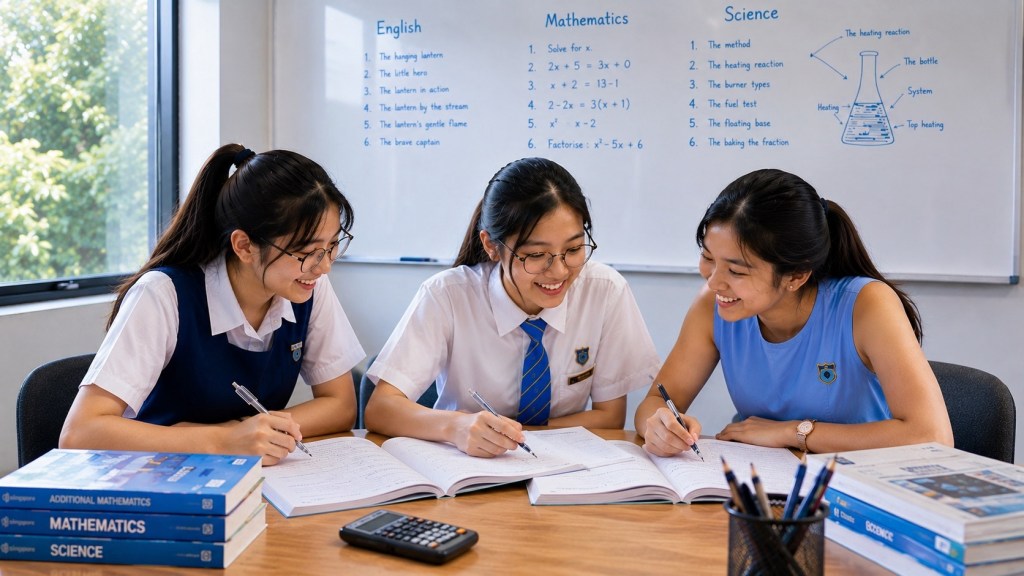
Practical Science skills are the physical, procedural and reasoning abilities that let students turn a scientific question into trustworthy observations and measurements. Knowing the definition of volume is different from reading a measuring cylinder accurately. Knowing what temperature means is different from positioning a thermometer correctly and recording a stable reading. Knowing that an experiment needs a fair comparison is different from setting up apparatus so the comparison actually remains fair. Practical competence therefore sits between scientific knowledge and scientific evidence.
This Advanced Science Tutorials guide is written for parents and students in Sengkang, Punggol and across Singapore who search for practical Science skills, laboratory skills, Science practical skills, measurement skills, how to use Science equipment, experimental skills, Science practical exam and lab techniques for students. It develops a progression from Primary observation and measurement through PSLE investigation reasoning into Secondary G1, G2 and G3 laboratory competence.
AQA’s research on practical Science describes several dimensions of practical competence: manipulative skills such as setting up equipment and taking measurements; procedural skills such as choosing suitable equipment and working safely; scientific-enquiry skills such as planning and analysing; soft skills such as plotting graphs and writing reports; and transferable skills such as organisation and communication. See AQA: Skills and Self-Belief After Disrupted Learning. This owner focuses on the practical side. The existing Scientific Method for Students remains the owner for experimental design logic.
The practical Science skill stack
- Observe accurately.
- Choose the right measuring tool.
- Read scales and units correctly.
- Set up equipment safely and consistently.
- Control relevant conditions.
- Record raw data immediately.
- Recognise anomalies and measurement limits.
- Repeat measurements appropriately.
- Process data without losing the original evidence.
- Plot and read graphs.
- Clean, reset and store equipment correctly.
- Explain what the practical result can and cannot show.
Primary 1 and Primary 2: practical readiness
Before formal Primary Science, practical skill means handling ordinary objects carefully, comparing properties, using simple rulers or timers with adult support, drawing what was actually observed and following one-step safety instructions. The purpose is not laboratory acceleration; it is disciplined attention.
A child who learns to place a ruler at zero, wait for a measurement, record a result and avoid changing two things at once is already building habits that later practical Science will formalise.
Primary 3 and Primary 4: observation becomes measurement
Primary 3 and Primary 4 learners begin formal Science investigations. They should learn how apparatus relates to a question: ruler for length, stopwatch for time, thermometer for temperature, measuring cylinder for liquid volume, balance for mass and diagrams for recording structure or setup.
The goal is not to memorise equipment names. It is to choose the tool whose measurement answers the question.
Primary 5 and Primary 6: control and evidence quality
Older Primary students should become more consistent with variables, repeated measurements, tables and fair comparisons. They should also recognise that equipment has limits and that one measurement may be unusual.
PSLE investigation questions often test these ideas without requiring a full laboratory practical. Practical competence therefore supports written examination reasoning even when the student is working on paper.
Secondary G1, G2 and G3: laboratory competence expands
Lower Secondary Science increases the range of apparatus, quantities, representations and laboratory procedures. Students may need to select equipment, follow multi-step procedures, collect continuous or repeated data, plot graphs, evaluate methods and work more independently.
Hands-on skill should remain connected to purpose. A student who can use an instrument mechanically but cannot explain what the reading means is not yet fully practically competent.
Observation
Skill. Observation is deliberate noticing using senses or instruments within safe limits.
Common practical error. Students often write explanations as if they were observations.
Better procedure. Record what is directly seen, measured or detected before writing why it happened.
Practice. Observe one safe object and write separate observation and inference columns.
The practical-skill test is whether the learner can explain why the procedure improves measurement, safety or comparability. Copying the teacher’s hand movement is not enough. The student should be able to identify what error the technique prevents and how the evidence would change if the technique were poor.
For parents, hands-on practice outside school should remain low risk and use ordinary safe materials. Do not recreate school laboratory procedures that depend on flames, hazardous chemicals, high voltage, biological cultures, sharp glassware or specialist supervision. For tutors, diagrams, simulations, public data and teacher-provided apparatus can train practical reasoning without unnecessary hazard.
Qualitative observation
Skill. Qualitative observations describe non-numerical features such as colour, texture, state or visible change.
Common practical error. Students use vague words such as nice, strange or big.
Better procedure. Use agreed descriptive vocabulary tied to observable features.
Practice. Describe three material samples without naming them.
The practical-skill test is whether the learner can explain why the procedure improves measurement, safety or comparability. Copying the teacher’s hand movement is not enough. The student should be able to identify what error the technique prevents and how the evidence would change if the technique were poor.
For parents, hands-on practice outside school should remain low risk and use ordinary safe materials. Do not recreate school laboratory procedures that depend on flames, hazardous chemicals, high voltage, biological cultures, sharp glassware or specialist supervision. For tutors, diagrams, simulations, public data and teacher-provided apparatus can train practical reasoning without unnecessary hazard.
Quantitative observation
Skill. Quantitative observations include numerical measurements with units.
Common practical error. Students record a number without the quantity or unit.
Better procedure. Write quantity, value and unit together.
Practice. Convert an observation such as ‘hotter’ into a measurable temperature comparison.
The practical-skill test is whether the learner can explain why the procedure improves measurement, safety or comparability. Copying the teacher’s hand movement is not enough. The student should be able to identify what error the technique prevents and how the evidence would change if the technique were poor.
For parents, hands-on practice outside school should remain low risk and use ordinary safe materials. Do not recreate school laboratory procedures that depend on flames, hazardous chemicals, high voltage, biological cultures, sharp glassware or specialist supervision. For tutors, diagrams, simulations, public data and teacher-provided apparatus can train practical reasoning without unnecessary hazard.
Ruler use
Skill. A ruler measures length when aligned with the object and read from the correct reference.
Common practical error. Students start at the ruler edge instead of the zero mark or view at an angle.
Better procedure. Align zero with one endpoint and read the other endpoint at eye level where practical.
Practice. Measure the same object twice after deliberately shifting the zero point and explain the error.
The practical-skill test is whether the learner can explain why the procedure improves measurement, safety or comparability. Copying the teacher’s hand movement is not enough. The student should be able to identify what error the technique prevents and how the evidence would change if the technique were poor.
For parents, hands-on practice outside school should remain low risk and use ordinary safe materials. Do not recreate school laboratory procedures that depend on flames, hazardous chemicals, high voltage, biological cultures, sharp glassware or specialist supervision. For tutors, diagrams, simulations, public data and teacher-provided apparatus can train practical reasoning without unnecessary hazard.
Measuring tape
Skill. A measuring tape supports longer or curved-distance measurements within its design limits.
Common practical error. Students let the tape sag or measure along inconsistent paths.
Better procedure. Keep the tape appropriately aligned and define the route measured.
Practice. Compare straight-line distance with path length.
The practical-skill test is whether the learner can explain why the procedure improves measurement, safety or comparability. Copying the teacher’s hand movement is not enough. The student should be able to identify what error the technique prevents and how the evidence would change if the technique were poor.
For parents, hands-on practice outside school should remain low risk and use ordinary safe materials. Do not recreate school laboratory procedures that depend on flames, hazardous chemicals, high voltage, biological cultures, sharp glassware or specialist supervision. For tutors, diagrams, simulations, public data and teacher-provided apparatus can train practical reasoning without unnecessary hazard.
Vernier or higher-resolution length tools
Skill. Higher-resolution instruments can measure smaller dimensions when students are trained appropriately.
Common practical error. Students assume more decimal places automatically mean more accuracy.
Better procedure. Understand instrument resolution and correct reading procedure before reporting precision.
Practice. Compare ruler and higher-resolution readings conceptually using teacher data.
The practical-skill test is whether the learner can explain why the procedure improves measurement, safety or comparability. Copying the teacher’s hand movement is not enough. The student should be able to identify what error the technique prevents and how the evidence would change if the technique were poor.
For parents, hands-on practice outside school should remain low risk and use ordinary safe materials. Do not recreate school laboratory procedures that depend on flames, hazardous chemicals, high voltage, biological cultures, sharp glassware or specialist supervision. For tutors, diagrams, simulations, public data and teacher-provided apparatus can train practical reasoning without unnecessary hazard.
Mass measurement
Skill. Mass is measured using a balance appropriate to the expected range and resolution.
Common practical error. Students confuse mass with weight or forget to zero the balance.
Better procedure. Check zero/tare and keep the object fully supported on the pan.
Practice. Measure a container before and after adding safe material and explain tare.
The practical-skill test is whether the learner can explain why the procedure improves measurement, safety or comparability. Copying the teacher’s hand movement is not enough. The student should be able to identify what error the technique prevents and how the evidence would change if the technique were poor.
For parents, hands-on practice outside school should remain low risk and use ordinary safe materials. Do not recreate school laboratory procedures that depend on flames, hazardous chemicals, high voltage, biological cultures, sharp glassware or specialist supervision. For tutors, diagrams, simulations, public data and teacher-provided apparatus can train practical reasoning without unnecessary hazard.
Tare function
Skill. Tare subtracts container mass from the displayed measurement.
Common practical error. Students think a tared display means the container has zero physical mass.
Better procedure. Explain that tare changes the reference, not the actual mass.
Practice. Predict what happens if the container is removed after taring.
The practical-skill test is whether the learner can explain why the procedure improves measurement, safety or comparability. Copying the teacher’s hand movement is not enough. The student should be able to identify what error the technique prevents and how the evidence would change if the technique were poor.
For parents, hands-on practice outside school should remain low risk and use ordinary safe materials. Do not recreate school laboratory procedures that depend on flames, hazardous chemicals, high voltage, biological cultures, sharp glassware or specialist supervision. For tutors, diagrams, simulations, public data and teacher-provided apparatus can train practical reasoning without unnecessary hazard.
Volume by measuring cylinder
Skill. A measuring cylinder estimates liquid volume using a graduated scale.
Common practical error. Students read from above, use a beaker scale as if equally precise or ignore meniscus conventions.
Better procedure. Place on a level surface and read at the appropriate eye position using the convention taught.
Practice. Compare readings from a beaker and measuring cylinder and discuss resolution.
The practical-skill test is whether the learner can explain why the procedure improves measurement, safety or comparability. Copying the teacher’s hand movement is not enough. The student should be able to identify what error the technique prevents and how the evidence would change if the technique were poor.
For parents, hands-on practice outside school should remain low risk and use ordinary safe materials. Do not recreate school laboratory procedures that depend on flames, hazardous chemicals, high voltage, biological cultures, sharp glassware or specialist supervision. For tutors, diagrams, simulations, public data and teacher-provided apparatus can train practical reasoning without unnecessary hazard.
Meniscus reading
Skill. The curved liquid surface can require a defined reading point depending on liquid and instrument.
Common practical error. Students read whichever part is visually easiest.
Better procedure. Follow the instrument and school convention consistently.
Practice. Sketch a meniscus and mark the correct reading position.
The practical-skill test is whether the learner can explain why the procedure improves measurement, safety or comparability. Copying the teacher’s hand movement is not enough. The student should be able to identify what error the technique prevents and how the evidence would change if the technique were poor.
For parents, hands-on practice outside school should remain low risk and use ordinary safe materials. Do not recreate school laboratory procedures that depend on flames, hazardous chemicals, high voltage, biological cultures, sharp glassware or specialist supervision. For tutors, diagrams, simulations, public data and teacher-provided apparatus can train practical reasoning without unnecessary hazard.
Pipette use
Skill. Pipettes transfer defined liquid volumes in supervised laboratory work.
Common practical error. Students assume the setting or label guarantees exact delivery.
Better procedure. Use only trained school procedures and recognise calibration and technique affect delivered volume.
Practice. Interpret repeated delivery data rather than practising unsupervised at home.
The practical-skill test is whether the learner can explain why the procedure improves measurement, safety or comparability. Copying the teacher’s hand movement is not enough. The student should be able to identify what error the technique prevents and how the evidence would change if the technique were poor.
For parents, hands-on practice outside school should remain low risk and use ordinary safe materials. Do not recreate school laboratory procedures that depend on flames, hazardous chemicals, high voltage, biological cultures, sharp glassware or specialist supervision. For tutors, diagrams, simulations, public data and teacher-provided apparatus can train practical reasoning without unnecessary hazard.
Burette use
Skill. A burette measures delivered liquid volume through initial and final readings in supervised laboratory work.
Common practical error. Students confuse final reading with volume delivered.
Better procedure. Delivered volume is the difference between readings.
Practice. Calculate delivery from teacher-provided burette readings.
The practical-skill test is whether the learner can explain why the procedure improves measurement, safety or comparability. Copying the teacher’s hand movement is not enough. The student should be able to identify what error the technique prevents and how the evidence would change if the technique were poor.
For parents, hands-on practice outside school should remain low risk and use ordinary safe materials. Do not recreate school laboratory procedures that depend on flames, hazardous chemicals, high voltage, biological cultures, sharp glassware or specialist supervision. For tutors, diagrams, simulations, public data and teacher-provided apparatus can train practical reasoning without unnecessary hazard.
Temperature measurement
Skill. A thermometer or temperature probe measures temperature within a defined range and response time.
Common practical error. Students let the bulb touch the container wall or read before the sensor stabilises.
Better procedure. Position consistently, avoid contact artifacts and wait for a stable reading when required.
Practice. Compare two setup diagrams and identify which gives the more representative measurement.
The practical-skill test is whether the learner can explain why the procedure improves measurement, safety or comparability. Copying the teacher’s hand movement is not enough. The student should be able to identify what error the technique prevents and how the evidence would change if the technique were poor.
For parents, hands-on practice outside school should remain low risk and use ordinary safe materials. Do not recreate school laboratory procedures that depend on flames, hazardous chemicals, high voltage, biological cultures, sharp glassware or specialist supervision. For tutors, diagrams, simulations, public data and teacher-provided apparatus can train practical reasoning without unnecessary hazard.
Digital probe
Skill. Digital sensors can record temperature, light, force, pH or other quantities rapidly.
Common practical error. Students treat digital precision as guaranteed accuracy.
Better procedure. Check range, calibration, units, sampling rate and placement.
Practice. Compare a noisy sensor trace with a smoothed display and discuss what information is hidden.
The practical-skill test is whether the learner can explain why the procedure improves measurement, safety or comparability. Copying the teacher’s hand movement is not enough. The student should be able to identify what error the technique prevents and how the evidence would change if the technique were poor.
For parents, hands-on practice outside school should remain low risk and use ordinary safe materials. Do not recreate school laboratory procedures that depend on flames, hazardous chemicals, high voltage, biological cultures, sharp glassware or specialist supervision. For tutors, diagrams, simulations, public data and teacher-provided apparatus can train practical reasoning without unnecessary hazard.
Stopwatch timing
Skill. Timing requires a clear start event, stop event and consistent human or automated trigger.
Common practical error. Students vary the trigger rule between trials.
Better procedure. Define the event before timing and use the same rule every trial.
Practice. Time a safe repeated event and discuss reaction-time variation.
The practical-skill test is whether the learner can explain why the procedure improves measurement, safety or comparability. Copying the teacher’s hand movement is not enough. The student should be able to identify what error the technique prevents and how the evidence would change if the technique were poor.
For parents, hands-on practice outside school should remain low risk and use ordinary safe materials. Do not recreate school laboratory procedures that depend on flames, hazardous chemicals, high voltage, biological cultures, sharp glassware or specialist supervision. For tutors, diagrams, simulations, public data and teacher-provided apparatus can train practical reasoning without unnecessary hazard.
Reaction time
Skill. Manual timing includes human response delay.
Common practical error. Students attribute all variation to the system being measured.
Better procedure. Estimate reaction-time contribution using repeated starts or compare automated data where available.
Practice. Explain why longer-duration measurements can reduce relative timing error.
The practical-skill test is whether the learner can explain why the procedure improves measurement, safety or comparability. Copying the teacher’s hand movement is not enough. The student should be able to identify what error the technique prevents and how the evidence would change if the technique were poor.
For parents, hands-on practice outside school should remain low risk and use ordinary safe materials. Do not recreate school laboratory procedures that depend on flames, hazardous chemicals, high voltage, biological cultures, sharp glassware or specialist supervision. For tutors, diagrams, simulations, public data and teacher-provided apparatus can train practical reasoning without unnecessary hazard.
Counting
Skill. Counting events requires a defined criterion for what counts as one event.
Common practical error. Students change counting rules midway.
Better procedure. Write the counting definition before collecting data.
Practice. Count oscillations or safe visible events with a partner and compare definitions.
The practical-skill test is whether the learner can explain why the procedure improves measurement, safety or comparability. Copying the teacher’s hand movement is not enough. The student should be able to identify what error the technique prevents and how the evidence would change if the technique were poor.
For parents, hands-on practice outside school should remain low risk and use ordinary safe materials. Do not recreate school laboratory procedures that depend on flames, hazardous chemicals, high voltage, biological cultures, sharp glassware or specialist supervision. For tutors, diagrams, simulations, public data and teacher-provided apparatus can train practical reasoning without unnecessary hazard.
Repeated measurement
Skill. Repeats reveal variation and reduce dependence on one reading.
Common practical error. Students repeat without recording individual values.
Better procedure. Keep raw values and calculate summaries afterward.
Practice. Take three safe length measurements and compare spread.
The practical-skill test is whether the learner can explain why the procedure improves measurement, safety or comparability. Copying the teacher’s hand movement is not enough. The student should be able to identify what error the technique prevents and how the evidence would change if the technique were poor.
For parents, hands-on practice outside school should remain low risk and use ordinary safe materials. Do not recreate school laboratory procedures that depend on flames, hazardous chemicals, high voltage, biological cultures, sharp glassware or specialist supervision. For tutors, diagrams, simulations, public data and teacher-provided apparatus can train practical reasoning without unnecessary hazard.
Mean
Skill. The arithmetic mean can summarise repeated numerical measurements when appropriate.
Common practical error. Students average data before checking for recording errors or anomalies.
Better procedure. Inspect raw data first, then calculate and keep the original values.
Practice. Calculate a mean and identify whether one value needs investigation.
The practical-skill test is whether the learner can explain why the procedure improves measurement, safety or comparability. Copying the teacher’s hand movement is not enough. The student should be able to identify what error the technique prevents and how the evidence would change if the technique were poor.
For parents, hands-on practice outside school should remain low risk and use ordinary safe materials. Do not recreate school laboratory procedures that depend on flames, hazardous chemicals, high voltage, biological cultures, sharp glassware or specialist supervision. For tutors, diagrams, simulations, public data and teacher-provided apparatus can train practical reasoning without unnecessary hazard.
Range
Skill. Range gives a simple measure of spread.
Common practical error. Students report only the mean and hide inconsistency.
Better procedure. Calculate maximum minus minimum and interpret whether the spread is large relative to the effect.
Practice. Compare two datasets with equal means but different ranges.
The practical-skill test is whether the learner can explain why the procedure improves measurement, safety or comparability. Copying the teacher’s hand movement is not enough. The student should be able to identify what error the technique prevents and how the evidence would change if the technique were poor.
For parents, hands-on practice outside school should remain low risk and use ordinary safe materials. Do not recreate school laboratory procedures that depend on flames, hazardous chemicals, high voltage, biological cultures, sharp glassware or specialist supervision. For tutors, diagrams, simulations, public data and teacher-provided apparatus can train practical reasoning without unnecessary hazard.
Anomaly
Skill. An anomalous value differs notably from the rest of a pattern.
Common practical error. Students delete anomalous data automatically.
Better procedure. Check apparatus, notes and method before deciding whether exclusion is justified.
Practice. Write reasons to investigate an unusual reading.
The practical-skill test is whether the learner can explain why the procedure improves measurement, safety or comparability. Copying the teacher’s hand movement is not enough. The student should be able to identify what error the technique prevents and how the evidence would change if the technique were poor.
For parents, hands-on practice outside school should remain low risk and use ordinary safe materials. Do not recreate school laboratory procedures that depend on flames, hazardous chemicals, high voltage, biological cultures, sharp glassware or specialist supervision. For tutors, diagrams, simulations, public data and teacher-provided apparatus can train practical reasoning without unnecessary hazard.
Scale reading
Skill. A scale must be read using its intervals rather than guessed from overall appearance.
Common practical error. Students assume each minor division equals one unit.
Better procedure. Determine the value between labelled marks before measuring.
Practice. Decode several instrument scales before using them.
The practical-skill test is whether the learner can explain why the procedure improves measurement, safety or comparability. Copying the teacher’s hand movement is not enough. The student should be able to identify what error the technique prevents and how the evidence would change if the technique were poor.
For parents, hands-on practice outside school should remain low risk and use ordinary safe materials. Do not recreate school laboratory procedures that depend on flames, hazardous chemicals, high voltage, biological cultures, sharp glassware or specialist supervision. For tutors, diagrams, simulations, public data and teacher-provided apparatus can train practical reasoning without unnecessary hazard.
Zero error
Skill. An instrument can show a non-zero reading when the true input is zero.
Common practical error. Students ignore the offset and repeat many times.
Better procedure. Check zero before use and apply the school-approved correction where appropriate.
Practice. Interpret data from an instrument with a known offset.
The practical-skill test is whether the learner can explain why the procedure improves measurement, safety or comparability. Copying the teacher’s hand movement is not enough. The student should be able to identify what error the technique prevents and how the evidence would change if the technique were poor.
For parents, hands-on practice outside school should remain low risk and use ordinary safe materials. Do not recreate school laboratory procedures that depend on flames, hazardous chemicals, high voltage, biological cultures, sharp glassware or specialist supervision. For tutors, diagrams, simulations, public data and teacher-provided apparatus can train practical reasoning without unnecessary hazard.
Parallax
Skill. Parallax occurs when a scale is viewed from the wrong angle and the apparent alignment changes.
Common practical error. Students read analogue scales from above or side.
Better procedure. Read at eye level perpendicular to the scale where appropriate.
Practice. Compare simulated views from different angles.
The practical-skill test is whether the learner can explain why the procedure improves measurement, safety or comparability. Copying the teacher’s hand movement is not enough. The student should be able to identify what error the technique prevents and how the evidence would change if the technique were poor.
For parents, hands-on practice outside school should remain low risk and use ordinary safe materials. Do not recreate school laboratory procedures that depend on flames, hazardous chemicals, high voltage, biological cultures, sharp glassware or specialist supervision. For tutors, diagrams, simulations, public data and teacher-provided apparatus can train practical reasoning without unnecessary hazard.
Resolution
Skill. Resolution is the smallest change an instrument can display or distinguish.
Common practical error. Students report more digits than the instrument supports.
Better procedure. Match recorded precision to instrument resolution and procedure.
Practice. Choose between two tools for an expected small change.
The practical-skill test is whether the learner can explain why the procedure improves measurement, safety or comparability. Copying the teacher’s hand movement is not enough. The student should be able to identify what error the technique prevents and how the evidence would change if the technique were poor.
For parents, hands-on practice outside school should remain low risk and use ordinary safe materials. Do not recreate school laboratory procedures that depend on flames, hazardous chemicals, high voltage, biological cultures, sharp glassware or specialist supervision. For tutors, diagrams, simulations, public data and teacher-provided apparatus can train practical reasoning without unnecessary hazard.
Range of instrument
Skill. Every instrument has a usable measurement range.
Common practical error. Students select a precise tool that cannot safely or accurately cover the expected value.
Better procedure. Estimate expected values before choosing equipment.
Practice. Match instruments to measurement scenarios.
The practical-skill test is whether the learner can explain why the procedure improves measurement, safety or comparability. Copying the teacher’s hand movement is not enough. The student should be able to identify what error the technique prevents and how the evidence would change if the technique were poor.
For parents, hands-on practice outside school should remain low risk and use ordinary safe materials. Do not recreate school laboratory procedures that depend on flames, hazardous chemicals, high voltage, biological cultures, sharp glassware or specialist supervision. For tutors, diagrams, simulations, public data and teacher-provided apparatus can train practical reasoning without unnecessary hazard.
Calibration
Skill. Calibration relates instrument readings to known references.
Common practical error. Students assume instruments remain accurate indefinitely.
Better procedure. Follow teacher or manufacturer procedures and recognise calibration status as part of data quality.
Practice. Interpret a calibration graph and identify drift.
The practical-skill test is whether the learner can explain why the procedure improves measurement, safety or comparability. Copying the teacher’s hand movement is not enough. The student should be able to identify what error the technique prevents and how the evidence would change if the technique were poor.
For parents, hands-on practice outside school should remain low risk and use ordinary safe materials. Do not recreate school laboratory procedures that depend on flames, hazardous chemicals, high voltage, biological cultures, sharp glassware or specialist supervision. For tutors, diagrams, simulations, public data and teacher-provided apparatus can train practical reasoning without unnecessary hazard.
Choosing equipment
Skill. Equipment choice should match quantity, range, resolution, safety and practicality.
Common practical error. Students choose familiar equipment rather than suitable equipment.
Better procedure. State the expected measurement and required precision first.
Practice. Choose among ruler, tape, balance, cylinder or probe for several questions.
The practical-skill test is whether the learner can explain why the procedure improves measurement, safety or comparability. Copying the teacher’s hand movement is not enough. The student should be able to identify what error the technique prevents and how the evidence would change if the technique were poor.
For parents, hands-on practice outside school should remain low risk and use ordinary safe materials. Do not recreate school laboratory procedures that depend on flames, hazardous chemicals, high voltage, biological cultures, sharp glassware or specialist supervision. For tutors, diagrams, simulations, public data and teacher-provided apparatus can train practical reasoning without unnecessary hazard.
Apparatus setup
Skill. A setup should implement the method without introducing avoidable differences.
Common practical error. Students assemble from memory and overlook orientation or alignment.
Better procedure. Use a labelled diagram and check critical dimensions before starting.
Practice. Compare two setup diagrams for likely systematic differences.
The practical-skill test is whether the learner can explain why the procedure improves measurement, safety or comparability. Copying the teacher’s hand movement is not enough. The student should be able to identify what error the technique prevents and how the evidence would change if the technique were poor.
For parents, hands-on practice outside school should remain low risk and use ordinary safe materials. Do not recreate school laboratory procedures that depend on flames, hazardous chemicals, high voltage, biological cultures, sharp glassware or specialist supervision. For tutors, diagrams, simulations, public data and teacher-provided apparatus can train practical reasoning without unnecessary hazard.
Clamp stand use
Skill. Clamp stands can support apparatus securely in supervised laboratories.
Common practical error. Students overtighten, under-tighten or create unstable high centres of mass.
Better procedure. Teacher supervision and stable base positioning are essential.
Practice. Analyse safe and unsafe setup diagrams rather than improvising at home.
The practical-skill test is whether the learner can explain why the procedure improves measurement, safety or comparability. Copying the teacher’s hand movement is not enough. The student should be able to identify what error the technique prevents and how the evidence would change if the technique were poor.
For parents, hands-on practice outside school should remain low risk and use ordinary safe materials. Do not recreate school laboratory procedures that depend on flames, hazardous chemicals, high voltage, biological cultures, sharp glassware or specialist supervision. For tutors, diagrams, simulations, public data and teacher-provided apparatus can train practical reasoning without unnecessary hazard.
Tripod and heating apparatus
Skill. Heating apparatus requires specific laboratory supervision, clear zones and appropriate PPE.
Common practical error. Students treat flame setup as routine because it appears in textbooks.
Better procedure. Follow school instructions exactly and never recreate flame-based practicals unsupervised.
Practice. Use video or teacher demonstrations for home revision.
The practical-skill test is whether the learner can explain why the procedure improves measurement, safety or comparability. Copying the teacher’s hand movement is not enough. The student should be able to identify what error the technique prevents and how the evidence would change if the technique were poor.
For parents, hands-on practice outside school should remain low risk and use ordinary safe materials. Do not recreate school laboratory procedures that depend on flames, hazardous chemicals, high voltage, biological cultures, sharp glassware or specialist supervision. For tutors, diagrams, simulations, public data and teacher-provided apparatus can train practical reasoning without unnecessary hazard.
Electrical apparatus
Skill. School electrical practicals use appropriate low-voltage equipment and correctly rated components.
Common practical error. Students transfer classroom circuit ideas to mains electricity.
Better procedure. Keep all student exploration within teacher-approved low-voltage systems or simulations.
Practice. Trace a safe low-voltage circuit diagram.
The practical-skill test is whether the learner can explain why the procedure improves measurement, safety or comparability. Copying the teacher’s hand movement is not enough. The student should be able to identify what error the technique prevents and how the evidence would change if the technique were poor.
For parents, hands-on practice outside school should remain low risk and use ordinary safe materials. Do not recreate school laboratory procedures that depend on flames, hazardous chemicals, high voltage, biological cultures, sharp glassware or specialist supervision. For tutors, diagrams, simulations, public data and teacher-provided apparatus can train practical reasoning without unnecessary hazard.
Circuit connection
Skill. Electrical components must be connected according to the intended circuit topology.
Common practical error. Students infer connection from visual proximity.
Better procedure. Trace conductive paths and junctions.
Practice. Redraw a circuit with different geometry while preserving connections.
The practical-skill test is whether the learner can explain why the procedure improves measurement, safety or comparability. Copying the teacher’s hand movement is not enough. The student should be able to identify what error the technique prevents and how the evidence would change if the technique were poor.
For parents, hands-on practice outside school should remain low risk and use ordinary safe materials. Do not recreate school laboratory procedures that depend on flames, hazardous chemicals, high voltage, biological cultures, sharp glassware or specialist supervision. For tutors, diagrams, simulations, public data and teacher-provided apparatus can train practical reasoning without unnecessary hazard.
Ammeter placement
Skill. An ammeter is connected according to the circuit method taught, typically in series for current measurement.
Common practical error. Students connect meters by symbol familiarity rather than quantity purpose.
Better procedure. Ask what quantity is measured and through which path charge moves.
Practice. Interpret safe circuit diagrams; do not use mains circuits.
The practical-skill test is whether the learner can explain why the procedure improves measurement, safety or comparability. Copying the teacher’s hand movement is not enough. The student should be able to identify what error the technique prevents and how the evidence would change if the technique were poor.
For parents, hands-on practice outside school should remain low risk and use ordinary safe materials. Do not recreate school laboratory procedures that depend on flames, hazardous chemicals, high voltage, biological cultures, sharp glassware or specialist supervision. For tutors, diagrams, simulations, public data and teacher-provided apparatus can train practical reasoning without unnecessary hazard.
Voltmeter placement
Skill. A voltmeter measures potential difference between two points, typically connected across a component.
Common practical error. Students put every meter in series.
Better procedure. Identify the two points whose difference is being measured.
Practice. Choose correct meter placement from diagrams.
The practical-skill test is whether the learner can explain why the procedure improves measurement, safety or comparability. Copying the teacher’s hand movement is not enough. The student should be able to identify what error the technique prevents and how the evidence would change if the technique were poor.
For parents, hands-on practice outside school should remain low risk and use ordinary safe materials. Do not recreate school laboratory procedures that depend on flames, hazardous chemicals, high voltage, biological cultures, sharp glassware or specialist supervision. For tutors, diagrams, simulations, public data and teacher-provided apparatus can train practical reasoning without unnecessary hazard.
Light measurement
Skill. Light sensors require consistent orientation, distance and ambient conditions.
Common practical error. Students move the sensor angle while changing another variable.
Better procedure. Fix geometry and shield unwanted variation where practical.
Practice. Design a fair comparison of safe torch distances.
The practical-skill test is whether the learner can explain why the procedure improves measurement, safety or comparability. Copying the teacher’s hand movement is not enough. The student should be able to identify what error the technique prevents and how the evidence would change if the technique were poor.
For parents, hands-on practice outside school should remain low risk and use ordinary safe materials. Do not recreate school laboratory procedures that depend on flames, hazardous chemicals, high voltage, biological cultures, sharp glassware or specialist supervision. For tutors, diagrams, simulations, public data and teacher-provided apparatus can train practical reasoning without unnecessary hazard.
Force measurement
Skill. Spring scales or force sensors measure force within specified range.
Common practical error. Students exceed the instrument range or read before motion settles.
Better procedure. Select a suitable range and use low-load supervised setups.
Practice. Interpret force-extension data rather than overloading equipment.
The practical-skill test is whether the learner can explain why the procedure improves measurement, safety or comparability. Copying the teacher’s hand movement is not enough. The student should be able to identify what error the technique prevents and how the evidence would change if the technique were poor.
For parents, hands-on practice outside school should remain low risk and use ordinary safe materials. Do not recreate school laboratory procedures that depend on flames, hazardous chemicals, high voltage, biological cultures, sharp glassware or specialist supervision. For tutors, diagrams, simulations, public data and teacher-provided apparatus can train practical reasoning without unnecessary hazard.
pH measurement
Skill. Indicators or probes estimate acidity/alkalinity in supervised school contexts.
Common practical error. Students test unknown household chemicals casually.
Better procedure. Use teacher-approved solutions only and follow PPE requirements.
Practice. Interpret provided pH data rather than conducting unsafe home tests.
The practical-skill test is whether the learner can explain why the procedure improves measurement, safety or comparability. Copying the teacher’s hand movement is not enough. The student should be able to identify what error the technique prevents and how the evidence would change if the technique were poor.
For parents, hands-on practice outside school should remain low risk and use ordinary safe materials. Do not recreate school laboratory procedures that depend on flames, hazardous chemicals, high voltage, biological cultures, sharp glassware or specialist supervision. For tutors, diagrams, simulations, public data and teacher-provided apparatus can train practical reasoning without unnecessary hazard.
Microscope carrying
Skill. Microscopes should be moved and positioned using the safe procedure taught by the school.
Common practical error. Students carry by one fragile part or place near bench edges.
Better procedure. Use two-hand carrying where appropriate and stable bench positioning.
Practice. Identify safe handling from diagrams.
The practical-skill test is whether the learner can explain why the procedure improves measurement, safety or comparability. Copying the teacher’s hand movement is not enough. The student should be able to identify what error the technique prevents and how the evidence would change if the technique were poor.
For parents, hands-on practice outside school should remain low risk and use ordinary safe materials. Do not recreate school laboratory procedures that depend on flames, hazardous chemicals, high voltage, biological cultures, sharp glassware or specialist supervision. For tutors, diagrams, simulations, public data and teacher-provided apparatus can train practical reasoning without unnecessary hazard.
Microscope focusing
Skill. Microscope focus should progress from safe low-power setup according to teacher instruction.
Common practical error. Students force knobs or move objectives into slides.
Better procedure. Follow the specific microscope procedure taught and stop if resistance or uncertainty occurs.
Practice. Use labelled diagrams and virtual microscopy for revision.
The practical-skill test is whether the learner can explain why the procedure improves measurement, safety or comparability. Copying the teacher’s hand movement is not enough. The student should be able to identify what error the technique prevents and how the evidence would change if the technique were poor.
For parents, hands-on practice outside school should remain low risk and use ordinary safe materials. Do not recreate school laboratory procedures that depend on flames, hazardous chemicals, high voltage, biological cultures, sharp glassware or specialist supervision. For tutors, diagrams, simulations, public data and teacher-provided apparatus can train practical reasoning without unnecessary hazard.
Slide preparation
Skill. Slide preparation requires careful handling of glass and biological material.
Common practical error. Students improvise sharp tools or unknown samples.
Better procedure. Use teacher-approved prepared slides or supervised specimens.
Practice. Practise identifying structures from prepared images outside the lab.
The practical-skill test is whether the learner can explain why the procedure improves measurement, safety or comparability. Copying the teacher’s hand movement is not enough. The student should be able to identify what error the technique prevents and how the evidence would change if the technique were poor.
For parents, hands-on practice outside school should remain low risk and use ordinary safe materials. Do not recreate school laboratory procedures that depend on flames, hazardous chemicals, high voltage, biological cultures, sharp glassware or specialist supervision. For tutors, diagrams, simulations, public data and teacher-provided apparatus can train practical reasoning without unnecessary hazard.
Biological specimen handling
Skill. Living or preserved specimens require ethical, hygienic and school-approved handling.
Common practical error. Students assume natural means harmless.
Better procedure. Follow teacher rules, wash hands and do not handle unknown organisms.
Practice. Use photographs or public data when direct handling is unnecessary.
The practical-skill test is whether the learner can explain why the procedure improves measurement, safety or comparability. Copying the teacher’s hand movement is not enough. The student should be able to identify what error the technique prevents and how the evidence would change if the technique were poor.
For parents, hands-on practice outside school should remain low risk and use ordinary safe materials. Do not recreate school laboratory procedures that depend on flames, hazardous chemicals, high voltage, biological cultures, sharp glassware or specialist supervision. For tutors, diagrams, simulations, public data and teacher-provided apparatus can train practical reasoning without unnecessary hazard.
Field observation
Skill. Field practicals require consistent sampling, location records and environmental safety.
Common practical error. Students change search effort across sites.
Better procedure. Define equal area, time or transect method before comparing sites.
Practice. Design an observation plan for a permitted school area.
The practical-skill test is whether the learner can explain why the procedure improves measurement, safety or comparability. Copying the teacher’s hand movement is not enough. The student should be able to identify what error the technique prevents and how the evidence would change if the technique were poor.
For parents, hands-on practice outside school should remain low risk and use ordinary safe materials. Do not recreate school laboratory procedures that depend on flames, hazardous chemicals, high voltage, biological cultures, sharp glassware or specialist supervision. For tutors, diagrams, simulations, public data and teacher-provided apparatus can train practical reasoning without unnecessary hazard.
Quadrat sampling
Skill. Quadrats sample organisms or cover within defined areas.
Common practical error. Students place quadrats only where organisms are visible.
Better procedure. Use a planned or randomised placement method appropriate to the question.
Practice. Interpret quadrat data and discuss representativeness.
The practical-skill test is whether the learner can explain why the procedure improves measurement, safety or comparability. Copying the teacher’s hand movement is not enough. The student should be able to identify what error the technique prevents and how the evidence would change if the technique were poor.
For parents, hands-on practice outside school should remain low risk and use ordinary safe materials. Do not recreate school laboratory procedures that depend on flames, hazardous chemicals, high voltage, biological cultures, sharp glassware or specialist supervision. For tutors, diagrams, simulations, public data and teacher-provided apparatus can train practical reasoning without unnecessary hazard.
Transects
Skill. Transects sample change across a spatial gradient.
Common practical error. Students treat points along the line as independent of location.
Better procedure. Record distance and environmental context consistently.
Practice. Plot abundance against distance using teacher-provided data.
The practical-skill test is whether the learner can explain why the procedure improves measurement, safety or comparability. Copying the teacher’s hand movement is not enough. The student should be able to identify what error the technique prevents and how the evidence would change if the technique were poor.
For parents, hands-on practice outside school should remain low risk and use ordinary safe materials. Do not recreate school laboratory procedures that depend on flames, hazardous chemicals, high voltage, biological cultures, sharp glassware or specialist supervision. For tutors, diagrams, simulations, public data and teacher-provided apparatus can train practical reasoning without unnecessary hazard.
Photographic records
Skill. Photographs can preserve visual evidence but depend on scale, angle and lighting.
Common practical error. Students compare photos taken from different positions as if directly equivalent.
Better procedure. Include scale and standardise viewpoint when quantitative comparison is intended.
Practice. Evaluate paired images for comparability.
The practical-skill test is whether the learner can explain why the procedure improves measurement, safety or comparability. Copying the teacher’s hand movement is not enough. The student should be able to identify what error the technique prevents and how the evidence would change if the technique were poor.
For parents, hands-on practice outside school should remain low risk and use ordinary safe materials. Do not recreate school laboratory procedures that depend on flames, hazardous chemicals, high voltage, biological cultures, sharp glassware or specialist supervision. For tutors, diagrams, simulations, public data and teacher-provided apparatus can train practical reasoning without unnecessary hazard.
Labelling samples
Skill. Samples need clear identifiers tied to conditions and records.
Common practical error. Students rely on memory and swap containers.
Better procedure. Label before collection and keep identifiers short and unique.
Practice. Match sample IDs to data tables.
The practical-skill test is whether the learner can explain why the procedure improves measurement, safety or comparability. Copying the teacher’s hand movement is not enough. The student should be able to identify what error the technique prevents and how the evidence would change if the technique were poor.
For parents, hands-on practice outside school should remain low risk and use ordinary safe materials. Do not recreate school laboratory procedures that depend on flames, hazardous chemicals, high voltage, biological cultures, sharp glassware or specialist supervision. For tutors, diagrams, simulations, public data and teacher-provided apparatus can train practical reasoning without unnecessary hazard.
Raw data recording
Skill. Raw data should be recorded immediately and preserved before processing.
Common practical error. Students calculate mentally and write only final averages.
Better procedure. Record individual measurements with units first.
Practice. Build a raw-data table before starting.
The practical-skill test is whether the learner can explain why the procedure improves measurement, safety or comparability. Copying the teacher’s hand movement is not enough. The student should be able to identify what error the technique prevents and how the evidence would change if the technique were poor.
For parents, hands-on practice outside school should remain low risk and use ordinary safe materials. Do not recreate school laboratory procedures that depend on flames, hazardous chemicals, high voltage, biological cultures, sharp glassware or specialist supervision. For tutors, diagrams, simulations, public data and teacher-provided apparatus can train practical reasoning without unnecessary hazard.
Table design
Skill. A practical table should show variables, units, repeats and relevant conditions clearly.
Common practical error. Students put units repeatedly in cells or omit variable names.
Better procedure. Use informative headings with units.
Practice. Repair a poorly designed table.
The practical-skill test is whether the learner can explain why the procedure improves measurement, safety or comparability. Copying the teacher’s hand movement is not enough. The student should be able to identify what error the technique prevents and how the evidence would change if the technique were poor.
For parents, hands-on practice outside school should remain low risk and use ordinary safe materials. Do not recreate school laboratory procedures that depend on flames, hazardous chemicals, high voltage, biological cultures, sharp glassware or specialist supervision. For tutors, diagrams, simulations, public data and teacher-provided apparatus can train practical reasoning without unnecessary hazard.
Significant figures
Skill. Reported digits should reflect measurement precision and school conventions.
Common practical error. Students copy every calculator digit.
Better procedure. Keep extra digits during calculation only as appropriate and report sensibly.
Practice. Compare instrument resolution with final reported values.
The practical-skill test is whether the learner can explain why the procedure improves measurement, safety or comparability. Copying the teacher’s hand movement is not enough. The student should be able to identify what error the technique prevents and how the evidence would change if the technique were poor.
For parents, hands-on practice outside school should remain low risk and use ordinary safe materials. Do not recreate school laboratory procedures that depend on flames, hazardous chemicals, high voltage, biological cultures, sharp glassware or specialist supervision. For tutors, diagrams, simulations, public data and teacher-provided apparatus can train practical reasoning without unnecessary hazard.
Graph plotting
Skill. Graphs should match variable type and use readable scales.
Common practical error. Students choose graphs by habit rather than data structure.
Better procedure. Identify independent and dependent variables, then choose a suitable representation.
Practice. Plot safe teacher-provided data and verify anchor points.
The practical-skill test is whether the learner can explain why the procedure improves measurement, safety or comparability. Copying the teacher’s hand movement is not enough. The student should be able to identify what error the technique prevents and how the evidence would change if the technique were poor.
For parents, hands-on practice outside school should remain low risk and use ordinary safe materials. Do not recreate school laboratory procedures that depend on flames, hazardous chemicals, high voltage, biological cultures, sharp glassware or specialist supervision. For tutors, diagrams, simulations, public data and teacher-provided apparatus can train practical reasoning without unnecessary hazard.
Line of best fit
Skill. A best-fit line or curve summarises a relationship without necessarily passing through every point.
Common practical error. Students join dot-to-dot automatically.
Better procedure. Use the representation convention taught for the data type.
Practice. Compare point-to-point and best-fit interpretations.
The practical-skill test is whether the learner can explain why the procedure improves measurement, safety or comparability. Copying the teacher’s hand movement is not enough. The student should be able to identify what error the technique prevents and how the evidence would change if the technique were poor.
For parents, hands-on practice outside school should remain low risk and use ordinary safe materials. Do not recreate school laboratory procedures that depend on flames, hazardous chemicals, high voltage, biological cultures, sharp glassware or specialist supervision. For tutors, diagrams, simulations, public data and teacher-provided apparatus can train practical reasoning without unnecessary hazard.
Uncertainty bars
Skill. Error or uncertainty bars can represent variability or measurement uncertainty depending on definition.
Common practical error. Students interpret any overlap using one universal rule.
Better procedure. Read the caption and know what the bars represent.
Practice. Compare graphs with SD, SE or range conceptually at appropriate level.
The practical-skill test is whether the learner can explain why the procedure improves measurement, safety or comparability. Copying the teacher’s hand movement is not enough. The student should be able to identify what error the technique prevents and how the evidence would change if the technique were poor.
For parents, hands-on practice outside school should remain low risk and use ordinary safe materials. Do not recreate school laboratory procedures that depend on flames, hazardous chemicals, high voltage, biological cultures, sharp glassware or specialist supervision. For tutors, diagrams, simulations, public data and teacher-provided apparatus can train practical reasoning without unnecessary hazard.
Method consistency
Skill. Every trial should follow the same defined method except for the intended changed variable.
Common practical error. Students alter timing or technique as they become more experienced.
Better procedure. Use a checklist or standard operating sequence.
Practice. Review trial notes for drift.
The practical-skill test is whether the learner can explain why the procedure improves measurement, safety or comparability. Copying the teacher’s hand movement is not enough. The student should be able to identify what error the technique prevents and how the evidence would change if the technique were poor.
For parents, hands-on practice outside school should remain low risk and use ordinary safe materials. Do not recreate school laboratory procedures that depend on flames, hazardous chemicals, high voltage, biological cultures, sharp glassware or specialist supervision. For tutors, diagrams, simulations, public data and teacher-provided apparatus can train practical reasoning without unnecessary hazard.
Order effects
Skill. The order of trials can affect results through warming, fatigue, depletion or learning.
Common practical error. Students always run conditions from low to high and assume order never matters.
Better procedure. Randomise or counterbalance order when appropriate.
Practice. Identify experiments where order could matter.
The practical-skill test is whether the learner can explain why the procedure improves measurement, safety or comparability. Copying the teacher’s hand movement is not enough. The student should be able to identify what error the technique prevents and how the evidence would change if the technique were poor.
For parents, hands-on practice outside school should remain low risk and use ordinary safe materials. Do not recreate school laboratory procedures that depend on flames, hazardous chemicals, high voltage, biological cultures, sharp glassware or specialist supervision. For tutors, diagrams, simulations, public data and teacher-provided apparatus can train practical reasoning without unnecessary hazard.
Reset between trials
Skill. Systems may need to return to baseline before the next measurement.
Common practical error. Students start the next trial while equipment remains warm or altered.
Better procedure. Define reset conditions in the method.
Practice. Explain how incomplete reset biases later trials.
The practical-skill test is whether the learner can explain why the procedure improves measurement, safety or comparability. Copying the teacher’s hand movement is not enough. The student should be able to identify what error the technique prevents and how the evidence would change if the technique were poor.
For parents, hands-on practice outside school should remain low risk and use ordinary safe materials. Do not recreate school laboratory procedures that depend on flames, hazardous chemicals, high voltage, biological cultures, sharp glassware or specialist supervision. For tutors, diagrams, simulations, public data and teacher-provided apparatus can train practical reasoning without unnecessary hazard.
Contamination control
Skill. Contamination introduces unwanted material that can change results.
Common practical error. Students reuse tools between samples without considering carryover.
Better procedure. Use school-approved cleaning or separate tools where required.
Practice. Identify contamination pathways in a diagram.
The practical-skill test is whether the learner can explain why the procedure improves measurement, safety or comparability. Copying the teacher’s hand movement is not enough. The student should be able to identify what error the technique prevents and how the evidence would change if the technique were poor.
For parents, hands-on practice outside school should remain low risk and use ordinary safe materials. Do not recreate school laboratory procedures that depend on flames, hazardous chemicals, high voltage, biological cultures, sharp glassware or specialist supervision. For tutors, diagrams, simulations, public data and teacher-provided apparatus can train practical reasoning without unnecessary hazard.
Cleaning equipment
Skill. Cleaning removes residues and keeps equipment suitable for later use.
Common practical error. Students clean hazardous or specialised equipment without instruction.
Better procedure. Follow teacher-specific cleanup procedures and disposal rules.
Practice. Treat cleanup as part of the practical, not optional housekeeping.
The practical-skill test is whether the learner can explain why the procedure improves measurement, safety or comparability. Copying the teacher’s hand movement is not enough. The student should be able to identify what error the technique prevents and how the evidence would change if the technique were poor.
For parents, hands-on practice outside school should remain low risk and use ordinary safe materials. Do not recreate school laboratory procedures that depend on flames, hazardous chemicals, high voltage, biological cultures, sharp glassware or specialist supervision. For tutors, diagrams, simulations, public data and teacher-provided apparatus can train practical reasoning without unnecessary hazard.
Waste disposal
Skill. Scientific materials require disposal methods matched to their hazards and school rules.
Common practical error. Students pour everything down sinks or throw everything in ordinary bins.
Better procedure. Follow teacher labels and disposal instructions exactly.
Practice. Never improvise chemical disposal at home.
The practical-skill test is whether the learner can explain why the procedure improves measurement, safety or comparability. Copying the teacher’s hand movement is not enough. The student should be able to identify what error the technique prevents and how the evidence would change if the technique were poor.
For parents, hands-on practice outside school should remain low risk and use ordinary safe materials. Do not recreate school laboratory procedures that depend on flames, hazardous chemicals, high voltage, biological cultures, sharp glassware or specialist supervision. For tutors, diagrams, simulations, public data and teacher-provided apparatus can train practical reasoning without unnecessary hazard.
PPE selection
Skill. Personal protective equipment should match the identified hazard.
Common practical error. Students wear gloves or goggles as symbols without understanding what they protect against.
Better procedure. Identify hazard first, then appropriate eye, skin or clothing protection.
Practice. Use the dedicated laboratory-safety owner for full guidance.
The practical-skill test is whether the learner can explain why the procedure improves measurement, safety or comparability. Copying the teacher’s hand movement is not enough. The student should be able to identify what error the technique prevents and how the evidence would change if the technique were poor.
For parents, hands-on practice outside school should remain low risk and use ordinary safe materials. Do not recreate school laboratory procedures that depend on flames, hazardous chemicals, high voltage, biological cultures, sharp glassware or specialist supervision. For tutors, diagrams, simulations, public data and teacher-provided apparatus can train practical reasoning without unnecessary hazard.
Pre-lab reading
Skill. Reading the method and safety information before starting reduces uncertainty during hands-on work.
Common practical error. Students learn the steps while already holding equipment.
Better procedure. Preview purpose, hazards, measurements and stopping points first.
Practice. Underline steps where timing or safety matters.
The practical-skill test is whether the learner can explain why the procedure improves measurement, safety or comparability. Copying the teacher’s hand movement is not enough. The student should be able to identify what error the technique prevents and how the evidence would change if the technique were poor.
For parents, hands-on practice outside school should remain low risk and use ordinary safe materials. Do not recreate school laboratory procedures that depend on flames, hazardous chemicals, high voltage, biological cultures, sharp glassware or specialist supervision. For tutors, diagrams, simulations, public data and teacher-provided apparatus can train practical reasoning without unnecessary hazard.
Following instructions
Skill. Laboratory instructions are operational controls, not suggestions.
Common practical error. Students improvise because a step seems unnecessary.
Better procedure. Ask before changing a teacher-approved method.
Practice. Discuss why specific steps protect validity or safety.
The practical-skill test is whether the learner can explain why the procedure improves measurement, safety or comparability. Copying the teacher’s hand movement is not enough. The student should be able to identify what error the technique prevents and how the evidence would change if the technique were poor.
For parents, hands-on practice outside school should remain low risk and use ordinary safe materials. Do not recreate school laboratory procedures that depend on flames, hazardous chemicals, high voltage, biological cultures, sharp glassware or specialist supervision. For tutors, diagrams, simulations, public data and teacher-provided apparatus can train practical reasoning without unnecessary hazard.
Communicating during group work
Skill. Teams need clear roles and spoken confirmation when actions affect shared apparatus.
Common practical error. Students all adjust the setup at once.
Better procedure. Assign roles such as operator, timer and recorder where appropriate.
Practice. Rotate roles so competence does not remain with one student.
The practical-skill test is whether the learner can explain why the procedure improves measurement, safety or comparability. Copying the teacher’s hand movement is not enough. The student should be able to identify what error the technique prevents and how the evidence would change if the technique were poor.
For parents, hands-on practice outside school should remain low risk and use ordinary safe materials. Do not recreate school laboratory procedures that depend on flames, hazardous chemicals, high voltage, biological cultures, sharp glassware or specialist supervision. For tutors, diagrams, simulations, public data and teacher-provided apparatus can train practical reasoning without unnecessary hazard.
Independent practical work
Skill. Independence means safe, accurate performance without unnecessary prompts.
Common practical error. Students mistake speed for independence.
Better procedure. Use checklists initially, then fade them as routines stabilise.
Practice. Retest the same skill in a changed practical.
The practical-skill test is whether the learner can explain why the procedure improves measurement, safety or comparability. Copying the teacher’s hand movement is not enough. The student should be able to identify what error the technique prevents and how the evidence would change if the technique were poor.
For parents, hands-on practice outside school should remain low risk and use ordinary safe materials. Do not recreate school laboratory procedures that depend on flames, hazardous chemicals, high voltage, biological cultures, sharp glassware or specialist supervision. For tutors, diagrams, simulations, public data and teacher-provided apparatus can train practical reasoning without unnecessary hazard.
Troubleshooting
Skill. Troubleshooting isolates the first point where apparatus or data differ from expectation.
Common practical error. Students change several components simultaneously.
Better procedure. Check source, connection, calibration, setup and procedure one at a time.
Practice. Diagnose a non-working simulated circuit or sensor setup.
The practical-skill test is whether the learner can explain why the procedure improves measurement, safety or comparability. Copying the teacher’s hand movement is not enough. The student should be able to identify what error the technique prevents and how the evidence would change if the technique were poor.
For parents, hands-on practice outside school should remain low risk and use ordinary safe materials. Do not recreate school laboratory procedures that depend on flames, hazardous chemicals, high voltage, biological cultures, sharp glassware or specialist supervision. For tutors, diagrams, simulations, public data and teacher-provided apparatus can train practical reasoning without unnecessary hazard.
Stopping a practical
Skill. Students should stop immediately if equipment, material or behaviour becomes unsafe or unclear.
Common practical error. Students continue because they fear losing marks or time.
Better procedure. Pause, isolate the hazard if instructed, and inform the teacher.
Practice. Safety overrides completion.
The practical-skill test is whether the learner can explain why the procedure improves measurement, safety or comparability. Copying the teacher’s hand movement is not enough. The student should be able to identify what error the technique prevents and how the evidence would change if the technique were poor.
For parents, hands-on practice outside school should remain low risk and use ordinary safe materials. Do not recreate school laboratory procedures that depend on flames, hazardous chemicals, high voltage, biological cultures, sharp glassware or specialist supervision. For tutors, diagrams, simulations, public data and teacher-provided apparatus can train practical reasoning without unnecessary hazard.
Practical notebook
Skill. A practical notebook records enough detail to reconstruct what happened.
Common practical error. Students rewrite perfect notes later and erase uncertainty.
Better procedure. Record actual changes, times, anomalies and deviations during the work.
Practice. Compare live notes with a polished final report.
The practical-skill test is whether the learner can explain why the procedure improves measurement, safety or comparability. Copying the teacher’s hand movement is not enough. The student should be able to identify what error the technique prevents and how the evidence would change if the technique were poor.
For parents, hands-on practice outside school should remain low risk and use ordinary safe materials. Do not recreate school laboratory procedures that depend on flames, hazardous chemicals, high voltage, biological cultures, sharp glassware or specialist supervision. For tutors, diagrams, simulations, public data and teacher-provided apparatus can train practical reasoning without unnecessary hazard.
Photographing apparatus
Skill. Photos can document setup but should not replace labelled diagrams and method details.
Common practical error. Students assume a photo proves dimensions and conditions.
Better procedure. Include scale or annotations where useful and follow school privacy rules.
Practice. Use photos only when permitted.
The practical-skill test is whether the learner can explain why the procedure improves measurement, safety or comparability. Copying the teacher’s hand movement is not enough. The student should be able to identify what error the technique prevents and how the evidence would change if the technique were poor.
For parents, hands-on practice outside school should remain low risk and use ordinary safe materials. Do not recreate school laboratory procedures that depend on flames, hazardous chemicals, high voltage, biological cultures, sharp glassware or specialist supervision. For tutors, diagrams, simulations, public data and teacher-provided apparatus can train practical reasoning without unnecessary hazard.
Practical reflection
Skill. After a practical, identify what measurement or setup decision mattered most.
Common practical error. Students focus only on whether the expected answer appeared.
Better procedure. Ask what would be changed next time and why.
Practice. Connect practical reflection to examination method-evaluation questions.
The practical-skill test is whether the learner can explain why the procedure improves measurement, safety or comparability. Copying the teacher’s hand movement is not enough. The student should be able to identify what error the technique prevents and how the evidence would change if the technique were poor.
For parents, hands-on practice outside school should remain low risk and use ordinary safe materials. Do not recreate school laboratory procedures that depend on flames, hazardous chemicals, high voltage, biological cultures, sharp glassware or specialist supervision. For tutors, diagrams, simulations, public data and teacher-provided apparatus can train practical reasoning without unnecessary hazard.
A practical-skills diagnostic matrix
- Measurement: can the student choose and read the instrument?
- Setup: can the student assemble the system consistently?
- Control: can the student identify conditions that must stay stable?
- Recording: are raw values written immediately with units?
- Repeatability: can the student repeat the procedure without drift?
- Graphing: can the student represent the data appropriately?
- Evaluation: can the student identify a limitation and a matching improvement?
- Safety: does the student stop and ask when procedure is unclear?
- Independence: can the student work accurately after prompts are removed?
A twelve-week practical Science programme
- Week 1: observation, inference and labelling.
- Week 2: length, mass and volume.
- Week 3: temperature and time.
- Week 4: scales, resolution, parallax and zero error.
- Week 5: repeats, averages, spread and anomalies.
- Week 6: apparatus setup and method consistency.
- Week 7: tables and raw-data recording.
- Week 8: graphs and data interpretation.
- Week 9: circuits, light and force measurement through safe school apparatus or simulation.
- Week 10: fieldwork, sampling and biological observations.
- Week 11: troubleshooting, uncertainty and method evaluation.
- Week 12: complete practical from pre-lab plan through report and delayed transfer.
When tuition may help with practical Science
Extra support can help when a learner understands theory but repeatedly mishandles variables, units, scales, graphs or procedural reasoning. Tuition outside a properly equipped laboratory should not imitate hazardous school practicals. The better route is to diagnose the reasoning, use safe apparatus or simulations, and connect every practical skill to the scientific purpose.
For current Primary 3–6 and PSLE programme information, use Primary Science Tuition Sengkang. Secondary practical coverage here is educational transition material.
Frequently asked questions
What are practical Science skills?
They include observation, measurement, apparatus use, safe procedure, recording, graphing, data analysis, troubleshooting and evaluation.
Can practical skills be learned from videos?
Videos can teach sequence and reasoning, but hands-on skills such as instrument handling require supervised practice with real equipment where appropriate.
Why do my practical results vary?
Variation can come from the system itself, measurement resolution, human timing, setup changes or uncontrolled conditions. Record repeats and diagnose the source.
Is a digital instrument always more accurate?
No. Digital displays can have high resolution while calibration, placement or method still creates error.
How do I improve practical accuracy?
Match the instrument to the expected range, calibrate or zero correctly, use consistent technique, control relevant conditions and repeat measurements appropriately.
Can parents practise laboratory skills at home?
Only low-risk skills with safe household materials should be practised at home. Hazardous laboratory work belongs in properly supervised school facilities.
Further reading
- AQA: Practical Science Skills and Student Perspectives
- NSTA Safety Resources
- Scientific Method for Students
- How to Read Science Diagrams, Graphs and Tables
Final operating rule
Practical Science is not simply following instructions. Know what is being measured. Choose equipment that can measure it. Set the apparatus up consistently. Read the scale properly. Record raw data immediately. Repeat when variation matters. Graph honestly. Explain limitations. Work safely. Then remove the checklist and see whether the student can still produce trustworthy evidence. That is practical competence.
Observation — practical transfer clinic 1
Begin with a different apparatus or context and ask the learner to explain observation before touching equipment. The student should state the quantity, evidence or safety purpose involved. This separates genuine practical understanding from memorised hand movements.
Surface the common error: Students often write explanations as if they were observations.. Ask how that error would change the data or risk. Then apply the better procedure: Record what is directly seen, measured or detected before writing why it happened. The learner should predict the improvement before seeing the result.
Run the practice task: Observe one safe object and write separate observation and inference columns. Record the raw evidence and compare it with the prediction. If a result is unexpected, troubleshoot one factor at a time rather than changing the whole setup.
Finish with delayed transfer. Return several days later using another Science topic or instrument. Parents should keep home work low risk; tutors should fade prompts. Practical skill is durable when the student can reproduce the reasoning and procedure safely without the original demonstration.
Qualitative observation — practical transfer clinic 1
Begin with a different apparatus or context and ask the learner to explain qualitative observation before touching equipment. The student should state the quantity, evidence or safety purpose involved. This separates genuine practical understanding from memorised hand movements.
Surface the common error: Students use vague words such as nice, strange or big.. Ask how that error would change the data or risk. Then apply the better procedure: Use agreed descriptive vocabulary tied to observable features. The learner should predict the improvement before seeing the result.
Run the practice task: Describe three material samples without naming them. Record the raw evidence and compare it with the prediction. If a result is unexpected, troubleshoot one factor at a time rather than changing the whole setup.
Finish with delayed transfer. Return several days later using another Science topic or instrument. Parents should keep home work low risk; tutors should fade prompts. Practical skill is durable when the student can reproduce the reasoning and procedure safely without the original demonstration.
Quantitative observation — practical transfer clinic 1
Begin with a different apparatus or context and ask the learner to explain quantitative observation before touching equipment. The student should state the quantity, evidence or safety purpose involved. This separates genuine practical understanding from memorised hand movements.
Surface the common error: Students record a number without the quantity or unit.. Ask how that error would change the data or risk. Then apply the better procedure: Write quantity, value and unit together. The learner should predict the improvement before seeing the result.
Run the practice task: Convert an observation such as ‘hotter’ into a measurable temperature comparison. Record the raw evidence and compare it with the prediction. If a result is unexpected, troubleshoot one factor at a time rather than changing the whole setup.
Finish with delayed transfer. Return several days later using another Science topic or instrument. Parents should keep home work low risk; tutors should fade prompts. Practical skill is durable when the student can reproduce the reasoning and procedure safely without the original demonstration.
Ruler use — practical transfer clinic 1
Begin with a different apparatus or context and ask the learner to explain ruler use before touching equipment. The student should state the quantity, evidence or safety purpose involved. This separates genuine practical understanding from memorised hand movements.
Surface the common error: Students start at the ruler edge instead of the zero mark or view at an angle.. Ask how that error would change the data or risk. Then apply the better procedure: Align zero with one endpoint and read the other endpoint at eye level where practical. The learner should predict the improvement before seeing the result.
Run the practice task: Measure the same object twice after deliberately shifting the zero point and explain the error. Record the raw evidence and compare it with the prediction. If a result is unexpected, troubleshoot one factor at a time rather than changing the whole setup.
Finish with delayed transfer. Return several days later using another Science topic or instrument. Parents should keep home work low risk; tutors should fade prompts. Practical skill is durable when the student can reproduce the reasoning and procedure safely without the original demonstration.
Measuring tape — practical transfer clinic 1
Begin with a different apparatus or context and ask the learner to explain measuring tape before touching equipment. The student should state the quantity, evidence or safety purpose involved. This separates genuine practical understanding from memorised hand movements.
Surface the common error: Students let the tape sag or measure along inconsistent paths.. Ask how that error would change the data or risk. Then apply the better procedure: Keep the tape appropriately aligned and define the route measured. The learner should predict the improvement before seeing the result.
Run the practice task: Compare straight-line distance with path length. Record the raw evidence and compare it with the prediction. If a result is unexpected, troubleshoot one factor at a time rather than changing the whole setup.
Finish with delayed transfer. Return several days later using another Science topic or instrument. Parents should keep home work low risk; tutors should fade prompts. Practical skill is durable when the student can reproduce the reasoning and procedure safely without the original demonstration.
Vernier or higher-resolution length tools — practical transfer clinic 1
Begin with a different apparatus or context and ask the learner to explain vernier or higher-resolution length tools before touching equipment. The student should state the quantity, evidence or safety purpose involved. This separates genuine practical understanding from memorised hand movements.
Surface the common error: Students assume more decimal places automatically mean more accuracy.. Ask how that error would change the data or risk. Then apply the better procedure: Understand instrument resolution and correct reading procedure before reporting precision. The learner should predict the improvement before seeing the result.
Run the practice task: Compare ruler and higher-resolution readings conceptually using teacher data. Record the raw evidence and compare it with the prediction. If a result is unexpected, troubleshoot one factor at a time rather than changing the whole setup.
Finish with delayed transfer. Return several days later using another Science topic or instrument. Parents should keep home work low risk; tutors should fade prompts. Practical skill is durable when the student can reproduce the reasoning and procedure safely without the original demonstration.
Mass measurement — practical transfer clinic 1
Begin with a different apparatus or context and ask the learner to explain mass measurement before touching equipment. The student should state the quantity, evidence or safety purpose involved. This separates genuine practical understanding from memorised hand movements.
Surface the common error: Students confuse mass with weight or forget to zero the balance.. Ask how that error would change the data or risk. Then apply the better procedure: Check zero/tare and keep the object fully supported on the pan. The learner should predict the improvement before seeing the result.
Run the practice task: Measure a container before and after adding safe material and explain tare. Record the raw evidence and compare it with the prediction. If a result is unexpected, troubleshoot one factor at a time rather than changing the whole setup.
Finish with delayed transfer. Return several days later using another Science topic or instrument. Parents should keep home work low risk; tutors should fade prompts. Practical skill is durable when the student can reproduce the reasoning and procedure safely without the original demonstration.
Tare function — practical transfer clinic 1
Begin with a different apparatus or context and ask the learner to explain tare function before touching equipment. The student should state the quantity, evidence or safety purpose involved. This separates genuine practical understanding from memorised hand movements.
Surface the common error: Students think a tared display means the container has zero physical mass.. Ask how that error would change the data or risk. Then apply the better procedure: Explain that tare changes the reference, not the actual mass. The learner should predict the improvement before seeing the result.
Run the practice task: Predict what happens if the container is removed after taring. Record the raw evidence and compare it with the prediction. If a result is unexpected, troubleshoot one factor at a time rather than changing the whole setup.
Finish with delayed transfer. Return several days later using another Science topic or instrument. Parents should keep home work low risk; tutors should fade prompts. Practical skill is durable when the student can reproduce the reasoning and procedure safely without the original demonstration.
Volume by measuring cylinder — practical transfer clinic 1
Begin with a different apparatus or context and ask the learner to explain volume by measuring cylinder before touching equipment. The student should state the quantity, evidence or safety purpose involved. This separates genuine practical understanding from memorised hand movements.
Surface the common error: Students read from above, use a beaker scale as if equally precise or ignore meniscus conventions.. Ask how that error would change the data or risk. Then apply the better procedure: Place on a level surface and read at the appropriate eye position using the convention taught. The learner should predict the improvement before seeing the result.
Run the practice task: Compare readings from a beaker and measuring cylinder and discuss resolution. Record the raw evidence and compare it with the prediction. If a result is unexpected, troubleshoot one factor at a time rather than changing the whole setup.
Finish with delayed transfer. Return several days later using another Science topic or instrument. Parents should keep home work low risk; tutors should fade prompts. Practical skill is durable when the student can reproduce the reasoning and procedure safely without the original demonstration.
Meniscus reading — practical transfer clinic 1
Begin with a different apparatus or context and ask the learner to explain meniscus reading before touching equipment. The student should state the quantity, evidence or safety purpose involved. This separates genuine practical understanding from memorised hand movements.
Surface the common error: Students read whichever part is visually easiest.. Ask how that error would change the data or risk. Then apply the better procedure: Follow the instrument and school convention consistently. The learner should predict the improvement before seeing the result.
Run the practice task: Sketch a meniscus and mark the correct reading position. Record the raw evidence and compare it with the prediction. If a result is unexpected, troubleshoot one factor at a time rather than changing the whole setup.
Finish with delayed transfer. Return several days later using another Science topic or instrument. Parents should keep home work low risk; tutors should fade prompts. Practical skill is durable when the student can reproduce the reasoning and procedure safely without the original demonstration.
Pipette use — practical transfer clinic 1
Begin with a different apparatus or context and ask the learner to explain pipette use before touching equipment. The student should state the quantity, evidence or safety purpose involved. This separates genuine practical understanding from memorised hand movements.
Surface the common error: Students assume the setting or label guarantees exact delivery.. Ask how that error would change the data or risk. Then apply the better procedure: Use only trained school procedures and recognise calibration and technique affect delivered volume. The learner should predict the improvement before seeing the result.
Run the practice task: Interpret repeated delivery data rather than practising unsupervised at home. Record the raw evidence and compare it with the prediction. If a result is unexpected, troubleshoot one factor at a time rather than changing the whole setup.
Finish with delayed transfer. Return several days later using another Science topic or instrument. Parents should keep home work low risk; tutors should fade prompts. Practical skill is durable when the student can reproduce the reasoning and procedure safely without the original demonstration.
Burette use — practical transfer clinic 1
Begin with a different apparatus or context and ask the learner to explain burette use before touching equipment. The student should state the quantity, evidence or safety purpose involved. This separates genuine practical understanding from memorised hand movements.
Surface the common error: Students confuse final reading with volume delivered.. Ask how that error would change the data or risk. Then apply the better procedure: Delivered volume is the difference between readings. The learner should predict the improvement before seeing the result.
Run the practice task: Calculate delivery from teacher-provided burette readings. Record the raw evidence and compare it with the prediction. If a result is unexpected, troubleshoot one factor at a time rather than changing the whole setup.
Finish with delayed transfer. Return several days later using another Science topic or instrument. Parents should keep home work low risk; tutors should fade prompts. Practical skill is durable when the student can reproduce the reasoning and procedure safely without the original demonstration.
Temperature measurement — practical transfer clinic 1
Begin with a different apparatus or context and ask the learner to explain temperature measurement before touching equipment. The student should state the quantity, evidence or safety purpose involved. This separates genuine practical understanding from memorised hand movements.
Surface the common error: Students let the bulb touch the container wall or read before the sensor stabilises.. Ask how that error would change the data or risk. Then apply the better procedure: Position consistently, avoid contact artifacts and wait for a stable reading when required. The learner should predict the improvement before seeing the result.
Run the practice task: Compare two setup diagrams and identify which gives the more representative measurement. Record the raw evidence and compare it with the prediction. If a result is unexpected, troubleshoot one factor at a time rather than changing the whole setup.
Finish with delayed transfer. Return several days later using another Science topic or instrument. Parents should keep home work low risk; tutors should fade prompts. Practical skill is durable when the student can reproduce the reasoning and procedure safely without the original demonstration.
Digital probe — practical transfer clinic 1
Begin with a different apparatus or context and ask the learner to explain digital probe before touching equipment. The student should state the quantity, evidence or safety purpose involved. This separates genuine practical understanding from memorised hand movements.
Surface the common error: Students treat digital precision as guaranteed accuracy.. Ask how that error would change the data or risk. Then apply the better procedure: Check range, calibration, units, sampling rate and placement. The learner should predict the improvement before seeing the result.
Run the practice task: Compare a noisy sensor trace with a smoothed display and discuss what information is hidden. Record the raw evidence and compare it with the prediction. If a result is unexpected, troubleshoot one factor at a time rather than changing the whole setup.
Finish with delayed transfer. Return several days later using another Science topic or instrument. Parents should keep home work low risk; tutors should fade prompts. Practical skill is durable when the student can reproduce the reasoning and procedure safely without the original demonstration.
Stopwatch timing — practical transfer clinic 1
Begin with a different apparatus or context and ask the learner to explain stopwatch timing before touching equipment. The student should state the quantity, evidence or safety purpose involved. This separates genuine practical understanding from memorised hand movements.
Surface the common error: Students vary the trigger rule between trials.. Ask how that error would change the data or risk. Then apply the better procedure: Define the event before timing and use the same rule every trial. The learner should predict the improvement before seeing the result.
Run the practice task: Time a safe repeated event and discuss reaction-time variation. Record the raw evidence and compare it with the prediction. If a result is unexpected, troubleshoot one factor at a time rather than changing the whole setup.
Finish with delayed transfer. Return several days later using another Science topic or instrument. Parents should keep home work low risk; tutors should fade prompts. Practical skill is durable when the student can reproduce the reasoning and procedure safely without the original demonstration.
Reaction time — practical transfer clinic 1
Begin with a different apparatus or context and ask the learner to explain reaction time before touching equipment. The student should state the quantity, evidence or safety purpose involved. This separates genuine practical understanding from memorised hand movements.
Surface the common error: Students attribute all variation to the system being measured.. Ask how that error would change the data or risk. Then apply the better procedure: Estimate reaction-time contribution using repeated starts or compare automated data where available. The learner should predict the improvement before seeing the result.
Run the practice task: Explain why longer-duration measurements can reduce relative timing error. Record the raw evidence and compare it with the prediction. If a result is unexpected, troubleshoot one factor at a time rather than changing the whole setup.
Finish with delayed transfer. Return several days later using another Science topic or instrument. Parents should keep home work low risk; tutors should fade prompts. Practical skill is durable when the student can reproduce the reasoning and procedure safely without the original demonstration.
Counting — practical transfer clinic 1
Begin with a different apparatus or context and ask the learner to explain counting before touching equipment. The student should state the quantity, evidence or safety purpose involved. This separates genuine practical understanding from memorised hand movements.
Surface the common error: Students change counting rules midway.. Ask how that error would change the data or risk. Then apply the better procedure: Write the counting definition before collecting data. The learner should predict the improvement before seeing the result.
Run the practice task: Count oscillations or safe visible events with a partner and compare definitions. Record the raw evidence and compare it with the prediction. If a result is unexpected, troubleshoot one factor at a time rather than changing the whole setup.
Finish with delayed transfer. Return several days later using another Science topic or instrument. Parents should keep home work low risk; tutors should fade prompts. Practical skill is durable when the student can reproduce the reasoning and procedure safely without the original demonstration.
Repeated measurement — practical transfer clinic 1
Begin with a different apparatus or context and ask the learner to explain repeated measurement before touching equipment. The student should state the quantity, evidence or safety purpose involved. This separates genuine practical understanding from memorised hand movements.
Surface the common error: Students repeat without recording individual values.. Ask how that error would change the data or risk. Then apply the better procedure: Keep raw values and calculate summaries afterward. The learner should predict the improvement before seeing the result.
Run the practice task: Take three safe length measurements and compare spread. Record the raw evidence and compare it with the prediction. If a result is unexpected, troubleshoot one factor at a time rather than changing the whole setup.
Finish with delayed transfer. Return several days later using another Science topic or instrument. Parents should keep home work low risk; tutors should fade prompts. Practical skill is durable when the student can reproduce the reasoning and procedure safely without the original demonstration.
Mean — practical transfer clinic 1
Begin with a different apparatus or context and ask the learner to explain mean before touching equipment. The student should state the quantity, evidence or safety purpose involved. This separates genuine practical understanding from memorised hand movements.
Surface the common error: Students average data before checking for recording errors or anomalies.. Ask how that error would change the data or risk. Then apply the better procedure: Inspect raw data first, then calculate and keep the original values. The learner should predict the improvement before seeing the result.
Run the practice task: Calculate a mean and identify whether one value needs investigation. Record the raw evidence and compare it with the prediction. If a result is unexpected, troubleshoot one factor at a time rather than changing the whole setup.
Finish with delayed transfer. Return several days later using another Science topic or instrument. Parents should keep home work low risk; tutors should fade prompts. Practical skill is durable when the student can reproduce the reasoning and procedure safely without the original demonstration.
Range — practical transfer clinic 1
Begin with a different apparatus or context and ask the learner to explain range before touching equipment. The student should state the quantity, evidence or safety purpose involved. This separates genuine practical understanding from memorised hand movements.
Surface the common error: Students report only the mean and hide inconsistency.. Ask how that error would change the data or risk. Then apply the better procedure: Calculate maximum minus minimum and interpret whether the spread is large relative to the effect. The learner should predict the improvement before seeing the result.
Run the practice task: Compare two datasets with equal means but different ranges. Record the raw evidence and compare it with the prediction. If a result is unexpected, troubleshoot one factor at a time rather than changing the whole setup.
Finish with delayed transfer. Return several days later using another Science topic or instrument. Parents should keep home work low risk; tutors should fade prompts. Practical skill is durable when the student can reproduce the reasoning and procedure safely without the original demonstration.
Anomaly — practical transfer clinic 1
Begin with a different apparatus or context and ask the learner to explain anomaly before touching equipment. The student should state the quantity, evidence or safety purpose involved. This separates genuine practical understanding from memorised hand movements.
Surface the common error: Students delete anomalous data automatically.. Ask how that error would change the data or risk. Then apply the better procedure: Check apparatus, notes and method before deciding whether exclusion is justified. The learner should predict the improvement before seeing the result.
Run the practice task: Write reasons to investigate an unusual reading. Record the raw evidence and compare it with the prediction. If a result is unexpected, troubleshoot one factor at a time rather than changing the whole setup.
Finish with delayed transfer. Return several days later using another Science topic or instrument. Parents should keep home work low risk; tutors should fade prompts. Practical skill is durable when the student can reproduce the reasoning and procedure safely without the original demonstration.
Scale reading — practical transfer clinic 1
Begin with a different apparatus or context and ask the learner to explain scale reading before touching equipment. The student should state the quantity, evidence or safety purpose involved. This separates genuine practical understanding from memorised hand movements.
Surface the common error: Students assume each minor division equals one unit.. Ask how that error would change the data or risk. Then apply the better procedure: Determine the value between labelled marks before measuring. The learner should predict the improvement before seeing the result.
Run the practice task: Decode several instrument scales before using them. Record the raw evidence and compare it with the prediction. If a result is unexpected, troubleshoot one factor at a time rather than changing the whole setup.
Finish with delayed transfer. Return several days later using another Science topic or instrument. Parents should keep home work low risk; tutors should fade prompts. Practical skill is durable when the student can reproduce the reasoning and procedure safely without the original demonstration.
Zero error — practical transfer clinic 1
Begin with a different apparatus or context and ask the learner to explain zero error before touching equipment. The student should state the quantity, evidence or safety purpose involved. This separates genuine practical understanding from memorised hand movements.
Surface the common error: Students ignore the offset and repeat many times.. Ask how that error would change the data or risk. Then apply the better procedure: Check zero before use and apply the school-approved correction where appropriate. The learner should predict the improvement before seeing the result.
Run the practice task: Interpret data from an instrument with a known offset. Record the raw evidence and compare it with the prediction. If a result is unexpected, troubleshoot one factor at a time rather than changing the whole setup.
Finish with delayed transfer. Return several days later using another Science topic or instrument. Parents should keep home work low risk; tutors should fade prompts. Practical skill is durable when the student can reproduce the reasoning and procedure safely without the original demonstration.
Parallax — practical transfer clinic 1
Begin with a different apparatus or context and ask the learner to explain parallax before touching equipment. The student should state the quantity, evidence or safety purpose involved. This separates genuine practical understanding from memorised hand movements.
Surface the common error: Students read analogue scales from above or side.. Ask how that error would change the data or risk. Then apply the better procedure: Read at eye level perpendicular to the scale where appropriate. The learner should predict the improvement before seeing the result.
Run the practice task: Compare simulated views from different angles. Record the raw evidence and compare it with the prediction. If a result is unexpected, troubleshoot one factor at a time rather than changing the whole setup.
Finish with delayed transfer. Return several days later using another Science topic or instrument. Parents should keep home work low risk; tutors should fade prompts. Practical skill is durable when the student can reproduce the reasoning and procedure safely without the original demonstration.
Resolution — practical transfer clinic 1
Begin with a different apparatus or context and ask the learner to explain resolution before touching equipment. The student should state the quantity, evidence or safety purpose involved. This separates genuine practical understanding from memorised hand movements.
Surface the common error: Students report more digits than the instrument supports.. Ask how that error would change the data or risk. Then apply the better procedure: Match recorded precision to instrument resolution and procedure. The learner should predict the improvement before seeing the result.
Run the practice task: Choose between two tools for an expected small change. Record the raw evidence and compare it with the prediction. If a result is unexpected, troubleshoot one factor at a time rather than changing the whole setup.
Finish with delayed transfer. Return several days later using another Science topic or instrument. Parents should keep home work low risk; tutors should fade prompts. Practical skill is durable when the student can reproduce the reasoning and procedure safely without the original demonstration.
Range of instrument — practical transfer clinic 1
Begin with a different apparatus or context and ask the learner to explain range of instrument before touching equipment. The student should state the quantity, evidence or safety purpose involved. This separates genuine practical understanding from memorised hand movements.
Surface the common error: Students select a precise tool that cannot safely or accurately cover the expected value.. Ask how that error would change the data or risk. Then apply the better procedure: Estimate expected values before choosing equipment. The learner should predict the improvement before seeing the result.
Run the practice task: Match instruments to measurement scenarios. Record the raw evidence and compare it with the prediction. If a result is unexpected, troubleshoot one factor at a time rather than changing the whole setup.
Finish with delayed transfer. Return several days later using another Science topic or instrument. Parents should keep home work low risk; tutors should fade prompts. Practical skill is durable when the student can reproduce the reasoning and procedure safely without the original demonstration.
Calibration — practical transfer clinic 1
Begin with a different apparatus or context and ask the learner to explain calibration before touching equipment. The student should state the quantity, evidence or safety purpose involved. This separates genuine practical understanding from memorised hand movements.
Surface the common error: Students assume instruments remain accurate indefinitely.. Ask how that error would change the data or risk. Then apply the better procedure: Follow teacher or manufacturer procedures and recognise calibration status as part of data quality. The learner should predict the improvement before seeing the result.
Run the practice task: Interpret a calibration graph and identify drift. Record the raw evidence and compare it with the prediction. If a result is unexpected, troubleshoot one factor at a time rather than changing the whole setup.
Finish with delayed transfer. Return several days later using another Science topic or instrument. Parents should keep home work low risk; tutors should fade prompts. Practical skill is durable when the student can reproduce the reasoning and procedure safely without the original demonstration.
Choosing equipment — practical transfer clinic 1
Begin with a different apparatus or context and ask the learner to explain choosing equipment before touching equipment. The student should state the quantity, evidence or safety purpose involved. This separates genuine practical understanding from memorised hand movements.
Surface the common error: Students choose familiar equipment rather than suitable equipment.. Ask how that error would change the data or risk. Then apply the better procedure: State the expected measurement and required precision first. The learner should predict the improvement before seeing the result.
Run the practice task: Choose among ruler, tape, balance, cylinder or probe for several questions. Record the raw evidence and compare it with the prediction. If a result is unexpected, troubleshoot one factor at a time rather than changing the whole setup.
Finish with delayed transfer. Return several days later using another Science topic or instrument. Parents should keep home work low risk; tutors should fade prompts. Practical skill is durable when the student can reproduce the reasoning and procedure safely without the original demonstration.
Apparatus setup — practical transfer clinic 1
Begin with a different apparatus or context and ask the learner to explain apparatus setup before touching equipment. The student should state the quantity, evidence or safety purpose involved. This separates genuine practical understanding from memorised hand movements.
Surface the common error: Students assemble from memory and overlook orientation or alignment.. Ask how that error would change the data or risk. Then apply the better procedure: Use a labelled diagram and check critical dimensions before starting. The learner should predict the improvement before seeing the result.
Run the practice task: Compare two setup diagrams for likely systematic differences. Record the raw evidence and compare it with the prediction. If a result is unexpected, troubleshoot one factor at a time rather than changing the whole setup.
Finish with delayed transfer. Return several days later using another Science topic or instrument. Parents should keep home work low risk; tutors should fade prompts. Practical skill is durable when the student can reproduce the reasoning and procedure safely without the original demonstration.
Clamp stand use — practical transfer clinic 1
Begin with a different apparatus or context and ask the learner to explain clamp stand use before touching equipment. The student should state the quantity, evidence or safety purpose involved. This separates genuine practical understanding from memorised hand movements.
Surface the common error: Students overtighten, under-tighten or create unstable high centres of mass.. Ask how that error would change the data or risk. Then apply the better procedure: Teacher supervision and stable base positioning are essential. The learner should predict the improvement before seeing the result.
Run the practice task: Analyse safe and unsafe setup diagrams rather than improvising at home. Record the raw evidence and compare it with the prediction. If a result is unexpected, troubleshoot one factor at a time rather than changing the whole setup.
Finish with delayed transfer. Return several days later using another Science topic or instrument. Parents should keep home work low risk; tutors should fade prompts. Practical skill is durable when the student can reproduce the reasoning and procedure safely without the original demonstration.
Tripod and heating apparatus — practical transfer clinic 1
Begin with a different apparatus or context and ask the learner to explain tripod and heating apparatus before touching equipment. The student should state the quantity, evidence or safety purpose involved. This separates genuine practical understanding from memorised hand movements.
Surface the common error: Students treat flame setup as routine because it appears in textbooks.. Ask how that error would change the data or risk. Then apply the better procedure: Follow school instructions exactly and never recreate flame-based practicals unsupervised. The learner should predict the improvement before seeing the result.
Run the practice task: Use video or teacher demonstrations for home revision. Record the raw evidence and compare it with the prediction. If a result is unexpected, troubleshoot one factor at a time rather than changing the whole setup.
Finish with delayed transfer. Return several days later using another Science topic or instrument. Parents should keep home work low risk; tutors should fade prompts. Practical skill is durable when the student can reproduce the reasoning and procedure safely without the original demonstration.
Electrical apparatus — practical transfer clinic 1
Begin with a different apparatus or context and ask the learner to explain electrical apparatus before touching equipment. The student should state the quantity, evidence or safety purpose involved. This separates genuine practical understanding from memorised hand movements.
Surface the common error: Students transfer classroom circuit ideas to mains electricity.. Ask how that error would change the data or risk. Then apply the better procedure: Keep all student exploration within teacher-approved low-voltage systems or simulations. The learner should predict the improvement before seeing the result.
Run the practice task: Trace a safe low-voltage circuit diagram. Record the raw evidence and compare it with the prediction. If a result is unexpected, troubleshoot one factor at a time rather than changing the whole setup.
Finish with delayed transfer. Return several days later using another Science topic or instrument. Parents should keep home work low risk; tutors should fade prompts. Practical skill is durable when the student can reproduce the reasoning and procedure safely without the original demonstration.
Circuit connection — practical transfer clinic 1
Begin with a different apparatus or context and ask the learner to explain circuit connection before touching equipment. The student should state the quantity, evidence or safety purpose involved. This separates genuine practical understanding from memorised hand movements.
Surface the common error: Students infer connection from visual proximity.. Ask how that error would change the data or risk. Then apply the better procedure: Trace conductive paths and junctions. The learner should predict the improvement before seeing the result.
Run the practice task: Redraw a circuit with different geometry while preserving connections. Record the raw evidence and compare it with the prediction. If a result is unexpected, troubleshoot one factor at a time rather than changing the whole setup.
Finish with delayed transfer. Return several days later using another Science topic or instrument. Parents should keep home work low risk; tutors should fade prompts. Practical skill is durable when the student can reproduce the reasoning and procedure safely without the original demonstration.
Ammeter placement — practical transfer clinic 1
Begin with a different apparatus or context and ask the learner to explain ammeter placement before touching equipment. The student should state the quantity, evidence or safety purpose involved. This separates genuine practical understanding from memorised hand movements.
Surface the common error: Students connect meters by symbol familiarity rather than quantity purpose.. Ask how that error would change the data or risk. Then apply the better procedure: Ask what quantity is measured and through which path charge moves. The learner should predict the improvement before seeing the result.
Run the practice task: Interpret safe circuit diagrams; do not use mains circuits. Record the raw evidence and compare it with the prediction. If a result is unexpected, troubleshoot one factor at a time rather than changing the whole setup.
Finish with delayed transfer. Return several days later using another Science topic or instrument. Parents should keep home work low risk; tutors should fade prompts. Practical skill is durable when the student can reproduce the reasoning and procedure safely without the original demonstration.
Voltmeter placement — practical transfer clinic 1
Begin with a different apparatus or context and ask the learner to explain voltmeter placement before touching equipment. The student should state the quantity, evidence or safety purpose involved. This separates genuine practical understanding from memorised hand movements.
Surface the common error: Students put every meter in series.. Ask how that error would change the data or risk. Then apply the better procedure: Identify the two points whose difference is being measured. The learner should predict the improvement before seeing the result.
Run the practice task: Choose correct meter placement from diagrams. Record the raw evidence and compare it with the prediction. If a result is unexpected, troubleshoot one factor at a time rather than changing the whole setup.
Finish with delayed transfer. Return several days later using another Science topic or instrument. Parents should keep home work low risk; tutors should fade prompts. Practical skill is durable when the student can reproduce the reasoning and procedure safely without the original demonstration.
Light measurement — practical transfer clinic 1
Begin with a different apparatus or context and ask the learner to explain light measurement before touching equipment. The student should state the quantity, evidence or safety purpose involved. This separates genuine practical understanding from memorised hand movements.
Surface the common error: Students move the sensor angle while changing another variable.. Ask how that error would change the data or risk. Then apply the better procedure: Fix geometry and shield unwanted variation where practical. The learner should predict the improvement before seeing the result.
Run the practice task: Design a fair comparison of safe torch distances. Record the raw evidence and compare it with the prediction. If a result is unexpected, troubleshoot one factor at a time rather than changing the whole setup.
Finish with delayed transfer. Return several days later using another Science topic or instrument. Parents should keep home work low risk; tutors should fade prompts. Practical skill is durable when the student can reproduce the reasoning and procedure safely without the original demonstration.
Force measurement — practical transfer clinic 1
Begin with a different apparatus or context and ask the learner to explain force measurement before touching equipment. The student should state the quantity, evidence or safety purpose involved. This separates genuine practical understanding from memorised hand movements.
Surface the common error: Students exceed the instrument range or read before motion settles.. Ask how that error would change the data or risk. Then apply the better procedure: Select a suitable range and use low-load supervised setups. The learner should predict the improvement before seeing the result.
Run the practice task: Interpret force-extension data rather than overloading equipment. Record the raw evidence and compare it with the prediction. If a result is unexpected, troubleshoot one factor at a time rather than changing the whole setup.
Finish with delayed transfer. Return several days later using another Science topic or instrument. Parents should keep home work low risk; tutors should fade prompts. Practical skill is durable when the student can reproduce the reasoning and procedure safely without the original demonstration.
pH measurement — practical transfer clinic 1
Begin with a different apparatus or context and ask the learner to explain ph measurement before touching equipment. The student should state the quantity, evidence or safety purpose involved. This separates genuine practical understanding from memorised hand movements.
Surface the common error: Students test unknown household chemicals casually.. Ask how that error would change the data or risk. Then apply the better procedure: Use teacher-approved solutions only and follow PPE requirements. The learner should predict the improvement before seeing the result.
Run the practice task: Interpret provided pH data rather than conducting unsafe home tests. Record the raw evidence and compare it with the prediction. If a result is unexpected, troubleshoot one factor at a time rather than changing the whole setup.
Finish with delayed transfer. Return several days later using another Science topic or instrument. Parents should keep home work low risk; tutors should fade prompts. Practical skill is durable when the student can reproduce the reasoning and procedure safely without the original demonstration.
Microscope carrying — practical transfer clinic 1
Begin with a different apparatus or context and ask the learner to explain microscope carrying before touching equipment. The student should state the quantity, evidence or safety purpose involved. This separates genuine practical understanding from memorised hand movements.
Surface the common error: Students carry by one fragile part or place near bench edges.. Ask how that error would change the data or risk. Then apply the better procedure: Use two-hand carrying where appropriate and stable bench positioning. The learner should predict the improvement before seeing the result.
Run the practice task: Identify safe handling from diagrams. Record the raw evidence and compare it with the prediction. If a result is unexpected, troubleshoot one factor at a time rather than changing the whole setup.
Finish with delayed transfer. Return several days later using another Science topic or instrument. Parents should keep home work low risk; tutors should fade prompts. Practical skill is durable when the student can reproduce the reasoning and procedure safely without the original demonstration.
Microscope focusing — practical transfer clinic 1
Begin with a different apparatus or context and ask the learner to explain microscope focusing before touching equipment. The student should state the quantity, evidence or safety purpose involved. This separates genuine practical understanding from memorised hand movements.
Surface the common error: Students force knobs or move objectives into slides.. Ask how that error would change the data or risk. Then apply the better procedure: Follow the specific microscope procedure taught and stop if resistance or uncertainty occurs. The learner should predict the improvement before seeing the result.
Run the practice task: Use labelled diagrams and virtual microscopy for revision. Record the raw evidence and compare it with the prediction. If a result is unexpected, troubleshoot one factor at a time rather than changing the whole setup.
Finish with delayed transfer. Return several days later using another Science topic or instrument. Parents should keep home work low risk; tutors should fade prompts. Practical skill is durable when the student can reproduce the reasoning and procedure safely without the original demonstration.
Observation — practical transfer clinic 2
Begin with a different apparatus or context and ask the learner to explain observation before touching equipment. The student should state the quantity, evidence or safety purpose involved. This separates genuine practical understanding from memorised hand movements.
Surface the common error: Students often write explanations as if they were observations.. Ask how that error would change the data or risk. Then apply the better procedure: Record what is directly seen, measured or detected before writing why it happened. The learner should predict the improvement before seeing the result.
Run the practice task: Observe one safe object and write separate observation and inference columns. Record the raw evidence and compare it with the prediction. If a result is unexpected, troubleshoot one factor at a time rather than changing the whole setup.
Finish with delayed transfer. Return several days later using another Science topic or instrument. Parents should keep home work low risk; tutors should fade prompts. Practical skill is durable when the student can reproduce the reasoning and procedure safely without the original demonstration.
Qualitative observation — practical transfer clinic 2
Begin with a different apparatus or context and ask the learner to explain qualitative observation before touching equipment. The student should state the quantity, evidence or safety purpose involved. This separates genuine practical understanding from memorised hand movements.
Surface the common error: Students use vague words such as nice, strange or big.. Ask how that error would change the data or risk. Then apply the better procedure: Use agreed descriptive vocabulary tied to observable features. The learner should predict the improvement before seeing the result.
Run the practice task: Describe three material samples without naming them. Record the raw evidence and compare it with the prediction. If a result is unexpected, troubleshoot one factor at a time rather than changing the whole setup.
Finish with delayed transfer. Return several days later using another Science topic or instrument. Parents should keep home work low risk; tutors should fade prompts. Practical skill is durable when the student can reproduce the reasoning and procedure safely without the original demonstration.
Quantitative observation — practical transfer clinic 2
Begin with a different apparatus or context and ask the learner to explain quantitative observation before touching equipment. The student should state the quantity, evidence or safety purpose involved. This separates genuine practical understanding from memorised hand movements.
Surface the common error: Students record a number without the quantity or unit.. Ask how that error would change the data or risk. Then apply the better procedure: Write quantity, value and unit together. The learner should predict the improvement before seeing the result.
Run the practice task: Convert an observation such as ‘hotter’ into a measurable temperature comparison. Record the raw evidence and compare it with the prediction. If a result is unexpected, troubleshoot one factor at a time rather than changing the whole setup.
Finish with delayed transfer. Return several days later using another Science topic or instrument. Parents should keep home work low risk; tutors should fade prompts. Practical skill is durable when the student can reproduce the reasoning and procedure safely without the original demonstration.
Ruler use — practical transfer clinic 2
Begin with a different apparatus or context and ask the learner to explain ruler use before touching equipment. The student should state the quantity, evidence or safety purpose involved. This separates genuine practical understanding from memorised hand movements.
Surface the common error: Students start at the ruler edge instead of the zero mark or view at an angle.. Ask how that error would change the data or risk. Then apply the better procedure: Align zero with one endpoint and read the other endpoint at eye level where practical. The learner should predict the improvement before seeing the result.
Run the practice task: Measure the same object twice after deliberately shifting the zero point and explain the error. Record the raw evidence and compare it with the prediction. If a result is unexpected, troubleshoot one factor at a time rather than changing the whole setup.
Finish with delayed transfer. Return several days later using another Science topic or instrument. Parents should keep home work low risk; tutors should fade prompts. Practical skill is durable when the student can reproduce the reasoning and procedure safely without the original demonstration.
Measuring tape — practical transfer clinic 2
Begin with a different apparatus or context and ask the learner to explain measuring tape before touching equipment. The student should state the quantity, evidence or safety purpose involved. This separates genuine practical understanding from memorised hand movements.
Surface the common error: Students let the tape sag or measure along inconsistent paths.. Ask how that error would change the data or risk. Then apply the better procedure: Keep the tape appropriately aligned and define the route measured. The learner should predict the improvement before seeing the result.
Run the practice task: Compare straight-line distance with path length. Record the raw evidence and compare it with the prediction. If a result is unexpected, troubleshoot one factor at a time rather than changing the whole setup.
Finish with delayed transfer. Return several days later using another Science topic or instrument. Parents should keep home work low risk; tutors should fade prompts. Practical skill is durable when the student can reproduce the reasoning and procedure safely without the original demonstration.
Vernier or higher-resolution length tools — practical transfer clinic 2
Begin with a different apparatus or context and ask the learner to explain vernier or higher-resolution length tools before touching equipment. The student should state the quantity, evidence or safety purpose involved. This separates genuine practical understanding from memorised hand movements.
Surface the common error: Students assume more decimal places automatically mean more accuracy.. Ask how that error would change the data or risk. Then apply the better procedure: Understand instrument resolution and correct reading procedure before reporting precision. The learner should predict the improvement before seeing the result.
Run the practice task: Compare ruler and higher-resolution readings conceptually using teacher data. Record the raw evidence and compare it with the prediction. If a result is unexpected, troubleshoot one factor at a time rather than changing the whole setup.
Finish with delayed transfer. Return several days later using another Science topic or instrument. Parents should keep home work low risk; tutors should fade prompts. Practical skill is durable when the student can reproduce the reasoning and procedure safely without the original demonstration.
Mass measurement — practical transfer clinic 2
Begin with a different apparatus or context and ask the learner to explain mass measurement before touching equipment. The student should state the quantity, evidence or safety purpose involved. This separates genuine practical understanding from memorised hand movements.
Surface the common error: Students confuse mass with weight or forget to zero the balance.. Ask how that error would change the data or risk. Then apply the better procedure: Check zero/tare and keep the object fully supported on the pan. The learner should predict the improvement before seeing the result.
Run the practice task: Measure a container before and after adding safe material and explain tare. Record the raw evidence and compare it with the prediction. If a result is unexpected, troubleshoot one factor at a time rather than changing the whole setup.
Finish with delayed transfer. Return several days later using another Science topic or instrument. Parents should keep home work low risk; tutors should fade prompts. Practical skill is durable when the student can reproduce the reasoning and procedure safely without the original demonstration.
Tare function — practical transfer clinic 2
Begin with a different apparatus or context and ask the learner to explain tare function before touching equipment. The student should state the quantity, evidence or safety purpose involved. This separates genuine practical understanding from memorised hand movements.
Surface the common error: Students think a tared display means the container has zero physical mass.. Ask how that error would change the data or risk. Then apply the better procedure: Explain that tare changes the reference, not the actual mass. The learner should predict the improvement before seeing the result.
Run the practice task: Predict what happens if the container is removed after taring. Record the raw evidence and compare it with the prediction. If a result is unexpected, troubleshoot one factor at a time rather than changing the whole setup.
Finish with delayed transfer. Return several days later using another Science topic or instrument. Parents should keep home work low risk; tutors should fade prompts. Practical skill is durable when the student can reproduce the reasoning and procedure safely without the original demonstration.
Volume by measuring cylinder — practical transfer clinic 2
Begin with a different apparatus or context and ask the learner to explain volume by measuring cylinder before touching equipment. The student should state the quantity, evidence or safety purpose involved. This separates genuine practical understanding from memorised hand movements.
Surface the common error: Students read from above, use a beaker scale as if equally precise or ignore meniscus conventions.. Ask how that error would change the data or risk. Then apply the better procedure: Place on a level surface and read at the appropriate eye position using the convention taught. The learner should predict the improvement before seeing the result.
Run the practice task: Compare readings from a beaker and measuring cylinder and discuss resolution. Record the raw evidence and compare it with the prediction. If a result is unexpected, troubleshoot one factor at a time rather than changing the whole setup.
Finish with delayed transfer. Return several days later using another Science topic or instrument. Parents should keep home work low risk; tutors should fade prompts. Practical skill is durable when the student can reproduce the reasoning and procedure safely without the original demonstration.
Meniscus reading — practical transfer clinic 2
Begin with a different apparatus or context and ask the learner to explain meniscus reading before touching equipment. The student should state the quantity, evidence or safety purpose involved. This separates genuine practical understanding from memorised hand movements.
Surface the common error: Students read whichever part is visually easiest.. Ask how that error would change the data or risk. Then apply the better procedure: Follow the instrument and school convention consistently. The learner should predict the improvement before seeing the result.
Run the practice task: Sketch a meniscus and mark the correct reading position. Record the raw evidence and compare it with the prediction. If a result is unexpected, troubleshoot one factor at a time rather than changing the whole setup.
Finish with delayed transfer. Return several days later using another Science topic or instrument. Parents should keep home work low risk; tutors should fade prompts. Practical skill is durable when the student can reproduce the reasoning and procedure safely without the original demonstration.
Pipette use — practical transfer clinic 2
Begin with a different apparatus or context and ask the learner to explain pipette use before touching equipment. The student should state the quantity, evidence or safety purpose involved. This separates genuine practical understanding from memorised hand movements.
Surface the common error: Students assume the setting or label guarantees exact delivery.. Ask how that error would change the data or risk. Then apply the better procedure: Use only trained school procedures and recognise calibration and technique affect delivered volume. The learner should predict the improvement before seeing the result.
Run the practice task: Interpret repeated delivery data rather than practising unsupervised at home. Record the raw evidence and compare it with the prediction. If a result is unexpected, troubleshoot one factor at a time rather than changing the whole setup.
Finish with delayed transfer. Return several days later using another Science topic or instrument. Parents should keep home work low risk; tutors should fade prompts. Practical skill is durable when the student can reproduce the reasoning and procedure safely without the original demonstration.
Burette use — practical transfer clinic 2
Begin with a different apparatus or context and ask the learner to explain burette use before touching equipment. The student should state the quantity, evidence or safety purpose involved. This separates genuine practical understanding from memorised hand movements.
Surface the common error: Students confuse final reading with volume delivered.. Ask how that error would change the data or risk. Then apply the better procedure: Delivered volume is the difference between readings. The learner should predict the improvement before seeing the result.
Run the practice task: Calculate delivery from teacher-provided burette readings. Record the raw evidence and compare it with the prediction. If a result is unexpected, troubleshoot one factor at a time rather than changing the whole setup.
Finish with delayed transfer. Return several days later using another Science topic or instrument. Parents should keep home work low risk; tutors should fade prompts. Practical skill is durable when the student can reproduce the reasoning and procedure safely without the original demonstration.
Temperature measurement — practical transfer clinic 2
Begin with a different apparatus or context and ask the learner to explain temperature measurement before touching equipment. The student should state the quantity, evidence or safety purpose involved. This separates genuine practical understanding from memorised hand movements.
Surface the common error: Students let the bulb touch the container wall or read before the sensor stabilises.. Ask how that error would change the data or risk. Then apply the better procedure: Position consistently, avoid contact artifacts and wait for a stable reading when required. The learner should predict the improvement before seeing the result.
Run the practice task: Compare two setup diagrams and identify which gives the more representative measurement. Record the raw evidence and compare it with the prediction. If a result is unexpected, troubleshoot one factor at a time rather than changing the whole setup.
Finish with delayed transfer. Return several days later using another Science topic or instrument. Parents should keep home work low risk; tutors should fade prompts. Practical skill is durable when the student can reproduce the reasoning and procedure safely without the original demonstration.
Digital probe — practical transfer clinic 2
Begin with a different apparatus or context and ask the learner to explain digital probe before touching equipment. The student should state the quantity, evidence or safety purpose involved. This separates genuine practical understanding from memorised hand movements.
Surface the common error: Students treat digital precision as guaranteed accuracy.. Ask how that error would change the data or risk. Then apply the better procedure: Check range, calibration, units, sampling rate and placement. The learner should predict the improvement before seeing the result.
Run the practice task: Compare a noisy sensor trace with a smoothed display and discuss what information is hidden. Record the raw evidence and compare it with the prediction. If a result is unexpected, troubleshoot one factor at a time rather than changing the whole setup.
Finish with delayed transfer. Return several days later using another Science topic or instrument. Parents should keep home work low risk; tutors should fade prompts. Practical skill is durable when the student can reproduce the reasoning and procedure safely without the original demonstration.
Stopwatch timing — practical transfer clinic 2
Begin with a different apparatus or context and ask the learner to explain stopwatch timing before touching equipment. The student should state the quantity, evidence or safety purpose involved. This separates genuine practical understanding from memorised hand movements.
Surface the common error: Students vary the trigger rule between trials.. Ask how that error would change the data or risk. Then apply the better procedure: Define the event before timing and use the same rule every trial. The learner should predict the improvement before seeing the result.
Run the practice task: Time a safe repeated event and discuss reaction-time variation. Record the raw evidence and compare it with the prediction. If a result is unexpected, troubleshoot one factor at a time rather than changing the whole setup.
Finish with delayed transfer. Return several days later using another Science topic or instrument. Parents should keep home work low risk; tutors should fade prompts. Practical skill is durable when the student can reproduce the reasoning and procedure safely without the original demonstration.
Reaction time — practical transfer clinic 2
Begin with a different apparatus or context and ask the learner to explain reaction time before touching equipment. The student should state the quantity, evidence or safety purpose involved. This separates genuine practical understanding from memorised hand movements.
Surface the common error: Students attribute all variation to the system being measured.. Ask how that error would change the data or risk. Then apply the better procedure: Estimate reaction-time contribution using repeated starts or compare automated data where available. The learner should predict the improvement before seeing the result.
Run the practice task: Explain why longer-duration measurements can reduce relative timing error. Record the raw evidence and compare it with the prediction. If a result is unexpected, troubleshoot one factor at a time rather than changing the whole setup.
Finish with delayed transfer. Return several days later using another Science topic or instrument. Parents should keep home work low risk; tutors should fade prompts. Practical skill is durable when the student can reproduce the reasoning and procedure safely without the original demonstration.
Counting — practical transfer clinic 2
Begin with a different apparatus or context and ask the learner to explain counting before touching equipment. The student should state the quantity, evidence or safety purpose involved. This separates genuine practical understanding from memorised hand movements.
Surface the common error: Students change counting rules midway.. Ask how that error would change the data or risk. Then apply the better procedure: Write the counting definition before collecting data. The learner should predict the improvement before seeing the result.
Run the practice task: Count oscillations or safe visible events with a partner and compare definitions. Record the raw evidence and compare it with the prediction. If a result is unexpected, troubleshoot one factor at a time rather than changing the whole setup.
Finish with delayed transfer. Return several days later using another Science topic or instrument. Parents should keep home work low risk; tutors should fade prompts. Practical skill is durable when the student can reproduce the reasoning and procedure safely without the original demonstration.
Repeated measurement — practical transfer clinic 2
Begin with a different apparatus or context and ask the learner to explain repeated measurement before touching equipment. The student should state the quantity, evidence or safety purpose involved. This separates genuine practical understanding from memorised hand movements.
Surface the common error: Students repeat without recording individual values.. Ask how that error would change the data or risk. Then apply the better procedure: Keep raw values and calculate summaries afterward. The learner should predict the improvement before seeing the result.
Run the practice task: Take three safe length measurements and compare spread. Record the raw evidence and compare it with the prediction. If a result is unexpected, troubleshoot one factor at a time rather than changing the whole setup.
Finish with delayed transfer. Return several days later using another Science topic or instrument. Parents should keep home work low risk; tutors should fade prompts. Practical skill is durable when the student can reproduce the reasoning and procedure safely without the original demonstration.
Mean — practical transfer clinic 2
Begin with a different apparatus or context and ask the learner to explain mean before touching equipment. The student should state the quantity, evidence or safety purpose involved. This separates genuine practical understanding from memorised hand movements.
Surface the common error: Students average data before checking for recording errors or anomalies.. Ask how that error would change the data or risk. Then apply the better procedure: Inspect raw data first, then calculate and keep the original values. The learner should predict the improvement before seeing the result.
Run the practice task: Calculate a mean and identify whether one value needs investigation. Record the raw evidence and compare it with the prediction. If a result is unexpected, troubleshoot one factor at a time rather than changing the whole setup.
Finish with delayed transfer. Return several days later using another Science topic or instrument. Parents should keep home work low risk; tutors should fade prompts. Practical skill is durable when the student can reproduce the reasoning and procedure safely without the original demonstration.
Range — practical transfer clinic 2
Begin with a different apparatus or context and ask the learner to explain range before touching equipment. The student should state the quantity, evidence or safety purpose involved. This separates genuine practical understanding from memorised hand movements.
Surface the common error: Students report only the mean and hide inconsistency.. Ask how that error would change the data or risk. Then apply the better procedure: Calculate maximum minus minimum and interpret whether the spread is large relative to the effect. The learner should predict the improvement before seeing the result.
Run the practice task: Compare two datasets with equal means but different ranges. Record the raw evidence and compare it with the prediction. If a result is unexpected, troubleshoot one factor at a time rather than changing the whole setup.
Finish with delayed transfer. Return several days later using another Science topic or instrument. Parents should keep home work low risk; tutors should fade prompts. Practical skill is durable when the student can reproduce the reasoning and procedure safely without the original demonstration.
Anomaly — practical transfer clinic 2
Begin with a different apparatus or context and ask the learner to explain anomaly before touching equipment. The student should state the quantity, evidence or safety purpose involved. This separates genuine practical understanding from memorised hand movements.
Surface the common error: Students delete anomalous data automatically.. Ask how that error would change the data or risk. Then apply the better procedure: Check apparatus, notes and method before deciding whether exclusion is justified. The learner should predict the improvement before seeing the result.
Run the practice task: Write reasons to investigate an unusual reading. Record the raw evidence and compare it with the prediction. If a result is unexpected, troubleshoot one factor at a time rather than changing the whole setup.
Finish with delayed transfer. Return several days later using another Science topic or instrument. Parents should keep home work low risk; tutors should fade prompts. Practical skill is durable when the student can reproduce the reasoning and procedure safely without the original demonstration.
Scale reading — practical transfer clinic 2
Begin with a different apparatus or context and ask the learner to explain scale reading before touching equipment. The student should state the quantity, evidence or safety purpose involved. This separates genuine practical understanding from memorised hand movements.
Surface the common error: Students assume each minor division equals one unit.. Ask how that error would change the data or risk. Then apply the better procedure: Determine the value between labelled marks before measuring. The learner should predict the improvement before seeing the result.
Run the practice task: Decode several instrument scales before using them. Record the raw evidence and compare it with the prediction. If a result is unexpected, troubleshoot one factor at a time rather than changing the whole setup.
Finish with delayed transfer. Return several days later using another Science topic or instrument. Parents should keep home work low risk; tutors should fade prompts. Practical skill is durable when the student can reproduce the reasoning and procedure safely without the original demonstration.
Zero error — practical transfer clinic 2
Begin with a different apparatus or context and ask the learner to explain zero error before touching equipment. The student should state the quantity, evidence or safety purpose involved. This separates genuine practical understanding from memorised hand movements.
Surface the common error: Students ignore the offset and repeat many times.. Ask how that error would change the data or risk. Then apply the better procedure: Check zero before use and apply the school-approved correction where appropriate. The learner should predict the improvement before seeing the result.
Run the practice task: Interpret data from an instrument with a known offset. Record the raw evidence and compare it with the prediction. If a result is unexpected, troubleshoot one factor at a time rather than changing the whole setup.
Finish with delayed transfer. Return several days later using another Science topic or instrument. Parents should keep home work low risk; tutors should fade prompts. Practical skill is durable when the student can reproduce the reasoning and procedure safely without the original demonstration.
Parallax — practical transfer clinic 2
Begin with a different apparatus or context and ask the learner to explain parallax before touching equipment. The student should state the quantity, evidence or safety purpose involved. This separates genuine practical understanding from memorised hand movements.
Surface the common error: Students read analogue scales from above or side.. Ask how that error would change the data or risk. Then apply the better procedure: Read at eye level perpendicular to the scale where appropriate. The learner should predict the improvement before seeing the result.
Run the practice task: Compare simulated views from different angles. Record the raw evidence and compare it with the prediction. If a result is unexpected, troubleshoot one factor at a time rather than changing the whole setup.
Finish with delayed transfer. Return several days later using another Science topic or instrument. Parents should keep home work low risk; tutors should fade prompts. Practical skill is durable when the student can reproduce the reasoning and procedure safely without the original demonstration.
Resolution — practical transfer clinic 2
Begin with a different apparatus or context and ask the learner to explain resolution before touching equipment. The student should state the quantity, evidence or safety purpose involved. This separates genuine practical understanding from memorised hand movements.
Surface the common error: Students report more digits than the instrument supports.. Ask how that error would change the data or risk. Then apply the better procedure: Match recorded precision to instrument resolution and procedure. The learner should predict the improvement before seeing the result.
Run the practice task: Choose between two tools for an expected small change. Record the raw evidence and compare it with the prediction. If a result is unexpected, troubleshoot one factor at a time rather than changing the whole setup.
Finish with delayed transfer. Return several days later using another Science topic or instrument. Parents should keep home work low risk; tutors should fade prompts. Practical skill is durable when the student can reproduce the reasoning and procedure safely without the original demonstration.
Range of instrument — practical transfer clinic 2
Begin with a different apparatus or context and ask the learner to explain range of instrument before touching equipment. The student should state the quantity, evidence or safety purpose involved. This separates genuine practical understanding from memorised hand movements.
Surface the common error: Students select a precise tool that cannot safely or accurately cover the expected value.. Ask how that error would change the data or risk. Then apply the better procedure: Estimate expected values before choosing equipment. The learner should predict the improvement before seeing the result.
Run the practice task: Match instruments to measurement scenarios. Record the raw evidence and compare it with the prediction. If a result is unexpected, troubleshoot one factor at a time rather than changing the whole setup.
Finish with delayed transfer. Return several days later using another Science topic or instrument. Parents should keep home work low risk; tutors should fade prompts. Practical skill is durable when the student can reproduce the reasoning and procedure safely without the original demonstration.
Calibration — practical transfer clinic 2
Begin with a different apparatus or context and ask the learner to explain calibration before touching equipment. The student should state the quantity, evidence or safety purpose involved. This separates genuine practical understanding from memorised hand movements.
Surface the common error: Students assume instruments remain accurate indefinitely.. Ask how that error would change the data or risk. Then apply the better procedure: Follow teacher or manufacturer procedures and recognise calibration status as part of data quality. The learner should predict the improvement before seeing the result.
Run the practice task: Interpret a calibration graph and identify drift. Record the raw evidence and compare it with the prediction. If a result is unexpected, troubleshoot one factor at a time rather than changing the whole setup.
Finish with delayed transfer. Return several days later using another Science topic or instrument. Parents should keep home work low risk; tutors should fade prompts. Practical skill is durable when the student can reproduce the reasoning and procedure safely without the original demonstration.
Choosing equipment — practical transfer clinic 2
Begin with a different apparatus or context and ask the learner to explain choosing equipment before touching equipment. The student should state the quantity, evidence or safety purpose involved. This separates genuine practical understanding from memorised hand movements.
Surface the common error: Students choose familiar equipment rather than suitable equipment.. Ask how that error would change the data or risk. Then apply the better procedure: State the expected measurement and required precision first. The learner should predict the improvement before seeing the result.
Run the practice task: Choose among ruler, tape, balance, cylinder or probe for several questions. Record the raw evidence and compare it with the prediction. If a result is unexpected, troubleshoot one factor at a time rather than changing the whole setup.
Finish with delayed transfer. Return several days later using another Science topic or instrument. Parents should keep home work low risk; tutors should fade prompts. Practical skill is durable when the student can reproduce the reasoning and procedure safely without the original demonstration.
Apparatus setup — practical transfer clinic 2
Begin with a different apparatus or context and ask the learner to explain apparatus setup before touching equipment. The student should state the quantity, evidence or safety purpose involved. This separates genuine practical understanding from memorised hand movements.
Surface the common error: Students assemble from memory and overlook orientation or alignment.. Ask how that error would change the data or risk. Then apply the better procedure: Use a labelled diagram and check critical dimensions before starting. The learner should predict the improvement before seeing the result.
Run the practice task: Compare two setup diagrams for likely systematic differences. Record the raw evidence and compare it with the prediction. If a result is unexpected, troubleshoot one factor at a time rather than changing the whole setup.
Finish with delayed transfer. Return several days later using another Science topic or instrument. Parents should keep home work low risk; tutors should fade prompts. Practical skill is durable when the student can reproduce the reasoning and procedure safely without the original demonstration.
Clamp stand use — practical transfer clinic 2
Begin with a different apparatus or context and ask the learner to explain clamp stand use before touching equipment. The student should state the quantity, evidence or safety purpose involved. This separates genuine practical understanding from memorised hand movements.
Surface the common error: Students overtighten, under-tighten or create unstable high centres of mass.. Ask how that error would change the data or risk. Then apply the better procedure: Teacher supervision and stable base positioning are essential. The learner should predict the improvement before seeing the result.
Run the practice task: Analyse safe and unsafe setup diagrams rather than improvising at home. Record the raw evidence and compare it with the prediction. If a result is unexpected, troubleshoot one factor at a time rather than changing the whole setup.
Finish with delayed transfer. Return several days later using another Science topic or instrument. Parents should keep home work low risk; tutors should fade prompts. Practical skill is durable when the student can reproduce the reasoning and procedure safely without the original demonstration.
Tripod and heating apparatus — practical transfer clinic 2
Begin with a different apparatus or context and ask the learner to explain tripod and heating apparatus before touching equipment. The student should state the quantity, evidence or safety purpose involved. This separates genuine practical understanding from memorised hand movements.
Surface the common error: Students treat flame setup as routine because it appears in textbooks.. Ask how that error would change the data or risk. Then apply the better procedure: Follow school instructions exactly and never recreate flame-based practicals unsupervised. The learner should predict the improvement before seeing the result.
Run the practice task: Use video or teacher demonstrations for home revision. Record the raw evidence and compare it with the prediction. If a result is unexpected, troubleshoot one factor at a time rather than changing the whole setup.
Finish with delayed transfer. Return several days later using another Science topic or instrument. Parents should keep home work low risk; tutors should fade prompts. Practical skill is durable when the student can reproduce the reasoning and procedure safely without the original demonstration.
Electrical apparatus — practical transfer clinic 2
Begin with a different apparatus or context and ask the learner to explain electrical apparatus before touching equipment. The student should state the quantity, evidence or safety purpose involved. This separates genuine practical understanding from memorised hand movements.
Surface the common error: Students transfer classroom circuit ideas to mains electricity.. Ask how that error would change the data or risk. Then apply the better procedure: Keep all student exploration within teacher-approved low-voltage systems or simulations. The learner should predict the improvement before seeing the result.
Run the practice task: Trace a safe low-voltage circuit diagram. Record the raw evidence and compare it with the prediction. If a result is unexpected, troubleshoot one factor at a time rather than changing the whole setup.
Finish with delayed transfer. Return several days later using another Science topic or instrument. Parents should keep home work low risk; tutors should fade prompts. Practical skill is durable when the student can reproduce the reasoning and procedure safely without the original demonstration.
Circuit connection — practical transfer clinic 2
Begin with a different apparatus or context and ask the learner to explain circuit connection before touching equipment. The student should state the quantity, evidence or safety purpose involved. This separates genuine practical understanding from memorised hand movements.
Surface the common error: Students infer connection from visual proximity.. Ask how that error would change the data or risk. Then apply the better procedure: Trace conductive paths and junctions. The learner should predict the improvement before seeing the result.
Run the practice task: Redraw a circuit with different geometry while preserving connections. Record the raw evidence and compare it with the prediction. If a result is unexpected, troubleshoot one factor at a time rather than changing the whole setup.
Finish with delayed transfer. Return several days later using another Science topic or instrument. Parents should keep home work low risk; tutors should fade prompts. Practical skill is durable when the student can reproduce the reasoning and procedure safely without the original demonstration.
Ammeter placement — practical transfer clinic 2
Begin with a different apparatus or context and ask the learner to explain ammeter placement before touching equipment. The student should state the quantity, evidence or safety purpose involved. This separates genuine practical understanding from memorised hand movements.
Surface the common error: Students connect meters by symbol familiarity rather than quantity purpose.. Ask how that error would change the data or risk. Then apply the better procedure: Ask what quantity is measured and through which path charge moves. The learner should predict the improvement before seeing the result.
Run the practice task: Interpret safe circuit diagrams; do not use mains circuits. Record the raw evidence and compare it with the prediction. If a result is unexpected, troubleshoot one factor at a time rather than changing the whole setup.
Finish with delayed transfer. Return several days later using another Science topic or instrument. Parents should keep home work low risk; tutors should fade prompts. Practical skill is durable when the student can reproduce the reasoning and procedure safely without the original demonstration.
Voltmeter placement — practical transfer clinic 2
Begin with a different apparatus or context and ask the learner to explain voltmeter placement before touching equipment. The student should state the quantity, evidence or safety purpose involved. This separates genuine practical understanding from memorised hand movements.
Surface the common error: Students put every meter in series.. Ask how that error would change the data or risk. Then apply the better procedure: Identify the two points whose difference is being measured. The learner should predict the improvement before seeing the result.
Run the practice task: Choose correct meter placement from diagrams. Record the raw evidence and compare it with the prediction. If a result is unexpected, troubleshoot one factor at a time rather than changing the whole setup.
Finish with delayed transfer. Return several days later using another Science topic or instrument. Parents should keep home work low risk; tutors should fade prompts. Practical skill is durable when the student can reproduce the reasoning and procedure safely without the original demonstration.
Light measurement — practical transfer clinic 2
Begin with a different apparatus or context and ask the learner to explain light measurement before touching equipment. The student should state the quantity, evidence or safety purpose involved. This separates genuine practical understanding from memorised hand movements.
Surface the common error: Students move the sensor angle while changing another variable.. Ask how that error would change the data or risk. Then apply the better procedure: Fix geometry and shield unwanted variation where practical. The learner should predict the improvement before seeing the result.
Run the practice task: Design a fair comparison of safe torch distances. Record the raw evidence and compare it with the prediction. If a result is unexpected, troubleshoot one factor at a time rather than changing the whole setup.
Finish with delayed transfer. Return several days later using another Science topic or instrument. Parents should keep home work low risk; tutors should fade prompts. Practical skill is durable when the student can reproduce the reasoning and procedure safely without the original demonstration.
Force measurement — practical transfer clinic 2
Begin with a different apparatus or context and ask the learner to explain force measurement before touching equipment. The student should state the quantity, evidence or safety purpose involved. This separates genuine practical understanding from memorised hand movements.
Surface the common error: Students exceed the instrument range or read before motion settles.. Ask how that error would change the data or risk. Then apply the better procedure: Select a suitable range and use low-load supervised setups. The learner should predict the improvement before seeing the result.
Run the practice task: Interpret force-extension data rather than overloading equipment. Record the raw evidence and compare it with the prediction. If a result is unexpected, troubleshoot one factor at a time rather than changing the whole setup.
Finish with delayed transfer. Return several days later using another Science topic or instrument. Parents should keep home work low risk; tutors should fade prompts. Practical skill is durable when the student can reproduce the reasoning and procedure safely without the original demonstration.
pH measurement — practical transfer clinic 2
Begin with a different apparatus or context and ask the learner to explain ph measurement before touching equipment. The student should state the quantity, evidence or safety purpose involved. This separates genuine practical understanding from memorised hand movements.
Surface the common error: Students test unknown household chemicals casually.. Ask how that error would change the data or risk. Then apply the better procedure: Use teacher-approved solutions only and follow PPE requirements. The learner should predict the improvement before seeing the result.
Run the practice task: Interpret provided pH data rather than conducting unsafe home tests. Record the raw evidence and compare it with the prediction. If a result is unexpected, troubleshoot one factor at a time rather than changing the whole setup.
Finish with delayed transfer. Return several days later using another Science topic or instrument. Parents should keep home work low risk; tutors should fade prompts. Practical skill is durable when the student can reproduce the reasoning and procedure safely without the original demonstration.
Microscope carrying — practical transfer clinic 2
Begin with a different apparatus or context and ask the learner to explain microscope carrying before touching equipment. The student should state the quantity, evidence or safety purpose involved. This separates genuine practical understanding from memorised hand movements.
Surface the common error: Students carry by one fragile part or place near bench edges.. Ask how that error would change the data or risk. Then apply the better procedure: Use two-hand carrying where appropriate and stable bench positioning. The learner should predict the improvement before seeing the result.
Run the practice task: Identify safe handling from diagrams. Record the raw evidence and compare it with the prediction. If a result is unexpected, troubleshoot one factor at a time rather than changing the whole setup.
Finish with delayed transfer. Return several days later using another Science topic or instrument. Parents should keep home work low risk; tutors should fade prompts. Practical skill is durable when the student can reproduce the reasoning and procedure safely without the original demonstration.
Microscope focusing — practical transfer clinic 2
Begin with a different apparatus or context and ask the learner to explain microscope focusing before touching equipment. The student should state the quantity, evidence or safety purpose involved. This separates genuine practical understanding from memorised hand movements.
Surface the common error: Students force knobs or move objectives into slides.. Ask how that error would change the data or risk. Then apply the better procedure: Follow the specific microscope procedure taught and stop if resistance or uncertainty occurs. The learner should predict the improvement before seeing the result.
Run the practice task: Use labelled diagrams and virtual microscopy for revision. Record the raw evidence and compare it with the prediction. If a result is unexpected, troubleshoot one factor at a time rather than changing the whole setup.
Finish with delayed transfer. Return several days later using another Science topic or instrument. Parents should keep home work low risk; tutors should fade prompts. Practical skill is durable when the student can reproduce the reasoning and procedure safely without the original demonstration.
