
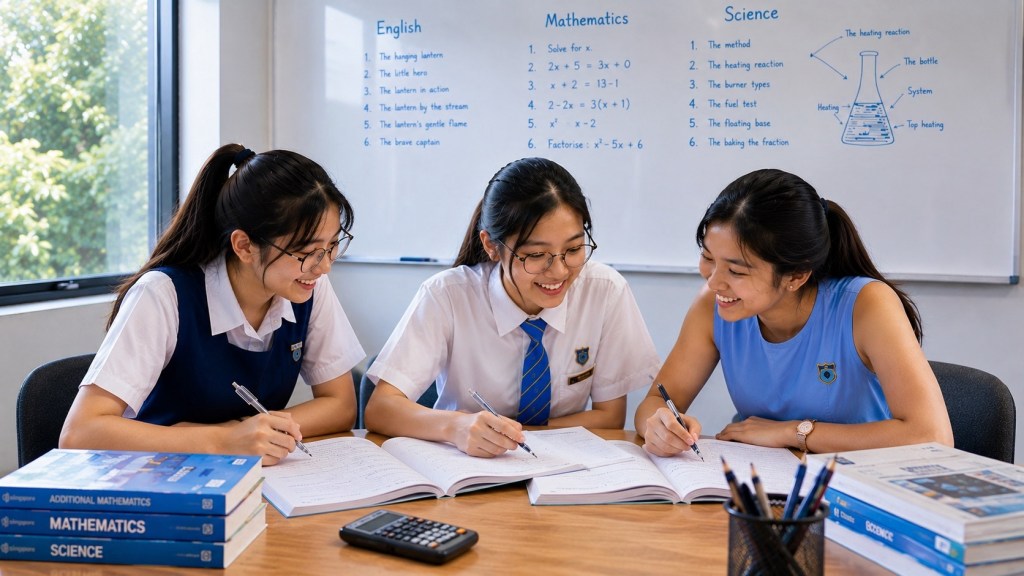
Science note-taking should help a student think, retrieve and solve—not simply produce neat pages. A useful Science note system captures explanations, diagrams, equations, practical methods, data relationships and questions in a form that can later be tested from memory. Weak notes are often either transcripts that are too long to review or summaries that are so compressed they lose the mechanism. Strong notes keep the scientific relationship visible and create prompts for later retrieval.
This Advanced Science Tutorials guide is written for parents and students in Sengkang, Punggol and across Singapore who search for how to take Science notes, Cornell notes for Science, Science note-taking methods, Biology notes, Chemistry notes, Physics notes, how to make revision notes, Science summary notes and how to organise Science notes. It develops note-taking from Primary Science through PSLE and Secondary G1, G2 and G3.
Cornell University’s Learning Strategies Center presents the Cornell system as a structured note-taking method that separates notes, questions or cues, and a summary, then uses recitation and review to turn notes into active study. Cornell also recommends reviewing notes shortly after class and writing a brief summary while the lesson is still fresh. See Cornell Note Taking System and Cornell: Effectively Engaging with Classes.
The Science note-taking cycle
- Prepare: preview the topic and learning objectives.
- Capture: record key ideas, relationships, diagrams and examples during class or reading.
- Clarify: fix incomplete labels, units and ambiguous wording soon after.
- Question: convert notes into retrieval prompts.
- Summarise: state the main model or mechanism in your own words.
- Retrieve: cover the notes and answer from memory.
- Connect: link the new topic to earlier Science.
- Review: return after delay and repair what was forgotten.
Primary 1 and Primary 2: notes should remain light
Before formal Primary Science, note-taking can be a labelled drawing, a three-word observation, a picture sequence or one sentence about what changed. Young learners do not benefit from copying long notes. The purpose is to notice and name relationships.
Parents can ask the child to draw what was observed and add one question for later. That is already a useful beginning.
Primary 3 and Primary 4: write less, organise more
Primary students should avoid copying the textbook word for word. A one-page note can contain a definition, a labelled diagram, one example, one contrast and one question. The learner should be able to close the page and explain the idea without reading.
A useful rule is: every page of notes should contain something that can be retrieved, not merely reread.
Primary 5 and Primary 6: notes must support PSLE transfer
Older Primary learners need notes that connect concepts to application. A note on heat should include the direction of thermal energy transfer, examples of conductors and insulators, a small diagram and one changed-context question. A note on ecosystems should include relationships rather than a list of organism names.
PSLE-ready notes should therefore include mechanisms, diagrams and experiment logic as well as facts.
Secondary G1, G2 and G3: notes become multi-representational
Lower Secondary Science includes denser terminology, equations, particle models, graphs, practical methods and cross-topic relationships. A strong note system separates these functions so the learner can find and retrieve them quickly.
The student should be able to translate between prose, diagram, equation and graph instead of keeping each representation in a separate memory compartment.
Cornell note page
Note-taking principle. A Cornell page separates main notes, cue questions and a bottom summary.
Common failure. Students fill the cue column during class before understanding the material.
Better note move. Record first, then write questions soon after class.
Question to ask. Can every major note be converted into a useful retrieval cue?
Practice task. Create one Cornell page from a Science lesson.
A Science note is successful when it helps the learner retrieve, explain or solve something later. If the page is beautiful but cannot generate a correct closed-book explanation, the page is storage rather than learning.
Cue column
Note-taking principle. The cue column stores questions, prompts and key distinctions.
Common failure. Students write only keywords such as ‘photosynthesis’.
Better note move. Use questions such as ‘Why does light intensity affect rate?’
Question to ask. Would the cue force an answer from memory?
Practice task. Rewrite vague cues as questions.
A Science note is successful when it helps the learner retrieve, explain or solve something later. If the page is beautiful but cannot generate a correct closed-book explanation, the page is storage rather than learning.
Summary box
Note-taking principle. The summary condenses the lesson’s central model or mechanism.
Common failure. Students copy the teacher’s final slide.
Better note move. Write 3–5 sentences from memory after class.
Question to ask. Can the summary explain the topic without the page?
Practice task. Draft summary before checking notes.
A Science note is successful when it helps the learner retrieve, explain or solve something later. If the page is beautiful but cannot generate a correct closed-book explanation, the page is storage rather than learning.
During-class notes
Note-taking principle. Class notes capture what the teacher adds beyond the textbook.
Common failure. Students try to transcribe every sentence.
Better note move. Prioritise definitions, mechanisms, examples, diagrams, exceptions and teacher emphasis.
Question to ask. What information would be hard to reconstruct later?
Practice task. Use abbreviations and symbols.
A Science note is successful when it helps the learner retrieve, explain or solve something later. If the page is beautiful but cannot generate a correct closed-book explanation, the page is storage rather than learning.
After-class review
Note-taking principle. A short review soon after class strengthens organisation and catches missing information.
Common failure. Students wait until exam week to reread.
Better note move. Spend 5–10 minutes clarifying and writing questions.
Question to ask. What is unclear while the lesson is still fresh?
Practice task. Add one summary and three cues.
A Science note is successful when it helps the learner retrieve, explain or solve something later. If the page is beautiful but cannot generate a correct closed-book explanation, the page is storage rather than learning.
Textbook notes
Note-taking principle. Textbook notes should extract the model rather than reproduce paragraphs.
Common failure. Students copy bold terms and headings only.
Better note move. Read one section, close book, then write the mechanism.
Question to ask. What would you need to explain this section tomorrow?
Practice task. Use memory-first note creation.
A Science note is successful when it helps the learner retrieve, explain or solve something later. If the page is beautiful but cannot generate a correct closed-book explanation, the page is storage rather than learning.
Lecture slide notes
Note-taking principle. Slides often compress information and need explanation added.
Common failure. Students download slides and consider the task complete.
Better note move. Add teacher reasoning, examples and questions.
Question to ask. Which slide would be meaningless in six weeks without annotation?
Practice task. Annotate one slide deck.
A Science note is successful when it helps the learner retrieve, explain or solve something later. If the page is beautiful but cannot generate a correct closed-book explanation, the page is storage rather than learning.
Diagram notes
Note-taking principle. Diagrams can replace many sentences when labelled clearly.
Common failure. Students paste diagrams without knowing arrows or relationships.
Better note move. Add a short explanation beside every important diagram.
Question to ask. What does each arrow represent?
Practice task. Redraw from memory.
A Science note is successful when it helps the learner retrieve, explain or solve something later. If the page is beautiful but cannot generate a correct closed-book explanation, the page is storage rather than learning.
Graph notes
Note-taking principle. Graph notes should record axes, trend, mechanism and one inference.
Common failure. Students paste graphs with no interpretation.
Better note move. Write ‘x increases → y…’ plus why.
Question to ask. What scientific relationship produces the graph shape?
Practice task. Annotate a graph.
A Science note is successful when it helps the learner retrieve, explain or solve something later. If the page is beautiful but cannot generate a correct closed-book explanation, the page is storage rather than learning.
Equation notes
Note-taking principle. Equation notes should include quantity names, units and qualitative relationship.
Common failure. Students write only symbols.
Better note move. Add one sentence explaining what changes when a variable changes.
Question to ask. What does each symbol mean?
Practice task. Create equation card inside notes.
A Science note is successful when it helps the learner retrieve, explain or solve something later. If the page is beautiful but cannot generate a correct closed-book explanation, the page is storage rather than learning.
Practical notes
Note-taking principle. Practical notes should record purpose, variables, method logic and evidence.
Common failure. Students copy apparatus lists only.
Better note move. Use aim → IV → DV → controls → data → limitation.
Question to ask. Why is each step needed?
Practice task. Create a one-box practical summary.
A Science note is successful when it helps the learner retrieve, explain or solve something later. If the page is beautiful but cannot generate a correct closed-book explanation, the page is storage rather than learning.
Vocabulary notes
Note-taking principle. Vocabulary notes should include contrast and use.
Common failure. Students write dictionary-style definitions only.
Better note move. Add example, non-example and nearby term.
Question to ask. What term is most easily confused with this one?
Practice task. Create a contrast pair.
A Science note is successful when it helps the learner retrieve, explain or solve something later. If the page is beautiful but cannot generate a correct closed-book explanation, the page is storage rather than learning.
Mechanism notes
Note-taking principle. Mechanism notes represent intermediate steps.
Common failure. Students write condition and result only.
Better note move. Use arrows with process verbs.
Question to ask. What happens in between?
Practice task. Build cause-process-effect chain.
A Science note is successful when it helps the learner retrieve, explain or solve something later. If the page is beautiful but cannot generate a correct closed-book explanation, the page is storage rather than learning.
Comparison notes
Note-taking principle. Comparison notes align the same property across concepts.
Common failure. Students write two separate descriptions.
Better note move. Use a two-column table with shared criteria.
Question to ask. What is the decisive difference?
Practice task. Compare breathing vs respiration.
A Science note is successful when it helps the learner retrieve, explain or solve something later. If the page is beautiful but cannot generate a correct closed-book explanation, the page is storage rather than learning.
Cause-effect notes
Note-taking principle. Cause-effect notes make direction explicit.
Common failure. Students write ‘affects’ without mechanism.
Better note move. Use cause → mechanism → outcome.
Question to ask. Could the arrow reverse?
Practice task. Create causal chain.
A Science note is successful when it helps the learner retrieve, explain or solve something later. If the page is beautiful but cannot generate a correct closed-book explanation, the page is storage rather than learning.
Hierarchy notes
Note-taking principle. Hierarchy notes organise broad to specific ideas.
Common failure. Students mix levels.
Better note move. Indent or nest system → organ → tissue → cell.
Question to ask. What contains what?
Practice task. Build a hierarchy.
A Science note is successful when it helps the learner retrieve, explain or solve something later. If the page is beautiful but cannot generate a correct closed-book explanation, the page is storage rather than learning.
Flow notes
Note-taking principle. Flow notes trace matter, energy, charge or information.
Common failure. Students use unlabeled arrows.
Better note move. Name what flows.
Question to ask. What crosses the system boundary?
Practice task. Map energy flow.
A Science note is successful when it helps the learner retrieve, explain or solve something later. If the page is beautiful but cannot generate a correct closed-book explanation, the page is storage rather than learning.
Cycle notes
Note-taking principle. Cycle notes show recurring processes but should not imply one fixed route when systems branch.
Common failure. Students draw circles mechanically.
Better note move. Add stores, alternate pathways and conditions.
Question to ask. Is the process truly cyclic?
Practice task. Map water cycle as a network.
A Science note is successful when it helps the learner retrieve, explain or solve something later. If the page is beautiful but cannot generate a correct closed-book explanation, the page is storage rather than learning.
Timeline notes
Note-taking principle. Timeline notes help sequence events over time.
Common failure. Students memorise names without transition logic.
Better note move. Add what triggers each stage.
Question to ask. What causes the next event?
Practice task. Create life-cycle timeline.
A Science note is successful when it helps the learner retrieve, explain or solve something later. If the page is beautiful but cannot generate a correct closed-book explanation, the page is storage rather than learning.
Table notes
Note-taking principle. Tables support compact comparison.
Common failure. Students overfill cells with paragraphs.
Better note move. Use short phrases and common criteria.
Question to ask. Which row contains the high-value distinction?
Practice task. Build a comparison table.
A Science note is successful when it helps the learner retrieve, explain or solve something later. If the page is beautiful but cannot generate a correct closed-book explanation, the page is storage rather than learning.
Bullet notes
Note-taking principle. Bullets are useful for lists but weak for relationships unless structured.
Common failure. Students create endless flat bullets.
Better note move. Nest bullets and add arrows or connecting phrases.
Question to ask. Which bullets depend on others?
Practice task. Convert flat list to structure.
A Science note is successful when it helps the learner retrieve, explain or solve something later. If the page is beautiful but cannot generate a correct closed-book explanation, the page is storage rather than learning.
Sentence notes
Note-taking principle. Full sentences are useful for mechanisms and nuanced explanations.
Common failure. Students write everything as full prose.
Better note move. Use sentences only where relationship or condition matters.
Question to ask. Does this idea need prose or a diagram?
Practice task. Compress facts, preserve explanations.
A Science note is successful when it helps the learner retrieve, explain or solve something later. If the page is beautiful but cannot generate a correct closed-book explanation, the page is storage rather than learning.
Abbreviations
Note-taking principle. Abbreviations save time when consistent.
Common failure. Students invent abbreviations they cannot decode later.
Better note move. Create a small personal key.
Question to ask. Will this still be obvious next month?
Practice task. Standardise five abbreviations.
A Science note is successful when it helps the learner retrieve, explain or solve something later. If the page is beautiful but cannot generate a correct closed-book explanation, the page is storage rather than learning.
Symbols
Note-taking principle. Arrows, up/down signs and brackets can show relations efficiently.
Common failure. Students use symbols without explicit meaning.
Better note move. Assign one stable meaning.
Question to ask. Does ↑ mean amount, rate or temperature?
Practice task. Create symbol key.
A Science note is successful when it helps the learner retrieve, explain or solve something later. If the page is beautiful but cannot generate a correct closed-book explanation, the page is storage rather than learning.
Colour coding
Note-taking principle. Colour can separate concept types or error states.
Common failure. Students use many colours decoratively.
Better note move. Use limited functional colour meanings.
Question to ask. What decision does the colour support?
Practice task. Assign 3 colours maximum.
A Science note is successful when it helps the learner retrieve, explain or solve something later. If the page is beautiful but cannot generate a correct closed-book explanation, the page is storage rather than learning.
Boxing definitions
Note-taking principle. Boxes can highlight definitions or formulae.
Common failure. Students box too many items.
Better note move. Reserve boxes for high-value retrieval targets.
Question to ask. What must be found quickly later?
Practice task. Box selectively.
A Science note is successful when it helps the learner retrieve, explain or solve something later. If the page is beautiful but cannot generate a correct closed-book explanation, the page is storage rather than learning.
Margin questions
Note-taking principle. Margin questions turn notes into study prompts.
Common failure. Students write comments instead of questions.
Better note move. Use why/how/compare/predict prompts.
Question to ask. Can this be answered with notes covered?
Practice task. Add five margin questions.
A Science note is successful when it helps the learner retrieve, explain or solve something later. If the page is beautiful but cannot generate a correct closed-book explanation, the page is storage rather than learning.
One-page summary
Note-taking principle. A one-page summary compresses one topic into essential relationships.
Common failure. Students shrink font rather than select.
Better note move. Choose concepts, mechanisms, diagrams and formulas only.
Question to ask. What can be omitted without losing the model?
Practice task. Build one-page topic sheet.
A Science note is successful when it helps the learner retrieve, explain or solve something later. If the page is beautiful but cannot generate a correct closed-book explanation, the page is storage rather than learning.
Topic sheet
Note-taking principle. A topic sheet can standardise revision across chapters.
Common failure. Students use different structure every time.
Better note move. Use definition, mechanism, diagram, equation, experiment, common error.
Question to ask. Which category is missing?
Practice task. Use one template.
A Science note is successful when it helps the learner retrieve, explain or solve something later. If the page is beautiful but cannot generate a correct closed-book explanation, the page is storage rather than learning.
Formula sheet
Note-taking principle. A formula sheet should include units and meaning.
Common failure. Students collect equations without knowing use conditions.
Better note move. Add ‘use when’ notes.
Question to ask. What assumption does this formula require?
Practice task. Annotate formula list.
A Science note is successful when it helps the learner retrieve, explain or solve something later. If the page is beautiful but cannot generate a correct closed-book explanation, the page is storage rather than learning.
Diagram sheet
Note-taking principle. A diagram sheet collects high-value visual models.
Common failure. Students copy without retrieval.
Better note move. Use blank and completed versions.
Question to ask. Can you redraw before looking?
Practice task. Create blank practice page.
A Science note is successful when it helps the learner retrieve, explain or solve something later. If the page is beautiful but cannot generate a correct closed-book explanation, the page is storage rather than learning.
Misconception box
Note-taking principle. A misconception box records tempting wrong ideas.
Common failure. Students only write correct notes.
Better note move. Include ‘wrong idea → why wrong → correct model’.
Question to ask. What mistake does this prevent?
Practice task. Add one per topic.
A Science note is successful when it helps the learner retrieve, explain or solve something later. If the page is beautiful but cannot generate a correct closed-book explanation, the page is storage rather than learning.
Exam cue
Note-taking principle. Exam cues connect content to command words or common question forms.
Common failure. Students write notes disconnected from assessment.
Better note move. Add ‘Explain using…’ or ‘Compare…’ cues.
Question to ask. How might this idea be tested?
Practice task. Write one exam cue.
A Science note is successful when it helps the learner retrieve, explain or solve something later. If the page is beautiful but cannot generate a correct closed-book explanation, the page is storage rather than learning.
Question bank notes
Note-taking principle. Notes can include self-generated questions.
Common failure. Students only answer teacher questions.
Better note move. Write 3 recall + 2 application prompts.
Question to ask. Which prompt requires transfer?
Practice task. Build mini question bank.
A Science note is successful when it helps the learner retrieve, explain or solve something later. If the page is beautiful but cannot generate a correct closed-book explanation, the page is storage rather than learning.
Retrieval notes
Note-taking principle. Retrieval notes store closed-book output rather than polished reference notes.
Common failure. Students erase mistakes.
Better note move. Keep first attempt and correction visible.
Question to ask. What did memory fail to produce?
Practice task. Use a separate retrieval page.
A Science note is successful when it helps the learner retrieve, explain or solve something later. If the page is beautiful but cannot generate a correct closed-book explanation, the page is storage rather than learning.
Correction notes
Note-taking principle. Correction notes should record the missing relationship.
Common failure. Students copy whole model answers.
Better note move. Write first error and corrected rule.
Question to ask. What will you notice next time?
Practice task. Create one correction line.
A Science note is successful when it helps the learner retrieve, explain or solve something later. If the page is beautiful but cannot generate a correct closed-book explanation, the page is storage rather than learning.
Worked-example notes
Note-taking principle. Worked examples should be annotated for decision points.
Common failure. Students copy calculations.
Better note move. Write why each step was chosen.
Question to ask. What clue triggered this formula?
Practice task. Annotate a worked solution.
A Science note is successful when it helps the learner retrieve, explain or solve something later. If the page is beautiful but cannot generate a correct closed-book explanation, the page is storage rather than learning.
Example-nonexample notes
Note-taking principle. Examples and nonexamples sharpen boundaries.
Common failure. Students learn only positive cases.
Better note move. Record both.
Question to ask. Why is the nonexample excluded?
Practice task. Add one nonexample.
A Science note is successful when it helps the learner retrieve, explain or solve something later. If the page is beautiful but cannot generate a correct closed-book explanation, the page is storage rather than learning.
Definition-mechanism split
Note-taking principle. Some pages benefit from separating what something is from how it works.
Common failure. Students mix definition and explanation.
Better note move. Use two subheadings.
Question to ask. What is identity vs process?
Practice task. Rewrite one page.
A Science note is successful when it helps the learner retrieve, explain or solve something later. If the page is beautiful but cannot generate a correct closed-book explanation, the page is storage rather than learning.
Observation-inference split
Note-taking principle. Lab notes should distinguish direct observations from interpretation.
Common failure. Students mix them.
Better note move. Use separate columns.
Question to ask. Could another observer verify this?
Practice task. Split one practical note.
A Science note is successful when it helps the learner retrieve, explain or solve something later. If the page is beautiful but cannot generate a correct closed-book explanation, the page is storage rather than learning.
Data-result-discussion split
Note-taking principle. Practical notes should distinguish measurements, patterns and explanation.
Common failure. Students jump straight from numbers to cause.
Better note move. Use raw data → pattern → explanation.
Question to ask. What is directly measured?
Practice task. Build a 3-layer note.
A Science note is successful when it helps the learner retrieve, explain or solve something later. If the page is beautiful but cannot generate a correct closed-book explanation, the page is storage rather than learning.
Question-first notes
Note-taking principle. Starting with questions increases purpose.
Common failure. Students write notes without knowing what they answer.
Better note move. Write 3 learning questions before class/read.
Question to ask. What should this note help answer?
Practice task. Use question headers.
A Science note is successful when it helps the learner retrieve, explain or solve something later. If the page is beautiful but cannot generate a correct closed-book explanation, the page is storage rather than learning.
Objective-first notes
Note-taking principle. Learning objectives can structure pages.
Common failure. Students ignore objectives and copy content indiscriminately.
Better note move. Convert objectives into note headings.
Question to ask. Can you answer each objective from memory?
Practice task. Build objective checklist.
A Science note is successful when it helps the learner retrieve, explain or solve something later. If the page is beautiful but cannot generate a correct closed-book explanation, the page is storage rather than learning.
Syllabus-linked notes
Note-taking principle. Notes can be indexed to syllabus statements.
Common failure. Students miss topics hidden across chapters.
Better note move. Add syllabus code or topic tag.
Question to ask. Which outcome does this page cover?
Practice task. Map notes to syllabus.
A Science note is successful when it helps the learner retrieve, explain or solve something later. If the page is beautiful but cannot generate a correct closed-book explanation, the page is storage rather than learning.
Cross-topic links
Note-taking principle. Science knowledge becomes stronger when notes connect related topics.
Common failure. Students keep chapter folders isolated.
Better note move. Add ‘connects to…’ boxes.
Question to ask. Which older topic helps explain this?
Practice task. Link heat to particles, cells to respiration.
A Science note is successful when it helps the learner retrieve, explain or solve something later. If the page is beautiful but cannot generate a correct closed-book explanation, the page is storage rather than learning.
Prerequisite notes
Note-taking principle. Some pages should identify what earlier knowledge is required.
Common failure. Students relearn advanced content without fixing foundations.
Better note move. Add ‘need first’ list.
Question to ask. Which missing dependency blocks this topic?
Practice task. Trace prerequisite.
A Science note is successful when it helps the learner retrieve, explain or solve something later. If the page is beautiful but cannot generate a correct closed-book explanation, the page is storage rather than learning.
Extension notes
Note-taking principle. Advanced details should be separated from core assessed content.
Common failure. Students spend time on interesting but low-priority material.
Better note move. Mark extension clearly.
Question to ask. Is this required or enrichment?
Practice task. Use optional box.
A Science note is successful when it helps the learner retrieve, explain or solve something later. If the page is beautiful but cannot generate a correct closed-book explanation, the page is storage rather than learning.
Teacher wording
Note-taking principle. Local school wording can matter for assessed definitions.
Common failure. Students replace teacher phrasing with generic web wording.
Better note move. Record school-required wording where necessary.
Question to ask. Which terms need exact local precision?
Practice task. Keep official definition note.
A Science note is successful when it helps the learner retrieve, explain or solve something later. If the page is beautiful but cannot generate a correct closed-book explanation, the page is storage rather than learning.
Own words
Note-taking principle. Paraphrasing in your own words reveals understanding.
Common failure. Students simplify until Science becomes inaccurate.
Better note move. Explain simply, then compare to source.
Question to ask. Which technical terms must remain?
Practice task. Write two versions.
A Science note is successful when it helps the learner retrieve, explain or solve something later. If the page is beautiful but cannot generate a correct closed-book explanation, the page is storage rather than learning.
Handwritten notes
Note-taking principle. Handwriting can slow capture and encourage selection.
Common failure. Students assume handwriting is automatically better for every task.
Better note move. Use handwriting when it supports processing and diagramming.
Question to ask. Does the method help you think?
Practice task. Compare one handwritten and one digital page.
A Science note is successful when it helps the learner retrieve, explain or solve something later. If the page is beautiful but cannot generate a correct closed-book explanation, the page is storage rather than learning.
Typed notes
Note-taking principle. Typing can support speed, search and organisation.
Common failure. Students transcribe verbatim because typing is fast.
Better note move. Use structured bullets and pause to summarise.
Question to ask. Are you processing or recording?
Practice task. Add self-explanation after typed section.
A Science note is successful when it helps the learner retrieve, explain or solve something later. If the page is beautiful but cannot generate a correct closed-book explanation, the page is storage rather than learning.
Tablet notes
Note-taking principle. Tablets combine handwriting, diagrams and digital storage.
Common failure. Students spend time on templates and aesthetics.
Better note move. Use simple consistent page formats.
Question to ask. Does the tool improve retrieval?
Practice task. Limit decorative setup time.
A Science note is successful when it helps the learner retrieve, explain or solve something later. If the page is beautiful but cannot generate a correct closed-book explanation, the page is storage rather than learning.
Photo notes
Note-taking principle. Photos can capture board content but are not learning by themselves.
Common failure. Students photograph instead of processing.
Better note move. Add annotations and retrieval questions later.
Question to ask. What does the photo mean?
Practice task. Convert photo into one processed note.
A Science note is successful when it helps the learner retrieve, explain or solve something later. If the page is beautiful but cannot generate a correct closed-book explanation, the page is storage rather than learning.
Voice notes
Note-taking principle. Voice summaries can support immediate post-class review.
Common failure. Students record long lectures and never revisit.
Better note move. Use 60–90 second own-word summaries.
Question to ask. Can you explain without reading?
Practice task. Record after class.
A Science note is successful when it helps the learner retrieve, explain or solve something later. If the page is beautiful but cannot generate a correct closed-book explanation, the page is storage rather than learning.
Digital folders
Note-taking principle. Digital organisation should support retrieval.
Common failure. Students create deep folder trees.
Better note move. Use subject → topic → date or another simple structure.
Question to ask. Can you find a page in 20 seconds?
Practice task. Simplify folders.
A Science note is successful when it helps the learner retrieve, explain or solve something later. If the page is beautiful but cannot generate a correct closed-book explanation, the page is storage rather than learning.
Paper notebook
Note-taking principle. A paper notebook provides continuity and low distraction.
Common failure. Students scatter sheets across files.
Better note move. Use an index and page numbers.
Question to ask. Where is each topic located?
Practice task. Build front-page index.
A Science note is successful when it helps the learner retrieve, explain or solve something later. If the page is beautiful but cannot generate a correct closed-book explanation, the page is storage rather than learning.
Hybrid system
Note-taking principle. A hybrid system can use paper for thinking and digital for storage.
Common failure. Students duplicate everything twice.
Better note move. Assign clear roles to each medium.
Question to ask. What belongs where?
Practice task. Define capture vs archive.
A Science note is successful when it helps the learner retrieve, explain or solve something later. If the page is beautiful but cannot generate a correct closed-book explanation, the page is storage rather than learning.
Note index
Note-taking principle. An index makes large notebooks usable.
Common failure. Students rely on memory of page location.
Better note move. Record topic and page as notes accumulate.
Question to ask. Can you retrieve quickly?
Practice task. Update weekly.
A Science note is successful when it helps the learner retrieve, explain or solve something later. If the page is beautiful but cannot generate a correct closed-book explanation, the page is storage rather than learning.
Date and lesson title
Note-taking principle. Dates and titles preserve context.
Common failure. Students cannot later tell which note matches which lesson.
Better note move. Use consistent headers.
Question to ask. When and where did this come from?
Practice task. Standardise header.
A Science note is successful when it helps the learner retrieve, explain or solve something later. If the page is beautiful but cannot generate a correct closed-book explanation, the page is storage rather than learning.
Source label
Note-taking principle. Notes should record textbook, teacher, website or paper source when relevant.
Common failure. Students mix sources and lose traceability.
Better note move. Add small source line.
Question to ask. Where did this claim come from?
Practice task. Label research notes.
A Science note is successful when it helps the learner retrieve, explain or solve something later. If the page is beautiful but cannot generate a correct closed-book explanation, the page is storage rather than learning.
Versioning
Note-taking principle. Revised notes should preserve important corrections.
Common failure. Students overwrite errors and lose diagnostic value.
Better note move. Use dated version or correction colour.
Question to ask. What changed?
Practice task. Create v2 after test feedback.
A Science note is successful when it helps the learner retrieve, explain or solve something later. If the page is beautiful but cannot generate a correct closed-book explanation, the page is storage rather than learning.
Weekly note review
Note-taking principle. A short weekly review prevents notes becoming archives.
Common failure. Students never reopen notes until exams.
Better note move. Use cues, summaries and one retrieval check.
Question to ask. Which note is weakest?
Practice task. Review 10 minutes weekly.
A Science note is successful when it helps the learner retrieve, explain or solve something later. If the page is beautiful but cannot generate a correct closed-book explanation, the page is storage rather than learning.
Monthly compression
Note-taking principle. Long notes can be compressed into maps or summary sheets after understanding grows.
Common failure. Students compress too early and omit mechanisms.
Better note move. Compress only after successful retrieval.
Question to ask. What can now be reconstructed from a cue?
Practice task. Create monthly summary.
A Science note is successful when it helps the learner retrieve, explain or solve something later. If the page is beautiful but cannot generate a correct closed-book explanation, the page is storage rather than learning.
Exam-phase notes
Note-taking principle. Near exams, notes should become shorter and more retrieval-focused.
Common failure. Students reread full notebooks repeatedly.
Better note move. Use error list, formulas, diagrams and high-value summaries.
Question to ask. What needs fast access?
Practice task. Create final revision pack.
A Science note is successful when it helps the learner retrieve, explain or solve something later. If the page is beautiful but cannot generate a correct closed-book explanation, the page is storage rather than learning.
Note quality test
Note-taking principle. A good note should help produce an answer, not merely look complete.
Common failure. Students judge by neatness.
Better note move. Cover the note and answer its cue questions.
Question to ask. What can you do because this note exists?
Practice task. Test one page.
A Science note is successful when it helps the learner retrieve, explain or solve something later. If the page is beautiful but cannot generate a correct closed-book explanation, the page is storage rather than learning.
Note finish rule
Note-taking principle. Stop writing when the page contains enough structure for later retrieval.
Common failure. Students keep polishing.
Better note move. Use one summary, cues and key representation.
Question to ask. What job must this page do later?
Practice task. Set a 15-minute cleanup limit.
A Science note is successful when it helps the learner retrieve, explain or solve something later. If the page is beautiful but cannot generate a correct closed-book explanation, the page is storage rather than learning.
A twelve-week Science note-taking programme
- Week 1: capture versus transcription.
- Week 2: Cornell cues and summaries.
- Week 3: diagrams and labels.
- Week 4: mechanisms and comparisons.
- Week 5: graphs and tables.
- Week 6: equations, units and examples.
- Week 7: practical and experiment notes.
- Week 8: misconception and correction notes.
- Week 9: retrieval questions.
- Week 10: cross-topic linking.
- Week 11: weekly review and compression.
- Week 12: independent note system audit.
When tuition may help with Science notes
Extra support can help when a learner copies pages without understanding, cannot find information later or creates notes that never become retrieval questions. A tutor should model one compact page and then require the learner to build the next page independently.
For current Primary 3–6 and PSLE programme information, use Primary Science Tuition Sengkang. Secondary note-taking coverage here is educational transition material.
Frequently asked questions
Is Cornell note-taking good for Science?
Yes, especially when the cue column contains retrieval questions and the notes include diagrams, equations and mechanisms rather than prose only.
Should I handwrite or type Science notes?
Use the method that supports active processing and later retrieval. Handwriting can support selection and diagrams; typing can support speed and search. Avoid verbatim transcription either way.
How long should Science notes be?
Long enough to preserve the model and key evidence, short enough to review and retrieve from. One page per subtopic is often more useful than many copied pages.
Should I use colour?
Only if colour encodes meaning. Decorative colour should not become the main work.
Should I rewrite all my notes before exams?
Usually no. Use retrieval and targeted correction. Rewrite only when the original notes are disorganised or conceptually incomplete.
How do I know if notes are working?
Cover them and try to explain, draw or solve. If the notes do not create successful retrieval and application, change the note design.
Further reading
- Cornell Learning Strategies Center: Cornell Note Taking System
- Cornell: Record, Question, Recite, Reflect, Review
- Cornell: Effectively Engaging with Classes
- Cornell: Learning from Digital Materials
Final operating rule
Do not take Science notes to preserve every sentence. Capture the model. Draw the diagram. Write the equation with meaning and units. Add the example and the contrast. Turn the page into questions. Summarise in your own words. Then close the notes and retrieve. The best notes are not the ones that look finished; they are the ones that make the learner less dependent on the page.
Cornell note page — note-taking clinic 1
Take one existing Science note involving cornell note page. Cover the page and ask the learner what the note is supposed to help them retrieve or explain. If the answer is vague, the page needs a clearer learning job.
Surface the common failure: Students fill the cue column during class before understanding the material.. Ask what this design encourages during revision: recognition, retrieval, explanation or copying. Then apply the better move: Record first, then write questions soon after class. Keep the page focused on scientific relationships rather than appearance.
Now ask: Can every major note be converted into a useful retrieval cue? Run the practice task: Create one Cornell page from a Science lesson. Close the page afterward and test whether the learner can reproduce the model, mechanism, formula or diagram without cues.
Finish with a delayed return several days later. Notes become valuable when retrieval remains possible after time has passed. Parents can ask one cue question; tutors can fade structure over time.
Cue column — note-taking clinic 1
Take one existing Science note involving cue column. Cover the page and ask the learner what the note is supposed to help them retrieve or explain. If the answer is vague, the page needs a clearer learning job.
Surface the common failure: Students write only keywords such as ‘photosynthesis’.. Ask what this design encourages during revision: recognition, retrieval, explanation or copying. Then apply the better move: Use questions such as ‘Why does light intensity affect rate?’ Keep the page focused on scientific relationships rather than appearance.
Now ask: Would the cue force an answer from memory? Run the practice task: Rewrite vague cues as questions. Close the page afterward and test whether the learner can reproduce the model, mechanism, formula or diagram without cues.
Finish with a delayed return several days later. Notes become valuable when retrieval remains possible after time has passed. Parents can ask one cue question; tutors can fade structure over time.
Summary box — note-taking clinic 1
Take one existing Science note involving summary box. Cover the page and ask the learner what the note is supposed to help them retrieve or explain. If the answer is vague, the page needs a clearer learning job.
Surface the common failure: Students copy the teacher’s final slide.. Ask what this design encourages during revision: recognition, retrieval, explanation or copying. Then apply the better move: Write 3–5 sentences from memory after class. Keep the page focused on scientific relationships rather than appearance.
Now ask: Can the summary explain the topic without the page? Run the practice task: Draft summary before checking notes. Close the page afterward and test whether the learner can reproduce the model, mechanism, formula or diagram without cues.
Finish with a delayed return several days later. Notes become valuable when retrieval remains possible after time has passed. Parents can ask one cue question; tutors can fade structure over time.
During-class notes — note-taking clinic 1
Take one existing Science note involving during-class notes. Cover the page and ask the learner what the note is supposed to help them retrieve or explain. If the answer is vague, the page needs a clearer learning job.
Surface the common failure: Students try to transcribe every sentence.. Ask what this design encourages during revision: recognition, retrieval, explanation or copying. Then apply the better move: Prioritise definitions, mechanisms, examples, diagrams, exceptions and teacher emphasis. Keep the page focused on scientific relationships rather than appearance.
Now ask: What information would be hard to reconstruct later? Run the practice task: Use abbreviations and symbols. Close the page afterward and test whether the learner can reproduce the model, mechanism, formula or diagram without cues.
Finish with a delayed return several days later. Notes become valuable when retrieval remains possible after time has passed. Parents can ask one cue question; tutors can fade structure over time.
After-class review — note-taking clinic 1
Take one existing Science note involving after-class review. Cover the page and ask the learner what the note is supposed to help them retrieve or explain. If the answer is vague, the page needs a clearer learning job.
Surface the common failure: Students wait until exam week to reread.. Ask what this design encourages during revision: recognition, retrieval, explanation or copying. Then apply the better move: Spend 5–10 minutes clarifying and writing questions. Keep the page focused on scientific relationships rather than appearance.
Now ask: What is unclear while the lesson is still fresh? Run the practice task: Add one summary and three cues. Close the page afterward and test whether the learner can reproduce the model, mechanism, formula or diagram without cues.
Finish with a delayed return several days later. Notes become valuable when retrieval remains possible after time has passed. Parents can ask one cue question; tutors can fade structure over time.
Textbook notes — note-taking clinic 1
Take one existing Science note involving textbook notes. Cover the page and ask the learner what the note is supposed to help them retrieve or explain. If the answer is vague, the page needs a clearer learning job.
Surface the common failure: Students copy bold terms and headings only.. Ask what this design encourages during revision: recognition, retrieval, explanation or copying. Then apply the better move: Read one section, close book, then write the mechanism. Keep the page focused on scientific relationships rather than appearance.
Now ask: What would you need to explain this section tomorrow? Run the practice task: Use memory-first note creation. Close the page afterward and test whether the learner can reproduce the model, mechanism, formula or diagram without cues.
Finish with a delayed return several days later. Notes become valuable when retrieval remains possible after time has passed. Parents can ask one cue question; tutors can fade structure over time.
Lecture slide notes — note-taking clinic 1
Take one existing Science note involving lecture slide notes. Cover the page and ask the learner what the note is supposed to help them retrieve or explain. If the answer is vague, the page needs a clearer learning job.
Surface the common failure: Students download slides and consider the task complete.. Ask what this design encourages during revision: recognition, retrieval, explanation or copying. Then apply the better move: Add teacher reasoning, examples and questions. Keep the page focused on scientific relationships rather than appearance.
Now ask: Which slide would be meaningless in six weeks without annotation? Run the practice task: Annotate one slide deck. Close the page afterward and test whether the learner can reproduce the model, mechanism, formula or diagram without cues.
Finish with a delayed return several days later. Notes become valuable when retrieval remains possible after time has passed. Parents can ask one cue question; tutors can fade structure over time.
Diagram notes — note-taking clinic 1
Take one existing Science note involving diagram notes. Cover the page and ask the learner what the note is supposed to help them retrieve or explain. If the answer is vague, the page needs a clearer learning job.
Surface the common failure: Students paste diagrams without knowing arrows or relationships.. Ask what this design encourages during revision: recognition, retrieval, explanation or copying. Then apply the better move: Add a short explanation beside every important diagram. Keep the page focused on scientific relationships rather than appearance.
Now ask: What does each arrow represent? Run the practice task: Redraw from memory. Close the page afterward and test whether the learner can reproduce the model, mechanism, formula or diagram without cues.
Finish with a delayed return several days later. Notes become valuable when retrieval remains possible after time has passed. Parents can ask one cue question; tutors can fade structure over time.
Graph notes — note-taking clinic 1
Take one existing Science note involving graph notes. Cover the page and ask the learner what the note is supposed to help them retrieve or explain. If the answer is vague, the page needs a clearer learning job.
Surface the common failure: Students paste graphs with no interpretation.. Ask what this design encourages during revision: recognition, retrieval, explanation or copying. Then apply the better move: Write ‘x increases → y…’ plus why. Keep the page focused on scientific relationships rather than appearance.
Now ask: What scientific relationship produces the graph shape? Run the practice task: Annotate a graph. Close the page afterward and test whether the learner can reproduce the model, mechanism, formula or diagram without cues.
Finish with a delayed return several days later. Notes become valuable when retrieval remains possible after time has passed. Parents can ask one cue question; tutors can fade structure over time.
Equation notes — note-taking clinic 1
Take one existing Science note involving equation notes. Cover the page and ask the learner what the note is supposed to help them retrieve or explain. If the answer is vague, the page needs a clearer learning job.
Surface the common failure: Students write only symbols.. Ask what this design encourages during revision: recognition, retrieval, explanation or copying. Then apply the better move: Add one sentence explaining what changes when a variable changes. Keep the page focused on scientific relationships rather than appearance.
Now ask: What does each symbol mean? Run the practice task: Create equation card inside notes. Close the page afterward and test whether the learner can reproduce the model, mechanism, formula or diagram without cues.
Finish with a delayed return several days later. Notes become valuable when retrieval remains possible after time has passed. Parents can ask one cue question; tutors can fade structure over time.
Practical notes — note-taking clinic 1
Take one existing Science note involving practical notes. Cover the page and ask the learner what the note is supposed to help them retrieve or explain. If the answer is vague, the page needs a clearer learning job.
Surface the common failure: Students copy apparatus lists only.. Ask what this design encourages during revision: recognition, retrieval, explanation or copying. Then apply the better move: Use aim → IV → DV → controls → data → limitation. Keep the page focused on scientific relationships rather than appearance.
Now ask: Why is each step needed? Run the practice task: Create a one-box practical summary. Close the page afterward and test whether the learner can reproduce the model, mechanism, formula or diagram without cues.
Finish with a delayed return several days later. Notes become valuable when retrieval remains possible after time has passed. Parents can ask one cue question; tutors can fade structure over time.
Vocabulary notes — note-taking clinic 1
Take one existing Science note involving vocabulary notes. Cover the page and ask the learner what the note is supposed to help them retrieve or explain. If the answer is vague, the page needs a clearer learning job.
Surface the common failure: Students write dictionary-style definitions only.. Ask what this design encourages during revision: recognition, retrieval, explanation or copying. Then apply the better move: Add example, non-example and nearby term. Keep the page focused on scientific relationships rather than appearance.
Now ask: What term is most easily confused with this one? Run the practice task: Create a contrast pair. Close the page afterward and test whether the learner can reproduce the model, mechanism, formula or diagram without cues.
Finish with a delayed return several days later. Notes become valuable when retrieval remains possible after time has passed. Parents can ask one cue question; tutors can fade structure over time.
Mechanism notes — note-taking clinic 1
Take one existing Science note involving mechanism notes. Cover the page and ask the learner what the note is supposed to help them retrieve or explain. If the answer is vague, the page needs a clearer learning job.
Surface the common failure: Students write condition and result only.. Ask what this design encourages during revision: recognition, retrieval, explanation or copying. Then apply the better move: Use arrows with process verbs. Keep the page focused on scientific relationships rather than appearance.
Now ask: What happens in between? Run the practice task: Build cause-process-effect chain. Close the page afterward and test whether the learner can reproduce the model, mechanism, formula or diagram without cues.
Finish with a delayed return several days later. Notes become valuable when retrieval remains possible after time has passed. Parents can ask one cue question; tutors can fade structure over time.
Comparison notes — note-taking clinic 1
Take one existing Science note involving comparison notes. Cover the page and ask the learner what the note is supposed to help them retrieve or explain. If the answer is vague, the page needs a clearer learning job.
Surface the common failure: Students write two separate descriptions.. Ask what this design encourages during revision: recognition, retrieval, explanation or copying. Then apply the better move: Use a two-column table with shared criteria. Keep the page focused on scientific relationships rather than appearance.
Now ask: What is the decisive difference? Run the practice task: Compare breathing vs respiration. Close the page afterward and test whether the learner can reproduce the model, mechanism, formula or diagram without cues.
Finish with a delayed return several days later. Notes become valuable when retrieval remains possible after time has passed. Parents can ask one cue question; tutors can fade structure over time.
Cause-effect notes — note-taking clinic 1
Take one existing Science note involving cause-effect notes. Cover the page and ask the learner what the note is supposed to help them retrieve or explain. If the answer is vague, the page needs a clearer learning job.
Surface the common failure: Students write ‘affects’ without mechanism.. Ask what this design encourages during revision: recognition, retrieval, explanation or copying. Then apply the better move: Use cause → mechanism → outcome. Keep the page focused on scientific relationships rather than appearance.
Now ask: Could the arrow reverse? Run the practice task: Create causal chain. Close the page afterward and test whether the learner can reproduce the model, mechanism, formula or diagram without cues.
Finish with a delayed return several days later. Notes become valuable when retrieval remains possible after time has passed. Parents can ask one cue question; tutors can fade structure over time.
Hierarchy notes — note-taking clinic 1
Take one existing Science note involving hierarchy notes. Cover the page and ask the learner what the note is supposed to help them retrieve or explain. If the answer is vague, the page needs a clearer learning job.
Surface the common failure: Students mix levels.. Ask what this design encourages during revision: recognition, retrieval, explanation or copying. Then apply the better move: Indent or nest system → organ → tissue → cell. Keep the page focused on scientific relationships rather than appearance.
Now ask: What contains what? Run the practice task: Build a hierarchy. Close the page afterward and test whether the learner can reproduce the model, mechanism, formula or diagram without cues.
Finish with a delayed return several days later. Notes become valuable when retrieval remains possible after time has passed. Parents can ask one cue question; tutors can fade structure over time.
Flow notes — note-taking clinic 1
Take one existing Science note involving flow notes. Cover the page and ask the learner what the note is supposed to help them retrieve or explain. If the answer is vague, the page needs a clearer learning job.
Surface the common failure: Students use unlabeled arrows.. Ask what this design encourages during revision: recognition, retrieval, explanation or copying. Then apply the better move: Name what flows. Keep the page focused on scientific relationships rather than appearance.
Now ask: What crosses the system boundary? Run the practice task: Map energy flow. Close the page afterward and test whether the learner can reproduce the model, mechanism, formula or diagram without cues.
Finish with a delayed return several days later. Notes become valuable when retrieval remains possible after time has passed. Parents can ask one cue question; tutors can fade structure over time.
Cycle notes — note-taking clinic 1
Take one existing Science note involving cycle notes. Cover the page and ask the learner what the note is supposed to help them retrieve or explain. If the answer is vague, the page needs a clearer learning job.
Surface the common failure: Students draw circles mechanically.. Ask what this design encourages during revision: recognition, retrieval, explanation or copying. Then apply the better move: Add stores, alternate pathways and conditions. Keep the page focused on scientific relationships rather than appearance.
Now ask: Is the process truly cyclic? Run the practice task: Map water cycle as a network. Close the page afterward and test whether the learner can reproduce the model, mechanism, formula or diagram without cues.
Finish with a delayed return several days later. Notes become valuable when retrieval remains possible after time has passed. Parents can ask one cue question; tutors can fade structure over time.
Timeline notes — note-taking clinic 1
Take one existing Science note involving timeline notes. Cover the page and ask the learner what the note is supposed to help them retrieve or explain. If the answer is vague, the page needs a clearer learning job.
Surface the common failure: Students memorise names without transition logic.. Ask what this design encourages during revision: recognition, retrieval, explanation or copying. Then apply the better move: Add what triggers each stage. Keep the page focused on scientific relationships rather than appearance.
Now ask: What causes the next event? Run the practice task: Create life-cycle timeline. Close the page afterward and test whether the learner can reproduce the model, mechanism, formula or diagram without cues.
Finish with a delayed return several days later. Notes become valuable when retrieval remains possible after time has passed. Parents can ask one cue question; tutors can fade structure over time.
Table notes — note-taking clinic 1
Take one existing Science note involving table notes. Cover the page and ask the learner what the note is supposed to help them retrieve or explain. If the answer is vague, the page needs a clearer learning job.
Surface the common failure: Students overfill cells with paragraphs.. Ask what this design encourages during revision: recognition, retrieval, explanation or copying. Then apply the better move: Use short phrases and common criteria. Keep the page focused on scientific relationships rather than appearance.
Now ask: Which row contains the high-value distinction? Run the practice task: Build a comparison table. Close the page afterward and test whether the learner can reproduce the model, mechanism, formula or diagram without cues.
Finish with a delayed return several days later. Notes become valuable when retrieval remains possible after time has passed. Parents can ask one cue question; tutors can fade structure over time.
Bullet notes — note-taking clinic 1
Take one existing Science note involving bullet notes. Cover the page and ask the learner what the note is supposed to help them retrieve or explain. If the answer is vague, the page needs a clearer learning job.
Surface the common failure: Students create endless flat bullets.. Ask what this design encourages during revision: recognition, retrieval, explanation or copying. Then apply the better move: Nest bullets and add arrows or connecting phrases. Keep the page focused on scientific relationships rather than appearance.
Now ask: Which bullets depend on others? Run the practice task: Convert flat list to structure. Close the page afterward and test whether the learner can reproduce the model, mechanism, formula or diagram without cues.
Finish with a delayed return several days later. Notes become valuable when retrieval remains possible after time has passed. Parents can ask one cue question; tutors can fade structure over time.
Sentence notes — note-taking clinic 1
Take one existing Science note involving sentence notes. Cover the page and ask the learner what the note is supposed to help them retrieve or explain. If the answer is vague, the page needs a clearer learning job.
Surface the common failure: Students write everything as full prose.. Ask what this design encourages during revision: recognition, retrieval, explanation or copying. Then apply the better move: Use sentences only where relationship or condition matters. Keep the page focused on scientific relationships rather than appearance.
Now ask: Does this idea need prose or a diagram? Run the practice task: Compress facts, preserve explanations. Close the page afterward and test whether the learner can reproduce the model, mechanism, formula or diagram without cues.
Finish with a delayed return several days later. Notes become valuable when retrieval remains possible after time has passed. Parents can ask one cue question; tutors can fade structure over time.
Abbreviations — note-taking clinic 1
Take one existing Science note involving abbreviations. Cover the page and ask the learner what the note is supposed to help them retrieve or explain. If the answer is vague, the page needs a clearer learning job.
Surface the common failure: Students invent abbreviations they cannot decode later.. Ask what this design encourages during revision: recognition, retrieval, explanation or copying. Then apply the better move: Create a small personal key. Keep the page focused on scientific relationships rather than appearance.
Now ask: Will this still be obvious next month? Run the practice task: Standardise five abbreviations. Close the page afterward and test whether the learner can reproduce the model, mechanism, formula or diagram without cues.
Finish with a delayed return several days later. Notes become valuable when retrieval remains possible after time has passed. Parents can ask one cue question; tutors can fade structure over time.
Symbols — note-taking clinic 1
Take one existing Science note involving symbols. Cover the page and ask the learner what the note is supposed to help them retrieve or explain. If the answer is vague, the page needs a clearer learning job.
Surface the common failure: Students use symbols without explicit meaning.. Ask what this design encourages during revision: recognition, retrieval, explanation or copying. Then apply the better move: Assign one stable meaning. Keep the page focused on scientific relationships rather than appearance.
Now ask: Does ↑ mean amount, rate or temperature? Run the practice task: Create symbol key. Close the page afterward and test whether the learner can reproduce the model, mechanism, formula or diagram without cues.
Finish with a delayed return several days later. Notes become valuable when retrieval remains possible after time has passed. Parents can ask one cue question; tutors can fade structure over time.
Colour coding — note-taking clinic 1
Take one existing Science note involving colour coding. Cover the page and ask the learner what the note is supposed to help them retrieve or explain. If the answer is vague, the page needs a clearer learning job.
Surface the common failure: Students use many colours decoratively.. Ask what this design encourages during revision: recognition, retrieval, explanation or copying. Then apply the better move: Use limited functional colour meanings. Keep the page focused on scientific relationships rather than appearance.
Now ask: What decision does the colour support? Run the practice task: Assign 3 colours maximum. Close the page afterward and test whether the learner can reproduce the model, mechanism, formula or diagram without cues.
Finish with a delayed return several days later. Notes become valuable when retrieval remains possible after time has passed. Parents can ask one cue question; tutors can fade structure over time.
Boxing definitions — note-taking clinic 1
Take one existing Science note involving boxing definitions. Cover the page and ask the learner what the note is supposed to help them retrieve or explain. If the answer is vague, the page needs a clearer learning job.
Surface the common failure: Students box too many items.. Ask what this design encourages during revision: recognition, retrieval, explanation or copying. Then apply the better move: Reserve boxes for high-value retrieval targets. Keep the page focused on scientific relationships rather than appearance.
Now ask: What must be found quickly later? Run the practice task: Box selectively. Close the page afterward and test whether the learner can reproduce the model, mechanism, formula or diagram without cues.
Finish with a delayed return several days later. Notes become valuable when retrieval remains possible after time has passed. Parents can ask one cue question; tutors can fade structure over time.
Margin questions — note-taking clinic 1
Take one existing Science note involving margin questions. Cover the page and ask the learner what the note is supposed to help them retrieve or explain. If the answer is vague, the page needs a clearer learning job.
Surface the common failure: Students write comments instead of questions.. Ask what this design encourages during revision: recognition, retrieval, explanation or copying. Then apply the better move: Use why/how/compare/predict prompts. Keep the page focused on scientific relationships rather than appearance.
Now ask: Can this be answered with notes covered? Run the practice task: Add five margin questions. Close the page afterward and test whether the learner can reproduce the model, mechanism, formula or diagram without cues.
Finish with a delayed return several days later. Notes become valuable when retrieval remains possible after time has passed. Parents can ask one cue question; tutors can fade structure over time.
One-page summary — note-taking clinic 1
Take one existing Science note involving one-page summary. Cover the page and ask the learner what the note is supposed to help them retrieve or explain. If the answer is vague, the page needs a clearer learning job.
Surface the common failure: Students shrink font rather than select.. Ask what this design encourages during revision: recognition, retrieval, explanation or copying. Then apply the better move: Choose concepts, mechanisms, diagrams and formulas only. Keep the page focused on scientific relationships rather than appearance.
Now ask: What can be omitted without losing the model? Run the practice task: Build one-page topic sheet. Close the page afterward and test whether the learner can reproduce the model, mechanism, formula or diagram without cues.
Finish with a delayed return several days later. Notes become valuable when retrieval remains possible after time has passed. Parents can ask one cue question; tutors can fade structure over time.
Topic sheet — note-taking clinic 1
Take one existing Science note involving topic sheet. Cover the page and ask the learner what the note is supposed to help them retrieve or explain. If the answer is vague, the page needs a clearer learning job.
Surface the common failure: Students use different structure every time.. Ask what this design encourages during revision: recognition, retrieval, explanation or copying. Then apply the better move: Use definition, mechanism, diagram, equation, experiment, common error. Keep the page focused on scientific relationships rather than appearance.
Now ask: Which category is missing? Run the practice task: Use one template. Close the page afterward and test whether the learner can reproduce the model, mechanism, formula or diagram without cues.
Finish with a delayed return several days later. Notes become valuable when retrieval remains possible after time has passed. Parents can ask one cue question; tutors can fade structure over time.
Formula sheet — note-taking clinic 1
Take one existing Science note involving formula sheet. Cover the page and ask the learner what the note is supposed to help them retrieve or explain. If the answer is vague, the page needs a clearer learning job.
Surface the common failure: Students collect equations without knowing use conditions.. Ask what this design encourages during revision: recognition, retrieval, explanation or copying. Then apply the better move: Add ‘use when’ notes. Keep the page focused on scientific relationships rather than appearance.
Now ask: What assumption does this formula require? Run the practice task: Annotate formula list. Close the page afterward and test whether the learner can reproduce the model, mechanism, formula or diagram without cues.
Finish with a delayed return several days later. Notes become valuable when retrieval remains possible after time has passed. Parents can ask one cue question; tutors can fade structure over time.
Diagram sheet — note-taking clinic 1
Take one existing Science note involving diagram sheet. Cover the page and ask the learner what the note is supposed to help them retrieve or explain. If the answer is vague, the page needs a clearer learning job.
Surface the common failure: Students copy without retrieval.. Ask what this design encourages during revision: recognition, retrieval, explanation or copying. Then apply the better move: Use blank and completed versions. Keep the page focused on scientific relationships rather than appearance.
Now ask: Can you redraw before looking? Run the practice task: Create blank practice page. Close the page afterward and test whether the learner can reproduce the model, mechanism, formula or diagram without cues.
Finish with a delayed return several days later. Notes become valuable when retrieval remains possible after time has passed. Parents can ask one cue question; tutors can fade structure over time.
Misconception box — note-taking clinic 1
Take one existing Science note involving misconception box. Cover the page and ask the learner what the note is supposed to help them retrieve or explain. If the answer is vague, the page needs a clearer learning job.
Surface the common failure: Students only write correct notes.. Ask what this design encourages during revision: recognition, retrieval, explanation or copying. Then apply the better move: Include ‘wrong idea → why wrong → correct model’. Keep the page focused on scientific relationships rather than appearance.
Now ask: What mistake does this prevent? Run the practice task: Add one per topic. Close the page afterward and test whether the learner can reproduce the model, mechanism, formula or diagram without cues.
Finish with a delayed return several days later. Notes become valuable when retrieval remains possible after time has passed. Parents can ask one cue question; tutors can fade structure over time.
Exam cue — note-taking clinic 1
Take one existing Science note involving exam cue. Cover the page and ask the learner what the note is supposed to help them retrieve or explain. If the answer is vague, the page needs a clearer learning job.
Surface the common failure: Students write notes disconnected from assessment.. Ask what this design encourages during revision: recognition, retrieval, explanation or copying. Then apply the better move: Add ‘Explain using…’ or ‘Compare…’ cues. Keep the page focused on scientific relationships rather than appearance.
Now ask: How might this idea be tested? Run the practice task: Write one exam cue. Close the page afterward and test whether the learner can reproduce the model, mechanism, formula or diagram without cues.
Finish with a delayed return several days later. Notes become valuable when retrieval remains possible after time has passed. Parents can ask one cue question; tutors can fade structure over time.
Question bank notes — note-taking clinic 1
Take one existing Science note involving question bank notes. Cover the page and ask the learner what the note is supposed to help them retrieve or explain. If the answer is vague, the page needs a clearer learning job.
Surface the common failure: Students only answer teacher questions.. Ask what this design encourages during revision: recognition, retrieval, explanation or copying. Then apply the better move: Write 3 recall + 2 application prompts. Keep the page focused on scientific relationships rather than appearance.
Now ask: Which prompt requires transfer? Run the practice task: Build mini question bank. Close the page afterward and test whether the learner can reproduce the model, mechanism, formula or diagram without cues.
Finish with a delayed return several days later. Notes become valuable when retrieval remains possible after time has passed. Parents can ask one cue question; tutors can fade structure over time.
Retrieval notes — note-taking clinic 1
Take one existing Science note involving retrieval notes. Cover the page and ask the learner what the note is supposed to help them retrieve or explain. If the answer is vague, the page needs a clearer learning job.
Surface the common failure: Students erase mistakes.. Ask what this design encourages during revision: recognition, retrieval, explanation or copying. Then apply the better move: Keep first attempt and correction visible. Keep the page focused on scientific relationships rather than appearance.
Now ask: What did memory fail to produce? Run the practice task: Use a separate retrieval page. Close the page afterward and test whether the learner can reproduce the model, mechanism, formula or diagram without cues.
Finish with a delayed return several days later. Notes become valuable when retrieval remains possible after time has passed. Parents can ask one cue question; tutors can fade structure over time.
Correction notes — note-taking clinic 1
Take one existing Science note involving correction notes. Cover the page and ask the learner what the note is supposed to help them retrieve or explain. If the answer is vague, the page needs a clearer learning job.
Surface the common failure: Students copy whole model answers.. Ask what this design encourages during revision: recognition, retrieval, explanation or copying. Then apply the better move: Write first error and corrected rule. Keep the page focused on scientific relationships rather than appearance.
Now ask: What will you notice next time? Run the practice task: Create one correction line. Close the page afterward and test whether the learner can reproduce the model, mechanism, formula or diagram without cues.
Finish with a delayed return several days later. Notes become valuable when retrieval remains possible after time has passed. Parents can ask one cue question; tutors can fade structure over time.
Worked-example notes — note-taking clinic 1
Take one existing Science note involving worked-example notes. Cover the page and ask the learner what the note is supposed to help them retrieve or explain. If the answer is vague, the page needs a clearer learning job.
Surface the common failure: Students copy calculations.. Ask what this design encourages during revision: recognition, retrieval, explanation or copying. Then apply the better move: Write why each step was chosen. Keep the page focused on scientific relationships rather than appearance.
Now ask: What clue triggered this formula? Run the practice task: Annotate a worked solution. Close the page afterward and test whether the learner can reproduce the model, mechanism, formula or diagram without cues.
Finish with a delayed return several days later. Notes become valuable when retrieval remains possible after time has passed. Parents can ask one cue question; tutors can fade structure over time.
Example-nonexample notes — note-taking clinic 1
Take one existing Science note involving example-nonexample notes. Cover the page and ask the learner what the note is supposed to help them retrieve or explain. If the answer is vague, the page needs a clearer learning job.
Surface the common failure: Students learn only positive cases.. Ask what this design encourages during revision: recognition, retrieval, explanation or copying. Then apply the better move: Record both. Keep the page focused on scientific relationships rather than appearance.
Now ask: Why is the nonexample excluded? Run the practice task: Add one nonexample. Close the page afterward and test whether the learner can reproduce the model, mechanism, formula or diagram without cues.
Finish with a delayed return several days later. Notes become valuable when retrieval remains possible after time has passed. Parents can ask one cue question; tutors can fade structure over time.
Definition-mechanism split — note-taking clinic 1
Take one existing Science note involving definition-mechanism split. Cover the page and ask the learner what the note is supposed to help them retrieve or explain. If the answer is vague, the page needs a clearer learning job.
Surface the common failure: Students mix definition and explanation.. Ask what this design encourages during revision: recognition, retrieval, explanation or copying. Then apply the better move: Use two subheadings. Keep the page focused on scientific relationships rather than appearance.
Now ask: What is identity vs process? Run the practice task: Rewrite one page. Close the page afterward and test whether the learner can reproduce the model, mechanism, formula or diagram without cues.
Finish with a delayed return several days later. Notes become valuable when retrieval remains possible after time has passed. Parents can ask one cue question; tutors can fade structure over time.
Observation-inference split — note-taking clinic 1
Take one existing Science note involving observation-inference split. Cover the page and ask the learner what the note is supposed to help them retrieve or explain. If the answer is vague, the page needs a clearer learning job.
Surface the common failure: Students mix them.. Ask what this design encourages during revision: recognition, retrieval, explanation or copying. Then apply the better move: Use separate columns. Keep the page focused on scientific relationships rather than appearance.
Now ask: Could another observer verify this? Run the practice task: Split one practical note. Close the page afterward and test whether the learner can reproduce the model, mechanism, formula or diagram without cues.
Finish with a delayed return several days later. Notes become valuable when retrieval remains possible after time has passed. Parents can ask one cue question; tutors can fade structure over time.
Data-result-discussion split — note-taking clinic 1
Take one existing Science note involving data-result-discussion split. Cover the page and ask the learner what the note is supposed to help them retrieve or explain. If the answer is vague, the page needs a clearer learning job.
Surface the common failure: Students jump straight from numbers to cause.. Ask what this design encourages during revision: recognition, retrieval, explanation or copying. Then apply the better move: Use raw data → pattern → explanation. Keep the page focused on scientific relationships rather than appearance.
Now ask: What is directly measured? Run the practice task: Build a 3-layer note. Close the page afterward and test whether the learner can reproduce the model, mechanism, formula or diagram without cues.
Finish with a delayed return several days later. Notes become valuable when retrieval remains possible after time has passed. Parents can ask one cue question; tutors can fade structure over time.
Question-first notes — note-taking clinic 1
Take one existing Science note involving question-first notes. Cover the page and ask the learner what the note is supposed to help them retrieve or explain. If the answer is vague, the page needs a clearer learning job.
Surface the common failure: Students write notes without knowing what they answer.. Ask what this design encourages during revision: recognition, retrieval, explanation or copying. Then apply the better move: Write 3 learning questions before class/read. Keep the page focused on scientific relationships rather than appearance.
Now ask: What should this note help answer? Run the practice task: Use question headers. Close the page afterward and test whether the learner can reproduce the model, mechanism, formula or diagram without cues.
Finish with a delayed return several days later. Notes become valuable when retrieval remains possible after time has passed. Parents can ask one cue question; tutors can fade structure over time.
Objective-first notes — note-taking clinic 1
Take one existing Science note involving objective-first notes. Cover the page and ask the learner what the note is supposed to help them retrieve or explain. If the answer is vague, the page needs a clearer learning job.
Surface the common failure: Students ignore objectives and copy content indiscriminately.. Ask what this design encourages during revision: recognition, retrieval, explanation or copying. Then apply the better move: Convert objectives into note headings. Keep the page focused on scientific relationships rather than appearance.
Now ask: Can you answer each objective from memory? Run the practice task: Build objective checklist. Close the page afterward and test whether the learner can reproduce the model, mechanism, formula or diagram without cues.
Finish with a delayed return several days later. Notes become valuable when retrieval remains possible after time has passed. Parents can ask one cue question; tutors can fade structure over time.
Syllabus-linked notes — note-taking clinic 1
Take one existing Science note involving syllabus-linked notes. Cover the page and ask the learner what the note is supposed to help them retrieve or explain. If the answer is vague, the page needs a clearer learning job.
Surface the common failure: Students miss topics hidden across chapters.. Ask what this design encourages during revision: recognition, retrieval, explanation or copying. Then apply the better move: Add syllabus code or topic tag. Keep the page focused on scientific relationships rather than appearance.
Now ask: Which outcome does this page cover? Run the practice task: Map notes to syllabus. Close the page afterward and test whether the learner can reproduce the model, mechanism, formula or diagram without cues.
Finish with a delayed return several days later. Notes become valuable when retrieval remains possible after time has passed. Parents can ask one cue question; tutors can fade structure over time.
Cornell note page — note-taking clinic 2
Take one existing Science note involving cornell note page. Cover the page and ask the learner what the note is supposed to help them retrieve or explain. If the answer is vague, the page needs a clearer learning job.
Surface the common failure: Students fill the cue column during class before understanding the material.. Ask what this design encourages during revision: recognition, retrieval, explanation or copying. Then apply the better move: Record first, then write questions soon after class. Keep the page focused on scientific relationships rather than appearance.
Now ask: Can every major note be converted into a useful retrieval cue? Run the practice task: Create one Cornell page from a Science lesson. Close the page afterward and test whether the learner can reproduce the model, mechanism, formula or diagram without cues.
Finish with a delayed return several days later. Notes become valuable when retrieval remains possible after time has passed. Parents can ask one cue question; tutors can fade structure over time.
Cue column — note-taking clinic 2
Take one existing Science note involving cue column. Cover the page and ask the learner what the note is supposed to help them retrieve or explain. If the answer is vague, the page needs a clearer learning job.
Surface the common failure: Students write only keywords such as ‘photosynthesis’.. Ask what this design encourages during revision: recognition, retrieval, explanation or copying. Then apply the better move: Use questions such as ‘Why does light intensity affect rate?’ Keep the page focused on scientific relationships rather than appearance.
Now ask: Would the cue force an answer from memory? Run the practice task: Rewrite vague cues as questions. Close the page afterward and test whether the learner can reproduce the model, mechanism, formula or diagram without cues.
Finish with a delayed return several days later. Notes become valuable when retrieval remains possible after time has passed. Parents can ask one cue question; tutors can fade structure over time.
Summary box — note-taking clinic 2
Take one existing Science note involving summary box. Cover the page and ask the learner what the note is supposed to help them retrieve or explain. If the answer is vague, the page needs a clearer learning job.
Surface the common failure: Students copy the teacher’s final slide.. Ask what this design encourages during revision: recognition, retrieval, explanation or copying. Then apply the better move: Write 3–5 sentences from memory after class. Keep the page focused on scientific relationships rather than appearance.
Now ask: Can the summary explain the topic without the page? Run the practice task: Draft summary before checking notes. Close the page afterward and test whether the learner can reproduce the model, mechanism, formula or diagram without cues.
Finish with a delayed return several days later. Notes become valuable when retrieval remains possible after time has passed. Parents can ask one cue question; tutors can fade structure over time.
During-class notes — note-taking clinic 2
Take one existing Science note involving during-class notes. Cover the page and ask the learner what the note is supposed to help them retrieve or explain. If the answer is vague, the page needs a clearer learning job.
Surface the common failure: Students try to transcribe every sentence.. Ask what this design encourages during revision: recognition, retrieval, explanation or copying. Then apply the better move: Prioritise definitions, mechanisms, examples, diagrams, exceptions and teacher emphasis. Keep the page focused on scientific relationships rather than appearance.
Now ask: What information would be hard to reconstruct later? Run the practice task: Use abbreviations and symbols. Close the page afterward and test whether the learner can reproduce the model, mechanism, formula or diagram without cues.
Finish with a delayed return several days later. Notes become valuable when retrieval remains possible after time has passed. Parents can ask one cue question; tutors can fade structure over time.
After-class review — note-taking clinic 2
Take one existing Science note involving after-class review. Cover the page and ask the learner what the note is supposed to help them retrieve or explain. If the answer is vague, the page needs a clearer learning job.
Surface the common failure: Students wait until exam week to reread.. Ask what this design encourages during revision: recognition, retrieval, explanation or copying. Then apply the better move: Spend 5–10 minutes clarifying and writing questions. Keep the page focused on scientific relationships rather than appearance.
Now ask: What is unclear while the lesson is still fresh? Run the practice task: Add one summary and three cues. Close the page afterward and test whether the learner can reproduce the model, mechanism, formula or diagram without cues.
Finish with a delayed return several days later. Notes become valuable when retrieval remains possible after time has passed. Parents can ask one cue question; tutors can fade structure over time.
Textbook notes — note-taking clinic 2
Take one existing Science note involving textbook notes. Cover the page and ask the learner what the note is supposed to help them retrieve or explain. If the answer is vague, the page needs a clearer learning job.
Surface the common failure: Students copy bold terms and headings only.. Ask what this design encourages during revision: recognition, retrieval, explanation or copying. Then apply the better move: Read one section, close book, then write the mechanism. Keep the page focused on scientific relationships rather than appearance.
Now ask: What would you need to explain this section tomorrow? Run the practice task: Use memory-first note creation. Close the page afterward and test whether the learner can reproduce the model, mechanism, formula or diagram without cues.
Finish with a delayed return several days later. Notes become valuable when retrieval remains possible after time has passed. Parents can ask one cue question; tutors can fade structure over time.
Lecture slide notes — note-taking clinic 2
Take one existing Science note involving lecture slide notes. Cover the page and ask the learner what the note is supposed to help them retrieve or explain. If the answer is vague, the page needs a clearer learning job.
Surface the common failure: Students download slides and consider the task complete.. Ask what this design encourages during revision: recognition, retrieval, explanation or copying. Then apply the better move: Add teacher reasoning, examples and questions. Keep the page focused on scientific relationships rather than appearance.
Now ask: Which slide would be meaningless in six weeks without annotation? Run the practice task: Annotate one slide deck. Close the page afterward and test whether the learner can reproduce the model, mechanism, formula or diagram without cues.
Finish with a delayed return several days later. Notes become valuable when retrieval remains possible after time has passed. Parents can ask one cue question; tutors can fade structure over time.
Diagram notes — note-taking clinic 2
Take one existing Science note involving diagram notes. Cover the page and ask the learner what the note is supposed to help them retrieve or explain. If the answer is vague, the page needs a clearer learning job.
Surface the common failure: Students paste diagrams without knowing arrows or relationships.. Ask what this design encourages during revision: recognition, retrieval, explanation or copying. Then apply the better move: Add a short explanation beside every important diagram. Keep the page focused on scientific relationships rather than appearance.
Now ask: What does each arrow represent? Run the practice task: Redraw from memory. Close the page afterward and test whether the learner can reproduce the model, mechanism, formula or diagram without cues.
Finish with a delayed return several days later. Notes become valuable when retrieval remains possible after time has passed. Parents can ask one cue question; tutors can fade structure over time.
Graph notes — note-taking clinic 2
Take one existing Science note involving graph notes. Cover the page and ask the learner what the note is supposed to help them retrieve or explain. If the answer is vague, the page needs a clearer learning job.
Surface the common failure: Students paste graphs with no interpretation.. Ask what this design encourages during revision: recognition, retrieval, explanation or copying. Then apply the better move: Write ‘x increases → y…’ plus why. Keep the page focused on scientific relationships rather than appearance.
Now ask: What scientific relationship produces the graph shape? Run the practice task: Annotate a graph. Close the page afterward and test whether the learner can reproduce the model, mechanism, formula or diagram without cues.
Finish with a delayed return several days later. Notes become valuable when retrieval remains possible after time has passed. Parents can ask one cue question; tutors can fade structure over time.
Equation notes — note-taking clinic 2
Take one existing Science note involving equation notes. Cover the page and ask the learner what the note is supposed to help them retrieve or explain. If the answer is vague, the page needs a clearer learning job.
Surface the common failure: Students write only symbols.. Ask what this design encourages during revision: recognition, retrieval, explanation or copying. Then apply the better move: Add one sentence explaining what changes when a variable changes. Keep the page focused on scientific relationships rather than appearance.
Now ask: What does each symbol mean? Run the practice task: Create equation card inside notes. Close the page afterward and test whether the learner can reproduce the model, mechanism, formula or diagram without cues.
Finish with a delayed return several days later. Notes become valuable when retrieval remains possible after time has passed. Parents can ask one cue question; tutors can fade structure over time.
Practical notes — note-taking clinic 2
Take one existing Science note involving practical notes. Cover the page and ask the learner what the note is supposed to help them retrieve or explain. If the answer is vague, the page needs a clearer learning job.
Surface the common failure: Students copy apparatus lists only.. Ask what this design encourages during revision: recognition, retrieval, explanation or copying. Then apply the better move: Use aim → IV → DV → controls → data → limitation. Keep the page focused on scientific relationships rather than appearance.
Now ask: Why is each step needed? Run the practice task: Create a one-box practical summary. Close the page afterward and test whether the learner can reproduce the model, mechanism, formula or diagram without cues.
Finish with a delayed return several days later. Notes become valuable when retrieval remains possible after time has passed. Parents can ask one cue question; tutors can fade structure over time.
Vocabulary notes — note-taking clinic 2
Take one existing Science note involving vocabulary notes. Cover the page and ask the learner what the note is supposed to help them retrieve or explain. If the answer is vague, the page needs a clearer learning job.
Surface the common failure: Students write dictionary-style definitions only.. Ask what this design encourages during revision: recognition, retrieval, explanation or copying. Then apply the better move: Add example, non-example and nearby term. Keep the page focused on scientific relationships rather than appearance.
Now ask: What term is most easily confused with this one? Run the practice task: Create a contrast pair. Close the page afterward and test whether the learner can reproduce the model, mechanism, formula or diagram without cues.
Finish with a delayed return several days later. Notes become valuable when retrieval remains possible after time has passed. Parents can ask one cue question; tutors can fade structure over time.
Mechanism notes — note-taking clinic 2
Take one existing Science note involving mechanism notes. Cover the page and ask the learner what the note is supposed to help them retrieve or explain. If the answer is vague, the page needs a clearer learning job.
Surface the common failure: Students write condition and result only.. Ask what this design encourages during revision: recognition, retrieval, explanation or copying. Then apply the better move: Use arrows with process verbs. Keep the page focused on scientific relationships rather than appearance.
Now ask: What happens in between? Run the practice task: Build cause-process-effect chain. Close the page afterward and test whether the learner can reproduce the model, mechanism, formula or diagram without cues.
Finish with a delayed return several days later. Notes become valuable when retrieval remains possible after time has passed. Parents can ask one cue question; tutors can fade structure over time.
Comparison notes — note-taking clinic 2
Take one existing Science note involving comparison notes. Cover the page and ask the learner what the note is supposed to help them retrieve or explain. If the answer is vague, the page needs a clearer learning job.
Surface the common failure: Students write two separate descriptions.. Ask what this design encourages during revision: recognition, retrieval, explanation or copying. Then apply the better move: Use a two-column table with shared criteria. Keep the page focused on scientific relationships rather than appearance.
Now ask: What is the decisive difference? Run the practice task: Compare breathing vs respiration. Close the page afterward and test whether the learner can reproduce the model, mechanism, formula or diagram without cues.
Finish with a delayed return several days later. Notes become valuable when retrieval remains possible after time has passed. Parents can ask one cue question; tutors can fade structure over time.
Cause-effect notes — note-taking clinic 2
Take one existing Science note involving cause-effect notes. Cover the page and ask the learner what the note is supposed to help them retrieve or explain. If the answer is vague, the page needs a clearer learning job.
Surface the common failure: Students write ‘affects’ without mechanism.. Ask what this design encourages during revision: recognition, retrieval, explanation or copying. Then apply the better move: Use cause → mechanism → outcome. Keep the page focused on scientific relationships rather than appearance.
Now ask: Could the arrow reverse? Run the practice task: Create causal chain. Close the page afterward and test whether the learner can reproduce the model, mechanism, formula or diagram without cues.
Finish with a delayed return several days later. Notes become valuable when retrieval remains possible after time has passed. Parents can ask one cue question; tutors can fade structure over time.
Hierarchy notes — note-taking clinic 2
Take one existing Science note involving hierarchy notes. Cover the page and ask the learner what the note is supposed to help them retrieve or explain. If the answer is vague, the page needs a clearer learning job.
Surface the common failure: Students mix levels.. Ask what this design encourages during revision: recognition, retrieval, explanation or copying. Then apply the better move: Indent or nest system → organ → tissue → cell. Keep the page focused on scientific relationships rather than appearance.
Now ask: What contains what? Run the practice task: Build a hierarchy. Close the page afterward and test whether the learner can reproduce the model, mechanism, formula or diagram without cues.
Finish with a delayed return several days later. Notes become valuable when retrieval remains possible after time has passed. Parents can ask one cue question; tutors can fade structure over time.
Flow notes — note-taking clinic 2
Take one existing Science note involving flow notes. Cover the page and ask the learner what the note is supposed to help them retrieve or explain. If the answer is vague, the page needs a clearer learning job.
Surface the common failure: Students use unlabeled arrows.. Ask what this design encourages during revision: recognition, retrieval, explanation or copying. Then apply the better move: Name what flows. Keep the page focused on scientific relationships rather than appearance.
Now ask: What crosses the system boundary? Run the practice task: Map energy flow. Close the page afterward and test whether the learner can reproduce the model, mechanism, formula or diagram without cues.
Finish with a delayed return several days later. Notes become valuable when retrieval remains possible after time has passed. Parents can ask one cue question; tutors can fade structure over time.
Cycle notes — note-taking clinic 2
Take one existing Science note involving cycle notes. Cover the page and ask the learner what the note is supposed to help them retrieve or explain. If the answer is vague, the page needs a clearer learning job.
Surface the common failure: Students draw circles mechanically.. Ask what this design encourages during revision: recognition, retrieval, explanation or copying. Then apply the better move: Add stores, alternate pathways and conditions. Keep the page focused on scientific relationships rather than appearance.
Now ask: Is the process truly cyclic? Run the practice task: Map water cycle as a network. Close the page afterward and test whether the learner can reproduce the model, mechanism, formula or diagram without cues.
Finish with a delayed return several days later. Notes become valuable when retrieval remains possible after time has passed. Parents can ask one cue question; tutors can fade structure over time.
Timeline notes — note-taking clinic 2
Take one existing Science note involving timeline notes. Cover the page and ask the learner what the note is supposed to help them retrieve or explain. If the answer is vague, the page needs a clearer learning job.
Surface the common failure: Students memorise names without transition logic.. Ask what this design encourages during revision: recognition, retrieval, explanation or copying. Then apply the better move: Add what triggers each stage. Keep the page focused on scientific relationships rather than appearance.
Now ask: What causes the next event? Run the practice task: Create life-cycle timeline. Close the page afterward and test whether the learner can reproduce the model, mechanism, formula or diagram without cues.
Finish with a delayed return several days later. Notes become valuable when retrieval remains possible after time has passed. Parents can ask one cue question; tutors can fade structure over time.
Table notes — note-taking clinic 2
Take one existing Science note involving table notes. Cover the page and ask the learner what the note is supposed to help them retrieve or explain. If the answer is vague, the page needs a clearer learning job.
Surface the common failure: Students overfill cells with paragraphs.. Ask what this design encourages during revision: recognition, retrieval, explanation or copying. Then apply the better move: Use short phrases and common criteria. Keep the page focused on scientific relationships rather than appearance.
Now ask: Which row contains the high-value distinction? Run the practice task: Build a comparison table. Close the page afterward and test whether the learner can reproduce the model, mechanism, formula or diagram without cues.
Finish with a delayed return several days later. Notes become valuable when retrieval remains possible after time has passed. Parents can ask one cue question; tutors can fade structure over time.
Bullet notes — note-taking clinic 2
Take one existing Science note involving bullet notes. Cover the page and ask the learner what the note is supposed to help them retrieve or explain. If the answer is vague, the page needs a clearer learning job.
Surface the common failure: Students create endless flat bullets.. Ask what this design encourages during revision: recognition, retrieval, explanation or copying. Then apply the better move: Nest bullets and add arrows or connecting phrases. Keep the page focused on scientific relationships rather than appearance.
Now ask: Which bullets depend on others? Run the practice task: Convert flat list to structure. Close the page afterward and test whether the learner can reproduce the model, mechanism, formula or diagram without cues.
Finish with a delayed return several days later. Notes become valuable when retrieval remains possible after time has passed. Parents can ask one cue question; tutors can fade structure over time.
Sentence notes — note-taking clinic 2
Take one existing Science note involving sentence notes. Cover the page and ask the learner what the note is supposed to help them retrieve or explain. If the answer is vague, the page needs a clearer learning job.
Surface the common failure: Students write everything as full prose.. Ask what this design encourages during revision: recognition, retrieval, explanation or copying. Then apply the better move: Use sentences only where relationship or condition matters. Keep the page focused on scientific relationships rather than appearance.
Now ask: Does this idea need prose or a diagram? Run the practice task: Compress facts, preserve explanations. Close the page afterward and test whether the learner can reproduce the model, mechanism, formula or diagram without cues.
Finish with a delayed return several days later. Notes become valuable when retrieval remains possible after time has passed. Parents can ask one cue question; tutors can fade structure over time.
Abbreviations — note-taking clinic 2
Take one existing Science note involving abbreviations. Cover the page and ask the learner what the note is supposed to help them retrieve or explain. If the answer is vague, the page needs a clearer learning job.
Surface the common failure: Students invent abbreviations they cannot decode later.. Ask what this design encourages during revision: recognition, retrieval, explanation or copying. Then apply the better move: Create a small personal key. Keep the page focused on scientific relationships rather than appearance.
Now ask: Will this still be obvious next month? Run the practice task: Standardise five abbreviations. Close the page afterward and test whether the learner can reproduce the model, mechanism, formula or diagram without cues.
Finish with a delayed return several days later. Notes become valuable when retrieval remains possible after time has passed. Parents can ask one cue question; tutors can fade structure over time.
Symbols — note-taking clinic 2
Take one existing Science note involving symbols. Cover the page and ask the learner what the note is supposed to help them retrieve or explain. If the answer is vague, the page needs a clearer learning job.
Surface the common failure: Students use symbols without explicit meaning.. Ask what this design encourages during revision: recognition, retrieval, explanation or copying. Then apply the better move: Assign one stable meaning. Keep the page focused on scientific relationships rather than appearance.
Now ask: Does ↑ mean amount, rate or temperature? Run the practice task: Create symbol key. Close the page afterward and test whether the learner can reproduce the model, mechanism, formula or diagram without cues.
Finish with a delayed return several days later. Notes become valuable when retrieval remains possible after time has passed. Parents can ask one cue question; tutors can fade structure over time.
Colour coding — note-taking clinic 2
Take one existing Science note involving colour coding. Cover the page and ask the learner what the note is supposed to help them retrieve or explain. If the answer is vague, the page needs a clearer learning job.
Surface the common failure: Students use many colours decoratively.. Ask what this design encourages during revision: recognition, retrieval, explanation or copying. Then apply the better move: Use limited functional colour meanings. Keep the page focused on scientific relationships rather than appearance.
Now ask: What decision does the colour support? Run the practice task: Assign 3 colours maximum. Close the page afterward and test whether the learner can reproduce the model, mechanism, formula or diagram without cues.
Finish with a delayed return several days later. Notes become valuable when retrieval remains possible after time has passed. Parents can ask one cue question; tutors can fade structure over time.
Boxing definitions — note-taking clinic 2
Take one existing Science note involving boxing definitions. Cover the page and ask the learner what the note is supposed to help them retrieve or explain. If the answer is vague, the page needs a clearer learning job.
Surface the common failure: Students box too many items.. Ask what this design encourages during revision: recognition, retrieval, explanation or copying. Then apply the better move: Reserve boxes for high-value retrieval targets. Keep the page focused on scientific relationships rather than appearance.
Now ask: What must be found quickly later? Run the practice task: Box selectively. Close the page afterward and test whether the learner can reproduce the model, mechanism, formula or diagram without cues.
Finish with a delayed return several days later. Notes become valuable when retrieval remains possible after time has passed. Parents can ask one cue question; tutors can fade structure over time.
Margin questions — note-taking clinic 2
Take one existing Science note involving margin questions. Cover the page and ask the learner what the note is supposed to help them retrieve or explain. If the answer is vague, the page needs a clearer learning job.
Surface the common failure: Students write comments instead of questions.. Ask what this design encourages during revision: recognition, retrieval, explanation or copying. Then apply the better move: Use why/how/compare/predict prompts. Keep the page focused on scientific relationships rather than appearance.
Now ask: Can this be answered with notes covered? Run the practice task: Add five margin questions. Close the page afterward and test whether the learner can reproduce the model, mechanism, formula or diagram without cues.
Finish with a delayed return several days later. Notes become valuable when retrieval remains possible after time has passed. Parents can ask one cue question; tutors can fade structure over time.
One-page summary — note-taking clinic 2
Take one existing Science note involving one-page summary. Cover the page and ask the learner what the note is supposed to help them retrieve or explain. If the answer is vague, the page needs a clearer learning job.
Surface the common failure: Students shrink font rather than select.. Ask what this design encourages during revision: recognition, retrieval, explanation or copying. Then apply the better move: Choose concepts, mechanisms, diagrams and formulas only. Keep the page focused on scientific relationships rather than appearance.
Now ask: What can be omitted without losing the model? Run the practice task: Build one-page topic sheet. Close the page afterward and test whether the learner can reproduce the model, mechanism, formula or diagram without cues.
Finish with a delayed return several days later. Notes become valuable when retrieval remains possible after time has passed. Parents can ask one cue question; tutors can fade structure over time.
Topic sheet — note-taking clinic 2
Take one existing Science note involving topic sheet. Cover the page and ask the learner what the note is supposed to help them retrieve or explain. If the answer is vague, the page needs a clearer learning job.
Surface the common failure: Students use different structure every time.. Ask what this design encourages during revision: recognition, retrieval, explanation or copying. Then apply the better move: Use definition, mechanism, diagram, equation, experiment, common error. Keep the page focused on scientific relationships rather than appearance.
Now ask: Which category is missing? Run the practice task: Use one template. Close the page afterward and test whether the learner can reproduce the model, mechanism, formula or diagram without cues.
Finish with a delayed return several days later. Notes become valuable when retrieval remains possible after time has passed. Parents can ask one cue question; tutors can fade structure over time.
Formula sheet — note-taking clinic 2
Take one existing Science note involving formula sheet. Cover the page and ask the learner what the note is supposed to help them retrieve or explain. If the answer is vague, the page needs a clearer learning job.
Surface the common failure: Students collect equations without knowing use conditions.. Ask what this design encourages during revision: recognition, retrieval, explanation or copying. Then apply the better move: Add ‘use when’ notes. Keep the page focused on scientific relationships rather than appearance.
Now ask: What assumption does this formula require? Run the practice task: Annotate formula list. Close the page afterward and test whether the learner can reproduce the model, mechanism, formula or diagram without cues.
Finish with a delayed return several days later. Notes become valuable when retrieval remains possible after time has passed. Parents can ask one cue question; tutors can fade structure over time.
Diagram sheet — note-taking clinic 2
Take one existing Science note involving diagram sheet. Cover the page and ask the learner what the note is supposed to help them retrieve or explain. If the answer is vague, the page needs a clearer learning job.
Surface the common failure: Students copy without retrieval.. Ask what this design encourages during revision: recognition, retrieval, explanation or copying. Then apply the better move: Use blank and completed versions. Keep the page focused on scientific relationships rather than appearance.
Now ask: Can you redraw before looking? Run the practice task: Create blank practice page. Close the page afterward and test whether the learner can reproduce the model, mechanism, formula or diagram without cues.
Finish with a delayed return several days later. Notes become valuable when retrieval remains possible after time has passed. Parents can ask one cue question; tutors can fade structure over time.
Misconception box — note-taking clinic 2
Take one existing Science note involving misconception box. Cover the page and ask the learner what the note is supposed to help them retrieve or explain. If the answer is vague, the page needs a clearer learning job.
Surface the common failure: Students only write correct notes.. Ask what this design encourages during revision: recognition, retrieval, explanation or copying. Then apply the better move: Include ‘wrong idea → why wrong → correct model’. Keep the page focused on scientific relationships rather than appearance.
Now ask: What mistake does this prevent? Run the practice task: Add one per topic. Close the page afterward and test whether the learner can reproduce the model, mechanism, formula or diagram without cues.
Finish with a delayed return several days later. Notes become valuable when retrieval remains possible after time has passed. Parents can ask one cue question; tutors can fade structure over time.
Exam cue — note-taking clinic 2
Take one existing Science note involving exam cue. Cover the page and ask the learner what the note is supposed to help them retrieve or explain. If the answer is vague, the page needs a clearer learning job.
Surface the common failure: Students write notes disconnected from assessment.. Ask what this design encourages during revision: recognition, retrieval, explanation or copying. Then apply the better move: Add ‘Explain using…’ or ‘Compare…’ cues. Keep the page focused on scientific relationships rather than appearance.
Now ask: How might this idea be tested? Run the practice task: Write one exam cue. Close the page afterward and test whether the learner can reproduce the model, mechanism, formula or diagram without cues.
Finish with a delayed return several days later. Notes become valuable when retrieval remains possible after time has passed. Parents can ask one cue question; tutors can fade structure over time.
Question bank notes — note-taking clinic 2
Take one existing Science note involving question bank notes. Cover the page and ask the learner what the note is supposed to help them retrieve or explain. If the answer is vague, the page needs a clearer learning job.
Surface the common failure: Students only answer teacher questions.. Ask what this design encourages during revision: recognition, retrieval, explanation or copying. Then apply the better move: Write 3 recall + 2 application prompts. Keep the page focused on scientific relationships rather than appearance.
Now ask: Which prompt requires transfer? Run the practice task: Build mini question bank. Close the page afterward and test whether the learner can reproduce the model, mechanism, formula or diagram without cues.
Finish with a delayed return several days later. Notes become valuable when retrieval remains possible after time has passed. Parents can ask one cue question; tutors can fade structure over time.
Retrieval notes — note-taking clinic 2
Take one existing Science note involving retrieval notes. Cover the page and ask the learner what the note is supposed to help them retrieve or explain. If the answer is vague, the page needs a clearer learning job.
Surface the common failure: Students erase mistakes.. Ask what this design encourages during revision: recognition, retrieval, explanation or copying. Then apply the better move: Keep first attempt and correction visible. Keep the page focused on scientific relationships rather than appearance.
Now ask: What did memory fail to produce? Run the practice task: Use a separate retrieval page. Close the page afterward and test whether the learner can reproduce the model, mechanism, formula or diagram without cues.
Finish with a delayed return several days later. Notes become valuable when retrieval remains possible after time has passed. Parents can ask one cue question; tutors can fade structure over time.
Correction notes — note-taking clinic 2
Take one existing Science note involving correction notes. Cover the page and ask the learner what the note is supposed to help them retrieve or explain. If the answer is vague, the page needs a clearer learning job.
Surface the common failure: Students copy whole model answers.. Ask what this design encourages during revision: recognition, retrieval, explanation or copying. Then apply the better move: Write first error and corrected rule. Keep the page focused on scientific relationships rather than appearance.
Now ask: What will you notice next time? Run the practice task: Create one correction line. Close the page afterward and test whether the learner can reproduce the model, mechanism, formula or diagram without cues.
Finish with a delayed return several days later. Notes become valuable when retrieval remains possible after time has passed. Parents can ask one cue question; tutors can fade structure over time.
Worked-example notes — note-taking clinic 2
Take one existing Science note involving worked-example notes. Cover the page and ask the learner what the note is supposed to help them retrieve or explain. If the answer is vague, the page needs a clearer learning job.
Surface the common failure: Students copy calculations.. Ask what this design encourages during revision: recognition, retrieval, explanation or copying. Then apply the better move: Write why each step was chosen. Keep the page focused on scientific relationships rather than appearance.
Now ask: What clue triggered this formula? Run the practice task: Annotate a worked solution. Close the page afterward and test whether the learner can reproduce the model, mechanism, formula or diagram without cues.
Finish with a delayed return several days later. Notes become valuable when retrieval remains possible after time has passed. Parents can ask one cue question; tutors can fade structure over time.
Example-nonexample notes — note-taking clinic 2
Take one existing Science note involving example-nonexample notes. Cover the page and ask the learner what the note is supposed to help them retrieve or explain. If the answer is vague, the page needs a clearer learning job.
Surface the common failure: Students learn only positive cases.. Ask what this design encourages during revision: recognition, retrieval, explanation or copying. Then apply the better move: Record both. Keep the page focused on scientific relationships rather than appearance.
Now ask: Why is the nonexample excluded? Run the practice task: Add one nonexample. Close the page afterward and test whether the learner can reproduce the model, mechanism, formula or diagram without cues.
Finish with a delayed return several days later. Notes become valuable when retrieval remains possible after time has passed. Parents can ask one cue question; tutors can fade structure over time.
Definition-mechanism split — note-taking clinic 2
Take one existing Science note involving definition-mechanism split. Cover the page and ask the learner what the note is supposed to help them retrieve or explain. If the answer is vague, the page needs a clearer learning job.
Surface the common failure: Students mix definition and explanation.. Ask what this design encourages during revision: recognition, retrieval, explanation or copying. Then apply the better move: Use two subheadings. Keep the page focused on scientific relationships rather than appearance.
Now ask: What is identity vs process? Run the practice task: Rewrite one page. Close the page afterward and test whether the learner can reproduce the model, mechanism, formula or diagram without cues.
Finish with a delayed return several days later. Notes become valuable when retrieval remains possible after time has passed. Parents can ask one cue question; tutors can fade structure over time.
Observation-inference split — note-taking clinic 2
Take one existing Science note involving observation-inference split. Cover the page and ask the learner what the note is supposed to help them retrieve or explain. If the answer is vague, the page needs a clearer learning job.
Surface the common failure: Students mix them.. Ask what this design encourages during revision: recognition, retrieval, explanation or copying. Then apply the better move: Use separate columns. Keep the page focused on scientific relationships rather than appearance.
Now ask: Could another observer verify this? Run the practice task: Split one practical note. Close the page afterward and test whether the learner can reproduce the model, mechanism, formula or diagram without cues.
Finish with a delayed return several days later. Notes become valuable when retrieval remains possible after time has passed. Parents can ask one cue question; tutors can fade structure over time.
Data-result-discussion split — note-taking clinic 2
Take one existing Science note involving data-result-discussion split. Cover the page and ask the learner what the note is supposed to help them retrieve or explain. If the answer is vague, the page needs a clearer learning job.
Surface the common failure: Students jump straight from numbers to cause.. Ask what this design encourages during revision: recognition, retrieval, explanation or copying. Then apply the better move: Use raw data → pattern → explanation. Keep the page focused on scientific relationships rather than appearance.
Now ask: What is directly measured? Run the practice task: Build a 3-layer note. Close the page afterward and test whether the learner can reproduce the model, mechanism, formula or diagram without cues.
Finish with a delayed return several days later. Notes become valuable when retrieval remains possible after time has passed. Parents can ask one cue question; tutors can fade structure over time.
Question-first notes — note-taking clinic 2
Take one existing Science note involving question-first notes. Cover the page and ask the learner what the note is supposed to help them retrieve or explain. If the answer is vague, the page needs a clearer learning job.
Surface the common failure: Students write notes without knowing what they answer.. Ask what this design encourages during revision: recognition, retrieval, explanation or copying. Then apply the better move: Write 3 learning questions before class/read. Keep the page focused on scientific relationships rather than appearance.
Now ask: What should this note help answer? Run the practice task: Use question headers. Close the page afterward and test whether the learner can reproduce the model, mechanism, formula or diagram without cues.
Finish with a delayed return several days later. Notes become valuable when retrieval remains possible after time has passed. Parents can ask one cue question; tutors can fade structure over time.
Objective-first notes — note-taking clinic 2
Take one existing Science note involving objective-first notes. Cover the page and ask the learner what the note is supposed to help them retrieve or explain. If the answer is vague, the page needs a clearer learning job.
Surface the common failure: Students ignore objectives and copy content indiscriminately.. Ask what this design encourages during revision: recognition, retrieval, explanation or copying. Then apply the better move: Convert objectives into note headings. Keep the page focused on scientific relationships rather than appearance.
Now ask: Can you answer each objective from memory? Run the practice task: Build objective checklist. Close the page afterward and test whether the learner can reproduce the model, mechanism, formula or diagram without cues.
Finish with a delayed return several days later. Notes become valuable when retrieval remains possible after time has passed. Parents can ask one cue question; tutors can fade structure over time.
Syllabus-linked notes — note-taking clinic 2
Take one existing Science note involving syllabus-linked notes. Cover the page and ask the learner what the note is supposed to help them retrieve or explain. If the answer is vague, the page needs a clearer learning job.
Surface the common failure: Students miss topics hidden across chapters.. Ask what this design encourages during revision: recognition, retrieval, explanation or copying. Then apply the better move: Add syllabus code or topic tag. Keep the page focused on scientific relationships rather than appearance.
Now ask: Which outcome does this page cover? Run the practice task: Map notes to syllabus. Close the page afterward and test whether the learner can reproduce the model, mechanism, formula or diagram without cues.
Finish with a delayed return several days later. Notes become valuable when retrieval remains possible after time has passed. Parents can ask one cue question; tutors can fade structure over time.
Cornell note page — note-taking clinic 3
Take one existing Science note involving cornell note page. Cover the page and ask the learner what the note is supposed to help them retrieve or explain. If the answer is vague, the page needs a clearer learning job.
Surface the common failure: Students fill the cue column during class before understanding the material.. Ask what this design encourages during revision: recognition, retrieval, explanation or copying. Then apply the better move: Record first, then write questions soon after class. Keep the page focused on scientific relationships rather than appearance.
Now ask: Can every major note be converted into a useful retrieval cue? Run the practice task: Create one Cornell page from a Science lesson. Close the page afterward and test whether the learner can reproduce the model, mechanism, formula or diagram without cues.
Finish with a delayed return several days later. Notes become valuable when retrieval remains possible after time has passed. Parents can ask one cue question; tutors can fade structure over time.
Cue column — note-taking clinic 3
Take one existing Science note involving cue column. Cover the page and ask the learner what the note is supposed to help them retrieve or explain. If the answer is vague, the page needs a clearer learning job.
Surface the common failure: Students write only keywords such as ‘photosynthesis’.. Ask what this design encourages during revision: recognition, retrieval, explanation or copying. Then apply the better move: Use questions such as ‘Why does light intensity affect rate?’ Keep the page focused on scientific relationships rather than appearance.
Now ask: Would the cue force an answer from memory? Run the practice task: Rewrite vague cues as questions. Close the page afterward and test whether the learner can reproduce the model, mechanism, formula or diagram without cues.
Finish with a delayed return several days later. Notes become valuable when retrieval remains possible after time has passed. Parents can ask one cue question; tutors can fade structure over time.
Summary box — note-taking clinic 3
Take one existing Science note involving summary box. Cover the page and ask the learner what the note is supposed to help them retrieve or explain. If the answer is vague, the page needs a clearer learning job.
Surface the common failure: Students copy the teacher’s final slide.. Ask what this design encourages during revision: recognition, retrieval, explanation or copying. Then apply the better move: Write 3–5 sentences from memory after class. Keep the page focused on scientific relationships rather than appearance.
Now ask: Can the summary explain the topic without the page? Run the practice task: Draft summary before checking notes. Close the page afterward and test whether the learner can reproduce the model, mechanism, formula or diagram without cues.
Finish with a delayed return several days later. Notes become valuable when retrieval remains possible after time has passed. Parents can ask one cue question; tutors can fade structure over time.
During-class notes — note-taking clinic 3
Take one existing Science note involving during-class notes. Cover the page and ask the learner what the note is supposed to help them retrieve or explain. If the answer is vague, the page needs a clearer learning job.
Surface the common failure: Students try to transcribe every sentence.. Ask what this design encourages during revision: recognition, retrieval, explanation or copying. Then apply the better move: Prioritise definitions, mechanisms, examples, diagrams, exceptions and teacher emphasis. Keep the page focused on scientific relationships rather than appearance.
Now ask: What information would be hard to reconstruct later? Run the practice task: Use abbreviations and symbols. Close the page afterward and test whether the learner can reproduce the model, mechanism, formula or diagram without cues.
Finish with a delayed return several days later. Notes become valuable when retrieval remains possible after time has passed. Parents can ask one cue question; tutors can fade structure over time.
After-class review — note-taking clinic 3
Take one existing Science note involving after-class review. Cover the page and ask the learner what the note is supposed to help them retrieve or explain. If the answer is vague, the page needs a clearer learning job.
Surface the common failure: Students wait until exam week to reread.. Ask what this design encourages during revision: recognition, retrieval, explanation or copying. Then apply the better move: Spend 5–10 minutes clarifying and writing questions. Keep the page focused on scientific relationships rather than appearance.
Now ask: What is unclear while the lesson is still fresh? Run the practice task: Add one summary and three cues. Close the page afterward and test whether the learner can reproduce the model, mechanism, formula or diagram without cues.
Finish with a delayed return several days later. Notes become valuable when retrieval remains possible after time has passed. Parents can ask one cue question; tutors can fade structure over time.
Textbook notes — note-taking clinic 3
Take one existing Science note involving textbook notes. Cover the page and ask the learner what the note is supposed to help them retrieve or explain. If the answer is vague, the page needs a clearer learning job.
Surface the common failure: Students copy bold terms and headings only.. Ask what this design encourages during revision: recognition, retrieval, explanation or copying. Then apply the better move: Read one section, close book, then write the mechanism. Keep the page focused on scientific relationships rather than appearance.
Now ask: What would you need to explain this section tomorrow? Run the practice task: Use memory-first note creation. Close the page afterward and test whether the learner can reproduce the model, mechanism, formula or diagram without cues.
Finish with a delayed return several days later. Notes become valuable when retrieval remains possible after time has passed. Parents can ask one cue question; tutors can fade structure over time.
Lecture slide notes — note-taking clinic 3
Take one existing Science note involving lecture slide notes. Cover the page and ask the learner what the note is supposed to help them retrieve or explain. If the answer is vague, the page needs a clearer learning job.
Surface the common failure: Students download slides and consider the task complete.. Ask what this design encourages during revision: recognition, retrieval, explanation or copying. Then apply the better move: Add teacher reasoning, examples and questions. Keep the page focused on scientific relationships rather than appearance.
Now ask: Which slide would be meaningless in six weeks without annotation? Run the practice task: Annotate one slide deck. Close the page afterward and test whether the learner can reproduce the model, mechanism, formula or diagram without cues.
Finish with a delayed return several days later. Notes become valuable when retrieval remains possible after time has passed. Parents can ask one cue question; tutors can fade structure over time.
Diagram notes — note-taking clinic 3
Take one existing Science note involving diagram notes. Cover the page and ask the learner what the note is supposed to help them retrieve or explain. If the answer is vague, the page needs a clearer learning job.
Surface the common failure: Students paste diagrams without knowing arrows or relationships.. Ask what this design encourages during revision: recognition, retrieval, explanation or copying. Then apply the better move: Add a short explanation beside every important diagram. Keep the page focused on scientific relationships rather than appearance.
Now ask: What does each arrow represent? Run the practice task: Redraw from memory. Close the page afterward and test whether the learner can reproduce the model, mechanism, formula or diagram without cues.
Finish with a delayed return several days later. Notes become valuable when retrieval remains possible after time has passed. Parents can ask one cue question; tutors can fade structure over time.
Graph notes — note-taking clinic 3
Take one existing Science note involving graph notes. Cover the page and ask the learner what the note is supposed to help them retrieve or explain. If the answer is vague, the page needs a clearer learning job.
Surface the common failure: Students paste graphs with no interpretation.. Ask what this design encourages during revision: recognition, retrieval, explanation or copying. Then apply the better move: Write ‘x increases → y…’ plus why. Keep the page focused on scientific relationships rather than appearance.
Now ask: What scientific relationship produces the graph shape? Run the practice task: Annotate a graph. Close the page afterward and test whether the learner can reproduce the model, mechanism, formula or diagram without cues.
Finish with a delayed return several days later. Notes become valuable when retrieval remains possible after time has passed. Parents can ask one cue question; tutors can fade structure over time.
Equation notes — note-taking clinic 3
Take one existing Science note involving equation notes. Cover the page and ask the learner what the note is supposed to help them retrieve or explain. If the answer is vague, the page needs a clearer learning job.
Surface the common failure: Students write only symbols.. Ask what this design encourages during revision: recognition, retrieval, explanation or copying. Then apply the better move: Add one sentence explaining what changes when a variable changes. Keep the page focused on scientific relationships rather than appearance.
Now ask: What does each symbol mean? Run the practice task: Create equation card inside notes. Close the page afterward and test whether the learner can reproduce the model, mechanism, formula or diagram without cues.
Finish with a delayed return several days later. Notes become valuable when retrieval remains possible after time has passed. Parents can ask one cue question; tutors can fade structure over time.
Practical notes — note-taking clinic 3
Take one existing Science note involving practical notes. Cover the page and ask the learner what the note is supposed to help them retrieve or explain. If the answer is vague, the page needs a clearer learning job.
Surface the common failure: Students copy apparatus lists only.. Ask what this design encourages during revision: recognition, retrieval, explanation or copying. Then apply the better move: Use aim → IV → DV → controls → data → limitation. Keep the page focused on scientific relationships rather than appearance.
Now ask: Why is each step needed? Run the practice task: Create a one-box practical summary. Close the page afterward and test whether the learner can reproduce the model, mechanism, formula or diagram without cues.
Finish with a delayed return several days later. Notes become valuable when retrieval remains possible after time has passed. Parents can ask one cue question; tutors can fade structure over time.
Vocabulary notes — note-taking clinic 3
Take one existing Science note involving vocabulary notes. Cover the page and ask the learner what the note is supposed to help them retrieve or explain. If the answer is vague, the page needs a clearer learning job.
Surface the common failure: Students write dictionary-style definitions only.. Ask what this design encourages during revision: recognition, retrieval, explanation or copying. Then apply the better move: Add example, non-example and nearby term. Keep the page focused on scientific relationships rather than appearance.
Now ask: What term is most easily confused with this one? Run the practice task: Create a contrast pair. Close the page afterward and test whether the learner can reproduce the model, mechanism, formula or diagram without cues.
Finish with a delayed return several days later. Notes become valuable when retrieval remains possible after time has passed. Parents can ask one cue question; tutors can fade structure over time.
Mechanism notes — note-taking clinic 3
Take one existing Science note involving mechanism notes. Cover the page and ask the learner what the note is supposed to help them retrieve or explain. If the answer is vague, the page needs a clearer learning job.
Surface the common failure: Students write condition and result only.. Ask what this design encourages during revision: recognition, retrieval, explanation or copying. Then apply the better move: Use arrows with process verbs. Keep the page focused on scientific relationships rather than appearance.
Now ask: What happens in between? Run the practice task: Build cause-process-effect chain. Close the page afterward and test whether the learner can reproduce the model, mechanism, formula or diagram without cues.
Finish with a delayed return several days later. Notes become valuable when retrieval remains possible after time has passed. Parents can ask one cue question; tutors can fade structure over time.
Comparison notes — note-taking clinic 3
Take one existing Science note involving comparison notes. Cover the page and ask the learner what the note is supposed to help them retrieve or explain. If the answer is vague, the page needs a clearer learning job.
Surface the common failure: Students write two separate descriptions.. Ask what this design encourages during revision: recognition, retrieval, explanation or copying. Then apply the better move: Use a two-column table with shared criteria. Keep the page focused on scientific relationships rather than appearance.
Now ask: What is the decisive difference? Run the practice task: Compare breathing vs respiration. Close the page afterward and test whether the learner can reproduce the model, mechanism, formula or diagram without cues.
Finish with a delayed return several days later. Notes become valuable when retrieval remains possible after time has passed. Parents can ask one cue question; tutors can fade structure over time.
Cause-effect notes — note-taking clinic 3
Take one existing Science note involving cause-effect notes. Cover the page and ask the learner what the note is supposed to help them retrieve or explain. If the answer is vague, the page needs a clearer learning job.
Surface the common failure: Students write ‘affects’ without mechanism.. Ask what this design encourages during revision: recognition, retrieval, explanation or copying. Then apply the better move: Use cause → mechanism → outcome. Keep the page focused on scientific relationships rather than appearance.
Now ask: Could the arrow reverse? Run the practice task: Create causal chain. Close the page afterward and test whether the learner can reproduce the model, mechanism, formula or diagram without cues.
Finish with a delayed return several days later. Notes become valuable when retrieval remains possible after time has passed. Parents can ask one cue question; tutors can fade structure over time.
Hierarchy notes — note-taking clinic 3
Take one existing Science note involving hierarchy notes. Cover the page and ask the learner what the note is supposed to help them retrieve or explain. If the answer is vague, the page needs a clearer learning job.
Surface the common failure: Students mix levels.. Ask what this design encourages during revision: recognition, retrieval, explanation or copying. Then apply the better move: Indent or nest system → organ → tissue → cell. Keep the page focused on scientific relationships rather than appearance.
Now ask: What contains what? Run the practice task: Build a hierarchy. Close the page afterward and test whether the learner can reproduce the model, mechanism, formula or diagram without cues.
Finish with a delayed return several days later. Notes become valuable when retrieval remains possible after time has passed. Parents can ask one cue question; tutors can fade structure over time.
Flow notes — note-taking clinic 3
Take one existing Science note involving flow notes. Cover the page and ask the learner what the note is supposed to help them retrieve or explain. If the answer is vague, the page needs a clearer learning job.
Surface the common failure: Students use unlabeled arrows.. Ask what this design encourages during revision: recognition, retrieval, explanation or copying. Then apply the better move: Name what flows. Keep the page focused on scientific relationships rather than appearance.
Now ask: What crosses the system boundary? Run the practice task: Map energy flow. Close the page afterward and test whether the learner can reproduce the model, mechanism, formula or diagram without cues.
Finish with a delayed return several days later. Notes become valuable when retrieval remains possible after time has passed. Parents can ask one cue question; tutors can fade structure over time.
Cycle notes — note-taking clinic 3
Take one existing Science note involving cycle notes. Cover the page and ask the learner what the note is supposed to help them retrieve or explain. If the answer is vague, the page needs a clearer learning job.
Surface the common failure: Students draw circles mechanically.. Ask what this design encourages during revision: recognition, retrieval, explanation or copying. Then apply the better move: Add stores, alternate pathways and conditions. Keep the page focused on scientific relationships rather than appearance.
Now ask: Is the process truly cyclic? Run the practice task: Map water cycle as a network. Close the page afterward and test whether the learner can reproduce the model, mechanism, formula or diagram without cues.
Finish with a delayed return several days later. Notes become valuable when retrieval remains possible after time has passed. Parents can ask one cue question; tutors can fade structure over time.
Timeline notes — note-taking clinic 3
Take one existing Science note involving timeline notes. Cover the page and ask the learner what the note is supposed to help them retrieve or explain. If the answer is vague, the page needs a clearer learning job.
Surface the common failure: Students memorise names without transition logic.. Ask what this design encourages during revision: recognition, retrieval, explanation or copying. Then apply the better move: Add what triggers each stage. Keep the page focused on scientific relationships rather than appearance.
Now ask: What causes the next event? Run the practice task: Create life-cycle timeline. Close the page afterward and test whether the learner can reproduce the model, mechanism, formula or diagram without cues.
Finish with a delayed return several days later. Notes become valuable when retrieval remains possible after time has passed. Parents can ask one cue question; tutors can fade structure over time.
Table notes — note-taking clinic 3
Take one existing Science note involving table notes. Cover the page and ask the learner what the note is supposed to help them retrieve or explain. If the answer is vague, the page needs a clearer learning job.
Surface the common failure: Students overfill cells with paragraphs.. Ask what this design encourages during revision: recognition, retrieval, explanation or copying. Then apply the better move: Use short phrases and common criteria. Keep the page focused on scientific relationships rather than appearance.
Now ask: Which row contains the high-value distinction? Run the practice task: Build a comparison table. Close the page afterward and test whether the learner can reproduce the model, mechanism, formula or diagram without cues.
Finish with a delayed return several days later. Notes become valuable when retrieval remains possible after time has passed. Parents can ask one cue question; tutors can fade structure over time.
Bullet notes — note-taking clinic 3
Take one existing Science note involving bullet notes. Cover the page and ask the learner what the note is supposed to help them retrieve or explain. If the answer is vague, the page needs a clearer learning job.
Surface the common failure: Students create endless flat bullets.. Ask what this design encourages during revision: recognition, retrieval, explanation or copying. Then apply the better move: Nest bullets and add arrows or connecting phrases. Keep the page focused on scientific relationships rather than appearance.
Now ask: Which bullets depend on others? Run the practice task: Convert flat list to structure. Close the page afterward and test whether the learner can reproduce the model, mechanism, formula or diagram without cues.
Finish with a delayed return several days later. Notes become valuable when retrieval remains possible after time has passed. Parents can ask one cue question; tutors can fade structure over time.
Sentence notes — note-taking clinic 3
Take one existing Science note involving sentence notes. Cover the page and ask the learner what the note is supposed to help them retrieve or explain. If the answer is vague, the page needs a clearer learning job.
Surface the common failure: Students write everything as full prose.. Ask what this design encourages during revision: recognition, retrieval, explanation or copying. Then apply the better move: Use sentences only where relationship or condition matters. Keep the page focused on scientific relationships rather than appearance.
Now ask: Does this idea need prose or a diagram? Run the practice task: Compress facts, preserve explanations. Close the page afterward and test whether the learner can reproduce the model, mechanism, formula or diagram without cues.
Finish with a delayed return several days later. Notes become valuable when retrieval remains possible after time has passed. Parents can ask one cue question; tutors can fade structure over time.
Abbreviations — note-taking clinic 3
Take one existing Science note involving abbreviations. Cover the page and ask the learner what the note is supposed to help them retrieve or explain. If the answer is vague, the page needs a clearer learning job.
Surface the common failure: Students invent abbreviations they cannot decode later.. Ask what this design encourages during revision: recognition, retrieval, explanation or copying. Then apply the better move: Create a small personal key. Keep the page focused on scientific relationships rather than appearance.
Now ask: Will this still be obvious next month? Run the practice task: Standardise five abbreviations. Close the page afterward and test whether the learner can reproduce the model, mechanism, formula or diagram without cues.
Finish with a delayed return several days later. Notes become valuable when retrieval remains possible after time has passed. Parents can ask one cue question; tutors can fade structure over time.
Symbols — note-taking clinic 3
Take one existing Science note involving symbols. Cover the page and ask the learner what the note is supposed to help them retrieve or explain. If the answer is vague, the page needs a clearer learning job.
Surface the common failure: Students use symbols without explicit meaning.. Ask what this design encourages during revision: recognition, retrieval, explanation or copying. Then apply the better move: Assign one stable meaning. Keep the page focused on scientific relationships rather than appearance.
Now ask: Does ↑ mean amount, rate or temperature? Run the practice task: Create symbol key. Close the page afterward and test whether the learner can reproduce the model, mechanism, formula or diagram without cues.
Finish with a delayed return several days later. Notes become valuable when retrieval remains possible after time has passed. Parents can ask one cue question; tutors can fade structure over time.
Colour coding — note-taking clinic 3
Take one existing Science note involving colour coding. Cover the page and ask the learner what the note is supposed to help them retrieve or explain. If the answer is vague, the page needs a clearer learning job.
Surface the common failure: Students use many colours decoratively.. Ask what this design encourages during revision: recognition, retrieval, explanation or copying. Then apply the better move: Use limited functional colour meanings. Keep the page focused on scientific relationships rather than appearance.
Now ask: What decision does the colour support? Run the practice task: Assign 3 colours maximum. Close the page afterward and test whether the learner can reproduce the model, mechanism, formula or diagram without cues.
Finish with a delayed return several days later. Notes become valuable when retrieval remains possible after time has passed. Parents can ask one cue question; tutors can fade structure over time.
Boxing definitions — note-taking clinic 3
Take one existing Science note involving boxing definitions. Cover the page and ask the learner what the note is supposed to help them retrieve or explain. If the answer is vague, the page needs a clearer learning job.
Surface the common failure: Students box too many items.. Ask what this design encourages during revision: recognition, retrieval, explanation or copying. Then apply the better move: Reserve boxes for high-value retrieval targets. Keep the page focused on scientific relationships rather than appearance.
Now ask: What must be found quickly later? Run the practice task: Box selectively. Close the page afterward and test whether the learner can reproduce the model, mechanism, formula or diagram without cues.
Finish with a delayed return several days later. Notes become valuable when retrieval remains possible after time has passed. Parents can ask one cue question; tutors can fade structure over time.
Margin questions — note-taking clinic 3
Take one existing Science note involving margin questions. Cover the page and ask the learner what the note is supposed to help them retrieve or explain. If the answer is vague, the page needs a clearer learning job.
Surface the common failure: Students write comments instead of questions.. Ask what this design encourages during revision: recognition, retrieval, explanation or copying. Then apply the better move: Use why/how/compare/predict prompts. Keep the page focused on scientific relationships rather than appearance.
Now ask: Can this be answered with notes covered? Run the practice task: Add five margin questions. Close the page afterward and test whether the learner can reproduce the model, mechanism, formula or diagram without cues.
Finish with a delayed return several days later. Notes become valuable when retrieval remains possible after time has passed. Parents can ask one cue question; tutors can fade structure over time.
One-page summary — note-taking clinic 3
Take one existing Science note involving one-page summary. Cover the page and ask the learner what the note is supposed to help them retrieve or explain. If the answer is vague, the page needs a clearer learning job.
Surface the common failure: Students shrink font rather than select.. Ask what this design encourages during revision: recognition, retrieval, explanation or copying. Then apply the better move: Choose concepts, mechanisms, diagrams and formulas only. Keep the page focused on scientific relationships rather than appearance.
Now ask: What can be omitted without losing the model? Run the practice task: Build one-page topic sheet. Close the page afterward and test whether the learner can reproduce the model, mechanism, formula or diagram without cues.
Finish with a delayed return several days later. Notes become valuable when retrieval remains possible after time has passed. Parents can ask one cue question; tutors can fade structure over time.
Topic sheet — note-taking clinic 3
Take one existing Science note involving topic sheet. Cover the page and ask the learner what the note is supposed to help them retrieve or explain. If the answer is vague, the page needs a clearer learning job.
Surface the common failure: Students use different structure every time.. Ask what this design encourages during revision: recognition, retrieval, explanation or copying. Then apply the better move: Use definition, mechanism, diagram, equation, experiment, common error. Keep the page focused on scientific relationships rather than appearance.
Now ask: Which category is missing? Run the practice task: Use one template. Close the page afterward and test whether the learner can reproduce the model, mechanism, formula or diagram without cues.
Finish with a delayed return several days later. Notes become valuable when retrieval remains possible after time has passed. Parents can ask one cue question; tutors can fade structure over time.
Formula sheet — note-taking clinic 3
Take one existing Science note involving formula sheet. Cover the page and ask the learner what the note is supposed to help them retrieve or explain. If the answer is vague, the page needs a clearer learning job.
Surface the common failure: Students collect equations without knowing use conditions.. Ask what this design encourages during revision: recognition, retrieval, explanation or copying. Then apply the better move: Add ‘use when’ notes. Keep the page focused on scientific relationships rather than appearance.
Now ask: What assumption does this formula require? Run the practice task: Annotate formula list. Close the page afterward and test whether the learner can reproduce the model, mechanism, formula or diagram without cues.
Finish with a delayed return several days later. Notes become valuable when retrieval remains possible after time has passed. Parents can ask one cue question; tutors can fade structure over time.
Diagram sheet — note-taking clinic 3
Take one existing Science note involving diagram sheet. Cover the page and ask the learner what the note is supposed to help them retrieve or explain. If the answer is vague, the page needs a clearer learning job.
Surface the common failure: Students copy without retrieval.. Ask what this design encourages during revision: recognition, retrieval, explanation or copying. Then apply the better move: Use blank and completed versions. Keep the page focused on scientific relationships rather than appearance.
Now ask: Can you redraw before looking? Run the practice task: Create blank practice page. Close the page afterward and test whether the learner can reproduce the model, mechanism, formula or diagram without cues.
Finish with a delayed return several days later. Notes become valuable when retrieval remains possible after time has passed. Parents can ask one cue question; tutors can fade structure over time.
Misconception box — note-taking clinic 3
Take one existing Science note involving misconception box. Cover the page and ask the learner what the note is supposed to help them retrieve or explain. If the answer is vague, the page needs a clearer learning job.
Surface the common failure: Students only write correct notes.. Ask what this design encourages during revision: recognition, retrieval, explanation or copying. Then apply the better move: Include ‘wrong idea → why wrong → correct model’. Keep the page focused on scientific relationships rather than appearance.
Now ask: What mistake does this prevent? Run the practice task: Add one per topic. Close the page afterward and test whether the learner can reproduce the model, mechanism, formula or diagram without cues.
Finish with a delayed return several days later. Notes become valuable when retrieval remains possible after time has passed. Parents can ask one cue question; tutors can fade structure over time.
Exam cue — note-taking clinic 3
Take one existing Science note involving exam cue. Cover the page and ask the learner what the note is supposed to help them retrieve or explain. If the answer is vague, the page needs a clearer learning job.
Surface the common failure: Students write notes disconnected from assessment.. Ask what this design encourages during revision: recognition, retrieval, explanation or copying. Then apply the better move: Add ‘Explain using…’ or ‘Compare…’ cues. Keep the page focused on scientific relationships rather than appearance.
Now ask: How might this idea be tested? Run the practice task: Write one exam cue. Close the page afterward and test whether the learner can reproduce the model, mechanism, formula or diagram without cues.
Finish with a delayed return several days later. Notes become valuable when retrieval remains possible after time has passed. Parents can ask one cue question; tutors can fade structure over time.
Question bank notes — note-taking clinic 3
Take one existing Science note involving question bank notes. Cover the page and ask the learner what the note is supposed to help them retrieve or explain. If the answer is vague, the page needs a clearer learning job.
Surface the common failure: Students only answer teacher questions.. Ask what this design encourages during revision: recognition, retrieval, explanation or copying. Then apply the better move: Write 3 recall + 2 application prompts. Keep the page focused on scientific relationships rather than appearance.
Now ask: Which prompt requires transfer? Run the practice task: Build mini question bank. Close the page afterward and test whether the learner can reproduce the model, mechanism, formula or diagram without cues.
Finish with a delayed return several days later. Notes become valuable when retrieval remains possible after time has passed. Parents can ask one cue question; tutors can fade structure over time.
Retrieval notes — note-taking clinic 3
Take one existing Science note involving retrieval notes. Cover the page and ask the learner what the note is supposed to help them retrieve or explain. If the answer is vague, the page needs a clearer learning job.
Surface the common failure: Students erase mistakes.. Ask what this design encourages during revision: recognition, retrieval, explanation or copying. Then apply the better move: Keep first attempt and correction visible. Keep the page focused on scientific relationships rather than appearance.
Now ask: What did memory fail to produce? Run the practice task: Use a separate retrieval page. Close the page afterward and test whether the learner can reproduce the model, mechanism, formula or diagram without cues.
Finish with a delayed return several days later. Notes become valuable when retrieval remains possible after time has passed. Parents can ask one cue question; tutors can fade structure over time.
Correction notes — note-taking clinic 3
Take one existing Science note involving correction notes. Cover the page and ask the learner what the note is supposed to help them retrieve or explain. If the answer is vague, the page needs a clearer learning job.
Surface the common failure: Students copy whole model answers.. Ask what this design encourages during revision: recognition, retrieval, explanation or copying. Then apply the better move: Write first error and corrected rule. Keep the page focused on scientific relationships rather than appearance.
Now ask: What will you notice next time? Run the practice task: Create one correction line. Close the page afterward and test whether the learner can reproduce the model, mechanism, formula or diagram without cues.
Finish with a delayed return several days later. Notes become valuable when retrieval remains possible after time has passed. Parents can ask one cue question; tutors can fade structure over time.
Worked-example notes — note-taking clinic 3
Take one existing Science note involving worked-example notes. Cover the page and ask the learner what the note is supposed to help them retrieve or explain. If the answer is vague, the page needs a clearer learning job.
Surface the common failure: Students copy calculations.. Ask what this design encourages during revision: recognition, retrieval, explanation or copying. Then apply the better move: Write why each step was chosen. Keep the page focused on scientific relationships rather than appearance.
Now ask: What clue triggered this formula? Run the practice task: Annotate a worked solution. Close the page afterward and test whether the learner can reproduce the model, mechanism, formula or diagram without cues.
Finish with a delayed return several days later. Notes become valuable when retrieval remains possible after time has passed. Parents can ask one cue question; tutors can fade structure over time.
Example-nonexample notes — note-taking clinic 3
Take one existing Science note involving example-nonexample notes. Cover the page and ask the learner what the note is supposed to help them retrieve or explain. If the answer is vague, the page needs a clearer learning job.
Surface the common failure: Students learn only positive cases.. Ask what this design encourages during revision: recognition, retrieval, explanation or copying. Then apply the better move: Record both. Keep the page focused on scientific relationships rather than appearance.
Now ask: Why is the nonexample excluded? Run the practice task: Add one nonexample. Close the page afterward and test whether the learner can reproduce the model, mechanism, formula or diagram without cues.
Finish with a delayed return several days later. Notes become valuable when retrieval remains possible after time has passed. Parents can ask one cue question; tutors can fade structure over time.
Definition-mechanism split — note-taking clinic 3
Take one existing Science note involving definition-mechanism split. Cover the page and ask the learner what the note is supposed to help them retrieve or explain. If the answer is vague, the page needs a clearer learning job.
Surface the common failure: Students mix definition and explanation.. Ask what this design encourages during revision: recognition, retrieval, explanation or copying. Then apply the better move: Use two subheadings. Keep the page focused on scientific relationships rather than appearance.
Now ask: What is identity vs process? Run the practice task: Rewrite one page. Close the page afterward and test whether the learner can reproduce the model, mechanism, formula or diagram without cues.
Finish with a delayed return several days later. Notes become valuable when retrieval remains possible after time has passed. Parents can ask one cue question; tutors can fade structure over time.
Observation-inference split — note-taking clinic 3
Take one existing Science note involving observation-inference split. Cover the page and ask the learner what the note is supposed to help them retrieve or explain. If the answer is vague, the page needs a clearer learning job.
Surface the common failure: Students mix them.. Ask what this design encourages during revision: recognition, retrieval, explanation or copying. Then apply the better move: Use separate columns. Keep the page focused on scientific relationships rather than appearance.
Now ask: Could another observer verify this? Run the practice task: Split one practical note. Close the page afterward and test whether the learner can reproduce the model, mechanism, formula or diagram without cues.
Finish with a delayed return several days later. Notes become valuable when retrieval remains possible after time has passed. Parents can ask one cue question; tutors can fade structure over time.
Data-result-discussion split — note-taking clinic 3
Take one existing Science note involving data-result-discussion split. Cover the page and ask the learner what the note is supposed to help them retrieve or explain. If the answer is vague, the page needs a clearer learning job.
Surface the common failure: Students jump straight from numbers to cause.. Ask what this design encourages during revision: recognition, retrieval, explanation or copying. Then apply the better move: Use raw data → pattern → explanation. Keep the page focused on scientific relationships rather than appearance.
Now ask: What is directly measured? Run the practice task: Build a 3-layer note. Close the page afterward and test whether the learner can reproduce the model, mechanism, formula or diagram without cues.
Finish with a delayed return several days later. Notes become valuable when retrieval remains possible after time has passed. Parents can ask one cue question; tutors can fade structure over time.
Question-first notes — note-taking clinic 3
Take one existing Science note involving question-first notes. Cover the page and ask the learner what the note is supposed to help them retrieve or explain. If the answer is vague, the page needs a clearer learning job.
Surface the common failure: Students write notes without knowing what they answer.. Ask what this design encourages during revision: recognition, retrieval, explanation or copying. Then apply the better move: Write 3 learning questions before class/read. Keep the page focused on scientific relationships rather than appearance.
Now ask: What should this note help answer? Run the practice task: Use question headers. Close the page afterward and test whether the learner can reproduce the model, mechanism, formula or diagram without cues.
Finish with a delayed return several days later. Notes become valuable when retrieval remains possible after time has passed. Parents can ask one cue question; tutors can fade structure over time.
Objective-first notes — note-taking clinic 3
Take one existing Science note involving objective-first notes. Cover the page and ask the learner what the note is supposed to help them retrieve or explain. If the answer is vague, the page needs a clearer learning job.
Surface the common failure: Students ignore objectives and copy content indiscriminately.. Ask what this design encourages during revision: recognition, retrieval, explanation or copying. Then apply the better move: Convert objectives into note headings. Keep the page focused on scientific relationships rather than appearance.
Now ask: Can you answer each objective from memory? Run the practice task: Build objective checklist. Close the page afterward and test whether the learner can reproduce the model, mechanism, formula or diagram without cues.
Finish with a delayed return several days later. Notes become valuable when retrieval remains possible after time has passed. Parents can ask one cue question; tutors can fade structure over time.
Syllabus-linked notes — note-taking clinic 3
Take one existing Science note involving syllabus-linked notes. Cover the page and ask the learner what the note is supposed to help them retrieve or explain. If the answer is vague, the page needs a clearer learning job.
Surface the common failure: Students miss topics hidden across chapters.. Ask what this design encourages during revision: recognition, retrieval, explanation or copying. Then apply the better move: Add syllabus code or topic tag. Keep the page focused on scientific relationships rather than appearance.
Now ask: Which outcome does this page cover? Run the practice task: Map notes to syllabus. Close the page afterward and test whether the learner can reproduce the model, mechanism, formula or diagram without cues.
Finish with a delayed return several days later. Notes become valuable when retrieval remains possible after time has passed. Parents can ask one cue question; tutors can fade structure over time.
