
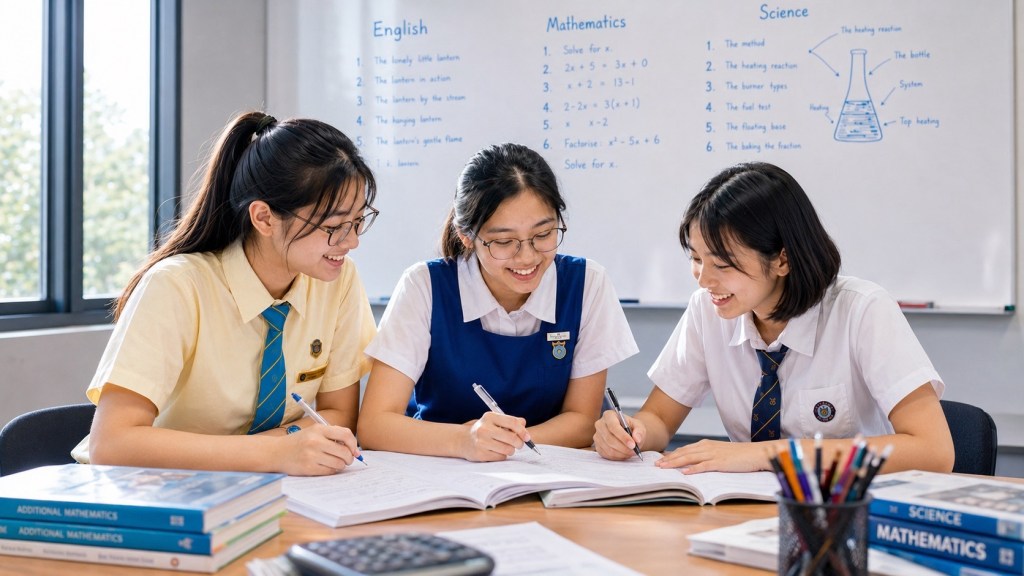
How to read a Science textbook effectively is different from reading a novel and different from reading a Mathematics solution manual. A Science chapter combines explanation, vocabulary, diagrams, tables, graphs, models, equations, worked examples, experiments, captions and questions. Students who read only the prose often miss the most important relationships; students who highlight everything may feel familiar with the chapter but still be unable to explain the mechanism or answer a changed-context question after the book is closed.
This Advanced Science Tutorials guide is written for parents and students in Sengkang, Punggol and across Singapore who search for how to read a Science textbook, how to study a Science chapter, Science textbook reading strategies, SQ3R Science, active reading Science, how to understand Science notes and how to remember what you read in Science. It is deliberately subject-specific and does not replace the broader eduKate article on generic textbook reading.
Cornell University’s Learning Strategies Center presents SQ3R—Survey, Question, Read, Recite and Review—as a systematic way to interact with textbook information. The Science-specific version in this article adds four important jobs: explain mechanisms, interrogate diagrams, connect equations to quantities, and convert descriptions into predictions. See Cornell Learning Strategies Center: Textbook Reading Systems.
The Science-textbook reading loop
- Preview the chapter structure.
- Turn headings into scientific questions.
- Read one manageable section.
- Identify the mechanism, relationship or model.
- Interrogate every diagram, table and graph.
- Close the book and retrieve the explanation.
- Check what memory missed.
- Answer or create a changed-context question.
- Schedule a later return.
Primary 1 and Primary 2: use pictures and questions, not textbook endurance
Before formal Primary Science begins, young learners benefit from short illustrated Science books, observation questions and conversation. The useful reading habit is to look carefully at a picture, name what is observed, predict what happens next and explain one relationship in ordinary language.
Parents should not make a young child read long content-heavy chapters as “Science revision”. The goal is meaning and curiosity, not page count.
Primary 3 and Primary 4: read the page as a system
Formal Primary Science textbooks often combine short paragraphs with diagrams and boxed vocabulary. Students should learn that the diagram is not decoration. Read the heading, inspect the figure, predict what the paragraph will explain, then read and check.
A good stopping point is after one idea—not necessarily after one page. Close the book and explain the idea before continuing.
Primary 5 and Primary 6: read for mechanism and transfer
Older Primary students should read questions such as “What changes?”, “Why does it change?”, “What evidence supports this?” and “What would happen if one condition changed?” This turns the textbook from an answer source into a model-building tool.
The goal is especially important for PSLE because the examination often changes the surface context while testing the same scientific relationship.
Secondary G1, G2 and G3: integrate prose, equations and representations
Lower Secondary Science chapters become denser. A section on heat may include particle diagrams, equations, graphs, practical data and worked examples. Reading linearly without integrating these representations creates fragmented knowledge.
A Secondary student should be able to translate one representation into another: prose to diagram, diagram to explanation, equation to qualitative prediction, graph to physical mechanism.
Cover and chapter title
Reading job. The title tells you the broad scientific territory but not the exact learning job.
Common failure. Students begin reading without asking what the chapter is trying to explain.
Better reading move. Turn the title into one broad question before opening the section.
Question to ask. What should I be able to explain by the end?
Practice task. Write a one-sentence prediction of the chapter’s main idea.
The Science-specific test is whether the student can close the book and reconstruct the relationship in another representation. Prose should become a mechanism, a diagram should become an explanation, a formula should become a qualitative prediction, and a graph should become a claim supported by evidence.
Table of contents
Reading job. The contents page shows how topics are organised and sequenced.
Common failure. Students use it only to find page numbers.
Better reading move. Notice dependencies: which chapters come before and after?
Question to ask. What earlier knowledge will this chapter probably use?
Practice task. Map the chapter into the wider syllabus.
The Science-specific test is whether the student can close the book and reconstruct the relationship in another representation. Prose should become a mechanism, a diagram should become an explanation, a formula should become a qualitative prediction, and a graph should become a claim supported by evidence.
Learning objectives
Reading job. Objectives name expected knowledge or skills.
Common failure. Students skim them because they look administrative.
Better reading move. Convert every objective into a closed-book question.
Question to ask. Could I demonstrate this without the book?
Practice task. Use objectives as a retrieval checklist after reading.
The Science-specific test is whether the student can close the book and reconstruct the relationship in another representation. Prose should become a mechanism, a diagram should become an explanation, a formula should become a qualitative prediction, and a graph should become a claim supported by evidence.
Section headings
Reading job. Headings reveal conceptual chunks.
Common failure. Students read headings as labels rather than questions.
Better reading move. Turn each heading into a why/how/what-changes question.
Question to ask. What answer should this section provide?
Practice task. Write the question in the margin or notebook.
The Science-specific test is whether the student can close the book and reconstruct the relationship in another representation. Prose should become a mechanism, a diagram should become an explanation, a formula should become a qualitative prediction, and a graph should become a claim supported by evidence.
Subheadings
Reading job. Subheadings show how the main concept is decomposed.
Common failure. Students lose the hierarchy and treat all facts equally.
Better reading move. Ask how each subsection contributes to the chapter model.
Question to ask. Is this definition, mechanism, example or application?
Practice task. Create a tree of heading relationships.
The Science-specific test is whether the student can close the book and reconstruct the relationship in another representation. Prose should become a mechanism, a diagram should become an explanation, a formula should become a qualitative prediction, and a graph should become a claim supported by evidence.
Opening phenomenon
Reading job. Some chapters begin with a real-world event or puzzle.
Common failure. Students treat it as a story before the ‘real Science’.
Better reading move. Use it as the question the chapter is trying to explain.
Question to ask. What is puzzling about this event?
Practice task. Return to the phenomenon after reading and explain it.
The Science-specific test is whether the student can close the book and reconstruct the relationship in another representation. Prose should become a mechanism, a diagram should become an explanation, a formula should become a qualitative prediction, and a graph should become a claim supported by evidence.
Key question
Reading job. Textbooks often include an explicit guiding question.
Common failure. Students read it but do not keep it active.
Better reading move. Hold the question while reading and mark evidence relevant to it.
Question to ask. Which paragraph actually answers the question?
Practice task. Answer from memory after the section.
The Science-specific test is whether the student can close the book and reconstruct the relationship in another representation. Prose should become a mechanism, a diagram should become an explanation, a formula should become a qualitative prediction, and a graph should become a claim supported by evidence.
Definition
Reading job. A definition sets the precise meaning of a scientific term.
Common failure. Students memorise wording without examples or contrasts.
Better reading move. Link each definition to an example, non-example and nearby term.
Question to ask. What would be misclassified if I misunderstood this word?
Practice task. Use the term in a fresh scientific sentence.
The Science-specific test is whether the student can close the book and reconstruct the relationship in another representation. Prose should become a mechanism, a diagram should become an explanation, a formula should become a qualitative prediction, and a graph should become a claim supported by evidence.
Bold vocabulary
Reading job. Bold terms signal important language, not automatic understanding.
Common failure. Students highlight every bold word and stop.
Better reading move. Ask what relationship the term participates in.
Question to ask. Can I explain it without repeating the textbook sentence?
Practice task. Make a contrast card with a confusing neighbour.
The Science-specific test is whether the student can close the book and reconstruct the relationship in another representation. Prose should become a mechanism, a diagram should become an explanation, a formula should become a qualitative prediction, and a graph should become a claim supported by evidence.
Glossary
Reading job. A glossary gives quick definitions but little context.
Common failure. Students use it as their primary way to learn terms.
Better reading move. Use it for checking, then return to the chapter example.
Question to ask. How is this term used in a mechanism or diagram?
Practice task. Retrieve term meaning inside a real question.
The Science-specific test is whether the student can close the book and reconstruct the relationship in another representation. Prose should become a mechanism, a diagram should become an explanation, a formula should become a qualitative prediction, and a graph should become a claim supported by evidence.
Paragraph topic sentence
Reading job. The opening sentence often identifies the paragraph’s job.
Common failure. Students read every sentence with equal weight.
Better reading move. Pause after the topic sentence and predict what details should follow.
Question to ask. What claim is this paragraph developing?
Practice task. Summarise the paragraph in one line.
The Science-specific test is whether the student can close the book and reconstruct the relationship in another representation. Prose should become a mechanism, a diagram should become an explanation, a formula should become a qualitative prediction, and a graph should become a claim supported by evidence.
Supporting sentence
Reading job. Supporting details explain, qualify or exemplify the main idea.
Common failure. Students memorise details without knowing which idea they support.
Better reading move. Link each detail to the paragraph claim.
Question to ask. Why was this sentence included?
Practice task. Remove one detail and decide what understanding is lost.
The Science-specific test is whether the student can close the book and reconstruct the relationship in another representation. Prose should become a mechanism, a diagram should become an explanation, a formula should become a qualitative prediction, and a graph should become a claim supported by evidence.
Example
Reading job. Examples make abstract ideas concrete.
Common failure. Students memorise the example rather than the principle.
Better reading move. Ask what deep relationship the example illustrates.
Question to ask. Would another object show the same relationship?
Practice task. Generate a different valid example.
The Science-specific test is whether the student can close the book and reconstruct the relationship in another representation. Prose should become a mechanism, a diagram should become an explanation, a formula should become a qualitative prediction, and a graph should become a claim supported by evidence.
Counterexample
Reading job. Counterexamples expose limits or misconceptions.
Common failure. Students skip them because they seem like exceptions.
Better reading move. Use them to refine the rule.
Question to ask. What overgeneralisation does this example prevent?
Practice task. Create another counterexample.
The Science-specific test is whether the student can close the book and reconstruct the relationship in another representation. Prose should become a mechanism, a diagram should become an explanation, a formula should become a qualitative prediction, and a graph should become a claim supported by evidence.
Analogy
Reading job. Analogies map a familiar system to an unfamiliar one.
Common failure. Students transfer every feature of the analogy.
Better reading move. Identify useful mappings and where the analogy fails.
Question to ask. Which part is only a teaching convenience?
Practice task. List two useful and two misleading mappings.
The Science-specific test is whether the student can close the book and reconstruct the relationship in another representation. Prose should become a mechanism, a diagram should become an explanation, a formula should become a qualitative prediction, and a graph should become a claim supported by evidence.
Mechanism paragraph
Reading job. Mechanisms explain intermediate steps from cause to effect.
Common failure. Students remember starting condition and final result but skip the middle.
Better reading move. Convert the paragraph into cause → process → effect.
Question to ask. What happens in between?
Practice task. Close the book and reconstruct the chain.
The Science-specific test is whether the student can close the book and reconstruct the relationship in another representation. Prose should become a mechanism, a diagram should become an explanation, a formula should become a qualitative prediction, and a graph should become a claim supported by evidence.
Sequence paragraph
Reading job. Some processes are ordered in stages.
Common failure. Students memorise sequence labels without transition logic.
Better reading move. Ask what triggers each next stage.
Question to ask. What would happen if one stage were blocked?
Practice task. Redraw the sequence starting from a different point.
The Science-specific test is whether the student can close the book and reconstruct the relationship in another representation. Prose should become a mechanism, a diagram should become an explanation, a formula should become a qualitative prediction, and a graph should become a claim supported by evidence.
Comparison paragraph
Reading job. Comparison sections distinguish related ideas.
Common failure. Students learn separate descriptions and still confuse them.
Better reading move. Build a common-property table.
Question to ask. What is the decisive difference?
Practice task. Test with new examples.
The Science-specific test is whether the student can close the book and reconstruct the relationship in another representation. Prose should become a mechanism, a diagram should become an explanation, a formula should become a qualitative prediction, and a graph should become a claim supported by evidence.
Cause-and-effect paragraph
Reading job. Causal text connects conditions to outcomes.
Common failure. Students treat correlation language as causation automatically.
Better reading move. Identify the mechanism or experimental basis.
Question to ask. What evidence supports the causal link?
Practice task. Rewrite the paragraph as a causal diagram.
The Science-specific test is whether the student can close the book and reconstruct the relationship in another representation. Prose should become a mechanism, a diagram should become an explanation, a formula should become a qualitative prediction, and a graph should become a claim supported by evidence.
Exception or qualifier
Reading job. Words such as usually, under these conditions and may define scope.
Common failure. Students remember the rule and drop the qualifier.
Better reading move. Circle scope language during first read.
Question to ask. When does the rule stop applying?
Practice task. Write an example inside and outside the scope.
The Science-specific test is whether the student can close the book and reconstruct the relationship in another representation. Prose should become a mechanism, a diagram should become an explanation, a formula should become a qualitative prediction, and a graph should become a claim supported by evidence.
Diagram
Reading job. Diagrams compress structure and relationships visually.
Common failure. Students glance at them after reading the prose.
Better reading move. Read title, labels, arrows and legend before the paragraph explanation.
Question to ask. What does each visual element represent?
Practice task. Cover labels and redraw from memory.
The Science-specific test is whether the student can close the book and reconstruct the relationship in another representation. Prose should become a mechanism, a diagram should become an explanation, a formula should become a qualitative prediction, and a graph should become a claim supported by evidence.
Diagram caption
Reading job. Captions often explain what the figure is intended to show.
Common failure. Students skip small caption text.
Better reading move. Read captions before interpreting the image.
Question to ask. What claim does the caption make?
Practice task. Write a new caption in your own words.
The Science-specific test is whether the student can close the book and reconstruct the relationship in another representation. Prose should become a mechanism, a diagram should become an explanation, a formula should become a qualitative prediction, and a graph should become a claim supported by evidence.
Arrow in diagram
Reading job. Arrows can represent flow, force, sequence, energy, causation or direction.
Common failure. Students assume all arrows mean movement.
Better reading move. Identify the arrow convention from context.
Question to ask. What exactly moves or changes along this arrow?
Practice task. Translate each arrow into a sentence.
The Science-specific test is whether the student can close the book and reconstruct the relationship in another representation. Prose should become a mechanism, a diagram should become an explanation, a formula should become a qualitative prediction, and a graph should become a claim supported by evidence.
Colour coding
Reading job. Colour distinguishes categories or quantities.
Common failure. Students assume colours are literal.
Better reading move. Read the legend and ask whether colour is symbolic.
Question to ask. Would the idea survive if colours changed?
Practice task. Recolour the model and preserve meaning.
The Science-specific test is whether the student can close the book and reconstruct the relationship in another representation. Prose should become a mechanism, a diagram should become an explanation, a formula should become a qualitative prediction, and a graph should become a claim supported by evidence.
Scale diagram
Reading job. Scale representations preserve selected ratios.
Common failure. Students assume textbook drawings show true relative size and distance.
Better reading move. Check scale notes and identify distortions.
Question to ask. Which dimension is scaled?
Practice task. Compare with a second model using another scale.
The Science-specific test is whether the student can close the book and reconstruct the relationship in another representation. Prose should become a mechanism, a diagram should become an explanation, a formula should become a qualitative prediction, and a graph should become a claim supported by evidence.
Microscope image
Reading job. Microscopy images show real or processed observations at small scale.
Common failure. Students treat all coloured images as natural colour.
Better reading move. Check magnification, stain and scale bar.
Question to ask. What processing made structures visible?
Practice task. Compare image with schematic diagram.
The Science-specific test is whether the student can close the book and reconstruct the relationship in another representation. Prose should become a mechanism, a diagram should become an explanation, a formula should become a qualitative prediction, and a graph should become a claim supported by evidence.
Photograph
Reading job. Photos provide visual evidence but not complete explanation.
Common failure. Students infer scale, cause or timing from appearance alone.
Better reading move. Read caption and context.
Question to ask. What can and cannot be concluded from the image?
Practice task. Write observation versus inference statements.
The Science-specific test is whether the student can close the book and reconstruct the relationship in another representation. Prose should become a mechanism, a diagram should become an explanation, a formula should become a qualitative prediction, and a graph should become a claim supported by evidence.
Table
Reading job. Tables organise values across conditions.
Common failure. Students scan for the biggest number without reading headings.
Better reading move. Read title, row labels, column labels and units first.
Question to ask. Which cells form the valid comparison?
Practice task. State one pattern and one limitation.
The Science-specific test is whether the student can close the book and reconstruct the relationship in another representation. Prose should become a mechanism, a diagram should become an explanation, a formula should become a qualitative prediction, and a graph should become a claim supported by evidence.
Graph
Reading job. Graphs show relationships among quantities.
Common failure. Students interpret line shape before axes.
Better reading move. Read axes, units, scale and legend before trend.
Question to ask. What is dependent on what?
Practice task. Describe the graph before explaining it.
The Science-specific test is whether the student can close the book and reconstruct the relationship in another representation. Prose should become a mechanism, a diagram should become an explanation, a formula should become a qualitative prediction, and a graph should become a claim supported by evidence.
Graph caption
Reading job. Captions often define conditions and dataset details.
Common failure. Students miss crucial sample or treatment information.
Better reading move. Read caption before making causal claims.
Question to ask. What experimental condition does the caption specify?
Practice task. Explain how missing caption information could mislead.
The Science-specific test is whether the student can close the book and reconstruct the relationship in another representation. Prose should become a mechanism, a diagram should become an explanation, a formula should become a qualitative prediction, and a graph should become a claim supported by evidence.
Worked calculation
Reading job. A worked example demonstrates formula selection and execution.
Common failure. Students copy steps without understanding why each step follows.
Better reading move. Cover the next line and predict it.
Question to ask. What physical relationship justifies this step?
Practice task. Solve a parallel problem without looking.
The Science-specific test is whether the student can close the book and reconstruct the relationship in another representation. Prose should become a mechanism, a diagram should become an explanation, a formula should become a qualitative prediction, and a graph should become a claim supported by evidence.
Formula
Reading job. A formula compresses a quantitative model.
Common failure. Students memorise letters without quantity meaning.
Better reading move. Write quantity names and units beside each symbol.
Question to ask. How should target change if one input doubles?
Practice task. Explain formula in words.
The Science-specific test is whether the student can close the book and reconstruct the relationship in another representation. Prose should become a mechanism, a diagram should become an explanation, a formula should become a qualitative prediction, and a graph should become a claim supported by evidence.
Formula derivation
Reading job. A derivation shows how one relationship follows from others.
Common failure. Students skip derivation and memorise final formula.
Better reading move. Trace assumptions and transformations.
Question to ask. Which step would fail if an assumption changed?
Practice task. Recreate derivation from starting equations at suitable level.
The Science-specific test is whether the student can close the book and reconstruct the relationship in another representation. Prose should become a mechanism, a diagram should become an explanation, a formula should become a qualitative prediction, and a graph should become a claim supported by evidence.
Unit note
Reading job. Unit boxes encode measurement conventions.
Common failure. Students treat units as formatting.
Better reading move. Link unit to quantity and dimensional meaning.
Question to ask. What wrong answer could unit checking catch?
Practice task. Convert one example before calculation.
The Science-specific test is whether the student can close the book and reconstruct the relationship in another representation. Prose should become a mechanism, a diagram should become an explanation, a formula should become a qualitative prediction, and a graph should become a claim supported by evidence.
Practical box
Reading job. Textbooks often summarise an experiment or method.
Common failure. Students memorise steps without knowing the question.
Better reading move. Identify aim, changed variable, measured variable and controls.
Question to ask. Why is each step needed?
Practice task. Redesign one flawed step.
The Science-specific test is whether the student can close the book and reconstruct the relationship in another representation. Prose should become a mechanism, a diagram should become an explanation, a formula should become a qualitative prediction, and a graph should become a claim supported by evidence.
Safety note
Reading job. Safety notes identify hazards or controls.
Common failure. Students skim them because they are not ‘content’.
Better reading move. Connect every safety rule to its hazard.
Question to ask. What harm does the control prevent?
Practice task. Use the dedicated Lab Safety owner for deeper study.
The Science-specific test is whether the student can close the book and reconstruct the relationship in another representation. Prose should become a mechanism, a diagram should become an explanation, a formula should become a qualitative prediction, and a graph should become a claim supported by evidence.
Method diagram
Reading job. Apparatus drawings encode setup relationships.
Common failure. Students memorise one picture orientation.
Better reading move. Identify connections, distances and measurement positions.
Question to ask. Which features must remain the same if redrawn?
Practice task. Rotate or rearrange the diagram without changing function.
The Science-specific test is whether the student can close the book and reconstruct the relationship in another representation. Prose should become a mechanism, a diagram should become an explanation, a formula should become a qualitative prediction, and a graph should become a claim supported by evidence.
Results example
Reading job. Sample results illustrate expected data format or pattern.
Common failure. Students copy the expected trend into their own experiment mentally.
Better reading move. Treat it as an example, not permission to alter data.
Question to ask. What if real results differ?
Practice task. Write an honest discussion for a different result.
The Science-specific test is whether the student can close the book and reconstruct the relationship in another representation. Prose should become a mechanism, a diagram should become an explanation, a formula should become a qualitative prediction, and a graph should become a claim supported by evidence.
Sidebar
Reading job. Sidebars often provide applications, history or extension.
Common failure. Students either ignore them or spend too much time on them.
Better reading move. Decide whether the sidebar supports the current objective.
Question to ask. Is this core assessment content or enrichment?
Practice task. Use priority labels.
The Science-specific test is whether the student can close the book and reconstruct the relationship in another representation. Prose should become a mechanism, a diagram should become an explanation, a formula should become a qualitative prediction, and a graph should become a claim supported by evidence.
Historical note
Reading job. History shows how models changed with evidence.
Common failure. Students memorise scientist names without conceptual change.
Better reading move. Ask what evidence forced revision.
Question to ask. What did the old model explain successfully?
Practice task. Compare old and new models.
The Science-specific test is whether the student can close the book and reconstruct the relationship in another representation. Prose should become a mechanism, a diagram should become an explanation, a formula should become a qualitative prediction, and a graph should become a claim supported by evidence.
Application box
Reading job. Applications connect concepts to technology or daily life.
Common failure. Students learn application facts separately from concept.
Better reading move. Ask how the core mechanism operates in the application.
Question to ask. Could another device use the same principle?
Practice task. Generate a new application.
The Science-specific test is whether the student can close the book and reconstruct the relationship in another representation. Prose should become a mechanism, a diagram should become an explanation, a formula should become a qualitative prediction, and a graph should become a claim supported by evidence.
Case study
Reading job. Case studies integrate multiple ideas in one real context.
Common failure. Students get lost in story detail.
Better reading move. Extract the scientific variables, system and evidence.
Question to ask. Which concepts are doing the explanatory work?
Practice task. Retell the case using only the scientific structure.
The Science-specific test is whether the student can close the book and reconstruct the relationship in another representation. Prose should become a mechanism, a diagram should become an explanation, a formula should become a qualitative prediction, and a graph should become a claim supported by evidence.
Summary box
Reading job. Summaries compress chapter ideas.
Common failure. Students read summaries instead of learning the chapter.
Better reading move. Use summaries after retrieval as a checking tool.
Question to ask. Which important mechanism is compressed into one sentence?
Practice task. Expand each bullet from memory.
The Science-specific test is whether the student can close the book and reconstruct the relationship in another representation. Prose should become a mechanism, a diagram should become an explanation, a formula should become a qualitative prediction, and a graph should become a claim supported by evidence.
Concept map
Reading job. Concept maps show relationships among terms.
Common failure. Students use them as decorative word webs.
Better reading move. Read each labelled link as a sentence.
Question to ask. Which relationship is missing?
Practice task. Redraw without looking.
The Science-specific test is whether the student can close the book and reconstruct the relationship in another representation. Prose should become a mechanism, a diagram should become an explanation, a formula should become a qualitative prediction, and a graph should become a claim supported by evidence.
End-of-section questions
Reading job. These questions provide immediate retrieval and application.
Common failure. Students answer with the book open.
Better reading move. Close the book first and use it only to correct gaps.
Question to ask. Which question required transfer rather than recall?
Practice task. Reattempt missed questions later.
The Science-specific test is whether the student can close the book and reconstruct the relationship in another representation. Prose should become a mechanism, a diagram should become an explanation, a formula should become a qualitative prediction, and a graph should become a claim supported by evidence.
End-of-chapter questions
Reading job. Mixed questions test integration.
Common failure. Students do them immediately while chapter cues are fresh.
Better reading move. Delay some questions to test retention.
Question to ask. Can the learner choose the concept without a heading nearby?
Practice task. Mix with questions from older chapters.
The Science-specific test is whether the student can close the book and reconstruct the relationship in another representation. Prose should become a mechanism, a diagram should become an explanation, a formula should become a qualitative prediction, and a graph should become a claim supported by evidence.
Review question
Reading job. Review questions test recall of known content.
Common failure. Students confuse easy review success with mastery.
Better reading move. Use them as entry checks, not the final test.
Question to ask. Can the answer survive after a week?
Practice task. Schedule spaced return.
The Science-specific test is whether the student can close the book and reconstruct the relationship in another representation. Prose should become a mechanism, a diagram should become an explanation, a formula should become a qualitative prediction, and a graph should become a claim supported by evidence.
Application question
Reading job. Application questions change the context.
Common failure. Students search the chapter for matching nouns.
Better reading move. Strip away surface context and identify the relationship.
Question to ask. What deep structure is familiar?
Practice task. Create one changed-context variant.
The Science-specific test is whether the student can close the book and reconstruct the relationship in another representation. Prose should become a mechanism, a diagram should become an explanation, a formula should become a qualitative prediction, and a graph should become a claim supported by evidence.
Challenge question
Reading job. Challenge questions combine concepts or require extended reasoning.
Common failure. Students attempt them before foundations are stable and lose confidence.
Better reading move. Use after core understanding is secure.
Question to ask. Which earlier skills are combined?
Practice task. Decompose into smaller decisions.
The Science-specific test is whether the student can close the book and reconstruct the relationship in another representation. Prose should become a mechanism, a diagram should become an explanation, a formula should become a qualitative prediction, and a graph should become a claim supported by evidence.
Answer key
Reading job. Answer keys support checking, not learning before attempt.
Common failure. Students read answers first and recognise them.
Better reading move. Attempt independently, compare, close key and redo.
Question to ask. What was the first wrong decision?
Practice task. Write a correction rule.
The Science-specific test is whether the student can close the book and reconstruct the relationship in another representation. Prose should become a mechanism, a diagram should become an explanation, a formula should become a qualitative prediction, and a graph should become a claim supported by evidence.
Chapter summary notes
Reading job. Some books provide ready-made notes.
Common failure. Students copy them and mistake copying for revision.
Better reading move. Use them to audit self-generated retrieval.
Question to ask. What did your recall omit?
Practice task. Add only missing relationships.
The Science-specific test is whether the student can close the book and reconstruct the relationship in another representation. Prose should become a mechanism, a diagram should become an explanation, a formula should become a qualitative prediction, and a graph should become a claim supported by evidence.
Highlighting
Reading job. Highlighting can mark selected structure but is weak by itself.
Common failure. Students colour large portions because everything feels important.
Better reading move. Highlight only after deciding the paragraph’s job.
Question to ask. Could you explain why each highlighted phrase matters?
Practice task. Limit highlighting then retrieve.
The Science-specific test is whether the student can close the book and reconstruct the relationship in another representation. Prose should become a mechanism, a diagram should become an explanation, a formula should become a qualitative prediction, and a graph should become a claim supported by evidence.
Annotation
Reading job. Annotation records questions, relationships or confusions.
Common failure. Students rewrite the paragraph in the margin.
Better reading move. Write decisions: ’cause’, ‘contrast’, ‘evidence’, ‘why?’
Question to ask. What does this annotation help you do later?
Practice task. Use short functional notes.
The Science-specific test is whether the student can close the book and reconstruct the relationship in another representation. Prose should become a mechanism, a diagram should become an explanation, a formula should become a qualitative prediction, and a graph should become a claim supported by evidence.
Margin question
Reading job. A margin question converts reading into retrieval.
Common failure. Students write notes but no questions.
Better reading move. Turn headings and mechanisms into questions.
Question to ask. Can the question be answered with the page closed?
Practice task. Build a chapter question bank.
The Science-specific test is whether the student can close the book and reconstruct the relationship in another representation. Prose should become a mechanism, a diagram should become an explanation, a formula should become a qualitative prediction, and a graph should become a claim supported by evidence.
Sticky note
Reading job. Physical or digital markers can flag unresolved questions.
Common failure. Students use many markers without resolution.
Better reading move. Each marker should have a job: confusion, revisit, formula, experiment.
Question to ask. Has every flagged question been resolved?
Practice task. Clear markers during review.
The Science-specific test is whether the student can close the book and reconstruct the relationship in another representation. Prose should become a mechanism, a diagram should become an explanation, a formula should become a qualitative prediction, and a graph should become a claim supported by evidence.
First pass
Reading job. The first pass builds the chapter map and core idea.
Common failure. Students attempt to memorise every detail immediately.
Better reading move. Read structure, key terms, diagrams and mechanism first.
Question to ask. What is the chapter’s central explanatory model?
Practice task. Write a one-paragraph map.
The Science-specific test is whether the student can close the book and reconstruct the relationship in another representation. Prose should become a mechanism, a diagram should become an explanation, a formula should become a qualitative prediction, and a graph should become a claim supported by evidence.
Second pass
Reading job. A second pass targets difficult sections and connections.
Common failure. Students reread everything at the same speed.
Better reading move. Use retrieval failures to decide where to reread.
Question to ask. What specifically was missing?
Practice task. Reread only the relevant section.
The Science-specific test is whether the student can close the book and reconstruct the relationship in another representation. Prose should become a mechanism, a diagram should become an explanation, a formula should become a qualitative prediction, and a graph should become a claim supported by evidence.
Third pass
Reading job. Later passes should increasingly be question-driven rather than text-driven.
Common failure. Students keep rereading because it feels easier.
Better reading move. Begin with questions and consult text only after attempt.
Question to ask. Can the chapter now be reconstructed without the page?
Practice task. Use mixed application problems.
The Science-specific test is whether the student can close the book and reconstruct the relationship in another representation. Prose should become a mechanism, a diagram should become an explanation, a formula should become a qualitative prediction, and a graph should become a claim supported by evidence.
SQ3R Survey
Reading job. Survey scans structure before detailed reading.
Common failure. Students see previewing as wasted time.
Better reading move. Use title, headings, figures and summary to build expectations.
Question to ask. What are the three main ideas likely to be?
Practice task. Create a chapter skeleton.
The Science-specific test is whether the student can close the book and reconstruct the relationship in another representation. Prose should become a mechanism, a diagram should become an explanation, a formula should become a qualitative prediction, and a graph should become a claim supported by evidence.
SQ3R Question
Reading job. Question converts headings into purposes for reading.
Common failure. Students read without a target.
Better reading move. Write a question before the section.
Question to ask. What answer am I looking for?
Practice task. Use why/how questions.
The Science-specific test is whether the student can close the book and reconstruct the relationship in another representation. Prose should become a mechanism, a diagram should become an explanation, a formula should become a qualitative prediction, and a graph should become a claim supported by evidence.
SQ3R Read
Reading job. Read actively to answer the generated question.
Common failure. Students read at one constant speed.
Better reading move. Slow down for mechanisms, diagrams and equations; speed up through familiar examples.
Question to ask. Which sentence actually answers the question?
Practice task. Mark only the answer-bearing structure.
The Science-specific test is whether the student can close the book and reconstruct the relationship in another representation. Prose should become a mechanism, a diagram should become an explanation, a formula should become a qualitative prediction, and a graph should become a claim supported by evidence.
SQ3R Recite
Reading job. Recite or retrieve without looking.
Common failure. Students replace recitation with rereading.
Better reading move. Close the book and explain aloud or on paper.
Question to ask. What can I produce unaided?
Practice task. Use blank-page retrieval.
The Science-specific test is whether the student can close the book and reconstruct the relationship in another representation. Prose should become a mechanism, a diagram should become an explanation, a formula should become a qualitative prediction, and a graph should become a claim supported by evidence.
SQ3R Review
Reading job. Review revisits questions and missed material.
Common failure. Students review only immediately after reading.
Better reading move. Schedule delayed review.
Question to ask. What failed after time passed?
Practice task. Return after days.
The Science-specific test is whether the student can close the book and reconstruct the relationship in another representation. Prose should become a mechanism, a diagram should become an explanation, a formula should become a qualitative prediction, and a graph should become a claim supported by evidence.
Preview-question-retrieve loop
Reading job. Short sections can use a compressed active-reading cycle.
Common failure. Students wait until the entire chapter ends before testing memory.
Better reading move. Preview one section, question it, read, close and retrieve.
Question to ask. Can you explain before moving on?
Practice task. Use 5–10 minute microcycles.
The Science-specific test is whether the student can close the book and reconstruct the relationship in another representation. Prose should become a mechanism, a diagram should become an explanation, a formula should become a qualitative prediction, and a graph should become a claim supported by evidence.
Mechanism question
Reading job. Mechanism questions ask how one state produces another.
Common failure. Students answer with definitions only.
Better reading move. Use ‘What happens in between?’
Question to ask. Which intermediate steps are necessary?
Practice task. Convert prose into causal chain.
The Science-specific test is whether the student can close the book and reconstruct the relationship in another representation. Prose should become a mechanism, a diagram should become an explanation, a formula should become a qualitative prediction, and a graph should become a claim supported by evidence.
Change question
Reading job. Change questions ask what happens when a variable changes.
Common failure. Students know static descriptions but cannot predict.
Better reading move. Use the model to make directional predictions.
Question to ask. If X increases, what happens to Y and why?
Practice task. Create sensitivity questions.
The Science-specific test is whether the student can close the book and reconstruct the relationship in another representation. Prose should become a mechanism, a diagram should become an explanation, a formula should become a qualitative prediction, and a graph should become a claim supported by evidence.
Evidence question
Reading job. Evidence questions ask what observation would support a claim.
Common failure. Students memorise explanations without testing them.
Better reading move. Connect claim to measurable consequence.
Question to ask. What data would distinguish two models?
Practice task. Design a simple test conceptually.
The Science-specific test is whether the student can close the book and reconstruct the relationship in another representation. Prose should become a mechanism, a diagram should become an explanation, a formula should become a qualitative prediction, and a graph should become a claim supported by evidence.
Limit question
Reading job. Limit questions identify where the textbook model stops being useful.
Common failure. Students universalise simplified models.
Better reading move. Look for qualifiers, assumptions and later refinements.
Question to ask. Under what conditions does this fail?
Practice task. Write a counterexample.
The Science-specific test is whether the student can close the book and reconstruct the relationship in another representation. Prose should become a mechanism, a diagram should become an explanation, a formula should become a qualitative prediction, and a graph should become a claim supported by evidence.
Diagram reconstruction
Reading job. Redrawing tests structural memory.
Common failure. Students copy diagrams beautifully but cannot reconstruct them.
Better reading move. Close the book and draw only essential relationships.
Question to ask. Which omitted detail matters?
Practice task. Compare with original and correct.
The Science-specific test is whether the student can close the book and reconstruct the relationship in another representation. Prose should become a mechanism, a diagram should become an explanation, a formula should become a qualitative prediction, and a graph should become a claim supported by evidence.
Graph reconstruction
Reading job. Sketching expected graph shape tests relationship knowledge.
Common failure. Students memorise exact pictures.
Better reading move. Predict axes and qualitative shape from mechanism.
Question to ask. Why should the curve rise, fall or plateau?
Practice task. Sketch before viewing textbook graph.
The Science-specific test is whether the student can close the book and reconstruct the relationship in another representation. Prose should become a mechanism, a diagram should become an explanation, a formula should become a qualitative prediction, and a graph should become a claim supported by evidence.
Equation reconstruction
Reading job. Deriving or explaining formulas tests quantitative understanding.
Common failure. Students rely on formula sheets without meaning.
Better reading move. Write the relationship from quantities and units.
Question to ask. Which variable belongs in numerator?
Practice task. Explain each symbol.
The Science-specific test is whether the student can close the book and reconstruct the relationship in another representation. Prose should become a mechanism, a diagram should become an explanation, a formula should become a qualitative prediction, and a graph should become a claim supported by evidence.
Example generation
Reading job. Generating a fresh example tests concept ownership.
Common failure. Students can only repeat textbook examples.
Better reading move. Choose another object or system with the same relationship.
Question to ask. What features must remain?
Practice task. Create valid and invalid examples.
The Science-specific test is whether the student can close the book and reconstruct the relationship in another representation. Prose should become a mechanism, a diagram should become an explanation, a formula should become a qualitative prediction, and a graph should become a claim supported by evidence.
Self-explanation
Reading job. Self-explanation makes hidden reasoning explicit.
Common failure. Students say ‘I understand’ without articulating why.
Better reading move. Explain each relationship as if teaching a younger learner.
Question to ask. Where does the explanation become vague?
Practice task. Record a 60-second explanation.
The Science-specific test is whether the student can close the book and reconstruct the relationship in another representation. Prose should become a mechanism, a diagram should become an explanation, a formula should become a qualitative prediction, and a graph should become a claim supported by evidence.
Feynman-style simplification
Reading job. Simple language can reveal gaps, though oversimplification must preserve accuracy.
Common failure. Students replace scientific terms entirely and lose precision.
Better reading move. Explain simply first, then restore necessary terminology.
Question to ask. Which terms are essential?
Practice task. Produce simple and technical versions.
The Science-specific test is whether the student can close the book and reconstruct the relationship in another representation. Prose should become a mechanism, a diagram should become an explanation, a formula should become a qualitative prediction, and a graph should become a claim supported by evidence.
Retrieval notebook
Reading job. A retrieval notebook stores closed-book attempts and errors.
Common failure. Students fill notebooks with copied notes.
Better reading move. Date each question, first answer, correction and retest.
Question to ask. What changed between attempts?
Practice task. Review only unresolved items.
The Science-specific test is whether the student can close the book and reconstruct the relationship in another representation. Prose should become a mechanism, a diagram should become an explanation, a formula should become a qualitative prediction, and a graph should become a claim supported by evidence.
Chapter error log
Reading job. Errors identify which concepts need rereading.
Common failure. Students reread entire chapters after one mistake.
Better reading move. Map each error to the smallest relevant section.
Question to ask. What was the first wrong decision?
Practice task. Target rereading.
The Science-specific test is whether the student can close the book and reconstruct the relationship in another representation. Prose should become a mechanism, a diagram should become an explanation, a formula should become a qualitative prediction, and a graph should become a claim supported by evidence.
Spaced chapter return
Reading job. Returning after delay tests durability.
Common failure. Students finish a chapter and never reopen it until exams.
Better reading move. Schedule 1-day, 1-week and later retrieval as appropriate.
Question to ask. What survived without cues?
Practice task. Use shorter later sessions.
The Science-specific test is whether the student can close the book and reconstruct the relationship in another representation. Prose should become a mechanism, a diagram should become an explanation, a formula should become a qualitative prediction, and a graph should become a claim supported by evidence.
Interleaved reading review
Reading job. Review can mix related chapters to improve discrimination.
Common failure. Students keep topics isolated.
Better reading move. Compare similar concepts across chapters.
Question to ask. Which rule belongs to which context?
Practice task. Mix heat transfer, energy and particle questions.
The Science-specific test is whether the student can close the book and reconstruct the relationship in another representation. Prose should become a mechanism, a diagram should become an explanation, a formula should become a qualitative prediction, and a graph should become a claim supported by evidence.
Science textbook to exam question
Reading job. Reading should end in performance.
Common failure. Students believe chapter completion equals readiness.
Better reading move. Use one or more fresh questions after retrieval.
Question to ask. Can the model solve an unfamiliar item?
Practice task. Connect every major section to application.
The Science-specific test is whether the student can close the book and reconstruct the relationship in another representation. Prose should become a mechanism, a diagram should become an explanation, a formula should become a qualitative prediction, and a graph should become a claim supported by evidence.
Science textbook to practical
Reading job. Textbook concepts should inform experiment reasoning.
Common failure. Students memorise method boxes separately.
Better reading move. Ask what measurement would test the stated relationship.
Question to ask. Which variable operationalises the concept?
Practice task. Design a safe conceptual investigation.
The Science-specific test is whether the student can close the book and reconstruct the relationship in another representation. Prose should become a mechanism, a diagram should become an explanation, a formula should become a qualitative prediction, and a graph should become a claim supported by evidence.
Science textbook to real world
Reading job. Applications can test transfer without replacing syllabus precision.
Common failure. Students overgeneralise from one everyday analogy.
Better reading move. Name the same mechanism in another real system.
Question to ask. Which assumptions differ?
Practice task. Compare textbook and real-world conditions.
The Science-specific test is whether the student can close the book and reconstruct the relationship in another representation. Prose should become a mechanism, a diagram should become an explanation, a formula should become a qualitative prediction, and a graph should become a claim supported by evidence.
Reading difficult prose
Reading job. Dense scientific sentences can be unpacked into entities, actions and conditions.
Common failure. Students reread the same sentence passively.
Better reading move. Underline nouns, circle process verbs and mark conditions.
Question to ask. Who or what is doing what under which condition?
Practice task. Rewrite one dense sentence as a causal sequence.
The Science-specific test is whether the student can close the book and reconstruct the relationship in another representation. Prose should become a mechanism, a diagram should become an explanation, a formula should become a qualitative prediction, and a graph should become a claim supported by evidence.
Reading equations in prose
Reading job. Equations should be read as sentences about quantities.
Common failure. Students separate equations from surrounding explanation.
Better reading move. Say the formula in words before calculating.
Question to ask. What happens when one variable changes?
Practice task. Translate equation to graph prediction.
The Science-specific test is whether the student can close the book and reconstruct the relationship in another representation. Prose should become a mechanism, a diagram should become an explanation, a formula should become a qualitative prediction, and a graph should become a claim supported by evidence.
Reading graphs in prose
Reading job. Text may describe the same pattern shown in a graph.
Common failure. Students read one and ignore the other.
Better reading move. Match each prose claim to a graph feature.
Question to ask. Which sentence corresponds to slope, peak or plateau?
Practice task. Write a caption from text.
The Science-specific test is whether the student can close the book and reconstruct the relationship in another representation. Prose should become a mechanism, a diagram should become an explanation, a formula should become a qualitative prediction, and a graph should become a claim supported by evidence.
Reading experiments in prose
Reading job. Method descriptions encode variables and controls.
Common failure. Students focus on apparatus names.
Better reading move. Rewrite the method as question, IV, DV, controls and measurement.
Question to ask. Why is each control needed?
Practice task. Predict data structure.
The Science-specific test is whether the student can close the book and reconstruct the relationship in another representation. Prose should become a mechanism, a diagram should become an explanation, a formula should become a qualitative prediction, and a graph should become a claim supported by evidence.
Reading with AI
Reading job. AI can clarify a paragraph or generate questions but can also invent details or flatten textbook-specific definitions.
Common failure. Students replace reading with AI summaries.
Better reading move. Read the textbook first, then use AI as a secondary explanation and verify against the source.
Question to ask. Does the AI answer match the book’s scope and notation?
Practice task. Ask AI for questions, then solve without it.
The Science-specific test is whether the student can close the book and reconstruct the relationship in another representation. Prose should become a mechanism, a diagram should become an explanation, a formula should become a qualitative prediction, and a graph should become a claim supported by evidence.
Reading online textbooks
Reading job. Digital textbooks add search, video and hyperlinks but also distraction.
Common failure. Students follow links until the original question is lost.
Better reading move. Keep a reading purpose and open links only when they answer a defined gap.
Question to ask. What job does this link serve?
Practice task. Return to the original retrieval question.
The Science-specific test is whether the student can close the book and reconstruct the relationship in another representation. Prose should become a mechanism, a diagram should become an explanation, a formula should become a qualitative prediction, and a graph should become a claim supported by evidence.
Reading PDFs
Reading job. PDFs preserve layout but can encourage scrolling and search-only reading.
Common failure. Students use Ctrl-F to find answer words without understanding context.
Better reading move. Use search to locate sections, then read relationships around the term.
Question to ask. What mechanism surrounds the keyword?
Practice task. Summarise the section after searching.
The Science-specific test is whether the student can close the book and reconstruct the relationship in another representation. Prose should become a mechanism, a diagram should become an explanation, a formula should become a qualitative prediction, and a graph should become a claim supported by evidence.
Reading teacher notes with textbook
Reading job. Teacher notes and textbook may use different emphasis.
Common failure. Students treat differences as contradictions automatically.
Better reading move. Use teacher notes for local assessed emphasis and textbook for deeper explanation.
Question to ask. Which wording does the school require?
Practice task. Cross-map headings between resources.
The Science-specific test is whether the student can close the book and reconstruct the relationship in another representation. Prose should become a mechanism, a diagram should become an explanation, a formula should become a qualitative prediction, and a graph should become a claim supported by evidence.
Reading two textbooks
Reading job. Different books can explain the same concept differently.
Common failure. Students copy both and create redundant notes.
Better reading move. Compare models, examples and terminology.
Question to ask. Which explanation resolves your actual gap?
Practice task. Synthesize one accurate explanation.
The Science-specific test is whether the student can close the book and reconstruct the relationship in another representation. Prose should become a mechanism, a diagram should become an explanation, a formula should become a qualitative prediction, and a graph should become a claim supported by evidence.
Reading ahead
Reading job. Previewing future chapters can reduce novelty when school reaches them.
Common failure. Students attempt full mastery before prerequisites are taught.
Better reading move. Use light preview: headings, diagrams, questions.
Question to ask. What prior knowledge seems necessary?
Practice task. Write questions for later.
The Science-specific test is whether the student can close the book and reconstruct the relationship in another representation. Prose should become a mechanism, a diagram should become an explanation, a formula should become a qualitative prediction, and a graph should become a claim supported by evidence.
Reading after class
Reading job. Post-class reading consolidates teacher explanations.
Common failure. Students reread everything from the beginning.
Better reading move. Use lesson notes to target unclear sections.
Question to ask. What did class make easier and what remains unclear?
Practice task. Retrieve before rereading.
The Science-specific test is whether the student can close the book and reconstruct the relationship in another representation. Prose should become a mechanism, a diagram should become an explanation, a formula should become a qualitative prediction, and a graph should become a claim supported by evidence.
Reading before class
Reading job. Pre-reading should build familiarity, not finish the lesson alone.
Common failure. Students spend too long on difficult details.
Better reading move. Survey, question and flag confusion.
Question to ask. What terms or diagrams will you recognise in class?
Practice task. Limit time and record questions.
The Science-specific test is whether the student can close the book and reconstruct the relationship in another representation. Prose should become a mechanism, a diagram should become an explanation, a formula should become a qualitative prediction, and a graph should become a claim supported by evidence.
Reading for homework
Reading job. Homework reading needs an output.
Common failure. Students ‘read pages 20–25’ without checking comprehension.
Better reading move. Pair each page range with retrieval questions.
Question to ask. What will prove the reading worked?
Practice task. Answer one closed-book prompt.
The Science-specific test is whether the student can close the book and reconstruct the relationship in another representation. Prose should become a mechanism, a diagram should become an explanation, a formula should become a qualitative prediction, and a graph should become a claim supported by evidence.
Reading for revision
Reading job. Revision reading should be driven by errors, not complete rereading.
Common failure. Students restart the textbook at page one near exams.
Better reading move. Use diagnostics to locate weak sections.
Question to ask. What failed in recent questions?
Practice task. Reread only targeted content then retest.
The Science-specific test is whether the student can close the book and reconstruct the relationship in another representation. Prose should become a mechanism, a diagram should become an explanation, a formula should become a qualitative prediction, and a graph should become a claim supported by evidence.
Reading for research
Reading job. Research reading differs from textbook learning.
Common failure. Students read every paper linearly.
Better reading move. Use abstract, figures, methods and discussion based on research purpose.
Question to ask. What evidence do you need from this source?
Practice task. Use the Research Skills owner for full method.
The Science-specific test is whether the student can close the book and reconstruct the relationship in another representation. Prose should become a mechanism, a diagram should become an explanation, a formula should become a qualitative prediction, and a graph should become a claim supported by evidence.
Reading under time pressure
Reading job. Time limits require prioritising structure and high-value relationships.
Common failure. Students speed-read every line and retain little.
Better reading move. Preview, target the objective and retrieve key mechanisms.
Question to ask. Which sections are essential for the task?
Practice task. Use a 20-minute chapter triage.
The Science-specific test is whether the student can close the book and reconstruct the relationship in another representation. Prose should become a mechanism, a diagram should become an explanation, a formula should become a qualitative prediction, and a graph should become a claim supported by evidence.
Reading fatigue
Reading job. Attention drops during long passive sessions.
Common failure. Students respond by rereading slower without changing activity.
Better reading move. Switch to retrieval, diagram or question after a short section.
Question to ask. Can the learner still explain the last page?
Practice task. Stop or change task when comprehension falls.
The Science-specific test is whether the student can close the book and reconstruct the relationship in another representation. Prose should become a mechanism, a diagram should become an explanation, a formula should become a qualitative prediction, and a graph should become a claim supported by evidence.
Reading confidence
Reading job. Familiarity while the page is open can inflate confidence.
Common failure. Students say a chapter is easy because the sentences look known.
Better reading move. Rate confidence before closed-book retrieval, then compare with performance.
Question to ask. Does confidence predict correctness?
Practice task. Calibrate ratings weekly.
The Science-specific test is whether the student can close the book and reconstruct the relationship in another representation. Prose should become a mechanism, a diagram should become an explanation, a formula should become a qualitative prediction, and a graph should become a claim supported by evidence.
Reading completion
Reading job. Finishing the pages is not the learning endpoint.
Common failure. Students track page count instead of capability.
Better reading move. Define completion as successful retrieval plus one application.
Question to ask. Can the learner explain and use the idea?
Practice task. Mark chapter complete only after independent performance.
The Science-specific test is whether the student can close the book and reconstruct the relationship in another representation. Prose should become a mechanism, a diagram should become an explanation, a formula should become a qualitative prediction, and a graph should become a claim supported by evidence.
A twelve-week Science-textbook reading programme
- Week 1: preview, headings and questions.
- Week 2: definitions, examples and contrasts.
- Week 3: mechanisms and causal chains.
- Week 4: diagrams, captions and models.
- Week 5: tables and graphs.
- Week 6: equations, units and worked examples.
- Week 7: practical boxes and method reading.
- Week 8: summaries and end-of-section questions.
- Week 9: retrieval notebooks and error logs.
- Week 10: spacing and interleaving.
- Week 11: textbook-to-exam transfer.
- Week 12: independent chapter reading and delayed retest.
When tuition may help with Science textbook reading
Extra support can help when a student spends long hours reading but cannot explain mechanisms after the book closes, skips diagrams or cannot connect equations with prose. A tutor should model active reading on a small section, then give the learner a new section and remove support.
For current Primary 3–6 and PSLE programme information, use Primary Science Tuition Sengkang. Secondary textbook-reading coverage here is educational transition material.
Frequently asked questions
Should I highlight my Science textbook?
Highlighting can mark selected structure, but it should follow understanding and should be paired with retrieval. Highlighting alone is weak evidence of learning.
How many pages should I read at once?
Read by conceptual chunk rather than page count. Stop after an important idea and retrieve it before continuing.
Should I take notes while reading?
Use short functional notes, questions and diagrams. Avoid rewriting the textbook word for word.
What is the best way to remember diagrams?
Cover the diagram, redraw essential relationships from memory, label them, then compare and correct.
How do I read Science equations?
Identify each quantity and unit, say the relationship in words and predict how one variable changes when another changes before calculating.
Is SQ3R useful for Science?
Yes, but Science reading should add mechanism, diagram, equation and application work rather than treating the chapter as prose alone.
Further reading
- Cornell Learning Strategies Center: Textbook Reading Systems
- eduKate Singapore: How to Read a Textbook Effectively
- How to Read Science Diagrams, Graphs and Tables
- How to Study Science Effectively
Final operating rule
Do not read a Science textbook to finish pages. Read to build a model you can retrieve and use. Preview the structure. Turn headings into questions. Read for mechanisms. Interrogate diagrams and graphs. Translate equations into words. Close the book. Reconstruct. Check. Apply. Return later. The chapter is learned when the page is no longer doing the thinking for you.
Cover and chapter title — active-reading clinic 1
Take a fresh Science section and focus on cover and chapter title. Before reading closely, explain the reading job: The title tells you the broad scientific territory but not the exact learning job. The learner should state what output they expect to produce after the page is closed.
Surface the common failure: Students begin reading without asking what the chapter is trying to explain.. Ask how that behaviour creates familiarity without durable understanding. Then apply the better move: Turn the title into one broad question before opening the section. The reading should become an active decision rather than passive exposure.
Now ask: What should I be able to explain by the end? Run the practice task: Write a one-sentence prediction of the chapter’s main idea. Close the book before checking. If the learner cannot reconstruct the idea, reread only the missing relationship rather than restarting the whole page.
Finish with transfer. Use another chapter with a different mix of prose, diagrams or equations. Durable reading skill appears when the learner selects the right strategy from the page structure without being told.
Table of contents — active-reading clinic 1
Take a fresh Science section and focus on table of contents. Before reading closely, explain the reading job: The contents page shows how topics are organised and sequenced. The learner should state what output they expect to produce after the page is closed.
Surface the common failure: Students use it only to find page numbers.. Ask how that behaviour creates familiarity without durable understanding. Then apply the better move: Notice dependencies: which chapters come before and after? The reading should become an active decision rather than passive exposure.
Now ask: What earlier knowledge will this chapter probably use? Run the practice task: Map the chapter into the wider syllabus. Close the book before checking. If the learner cannot reconstruct the idea, reread only the missing relationship rather than restarting the whole page.
Finish with transfer. Use another chapter with a different mix of prose, diagrams or equations. Durable reading skill appears when the learner selects the right strategy from the page structure without being told.
Learning objectives — active-reading clinic 1
Take a fresh Science section and focus on learning objectives. Before reading closely, explain the reading job: Objectives name expected knowledge or skills. The learner should state what output they expect to produce after the page is closed.
Surface the common failure: Students skim them because they look administrative.. Ask how that behaviour creates familiarity without durable understanding. Then apply the better move: Convert every objective into a closed-book question. The reading should become an active decision rather than passive exposure.
Now ask: Could I demonstrate this without the book? Run the practice task: Use objectives as a retrieval checklist after reading. Close the book before checking. If the learner cannot reconstruct the idea, reread only the missing relationship rather than restarting the whole page.
Finish with transfer. Use another chapter with a different mix of prose, diagrams or equations. Durable reading skill appears when the learner selects the right strategy from the page structure without being told.
Section headings — active-reading clinic 1
Take a fresh Science section and focus on section headings. Before reading closely, explain the reading job: Headings reveal conceptual chunks. The learner should state what output they expect to produce after the page is closed.
Surface the common failure: Students read headings as labels rather than questions.. Ask how that behaviour creates familiarity without durable understanding. Then apply the better move: Turn each heading into a why/how/what-changes question. The reading should become an active decision rather than passive exposure.
Now ask: What answer should this section provide? Run the practice task: Write the question in the margin or notebook. Close the book before checking. If the learner cannot reconstruct the idea, reread only the missing relationship rather than restarting the whole page.
Finish with transfer. Use another chapter with a different mix of prose, diagrams or equations. Durable reading skill appears when the learner selects the right strategy from the page structure without being told.
Subheadings — active-reading clinic 1
Take a fresh Science section and focus on subheadings. Before reading closely, explain the reading job: Subheadings show how the main concept is decomposed. The learner should state what output they expect to produce after the page is closed.
Surface the common failure: Students lose the hierarchy and treat all facts equally.. Ask how that behaviour creates familiarity without durable understanding. Then apply the better move: Ask how each subsection contributes to the chapter model. The reading should become an active decision rather than passive exposure.
Now ask: Is this definition, mechanism, example or application? Run the practice task: Create a tree of heading relationships. Close the book before checking. If the learner cannot reconstruct the idea, reread only the missing relationship rather than restarting the whole page.
Finish with transfer. Use another chapter with a different mix of prose, diagrams or equations. Durable reading skill appears when the learner selects the right strategy from the page structure without being told.
Opening phenomenon — active-reading clinic 1
Take a fresh Science section and focus on opening phenomenon. Before reading closely, explain the reading job: Some chapters begin with a real-world event or puzzle. The learner should state what output they expect to produce after the page is closed.
Surface the common failure: Students treat it as a story before the ‘real Science’.. Ask how that behaviour creates familiarity without durable understanding. Then apply the better move: Use it as the question the chapter is trying to explain. The reading should become an active decision rather than passive exposure.
Now ask: What is puzzling about this event? Run the practice task: Return to the phenomenon after reading and explain it. Close the book before checking. If the learner cannot reconstruct the idea, reread only the missing relationship rather than restarting the whole page.
Finish with transfer. Use another chapter with a different mix of prose, diagrams or equations. Durable reading skill appears when the learner selects the right strategy from the page structure without being told.
Key question — active-reading clinic 1
Take a fresh Science section and focus on key question. Before reading closely, explain the reading job: Textbooks often include an explicit guiding question. The learner should state what output they expect to produce after the page is closed.
Surface the common failure: Students read it but do not keep it active.. Ask how that behaviour creates familiarity without durable understanding. Then apply the better move: Hold the question while reading and mark evidence relevant to it. The reading should become an active decision rather than passive exposure.
Now ask: Which paragraph actually answers the question? Run the practice task: Answer from memory after the section. Close the book before checking. If the learner cannot reconstruct the idea, reread only the missing relationship rather than restarting the whole page.
Finish with transfer. Use another chapter with a different mix of prose, diagrams or equations. Durable reading skill appears when the learner selects the right strategy from the page structure without being told.
Definition — active-reading clinic 1
Take a fresh Science section and focus on definition. Before reading closely, explain the reading job: A definition sets the precise meaning of a scientific term. The learner should state what output they expect to produce after the page is closed.
Surface the common failure: Students memorise wording without examples or contrasts.. Ask how that behaviour creates familiarity without durable understanding. Then apply the better move: Link each definition to an example, non-example and nearby term. The reading should become an active decision rather than passive exposure.
Now ask: What would be misclassified if I misunderstood this word? Run the practice task: Use the term in a fresh scientific sentence. Close the book before checking. If the learner cannot reconstruct the idea, reread only the missing relationship rather than restarting the whole page.
Finish with transfer. Use another chapter with a different mix of prose, diagrams or equations. Durable reading skill appears when the learner selects the right strategy from the page structure without being told.
Bold vocabulary — active-reading clinic 1
Take a fresh Science section and focus on bold vocabulary. Before reading closely, explain the reading job: Bold terms signal important language, not automatic understanding. The learner should state what output they expect to produce after the page is closed.
Surface the common failure: Students highlight every bold word and stop.. Ask how that behaviour creates familiarity without durable understanding. Then apply the better move: Ask what relationship the term participates in. The reading should become an active decision rather than passive exposure.
Now ask: Can I explain it without repeating the textbook sentence? Run the practice task: Make a contrast card with a confusing neighbour. Close the book before checking. If the learner cannot reconstruct the idea, reread only the missing relationship rather than restarting the whole page.
Finish with transfer. Use another chapter with a different mix of prose, diagrams or equations. Durable reading skill appears when the learner selects the right strategy from the page structure without being told.
Glossary — active-reading clinic 1
Take a fresh Science section and focus on glossary. Before reading closely, explain the reading job: A glossary gives quick definitions but little context. The learner should state what output they expect to produce after the page is closed.
Surface the common failure: Students use it as their primary way to learn terms.. Ask how that behaviour creates familiarity without durable understanding. Then apply the better move: Use it for checking, then return to the chapter example. The reading should become an active decision rather than passive exposure.
Now ask: How is this term used in a mechanism or diagram? Run the practice task: Retrieve term meaning inside a real question. Close the book before checking. If the learner cannot reconstruct the idea, reread only the missing relationship rather than restarting the whole page.
Finish with transfer. Use another chapter with a different mix of prose, diagrams or equations. Durable reading skill appears when the learner selects the right strategy from the page structure without being told.
Paragraph topic sentence — active-reading clinic 1
Take a fresh Science section and focus on paragraph topic sentence. Before reading closely, explain the reading job: The opening sentence often identifies the paragraph’s job. The learner should state what output they expect to produce after the page is closed.
Surface the common failure: Students read every sentence with equal weight.. Ask how that behaviour creates familiarity without durable understanding. Then apply the better move: Pause after the topic sentence and predict what details should follow. The reading should become an active decision rather than passive exposure.
Now ask: What claim is this paragraph developing? Run the practice task: Summarise the paragraph in one line. Close the book before checking. If the learner cannot reconstruct the idea, reread only the missing relationship rather than restarting the whole page.
Finish with transfer. Use another chapter with a different mix of prose, diagrams or equations. Durable reading skill appears when the learner selects the right strategy from the page structure without being told.
Supporting sentence — active-reading clinic 1
Take a fresh Science section and focus on supporting sentence. Before reading closely, explain the reading job: Supporting details explain, qualify or exemplify the main idea. The learner should state what output they expect to produce after the page is closed.
Surface the common failure: Students memorise details without knowing which idea they support.. Ask how that behaviour creates familiarity without durable understanding. Then apply the better move: Link each detail to the paragraph claim. The reading should become an active decision rather than passive exposure.
Now ask: Why was this sentence included? Run the practice task: Remove one detail and decide what understanding is lost. Close the book before checking. If the learner cannot reconstruct the idea, reread only the missing relationship rather than restarting the whole page.
Finish with transfer. Use another chapter with a different mix of prose, diagrams or equations. Durable reading skill appears when the learner selects the right strategy from the page structure without being told.
Example — active-reading clinic 1
Take a fresh Science section and focus on example. Before reading closely, explain the reading job: Examples make abstract ideas concrete. The learner should state what output they expect to produce after the page is closed.
Surface the common failure: Students memorise the example rather than the principle.. Ask how that behaviour creates familiarity without durable understanding. Then apply the better move: Ask what deep relationship the example illustrates. The reading should become an active decision rather than passive exposure.
Now ask: Would another object show the same relationship? Run the practice task: Generate a different valid example. Close the book before checking. If the learner cannot reconstruct the idea, reread only the missing relationship rather than restarting the whole page.
Finish with transfer. Use another chapter with a different mix of prose, diagrams or equations. Durable reading skill appears when the learner selects the right strategy from the page structure without being told.
Counterexample — active-reading clinic 1
Take a fresh Science section and focus on counterexample. Before reading closely, explain the reading job: Counterexamples expose limits or misconceptions. The learner should state what output they expect to produce after the page is closed.
Surface the common failure: Students skip them because they seem like exceptions.. Ask how that behaviour creates familiarity without durable understanding. Then apply the better move: Use them to refine the rule. The reading should become an active decision rather than passive exposure.
Now ask: What overgeneralisation does this example prevent? Run the practice task: Create another counterexample. Close the book before checking. If the learner cannot reconstruct the idea, reread only the missing relationship rather than restarting the whole page.
Finish with transfer. Use another chapter with a different mix of prose, diagrams or equations. Durable reading skill appears when the learner selects the right strategy from the page structure without being told.
Analogy — active-reading clinic 1
Take a fresh Science section and focus on analogy. Before reading closely, explain the reading job: Analogies map a familiar system to an unfamiliar one. The learner should state what output they expect to produce after the page is closed.
Surface the common failure: Students transfer every feature of the analogy.. Ask how that behaviour creates familiarity without durable understanding. Then apply the better move: Identify useful mappings and where the analogy fails. The reading should become an active decision rather than passive exposure.
Now ask: Which part is only a teaching convenience? Run the practice task: List two useful and two misleading mappings. Close the book before checking. If the learner cannot reconstruct the idea, reread only the missing relationship rather than restarting the whole page.
Finish with transfer. Use another chapter with a different mix of prose, diagrams or equations. Durable reading skill appears when the learner selects the right strategy from the page structure without being told.
Mechanism paragraph — active-reading clinic 1
Take a fresh Science section and focus on mechanism paragraph. Before reading closely, explain the reading job: Mechanisms explain intermediate steps from cause to effect. The learner should state what output they expect to produce after the page is closed.
Surface the common failure: Students remember starting condition and final result but skip the middle.. Ask how that behaviour creates familiarity without durable understanding. Then apply the better move: Convert the paragraph into cause → process → effect. The reading should become an active decision rather than passive exposure.
Now ask: What happens in between? Run the practice task: Close the book and reconstruct the chain. Close the book before checking. If the learner cannot reconstruct the idea, reread only the missing relationship rather than restarting the whole page.
Finish with transfer. Use another chapter with a different mix of prose, diagrams or equations. Durable reading skill appears when the learner selects the right strategy from the page structure without being told.
Sequence paragraph — active-reading clinic 1
Take a fresh Science section and focus on sequence paragraph. Before reading closely, explain the reading job: Some processes are ordered in stages. The learner should state what output they expect to produce after the page is closed.
Surface the common failure: Students memorise sequence labels without transition logic.. Ask how that behaviour creates familiarity without durable understanding. Then apply the better move: Ask what triggers each next stage. The reading should become an active decision rather than passive exposure.
Now ask: What would happen if one stage were blocked? Run the practice task: Redraw the sequence starting from a different point. Close the book before checking. If the learner cannot reconstruct the idea, reread only the missing relationship rather than restarting the whole page.
Finish with transfer. Use another chapter with a different mix of prose, diagrams or equations. Durable reading skill appears when the learner selects the right strategy from the page structure without being told.
Comparison paragraph — active-reading clinic 1
Take a fresh Science section and focus on comparison paragraph. Before reading closely, explain the reading job: Comparison sections distinguish related ideas. The learner should state what output they expect to produce after the page is closed.
Surface the common failure: Students learn separate descriptions and still confuse them.. Ask how that behaviour creates familiarity without durable understanding. Then apply the better move: Build a common-property table. The reading should become an active decision rather than passive exposure.
Now ask: What is the decisive difference? Run the practice task: Test with new examples. Close the book before checking. If the learner cannot reconstruct the idea, reread only the missing relationship rather than restarting the whole page.
Finish with transfer. Use another chapter with a different mix of prose, diagrams or equations. Durable reading skill appears when the learner selects the right strategy from the page structure without being told.
Cause-and-effect paragraph — active-reading clinic 1
Take a fresh Science section and focus on cause-and-effect paragraph. Before reading closely, explain the reading job: Causal text connects conditions to outcomes. The learner should state what output they expect to produce after the page is closed.
Surface the common failure: Students treat correlation language as causation automatically.. Ask how that behaviour creates familiarity without durable understanding. Then apply the better move: Identify the mechanism or experimental basis. The reading should become an active decision rather than passive exposure.
Now ask: What evidence supports the causal link? Run the practice task: Rewrite the paragraph as a causal diagram. Close the book before checking. If the learner cannot reconstruct the idea, reread only the missing relationship rather than restarting the whole page.
Finish with transfer. Use another chapter with a different mix of prose, diagrams or equations. Durable reading skill appears when the learner selects the right strategy from the page structure without being told.
Exception or qualifier — active-reading clinic 1
Take a fresh Science section and focus on exception or qualifier. Before reading closely, explain the reading job: Words such as usually, under these conditions and may define scope. The learner should state what output they expect to produce after the page is closed.
Surface the common failure: Students remember the rule and drop the qualifier.. Ask how that behaviour creates familiarity without durable understanding. Then apply the better move: Circle scope language during first read. The reading should become an active decision rather than passive exposure.
Now ask: When does the rule stop applying? Run the practice task: Write an example inside and outside the scope. Close the book before checking. If the learner cannot reconstruct the idea, reread only the missing relationship rather than restarting the whole page.
Finish with transfer. Use another chapter with a different mix of prose, diagrams or equations. Durable reading skill appears when the learner selects the right strategy from the page structure without being told.
Diagram — active-reading clinic 1
Take a fresh Science section and focus on diagram. Before reading closely, explain the reading job: Diagrams compress structure and relationships visually. The learner should state what output they expect to produce after the page is closed.
Surface the common failure: Students glance at them after reading the prose.. Ask how that behaviour creates familiarity without durable understanding. Then apply the better move: Read title, labels, arrows and legend before the paragraph explanation. The reading should become an active decision rather than passive exposure.
Now ask: What does each visual element represent? Run the practice task: Cover labels and redraw from memory. Close the book before checking. If the learner cannot reconstruct the idea, reread only the missing relationship rather than restarting the whole page.
Finish with transfer. Use another chapter with a different mix of prose, diagrams or equations. Durable reading skill appears when the learner selects the right strategy from the page structure without being told.
Diagram caption — active-reading clinic 1
Take a fresh Science section and focus on diagram caption. Before reading closely, explain the reading job: Captions often explain what the figure is intended to show. The learner should state what output they expect to produce after the page is closed.
Surface the common failure: Students skip small caption text.. Ask how that behaviour creates familiarity without durable understanding. Then apply the better move: Read captions before interpreting the image. The reading should become an active decision rather than passive exposure.
Now ask: What claim does the caption make? Run the practice task: Write a new caption in your own words. Close the book before checking. If the learner cannot reconstruct the idea, reread only the missing relationship rather than restarting the whole page.
Finish with transfer. Use another chapter with a different mix of prose, diagrams or equations. Durable reading skill appears when the learner selects the right strategy from the page structure without being told.
Arrow in diagram — active-reading clinic 1
Take a fresh Science section and focus on arrow in diagram. Before reading closely, explain the reading job: Arrows can represent flow, force, sequence, energy, causation or direction. The learner should state what output they expect to produce after the page is closed.
Surface the common failure: Students assume all arrows mean movement.. Ask how that behaviour creates familiarity without durable understanding. Then apply the better move: Identify the arrow convention from context. The reading should become an active decision rather than passive exposure.
Now ask: What exactly moves or changes along this arrow? Run the practice task: Translate each arrow into a sentence. Close the book before checking. If the learner cannot reconstruct the idea, reread only the missing relationship rather than restarting the whole page.
Finish with transfer. Use another chapter with a different mix of prose, diagrams or equations. Durable reading skill appears when the learner selects the right strategy from the page structure without being told.
Colour coding — active-reading clinic 1
Take a fresh Science section and focus on colour coding. Before reading closely, explain the reading job: Colour distinguishes categories or quantities. The learner should state what output they expect to produce after the page is closed.
Surface the common failure: Students assume colours are literal.. Ask how that behaviour creates familiarity without durable understanding. Then apply the better move: Read the legend and ask whether colour is symbolic. The reading should become an active decision rather than passive exposure.
Now ask: Would the idea survive if colours changed? Run the practice task: Recolour the model and preserve meaning. Close the book before checking. If the learner cannot reconstruct the idea, reread only the missing relationship rather than restarting the whole page.
Finish with transfer. Use another chapter with a different mix of prose, diagrams or equations. Durable reading skill appears when the learner selects the right strategy from the page structure without being told.
Scale diagram — active-reading clinic 1
Take a fresh Science section and focus on scale diagram. Before reading closely, explain the reading job: Scale representations preserve selected ratios. The learner should state what output they expect to produce after the page is closed.
Surface the common failure: Students assume textbook drawings show true relative size and distance.. Ask how that behaviour creates familiarity without durable understanding. Then apply the better move: Check scale notes and identify distortions. The reading should become an active decision rather than passive exposure.
Now ask: Which dimension is scaled? Run the practice task: Compare with a second model using another scale. Close the book before checking. If the learner cannot reconstruct the idea, reread only the missing relationship rather than restarting the whole page.
Finish with transfer. Use another chapter with a different mix of prose, diagrams or equations. Durable reading skill appears when the learner selects the right strategy from the page structure without being told.
Microscope image — active-reading clinic 1
Take a fresh Science section and focus on microscope image. Before reading closely, explain the reading job: Microscopy images show real or processed observations at small scale. The learner should state what output they expect to produce after the page is closed.
Surface the common failure: Students treat all coloured images as natural colour.. Ask how that behaviour creates familiarity without durable understanding. Then apply the better move: Check magnification, stain and scale bar. The reading should become an active decision rather than passive exposure.
Now ask: What processing made structures visible? Run the practice task: Compare image with schematic diagram. Close the book before checking. If the learner cannot reconstruct the idea, reread only the missing relationship rather than restarting the whole page.
Finish with transfer. Use another chapter with a different mix of prose, diagrams or equations. Durable reading skill appears when the learner selects the right strategy from the page structure without being told.
Photograph — active-reading clinic 1
Take a fresh Science section and focus on photograph. Before reading closely, explain the reading job: Photos provide visual evidence but not complete explanation. The learner should state what output they expect to produce after the page is closed.
Surface the common failure: Students infer scale, cause or timing from appearance alone.. Ask how that behaviour creates familiarity without durable understanding. Then apply the better move: Read caption and context. The reading should become an active decision rather than passive exposure.
Now ask: What can and cannot be concluded from the image? Run the practice task: Write observation versus inference statements. Close the book before checking. If the learner cannot reconstruct the idea, reread only the missing relationship rather than restarting the whole page.
Finish with transfer. Use another chapter with a different mix of prose, diagrams or equations. Durable reading skill appears when the learner selects the right strategy from the page structure without being told.
Table — active-reading clinic 1
Take a fresh Science section and focus on table. Before reading closely, explain the reading job: Tables organise values across conditions. The learner should state what output they expect to produce after the page is closed.
Surface the common failure: Students scan for the biggest number without reading headings.. Ask how that behaviour creates familiarity without durable understanding. Then apply the better move: Read title, row labels, column labels and units first. The reading should become an active decision rather than passive exposure.
Now ask: Which cells form the valid comparison? Run the practice task: State one pattern and one limitation. Close the book before checking. If the learner cannot reconstruct the idea, reread only the missing relationship rather than restarting the whole page.
Finish with transfer. Use another chapter with a different mix of prose, diagrams or equations. Durable reading skill appears when the learner selects the right strategy from the page structure without being told.
Graph — active-reading clinic 1
Take a fresh Science section and focus on graph. Before reading closely, explain the reading job: Graphs show relationships among quantities. The learner should state what output they expect to produce after the page is closed.
Surface the common failure: Students interpret line shape before axes.. Ask how that behaviour creates familiarity without durable understanding. Then apply the better move: Read axes, units, scale and legend before trend. The reading should become an active decision rather than passive exposure.
Now ask: What is dependent on what? Run the practice task: Describe the graph before explaining it. Close the book before checking. If the learner cannot reconstruct the idea, reread only the missing relationship rather than restarting the whole page.
Finish with transfer. Use another chapter with a different mix of prose, diagrams or equations. Durable reading skill appears when the learner selects the right strategy from the page structure without being told.
Graph caption — active-reading clinic 1
Take a fresh Science section and focus on graph caption. Before reading closely, explain the reading job: Captions often define conditions and dataset details. The learner should state what output they expect to produce after the page is closed.
Surface the common failure: Students miss crucial sample or treatment information.. Ask how that behaviour creates familiarity without durable understanding. Then apply the better move: Read caption before making causal claims. The reading should become an active decision rather than passive exposure.
Now ask: What experimental condition does the caption specify? Run the practice task: Explain how missing caption information could mislead. Close the book before checking. If the learner cannot reconstruct the idea, reread only the missing relationship rather than restarting the whole page.
Finish with transfer. Use another chapter with a different mix of prose, diagrams or equations. Durable reading skill appears when the learner selects the right strategy from the page structure without being told.
Worked calculation — active-reading clinic 1
Take a fresh Science section and focus on worked calculation. Before reading closely, explain the reading job: A worked example demonstrates formula selection and execution. The learner should state what output they expect to produce after the page is closed.
Surface the common failure: Students copy steps without understanding why each step follows.. Ask how that behaviour creates familiarity without durable understanding. Then apply the better move: Cover the next line and predict it. The reading should become an active decision rather than passive exposure.
Now ask: What physical relationship justifies this step? Run the practice task: Solve a parallel problem without looking. Close the book before checking. If the learner cannot reconstruct the idea, reread only the missing relationship rather than restarting the whole page.
Finish with transfer. Use another chapter with a different mix of prose, diagrams or equations. Durable reading skill appears when the learner selects the right strategy from the page structure without being told.
Formula — active-reading clinic 1
Take a fresh Science section and focus on formula. Before reading closely, explain the reading job: A formula compresses a quantitative model. The learner should state what output they expect to produce after the page is closed.
Surface the common failure: Students memorise letters without quantity meaning.. Ask how that behaviour creates familiarity without durable understanding. Then apply the better move: Write quantity names and units beside each symbol. The reading should become an active decision rather than passive exposure.
Now ask: How should target change if one input doubles? Run the practice task: Explain formula in words. Close the book before checking. If the learner cannot reconstruct the idea, reread only the missing relationship rather than restarting the whole page.
Finish with transfer. Use another chapter with a different mix of prose, diagrams or equations. Durable reading skill appears when the learner selects the right strategy from the page structure without being told.
Formula derivation — active-reading clinic 1
Take a fresh Science section and focus on formula derivation. Before reading closely, explain the reading job: A derivation shows how one relationship follows from others. The learner should state what output they expect to produce after the page is closed.
Surface the common failure: Students skip derivation and memorise final formula.. Ask how that behaviour creates familiarity without durable understanding. Then apply the better move: Trace assumptions and transformations. The reading should become an active decision rather than passive exposure.
Now ask: Which step would fail if an assumption changed? Run the practice task: Recreate derivation from starting equations at suitable level. Close the book before checking. If the learner cannot reconstruct the idea, reread only the missing relationship rather than restarting the whole page.
Finish with transfer. Use another chapter with a different mix of prose, diagrams or equations. Durable reading skill appears when the learner selects the right strategy from the page structure without being told.
Unit note — active-reading clinic 1
Take a fresh Science section and focus on unit note. Before reading closely, explain the reading job: Unit boxes encode measurement conventions. The learner should state what output they expect to produce after the page is closed.
Surface the common failure: Students treat units as formatting.. Ask how that behaviour creates familiarity without durable understanding. Then apply the better move: Link unit to quantity and dimensional meaning. The reading should become an active decision rather than passive exposure.
Now ask: What wrong answer could unit checking catch? Run the practice task: Convert one example before calculation. Close the book before checking. If the learner cannot reconstruct the idea, reread only the missing relationship rather than restarting the whole page.
Finish with transfer. Use another chapter with a different mix of prose, diagrams or equations. Durable reading skill appears when the learner selects the right strategy from the page structure without being told.
Practical box — active-reading clinic 1
Take a fresh Science section and focus on practical box. Before reading closely, explain the reading job: Textbooks often summarise an experiment or method. The learner should state what output they expect to produce after the page is closed.
Surface the common failure: Students memorise steps without knowing the question.. Ask how that behaviour creates familiarity without durable understanding. Then apply the better move: Identify aim, changed variable, measured variable and controls. The reading should become an active decision rather than passive exposure.
Now ask: Why is each step needed? Run the practice task: Redesign one flawed step. Close the book before checking. If the learner cannot reconstruct the idea, reread only the missing relationship rather than restarting the whole page.
Finish with transfer. Use another chapter with a different mix of prose, diagrams or equations. Durable reading skill appears when the learner selects the right strategy from the page structure without being told.
Safety note — active-reading clinic 1
Take a fresh Science section and focus on safety note. Before reading closely, explain the reading job: Safety notes identify hazards or controls. The learner should state what output they expect to produce after the page is closed.
Surface the common failure: Students skim them because they are not ‘content’.. Ask how that behaviour creates familiarity without durable understanding. Then apply the better move: Connect every safety rule to its hazard. The reading should become an active decision rather than passive exposure.
Now ask: What harm does the control prevent? Run the practice task: Use the dedicated Lab Safety owner for deeper study. Close the book before checking. If the learner cannot reconstruct the idea, reread only the missing relationship rather than restarting the whole page.
Finish with transfer. Use another chapter with a different mix of prose, diagrams or equations. Durable reading skill appears when the learner selects the right strategy from the page structure without being told.
Method diagram — active-reading clinic 1
Take a fresh Science section and focus on method diagram. Before reading closely, explain the reading job: Apparatus drawings encode setup relationships. The learner should state what output they expect to produce after the page is closed.
Surface the common failure: Students memorise one picture orientation.. Ask how that behaviour creates familiarity without durable understanding. Then apply the better move: Identify connections, distances and measurement positions. The reading should become an active decision rather than passive exposure.
Now ask: Which features must remain the same if redrawn? Run the practice task: Rotate or rearrange the diagram without changing function. Close the book before checking. If the learner cannot reconstruct the idea, reread only the missing relationship rather than restarting the whole page.
Finish with transfer. Use another chapter with a different mix of prose, diagrams or equations. Durable reading skill appears when the learner selects the right strategy from the page structure without being told.
Results example — active-reading clinic 1
Take a fresh Science section and focus on results example. Before reading closely, explain the reading job: Sample results illustrate expected data format or pattern. The learner should state what output they expect to produce after the page is closed.
Surface the common failure: Students copy the expected trend into their own experiment mentally.. Ask how that behaviour creates familiarity without durable understanding. Then apply the better move: Treat it as an example, not permission to alter data. The reading should become an active decision rather than passive exposure.
Now ask: What if real results differ? Run the practice task: Write an honest discussion for a different result. Close the book before checking. If the learner cannot reconstruct the idea, reread only the missing relationship rather than restarting the whole page.
Finish with transfer. Use another chapter with a different mix of prose, diagrams or equations. Durable reading skill appears when the learner selects the right strategy from the page structure without being told.
Sidebar — active-reading clinic 1
Take a fresh Science section and focus on sidebar. Before reading closely, explain the reading job: Sidebars often provide applications, history or extension. The learner should state what output they expect to produce after the page is closed.
Surface the common failure: Students either ignore them or spend too much time on them.. Ask how that behaviour creates familiarity without durable understanding. Then apply the better move: Decide whether the sidebar supports the current objective. The reading should become an active decision rather than passive exposure.
Now ask: Is this core assessment content or enrichment? Run the practice task: Use priority labels. Close the book before checking. If the learner cannot reconstruct the idea, reread only the missing relationship rather than restarting the whole page.
Finish with transfer. Use another chapter with a different mix of prose, diagrams or equations. Durable reading skill appears when the learner selects the right strategy from the page structure without being told.
Historical note — active-reading clinic 1
Take a fresh Science section and focus on historical note. Before reading closely, explain the reading job: History shows how models changed with evidence. The learner should state what output they expect to produce after the page is closed.
Surface the common failure: Students memorise scientist names without conceptual change.. Ask how that behaviour creates familiarity without durable understanding. Then apply the better move: Ask what evidence forced revision. The reading should become an active decision rather than passive exposure.
Now ask: What did the old model explain successfully? Run the practice task: Compare old and new models. Close the book before checking. If the learner cannot reconstruct the idea, reread only the missing relationship rather than restarting the whole page.
Finish with transfer. Use another chapter with a different mix of prose, diagrams or equations. Durable reading skill appears when the learner selects the right strategy from the page structure without being told.
Application box — active-reading clinic 1
Take a fresh Science section and focus on application box. Before reading closely, explain the reading job: Applications connect concepts to technology or daily life. The learner should state what output they expect to produce after the page is closed.
Surface the common failure: Students learn application facts separately from concept.. Ask how that behaviour creates familiarity without durable understanding. Then apply the better move: Ask how the core mechanism operates in the application. The reading should become an active decision rather than passive exposure.
Now ask: Could another device use the same principle? Run the practice task: Generate a new application. Close the book before checking. If the learner cannot reconstruct the idea, reread only the missing relationship rather than restarting the whole page.
Finish with transfer. Use another chapter with a different mix of prose, diagrams or equations. Durable reading skill appears when the learner selects the right strategy from the page structure without being told.
Case study — active-reading clinic 1
Take a fresh Science section and focus on case study. Before reading closely, explain the reading job: Case studies integrate multiple ideas in one real context. The learner should state what output they expect to produce after the page is closed.
Surface the common failure: Students get lost in story detail.. Ask how that behaviour creates familiarity without durable understanding. Then apply the better move: Extract the scientific variables, system and evidence. The reading should become an active decision rather than passive exposure.
Now ask: Which concepts are doing the explanatory work? Run the practice task: Retell the case using only the scientific structure. Close the book before checking. If the learner cannot reconstruct the idea, reread only the missing relationship rather than restarting the whole page.
Finish with transfer. Use another chapter with a different mix of prose, diagrams or equations. Durable reading skill appears when the learner selects the right strategy from the page structure without being told.
Summary box — active-reading clinic 1
Take a fresh Science section and focus on summary box. Before reading closely, explain the reading job: Summaries compress chapter ideas. The learner should state what output they expect to produce after the page is closed.
Surface the common failure: Students read summaries instead of learning the chapter.. Ask how that behaviour creates familiarity without durable understanding. Then apply the better move: Use summaries after retrieval as a checking tool. The reading should become an active decision rather than passive exposure.
Now ask: Which important mechanism is compressed into one sentence? Run the practice task: Expand each bullet from memory. Close the book before checking. If the learner cannot reconstruct the idea, reread only the missing relationship rather than restarting the whole page.
Finish with transfer. Use another chapter with a different mix of prose, diagrams or equations. Durable reading skill appears when the learner selects the right strategy from the page structure without being told.
Concept map — active-reading clinic 1
Take a fresh Science section and focus on concept map. Before reading closely, explain the reading job: Concept maps show relationships among terms. The learner should state what output they expect to produce after the page is closed.
Surface the common failure: Students use them as decorative word webs.. Ask how that behaviour creates familiarity without durable understanding. Then apply the better move: Read each labelled link as a sentence. The reading should become an active decision rather than passive exposure.
Now ask: Which relationship is missing? Run the practice task: Redraw without looking. Close the book before checking. If the learner cannot reconstruct the idea, reread only the missing relationship rather than restarting the whole page.
Finish with transfer. Use another chapter with a different mix of prose, diagrams or equations. Durable reading skill appears when the learner selects the right strategy from the page structure without being told.
Cover and chapter title — active-reading clinic 2
Take a fresh Science section and focus on cover and chapter title. Before reading closely, explain the reading job: The title tells you the broad scientific territory but not the exact learning job. The learner should state what output they expect to produce after the page is closed.
Surface the common failure: Students begin reading without asking what the chapter is trying to explain.. Ask how that behaviour creates familiarity without durable understanding. Then apply the better move: Turn the title into one broad question before opening the section. The reading should become an active decision rather than passive exposure.
Now ask: What should I be able to explain by the end? Run the practice task: Write a one-sentence prediction of the chapter’s main idea. Close the book before checking. If the learner cannot reconstruct the idea, reread only the missing relationship rather than restarting the whole page.
Finish with transfer. Use another chapter with a different mix of prose, diagrams or equations. Durable reading skill appears when the learner selects the right strategy from the page structure without being told.
Table of contents — active-reading clinic 2
Take a fresh Science section and focus on table of contents. Before reading closely, explain the reading job: The contents page shows how topics are organised and sequenced. The learner should state what output they expect to produce after the page is closed.
Surface the common failure: Students use it only to find page numbers.. Ask how that behaviour creates familiarity without durable understanding. Then apply the better move: Notice dependencies: which chapters come before and after? The reading should become an active decision rather than passive exposure.
Now ask: What earlier knowledge will this chapter probably use? Run the practice task: Map the chapter into the wider syllabus. Close the book before checking. If the learner cannot reconstruct the idea, reread only the missing relationship rather than restarting the whole page.
Finish with transfer. Use another chapter with a different mix of prose, diagrams or equations. Durable reading skill appears when the learner selects the right strategy from the page structure without being told.
Learning objectives — active-reading clinic 2
Take a fresh Science section and focus on learning objectives. Before reading closely, explain the reading job: Objectives name expected knowledge or skills. The learner should state what output they expect to produce after the page is closed.
Surface the common failure: Students skim them because they look administrative.. Ask how that behaviour creates familiarity without durable understanding. Then apply the better move: Convert every objective into a closed-book question. The reading should become an active decision rather than passive exposure.
Now ask: Could I demonstrate this without the book? Run the practice task: Use objectives as a retrieval checklist after reading. Close the book before checking. If the learner cannot reconstruct the idea, reread only the missing relationship rather than restarting the whole page.
Finish with transfer. Use another chapter with a different mix of prose, diagrams or equations. Durable reading skill appears when the learner selects the right strategy from the page structure without being told.
Section headings — active-reading clinic 2
Take a fresh Science section and focus on section headings. Before reading closely, explain the reading job: Headings reveal conceptual chunks. The learner should state what output they expect to produce after the page is closed.
Surface the common failure: Students read headings as labels rather than questions.. Ask how that behaviour creates familiarity without durable understanding. Then apply the better move: Turn each heading into a why/how/what-changes question. The reading should become an active decision rather than passive exposure.
Now ask: What answer should this section provide? Run the practice task: Write the question in the margin or notebook. Close the book before checking. If the learner cannot reconstruct the idea, reread only the missing relationship rather than restarting the whole page.
Finish with transfer. Use another chapter with a different mix of prose, diagrams or equations. Durable reading skill appears when the learner selects the right strategy from the page structure without being told.
Subheadings — active-reading clinic 2
Take a fresh Science section and focus on subheadings. Before reading closely, explain the reading job: Subheadings show how the main concept is decomposed. The learner should state what output they expect to produce after the page is closed.
Surface the common failure: Students lose the hierarchy and treat all facts equally.. Ask how that behaviour creates familiarity without durable understanding. Then apply the better move: Ask how each subsection contributes to the chapter model. The reading should become an active decision rather than passive exposure.
Now ask: Is this definition, mechanism, example or application? Run the practice task: Create a tree of heading relationships. Close the book before checking. If the learner cannot reconstruct the idea, reread only the missing relationship rather than restarting the whole page.
Finish with transfer. Use another chapter with a different mix of prose, diagrams or equations. Durable reading skill appears when the learner selects the right strategy from the page structure without being told.
Opening phenomenon — active-reading clinic 2
Take a fresh Science section and focus on opening phenomenon. Before reading closely, explain the reading job: Some chapters begin with a real-world event or puzzle. The learner should state what output they expect to produce after the page is closed.
Surface the common failure: Students treat it as a story before the ‘real Science’.. Ask how that behaviour creates familiarity without durable understanding. Then apply the better move: Use it as the question the chapter is trying to explain. The reading should become an active decision rather than passive exposure.
Now ask: What is puzzling about this event? Run the practice task: Return to the phenomenon after reading and explain it. Close the book before checking. If the learner cannot reconstruct the idea, reread only the missing relationship rather than restarting the whole page.
Finish with transfer. Use another chapter with a different mix of prose, diagrams or equations. Durable reading skill appears when the learner selects the right strategy from the page structure without being told.
Key question — active-reading clinic 2
Take a fresh Science section and focus on key question. Before reading closely, explain the reading job: Textbooks often include an explicit guiding question. The learner should state what output they expect to produce after the page is closed.
Surface the common failure: Students read it but do not keep it active.. Ask how that behaviour creates familiarity without durable understanding. Then apply the better move: Hold the question while reading and mark evidence relevant to it. The reading should become an active decision rather than passive exposure.
Now ask: Which paragraph actually answers the question? Run the practice task: Answer from memory after the section. Close the book before checking. If the learner cannot reconstruct the idea, reread only the missing relationship rather than restarting the whole page.
Finish with transfer. Use another chapter with a different mix of prose, diagrams or equations. Durable reading skill appears when the learner selects the right strategy from the page structure without being told.
Definition — active-reading clinic 2
Take a fresh Science section and focus on definition. Before reading closely, explain the reading job: A definition sets the precise meaning of a scientific term. The learner should state what output they expect to produce after the page is closed.
Surface the common failure: Students memorise wording without examples or contrasts.. Ask how that behaviour creates familiarity without durable understanding. Then apply the better move: Link each definition to an example, non-example and nearby term. The reading should become an active decision rather than passive exposure.
Now ask: What would be misclassified if I misunderstood this word? Run the practice task: Use the term in a fresh scientific sentence. Close the book before checking. If the learner cannot reconstruct the idea, reread only the missing relationship rather than restarting the whole page.
Finish with transfer. Use another chapter with a different mix of prose, diagrams or equations. Durable reading skill appears when the learner selects the right strategy from the page structure without being told.
Bold vocabulary — active-reading clinic 2
Take a fresh Science section and focus on bold vocabulary. Before reading closely, explain the reading job: Bold terms signal important language, not automatic understanding. The learner should state what output they expect to produce after the page is closed.
Surface the common failure: Students highlight every bold word and stop.. Ask how that behaviour creates familiarity without durable understanding. Then apply the better move: Ask what relationship the term participates in. The reading should become an active decision rather than passive exposure.
Now ask: Can I explain it without repeating the textbook sentence? Run the practice task: Make a contrast card with a confusing neighbour. Close the book before checking. If the learner cannot reconstruct the idea, reread only the missing relationship rather than restarting the whole page.
Finish with transfer. Use another chapter with a different mix of prose, diagrams or equations. Durable reading skill appears when the learner selects the right strategy from the page structure without being told.
Glossary — active-reading clinic 2
Take a fresh Science section and focus on glossary. Before reading closely, explain the reading job: A glossary gives quick definitions but little context. The learner should state what output they expect to produce after the page is closed.
Surface the common failure: Students use it as their primary way to learn terms.. Ask how that behaviour creates familiarity without durable understanding. Then apply the better move: Use it for checking, then return to the chapter example. The reading should become an active decision rather than passive exposure.
Now ask: How is this term used in a mechanism or diagram? Run the practice task: Retrieve term meaning inside a real question. Close the book before checking. If the learner cannot reconstruct the idea, reread only the missing relationship rather than restarting the whole page.
Finish with transfer. Use another chapter with a different mix of prose, diagrams or equations. Durable reading skill appears when the learner selects the right strategy from the page structure without being told.
Paragraph topic sentence — active-reading clinic 2
Take a fresh Science section and focus on paragraph topic sentence. Before reading closely, explain the reading job: The opening sentence often identifies the paragraph’s job. The learner should state what output they expect to produce after the page is closed.
Surface the common failure: Students read every sentence with equal weight.. Ask how that behaviour creates familiarity without durable understanding. Then apply the better move: Pause after the topic sentence and predict what details should follow. The reading should become an active decision rather than passive exposure.
Now ask: What claim is this paragraph developing? Run the practice task: Summarise the paragraph in one line. Close the book before checking. If the learner cannot reconstruct the idea, reread only the missing relationship rather than restarting the whole page.
Finish with transfer. Use another chapter with a different mix of prose, diagrams or equations. Durable reading skill appears when the learner selects the right strategy from the page structure without being told.
Supporting sentence — active-reading clinic 2
Take a fresh Science section and focus on supporting sentence. Before reading closely, explain the reading job: Supporting details explain, qualify or exemplify the main idea. The learner should state what output they expect to produce after the page is closed.
Surface the common failure: Students memorise details without knowing which idea they support.. Ask how that behaviour creates familiarity without durable understanding. Then apply the better move: Link each detail to the paragraph claim. The reading should become an active decision rather than passive exposure.
Now ask: Why was this sentence included? Run the practice task: Remove one detail and decide what understanding is lost. Close the book before checking. If the learner cannot reconstruct the idea, reread only the missing relationship rather than restarting the whole page.
Finish with transfer. Use another chapter with a different mix of prose, diagrams or equations. Durable reading skill appears when the learner selects the right strategy from the page structure without being told.
Example — active-reading clinic 2
Take a fresh Science section and focus on example. Before reading closely, explain the reading job: Examples make abstract ideas concrete. The learner should state what output they expect to produce after the page is closed.
Surface the common failure: Students memorise the example rather than the principle.. Ask how that behaviour creates familiarity without durable understanding. Then apply the better move: Ask what deep relationship the example illustrates. The reading should become an active decision rather than passive exposure.
Now ask: Would another object show the same relationship? Run the practice task: Generate a different valid example. Close the book before checking. If the learner cannot reconstruct the idea, reread only the missing relationship rather than restarting the whole page.
Finish with transfer. Use another chapter with a different mix of prose, diagrams or equations. Durable reading skill appears when the learner selects the right strategy from the page structure without being told.
Counterexample — active-reading clinic 2
Take a fresh Science section and focus on counterexample. Before reading closely, explain the reading job: Counterexamples expose limits or misconceptions. The learner should state what output they expect to produce after the page is closed.
Surface the common failure: Students skip them because they seem like exceptions.. Ask how that behaviour creates familiarity without durable understanding. Then apply the better move: Use them to refine the rule. The reading should become an active decision rather than passive exposure.
Now ask: What overgeneralisation does this example prevent? Run the practice task: Create another counterexample. Close the book before checking. If the learner cannot reconstruct the idea, reread only the missing relationship rather than restarting the whole page.
Finish with transfer. Use another chapter with a different mix of prose, diagrams or equations. Durable reading skill appears when the learner selects the right strategy from the page structure without being told.
Analogy — active-reading clinic 2
Take a fresh Science section and focus on analogy. Before reading closely, explain the reading job: Analogies map a familiar system to an unfamiliar one. The learner should state what output they expect to produce after the page is closed.
Surface the common failure: Students transfer every feature of the analogy.. Ask how that behaviour creates familiarity without durable understanding. Then apply the better move: Identify useful mappings and where the analogy fails. The reading should become an active decision rather than passive exposure.
Now ask: Which part is only a teaching convenience? Run the practice task: List two useful and two misleading mappings. Close the book before checking. If the learner cannot reconstruct the idea, reread only the missing relationship rather than restarting the whole page.
Finish with transfer. Use another chapter with a different mix of prose, diagrams or equations. Durable reading skill appears when the learner selects the right strategy from the page structure without being told.
Mechanism paragraph — active-reading clinic 2
Take a fresh Science section and focus on mechanism paragraph. Before reading closely, explain the reading job: Mechanisms explain intermediate steps from cause to effect. The learner should state what output they expect to produce after the page is closed.
Surface the common failure: Students remember starting condition and final result but skip the middle.. Ask how that behaviour creates familiarity without durable understanding. Then apply the better move: Convert the paragraph into cause → process → effect. The reading should become an active decision rather than passive exposure.
Now ask: What happens in between? Run the practice task: Close the book and reconstruct the chain. Close the book before checking. If the learner cannot reconstruct the idea, reread only the missing relationship rather than restarting the whole page.
Finish with transfer. Use another chapter with a different mix of prose, diagrams or equations. Durable reading skill appears when the learner selects the right strategy from the page structure without being told.
Sequence paragraph — active-reading clinic 2
Take a fresh Science section and focus on sequence paragraph. Before reading closely, explain the reading job: Some processes are ordered in stages. The learner should state what output they expect to produce after the page is closed.
Surface the common failure: Students memorise sequence labels without transition logic.. Ask how that behaviour creates familiarity without durable understanding. Then apply the better move: Ask what triggers each next stage. The reading should become an active decision rather than passive exposure.
Now ask: What would happen if one stage were blocked? Run the practice task: Redraw the sequence starting from a different point. Close the book before checking. If the learner cannot reconstruct the idea, reread only the missing relationship rather than restarting the whole page.
Finish with transfer. Use another chapter with a different mix of prose, diagrams or equations. Durable reading skill appears when the learner selects the right strategy from the page structure without being told.
Comparison paragraph — active-reading clinic 2
Take a fresh Science section and focus on comparison paragraph. Before reading closely, explain the reading job: Comparison sections distinguish related ideas. The learner should state what output they expect to produce after the page is closed.
Surface the common failure: Students learn separate descriptions and still confuse them.. Ask how that behaviour creates familiarity without durable understanding. Then apply the better move: Build a common-property table. The reading should become an active decision rather than passive exposure.
Now ask: What is the decisive difference? Run the practice task: Test with new examples. Close the book before checking. If the learner cannot reconstruct the idea, reread only the missing relationship rather than restarting the whole page.
Finish with transfer. Use another chapter with a different mix of prose, diagrams or equations. Durable reading skill appears when the learner selects the right strategy from the page structure without being told.
Cause-and-effect paragraph — active-reading clinic 2
Take a fresh Science section and focus on cause-and-effect paragraph. Before reading closely, explain the reading job: Causal text connects conditions to outcomes. The learner should state what output they expect to produce after the page is closed.
Surface the common failure: Students treat correlation language as causation automatically.. Ask how that behaviour creates familiarity without durable understanding. Then apply the better move: Identify the mechanism or experimental basis. The reading should become an active decision rather than passive exposure.
Now ask: What evidence supports the causal link? Run the practice task: Rewrite the paragraph as a causal diagram. Close the book before checking. If the learner cannot reconstruct the idea, reread only the missing relationship rather than restarting the whole page.
Finish with transfer. Use another chapter with a different mix of prose, diagrams or equations. Durable reading skill appears when the learner selects the right strategy from the page structure without being told.
Exception or qualifier — active-reading clinic 2
Take a fresh Science section and focus on exception or qualifier. Before reading closely, explain the reading job: Words such as usually, under these conditions and may define scope. The learner should state what output they expect to produce after the page is closed.
Surface the common failure: Students remember the rule and drop the qualifier.. Ask how that behaviour creates familiarity without durable understanding. Then apply the better move: Circle scope language during first read. The reading should become an active decision rather than passive exposure.
Now ask: When does the rule stop applying? Run the practice task: Write an example inside and outside the scope. Close the book before checking. If the learner cannot reconstruct the idea, reread only the missing relationship rather than restarting the whole page.
Finish with transfer. Use another chapter with a different mix of prose, diagrams or equations. Durable reading skill appears when the learner selects the right strategy from the page structure without being told.
Diagram — active-reading clinic 2
Take a fresh Science section and focus on diagram. Before reading closely, explain the reading job: Diagrams compress structure and relationships visually. The learner should state what output they expect to produce after the page is closed.
Surface the common failure: Students glance at them after reading the prose.. Ask how that behaviour creates familiarity without durable understanding. Then apply the better move: Read title, labels, arrows and legend before the paragraph explanation. The reading should become an active decision rather than passive exposure.
Now ask: What does each visual element represent? Run the practice task: Cover labels and redraw from memory. Close the book before checking. If the learner cannot reconstruct the idea, reread only the missing relationship rather than restarting the whole page.
Finish with transfer. Use another chapter with a different mix of prose, diagrams or equations. Durable reading skill appears when the learner selects the right strategy from the page structure without being told.
Diagram caption — active-reading clinic 2
Take a fresh Science section and focus on diagram caption. Before reading closely, explain the reading job: Captions often explain what the figure is intended to show. The learner should state what output they expect to produce after the page is closed.
Surface the common failure: Students skip small caption text.. Ask how that behaviour creates familiarity without durable understanding. Then apply the better move: Read captions before interpreting the image. The reading should become an active decision rather than passive exposure.
Now ask: What claim does the caption make? Run the practice task: Write a new caption in your own words. Close the book before checking. If the learner cannot reconstruct the idea, reread only the missing relationship rather than restarting the whole page.
Finish with transfer. Use another chapter with a different mix of prose, diagrams or equations. Durable reading skill appears when the learner selects the right strategy from the page structure without being told.
Arrow in diagram — active-reading clinic 2
Take a fresh Science section and focus on arrow in diagram. Before reading closely, explain the reading job: Arrows can represent flow, force, sequence, energy, causation or direction. The learner should state what output they expect to produce after the page is closed.
Surface the common failure: Students assume all arrows mean movement.. Ask how that behaviour creates familiarity without durable understanding. Then apply the better move: Identify the arrow convention from context. The reading should become an active decision rather than passive exposure.
Now ask: What exactly moves or changes along this arrow? Run the practice task: Translate each arrow into a sentence. Close the book before checking. If the learner cannot reconstruct the idea, reread only the missing relationship rather than restarting the whole page.
Finish with transfer. Use another chapter with a different mix of prose, diagrams or equations. Durable reading skill appears when the learner selects the right strategy from the page structure without being told.
Colour coding — active-reading clinic 2
Take a fresh Science section and focus on colour coding. Before reading closely, explain the reading job: Colour distinguishes categories or quantities. The learner should state what output they expect to produce after the page is closed.
Surface the common failure: Students assume colours are literal.. Ask how that behaviour creates familiarity without durable understanding. Then apply the better move: Read the legend and ask whether colour is symbolic. The reading should become an active decision rather than passive exposure.
Now ask: Would the idea survive if colours changed? Run the practice task: Recolour the model and preserve meaning. Close the book before checking. If the learner cannot reconstruct the idea, reread only the missing relationship rather than restarting the whole page.
Finish with transfer. Use another chapter with a different mix of prose, diagrams or equations. Durable reading skill appears when the learner selects the right strategy from the page structure without being told.
Scale diagram — active-reading clinic 2
Take a fresh Science section and focus on scale diagram. Before reading closely, explain the reading job: Scale representations preserve selected ratios. The learner should state what output they expect to produce after the page is closed.
Surface the common failure: Students assume textbook drawings show true relative size and distance.. Ask how that behaviour creates familiarity without durable understanding. Then apply the better move: Check scale notes and identify distortions. The reading should become an active decision rather than passive exposure.
Now ask: Which dimension is scaled? Run the practice task: Compare with a second model using another scale. Close the book before checking. If the learner cannot reconstruct the idea, reread only the missing relationship rather than restarting the whole page.
Finish with transfer. Use another chapter with a different mix of prose, diagrams or equations. Durable reading skill appears when the learner selects the right strategy from the page structure without being told.
Microscope image — active-reading clinic 2
Take a fresh Science section and focus on microscope image. Before reading closely, explain the reading job: Microscopy images show real or processed observations at small scale. The learner should state what output they expect to produce after the page is closed.
Surface the common failure: Students treat all coloured images as natural colour.. Ask how that behaviour creates familiarity without durable understanding. Then apply the better move: Check magnification, stain and scale bar. The reading should become an active decision rather than passive exposure.
Now ask: What processing made structures visible? Run the practice task: Compare image with schematic diagram. Close the book before checking. If the learner cannot reconstruct the idea, reread only the missing relationship rather than restarting the whole page.
Finish with transfer. Use another chapter with a different mix of prose, diagrams or equations. Durable reading skill appears when the learner selects the right strategy from the page structure without being told.
Photograph — active-reading clinic 2
Take a fresh Science section and focus on photograph. Before reading closely, explain the reading job: Photos provide visual evidence but not complete explanation. The learner should state what output they expect to produce after the page is closed.
Surface the common failure: Students infer scale, cause or timing from appearance alone.. Ask how that behaviour creates familiarity without durable understanding. Then apply the better move: Read caption and context. The reading should become an active decision rather than passive exposure.
Now ask: What can and cannot be concluded from the image? Run the practice task: Write observation versus inference statements. Close the book before checking. If the learner cannot reconstruct the idea, reread only the missing relationship rather than restarting the whole page.
Finish with transfer. Use another chapter with a different mix of prose, diagrams or equations. Durable reading skill appears when the learner selects the right strategy from the page structure without being told.
Table — active-reading clinic 2
Take a fresh Science section and focus on table. Before reading closely, explain the reading job: Tables organise values across conditions. The learner should state what output they expect to produce after the page is closed.
Surface the common failure: Students scan for the biggest number without reading headings.. Ask how that behaviour creates familiarity without durable understanding. Then apply the better move: Read title, row labels, column labels and units first. The reading should become an active decision rather than passive exposure.
Now ask: Which cells form the valid comparison? Run the practice task: State one pattern and one limitation. Close the book before checking. If the learner cannot reconstruct the idea, reread only the missing relationship rather than restarting the whole page.
Finish with transfer. Use another chapter with a different mix of prose, diagrams or equations. Durable reading skill appears when the learner selects the right strategy from the page structure without being told.
Graph — active-reading clinic 2
Take a fresh Science section and focus on graph. Before reading closely, explain the reading job: Graphs show relationships among quantities. The learner should state what output they expect to produce after the page is closed.
Surface the common failure: Students interpret line shape before axes.. Ask how that behaviour creates familiarity without durable understanding. Then apply the better move: Read axes, units, scale and legend before trend. The reading should become an active decision rather than passive exposure.
Now ask: What is dependent on what? Run the practice task: Describe the graph before explaining it. Close the book before checking. If the learner cannot reconstruct the idea, reread only the missing relationship rather than restarting the whole page.
Finish with transfer. Use another chapter with a different mix of prose, diagrams or equations. Durable reading skill appears when the learner selects the right strategy from the page structure without being told.
Graph caption — active-reading clinic 2
Take a fresh Science section and focus on graph caption. Before reading closely, explain the reading job: Captions often define conditions and dataset details. The learner should state what output they expect to produce after the page is closed.
Surface the common failure: Students miss crucial sample or treatment information.. Ask how that behaviour creates familiarity without durable understanding. Then apply the better move: Read caption before making causal claims. The reading should become an active decision rather than passive exposure.
Now ask: What experimental condition does the caption specify? Run the practice task: Explain how missing caption information could mislead. Close the book before checking. If the learner cannot reconstruct the idea, reread only the missing relationship rather than restarting the whole page.
Finish with transfer. Use another chapter with a different mix of prose, diagrams or equations. Durable reading skill appears when the learner selects the right strategy from the page structure without being told.
Worked calculation — active-reading clinic 2
Take a fresh Science section and focus on worked calculation. Before reading closely, explain the reading job: A worked example demonstrates formula selection and execution. The learner should state what output they expect to produce after the page is closed.
Surface the common failure: Students copy steps without understanding why each step follows.. Ask how that behaviour creates familiarity without durable understanding. Then apply the better move: Cover the next line and predict it. The reading should become an active decision rather than passive exposure.
Now ask: What physical relationship justifies this step? Run the practice task: Solve a parallel problem without looking. Close the book before checking. If the learner cannot reconstruct the idea, reread only the missing relationship rather than restarting the whole page.
Finish with transfer. Use another chapter with a different mix of prose, diagrams or equations. Durable reading skill appears when the learner selects the right strategy from the page structure without being told.
Formula — active-reading clinic 2
Take a fresh Science section and focus on formula. Before reading closely, explain the reading job: A formula compresses a quantitative model. The learner should state what output they expect to produce after the page is closed.
Surface the common failure: Students memorise letters without quantity meaning.. Ask how that behaviour creates familiarity without durable understanding. Then apply the better move: Write quantity names and units beside each symbol. The reading should become an active decision rather than passive exposure.
Now ask: How should target change if one input doubles? Run the practice task: Explain formula in words. Close the book before checking. If the learner cannot reconstruct the idea, reread only the missing relationship rather than restarting the whole page.
Finish with transfer. Use another chapter with a different mix of prose, diagrams or equations. Durable reading skill appears when the learner selects the right strategy from the page structure without being told.
Formula derivation — active-reading clinic 2
Take a fresh Science section and focus on formula derivation. Before reading closely, explain the reading job: A derivation shows how one relationship follows from others. The learner should state what output they expect to produce after the page is closed.
Surface the common failure: Students skip derivation and memorise final formula.. Ask how that behaviour creates familiarity without durable understanding. Then apply the better move: Trace assumptions and transformations. The reading should become an active decision rather than passive exposure.
Now ask: Which step would fail if an assumption changed? Run the practice task: Recreate derivation from starting equations at suitable level. Close the book before checking. If the learner cannot reconstruct the idea, reread only the missing relationship rather than restarting the whole page.
Finish with transfer. Use another chapter with a different mix of prose, diagrams or equations. Durable reading skill appears when the learner selects the right strategy from the page structure without being told.
Unit note — active-reading clinic 2
Take a fresh Science section and focus on unit note. Before reading closely, explain the reading job: Unit boxes encode measurement conventions. The learner should state what output they expect to produce after the page is closed.
Surface the common failure: Students treat units as formatting.. Ask how that behaviour creates familiarity without durable understanding. Then apply the better move: Link unit to quantity and dimensional meaning. The reading should become an active decision rather than passive exposure.
Now ask: What wrong answer could unit checking catch? Run the practice task: Convert one example before calculation. Close the book before checking. If the learner cannot reconstruct the idea, reread only the missing relationship rather than restarting the whole page.
Finish with transfer. Use another chapter with a different mix of prose, diagrams or equations. Durable reading skill appears when the learner selects the right strategy from the page structure without being told.
Practical box — active-reading clinic 2
Take a fresh Science section and focus on practical box. Before reading closely, explain the reading job: Textbooks often summarise an experiment or method. The learner should state what output they expect to produce after the page is closed.
Surface the common failure: Students memorise steps without knowing the question.. Ask how that behaviour creates familiarity without durable understanding. Then apply the better move: Identify aim, changed variable, measured variable and controls. The reading should become an active decision rather than passive exposure.
Now ask: Why is each step needed? Run the practice task: Redesign one flawed step. Close the book before checking. If the learner cannot reconstruct the idea, reread only the missing relationship rather than restarting the whole page.
Finish with transfer. Use another chapter with a different mix of prose, diagrams or equations. Durable reading skill appears when the learner selects the right strategy from the page structure without being told.
Safety note — active-reading clinic 2
Take a fresh Science section and focus on safety note. Before reading closely, explain the reading job: Safety notes identify hazards or controls. The learner should state what output they expect to produce after the page is closed.
Surface the common failure: Students skim them because they are not ‘content’.. Ask how that behaviour creates familiarity without durable understanding. Then apply the better move: Connect every safety rule to its hazard. The reading should become an active decision rather than passive exposure.
Now ask: What harm does the control prevent? Run the practice task: Use the dedicated Lab Safety owner for deeper study. Close the book before checking. If the learner cannot reconstruct the idea, reread only the missing relationship rather than restarting the whole page.
Finish with transfer. Use another chapter with a different mix of prose, diagrams or equations. Durable reading skill appears when the learner selects the right strategy from the page structure without being told.
Method diagram — active-reading clinic 2
Take a fresh Science section and focus on method diagram. Before reading closely, explain the reading job: Apparatus drawings encode setup relationships. The learner should state what output they expect to produce after the page is closed.
Surface the common failure: Students memorise one picture orientation.. Ask how that behaviour creates familiarity without durable understanding. Then apply the better move: Identify connections, distances and measurement positions. The reading should become an active decision rather than passive exposure.
Now ask: Which features must remain the same if redrawn? Run the practice task: Rotate or rearrange the diagram without changing function. Close the book before checking. If the learner cannot reconstruct the idea, reread only the missing relationship rather than restarting the whole page.
Finish with transfer. Use another chapter with a different mix of prose, diagrams or equations. Durable reading skill appears when the learner selects the right strategy from the page structure without being told.
Results example — active-reading clinic 2
Take a fresh Science section and focus on results example. Before reading closely, explain the reading job: Sample results illustrate expected data format or pattern. The learner should state what output they expect to produce after the page is closed.
Surface the common failure: Students copy the expected trend into their own experiment mentally.. Ask how that behaviour creates familiarity without durable understanding. Then apply the better move: Treat it as an example, not permission to alter data. The reading should become an active decision rather than passive exposure.
Now ask: What if real results differ? Run the practice task: Write an honest discussion for a different result. Close the book before checking. If the learner cannot reconstruct the idea, reread only the missing relationship rather than restarting the whole page.
Finish with transfer. Use another chapter with a different mix of prose, diagrams or equations. Durable reading skill appears when the learner selects the right strategy from the page structure without being told.
Sidebar — active-reading clinic 2
Take a fresh Science section and focus on sidebar. Before reading closely, explain the reading job: Sidebars often provide applications, history or extension. The learner should state what output they expect to produce after the page is closed.
Surface the common failure: Students either ignore them or spend too much time on them.. Ask how that behaviour creates familiarity without durable understanding. Then apply the better move: Decide whether the sidebar supports the current objective. The reading should become an active decision rather than passive exposure.
Now ask: Is this core assessment content or enrichment? Run the practice task: Use priority labels. Close the book before checking. If the learner cannot reconstruct the idea, reread only the missing relationship rather than restarting the whole page.
Finish with transfer. Use another chapter with a different mix of prose, diagrams or equations. Durable reading skill appears when the learner selects the right strategy from the page structure without being told.
Historical note — active-reading clinic 2
Take a fresh Science section and focus on historical note. Before reading closely, explain the reading job: History shows how models changed with evidence. The learner should state what output they expect to produce after the page is closed.
Surface the common failure: Students memorise scientist names without conceptual change.. Ask how that behaviour creates familiarity without durable understanding. Then apply the better move: Ask what evidence forced revision. The reading should become an active decision rather than passive exposure.
Now ask: What did the old model explain successfully? Run the practice task: Compare old and new models. Close the book before checking. If the learner cannot reconstruct the idea, reread only the missing relationship rather than restarting the whole page.
Finish with transfer. Use another chapter with a different mix of prose, diagrams or equations. Durable reading skill appears when the learner selects the right strategy from the page structure without being told.
Application box — active-reading clinic 2
Take a fresh Science section and focus on application box. Before reading closely, explain the reading job: Applications connect concepts to technology or daily life. The learner should state what output they expect to produce after the page is closed.
Surface the common failure: Students learn application facts separately from concept.. Ask how that behaviour creates familiarity without durable understanding. Then apply the better move: Ask how the core mechanism operates in the application. The reading should become an active decision rather than passive exposure.
Now ask: Could another device use the same principle? Run the practice task: Generate a new application. Close the book before checking. If the learner cannot reconstruct the idea, reread only the missing relationship rather than restarting the whole page.
Finish with transfer. Use another chapter with a different mix of prose, diagrams or equations. Durable reading skill appears when the learner selects the right strategy from the page structure without being told.
Case study — active-reading clinic 2
Take a fresh Science section and focus on case study. Before reading closely, explain the reading job: Case studies integrate multiple ideas in one real context. The learner should state what output they expect to produce after the page is closed.
Surface the common failure: Students get lost in story detail.. Ask how that behaviour creates familiarity without durable understanding. Then apply the better move: Extract the scientific variables, system and evidence. The reading should become an active decision rather than passive exposure.
Now ask: Which concepts are doing the explanatory work? Run the practice task: Retell the case using only the scientific structure. Close the book before checking. If the learner cannot reconstruct the idea, reread only the missing relationship rather than restarting the whole page.
Finish with transfer. Use another chapter with a different mix of prose, diagrams or equations. Durable reading skill appears when the learner selects the right strategy from the page structure without being told.
Summary box — active-reading clinic 2
Take a fresh Science section and focus on summary box. Before reading closely, explain the reading job: Summaries compress chapter ideas. The learner should state what output they expect to produce after the page is closed.
Surface the common failure: Students read summaries instead of learning the chapter.. Ask how that behaviour creates familiarity without durable understanding. Then apply the better move: Use summaries after retrieval as a checking tool. The reading should become an active decision rather than passive exposure.
Now ask: Which important mechanism is compressed into one sentence? Run the practice task: Expand each bullet from memory. Close the book before checking. If the learner cannot reconstruct the idea, reread only the missing relationship rather than restarting the whole page.
Finish with transfer. Use another chapter with a different mix of prose, diagrams or equations. Durable reading skill appears when the learner selects the right strategy from the page structure without being told.
Concept map — active-reading clinic 2
Take a fresh Science section and focus on concept map. Before reading closely, explain the reading job: Concept maps show relationships among terms. The learner should state what output they expect to produce after the page is closed.
Surface the common failure: Students use them as decorative word webs.. Ask how that behaviour creates familiarity without durable understanding. Then apply the better move: Read each labelled link as a sentence. The reading should become an active decision rather than passive exposure.
Now ask: Which relationship is missing? Run the practice task: Redraw without looking. Close the book before checking. If the learner cannot reconstruct the idea, reread only the missing relationship rather than restarting the whole page.
Finish with transfer. Use another chapter with a different mix of prose, diagrams or equations. Durable reading skill appears when the learner selects the right strategy from the page structure without being told.
