
Many students do not answer a completely different subject. They answer a nearby question about the right topic. That is why the mistake can survive revision: the response sounds knowledgeable, relevant and fluent while still missing the exact job.
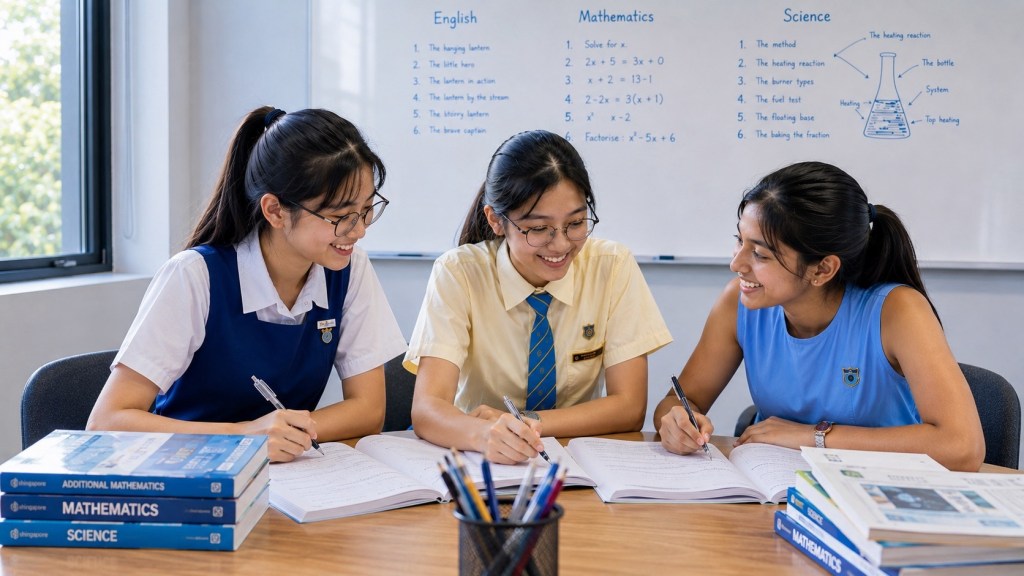
Alicia, Tricia and Kai Kai are fictional eduKate learners. The examples are world-facing and should be adapted to the command words, mark schemes and conventions of the learner’s actual qualification.
The 50-second route
Before answering, separate subject from job. Name the command, the target, the scope and any required evidence or condition. Then produce an answer that can be traced back to those elements. Knowing a great deal about the topic is useful only after the task has selected which part of that knowledge belongs here. During practice, require a fresh independent example after any correction. The learner should be able to identify the response job without a tutor translating the prompt, then produce an answer whose content, depth and evidence match that job. If the answer improves only after the question is paraphrased for them, the task-reading step still needs to be returned to the learner.
Topic knowledge can hide task failure
Alicia knows the chapter well, so a familiar phrase triggers a rehearsed explanation. Tricia recognises the theme and writes everything she remembers. Kai Kai sees a diagram he has practised before and solves the familiar quantity rather than the one requested. Their knowledge is real; the routing from question to response is weak. During practice, require a fresh independent example after any correction. The learner should be able to identify the response job without a tutor translating the prompt, then produce an answer whose content, depth and evidence match that job. If the answer improves only after the question is paraphrased for them, the task-reading step still needs to be returned to the learner.
Command words are not decoration
Exam boards publish command-word guidance because words such as describe, explain, compare, evaluate and justify signal different response jobs. AQA, for example, explicitly defines command words within subject contexts. Students should learn the conventions relevant to their qualification rather than importing one generic dictionary into every subject. During practice, require a fresh independent example after any correction. The learner should be able to identify the response job without a tutor translating the prompt, then produce an answer whose content, depth and evidence match that job. If the answer improves only after the question is paraphrased for them, the task-reading step still needs to be returned to the learner.
The target noun matters
A question may ask for the change, the cause, the evidence, the limitation, the difference, the most important factor or the final value. Students often notice the topic noun but miss the target noun. Underline or mentally name what must be produced, then check the final response against it. During practice, require a fresh independent example after any correction. The learner should be able to identify the response job without a tutor translating the prompt, then produce an answer whose content, depth and evidence match that job. If the answer improves only after the question is paraphrased for them, the task-reading step still needs to be returned to the learner.
Scope words matter
Words such as one, two, most, least, only, between, during, after, from the data and using the source restrict the answer. A student can write a correct general explanation and still exceed or miss the requested scope. Scope is part of the question, not an optional refinement. During practice, require a fresh independent example after any correction. The learner should be able to identify the response job without a tutor translating the prompt, then produce an answer whose content, depth and evidence match that job. If the answer improves only after the question is paraphrased for them, the task-reading step still needs to be returned to the learner.
Evidence instructions matter
Some questions require use of a figure, source, extract, graph or given information. General knowledge may be accurate but insufficient when the task specifically requires evidence from the material. Train students to identify what evidence source is compulsory before they begin writing. During practice, require a fresh independent example after any correction. The learner should be able to identify the response job without a tutor translating the prompt, then produce an answer whose content, depth and evidence match that job. If the answer improves only after the question is paraphrased for them, the task-reading step still needs to be returned to the learner.
Mark value is a scope clue, not a formula
Mark allocation can help estimate expected depth, but there is no universal words-per-mark rule. Use official exemplars and subject guidance. The practical lesson is proportionality: a short retrieval item should not receive an essay, while an evaluative task may need developed reasoning. During practice, require a fresh independent example after any correction. The learner should be able to identify the response job without a tutor translating the prompt, then produce an answer whose content, depth and evidence match that job. If the answer improves only after the question is paraphrased for them, the task-reading step still needs to be returned to the learner.
Mathematics: solve the requested quantity
A word problem can contain several meaningful values. The learner may correctly calculate cost per item when the question asks total saving, or find distance when the question asks speed. Label intermediate quantities so the final number retains its identity. During practice, require a fresh independent example after any correction. The learner should be able to identify the response job without a tutor translating the prompt, then produce an answer whose content, depth and evidence match that job. If the answer improves only after the question is paraphrased for them, the task-reading step still needs to be returned to the learner.
Mathematics: answer form is part of the job
Exact form, decimal accuracy, interval notation, coordinates, a proof or a whole-number decision are different outputs. The method may be sound while the response form is wrong. Reconnect the final line to the instruction before moving on. During practice, require a fresh independent example after any correction. The learner should be able to identify the response job without a tutor translating the prompt, then produce an answer whose content, depth and evidence match that job. If the answer improves only after the question is paraphrased for them, the task-reading step still needs to be returned to the learner.
Science: describe is not explain
A learner may state what happened when asked why it happened, or provide a mechanism when only an observation is requested. Train the difference using paired questions on the same scenario. The knowledge stays constant while the response job changes. During practice, require a fresh independent example after any correction. The learner should be able to identify the response job without a tutor translating the prompt, then produce an answer whose content, depth and evidence match that job. If the answer improves only after the question is paraphrased for them, the task-reading step still needs to be returned to the learner.
Science: use the data when told to use the data
If a question asks the learner to use a graph or table, the answer should connect the claim to relevant values, trends or comparisons as appropriate. Do not let memorised textbook facts replace the supplied evidence. During practice, require a fresh independent example after any correction. The learner should be able to identify the response job without a tutor translating the prompt, then produce an answer whose content, depth and evidence match that job. If the answer improves only after the question is paraphrased for them, the task-reading step still needs to be returned to the learner.
English comprehension: answer the inference asked
A passage can support many observations. The question selects one. Students should identify the referent, evidence and requested inference rather than writing a general character description because that is what they prepared. During practice, require a fresh independent example after any correction. The learner should be able to identify the response job without a tutor translating the prompt, then produce an answer whose content, depth and evidence match that job. If the answer improves only after the question is paraphrased for them, the task-reading step still needs to be returned to the learner.
English writing: purpose and audience are part of content
A technically polished piece can miss the communicative task. Before drafting, identify what the reader needs to know, believe, feel or do. Then select content and register accordingly. A memorised introduction should not override the actual situation. During practice, require a fresh independent example after any correction. The learner should be able to identify the response job without a tutor translating the prompt, then produce an answer whose content, depth and evidence match that job. If the answer improves only after the question is paraphrased for them, the task-reading step still needs to be returned to the learner.
Humanities: topic dumping
Strong memory can become a liability when students treat essays as opportunities to display everything remembered. Selection is part of expertise. Each paragraph should earn its place by advancing the exact judgement, comparison or explanation requested. During practice, require a fresh independent example after any correction. The learner should be able to identify the response job without a tutor translating the prompt, then produce an answer whose content, depth and evidence match that job. If the answer improves only after the question is paraphrased for them, the task-reading step still needs to be returned to the learner.
The keyword trap
Keywords can help students notice important features, but fixed keyword-to-method rules are brittle. The word “compare” may appear in different disciplinary contexts; the learner still needs to understand what is being compared and what evidence counts. During practice, require a fresh independent example after any correction. The learner should be able to identify the response job without a tutor translating the prompt, then produce an answer whose content, depth and evidence match that job. If the answer improves only after the question is paraphrased for them, the task-reading step still needs to be returned to the learner.
The model-answer trap
Students can memorise an excellent answer to a nearby question and reproduce it when the wording changes. Study model answers for decisions—selection, structure, evidence, precision—not as scripts to paste into any question sharing the same topic. During practice, require a fresh independent example after any correction. The learner should be able to identify the response job without a tutor translating the prompt, then produce an answer whose content, depth and evidence match that job. If the answer improves only after the question is paraphrased for them, the task-reading step still needs to be returned to the learner.
The tutor-prompt trap
A tutor often paraphrases a question helpfully. If this happens every time, the tutor may be performing the task-parsing step for the learner. During later practice, preserve some original wording and require the learner to state the job before receiving clarification. During practice, require a fresh independent example after any correction. The learner should be able to identify the response job without a tutor translating the prompt, then produce an answer whose content, depth and evidence match that job. If the answer improves only after the question is paraphrased for them, the task-reading step still needs to be returned to the learner.
The annotation ritual trap
Boxing command words and underlining key terms can help, but annotations are not the goal. A student can colour the question perfectly and still answer the wrong thing. Ask what each annotation changes in the planned response. During practice, require a fresh independent example after any correction. The learner should be able to identify the response job without a tutor translating the prompt, then produce an answer whose content, depth and evidence match that job. If the answer improves only after the question is paraphrased for them, the task-reading step still needs to be returned to the learner.
Build a question contract
During practice, write a four-part contract: command, target, scope, evidence. Keep it short. After the answer, compare the response with the contract. As the habit becomes fluent, move the contract into the learner’s head. During practice, require a fresh independent example after any correction. The learner should be able to identify the response job without a tutor translating the prompt, then produce an answer whose content, depth and evidence match that job. If the answer improves only after the question is paraphrased for them, the task-reading step still needs to be returned to the learner.
Use paired prompts
Give two questions on the same content with different commands. For example, one asks for a trend and one asks for an explanation. Ask the learner to predict how the answer must change before writing. This isolates task interpretation from content recall. During practice, require a fresh independent example after any correction. The learner should be able to identify the response job without a tutor translating the prompt, then produce an answer whose content, depth and evidence match that job. If the answer improves only after the question is paraphrased for them, the task-reading step still needs to be returned to the learner.
Use near-neighbour prompts
Change only one scope word or target noun between two questions. The learner sees how a small wording difference can legitimately require a different answer. Avoid trickery; the contrast should clarify an authentic assessment distinction. During practice, require a fresh independent example after any correction. The learner should be able to identify the response job without a tutor translating the prompt, then produce an answer whose content, depth and evidence match that job. If the answer improves only after the question is paraphrased for them, the task-reading step still needs to be returned to the learner.
Use answer-first diagnosis
Show an answer and ask which of several questions it would actually answer. This reverses the normal direction and makes task fit visible. Then ask what would need to change for the answer to fit another prompt. During practice, require a fresh independent example after any correction. The learner should be able to identify the response job without a tutor translating the prompt, then produce an answer whose content, depth and evidence match that job. If the answer improves only after the question is paraphrased for them, the task-reading step still needs to be returned to the learner.
Use the final-sentence check
After writing, read only the question and the final conclusion. Does the conclusion answer the target? If not, the response may have drifted. This is especially useful in longer essays where the middle of the response can pull the writer away from the original job. During practice, require a fresh independent example after any correction. The learner should be able to identify the response job without a tutor translating the prompt, then produce an answer whose content, depth and evidence match that job. If the answer improves only after the question is paraphrased for them, the task-reading step still needs to be returned to the learner.
Question drift during long answers
A student may begin accurately and gradually answer a broader or easier question. Keep a small anchor phrase visible in planning. Each paragraph should connect to that anchor without mechanically repeating the entire prompt. During practice, require a fresh independent example after any correction. The learner should be able to identify the response job without a tutor translating the prompt, then produce an answer whose content, depth and evidence match that job. If the answer improves only after the question is paraphrased for them, the task-reading step still needs to be returned to the learner.
Time pressure magnifies topic answering
Under the clock, familiar knowledge is easier to retrieve than careful task interpretation. Students may start writing before the question is fully parsed. Timed practice should therefore protect a brief reading decision rather than reward immediate pen movement. During practice, require a fresh independent example after any correction. The learner should be able to identify the response job without a tutor translating the prompt, then produce an answer whose content, depth and evidence match that job. If the answer improves only after the question is paraphrased for them, the task-reading step still needs to be returned to the learner.
Do not overread simple questions
The opposite error is inventing hidden complexity. If the command and scope are clear, answer proportionately. The existing article on overthinking simple questions owns that boundary. Accurate task reading should simplify the job, not make every sentence suspicious. During practice, require a fresh independent example after any correction. The learner should be able to identify the response job without a tutor translating the prompt, then produce an answer whose content, depth and evidence match that job. If the answer improves only after the question is paraphrased for them, the task-reading step still needs to be returned to the learner.
When language is the barrier
A learner may know the subject but not understand the command or qualifier. Teach the relevant academic language explicitly and check it in context. Do not misdiagnose the subject concept as weak when the access problem is linguistic. During practice, require a fresh independent example after any correction. The learner should be able to identify the response job without a tutor translating the prompt, then produce an answer whose content, depth and evidence match that job. If the answer improves only after the question is paraphrased for them, the task-reading step still needs to be returned to the learner.
When knowledge is the barrier
Sometimes the student parses the question perfectly and still cannot answer because the required knowledge is missing. Task analysis cannot substitute for content. Once the job is clear, return to the subject route and teach what is absent. During practice, require a fresh independent example after any correction. The learner should be able to identify the response job without a tutor translating the prompt, then produce an answer whose content, depth and evidence match that job. If the answer improves only after the question is paraphrased for them, the task-reading step still needs to be returned to the learner.
When both are weak
If content and task interpretation are both unstable, separate them temporarily. Use a clear prompt to teach the concept, then restore authentic wording. Later use known content to practise parsing. Recombine once each component is sufficiently secure. During practice, require a fresh independent example after any correction. The learner should be able to identify the response job without a tutor translating the prompt, then produce an answer whose content, depth and evidence match that job. If the answer improves only after the question is paraphrased for them, the task-reading step still needs to be returned to the learner.
Parents reviewing a paper
Instead of saying “read the question properly,” ask what the question required and which part of the response did not meet it. This turns a vague criticism into a teachable distinction and avoids treating every wrong answer as carelessness. During practice, require a fresh independent example after any correction. The learner should be able to identify the response job without a tutor translating the prompt, then produce an answer whose content, depth and evidence match that job. If the answer improves only after the question is paraphrased for them, the task-reading step still needs to be returned to the learner.
Teachers reviewing a paper
Classify whether the loss came from content, task interpretation, evidence selection, answer form or execution. These categories can overlap, but they produce more useful next steps than a single label such as weak topic. During practice, require a fresh independent example after any correction. The learner should be able to identify the response job without a tutor translating the prompt, then produce an answer whose content, depth and evidence match that job. If the answer improves only after the question is paraphrased for them, the task-reading step still needs to be returned to the learner.
Alicia, Tricia and Kai Kai
Alicia labels the requested quantity before calculating. Tricia plans from command and scope before retrieving essay material. Kai Kai uses the final answer-to-question check. Their methods differ because their task failures differ. During practice, require a fresh independent example after any correction. The learner should be able to identify the response job without a tutor translating the prompt, then produce an answer whose content, depth and evidence match that job. If the answer improves only after the question is paraphrased for them, the task-reading step still needs to be returned to the learner.
The SEO boundary
Searchers often ask how to understand exam questions, command words, answer the question and stop misreading questions. This article owns the edge where knowledge exists but the response drifts toward the broad topic. It does not replace subject-specific command-word guides or general reading instruction. During practice, require a fresh independent example after any correction. The learner should be able to identify the response job without a tutor translating the prompt, then produce an answer whose content, depth and evidence match that job. If the answer improves only after the question is paraphrased for them, the task-reading step still needs to be returned to the learner.
Final distinction
The subject tells you where the knowledge lives. The question tells you what to do with it now. Examination performance depends on both. A learner who can retrieve a great deal but cannot select the requested slice will look less knowledgeable than they are; a learner who parses perfectly but lacks content still needs teaching. The response begins when those two systems meet. During practice, require a fresh independent example after any correction. The learner should be able to identify the response job without a tutor translating the prompt, then produce an answer whose content, depth and evidence match that job. If the answer improves only after the question is paraphrased for them, the task-reading step still needs to be returned to the learner.
Evidence and further reading
AQA publishes subject-specific command-word guidance and explicitly describes command words as instructions about how students should answer. Its GCSE Geography teaching guidance also discusses missing the command word as a source of partially creditable or non-creditable responses. Use such resources only for the relevant qualification; do not assume one board’s wording is universal. Continue through the Complete Examination Craft Index and Learning Runtime Hub.
