
Parents searching for Secondary English tuition in Sengkang often compare comprehension, summary writing, paraphrasing, vocabulary, Paper 2 skills, editing and exam preparation. Summary looks simple because the student is “just shortening a passage”, but the task actually combines reading, selection, language control and compression under a strict meaning constraint.
A strong Secondary English summary tutor in Sengkang should therefore teach students how to identify the exact summary focus, select relevant points, remove examples and repetition, combine overlapping ideas, paraphrase without changing meaning and control the final word count. A shorter answer is not automatically a better summary if important conditions or relationships disappear.
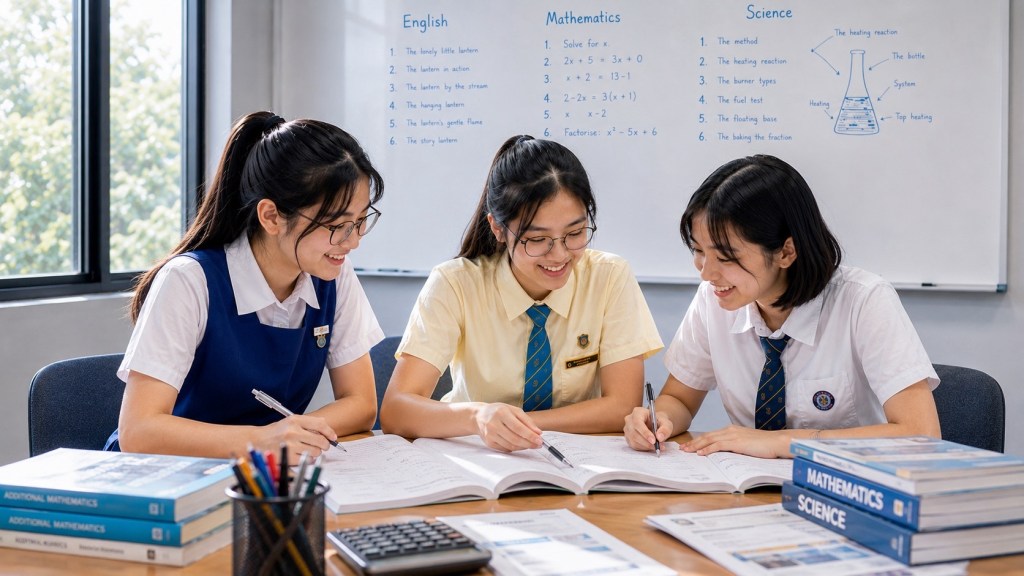
At eduKate Sengkang, summary is taught in small groups of up to three students so the tutor can compare selection decisions. One learner may choose too many details, another may miss a key point, and a third may preserve all the ideas but use language that remains too close to the source. The first weak link determines the repair.
The One-Sentence Goal
A strong summary learner can preserve the important meaning of a source while removing what the task does not need.
Summary Is Selection Before Compression
Students often begin by rewriting sentences immediately. That is usually too early. The first job is to decide which ideas belong.
A useful sequence is:
focus → relevant points → remove support detail → combine overlap → paraphrase → compress → check meaning → count words
If selection is wrong, excellent paraphrasing cannot rescue the summary.
What “Weak in Summary” Can Actually Mean
| Visible problem | Possible first weak link | What we investigate |
|---|---|---|
| Too many words | Selection or redundancy | Can the learner distinguish point from example? |
| Important ideas missing | Focus reading | Does the student understand exactly what the summary asks for? |
| Heavy lifting from the text | Paraphrase control | Can the learner reconstruct meaning independently? |
| Paraphrase changes meaning | Semantic precision | Are conditions, degree and relationships preserved? |
| Many points repeat the same idea | Synthesis | Can overlapping points be combined? |
| Grammar breaks after compression | Sentence reconstruction | Can fragments be rebuilt into controlled sentences? |
| Word count is fine but content score is weak | Point selection | Was the wrong material compressed? |
Find the Summary Focus
A summary question normally defines a focus: reasons, benefits, problems, challenges, effects, measures, qualities or another category. Students should underline that focus before returning to the passage.
If the question asks for reasons people choose public transport, a sentence about how buses are manufactured may be interesting but irrelevant.
Point vs Example
A source may give a main point followed by examples.
Point: Digital tools can make learning more accessible.
Examples: recorded lessons, captions and searchable notes.
If the summary asks for benefits, the main point may be enough. The examples can often be removed unless they add a distinct idea.
Remove Repetition Without Losing Distinction
Writers often restate the same idea in several ways for emphasis. A summary should usually compress repetition.
But two ideas that look similar may still be distinct. “Reduces cost” and “saves time” should not be merged into one vague point such as “is efficient” if the task expects both benefits.
Paraphrasing Is Meaning Reconstruction
Paraphrasing is not replacing every word with a synonym. It is expressing the same relationship in a different form.
Source: “The project was delayed because several safety checks remained incomplete.”
Paraphrase: “The project could not proceed on schedule as some safety inspections had not been finished.”
The causal relationship and incomplete status are preserved.
Synonym Substitution Can Be Dangerous
Near-synonyms carry different meanings. “Concerned”, “afraid” and “alarmed” are related but not interchangeable. “Reduced” and “eliminated” differ in degree.
Students should paraphrase the whole idea, then choose vocabulary that preserves the original strength.
Preserve Conditions and Limits
Summary errors often enlarge the source claim.
Source: “The programme may help some students who need additional practice.”
Unsafe compression: “The programme helps students.”
The words “may” and “some” carry important limits. Removing them changes the meaning.
Combine Related Points Through Synthesis
If a source says a service is cheaper and also reduces travelling cost, those may be related enough to combine depending on the summary focus.
Synthesis reduces word count by finding a higher-level relationship without making the idea vague.
Compression Through Grammar
Students can compress meaning by choosing efficient grammatical structures.
Long: “People choose the service because it is affordable and because it is easy to access.”
Compressed: “People choose the service for its affordability and accessibility.”
The compressed version preserves both reasons while using fewer words.
Do Not Compress Into Ambiguity
Very short summaries can become unclear if pronouns, relationships or causal links disappear. Concision is useful only while meaning remains recoverable.
The target is efficient clarity, not minimum possible word count.
Worked Summary Example
Source ideas:
- The library stays open late, allowing students to study after school.
- It provides free internet access for students who lack reliable access at home.
- Quiet study rooms help learners concentrate.
- Workshops teach research and digital skills.
- The building also contains a café popular with visitors.
If the question asks for ways the library supports students’ learning, the café is probably irrelevant. A concise summary might state that the library offers extended study hours, internet access, quiet workspaces and skill-building workshops.
The summary keeps four distinct learning supports and removes the unrelated attraction.
Word Count Control
Students should not wait until the final sentence to discover that the summary is far over the limit.
We teach them to estimate early, then compress systematically:
- remove examples;
- remove repeated modifiers;
- combine overlapping points;
- replace phrases with accurate single words where natural;
- use compact grammatical structures;
- remove framing that the reader does not need.
Summary and Comprehension Are Connected
A weak summary may begin with weak reading. If the student misunderstands a paragraph’s main idea, compression will faithfully preserve the wrong meaning.
We therefore connect summary work to Secondary English comprehension. Selection depends on understanding.
Summary and Vocabulary Are Connected
Paraphrase requires vocabulary flexibility. Students with a narrow vocabulary may lift excessively because they cannot reconstruct an idea in another form.
However, vocabulary should not be forced. A precise common word is better than a rare word that changes meaning.
Summary and Grammar Are Connected
Compression often requires restructuring sentences. Students need control over relative clauses, participial phrases, noun phrases, conjunctions and sentence boundaries so the shorter version remains grammatical.
A Practical Summary Sequence
- Read the question: identify the exact focus.
- Read the source: understand before selecting.
- Mark candidate points: include only relevant ideas.
- Remove support detail: examples and repetition.
- Combine overlap: synthesise where safe.
- Paraphrase: preserve relationships and degree.
- Compress: improve efficiency.
- Count: check the required limit.
- Verify: compare final meaning with the source.
Correction Categories We Use
- focus misread;
- important point omitted;
- example mistaken for main point;
- repetition not compressed;
- unsafe synonym substitution;
- condition or qualifier lost;
- over-generalisation;
- grammar broken during compression;
- lifting too close to source;
- word-count problem;
- meaning changed by paraphrase.
Why Three Students Can Work Well for Summary
Summary decisions benefit from comparison. Three students may choose slightly different candidate points. The tutor can ask which point actually answers the focus and whether two selections overlap.
The group stays small enough that every learner must produce an independent summary and justify their selection.
What Progress Looks Like
- Students identify the summary focus faster.
- Examples are excluded more reliably.
- Overlapping points are combined.
- Paraphrases preserve meaning more accurately.
- Qualifiers such as “some”, “may” and “often” are retained when important.
- Grammar remains stable after compression.
- Word-count editing becomes more strategic.
- Students lift less because vocabulary flexibility improves.
- Final summaries become shorter without losing key ideas.
Frequently Asked Questions
Should every sentence be paraphrased?
The exact task rules matter, but the larger skill is meaning preservation. Students should not change wording merely for the sake of sounding different if the result becomes less precise.
Why does my child always exceed the word limit?
The problem may begin with selection rather than writing style. We first check whether too many points, examples or repeated ideas were included.
What should parents bring to a consultation?
A recent summary task with the original passage and the student’s response is ideal. We need both to see whether the problem begins with reading, selection, paraphrase or compression.
The End Goal Is Meaning-Preserving Compression
A strong summary does not merely use fewer words. It keeps the right meaning and removes what the reader no longer needs.
Continue through Secondary English Learning Hub, the Secondary English Comprehension route, or the Sengkang tuition enquiry process.
