
Small Group Tutorials

Here to help students catch up, keep up, and move ahead. Book a consultation here.

Direct WhatsApp

Primary 3 Science Tuition in Sengkang

Primary 3 Science Tuition in Sengkang: Building a Strong Foundation in Science

Primary 3 is the year Science begins to feel like a real subject.

A child who was previously learning mainly through everyday observation must now learn how to classify, compare, infer, explain and support an answer with evidence. The questions may still look simple, but the thinking behind them is becoming more precise.

That is why Primary 3 Science tuition in Sengkang should not be treated as early examination drilling. Its first responsibility is to help a child understand how Science works.

At eduKate Sengkang, we build that foundation carefully. Students who are uncertain receive clearer explanations, smaller learning steps and more guided practice. Students who are already doing well are given more demanding questions, unfamiliar situations and opportunities to explain ideas at a deeper level.

The aim is not to make every child follow the same lesson in the same way.

It is to give each child the most useful next step.

Why Primary 3 Science Matters

The current MOE Primary Science syllabus is designed for Primary 3 to Primary 6. The 2023 syllabus has been implemented progressively from the Primary 3 cohort and was updated in January 2026. (Ministry of Education)

This makes Primary 3 the beginning of a four-year learning journey.

What happens during this first year matters because later Science topics do not sit separately from one another. New knowledge is constantly connected to earlier ideas. A student who learns to observe carefully, identify relevant information and explain cause and effect in Primary 3 will have a stronger base for the more demanding work ahead.

A weak foundation may not be immediately visible.

Some children can remember enough keywords to complete familiar worksheets. They may perform reasonably well when a question resembles something they have seen before. The difficulty appears when the question changes its diagram, wording or context.

The child then says:

“I know the topic, but I do not know how to answer.”

This usually means the student has remembered information without building a sufficiently connected understanding of it.

Good Primary 3 Science tuition addresses this early, while the gaps are still small and repairable.

Primary 3 Science Is More Than Remembering Facts

Many students begin Science by trying to memorise everything.

They learn a list of characteristics. They remember definitions. They underline keywords. They repeat model answers.

These methods have a place, but they are not enough.

Science requires a child to understand relationships:

  • What changed?
  • What remained the same?
  • What caused the result?
  • What evidence supports the conclusion?
  • What is the question actually asking?
  • Which scientific concept explains the observation?

A student may know that living things grow, reproduce and respond to changes. However, knowing the list is different from being able to examine an unfamiliar example and decide whether it is living or non-living.

Similarly, a child may remember a property of a material but still struggle to select the most suitable material for a particular use.

The difference lies in application.

At eduKate Sengkang, students are taught to move from knowing a fact to using the fact intelligently.

The Quiet Transition from Everyday Thinking to Scientific Thinking

Children naturally form explanations about the world.

They may believe that a heavier object must always sink, that a larger animal must be stronger, or that something is not moving because no force is acting on it. These explanations can feel logical from a child’s point of view, even when the scientific reasoning is incomplete.

A patient Science tutor does not simply mark the answer wrong.

The tutor listens to how the child arrived at it.

That thinking process reveals where the real difficulty lies. The student may have misunderstood a word, overlooked an observation, confused two concepts or made an assumption that was not supported by the question.

Once the source of the error is identified, the lesson can change direction.

For one student, the next step may be returning to a concrete example.

For another, it may be drawing a diagram.

For a third, it may be comparing two similar questions and identifying why the answers are different.

This is where a small-group Primary 3 Science class becomes valuable. The tutor can see not only whether an answer is correct, but also how the student is thinking.

Why Some Primary 3 Students Begin to Struggle

A child does not always struggle because the content is too difficult.

The difficulty may come from one of several smaller problems.

The student does not understand the question

Science questions contain important clues. Words such as comparestateexplaindescribe and give a reason require different kinds of answers.

A child may possess the correct knowledge but provide the wrong form of response.

The student relies on memory without understanding

Memorised answers work only when the new question closely resembles the original one.

Once the context changes, the student becomes unsure.

The student misses information in diagrams

Labels, arrows, tables and sequences often contain essential evidence. A student who reads only the written sentence may overlook the most important part of the question.

The student knows the idea but cannot express it

Some children can explain an answer verbally but write only a fragment on paper. They need help converting their thoughts into complete, scientifically accurate sentences.

The student is afraid of being wrong

When children become worried about mistakes, they may stop attempting unfamiliar questions. Their answers become shorter and safer, and their curiosity begins to narrow.

A well-run tuition class should correct these problems without making the child feel that Science is beyond them.

What Good Primary 3 Science Tuition Should Do

A good tuition programme should make Science clearer, not merely busier.

It should help students develop four connected abilities.

1. Build accurate scientific knowledge

Children need a reliable understanding of the concepts taught in school. Definitions, properties, processes and relationships must be learnt correctly.

However, the tutor should also show how these ideas connect.

Isolated facts are easily forgotten. Connected knowledge is easier to retrieve and apply.

2. Develop careful observation

Students should learn to examine diagrams, tables, objects and experimental situations closely.

They need to notice relevant details without being distracted by information that does not affect the answer.

3. Strengthen reasoning

The child should be able to explain why something happens, not simply state what happens.

This requires practice in linking an observation to a scientific concept and then expressing the relationship clearly.

4. Improve scientific communication

A correct idea can still lose marks if it is vague, incomplete or incorrectly phrased.

Students must learn how to write answers that are concise, relevant and scientifically precise.

These abilities should be developed gradually. Primary 3 children do not need to sound like secondary school students. They need clear thinking, strong habits and language appropriate to their level.

Different Students Need Different Routes

One of the limitations of a large class is that every student often receives the same explanation and the same worksheet, even when their needs are different.

At eduKate Sengkang, our small-group structure allows the tutor to adjust the lesson more carefully.

For a student who is falling behind

The tutor may reduce the number of ideas presented at one time, revisit essential vocabulary and use concrete examples before returning to abstract questions.

The objective is not to lower expectations.

It is to create a route through which the student can reach the expected understanding without becoming overwhelmed.

The child may work on:

  • recognising the relevant concept;
  • locating clues in the question;
  • distinguishing between similar scientific terms;
  • constructing one complete explanation at a time;
  • correcting recurring misconceptions.

As understanding becomes more stable, the tutor gradually removes the support.

The student learns to work independently rather than becoming dependent on hints.

For a student who is keeping up but inconsistent

This student may understand classroom lessons but lose marks through incomplete explanations, careless reading or weak application.

The tutor helps the child identify patterns in these mistakes.

Instead of completing more pages without reflection, the student learns to slow down at the right moments, check the evidence and improve the quality of each answer.

For a strong Primary 3 Science student

A capable student should not spend every lesson repeating work that is already secure.

The tutor can widen the learning by introducing less familiar examples, multi-step comparisons and questions that require the child to justify a conclusion.

The student may also be asked to explain why another answer is incorrect or to propose what might happen when one condition changes.

This builds flexibility.

The child is not merely moving faster through the same material. The child is learning to think across a wider range of situations.

Small-Group Primary 3 Science Tuition in Sengkang

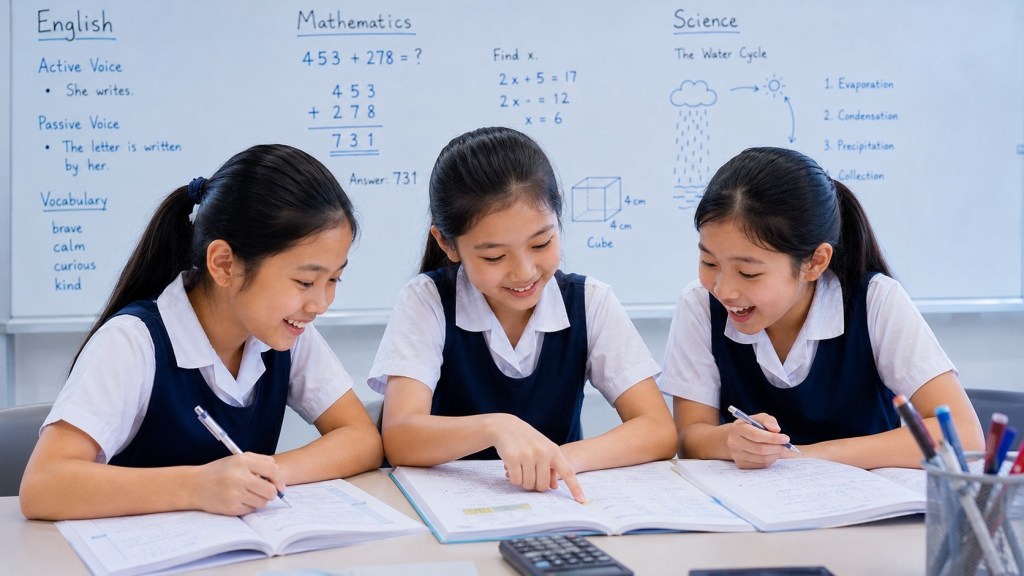
At eduKate Sengkang, our 3-pax small-group Science tutorials provide enough interaction for discussion while preserving the close attention usually missing from larger classes.

The tutor can hear each student explain an answer.

This matters because spoken explanations often reveal misunderstandings that do not appear in a completed worksheet. A child may have selected the correct answer for the wrong reason, or written a familiar keyword without understanding how it applies.

In a small class, the tutor can pause, question and correct immediately.

Students also benefit from hearing how their classmates think. One child may notice evidence that another missed. Another may use a clearer explanation. These differences become useful learning opportunities when the tutor guides the discussion properly.

The class remains structured, but it does not become mechanical.

Every student participates.

How We Teach a Primary 3 Science Topic

A well-designed lesson usually moves through several stages.

Begin with what the student already understands

Before introducing a new idea, the tutor checks the child’s existing knowledge.

This prevents the lesson from being built on an assumption that may be incorrect.

Make the concept visible

Whenever possible, the tutor uses familiar objects, diagrams, demonstrations or everyday examples.

Primary 3 students often understand an idea more securely when they can first see how it operates.

Introduce accurate scientific language

Once the idea is understood, the tutor connects it to the correct terms.

Vocabulary is taught as a tool for expressing understanding, not as a list to memorise without context.

Apply the concept to a familiar question

Students begin with a situation that allows them to recognise the concept and practise the reasoning process.

Change the context

The tutor then presents the same underlying concept in a different form.

This checks whether the child genuinely understands the idea or has merely remembered the first example.

Correct the answer precisely

Corrections should show the student what needs to change.

Instead of writing only “incomplete” or “wrong”, the tutor identifies the missing link in the reasoning.

Revisit the idea later

A concept is not considered secure simply because the child answered correctly once.

It should reappear in later practice so that the tutor can see whether the student still understands it after time has passed.

Learning to Answer Science Questions Properly

One of the most important Primary Science skills is learning how to construct an explanation.

A useful answer often contains three parts:

The observation
What happened or what can be seen?

The concept
Which scientific idea explains it?

The connection
How does that concept cause or account for the observation?

For example, a student should not insert as many keywords as possible and hope that one earns the mark.

The answer must follow the logic of the question.

This habit becomes increasingly important as a child progresses through primary school. From the 2026 PSLE Science examination onward, students are assessed not only on knowledge and understanding but also on applying knowledge and scientific inquiry. This includes making predictions, interpreting information, evaluating observations and communicating explanations and reasoning.

The current PSLE format allocates 60 marks to multiple-choice questions and 40 marks to structured questions.

This does not mean that a Primary 3 child should begin drilling Primary 6 examination papers.

It means the early years should develop the thinking and communication habits that later assessment requires.

Strong examination performance is usually the result of understanding built over time.

Tuition Should Reduce Confusion, Not Add More Work

Parents sometimes hesitate to enrol a Primary 3 child for tuition because they do not want to create unnecessary pressure.

That concern is reasonable.

Poorly designed tuition can add worksheets without solving the underlying problem. It may fill the week while leaving the child just as uncertain as before.

Effective tuition feels different.

The student should leave a lesson with greater clarity:

“I understand what this means now.”

“I know why my answer was incomplete.”

“I can recognise this kind of question.”

“I know what to check before I answer.”

The purpose of tuition is not simply to occupy more hours.

It is to make the child’s existing study time work better.

When concepts are taught clearly and mistakes are corrected early, homework becomes less frustrating. Revision becomes more focused. Parents spend less time trying to interpret why an answer was marked wrong.

Less confusion creates more usable learning time.

When Should a Parent Consider Primary 3 Science Tuition?

Tuition may be useful when a child:

  • remembers facts but cannot apply them;
  • frequently gives one-word or incomplete answers;
  • misunderstands diagrams and tables;
  • uses scientific keywords inaccurately;
  • performs well on familiar worksheets but struggles with new questions;
  • avoids Science because it feels confusing;
  • repeatedly makes the same type of mistake;
  • needs more challenge than the current work provides;
  • understands slowly in a large classroom but responds well to personal explanation.

Parents do not need to wait for a major drop in results.

A change in confidence, effort or willingness to explain can be an earlier and more useful signal.

At the same time, tuition should not be chosen simply because everyone else appears to be enrolling.

The right question is:

Would more precise teaching, closer correction and a better-matched pace help my child learn Science more effectively?

When the answer is yes, tuition can be a sensible form of support.

What Parents Should Look for in a Primary 3 Science Tutor

A strong Primary Science tutor should be able to do more than provide answers.

The tutor should be able to:

  • identify why the student made a mistake;
  • explain one concept in several different ways;
  • distinguish a vocabulary problem from a reasoning problem;
  • teach the child how to read a question;
  • correct scientific language without discouraging participation;
  • adjust the level of support as the student improves;
  • challenge stronger learners without rushing into unsuitable material;
  • show parents what is improving and what still requires attention.

The best tutors are attentive to small signals.

A pause before answering, an incorrectly used word or a repeated assumption may reveal more than the final score on a worksheet.

When these signals are noticed early, the lesson can be adjusted before the difficulty becomes a larger learning gap.

Building Confidence Through Competence

Confidence in Science should not come from constant praise alone.

It should come from the child becoming more capable.

A student gains genuine confidence when they can:

  • understand what a question requires;
  • retrieve the relevant concept;
  • use the evidence provided;
  • form a complete explanation;
  • check whether the answer makes sense.

This kind of confidence is quieter and more durable.

The child no longer needs every question to look familiar. They have a process for approaching something new.

For weaker students, this may begin with one successfully explained question.

For stronger students, it may come from solving a problem that initially appeared unfamiliar.

Both are forms of progress.

From Primary 3 Foundation to Future Science Success

Primary 3 is early enough to develop good habits without turning every lesson into an examination exercise.

A child who learns Science properly at this stage begins to build several advantages:

  • scientific vocabulary becomes more natural;
  • explanations become more organised;
  • diagrams are read more carefully;
  • concepts remain connected rather than isolated;
  • mistakes become easier to diagnose;
  • unfamiliar questions feel less threatening;
  • later revision requires less rebuilding.

This creates a better journey through Primary 4, Primary 5 and Primary 6.

The student is not repeatedly returning to repair the same basic difficulties. More attention can be given to increasingly complex applications, experimental reasoning and precise communication.

For a capable learner, the strong foundation also opens more room for exploration. The child can compare ideas, test possibilities and consider how scientific principles operate beyond the most obvious classroom examples.

A strong foundation does not narrow a child into examination technique.

It gives the child more places to go.

Why Choose eduKate Sengkang for Primary 3 Science Tuition?

At eduKate Sengkang, we believe children learn best when lessons are precise enough to meet their present needs and ambitious enough to prepare them for what comes next.

Our Primary 3 Science tuition focuses on:

  • clear teaching of core concepts;
  • close correction in 3-pax small groups;
  • careful development of scientific vocabulary;
  • structured answering techniques;
  • application to familiar and unfamiliar questions;
  • early identification of misconceptions;
  • appropriate support for weaker students;
  • wider and deeper work for stronger students;
  • steady preparation for the demands of upper primary Science.

We do not assume that every child needs the same solution.

Some students need the subject to become calmer and clearer.

Some need to turn uncertain knowledge into dependable performance.

Others need space to move beyond routine questions and develop more sophisticated reasoning.

The tutor’s responsibility is to recognise the difference and teach accordingly.

Frequently Asked Questions About Primary 3 Science Tuition in Sengkang

Is Primary 3 too early for Science tuition?

Not when the tuition is focused on understanding rather than pressure.

Primary 3 is the beginning of formal Primary Science. Early support can help a child establish correct concepts, vocabulary and reasoning habits before misunderstandings accumulate.

Should Primary 3 students start preparing for PSLE Science?

They should build the foundations that eventually support PSLE Science, but they do not need intensive Primary 6 drilling.

At this age, the priority is accurate understanding, careful observation, application and clear explanation.

Can tuition help if my child memorises but cannot answer questions?

Yes. The tutor can teach the child how to identify the concept behind a question, use the information provided and connect scientific knowledge to the required answer.

What if my child is already doing well in Science?

A strong student still benefits when tuition provides greater depth rather than repetitive practice.

The tutor can introduce unfamiliar contexts, more demanding reasoning and opportunities to justify or evaluate conclusions.

Why are small groups useful for Primary 3 Science?

Small groups allow the tutor to listen to each child’s reasoning, identify misconceptions and provide immediate correction. Students also learn from carefully guided discussion with classmates.

What is the main goal for Primary 3 Science?

The main goal is to help the child understand how to learn Science properly.

Results matter, but the deeper foundation is the ability to observe, think, apply and explain.

Give Your Child the Right Beginning in Science

Primary 3 Science should feel like the opening of a new world.

It is a chance for children to become more observant, more precise and more curious about how things work. With the right teaching, they learn that Science is not a collection of difficult words. It is a way of examining evidence, connecting ideas and making sense of the world around them.

For a child who is struggling, the right tuition provides a clearer route forward.

For a child who is progressing steadily, it turns understanding into consistency.

For a child who is already strong, it opens a wider field of thought.

That is the value of Primary 3 Science tuition in Sengkang: not simply more work, but better-directed learning at the point where a lifelong scientific foundation begins.

At Primary 3, students begin to explore more complex scientific concepts that lay the groundwork for future learning in Science. Understanding these fundamental principles is crucial for success in later academic years, particularly as they approach the PSLE. In Sengkang, Primary 3 Science tuition offers targeted support to ensure that students gain a solid foundation in key scientific topics, including topics such as energy, matter, plants, and the environment.

Typical Course Outline for Primary 3 Science Tuition (PSLE Requirements) at EduKate, Sengkang

This Primary 3 Science Tuition course is designed to lay a solid foundation in Science to help students prepare for the PSLE in the coming years. The focus is on building core concepts, critical thinking, and problem-solving skills, aligning with the MOE syllabus while introducing early exam techniques to prepare students for future success in Science.


Course Objectives:

  1. Develop a Strong Science Foundation: Focus on understanding key scientific concepts, such as the basics of Life Sciences, Physical Sciences, and Earth Sciences.
  2. Enhance Critical Thinking: Teach students to observe, question, and analyze scientific phenomena.
  3. Promote Inquiry-Based Learning: Encourage hands-on learning and experimentation to solidify theoretical concepts.
  4. Prepare for PSLE Requirements: Introduce PSLE-aligned strategies, such as answering techniques and understanding open-ended questions.

Course Structure:

1. Introduction to Scientific Inquiry

  • Understanding the role of observations in science
  • Asking scientific questions
  • Developing hypotheses
  • Introduction to simple investigations and experiments

2. Life Science

  • Basic introduction to plants and animals
  • Life cycles: Plants, animals, and humans
  • Classifications of living things
  • Food chains and ecosystems: Producers, consumers, and decomposers
  • Adaptations in living things for survival

3. Physical Science

  • Introduction to Matter: Solid, liquid, and gas
  • Properties of materials and their uses
  • Changes in states of matter
  • Introduction to forces and motion: Push, pull, and gravity

4. Earth Science

  • Introduction to the Earth’s resources: Air, water, rocks
  • The water cycle and its significance
  • Weather and climate: Understanding basic patterns

Hands-On Activities and Experiments:

  • Basic plant-growing experiments (for life cycles)
  • Simple buoyancy experiments (for properties of materials)
  • Making a water cycle model (for Earth Science understanding)

Key Skills Development:

1. Observation and Recording

  • How to make detailed observations during experiments
  • Recording results in a structured format (tables, charts)

2. Communication of Findings

  • Learning to describe observations clearly and logically
  • Developing vocabulary specific to Science

3. Basic Analysis and Conclusions

  • Drawing simple conclusions from data
  • Learning how to explain ‘why’ based on observations

PSLE-Style Exam Techniques (Early Introduction):

  • Understanding Multiple-Choice Questions: Teaching strategies for eliminating wrong answers and identifying the best possible answer.
  • Introduction to Open-Ended Questions: Simple questions based on experiments and observations, focusing on structuring responses to maximize marks.
  • Time Management Techniques: Developing early time management skills to ensure all questions are answered within the exam timeframe.

Continuous Assessment and Feedback:

  • Weekly Quizzes: Regular short quizzes to test understanding of current topics.
  • Monthly Assessments: More comprehensive tests to gauge overall progress.
  • Parental Feedback: Regular updates on student progress and areas for improvement.

Learning Resources:

  • Comprehensive Notes: Detailed study materials for every topic covered.
  • Practice Papers: Early exposure to PSLE-style questions for familiarization.
  • Interactive Worksheets: Engaging worksheets designed to reinforce concepts learned in class.

Course Duration:

  • 12-Month Program with weekly 1.5-hour classes.

Expected Outcomes:

By the end of the course, students will:

  1. Have a solid understanding of the key Primary 3 Science topics.
  2. Be comfortable with basic scientific inquiry and investigations.
  3. Develop early exam-answering techniques aligned with PSLE requirements.
  4. Gain confidence in tackling both factual recall and analytical questions.

This typical course outline ensures that Primary 3 students are well-prepared for more advanced topics in later years and lays the groundwork for eventual PSLE Science success.

Why Choose Primary 3 Science Tuition in Sengkang?

Sengkang has a growing reputation for its quality education services, particularly when it comes to Science tuition. Parents choose Primary 3 Science tuition in Sengkang for various reasons, all aimed at improving their child’s performance in school while nurturing a passion for science:

  • Customized Learning Approaches: Every child learns differently, and Sengkang tuition centers provide personalized lesson plans that cater to the individual learning styles of each student. This ensures that areas of weakness are addressed, whether it’s difficulty in understanding key concepts or applying them in practice.
  • Small Group Learning: Small class sizes allow students to receive more attention and guidance from tutors. This is particularly important in Science, where students may need help with scientific inquiry, conducting experiments, or understanding theoretical concepts.
  • Expert Tutors: Tutors in Sengkang are experienced in teaching the MOE Science syllabus, which ensures that students not only understand the material but are also prepared for future examinations, including the PSLE.

Building a Strong Foundation in Primary 3 Science

Science at the Primary 3 level introduces students to core concepts that will form the basis for future learning. Here’s how Sengkang Science tuition helps to build this foundation:

  1. Understanding Key Scientific Principles: From learning about energy and its forms to understanding the properties of matter and living organisms, Primary 3 Science focuses on teaching students how the world around them works. Science tuition in Sengkang simplifies these complex concepts, breaking them down into manageable lessons that students can grasp easily.
  2. Developing Inquiry-Based Learning: Science is not just about memorizing facts; it’s about asking questions and conducting experiments to find answers. Sengkang’s tuition centers emphasize inquiry-based learning, teaching students to think critically, develop hypotheses, and carry out experiments with confidence.
  3. Strengthening Problem-Solving Skills: Science often requires logical thinking and problem-solving. In Primary 3 Science tuition, students are given practice with real-world scenarios and problems that help them apply the scientific concepts they’ve learned. This strengthens their ability to think critically and make connections between different areas of science.

Benefits of Enrolling in Science Tuition in Sengkang

Sengkang is home to some of the most dedicated and experienced tutors who can make a significant difference in your child’s learning journey. Here are some of the key benefits of enrolling in Primary 3 Science tuition in Sengkang:

  • Aligned with MOE Syllabus: Tuition centers in Sengkang follow the Ministry of Education’s syllabus, ensuring that students are well-prepared for their school curriculum and future PSLE examinations.
  • Boosts Confidence: Many students struggle with Science because they find the subject difficult to understand. Through regular practice and guidance from experienced tutors, Science tuition helps build students’ confidence, allowing them to tackle scientific concepts with greater ease.
  • Hands-On Learning: Many tuition centers in Sengkang integrate hands-on learning experiences into their lessons. This could include simple experiments or practical demonstrations that reinforce theoretical knowledge and make Science more engaging and enjoyable.
  • Regular Assessments and Feedback: Continuous assessments help track a student’s progress, ensuring that they are on track to meet learning objectives. Regular feedback allows tutors to adjust lesson plans to better address a student’s needs, providing targeted assistance where necessary.

How to Choose the Best Primary 3 Science Tuition in Sengkang

When selecting a Primary 3 Science tuition center in Sengkang, it’s important to consider several factors to ensure your child receives the best possible support:

  • Class Size: Smaller class sizes ensure that each student receives the individual attention they need. Look for centers that limit the number of students per class to maintain a focused and personalized learning environment.
  • Experienced Tutors: The quality of the tutor plays a significant role in a child’s learning. Make sure the tuition center has tutors who are not only experienced but also have a strong track record of helping students excel in Science.
  • Curriculum Alignment: Ensure that the tuition center’s lessons align with the MOE Science syllabus so that your child is learning material relevant to their school exams.
  • Interactive and Engaging Lessons: Science should be fun and engaging. Look for tuition centers that incorporate interactive lessons, experiments, and discussions to make learning more enjoyable for your child.

Preparing Your Child for Success in Science

A strong foundation in Primary 3 Science is crucial for future success in both school and PSLE preparation. By enrolling your child in Science tuition in Sengkang, you’re providing them with the tools and support they need to excel in Science. From improving their understanding of core scientific concepts to developing inquiry-based learning skills, Science tuition helps students build confidence and perform better academically.

At eduKate Singapore, our tutors are dedicated to helping each child achieve their full potential. Our small group tuition model ensures personalized attention and a tailored approach to learning. If you’re ready to take the next step in enhancing your child’s education, consider enrolling them in our Primary 3 Science tuition program.

Strategies to Improve Primary 3 Science in Sengkang with Science Tuition

Primary 4 is a crucial year for building a strong foundation in Science. The concepts introduced in this year form the basis for more advanced topics in later years, including PSLE preparation. For students in Sengkang, attending Primary 3 Science tuition can provide the necessary support to improve their understanding and performance. Below are strategies that can help boost your child’s Science skills through effective tuition programs.

1. Personalized Learning Approach

Every student learns differently, and personalized tuition ensures that their unique learning needs are met. In Primary 3 Science tuition in Sengkang, tutors assess the student’s strengths and weaknesses, and tailor the lessons accordingly. This focused approach helps fill in knowledge gaps and strengthens understanding of key scientific concepts.

How It Helps:

  • Targeted Support: Tuition provides focused help in areas where the student is struggling, whether it’s understanding complex topics like matter, energy, or the water cycle.
  • Customized Lessons: Tutors design lessons based on the student’s learning pace, which helps them grasp difficult concepts more easily.

2. Reinforcing Scientific Concepts with Hands-On Learning

Practical learning through hands-on experiments and demonstrations helps students understand the practical applications of Science. Many Sengkang tuition centers incorporate inquiry-based learning to reinforce scientific concepts.

How It Helps:

  • Active Engagement: Hands-on activities allow students to explore scientific phenomena and develop critical thinking skills.
  • Better Retention: Students who participate in experiments are more likely to retain information, as it links theory to real-world applications.

3. Regular Practice and Reinforcement

Consistent practice is key to improving in Science. Primary 3 Science tuition often includes regular quizzes, assignments, and revision papers to reinforce what students have learned in school.

How It Helps:

  • Consistent Review: Regular practice keeps concepts fresh in students’ minds, ensuring that they don’t forget key topics.
  • Exam Preparation: Practice with past papers and mock exams familiarizes students with the question format, helping them gain confidence for future assessments.

4. Building a Strong Foundation in Science Vocabulary

Science vocabulary is essential for understanding and answering questions accurately. During tuition, tutors focus on helping students master key terms and concepts, which allows them to better explain scientific phenomena in their answers.

How It Helps:

  • Improved Clarity: Understanding scientific vocabulary allows students to answer questions clearly and precisely.
  • Confidence in Explanations: A strong grasp of scientific terms ensures that students can articulate their understanding in both written and oral forms.

5. Developing Problem-Solving and Critical Thinking Skills

Science isn’t just about memorizing facts; it’s about understanding how to apply knowledge to solve problems. Science tuition in Sengkang emphasizes critical thinking and problem-solving strategies to help students approach challenging questions with confidence.

How It Helps:

  • Analytical Thinking: Students learn to break down questions, analyze the information provided, and apply their knowledge effectively.
  • Real-World Applications: Tuition helps students connect classroom knowledge with everyday situations, improving their overall grasp of Science.

6. Encouraging Active Participation and Inquiry-Based Learning

Active participation in discussions and group activities encourages students to ask questions and explore new ideas. Sengkang Science tuition programs often incorporate inquiry-based learning, where students are encouraged to investigate, ask questions, and come up with their own explanations for scientific concepts.

How It Helps:

  • Curiosity and Exploration: Inquiry-based learning nurtures a sense of curiosity, which motivates students to learn more about the world around them.
  • Engagement with Material: When students are actively involved in the learning process, they are more engaged and take ownership of their learning journey.

7. Building Confidence Through Continuous Feedback

Confidence is key when it comes to academic success, and continuous feedback helps build that confidence. Tutors in Sengkang Science tuition centers provide constructive feedback, highlighting areas for improvement and guiding students to success.

How It Helps:

  • Constructive Criticism: Feedback helps students understand where they are going wrong and how to improve, ensuring that they don’t repeat the same mistakes.
  • Motivation to Succeed: Positive reinforcement and regular progress reports keep students motivated and on track for improvement.

8. Strengthening Time Management and Exam Techniques

As students progress through Primary 4, they need to develop effective time management skills to handle longer exams and more complex questions. Tuition programs in Sengkang focus on teaching students how to manage their time during exams and approach questions strategically.

How It Helps:

  • Time Management: Students learn how to allocate their time wisely during exams, ensuring that they complete all sections.
  • Exam Strategies: Tutors teach students how to analyze questions, plan their answers, and avoid common pitfalls in both multiple-choice and open-ended questions.

9. Parental Involvement and Communication

Effective communication between tutors and parents is crucial for a child’s academic growth. In Primary 3 Science tuition, parents are kept updated on their child’s progress through regular feedback sessions and reports.

How It Helps:

  • Progress Tracking: Parents receive detailed updates on their child’s improvement, allowing them to support their child’s learning at home.
  • Parental Support: By understanding their child’s academic challenges, parents can work closely with tutors to reinforce key learning points outside of tuition.

Conclusion: Maximizing the Benefits of Primary 4 Science Tuition in Sengkang

Improving your child’s performance in Primary 3 Science requires a structured, consistent approach. By enrolling in Science tuition in Sengkang, students benefit from personalized learning, hands-on activities, regular practice, and continuous feedback. These strategies help build a strong scientific foundation, ensuring that students are well-prepared not only for their current studies but also for future challenges like the PSLE.

With experienced tutors, a supportive learning environment, and proven teaching methods, Sengkang Science tuition is the ideal solution for students aiming to excel in Science.